Children of Gaza: scarred, trapped, vengeful


(h/t to Ann El Khoury at Pulse.)

The Independent previewed “Children of Gaza” which aired on Channel 4 in the UK on March 14:

Omsyatte adjusts her green school uniform and climbs gingerly on to a desk at the front of the classroom. The shy 12-year-old holds up a brightly coloured picture and begins to explain to her classmates what she has drawn. It is a scene played out in schools all over the world, but for one striking difference: Omsyatte’s picture does not illustrate a recent family holiday, or jolly school outing, but the day an Israeli military offensive killed her nine-year-old brother and destroyed her home.

“Here is where they shot my brother Ibrahim, God bless his soul. And here is the F16 plane that threw rockets into the house and trees, and here is the tank that started to shoot,” she says, to a round of applause from the other children. The exercise is designed to help the pupils at the school come to terms with the warfare that has dominated their short lives; particularly the horrors of the 2008 Israeli military offensive Operation Cast Lead, which killed 1,400 Palestinians, and destroyed one in eight homes.

Like hundreds of displaced Gazans, Omsyatte’s family have spent more than a year living in a tent on a site near their home. Little rebuilding work has been done during this time – with supplies unable to pass into Gaza because of the ongoing blockade imposed by Israel in 2007 – and groups of children now pick their way through piles of rubble, kicking footballs around the bombsites which used to be local landmarks.

Homelessness is just one of the issues facing the 780,000 Gazan children in the aftermath of the conflict, problems that are explored in a revealing new documentary Dispatches: Children of Gaza, to be screened tomorrow at 8pm on Channel 4. Perhaps the most disturbing of these is the emotional scars borne by children who have survived the conflict; the Gaza Community Mental Health Programme reports that the majority of children show signs of anxiety, depression and behavioural problems.

Small boys build toy rockets out of drinks bottles, and talk about the fake guns they are going to buy with their pocket money. While boys the world over are preoccupied with fighting and weapons, this takes on a more sinister significance when the game isn’t Cowboys vs Indians, but Jews vs Arabs, and the children’s make-believe warfare is chillingly realistic.

To find out how to help the children of Gaza visit the Children of Gaza Fund website.

Facebooktwittermail

Dennis Ross ‘peddling the same snake oil’

If one man can be said to epitomize the failure of the peace process more than any other American official, it’s probably Dennis Ross. Why then, one might then ask, would he have such a central role in getting this “derailed” process “back on track”?

According to this report from Laura Rozen, Ross is provoking some blistering criticism from inside the administration, with one official quoted posing this exact question in the bluntest terms: “why, since [Ross’s] approach in the Oslo years was such an abysmal failure, is he back, peddling the same snake oil?”

Ross’s line is the Israel lobby’s line: American and Israeli interests are indistinguishable. The funny thing about that line is that if it was really true, then Washington would only need to take care of US interests – Israel’s would inevitably be served.

In truth, the only reason the drum of “indivisible interests” needs to be beat upon so loudly is because it’s so obvious that American and Israeli interests diverge.

Since Israeli Prime Minister Benjamin Netanyahu’s tense visit to the White House last week, an intense debate inside the Obama administration about how to proceed with Netanyahu to advance the Middle East peace process has grown more heated, even as Israeli officials are expected to announce they have reached some sort of agreement with Washington as soon as tonight.

Sources say within the inter-agency process, White House Middle East strategist Dennis Ross is staking out a position that Washington needs to be sensitive to Netanyahu’s domestic political constraints including over the issue of building in East Jerusalem in order to not raise new Arab demands, while other officials including some aligned with Middle East peace envoy George Mitchell are arguing Washington needs to hold firm in pressing Netanyahu for written commitments to avoid provocations that imperil Israeli-Palestinian peace talks and to preserve the Obama administration’s credibility.

POLITICO spoke with several officials who confirmed the debate and its intensity. Ross did not respond to a query, nor did a spokesman for George Mitchell.

“He [Ross] seems to be far more sensitive to Netanyahu’s coalition politics than to U.S. interests,” one U.S. official told POLITICO Saturday. “And he doesn’t seem to understand that this has become bigger than Jerusalem but is rather about the credibility of this Administration.”

What some saw as the suggestion of dual loyalties shows how heated the debate has become.

Last week, during U.S.-Israeli negotiations during Netanyahu’s visit and subsequent internal U.S. government meetings, the official said, Ross “was always saying about how far Bibi could go and not go. So by his logic, our objectives and interests were less important than pre-emptive capitulation to what he described as Bibi’s coalition’s red lines.”

When the U.S. and Israel are seen to publicly diverge on an issue such as East Jerusalem construction, the official characterized Ross’s argument as: “the Arabs increase their demands … therefore we must rush to close gaps … no matter what the cost to our broader credibility.”

A second official confirmed the broad outlines of the current debate within the administration. Obviously at every stage of the process, the Obama Middle East team faces tactical decisions about what to push for, who to push, how hard to push, he described.

As to which argument best reflects the wishes of the President, the first official said, “As for POTUS, what happens in practice is that POTUS, rightly, gives broad direction. He doesn’t, and shouldn’t, get bogged down in minutiae. But Dennis uses the minutiae to blur the big picture … And no one asks the question: why, since his approach in the Oslo years was such an abysmal failure, is he back, peddling the same snake oil?”

Facebooktwittermail

After losing election, Maliki fights to stay in power

The New York Times reports that even if Maliki lost the Iraqi election he shows no interest in stepping down:

Prime Minister Nuri Kamal al-Maliki’s party lost the Iraqi election, but a day after the results were announced it became clear that he would fight to hold on to his post — and had taken steps to do so even before the outcome became public.

On Thursday, a day before the results were announced, he quietly persuaded the Iraqi supreme court to issue a ruling that potentially allows him to choose the new government instead of awarding that right to the winner of the election, the former interim prime minister Ayad Allawi.

On another front, officials in charge of purging the government of former members of Saddam Hussein’s Baath Party said Saturday that they still expected to disqualify more than 50 political candidates, many of them members of Mr. Allawi’s Iraqiya Party. That could strip Mr. Allawi of his plurality, 91 parliamentary seats compared with 89 for Mr. Maliki’s State of Law party.

And if all that does not work, the prime minister still is clamoring for a recount, and he said he planned to file a legal appeal even though the United Nations, the elections commission and international observers have declared the election valid. Ultimately, the same Supreme Federal Court, which is nominally independent but has proved friendly to Mr. Maliki in the past, will decide the recount issue.

McClatchy adds:

At least four Sunni Muslim candidates who appear to have won parliamentary seats on the winning ticket of secular leader Ayad Allawi have become targets of investigation by security forces reporting to the narrowly defeated Iraqi Prime Minister Nouri al Maliki, according to interviews Saturday with relatives, Iraqi security forces and the U.S. military.

All four candidates ran in Diyala province, a restive mainly Sunni area north of Baghdad. One candidate who won more than 28,000 votes is being held incommunicado in a Baghdad jail, two other winners are on the run and the whereabouts of the fourth, a woman, are unknown.

Maliki alluded to the cases in his televised refusal Friday to accept a loss in the March 7 parliamentary elections, saying of unnamed rival candidates: “What would happen if some of them are in prison now on terror accusations and they participated in the elections and might win?”

Maliki’s critics say the Shiite prime minister is using state security forces and the courts to remove political rivals – especially prominent Sunnis – in a last-ditch effort to disqualify candidates from Allawi’s Iraqiya coalition, which holds only a two-seat lead ahead of Maliki’s State of Law bloc.

Facebooktwittermail

UK needs to be less deferential to US, MPs say

In a new report, Global security: UK-US relations, members of Britain’s parliamentary foreign affairs committee say that the so-called “special relationship” between Britain and America is a thing of the past and it’s time for British leaders to stop kissing American ass — well, they didn’t use those exact words, but that’s what they meant. The BBC reports:

The committee said that the relationship was more associated now with the perceived support Britain gave to President George W Bush over the Iraq war.

“The perception that the British government was a subservient ‘poodle’ to the US administration leading up to the period of the invasion of Iraq and its aftermath is widespread both among the British public and overseas,” it said.

“This perception, whatever its relation to reality, is deeply damaging to the reputation and interests of the UK.”

The committee also said US President Barack Obama had taken the same “pragmatic” attitude as it was recommending now since entering the White House in 2009.

It said: “The UK needs to be less deferential and more willing to say no to the US on those issues where the two countries’ interests and values diverge.

“The UK’s relationship should be principally driven by the UK’s national interests within individual policy areas. It needs to be characterised by a hard-headed political approach to the relationship and a realistic sense of the UK’s limits.”

Committee chairman Mike Gapes said: “We must be realistic and accept that globalisation, structural changes and shifts in geopolitical power will inevitably affect the UK-US relationship.

“Over the longer-term, the UK is unlikely to be able to influence the US to the extent it has in the past.”

Facebooktwittermail

The loner in the White House

Howard LaFranchi, (in a rather superficial treatment), raises an interesting issue: Does it matter that Obama has no foreign friends?

When French President Nicolas Sarkozy and his wife, Carla Bruni, sit down for dinner with the Obamas in the White House family dining room March 30, it will be a rare occasion for Barack Obama: a private, personal, perhaps even chatty evening with another world leader.

Fourteen months into the Obama presidency, one striking feature of an American president who took office to a swooning world is the absence of any strong personal ties – or even a go-to working relationship – with any other world leader. Where Ronnie had Maggie, and Bill and even George W. had Tony, Mr. Obama has no one leader. Instead, the former law professor has what seems to be a preference for big-themed foreign speeches (think Cairo; Prague, Czech Republic; Moscow; Accra, Ghana) and policy gatherings (his UN nuclear summit, the Pittsburgh Group of 20 economic summit, a White House nuclear nonproliferation summit in May) bereft of the warm and fuzzy.

Even the Sarkozy dinner seems to be more an amendsmaker than a familiar, “Hey Sarko, why don’t you come on over for dinner and some one-on-one conversation?” When the Obamas were in Paris last year, Obama turned down a dinner invitation to the Elyseé Palace, ostensibly so he could take Michelle out for a private night on the town.

Obama’s cool, all-business demeanor with his global peers is all the more striking because it follows the polar-opposite style of George W. Bush.

It’s inevitable that Obama gets contrasted with Bush. After all, Obama got elected in large part by virtue of not being Bush. But the contrast in personalities tends to obscure a more important issue by casting this shift as something akin to a seasonal change — from warm to cool.

Stephen Hess is no doubt correct in pointing out that personal relations with foreign leaders may not ultimately dictate policy choices of an American president, but the significance of Obama’s aloofness may rest less on what we can predict about its specific political effects than in what it tells us about the president’s self-image and his relationships with others — not just other world leaders.

To the extent that an American president cultivates a rapport with his foreign counterparts, the significance in his doing so seems to be to be that at least to some degree he sees himself as part of a peer group. But to the extent that Obama does not believe he has peers, this will likely lead to a dangerous and corrosive form of isolation. The more isolated he becomes, the fewer checks and balances there are that can be applied to his own judgment.

And let’s not forget, this is an administration in which the president is surrounded by an exceptionally small inner circle of advisers who seem to prize their closeness above their capacity to advise.

Obama may be a great speech maker, but that doesn’t make him a great communicator.

Facebooktwittermail

Apartheid inside Israel

Jonathan Cook reports:

The Zakai and Tarabin families should be a picture of happy coexistence across the ethnic divide, a model for others to emulate in Israel.

But Natalie and Weisman Zakai say the past three years – since the Jewish couple offered to rent their home to Bedouin friends, Ahmed and Khalas Tarabin – have been a living hell.

“I have always loved Israel,” said Mrs Zakai, 43. “But to see the depth of the racism of our neighbours has made me question why we live in this country.”

Three of the couple’s six dogs have been mysteriously poisoned; Mrs Zakai’s car has been sprayed with the words ”Arab lover” and the windows smashed; her three children in school are regularly taunted and bullied by other pupils; and a collection of vintage cars in the family’s yard has been set on fire in what police say was an arson attack.

To add to these indignities, the Zakais have spent three years and thousands of dollars battling through the courts against the elected officials of their community of Nevatim, in Israel’s southern Negev desert, who have said they are determined to keep the Tarabins from moving in.

Last week the Zakais’ legal struggle looked like it had run out of steam. The supreme court told the two families the Tarabins should submit to a vetting committee of local officials to assess their suitability – a requirement that has never been made before by the Negev community in the case of a family seeking to rent a home.

“The decision of the committee is a foregone conclusion,” Mr Tarabin said.

Chances for Jews and Arabs to live together – outside of a handful of cities – are all but impossible because Israel’s rural communities are strictly segregated, said Alaa Mahajneh, a lawyer representing the Zakais.

Facebooktwittermail

Medicating the military

Military Times reports:

At least one in six service members is on some form of psychiatric drug.

And many troops are taking more than one kind, mixing several pills in daily “cocktails” — for example, an antidepressant with an antipsychotic to prevent nightmares, plus an anti-epileptic to reduce headaches — despite minimal clinical research testing such combinations.

The drugs come with serious side effects: They can impair motor skills, reduce reaction times and generally make a war fighter less effective. Some double the risk for suicide, prompting doctors — and Congress — to question whether these drugs are connected to the rising rate of military suicides.

“It’s really a large-scale experiment. We are experimenting with changing people’s cognition and behavior,” said Dr. Grace Jackson, a former Navy psychiatrist.

A Military Times investigation of electronic records obtained from the Defense Logistics Agency shows DLA spent $1.1 billion on common psychiatric and pain medications from 2001 to 2009. It also shows that use of psychiatric medications has increased dramatically — about 76 percent overall, with some drug types more than doubling — since the start of the current wars.

(h/t to Kelley Vlahos.)

Facebooktwittermail

Hamas rule in Gaza: three years on

Prof. Yezid Sayigh writes:

More than a year after Israel’s Operation Cast Lead against Gaza, and with the crippling siege well into its fourth year, the rule of the Islamic Resistance Movement/Hamas over the narrow strip of territory looks set to endure. Fortuitous circumstances and the mistakes of others, rather than the coherence of its own policies, played a major role in the early consolidation of the “de facto” government headed by Hamas prime minister Ismail Hanieh; but a stable system is emerging nonetheless: one that often proceeds through trial and error, but which also shows considerable adaptability and a marked learning curve. Much of the government’s success in building a functioning public administration is due to its close, in some respects seamless relationship with Hamas, but that relationship also brings unexpected dilemmas and challenges in its wake. Above all, Hamas fears repeating the mistakes of its rival, the long-dominant Fatah, with respect to its symbiotic relationship with the Palestinian Authority: Fatah, it believes, was drawn by the mundane needs of governing daily life and the desire to preserve power into compromising on national goals—and Hamas sees Fatah and the PA as so closely bound together that the fate of the one determines the fortunes of the
other.

Facebooktwittermail

Listen to the Arabs

Parag Khanna writes:

If Arabs are supposed to be lining up with the United States and Israel to contain the hegemonic ambitions of Iran’s Mahmoud Ahmadinejad, then why did Syria host a “war council” of Iran and Hezbollah in Damascus last month? And why is Qatar exploring gas fields jointly with Iran?

The fact is that most Arabs prefer a modus vivendi with Iran — just as many tacitly collaborate with Israel on matters of mutual interest.

Rather than seeing themselves as trapped between Israel and Iran, the most common Arab objective seems to be to limit excessive American influence in their region.

Americans widely believe that the Arab world was elated by the election of President Obama over a year ago. That is so, but not because the Arabs want strong American leadership in their region; they’d prefer to run their own affairs with minimal American interference. From engaging Hamas to negotiating with Iran, Arab states are taking matters into their own hands. And that’s good.

In the run-up to the Arab League summit this weekend, the organization signaled to the Palestinian leadership that it backs direct talks with Israel on final status issues, and is moving toward creating an Arab peacekeeping force to stabilize Gaza and re-integrate Hamas into the Palestinian government.

Dealing with the Palestinians’ internal divisions in this way achieves America’s objective of subduing Hamas in a far better way than any American efforts to date.

Facebooktwittermail

What planet do these people live on?

A letter signed by 300 members of Congress and sent to Secretary of State Hillary Clinton declares:

A strong Israel is an asset to the national security of the United States and brings stability to the Middle East.

What an accomplishment! That so many fallacies could be packed into a single sentence!

But the lunacy isn’t confined to Congress. Right in the middle of what is being described as the worst rift in US-Israeli relations in decades, when it comes to the business of business it’s business as usual:

Even as Prime Minister Benjamin Netanyahu received the full wrath of the Obama administration, the Defense Ministry and Pentagon were concluding yet another huge deal.

Israel will buy three new Hercules-J transport aircraft, built by Lockheed Martin, at a cost of $250 million. The planes will be manufactured according to Israeli specifications and include many systems produced by Israeli military suppliers.

The deal goes to show that a continuing diplomatic crisis between Israel and the United States has still to make itself felt as far as defense relations are concerned.

Facebooktwittermail

Iraq’s election result declared

The New York Times reports:

When the votes were all finally counted, Iraq’s election left almost everything unresolved, from who would finally rule the country to whether American combat troops would be able to leave on schedule by August.

The former interim prime minister, Iyad Allawi, a secular Shiite once derided as an American puppet, galvanized the votes of Sunnis who sat out Iraq’s first national elections and clawed his way back from political obscurity. But his wafer-thin edge of 91 to 89 over his nearest rival, the incumbent prime minister, Nuri Kamal al-Maliki, falls far short of the majority of 163 of the 325 seats in parliament that he needs to form a government.

A jubilant Mr. Allawi said he would work with any group that was willing to join him in forming a government. “We will not exclude anyone,” he said. “Our coalition is open to all.”

But even with the best of intentions, assembling that coalition will take at least until July, possibly even longer, Iraqi political experts said, and Mr. Allawi will have to overcome deep-seated enmity from the other two biggest vote-getting blocs: the Kurds, with 43 seats; and the Iraqi National Alliance, a Shiite party that gained 70 seats and is led in part by the anti-American cleric, Moqtada al-Sadr, who emerged as a possible king maker.

In that case, Mr. Maliki would remain as a caretaker prime minister, and Iraq would enter a protracted period of uncertainty that could prove particularly dangerous as American troops draw down. President Barack Obama has promised that all combat troops will withdraw from Iraq by August, leaving 50,000 trainers and support troops until the end of 2011.

Facebooktwittermail

Being there

After a recent piece by Tom Engelhardt was republished in the military newspaper Stars and Stripes — his op-ed was on opposition to the scheduled US withdrawal from Iraq — a reader from the military sent Tom an email posing this pointed question: “When was the last time you visited Iraq?” The obvious implication being: if you ain’t been there, you don’t know what you’re talking about.

It’s a reasonable charge and one that can be thrown at most of those of us who are presumptuous enough to write about what’s happening on the other side of the world. For instance, I live in North Carolina and I’m not Jewish, yet I spend a great deal of time writing about Israel, a country I’ve never visited. Shouldn’t I be keeping my nose out of their business?

Up until 9/11 I certainly was minding my own business — but then everything changed. On that day a neoconservative cabal grasped the opportunity to set in motion a process that has shaped the last decade: the Israelification of the world.

In a shockwave that ripped across the planet this was as evident in California (where I lived at that time) as anywhere else. An ideological framework that had been used to deny the legitimacy of Palestinian rights and to justify forms of warfare and collective punishment that contravened international law, was suddenly and seamlessly transposed from the local theater of the Israeli-Palestinian conflict to the global theater of a war on terrorism.

On September 11, we all became Israelis whether we liked it or not. Among those of us who saw what we were being co-opted into as a twisted view of the world, George Bush’s bullhorn had the opposite of its intended effect: it was a call of resistance.

Still, the question, when was the last time you visited Iraq? is a legitimate question.

To have ventured outside one’s neighborhood but only along trails of text, tracing electronic rivulets to their source and soaking in pixelated landscapes, does without question provide a narrowly filtered view of the world.

I am lucky enough to have lived on three continents; to have seen the Buddhas of Bamyan before Osama bin Laden ever dreamed their destruction could light a fuse igniting a clash of civilizations; to have slept in caves and under the stars and to have drunk warm buffalo milk and rancid butter tea. I might not have been to Iraq but I do at least have the privilege of having seen the world from many vantage points.

There is though a sense in which wherever we go, we take our own world with us. Our experience is mediated through our own history. Nevertheless, when we get there — wherever that might be — the extent to which we bridge the gap between going there and being there can have as much to do with how we are seen as it has with what we see. Thus the self-limiting view of the world afforded to so many of America’s soldiers, journalists, missionaries, tourists, and business people who do not meet the world as much as they experience the world meeting America.

It is, as Tom Engelhardt notes, all to easy to go to Iraq (or Afghanistan or anywhere else on the globe) without really being there. Here’s part of Tom’s thoughtful response to his Stars and Stripes reader:

Sometimes being far away, not just from Iraq, but from Washington and all the cloistered thinking that goes with it, from the visibly claustrophobic world of American global policymaking, has its advantages. Sometimes, being out of it, experientially speaking, allows you to open your eyes and take in the larger shape of things, which is often only the obvious (even if little noted).

I can’t help thinking about a friend of mine whose up-close and personal comment on U.S. military commanders in Afghanistan was that they were trapped in an American-made box, incapable of seeing beyond its boundaries — of, that is, seeing Afghanistan. Let me be clear: I have no doubt that being there is generally something to be desired. But if you take your personal blinders with you, it often hardly matters where you are. Thinking about my Stars and Stripes reader’s question, the conclusion I’ve provisionally come to is this: It’s not just where you go, it’s also how you see what’s there, and no less important who you see, that matters — which means that sometimes you can actually see more by going nowhere at all.

When American officials, civilian or military, open their eyes and check out the local landscape, no matter where they’ve landed, all evidence indicates that the first thing they tend to see is themselves; that is, they see the world as an American stage and those native actors in countries we’ve invaded and occupied or where (as in Pakistan, Somalia, and Yemen) we conduct what might be called semi-war as so many bit players in an American drama.

Facebooktwittermail

No peace without equality

(h/t to Adam Horowitz at Mondoweiss.)

When Israel defines itself as a “Jewish State,” it not only sees itself as the state of Jews worldwide. It also sees Arab identity in this homeland as a threat to that definition. That’s why the state sees discrimination against Arabs as part of its “job description.” — Hassan Jabareen, Founder and General Director of Adalah, The Legal Center for Arab Minority Rights in Israel.

One of the most insidious deceptions embedded in the concept of a two-state solution is the implication that once a peaceful Palestinian state comes into existence alongside a secure Israel, then the Jewish state will finally have established its international legitimacy. Israel will no longer be a state that disregards the political rights and aspirations of the Palestinian population. It will be vindicated in its claim to be a Jewish democracy.

The deception in that picture is that it glosses over the fact that even if against all expectations a Palestinian state was established in two years, those Palestinians who are also Israeli citizens and who make up a quarter of Israel’s population would remain as they are today: second class citizens. Indeed, in the event that a Palestinian state is created, it seems quite likely that the Palestinian citizens of Israel would come under pressure to leave Israel for the Jews and to move to “their own state”. In such an event, the two-state solution far from being the panacea that it is portrayed to be could well be the forerunner of another catastrophe.

If Israeli Jews cannot embrace the idea that non-Jews deserve equal rights, then there is no formula — two-state or otherwise — that will lead to a just resolution of the Middle East conflict.

Facebooktwittermail

Netanyahu — disgraced, isolated and weaker

The headline for Aluf Benn’s article in Haaretz says it all: “Netanyahu leaves U.S. disgraced, isolated and weaker.”

Benn’s full account appears below but some of the comments elsewhere in the Israeli press reveal how deeply a racist outlook on the world is embedded within the Israeli perspective. As the Daily Telegraph reported:

Sending a clear message of his displeasure, Mr Obama treated his guest to a series of slights. Photographs of the meeting were forbidden and an Israeli request to issue a joint-statement once it was over were turned down.

“There is no humiliation exercise that the Americans did not try on the prime minister and his entourage,” Israel’s Maariv newspaper reported. “Bibi received in the White House the treatment reserved for the president of Equatorial Guinea.”

Why, the editors of Maariv might care to explain, would the president of Equatorial Guinea not be afforded respect during a visit to the White House?

The Telegraph says that upon his arrival to meet with President Obama, Netanyahu was presented with a set of 13 demands, key among those that Israel halt all new settlement construction in East Jerusalem:

When the Israeli prime minister stalled, Mr Obama rose from his seat declaring: “I’m going to the residential wing to have dinner with Michelle and the girls.”

As he left, Mr Netanyahu was told to consider the error of his ways. “I’m still around,” Mr Obama is quoted by Israel’s Yediot Ahronot newspaper as having said. “Let me know if there is anything new.”

When the two men met briefly an hour later, a short meeting failed to break the impasse.

Aluf Benn writes:

The visit – touted as a fence-mending effort, a bid to strengthen the tenuous ties between Netanyahu and U.S. President Barack Obama – only highlighted the deep rift between the American and Israeli administrations.

The prime minister leaves America disgraced, isolated, and altogether weaker than when he came.

Instead of setting the diplomatic agenda, Netanyahu surrendered control over it. Instead of leaving the Palestinian issue aside and focusing on Iran, as he would like, Netanyahu now finds himself fighting for the legitimacy of Israeli control over East Jerusalem.

The most sensitive and insoluble core issues – those which when raised a decade ago led to the dissolution of the peace process and explosion of the second intifada – are now being served as a mere appetizer.

At the start of his visit, Netanyahu was tempted to bask in the warm welcome he received at the AIPAC conference, at which he gave his emotional address on Jerusalem.

Taking a page from Menachem Begin, he spoke not on behalf of the State of Israel, but in the name of the Jewish people itself and its millennia of history.

His speech was not radical rightist rhetoric. Reading between the lines, one could spot a certain willingness to relinquish West Bank settlements as long as Israel maintains a security buffer in the Jordan Valley.

But at the White House, the prime minister’s speech to thousands of pro-Israel activists and hundreds of cheering congressmen looked like an obvious attempt to raise political capital against the American president.

Knowing Netanyahu would be reenergized by his speech at the lobby, Obama and his staff set him a honey trap. Over the weekend they sought to quell the row that flared up during U.S. Vice President Joe Biden’s trip here two weeks ago, and U.S. Secretary of State Hillary Clinton described Netanyahu’s response to the ultimatums Washington presented to him as “useful.”

Special envoy George Mitchell made a televised visit to the prime minister’s bureau Sunday to invite Netanyahu to the White House. Washington, it seemed, was trying to make nice.

Far from it. Just when Netanyahu thought he had resolved the crisis by apologizing to Biden, Clinton called him up for a dressing down.

This time as well, Netanyahu almost believed the crisis had passed, that he had survived by offering partial, noncommittal answers to the Americans’ questions. Shortly before meeting with Obama, Netanyahu even warned the Palestinians that should they continue to demand a freeze on construction, he would postpone peace talks by a year.

His arrogant tone underscored the fact that Netanyahu believed that on the strength of his AIPAC speech, he could call the next few steps of the diplomatic dance.

But then calamity struck. At their White House meeting, Obama made clear to his guest that the letter Netanyahu had sent was insufficient and returned it for further corrections. Instead of a reception as a guest of honor, Netanyahu was treated as a problem child, an army private ordered to do laps around the base for slipping up at roll call.

The revolution in the Americans’ behavior is clear to all. On Sunday morning Obama was still anxiously looking ahead to the House of Representatives vote on health care – the last thing he wanted was a last-minute disagreement with congressmen over ties with Israel.

The moment the bill was passed, however, a victorious Obama was free to deal with his unruly guest.

The Americans made every effort to downplay the visit. As during his last visit in November, Netanyahu was invited to the White House at a late hour, without media coverage or a press conference. If that were not enough, the White House spokesman challenged Netanyahu’s observation at AIPAC that “Jerusalem is not a settlement.”

The Americans didn’t even wait for him to leave Washington to make their disagreement known. It was not the behavior Washington shows an ally, but the kind it shows an annoyance.

The approval of construction at the Shepherd Hotel in Sheikh Jarrah, announced before his meeting with Obama, again caught Netanyahu unawares. Apparently the special panel appointed after the Ramat Shlomo debacle to prevent such surprises failed its first test.

Netanyahu is having his most difficult week since returning to office, beginning with the unfortunate decision to relocate the planned emergency room at Ashkelon’s Barzilai Medical Center and lasting through his humiliating jaunt through Washington.

Returning to Israel today, Netanyahu will need to work hard to rehabilitate his image, knowing full well that Obama will not relent, but instead demand that he stop zigzagging and decide, once and for all, whether he stands with America or with the settlers.

The satisfaction that Washington gains from putting Netanyahu in his place may be short-lived. As Seth Freedman notes in The Guardian: “External pressure on Israel from the likes of the United States and European Union serves only to provoke a siege-mentality response from Israelis and plays into the hands of the paranoiacs on the Israeli right.”

Facebooktwittermail

The two-state illusion

Mya Guarnieri writes:

A drive east of the Green Line suggests the two-state solution is moot. Jewish-only roads slice through the hills. The separation barrier winds through the West Bank, choking Palestinian villages. Settlements are lodged in the land’s throat.

Dr. Neve Gordon, author of the book Israel’s Occupation comments, “The one-state solution is already on the ground, in the sense that close to half a million Israeli Jews currently live in the area occupied by the [Israeli] army. They’re enmeshed within the Palestinian population.”

While the body of one state is here, the spirit isn’t. The current system, according to Dr. Gordon, is a democracy for Jews and an apartheid regime for Palestinians–different from that of South Africa, but functioning in a similar way.

“The question is whether there can be a separation,” Dr. Gordon says, pointing to the argument made by former Deputy Mayor of Jerusalem, Meron Benvenisti, who called the West Bank an egg that can’t be unscrambled.

And even if Israel could undo some of the mess, the proverbial finger Netanyahu recently gave the Americans suggests that the government has another agenda.

“I think what’s clear is that there is no intention on the part of the Israeli government to support a two-state solution,” Dr. Gordon says. “The borders, the airspace, all remain under Israeli control. What Netanyahu means when he says two states is not a state–it’s a municipality [for Palestinians] to collect their own garbage… What Netanyahu is supporting is a deepening of [settlements and the occupation] while talking about two states.”

To continue to advocate for a two-state solution, Dr. Gordon explains, is to support Netanyahu and his map for an unacknowledged, de facto single state that oppresses Palestinian residents.

Meanwhile, The Media Line reports:

Palestinian support for a two-state solution to the conflict with Israel is declining, a joint Palestinian-Israeli study has found.

The latest public opinion survey conducted by the Palestinian Center for Policy and Survey Research and the Harry S. Truman Research Institute for the Advancement of Peace at the Hebrew University of Jerusalem found that the while the majority of Palestinians and Israelis support a two-state solution to the conflict, Palestinian support for such a resolution has declined in recent months.

“The results show a decline in the Palestinians support for the two-state solution,” Waleed Ladadweh, a researcher with the Palestinian Center for Policy and Survey Research told The Media Line. “From 64 percent in December 2009 to 57 percent in this poll.”

Dr Nabil Kukali, Director of the Palestinian Center for Public Opinion, agreed that Palestinian public opinion is trending towards a bi-national state.

“On the whole Palestinians support the peace process, but there are some changes in attitudes towards the two-state solution,” he told The Media Line. “The Palestinians feel hopeless and they don’t think the Israelis will give the Palestinians one meter of their land.”

Facebooktwittermail

Israel escalates its repression, stoking the fires of division

Jesse Rosenfeld reports:

A week of Palestinian frustration with Israeli settler expansion in East Jerusalem and state provocations at Palestinian national and religious sites culminated last weekend with four young men from the Nablus region killed in suspicious circumstances. The grief and outrage at Sunday’s funeral in the village of Iraq Burin over the fatal shootings of 16-year-olds Muhammad and Useid Qadus was made more severe as news of two more deaths in the nearby village of Awarta spread through the procession.

The Qadus cousins were shot with live ammunition in the chest and head during a riot the previous day, instigated by soldiers sealing residents in their homes in an attempt to secure the main village road for use by settlers in the West Bank. Despite evidence of live rounds being fired, including X-rays showing an M16 round lodged in Useid’s brain, the army has claimed that they fired tear gas and rubber bullets.

“The two boys lived with the settlers attacking their land and family,” said Majida al Masri, a politician in Nablus and politburo member for the leftist, Democratic Front for the Liberation of Palestine, told me.

No sooner had the bodies been put in the ground than a line of funeral attendees headed back toward the Nablus hospital, this time to get information on the shooting of two farm boys by the army while they worked near the Itamar settlement.

Facebooktwittermail

Insurgent faction presents Afghan peace plan

The New York Times reports:

Representatives of a major insurgent faction have presented a formal 15-point peace plan to the Afghan government, the first concrete proposal to end hostilities since President Hamid Karzai said he would make reconciliation a priority after his re-election last year.

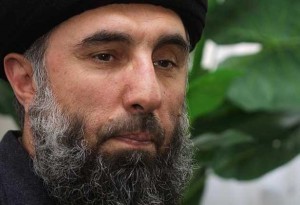
The delegation represents fighters loyal to Gulbuddin Hekmatyar, 60, one of the most brutal of Afghanistan’s former resistance fighters who leads a part of the insurgency against American, NATO and Afghan forces in the north and northeast of the country.

His representatives met Monday with President Karzai and other Afghan officials in the first formal contact between a major insurgent group and the Afghan government after almost two years of backchannel communications, which diplomats say the United States has supported.

Though the insurgent group, Hezb-i-Islami, or Islamic Party, operates under a separate command from the Taliban, it has links to the Taliban leadership and Al Qaeda and has fought on a common front against foreign forces in Afghanistan.

A spokesman for the delegation, Mohammad Daoud Abedi, said the Taliban, which makes up the bulk of the insurgency, would be willing to go along with the plan if a date was set for the withdrawal of foreign forces from the country. Publicly, a Taliban spokesman denied that.

The plan, titled the National Rescue Agreement, a copy of which was given to The New York Times, sets that date as July 2010, with the withdrawal to be completed within six months.

Earlier, Tim McGirk reported:

Pakistan’s arrest of a dozen top Taliban leaders — military commanders, strategic planners and a financier — over the past six weeks is viewed by Afghan and NATO officials with a mixture of relief and suspicion. On one hand, the arrests have disrupted the insurgents’ chain of command, making it tougher for the Taliban’s war council to relay funds and battle plans to their commanders fighting NATO troops. But according to Afghan officials and diplomats in Kabul, the roll-up of Taliban leaders has dealt a blow to secret, preliminary talks under way during the past six months between President Hamid Karzai and the Taliban, as well as those conducted through a separate channel between the Taliban and U.N. envoys.

Sources consulted by TIME in Peshawar, Kabul and Kandahar all characterize those Taliban commanders picked up by Pakistani intelligence agencies as being more malleable to peace talks with Karzai than a core of hard-liners within the Taliban’s ruling shura, or council, who are thought to be hiding in the Pakistani cities of Quetta or Karachi. One foreign diplomat in Kabul says he looked at the list of 14 Taliban arrested by the Pakistanis and thought, “I knew eight of them personally, and they were all in favor of a peace process.” This was confirmed by Kai Eide, the U.N.’s former Special Representative in Afghanistan, who told the BBC on March 18 that Pakistan’s arrests had cut short “talks about talks” between the U.N. and the Taliban in Dubai.

Facebooktwittermail

Time to shut down the CIA

Former CIA operative Robert Baer writes:

On January 10, 2010, CIA director Leon Panetta wrote a Washington Post op-ed in which he disputed that poor tradecraft was a factor in the Khost tragedy [after a Jordanian doctor named Humam Khalil Abu-Malal al-Balawi blew himself up, in one of the deadliest attacks in the CIA’s history]. Panetta is wrong.

An old operative I used to work with in Beirut said he would have picked up Balawi himself and debriefed him in his car, arguing that any agent worth his salt would never expose the identity of a valued asset to a foreigner like the Afghan driver. I pointed out that if he’d been there and done it that way, he’d probably be dead now. “It’s better than what happened,” he said.

One thing that should have raised doubts about Balawi was that he had yet to deliver any truly damaging intelligence on Al Qaeda, such as the location of Zawahiri or the plans for the Northwest bomb plot. Balawi provided just enough information to keep us on the hook, but never enough to really hurt his true comrades. And how was it that Balawi got Al Qaeda members to pose for pictures? This should have been another sign. These guys don’t like their pictures taken. So there were a few clear reasons not to trust Balawi, or at least to deal with him with extreme caution.

But the most inexplicable error was to have met Balawi by committee. Informants should always be met one-on-one. Always.

The fact is that Kathy [the Khost CIA base chief], no matter how courageous and determined, was in over her head. This does not mean she was responsible for what happened. She was set up to fail. The battlefield was tilted in Al Qaeda’s favor long ago—by John Deutch and his reforms, by the directors who followed him, by the decision to drop the paramilitary course from the mandatory curriculum (which would have made Kathy a lot more wary of explosives), and by two endless wars in Iraq and Afghanistan that have worn the CIA down to a nub. Had Kathy spent more time in the field, more time running informants, maybe even been stung by one or two bad doubles, the meeting in Khost probably would have been handled differently—and at the very least there would have been one dead rather than eight.

If we take Khost as a metaphor for what has happened to the CIA, the deprofessionalization of spying, it’s tempting to consider that the agency’s time has passed. “Khost was an indictment of an utterly failed system,” a former senior CIA officer told me. “It’s time to close Langley.”

Baer isn’t prepared to go that far — he still hankers for the “professionalism” of a bigone era. What he fails to note is that at the core of that lost world of espionage was a contest between spies and that on neither side did those past masters of their tradecraft have any desire to die for their cause.

Facebooktwittermail