Israel: Apartheid and beyond

Beyond compare

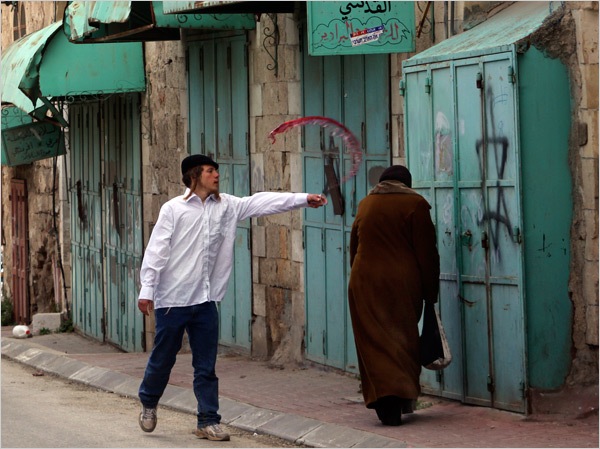
While South Africa was explicit about the goal of apartheid policies, Israel engages in discursive subterfuge so that the intent and effects of their policies must be seen on the ground to be fully comprehended. Shulamit Aloni, the former Israeli minister of education, relates an episode at a bypass road built for settlers in the West Bank:

On one occasion I witnessed such an encounter between a driver and a soldier who was taking down the details before confiscating the vehicle and sending its owner away. ‘Why?’ I asked the soldier. ‘It’s an order—this is a Jews-only road,’ he replied. I inquired as to where was the sign indicating this fact and instructing [other] drivers not to use it. His answer was nothing short of amazing. ‘It is his responsibility to know it, and besides, what do you want us to do, put up a sign here and let some anti-Semitic reporter or journalist take a photo so that can show the world apartheid exists here?’

Part of the appeal of the apartheid comparison is that apartheid is a recognized name for an ideology and practice of separation. There is no similar name for what Israel has done. Neither the pre-state Zionist movement nor the state of Israel has ever spelled out an official policy of discrimination against the Palestinians, and Israel did not institute discriminatory practices in one fell swoop. Instead, it has worked in a piecemeal fashion to constrain Palestinian rights and access to resources. In other words, separation in the Occupied Territories has been a process whose legal contours are harder to discern and whose name has yet to circulate abroad.

A corollary assumption underlying the comparison is that Israeli practices cannot be condemned as discriminatory in and of themselves. They cannot stand on their own, partly because they are difficult to understand unless they are seen up close. Most people understand that Zionism, as an ideology and a project, calls for Jewish communal security, and due to centuries of pogroms and the Holocaust, this project commands considerable sympathy. But many people do not understand that Zionism, as put into practice, calls for an exclusivist state that leads to policies characteristic of apartheid, as defined by the UN.

Zionism retains a significant body of supporters in the West, particularly among Jews and evangelical Christians, but also the public at large. For numerous historical, cultural and political reasons, the American public in particular “stands with Israel,” a fact demonstrated by poll after poll and not lost on successive US administrations. Israel and its backers work constantly to cement this support, in part by equating criticism of Israel, the “Jewish state,” with anti-Semitism. Thus, drawing attention to the parallels between Israel’s occupation and apartheid has been one way to turn the tables, framing the occupation (and not criticism of Israel) as inherently racist. But the introduction of race into the conversation heats it up to the boiling point: As the Jews of Europe suffered from persecution and genocidal racism, and Jews comprised a large percentage of the white Americans who put their bodies on the line for civil rights, equating the practices of Zionism with racism is, for many, inconceivable. Rational debate shuts down.

It may be time to develop a new language. “Apartheid” cannot thoroughly explain Zionist ideology or Israeli practices. It can simply offer broad points of comparison, a framing in an already powerful concept. Yet the Afrikaans term does have a Hebrew counterpart in the term hafrada, meaning separation from and putting distance between oneself and others, in this case, the Palestinians. In Hebrew, the wall is often referred to as the “hafrada barrier.” [continued…]

Editor’s Comment — I seriously doubt whether any effort to develop new language can ever work. We don’t need new terms — we need to bring about a shift in the way existing terms are used.

Apartheid was a system that Africaners believed in and legally institutionalized. The campaign against apartheid was an effort to delegitimize an idea that held legitimacy in the minds of its proponents. And that seems to be the key: people give names to the things they believe in. Efforts in “discursive subterfuge” are efforts to avoid naming that which needs to be denied.

The concept of hafrada has arisen (from what I understand) in an effort to legitimize a policy of separation, yet that policy carries with it the notion that this separation comes out of a security imperative rather than an ideological conviction. It amounts to saying: We don’t want separation but the Palestinians made us do it.

The implication is that Israelis are good Western pluralists who are not racists and who would happily co-exist with their neighbors if only their neighbors could forsake their violent tendencies.

Julie Peteet says: “Perhaps the Hebrew hafrada can one day become a rallying cry as powerful as “apartheid” was in its day.”

To my mind the much more likely candidate is Zionism.

Although this is a word that is a long way from completely losing mainstream legitimacy, it has over the decades acquired increasingly negative connotations. It is a word that seems to have entered a netherworld. Self-described Zionists tend to be right-wing. Liberal Zionists either refrain from unabashedly calling themselves Zionists or they strongly emphasize the “liberal” qualification. Yet Zionism, of whatever political stripe, has at its core the notion of Jewish sovereignty in a Jewish homeland.

What does that mean? The clearest expression that I have recently heard comes from Rabi Toba Spitzer, an American Jew who in a promotional video for J Street underlined this as one of Israel’s core attributes: “[Israel is] the one place in the world where Jews are in charge.”

Whatever Israel’s future — whether its international boundaries can be agreed upon and whether a Palestinian state can be created — the continuation of Israel’s existence as a Jewish state depends on this: that it remains a state where Jews are in charge.

This, it seems to me, reveals the unvarnished nature of Zionism and exposes Israel’s hollow claim to be democratic.

Democracy is government by the demos — the people — and it allows no distinction between the multitude of groups whose amalgamation constitutes “the people”.

Jewish democracy, built on the fantasy of “a land with no people for a people with no land”, has in its practice used “democracy” as a salve to its liberal conscience, yet in the conflict between its Jewish identity and its democratic identity, democracy has consistently lost.

Israel’s enemy within: A rising militancy from the Jewish settlements

The terrorist walked up the quiet alleyway, police say, and went down nine steps and found himself hidden from view in the stone vestibule outside the famous Holocaust survivor’s apartment.

More than a half century ago the Nazis hadn’t been able to kill Ze’ev Sternhell, who would live to become Israel’s foremost expert on fascism and a long-time peace activist. But the terrorist who was now on his door step, whom police allege was a fellow Israeli from the militant settlement movement, was determined to succeed in just that. He attached the bomb, hidden inside a plant, to the doorknob and left.

Sternhell was inside the apartment in West Jerusalem. It was Sept. 25, 2008 and he and his wife had returned from a vacation in Paris the previous day. The hallway leading to the front door was still clogged up with their bags. It was late, a few minutes after midnight, and just like he does every night, Sternhell went to close the metal gate at the entrance of the vestibule that is meant to keep unwelcome guests from breaking and entering. The obstruction in his hallway forced Sternhell to turn sideways, the right side of his body facing outside, as he opened the door to the apartment.

There was a huge noise and something pushed him back. He saw the flash of an explosive. His right leg and thigh stung with pain and began to bleed. He was rushed to hospital in an ambulance. Doctors told him later that if he had not been sideways to the blast, his abdomen would likely have been pierced by the bomb’s shrapnel. He could have died.

Police who came to the scene found leaflets scattered nearby. The fliers offered a reward of $300,000 to anyone who killed a member of Peace Now, Israel’s best known peace movement. “The State of Israel has become our enemy,” the fliers said. Police officers immediately went to guard the home of Peace Now’s most-prominent figure, general secretary Yariv Oppenheimer.

I interviewed Sternhell in his home this January. The police had made no arrests back then, but Sternhell was convinced that fellow Jews had tried to kill him. “This,” said the 73-year-old, whose mother and sister were killed by the Nazis when he was 7 years old, “was an act of pure Jewish terror.” [continued…]

Rights groups: Israeli ambulance rules discriminate

Human rights groups are calling on the Israeli government to cancel instructions preventing ambulances from entering Palestinian neighborhoods in East Jerusalem without a police escort.

According Adalah, The Legal Center for Arab Minority Rights in Israel, Magen David Adom (MDA) ambulances “must wait in a Jewish neighborhood adjacent to the Palestinian neighborhood and may not enter it to transfer the injured or the sick person to the hospital until a police escort arrives, even in life threatening situations.”

In many cases, patients face long delays in receiving treatment, and must be transferred by their own family’s cars, risking complications or increased severity of illness, the rights advocates say.

In a news release on Thursday, Adalah said the procedures “violate the first rule in the work of emergency crews, which is to provide medical aid as soon as possible, and the state’s obligation to ensure the life and physical well-being of each person under its authority.” [continued…]


Facebooktwittermail

U.S. talks tougher on dealing with Iran

U.S. talks tougher on dealing with Iran

The international spokesman for Iran’s main opposition movement called for President Barack Obama to increase his public support for Iranian democrats and significantly intensify financial pressure on Tehran’s elite military unit, the Iranian Revolutionary Guard Corps.

Mohsen Makhmalbaf, during an unofficial visit to Washington, also said Thursday that Iranian opposition leaders supported U.S. efforts to use diplomacy to contain the nuclear ambitions of President Mahmoud Ahmadinejad’s government.

Mr. Makhmalbaf’s remarks came just hours after President Obama expressed growing doubt Thursday during the final day of his Asian tour about his administration’s ability to engage Mr. Ahmadinejad’s government on the nuclear issue.

Mr. Obama emphasized in Seoul that the window for diplomacy was closing and that the U.S. and its allies would begin developing a new set of sanctions against Iran.

“Iran has taken weeks now and has not shown its willingness to say yes to this proposal…and so as a consequence we have begun discussions with our international partners about the importance of having consequences,” Mr. Obama said at a joint news conference with South Korean President Lee Myung-bak.

Mr. Makhmalbaf, who was the campaign spokesman for Iranian presidential challenger Mir Hossein Mousavi, said he believes the current Iranian leadership is incapable of cutting a deal with the West, because the nuclear program is now fundamental to its political survival.

“If they agree not to pursue a nuclear bomb and start negotiations, they will lose their supporters,” Mr. Makhmalbaf said at a lunch hosted by the Carnegie Endowment for International Peace. “Definitely dialogue is better than war. … But can you continue your dialogue without any results?” [continued…]

Editor’s Comment — Well, if you want to use the Israeli-Palestinian conflict as a measure, Washington’s interest in promoting dialogue without results apparently knows no limit.

Facebooktwittermail

To succeed in Afghanistan, we must fail

To succeed in Afghanistan, we must fail

… what is depressing about the situation in Afghanistan is not that it has suddenly gotten much worse but that it steadily fails to get better. By the time U.S. forces left Vietnam, the South Vietnamese army had at least proved itself capable of holding ground against its enemy, albeit with massive U.S. air support. In Afghanistan, by contrast, district after district in the country’s troubled south is falling, in effect, under Taliban control. Meanwhile, in the Western nations with troops here, public support for the war is waning.

Would 40,000 more troops turn this around? They would buy time, provided the time is well used. But the real currency of counterinsurgency is not military strength but durability. A person will be more eager to be friends with a neighbor who will still be around in 20 years to repay any favor or grudge. The Taliban offers this. The U.S. does not. The Afghan government might.

The struggle in Afghanistan is all about Afghans sizing each other up; foreigners are mainly just bystanders. [continued…]

Afghanistan is not making Americans safer

In the light of several incidents or alleged plots that have been in the news in recent months — the Fort Hood shootings and the break-up of a terrorist ring in Colorado — it is appropriate to be re-examine the terrorist threat to the U.S. homeland, and how the debate over troop levels in Afghanistan might affect it.

The most important patterns in international terrorism, with particular reference to threats to the U.S. homeland, in the eight years since the 9/11 attacks can be summarized in two trends pointing in different directions. The first is that the group that accomplished 9/11, al Qaeda, is — although still a threat — less capable of pulling off something of that magnitude than it was in 2001. This is possible in large part because of a variety of measures that the outrage of the American public made politically possible in a way that was not possible before 9/11. These include enhanced defensive security measures at home as well as expanded offensive efforts overseas that have eroded al Qaeda’s organizational infrastructure.

The other major pattern or trend is that the broader violent jihadist movement of which al Qaeda is a part is probably at least as large and strong as it was eight years ago. Here again, some of our own actions have been major contributors. The war in Iraq was one such action. It provided a jihadists’ training ground and networking opportunity similar to what the war against the Soviets in Afghanistan had provided two decades earlier. And in the words of the U.S. intelligence community, the war in Iraq became a cause célèbre for radical Islamists. [continued…]

Facebooktwittermail

Iraq sentences Sunni leader to death

Iraq sentences Sunni leader to death

A leader of a Sunni Awakening Council was sentenced to death for kidnapping and murder on Thursday, setting off charges that the Shiite-dominated Iraqi government was trying to weaken the Sunni movement, which is credited with much of the reduction of sectarian violence here since 2006.

The Sunni leader, Adil al-Mashhadani, who led the Awakening militia in the impoverished Fadhil neighborhood of Baghdad, was arrested in March on charges of terrorism. His arrest set off 24 hours of fighting between Awakening members and American and Iraqi security forces, after which the government dissolved the Fadhil council.

A spokesman for the Justice Ministry, Abdul-Sattar Bayrkdar, provided no further details about the crime.

The Awakening Councils, also known as the Sons of Iraq, are local groups, including former insurgents and Baathists, who turned against the insurgency and received pay, first from the Americans and now from the Iraqis. Under their agreement with the government, they have tacit amnesty for past acts of sectarian violence but not for crimes like murder. [continued…]

Facebooktwittermail

CIA detainees again an issue in Lithuania

CIA detainees again an issue in Lithuania

Twice in the past three years, the Lithuanian Parliament investigated reports that the CIA secretly imprisoned al-Qaeda leaders in this Baltic country. Both times, legislators concluded that there was no evidence.

Now the Parliament is investigating a third time, and it is looking a little harder. Fresh reports of covert CIA flights carrying prisoners from Afghanistan to Lithuania, as well as the revelation that U.S. contractors built a high-security complex at the edge of a forest near Vilnius, have added to the suspicions.

Many Lithuanian officials said they remain unconvinced that their country’s secret services allowed the CIA to detain international terrorists. A few legislators blame Russia and other outside interests for inventing the allegations in an attempt to besmirch Lithuania’s reputation.

But increasingly, after years of issuing denials, Lithuania’s leaders are no longer ruling out the possibility that the CIA operated a secret prison in this northern European country of 3.5 million people, and that its government will have to deal with the fallout. [continued…]

Facebooktwittermail

Obama’s word — a fire that has turned to ashes

Little behind Obama’s tough Mideast talk: analysts

The Obama administration is hardening its tone against Israel, but analysts warned Wednesday the tough talk was mere bluster hiding the lack of a viable plan to revive the Middle East peace process.

“You’ve had three ‘no’s’ to an American president in his first year,” Aaron David Miller, who has served as advisor on Middle East peacemaking to previous US administrations, told AFP.

President Barack Obama is now “faced with the default position, which is words,” said Miller from the Woodrow Wilson International Center for Scholars.

“And the louder they shout, the more there is a paradox. The tougher the words are, the weaker we look.” [continued…]

Editor’s Comment — In an interview with Barbara Walters on Tuesday, Sarah Palin said: “I don’t think that the Obama administration has any right to tell Israel that the Jewish settlements cannot expand.”

Americans for Peace Now quickly shot back: “Gov. Palin may not be aware of it, but every American president in the past 40 years — Republican and Democrat alike — has opposed West Bank settlements. They have done so because settlement expansion is bad for American national security interests and because they have cared about Israel’s well-being.”

It’s curious at this juncture that anyone would think the best way to press the argument against settlements is by citing the consistency of Washington’s opposition — opposition that for 40 years has proved to be utterly ineffectual.

To consistently oppose settlement growth while settlements relentlessly expand suggests that Washington is either convinced that it possesses no leverage, or, that its opposition is disingenuous.

Early on, the Obama administration signaled to Israel that it would distinguish itself from its predecessor by saying what it meant: there would be no contradiction between its public and private declarations.

What Obama now needs to grasp is that the greatest asset he held when he came into office — the power of his word — is a fire that has largely turned to ashes.

There may be a few embers in there, but the only way to rebuild the fire is for the president to show the world what he can do. We no longer have any interest in what he has to say.

Israel building Jewish homes with one hand, destroying Arab homes with the other

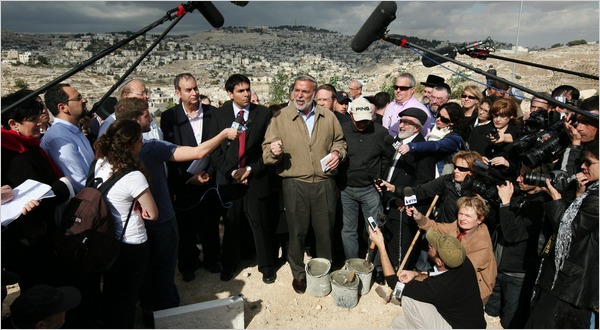
The World Likud movement held a cornerstone-laying ceremony yesterday for the expansion of the neighborhood of Nof Zion, despite – or possibly because of – American pressure against building in East Jerusalem. The Jewish settlement is in the middle of the Arab village of Jabal Mukkaber. Meanwhile, the Jerusalem municipality razed two Palestinian homes in East Jerusalem yesterday.

The plan is to add to Nof Zion 105 new apartments to the 90 ones that are already there, most of which are already occupied. The neighborhood is considered “prestigious,” but the developers ran into trouble a few years ago after they failed to sell the apartments to Jews from overseas. About a year ago the developers changed their marketing strategy to target the local national-religious market – and the apartments began selling quickly. The developers expect the same for the new part of the neighborhood.

The World Likud’s announcement of the ceremony said the neighborhood was near Jabal Mukkaber, “bounded by terraces and with olive trees and grapevines.”

In fact, however, Nof Zion is in the middle of the village, near Palestinian homes. In September Haaretz reported that the family of the late actor-comedian Shaike Ophir criticized the municipality’s decision to name a street in Nof Zion after him.

A group of American Jews interested in buying apartments in Nof Zion attended yesterday’s ceremony. New York State Assemblyman Dov Hikind, who is considered a staunch supporter of the settlers, headed the group. Continue reading

Facebooktwittermail

Why has the left in Israel vanished?

Why has the left in Israel vanished?

he threats uttered against a possible Palestinian declaration of independence by our leaders Benjamin Netanyahu, Avigdor Lieberman and Ehud Barak let the Israeli sanctimony (usually tedious and belabored) drop to the floor for a moment, like a woman’s slip. It exposed the ugly skeleton of force that gives only us freedom of speech – we’re permitted, you’re forbidden. We are allowed to reiterate Israel’s Declaration of Independence over and over. You are not allowed to do so with yours.

The simplest explanation for our privileges, and one that is becoming increasingly significant, is the religious one – the land is ours, from God, not theirs, so we’re allowed to declare independence or harm civilians. The simplest explanation offered by secular people of those privileges is force – we’re strong. These two explanations are the axis of consensus. In the name of this consensus, the military rabbis and officers in the Israel Defense Forces, equipped with equal amounts of hysteria, set out to incite the units on their way to kill in Gaza. Continue reading

Facebooktwittermail

From Gaza to Obama: An open letter

From Gaza to Obama: An open letter

Mr President,

The whole world celebrated your election as the first African-American president of the US. I did not. Neither did the inhabitants of the concentration camp where I live. Your sympathetic visit to Sderot—an Israeli town which was the Palestinian village of Najd until 1948 when its people were ethnically cleansed—three years after your first visit to a Kibbutz in northern Israel in support of its residents, and after your pledge to be committed to the security of the State of Israel and its “right” to retain unified Jerusalem as the capital city of the Jewish people—to give but few examples—were all clear indications of where your heart lies.

Another reason for the writing of this letter is shock at the indifference and arrogance with which Secretary of State Hillary Clinton dismissed Palestinian concerns about Israel’s illegal Jewish-only settlements in the West Bank. Only a few weeks ago you made the admirable statement that all Jewish settlement must halt, and you made it clear that this included expansion of existing settlements as well as the construction of new settlements. However, when Netanyahu let it be known that he had no intention of stopping settlements, you missed an historic opportunity to draw a line: no more billions and no more weapons for Israel unless and until this condition is met. Now Clinton has the Herculean task of pretending that your position on Jewish settlements has not changed, although it is clear you have chosen not to use the very real power at your disposal to bring Israeli policy into line. [continued…] (h/t Rob Browne)

Barack Obama rewards big donors with plum jobs overseas

He may have promised to change Washington, but President Barack Obama is continuing one of its most renowned patronage traditions: bestowing prized ambassadorships on big donors.

Of the nearly 80 ambassadorship nominations or confirmations since Obama’s Inauguration, 56 percent were given to political appointees and 44 percent have gone to career diplomats, according to records kept by the American Foreign Service Association.

The latest nomination came this week, when Beatrice Wilkinson Welters was nominated to serve as ambassador to the island nation of Trinidad and Tobago in the Caribbean.

Welters, a longtime advocate for underprivileged children, and her husband, Anthony, an executive with UnitedHealth Group, generated between $200,000 and $500,000 in donations to Obama’s presidential campaign and an additional $100,000 for his Inauguration, according to the Center for Responsive Politics, a nonpartisan group that tracks political giving. [continued…]

The gaffes of Hillary Clinton

Though none of these comments had a tangible impact on U.S. foreign policy, the same can’t be said about two episodes in which Clinton veered away from the White House’s message on the Middle East peace process. The first came in May, when Clinton revealed at a press conference that Obama’s call for an Israeli settlement freeze included any “natural growth” within existing settlements. The circumstances remain murky, but two sources with detailed knowledge of the U.S.-Israeli relationship say that the Obama team was not yet prepared to make public this departure from Bush-era policy. Rather than leave his secretary of state twisting in the wind, says one of the sources, Obama wound up repeating her formulation a few days later, touching off months of tension with the Israelis. [continued…]

Facebooktwittermail

Is Iraq shifting to Iran?

Is Iraq shifting to Iran?

Are we witnessing a historic shift in the balance of power in the Persian Gulf, with Iran assuming dominance over Iraq? A recent fact-finding trip to Baghdad and Najaf suggests that such fears are exaggerated.

In 2003, the United States overturned the secular but predominantly Sunni Arab regime of Saddam Hussein and then presided over the installation of a more representative Shiite government in Baghdad. This was a huge gift to Iran—itself a Shiite state—and represented a historic shift. Although Iraq is a majority Shiite state, never in more than a thousand years had a predominantly Shiite government ruled there.

The U.S. invasion removed an implacably hostile enemy of Iran that had invaded it in 1980, fought a brutal eight-year war against it in the southern marshes, and created a Sunni Arab coalition with the intent of overturning the Iranian revolution. In an apparent fit of absentmindedness, the G.W. Bush administration succeeded in removing both of Iran’s key rivals—the Taliban was similarly routed in Afghanistan—effectively elevating Iran to the position of a regional superpower. [continued…]

Facebooktwittermail

The Afghan speech Obama should give (but won’t)

‘This administration ended, rather than extended, two wars’… The Afghan speech Obama should give (but won’t)

Sure, the quote in the over-title is only my fantasy. No one in Washington — no less President Obama — ever said, “This administration ended, rather than extended, two wars,” and right now, it looks as if no one in an official capacity is likely to do so any time soon. It’s common knowledge that a president — but above all a Democratic president — who tried to de-escalate a war like the one now expanding in Afghanistan and parts of Pakistan, and withdraw American troops, would be so much domestic political dead meat.

This everyday bit of engrained Washington wisdom is, in fact, based on not a shred of evidence in the historical record. We do, however, know something about what could happen to a president who escalated a counterinsurgency war: Lyndon Johnson comes to mind for expanding his inherited war in Vietnam out of fear that he would be labeled the president who “lost” that country to the communists (as Harry Truman had supposedly “lost” China). And then there was Vice President Hubert Humphrey who — incapable of rejecting Johnson’s war policy — lost the 1968 election to Richard Nixon, a candidate pushing a fraudulent “peace with honor” formula for downsizing the war.

Still, we have no evidence about how American voters would deal with a president who didn’t take the Johnson approach to a losing war. The only example might be John F. Kennedy, who reputedly pushed back against escalatory advice over Vietnam, and certainly did so against his military high command during the Cuban Missile Crisis. In both cases, however, he acted in private, offering quite a different face to the world. [continued…]

Facebooktwittermail

Fine and inquiry possible for Blackwater successor

Fine and inquiry possible for Blackwater successor

The international security company formerly called Blackwater Worldwide is facing large government fines for unlicensed arms shipments to Iraq, as a key Congressional committee is asking for a separate investigation into whether the company bribed Iraqi officials.

In talks likely to result in millions of dollars in penalties, executives from the company, now known as Xe Services, are negotiating with government regulators over years of violations of export laws. According to government officials and former company employees, many of the violations involve arms shipments to Iraq, to outfit company security guards operating inside the country.

In addition, former company officials say that other penalties could result from violations of licensing requirements for the transfer of other forms of military technology and training expertise to foreign countries.

Senator John Kerry, the Massachusetts Democrat who is chairman of the Foreign Relations Committee, wrote in a letter on Wednesday that his committee was told by a top State Department official that the company had engaged in “broad violations” of export laws and that the unlicensed shipments “went beyond weapons for personal use.” [continued…]

Facebooktwittermail

Hasan’s supervisor warned army in ’07

Hasan’s supervisor warned army in ’07

Two years ago, a top psychiatrist at Walter Reed Army Medical Center was so concerned about what he saw as Nidal Hasan’s incompetence and reckless behavior that he put those concerns in writing. NPR has obtained a copy of the memo, the first evaluation that has surfaced from Hasan’s file.

Officials at Walter Reed sent that memo to Fort Hood this year when Hasan was transferred there.

Nevertheless, commanders still assigned Hasan — accused of killing 13 people in a mass shooting at Fort Hood on Nov. 5 — to work with some of the Army’s most troubled and vulnerable soldiers.

On May 17, 2007, Hasan’s supervisor at Walter Reed sent the memo to the Walter Reed credentials committee. It reads, “Memorandum for: Credentials Committee. Subject: CPT Nidal Hasan.” More than a page long, the document warns that: “The Faculty has serious concerns about CPT Hasan’s professionalism and work ethic. … He demonstrates a pattern of poor judgment and a lack of professionalism.” It is signed by the chief of psychiatric residents at Walter Reed, Maj. Scott Moran. [continued…]

Facebooktwittermail

CIA secret ‘torture’ prison found at fancy horseback riding academy

CIA secret ‘torture’ prison found at fancy horseback riding academy

The CIA built one of its secret European prisons inside an exclusive riding academy outside Vilnius, Lithuania, a current Lithuanian government official and a former U.S. intelligence official told ABC News this week.

Where affluent Lithuanians once rode show horses and sipped coffee at a café, the CIA installed a concrete structure where it could use harsh tactics to interrogate up to eight suspected al-Qaeda terrorists at a time.

“The activities in that prison were illegal,” said human rights researcher John Sifton. “They included various forms of torture, including sleep deprivation, forced standing, painful stress positions.”

Lithuanian officials provided ABC News with the documents of what they called a CIA front company, Elite, LLC, which purchased the property and built the “black site” in 2004. [continued…]

Facebooktwittermail

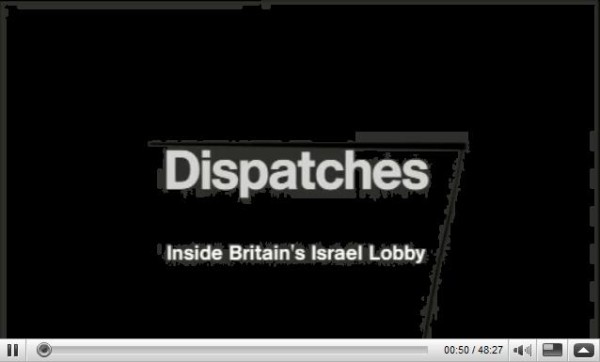
Dispatches: Inside Britain’s Israel Lobby

Dispatches: Inside Britain’s Israel Lobby


(Click on the image above to watch this 48-minute documentary — it’s essential viewing.)

Dispatches investigates one of the most powerful and influential political lobbies in Britain, which is working in support of the interests of the State of Israel.

Despite wielding great influence among the highest realms of British politics and media, little is known about the individuals and groups which collectively are known as the pro-Israel lobby.

Political commentator Peter Oborne sets out to establish who they are, how they are funded, how they work and what influence they have, from the key groups to the wealthy individuals who help bankroll the lobbying.

He investigates how accountable, transparent and open to scrutiny the lobby is, particularly in regard to its funding and financial support of MPs.

The pro-Israel lobby aims to shape the debate about Britain’s relationship with Israel and future foreign policies relating to it.

Oborne examines how the lobby operates from within parliament and the tactics it employs behind the scenes when engaging with print and broadcast media.

Editor’s Comment — It’s hard to predict when the day might come when a broadcast of this nature appears on American television, but if such a day comes, the Lobby here will suffer an irreparable damage in its foundations.

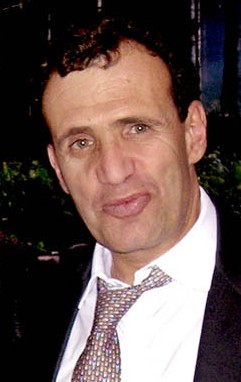
To learn more about a man who figures prominently in the Channel 4 documentary — Chaim “Poju” Zabludowicz, who sounds and looks like a Jewish mafia boss — see the article below.

How the pro-Israel lobby in Britain benefits from a generous London tycoon

Britain’s most active pro-Israeli lobbying organisation – which flies journalists to Israel on fact-finding trips and organises access to senior government figures – has received nearly £1.4m in two years from a billionaire donor whose father made a fortune manufacturing arms in Israel.
The British Israel Communication and Research Centre, known as Bicom, has been one of the most active organisations behind the scenes in the UK during the present Gaza offensive, organising briefings and interview opportunities with senior Israeli spokesmen.

Its biggest funder is Poju Zabludowicz, a London-based tycoon, who has underwritten its campaigning since 2007. The disclosure comes amid an intense struggle in Britain between lobbying organisations working for both sides in the conflict. Foreign affairs specialists say that the injection of funds has ensured that Bicom has become one of the most persistent and slickest media operations in the battle for influence over opinion formers. [continued…]

Facebooktwittermail

Who’s in charge of the language here?

“… who is in charge of the language here?”

After Israeli officials flatly refused a US request to block the approval for the construction of 900 new housing units in occupied East Jerusalem, the Obama administration “lashed out” (CBS) with “anger” (New York Times) and “sharply criticized” (Wall Street Journal) Israel’s decision.

The White House unleashed a shocking display of… “dismay.”

We are dismayed at the Jerusalem Planning Committee’s decision to move forward on the approval process for the expansion of Gilo in Jerusalem.

Thankfully, AP’s Matt Lee wasn’t as obliging as some of his colleagues in their efforts to pump vigor into a pathetic statement.

Challenging State Department spokesman Ian Kelly, Lee asked:

You can’t come up with anything stronger than “dismaying”? I mean, this flies in the face of everything you’ve been talking about for months and months and months.

Kelly: It’s dismaying.

Lee: Yeah, you can’t offer a condemnation of it or anything like that? (Laughter.) I mean, who is in charge of the language here?

On the other side of the Atlantic, Britain’s Foreign Office was a tad more forthright if not quite fiery: “this decision is wrong and we oppose it.”

That kind of language is apparently too strong for this White House. In fact, having originally put out a statement referring to planned “Settlement Expansion in Jerusalem”, the mamby pamdys in charge of language in the most powerful executive office in the world decided to retract “settlement expansion” and simply titled it a statement “on Jerusalem”.

So, the Obama administration is “dismayed” by Israel’s behavior.

It may well be that the word was chosen with exquisite care. It’s etymology is all too appropriate:

Middle English dismaien, from Anglo-Norman *desmaiier : probably de-, intensive pref.; see de- + Old French esmaier, to frighten (from Vulgar Latin *exmagāre, to deprive of power : Latin ex-, ex- + Germanic *magan, to be able to).

The White House could have said:

Prime Minister Netanyahu. You have exposed our impotence. Alas, we have no power.

Should anyone be dismayed at the White House’s language?

Only if you’ve been ignoring the news for the last few months and still imagine that Obama’s speech in Cairo was genuinely a highlight of his presidency.

Bibi goes nuclear on Jerusalem settlements

The plan, if implemented, will allow the construction of 844 units, and these units won’t be inside the existing footprint of the settlement. Rather, they will be on the settlement’s southwestern flank, expanding Gilo in the direction of the Palestinian village of Wallajeh (a village in which a large number of the homes are fighting Israeli demolition orders). This new Gilo plan clearly dovetails with another plan to build a new settlement, called Givat Yael, which would straddle the Jerusalem border and significantly extend Israeli Jerusalem to the south, further sealing the city off from the Bethlehem area and the West Bank (and connecting it to the Etzion settlement bloc). That plan, it was reported yesterday, also appears to be suddenly gaining steam. (for a map showing both the Gilo plan and Givat Yael, click here.)

The Gilo plan is thus extremely provocative on several levels. It represents a clear and public statement from the Netanyahu government that it is neither “freezing” nor acting with “restraint” in East Jerusalem. It compels the Palestinians to respond, just as it compels other regional actors to respond. Finally, it has important strategic implications, since the plan, implemented, would impact on border options for Jerusalem under a future peace agreement.

Today’s crisis was by no means inevitable. Nobody (except for those of us who obsessively follow Jerusalem at its most minute level) had any idea this Gilo plan was on the agenda for today. This means that Bibi could easily have responded positively to US concerns and quietly quashed or delayed the project, without any political cost. Alternatively, he could have offered another (deceptively) constructive course, like allowing it to be deposited for public review but promising to find other ways to hold it up later. Or he could simply have refused to intervene, but kept quiet about it – letting today’s technical approval process run it course and only react publicly, after the fact.

Bibi had a number of conventional options; he chose to go nuclear.

If this feels familiar, it should. This is basically what happened earlier this year with the Shepherds Hotel settlement in Sheikh Jarrah. The plan was on the agenda, Washington weighed in firmly but quietly, hoping for firm but quiet action by Netanyahu – and instead they got a story leaked to the Israeli media (in fact, to the same journalist who broke today’s Gilo story), turning it into an opportunity for Netanyahu to burnish his Jerusalem credentials, at the expense of the prospects for peace. [continued…]

Facebooktwittermail

Imagine living in the West Bank…

Imagine living in the West Bank…

For most Israelis, the occupied West Bank — now mostly concealed behind a barrier far more imposing than the Berlin Wall — could be a million miles away. Even so, thousands really do know what it’s like. They have firsthand experience of the conditions imposed on ordinary Palestinians — they know because during their military service they had a direct role in imposing those conditions.

For the rest of us, beyond hearing testimony, seeing photographs and film, it is really only through an act of imagination that we can transport ourselves there and attempt to understand what it means to be living under military occupation.

The following film was created as a tool to help those of us who take freedom of movement for granted, to have a sense of what it means when that freedom is taken away.

Facebooktwittermail

Obama’s Afghan dilemma: missing security forces

Obama’s Afghan dilemma: missing security forces

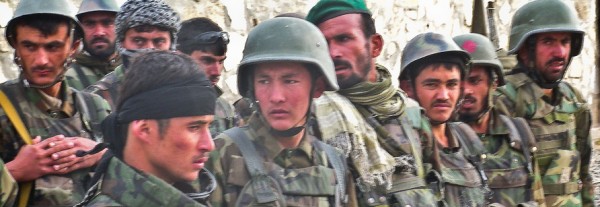
The simple answer to the Administration’s dilemma, in the minds of many in Washington, is to train and equip Afghans to do the job themselves. Obama reportedly rejected all four options offered by his national-security staff on Nov. 11 — ranging from a relatively light increase of some 10,000 troops, mostly for training purposes, to the 40,000 reinforcements requested by McChrystal to wage a counterinsurgency fight — because they failed to make clear how and when responsibility for the war would be transferred to Afghan forces. By doing so, Obama may have pointed to the elephant in the room. On present indications, the Afghan forces are unlikely anytime in the near future to be ready and willing to take over the fight against the Taliban.

The Afghan National Army (ANA) comprises some 94,000 troops, although even by the official numbers, only half of those are combat-ready. The reality of the recent U.S. and British operations in Helmand province, however, suggests that a lot fewer may be capable of being deployed to fight effectively alongside NATO forces, much less on their own. The desertion rate of troops trained in the ANA stands at 20% — and is reportedly even higher among forces deployed in combat. Afghan field officers are in short supply, and the top echelon of the officer corps is dominated by ethnic Tajiks who are often viewed with suspicion by Pashtuns, the country’s largest ethnic group and the one in which the Taliban is based. And the recent killing of five British soldiers by an Afghan policeman they had been mentoring, who then ran off to join the Taliban, highlights the risk of infiltration in efforts to expand the Afghan security forces.

The Karzai government’s poor standing among the Afghan people is generally acknowledged as a problem in that not many Afghans are going to be willing to risk their lives to defend it. [continued…]

Anatomy of an Afghan culture of corruption

Every morning, dozens of trucks laden with diesel from Turkmenistan lumber out of the northern Afghan border town of Hairaton on a two-day trek across the Hindu Kush down to Afghanistan’s capital, Kabul. Among the dozens of businesses dispatching these trucks are two extremely well connected companies — Ghazanfar and Zahid Walid — that helped to swell the election coffers of President Hamid Karzai as well as the family business of his running mate, the country’s new vice president, warlord Mohammed Qasim Fahim.

Some of the trucks are on their way to two power stations in the northern part of the capital: a recently refurbished, if inefficient, plant that has served Kabul for a little more than a quarter of a century, and a brand new facility scheduled for completion next year and built with money from the U.S. Agency for International Development (USAID).

Afghan political analysts observe that Ghazanfar and Zahid Walid are striking examples of the multimillion-dollar business conglomerates, financed by American as well as Afghan tax dollars and connected to powerful political figures, that have, since the fall of the Taliban in 2001, emerged as part of a pervasive culture of corruption here. Nasrullah Stanikzai, a professor of law and political science at Kabul University, says of the companies in the pocket of the vice-president: “Everybody knows who is Ghazanfar. Everybody knows who is Zahid Walid. The [government elite] directly or indirectly have companies, licenses, and sign contracts. But corruption is not confined just to the Afghans. The international community bears a share of this blame.” [continued…]

Taliban make gains in Afghanistan’s forgotten north

The insurgents’ tactics are familiar. Night letters warn village elders to cooperate or face death. Religious “taxes” must be paid, and fiery sermons in mosques attack the Karzai government and international forces.

The locale is startling, however: Afghanistan’s northern Balkh province, which in the years after the fall of the Taliban emerged as one of the most stable – and in its urban hub of Mazar-i-Sharif – most prosperous places in Afghanistan. [continued…]

The big impact of small footprint

A growing number of people, led by Vice President Joe Biden, are advocating a so-called “small footprint” approach to the U.S. military mission in Afghanistan. They propose a significantly reduced military presence that focuses more on destroying al Qaeda than on building Afghanistan, and relies more on airstrikes and special forces than on conventional tactics. America will get about as much security as before, the argument goes, but at a much lower price. A return of the Taliban to power is not necessarily a problem, small footprint proponents argue, because the regime can be deterred from hosting al Qaeda by the threat of U.S. airstrikes or another invasion.

One of the many assumptions behind this tempting argument is that there is a certain level of proportionality between the amount of force we use and the level of resistance we encounter. If we stop occupying Afghanistan and limit violence to the really bad guys, al Qaeda will be unable, and other radicalized Muslims unwilling, to attack the United States.

This may be true for local insurgencies such as the Taliban, but not for small transnational movements such as al Qaeda. In fact, a significantly smaller U.S. presence in Afghanistan may paradoxically generate more anti-Americanism outside Afghanistan and ultimately more anti-Western terrorism than a more conventional military approach. This is because jihadi propaganda today relies on visually powerful symbols to mobilize people, and intermittent “surgical” strikes, and the casualties they cause, may create more such symbols than continuous conventional warfare. [continued…]

Editor’s Comment — Among the administration’s many considerations in revising its Afghan strategy, the one that has nothing to do with the internal logic of “success” or “failure” is the one the ultimately probably concerns Americans more than any other: how much this war is costing.

Upon learning that 25% of American children are now struggling to get enough to eat, President Obama is reported to have found that number “unsettling”. But knowing that the US government is spending a million dollars a year for every single soldier it sends to Afghanistan, Obama should be more than unsettled by the spectacle of poverty in this country. He should realize that his administration currently has its priorities upside down.

Facebooktwittermail