Trump and Bannon ‘personally intervened’ to save Sebastian Gorka

The Daily Beast reports: When the White House backed off its efforts to dump Sebastian Gorka on another federal agency, the controversial counterterrorism advisor had the president himself to thank, The Daily Beast has learned.

After news emerged last week that the Trump administration was setting the stage to move the British-born national security aide out of the White House, President Donald Trump and his chief strategist Stephen Bannon “personally intervened” to put a halt to Gorka’s White House eviction, two senior administration sources said.

Last Friday, The Daily Beast broke the news that the Trump administration had been actively exploring options to remove Gorka from the West Wing, where he serves as “deputy assistant” to the president, and place him at another federal agency. News of Gorka’s looming departure from the White House came amid security clearance issues and a mounting controversy over his involvement with a far-right Hungarian group notorious for its collaboration with the Nazi regime during the World War II. Gorka also holds fringe, clash-of-civilization views that many have criticized as anti-Muslim and extreme.

Senior administration sources described the situation to The Daily Beast last week as “a pain in the ass,” and said that Gorka—“biding his time” on the federal payroll—had virtually zero substantive duties at the White House or role in its decision-making or national-security policy decisions.

However, Gorka owes his continued presence in the White House to President Trump himself, who views him as a robust communicator of the administration’s anti-terrorism, anti-ISIS policies, particularly on conservative radio and TV interviews. [Continue reading…]


Facebooktwittermail

Mark Green withdraws as Trump’s Army secretary nominee, citing ‘false and misleading attacks’

The Washington Post reports: The Trump administration’s Army secretary nominee withdrew from consideration Friday, a senior defense official said, amid mounting opposition to past comments he made about Islam, evolution and gender issues.

Mark E. Green, a firebrand Republican state lawmaker in Tennessee and veteran of the Iraq War, blamed “false and misleading attacks against him” in a statement provided to media and confirmed to be legitimate by defense officials. The Pentagon and the White House had no immediate reaction to the move, but it came hours after a Defense Department spokesman declined to say whether Defense Secretary Jim Mattis still supported him for the job.

Green pulled out after a month of growing calls for the Trump administration to choose someone else for the job. Advocacy groups for lesbian, gay, bisexual and transgender people immediately launched an effort on Capitol Hill to block his nomination after it was announced April 7, saying his history of antagonism toward them made him an unacceptable choice. [Continue reading…]

Facebooktwittermail

Mountains of the mind: ‘I’ve become part of the landscape and it’s become part of me’

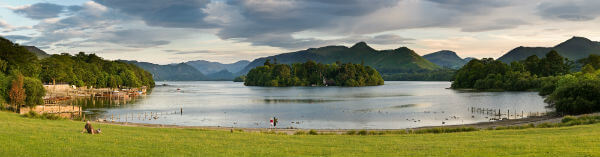
Kevin Rushby writes: We begin in darkness and head up towards the light. It is that time just before the dawn when it’s neither day nor night. Down near Lake Coniston, I can hear an owl and a curlew calling, both claiming the hour for themselves. “I like to come this early,” says Sion. “There’s no one else around. I can’t handle crowds. I get confused.”

It’s 4.30am and I am with Sion Jair, 67, and his partner, Wendy Kolbe, 63, and we are heading up the Old Man of Coniston, an 803-metre Lake District fell noted for its sharp ascent and great panoramas of southern lakeland. Or at least we hope so: there are some clouds massing in the east.

For Sion, this has become a daily ritual, adopted seven years ago when a visit to the doctor changed his life for ever. “I had been feeling permanently tired, and suffering some memory problems. It meant I couldn’t get out walking, you see, and when I can’t walk, I really shut down.”

After tests, the doctor diagnosed chronic anaemia from vitamin B12 deficiency. Injections usually sort that out, but Sion reacted badly to the shots and, without them, was given three years to live. Determined not to give in, he set about walking in earnest, covering around 10 miles a day. “Eventually, it worked. I reckon it cured me of the chronic fatigue,” he says.

But there was another blow. The anaemia had been masking signs of dementia. Given the particular type of condition he was suffering from, he was warned that he could expect periods of total memory loss, mood swings and eventually the inability to look after himself. Sion had become one of the estimated 25 million people worldwide suffering this progressive neurodegenerative disease, as feared now as the Black Death was in its day.

“It was quite scary,” says Sion, adding, in something of an understatement, “I didn’t like the idea.”

Sion’s response was typical of him: he walked even more. Not just the Old Man, but other fells, too: Scafell Pike, Helvellyn, Blencathra, Dollywaggon Pike – all the greats. “I’ve done them so often, I know them blindfolded.” And all this he did without any technological intermediaries, smartphone or GPS – just the steady rhythm of his feet. On one occasion he did 12 peaks and 28 miles in 22 hours, raising cash for his three favourite charities: the Alzheimer’s Society, Mountain Rescue and the Great North Air Ambulance. He also walked in Wales – he walked the Snowdon horseshoe more than 200 times – and Scotland, but it was in Coniston that he found his walking mantra. I suppose you could call it his Coniston Old Man-tra. [Continue reading…]

Facebooktwittermail

The obstacles to gender equality in the Arab world

The Economist reports: Ahmed, who lives in Cairo, allows his wife to work. “At first, I insisted she stay at home, but she was able to raise the kids and care for the house and still have time to go to work,” he says. Still, he doesn’t seem too impressed. “Of course, as a man, I’m the main provider for the family. I believe women just cannot do that.”

Ahmed’s outlook is widely shared throughout the region, where men dominate households, parliaments and offices. Chauvinist attitudes are reflected in laws that treat women as second-class citizens. A new survey by the UN and Promundo, an advocacy group, examines Arab men’s views on male-female relations. (One of the authors, Shereen El Feki, used to write for The Economist.) It finds that around 90% of men in Egypt believe that they should have the final say on household decisions, and that women should do most of the chores.

So far, so predictable. But the survey sheds new light on the struggles of Arab men in the four countries studied (Egypt, Lebanon, Morocco and Palestine) and how they hinder progress towards equality. At least two-thirds of these men report high levels of fear for the safety and well-being of their families. In Egypt and Palestine most men say they are stressed or depressed because of a lack of work or income. Women feel even worse, but for Arab men the result is a “crisis of masculinity”, the study finds.

Far from relaxing their patriarchal attitudes, Arab men are clinging to them. In every country except Lebanon, younger men’s views on gender roles do not differ substantially from those of older men. There may be several reasons for this, but the study suggests that the struggle of young Arab men to find work, afford marriage and achieve the status of financial provider may be producing a backlash against assertive women. In other words, male chauvinism may be fuelled by a sense of weakness, not strength. [Continue reading…]

Facebooktwittermail

The left must vote for Macron

Yanis Varoufakis writes: In 2002, Jacques Chirac, the French right’s leader, faced Jean-Marie Le Pen, the leader of the racist National Front, in the second round of France’s presidential election. The French left rallied behind the Gaullist, conservative Chirac to oppose the xenophobic heir of Vichy collaborationism. Fifteen years later, however, large sections of the French left are refusing to back Emmanuel Macron against Marine Le Pen, Jean-Marie Le Pen’s daughter.

Progressives have good reason to be angry with a liberal establishment that feels comfortable with Macron, a former banker with no previous experience in democratic politics prior to his brief appointment as Minister of Economy, Industry, and Digital Affairs by President François Hollande. They see him, correctly, as the minister who stripped full-time French workers of hard-won labor rights and who today is the establishment’s last resort against Le Pen.

Moreover, it is not hard to identify with the French left’s feeling that the liberal establishment is getting its comeuppance with Le Pen’s rise. In 2015, the same establishment that now supports Macron and rails against the “alternative facts,” loony economics, and authoritarianism of Le Pen, Donald Trump, the UK Independence Party (UKIP), and others, launched a ferociously effective campaign of falsehood and character assassination to undermine the democratically elected Greek government in which I served.

The French left cannot, and should not, forget that sorry episode. But the decision of many leftists to maintain an equal distance between Macron and Le Pen is inexcusable. There are two reasons for this. [Continue reading…]

Facebooktwittermail

Russia reaches deal for Syria safe zones, but some rebels scoff

The New York Times reports: Russia, Iran and Turkey signed a memorandum on Thursday to create four “de-escalation zones” in Syria, to reduce bloodshed in a war now in its seventh year, but many questions remained about the plan.

Presented at talks in Astana, Kazakhstan, the memorandum was the most ambitious of recent proposals, but it was not signed by the Syrian rebels or government. Rebel representatives said it left too many loopholes for the Syrian military to continue what the rebels called indiscriminate bombings of civilian areas.

The memorandum calls for a pause in fighting, including government airstrikes, and for unhindered aid deliveries in and around the four main zones still held by rebels unaffiliated with the Islamic State. It also calls for all parties to fight jihadists like the Islamic State and the Qaeda-linked group once known as the Nusra Front.

The top United Nations envoy dealing with Syria, Staffan de Mistura, called the memorandum an “important, promising, positive step in the right direction.”

But some rebels, in rejecting the deal, said they would not accept Iran as a guarantor and reiterated their demands for the ouster of Iran-backed militias like Hezbollah, an end to arbitrary detentions, and other concessions the government is unlikely to grant. [Continue reading…]

Facebooktwittermail

Contrary to earlier denial, U.S. did bomb mosque in Syria

CNN reports: A US Central Command investigation found that a March US airstrike in northern Syria did in fact strike a building that was part of a “mosque complex,” two US defense officials told CNN Thursday.

For days following the March 16 strike, the Pentagon adamantly rejected the notion that a mosque was hit and that there were civilian casualties — even as numerous social media reports showed images of bodies being taken out of the rubble.

Instead, in the initial hours following the strike by US drones and aircraft, the Pentagon insisted that it hit only a building some 40 feet away from the mosque, where it said al Qaeda members were holding a meeting.

It is that building that the US unwittingly bombed at the time of the strike, according the defense officials. As a result of the investigation, officials found that the facility had been used for religious purposes in the past.

Typically any religious structure would be on a so-called no-strike list, along with hospitals and schools. There are procedures to move structures off the no-strike list if it is clear they have lost their protected status because terrorists are using them and there are no civilians present.

At the time of the strike, the US still believed the building was being used by al Qaeda, according to the officials. But neither would say if the building had ever been on a no-strike list, or had been removed from such a list.

It is also not clear if the building was listed as a religious site on a database that the mission planners were unaware of.

One official said the investigation found that “religious use” was a primary function of the building at times. [Continue reading…]

Facebooktwittermail

The mystery behind a Flynn associate’s quiet work for the Trump campaign

The Washington Post reports: Jon Iadonisi, a friend and business associate of former national security adviser Michael Flynn, had two under-the-radar projects underway in the fall of 2016.

One of his companies was helping Flynn with an investigative effort for an ally of the Turkish government — details of which Flynn revealed only after he was forced to step down from his White House post.

At the same time, Iadonisi was also doing work for the Trump campaign, although his role was not publicly reported, according to people familiar with his involvement.

The project Iadonisi was engaged in for Trump’s campaign focused on social media, according to a person with knowledge of the arrangement. What that work consisted of — and why his company was not disclosed as a vendor in campaign finance reports — remains a mystery. [Continue reading…]

Facebooktwittermail

Putin has a new secret weapon in Syria: Chechens

Neil Hauer writes: The Russian intervention in Syria has been, by most accounts, a success. And Russian President Vladimir Putin is going to do everything he can to keep it that way.

Beginning with an air campaign on behalf of Syrian President Bashar al-Assad in September 2015, Russian forces have not only stopped regime losses but also helped Damascus retake Aleppo city in December 2016. Now with the opposition stronghold under government control and Assad’s hold on power no longer in question, Moscow has said it plans to reduce its presence in the country. But while some Russian forces did initially depart in early January, Moscow is actually expanding its role in Syria. Russian officials announced major expansions to Russian military bases in the country while the number of private contractors fighting on the Kremlin’s behalf also swelled.

Most interestingly, however, Putin deployed an unprecedented Russian weapon to Syria: several units of Chechen and Ingush commandos hailing from Russia’s restive North Caucasus region.

Until recently, regular Russian forces in Syria were largely limited to being a support crew for aircraft conducting strikes across the country. Apart from a few notable exceptions — artillery and special forces deployments in Hama province and military advisors alongside Syrian troops in Latakia — Moscow’s ground game in Syria has been minimal. But the ongoing deployment of the Chechen and Ingush brigades marks a strategic shift for the Kremlin: Russia now has its own elite ground personnel, drawn from its Sunni Muslim population, placed across Syria. This growing presence allows the Kremlin to have a greater role in shaping events on the ground as it digs in for the long term. Such forces could prove vital in curtailing any action taken by the Assad regime that would undermine Moscow’s wider interests in the Middle East while offering a highly effective method for the Kremlin to project power at a reduced political cost.

The exact role and size of the Kremlin’s new brigades are still uncertain. Initial open-source reports on the ground placed the number of Chechens deployed in December at around 500, while some estimates suggested a total of 300-400. The number of Ingush is reportedly slightly smaller, at roughly 300. Despite their designation as “military police,” the units are reportedly drawn from elite Spetnaz formations within the Chechen armed forces and are being employed in a role far beyond the simple rear-area guard duty that’s typical of such units: manning checkpoints, distributing aid, guarding bases, and even coordinating the defense of pro-government strongholds with regime forces.

“I think this represents Moscow’s grudging recognition that it’s stuck in a quagmire,” says Mark Galeotti, a senior researcher at the Institute of International Relations in Prague. In their hybrid civil-military role, capable of a wide range of operations, these brigades have become a go-to deployment for the Kremlin as it seeks to assert itself in various theaters abroad. Chechen fighters have appeared alongside pro-separatist Russian “volunteers” in eastern Ukraine, and several battalions of Chechen servicemen also entered Georgia during its brief war with Russia in August 2008, occupying the town of Gori. At least some of the Chechen troops deployed in Syria have combat experience in eastern Ukraine, with the Russian newspaper Novaya Gazeta reporting that one of the Chechen commanders is Apti Bolotkhanov, who spent substantial time fighting alongside pro-Russian forces in the Donbass.

But beyond their skill on the battlefield, the brigades are valuable to Moscow for other reasons. Russian society and leadership have proved extremely sensitive to casualties in Syria; the Kremlin has gone to extreme lengths to hide its losses. Casualties are often only publicly confirmed after observers find the tombstones of deceased soldiers in their hometown cemeteries. Moscow’s official figures only account for 30 dead in Syria — with the true figure likely much higher. Using nonethnic Russian special personnel might protect the Kremlin from a public backlash sparked by rising battlefield casualties. Losses incurred by the new, North Caucasian contingent are unlikely to trigger such a response. Russian society carries a deep-seated resentment toward natives of the region, in particular Chechens, after two wars in the 1990s and multiple terrorist attacks since.

Gregory Shvedov, the editor of the Caucasian Knot website and an expert on the North Caucasus, says popular disdain toward the region is a major factor for the deployment of these personnel. “Cynically speaking [it would be much easier for Putin] if the Chechens or other [troops] from the Caucasus would be killed in Syria … than those from other regions of Russia,” Shvedov notes. [Continue reading…]

Facebooktwittermail

Why Obama just endorsed Emmanuel Macron for president of France

Zack Beauchamp writes: Former President Barack Obama has endorsed his first candidate for office since leaving office — and it’s not a fellow Democrat. In fact, it’s not even an American.

“I am supporting Emmanuel Macron to lead you forward,” Obama said in English in a video addressed to the French people just days before Macron faces far-right candidate Marine Le Pen Sunday in an election that will determine the country’s next president.

Obama closes the minute-long video in French. “En Marche! Vive la France!”

The endorsement is highly, highly unusual — I can’t think of a time when a former US president explicitly endorsed a candidate in a foreign election. But it makes a lot of sense. [Continue reading…]

Facebooktwittermail

What democracies can learn from Greece’s failed populist experiment

Stathis Kalyvas writes: The abysmal incompetence of populists leads to the mistaken belief that their rule will end quickly. Although SYRIZA’s deafening failure looked certain to spell its political death, Tsipras engineered a snap election in September 2015, which he won easily. It was just too early for the stunned electorate to admit its mistake and turn back to the discredited mainstream parties. Through its complacency towards populist parties, the opposition placed itself at a marked disadvantage. By assuming that the populists’ inability to deliver on their promises would doom them, it ultimately helped them remain in power.

The lesson here is that voters often resist a return to mainstream parties once they have abandoned them. They also don’t like to be reminded that they were wrong to jump on the populist bandwagon in the first place. Rather, it is up to the non-populist parties, the fetid mainstream, to convince the electorate that they themselves have changed and are ready to offer credible solutions. In Greece, SYRIZA managed to reclaim power in September 2015, even after its policies failed, partly because it faced a tired, unreformed opposition. Only when the underdog Kyriakos Mitsotakis, a younger reformist, won New Democracy’s leadership, did this old, tired party gain political traction.

Paradoxically, this suggests that there’s nothing like a populist experiment to re-legitimize the mainstream. With their promises in tatters and their incompetence on full display, populist parties are eventually exposed. At this point, they face the choice to either go mainstream or disappear. Populism may well be a necessary, perhaps effective treatment for the belief that there are easy solutions to hard problems—for belief that one can escape reality. [Continue reading…]

Facebooktwittermail

Case Farms hires vulnerable immigrants who endure harsh conditions that few Americans would tolerate

Michael Grabell reports: By late afternoon, the smell from the Case Farms chicken plant in Canton, Ohio, is like a pungent fog, drifting over a highway lined with dollar stores and auto-parts shops. When the stink is at its ripest, it means that the day’s hundred and eighty thousand chickens have been slaughtered, drained of blood, stripped of feathers, and carved into pieces—and it’s time for workers like Osiel López Pérez to clean up. On April 7, 2015, Osiel put on bulky rubber boots and a white hard hat, and trained a pressurized hose on the plant’s stainless-steel machines, blasting off the leftover grease, meat, and blood.

A Guatemalan immigrant, Osiel was just weeks past his seventeenth birthday, too young by law to work in a factory. A year earlier, after gang members shot his mother and tried to kidnap his sisters, he left his home, in the mountainous village of Tectitán, and sought asylum in the United States. He got the job at Case Farms with a driver’s license that said his name was Francisco Sepulveda, age twenty-eight. The photograph on the I.D. was of his older brother, who looked nothing like him, but nobody asked any questions.

Osiel sanitized the liver-giblet chiller, a tublike contraption that cools chicken innards by cycling them through a near-freezing bath, then looked for a ladder, so that he could turn off the water valve above the machine. As usual, he said, there weren’t enough ladders to go around, so he did as a supervisor had shown him: he climbed up the machine, onto the edge of the tank, and reached for the valve. His foot slipped; the machine automatically kicked on. Its paddles grabbed his left leg, pulling and twisting until it snapped at the knee and rotating it a hundred and eighty degrees, so that his toes rested on his pelvis. The machine “literally ripped off his left leg,” medical reports said, leaving it hanging by a frayed ligament and a five-inch flap of skin. Osiel was rushed to Mercy Medical Center, where surgeons amputated his lower leg.

Back at the plant, Osiel’s supervisors hurriedly demanded workers’ identification papers. Technically, Osiel worked for Case Farms’ closely affiliated sanitation contractor, and suddenly the bosses seemed to care about immigration status. Within days, Osiel and several others—all underage and undocumented—were fired.

Though Case Farms isn’t a household name, you’ve probably eaten its chicken. Each year, it produces nearly a billion pounds for customers such as Kentucky Fried Chicken, Popeyes, and Taco Bell. Boar’s Head sells its chicken as deli meat in supermarkets. Since 2011, the U.S. government has purchased nearly seventeen million dollars’ worth of Case Farms chicken, mostly for the federal school-lunch program.

Case Farms plants are among the most dangerous workplaces in America. In 2015 alone, federal workplace-safety inspectors fined the company nearly two million dollars, and in the past seven years it has been cited for two hundred and forty violations. That’s more than any other company in the poultry industry except Tyson Foods, which has more than thirty times as many employees. David Michaels, the former head of the Occupational Safety and Health Administration (OSHA), called Case Farms “an outrageously dangerous place to work.” [Continue reading…]

Facebooktwittermail

Why Trump’s budding bromance with Xi is doomed

The New York Times reports: President Xi Jinping of China and President Trump, despite vastly different personal styles, have several things in common.

They were both born to privilege. They both possess boundless self-confidence. Each seeks advice from a select inner circle, ignoring the big bureaucracies of his government.

Mr. Trump, not known for his effusive praise of world leaders, has talked up their relationship, saying in an interview on CBS’s “Face the Nation” last weekend that his relationship with China was “already acclaimed as being something very special, something very different than we’ve ever had.” He called Mr. Xi “a man that I’ve gotten to like and respect.”

But beneath the bonhomie, Chinese analysts say, fundamental differences of strategic interest are likely to undermine any personal ties Mr. Trump says he has forged with the Chinese leader. The romance, they say, may be more a short marriage of convenience.

Mr. Trump’s public effusiveness is barely reciprocated in China. The state-run media accords Mr. Trump polite coverage, much more so than it did President Barack Obama — a signal that the government, for the time being, would like the Chinese people to view the American president in a positive light.

Among foreign policy experts, however, there is skepticism that Mr. Trump’s flattery of Mr. Xi, and his reliance on the Chinese leader to bear down on North Korea over its nuclear program, will bring the results he wants. [Continue reading…]

Facebooktwittermail

Alex Jones will never stop being Alex Jones

Charlie Warzel reports: Jones has today found a place in a United States he helped create, led by a president he helped push into office. From the beginning, Donald Trump was a human distillation of Jones’ anti-establishment, anti-globalist, pro-libertarian, massively paranoid worldview; Jones, meanwhile, was an enthusiastic messenger for Trump’s campaign. There was Trump’s appearance on Jones’ show, in which he praised the host’s reputation as “amazing”; Infowars’ “Hillary for Prison” T-shirts, ubiquitous at campaign rallies; Jones’ championing of WikiLeaks’s emails dump and his characterization of Hillary Clinton as, among other things, “a complete wanton power-tripping self-worshipping devil worshipper”; and finally, in the earliest hours of November 9, a tearful Jones outlining Trump’s plan to “build a better world” while clinking champagne glasses with Trump adviser Roger Stone and listening to Frank Sinatra’s “My Way.”

After 15 years of obscurity, Jones has the audience and the influence he always wanted. And yet he is, somehow, off his game. He spent the first 100 days of the Trump administration — what should have been the honeymoon period — apologizing for his role in promoting the “Pizzagate” conspiracy theory, retracting his claims to stave off legal action, and, perhaps most unexpectedly, trying to convince a jury that some of his most salacious on-air diatribes were really just “performance art” all along.

Jones, an unwavering professional conspiracy theorist, is being interrogated about his true beliefs just as his golden age of conspiracy is ascendant. But conversations with 25 people in Jones’ orbit indicate that his troubles don’t stem from a split between the character and the human, but from the fact that Jones is eminently and unquestionably himself at all times. Jones has been this way since he was brawling among parked cars. It’s made him a fortune, but now that his moment is finally here, it could be his undoing. [Continue reading…]

Facebooktwittermail

Reformist candidate in Iranian election overshadows Rouhani

Belkis Wille writes: A candidate who entered the Iranian election race to help his boss, President Hassan Rouhani, is emerging as a favourite of reformists for his bold and outspoken campaign, even though he is ultimately expected to step aside.

Eshaq Jahangiri, the first vice-president, made clear when he registered as a candidate for the top job that he was “supplementing” and not challenging the incumbent – indicating his campaign was a tactical move aimed at defending Rouhani’s achievements.

The presidential election on 19 May is the first since the 2015 nuclear deal with the west, when Tehran rolled back its nuclear programme in exchange for the removal of sanctions.

None of the candidates have spoken of scrapping that accord but two conservatives – Tehran’s mayor, Mohammad-Bagher Ghalibaf, and the hardliner Ebrahim Raisi – have questioned whether Rouhani has achieved tangible economic benefits.

Jahangiri’s strong appearance in the first of three televised debates boosted the reformists but Ghalibaf said it was a “strange phenomenon” that he was running alongside Rouhani.

Referring to the marginalisation of reformists after the 2009 disputed presidential vote, which gave hardliner Mahmoud Ahmadinejad a second term in office, Jahangiri responded: “There’s a movement called the reformist movement and you’ve deprived them of all rights and now you are saying that they shouldn’t even have a candidate?

“I’ve put myself up as a representative of the reformist movement to speak out … They confined everyone to their houses. They [Ahmadinejad’s government] earned $700bn, they took it, they spent it and they left nothing, just unemployment.” [Continue reading…]

Facebooktwittermail

To freeze Syria war, Russia proposes setting up ‘de-escalation zones’

The New York Times reports: Russia is circulating a draft proposal to Syrian rebel groups and diplomats that envisions pausing the war in Syria through the creation of safe “de-escalation zones,” with outside troops possibly acting as buffers between the antagonists.

The draft proposal, shared with The New York Times on Wednesday by participants at Syria talks held in Astana, Kazakhstan, is one of the most detailed suggestions to emerge in recent months in the rocky negotiations to halt the war, now in its seventh year.

The proposal would apply to Syrian government and rebel forces in the four main areas of the country where insurgents unaffiliated with the Islamic State still hold significant territory.

But it faces a number of challenges, most notably acceptance by the Syrian government and the insurgent groups attending the talks.

The insurgent groups suspended participation in the talks on Wednesday to protest what they described as heavy bombing by the Syrian government’s Russian-backed forces the day before that killed dozens, including civilians.

The Russian proposal does not specify measures to prevent government warplanes from carrying out such bombings. Rebels said they remained suspicious of Russian guarantees, regardless, because Russia has been unable or unwilling to curb government attacks on civilians.

President Vladimir V. Putin of Russia said on Wednesday that the proposal had the backing not only of Russia but also of Iran, another ally of President Bashar al-Assad of Syria, and Turkey, which backs some anti-Assad groups.

“We as guarantors — Turkey, Iran, Russia — will do everything for this to work,” Mr. Putin said in remarks carried on Russian television, speaking in Sochi, Russia, after meeting with President Recep Tayyip Erdogan of Turkey.

The proposal was made as the United States, another supporter of some anti-Assad groups, appeared to be re-engaging in the negotiations after a prolonged absence.

Stuart E. Jones, the acting assistant secretary of state, was in Astana, the most senior American official to participate in Syria talks since President Trump took office. [Continue reading…]

Facebooktwittermail