Carrie Arnold writes: Deborah Gordon spent the morning of August 27 watching a group of harvester ants foraging for seeds outside the dusty town of Rodeo, N.M. Long before the first rays of sun hit the desert floor, a group of patroller ants was already on the move. Their task was to find out whether the area near the nest was free from flash floods, high winds, and predators. If they didn’t return to the nest, departing foragers would know it wasn’t safe to go search for food.
When the patrollers returned and the first foragers did leave, they scattered in all directions, hunting for the fat-laden, energy-rich seeds on which the colony depends. Other foragers waited in the entrance of the nest for the first wave to return. If lots of food were nearby, foragers would return and depart quickly, creating a massive chain reaction. If food was scarce, however, the second group of foragers might not leave the nest at all.
“It’s a brilliant system. The ants can take advantage of sudden windfalls of food but they don’t waste energy and resources if there’s nothing there,” said Gordon, who is an ecologist at Stanford University.
The behavior of each individual in the group is set by the rate at which it meets other ants and a set of basic rules. Its behavior alters that of its neighbors, which in turn affects the original ant, in a classic example of feedback. The result is astonishing, complex behavior. “Individually, an ant is dumb,” Gordon says. She gazes off into the distance and inhales sharply. “But the colony? That’s where the intelligence is.”
About 110 miles from Gordon’s offices in Palo Alto, Calif., Mark Goldman studies a different kind of complex, emergent behavior. Goldman is a neuroscientist at the University of California, Davis. For most of his life, he was never particularly interested in ants. But when he traveled to Stanford in 2012 to plan some experiments with a colleague who had recently attended one of Gordon’s talks, something clicked.
“As I watched films of these ant colonies, it looked like what was happening at the synapse of neurons. Both of these systems accumulate evidence about their inputs—returning ants or incoming voltage pulses—to make their decisions about whether to generate an output—an outgoing forager or a packet of neurotransmitter,” Goldman said. On his next trip to Stanford, he extended his stay. An unusual research collaboration had begun to coalesce: Ants would be used to study the brain, and the brain, to study ants. [Continue reading…]
The man who drank cholera and launched the yogurt craze
Lina Zeldovich writes: What do Jamie Lee Curtis, gut bacteria, and a long forgotten Russian scientist have in common? Why, yogurt, of course. But wait, the answer is not that easy. Behind it stretches a tale that shows you can never predict cultural influence. It wends its way through the Pasteur Institute, the Nobel Prize, one of the hottest fields of scientific research today, the microbiome, and one of the trendiest avenues in nutrition, probiotics. It all began in the 19th century with a hyperactive kid in Russia who had a preternatural ability to connect dots where nobody saw dots at all.
When Ilya Metchnikoff was 8 and running around on his parents’ Panassovka estate in Little Russia, now Ukraine, he was making notes on the local flora like a junior botanist. He gave science lectures to his older brothers and local kids whose attendance he assured by paying them from his pocket money. Metchnikoff earned the nickname “Quicksilver” because he was in constant motion, always wanting to see, taste, and try everything, from studying how his father played card games to learning to sew and embroider with the maids. His wife later wrote in The Life of Ellie Metchnikoff that Metchnikoff asked the “queerest” questions, often exasperating his caretakers. “He could only be kept quiet when his curiosity was awakened by observation of some natural objects such as an insect or a butterfly.”
At 16, Metchnikoff borrowed a microscope from a university professor to study the lower organisms. Darwin’s On the Origin of Species shaped his comparative approach to science during his university years — he viewed all organisms, and physiological processes that took place in them, as interconnected and related.
That ability led him to the discovery of a particular cell and enabled him to link digestive processes in primitive creatures to the human body’s immune defenses. In lower organisms, which lack the abdominal cavity and intestines, digestion is accomplished by a particular type of cells — mobile mesodermal cells — that move around engulfing and dissolving food particles. While staring at mesodermal cells inside transparent starfish larvae, Metchnikoff, 37 at the time, had a thought. “It struck me that similar cells might serve in the defense of the organisms against intruders,” he wrote. He fetched a few rose thorns from the garden and stuck them into the larvae. If his hypothesis was correct, the larva’s body would recognize thorns as intruders and mesodermal cells would aggregate around the thorns in an attempt to gobble them up. As Metchnikoff expected, the mesodermal cells surrounded the thorns, proving his theory. He named his cells phagocytes, which in Greek means “devouring cells,” and likened them to an “army hurling itself upon the enemy.” [Continue reading…]
Music: Bossacucanova — ‘Samba Da Minha Terra’
Assad’s hold on power looks shakier than ever as rebels advance in Syria
The Washington Post reports: A surge of rebel gains in Syria is overturning long-held assumptions about the durability of President Bashar al-Assad’s regime, which now appears in greater peril than at any time in the past three years.
The capture Saturday of the town of Jisr al-Shughour in northern Idlib province was just the latest in a string of battlefield victories by rebel forces, which have made significant advances in both the north and the south of the country.
As was the case in the capital of Idlib province last month, government defenses in Jisr al-Shughour crumbled after just a few days of fighting, pointing as much to the growing weakness of regime forces as the revival of the opposition.
The battlefield shifts come at a time when the Obama administration has set aside the crisis in Syria to focus on its chief priorities: defeating the Islamic State militant group in Iraq and concluding a nuclear deal with Iran.
Yet the pace of events in Syria may force the United States to refocus on the unresolved war, which remains at the heart of the turmoil engulfing the Middle East, analysts say. Iran backs Assad, Saudi Arabia backs the rebels, and a shift in the balance of power in Syria could have profound repercussions for the conflicts in Iraq and Yemen. [Continue reading…]
Reuters adds: A coalition of Islamist rebels seized an army base in northwestern Syria at dawn on Monday after a suicide bomber from al Qaeda’s Nusra Front drove a truck packed with explosives into the compound and blew it up.
The capture, reported by a rebel commander and social media videos showing militants inside the base, brought the coalition closer to seizing most of Idlib province and moving toward Latakia, the ancestral home of Syrian President Bashar al-Assad.
Robert S. Ford writes: The Assad regime still enjoys some military advantages and support from Iran and Russia, which helps to prolong the conflict. Yet some recent developments may in fact be indicators of the beginning of the end.
Inability to defend and to counterattack. Although the armed opposition announced its plan to attack the provincial capital of Idlib weeks in advance, the regime lacked forces to reinforce the city, which it lost on March 28 a week after the battle started. The regime has since tried to assemble forces for a counterattack, but its gains have been minimal. At the other end of the country, near the Jordanian border, the regime lost the regional stronghold of Busra Sham on March 25 and then the important Nasib border crossing on April 2—the last functioning crossing with Jordan. Regime counterattacks in those areas also stalled. In sum, the regime appears broadly on the defensive now, and its hold on western Aleppo appears insecure due to the vulnerability of its supply lines.
Increased dissent within the inner regime. There are four secret police agencies that are the foundation of the regime’s power, and in mid-March the regime publicly announced that the heads of two of them had been fired. The removal of Political Security Director Rustum Ghazaleh and Syrian Military Intelligence Chief Rafiq Shehadeh was unprecedented. There are unconfirmed reports that Ghazaleh and Shehadeh fell out over the regime’s dependence on Iran; there also are unconfirmed reports that in the wake of the argument Ghazaleh had to be hospitalized after he was physically attacked. [Continue reading…]
Saudi-led coalition continues bombing Yemen while navies obstruct food imports
The New York Times reports: Warplanes of the Saudi-led military coalition bombed targets in the Yemeni capital on Sunday for the first time since Saudi officials said they were shifting the focus of their campaign against a Yemeni rebel group toward political negotiations and humanitarian relief.
Also on Sunday, at least seven people were killed and dozens wounded in escalating violence in the southern city of Taiz, which was emerging as the latest lethal flash point in Yemen’s civil war.
In addition to the bombings in Sana, the capital, which struck a military base and the presidential palace, the coalition carried out airstrikes in several other provinces, suggesting a broadening, rather than a scaling back, of the monthlong Saudi air offensive against Houthi rebels.
Despite vague talk of negotiations last week, there was little sign that any of the combatants in Yemen’s conflict were preparing to halt the fighting. Rather, the violence heightened in recent days as it became more apparent that the warring parties were locked in a standoff, with the Saudis insisting that the Houthis retreat and the Houthis demanding an unconditional end to the airstrikes. [Continue reading…]
Reuters reports: Yemen is facing mounting problems bringing in food by sea as the danger from fighting between Houthis and government supporters is exacerbated by an arms blockade by Saudi-led coalition navies searching ships for weapons destined for the rebels.
The Arabian peninsula’s poorest country, Yemen imports more than 90 percent of its food, including most of its wheat and all its rice, to feed a population of 25 million, most of it by sea.
Obama secretly allowed looser rules for drone strikes in Pakistan
The Wall Street Journal reports: President Barack Obama tightened rules for the U.S. drone program in 2013, but he secretly approved a waiver giving the Central Intelligence Agency more flexibility in Pakistan than anywhere else to strike suspected militants, according to current and former U.S. officials.
The rules were designed to reduce the risk of civilian casualties. Mr. Obama also required that proposed targets pose an imminent threat to the U.S.—but the waiver exempted the CIA from this standard in Pakistan.
Last week, the U.S. officials disclosed that two Western hostages, U.S. and Italian aid workers Warren Weinstein and Giovanni Lo Porto, were killed on Jan. 15 by a U.S. drone strike aimed at al Qaeda militants in Pakistan. If the exemption had not been in place for Pakistan, the CIA might have been required to gather more intelligence before that strike.
And though support for the drone program remains strong across the U.S. government, the killings have renewed a debate within the administration over whether the CIA should now be reined in or meet the tighter standards that apply to drone programs outside of Pakistan. [Continue reading…]
Effort by Japan to stifle news media is working
The New York Times reports: It was an unexpected act of protest that shook Japan’s carefully managed media world: Shigeaki Koga, a regular television commentator and fierce critic of the political establishment, abruptly departed from the scripted conversation during a live TV news program to announce that this would be his last day on the show because, as he put it, network executives had succumbed to political pressure for his removal.
“I have suffered intense bashing by the prime minister’s office,” Mr. Koga told his visibly flabbergasted host late last month, saying he had been removed as commentator because of critical statements he had made about Prime Minister Shinzo Abe. Later in the program, Mr. Koga held up a sign that read “I am not Abe,” a play on the slogan of solidarity for journalists slain in January at a French satirical newspaper.
The outburst created a public firestorm, and not only because of the spectacle of Mr. Koga, a dour-faced former top government official, seemingly throwing away his career as a television commentator in front of millions of viewers. His angry show of defiance also focused national attention on the right-leaning government’s increased strong-arming of the news media to reduce critical coverage.
Many journalists and political experts say the Abe government is trying to engineer a fundamental shift in the balance of power between his administration and the news media, using tactics to silence criticism that go beyond anything his predecessors tried and that have frustrated many journalists. These have included more aggressive complaints to the bosses of critical journalists and commentators like Mr. Koga, and more blatant retaliation against outlets that persist in faulting the administration. At the same time, Mr. Abe has tried to win over top media executives and noted journalists with private sushi lunches. [Continue reading…]
The cautious rise of atheism and religious doubt in the Arab world
Ahmed Benchemsi writes: Last December, Dar Al Ifta, a venerable Cairo-based institution charged with issuing Islamic edicts, cited an obscure poll according to which the exact number of Egyptian atheists was 866. The poll provided equally precise counts of atheists in other Arab countries: 325 in Morocco, 320 in Tunisia, 242 in Iraq, 178 in Saudi Arabia, 170 in Jordan, 70 in Sudan, 56 in Syria, 34 in Libya, and 32 in Yemen. In total, exactly 2,293 nonbelievers in a population of 300 million.
Many commentators ridiculed these numbers. The Guardian asked Rabab Kamal, an Egyptian secularist activist, if she believed the 866 figure was accurate. “I could count more than that number of atheists at Al Azhar University alone,” she replied sarcastically, referring to the Cairo-based academic institution that has been a center of Sunni Islamic learning for almost 1,000 years. Brian Whitaker, a veteran Middle East correspondent and the author of Arabs Without God, wrote, “One possible clue is that the figure for Jordan (170) roughly corresponds to the membership of a Jordanian atheist group on Facebook. So it’s possible that the researchers were simply trying to identify atheists from various countries who are active in social media.”
Even by that standard, Dar Al Ifta’s figures are rather low. When I recently searched Facebook in both Arabic and English, combining the word “atheist” with names of different Arab countries, I turned up over 250 pages or groups, with memberships ranging from a few individuals to more than 11,000. And these numbers only pertain to Arab atheists (or Arabs concerned with the topic of atheism) who are committed enough to leave a trace online. “My guess is, every Egyptian family contains an atheist, or at least someone with critical ideas about Islam,” an atheist compatriot, Momen, told Egyptian historian Hamed Abdel-Samad recently. “They’re just too scared to say anything to anyone.”
While Arab states downplay the atheists among their citizens, the West is culpable in its inability to even conceive of an Arab atheist. In Western media, the question is not if Arabs are religious, but rather to what extent their (assumed) religiosity can harm the West. In Europe, the debate focuses on immigration (are “Muslim immigrants” adverse to secular freedoms?) while in the United States, the central topic is terrorism (are “Muslims” sympathetic to it?). As for the political debate, those on the right suspect “Muslims” of being hostile to individual freedoms and sympathetic to jihad, while leftists seek to exonerate “Muslims” by highlighting their “peaceful” and “moderate” religiosity. But no one is letting the Arab populations off the hook for their Muslimhood. Both sides base their argument on the premise that when it comes to Arab people, religiosity is an unquestionable given, almost an ethnic mandate embedded in their DNA. [Continue reading…]
Pakistan military’s move on Karachi seen part of ‘creeping coup’
Reuters reports: The chief of Pakistan’s main spy agency is spearheading a campaign to wrest control of the teeming port city of Karachi from a powerful political party, the military’s latest, and some say boldest, foray into civilian life in recent years.
According to military officials, police officers and members of the Muttahida Qaumi Movement (MQM) party which has traditionally dominated Karachi, Rizwan Akhtar has decided the time for policing the city from the sidelines is over.
“There is a quiet, creeping takeover of Karachi by the military,” said a government official close to Akhtar, head of of the Inter-Services Intelligence (ISI) agency, which traditionally acts as an extension of army power in Pakistan.
“Karachi is just too big … too much land, too much business, resources. No one party will be allowed to rule Karachi from now on,” added the official, who declined to be named.
The sweltering, violent metropolis is Pakistan’s largest and wealthiest city. It accounts for half of national revenues and hosts the stock exchange, central bank and a giant port.
The military’s crackdown in Karachi started late in 2013, when the murder rate soared and mutilated bodies were dumped in alleyways daily.
The operation, which escalated last month, is officially aimed at criminals and militants, but some say MQM is the real target. [Continue reading…]
Shell lobbied to undermine EU renewables targets, documents reveal
The Guardian reports: Shell successfully lobbied to undermine European renewable energy targets ahead of a key agreement on emissions cuts reached in October last year, newly released documents reveal.
At the time of the deal European commission president, Jose Manuel Barroso, said: “This package is very good news for our fight against climate change.” Adding: “No player in the world is as ambitious as the EU.”
But it now appears that a key part of the agreement – which was championed by the UK government – was proposed by a Shell lobbyist as early as October 2011.
At the 2014 meeting heads of government agreed a 40% overall target for the bloc’s emissions cuts, but in the run up to the deal there had been disagreement between member states about how best to achieve that. The UK and others had resisted binding targets for individual member states on energy efficiency and renewable energy and these did not make it into the final agreement. Proponents of renewable energy say this was a key missed opportunity to give a strong signal to investors that the EU was serious about clean energy. [Continue reading…]
Bush-era documents show official misled Congress about NSA spying
Bloomberg: Former U.S. Attorney General Alberto Gonzales misled Congress by downplaying a dispute between George W. Bush’s White House and the Justice Department over the legality of the National Security Agency’s warrantless spying program, according to previously classified documents.
The documents released Saturday from the inspectors general of the Defense Department, Justice Department, Central Intelligence Agency, National Security Agency and Office of the Director of National Intelligence concerned their investigations of the surveillance programs initiated by then-President Bush after the Sept. 11, 2001, terrorist attacks.
They show that intelligence and law-enforcement agencies had mixed views toward Bush’s emergency order authorizing the NSA’s bulk collection of telephone and Internet data. For example, agencies other than the NSA had difficulty accessing information on terrorism suspects because of secrecy surrounding the program, lack of training and the large volume and confusing structure of the data.
Suicide crisis: The intergenerational trauma of Native Americans
Jason Coppola reports: Suicide arrives in waves on Pine Ridge Indian Reservation.
On Christmas Day, a 15-year-old Lakota girl took her own life. Soon afterward, a boy, just 14, took his.
Since then, a young man and six more girls, one as young as 12, have followed as this current wave continues to swell. There have been numerous additional attempts in the last few months on this South Dakota reservation of about 28,000 people.
The rate of suicide among Native youth in the United States is more than three times the national average. Very often that rate climbs even higher.
In March 2010, then president of the Oglala Sioux Tribe, Theresa Two Bulls declared a suicide state of emergency after a rise in the number of suicides. Current President John Yellow Bird Steele has now declared one yet again.
There are many difficult issues facing the Oglala Lakota people of Pine Ridge. Stories about alcohol and drug abuse, poverty and depression attract much attention. But to some, these are just parts of a much larger picture.
“I think of suicide in Native communities as an extension of the genocide that occurred against Indigenous peoples starting back in 1492,” said Ruth Hopkins, a chief tribal judge for the Spirit Lake Nation, and tribal judge for the Yankton Sioux and Crow Creek Sioux Tribe. “And I think there’s evidence to show that it’s still continuing to this day.” [Continue reading…]
Why too much Facebook can leave you feeling down
By Mai-Ly Nguyen Steers, University of Houston
“Comparison is the thief of joy”, said former US president Theodore Roosevelt. Spoken more than a century ago, Roosevelt’s words highlight a fundamental truth that is just as relevant today.
In the 1950s, the acclaimed social psychologist, Leon Festinger, devised the social comparison theory to help explain the psychological processes behind why we compare ourselves to others. Festinger proposed that individuals have an innate desire to see how they measure up with their peers on dimensions they deem personally important in order to evaluate how well they are doing.
This tendency hasn’t gone away, and in fact, through social media websites like Facebook we may be engaging in more social comparison than ever before. Such social comparisons can convey important information: are we measuring up in terms of our progress or achievements, or are we falling behind and need to put in the effort to catch up?
How the language you speak changes your view of the world
By Panos Athanasopoulos, Lancaster University
Bilinguals get all the perks. Better job prospects, a cognitive boost and even protection against dementia. Now new research shows that they can also view the world in different ways depending on the specific language they are operating in.
The past 15 years have witnessed an overwhelming amount of research on the bilingual mind, with the majority of the evidence pointing to the tangible advantages of using more than one language. Going back and forth between languages appears to be a kind of brain training, pushing your brain to be flexible.
Just as regular exercise gives your body some biological benefits, mentally controlling two or more languages gives your brain cognitive benefits. This mental flexibility pays big dividends especially later in life: the typical signs of cognitive ageing occur later in bilinguals – and the onset of age-related degenerative disorders such as dementia or Alzheimer’s are delayed in bilinguals by up to five years.
Music: Bossacucanova — ‘Queria’
The Earth’s underworld, where there is no life and nothing to live on

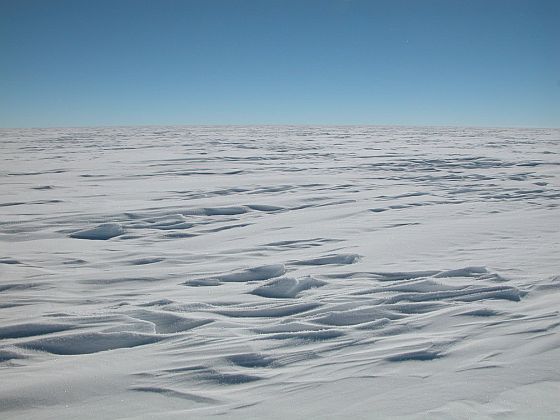
Stephen J Pyne writes: I had not intended to go to the end of nowhere. Even by Antarctic standards, Dome C was the back of beyond. But one afternoon, while fumbling with gear in a McMurdo warehouse, I overheard an allusion to ‘the source regions’. The technicians used the term casually, discussing what goods would be shipped to a remote camp well over the Transantarctic Mountains. But in my mind the phrase sparked an epiphany of symbolism. The source regions. Here was the geographic place at which the East Antarctic ice sheets gathered and then flowed outward. Here was a place that took nothing from elsewhere save fugitive water vapour and turned it into Ice. I had come here to understand Antarctica, by whatever means I could. Surely that quest demanded a journey to the source, for it must certainly contain the essence of the Ice. So after a trip to the National Science Foundation chalet where I pleaded my case, and then a layover at the Pole, adapting to high elevation, I stepped off an LC-130 (‘The Antarctic Queen’) on a dazzling 1981 New Year’s Eve at Dome C and found myself at the end of the world.
Antarctica is a place only an intellectual could love. The further one moves into the interior, away from the coast and storms and marine life that tenuously valence with the Earth, the more dominant the ice and the more extraterrestrial the surroundings. The commonsense perspective of ordinary people is that there is ‘nothing there’, and they are almost right. Even scientists in keen pursuit of data, precious by being rare — our age’s equivalent to the spice and bullion that inflamed early explorers — find Dome C extreme. The rumour soon spread on site, originating from a knot of geophysics graduate students from Wisconsin, that we were not in Antarctica at all but had been secretly drugged on the plane and taken to a prison camp in Minnesota.
Consider the geographic facts: Dome C is an infinitesimal rise in the East Antarctic plateau, atop 14,500 foot of ice that extends outward hundreds of miles. There is little else. This is the most singular environment on Earth, a synthesis of the huge with the simple. Space and time dissolve. The cycle of days and those of seasons collapse into a single spiral. The energy budget is always negative; none during the dark season, reflected away during the light. There is no life. There is nothing to live on. Here is Dante’s imagined innermost circle of hell as an inferno of ice. Here is the Earth’s underworld.
It is a scene of absences and abstractions. There are no mountains, valleys, rivers, shores; no forests, prairies, tide pools, corn and cotton fields, sun-baked deserts; no hurricanes, no floods, no earthquakes, no fires. The only contrast is between an ice-massed land and an ice-saturated sky. The descending ice that links them — the ultimate source of the dome — has the purity of triple-distilled water. Yet it too, as with everything else, simplifies into its most primordial elements, as snowflakes crumble and fall as an icy dust. There is no centre and no edge. There is no near or far; no east or west; no real here or there. Words, too, shrink and freeze, as language and ideas shrivel into monosyllables: ice, snow, dark, sky, blue, star, cloud, white, wind, moon, light, flake, cold. [Continue reading…]
A 100% renewable energy future is possible
Terje Osmundsen writes: Something remarkable is taking place that is bound to lead to a deep reshaping of the energy debate, starting in Europe and North America. It used to be the visionaries and the NGOs who talked about a 100% renewable future, but now leading number-crunchers and energy experts are joining the chorus. In California, the government energy regulator were recently quoted saying that California’s power grid could handle 100% renewables.
The city of Vancouver is an example of a big city that recently committed to run 100% on renewables for power, heating and transportation within 20 years. New studies have been released showing the US can get to 100% renewables by 2050, at marginal extra cost.
“Vers un mix électrique 100% renouvable en 2050” is the name of the brand new report from ADEME (French Agency for Environment and Energy Management), the government agency responsible for green and renewable energy in France. The publication of the report was considered controversial by the French government currently busy securing a majority in the Senate for the new energy transiton law that recommends an electricity mix with 50 % nuclear, down from 75% today.
A political decision was therefore made to postpone the publication of the study, but after the media house Mediapart got hold of it, it has now been published by ADEME.
The 120-page report (exluding attachments) provides a number of interesting and surprising insights. First of all, the study demonstrates that a 100% renewable power system in France is both possible and economically attractive, also when taking into account a number of alternative scenarios including extreme weather, stricter regulations against wind, solar and high-voltage connections, slower technology development, and the like. [Continue reading…]
Why would an American college student run away to Syria and join ISIS?
Ellie Hall reports: In her first tweet from Syria, “Umm Jihad” uploaded a picture of four passports — American, Canadian, U.K., and Australian — being held by hands garbed in the black gloves worn by the most conservative Muslim women. “Bonfire soon, no need for these anymore, alhamdulliah [thanks be to God],” she captioned the image. Now that they were living under the Islamic State, no other nationality mattered.
Using her account @ZumarulJannah, which has now been suspended, Umm Jihad expressed contempt for the United States. “Soooo many Aussies and Brits here,” she tweeted. “But where are the Americans, wake up u cowards.” If other American ISIS supporters couldn’t make it to Syria, she said, “Terrorize the kuffar [derogatory term for non-Muslims] at home.”
“Americans wake up!” she tweeted on March 19. “Men and women altogether. You have much to do while you live under our greatest enemy, enough of your sleeping! Go on drive-bys and spill all of their blood, or rent a big truck and drive all over them. Veterans, Patriot, Memorial etc Day parades..go on drive by’s + spill all of their blood or rent a big truck n drive all over them. Kill them.”
BuzzFeed News has confirmed this anti-American ISIS member is a 20-year-old American citizen named Hoda who ran away from her home in Hoover, Alabama, in November to become an ISIS member, bride, and, now, widow.
After BuzzFeed News identified Hoda and found her family, she agreed to give a series of exclusive interviews from Raqqah, Syria, over the messaging app Kik, on the condition that no images of her uncovered face would be published. [Continue reading…]