Pierre Omidyar’s role at First Look Media

Following a report on Pierre Omidyar’s involvement in Ukrainian politics, Glenn Greenwald felt obliged to explain why he knew nothing about this.

That’s because, prior to creating The Intercept with Laura Poitras and Jermey Scahill, I did not research Omidyar’s political views or donations. That’s because his political views and donations are of no special interest to me – any more than I cared about the political views of the family that owns and funds Salon (about which I know literally nothing, despite having worked there for almost 6 years), or any more than I cared about the political views of those who control the Guardian Trust.

There’s a very simple reason for that: they have no effect whatsoever on my journalism or the journalism of The Intercept. That’s because we are guaranteed full editorial freedom and journalistic independence. The Omidyar Network’s political views or activities – or those of anyone else – have no effect whatsoever on what we report, how we report it, or what we say.

I’m having a hard time squaring Greenwald’s description of the editorial independence of The Intercept with the following statements made by his colleague there, Jeremy Scahill, as reported by the Daily Beast:

The whole venture will have a lower wall between owner and journalist than traditional media. Omidyar, he says, wanted to do the project because he was interested in Fourth Amendment issues, and they are hiring teams of lawyers, not just to keep the staff from getting sued, but to actively push courts on the First Amendment, to “force confrontation with the state on these issues.”

“[Omidyar] strikes me as always sort of political, but I think that the NSA story and the expanding wars put politics for him into a much more prominent place in his existence. This is not a side project that he is doing. Pierre writes more on our internal messaging than anyone else. And he is not micromanaging. This guy has a vision. And his vision is to confront what he sees as an assault on the privacy of Americans.”

Facebooktwittermail

‘There’s no hope left’: the Syrian refugee camp that is becoming a township

f13-iconRobin Yassin-Kassab writes: This must be how the Palestinian camps began their slow transformation into towering townships. The Syrian families here are still living in canvas or plastic tents, but the little shops selling falafel and cola on the Atmeh camp’s “main street” are now breeze-block and corrugated-iron constructions. And now nobody dares talk about going home.

Atmeh camp, just inside Syria, hugs the Turkish border fence. It is December, and the population has risen in the six months since I was here in June, from 22,000 to almost 30,000. This new settlement is one of many – there are more than 6 million people displaced inside Syria, and more than 2 million in neighbouring states. The camp’s population dwindles and swells according to the vicissitudes of battle. When the regime reconquered (and obliterated) the Khaldiyeh quarter of Homs last July, an additional 50 to 60 families a day arrived.

Six months ago, when I last visited, I was able to travel deep into liberated Syria – as far as Kafranbel in the south of Idlib province – with nothing to fear from the Free Army fighters manning checkpoints. This time I don’t dare go as far as Atmeh village, sitting on the nearby hilltop, because it is occupied by al-Qaida franchise the Islamic State of Iraq and Syria (Isis). Last June the camp’s residents referred derisively to the mainly foreign jihadists as “the spicy crew”. Now they are a real threat – abducting and often murdering revolutionary activists, Free Army fighters and journalists. This development contributes greatly to the gloom of the camp’s residents.

In the camp, the steaming vats of the Maram Foundation’s charity kitchen are cooking the same meal they were six months ago: lentil soup. Children wait with buckets in the red mud outside for lunch to be distributed. Also on the main street is a new clinic and one-room dentist (funded by the Syrian-American Medical Society). Dr Haytham grins as he complains about the conditions. The roof leaks, and the recent snowstorm has flooded his crowded space, destroying electrical equipment. As he serves us tea, a boy called Mahmoud, aged about five, walks in to observe us, his face marked by post-treatment leishmaniasis scars (a resurgent disease caused by the sand flies which prosper in uncollected rubbish). Mahmoud seems a pleasant child at first, but after a smiling photograph with one of our group his mood flips; he violently pinches the hand of the man he’d been cuddling up to and then takes to whipping his older sister with a cable. “Nobody can control him,” somebody remarks. “He doesn’t have a father.”

Fatherless, husbandless, homeless … When I ask a man where he’d come from he changed the name of his town from Kafranboodeh to Kafr Mahdoomeh, “the Demolished Village”. I ask him why. “Because they haven’t left one house standing, nor any animals in the fields. What will we ever return to? The whole town’s gone.” [Continue reading…]

Facebooktwittermail

Russia’s nebulous definition of sovereignty

a13-iconJames Meek writes: Over the past twenty years Russia has removed a set of territories from other countries. It removed the eastern part of Moldova, now known as Transdniestria; it removed the north-western Black Sea part of Georgia, Abkhazia; and it snipped away the territory controlling Georgia’s main road to the Caucasus mountains, South Ossetia. The intention now appears to be to carry out the same operation in Crimea, removing it from Ukraine.

In each case, the procedure, not necessarily planned as such, has nonetheless followed a similar pattern. The territories contain large populations who, with varying degrees of justification, objected to the governments handed them in the post-Soviet order of newly independent states. The Slavs of Transdniestria feared Moldova would force them to speak Moldovan, and would unite with Romania. The Abkhazians wanted greater autonomy within, or independence from, Georgia. The South Ossetians, historically close to Russia, feared being cut off, within Georgia, from their northern kin in Russia, on the other side of the mountains.

In each case, clandestine Russian military support, helped by the presence of Russian bases in or near the territories concerned, found willing takers in the form of local military, paramilitary forces and self-proclaimed ‘Cossacks’; Russian troops only became involved openly as ‘peacekeepers’. In each case, the internationally recognised governments supposedly in charge of the discontented territories took military steps to enforce their claim. The presence of ‘peacekeepers’ and Russian-armed militias led to clashes, giving the Russian military cause to intervene decisively on the side of the separatists. (Newly independent Georgia’s first military response to Abkhazian separatism was particularly heavy-handed.)

Russia’s explanation is that the territories concerned should never have been allowed to go beyond Moscow’s caring embrace, and that in each case, they are fulfilling the wishes of, and protecting, the majority of the territories’ inhabitants. There is some truth in the latter point; but it is a dangerous argument for Moscow to make, given that it could be equally applied, against Russia, to Chechnya. [Continue reading…]

Facebooktwittermail

Ukraine says Russia sending ‘thousands’ of troops to Crimea

n13-iconAFP reports: Ukraine accused Russia on Saturday of sending thousands of extra troops into Crimea as the Kremlin vowed to help restore calm on the flashpoint peninsula and Washington warned of “costs” to Moscow should it use force.

Defence Minister Igor Tenyukh told the Ukrainian government’s first cabinet session that Russia’s armed forces had sent 30 armoured personnel carriers and 6,000 additional troops into Crimea in a bid to help local pro-Kremlin militia gain broader independence from the new pro-EU leaders in Kiev.

Tenyukh accused Russia of starting to send in these reinforcements on Friday “without warning or Ukraine’s permission.”

The defence chief spoke as dozens of pro-Russian armed men in full combat gear patrolled outside the seat of power in Crimea’s capital Simferopol. Similar gunmen had seized the city’s parliament and government buildings on Thursday and taken control of its airport and a nearby military base on Friday.

Ukraine’s border guard service also reported that about 300 armed men dressed in “full battle fatigues” were trying to seize its main headquarters in the Crimean port city of Sevastopol under orders from Russian Defence Minister Sergei Shoigu.

The rugged peninsula jutting into the Black Sea — host to a Kremlin fleet and with an ethnic Russian majority — has now been effectively cut off from the mainland. [Continue reading…]

Facebooktwittermail

ISIS retreats from key Syrian town

n13-iconThe Washington Post reports: Radical fighters staged a strategic retreat from a key Syrian town on the Turkish border Friday amid growing tensions with rival rebel factions that threaten to erupt in a new war.

The retreat from Azaz of the Islamic State of Iraq and Syria ended a five-month reign of terror by the renegade al-Qaeda faction, which has used its position in the town to control access to Turkey and compromise supply routes for more moderate rebels.

The withdrawal could signal a new phase in the intra-rebel fighting that has pitted more moderate factions against extremists across northern Syria in the past two months, undermining the wider battle against forces loyal to President Bashar ­al-Assad.

The exit came a day ahead of a deadline issued by Jabhat ­al-Nusra, the official al-Qaeda affiliate in Syria, for ISIS to cease confronting rival rebels or face a new war. Commanders speculated that the ISIS fighters, who have resisted previous attempts at mediation, chose to pull out from Azaz to reinforce strongholds elsewhere in preparation for further conflict. [Continue reading…]

Facebooktwittermail

British ex-Guantanamo inmate denies Syria-related terror charges

n13-iconReuters reports: A British man once held at Guantanamo Bay turned human rights campaigner told a court in London on Saturday he would plead not guilty to providing training and funding terrorism in Syria, police said.

Moazzam Begg, 45, who was released without charge from the U.S. military prison in Cuba in 2005, was detained at his home in Birmingham in central England last week and charged with terrorism offences dated between October 2012 and April 2013.

He appeared at Westminster Magistrates Court on Saturday and was remanded in custody to appear at London’s Old Bailey criminal court on March 14.

It is the first time he has ever faced any charges.

Begg was held by the U.S. government at Bagram detention center in Afghanistan, then Guantanamo Bay in Cuba, for nearly three years after being arrested in Pakistan in February 2002 suspected of being a member of al-Qaeda.

After his release, he founded Cage, a human rights organization that campaigns for the rights of people detained during counter-terrorism operations.

Cage accused British authorities of “retraumatising” Begg by refusing to grant him bail, saying this was part of a campaign to criminalize legitimate activism. [Continue reading…]

Facebooktwittermail

Erdogan recordings appear real, analyst says, as Turkey scandal grows

n13-iconMcClatchy reports: Turkish Prime Minister Recep Tayyip Erdogan tightened his grip Wednesday on the judiciary and the Internet in an effort to tamp down a corruption scandal that’s rattled his government and now appears to implicate his immediate family and him.

Evidence mounted that a series of audio recordings in which Erdogan can be heard instructing his son, Bilal, to get rid of enormous sums of money are authentic, with the government firing two senior officials at the state scientific agency responsible for the security of encrypted telephones and a U.S.-based expert on encrypted communications, after examining the recordings, telling McClatchy that the recordings appear to be genuine.

Erdogan on Tuesday called the five purported conversations an “immoral montage” that had been “dubbed.” But he acknowledged that even his secure telephone had been tapped.

The only apparent “montage” was combining the five different conversations into one audio file, said Joshua Marpet, a U.S.-based cyber analyst who has testified in court on the validity of computer evidence in other Turkish criminal cases. He said there was no sign that the individual conversations had been edited. [Continue reading…]

Facebooktwittermail

Climate change and world history

f13-iconChristopher Rose, Outreach Director, Center for Middle Eastern Studies, University of Texas, Austin, interviews Sam White, Department of History, the Ohio State University:

Rose: Your first book, which is called The Climate of Rebellion in the Early Modern Ottoman Empire, explores the far reaching effects of the severe cold and drought in the Middle East during the so-called Little Ice Age, and your current research looks at how New World settlement was affected during the same period. I want to start off by asking a really broad question: what is the importance of understanding climate and climate change in the broader field of world history?

White: That’s an excellent question. The importance is really twofold. One point is the importance of climate for history as history. Climate was something that past historians generally were not focused on, they were looking for political history, for social history, for economic history, really looking for everything but the environment. Environmental history as a field has really taken off over the past generation, that is to say, looking at ways that humans have changed the environment in the past, and the ways that environmental factors have affected the course of human history.

Climate, though, was not a large part of that discussion. There were some exceptions — I could name some important scholars of the past couple generations who have looked at it — but in the mainstream, even of environmental history, climate was not much considered. Now, though, with rising concern over global warming, climate is really starting to enter the picture. This is for two reasons. One is that historians, like all other people, have become aware of climate simply as a force in human affairs. Second is that, along with the rising concern over global warming, there has been a great deal more research into reconstructing past climates, so that we can know about climate much more than every before.

Now, with that greater understanding, we can see ways that climate fits into greater history in much more details and a much more convincing way than ever before. We can see how large scale climate changes have affected large scale developments, particularly in more extreme climates, particularly at the edges of settlement or agriculture, either in Arctic lands or deserts, and also in more particular short term ways as major climatic extremes have influenced the course of human events, as I discussed in my book about the Ottoman Empire. So, with that in mind, we can see climate really as an actor in history for really the first time.

The other part of this equation, too, is what does looking at the climate of the past — what does looking at the past experience of climate change help us understand about our current predicament, about how the world will face global warming now. Here, I have to say, we’re not going to give exact policy predictions. We can’t raise the bar too high, as it were. But, I do think there are wider lessons — wider parables, perhaps, that we can gather from looking at the experience of climate change in the past. With that in mind, we can look to see if there are bigger patterns in how people handle climate change and whether we can relate that to the present day. [Continue reading…]

Facebooktwittermail

What, me? Biased?

a13-iconTom Jacobs writes: Pretty much all of us are prone to “bias blindness.” We can easily spot prejudice in others, but we’re oblivious to our own, insisting on our impartiality in spite of any and all evidence to the contrary.

Newly published research suggests this problem is actually worse than we thought. It finds that even when people use an evaluation strategy they concede is biased, they continue to insist their judgments are objective.

“Recognizing one’s bias is a critical first step in trying to correct for it,” writes a research team led by Emily Pronin and Katherine Hansen of Princeton University. “These experiments make clear how difficult that first step can be to reach.”

Although their findings have clear implications regarding political opinions, the researchers avoided such fraught topics and focused on art. In two experiments, participants (74 Princeton undergraduates in the first, 85 adults recruited online in the second) looked at a series of 80 paintings and rated the artistic merit of each on a one-to-nine scale. [Continue reading…]

Facebooktwittermail

Russia accused of invading Crimea as U.S. warns against ‘grave mistake’

n13-iconThe Guardian reports: Russia and the west are on a collision course over Crimea after Moscow was accused of orchestrating a “military invasion and occupation” of the peninsula, as groups of apparently pro-Russian armed men seized control of two airports and Russian troop movements were reported across the territory.

The new authorities in Kiev, installed following the removal of the pro-Moscow president this week, accused Russia of “an attempt to seize airports”, and on Friday evening the main Crimean air hub at Simferopol was still guarded by unidentified, uniformed men. Later it was announced that the airport had been closed and incoming flights diverted.

“I see what has happened as a military invasion and occupation in violation of all international treaties and norms,” said the new Ukrainian interior minister, Arsen Avakov. “This is a direct provocation aimed at armed bloodshed on the territory of a sovereign state.”

The White House warned that any Russian military intervention in Ukraine would be a “grave mistake”. The UN security council took up the issue at a session last night. The sudden escalation of the crisis amounts to the most dangerous stand-off in the former Soviet Union since the Russia-Georgia war six years ago. [Continue reading…]

The Daily Beast adds: Private security contractors working for the Russian military are the unmarked troops who have now seized control over two airports in the Ukrainian province of Crimea, according to informed sources in the region. And those contractors could be setting the stage for ousted President Viktor Yanukovich to come to the breakaway region.
[…]
Paul Saunders, the executive director of the Center for the National Interest, said that the Obama administration faces a particularly bad set of choices when it comes to responding to the airport takeovers, especially if is confirmed they are Russian government controlled security contractors.

“If the Obama administration takes a public position that they are Russian forces, then they need to explain what they plan to do. This will be quite similar to the red line in Syria, in that they will have to choose between imposing the ‘consequences’ that administration officials have warned about, repeating statements that have been ignored, or saying that it is not really an ‘invasion,’” he said. [Continue reading…]

Luke Harding writes: Moscow’s military moves so far resemble a classically executed coup: seize control of strategic infrastructure, seal the borders between Crimea and the rest of Ukraine, invoke the need to protect the peninsula’s ethnic Russian majority. The Kremlin’s favourite news website, Lifenews.ru, was on hand to record the historic moment. Its journalists were allowed to video Russian forces patrolling ostentatiously outside Simferopol airport.

Wearing khaki uniforms – they had removed their insignia – and carrying Kalashnikovs, the soldiers seemed relaxed and in control. Other journalists filming from the road captured Russian helicopters flying into Crimea from the east. They passed truckloads of Russian reinforcements arriving from Sevastopol, home to Russia’s Black Sea fleet.

The Kremlin has denied any involvement in this very Crimean coup. But Putin’s playbook in the coming days and months is easy to predict. On Thursday, the Crimean parliament announced it would hold a referendum on the peninsula’s future status on 25 May. That is the same day Ukraine goes to the polls in fresh presidential elections.

The referendum can have only one outcome: a vote to secede from Ukraine. After that, Crimea can go one of two ways. It could formally join the Russian Federation. Or, more probably, it might become a sort of giant version of South Ossetia or Abkhazia, Georgia’s two Russian-occupied breakaway republics – a Kremlin-controlled puppet exclave, with its own local administration, “protected” by Russian troops and naval frigates. Either way, this amounts to Moscow’s annexation of Crimea, de facto or de jure.

Ewen MacAskill adds: But a Russian takeover of the Crimea could turn out to be disastrous in the long run. The Kremlin would be underestimating the impact of the sizeable population of Tartars who were forcibly deported from the Crimea by Stalin in 1944 and not allowed to return until the beginning of Perestroika in the 1980s.

[Igor] Sutyagin, who is at the London-based Royal United Services Institute, said: “The Tartars are very anti-Russian. They will do anything not to be under the Russians. They will be determined to fight for Ukraine. It would be a second Chechnya. There are a lot of mountains in Crimea, just as in Chechnya.”

Facebooktwittermail

Searching for the elephant’s genius inside the largest brain on land

elephant

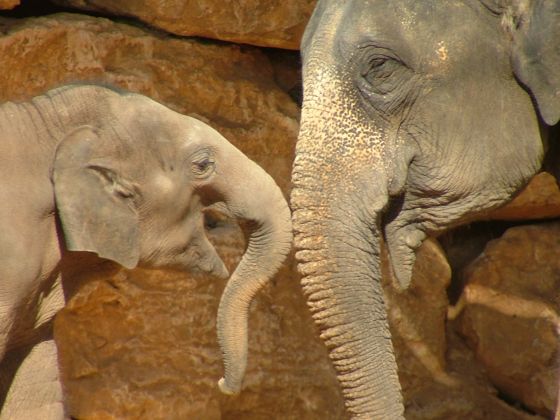
Ferris Jabr writes: Many years ago, while wandering through Amboseli National Park in Kenya, an elephant matriarch named Echo came upon the bones of her former companion Emily. Echo and her family slowed down and began to inspect the remains. They stroked Emily’s skull with their trunks, investigating every crevice; they touched her skeleton gingerly with their padded hind feet; they carried around her tusks. Elephants consistently react this way to other dead elephants, but do not show much interest in deceased rhinos, buffalo or other species. Sometimes elephants will even cover their dead with soil and leaves.

What is going through an elephant’s mind in these moments? We cannot explain their behavior as an instinctual and immediate reaction to a dying or recently perished compatriot. Rather, they seem to understand—even years and years after a friend or relative’s death—that an irreversible change has taken place, that, here on the ground, is an elephant who used to be alive, but no longer is. In other words, elephants grieve.

Such grief is but one of many indications that elephants are exceptionally intelligent, social and empathic creatures. After decades of observing wild elephants—and a series of carefully controlled experiments in the last eight years—scientists now agree that elephants form lifelong kinships, talk to one another with a large vocabulary of rumbles and trumpets and make group decisions; elephants play, mimic their parents and cooperate to solve problems; they use tools, console one another when distressed, and probably have a sense of self (See: The Science Is In: Elephants Are Even Smarter Than We Realized)

All this intellect must emerge, in one way or another, from the elephant brain—the largest of any land animal, three times as big as the human brain with individual neurons that seem to be three to five times the size of human brain cells. [Continue reading…]

Facebooktwittermail

The ultimate interactive weather map

a13-iconCurrent wind and temperature at 500hPa:

The current wind conditions in the polar vortex at 10hPa:

Click on the Earth button to see an interactive view where you can:

  • select current condition, +/- 3hrs, +/- 1 day (Control: Now « – ‹ – › – »);
  • switch between atmospheric and ocean conditions (Mode: Air – Ocean);
  • select a height from surface upwards (Height: Sfc – 1000 – 850 – 700 – 500 – 250 – 70 – 10 hPa);
  • choose an overlay showing wind, temperature, relative humidity, air density, etc. (Overlay: Wind – Temp – RH – AD – WPD – TPW – TCW – MSLP);
  • and select a projection.

Drag the image to view different locations and double-click for larger scale. Click on projection “O” to return to an orthographic view of the planet.

Source: http://earth.nullschool.net/ Creator: Cameron Beccario

Facebooktwittermail

The threat to rhinos also endangers their habitat

rhinos

Rachel Nuwer reports: Some large animals influence their surroundings more than others. Elephants are known as ecosystem engineers for their tendency to push over trees and stomp shrubby areas in the savannah into submission. This keeps forests at bay, which otherwise would overtake open grasslands. Wolves, on the other hand, are apex predators. They keep other species like deer in check, preventing herbivore populations from getting out of hand and eating all the plants into oblivion. Both elephants and wolves are keystone species, or ones that have a relatively large impact on their environment in relation to their actual population numbers.

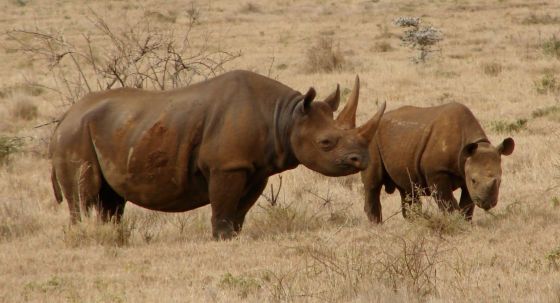
African rhinos, it turns out, also seem to be a keystone species. According to a recent study published by Scandinavian and South African researchers in the Journal of Ecology, rhinos maintain the diverse African grasslands on which countless other species depend.

Surprisingly, prior to this study no one had looked closely rhinos’ roles in shaping the ecosystem. Most researchers focused on elephants instead. Suspecting that these large animals influence their environment, the authors took a close look at rhinos in Kruger National Park in South Africa. [Continue reading…]

Facebooktwittermail

Grab great wildlife experiences while you can?

e13-iconPerhaps it should be called eco-catastrophe tourism: rushing to catch a glimpse of natural wonders before they disappear.

For under $4,000 you can visit Kenya to witness Africa’s wildebeest migration. But if you want to be able tell your grandchildren what it was like, don’t wait too long.

CNN lists “11 great wildlife experiences [that] could disappear within your lifetime,” and helpfully provides details about the tour operators and packages so that you can catch a glimpse of the last rhinoceros, polar bears, tigers, gorillas, and orangutans.

I guess each of these creatures is acquiring greater market value, the closer to extinction it comes.

I imagine that the tour operators and tourists feel that these enterprises are contributing towards the protection of species and their environments and to some extent that might be true.

There also seems to be a predatorial element at play. The hunters might only come away with photographs, videos, and memories, yet appealing to a desire to see something rare before it is lost, caters more to an acquisitive impulse than it contributes towards the prevention of species and habitat loss.

Facebooktwittermail

Monsanto blamed for kidney disease epidemic in Sri Lanka

n13-iconOOSKAnews reports: New research by Sri Lankan medical professionals has identified high amounts of the herbicide glyphosate as the culprit behind the high levels of chronic kidney disease in the country’s North Central province and other key rice-producing areas.

The researchers found that glyphosate, which is widely used in paddy cultivation to prepare the soil, has the capacity to retain arsenic and other heavy metals in water.

Their report was presented to Special Projects Minister S. M. Chandrasena on February 5. The researchers urged the government to take immediate action to ban imports of the harmful agro-chemical. They said the prevalence of end-stage renal failure is reaching epidemic levels in the country.

Dr. Channa Jayasumana, a senior lecturer at the Medical Faculty of Rajarata University and the lead researcher, said: “The chemical glyphosate mixed with hard water lasted for about 20 years.”

“The toxins contained in agro-chemicals are deposited in hard water found in North Central Province, and they will remain in the human body for over six years,” he added.

Jayasumana said that in 2012, Sri Lanka had imported nearly 500,000 metric tonnes of glyphosate, which was developed by US-based international agricultural giant Monsanto. Monsanto’s patent for the broad-spectrum herbicide, marketed under the brand name “Roundup,” expired in 2000.

Jayasumana claimed Monsanto was aware of the health risks, but had not educated poor farmers and people living in areas where rice is cultivated to take precautions to prevent disease. [Continue reading…]

Facebooktwittermail

Selective outrage — there’s a lot of it going around

e13-iconJustin Doolittle writes: Wrapping up a two-day trip to Saudi Arabia recently, a high-ranking State Department official sharply criticized the ruling family’s egregious and intensifying human rights abuses.

“Lack of progress in Saudi Arabia has led to a great deal of frustration and skepticism in my government and in the international community,” an assistant secretary of state told reporters in Riyadh. “There hasn’t been sufficient action taken by the government to address the issues of justice and accountability,” this official asserted. “We heard from many people about people who are still unaccounted for, whose whereabouts and fates are unknown to their family members.”

The United States, justifiably incensed by the Saudi regime’s ongoing assault on human rights, is considering tabling a resolution at the March session of the U.N. Human Rights Council, which might include a call for an international investigation. “We understand growing concern, frustration, and skepticism among many in my country and many in the international community that has led to increasing calls for international investigation and an international process,” the visiting diplomat warned.

None of what you have just read actually happened, of course. In reality, the U.S. official is assistant secretary of state Nisha Biswal, she was speaking to reporters in Colombo, not Riyadh, and her blunt criticism was in reference to the government of Sri Lanka, not the ruthless, theocratic dictatorship that rules Saudi Arabia. [Continue reading…]

Among those who express most outrage about U.S. foreign policy, the most common refrain is that American officials are guilty of shameless hypocrisy. “[N]o government that only fumes selectively over fundamental issues of right and wrong deserves to be taken seriously,” Doolittle writes. Maybe not.

But shouldn’t the same standard then apply to those who are criticizing the U.S. government and its allies?

There are those whose outrage cannot be contained whenever the Israeli government bombs Gaza and yet offer barely a murmur when the Syrian government bombs its own cities. Why should their selective outrage be taken any more seriously than that of the U.S. government?

The fact is, if only those who are unblemished by hypocrisy have a right to speak out, then we would probably all have to remain silent.

Instead, we should probably be more concerned about whether the outrage is justifiable than whether the critic is without fault.

Facebooktwittermail