Yearly Archives: 2010

In asymmetric diplomacy the Palestinians are guaranteed to lose

Hussein Agha and Robert Malley write:

The status quo, though sub-optimal, presents no imminent danger to Israel. What Israelis want from an agreement is something they have learned either to live without (Palestinian recognition) or to provide for themselves (security). The demographic threat many invoke as a reason to act — the possibility that Arabs soon might outnumber Jews, forcing Israel to choose between remaining Jewish or democratic — is exaggerated. Israel already has separated itself from Gaza. In the future, it could unilaterally relinquish areas of the West Bank, further diminishing prospects of an eventual Arab majority. Because Israelis have a suitable alternative, they lack a sense of urgency. The Palestinians, by contrast, have limited options and desperately need an agreement.

In any event, Abbas will return to a fractured, fractious society. If he reaches a deal, many will ask in whose name he was bartering away Palestinian rights. If negotiations fail, most will accuse him of once more having been duped. If Netanyahu comes back with an accord, he will be hailed as a historic leader. His constituency will largely fall in line; the left will have no choice but to salute. If the talks collapse, his followers will thank him for standing firm, while his critics are likely in due course to blame the Palestinians. Abbas will be damned if he does and damned if he doesn’t. Netanyahu will thrive if he does and survive if he doesn’t. One loses even if he wins; the other wins even if he loses. There is no greater asymmetry than that.

The Ma’an news agency reports:

Videos of Palestinian leaders asking the Israeli public to join them as “partners for peace” were coordinated and co-implemented by the Palestinian arm of the Geneva Initiative, the organization’s director confirmed.

The first phase in a mass-media campaign – funded by USAID – “aims to counter the myth that there is no partner on the Palestinian side,” director of the Israeli branch Gadi Baltiansky explained.

Three clips were released on Israeli TV on Sunday featuring Palestinian members of the peace delegation to Washington, each declaring themselves a “partner for peace.”

“Shalom to you in Israel, I know we have disappointed you, I know we have been unable to deliver peace for the last 19 years,” chief PLO negotiator Saeb Erekat says in his short appearance, while Yasser Abed Rabbo warns of the “dangers for both of us” if talks fail.

Following attacks on Israeli settlers in the West Bank on Tuesday and Wednesday, the Wall Street Journal reported:

Mahmoud Ramahi, a Hamas lawmaker based in the West Bank, said he believes this week’s attacks were likely calculated to cause a rift between Palestinian Authority security forces and Israeli forces and show that Hamas is still a vibrant force on the ground that cannot be ignored.

“This proves that the only way to deal with Hamas is for the Palestinian Authority to sit with Hamas and make a reconciliation deal to build a common strategy. Hamas is a reality,” he said. “The United States and the Palestinian Authority have to sit and talk with it.”

Hamas’s political leaders, such as Mr. Ramahi, say they aren’t privy to discussions within the group’s military wing. That apparent division underscores the diffuse power structure the group cultivates. Hamas’s military wing claimed responsibility for both of this week’s attacks and on Thursday promised more.

The orders to carry out the attacks could have come from any number of different power centers. The group’s top leaders are based in Damascus. The leadership there tends to adopt a harder, more militant line. But it is also thought to be heavily influenced by Syria, which can, if it desires, rein the group in, according to analysts.

The group’s leadership in Gaza, which has to live with any retaliation from Israel, has tended to be more pragmatic and moderate. Just hours before Tuesday’s attack, Hamas authorities in Gaza arrested a group of militants from another faction inside the territory trying to fire rockets into Israel.

This week’s attacks could also have been ordered or carried out by a militant cell operating on its own initiative. Israeli security officials believe a small number of militants in the West Bank are directly controlled by Hezbollah or Iran. In the past, Hamas’s leadership has claimed responsibility for attacks carried out by other factions, said retired Brig. Gen. Shalom Harari, a former Israeli intelligence officer who has been studying Hamas for a quarter century.

“Hamas’s infrastructure in the West Bank has been very heavily hurt by ongoing operations by the Palestinian Authority and the Israeli army the last two or three years, and not many cells are left there that can operate,” said Gen. Harari. “If it’s really Hamas, then this is a sleeping cell that they kept for special occasions.”

Meanwhile, Reuters reported:

Hours before peace talks were set to begin in Washington, Jewish settlers defiantly announced plans on Thursday to launch new construction in their West Bank enclaves in a test of strength with Palestinian Islamists.

Naftali Bennett, director of the settlers’ YESHA council, told Reuters settlers would begin building homes and public structures in at least 80 settlements, breaking a partial government freeze on building that ends on September 26.

“The idea is that de facto it (the freeze) is over,” Bennett said, criticizing the U.S.-sponsored Israeli-Palestinian talks as aiming for a “phony peace” and rejecting Palestinian demands for a halt to settlement building on land they want for a state.


Facebooktwittermail

Hamas says negotiations have already failed

If the political purpose behind this week’s attacks on Israeli settlers in the West Bank is still hard to decipher, it seems the message they sent out was directed more to Palestinians in the West Bank than to the parties currently gathered in Washington.

Nicolas Pelham considers Hamas’ resilience as a political force and notes that the recent attacks “earned plaudits not only from Hamas’ core constituency, but also from a broad swathe of Fatah and secular activists, including some senior actors, disillusioned by 19 years of negotiations based on an ever flimsier framework.”

In its attacks on settlers on two consecutive nights in different parts of the West Bank, Hamas demonstrated its reach despite a three-year, US-backed PA military campaign and exposed the fallacy of the PA’s claims to have established security control in the West Bank. “It’s not muqawama (resistance) against Israel,” says ‘Adnan Dumayri, a Fatah Revolutionary Council member and PA security force general. “It’s muqawama against Abbas.” It also enabled the Islamists to catch seeping popular disaffection across the political spectrum toward a process of negotiations that appeared to Palestinians to be leading into a blind alley of continued Israeli control. Should Abbas fail to negotiate a halt to settlement growth, Hamas in its armed attacks against settlers would emerge from its three-year political wasteland to offer Palestinians an alternative.

In contrast to the international media, where the attack was roundly condemned, in Palestine the attack earned plaudits not only from Hamas’ core constituency, but also from a broad swathe of Fatah and secular activists, including some senior actors, disillusioned by 19 years of negotiations based on an ever flimsier framework. Unlike the Annapolis process or the “road map,” the twin Bush administration initiatives that the Obama administration chose to ditch, the current negotiations lack any terms of reference or agreed-upon script. Palestinians ask why Abbas agreed to meet Netanyahu given that none of the Arab targets required to turn proximity talks into direct ones were reached prior to the Obama administration’s announcement of the meeting. When American elder statesman George Mitchell presented the parties with 16 identical questions on the core issues requiring yes or no answers, Israel responded to each with a question of its own. In his August 31 press briefing before the White House meeting, Mitchell again declined to specify if Israel had agreed even to extend its (partially honored) settlement freeze past the September 26 expiration date.

Even the architects of the new process admit their concern that time is against them. Unveiling his plans for statehood within a year at a Ramallah press conference in late August, Fayyad warned that “every day that this conflict is not resolved there are more facts on the ground that make a two-state solution less likely.” Yet public incredulity is eroding confidence not only in a future peace deal, but also in the Palestinian leadership itself. The less Fayyad and Abbas deliver, the more tenuous their legitimacy, and the more Israel’s doubts about their reliability as neighbors become self-fulfilling. (Typifying the extent to which the leadership is removed from grassroots sentiment, the PA sponsored a groveling televised address from PLO chief negotiator Saeb Erekat to Israelis on the eve of the talks, in which he assumed Palestinian responsibility for the previous peace process failures. “Shalom to you in Israel. I know we have disappointed you,” he said. “I know that we have been unable to deliver peace for the last 19 years.”) Outside Abbas’ headquarters, Fatah activists derisively draw a distinction between the Fatah of the sulta, or regime, and that of Yasser Arafat. And away from Ramallah’s cafés, in the back streets of Jenin, which Fayyad’s proclaimed economic boom has yet to reach, talk of revolution and intifada is again in the air. Without something tangible to show for his continued pursuit of negotiations, due to resume in the rosy after-dinner glow in Washington, even the president’s advisers predict that Abbas and his political institution are finished.

The London-based Saudi-owned Asharq al-Awsat newspaper interviewed the Gaza-based senior Hamas leader Mahmoud al-Zahar who struck a conciliatory tone in his remarks about Mahmoud Abbas.

Al-Zahar, speaking by telephone to Asharq al-Awsat said: “our policy has always been to let the negotiations continue, and we have not devoted one day of our work to stopping them”. Al-Zahar added: “There is a portion of the Palestinian people [Fatah and its supporters], who are in favor of negotiations in order to impose their political program, and we are convinced that this political program will not bring what is needed. The question then is: why take responsibility for undermining something that has already failed? In relation to our program of resistance, as you can see the West Bank has buckled under overwhelming pressure. Therefore, our program’s activities relate to the level of pressure imposed on the Palestinian people in the West Bank”.

In response to a question about whether he meant what he said, that the synchronization of the terrorist attack with the launch of the negotiations was just a coincidence, he said: “Coincidence or no coincidence, it was the decision made by people in the field [Izz ad-Din al-Qassam Brigades, the military wing of Hamas]. Some say [the timing of the attacks] was intentional, that is not true. When people are presented with opportunities, as well as the means and targets, they act”. He went on to say that: “any attempt to try and belittle these actions, and link them to the negotiations, is not true at all”.

Al-Zahar believes that the vision of Palestinian President Mahmoud Abbas regarding the negotiations is: “like our vision. The issues [that will be raised] and their results are already known. Jerusalem: Israelis are united on the issue of Jerusalem and the Palestinian negotiator will not get anything from them. Secondly: refugees, can convince the discarded refugees in Jordan, Syria or Lebanon [to accept what is being proposed]? As for the [issue of] water, there is no indication that Israel will give up the groundwater located in the West Bank”.

In response to a question regarding the reasons which prompted Mahmoud Abbas to go to Washington to negotiate, if his vision was the same as that of Hamas, al-Zahar claims that “if there is a call from Washington, he must go”. He added that “Abu Mazen [Mahmoud Abbas] will not do what Abu Ammar [Yasser Arafat at Camp David] did, in that he will not give up on the principles and the issue will be over”.

Facebooktwittermail

The fountainhead of global strife

If the Obama administration had been as visionary as Obamamania promised it might be, Chas Freeman might not have merely been briefly offered the post of chair of the National Intelligence Council; he could have become a fine Secretary of State. Instead, the Israel lobby made sure he gained no position at all, but by doing so ensured that he would retain the freedom to speak with more candor than any government official ever dares.

In a speech he delivered yesterday in Norway, Freeman laid out the US role in seeking and obstructing Middle East peace, with a clarity and style rarely found in foreign policy discourse.

Islam charges rulers with the duty to defend the faithful and to uphold justice. It demands that they embody righteousness. The resentment of mostly Muslim Arabs at their governing elites’ failure to meet these standards generates sympathy for terrorism directed not just at Israel but at both the United States and Arab governments associated with it.

The perpetrators of the September 11, 2001, terrorist attack on the United States saw it in part as reprisal for American complicity in Israeli cruelties to Palestinians and other Arabs. They justified it as a strike against Washington’s protection of Arab governments willing to overlook American contributions to Muslim suffering. Washington’s response to the attack included suspending its efforts to make peace in the Holy Land as well as invading and occupying Afghanistan and Iraq. All three actions inadvertently strengthened the terrorist case for further attacks on America and its allies. The armed struggle between Americans and Muslim radicals has already spilled over to Pakistan, Yemen, Somalia, and other countries. Authoritative voices in Israel now call for adding Iran to the list of countries at war with America. They are echoed by Zionist and neo-conservative spokesmen in the United States,

The widening involvement of Americans in combat in Muslim lands has inflamed anti-American passions and catalyzed a metastasis of terrorism. It has caused a growing majority of the world’s 1.6 billion Muslims to see the United States as a menace to their faith, their way of life, their homelands, and their personal security. American populists and European xenophobes have meanwhile undercut liberal and centrist Muslim arguments against the intolerance that empowers terrorism by equating terrorism and its extremist advocates with Islam and its followers. The current outburst of bigoted demagoguery over the construction of an Islamic cultural center and mosque in New York is merely the most recent illustration of this. It suggests that the blatant racism and Islamophobia of contemporary Israeli politics is contagious. It rules out the global alliances against religious extremists that are essential to encompass their political defeat.

Freeman went on to say:

Vague promises of a Palestinian state within a year now waft through the air. But the “peace process” has always sneered at deadlines, even much, much firmer ones. A more definitive promise of an independent Palestine within a year was made at Annapolis three years ago. Analogous promises of Palestinian self-determination have preceded or resulted from previous meetings over the decades, beginning with the Camp David accords of 1979. Many in this audience will recall the five-year deadline fixed at Oslo. The talks about talks that begin tomorrow can yield concrete results only if the international community is prepared this time to insist on the one-year deadline put forward for recognizing a Palestinian state. Even then there will be no peace unless long-neglected issues are addressed.

Peace is a pattern of stability acceptable to those with the capacity to disturb it by violence. It is almost impossible to impose. It cannot become a reality, still less be sustained, if those who must accept it are excluded from it. This reality directs our attention to who is not at this gathering in Washington and what must be done to remedy the problems these absences create.

Obviously, the party that won the democratically expressed mandate of the Palestinian people to represent them — Hamas — is not there. Yet there can be no peace without its buy-in.

Peacemaking must engage those who are willing to use violence. Yet this assertion — whose truth is so obvious — is still being treated as a bold idea.

The narrative of peace promoted through the Bush era and still being propagated by Obama, suggests that peace is somehow produced by rallying together everyone who is willing to denounce violence — as though those who are willing to use violence will lose that capacity if they can be sufficiently marginalized. But on the contrary, political marginalization invariably has the opposite effect as those whose grievances are ignored, look for increasingly extreme means to make themselves heard.

Facebooktwittermail

Terrorism is like advertising — it short-circuits the rational mind

Update below

If there’s just one lesson we can draw from the last decade it is this: utter the word “terrorism” and thought grinds to a halt, perceptions become blinkered and the power of human intelligence is suddenly put on hold.

Consider the attack near Hebron in the West Bank yesterday in which four Israelis were gunned down by Palestinian gunmen.

A report in the Jerusalem Post conveys a particularly harrowing moment in the attack’s aftermath as volunteers from Zaka, the Israeli community emergency response network, arrived at the scene of the shooting.

Zaka volunteer Momy Even-Haim was dispatched to the scene of the attack with his colleagues, when to his horror he discovered that his wife was among the dead.

“We saw a crying volunteer, and at first we did not understand what was happening — he has seen many disasters before,” Zaka volunteer Isaac Bernstein told The Jerusalem Post.

“Then he started shouting, ‘That’s my wife! That’s my wife!’ We took him away from the scene immediately,” Bernstein added. Even-Haim was taken to his home in Beit Hagai by his colleagues.

Tragedy takes infinite forms. Those in closest proximity can never be expected to respond rationally but from a distance, rationality is not only possible — it is essential.

Instead though, this attack — like so many before — has produced a series of highly predictable knee-jerk responses.

The White House issued a statement saying:

The United States condemns in the strongest possible terms the terrorist attack today perpetrated by Hamas in which four Israelis were killed in the southern West Bank. We express our condolences to the victims’ families and call for the terrorists behind this horrific act to be brought to justice. We note that the Palestinian Authority has condemned this attack. On the eve of the re-launch of direct negotiations between Israelis and Palestinians, this brutal attack underscores how far the enemies of peace will go to try to block progress. It is crucial that the parties persevere, keep moving forward even through difficult times, and continue working to achieve a just and lasting peace in the region that provides security for all peoples.

Is Washington already ahead of Israel in identifying the culprits?

That seems unlikely. Much more likely is that the White House is content to parrot press reports in which representatives of Hamas are quoted claiming responsibility for the attack. If Hamas claims responsibility, its claim will be accepted at face value; if it were to deny responsibility, it’s denial would be treated with skepticism. That’s the way the “analytical” process works.

Israeli press reports are less clear on the matter.

In Haaretz, Avi Issacharoff and Amos Harel report:

Even though no official claim of responsibility was made, the investigation by the security services of Israel and the Palestinian Authority suggest that the culprits were a cell which identifies itself, more or less, with Hamas. Fauzi Barhum, one of the spokesmen for the group in the Gaza Strip, did not openly claim responsibility for the attack, but hinted that his group was behind the shooting.

“The resistance continues everywhere,” he said.

In recent months the Hamas leadership in the Gaza Strip and Damascus has pressed West Bank-based teams of gunmen to resume the attacks in an effort to make it more difficult on the Palestinian Authority and stir up tension with Israel.

Two months ago a large Hamas network was uncovered in the southern Hebron Hills, a “sleeper cell” that was revived, whose members are suspected of murdering an Israeli policeman in a similar shooting incident, along the same route, several kilometers from the spot of last night’s terror attack.

A cell which identifies itself “more or less” with Hamas — that’s pretty vague. Moreover, a previously unknown group calling itself the Al-Haq (“Rights”) Brigades has claimed responsibility for Tuesday’s shooting, according to the Ma’an news agency.

As for Issacharoff and Harel’s claim that a Hamas cell was responsible for the June Hebron Hills shooting, that also is far from clear. When suspects were arrested by Israel’s internal security services, Shin Bet, Haaretz reported:

It is unclear… who is responsible for the establishment of this group, which is reportedly affiliated to Palestinian President Mahmoud Abbas’ Fatah movement. Israeli security sources have been examining the possibility that the gunmen behind the June 14 attack were from various Palestinian militant groups.

Whether or not Hamas had a role in yesterday’s attack it is too soon to tell. And even if some or all of the gunmen turn out to belong to the movement does not necessarily reveal a great deal about the level of command and control or political motives for the attack.

Whatever the motives, the outcome itself has opened political opportunities to each constituency that now portrays itself as a victim.

Given that the attack took place in an area controlled by the IDF, President Abbas could have taken the opportunity to point out that the attack underlines the fact that there can ultimately be no security solution to the political conflict. Instead, Palestinian security services have been quick to launch what is being described as one of the largest arrest waves of all time in the West Bank.

Hamas lawmaker Omar Abdel-Raziq said more than 150 members had been detained, and others had been summoned to police stations for questioning.

He accused Abbas of trying to please the Israelis.

“These are political arrests,” he said. “They are trying to tell the Israelis that they are capable of doing the job after the attack.”

At the funerals of the four Israelis killed, settler leaders took the opportunity to push for settlement expansion, call for vengeance (a call which has already been acted upon), deny the existence of the Palestinian people and make a thinly-veiled appeal for ethnic cleansing:

Rabbi Dov Lior of Kiryat Arba eulogized the victims saying that “this is a grave tragedy for the families, for the people of Israel and for the state. God, avenge the spilled blood of your servants.”

“There is an army, which must be used,” Rabbi Lior continued. “The mistake is to think that an agreement can be reached with these terrorists. Every Jew wants peace, but these evildoers want to destroy us. We need to give them the right of return and return them to the countries from which they came.”

When President Obama tries to press Benjamin Netanyahu to extend the so-called settlement freeze, the Israeli prime minister will no doubt tell him solemnly that in light of recent events, his hands are well and truly tied.

They shoot and we build has become the settlers’ slogan — one that is almost certainly to Netanyahu’s liking.

Update: In a conversation I just had with Hamas expert, Mark Perry, he made the point that when it comes to identifying armed militants in the West Bank, the Al Qassam Brigade (affiliated with Hamas) and the Al Aqsa Brigade (affiliated with Fatah) are virtually indistinguishable in most of the area, but particularly in Hebron. The clearest differentiation in armed groups is between those who are on the Palestinian Authority’s payroll and those who aren’t.

Mark also pointed out that if the Obama administration was not trapped inside its own terrorism rhetoric, they could point out that the attack underlines the unnecessary vulnerability that Israeli’s expose themselves to by grabbing Palestinian land and building settlements.

Facebooktwittermail

Hamas: “Anyone who is awaiting change from the West today will not get any change”

On the eve of US-brokered Palestinian-Israeli peace talks which begin on Thursday, Sharmine Narwani went to Damascus to interview the Hamas political bureau chief, Khaled Meshaal.

Sharmine Narwani: There is debate about whether Hamas accepts the premise of a two-state solution — your language seems often vague and heavily nuanced. I want to ask if you could clarify, but I am also curious as to whether it is even worth accepting a two-state solution today when there has been so much land confiscation and settlement activity by Israel in the West Bank and East Jerusalem?

Khaled Meshaal: Hamas does accept a Palestinian state on the lines of 1967 — and does not accept the two-state solution.

SN: What is the difference between the two?

KM: There is big difference between these two. I am a Palestinian. I am a Palestinian leader. I am concerned with accomplishing what the Palestinian people are looking for — which is to get rid of the occupation, attain liberation and freedom, and establish the Palestinian state on the lines of 1967. Talking about Israel is not relevant to me — I am not concerned about it. It is an occupying state, and I am the victim. I am the victim of the occupation; I am not concerned with giving legitimacy to this occupying country. The international community can deal with this (Israeli) state; I am concerned with the Palestinian people. I am as a Palestinian concerned with establishing the Palestinian state only.

SN: Can you clarify further? As a Palestinian leader of the Resistance you have to give people an idea of what you aspire to — and how you expect to attain it?

KM: For us, the 20 years of experience with these peace negotiations — and the failure of it — very much convinces us today that the legitimate rights of Palestinians will be only be gained by snatching them, not by being gifted with them at the negotiating table. Neither Netanyahu nor any other Israeli leader will ever simply gift us a Palestinian state. The Palestinian Authority has watered down all its demands and is merely asking for a frame of reference to the 1967 borders in negotiations, but Netanyahu has repeatedly refused to accept even this most basic premise for peace. Nor will America or the international community gift us with a state — we have to depend on ourselves and help ourselves.

As a Palestinian leader, I tell my people that the Palestinian state and Palestinian rights will not be accomplished through this peace process — but it will be accomplished by force, and it will be accomplished by resistance. I tell them that through this bitter experience of long negotiations with the Israelis, we got nothing — we could not even get the 1967 solution. I tell them the only option in front of us today is to take this by force and by resistance. And the Palestinian people today realize this — yes, it has a steep price, but there is no other option for the Palestinian people. The Palestinian people tried the peace process option but the result was nothing.

Facebooktwittermail

A ruined country

Anthony Shadid reports on Iraq’s dead who still have no names.

In a pastel-colored room at the Baghdad morgue known simply as the Missing, where faces of the thousands of unidentified dead of this war are projected onto four screens, Hamid Jassem came on a Sunday searching for answers.

In a blue plastic chair, he sat under harsh fluorescent lights and a clock that read 8:58 and 44 seconds, no longer keeping time. With deference and patience, he stared at the screen, each corpse bearing four digits and the word “majhoul,” or unknown:

No. 5060 passed, with a bullet to the right temple; 5061, with a bruised and bloated face; 5062 bore a tattoo that read, “Mother, where is happiness?” The eyes of 5071 were open, as if remembering what had happened to him.

“Go back,” Hamid asked the projectionist. No. 5061 returned to the screen. “That’s him,” he said, nodding grimly.

His mother followed him into the room, her weathered face framed in a black veil. “Show me my son!” she cried.

Behind her, Hamid pleaded silently. He waved his hands at the projectionist, begging him to spare her. In vain, he shook his head and mouthed the word “no.”

“Don’t tell me he’s dead,” she shouted at the room. “It’s not him! It’s not him!”

No. 5061 returned to the screen.

She lurched forward, shaking her head in denial. Her eyes stared hard. And in seconds, her son’s 33 years of life seemed to pass before her eyes.

“Yes, yes, yes,” she finally sobbed, falling back in her chair.

Reflexively, her hands slapped her face. They clawed, until her nails drew blood. “If I had only known from the first day!” she cried.

The horror of this war is its numbers, frozen in the portraits at the morgue: an infant’s eyes sealed shut and a woman’s hair combed in blood and ash. “Files tossed on the shelves,” a policeman called the dead, and that very anonymity lends itself to the war’s name here — al-ahdath, or the events.

On the charts that the American military provides, those numbers are seen as success, from nearly 4,000 dead in one month in 2006 to the few hundred today. The Interior Ministry offers its own toll of war — 72,124 since 2003, a number too precise to be true. At the morgue, more than 20,000 of the dead, which even sober estimates suggest total 100,000 or more, are still unidentified.

The Los Angeles Times says:

U.S. military and civilian officials have hailed Iraq’s step back from the abyss since 2008 and the tentative return of normality, with a capable army and police force and a major drop in violence.

But as the U.S. ends combat operations in the country and politicians seem unable to break a deadlock over forming a new government nearly six months after national elections, every attack rattles the general population and fans the panic that the “bad men,” the “terrorists,” are back.

Dozens of security officers, ministry officials, judges and clerics have been killed or wounded this year. From March through the end of June, at least 354 people across Iraq died from explosives planted on their cars.

“2010 is worse than 2008 and 2009. We hope and pray to God that security will improve,” said Ghazi Abdul Aziz Essa, director-general of Baghdad’s main power plant.

He bristles at the notion that he and others in his ministry aren’t in danger. “Of course there is a threat,” he said, adding he has again taken to switching cars to throw off would-be hit men.

Some Iraqis whisper that anyone can be killed now because no one is in charge, no questions will be asked, the evidence will be long gone by the time a government is finally in place. People can use the cover of political deadlock to make power plays and settle personal scores.

“Of course this situation is because the government has not been formed,” said Kamil Kanjar, head of the local council in Baghdad’s Sadr City district. “Probably the security forces are not obeying instructions and orders in a proper way because they feel there is no government.”

Time magazine reports:

… the rosy “rebranding” of the conflict, as some have called it, is hardly playing well in the bazaars of Baghdad and other embattled cities and towns where Iraqis of all stripes are scratching their heads over how charting their own course can possibly be a good thing. After all, a snapshot of today’s Iraq is grim, and perceptions of an American retreat have the Iraqi streets rippling with anger and incredulity.

“What have the Americans accomplished for this country that they can now decide to just leave?” asks Hasnaa Ali, 42, a Baghdad schoolteacher who is heading home with a bag of groceries to prepare her family’s iftar meal — the daily breaking of the fast during the holy month of Ramadan. “We don’t have clean water or electricity. Prices for everything are very high. There is no security, no jobs, no housing.” She adds, “If their goal in coming here was to grant us freedom and democracy, how can they leave us when we are sunk in blood and trash?”

Facebooktwittermail

The Israeli consensus: Palestinians are inferior

Update below

Israelis might argue about whether the settlements are going to destroy Zionism or help it survive; they differ much less when it comes to their views about Palestinians.

Gadi Taub is ringing the now familiar alarm bell that without a swift end to the occupation, Zionism itself will be in jeopardy. Salvation depends on partition.

The most pressing problem with the settlements is not that they are obstacles to a final peace accord, which is how settlement critics have often framed the issue. The danger is that they will doom Zionism itself.
If the road to partition is blocked, Israel will be forced to choose between two terrible options: Jewish-dominated apartheid or non-Jewish democracy. If Israel opts for apartheid, as the settlers wish, Israel will betray the beliefs it was founded on, become a pariah state and provoke the Arab population to an understandable rebellion. If a non-Jewish democracy is formally established, it is sure to be dysfunctional. Fatah and Hamas haven’t been able to reconcile their differences peacefully and rule the territories — throwing a large Jewish population into the mix is surely not going to produce a healthy liberal democracy. Think Lebanon, not Switzerland.

In truth, both options — and indeed all “one-state solutions” — lead to the same end: civil war. That is why the settlement problem should be at the top of everyone’s agenda, beginning with Israel’s. The religious settlement movement is not just secular Zionism’s ideological adversary, it is a danger to its very existence. Terrorism is a hazard, but it cannot destroy Herzl’s Zionist vision. More settlements and continued occupation can.

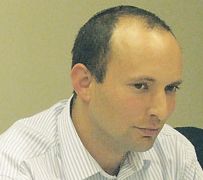
On the other side of the debate are Israelis such as Naftali Bennett, Benjamin Netanyahu’s former chief of staff and the recently named director-general of the settler advocacy group the Yesha Council.

When it comes to assessing the prospects for anything to be accomplished in the latest round of Israeli-Palestinian talks, Bennett succinctly describes the power equation and thus the reason the talks will go nowhere: “It’s in their interest more than ours. We’re doing just fine.”

Bennett challenges much of the conventional wisdom about settlements and settlers — not surprising perhaps because he lives inside Israel and was a high-tech millionaire before entering politics.

He says: “My vision is 1 million Jews living in Judea and Samaria [the West Bank], putting an end to the notion that we can have a Palestinian state in the heart of Israel.”

With over half a million Jews already planted inside the occupied territories, that vision is more than half way towards being realized. “Anyone considering the notion of expelling 80,000 or 150,000 Jews (from the West Bank) today should know that it’s simply impossible,” Bennett declares.

“We view Judea and Samaria as the bulwark of Israel, and Israel as the bulwark for the West against Islamic terrorism. We are the security shield of Israel. That’s fundamentally how people in Judea and Samaria see it. People see it as a mission to maintain and protect this area for the Jewish people.”

Since he rejects the idea of a Palestinian state, the Los Angeles Times asks Bennett what alternative he envisions:

The alternative is peaceful coexistence on the ground and simply strengthening the current, very positive trends with the economy and security. Removing the roadblocks. Giving Palestinians political rights to vote for themselves. If they want to reach an agreement with Jordan to give them citizenship, so be it. If we need to make adjustments to make life better, we can.

Many Palestinians say the status quo is unfair and not acceptable.

There wouldn’t be apartheid. They’d rule themselves and we’d rule ourselves. We’d drive on the same roads. Arabs have fairly good lives. The overwhelming majority of the Palestinian people want peaceful coexistence. It’s just their leaders who are not OK with it.

It’s not perfect. They want a full-blown state. But it’s a zero-sum game. If they have a state, we’ll cease to exist. That’s the best we can do.

What’s interesting in looking at these contrasting Israeli views of the settlements is that beneath the divergence in analysis, there is an Israeli consensus: they see no real basis for Palestinian self determination. Palestinians would undermine the effective functioning of any democracy other than a Jewish-controlled “democracy,” but they can rule themselves so long as they don’t imagine they can have their own fully sovereign state.

Whether viewed from the left or the right, the one thing most Jewish Israelis seem to agree on (even if they differ in how bluntly they will state this) is that they regard Palestinians as their inferiors.

Update: Following a shooting attack in which Palestinian gunmen killed four Israelis outside the Kiryat Arba settlement near Hebron on Tuesday, settlement leaders were quick to call for talks due to start in Washington on Wednesday, to be cancelled.

The Jerusalem Post reported:

The head of the Mount Hebron Regional Council, Tzvika Bar-Hai, called on Netanyahu to cancel the Washington talks.

“There is no place for negotiations with those who respond with deadly fire to our hand outstretched for peace,” he said.

“It is time for the leaders of Israel to wake up from the illusion of false peace,” Bar-Hai added.

“We’re talking about one of the worst terrorist attacks in the past few years,” said Naftali Bennet, director-general of the Council of Jewish Communities of Judea, Samaria and Gaza.

“We’re asking that the prime minister immediately turn the plane around and come back to Israel. It’s not possible, while we’re holding funerals, that he can stay there. And we’re calling on him, tomorrow morning, to renew the building in Judea and Samaria,” he said.

The council announced Tuesday night that it would respond to the attack by unilaterally ending the construction freeze and starting to build on Wednesday.

A Yesha Council statement said: “The Zionist answer is to build and support. They shoot and we build. Each does as he believes.”

Although a spokesman for Izz al-Din al-Qassam, the military wing of Hamas, claimed responsibility for the attack, Ynet reported:

Earlier on Tuesday, Hamas Spokesman Fawzi Barhum addressed the attack but did not claim responsibility for it.

“The attack was not meant to impede direct negotiations which failed prior to even starting. This is a natural response by the Palestinian resistance to the enemy’s crimes, and is proof that despite the resistance’s persecution by the security services and despite Israel’s crimes, the Palestinians are capable of responding to these crimes,” he said.

Barhum stressed that the attack was the type of response “which the enemy and occupation should expect. The Palestinian resistance is alive, well and kicking.”

Facebooktwittermail

Treatment for PTSD may be killing veterans

Associated Press reports:

Andrew White returned from a nine-month tour in Iraq beset with signs of post-traumatic stress disorder: insomnia, nightmares, constant restlessness. Doctors tried to ease his symptoms using three psychiatric drugs, including a potent anti-psychotic called Seroquel.

Thousands of soldiers suffering from PTSD have received the same medication over the last nine years, helping to make Seroquel one of the Veteran Affairs Department’s top drug expenditures and the No. 5 best-selling drug in the nation.

Several soldiers and veterans have died while taking the pills, raising concerns among some military families that the government is not being up front about the drug’s risks. They want Congress to investigate.

In White’s case, the nightmares persisted. So doctors recommended progressively larger doses of Seroquel. At one point, the 23-year-old Marine corporal was prescribed more than 1,600 milligrams per day — more than double the maximum dose recommended for schizophrenia patients.

A short time later, White died in his sleep.

“He was told if he had trouble sleeping he could take another (Seroquel) pill,” said his father, Stan White, a retired high school principal.

Activist, Vince Boehm, communicated with the Whites and told Beyond Meds:

Stan and Shirley White lost two sons to war. Robert White, a staff sergeant, was killed in Afghanistan in 2005, when his Humvee was hit by a rocket-propelled grenade. But the death of Robert’s younger brother Andrew, who survived Iraq only to succumb to a different battle, is in some ways “harder to accept” says his father.

Struggling with PTSD compounded by grief over the death of his brother, Andrew sought help from VA doctors. Their first line of defense was to prescribe him 20 mg of Paxil, 4 mg of Klonopin and 50 mg of Seroquel. These medications helped at first, but later proved ineffective. Instead of changing the course of treatment, the doctors responded by continually increasing his dosage until the Seroquel alone reached a whopping 1600 mg per day. Within weeks of Andrew’s death, three more young West Virginia veterans died while being treated for PTSD with the same drugs, prompting Stan and Shirley White to begin a mission to find out what the deaths have in common.

Earlier this year, Martha Rosenberg reported on the same deadly cocktail being used to treat PTSD:

Sgt. Eric Layne’s death was not pretty.

A few months after starting a drug regimen combining the antidepressant Paxil, the mood stabilizer Klonopin and a controversial anti-psychotic drug manufactured by pharmaceutical giant AstraZeneca, Seroquel, the Iraq war veteran was “suffering from incontinence, severe depression [and] continuous headaches,” according to his widow, Janette Layne.

Soon he had tremors. ” … [H]is breathing was labored [and] he had developed sleep apnea,” Layne said.

Janette Layne, who served in the National Guard during Operation Iraqi Freedom along with her husband, told the story of his decline last year, at official FDA hearings on new approvals for Seroquel. On the last day of his life, she testified, Eric stayed in the bathroom nearly all night battling acute urinary retention (an inability to urinate). He died while his family slept.

Sgt. Layne had just returned from a seven-week inpatient program at the VA Medical Center in Cincinnati where he was being treated for post-traumatic stress disorder (PTSD). A video shot during that time, played by his wife at the FDA hearings, shows a dangerously sedated figure barely able to talk.

Sgt. Layne was not the first veteran to die after being prescribed medical cocktails including Seroquel for PTSD.

In the last two years, Pfc. Derek Johnson, 22, of Hurricane, West Virginia; Cpl. Andrew White, 23, of Cross Lanes, West Virginia; Cpl. Chad Oligschlaeger, 21, of Roundrock, Texas; Cpl. Nicholas Endicott, 24, of Pecks Mill, West Virginia; and Spc. Ken Jacobs, 21, of Walworth, New York have all died suddenly while taking Seroquel cocktails.

Facebooktwittermail

Mosque opponents help the Taliban

Newsweek reports:

Taliban officials know it’s sacrilegious to hope a mosque will not be built, but that’s exactly what they’re wishing for: the success of the fiery campaign to block the proposed Islamic cultural center and prayer room near the site of the Twin Towers in lower Manhattan. “By preventing this mosque from being built, America is doing us a big favor,” Taliban operative Zabihullah tells Newsweek. (Like many Afghans, he uses a single name.) “It’s providing us with more recruits, donations, and popular support.”

America’s enemies in Afghanistan are delighted by the vehement public opposition to the proposed “Ground Zero mosque.” The backlash against the project has drawn the heaviest e-mail response ever on jihadi Web sites, Zabihullah claims — far bigger even than France’s ban on burqas earlier this year. (That was big, he recalls: “We received many e-mails asking for advice on how Muslims should react to the hijab ban, and how they can punish France.”) This time the target is America itself. “We are getting even more messages of support and solidarity on the mosque issue and questions about how to fight back against this outrage.”

Zabihullah also claims that the issue is such a propaganda windfall — so tailor-made to show how “anti-Islamic” America is — that it now heads the list of talking points in Taliban meetings with fighters, villagers, and potential recruits. “We talk about how America tortures with waterboarding, about the cruel confinement of Muslims in wire cages in Guantánamo, about the killing of innocent women and children in air attacks — and now America gives us another gift with its street protests to prevent a mosque from being built in New York,” Zabihullah says. “Showing reality always makes the best propaganda.”

Meanwhile, at Salon, Justin Elliot reports:

A bigoted pastor who has assailed gays and Muslims is launching the “9-11 Christian Center at Ground Zero” a mere two blocks from the World Trade Center site this Sunday, but so far the project hasn’t drawn a peep of protest from those who are outraged by the “ground zero mosque.”

Pastor Bill Keller of Florida said today he will begin preaching Sunday at the Marriott at 85 West Street (see proximity to ground zero here). A weekly service is planned at the hotel until the $8 million 9/11 Christian Center finds a permanent space. (Fundraising is going well, Keller told Salon today.)

To get a sense of where Keller is coming from, consider his project’s website, which calls Islam a religion of “hate and death” whose adherents will go to hell.

Facebooktwittermail

How to kill gentiles and influence people: Israeli rabbis defend book’s shocking religious defense of killing non-Jews

Max Blumenthal reports:

When I went into the Jewish religious book emporium, Pomeranz, in central Jerusalem to inquire about the availability of a book called Torat Ha’Melech, or the King’s Torah, a commotion immediately ensued. “Are you sure you want it?” the owner, M. Pomeranz, asked me half-jokingly. “The Shabak [Israel’s internal security service] is going to want a word with you if you do.” As customers stopped browsing and began to stare in my direction, Pomeranz pointed to a security camera affixed to a wall. “See that?” he told me. “It goes straight to the Shabak!”

As soon as it was published late last year, Torat Ha’Melech sparked a national uproar. The controversy began when an Israeli tabloid panned the book’s contents as “230 pages on the laws concerning the killing of non-Jews, a kind of guidebook for anyone who ponders the question of if and when it is permissible to take the life of a non-Jew.” According to the book’s author, Rabbi Yitzhak Shapira, non-Jews are “uncompassionate by nature” and should be killed in order to “curb their evil inclinations.” “If we kill a gentile who has has violated one of the seven commandments… there is nothing wrong with the murder,” Shapira insisted. Citing Jewish law as his source (or at least a very selective interpretation of it) he declared: “There is justification for killing babies if it is clear that they will grow up to harm us, and in such a situation they may be harmed deliberately, and not only during combat with adults.”

Meanwhile, Associated Press reports:

An influential Israeli rabbi known for his vitriolic pronouncements against Arabs says Palestinians and their leader should “perish from this world.”

Israel Army Radio quoted Ovadia Yosef Sunday as saying the Palestinians were “evil, bitter enemies of Israel” and Palestinian President Mahmoud Abbas should be struck with a plague. He made the remarks in a Saturday night sermon.

Haaretz adds:

The United States on Sunday condemned remarks by the spiritual leader of Israel’s leading ultra-Orthodox party, Rabbi Ovadia Yosef, who said the Palestinians should “perish”.

“We regret and condemn the inflammatory statements by Rabbi Ovadia Yosef,” U.S. State Department spokesman Philip J. Crowley. “These remarks are not only deeply offensive, but incitement such as this hurts the cause of peace.”

Facebooktwittermail

Al-Qaida in Yemen: Poverty, corruption and an army of jihadis willing to fight

In a two-part series, The Guardian‘s intrepid Ghaith Abdul-Ahad reports from Yemen:

With its conservative Islam, ragged mountains, unruly tribes and problems of illiteracy, unemployment and extreme poverty, Yemen has been dubbed the new Afghanistan by security experts.

The Guardian spent two months in the country, travelling to the tribal regions of Abyan and Shabwa, where al-Qaida has set up shop and where suspected US drone attacks have killed scores of civilians and few insurgents. Speaking to jihadis, security officials and tribesmen, it became clear how a combination of government alliances, bribes, broken promises and bungled crackdowns has allowed Islamists to flourish and led to the emergence of the country as a regional hub for al-Qaida.

You don’t have to go deep into the mountains to hear the jihadi message. One Friday, sitting on the roof of a hotel in Sana’a, I hear the amplified prayers of a preacher ring out at the end of his sermon: “God condemn the Jews and the Christians … God make their wives and children our slaves … God defeat them and make the believers victorious.”

Ahmad al-Daghasha, a Yemeni writer who specialises in Islamic and jihadi issues, says two factors are responsible for the growing influence of al-Qaida. “First there is the local situation, which is miserable, politically and economically,” he says. “That situation is translated into many forms of resistance – the jihadis and al-Qaida are only one. Then there is the foreign oppression that we all see on television – whether in Iraq, Afghanistan or Palestine – that gives al-Qaida’s rhetoric legitimacy.”

In the second-part of this report, Ghaith Abdul-Ahad writes:

Ferocious blood feuds have been raging for years in Shabwa. Almost every tribesman in the region finds himself entangled in the cycle of revenge.

The barren desert and mountain are divided into patches of small tribal war zones. As we travelled in Shabwa we often had to leave the main track and drive deep into the desert to avoid passing through the land of a tribe with which someone in our car had a blood feud.

“We would like to go to school,” says Ibrahim, a hazel-eyed 16-year-old tribesman who was sitting in the back of the car with a wrapped head shawl. “But we had to stop, because someone might track us there and kill us.”

I asked him if he had seen much fighting. “Yes,” he answered. “Many times.”

The tribesmen exist in perpetual poverty in this harsh landscape. When ‑ if ‑ water comes, it moves fast down thin rocky valleys, leaving the desert as thirsty as before. Apart from a few patches of farmed land, the rest is desert.

Being so poor, the people have little to fight over except their honour.

The only way for an insult to be avenged was by killing the enemy, calling his name so he would turn – it’s a shame to kill a man in his back – and shoot him while looking into his eyes. The culture of hospitality is taken so seriously that one tribal feud that has been going for two years was over a guest who was insulted.

Ali tells how the inter-tribal battles sometimes included heavier armaments. “Last year we besieged a neighbouring tribe. We took anti-aircraft guns and mortars. We shelled them for three days and we besieged them for weeks, until they had nothing to eat but biscuits.”

Against this backdrop of armed, perpetually fighting tribes, where it sometimes seems every other man is wanted by the authorities for a murder or two, al-Qaida can easily blend in. Their gunmen are little different from any other gunman wanted by authority and seeking shelter among his tribe.

“There are few believers [jihadis] who live in the mountains,” an old man in Hateem told me, “but we haven’t seen them do anything wrong here. We don’t care if they have killed someone in America; here in Shabwa they haven’t committed a crime and they should be respected like any other man.”

Facebooktwittermail

Saudi Arabia: the end of progress without change

A reader alerted me to a speech Chas Freeman gave earlier this year in a noble effort to educate fellow Americans on the little understood nation of Saudi Arabia (where Freeman served as US ambassador from 1989 to 1992).

I have been asked to speak to you about the Kingdom of Saudi Arabia. This is a topic I have never before addressed to an American audience. Why bother?

We Americans reserve the right to have strong opinions on the basis of little or no knowledge. There are few countries that better exemplify our assertive ignorance of foreign geography, history, and culture than Saudi Arabia. Most of us are convinced that Saudis are Muslim zealots, control the world’s oil prices, and are absurdly rich, anti-feminist, and undemocratic. They hate our values and want to destroy us. Talk radio confirms this. What more needs to be said?

On reflection, a lot does. Neither caricature nor a priori reasoning is a sound basis for policy. A distorted view of foreign realities precludes success at dealing with them. There is much at stake in our relationship with Saudi Arabia. We can ill afford to get it wrong.

That country is, of course, the heartland of Islam and the custodian of the world’s largest oil reserves. It lies athwart transport routes between Asia, Europe, and Africa. It is at the center of a growing concentration of global capital. Under any circumstances, the Kingdom of Saudi Arabia would be important. It is all the more so in an era when we Americans are at war with ever more peoples in the Islamic world, depend on ever greater amounts of imported energy, and need ever larger foreign loans to run our government and sustain our life style.

Yet Saudi Arabia is little known. It is the only society on the planet not to have been penetrated by Western colonialism. No European armies breached its borders; no missionaries; no merchants. Its capital, Riyadh, was long off limits to infidels; the holy cities of Mecca and Medina remain so today. When Westerners finally came to Saudi Arabia, we came not as the vindicators of our presumed cultural superiority, but as hired help. As a result, some say that Saudis secretly see the world’s peoples as divided into two basic categories: (1) fellow Saudis; and (2) potential employees. Be that as it may, foreigners, Western, Asian, or Arab, who have lived in Saudi Arabia all see it as a very strange place — one that is not easy to understand and that remains at odds with many of the values non-Saudis profess.

The Kingdom has long stood apart from global norms. Its system of government draws on tribal and Islamic traditions rather than Western models. Its king presides rather than rules over the royal family and Saudi society. His responsibility is less to make decisions than to shape and proclaim consensus, while assuring a share of the national wealth to all, especially the least privileged. Saudi Arabia levies no taxes on its citizens, other than the religious tithe known as “zakat” — a two-and-a-half percent annual donation of private capital to charity and other public purposes. All Saudis enjoy free education and medical care from birth to death and can pursue these services at home or abroad, as they wish. The Kingdom has no parliament, though it does have elaborate informal mechanisms for consultation with its citizens on policy matters. Saudi Arabia reverses and thereby affirms a basic principle of American political philosophy. “No representation without taxation.”

Facebooktwittermail

How Arabs view the anti-mosque movement

Marc Lynch writes:

Two recent arguments about the impact of the rising anti-Islam trend in the U.S. — from the Stupid!Storm around the Manhattan mosque to the lunacy of “national burn a Quran day” — on the Arab world strike me as not quite right. Last week, Bill Kristol cited the translation of a column by Saudi TV station al-Arabiya director Abd al-Rahman al-Rashed downplaying the relevance of the mosque as evidence that the argument should be over. Meanwhile, several recent articles claim that the mosque had become the #1 topic of discussion on jihadist forums. Both are wrong, in different ways. Most Arab columnists agree with the argument that the anti-mosque movement will badly harm Arab and Muslim views of the United States, contra Rashed, but there isn’t as much active discussion of it in the forums as you’d expect. That isn’t a reason to relax, though. The impact is likely to be felt not so much on extremists, whose views about America are rather fixed, but on the vast middle ground, the Arab and Muslim mainstream which both the Bush and Obama administrations have recognized as crucial both for defeating al-Qaeda and for achieving broad American national interests. And that mainstream, not the extremists themselves, is where our attention needs to be focused.

A closer look at Arab mainstream media and jihadist forum debates shows what I mean. A scan of the major op-ed pages quickly reveals that Rashed is very much a minority voice in the unfolding Arab debate. Rashed’s column caught the attention of anti-mosque activists such as Kristol, because it suited their needs. But if Kristol really wants Americans to take their cues from Arab columnists, here’s a more representative sample of commentary over the last few days:

In “Jihadi forums silent on Cordoba controversy,” Max Fisher finds “the fact that they discuss the issue so little among themselves suggests the extent to which the jihadis consider the fight over the Cordoba Center as having nothing to do with them.”

Facebooktwittermail

Pastor’s plan to burn Koran fuels tensions

The New York Times reports:

If building an Islamic center near ground zero amounts to the epitome of Muslim insensitivity, as critics of the project have claimed, what should the world make of Terry Jones, the evangelical pastor here who plans to memorialize the Sept. 11 attacks with a bonfire of Korans?

Mr. Jones, 58, a former hotel manager with a red face and a white handlebar mustache, argues that as an American Christian he has a right to burn Islam’s sacred book because “it’s full of lies.” And in another era, he might have been easily ignored, as he was last year when he posted a sign at his church declaring “Islam is of the devil.”

But now the global spotlight has shifted. With the debate in New York putting religious tensions front and center, Mr. Jones has suddenly attracted thousands of fans and critics on Facebook, while around the world he is being presented as a symbol of American anti-Islamic sentiment.

Muslim leaders in several countries, including Egypt and Indonesia, have formally condemned him and his church, the Dove World Outreach Center.

An Islamic group in England has also incorporated his efforts into a YouTube video that encourages Muslims to “rise up and act,” widening a concern that Mr. Jones — though clearly a fringe figure with only 50 members in his church — could spark riots or terrorism.

“Can you imagine what this will do to our image around the world?” said Ibrahim Hooper, a spokesman for the Council on American-Islamic Relations in Washington. “And the additional danger it will add whenever there is an American presence in Iraq or Afghanistan?”

Facebooktwittermail

How 30 million DVDs sent in 2008 election fuel the anti-mosque debate today

At TPMMuckraker, Rachel Slajda reports:

In the last weeks before the 2008 elections, an organization called the Clarion Fund spent some $16 million to reprint and distribute 28 million copies of their 2005 film about radical Islam and terrorist groups. “Obsession” was inserted into newspapers — and packaged with scary photos of scarf-clad men — in swing states.

That move, funded by a single anonymous donor, may still be echoing in 2010’s protests about the Cordoba House and other mosques around the country.

“The single most powerful piece of media over the past five years that has been effective in persuading average Americans to the Islamist threat has been ‘Obsession,'” Tom Trento, the director of the Florida Security Council, told TPMmuckraker today. Trento said he participated in the multimillion-dollar distribution of the film by giving out tens of thousands of copies at both parties’ 2008 conventions.

Facebooktwittermail

For critics of Islam,’sharia’ becomes shorthand for extremism

The Washington Post reports:

Protesters of the proposed Islamic center near Ground Zero waved signs there Sunday with a single word: sharia.

Their reference to Islam’s guiding principles has become a rallying cry for those critical of Islam, who use the word to conjure images of public stonings and other extreme forms of punishment in countries such as Saudi Arabia or Afghanistan and argue that those tenets are somehow gaining a foothold in the United States.

Blogs with names such as Creeping Sharia and Stop Shariah Now are proliferating. A pamphlet for a “tea party” rally last weekend in Fort Walton Beach, Fla., asked: “Why do Muslims want to take over the world and place us under Shariah law?” Former GOP House speaker Newt Gingrich amplified that point in a much-publicized speech a few weeks ago, exploring what he calls “the problem of creeping sharia.”

The fact that the word has become akin to a slur in some camps is an alarming development to many religious and political leaders. “We are deeply saddened by those who denigrate a religion which in so many ways is a religion of compassion,” Peg Chemberlin, president of the National Council of Churches, said in a statement this month signed by 40 national religious leaders.

Sharia in Arabic means “way” or “path.” Muslims agree that sharia is God’s law, but there is little consensus on the particulars. To some, sharia is a set of rules that are codified and unchanging. To others, it’s a collection of religious principles that shift over time.

Facebooktwittermail