Palestinians in the Gaza Strip were shocked the week before last when an Italian activist and journalist, Vittorio Arrigoni, was kidnapped and then murdered by a self-proclaimed Salafi jihadi group. Arrigoni, a bighearted man who I met several times during a recent two-month stay in Gaza, was well known around the Strip as a strong supporter of the Palestinian cause. “I come from a partisan family,” he once told an interviewer. His grandparents had fought and died while fighting fascism in Italy. “For this reason,” he said, “probably, in my DNA, there are particles that push me to struggle.”
In a YouTube video Arrigoni’s captors demanded that Gaza’s Hamas government release Salafi prisoners from its jails within 30 hours or they would execute their hostage. With police closing in, the captors apparently decided not to wait for their own deadline and killed him the same day. Last Tuesday, Hamas-affiliated police and security forces surrounded three suspects in a house in the Nuseirat refugee camp. Nuseirat is where the Salafi group Tawhid wa Al-Jihad (Monotheism and Jihad) is based. As documented in a video, Hamas authorities brought Hisham Sa’idini, the leader of Tawhid wa Al-Jihad, whose release the kidnappers demanded, from prison in an attempt to negotiate their surrender. Police also summoned the mother of one of the suspects, a Jordanian citizen, to aid in the negotiating process. According to Hamas officials, the standoff ended in a shootout in which the Jordanian threw a grenade at his two accomplices then shot himself.
In the initial days after the murder, Hamas officials insinuated that the perpetrators of this inexplicable crime were Israeli agents, although they were reluctant to make this statement unequivocally when speaking on the record. Of course, no evidence has emerged publicly to support this conspiracy theory. Others, particularly in right-wing Israeli and U.S. circles, seized on Arrigoni’s murder in order to depict the Gaza Strip, and Palestinian society at large, as a monolithic den of fanatics. It ought to go without saying that this is not the case. Gaza’s people, who belong to a wide and overlapping spectrum of religious and political views, universally condemned the murder. Similarly, all political parties, including Hamas, Fatah, Islamic Jihad, the Popular Resistance Committees, and even Salafi leaders, denounced the killing.
Beyond the tragic events of the story itself, however, Arrigoni’s death highlights a complex political context, a web of power relations among various actors in Gaza including Israel, Hamas, the Palestinian Authority, the Salafis, other Palestinian factions, and the international community. At the root of these dynamics is the Israeli and Western policy of isolating Gaza and ignoring Hamas. The crippling four-year-long blockade of Gaza has created the conditions of human misery and desperation in which a handful of people have turned to extremism. A new report from International Crisis Group states that the blockade has amounted to “an assist provided to Salafi-Jihadis, who benefit from…Gaza’s lack of exposure to the outside world.”
The first four Directors of the CIA (from 1947-1953) were military officers, but since then, there has been a tradition (generally though imperfectly observed) of keeping the agency under civilian rather than military leadership. That’s why George Bush’s 2006 nomination of Gen. Michael Hayden to the CIA provoked so many objections from Democrats (and even some Republicans).
The Hayden nomination triggered this comment from the current Democratic Chairwoman of the Senate Intelligence Committee, Dianne Feinstein: “You can’t have the military control most of the major aspects of intelligence. The CIA is a civilian agency and is meant to be a civilian agency.” The then-top Democratic member of the House Intelligence Committee, Jane Harman, said “she hears concerns from civilian CIA professionals about whether the Defense Department is taking over intelligence operations” and “shares those concerns.” On Meet the Press, Nancy Pelosi cited tensions between the DoD and the CIA and said: “I don’t see how you have a four-star general heading up the CIA.” Then-Sen. Joe Biden worried that the CIA, with a General in charge, will “just be gobbled up by the Defense Department.” Even the current GOP Chair of the House Intelligence Committee, Pete Hoekstra, voiced the same concern about Hayden: “We should not have a military person leading a civilian agency at this time.”
Of course, like so many Democratic objections to Bush policies, that was then and this is now. Yesterday, President Obama announced — to very little controversy — that he was nominating Gen. David Petraeus to become the next CIA Director. The Petraeus nomination raises all the same concerns as the Hayden nomination did, but even more so: Hayden, after all, had spent his career in military intelligence and Washington bureaucratic circles and thus was a more natural fit for the agency; by contrast, Petraues is a pure military officer and, most of all, a war fighting commander with little background in intelligence. But in the world of the Obama administration, Petraeus’ militarized, warrior orientation is considered an asset for running the CIA, not a liability.
That’s because the CIA, under Obama, is more militarized than ever, as devoted to operationally fighting wars as anything else, including analyzing and gathering intelligence. This morning’s Washington Post article on the Petraeus nomination — headlined: “Petraeus would helm an increasingly militarized CIA” — is unusual in presenting such a starkly forthright picture of how militarized the U.S. has become under the 2009 Nobel Peace Prize winner:
They came, they saw, they conquered. This line pretty well sums up a little-reported but important story about the new tea partiers in the U.S. House of Representatives.
No sooner had they arrived than the corporate lobbying corps came to visit, saw what these supposed rebels were made of and quickly conquered them without a fight. The forces of big business needed only to lay out some campaign cash — and quicker than you can say, “Business as usual,” the budding lawmakers snatched up the money and immediately began carrying the lobbyists’ corporate agenda.
Check out the financial services subcommittee, which handles legislation affecting Wall Street bankers. Five tea partiers got coveted slots on this panel, and all five were suddenly showered with big donations from such financial lobbying interests as Goldman Sachs. Now, all five are sponsoring bills to undo parts of the recent reforms to reign in Wall Street excesses.
Steve Stivers of Ohio, for example, hauled in nearly $100,000 in just his first two months in office — 85 percent of it from the special interests his committee oversees. He insists that the cash he took from Goldman Sachs and others has nothing to do with his subsequent support of bills that Goldman is lobbying so strongly for. Stivers claims that his sole legislative focus is on jobs for Ohio’s 15th district.
Really? Among the deform-the-reform bills that Steve is carrying is one to let Wall Street giants avoid disclosing the difference in what the CEO is paid and what average employees make. Another would exempt billionaire private equity hucksters from regulation. I can see that these bills are great job extenders for the barons of Wall Street, but how do either of them create a single job in his district?
This spring, Obama officials often expressed impatience with questions about theory or about the elusive quest for an Obama doctrine. One senior Administration official reminded me what the former British Prime Minister Harold Macmillan said when asked what was likely to set the course of his government: “Events, dear boy, events.”
Obama has emphasized bureaucratic efficiency over ideology, and approached foreign policy as if it were case law, deciding his response to every threat or crisis on its own merits. “When you start applying blanket policies on the complexities of the current world situation, you’re going to get yourself into trouble,” he said in a recent interview with NBC News.
Obama’s reluctance to articulate a grand synthesis has alienated both realists and idealists. “On issues like whether to intervene in Libya there’s really not a compromise and consensus,” Slaughter said. “You can’t be a little bit realist and a little bit democratic when deciding whether or not to stop a massacre.”
Brzezinski, too, has become disillusioned with the President. “I greatly admire his insights and understanding. I don’t think he really has a policy that’s implementing those insights and understandings. The rhetoric is always terribly imperative and categorical: ‘You must do this,’ ‘He must do that,’ ‘This is unacceptable.’ ” Brzezinski added, “He doesn’t strategize. He sermonizes.”
The one consistent thread running through most of Obama’s decisions has been that America must act humbly in the world. Unlike his immediate predecessors, Obama came of age politically during the post-Cold War era, a time when America’s unmatched power created widespread resentment. Obama believes that highly visible American leadership can taint a foreign-policy goal just as easily as it can bolster it. In 2007, Obama said, “America must show—through deeds as well as words—that we stand with those who seek a better life. That child looking up at the helicopter must see America and feel hope.”
In 2009 and early 2010, Obama was sometimes criticized for not acting at all. He was cautious during Iran’s Green Revolution and deferential to his generals during the review of Afghanistan strategy. But his response to the Arab Spring has been bolder. He broke with Mubarak at a point when some of the older establishment advised against it. In Libya, he overruled Gates and his military advisers and pushed our allies to adopt a broad and risky intervention. It is too early to know the consequences of these decisions. Libya appears to be entering a protracted civil war; American policy toward Mubarak frightened—and irritated—Saudi Arabia, where instability could send oil prices soaring. The U.S. keeps getting stuck in the Middle East.
Nonetheless, Obama may be moving toward something resembling a doctrine. One of his advisers described the President’s actions in Libya as “leading from behind.” That’s not a slogan designed for signs at the 2012 Democratic Convention, but it does accurately describe the balance that Obama now seems to be finding. It’s a different definition of leadership than America is known for, and it comes from two unspoken beliefs: that the relative power of the U.S. is declining, as rivals like China rise, and that the U.S. is reviled in many parts of the world. Pursuing our interests and spreading our ideals thus requires stealth and modesty as well as military strength. “It’s so at odds with the John Wayne expectation for what America is in the world,” the adviser said. “But it’s necessary for shepherding us through this phase.”
Chris McGreal, who is covering the war in Libya for The Guardian and who as the paper’s South Africa correspondent witnessed the end of the apartheid era, says: “Few revolutions have been more inspiring. After years of reporting uprisings and conflicts driven by ideology, factional interests or warlords soaked in blood — from El Salvador to Somalia, Congo and Liberia – Libya’s uprising seems to me more akin to South Africa’s liberation from apartheid.”
He writes:
The Middle East. A man with a car fashioned into a bomb. He disguises his intent by joining a funeral cortege passing the chosen target. At the last minute the man swings the vehicle away, puts his foot down and detonates the propane canisters packed into the car.
It all sounds horrifyingly familiar. Mahdi Ziu was a suicide bomber in a region too often defined by people blowing up themselves and others. But, as with so much in Libya, the manner of Ziu’s death defies the assumptions made about the uprisings in the Arab world by twitchy American politicians and generals who see Islamic extremism and al-Qaeda lurking in the shadows. Ziu’s attack was an act of pure selflessness, not terror, and it may have saved Libya’s revolution.
In the first days of the popular uprising he crashed his car into the gates of the Katiba, a much-feared military barracks in Benghazi, where Muammar Gaddafi’s forces were making a last stand in a hostile city. At that time the revolutionaries had few weapons, mostly stones and “fish bombs” — TNT explosive with a fuse that is more usually dropped in the sea off Benghazi to catch fish. The soldiers had heavy machine guns and the revolutionaries, often daring young men letting loose their anger at the regime for the first time, were dying in their dozens as they tried to storm the Katiba.
Then Ziu arrived, blew the main gates off the barracks and sent the soldiers scurrying to seek shelter inside. Within hours the Katiba had fallen.
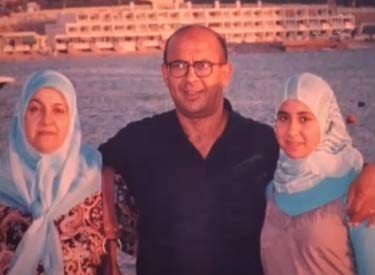
Ziu was not classic suicide-bomber material. He was a podgy, balding 48-year-old executive with the state oil company, married with daughters at home. There was no martyrdom video of the kind favoured by Hamas. He did not even tell his family his plan, although they had seen a change in him over the three days since the revolution began.
“He said everyone should fight for the revolution: ‘We need Jihad,'” says Ziu’s 20-year-old daughter, Zuhur, clearly torn between pride at her father’s martyrdom and his loss. “He wasn’t an extreme man. He didn’t like politics. But he was ready to do something. We didn’t know it would be that.”
Ziu may have been unusual as a suicide bomber, but he was representative of a revolution driven by dentists and accountants, lorry drivers and academics, the better off and the very poor, the devout and secular. Men such as Abdullah Fasi, an engineering student who had just graduated and was in a hurry to get out of a country he regarded as devoid of all hope until he found himself outside the Katiba stoning Gaddafi’s soldiers. And Shams Din Fadelala, a gardener in the city’s public parks who supported the Libyan leader up to the day government soldiers started killing people on the streets of Benghazi. And Mohammed Darrat, who spent 18 years in Gaddafi’s prisons and every moment out of them believing that one day the people would rise up. [Continue reading…]
On Sunday April 24, 2011 WikiLeaks began publishing 779 secret files from the notorious Guantanamo Bay prison camp. The details for every detainee will be released daily over the coming month.
The Guantánamo files reveal the often fragile physical and mental condition of Guantánamo’s oldest and youngest residents, who have included an 89-year-old man and boys as young as 14.
In 2002 Guantánamo prisoners were described as “the worst of a very bad lot” by Dick Cheney, US vice-president. “They are very dangerous. They are devoted to killing millions of Americans, innocent Americans, if they can, and they are perfectly prepared to die in the effort.”
But the internal files on some prisoners paint a very different picture. A 2002 assessment of Guantánamo’s oldest prisoner, Mohammed Sadiq, who was then 89, revealed dementia, depression and sickness. “His current medical issues include major depressive disorder, senile dementia and osteoarthritis, for which he receives prescribed treatment.” The Afghan national was also being assessed for prostate cancer. (The Guardian)
Among the most dismaying stories to emerge is that of three hapless Tajiks caught up in a roundup of foreigners in Karachi in 2002.
The trio appear to have spent almost two years being interrogated and maltreated, first at the notorious Bagram airbase, and then at Guantánamo, before being released.
The prison files reveal that they were listed as “enemy combatants” on arrival , but turned out to be entirely innocent.
The then base commander, Maj-Gen Geoffrey Miller, signed reports to the US Southern Command HQ in Florida confirming that two of the men were not enemy combatants and he was having them sent home. He added: “It is undetermined as to why the detainee was transferred to GTMO.”
Reports on the third man, Shirinov Abdulghafar Umarovich, are missing from the files, but he was reported to have also been released and returned to Tajikistan on 31 March 2004 along with the two others, Mukhibullo Abdulkarim Umarov and Mazhar Udeen.
The camp files disclose that the three were “arrested at a small library in Karachi”. Almost two years after their eventual release, a journalist for the US magazine Mother Jones, while trekking in the Pamir mountains, stumbled across Umarov back at his remote home village and tape-recorded an interview.
Umarov’s story, now confirmed by the classified prison camp files, is that the three were living in a room in the University of Karachi library, and looking for work, when they were rounded up by Pakistani police and given to the Americans. A suicide bomb had exploded and at the time, the US were reported to be paying bounties of between $5,000 and $25,000 per al-Qaida prisoner.
Umarov said he had received no compensation since. He reportedly asked his interviewer: “Why did they keep a man for two years with no reason? Why? They caught me and kept me as a prisoner of war. What war, may I ask? When was I involved? I was sleeping when they came and dragged me out of my bed.”
He described going on hunger strike, and being put in the isolation “cooler” at Guantánamo, for complaining to an investigator. “The soldiers took all my clothes and left me there.” During the day, two electric coils were used to overheat the 3ft by 5ft metal cell. At night, frigid air was pumped in. “Some prisoners wouldn’t last the night and had to be taken to the doctor,” he said. “They kept me there for 10 days – and for no reason.”
The three Tajiks were among more than 100 detainees taken to Guantánamo for little more than being in the wrong place at the wrong time. (The Guardian)
By October 2004, two years into his detention at the Guantánamo Bay prison, Ali Abdullah Ahmed had established a corrosive reputation among prison officials. Mr. Ahmed’s classified file said he was a hunger striker, “completely uncooperative with interrogators,” and “had a history of aggressive behavior in the camp, often defiantly failing to comply with instructions.”
Twenty-one months later, the military announced that Mr. Ahmed, a Yemeni, and two other prisoners had simultaneously hanged themselves.
Their deaths in June 2006 — the first at Guantánamo — fueled a debate between military officials, who deemed the suicides “an act of asymmetric warfare waged against us” by jihadists seeking martyrdom, and prison critics, who interpreted them as an act of despair by men with little hope of a fair trial or release.
Since then, two other detainees have succeeded in killing themselves — one in 2007, and another in 2009. Against that backdrop, a collection of secret detainee assessment files obtained by The New York Times reveal that the threat of suicide has created a chronic tension at the prison — a tactic frequently discussed by the captives and a constant fear for their captors.
The files for about two dozen detainees refer to suicide attempts or threats. Others mention informants who pass on rumors about which prisoner had volunteered to kill himself next and efforts to organize suicide attempts. Two prisoners were overheard weighing whether it would create enough time for someone to end his life if fellow prisoners blocked their cell windows, distracting guards who would have to remove the obstructions. (New York Times)
Said Mohammed Alam Shah, a 24-year-old Afghan who had lost a leg as a teenager, told interrogators at the prison at Guantánamo Bay, Cuba, that he had been conscripted by the Taliban as a driver before being detained in 2001. He had been caught, he said, as he tried to “rescue his younger brother from the Taliban.”
Military analysts believed him. Mr. Shah, who had been outfitted with a prosthetic leg by prison doctors, was “cooperative” and “has not expressed thoughts of violence or made threats toward the U.S. or its allies,” according to a sympathetic 2003 assessment. Its conclusion: “Detainee does not pose a future threat to the U.S. or U.S. interests.”
So in 2004 Mr. Shah was sent back to Afghanistan — where he promptly revealed himself to be Abdullah Mehsud, a Pakistan-born militant, and began plotting mayhem. He recorded jihadist videos, organized a Taliban force to fight American troops, planned an attack on Pakistan’s interior minister that killed 31 people, oversaw the kidnapping of two Chinese engineers, and finally detonated a suicide bomb in 2007 as the Pakistani Army closed in. His martyrdom was hailed in an audio message by none other than Osama bin Laden.
The Guantánamo analysts’ complete misreading of Abdullah Mehsud was included among hundreds of classified assessments of detainees at the prison in Cuba that were obtained by The New York Times. The unredacted assessments give the fullest public picture to date of the prisoners held at Guantánamo over the past nine years. They show that the United States has imprisoned hundreds of men for years without trial based on a difficult and strikingly subjective evaluation of who they were, what they had done in the past and what they might do in the future. The 704 assessment documents use the word “possibly” 387 times, “unknown” 188 times and “deceptive” 85 times. (New York Times)
On Sept. 11, 2001, the core of al-Qaeda was concentrated in a single city: Karachi, Pakistan.
At a hospital, the accused mastermind of the bombing of the USS Cole was recovering from a tonsillectomy. Nearby, the alleged organizer of the 2002 bombing in Bali, Indonesia, was buying lab equipment for a biological weapons program. And in a safe house, the man who would later describe himself as the intellectual author of the Sept. 11 attacks was with other key al-Qaeda members watching the scenes from New York and Washington unfold on television.
Within a day, much of the al-Qaeda leadership was on the way back to Afghanistan, planning for a long war.
A cache of classified military documents obtained by the anti-secrecy organization WikiLeaks presents new details of their whereabouts on Sept. 11, 2001, and their movements afterward. The documents also offer some tantalizing glimpses into the whereabouts and operations of Osama bin Laden and his Egyptian deputy, Ayman al-Zawahiri.
The documents, provided to European and U.S. news outlets, including The Washington Post, are intelligence assessments of nearly every one of the 779 individuals who have been held at Guantanamo Bay, Cuba, since 2002. In them, analysts have created detailed portraits of detainees based on raw intelligence, including material gleaned from interrogations. (Washington Post)
From Washington’s vantage, every Friday is becoming Black Friday in the Middle East. Muslim prayers turn to protests that keep building toward full-scale uprisings faster than anyone had predicted, and with potentially cataclysmic consequences nobody dares imagine. This Friday, the shock came in Syria, where President Bashar al-Assad runs one of the Middle East’s most repressive regimes. Across the country, protesters have grown ever more emboldened in recent weeks, and on Friday they poured into the streets by the tens of thousands to face the deadly fusillades of Assad’s security forces. More than 70 died. What did the White House have to say? From Air Force One: “We call on all sides to cease and desist from the use of violence.”
Surely President Obama can do better than that. Or perhaps not. The drama—the tragedy—increasingly apparent at the White House is of a brilliant intellect who is nonetheless confounded by events, a strategist whose strategies are thwarted and who is left with almost no strategy at all, a persuasive politician and diplomat who gets others to crawl out on limbs, has them take big risks to break through to a new future, and then turns around and walks away from them when the political winds in the United States threaten to shift. It’s not enough to say the Cabinet is divided about what to do. Maybe the simplest and in many ways the most disturbing explanation for all the flailing is offered by veteran journalist and diplomat Leslie H. Gelb: “There is one man in this administration who debates himself.” President Obama.
These patterns of behavior and their consequences have been on horrifying display in the blood-drenched streets of Misrata, Libya, where the population has begged for more support from NATO and the United States. But they did not begin with Libya, or with the surprise uprising in Tunisia in January or the stunning fall of Egypt’s President Hosni Mubarak in February. They were evident from Year 1 of the Obama presidency in his excruciating deliberations over the Afghan surge, in the hand extended ineffectually to Iran, and the lines drawn in the sand, then rubbed out and moved back, and further back, in the dismal, failed efforts to build a Palestinian peace process. But in Libya the crisis of American tentativeness has grown worse almost by the day. Muammar Gaddafi holds on, despite Obama’s demand for him to leave, and the civilians that the Americans, their allies, and the United Nations vowed to protect are being slaughtered.
Long after the political uprisings in the Middle East have subsided, many underlying challenges that are not now in the news will remain. Prominent among these are rapid population growth, spreading water shortages, and growing food insecurity.
In some countries grain production is now falling as aquifers – underground water-bearing rocks – are depleted. After the Arab oil-export embargo of the 1970s, the Saudis realised that since they were heavily dependent on imported grain, they were vulnerable to a grain counter-embargo. Using oil-drilling technology, they tapped into an aquifer far below the desert to produce irrigated wheat. In a matter of years, Saudi Arabia was self-sufficient in its principal food staple.
But after more than 20 years of wheat self-sufficiency, the Saudis announced in January 2008 that this aquifer was largely depleted and they would be phasing out wheat production. Between 2007 and 2010, the harvest of nearly 3m tonnes dropped by more than two-thirds. At this rate the Saudis could harvest their last wheat crop in 2012 and then be totally dependent on imported grain to feed their population of nearly 30 million.
The unusually rapid phaseout of wheat farming in Saudi Arabia is due to two factors. First, in this arid country there is little farming without irrigation. Second, irrigation depends almost entirely on a fossil aquifer – which, unlike most aquifers, does not recharge naturally from rainfall. And the desalted sea water the country uses to supply its cities is far too costly for irrigation use – even for the Saudis.
On the eve of the November midterm elections, Koch Industries sent an urgent letter to most of its 50,000 employees advising them on whom to vote for and warning them about the dire consequences to their families, their jobs and their country should they choose to vote otherwise.
The Nation obtained the Koch Industries election packet for Washington State—which included a cover letter from its president and COO, David Robertson; a list of Koch-endorsed state and federal candidates; and an issue of the company newsletter, Discovery, full of alarmist right-wing propaganda.
Legal experts interviewed for this story called the blatant corporate politicking highly unusual, although no longer skirting the edge of legality, thanks to last year’s Citizens United Supreme Court decision, which granted free speech rights to corporations.
“Before Citizens United, federal election law allowed a company like Koch Industries to talk to officers and shareholders about whom to vote for, but not to talk with employees about whom to vote for,” explains Paul M. Secunda, associate professor of law at Marquette University. But according to Secunda, who recently wrote in The Yale Law Journal Online about the effects of Citizens United on political coercion in the workplace, the decision knocked down those regulations. “Now, companies like Koch Industries are free to send out newsletters persuading their employees how to vote. They can even intimidate their employees into voting for their candidates.” Secunda adds, “It’s a very troubling situation.”
The Kochs were major supporters of the Citizens United case; they were also chief sponsors of the Tea Party and major backers of the anti-“Obamacare” campaign. Through their network of libertarian think tanks and policy institutes, they have been major drivers of unionbusting campaigns in Wisconsin, Michigan and elsewhere.
“This sort of election propaganda seems like a new development,” says UCLA law professor Katherine Stone, who specializes in labor law and who reviewed the Koch Industries election packet for The Nation. “Until Citizens United, this sort of political propaganda was probably not permitted. But after the Citizens United decision, I can imagine it’ll be a lot more common, with restrictions on corporations now lifted.”
Security forces in Syria met thousands of demonstrators with fusillades of live ammunition after noon prayers on Friday, killing at least 81 people in the bloodiest day of the five-week-old Syrian uprising, according to protesters, witnesses and accounts on social networking sites.
From the Mediterranean coast and Kurdish east to the steppe of the Houran in southern Syria, protesters gathered in at least 20 cities and towns, including in the outskirts of the capital, Damascus. Cries for vengeance intersected with calls for the government’s fall, marking a potentially dangerous new dynamic in the revolt.
“We want revenge, and we want blood,” said Abu Mohamed, a protester in Azra, a southern town that had the highest death toll Friday. “Blood for blood.”
The breadth of the protests — and people’s willingness to defy security forces who were deployed en masse — painted a picture of turmoil in one of the Arab world’s most authoritarian countries. In scenes unprecedented only weeks ago, protesters tore down pictures of President Bashar al-Assad and toppled statues of his father, Hafez, in two towns on the capital’s outskirts, according to witnesses and video footage.
But despite the bloodshed, which promised to unleash another day of unrest as the dead are buried Saturday, the scale of the protests, so far, seemed to fall short of the popular upheaval that revolutions in Egypt and Tunisia represented. Organizers said the movement was still in its infancy, and the government, building on 40 years of institutional inertia, still commanded the loyalty of the military, economic elite and sizable minorities of Christian and heterodox Muslim sects who fear the state’s collapse.
Coming a day after Mr. Assad endorsed the lifting of draconian emergency rule, the killings represented another chapter in the government’s strategy of alternating promises of concessions with a grim crackdown that has left it staggering but still entrenched.
“There are indications the regime is scared, and this is adding to the momentum, but this is still the beginning,” said Wissam Tarif, the executive director of Insan, a Syrian human rights group. “Definitely, we haven’t seen the millions we saw in Egypt or Tunisia. The numbers are still humble, and it’s a reality we have to acknowledge.”
The images of carnage marked one of the deadliest days of the so-called Arab Spring, and the coming days may be replete with its lessons. In other places in the Middle East, violence has led to funerals where many more are often killed. The government’s belated attempts at reform, meanwhile, have often simply escalated protesters’ demands.
In that, the government faces perhaps its greatest challenge: to maintain its bastions of support with promises for the future and threats that its collapse means chaos, against the momentum that the vivid symbols of martyrdom have so often encouraged.
“We are not scared anymore,” said Abu Nadim, a protester in Douma, a town on the outskirts of Damascus. “We are sad and we are disappointed at this regime and at the president. Protests, demonstrations and death are now part of the daily routine.”
The White House issued a statement on Friday condemning the violence and accusing President Assad of using “the same brutal tactics that have been used by his Iranian allies.”
In the capital, a city that underlines the very authority of the Assad family’s decades of rule, hundreds gathered after Friday Prayer at the al-Hassan Mosque. Some of them chanted, “The people want the fall of the government,” a slogan made famous in both Egypt and Tunisia. But security forces quickly dispersed the protests with tear gas, witnesses said. Syria’s second-largest city, Aleppo, appeared to remain relatively quiet.
The government’s determination to keep larger cities somewhat subdued may have led to some of the highest death tolls. Protesters in some towns on Damascus’s outskirts said security forces fired at them to prevent them from marching toward the capital. And in Azra, protesters said, government forces were intent on keeping them from Dara’a, a poor town 20 miles away that helped unleash the revolt in March.
A protester in Azra who gave his name as Abu Ahmad said he brought three of those killed to the mosque — one shot in the head, one in the chest and one in the back — the oldest of whom was 20 years old. Video that was posted on social networking sites showed a man carrying the bloodied corpse of a young boy, apparently shot by the police.
Taken together, most of the victims died in protests in the towns around Damascus, where demonstrators have sought to occupy a city landmark in a replay of Cairo’s Tahrir Square. Both sides seemed to understand the significance of the capital: Mass protests there would serve as a devastating blow to the government’s prestige.
“This video from Sayyida Zeinab area in Sham showing protesters toppling Hafez El-Assad statue” (Egyptian Chronicles):
“Here is video showing the live ammunition used against unarmed civilian protesters in Homs , not less than four were killed during the filming of this clip according to its owner.” (Egyptian Chronicles):
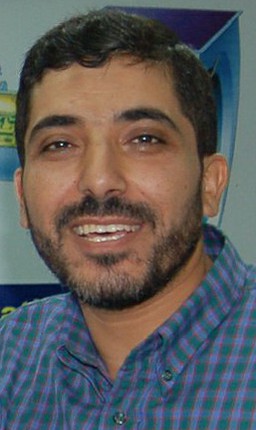
On a cold Ukrainian winter night in mid-February 2011, a Gaza civil engineer named Dirar Abu Sisi was lying in bed in a railroad sleeper car traveling to Kiev to visit his brother, Yousef, whom he hadn’t seen in 15 years.
Abu Sisi had come to Ukraine as a refugee applying for Ukrainian citizenship. While there, he was staying with his wife’s family, who are Ukrainian natives. Though he was the deputy chief of Gaza’s only power plant, he and his wife, Veronika, increasingly felt that Gaza was an unsafe place to raise their six children. During his stay, he had formally applied for citizenship so that he might resettle his family in Ukraine.
But something strange happened that night on the train. Just outside the village of Poltava, two policemen rousted Abu Sisi from bed and took him away, according to a witness in the bunk under Abu Sisi, who saw the entire incident unfold. This witness, Andrej Makarenko, who was recently discovered by the Ukrainian independent newspaper, Pravda (Russian), also noted that a conductor was present. The latter at first confirmed Makarenko’s story to the press, but later recanted, possibly under pressure from Ukrainian authorities. The Pravda reporter says the conductor has been given extended leave and has disappeared from his home.
Abu Sisi claimed in a prison interview with a Gaza human rights group that he was transferred to a private apartment in Kiev, where he was questioned by Israeli Mossad agents. He was then brought to the airport, placed on a plane and flown to Israel, making this a case of extraordinary rendition.
When Abu Sisi’s wife, who was in Gaza at the time, realized he had disappeared, she smuggled herself through a border tunnel to Egypt and made the same trip her husband had to Ukraine. Once there, she began a desperate search for him together with Yousef. They didn’t hear from Dirar for a week until the end of February, when he finally called from an Israeli prison. During that period of silence, she summoned the Ukrainian press and began accusing the Mossad of kidnapping him.
In early March, a confidential Israeli source reported to me that Abu Sisi was in an Israeli prison. Until that moment, no one knew what had happened after he was kidnapped. A few days after I reported this, and after scouring the Israeli human rights nongovernmental organization (NGO) community, Dalia Kerstein of HaMoked wrote that the Gazan engineer was indeed in an Israeli prison. First, he’d been brought to the Shabak (also known as Shin Bet) detention facility at Petah Tikvah, where he’d been interrogated. Later, he’d been moved to Shikma prison outside Ashkelon. And the entire story was under gag order. [Continue reading…]
The intimidation and detention of doctors treating dying and injured pro-democracy protesters in Bahrain is revealed today in a series of chilling emails obtained by The Independent.
At least 32 doctors, including surgeons, physicians, paediatricians and obstetricians, have been arrested and detained by Bahrain’s police in the last month in a campaign of intimidation that runs directly counter to the Geneva Convention guaranteeing medical care to people wounded in conflict. Doctors around the world have expressed their shock and outrage.
One doctor, an intensive care specialist, was held after she was photographed weeping over a dead protester. Another was arrested in the theatre room while operating on a patient.
Many of the doctors, aged from 33 to 65, have been “disappeared” – held incommunicado or at undisclosed locations. Their families do not know where they are. Nurses, paramedics and ambulance staff have also been detained.
Emails between a Bahraini surgeon and a British colleague, seen by The Independent, describe in vivid detail the threat facing medical staff as they struggle to treat victims of the violence. They provide a glimpse of the terror and exhaustion suffered by the doctors and medical staff.
Bahraini government forces backed by Saudi Arabian troops have cracked down hard on demonstrators since the unrest began on 15 February – and the harshness of their response has now been extended to those treating the injured.
The author of the emails, a senior surgeon at the Salmaniya Medical Complex, Bahrain’s main civil hospital, was taken in for questioning at the headquarters of the interior ministry in Manama. He never re-emerged. No reason has been given for his arrest, nor has there been any news of his condition.
In a series of emails, passed on in the hope of drawing attention to the plight of he and his colleagues, the surgeon describes appalling scenes at Salmaniya hospital, with staff being threatened and detained in increasing numbers for treating injured democracy protesters.
Rebels and NATO strikes repel assault on Ajdabiya
Col. Muammar el-Qaddafi’s military forces appeared to falter on Sunday in a second day of assault against the rebel city of Ajdabiya, as opposition fighters aided by heavy NATO airstrikes retook positions through much of the city.
Occasional skirmishes between small units within the city on Sunday morning appeared to be dying out. And other than an apparent mortar attack against a rebel checkpoint, the loyalists’ artillery and rocket batteries were mostly silent by the afternoon, when rebel fighters were able to roam many of Ajdabiya’s streets with confidence.
It was a sharp turnabout from the fighting on Saturday, when heavy artillery barrages sent rebel forces running several times through the day and caused heavy damage here. Loyalist forces were able to infiltrate the city, fighting gun battles in the city center against local rebels who had stayed to defend their homes. But by Sunday, that threat appeared to have passed.
“I think the Qaddafi forces go out of the city,” a doctor working at the city’s hospital said, in English.
By 4 p.m., a long rebel column of pickup trucks passed through the city’s main street, firing their weapons in the air in celebration.
The rebels’ gains were at least in part because of heavy NATO airstrikes throughout the morning and afternoon outside Ajdabiya, at a vital crossroads of highway networks in eastern Libya. NATO officials reported destroying several tanks on the western approaches to the city, and in the rebel holdout city of Misurata, over the past day.
“The situation in Ajdabiya, and Misurata in particular, is desperate for those Libyans who are being brutally shelled by the regime,” General Bouchard said.
While NATO’s operation is focused on destroying the heavy military equipment that poses the most threat to civilians, the statement said the airstrikes were also hitting ammunition bunkers and supply lines. “We are hitting the regime logistics facilities as well as their heavy weapons because we know Gaddafi is finding it hard to sustain his attacks on civilians”, General Bouchard said. (New York Times)
Airstrikes blew up 11 tanks belonging to forces loyal to Libyan dictator Muammar Qaddafi as they approached Ajdabiya today, and 14 more were hit earlier on the outskirts of Misrata. NATO strikes also left craters in the road used by Qaddafi to resupply troops shelling Ajdabiya, the North Atlantic Treaty Organization said. (Bloomberg)
“Where is Nato?” demanded the same people who only days earlier were waving French flags and shouting “Viva David Cameron”.
But behind the growing anger in revolutionary Libya over what is seen as a retreat by the west from air strikes against Muammar Gaddafi’s forces – a fury compounded by two botched Nato raids that killed rebel fighters – there was a second question: where are our leaders?
Nato’s failure to use its air power to reverse days of military setbacks for the rebels prompted a collapse in confidence in the west’s intentions among Gaddafi’s foes. Conspiracy theories flew. The west wants a divided Libya so it can control the oil, said some. Turkey, a Nato member, is vetoing air strikes because it supports Gaddafi, said others.
The concerns intensified on a day which saw Gaddafi’s forces advance further eastwards into oppositon territory than at any stage since international airstrikes began. Fierce fighting in Ajdabiya saw at least eight people killed and recapturing the city would give the Libyan military a staging ground to attack the rebels stronghold, Benghazi, about 100 miles further east.
Nato denied it was scaling back attacks and explained it faced new challenges in striking Gaddafi’s forces now that they have switched from relying on tanks and heavy armour in favour of smaller fighting units in pick-up trucks that are harder to hit. Not many in the liberated areas of Libya were interested. They were angry – and wanted their leaders to tell the west. But the revolution’s self-appointed chiefs in the interim national council were nowhere to be seen. (The Guardian)
NATO air strikes target Misurata
Libyan rebel forces have beaten off a new assault by government troops on the besieged western city of Misurata, but lost eight of their fighters in fierce street battles.
Mustafa Abdulrahman, a rebel spokesman, told Reuters by phone that Saturday’s fighting was centred on the Nakl al-Theqeel road to Misurata port.
He praised what he called a positive change from NATO, saying its aircraft carried out several air strikes on forces loyal to Muammar Gaddafi, the Libyan leader. Rebels have complained for days that NATO is too slow and imprecise in responding to government attacks. (Al Jazeera)
Libyan refugees tell of region suffering in silence
Libyan leader Muammar Gaddafi’s forces are shelling homes, poisoning wells and threatening to rape women in a remote mountain region, out of sight of the outside world, said people who fled the area.
The violence in the Western Mountains region, a sparsely-populated area reached only by winding roads, has received little of the international attention given to attacks on cities on the coast such as Misrata and Ajdabiyah.
But residents who escaped the region in the past three days, loading suitcases and mattresses onto their cars and driving across the border into Tunisia, said they were subject to a campaign of terror.
They now want their story to be heard.
“The bombardment … is targeting homes, hospitals, schools,” said Mohamed Ouan, from the town of Kalaa, who arrived at Tunisia’s Dehiba border crossing with about 500 other Libyans from the Western Mountains.
“No one is interested in this region, which is suffering in silence,” he told Reuters late on Saturday.
Another man from the same town, Hedi Ben Ayed, said: “Just imagine, there is no life left there. Gaddafi’s forces used petrol to burn the drinking water wells so we would go thirsty … Believe me, his forces have even killed the sheep.”
“You shouldn’t ask questions about the number of dead,” he said. “The last victims were a whole family which was killed on Friday by indiscriminate bombardments.”
REBELLION
The Western Mountains region, which includes the towns of Nalout, Kalaa, Yafran and Zintan, is populated by Berbers, a group ethnically distinct from most Libyans and traditionally viewed with suspicion by Gaddafi.
Away from the wealth on Libya’s Mediterranean coast, they scratch out a living rearing goats and sheep on mountain scrubland. Until a generation ago, many lived in underground caves they had carved out of the rock.
When people in the eastern Libyan city of Benghazi revolted against Gaddafi’s four-decade rule in February, residents in the Western Mountains region, southwest of Tripoli, joined in.
Videos posted on the Internet show crowds in Kalaa waving the green, black and red flag of the anti-Gaddafi rebels and chanting slogans in the Berber language.
Another video, from Nalout, showed people at a protest holding up a banner with the words: “The rebels of Nalout are supporting the Benghazi rebels.”
For weeks afterwards, forces loyal to Gaddafi, reeling from uprisings across the country, left the rebellion in the Western Mountains unchallenged. Now though, they are seeking to restore their control.
Libyan officials deny attacking civilians, and say they are waging a battle against armed criminal gangs and al Qaeda sympathisers who, they say, are trying to destroy the country.
FEAR OF RAPE
Aziza Belgasem, an 86-year-old woman, sits in a corner of the encampment at Dehiba where dozens of families parked their cars after arriving from Libya.
She wept as she said: “He has destroyed everything. Gaddafi is a catastrophe … We want to go back to our homes in peace.”
Her son, Mohammed Aissa, explained why his mother was distraught. She had to leave her daughters behind because they could not find fuel for their vehicles to escape.
Many said they fled after days living in fear of abuse — including rape — at the hands of Gaddafi’s forces.
“We are here because we were threatened with death, with kidnap, and with the rape of our sisters,” said Walid Salem, who is from Kalaa. “Gaddafi’s forces have promised to rape all the girls.”
“I slept for several nights in an underground cave out of fear, not of being killed but of being kidnapped.”
Said Amrawi said it was the threat of rape which made him flee his home in Nalout. “To be frank, there is no shelling in Nalout, but I am afraid that my wife and daughters will be raped,” he said.
“I wanted to bring them to a safe place … As for me, I want to go back to Nalout.”
One man, from the town of Yafran, appealed for foreign help. “We do not want direct NATO intervention but it is necessary, otherwise there will be no one left in Yafran,” he said.
Even in exile, the spirit of the rebellion in the Western Mountains lives on. A group of children played in the encampment, among them a 9-year-old boy.
Holding a plastic gun in his hands, he repeated the words: “I want to kill you, Gaddafi.” (Reuters)
In a predawn raid Saturday that stunned the nation, Egyptian soldiers stormed Tahrir Square to disperse about 2,000 protesters angry at the ruling military council for failing to deliver democracy and bring corrupt officials to justice after the ouster of President Hosni Mubarak.
The capital’s central square, a scene of celebration two months ago when Mubarak fell from power, became a surprise battlefield as soldiers beat protesters and tore down tents. One demonstrator was shot dead and 71 others were injured. The military said its troops fired only blanks, but protesters said the air was peppered with live ammunition.
The city echoed with sustained gunfire as soldiers swept into the crowd shortly after 3 a.m. Many protesters were dragged toward trucks, and hundreds of others scattered as troops closed ranks and demonstrators hurled stones. Tensions were further heightened as protesters formed a line to protect at least eight junior military officers who had switched sides and joined the demonstrations hours earlier.
“We are starting to realize that unfortunately the military is our enemy,” said Mohamed Wagdy, a protester and unemployed engineer who witnessed the raid. “They were an integral part of Mubarak’s regime, and now their mask has fallen off. Now we can’t say that the army and the people are one hand anymore.” (Los Angeles Times)
Soldiers in Tahrir Square
No one is quite sure where the red lines are in Egypt these days. Over the past weeks, protesters have gathered and been dispersed, most notably a month ago, on March 8th, when dozens were detained and some were beaten by the military with electric cattle prods, while women among them were subjected to forced virginity tests. The Army seemed to step back from these heavy handed tactics over the past weeks. Then, at around 3AM on Saturday, an hour after a curfew that is routinely ignored, the Army moved in on a few hundred protesters still in the square—firing into the air, beating people with batons. The protesters clearly tried to fight back; at daybreak, burnt vans were visible, and a bloodied patch of trash.
The light fell, gold and then grey, on Tahrir Square Saturday evening. The vans still smoldered and set an acrid tang in the air which stung bitter in the back of the throat. The ground was littered with the detritus of fighting: rubble, the ammunition of the protesters; and the Army’s bullet casings. By a Kentucky Fried Chicken outlet that had been the gallery for the revolutionary cartoonist syndicate the day before, the patch of blood had been reverently cordoned off. The crowd—milling, chanting, angry, bruised, defiant—were almost entirely young men of the poorer classes. The families that one usually sees in the square were missing, and there few women present. The atmosphere was grim and tense and uncomfortable. There were no police or soldiers to be seen.
I found a young blond woman, a Moroccan called Faten; she was distraught, explaining to a group of people that she had come to the square the day before with her fiancé, Mohamed Tarek Al Wadie, an officer with three stars on his shoulders (between a captain and a major). He had arrived in civilian dress, she said, just to see what it was all about, and seen a fellow officer he knew, in uniform, addressing the crowd. There were several officers on the square Friday—I saw one of them, and tried to talk to him, but he dared not be seen speaking to a foreign reporter—even though the military had forbidden soldiers to attend in uniform on pain of mutiny charges. Her fiancé had been inspired to take the microphone, and had denounced Mubarak and his regime. Later, around midnight, he was arrested by the military police from his parents’ house. Faten told her story to several activists who wrote the details down: “They came in seven cars and took him away like a criminal.” She said she had tried to call her fiancé’s friends, also officers, but their phones were switched off, “which is something not normal at all.”
Nearby, a chanting mob paraded a uniform on a stick. “It’s all about Tantawi”—the defense minister and head of the Supreme Military Council—Nawra Mourad told me. She was picking up garbage, exhibiting a vestige of the spirit of the old, utopian Tahrir Square. “They are saying that seven people were killed last night. Someone else told me that two officers who were on the square yesterday were killed.” The crowd was young and brooding, and there looked like there would be trouble again. Mourad shrugged. She had been through the revolution, and “the fear barrier is already gone,” she said. “I don’t think I’ll go home today, a lot of us will stay. This is Tahrir, this is ours—this is for the rebels.” (Wendell Steavenson)
Hosni Mubarak breaks silence to deny corruption
Egypt’s deposed president Hosni Mubarak has denied he stole billions of dollars from his country’s coffers, in his first public address since he was removed from power by mass protests in February.
Mubarak said he would defend himself from any accusations of corruption, after a fresh wave of protests in Cairo in part to demand he be put on trial.
“I will uphold all my legal rights to defend my reputation as well as that of my family,” he said in a speech broadcast on an Arab satellite news channel. “I have been, and still am, pained by what I and my family are facing from fraudulent campaigns and unfounded allegations that seek to harm my reputation, my integrity and my military and political record.”
Mubarak said he held just one account with an Egyptian bank, and promised to co-operate with any investigation in order to prove that he did not have property or bank accounts abroad. He also denied similar accusations against his wealthy and once powerful sons, Alaa and Gamal. (The Guardian)
Egypt prosecutor alleges schemes by Mubarak family
Egypt’s top prosecutor has notified the United States and other governments around the world that former president Hosni Mubarak and his family may have hidden hundreds of billions of dollars worth of cash, gold and other state-owned valuables, according to a document obtained by The Washington Post.
Prosecutor General Abdel Meguid Mahmoud wrote in the document that Mubarak and his sons, Gamal and Alaa, may have violated laws prohibiting the “seizing of public funds and profiteering and abuse of power,” using complex business schemes to divert the assets to offshore companies and personal accounts.
The claims spelled out in the document are the most sweeping to date against Mubarak, a strategic ally of the United States for three decades until he was forced from power in February in the wake of national protests and international pressure. The sum of the assets alleged to be appropriated by the Mubarak family — more than $700 billion — far exceeds earlier estimates and might be wildly exaggerated. Previous figures for the amount allegedly stolen by the Mubaraks range from $1 billion to $70 billion.
The 12-page document, written in Arabic and titled “Request for Judicial Assistance,” is intended to provide the legal basis under civil law to recover assets belonging to the Egyptian people. The copy of the document obtained by The Post indicates it was prepared in February 2011 but does not provide a more precise date. An Egyptian official in Washington said the request was sent to countries where the Mubarak family might maintain assets. (Washington Post)
In a brief audio message aired on Al-Arabiya television, Mubarak said the Egyptian government’s probe into his finances is aimed at tarnishing his reputation and undermining his “history.”
“I cannot keep silent facing this continued falsified campaign and the continued attempt to undermine my reputation and the reputation of my family,” he said.
He has agreed to allow the public prosecutor to contact governments around the world “to take all the proper legal steps to reveal” whether he and his family own any properties or real estate outside of Egypt. He also claimed he has no bank accounts abroad. (CNN)
A new era for US-Egypt relations?
The narrative whereby the West orchestrated a careful conspiracy to keep down the Arab world by imposing Mubaraks is no truer than the idea of that democracy and its promotion will suddenly become a priority for strategic planners in Washington, London or Paris. The truth is more humdrum: For a host of complicated reasons, ranging from their domestic politics to colonial legacy to the need for a stable oil-producing Middle East, the West preferred to deal with tyrants whose behavior was predictable and, at least most of the time, friendly. But it’s worth considering that the tyrants were often indigenously created, not the invention of an outside power. Lack of democracy in the region is partly related to outside intervention, but also fundamentally rooted in its own political, cultural and developmental dynamics.
The West and the United States in particular will continue to prefer dealing with a friendly and predictable regime. It will not take great risks to ensure that the next government of Egypt is a democratic one, but it will try to nudge things in that direction when possible. This, at least, is what appears to be the attitude of the Obama administration towards Egypt. We need only look at Washington’s tacit support for repression of the uprising in Bahrain to know that, in different circumstances, things would be different.
In Egypt, Washington sees many things: an influential power in the region; a military partner that can help reduce logistical headaches for the US military (for instance by granting overflight rights and refueling facilities, as it has done throughout the occupation of Iraq); a country with a combustible mix of social, economic and political ills; the host of the Suez Canal; and a place for which the American public has a certain fondness (for a variety of reasons ranging from the Pyramids to the infectious enthusiasm of Tahrir revolutionaries to the presence of a large Christian minority). It’s also worth remembering that America’s foreign policy system is complex and multi-layered, with the US-Egypt bilateral relationship having increasingly been dominated by military and security imperatives in recent years. Official attitudes in Washington today are shaped as much by the Pentagon and CIA as they are by Congress, the State Department and the White House.
Because Pentagon strategists tend to plan for everything, they also fear that Egypt might become another Iran, or even another Somalia. And they know from experience that the US will inevitably be drawn into Egyptian affairs, partly because of the logic of its imperial military posture towards the Middle East (secure oil routes, contain the rogue states, protect the Gulf monarchies, etc.), but also because the Egyptian government is already asking for help. Those who think Egypt can now, for instance, break off the Camp David agreement should be asking how receptive Washington will then be to supporting Egypt’s borrowing on the international markets or its requests for World Bank or IMF funding.
It will take time for Egypt to develop a new relationship with the United States. The patron-client relationship in which Egypt was increasingly pigeonholed over the last decades, in part because its foreign policy sought to defend a regime rather than advance the interests of a nation, will continue for some time. To re-balance it — hopefully so that Egypt can be more like Turkey, which has closer military ties to the United States (through NATO) but can afford to be more independent in its foreign policy (a good corrective to American hubris in recent years) — will take time, careful planning and a clever reinvention of what Egyptian foreign policy stands for. But it need not be couched in either reflexive hostility or naiveté. (Issandr El Amrani)
Just a couple of months ago, her husband, the steel tycoon Ahmed Ezz, moved in Egypt’s most elite circles, a parliamentary leader and political enforcer for the ruling party and a close friend of Gamal Mubarak, the son of then-President Hosni Mubarak.
But since the regime-toppling revolution here, Ezz, 52, has been paraded through the streets like a common criminal, taunted by a mob and tossed into jail on charges of graft. (For good measure, pro-
democracy demonstrators also looted and torched the headquarters of Ezz Steel.)
Ezz, in a recent public letter from jail, says he did nothing illegal. But as Egypt purges elements of its old order and gropes to structure a new one, he has emerged as perhaps the most hated symbol of a system that rewarded the few and oppressed the many. Fairly or not, Ezz — the oligarch who cornered the market on steel production in the Arab world — represents for millions of Egyptians a pervasive crony capitalism that, before the revolution, was simply a fact of life. (Washington Post)
U.S. halted record aid deal as Yemen rose up
As the Yemeni president, Ali Abdullah Saleh, cracks down with increasing violence against peaceful protesters, his regime and al-Qaida in the Arabian Peninsula (AQAP) both repeat the same mantra: political unrest in Yemen is good for al-Qaida.
The US has also suggested that this reading of events is warranted. Defence secretary Robert Gates stated: “We’ve had counter-terrorism co-operation with President Saleh and the Yemeni security services … So if that government collapses, or is replaced by one that is dramatically more weak, then I think we’d face some additional challenges out of Yemen, there’s no question about it.”
But Yemeni politics is anything but a zero-sum game. First, President Saleh has not been a particularly reliable ally on counterterrorism matters, and neither is he the only force standing between Yemen as it is now and Yemen as a jihadi state. In fact, many Yemenis believe that the AQAP organisation is little more than a myth or, at least, part of a cynical plot by the regime to maintain power. (Sarah Phillips)
The U.S. was on the verge of launching a record assistance package to Yemen when an outbreak of protests against its president led Washington to freeze the deal, officials say, marking a sharper turn in U.S. policy there than the administration has previously acknowledged.
The first installment of the aid package, worth a potential $1 billion or more over several years, was set to be rolled out in February, marking the White House’s largest bid at securing President Ali Abdullah Saleh’s allegiance in its battle against al Qaeda in the Arabian Peninsula, the group behind the failed underwear bombing in 2009 and the foiled air-cargo bombing plot in October.
For Mr. Saleh, the money would help shore up his shaky political position and reward the risks he took by bucking popular opinion and letting U.S. Special Forces hunt down militants inside his country.
But before the first check could be written, anti-Saleh protesters took to the streets of San’a in an echo of antiregime demonstrations sweeping the region. The Obama administration’s suspension of the new aid put a spotlight on the unraveling of a troubled anti-terror alliance with a man who has ruled Yemen like a family fiefdom for three decades.
The U.S. reversal was the latest and largest episode in an up-and-down history with Mr. Saleh. Throughout much of the last decade, according to U.S. officials, his commitment to cooperating with the U.S. in the hunt for al Qaeda in his country was questionable. By the end of 2009, the U.S. had become encouraged by his willingness to let the U.S. battle the group. But relations foundered a few months later after a U.S. missile strike killed a Saleh envoy. (Wall Street Journal)
Essential readings — Bahrain: origins of the crisis
When I lived in Bahrain a few years ago, the Pearl monument was for me a reliable landmark that helped me navigate the streets of Manama in my rented compact car. Standing 300 feet high, the single white pearl was supported by six dhow sails, representing the six member countries of the GCC who share the heritage of the gulf seafaring culture. The pearl symbolized the Bahraini people’s past as renowned pearl divers and merchants. That past extends back hundreds of years, before the formation of the GCC, before the arrival of the Al Khalifa, before the arrival of European colonial powers looking to secure control over the vibrant Gulf trade. When Bahrainis began to take part in the recent “Arab Spring” sweeping the region, they chose the Pearl Roundabout, named after the monument, as their rallying point. Like demonstrators elsewhere, the Bahraini protesters gathered for political and economic reasons: greater political participation, more jobs, less corruption. Unlike demonstrators elsewhere, Bahrainis faced an additional challenge: the deliberate, carefully calculated political, economic, and social oppression of the kingdom’s Shii majority population by the ruling Sunni Al Khalifa.
Whether the Pearl Roundabout had been chosen by protesters because of its symbolism, its proximity to the Shii villages from which many demonstrators came, or simply because it is the only public space in Manama large enough to host such a rally, the Roundabout today is ripe with symbolism. Much like the hopes and aspirations of those who stood freely in this space to ask for their right to participate in their country’s future, the monument has been destroyed and bulldozed away by order of the Al Khalifa, leaving an ugly scar where the proud monument once stood. The ugliness does not end there: in order to silence these voices, the Al Khalifa called in Saudi troops, arrested bloggers, and confiscated many of those wounded in the demonstrations from their hospital beds and reportedly interrogated, insulted, and tortured them, some to death. Just as disturbing, if not more so, are reports that the U.S., whose 5th Fleet Navy base is located in Manama, cut a deal with Saudi leaders to refrain from criticizing Bahrain’s handling of the protests in exchange for Saudi Arabia’s, and thus the Arab League’s, agreement on operations in Libya.
What are we to make of this heartbreaking outcome of the Bahraini Spring? The following sources offer readers some historical background of the current crisis. This background was not easy to come by. Partly due to its small size, and partly due to its location in a generally understudied region (the Gulf), Bahrain has not received much scholarly attention. Archaeologists have examined its past as the possible seat of the ancient Dilmun civilization, naturalists have studied its flora and fauna, and scholars of the British empire have written about its status as a British protectorate, but few scholars have examined its more recent social or political history. Of those who have, I have chosen the works that best help explain the origins of the current crisis. Also included in this list are sources that present analysis of the international significance of the events currently taking place in Bahrain. For example, a claim that has been repeatedly bandied about by the Al Khalifa is that the mostly Shii demonstrators are taking their cues from Iran. That there is little basis for this claim, and that in fact Bahraini Shiis’ concerns have been decidedly local, has not allayed the fears of Sunnis in the region, or of the U.S.
Today, Bahrainis continue to gather in public to seek justice and greater freedom, despite brutal crackdowns implemented not only by their own government’s forces, but also those of foreign nations. For the interested reader, these few sources will provide a glimpse into Bahrain’s past as a vibrant center of commercial life, transnational trade, and Shii intellectual thought. The era of Al Khalifa rule is also explored here, as well as references to the specific actions, policies, and events that led to the current conflict. For example, while reading the first paragraph of Munira Fakhro’s analysis of the uprising of the 1990’s, one is struck by the similarities between the issues at stake and the response of the state then and that of now, twenty-one years later. This is despite the government’s claims that Bahrain has entered an era of reform. As for Bahrain’s future, analysts here suggest that all depends on the Al Khalifa’s willingness to finally institute real political reform. As long as the U.S. agrees to turn a blind eye and Saudi forces remain on Bahraini soil, regrettably, there is little hope of such an outcome. (Sandy Russell Jones)
Bahrain: free prominent opposition activist
Bahrain authorities should immediately release prominent opposition and rights activist Abdul Hadi al-Khawaja, or bring him before an independent judge and charge him with a recognizable offense, Human Rights Watch said today.
Human Rights Watch also called on authorities to allow an independent medical doctor immediate and unconditional access to al-Kahawaja, 50, whom witnesses say was badly beaten by riot police when they raided his daughter’s home in the predawn hours of April 9, 2011. Al-Khawaja, an opposition and rights activist, has worked for national and international human rights organizations, including the Bahrain Center for Human Rights and Dublin-based Front Line.
“The brutal beating of rights activist Abdul Hadi al-Khawaja by police during a warrantless predawn raid adds cruelty on top of illegality,” said Joe Stork, deputy Middle East director at Human Rights Watch. “He should be released immediately.” (Human Rights Watch)
Police on Saturday arrested 61 people — including 19 women — for attempting to hold an outlawed Paris protest against France’s pending ban on face-covering Islamic veils, a top police official said.
Fifty-nine people were detained while trying to demonstrate at Place de la Nation in eastern Paris, as were two others while traveling there from Britain and Belgium, said Nicolas Lerner, chief of staff for the Paris police chief.
The arrests come amid in a rising, if small, groundswell of controversy over Monday’s start of an official ban of garments that hide the face, which includes Muslim veils such as the slit-eyed niqab and the full face-covering burqa. Women who disobey the law risk a fine, special classes and a police record.
There was a time when Shazia Mirza, stand-up comic and British Asian Muslim, performed as a character who wore a hijab. She doesn’t now. But she still has a good line on the full-body veil. “All my cousins in France wear the burqa. Which is great. Because they all use the same bus pass.”
Not any more. Tomorrow, France launches a full-scale ban. For Sarkozy and his friends, the burqa is no joke. It’s dangerous and illegal. Women wearing the burqa and the niqab (the more common facial veil) will not exactly be arrested on sight. But if they wear a veil over their face in a public place, anyone can ask them to uncover their face – or leave. Not quite stop and search. Just stop and unmask. If a woman refuses to co-operate, citizens are advised to call the police. The fine is €150.
Does this sound a little unfriendly to you? If so, be very worried. Because this trend is spreading. A ban is already in operation in Belgium and under discussion in Canada, Denmark and Spain. It is likely to become law in the Netherlands this year or next. There have been calls in Sweden for the niqab to be prohibited in schools and universities.
A de facto ban already exists in Italy (where a 1975 antiterrorism law forbids the covering of the face) and Berlusconi’s party has drafted a new, more specific ruling. Last year, a Tunisian woman was fined €500 for wearing a burqa in Italy’s Piedmont region.
This website or its third-party tools use cookies, which are necessary to its functioning. By closing this banner, you agree to the use of cookies.




 Ziu was not classic suicide-bomber material. He was a podgy, balding 48-year-old executive with the state oil company, married with daughters at home. There was no martyrdom video of the kind favoured by Hamas. He did not even tell his family his plan, although they had seen a change in him over the three days since the revolution began.
 On a cold Ukrainian winter night in mid-February 2011, a Gaza civil engineer named Dirar Abu Sisi was lying in bed in a railroad sleeper car traveling to Kiev to visit his brother, Yousef, whom he hadn’t seen in 15 years.