



Pankaj Mishra writes: There has rarely been a day since I first read The Need for Roots, nearly two decades ago, that I haven’t thought of Simone Weil – one of my earliest heroines along with Hannah Arendt and Rosa Luxemburg. It was the title that initially attracted me more than the contents. Having recently moved to a Himalayan village after a peripatetic life in the plains, I had begun to feel rooted for the first time, connected to a stable community which, living off the land, neither poor nor rich, and low rather than upper caste, was marked above all by dignity – remarkable in a country where villages had become synonymous with destitution. And when Weil asserted that the central event of the modern era was uprootedness – the disconnection from the past and the loss of community – she seemed to speak directly to my experience.
The range of her admirers – from TS Eliot to Albert Camus – attest to the difficulty of describing Weil. She was a bourgeois Jewish intellectual from France who, in a viciously antisemitic climate, rejected both Judaism and Zionism. A youthful Marxist who fought on the Republican side in the Spanish civil war she, after an immersion in the “icy pandemonium of industrial life”, came to believe that “it is not religion but revolution which is the opium of the people”. A devoted Hellenist, she despised the Roman empire, implicating it with an oppressive tradition of the authoritarian state in Europe that culminated in Nazi Germany.
A rare European thinker who was as curious about Hindu and Buddhist traditions as about the Cathars, Weil despised colonialism as well as nationalism. “When one takes upon oneself, as France did in 1789, the function of thinking on behalf of the world, of defining justice for the world, one may not become an owner of human flesh and blood.” She possessed an ironic view of historians – how they buttress the ideological claims of the hyper-power of the day: “If Germany, thanks to Hitler and his successors, were to enslave the European nations and destroy most of the treasures of their past, future historians would certainly pronounce that she had civilised Europe.”
Freed of the popular intellectual’s obligation to boost national or imperial egos, she could point out something that was obvious to many Asian sufferers of European colonialism: the shocking nature of Nazi racism lay, she wrote, “in the application by Germany to the European continent, and the white race, generally, of colonial methods of conquest and domination”. [Continue reading…]
The Washington Post reports: It’s called a near-death experience, but the emphasis is on “near.” The heart stops, you feel yourself float up and out of your body. You glide toward the entrance of a tunnel, and a searing bright light envelops your field of vision.
It could be the afterlife, as many people who have come close to dying have asserted. But a new study says it might well be a show created by the brain, which is still very much alive. When the heart stops, neurons in the brain appeared to communicate at an even higher level than normal, perhaps setting off the last picture show, packed with special effects.
“A lot of people believed that what they saw was heaven,” said lead researcher and neurologist Jimo Borjigin. “Science hadn’t given them a convincing alternative.”
Scientists from the University of Michigan recorded electroencephalogram (EEG) signals in nine anesthetized rats after inducing cardiac arrest. Within the first 30 seconds after the heart had stopped, all the mammals displayed a surge of highly synchronized brain activity that had features associated with consciousness and visual activation. The burst of electrical patterns even exceeded levels seen during a normal, awake state.
In other words, they may have been having the rodent version of a near-death experience. [Continue reading…]
Ian Leslie writes: In October 2012 a woman from Massachusetts called Lindsey Stone went on a work trip to Washington DC, and paid a visit to Arlington National Cemetery, where American war heroes are buried. Crouching next to a sign that said ‘Silence and Respect’, she raised a middle finger and pretended to shout while a colleague took her photo. It was the kind of puerile clowning that most of us (well me, anyway) have indulged in at some point, and once upon a time, the resulting image would have been noticed only by the few friends or family to whom the owner of the camera showed it. However, this being the era of sharing, Stone posted the photo to her Facebook profile.
Within weeks, a ‘Fire Lindsey Stone’ page had materialised, populated by commentators frothing with outrage at a desecration of hallowed ground. Anger rained down on Stone’s employer, a non-profit that helps adults with special needs. Her employers decided, reluctantly, that Stone and her colleague would have to leave.
More recently, Edward Snowden’s revelations about the panoptic scope of government surveillance have raised the hoary spectre of ‘Big Brother’. But what Prism’s fancy PowerPoint decks and self-aggrandising logo suggest to me is not so much an implacable, omniscient overseer as a bunch of suits in shabby cubicles trying to persuade each other they’re still relevant. After all, there’s little need for state surveillance when we’re doing such a good job of spying on ourselves. Big Brother isn’t watching us; he’s taking selfies and posting them on Instagram like everyone else. And he probably hasn’t given a second thought to what might happen to that picture of him posing with a joint.
Stone’s story is hardly unique. Earlier this year, an Aeroflot air hostess was fired from her job after a picture she had taken of herself giving the finger to a cabin full of passengers circulated on Twitter. She had originally posted it to her profile on a Russian social networking site without, presumably, envisaging it becoming a global news story. Every day, embarrassments are endured, jobs lost and individuals endangered because of unforeseen consequences triggered by a tweet or a status update. Despite the many anxious articles about the latest change to Facebook’s privacy settings, we just don’t seem to be able to get our heads around the idea that when we post our private life, we publish it.
At the beginning of this year, Facebook launched the drably named ‘Graph Search’, a search engine that allows you to crawl through the data in everyone else’s profiles. Days after it went live, a tech-savvy Londoner called Tom Scott started a blog in which he posted details of searches that he had performed using the new service. By putting together imaginative combinations of ‘likes’ and profile settings he managed to turn up ‘Married people who like prostitutes’, ‘Single women nearby who like to get drunk’, and ‘Islamic men who are interested in other men and live in Tehran’ (where homosexuality is illegal).
Scott was careful to erase names from the screenshots he posted online: he didn’t want to land anyone in trouble with employers, or predatory sociopaths, or agents of repressive regimes, or all three at once. But his findings served as a reminder that many Facebook users are standing in their bedroom naked without realising there’s a crowd outside the window. Facebook says that as long as users are given the full range of privacy options, they can be relied on to figure them out. Privacy campaigners want Facebook and others to be clearer and more upfront with users about who can view their personal data. Both agree that users deserve to be given control over their choices.
But what if the problem isn’t Facebook’s privacy settings, but our own?
A few years ago George Loewenstein, professor of behavioural economics at Carnegie Mellon University in Pittsburgh, set out to investigate how people think about the consequences of their privacy choices on the internet. He soon concluded that they don’t. [Continue reading…]
Nature reports: In the 1970s, archaeologist Peter Bogucki was excavating a Stone Age site in the fertile plains of central Poland when he came across an assortment of odd artefacts. The people who had lived there around 7,000 years ago were among central Europe’s first farmers, and they had left behind fragments of pottery dotted with tiny holes. It looked as though the coarse red clay had been baked while pierced with pieces of straw.
Looking back through the archaeological literature, Bogucki found other examples of ancient perforated pottery. “They were so unusual — people would almost always include them in publications,” says Bogucki, now at Princeton University in New Jersey. He had seen something similar at a friend’s house that was used for straining cheese, so he speculated that the pottery might be connected with cheese-making. But he had no way to test his idea.
The mystery potsherds sat in storage until 2011, when Mélanie Roffet-Salque pulled them out and analysed fatty residues preserved in the clay. Roffet-Salque, a geochemist at the University of Bristol, UK, found signatures of abundant milk fats — evidence that the early farmers had used the pottery as sieves to separate fatty milk solids from liquid whey. That makes the Polish relics the oldest known evidence of cheese-making in the world.
Roffet-Salque’s sleuthing is part of a wave of discoveries about the history of milk in Europe. Many of them have come from a €3.3-million (US$4.4-million) project that started in 2009 and has involved archaeologists, chemists and geneticists. The findings from this group illuminate the profound ways that dairy products have shaped human settlement on the continent.
During the most recent ice age, milk was essentially a toxin to adults because — unlike children — they could not produce the lactase enzyme required to break down lactose, the main sugar in milk. But as farming started to replace hunting and gathering in the Middle East around 11,000 years ago, cattle herders learned how to reduce lactose in dairy products to tolerable levels by fermenting milk to make cheese or yogurt. Several thousand years later, a genetic mutation spread through Europe that gave people the ability to produce lactase — and drink milk — throughout their lives. That adaptation opened up a rich new source of nutrition that could have sustained communities when harvests failed. [Continue reading…]
Raymond Tallis writes: The grip of neuroscience on the academic and popular imagination is extraordinary. In recent decades, brain scientists have burst out of the laboratory into the public forum. They are everywhere, analysing and explaining every aspect of our humanity, mobilising their expertise to instruct economists, criminologists, educationists, theologians, literary critics, social scientists and even politicians, and in some cases predicting a neuro-savvy utopia in which mankind, blessed with complete self-understanding, will be able to create a truly rational and harmonious future.
So the smile-worthy prediction, reported in the Huffington Post, by Kathleen Taylor, Oxford scientist and author of The Brain Supremacy, that Muslim fundamentalism “may be categorised as mental illness and cured by science” as a result of advances in neuroscience is not especially eccentric. It does, however, make you wonder why the pronouncements of neuroscientists command such a quantity of air-time and even credence.
It would be a mistake to assume their authority is based on revelatory discoveries, comparable to those made in leading-edge physics, which have translated so spectacularly into the evolving gadgetry of daily life. There is no shortage of data pouring out of neuroscience departments. Research papers on the brain run into millions. The key to their influence, however, is the exciting technologies the studies employ, notably various scans used to reveal the activity of the waking, living brain.
The jewel in the neuroscientific crown is functional magnetic resonance imaging (fMRI), justly described by Matt Crawford as “a fast-acting solvent of the critical faculties”. It seems that pretty well any assertion placed next to an fMRI scan will attract credulous attention. Behind this is something that goes deeper than uncritical technophilia. It is the belief that you are your brain, and brain activity is identical with your consciousness, so that peering into the intracranial darkness is the best way of advancing our knowledge of humankind.
Alas, this is based on a simple error. As someone who worked for many years, as a clinician and scientist, with people who had had strokes or suffered from epilepsy, I was acutely aware of the extent to which living an ordinary life was dependent on having a brain in some kind of working order. It did not follow from this that everyday living is being a brain in some kind of working order. The brain is a necessary condition for ordinary consciousness, but not a sufficient condition.
You don’t have to be a Cartesian dualist to accept that we are more than our brains. It’s enough to acknowledge that our consciousness is not tucked away in a particular space, but is irreducibly relational. [Continue reading…]
Emily Esfahani Smith writes: For at least the last decade, the happiness craze has been building. In the last three months alone, over 1,000 books on happiness were released on Amazon, including Happy Money, Happy-People-Pills For All, and, for those just starting out, Happiness for Beginners.
One of the consistent claims of books like these is that happiness is associated with all sorts of good life outcomes, including — most promisingly — good health. Many studies have noted the connection between a happy mind and a healthy body — the happier you are, the better health outcomes we seem to have. In a meta-analysis (overview) of 150 studies on this topic, researchers put it like this: “Inductions of well-being lead to healthy functioning, and inductions of ill-being lead to compromised health.”
But a new study, just published in the Proceedings of the National Academy of Sciences (PNAS) challenges the rosy picture. Happiness may not be as good for the body as researchers thought. It might even be bad.
Of course, it’s important to first define happiness. A few months ago, I wrote a piece called “There’s More to Life Than Being Happy” about a psychology study that dug into what happiness really means to people. It specifically explored the difference between a meaningful life and a happy life. [Continue reading…]
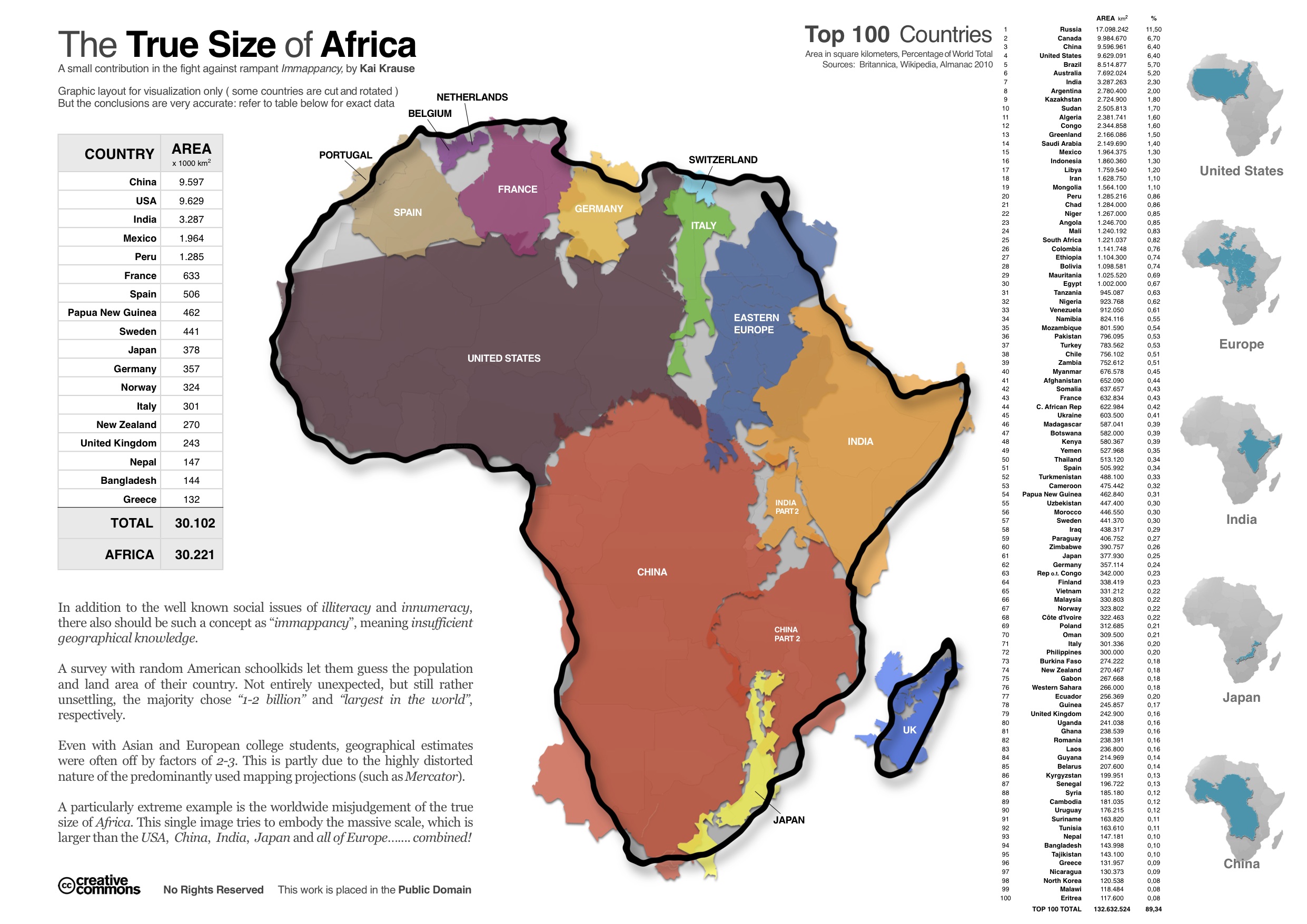
Click on the map above for more information.

Wired: Armed with branch cutters, pillowcases, and a vibrator, a team of scientists has discovered how social spiders in India assign chores within their colonies – and they say it has to do with spider personalities.
Big and bold? Go get that grasshopper! Slightly more timid? Maybe stay home, take care of the brood, and clean the nest or something.
“Bolder individuals were the ones that engaged in prey attack,” said Lena Grinsted, now a postdoc at the University of Sussex, and coauthor of the study describing the spiders that appeared July 30 in Proceedings of the Royal Society B. “We hypothesize that the ones who don’t participate in prey attack participate in brood care, but it’s something we haven’t tested yet.”
The researchers say their findings support the idea that spiders have personalities. Sure, they’re not as complex as human personalities, but they’re defined by behavior differences that are consistent over time and context. In this study, scientists tested whether the division of labor was related to personality in the social spiders Stegodyphus sarasinorum. [Continue reading…]

Deutsche Welle reports: India has officially recognized dolphins as non-human persons, whose rights to life and liberty must be respected. Dolphin parks that were being built across the country will instead be shut down.
India’s Ministry of Environment and Forests has advised state governments to ban dolphinariums and other commercial entertainment that involves the capture and confinement of cetacean species such as orcas and bottlenose dolphins. In a statement, the government said research had clearly established cetaceans are highly intelligent and sensitive, and that dolphins “should be seen as ‘non-human persons’ and as such should have their own specific rights.”
The move comes after weeks of protest against a dolphin park in the state of Kerala and several other marine mammal entertainment facilities which were to be built this year. Animal welfare advocates welcomed the decision.
“This opens up a whole new discourse of ethics in the animal protection movement in India,” said Puja Mitra from the Federation of Indian Animal Protection Organizations (FIAPO). Mitra is a leading voice in the Indian movement to end dolphin captivity.
“The scientific evidence we provided during the campaign talked about cetacean intelligence and introduced the concept of non-human persons,” she said in an interview with DW.
Indiais the fourth country in the world to ban the capture and import of cetaceans for the purpose of commercial entertainment – along with Costa Rica, Hungary, and Chile. [Continue reading…]
