Angelique Kidjo, Beninoise singer-songwriter: Exiled in Paris from my native Benin in west Africa, I started to study music in a jazz school in 1985. I could hear the passion the great jazzmen had for African music. John Coltrane had written a song called Dahomey Dance after the name of my country and it has been said that Miles Davis’s modal approach in Kind of Blue was inspired by a performance of the Ballets de Guinée that he attended. But African music in the 80s was just about dance, partying, Congolese guitars and “la Sape”, the Zairian form of dandyism. I was so frustrated. I could not imagine how to reconcile in my music the beauty of the traditional music of my youth with the modern sounds of jazz. Then, in 1987, came Salif Keita’s album Soro. It was a grand revelation for me. In the opening of the song Sina, his most amazing voice felt like an incantation. It was surrounded by mystical minor chords and backed by the funkiest Malian polyrhythms you could imagine! The emotion it carried gave me a sense that African culture had unlimited depth and power and could also touch your heart like nothing you had heard before.Salif Keita
(Some readers here might not have noticed this site has a music section which includes playlists from many artists around the world including Salif Keita.)

Max Fisher writes: When Islamist extremists took over the northern half of Mali, an African country that is economically poor but rich in culture, one of their more barbaric impositions was to ban music. To understand why this has been so painful for Malians, why The Post’s Sudarsan Raghavan called it “a shattering of their culture” after visiting the country, you have to listen to the music yourself.
Now that French forces have intervened militarily to stop the rebels’ advance, opening what could potentially be a protracted conflict in Mali, it’s worth hearing the music at the heart of this country’s culture, if you haven’t already. Teju Cole, a Nigerian-American novelist whom I once had the pleasure of editing, tweeted out a 10-track playlist of Malian music last year. I’ve embedded the songs and reproduced his commentary here.
After listening to a few of these, you’ll understand why the country is considered “one of the richest reservoirs of music on the continent,” as Raghavan wrote, why the music has found such success in the West, and perhaps a small part of what makes the Islamists’ rule so painful.
See the rest of Fisher’s post to hear Cole’s selection of music from Mali.
Over the last two years, I’ve posted quite a lot of Malian music, so here it all is again in one post:
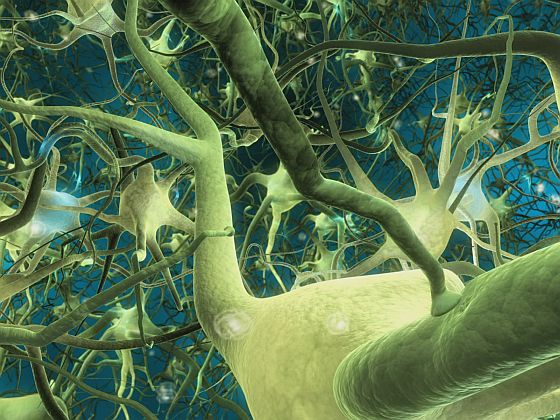
Daniel Dennett says: Each neuron is imprisoned in your brain. I now think of these as cells within cells, as cells within prison cells. Realize that every neuron in your brain, every human cell in your body (leaving aside all the symbionts [such as mitochondria]), is a direct descendent of eukaryotic cells that lived and fended for themselves for about a billion years as free-swimming, free-living little agents. They fended for themselves, and they survived.
They had to develop an awful lot of know-how, a lot of talent, a lot of self-protective talent to do that. When they joined forces into multi-cellular creatures, they gave up a lot of that. They became, in effect, domesticated. They became part of larger, more monolithic organizations. My hunch is that that’s true in general. We don’t have to worry about our muscle cells rebelling against us, or anything like that. When they do, we call it cancer, but in the brain I think that (and this is my wild idea) maybe only in one species, us, and maybe only in the obviously more volatile parts of the brain, the cortical areas, some little switch has been thrown in the genetics that, in effect, makes our neurons a little bit feral, a little bit like what happens when you let sheep or pigs go feral, and they recover their wild talents very fast.
Maybe a lot of the neurons in our brains are not just capable but, if you like, motivated to be more adventurous, more exploratory or risky in the way they comport themselves, in the way they live their lives. They’re struggling amongst themselves with each other for influence, just for staying alive, and there’s competition going on between individual neurons. As soon as that happens, you have room for cooperation to create alliances, and I suspect that a more free-wheeling, anarchic organization is the secret of our greater capacities of creativity, imagination, thinking outside the box and all that, and the price we pay for it is our susceptibility to obsessions, mental illnesses, delusions and smaller problems.
We got risky brains that are much riskier than the brains of other mammals even, even more risky than the brains of chimpanzees, and that this could be partly a matter of a few simple mutations in control genes that release some of the innate competitive talent that is still there in the genomes of the individual neurons. But I don’t think that genetics is the level to explain this. You need culture to explain it.
This, I speculate, is a response to our invention of culture; culture creates a whole new biosphere, in effect, a whole new cultural sphere of activity where there’s opportunities that don’t exist for any other brain tissues in any other creatures, and that this exploration of this space of cultural possibility is what we need to do to explain how the mind works. [Continue reading…]

In a review of The World Until Yesterday: What Can We Learn from Traditional Societies?, Wade Davis says that Jared Diamond’s approach to anthropology is rooted in many of the prejudices of the nineteenth century which saw societies from traditional to modern as stages in a linear progression of advancement.
The other peoples of the world are not failed attempts at modernity, let alone failed attempts to be us. They are unique expressions of the human imagination and heart, unique answers to a fundamental question: what does it mean to be human and alive? When asked this question, the cultures of the world respond in 7000 different voices, and these answers collectively comprise our human repertoire for dealing with all the challenges that will confront us as a species as we continue this never-ending journey.It is against this backdrop that one must consider the popular but controversial writings of Jared Diamond, a wide-ranging scholar variously described as biogeographer, evolutionary biologist, psychologist, ornithologist and physiologist. In Guns, Germs and Steel, Diamond set out to solve what was for him a conundrum. Why was it that some cultures such as our own rose to technological, economic and political predominance, while others such as the Aborigines of Australia did not? Rejecting notions of race, intelligence, innate biological differences of any kind, he finds his explanation in the environment and geography. Advanced civilisations arose where the environment allowed for plant domestication, leading to the generation of surplus and population growth, which in turn led to political centralisation and social stratification. No surprises there.
In Collapse, Diamond returned to the theme of environmental determinism as he pondered why and how great civilisations come to an end. Evoking the ecological fable of Easter Island, he suggests that cultures fall as people fail to meet the challenges imposed by nature, as they misuse natural resources, and ultimately drift blindly beyond a point of no return.
Again nothing to suggest controversy, save for the shallowness of the arguments, and it is this characteristic of Diamond’s writings that drives anthropologists to distraction. The very premise of Guns, Germs and Steel is that a hierarchy of progress exists in the realm of culture, with measures of success that are exclusively material and technological; the fascinating intellectual challenge is to determine just why the west ended up on top. In the posing of this question, Diamond evokes 19th-century thinking that modern anthropology fundamentally rejects. The triumph of secular materialism may be the conceit of modernity, but it does very little to unveil the essence of culture or to account for its diversity and complexity.
Consider Diamond’s discussion of the Australian Aborigines in Guns, Germs and Steel. In accounting for their simple material culture, their failure to develop writing or agriculture, he laudably rejects notions of race, noting that there is no correlation between intelligence and technological prowess. Yet in seeking ecological and climatic explanations for the development of their way of life, he is as certain of their essential primitiveness as were the early European settlers who remained unconvinced that Aborigines were human beings. The thought that the hundreds of distinct tribes of Australia might simply represent different ways of being, embodying the consequences of unique sets of intellectual and spiritual choices, does not seem to have occurred to him.
In truth, as the anthropologist WEH Stanner long appreciated, the visionary realm of the Aborigines represents one of the great experiments in human thought. In place of technological wizardry, they invented a matrix of connectivity, an intricate web of social relations based on more than 100 named kin relationships. If they failed to embrace European notions of progress, it was not because they were savages, as the settlers assumed, but rather because in their intellectual universe, distilled in a devotional philosophy known as the Dreaming, there was no notion of linear progression whatsoever, no idealisation of the possibility or promise of change. There was no concept of past, present, or future. In not one of the hundreds of Aboriginal dialects and languages was there a word for time. The entire purpose of humanity was not to improve anything; it was to engage in the ritual and ceremonial activities deemed to be essential for the maintenance of the world precisely as it was at the moment of creation. Imagine if all of Western intellectual and scientific passion had focused from the beginning of time on keeping the Garden of Eden precisely as it was when Adam and Eve had their fateful conversation. [Continue reading…]
Emily Esfahani Smith writes: In September 1942, Viktor Frankl, a prominent Jewish psychiatrist and neurologist in Vienna, was arrested and transported to a Nazi concentration camp with his wife and parents. Three years later, when his camp was liberated, most of his family, including his pregnant wife, had perished — but he, prisoner number 119104, had lived. In his bestselling 1946 book, Man’s Search for Meaning, which he wrote in nine days about his experiences in the camps, Frankl concluded that the difference between those who had lived and those who had died came down to one thing: Meaning, an insight he came to early in life. When he was a high school student, one of his science teachers declared to the class, “Life is nothing more than a combustion process, a process of oxidation.” Frankl jumped out of his chair and responded, “Sir, if this is so, then what can be the meaning of life?”
As he saw in the camps, those who found meaning even in the most horrendous circumstances were far more resilient to suffering than those who did not. “Everything can be taken from a man but one thing,” Frankl wrote in Man’s Search for Meaning, “the last of the human freedoms — to choose one’s attitude in any given set of circumstances, to choose one’s own way.”
Frankl worked as a therapist in the camps, and in his book, he gives the example of two suicidal inmates he encountered there. Like many others in the camps, these two men were hopeless and thought that there was nothing more to expect from life, nothing to live for. “In both cases,” Frankl writes, “it was a question of getting them to realize that life was still expecting something from them; something in the future was expected of them.” For one man, it was his young child, who was then living in a foreign country. For the other, a scientist, it was a series of books that he needed to finish. Frankl writes:
This uniqueness and singleness which distinguishes each individual and gives a meaning to his existence has a bearing on creative work as much as it does on human love. When the impossibility of replacing a person is realized, it allows the responsibility which a man has for his existence and its continuance to appear in all its magnitude. A man who becomes conscious of the responsibility he bears toward a human being who affectionately waits for him, or to an unfinished work, will never be able to throw away his life. He knows the “why” for his existence, and will be able to bear almost any “how.”
In 1991, the Library of Congress and Book-of-the-Month Club listed Man’s Search for Meaning as one of the 10 most influential books in the United States. It has sold millions of copies worldwide. Now, over twenty years later, the book’s ethos — its emphasis on meaning, the value of suffering, and responsibility to something greater than the self — seems to be at odds with our culture, which is more interested in the pursuit of individual happiness than in the search for meaning. “To the European,” Frankl wrote, “it is a characteristic of the American culture that, again and again, one is commanded and ordered to ‘be happy.’ But happiness cannot be pursued; it must ensue. One must have a reason to ‘be happy.'”
According to Gallup, the happiness levels of Americans are at a four-year high — as is, it seems, the number of best-selling books with the word “happiness” in their titles. At this writing, Gallup also reports that nearly 60 percent all Americans today feel happy without a lot of stress or worry. On the other hand, according to the Center for Disease Control, about 4 out of 10 Americans have not discovered a satisfying life purpose. Forty percent either do not think their lives have a clear sense of purpose or are neutral about whether their lives have purpose. Nearly a quarter of Americans feel neutral or do not have a strong sense of what makes their lives meaningful. Research has shown that having purpose and meaning in life increases overall well-being and life satisfaction, improves mental and physical health, enhances resiliency, enhances self-esteem, and decreases the chances of depression. On top of that, the single-minded pursuit of happiness is ironically leaving people less happy, according to recent research. “It is the very pursuit of happiness,” Frankl knew, “that thwarts happiness.” [Continue reading…]

Ed Yong writes: Genomes are often described as recipe books for living things. If that’s the case, many of them badly need an editor. For example, around half of the human genome is made up of bits of DNA that have copied themselves and jumped around, creating vast tracts of repetitive sequences. The same is true for the cow genome, where one particular piece of DNA, known as BovB, has run amok. It’s there in its thousands. Around a quarter of a cow’s DNA is made of BovB sequences or their descendants.
BovB isn’t restricted to cows. If you look for it in other animals, as Ali Morton Walsh from the University of Adelaide did, you’ll find it in elephants, horses, and platypuses. It lurks among the DNA of skinks and geckos, pythons and seasnakes. It’s there in purple sea urchin, the silkworm and the zebrafish.
The obvious interpretation is that BovB was present in the ancestor of all of these animals, and stayed in their genomes as they diversified. If that’s the case, then closely related species should have more similar versions of BovB. The cow version should be very similar to that in sheep, slightly less similar to those in elephants and platypuses, and much less similar to those in snakes and lizards.
But not so. If you draw BovB’s family tree, it looks like you’ve entered a bizarre parallel universe where cows are more closely related to snakes than to elephants, and where one gecko is more closely related to horses than to other lizards.
This is because BovB isn’t neatly passed down from parent to offspring, as most pieces of animal DNA are. This jumping gene not only hops around genomes, but between them.
This type of “horizontal gene transfer” (HGT) is an everyday event for bacteria, which can quickly pick up important abilities from each other by swapping DNA. Such trades are supposedly much rarer among more complex living things, but every passing year brings new examples of HGT among animals. For example, in 2008, Cedric Feschotte (now at the University of Utah) discovered a group of sequences that have jumped between several mammals, an anole lizard, and a frog. He called them Space Invaders.
The Space Invaders belong to a group of jumping genes called DNA transposons. They jump around by cutting themselves out of their surrounding DNA, and pasting themselves in somewhere new. They’re also relatively rare—they make up just 2 to 3 percent of our genome. BovB belongs to a different class of jumping genes called retrotransposons. They move through a copy-and-paste system rather than a cut-and-paste one, so that every jump produces in a new copy of the gene. For that reason, they spread like wildfire.
BovB was first discovered in the genomes of cows and other cud-chewing mammals in the 1980s, and seemed to be a signature of that group. Then, in the 1990s, Dusan Kordis and Franc Gubensek detected an extremely similar version of BovB amid the genes of the horned viper. It looked like this piece of DNA had jumped between species. Now, with complete genomes of the cow and other animals at hand, Walsh has more fully mapped BovB’s voyage through the animal kingdom. [Continue reading…]

In a feature article for the Atlantic, Joshua Lang explores the phenomenon of anesthesia awareness: where patients undergoing surgery are conscious yet paralyzed and thus unable to signal the pain and terror they are experiencing.
On a warm afternoon in Madison, Wisconsin, last spring, a psychiatrist was pointing an electromagnetic gun at my brain.
“Put your arm in your lap,” he said.
I obeyed. My head was dressed in a 60-electrode, high-density EEG-recording device. The doctor stood behind my chair, eyeing a digitized MRI of my brain and gliding the gun over my scalp until he found his target: my motor cortex.
“Relax.”
I tried.
The gun clicked. My forehead muscles twitched. My arm leapt out of my lap, straight into the air, as if yanked by invisible puppet strings. “Do it again,” I said.
This process is called transcranial magnet stimulation, or TMS. It is the key to a device that Giulio Tononi, one of the most-talked-about figures in anesthesiology since Nassib Chamoun, hopes will provide a truly comprehensive assessment of consciousness. If successful, Tononi’s device could reliably prevent anesthesia awareness. But his ambitions are much grander than that. Tononi is unraveling the mystery of consciousness: how it works, how to measure it, how to control it, and, possibly, how to create it.
At the heart of Tononi’s work is his integrated-information theory, which is based on two distinct principles, as intuitive as they are scientific. First, consciousness is informative. Every waking moment of your life provides a nearly infinite reservoir of possible experiences, each one different from the next. Second, consciousness is integrated: you can’t process this information in parts. When you see a red ball, you can’t experience the color red separately from the shape of the ball. When you hear a word, you can’t experience the sound of it separately from its meaning. According to this theory, a more conscious brain is both more informative (it has a deeper reservoir of experiences and stimuli) and more integrated (its perception of these experiences is more unified) than a less conscious one.
Compare the brain to New York City: just as cars navigate the city’s neighborhoods via a patchwork of streets, bridges, tunnels, and highways, electrical signals traverse the brain via a meshwork of neurons. Tononi’s theory predicts that in a fully conscious brain, traffic in one neighborhood will affect traffic in other neighborhoods, but that as consciousness fades—for instance, during sleep or anesthesia—this ripple effect will decrease or disappear.
In 2008, in one of several experiments demonstrating this effect, Tononi pulsed the brains of 10 fully conscious subjects with his electromagnetic gun—the equivalent of, say, injecting a flood of new cars into SoHo. The traffic (the electromagnetic waves) rippled across Manhattan (the brain): things jammed up in Tribeca and Greenwich Village, even in Chelsea. Tononi’s EEG electrodes captured ripples and reverberations that were different for every subject and for every region of the brain, patterns as complex and varied as the traffic in Manhattan on any given day.
Tononi then put the same subjects under anesthesia. Before he pulsed his gun again, the subjects’ brain traffic seemed as busy as when they were conscious: cars still circulated in SoHo and Tribeca, in Greenwich Village and Chelsea. But the pulse had a drastically different effect: This time, the traffic jam was confined to SoHo. No more ripples. “It’s as if [the brain] has fragmented into pieces,” Tononi told me. He published these findings in 2010, and also used them to file a patent for “a method for assessing anesthetization.”
It seems emblematic of the contemporary bio-medical approach to understanding human experience, that in attempting to understand the nature of consciousness one of the most valuable outcomes might be a method for verifying unconsciousness.