Author Archives: Paul Woodward

Dubai police chief says to seek Netanyahu arrest

Reuters reports:

Dubai’s police chief plans to seek the arrest of Israeli Prime Minister Benjamin Netanyahu and the head of Israel’s spy agency over the killing of a Hamas leader in the emirate, Al Jazeera television reported.

Dahi Khalfan Tamim “said he would ask the Dubai prosecutor to issue arrest warrants for … Netanyahu and the head of Mossad,” the television said. It did not give details.

Facebooktwittermail

Payoneer CEO alleged to be linked to Mossad

Gulf News reports that Yuval Tal (the CEO of Payoneer, the New York-based company that issued prepaid debit cards used by the Dubai assassins) is alleged to have links to Mossad:

… a person who said he met Tal a couple of times but did not want to be named told Gulf News that “there is no question in my mind that Yuval has contacts with [Israel’s spy agency] Mossad”.

He recalled a conversation Tal had with attendees of a Jewish charity event in New York, where he spoke of his connections with Mossad.

“Yuval was entertaining a small group of people with tales of his IDF [Israeli Defence Forces] exploits… Specifically, he was commending Israeli intelligence and how Mossad and [Israel’s internal security agency] Shin Bet always gave him great information on his commando raids. He said his ‘colleagues’ are tracking [Hamas leaders Khaled] Mesha’al and [Esmail] Haniyeh’s movements almost every day,” he said.

Payoneer is held by three venture capital firms: Greylock Partners, Carmel Ventures, and Crossbar Capital.

Greylock, which has offices in the US, India and Herzliya, Israel, was established by Moshe Mor, a former military intelligence captain in the Israeli army.

Carmel Ventures is an Israeli venture capital fund based in Herzliya. Crossbar Partners is run by Charlie Federman, who is also managing director of the BRM Group, a venture capital fund also in Herzliya that was founded by Nir and Eli Barkat, the former of whom is the mayor of occupied Jerusalem.

Facebooktwittermail

In Marja, a communication gap

The New York Times reports:

In the battle-scarred district of Marja, where the open fighting stopped just a few days ago, feelings about the war and the previous period of Taliban control are deeply personal, and the message from local people to the Afghan government on Monday was simple: words are not enough; if you expect us to be loyal, we need to see deeds.

As Second Vice President Karim Khalili stood before a gathering of about 200 tribal elders here under a bright sun, he saw row upon row of stony-faced, bearded men; their traditional shalwar kameez trousers and tunics soiled from having had little chance to wash them during more than a week of fighting.

For most of the hour of speeches from Mr. Khalili and local government leaders, the men were silent, offering only brief applause. Mostly their expressions were guarded, even closed, and there was little sign of welcome or warmth.

The vice president plunged ahead. “The priority for us is to bring peace for all the people,” he said.

“Please talk to your friends, tell them to come to the government,” he implored. “The government of Afghanistan is beside you. We will make a good administration here for you in Marja.”

As an ethnic Hazara, whose people had been persecuted by the Taliban, who are mostly Pashtuns and had been sheltered here, Mr. Khalili’s journey here was longer than could be measured in miles. The speech could not have been easy for him to give.

It may not have been easy to receive, either; he spoke in Dari without an interpreter, a language that few in his Pashtun audience fully understand.

Facebooktwittermail

Before Iraq election, Arab and Kurd tensions soar in the north

Christian Science Monitor reports:

In a sign of heightened Arab-Kurd tension along a disputed boundary just days from Iraq elections, the president of Iraqi Kurdistan says the governor of the adjoining Arab-majority province will be arrested if he enters Kurdish-controlled areas.

In an interview with The Christian Science Monitor at his mountaintop headquarters in northern Iraq, Kurdish President Massoud Barzani described Ninevah governor Atheel al-Nujaifi as a “criminal” and said a warrant would be issued for his arrest in connection with an incident this month involving US forces.

He also said Nujaifi had failed to secure the provincial capital of Mosul. Mr. Barzani offered to bring up to 2,000 Christian university students from the troubled city to Kurdistan to continue their studies. At least eight Christians have been killed in the last two weeks in Mosul in the latest wave of attacks on minorities.

Facebooktwittermail

Genuine American exceptionalism on due process

Glenn Greenwald on America’s disregard for due process:

If there’s any country which can legitimately claim that Islamic radicalism poses an existential threat to its system of government, it’s Pakistan. Yet what happens when they want to imprison foreign Terrorism suspects? They indict them and charge them with crimes, put them in their real court system, guarantee them access to lawyers, and can punish them only upon a finding of guilt. Pakistan is hardly the Beacon of Western Justice — its intelligence service has a long, clear and brutal record of torturing detainees (and these particular suspects claim they were jointly tortured by Pakistani agents and American FBI agents, which both governments deny). But just as is true for virtually every Western nation other than the U.S., Pakistan charges and tries Terrorism suspects in its real court system.

The U.S. — first under the Bush administration and now, increasingly, under Obama — is more and more alone in its cowardly insistence that special, new tribunals must be invented, or denied entirely, for those whom it wishes to imprison as Terrorists (along those same lines, my favorite story of the last year continues to be that the U.S. compiled a “hit list” of Afghan citizens it suspected of drug smuggling and thus wanted to assassinate [just as we do for our own citizens suspected of Terrorism], only for Afghan officials — whom we’re there to generously teach about Democracy — to object on the grounds that the policy would violate their conceptions of due process and the rule of law). Most remarkably, none of this will even slightly deter our self-loving political and media elites from continuing to demand that the Obama administration act as self-anointed International Arbiter of Justice and lecture the rest of the world about their violations of human rights.

Facebooktwittermail

Obama wants to expand America’s military reach

As President Obama prepares to present his first Nuclear Posture Review, the news is that he’s about to announce plans to eliminate thousands of nuclear weapons from the United States arsenal. So good so far — but it gets worse from here on in.

If a smaller arsenal might look like a step towards the elimination of nuclear weapons, the fact that this president wants to retain a first strike option is not a step in the right direction. Worst of all are the designs for a non-nuclear future in the shape of what is called “Prompt Global Strike” — the ultimate form of remote warfare through which the US could strike any target on the planet in less than an hour.

This is how the New York Times describes the new class of non-nuclear weapons:

The idea, officials say, would be to give the president a non-nuclear option for, say, a large strike on the leadership of Al Qaeda in the mountains of Pakistan, or a pre-emptive attack on an impending missile launch from North Korea. But under Mr. Obama’s strategy, the missiles would be based at new sites around the United States that might even be open to inspection, so that Russia and China would know that a missile launched from those sites was not nuclear — to avoid having them place their own nuclear forces on high alert.

Better than firing nuclear weapons, isn’t it? Of course. But the one virtue of strategic nuclear weapons is that their use has seemed unthinkable to a point where we’ve gone 65 years without their use — apart from in testing.

To call Prompt Global Strike a “non-nuclear option” is to imply that it is some kind of relatively benign alternative to nuclear force. On the contrary, what we’re looking at here are two classes of weapons of mass destruction: one whose primary function is that they be held in reserve as a diabolical threat; the other system is very much designed for use. Indeed, one can imagine that at some point in his or her term of office, every American president will make a point of showcasing American power with a prompt global strike.

Noah Shachtman describes how this would work:

A tip sets the plan in motion — a whispered warning of a North Korean nuclear launch, or of a shipment of biotoxins bound for a Hezbollah stronghold in Lebanon. Word races through the American intelligence network until it reaches U.S. Strategic Command headquarters, the Pentagon and, eventually, the White House. In the Pacific, a nuclear-powered Ohio class submarine surfaces, ready for the president’s command to launch.

When the order comes, the sub shoots a 65-ton Trident II ballistic missile into the sky. Within 2 minutes, the missile is traveling at more than 20,000 ft. per second. Up and over the oceans and out of the atmosphere it soars for thousands of miles. At the top of its parabola, hanging in space, the Trident’s four warheads separate and begin their screaming descent down toward the planet. Traveling as fast as 13,000 mph, the warheads are filled with scored tungsten rods with twice the strength of steel. Just above the target, the warheads detonate, showering the area with thousands of rods-each one up to 12 times as destructive as a .50-caliber bullet. Anything within 3000 sq. ft. of this whirling, metallic storm is obliterated.

If Pentagon strategists get their way, there will be no place on the planet to hide from such an assault.

What Prompt Global Strike is really about is turning inter-continental ballistic missiles (minus nuclear warheads) into usable weapons.

Facebooktwittermail

America, the fragile empire

Niall Ferguson writes:

If empires are complex systems that sooner or later succumb to sudden and catastrophic malfunctions, what are the implications for the United States today? First, debating the stages of decline may be a waste of time — it is a precipitous and unexpected fall that should most concern policymakers and citizens. Second, most imperial falls are associated with fiscal crises. Alarm bells should therefore be ringing very loudly indeed as the United States contemplates a deficit for 2010 of more than $1.5 trillion — about 11% of GDP, the biggest since World War II.

These numbers are bad, but in the realm of political entities, the role of perception is just as crucial. In imperial crises, it is not the material underpinnings of power that really matter but expectations about future power. The fiscal numbers cited above cannot erode U.S. strength on their own, but they can work to weaken a long-assumed faith in the United States’ ability to weather any crisis.

One day, a seemingly random piece of bad news — perhaps a negative report by a rating agency — will make the headlines during an otherwise quiet news cycle. Suddenly, it will be not just a few policy wonks who worry about the sustainability of U.S. fiscal policy but the public at large, not to mention investors abroad. It is this shift that is crucial: A complex adaptive system is in big trouble when its component parts lose faith in its viability.

Facebooktwittermail

The war on terror is anti-American

Philip Giraldi writes:

The expression war on terror is meaningless. Terror is a tactic, it is not a foreign government or political movement. To use the expression a “terrorist group” is equally misleading as the groups which come in all shapes sizes and colors are essentially political and have frequently clearly defined political objectives even if they use terrorism to advance their agenda. In most cases, the groups we call terrorists seek to take over the government of the countries where they operate, replacing groups not dissimilar to themselves who are currently in charge.

Why is what we call something important, whether we use the expression “terrorist” or not? It is important because how you name and define something shapes how you think about it and how you respond to it. It frames the narrative. Instead of bumper sticker definitions, we should instead be asking whether international groups that use terror genuinely threaten either the United States or any vital national interest. If we were to undertake such an analysis, we would quickly learn that frequently the terrorist label is misleading.

The exploitation of fear of terrorism by those in government has led to wars that did not have to be fought. Fear has been the key to the door for expansion of government and government powers and the people in charge in Washington have seized the opportunity. It has also eroded the liberties that have defined us as a nation.

Facebooktwittermail

Greek mess, global mess

Immanuel Wallerstein writes:

Everyone is discussing what Fortune magazine is calling the “Greek maelstrom” and everyone is pointing the finger at someone else.

The Greek government is accused of cheating and allowing Greeks to live beyond their means. The European Union is accused of having created an impossible structure for the euro. Goldman Sachs is accused of having enabled the Greek government to falsify its accounts when it sought to join the euro monetary system. Chancellor Angela Merkel of Germany calls Goldman Sachs’ actions in 2002 “scandalous” and Christine Lagarde, France’s finance minister, calls for greater regulation of credit-default swaps.

Niall Ferguson says “a Greek crisis is coming to America” and calls this “a fiscal crisis of the Western world.” Paul Krugman says calls it a “Euromess” because Europe should not have adopted a single currency before it was ready for political union. But now the euro can’t be allowed to break up since it would trigger a worldwide financial collapse.

Facebooktwittermail

American hypocrisy on weapons in the Middle East

Haaretz reports:

The U.S. administration has asked Syrian President Bashar Assad to immediately stop transferring arms to Hezbollah. American officials made the request during a meeting Friday with the Syrian ambassador to Washington.

Al-Hayat reports Hillary Clinton sent a message to Lebanese Parliament Speaker Nabih Berri on the need to curtail arms smuggling to Hezbollah. “Not a problem” said Berri, but that the US must also stop arming Israel with weapons and equipment.

Facebooktwittermail

39 army raids, 28 arrests: Just another day in the West Bank

Amira Hass reports:

“The year 2009 was the quietest for Israelis from the security point of view and the most violent for the Palestinians from the point of view of attacks by settlers in the West Bank.” Just as he was saying this – as an example of one of the absurdities that characterize the political situation – Palestinian Agriculture Minister Ismail Daiq received a phone call from the Jenin district to inform him that five artesian wells in the village of Daan had been destroyed that morning. One person was shot and wounded in the abdomen when he tried to lift the pump to save it from damage. This was not an attack by settlers but a raid by the army.

And that wasn’t the only routine event on Wednesday, February 24. The negotiations affairs department of the Palestine Liberation Organization collects information daily from all the districts of the occupied territories (Gaza and the West Bank, as well as Jerusalem) and publishes it in a daily situation report by the Palestinian Monitoring Group. For the sake of convenience, the report categorizes the events and then provides details for each district.

That Wednesday, a total of 212 occupation-related incidents were recorded. Examples include: four physical assaults (which took place in the West Bank, and included civilians being beaten in Nablus and Jerusalem); one injury (a civilian hurt in a clash in Daan); eight military shooting attacks (two of which took place in Gaza, two were in the midst of raids, and one came from a military outpost; 39 army raids (one in Gaza); 28 arrests; and 12 detentions at checkpoints and in residential areas. The items on the checklist include home demolition (none that day), the leveling of agricultural land (one, in Gaza), and construction of the separation wall (at 22 locations).

Facebooktwittermail

FBI called in over Hamas murder

The National reports:

Dubai authorities have asked the FBI to investigate the links between suspects in the murder of the Hamas leader Mahmoud al Mabhouth and their American-issued payment cards, an FBI source confirmed yesterday.

The investigation will seek to discover the source of the funds used in the January 19 assassination at a Dubai hotel, particularly to establish if there is a link to Israel or its intelligence agency Mossad. Thirteen of the 27 suspects used prepaid MasterCards issued by MetaBank, a regional American bank, to purchase plane tickets and book hotel rooms, according to Dubai Police.

Facebooktwittermail

Hamas-Israel prisoner swap negotiations collapse

Der Spiegel reports:

Germany’s foreign intelligence agency has reached an impasse in its efforts to secure the release of Israeli soldier Gilad Shalit, who has been held captive in the Gaza Strip since 2006. The chief negotiator for the Palestinian militant group Hamas has told SPIEGEL that he is no longer willing to take part in talks.

Mahmoud Zahar, 64, is sitting in an armchair in the corner of a huge room on the ground floor of his house in the Tel al-Hawa neighborhood of Gaza City. On the other side of the room stands a massive desk, and beyond that a Toyota off-road vehicle. This space serves Zahar as a reception room, an office and a garage, all rolled into one. Zahar looks like a lonely man.

He feels betrayed by Israel’s Prime Minister Benjamin Netanyahu. In the spring of last year, Netanyahu asked Germany’s foreign intelligence agency, the Bundesnachrichtendienst (BND), to act as a go-between in the negotiations with the militant Islamist group Hamas over the possible release of the soldier Gilad Shalit, who was abducted and taken to the Gaza Strip in 2006. Zahar, who is a senior Hamas leader in the Gaza Strip, became the BND’s contact person on the Hamas side. Now he has had enough. “I am not ready to negotiate anymore,” Zahar told SPIEGEL.

Facebooktwittermail

Turkmenistan snubs former Mossad agent as Israel envoy

Haaretz reports:

For the past four months Turkmenistan has been stalling over the appointment of a former spy and close confidant of Foreign Minister Avigdor Lieberman as Israel’s first ambassador to the country, Haaretz has learned.

Israel in October nominated Reuven Dinel, a close associate of Lieberman and a former employee of the Mossad as its envoy to the Central Asian state.

But in a rare diplomatic snub, Turkmenistan has withheld approval the posting.

“They are hoping that we’ll take the hint and nominate someone else,” one senior diplomat told Haaretz.

Behind the rejection may lie an embarrassing episode that has dogged Dinel for more than a decade. In 1996 the Mossad man was expelled from Moscow after Russian security forces caught him accepting classified satellite photographs from senior army officers.

Facebooktwittermail

Vote seen as pivotal test for both Iraq and Maliki

The New York Times reports:

A few months ago, building on genuine if not universal popularity, Nuri Kamal al-Maliki appeared poised to win a second term as Iraq’s prime minister. Now, as Iraqis prepare to vote in parliamentary elections on March 7, his path to another four years in office has become increasingly uncertain, his campaign erratic and, to some, deeply troubling.

Far from consolidating power in the authoritarian manner that has plagued Iraq’s history, Mr. Maliki risks losing it through the ballot box. In a region where the traditional exit from power has been “the coup or the coffin,” as one Western diplomat here put it recently, the election has become a crucial test of Iraq’s post-invasion democracy, and of Mr. Maliki’s own fate.

How he wins — or perhaps more significantly, how he loses — will more than anything else determine the country’s course in the coming years as President Obama carries out his promise to withdraw all American troops.

Facebooktwittermail

At what point will the West dump Israel?

For those of us who view the Israeli-Palestinian conflict as being an issue of injustice, there’s plenty of reason to believe no resolution is in sight simply because justice is one of the weakest among the principles governing world affairs. To this extent, Israeli leaders can feel confident in their sense of impunity.

But there is another line Israel crosses at its peril: where its actions conflict with the commercial interests of its allies. Israel can be a moral liability but it cannot be a financial liability.

US taxpayers have every reason to feel that Israel, as the largest single recipient of US foreign aid, is already a massive financial liability. Even so, since most of those tax dollars get plowed straight back into the US defense industry, Washington is unlikely to become more attentive to the concerns of ordinary American citizens than it is to the interests of its corporate sponsors.
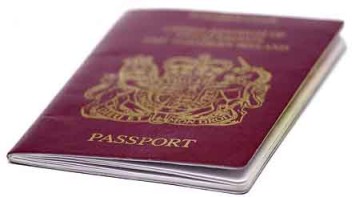
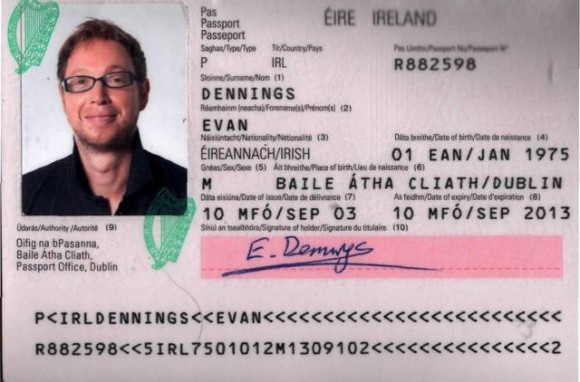
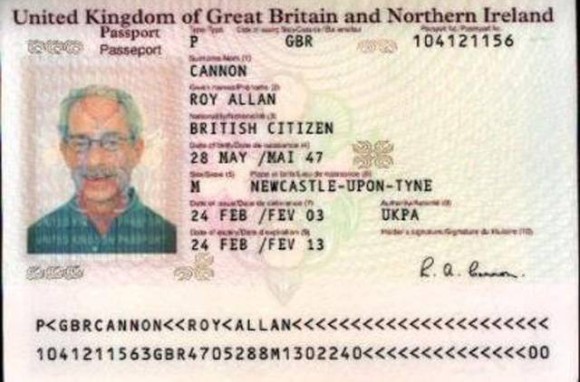
Nevertheless, there is now reason to think that with the murder of Mahmoud al Mabhouh in Dubai, Israel crossed a line that strains the limits of Western tolerance. Western governments would have paid scant attention to this event were it not for one egregious error by Mossad: its flagrant disregard for the integrity of foreign passports.

For many international travelers from Western countries, a passport might seem like nothing more than an obligatory document of no extraordinary value, yet in many ways these carefully bound and embossed permits are the lubricants of globalization. Swift passage through immigration control is one of the things that keeps the wheels of business turning smoothly.

But anyone traveling to the Middle East on an EU or Australian passport will now face a new level of scrutiny from immigration officers intent on blocking the passage of Israeli assassins.

Dubai’s police chief Lt Gen Dahi Khalfan Tamim announced on Monday that any travelers suspected of being Israeli, even if they hold passports from another country, will now be barred from entry into the UAE.

Asharq Al-Awsat reports that any foreign traveler visiting Lebanon who has a Jewish name will now be placed under surveillance.

Major General Wafiq Jizzini, director general of the Lebanese Public Security, said: “When someone comes to Lebanon on a foreign passport and the name of his family indicates that he is of Jewish origin, the border center sends the information to the central information office at the General Directorate of the Public Security. Afterward, the directorate observes this person who would have already registered his address in Lebanon. Both the visiting person and the one who receives him at the airport are observed.”

Israeli leaders such as Israel’s minister of industry, trade and labor, Binyamin Ben-Eliezer, who still regard the Dubai murder as a victory for Israel, have further reason to question that conclusion as fallout from the operation has now reached the United Nations General Assembly.

On Friday, the only countries willing to side with Israel in opposing a resolution that makes a renewed call for the investigation of war crimes committed during Israel’s war on Gaza, were the United States, Canada, Micronesia, Nauru, Panama, and Macedonia.

Australian government sources informed the Sydney Morning Herald that there was a direct connection between the UN vote and the Dubai affair:

Britain, France and Germany have all recently expressed anger at Israel after their passports were caught up in the Dubai plot.

One Department of Foreign Affairs source told the Herald there was no doubt the decision to abstain was intended as a sign to Israel not to take Australian support for granted.

“A number of things made it easier for us to switch our vote,” the source said.

“Firstly, the Americans helped the Palestinians to soften the wording of this resolution compared to the last one. Secondly, a number of other countries had indicated that they were toughening their own positions on Goldstone. But there is no question that the debacle surrounding our passports being used in Dubai helped to make up the government’s mind to abstain. The final decision was taken late on Friday, Australian time, just a few hours before the vote.

“Our pattern in the past has been to vote with the US when it comes to Israel, to show as much support for Israel as possible.

“We were also aware that the UK’s decision to vote in favour of the resolution was influenced by the fact that so many of their citizens had been caught up in the Dubai assassination.”

Israelis would do well to remember that even among their most effusive supporters, an allegiance to business invariably trumps all others.

Facebooktwittermail

Two Dubai murder suspects entered the US

A murder suspect, traveling as an Irishman Evan Dennings, entered the US on January 21, a day after Mahmoud al Mabhouh’s body was discovered in Dubai.

Roy Allan Cannon, entered the US on February 14.

The Wall Street Journal reports:

At least two of the 26 suspects sought by Dubai police for the alleged killing of a top Hamas leader appear to have entered the U.S. shortly after his death, according to people familiar with the situation.

Records shared between international investigators show that one of the suspects entered the U.S. on Feb. 14, carrying a British passport, according to a person familiar with the situation. The other suspect, carrying an Irish passport, entered the U.S. on Jan. 21, according to this person. Senior Hamas leader Mahmoud al-Mabhouh’s body was found in a Dubai hotel room on Jan. 20.

There aren’t records of either man leaving the U.S., though investigators can’t be sure the two are still in the country, according to this person. Since the two were traveling with what investigators believe to be fraudulently issued passports, they may have traveled back out of the U.S. with different, bogus travel documents.

The suspected U.S. travel broadens to American shores the international manhunt triggered by Dubai’s investigation into the death of Mr. Mabhouh. Dubai police have already identified two U.S. financial companies they believe issued and distributed several credit cards used by 14 of the suspects in the alleged killing.

Facebooktwittermail

Mossad returns to its ‘glory days’

The Times reports:

Would you be prepared to cross-dress? And kill a guest in an adjacent hotel room? If the answer to these questions is a resounding “yes”, and you can also act, enjoy luxury international travel with a twist and can carry off a convincing Irish or Australian accent, then the job could be yours.

The Israeli spy agency Mossad may be the target of international reproach since it allegedly killed the Hamas leader Mahmoud al-Mabhouh in a Dubai hotel this month, but at home emerging details of the operation have generated Mossad mania.

It has never been more popular in Israel, with stores selling out of Mossad memorabilia and its official website reporting a soaring number of visitors interested in applying to become agents. “Mossad has been restored to its glory days,” said Ilan Mizrahi, a former deputy director of the agency, which is located in the affluent beach town of Herzliya, north of Tel Aviv.

One of the signature elements of cult psychology is that the more a group is vilified, the more self-righteous it becomes. The outsiders’ opprobrium, far from provoking shame or doubt, has the opposite effect: it is treated as a vindication of the cult’s sense of superiority.

Facebooktwittermail