A section of the Arctic Ocean seafloor that holds vast stores of frozen methane is showing signs of instability and widespread venting of the powerful greenhouse gas, according to the findings of an international research team led by University of Alaska Fairbanks scientists Natalia Shakhova and Igor Semiletov.
The research results, published in the March 5 edition of the journal Science, show that the permafrost under the East Siberian Arctic Shelf, long thought to be an impermeable barrier sealing in methane, is perforated and is leaking large amounts of methane into the atmosphere. Release of even a fraction of the methane stored in the shelf could trigger abrupt climate warming.
“The amount of methane currently coming out of the East Siberian Arctic Shelf is comparable to the amount coming out of the entire world’s oceans,” said Shakhova, a researcher at UAF’s International Arctic Research Center. “Subsea permafrost is losing its ability to be an impermeable cap.”
Methane is a greenhouse gas more than 30 times more potent than carbon dioxide. It is released from previously frozen soils in two ways. When the organic material—which contains carbon—stored in permafrost thaws, it begins to decompose and, under oxygen-free conditions, gradually release methane. Methane can also be stored in the seabed as methane gas or methane hydrates and then released as subsea permafrost thaws. These releases can be larger and more abrupt than those that result from decomposition.
The radical right caught fire last year, as broad-based populist anger at political, demographic and economic changes in America ignited an explosion of new extremist groups and activism across the nation.
Hate groups stayed at record levels — almost 1,000 — despite the total collapse of the second largest neo-Nazi group in America. Furious anti-immigrant vigilante groups soared by nearly 80%, adding some 136 new groups during 2009. And, most remarkably of all, so-called “Patriot” groups — militias and other organizations that see the federal government as part of a plot to impose “one-world government” on liberty-loving Americans — came roaring back after years out of the limelight.
The anger seething across the American political landscape — over racial changes in the population, soaring public debt and the terrible economy, the bailouts of bankers and other elites, and an array of initiatives by the relatively liberal Obama Administration that are seen as “socialist” or even “fascist” — goes beyond the radical right. The “tea parties” and similar groups that have sprung up in recent months cannot fairly be considered extremist groups, but they are shot through with rich veins of radical ideas, conspiracy theories and racism.
“We are in the midst of one of the most significant right-wing populist rebellions in United States history,” Chip Berlet, a veteran analyst of the American radical right, wrote earlier this year. “We see around us a series of overlapping social and political movements populated by people [who are] angry, resentful, and full of anxiety. They are raging against the machinery of the federal bureaucracy and liberal government programs and policies including health care, reform of immigration and labor laws, abortion, and gay marriage.”
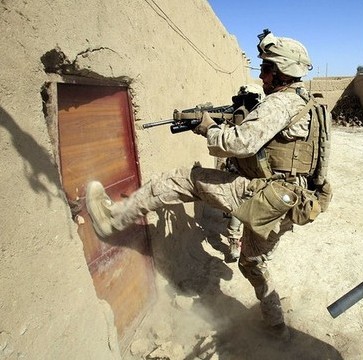
U.S. forces who pushed the Taliban out of their main stronghold in Marjah, southern Afghanistan, have found residents there deeply skeptical of the Afghan government’s promises to rebuild, a top U.S. commander said on Thursday.
The concerns raised by Brigadier General Lawrence Nicholson, the Marine commander in southern Afghanistan, put a spotlight on the big challenge still facing U.S., NATO and Afghan forces in Marjah now that fighting has died down.
Gaining local support is key to President Barack Obama’s counterinsurgency strategy, which aims to clear the Taliban out of population centers like Marjah so President Hamid Karzai’s government in Kabul can begin taking over.
There were chuckles and sniggers in Qatar last month when Hillary Clinton, the US secretary of state, warned that a military dictatorship was imminent in Iran. Threatening America’s most intransigent adversary, Clinton seems to have been oblivious to her audience: educated Arabs in the Middle East where America’s military presence has long propped up several dictators, including such stalwart allies in rendition and torture as Hosni Mubarak.
Of course, by her own standards, Clinton was being remarkably nuanced and sober: during the presidential campaign in 2008 she promised to “obliterate” Iran. An over-eager cheerleader of the Bush administration’s serial bellicosity, Clinton exemplifies Barack Obama’s essential continuity with previous US foreign policymakers – despite the president’s many emollient words to the contrary. Clinton has also “warned” China with an officiousness redolent of the 1990s when her husband, with some encouragement from Tony Blair, tried to sort out the New World Order.
But the illusions of western power that proliferated in the 90s now lie shattered. No longer as introverted as before, China contemptuously dismissed Clinton’s warnings. The Iranians did not fail to highlight American skulduggery in their oil-rich neighbourhood. But then Clinton is not alone among Anglo-American leaders in failing to recognise how absurdly hollow their quasi-imperial rhetoric sounds in the post-9/11 political climate.
Visiting India last year David Miliband decided to hector Indian politicians on the causes of terrorism, and was roundly rebuffed. Summing up the general outrage among Indian elites, a leading English language daily editorialised that the British foreign secretary had “yet to be house-trained”. The US treasury secretary, Timothy Geithner, provoked howls of laughter in his Chinese audience when he assured them that China’s assets tied up in US dollars were safe.
As foreign secretary of a nation complicit in two recent terrorist-recruiting wars, Miliband could have been a bit more modest. Resigned to financing America’s massive deficits with Chinese-held dollars, Geithner could have been a bit less strident.
But no: old reflexes, born of the victories of 1945 and 1989, linger among Britain and America’s political elites, which seem almost incapable of shaking off habits bred of the long Anglo-American imperium – what the American diplomat and writer George Kennan in his last years denounced as an “unthought-through, vainglorious and undesirable” tendency “to see ourselves as the centre of political enlightenment and as teachers to a great part of the rest of the world”.
Brazil delivered a wounding blow to Washington’s hopes of international consensus for sanctions on Iran on Wednesday when its president declared his opposition to such measures hours before meeting Hillary Clinton, US secretary of state.
In an indication of Brazil’s growing self-confidence on the international stage – and its effort to chart a path independent of Washington – Luiz Inácio Lula da Silva stated his backing for Iran’s nuclear programme, as long as it remained purely peaceful.
The US and its partners say that Iran is seeking nuclear weapons capacity, while the United Nations nuclear watchdog recently suggested Tehran could be working on a warhead.
But in spite of strong condemnation of the nuclear programme by the European Union and Russia in recent days and Mrs Clinton’s visit to Brazil, in which she will focus on the Iran file, Mr Lula da Silva remained unmoved.
For the US house of representatives foreign affairs committee to decide that the killing of Armenians by Ottoman Turks in 1915 constituted genocide, as it did Thursday by a one-vote margin, would be acceptable and even praiseworthy if it were part of a serious historical effort to review all the great atrocities of modern history. But the singling out of Turks for censure, among all the killers of the 20th century, is something quite different. This vote was a triumph of emotion, a victory for ethnic lobbying, and another example of the age-old American impulse to play moral arbiter for the world.
Turkey recalled its ambassador in Washington immediately after the vote, which was broadcast live on Turkish television. The resolution now goes to the full House of Representatives. Given the pull of moneyed politics, and President Obama’s unwillingness or inability to bring Congress to heel on this issue, as Presidents Bush and Clinton did, it could pass. That would provoke much anger in Turkey, and might weaken the US-Turkish relationship at the precise moment when the US needs to strengthen it.
In the past few years, Turkey has taken on a new and assertive role in the Middle East and beyond. Turkey can go places, talk to factions, and make deals that the US cannot. Yet it remains fundamentally aligned with western values and strategic goals. No other country is better equipped to help the US navigate through the region’s treacherous deserts, steppes and mountains.
Every year the resolution lives or dies based on a key but never openly verbalized question: what does Israel want? This year, Israel is somewhat chagrined by Turkish refusal to see last year’s Gaza carnage as a measured response, but remarks by Israeli Defense Minister Ehud Barak would seem to indicate that Tel Aviv still values the relationship, unleashing AIPAC to make sure that each and every congressman votes the right way. Having received its instructions, the US Congress will likely genuflect and do as it is told, allowing the resolution to languish in committee just as it did last year.
Giraldi turns out to have been wrong about the outcome of the vote, but his assumption that Israel would make its preference known to members of Congress — especially under the leadership of Israel-loyalist Howard L. Berman — is surely well-founded. Might that suggest that Israel, convinced that the administration’s efforts to place sanctions on Iran are destined to go nowhere, is now intent on short-circuiting the process? Souring US-Turkish relations would be useful in serving that agenda.
Hmmm… On second thoughts, maybe in this instance these were not the dynamics at play. After all, if word had come down from AIPAC on which way the Congress members should vote, I can’t imagine it would have split so evenly – 23 to 22.
MJ Rosenberg, however, sees a clear Israeli hand at play here:
The Israelis are trying to teach the Turks a lesson. If the Armenian resolution passes both houses and goes into effect, it will not be out of some newfound compassion for the victims of the Armenian genocide and their descendants, but to send a message to Turkey: if you mess with Israel, its lobby will make Turkey pay a price in Washington.
And, just maybe, the United States will pay it too.
The “Gitmo Nine” aren’t terrorists. They weren’t captured fighting for the Taliban. They’ve made no attempts to kill Americans. They haven’t declared war on the United States, nor have they joined any group that has. The “Gitmo Nine” are lawyers working in the Department of Justice who fought the Bush administration’s treatment of suspected terrorists as unconstitutional. Now, conservatives are portraying them as agents of the enemy.
In the aftermath of September 11, the Bush administration tried to set up a military-commissions system to try suspected terrorists. The commissions offered few due process rights, denied the accused access to the evidence against them, and allowed the admission of hearsay — and even evidence gained through coercion or abuse. The Bush administration also sought to prevent detainees from challenging their detention in court. Conservatives argued that the nature of the war on terrorism justified the assertion of greater executive power. In case after case, the U.S. Supreme Court sided with the administration’s critics.
“These lawyers were advocating on behalf of our Constitution and our laws. The detention policies of the Bush administration were unconstitutional and illegal, and no higher a legal authority than the Supreme Court of the United States agreed,” says Ken Gude, a human-rights expert with the Center for American Progress, of the recent assault on the Justice Department. “The disgusting logic of these attacks is that the Supreme Court is in league with al-Qaeda.”
A former Justice Department official who led the Bush administration’s courtroom defense against lawsuits filed by Guantanamo detainees is denouncing attacks on Obama administration appointees who previously helped such prisoners challenge their indefinite detention without trial.
Peter D. Keisler, who was assistant attorney general for the civil division in the Bush administration, said in an interview that it was “wrong” to attack lawyers who volunteered to help such lawsuits before joining the Justice Department.
“There is a longstanding and very honorable tradition of lawyers representing unpopular or controversial clients,” Mr. Keisler said. “The fact that someone has acted within that tradition, as many lawyers, civilian and military, have done with respect to people who are accused of terrorism – that should never be a basis for suggesting that they are unfit in any way to serve in the Department of Justice.”
Washington suffered a setback in its attempt to strengthen relations with Turkey when Ankara recalled its US ambassador on Thursday night.
The move came after a congressional panel backed a resolution describing the Ottoman-era massacres of 1.5m Armenians as “genocide”. Ankara has long warned that such a vote could harm US-Turkish relations and efforts to establish diplomatic ties between Turkey and Armenia.
Washington is currently seeking to persuade Ankara to back sanctions against Iran.
“We condemn this draft resolution, accusing the Turkish nation with a crime that it has not committed,” said the Turkish government. “This decision, which could adversely affect our co-operation on a wide common agenda with the US, also regrettably attests to a lack of strategic vision.”
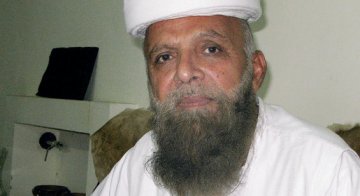
Carlotta Gall spoke to a US-trained former colonel in Pakistan’s spy agency, who spent 20 years running insurgents in and out of Afghanistan:
If Colonel Imam personifies the double edge of Pakistan’s policy toward the Taliban, he also embodies the deep connection Pakistan has to the Afghan insurgents, and possibly the key to controlling them.
Once a promising protégé for the United States, he underwent Special Forces training at Fort Bragg, N.C., in 1974, learning in particular the use of explosives, and he went on to do a master parachutist course with the 82nd Airborne Division.
On his return to Pakistan, he taught insurgent tactics to the first Afghan students who fled the country’s Communist revolution in 1978, among them future resistance leaders Gulbuddin Hekmatyar and Ahmed Shah Masood. He then worked closely with the C.I.A. to train and support thousands of guerrilla fighters for the Afghan resistance against the Soviet Army throughout the 1980s.
Once the Soviets were pushed out, the Taliban emerged and Colonel Imam, then serving as a Pakistani consular official in Afghanistan, provided critical support to their bid to rule the country, Western officials said.
By his own account, he was so close to the Taliban leader, Mullah Muhammad Omar, that he visited him in the days after the Sept. 11 attacks, and left only when the American bombing campaign began later in 2001. He says he has not returned since. His parting advice to Mullah Omar, he said, was to fight on, but stick to guerrilla tactics.
Today, Colonel Imam speaks highly of the Americans he worked with. But he predicts failure for the United States in Afghanistan. While his views are clearly colored by his ardor for the Taliban cause, they also carry the weight of someone who knows his subject well.
Among the many intriguing pieces of information about Qassem Suleimani, the head of Iran’s Quds Force, in this profile by Christopher Dickey, is this: Suleimani along with many other senior figures in the Quds Force actually supported Mir Hossein Mousavi in last summer’s presidential election.
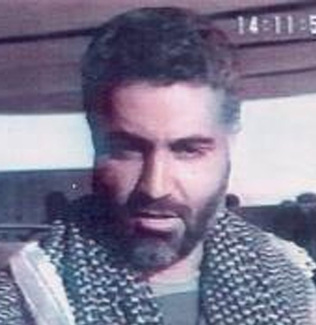
The text message was cryptic and sent through an intermediary, but its spookiness has become legendary among the Americans tasked with trying to stabilize Iraq. The moment was May 2008, and once again all hell was breaking loose. Shiite militias had gone to battle against each other. The fighting threatened to spread to Baghdad. Gen. David Petraeus and Ambassador Ryan Crocker were scrambling to find somebody to broker a truce. Then the text message was passed to the American commander. “General Petraeus,” it began, “you should know that I, Qassem Suleimani, control the policy for Iran with respect to Iraq, Lebanon, Gaza, and Afghanistan.” Within days it was Suleimani who brokered the truce.
What surprised Petraeus and Crocker was not the Iranian’s role. They knew that already. It was the blunt confidence with which Suleimani stated it. As the head of the infamous Quds Force, he commands all the Iranian Revolutionary Guard Corps (IRGC) operations outside Iran’s borders—whether covert, overt, or outright terrorist. In the fractious politicking almost certain to follow Iraq’s parliamentary elections on Sunday, this 53-year-old Iranian general could pull the strings that make or break the new government in Baghdad.
Long before America’s troops occupied Iraq, Suleimani’s forces occupied the shadows. In the buildup to the U.S.-led invasion, he was the go-to guy for much of the Iraqi Kurdish and Shiite opposition to Saddam Hussein. Suleimani’s networks of agents, collaborators, military advisers, client militias, and secret informers give him a degree of power that is difficult to gauge, but it often seems proconsular: “I, Qassem Suleimani,” his text read, like an emperor’s decree. And his real message in 2008 was that he could turn up the heat, or turn it down, at will.
Dutch anti-Islamist leader Geert Wilders scored major gains in local authority polls Thursday, making him a serious challenger for power in a June national election, preliminary results showed.
In the first test of public opinion since the collapse of Prime Minister Jan Peter Balkenende’s coalition government last month, Wilders’s Freedom Party (PVV) led in the city of Almere and was second in The Hague.
The results came on top of an opinion poll showing that the PVV, which campaigns against Muslim immigration as its main platform, would win the most seats — 27 in the 150-member Dutch parliament — in the June 9 election.
That would make it tough for Balkenende’s Christian Democrats, projected to win one seat less, to forge a strong coalition without Wilders. Months of talks between parties, and the resulting policy vacuum, could threaten a fragile economic recovery and cast doubt on the scope of planned budget cuts.
The popularity of Wilders, who compares Islam to fascism and the Koran to Adolf Hitler’s book “Mein Kampf,” has dented the image of the Netherlands as a country that has often portrayed itself in the past as a bastion of tolerance.
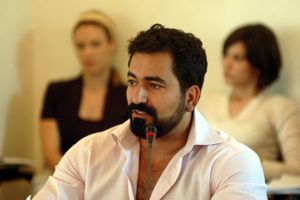
On Sunday, February 28th the New York Times published an outrageous oped by Efraim Karsh full of lies, distortions and mistakes.
Karsh describes the Israeli-Palestinian conflict as an urgent foreign policy matter for the United States.
It doesn’t appear to be urgent. One more American administration has prostrated itself before Israeli arrogance and expansionism. Karsh mentions some sort of “100-year war between Arabs and Jews.” There is no 100 year war between Arabs and Jews. There is a 100 year colonial struggle between Zionist Jews and the Palestinian people (and briefly the Lebanese as well).
He hopes that the “Islamic nation can make peace with the idea of Jewish statehood in the House of Islam.” Its not about Jewish statehood in the house of Islam.
Its about Zionist Jewish settlers dispossessing the Palestinians and occupying Palestinian land. And killing Palestinians. Its not a religious conflict. Its a territorial one, an anti-colonial one, a national liberation struggle, even if the discourse used these days to describe it is often religious.
To hear it from the Israeli press you’d think that the British government can now make changes to the law simply by having the prime minister write an op-ed.
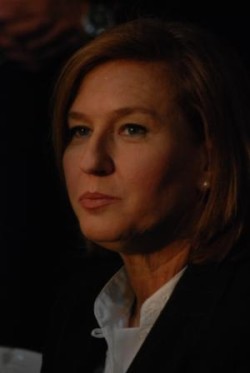
Last December an arrest warrant was issued for former Israeli foreign minister, Tzipi Livni, when she was expected to arrive in Britain. According to Haaretz she no longer needs to fear getting hand-cuffed for alleged war crimes — at least not on trips to the UK:
British Prime Minister Gordon Brown announced on Thursday plans to stop politically-motivated campaign groups from securing arrest warrants for visiting foreign officials. In a March 3 editorial in the Daily Telegraph, Brown wrote, “Britain will continue to take action to prosecute or extradite suspected war criminals – regardless of their status or power… But the process by which we take action must guarantee the best results. The only question for me is whether our purpose is best served by a process where an arrest warrant for the gravest crimes can be issued on the slightest of evidence.”
Under the current system, British magistrates are obliged to consider an arrest warrant case presented by any individual. Gordon Brown said he will instead propose that only one government department, the Crown Prosecution Service, evaluate the merits of any case brought under international law.
This move follows an uproar last December when Kadima party leader Tzipi Livni canceled a trip to London because a pro-Palestinian group secured an arrest warrant for alleged crimes committed in Gaza. A statement from Livni’s office praised the new changes proposed by Brown and said that “the British legal system has been abused by cynical elements in the United Kingdom.”
From London The Times presents a very different story:
Britain risks a showdown with Israel today when the Government signals it is in no hurry to ease the threat of arrest for visiting politicians and generals.
Ministers will announce a consultation on the principle of universal jurisdiction, under which private citizens can secure arrest warrants for offences such as war crimes committed abroad.
The Government had promised swift action when the Israeli opposition leader Tzipi Livni cancelled a trip to London last year after a magistrate issued a warrant for her arrest for alleged war crimes in Gaza when she was Foreign Minister.
The issue caused embarrassment for the Government, which promised to remedy the matter quickly. Today’s announcement, however, means that the issue will not be resolved until well after the election, expected in May. When The Times reported last month that a Cabinet split could delay the issue could be delayed for months, Ms Livni threatened to travel to Britain and “take the bullet” as the only way of shaming the Government into action.
After the disclosure that agents suspected of acting for Mossad, the Israeli intelligence service, used fake British passports to enter Dubai and kill a Hamas commander, however, the balance of diplomatic power has shifted.
The delay is a victory for Jack Straw, the Justice Secretary, who has argued that the legal point at stake is too important to rush.
Since the British government just voted in support of a UN General Assembly resolution calling on Israel to fully investigate allegations of war crimes committed during its war on Gaza, maybe they should quietly tell the Israelis that the proposed changes on universal jurisdiction aren’t going to happen if Israel keeps running away from the Goldstone report.
Two unrelated diplomatic upsets have underlined growing impatience with the behaviour of the Israeli government among western countries that are traditionally supportive.
Backing from the European Union and Australia in the United Nations to sustain the issue of Israel’s alleged war crimes in Gaza more than a year ago has coincided with controversy over Israel’s apparent use of western passports in the assassination of Mahmoud al Mabhouh, a Hamas official, in Dubai.
Support for an Arab resolution last Friday at the UN – most EU countries voted in favour while others and Australia abstained – gave Israel and the Palestinians five more months to report back on progress in their respective investigations of war crimes alleged in a report by Richard Goldstone, a South African judge.
Most liberties have been won by people who broke the law – Michael Foot, 1980
At the height of World War Two in 1942, Michael Foot, then acting editor of the Evening Standard, gave a passionate defense of freedom of the press after the Churchill government tried to censor the Daily Mirror. Foot chided his own government by likening its encroachment on press freedom to Hitler’s territorial expansion:
Michael Foot, the most improbable literary romantic to lead a major British party since Benjamin Disraeli, has died at the age of 96 after a turbulent political career that left him a much-loved but also deeply controversial figure. Though physically frail he displayed his customary zest for life until close to the end.
Born a year before the outbreak of the first world war, Foot’s career could be traced through many of the horrors and triumphs of the bloody 20th century, while simultaneously harking back to literary and political conflicts long forgotten by most of those whose votes he sought through nearly 60 years of elective politics. Never a communist, always a leftwing socialist and scourge of fascism, in all his battles he was rarely less than wholly committed to causes for which he cared. After his death was announced at midday today Gordon Brown led the deluge of tributes from both friends and political foes.
“Michael Foot was a man of deep principle and passionate idealism and one of the most eloquent speakers Britain has ever heard. He was an indomitable figure who always stood up for his beliefs and whether people agreed with him or not they admired his character and his steadfastness,” the prime minister said in a statement.
Praise from the hollow men of contemporary British politics:
Just over a year ago, Bob Simon at CBS’s 60 Minutes did a piece that implicitly challenged the credibility of President Obama’s early push to revive the Middle East peace process. Simon noted the swiftness with which the new president had taken up the issue, but then went on to show the stark realities of segregated life in the occupied West Bank.
For anyone paying attention to the issues, there were no revelations in the 60 Minutes segment, yet the fact that it aired on prime-time network television and right at the moment the Obama administration was being viewed by so many with such a giddy sense of hope, showed Simon’s seriousness as a journalist. Nothing that has happened in the intervening months has cast an iota of doubt on the perspective he presented.
Prime Minister Benjamin Netanyahu said Tuesday that Israel would never agree to withdraw from the Jordan Valley under any peace agreement signed with the Palestinians.
Netanyahu told the Foreign Affairs and Defense Committee that the Jordan Valley’s strategic importance along the eastern border of the West Bank made it impossible for Israel to withdraw, according to a meeting participant.
Salman Masalha points out that Israel’s apartheid nature is not confined to the physical separation it has created between Jewish settlers and Palestinians but is also intrinsic to the structure, operation and identity of the Jewish state:
The alienation between Arabs and Jews can be seen everywhere. It has not arisen solely in the context of the national conflict, but is rather a result of an establishment policy which has expropriated Arabs’ lands to build communities “for Jews only” and has pushed the Arab inhabitants into localities under an “ethno-Zionist siege” on all sides.
The Israel Police, which is responsible for maintaining public law and order, provides the most blatant evidence that the Israeli regime behaves as if it is a foreign regime. It abandons the Arab localities to the rule of criminal gangs, intervening only when concern arises that the crime might spill over into Jewish locales. The Arab alienation from the police – a symbol of the regime – is apparent, among other things, in the absence of Arabic writing on police vehicles. How does an Arab citizen feel about a police force that appears in his community, but does not include any writing in his language? Does this not symbolize, more than anything else, that the police represent an occupation regime, a foreign regime? How would the inhabitant of some Jewish locale feel if there were no writing in Hebrew on police vehicles, but only a foreign language?
The alienation is also evident with regard to the central government. This is the only democratic country in the world where one-fifth of the citizens – who are declared to have equal rights, at least on paper – have no representation in the government or in “provisional and permanent institutions.” And this is the case even before we start talking about budgetary allocations, master plans, the building of cities and communities, education, culture, industrialization and more.
Impolitic as it is to mention this, in rejecting the analogy with apartheid in South Africa, the Washington Post’s Richard Cohen is not only denying realities on the ground in Palestine but also the principal and most awkward difference between the two cases. South Africa’s whites did not have a dedicated cadre of coreligionists or ethnic kin abroad who labored to protect them from the consequences of their deviance from the norms of humane behavior as defined by Western civilization at large. Nor, despite open sympathy for South African whites in the American South and among ardent anti-Communists, did apartheid enjoy international ideological support outside the neo-Nazi fringe. Israel’s policies are supported morally, politically, and financially by large Jewish communities and a vocal minority of Christians abroad, especially in North America, which is where global power remains concentrated. Without that support and those subsidies, Israel manifestly could not act as it does. The dependence of South Africa on external factors was far less direct or clear.
These differences between South Africa and Israel seem to me to be crucial both morally and politically. Cohen is clearly in denial not only about the realities of the Israel-Palestine situation but more importantly about the moral question raised by his support and that of so many other Jews who identify with Israel not just for the existence of Israel but for whatever it does: is Israeli pseudo-apartheid entitled to and does it enjoy the approval and support of world Jewry regardless of how inhumane it is to others? If the answer to either question is yes, it follows that the Jewish Diaspora and its Christian camp followers are as responsible as Israel itself for the Jewish state’s increasingly blatant racist outrages against Palestinians and other Arabs.
I grew up in an anti-apartheid household in Toronto. My parents met while my father was touring southern Africa as part of a Canadian anti-apartheid organisation, building links with postcolonial African socialist states and the South African liberation movement. On long car journeys, our family would mix Nelson Mandela’s autobiography with Just William children’s story tapes, and my parents would occasionally hire a babysitter so they could attend organising meetings for the international boycott campaign against South Africa.
As much as I was taught about apartheid, the violence of segregation, and the brutality of a state designed only to serve a settler population, I didn’t experience it first-hand until I moved to Ramallah in 2007.
Going to Jerusalem through the Qalandia terminal checkpoint and watching the soldiers harass and degrade Palestinians with Jerusalem IDs – while most of my Ramallah friends were barred from travelling there altogether – was the first I saw of state-run segregation. Walking through the Balata refugee camp on the edge of Nablus was the first township-style ghetto I set foot in. Seeing the Palestinian Authority beat anti-Bush demonstrators in the street during the former president’s visit in 2008 was my first real taste of the bitterness of Inkatha-style divide-and-rule.
“To cut down on gang-related crimes, policies could be put in place to curb the African-American population growth in places like Harlem and Compton. The government could consider cutting off welfare benefits for families in these urban areas to discourage births of blacks and cut down the supply of ‘superfluous young men’ who have nothing else to do in their lives but be preyed on by criminal gang leaders who give them a sense of belonging. Ultimately these policies are an effective way to limit gang related crimes.”
The absurdity and lack of logic in the above fictitious paragraph is overshadowed only by its offensive nature. Few would welcome such a view in 2010, but this kind of argument was made recently to an audience that received it with applause instead of disgust.
Martin Kramer, a fellow at Harvard University’s Weatherhead Center for International Affairs, made this argument at a conference in Israel last month. The only difference was that the population he sought to limit was Palestinians in Gaza to prevent “economically superfluous young men” from joining radical groups. He said that “if society cannot offer dignified pursuits for the fourth and fifth and sixth sons, then someone else will.”
He also supported lowering the fertility rate for Palestinians in Gaza and argued that this “will happen faster if the West stops providing pro-natal subsidies for Palestinians with refugee status.”
The decision to add the Tomb of the Patriarchs and Rachel’s Tomb to the list of historical heritage sites up for renovation was not made with the intention of inflaming tempers and sabotaging efforts to revive final-status talks with the Palestinians. It was merely a routine move by a rightist government, further proof that Prime Minister Benjamin Netanyahu’s “two states” speech at Bar-Ilan University was a milestone on the road to nowhere. The only difference between “the rock of our existence” that launched the Western Wall tunnel violence in 1996 and the 2010 model is that this time Netanyahu is wearing a mask, trying to pass himself off as peace activist Uri Avnery, with the generous help of Defense Minister Ehud Barak.
The prime minister, as we all know, simply can’t wait for renewed final-status talks to get underway, but Palestinian Authority President Mahmoud Abbas refuses to back down and is setting “conditions that predetermine the outcome of the negotiations,” as Netanyahu told Haaretz a week ago. Indeed, the Palestinians have made their participation in indirect talks conditional on, in part, a construction freeze during the talks in West Bank settlements and East Jerusalem. They have the audacity to claim that it is Netanyahu’s demand to expand settlements during negotiations along with the assertion of Jewish ownership over sensitive sites which are the conditions that predetermine the outcome of the talks.
The Palestinian demand for a total freeze on settlement construction, including that required for natural population growth, is not, in Netanyahu’s words “a condition that no country would accept.” Israel accepted that condition in the road map seven years ago. In an article in the journal of the Israel Council on Foreign Relations in December 2009, Prof. Ruth Lapidoth, recipient of the 2006 Israel Prize for Legal Studies, and Dr. Ofra Friesel wrote that the Netanyahu government is obligated by the road map, which was ratified by the Sharon government. A former legal adviser to the Foreign Ministry, Lapidoth stresses that the 14 remarks (not reservations, as they are usually termed) that Israel appended have no legal validity. And since the U.S. government promised no more than to relate “fully and seriously” to these remarks, they don’t have any diplomatic validity, either.
Suspected assassins of a Hamas leader in Dubai “fraudulently” acquired prepaid payroll cards and stole identities to obtain jobs at U.S. companies, according to card-issuer MetaBank.
Authorities informed Meta, a unit of publicly traded Meta Financial Group Inc., that the suspects used fake passports to get cards issued by the firm and other banks, according to an e- mailed statement from Meta yesterday. The lender, rooted in regions of Iowa and South Dakota tied to farming, said it followed proper procedures and that the people weren’t on federal lists designed to block potential terrorists.
“No other readily apparent method existed for Meta to determine that identity theft had been perpetrated on valid governments and their citizens,” said MetaBank, based in Storm Lake, Iowa.
Fourteen of the suspects in the January killing of Mahmoud al-Mabhouh used payment cards issued by MetaBank to book hotel rooms and pay for air travel, Dubai police said last month. Police Chief Dahi Khalfan Tamim accused Israel’s spy agency, Mossad, of orchestrating the murder of al-Mabhouh, a founder of the Ezzedine al-Qassam Brigades, the armed wing of the Islamic Palestinian movement Hamas.
Next question: which US companies?
This website or its third-party tools use cookies, which are necessary to its functioning. By closing this banner, you agree to the use of cookies.




 U.S. forces who pushed the Taliban out of their main stronghold in Marjah, southern Afghanistan, have found residents there deeply skeptical of the Afghan government’s promises to rebuild, a top U.S. commander said on Thursday.
 There were chuckles and sniggers in Qatar last month when Hillary Clinton, the US secretary of state, warned that a military dictatorship was imminent in Iran. Threatening America’s most intransigent adversary, Clinton seems to have been oblivious to her audience: educated Arabs in the Middle East where America’s military presence has long propped up several dictators, including such stalwart allies in rendition and torture as Hosni Mubarak.
 If Colonel Imam personifies the double edge of Pakistan’s policy toward the Taliban, he also embodies the deep connection Pakistan has to the Afghan insurgents, and possibly the key to controlling them.
 The text message was cryptic and sent through an intermediary, but its spookiness has become legendary among the Americans tasked with trying to stabilize Iraq. The moment was May 2008, and once again all hell was breaking loose. Shiite militias had gone to battle against each other. The fighting threatened to spread to Baghdad. Gen. David Petraeus and Ambassador Ryan Crocker were scrambling to find somebody to broker a truce. Then the text message was passed to the American commander. “General Petraeus,” it began, “you should know that I, Qassem Suleimani, control the policy for Iran with respect to Iraq, Lebanon, Gaza, and Afghanistan.” Within days it was Suleimani who brokered the truce.
 Dutch anti-Islamist leader Geert Wilders scored major gains in local authority polls Thursday, making him a serious challenger for power in a June national election, preliminary results showed.
 On Sunday, February 28th the New York Times published an
 British Prime Minister Gordon Brown announced on Thursday plans to stop politically-motivated campaign groups from securing arrest warrants for visiting foreign officials. In a March 3 editorial in the
 Suspected assassins of a Hamas leader in Dubai “fraudulently” acquired prepaid payroll cards and stole identities to obtain jobs at U.S. companies, according to card-issuer MetaBank.