Author Archives: Paul Woodward

Turkey reins in its renegade generals

The most determined challenge to military political power in Turkey in decades is being reported in much of the Western media as a struggle between an Islamist government and the forces of secularism. Bulent Kenes, a columnist for Turkey’s Today’s Zaman, frames the issue much more starkly: this is a struggle between civilian and military power.

Turkey has kicked off a new week with another great shock. This time, the powerful sledgehammer of justice landed on the generals of the Sledgehammer (Balyoz) coup plan, a treacherous plot to devastate the whole country.

Accused of preparing thousands of pages of plans and preparations to blow up mosques, to trigger conflict between Turkey and Greece by arranging the crash-landing of Turkish warplanes in the Aegean Sea and give the army a central role in the country’s administration, to close Parliament, to ideologically profile hundreds of thousands of people just to arrest and collect them in stadiums during a future military coup, to introduce Soviet-style centralization to the country’s economic management, to shut the door to foreign investment, to arrest leading media professionals and to close down or take control of newspapers and TV channels, some former force commanders, retired generals and admirals were taken to custody one by one on Monday morning.

These detentions — including 17 retired generals, four active duty admirals and 28 military officers — carried out as part of the probe into Ergenekon, a shadowy network nested within the state aiming to lay the groundwork for an eventual military takeover, is not only regarded as the first of its kind in terms of its scope, but has also shown to the world that there will not be an “untouchable” judiciary class in this country. With that said, can we be justified in asserting that the abnormalities in civilian-military relations — a main source of almost all major problems in Turkey — have come to an abrupt end? Of course not.

Certainly, the fact that those who regard themselves as “untouchable,” superior to the rule of law and free from legal accountability, can now be touched will have important effects in the normalization of civilian-military relations and in the dispersal of the military tutelage that has been haunting us since the establishment of the republic. Still, I personally do not think that the exposure to daylight of military junta members who made plans to betray the nation, seeking to overthrow the democratically elected government, the sweeping detentions or the ongoing judicial processes will be sufficient to solve Turkey’s gravest problem, the “army issue,” and eliminate the army’s overwhelming pressure on politics, the judiciary, the legislature and civil life. This is because I am of the opinion that developments seen during the Ergenekon investigation process are not concerned with the essence of the matter but are related to the grave consequences of this problematic structure.

Bloomberg reports:

Turkey’s military said the detention of retired officers over an alleged coup plot was a “serious situation,” in the sharpest escalation of tensions with the government since a 2007 showdown that led to early elections.

The top commanders gathered at military headquarters in Ankara late yesterday to discuss the detention of more than 40 former officers, the armed forces said on its Web site. Police held the ex-officers, including previous heads of the air force and navy, in a series of raids on Feb. 22.

The arrests deepened strains between Prime Minister Recep Tayyip Erdogan and the military leadership. Erdogan, whose Justice and Development Party has its roots in political Islam, has curtailed the secularist generals’ influence over decision- making as Turkey chases membership in the European Union.

Facebooktwittermail

Pakistani reports capture of a Taliban leader

The New York Times reports:

In another blow to the Taliban senior leadership, Pakistani authorities have captured Mullah Abdul Kabir, a member of the group’s inner circle and a leading military commander against American forces in eastern Afghanistan, according to a Pakistani intelligence official.

American officials in the region and in Washington said they had received some indications of Mullah Kabir’s detention but that they could not confirm it.

Mullah Kabir was detained several days ago in Nawshera, in Pakistan’s North-West Frontier Province, the Pakistani official said, speaking on condition of anonymity.

Mullah Kabir is a member of the Quetta Shura, the small group of leaders who direct the Taliban’s operations and who report to Mullah Muhammad Omar, the group’s founder. The group is named for the Pakistani city where many of the Taliban’s leaders are thought to be hiding.

Mullah Kabir is the second member of the Quetta Shura to be captured in Pakistan in recent weeks. Last month, American and Pakistani intelligence agents captured Abdul Ghani Baradar, the Taliban’s top military commander and the head of the Quetta Shura.

Facebooktwittermail

Can speech constitute terrorism?

Shayana Kadidal, a senior managing attorney at the Center for Constitutional Rights, lays out the issues in fron of the Supreme Court today in a case that asks whether political speech – writing an op-ed for, or teaching nonviolent conflict resolution to a group on the government’s blacklists – can constitute a crime of terrorism carrying a fifteen year prison sentence.

The law at issue is the “material support” statute. Created in 1996 and modified several times by Congress (including in the Patriot Act) after parts of it were struck down by earlier rounds of this lawsuit, the statute allows the State Department to create a blacklist of “foreign terrorist organizations” – defined very broadly to include groups that engage in violence against property that hurts U.S. economic interests. Once a group is on the blacklist, virtually any form of association with the group becomes a crime.

Once obscure, the law is becoming more familiar as it is invoked in almost every terrorism prosecution brought since 9/11. People hear the term “material support” and, because the word “material” connotes “tangible,” assume it must mean things akin to weapons or money. But in fact the statute specifically says that various intangibles – “training,” “expert advice or assistance,” “personnel” or “services” – all are included within the ban.

Our plaintiffs are a variety of U.S.-based humanitarian activists. Humanitarian Law Project and its founder Ralph Fertig seek to work with members of one of the blacklisted groups, the Kurdistan Workers Party (PKK), teaching them how to monitor human rights abuses against the Kurds, bring human rights complaints to the UN, and encourage the PKK – which like many separatist groups has engaged in both peaceful advocacy and violence – to solve their disputes through nonviolent conflict resolution. The other plaintiffs are Tamil-American groups that sought to send humanitarian aid – money, relief supplies, and their own members (doctors, lawyers and engineers) – to do medical relief and help rebuild the parts of Sri Lanka devastated by the civil war between the government and a rebel group on the list, the Tamil Tigers (LTTE). Because the LTTE served as the functioning government in the area prior to 2009, any aid workers there would have to have dealt with the group in the course of carrying out their humanitarian missions. After the December 26, 2004 Indian Ocean Tsunami, those same LTTE controlled-parts of Sri Lanka already devastated by the civil war were further ravaged. Yet the prohibitions prevented Tamil-Americans from traveling there to help deal with one of the ten greatest natural disasters in recorded history.

Facebooktwittermail

Netanyahu faces double intifada from Palestinians and settlers

In Haaretz, Aluf Benn writes:

Prime Minister Benjamin Netanyahu is busy day and night, preparing Israel for a fateful confrontation with Iran. But his real problem may occur elsewhere. The territories are heating up, with the Palestinians escalating their protests against the settlements and the separation fence. The settlers, meanwhile, can smell Netanyahu’s weakness and are undermining the authority of the state.

Two events in recent days indicate the threat of an outburst: the protest in Bil’in, which Palestinian Prime Minister Salam Fayyad participated in, where some of the 1,000 demonstrators tore apart a short portion of the fence; and the invasion of dozens of right-wing activists into the ancient synagogue of Na’aran, saying “we will return to Jericho and Nablus.” In both incidents, the violence was limited and no one was injured. But the struggle over the West Bank has transitioned to a new stage.

Fayyad, the former darling of official Israel, is proving to be Netanyahu’s most problematic rival. The one-time economist and technocrat has gradually become a politician – enjoying exposure, kissing children, stepping up to the head of the “White Intifada,” as dubbed by researchers Shaul Mishal and Doron Matza in their article in Haaretz this week. On Monday, the Palestinian government adopted a plan of action for “non-violent opposition” to the settlements and the fence.

Fayyad’s White Intifada is different from its predecessors. It has a clear political goal: Declaring a Palestinian state within the 1967 borders by the summer of 2011. By then, Fayyad will have completed the building of national institutions and will work on gaining international recognition through a diplomatic pincer movement on Netanyahu. He is receiving enthusiastic approval from the U.S. administration as a successful manager. Some 2,600 Palestinian policemen have already graduated from the training course run by U.S. General Keith Dayton in Jordan and are back in the territories, expecting to serve an independent state, not as subordinate agents of an Israeli occupation. The foreign ministers of France and Spain, in a joint article published yesterday in Le Monde, called to expedite the establishment of a Palestinian state and complete its recognition by October 2011.

The readiness of PA security forces to step outside the role of being occupation subcontractors is not evident to Jesse Rosenfeld:

Israeli invasions of PA territory have increased since the summer, hitting Ramallah regularly for the past few months to arrest popular struggle leaders and international solidarity activists, and raiding the offices of grassroots anti-occupation movements. While usually it is impossible to go more than two blocks in the West Bank Palestinian political centre without seeing armed PA forces, when the Israelis come into town, they are ordered back to their barracks and are nowhere to be seen. I witnessed this countless times while living in Ramallah.

Meanwhile, Israeli military assassination missions against resistance in Nablus resumed on 26 December, with three men linked to the Fatah movement being killed in cold blood while PA security forces connived with the Israeli military and were nowhere to be seen. Hamas spokesperson Sami Abu Zuhri was quoted by Maan news agency speculating that there was PA involvement in the assassination and warning that “resistance should be encouraged, not plotted against”.

Meanwhile, Haaretz reports:

French Foreign Minister Bernard Kouchner and his Spanish counterpart Miguel Moratinos are promoting an initiative by which the European Union would recognize a Palestinian state in 18 months, even before negotiations for a permanent settlement between Israel and the Palestinian Authority are concluded.

According to senior European diplomats and senior Israeli officials, Israel has relayed its opposition to the initiative – warning that it would undermine any chance of a successful peace process.

A senior European diplomat noted that Israel was informed about the initiative several weeks ago, a fact confirmed by a senior Israeli official. The Israeli official said the initiative is being spearheaded by Kouchner who recruited the support of the Spanish foreign minister, whose country also currently holds the rotating European Union presidency.

Israeli sources say the two foreign ministers are preparing an article they intend to publish together in some of the main European dailies. The main message of the article is that the European Union should recognize a Palestinian state before the completion of negotiations, under the assumption that such a declaration will be made by Palestinian Authority President Mahmoud Abbas.

Facebooktwittermail

Israel’s policy of divide and survive

Back in the days when hazy-eyed neoconservatives stood like prophets laying out their vision of a democratic wave of Biblical proportions sweeping across the Middle East, Israel was supposedly the actualization of what elsewhere might be possible.

The problem was that since it came into existence, all the evidence suggested that the Jewish state, far from serving as a liberating force in the region, had actually done the opposite. It became the prime legitimizer of autocracy and stagnation.

Benjamin E Schwartz, in an article in the latest edition of The American Interest magazine, describes how Israel, rather than striving for a sustainable peace with its neighbors, sees its ability to survive as dependent on its ability to be divisive.

For a state that believes its legitimacy will always be questioned, survival is a higher imperative than stability and the pacification of threats more valuable than peace.

The power of Schwartz’s essay derives as much as anything from the fact that he is clearly in sympathy with the Zionist enterprise. His is neither an apology nor a criticism; it is a clinical analysis.

He writes:

When American diplomats talk about the road to peace, few Israelis dare articulate one awkward truth. The truth is that Israelis have managed their conflict with the Arabs and the Palestinians for half a century not by working to unite them all, but either by deliberately and effectively dividing them, or by playing off existing divisions. By approaching matters in this way, Israelis have achieved de facto peace during various periods of their country’s history—and even two examples of de jure peace. It is because of divisions among Palestinians that Israelis survived and thrived strategically in 1947–48, and because of divisions among the Arab states that Israel won its 1948–49 war for independence. Divisions among the Arabs and divided competition for influence over the Palestinians allowed Israelis to build a strong state between 1949 and 1967 without having to contend with a serious threat of pan-Arab attack. It was because of divisions and the strength of Egypt amid those divisions that Anwar Sadat decided to make a separate peace in 1979. It was because of another set of divisions that King Hussein was able to do the same in 1994.

The results of Israeli statecraft did not produce an American-style comprehensive peace, and it did not produce peace with the Palestinians. It may not even have produced a lasting peace with Egypt and Jordan—time will tell. But it did produce peace in its most basic and tangible form: an absence of violence and the establishment of relative security. This is what peace means for the vast majority of Israelis, most of whom do not believe that their Arab neighbors will ever accept, let alone respect as legitimate, a Jewish state in geographical Palestine. And the way Israelis have achieved this peace is, in essence, through a policy of divide and survive.

Schwartz then lays out in some detail the mechanisms through which Israel has implemented its divisive strategy — a strategy in which the control of Palestinian land, or at least the ability to rapidly enter and dominate it, is seen as a military prerequisite for defending Israeli land.

He concludes:

As a tiny country, Israel can only defeat its more numerous adversaries by breaking them into manageable pieces, or by behaving so that already broken pieces stay that way. Indeed, its geopolitical predicament mirrors that of the original Hebrew polity. It was the unity of hostile empires—Assyrian, Babylonian, Greek and Roman—that doomed ancient Israelite kingdoms. When its neighbors were divided, the First and Second Jewish Commonwealths did rather well.

There are three lessons here for American diplomats. First, Israelis will be reluctant to promote Palestinian social and economic unity, even if it is an essential precondition for strengthening Mahmoud Abbas’s moderate Fatah Party. The barriers and checkpoints that choke off the West Bank’s economic life and undermine Abbas’s popularity simultaneously inhibit rival Hamas from organizing its operatives. The Israelis have removed a good many checkpoints in recent months, and the local economy has thrived as a result. So far there have been few negative security implications. But American officials should expect that Israel will restore a greater degree of control if violence increases, and that there are strict limits to how far it will go to loosen its grip on the West Bank even without evidence of security deterioration.

Second, while the peace that America seeks—two states cooperating to ensure their mutual security—is the ideal political solution, it is operationally irrelevant so long as it also appears to be an improbable outcome. Governance in the West Bank is increasingly devolving to the local level, which critically undermines the Palestinian national project. Yet Israelis will allow and even promote this arrangement so long as local rule ensures near-term stability. Indeed, it benefits Israel for local rulers to be strong enough to control their own people, but weak enough not to challenge the Jewish state. It makes even more sense to the extent that anything better is judged to be unattainable for the foreseeable future.

Third, the geography of the land between the Mediterranean and the Jordan River, combined with the nature of contemporary warfare, dictate that Israel requires the presence of a security force it can trust in Palestinian territory. This means that the occupation will continue until Israelis come to trust the Palestinians, or at least some of them. Ultimately, this trust is the only viable foundation for a two-state solution. In the absence of it, American diplomats can expect all ambitious “high politics” peace initiatives to remain ethereal abstractions, Israelis to continue managing the conflict as they have long done and Palestinians to grow ever more fragmented. This is a formula for a local political life that may be nasty and brutish, but not necessarily short.

Or, to put Israel’s dilemma in slightly different terms which lead to the same conclusion: how can the Zionist state dispossess, divide and dis-empower the Palestinian people and then win their respect? After all, trust and respect do go hand in hand.

Facebooktwittermail

Fixing what’s wrong in Washington… in Afghanistan

Tom Engelhardt, noting that the US government is broke and that there is a bipartisan consensus that Washington is paralyzed, asks:

Why does the military of a country convinced it’s becoming ungovernable think itself so capable of making another ungovernable country governable? What’s the military’s skill set here? What lore, what body of political knowledge, are they drawing on? Who do they think they represent, the Philadelphia of 1776 or the Washington of 2010, and if the latter, why should Americans be considered the globe’s leading experts in good government anymore? And while we’re at it, fill me in on one other thing: Just what has convinced American officials in Afghanistan and the nation’s capital that they have the special ability to teach, prod, wheedle, bribe, or force Afghans to embark on good governance in their country if we can’t do it in Washington or Sacramento?

Meanwhile, The Times reports:

Nato forces in southern Afghanistan bombed a civilian convoy, killing 27 people including women and children and injuring many more, Afghan officials said.

The airstrike in a remote part of Oruzgan province yesterday capped a bloody week for Afghan civilians that has seen some 60 innocent people killed by Nato weapons.

Afghanistan’s cabinet called the attack “unjustifiable” and condemned the raid “in the strongest terms possible”.

The New York Times reports on the latest fracture in the NATO coalition:

A day after his government collapsed, Prime Minister Jan Peter Balkenende said Sunday that he expected Dutch troops to come home from Afghanistan before the end of the year.

A last-ditch effort by Mr. Balkenende to keep Dutch soldiers in the dangerous southern Afghan province of Oruzgan instead saw the Labor Party quit the government in the Netherlands early Saturday, immediately raising fears that the Western military coalition fighting the war was increasingly at risk.

Even as the allied offensive in the Taliban stronghold of Marja continued, it appeared almost certain that most of the 2,000 Dutch troops would be gone from Afghanistan by the end of the year. The question plaguing military planners was whether a Dutch departure would embolden the war’s critics in other allied countries, where debate over deployment is continuing, and hasten the withdrawal of their troops as well.

The Times says:

… Afghans involved in western-backed attempts to start talks with the Taliban to end the war were furious, warning that the arrest [of Mullah Abdul Ghani Baradar] might have ruined chances of negotiations.

“It’s a spectacular own goal [for the US],” said one official. “They want to wreck talks,” said a close aide to Afghanistan’s president, Hamid Karzai.

“Mullah Baradar was independently in contact with the Afghan government to find a way for reconciliation and the Pakistanis knew that from their secret agents.”

Finally, the Associated Press reports:

Pakistan will not turn over the Afghan Taliban’s No. 2 leader and two other high-value militants captured this month to the United States, but may deport them to Afghanistan, a senior minister said Friday.

Interior Minister Rahman Malik said Pakistani authorities were still questioning Mullah Abdul Ghani Baradar, the most senior Taliban figure arrested since the start of the Afghan war in 2001, and two other senior militants arrested with U.S. assistance in separate operations this month.

If it is determined that the militants have not committed any crimes in Pakistan, they will not remain in the country, he said.

“First we will see whether they have violated any law,” Malik told reporters in Islamabad. “If they have done it, then the law will take its own course against them.

“But at the most if they have not done anything, then they will go back to the country of origin, not to USA,” Malik said.

Facebooktwittermail

Israel’s smiling PR drive

In The Guardian, Seth Freedman writes:

Israel’s latest conscripts in the fight to improve the country’s image have been unveiled: ordinary Israeli citizens. Armed only with a government-issued hasbara pamphlet and a winning smile, they will be sent to wage war with their detractors, in an effort to present Israel as a benign, democratic utopia whose only achilles heel is poor public relations.

Into the breach has stepped a phalanx of Israeli spin doctors, who have devised a campaign in which they want all Israelis to participate when travelling overseas by “telling about the beautiful Israel you know”. To that end, three television commercials are currently being aired which mock the foreign media for its portrayal of the country. In one, a French newsreader is shown confusing Independence Day fireworks and flypasts with military action on Israel’s streets. “Fed up with how we’re portrayed abroad?” asks the advert. “You can change the picture.”

The ministry for public diplomacy goes to great lengths instructing Israelis how to conduct themselves when engaged in PR on behalf of the state: first listen, then speak; maintain eye contact; use relaxed body language and tone; don’t preach; ask questions; answer points raised; stick to two or three messages you want to convey; and maintain a sense of humour. If such rules are followed, the campaign literature suggests, there is a strong chance of winning over even the staunchest adversary.

Hasbara is seen as a vital weapon in Israel’s arsenal, both by government officials and ordinary Israelis. According to a poll, 85% of Israeli citizens want to help promote the country’s image abroad, and in itself there is nothing wrong with taking such a patriotic stance. However, as has been seen time and again with Israel’s attempts at hasbara, more often than not the campaigns are based more on witch-hunts and whitewashes than honest debate over the most thorny issues surrounding the state.

In order to enhance the efforts of its citizen diplomats, maybe Israel’s ministry of public diplomacy should set up a website where Israelis heading overseas can first validate the integrity of their passport information — provide that extra bit of reassurance for anyone who’s nervous about being mistaken as a Mossad operative. It could be tricky though. How does one government agency plausibly provide such a guarantee when it appears that two other government agencies have already been involved in identity theft?

Facebooktwittermail

Is Israel a small penis or a limp penis?

Having thought a lot about Israel, I’ll confess I’ve never pictured it as a penis – of any particular size.

But on second thoughts, that’s not actually true. The wars on Lebanon and Gaza did evoke a sense that the Jewish state regards war as a type of Viagra, so I guess if war is Viagra that does indeed make Israel a penis — one that has difficulty maintaining an erection.

With that in mind the new Size Doesn’t Matter campaign aimed at promoting Israel (h/ts to Richard Silverstein and Dimi Reider) could be seen as an effort to convince young North American Jews that Israel is not suffering from erectile dysfunction. A trip to Israel — well that’s like giving or receiving a blow job, though the metaphor gets a little confusing at this point.

What the hell am I talking about?

Watch this video sponsored by the Canadian Council for Israel and Jewish Advocacy:

I have little doubt that when the makers of this video debated its merits, someone said that it would be sure to go viral.

Indeed, I along with many others are now making that happen. But even though “going viral” is supposed to be an online marketing success, it’s worth remembering where the metaphor comes from. In this case, did the promoters of Israel really want an image of their beloved state to spread like a contagious disease?

And one small footnote — the “size doesn’t matter” claim turns out to be a little disingenuous: the map of Israel in the video includes Gaza and the West Bank as part of Greater Israel. Apparently size really does matter.

Facebooktwittermail

Israel cruises into a diplomatic storm

Israel’s Deputy Foreign Minister Danny Ayalon, speaking on Saturday, suggested that Israel will not face a diplomatic crisis with Europe over the killing of Mahmoud al-Mabhouh in Dubai “because there is nothing linking Israel to the assassination.”

“Britain, France and Germany are countries with shared interests with Israel in countering terrorism,” Ayalon said.

Not so fast. The latest information indicates that a diplomatic crisis is near unavoidable.

Israel is now directly implicated in the killing as British diplomatic sources have been told that Israeli immigration officials at Ben Gurion airport in Tel Aviv, secretly copied the British passports which were then used by the Mossad assassins.

But if stealing the identities was not enough, Dubai police now say that some of the killers were carrying diplomatic passports.

Israel has questions to answer and the dismissive responses it has given so far will not satisfy European governments that are fast running out of patience.

Meanwhile, Victor Ostrovsky, a former colonel in Mossad, advised the Israeli residents whose identities were stolen that their lives are at risk.

“They’re safe so to speak, until somebody kills them. I would tell them: do not travel outside the country for at least two years, under any circumstances,” he said.

In the Daily Telegraph, Alasdair Palmer notes that judging by the international reaction to the killing of al-Mabhouh, forging passports is much worse than murder. He, like most humane observers, begs to differ:

This apparent international consensus that assassination is a legitimate tool of foreign policy is a very sinister development. State-sponsored murder is still murder. And murder is still a worse offence than using forged passports.

As for President Obama, he is presumably monitoring the situation. Having determined that Hellfire missiles circumvent a host of intractable legal issues, the world’s only other enthusiastic proponent of so-called targeted killing is unlikely to condemn the latest episode in Mossad’s ongoing killing spree.

Facebooktwittermail

Netanyahu authorized Dubai assassination

The Sunday Times reports:

In early January two black Audi A6 limousines drove up to the main gate of a building on a small hill in the northern suburbs of Tel Aviv: the headquarters of Mossad, the Israeli secret intelligence agency, known as the “midrasha”.

Binyamin Netanyahu, the Israeli prime minister, stepped out of his car and was greeted by Meir Dagan, the 64-year-old head of the agency. Dagan, who has walked with a stick since he was injured in action as a young man, led Netanyahu and a general to a briefing room.

According to sources with knowledge of Mossad, inside the briefing room were some members of a hit squad. As the man who gives final authorisation for such operations, Netanyahu was briefed on plans to kill Mahmoud al-Mabhouh, a member of Hamas, the militant Islamic group that controls Gaza.

Mossad had received intelligence that Mabhouh was planning a trip to Dubai and they were preparing an operation to assassinate him there, off-guard in a luxury hotel. The team had already rehearsed, using a hotel in Tel Aviv as a training ground without alerting its owners.

The mission was not regarded as unduly complicated or risky, and Netanyahu gave his authorisation, in effect signing Mabhouh’s death warrant.

Haaretz adds:

Haaretz has learned that German officials are examining the identity of Michael Bodenheimer, the name that appeared on a genuine German passport allegedly used in last month’s assassination of Hamas commander Mahmoud al-Mabhouh in Dubai. The authorities in the city of Cologne, where the passport was issued, began a probe, and federal authorities are now considering a move of their own.

According to German weekly Der Spiegel, Bodenheimer, an Israeli, applied for a German passport from the Cologne authorities. Bodenheimer presented documents that proved German lineage, including his grandparents’ marriage certificate. He also showed his Israeli passport that was issued to him a year earlier in Tel Aviv.

The German passport was issued on June 18, 2009. That document was used by one of the assassination suspects in Dubai on January 19, a day before the killing.

According to Der Spiegel, Bodenheimer does not live in Cologne, as he had claimed in his application, and no other person by that name lives there. The magazine claims a man by that name lived in Herzliya until June last year.

Haaretz has learned that a Michael Bodenheimer lives in Bnei Brak. His wife told Haaretz in a telephone interview that “he has no German passport and he never asked for such a passport. He never visited Germany, except perhaps in transit on the way to the United States.”

His wife added that the ultra-Orthodox family does not have any family in Herzliya and that even though Bodenheimer’s grandparents were born in Germany, they emigrated to the United States, from where he immigrated to Israel 30 years ago.

“We are quiet people and are not used to so much attention,” she told Haaretz yesterday. “The past week since the news of this story broke has been difficult for us. The fact that someone is using his name does not make him involved in this story.”

Bodenheimer studies at a kollel, a yeshiva for married men. He has said he was astounded to see his name on the list of suspects, supposedly belonging to a German citizen.

“At first we didn’t understand what everyone was talking about,” Bodenheimer’s daughter said. “The picture that was published doesn’t look like him at all. He is always busy with Torah study,” she said, adding that he holds no citizenship other than Israeli and American.

The German media have reported that the intelligence services of the country are certain that the Mossad was involved in the killing and that the foreign minister demanded that Israel explain why it used a German passport.

Israel’s ambassador to Berlin, Yoram Ben-Ze’ev, was summoned to the Foreign Ministry, where he was asked about information that can shed light on the killing of Mabhouh.

Deputy Foreign Minister Danny Ayalon said yesterday that he does not expect relations between Israel and European countries whose passports were used in the assassination to deteriorate as a result of the incident.

“I do not expect a crisis in relations because there is nothing linking Israel to the assassination. Britain, France and Germany are countries with shared interests with Israel in countering terrorism,” Ayalon said, naming three of the four countries whose passports were used. At least three of the suspects used Irish passports.

Meanwhile, Hamas blamed Israel again yesterday for the hit. At a press conference, Salah al-Bardawil, one of the group’s Gaza-based leaders, said he does not suspect that the Palestinian Authority was involved in the killing and that the entire affair was the responsibility of Mossad.

However, the Hamas official said that the two Palestinians arrested in Dubai in connection with the killing are former officers in the Palestinian security services and were employed in a firm owned by a senior member of rival Fatah.

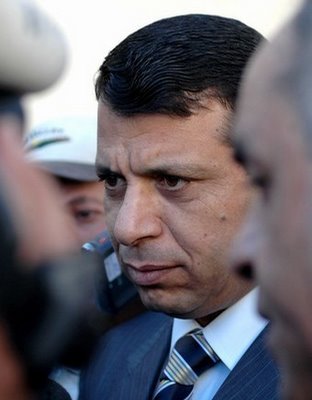
The London-based newspaper Al-Hayat reported that this company is owned by Mohammed Dahlan, formerly a Fatah strongman in the Gaza Strip before its takeover by Hamas two and a half years ago.

Bardawil said that Mabhouh had put himself at risk by booking his trip through the Internet and risked a security breach by telling his family in Gaza by telephone which hotel he would be staying at.

Also yesterday, the daily newspaper Al-Bayan reported that Dubai police had new evidence implicating the Mossad in Mabhouh’s assassination, which included credit-card payments and suspects’ phone records.

“Dubai police have information confirming that the suspects purchased travel tickets from companies in other countries with credit cards carrying the same names we have publicized [from the passports],” Al-Bayan quoted Dubai police chief Dahi Khalfan Tamim as saying.

Meanwhile, a Qatar news agency reported that Egyptian officials promised Dubai counterparts that they would try to persuade Israel to officially apologize for the assassination of Mabhouh in their country.

Egyptian diplomats told the newspaper Al-Arab that Dubai has asked Egypt to formally reprimand Israel for the hit.

On the issue of how Israel stole the identities of the individuals whose names were used by Mossad operatives, The Daily Telegraph says:

According to British sources, the Israelis got hold of the real passport details of six UK citizens living in Israel by taking their passports for “examination” as they passed through Tel Aviv’s Ben Gurion Airport, copying the details and returning the original passports after a few minutes. The six fakes, along with German, French and Irish passports, were used to leave Dubai.

Facebooktwittermail

Are we living in the post-moral age?

Rafi Eitan, an Israeli elder statesman and former intelligence officer is perhaps best known for having led the Mossad operation that captured Adolf Eichmann, architect of the Holocaust, and brought him back to face trial and execution in Israel in 1962.

In an interview with Haaretz this week, Eitan summed up the Zeitgeist in which we live — the Israelification of the Western world which unfolded after 9/11:

when there is a war on terror you conduct it without principles. You simply fight it.

President Bush, with his Manichaean view of the world, wanted to paint his war on terror in quasi-moral terms. President Obama has distilled it to its unprincipled essence.

The arc that has led from twisted morality to a rarefied amorality reached its completion point this week when the Obama administration made its determination that the authors of the former administration’s torture policies had done no more than make an error of judgment.

Newsweek reports:

The chief author of the Bush administration’s “torture memo” told Justice Department investigators that the president’s war-making authority was so broad that he had the constitutional power to order a village to be “massacred,” according to a report by released Friday night by the Office of Professional Responsibility.

The views of former Justice lawyer John Yoo were deemed to be so extreme and out of step with legal precedents that they prompted the Justice Department’s internal watchdog office to conclude last year that he committed “intentional professional misconduct” when he advised the CIA it could proceed with waterboarding and other aggressive interrogation techniques against Al Qaeda suspects.

The report by OPR concludes that Yoo, now a Berkeley law professor, and his boss at the time, Jay Bybee, now a federal judge, should be referred to their state bar associations for possible disciplinary proceedings. But, as first reported by NEWSWEEK, another senior department lawyer, David Margolis, reviewed the report and last month overruled its findings on the grounds that there was no clear and “unambiguous” standard by which OPR was judging the lawyers. Instead, Margolis, who was the final decision-maker in the inquiry, found that they were guilty of only “poor judgment.”

The report, more than four years in the making, is filled with new details into how a small group of lawyers at the Justice Department, the CIA, and the White House crafted the legal arguments that gave the green light to some of the most controversial tactics in the Bush administration’s war on terror. They also describe how Bush administration officials were so worried about the prospect that CIA officers might be criminally prosecuted for torture that one senior official—Attorney General John Ashcroft—even suggested that President Bush issue “advance pardons” for those engaging in waterboarding, a proposal that he was quickly told was not possible.

At the core of the legal arguments were the views of Yoo, strongly backed by David Addington, Vice President Dick Cheney’s legal counsel, that the president’s wartime powers were essentially unlimited and included the authority to override laws passed by Congress, such as a statute banning the use of torture. Pressed on his views in an interview with OPR investigators, Yoo was asked:

“What about ordering a village of resistants to be massacred? … Is that a power that the president could legally—”

“Yeah,” Yoo replied, according to a partial transcript included in the report. “Although, let me say this: So, certainly, that would fall within the commander-in-chief’s power over tactical decisions.”

“To order a village of civilians to be [exterminated]?” the OPR investigator asked again.

“Sure,” said Yoo.

Yoo is depicted as the driving force behind an Aug. 1, 2002, Justice Department memo that narrowly defined torture and then added sections concluding that, in the end, it essentially didn’t matter what the fine print of the congressionally passed law said: The president’s authority superseded the law and CIA officers who might later be accused of torture could also argue that were acting in “self defense” in order to save American lives.

Where does Obama stand?

“I’m a strong believer that it’s important to look forward and not backwards, and to remind ourselves that we do have very real security threats out there.”

Terrorism — even if this administration thinks the term is passé — remains the only reality. Obama’s cynical mastery rests in his ability to sustain the terror zeitgeist without using the word.

Principles? They’re a distraction — a preoccupation and an indulgence for those of us little folks who do not daily wrestle with the moral ambiguity of governance.

Facebooktwittermail

Has Israel been helping supply weapons to Hamas?

The idea that Israel could be involved in supplying weapons to Hamas might sound like a preposterous conspiracy theory, but let’s look at some connections — the theory might not be as wild as it sounds.

In undisputed reports, Mahmoud al-Mabhouh has been described as the top Hamas commander responsible for coordinating the flow of arms into Gaza. He is said to have established a smuggling route through Sudan — a route upon which a convoy of weapons was intercepted and destroyed in an Israeli drone attack just over a year ago.

From accounts of Mabhouh’s killing we know that he bought his ticket to Dubai just two days before traveling there and within just a few hours of his departure from Syria, an assassination team was en route to the same destination. Nineteen hours before the assassination, fifteen operatives left on flights for Dubai, departing from France, Germany, Switzerland and Italy. The Times reported that Mabhouh was “tracked from the moment he boarded Emirates flight EK 912 at Damascus at 10.05 on January 19.”

I said “an assassination team” but from hereon I’ll refer to them as the Mossad operatives. Until one of them is arrested and the Israeli government starts negotiating for his or her release, we won’t know with absolute certainty that this was a Mossad operation, but I’ll go with the Dubai police chief and say that we can be 99% sure.

The British and Irish governments would not haul in the Israeli ambassadors in London and Dublin to demand an explanation for the theft of their citizens’ passports simply on the basis of a rumor. Indeed, if Israel had been set up by one of its enemies, as some Israeli leaders have suggested, then Israel too would be launching an investigation into the breach of its own passport records. As well as being concerned about a serious security breach, Israeli would have every reason to want to pacify the concerns of those citizens who now fear that they are being placed at risk by their own government — Israelis such as Anshel Pfeffer, who writes:

Enough cases in the past have come to light in which the identities of Jews, most of whom were born outside of Israel, were used by Israeli secret agents. It is hard not to feel that there has been and still is a blatant disregard for the safety and privacy of those whose identities were used… [H]ow can Israel claim to be a democracy fighting terror and dictatorships, and continue to promote aliyah from Western countries, when this is the way it supposedly treats its citizens?

Far from allaying such anxieties, Israeli officials have thus far seemed much more interested in gloating over an operational success. “Mossad knows how to get the job done,” said one minister, while the Israeli embassy in London, though claiming ignorance about the assassination, saw fit to brag on Twitter about the “hit on #Dubai target”.

So let’s return to the sequence of events. There is compelling evidence that the Mossad operatives who killed Mabhouh had plenty of lead time. Indeed, there’s reason to suppose that rather than this being a strike provided by an opportunity, it was a carefully laid trap that the Hamas commander walked straight into.

We know that he left Damascus confident enough for his security detail to face an acceptable delay. This was no blind date. Yet the information released by Dubai suggests that the only people he met once he got there were his killers. Did he miss his contact or did his contact turn out to have deceived him?

It is now reported that Israel provided British intelligence with advance notice of an “overseas operation” that would involve the use of fake British passports. A Mossad officer said Britain’s Foreign Office was also informed hours before Mabhouh’s murder.

If word was out among intelligence agencies, it would come as no surprise if Dubai was also conducting its own surveillance operation. A review of the CCTV images they released, along with the speed with which they identified the members of the Mossad team, does indeed suggest that to some degree they were able to track events as they unfolded and not merely piece together the evidence after the fact.

In some of the videos, the camera appears to be tracking its subject — a mere coincidence that the individuals walked in the same direction the camera was moving? Perhaps.

In the montage of clips put together by Gulf News‘ GNTV, there is another intriguing element. At 13 minutes 40 seconds we see one of the suspects exiting his hotel. The caption reads: “16.14 [local time, January 19] Kevin leaves the hotel and heads towards Al-Bustan Rotana.”

As “Kevin” is stepping into a taxi, a large man — he looks like an American — in jeans, pale blue t-shirt and dark blue jacket, strolls up as the next in line for a taxi. In the video his face has been digitally obscured. Why? Did he have Kevin under surveillance or might he be one of the thus far unnamed suspects?

In all of the video sequences there is only one other individual whose identity is obscured. This comes at 20 minutes 37 seconds in the montage. Kevin is speaking on a cell phone, strolling back and forth in front of the elevator doors in the lobby adjacent to Mabhouh’s room. A large individual exits the right side elevator and engages with Kevin, then exits the lobby walking in the direction of the crime scene. Throughout the sequence the individual’s image has been digitally obscured. In general appearance he looks like an over-weight middle-aged American.

We know that five credit cards issued by American banks were used in the operation. There is an American element to this story that so far remains veiled.

So, keeping in mind all of the above, how do I come to my audacious claim that Israel has been helping supply Hamas with weapons? This doesn’t have to be quite as conspiratorial a theory as it sounds.

The bombing of the Sudan convoy suggests that Mabhouh’s supply network was infiltrated some time ago and though Israel’s much-repeated goal is to stop the flow of weapons into Gaza, the weapons themselves are perhaps less of a concern than is finding the means to weaken or disable Hamas.

What better way of infiltrating the Islamist movement than through its weapons supply chain?

If the Iranian arms dealers in Dubai have been conspicuous by their absence from this story, perhaps it’s because the trap Mabhouh fell into involved Israelis posing as Iranians.

After all, the involvement of governments in illicit arms dealing for political purposes is not unheard of — one of Israel’s closest friends, Elliot Abrams, knows the routine.

Further comment: As presented by Israeli leaders the issue of Gaza is without deviation always treated as a security threat. Gaza, under Hamas’ control presents a threat to southern Israel as in recent years cities such as Sderot have come under persistent rocket attack.

How then is it conceivable that Israel would allow a single weapon to find its way into the Palestinian enclave even if there might be an intelligence payoff from being able to infiltrate and monitor a weapons supply chain?

Wrong question. If Israel really wanted to effectively control the flow of weapons into Gaza it would never have imposed a blockade that resulted in the construction of thousands of smuggling tunnels under the Rafah border.

The surest way of rigorously controlling what gets into Gaza is through a stringently monitored open border. If goods could be brought in overland, there would be little economic incentive for constructing tunnels.

Rather than preventing the flow of weapons, Israel’s greater interest has been in punishing the Palestinian population in the naive hope that people living in great deprivation would turn against their political leaders.

Israel, confident in its ability to use overwhelming force to crush its opponents, has less interest in disarming the Palestinians than it does in breaking their will to fight.

Facebooktwittermail

This is no ripping yarn, but a murder to fan more conflict

Seumas Milne writes:

… since launching its war on terror, the US has also adopted Israel’s practice, stretching back decades, of carrying out killings far from the theatre of war. First, Israel’s attacks were targeted against PLO leaders; more recently against the ­Islamists. But since the fiasco of the Mish’al plot [in Jordan in 1997], its assassinations have mostly been confined to the West Bank and Gaza Strip, where Israel made a determined attempt over the past ­decade to decapitate Hamas of its entire leadership.

Now that focus has again widened. Under the direction of Mossad director Meir Dagan, Israel is running a region-wide underground war against the leaders of Hezbollah and Hamas – which have both maintained an effective ceasefire for more than a year – and their Syrian and Iranian backers. Since the ­killing of ­veteran Hezbollah leader Imad ­Mughniyeh in Damascus in 2008, Israeli-hallmarked assassinations have ­multiplied in Lebanon, Syria and Iran.

But coldblooded ­killing isn’t only a morally ­repugnant crime. The lesson of ­colonial ­history is that ­decapitation ­campaigns against ­national ­resistance movements don’t work. In the short term they can disrupt and demoralise, but if the ­movement is socially rooted, other ­leaders or even organisations will take their place. That was Israel’s ­experience when it killed the Hezbollah leader ­Abbas al-Musawi and his family in the early 1990s, only for him to be succeeded by the more effective and ­charismatic Hassan Nasrallah.

Such campaigns also tend to spread the war. Unlike the historic PLO ­factions, Hamas has always confined its armed attacks to Israel and the Palestinian territories. Writing in The Guardian in 2007, Mish’al confirmed the “principle that the resistance should only be fought in Palestine”. But in the aftermath of the Dubai assassination, Hamas leaders have started to hint strongly that policy could now change, and that they could respond to Israel’s attacks in “the ­international arena”.

Facebooktwittermail

The Dahlan connection – Updated

Update – Ayman Taha, a Hamas spokesman in Gaza, was reported saying: “These statements concerning PA [Palestinian Authority] involvement [in Mahmoud al-Mabhouh’s murder] are too hasty. This is not the official position of the movement, that the PA was involved. When the investigation is finished, we will announce who is behind the killing.” His statement followed reports such as the one below from Ynet identifying two Palestinians detained in Dubai and a report in The Guardian claiming that a Hamas operative Nahro Massoud was being questioned in Damascus about the Dubai killing.

Asharq Alawsat adds:

In Jordan, an informed Palestinian source said that it was likely that the two Palestinians who were handed over to the UAE authorities by Jordan were in possession of Palestinian passports specifically used by Gaza Strip residents. He said that the two Palestinians were most likely residing in the UAE, and fled the country via the Queen Alia International Airport in Amman aboard a Royal Jordanian Airlines flight but without first securing the proper visas, and were therefore not allowed to enter Jordanian territory.

The source, who preferred to remain anonymous, said that any Palestinian living abroad or in the Gaza Strip needs a visa from the Jordanian Ministry of Interior and the consent of the security services prior to entering Jordan, whereas West Bank citizens are able to enter Jordan via the King Hussein Bridge and are not required to obtain all of these documents. He said that the two Palestinians were arrested in the airports transit lounge after the security services received information from UAE authorities that the two wanted figures had boarded a plane to Jordan.

The source also confirmed that the two Palestinians were held until a Royal Jordanian Airlines flight could take them back to Dubai the next day. The Palestinian ambassador to Jordan, Atallah Khairy denied that the two individuals have any ties to the Palestinian Authority, and he also confirmed to Asharq Al-Awsat that the Palestinian Authority does not have anything to do with this assassination. Khairy also pointed out that senior Hamas official Ayman Taha, who originally leveled these accusations at the Palestinian Authority had retracted his statement.

Whatever the role of the two Palestinians detained by the Dubai police, one fact is striking: all the other operatives belonging to the team that they were supposedly collaborating with made a clean getaway. So how come these two guys didn’t have suitable travel documents? It makes you wonder whether they were recruited simply as a means to try and so division among Palestinians.

While the diplomatic fallout from the Dubai murder continues to expand, there are several new twists in the story.

Though the real identities of the murder suspects whose passport photographs have been released are unknown, two Palestinian suspects under arrest in Dubai have been linked to Mohammed Dahlan, the Fatah security chief who was ousted from Gaza in June 2007. Dahlan has been accused in the past of collaborating with Israel and being a CIA agent.

A senior Hamas official told Ynet on Thursday that Anwar Shheibar and Ahmad Hasnain, two officers in the Palestinian General Security Services suspected of being involved in the assassination of Hamas’ Mahmoud al-Mabhouh, fled the Gaza Strip after Hamas took power. The suspects were arrested in Jordan and handed over to the Dubai police following the hit.

Shheibar is a resident of the Sabra neighborhood, west of Gaza City, and Hasnain is a member of one of the large families in the Sajaiya neighborhood. The two, both in their 30s, were members in what was known until a few years ago as “the death cells” led by Nabil Tamus, who claimed he was an associate of senior Fatah member Mohammad Dahlan.

These cells, according to Fatah rivals and Dahlan’s rivals, regularly suppressed Palestinian Authority opponents, especially among Hamas members.

Tamus, who led the cells, also left the Gaza Strip around the time Hamas took power. According to Palestinian reports and according to the senior Hamas official, the three were employed by Mohammad Dahlan’s real estate and investment firms in Dubai.

In the past, Dahlan, for his part, vehemently denied conducting any such activities in the United Arab Emirates. “I don’t have the towers people say I have in Dubai,” he used to say in interviews with the media.

Both Shheibar and Hasnain recently received their salaries from the Palestinian Authority in Ramallah. Hamas claims that their arrest proves beyond any doubt that the PA had direct collaboration and deep operational involvement in every detail of the assassination.

Hamas also claims that the Mossad enjoyed logistical support from the two men, who lived in Dubai in recent years, and thus were deeply familiar with the UAE. Hamas said publicly in the past few days that the two are associated with Dahlan’s camp.

Robert Fisk, based on the observations of an “impeccable” source in Abu Dhabi, says that Israel’s intelligence service is suspected by the UAE of having received European assistance.

Collusion. That’s what it’s all about. The United Arab Emirates suspect – only suspect, mark you – that Europe’s “security collaboration” with Israel has crossed a line into illegality, where British passports (and those of other other EU nations) can now be used to send Israeli agents into the Gulf to kill Israel’s enemies. At 3.49pm yesterday afternoon (Beirut time, 1.49pm in London), my Lebanese phone rang. It was a source – impeccable, I know him, he spoke with the authority I know he has in Abu Dhabi – to say that “the British passports are real. They are hologram pictures with the biometric stamp. They are not forged or fake. The names were really there. If you can fake a hologram or biometric stamp, what does this mean?”

The voice – I know the man and his origins well – wants to talk. “There are 18 people involved in the killing of Mahmoud al-Mabhouh. Besides the 11 already named, there are two Palestinians who are being interrogated and five others, including a woman. She was part of the team that staked out the hotel lobby.” Two hours later, an SMS arrives on my Beirut phone from Abu Dhabi, the capital of the United Arab Emirates. It is the same source.

“ONE MORE THING,” it says in capital letters, then continues in lower case. “The command room of the operation was in Austria (sic, in fact, all things are “sic” in this report)… meaning the suspects when here did not talk to each other but thru the command room on separate lines to avoid detection or linking themselves to one another… but it was detected and identified OK??” OK? I ask myself.

My source is both angry and insistent. “We have sent out details of the 11 named people to Interpol. Interpol has circulated them to 188 countries – but why hasn’t Britain warned foreign nations that these people are using passports in these names?” There was more to come.

“We have identified five credit cards belonging to these people, all issued in the United States.” The man will not give the EU nationalities of the extra five – this would make two women involved in Mr Mabhouh’s murder. He said that EU countries were cooperating with the UAE, including the UK. But “not one of the countries we have been speaking to has notified Interpol of the passports used in their name. Why not?”

The intrigue will not stop there.

Facebooktwittermail

Will Dubai issue an arrest warrant for Netanyahu?

Update below
Dubai’s police chief has now fingered Mossad, the Israeli intelligence agency, as being responsible for the murder of , on January 19, Lt Gen Dahi Khalfan Tamim told The National:

“Our investigations reveal that Mossad is involved in the murder of al Mabhouh. It is 99 per cent, if not 100 per cent that Mossad is standing behind the murder,” said Gen Tamim.

The evidence that Dubai Police have shows a clear link between the suspects and people with a close connection to Israel, according to Gen Tamim. However, he did not disclose what the evidences were.

Earlier Gen Tamim had said if it is proven that Mossad is responsible for the killing of al Mabhouh “Benjamin Netanyahu, the Israeli prime minister, will be the first to be wanted for justice as he would have been the one who signed the decision to kill [Mahmoud] al Mabhouh in Dubai’ and that an arrest warrant will be issued against him.

However, today Gen Tamim declined to comment on whether the UAE authorities is to issue an arrest warrant for Mr Netanyahu.

Dubai’s Gulf News has compiled a video of the CCTV footage that shows the assassins tracking their target. (There is no audio with this presentation.)

The Times provides an account of the movements of the assassins in the hours before and after al-Mahbouh’s murder.

The Daily Telegraph reports that Britain’s Foreign Secretary David Miliband said that it was an “outrage” that the Dubai assassins had used British passports and the British government has launched an investigation.

Mr Miliband spoke out after the Israeli ambassador to London, Ron Prosor, was called to the Foreign Office to discuss the affair, which is rapidly escalating into a major diplomatic crisis.

“We wanted to give Israel every opportunity to share with us what it knows about this incident,” Mr Miliband said.

“We hope and expect that they will co-operate fully with the investigation that has been launched by the Prime Minister and will be undertaken by the Serious Organised Crime Agency.”

Mr Miliband denied that the UK Government was merely “going through the motions” of asking questions about the incident.

It is too soon to say how great the diplomatic fallout will be but since all the countries whose passports were used illegally — Britain, Ireland, France and Germany — are EU members, it seems likely that the matter will rise to the level of European Union involvement.
The BBC‘s Paul Reynolds writes:

At this stage, it is a matter of Britain asking questions, not making protests and taking retaliatory action (such as demanding an apology, restricting official contacts or even expelling the ambassador for a time).

During his meeting with Mr Prosor, the permanent under-secretary Sir Peter Ricketts asked for full Israeli cooperation with the British inquiry. This is likely to prove problematic if Mossad was involved. Israel would not want to reveal too much. So a lot depends on how the word “cooperation” is defined. A total failure to cooperate would trigger a British response.

One complicating factor is that in 1987, the Israelis promised Britain that it would not use British passports in secret operations again.

On that occasion, eight British passports reckoned to be for Mossad agents were found in a bag in a West German telephone booth.

The then Israeli ambassador in London Yehuda Avner did find himself on the receiving end of a British protest.

If it turns out that the assurance given then has been broken the British diplomatic reaction will be the more severe.

Updated: It sounds as though Dubai’s police chief is now backing off from his earlier threat to issue an arrest warrant for Netanyahu. Reuters reports:

Interpol should issue a warrant to help locate and arrest the head of Israel’s spy agency Mossad if the organization was responsible for the killing of a Hamas militant in Dubai, the emirate’s police chief said Thursday.

Facebooktwittermail

British relations with Israel in ‘deep freeze’ as Dubai killing row escalates

The Guardian reports:

Britain last night fired the first shot in a potentially explosive diplomatic row with Israel by calling in the country’s ambassador to explain the use of faked British passports by a hit squad who targeted a Hamas official in Dubai.

The Israeli ambassador has been summoned to the Foreign Office to “share information” about the assassins’ use of identities stolen from six British citizens living in Israel, as part of the meticulously orchestrated assassination of Mahmoud al-Mabhouh.

Britain has stopped short of accusing Israel of involvement, but to signal its displeasure, the Foreign Office ignored an Israeli plea to keep the summons secret. “Relations were in the freezer before this. They are in the deep freeze now,” an official told the Guardian.

In an editorial, The Guardian said:

British passports are the property of the British government. When that government says and does nothing for six days after it was given evidence that Mossad agents stole the identity of six British citizens to assassinate a Hamas commander in Dubai, it starts to seem as if Israel was right to think it could get away with it. The Israeli foreign minister, Avigdor Lieberman, yesterday predicted the incident would have no effect on British relations.

The decision last night to call in the Israeli ambassador to “share information” does not change this basic position. If Britain were less supine in its dealings, it would realise it is not in its interests to let Israel wage its war with Hamas under a British flag. What happened was a breach of trust between two nations who are ostensibly allies. The identity theft endangers not just the lives of six passport holders and their families, but potentially anyone carrying a British passport in the Arab world. Faced by a growing political clamour, Gordon Brown was forced to call for a full investigation into how fraudulent British passports were used. We all, alas, know the prime minister’s predilection for investigations that fizzle out. The Serious Organised Crime Agency (Soca), led by Sir Ian Andrews, formerly at the Ministry of Defence, will work with the Dubai authorities.

Dubai has already issued its own arrest warrants, but at the very least, the evidence that Soca gathers should be presented to Israel with a demand for an explanation. Britain is not the only country involved in this affair. Dubai believed that 11 agents with European passports were involved in the murder. If Israel disregards Soca, matters should be taken up at EU level. Mossad agents routinely use false identities and forged western passports, and each time they are caught doing it Israel gives assurances they will not do it again. It did so to Britain when the issue came up in 1987. Ten years later it gave the same assurances to Canada, after Mossad agents entered Jordan on doctored Canadian passports and bungled an attempt to kill the Hamas leader Khaled Meshal with poison. Two suspected Israeli agents were jailed in New Zealand for obtaining the country’s passports illegally. These diplomatic assurances are evidently worthless.

The only thing that will give Mossad pause for thought the next time it eyes a target for assassination is if its political masters are made to feel the consequences of its actions. There are at any given moment a plethora of tools at the disposal of Britain and the EU, from bilateral diplomatic contacts and military contacts to arms and trade agreements. London is a key diplomatic listening post for the Middle East, and Britain is a vital interlocutor with the Palestinians. There are any number of ways of getting the message across, not least the question of whether to change the law to make it harder for British courts to issue arrest warrants, under the principle of universal jurisdiction, for former Israeli ministers accused of war crimes. The enduring mystery is why Britain has been so reluctant to pull the levers at its disposal.

The Mossad operation was described in Israel yesterday as a tactical operational success. There was relief that the right target was killed, and all Israel’s operatives got out safely. Israel is not the only country to carry out targeted assassinations. The US pursue the same policy with drones against the Taliban and al-Qaida in North Waziristan. The charge of hypocrisy is swiftly levelled at those who condemn Israel’s strikes while carrying on the same policy in other theatres of war. But assassinations rarely achieve their advertised effect. If the purpose here was to stop Hamas acquiring arms from Iran in Dubai, it will not prevent Tehran from providing weapons through another channel, and the Hamas commander will be quickly replaced. Assassinations such as these might, however, give Arab states even less reason than they already have to normalise relations with Israel. Is that a tactical success or a strategic failure?

Facebooktwittermail

Five Israelis had their identities stolen – apparently by Mossad!

Anyone who is Jewish but doesn’t have a Jewish sounding name and who has been considering emigrating to Israel might soon be having second thoughts.

To the extent that Israel provides a safe haven to Jews, it turns out your religious identity might count for less than your name.

The Israeli government has yet to acknowledge that the murder of the Hamas commander, Mahmoud al-Mabhouh, in Dubai last month was carried out by Mossad, but the evidence is now overwhelming.

But the fact that Mossad carried out the killing may turn out to concern Israelis (and Jews elsewhere) less than the apparent willingness of the Israeli intelligence agency to put the lives and liberty of Israeli citizens in jeopardy by stealing their identities.

It now turns out that five Israeli dual nationals claim their identities were stolen in order to provide the Dubai killers with fake passports. (Update – Israel’s Hebrew Ma’ariv now reports that seven Israelis had their identities stolen.)

Haaretz reports:

At least five Israelis awoke Tuesday morning to find their names tied to the assassination of senior Hamas operative Mahmoud al-Mabhouh in his Dubai hotel room last month. All were stunned to find their names displayed on passports that police in the emirate said were used by the assailants.

However, the people pictured in the photos released by police looked nothing like them. All denied involvement in the affair.

“I’m in shock – I just don’t understand how something like this could happen,” said Paul John Keeley, a British-born repairman who lives on Kibbutz Nahsholim, near Zichron Yaakov. Keeley’s name appeared on the British passport Dubai authorities said belonged to one of the hit men.

“From the moment I heard about it I was very worried. I’m worried for my family,” said Keeley, who immigrated to Israel more than a decade ago. “The fact that it was my name that was published in this context makes me worry that someone will try to harm us.”

Keeley, 43 and a father of three, said Tuesday his passport was in his possession before, on and after January 20, the day Mabhouh was assassinated.

“I don’t know who a person calls when his identity is stolen,” he said. “I’m waiting for someone from the British or Israeli government to contact me and give me answers. I don’t understand how something like this could happen.”

Amir Oren adds:

Using the identities of real, living, innocent Israelis for operational documentation is against the law. This kind of abuse also causes innocent civilians to suffer the evil that already plagues ministers and officers: being prevented from traveling abroad for fear of being arrested by Interpol on suspicion of being the Dubai assassins.

Former Mossad chief Efraim Halevy pushed for a Mossad Law to be legislated that would enshrine the state’s obligation to defend its agents caught breaking laws abroad. The initiative never got off the ground: A state can’t legitimize illegality. But neither can it allow one of its institutions to arbitrarily harm civilians — not the police, not the tax authority, not the Shin Bet security service and not the Mossad.

Attorney General Yehuda Weinstein was asked yesterday whether an investigation will be opened following the public complaints of those whose identities were stolen from them, and whose lives and liberty are therefore now threatened. Weinstein has not yet had time to study the issue.

Oren is calling for Mossad chief Meir Dagan to be fired. But why stop there? Who can be so naive as to doubt that this operation was conducted with the authorization and at the behest of the Israeli prime minister himself.

Imagine a parallel in the United States. Richard Nixon couldn’t get away with ordering a burglary – can Netanyahu put his own citizens in jeopardy while ordering a murder?

This may end up not merely undermining public confidence in government officials; it might even shake Jewish confidence in Zionism.

Facebooktwittermail

Was the arrest of the Taliban’s second-in-command a strategic blunder?

Updated below
The capture of the Taliban’s second in command, Mullah Abdul Ghani Baradar, has been hailed as a huge blow to the Taliban but it may turn out to deliver an even bigger blow to President Obama’s hopes for an early withdrawal of US troops from Afghanistan.

Hajji Agha Lalai, former head of the Afghan government-led reconciliation process in Kandahar, who has dealt with members of the Taliban leadership council for several years, said Mullah Baradar was “the only person intent on or willing for peace negotiations.”

Last month Baradar facilitated an inconclusive meeting in Dubai between midlevel Taliban commanders and Kai Eide, the departing top UN official in Kabul, according to McClatchy newspapers.

Saeed Shah reported:

According to Vahid Mojdeh, a former Afghan official who worked under the Taliban, Baradar was instrumental in reining in insurgent violence, by banning sectarian killings and indiscriminate bombings.

“Baradar was an obstacle against al-Qaida, who wanted to make an operation in Afghanistan like they did in Iraq,” Mojdeh said. “But Baradar would not allow them to kill Shias” – the minority Muslim sect – “or set off explosions in crowded places.”

Pakistani analysts said Baradar’s capture suggested either that Islamabad had abandoned its attempt to promote peace talks or the Taliban number two had fallen afoul of the Pakistani authorities. Analysts said Baradar was the most likely point of contact for any future talks.

“This is inexplicable. Pakistan has destroyed its own credentials as a mediator between Taliban and Americans. And the trust that might have existed between Taliban and Pakistan is shattered completely,” said Rustam Shah Mohmand, a former Pakistani ambassador to Kabul after the overthrow of the Taliban.

The capture of Mullah Baradar has been widely reported as the result of a coordinated operation between the US and Pakistan, but so far the story seems very murky.

On Tuesday, February 9, the New York Times reported:

Pakistan has told the United States it wants a central role in resolving the Afghan war and has offered to mediate with Taliban factions who use its territory and have long served as its allies, American and Pakistani officials said.

The offer, aimed at preserving Pakistan’s influence in Afghanistan once the Americans leave, could both help and hurt American interests as Washington debates reconciling with the Taliban.

Pakistan’s army chief, Gen. Ashfaq Parvez Kayani, made clear Pakistan’s willingness to mediate at a meeting late last month at NATO headquarters with top American military officials, a senior American military official familiar with the meeting said.

The report said that General Kayani rebuffed US pressure to expand operations against the Taliban in North Waziristan because “the Pakistani Army still regarded India as its primary enemy and was stretched too thin to open a new front.”

Within days we learn of Mullah Baradar’s arrest in Karachi, Pakistan. His capture could cripple the Taliban’s military operations, at least in the short term, says Bruce Riedel, an adviser to the Obama administration. Others in Washington describe this as a huge blow to the Taliban.

But the New York Times now reports:

The arrest followed weeks of signals by Pakistan’s military chief, Gen. Ashfaq Parvez Kayani — to NATO officials, Western journalists and military analysts — that Pakistan wanted to be included in any attempts to mediate with the Taliban.

Even before the arrest of the Taliban commander, Mullah Abdul Ghani Baradar, a senior Pakistani intelligence official expressed irritation that Pakistan had been excluded from what he described as American and Afghan approaches to the Taliban.

“On the one hand, the Americans don’t want us to negotiate directly with the Taliban, but then we hear that they are doing it themselves without telling us,” the official said in an interview. “You don’t treat your partners like this.”

Mullah Baradar had been a important contact for the Afghans for years, Afghan officials said. But Obama administration officials denied that they had made any contact with him.

Whatever the case, with the arrest of Mullah Baradar, Pakistan has effectively isolated a key link to the Taliban leadership, making itself the main channel instead.

While Washington denied prior negotiations with Baradar, a US intelligence official in Europe claimed otherwise:

“I know that our people had been in touch with people around him and were negotiating with him,” the official said, speaking on the condition of anonymity because he was not authorized to discuss the issue.

“So it doesn’t make sense why we bite the hand that is feeding us,” the official added. “And now the Taliban will have no reason to negotiate with us; they will not believe anything we will offer or say.”

Update: In an interview on NPR Ahmed Rashid speculated that now that Baradar is in custody he could be in a better position to negotiate. Why? Because he’s not going anywhere?

Much more plausible is that the Pakistanis pulled him in — Rashid acknowledges that Baradar’s whereabouts have never been unknown to the ISI — because they didn’t want to be cut out of the negotiating loop by Americans negotiating directly with the Taliban. In other words, Pakistan is not willing to see a deal agreed to end this war without being able to dictate some of the terms.

If that is the case, no wonder The White House asked its news outlet (the New York Times) to sit on the story for a few days while they decided how it should be told.

Facebooktwittermail