Author Archives: Paul Woodward

NEWS & VIEWS ROUNDUP: April 4

The prophetic anger of MLK

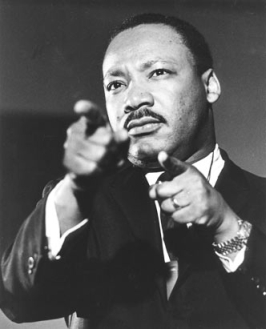
Omartin-luther-king-jr.jpgn the 40th anniversary of Martin Luther King Jr.’s death, few truths ring louder than this: Barack Obama and Jeremiah A. Wright Jr. express in part the fallen leader’s split mind on race, a division marked by chronology and color.

Before 1965, King was upbeat and bright, his belief in white America’s ability to change by moral suasion resilient and durable. That is the leader we have come to know during annual King commemorations. After 1965, King was darker and angrier; he grew more skeptical about the willingness of America to change without great social coercion.

King’s skepticism and anger were often muted when he spoke to white America, but they routinely resonated in black sanctuaries and meeting halls across the land. Nothing highlights that split — or white America’s ignorance of it and the prophetic black church King inspired — more than recalling King’s post-1965 odyssey, as he grappled bravely with poverty, war and entrenched racism. That is the King who emerges as we recall the meaning of his death. After the grand victories of the Civil Rights Act of 1964 and the 1965 Voting Rights Act, King turned his attention to poverty, economic injustice and class inequality. King argued that those “legislative and judicial victories did very little to improve” Northern ghettos or to “penetrate the lower depths of Negro deprivation.” In a frank assessment of the civil rights movement, King said the changes that came about from 1955 to 1965 “were at best surface changes” that were “limited mainly to the Negro middle class.” In seeking to end black poverty, King told his staff in 1966 that blacks “are now making demands that will cost the nation something. … You’re really tampering and getting on dangerous ground because you are messing with folk then.” [complete article]

Obama could actually win this thing (the Pa. primary)

The average of multiple new polls, including one putting him slightly ahead, shows he has trimmed a large Clinton lead – 20 points in January, 16 last month – down to single digits, at 5.4.

His campaign yesterday announced that it raised $40 million in March amid persistent chatter that Hillary’s running low and reports that she raised just half that.

More money means more TV, and Obama’s clearly clubbing Clinton.

Clinton camp feels spent, and outspent

Sen. Hillary Rodham Clinton spent a second straight day holding fundraisers in California yesterday as part of an all-out effort to keep pace with the record amounts of money raised by Sen. Barack Obama, whose campaign announced that it pulled in $40 million in March, double Clinton’s $20 million take.

While her Democratic presidential rival took the day off in Chicago, Clinton held two fundraisers in Los Angeles and planned to raise money in New Mexico this weekend. She will leave the campaign trail on Wednesday to attend an Elton John concert in New York organized with a goal to raise $2 million.

In an attempt to further tap the online donor market that has largely funded Obama’s effort, Clinton plans to launch a new Internet program today that lets supporters choose where their money will go, much as wedding guests select gifts from a registry. Instead of china and crystal, users can purchase campaign signs, van rentals, airtime on radio stations and doorknob advertisements.

More than 1,000 in Iraq’s forces quit Basra fight

More than 1,000 Iraqi soldiers and policemen either refused to fight or simply abandoned their posts during the inconclusive assault against Shiite militias in Basra last week, a senior Iraqi government official said Thursday. Iraqi military officials said the group included dozens of officers, including at least two senior field commanders in the battle.

The desertions in the heat of a major battle cast fresh doubt on the effectiveness of the American-trained Iraqi security forces. The White House has conditioned further withdrawals of American troops on the readiness of the Iraqi military and police.

The crisis created by the desertions and other problems with the Basra operation was serious enough that Prime Minister Nuri Kamal al-Maliki hastily began funneling some 10,000 recruits from local Shiite tribes into his armed forces. That move has already generated anger among Sunni tribesmen whom Mr. Maliki has been much less eager to recruit despite their cooperation with the government in its fight against Sunni insurgents and criminal gangs.

Iraq: Dark shadows of things to come

The Nuri al Maliki government’s failure to defeat Muqtada al-Sadr’s Mahdi Army in Basra is yet another indication that beneath the widely acclaimed “success” of the surge is a country largely bereft of the legitimate governance required for genuine stability. Iran’s intermediary role between Maliki and Sadr suggests that what passes for an Iraqi central government is, in fact, little more than another actor on an Iraqi political scene still badly fragmented along factional lines.

At the conclusion of Prime Minister Maliki’s determined effort to wrest control of much of Basra from Sadr’s fighters, Sadr’s people reportedly controlled even more of the city than before. The government has lost face, Sadr’s standing has been considerably enhanced, and his defiance of the government, which he labeled a “Satan” in an interview with al-Jazeera, is unshaken. Past US and Iraqi government efforts to wear down Sadr’s forces with scattered attacks and arrests clearly have had little impact. Indeed, a Mahdi Army commander in Baghdad bragged last week: “We can take on anyone now.”

The popular appeal of the brash, anti-American and nationalistic young cleric among vast numbers of downtrodden Shi’a has been powerful. It may now exceed that of other more established movements such as that of leading rival Abdul Aziz al-Hakim’s Islamic Supreme Council of Iraq (ISCI).

Basra assault exposed U.S., Iraqi limits

When Iraqi Prime Minister Nouri al-Maliki launched an offensive in Basra last week, he consulted only his inner circle of advisers. There were no debates in parliament or among his political allies. Senior American officials were notified only a few days before the operation began.

He was determined to show, his advisers said, that Iraq’s central government could exert order over a lawless, strategic port city ruled by extremist militias. The advisers said Maliki wanted to demonstrate that he was a strong leader who could shed his reputation as a sectarian figure by going after fellow Shiites, and who could act decisively without U.S. pressure or assistance.

A week later, his ultimately unsuccessful gambit has exposed the shaky foundation upon which U.S. policy in Iraq rests after five years of war, according to politicians and analysts. Gen. David H. Petraeus, the top military commander in Iraq, and U.S. Ambassador Ryan C. Crocker are to report to Congress next week on Iraq’s progress.

Iraqi PM freezes raids targeting militia

Iraq’s prime minister on Friday ordered a nationwide freeze on raids against suspected Shiite militants after the leader of the biggest militia complained that arrests were continuing even after he ordered fighters off the streets.

The announcement was a major shift from comments Prime Minister Nouri al-Maliki made a day earlier. It came after Shiite leader Muqtada al-Sadr, whose Mahdi Army militia fought government troops last week, hinted at retaliation if arrests of his followers did not stop.

Al Qaeda #2: We’ll attack Iran

Recently, Senator John McCain has repeatedly indicated that Iran and al-Qaeda are in cahoots. The terror group’s number two, Ayman al-Zawahiri, would beg to differ. In a long-promised online Q&A session, Zawahiri says it would be “in the interest” of Al-Qaeda to see Iran “sap[ped]” by a fight with the United States. Moreover, he seems to promise that the extremist collective will “battle” whoever wins that U.S.-Iran struggle.


Facebooktwittermail

CAMPAIGN 08 & EDITOR’S COMMENT: America’s patriotism problem

The patriotism problem

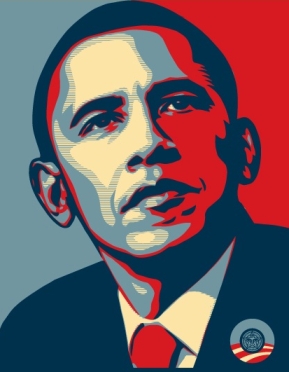
Tobama-screenprint.jpghere were signs that Obama’s hard work and extensive television advertising were paying off: various polls showed the race tightening a bit. The talk-show muttering had migrated from Jeremiah Wright to Clinton’s Bosnian sniper-fire fantasy. Hordes of new voters were registering in Pennsylvania. It was not impossible that Obama would turn Clinton’s predicted victory into a closer-than-expected moral defeat.

But there was still something missing. I noticed it during Obama’s response to a young man who remembered how the country had come together after Sept. 11 and lamented “the dangerously low levels of patriotism and pride in our country, the loss of faith in our elected officials.” Obama used this, understandably, to go after George W. Bush. “Cynicism has become the hot stock,” he said, “the growth industry during the Bush Administration.” He talked about the Administration’s mendacity, its incompetence during Hurricane Katrina, its lack of transparency. But he never returned to the question of patriotism. He never said, “But hey, look, we’re Americans. This is the greatest country on earth. We’ll rise to the occasion.” [complete article]

Editor’s Comment — Joe Klein refers to the “implicit patriotism of the Obama candidacy” but says, “to convince those who doubt him, Obama has to make the implicit explicit. He will have to show that he can be as corny as he is cool.”

Beyond, “we’re Americans – this is the greatest country on earth,” what other kinds of “explicit patriotism” does Klein have in mind? A flag lapel button? Stories about reciting the pledge of allegiance each morning with his wife and children? What kind of corny show of patriotism does Klein think would hit the mark and play best in the American heartland?

There’s little doubt that patriotism will at the very least figure as an insidious undercurrent in the general election and it’s important that the Obama campaign doesn’t fall into the position of being on the defense. But the way to do that is not to kowtow to those who push the conventional wisdom which says that political success in America requires a massive serving of red, white, and blue.

Patriotism should not be confused with its emblems. Too often these have been turned into the tools of a nationalism that paradoxically divides rather than unites the people.

When the flag wavers turn to the flag weary and say, “prove to us that you are American enough,” the implication is that even those who pass the test will remain less American than those requiring the test. The me-too patriot has capitulated to those who say: “It is we, not you, who understand what it means to be a real American.”

It’s not so much that Obama has a patriotism problem as much as that his opponents will, as he has said, use patriotism as a bludgeon. But what Obama has wisely done and I hope will continue to do is to insist that neither his critics nor commentators such as Joe Klein, be conferred with the privilege of framing each issue.

For four years Obama has been saying, “There’s not a black America and white America and Latino America and Asian America; there’s the United States of America.” What could be more patriotic than a heartfelt embracing of the whole nation?

America belongs to the American people. So when any particular group asserts a claim that they above others know what it means to be “real Americans”, they are in effect attempting to disavow the national identity of other citizens. What could be less patriotic than to abandon fellow Americans?

Facebooktwittermail

NEWS & VIEWS ROUNDUP: April 3

Who is Iraq’s “firebrand cleric”?

Mother Jones: In the beginning of your book, you write that Muqtada al-Sadr leads “the only mass movement in Iraqi politics.” Can you elaborate on that, especially given that in the American media we still hear more about the official Iraqi government than some of these other factions?

Patrick Cockburn: It’s always sort of amazing, sitting here in Baghdad, to watch visiting dignitaries—today we had Dick Cheney and John McCain—being received in the Green Zone by politicians who have usually very little support and seldom go outside the Green Zone. Muqtada leads the only real mass movement in Iraq. It’s a mass movement of the Shia, who are 60 percent of the population, and of poor Shia—and most Shia are poor. Otherwise the place is full of sort of self-declared leaders, many of whom spend most of their time outside Iraq. You know, if you want to meet a lot of Iraqi leaders, the best places are the hotels in Amman or in London. In general the government here is amazingly unpopular.

A teachable moment in Basra

It should come as no surprise that Prime Minister Nuri al-Maliki’s disastrous offensive against the Mahdi Army of Moqtada Sadr in Basra has had the exact opposite effect of that intended — strengthening rather than weakening Sadr, and making clear that he, and the Iranians, have far greater influence of Iraq’s future than does the Iraqi government or the U.S. That’s because Maliki’s shared the fate of pretty much every similar initiative by the Bush Administration and its allies and proxies since the onset of the “war on terror.”

The pattern is all too common: The U.S. or an ally or proxy launches a military offensive against a politically popular “enemy” group; Bush and his minions welcome the violence as “clarifying” matters, demonstrating “resolve”, or, in the most grotesque rhetorical flourish of all, the “birth pangs” of a brave new world. Each time, the “enemy” proves far more resilient than expected, largely because Bush and his allies have failed to recognize that each adversary’s power should be measured in political support rather than firepower; and the net effect of the offensive invariably leaves the enemy strengthened and the U.S. and its allies even weaker than before they launched the offensive.

Paltry result of Iraqi offensive quiets U.S. withdrawal talk

The Bush administration was caught off-guard by the first Iraqi-led military offensive since the fall of Saddam Hussein, a weeklong thrust in southern Iraq whose paltry results have silenced talk at the Pentagon of further U.S. troop withdrawals any time soon.

President Bush last week declared the offensive, which ended Sunday, “a defining moment” in Iraq’s history.

That may prove to be true, but in recent days senior U.S. officials have backed away from the operation, which ended with Shiite militias still in place in Basra, Iraqi Prime Minister Nouri al Maliki possibly weakened and a de facto cease-fire brokered by an Iranian general.

The other Iraqi civil war

The battle of Basra may be virtually over. But nobody’s talking about the invisible Battle of Mosul.

President George W Bush’s self-described “defining moment” in Iraq amounted to this: General Qassem Suleimani, the head of the Quds Force of the Iranian Revolutionary Guards Corps (IRGC) , brokered a deal in Qom, Iran, between Shi’ite cleric Muqtada al-Sadr’s envoys and Hadi al-Amri, the head of the Badr Organization and number two to Adbul Aziz al-Hakim, the head of the the Supreme Islamic Iraqi Council (SIIC) and a key player of the government in Baghdad. That sealed the end of the battle of Basra.

The IRGC was designated last year by Washington as a terrorist organization. Thus Iranian “terrorists” brokered a peace deal between the two largest Shi’ite parties in Iraq – ending a Baghdad government offensive that was fully authorized and supported by air power by Washington, according to Bush’s National Security Adviser Steven Hadley. Even under Bush logic, “the terrorists” won, and Iran won – once again.

Meanwhile, in northern Iraq, the Kurds are meticulously involved in de facto annexing strategically crucial, oil-rich Tameem province, whose capital is Kirkuk, with reserves of up to 15 billion barrels. Sunni Arabs and Shi’ite Turkmen fear the prospect – and are dead-set against the postponed Kirkuk referendum, which should have been held on December 2007. Prime Minister Nuri al-Maliki’s government in Baghdad knew for sure they would lose this vote and thus see Kirkuk become a part of autonomous Iraqi Kurdistan. So giving the excuse of “administrative problems”, they simply postponed the referendum.

Obama readies plan to reshape the electorate

Even as he fends off Senator Hillary Clinton in the Democratic nomination contest, Senator Barack Obama is already turning his attention to the general election, and to an ambitious plan to reshape the American electorate in his favor.

Bringing new voters to the polls “is going to be a very big part of how we win,” said Obama’s deputy campaign manager, Steve Hildebrand, in an interview. “Barack’s appeal to independent voters is also going to be key.”

Hildebrand said the campaign is likely to turn its attention and the energy of its massive volunteer army this fall on registering African-American voters, and voters under 35 years old, in key states.

Hillary’s wrong numbers: Obama polls up, Clinton funds down

To anyone tracking delegates, it’s been clear for more than a month that Hillary Clinton’s candidacy is in mortal danger. But as long as she was battling Barack Obama at the polls every week, she could hope to control the narrative of the Democratic race, even if she was losing individual contests. And so her campaign kept sprouting new raisons d’être: the wisdom of superdelegates, the enfranchisement of Florida and Michigan, her supposed ability to carry big states.

No more. We’re now halfway through the six weeks between Mississippi and Pennsylvania, and this long interlude has washed away Clinton’s spin. Now her campaign is not only over. It’s obviously over.

Muslim true/false

Winning hearts and minds — the Bush administration, foreign policy wonks, even the U.S. military agree that this is the key to any victory over global terrorism. Yet our public diplomacy program has made little progress on improving America’s image. Few seem to recognize that American ignorance of Islam and Muslims has been the fatal flaw.

How much do Americans know about the views and beliefs of Muslims around the world? According to polls, not much. Perhaps not surprising, the majority of Americans (66%) admit to having at least some prejudice against Muslims; one in five say they have “a great deal” of prejudice. Almost half do not believe American Muslims are “loyal” to this country, and one in four do not want a Muslim as a neighbor.

Meshal: Hamas backs Palestinian state in ’67 borders
Hamas supports the united Palestinian position calling for the establishment of a fully sovereign Palestinian state within the 1967 borders, including Jerusalem, and the right of return for refugees, Hamas politburo chief Khaled Meshal told the Palestinian daily Al-Ayam.

In a special interview with Wednesday’s edition of the paper, Meshal said the Palestinian position had received a vote of consensus during the national accords of 2006 and that this position is considered acceptable to the Arab world at large.

Meshal was asked about the claims by Israel and the United States that Hamas is seeking to destroy Israel. He said Hamas has committed itself to a political plan, which it follows, and called on the Americans, the Europeans and other international entities to conduct themselves in accordance with this political truth, and to judge Hamas based on its political plan, not based on what people may imagine.

Facebooktwittermail

FEATURE: Why Bush should reflect on Pinochet

The green light

greenlight.jpg
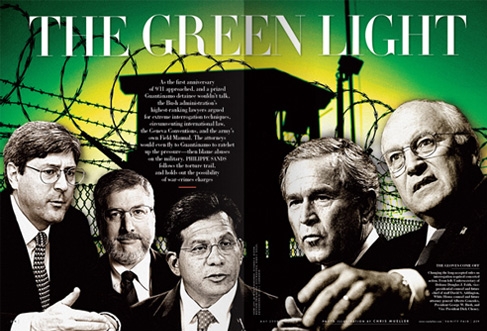
The abuse, rising to the level of torture, of those captured and detained in the war on terror is a defining feature of the presidency of George W. Bush. Its military beginnings, however, lie not in Abu Ghraib, as is commonly thought, or in the “rendition” of prisoners to other countries for questioning, but in the treatment of the very first prisoners at Guantanamo. Starting in late 2002 a detainee bearing the number 063 was tortured over a period of more than seven weeks. In his story lies the answer to a crucial question: How was the decision made to let the U.S. military start using coercive interrogations at Guantanamo?

The Bush administration has always taken refuge behind a “trickle up” explanation: that is, the decision was generated by military commanders and interrogators on the ground. This explanation is false. The origins lie in actions taken at the very highest levels of the administration—by some of the most senior personal advisers to the president, the vice president, and the secretary of defense. At the heart of the matter stand several political appointees—lawyers—who, it can be argued, broke their ethical codes of conduct and took themselves into a zone of international criminality, where formal investigation is now a very real option. This is the story of how the torture at Guantanamo began, and how it spread. [complete article]

Facebooktwittermail

NEWS & VIEWS ROUNDUP: April 2

Memo: Laws didn’t apply to interrogators

The Justice Department sent a legal memorandum to the Pentagon in 2003 asserting that federal laws prohibiting assault, maiming and other crimes did not apply to military interrogators who questioned al-Qaeda captives because the president’s ultimate authority as commander in chief overrode such statutes.

Iranian who brokered Iraqi peace is on U.S. terrorist watch list

The Iranian general who helped broker an end to nearly a week of fighting between Iraqi government forces and Shiite Muslim militiamen in southern Iraq is an unlikely peacemaker.

Brig. Gen. Qassem Suleimani, who helped U.S.-backed Iraqi leaders negotiate a deal with radical Shiite cleric Muqtada al Sadr to stop the fighting in Iraq’s largely Shiite south, is named on U.S. Treasury Department and U.N. Security Council watch lists for alleged involvement in terrorism and the proliferation of nuclear and missile technology.

His role as peacemaker, which McClatchy first reported Sunday, underscores Iran’s entrenched political power and its alliances in Iraq, according to analysts.

Basra battle strengthens Sadr

The Iraqi government’s inability to oust Moqtada al-Sadr’s militia from Basra has boosted the fortunes of the Shiite cleric while damaging the standing of Prime Minister Nouri al-Maliki.

Mr. Sadr appears to be the one clear winner from the inconclusive fighting in the country’s second-biggest city, which began to taper off Monday after the cleric urged his followers to observe a truce.

The failure of the Iraqi strikes against Mr. Sadr’s Mahdi Army has implications for both U.S. policy in Iraq and the presidential campaign.

Disunity in Damascus

Muammar Gadafy is usually good for a laugh, and he raised some thin – if strained – smiles at the weekend’s Arab summit in Damascus when he took his fellow leaders to task for wasting his time and theirs. Talk of unity, complained Libya’s irrepressibly candid “brother leader”, was nonsense when Arab states spent their time plotting against each other, achieving nothing and standing idly by when one of their number (Saddam Hussein) was toppled by foreign armies.

Bashar al-Assad, the Syrian president and summit host, put a brave face on Gadafy’s jibes and the embarrassingly low turnout in his spanking new conference centre. But no-shows by 11 heads of state – exactly half the membership of the 22-strong Arab League – was hardly a ringing endorsement of an event described as expressing Arab solidarity or of his own country as “the beating heart of Arabism”.

Obama is the change that America has tried to hide

I have come home from a long stay in Mexico to find – because of the presidential campaign, and especially because of the Obama-Clinton race for the Democratic nomination – a new country existing alongside the old. On any given day we, collectively, become the goddess of the three directions and can look back into the past, look at ourselves just where we are, and take a glance, as well, into the future. It is a space with which I am familiar.

When I joined the freedom movement in Mississippi in my early 20s, it was to come to the aid of sharecroppers, like my parents, who had been thrown off the land they’d always known – the plantations – because they attempted to exercise their “democratic” right to vote. I wish I could say white women treated me and other black people a lot better than the men did, but I cannot. It seemed to me then, and it seems to me now, that white women have copied all too often the behaviour of their fathers and their brothers. In the south, especially in Mississippi, and before that, when I worked to register voters in Georgia, the broken bottles thrown at my head were gender-free.

I made my first white women friends in college; they loved me and were loyal to our friendship, but I understood, as they did, that they were white women and that whiteness mattered.

Clinton slipping on trust

In the weeks before the Pennsylvania primary, Sen. Hillary Clinton not only lags Sen. Barack Obama in the race for delegates, she also is losing ground in her effort to convince voters that she is trustworthy.

The debate over her record has left Sen. Clinton confronting her lowest approval rating since April 2006, according to a Wall Street Journal/NBC News poll released last week.

According to the survey, 29% of the approximately 1,000 respondents said they had a very negative opinion of Sen. Clinton compared with 15% for Sen. Barack Obama and 12% for Sen. John McCain, the likely Republican nominee.

The Coalition of the Unwilling

Last September, President Bush flew down to Sydney and urged Australian voters not to reject the leader he dubbed his “man of steel,” Prime Minister John Howard.

“I wouldn’t count the man out,” Bush said. “He’s kind of like me: We both have run from behind, and won.”

Australians weighed that advice and, two months later, emphatically dumped the conservative prime minister in favor of Labor leader Kevin Rudd — who had promised to sign the Kyoto accord on global warming and pull troops out of Iraq.

Now it’s time for Rudd’s revenge: a chance to meddle in domestic American politics the way Bush meddled in Australian affairs last year. “Consistent with my commitment to the Australian people, we are changing the configuration of our involvement in Iraq,” he told an audience yesterday morning at the Brookings Institution. “Our ground combat troops will be withdrawn.”

Facebooktwittermail

NEWS, ANALYSIS & EDITOR’S COMMENT: Authority in Iraq

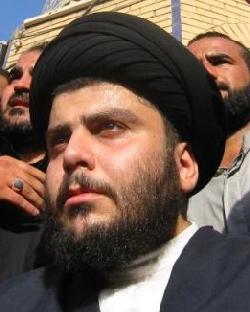
How Moqtada al-Sadr Won in Basra

Tmoqtadaalsadr.jpghe Iraqi military’s offensive in Basra was supposed to demonstrate the power of the central government in Baghdad. Instead it has proven the continuing relevance of anti-American cleric Moqtada al-Sadr. Sadr’s militia, the Mahdi Army, stood its ground in several days of heavy fighting with Iraqi soldiers backed up by American and British air power. But perhaps more important than the manner in which the militia fought is the manner in which it stopped fighting. On Sunday Sadr issued a call for members of the Mahdi Army to stop appearing in the streets with their weapons and to cease attacks on government installations. Within a day, the fighting had mostly ceased. It was an ominous answer to a question posed for months by U.S. military observers: Is Sadr still the leader of a unified movement and military force? The answer appears to be yes.

In the view of many American troops and officers, the Mahdi Army had splintered irretrievably into a collection of independent operators and criminal gangs. Now, however, the conclusion of the conflict in Basra shows that when Sadr speaks, the militia listens.

That apparent authority is in marked contrast to the weakness of Iraq’s prime minister, Nouri al-Maliki. He traveled south to Basra with his security ministers to supervise the operation personally. After a few days of intense fighting he extended his previously announced deadline for surrender and offered militants cash in exchange for their weapons. Yet in the ceasefire announcement the militia explicitly reserved the right to hold onto its weapons. And the very fact of the ceasefire flies in the face of Maliki’s proclamation that there would be no negotiations. It is Maliki, and not Sadr, who now appears militarily weak and unable to control elements of his own political coalition. [complete article]

Why al-Maliki attacked Basra

Why did Iraqi Prime Minister Nouri al-Maliki attack the Mahdi army in Basra last week?

Despite the cease-fire called Sunday by Shiite leader Sayyid Muqtada al-Sadr, leader of the millions-strong Sadr Movement, last week’s battles between the Mahdi army and the Iraqi army revealed the continued weakness and instability of al-Maliki’s government. Al-Maliki went to Basra on Monday, March 24, to oversee the attack on city neighborhoods loyal to al-Sadr. By Friday, the Iraqi minister of defense, Abdul Qadir Jasim, had to admit in a news conference in Basra that the Mahdi army had caught Iraqi security forces off guard. Most Sadrist neighborhoods fought off the government troops with rocket-propelled grenades and mortar fire. At the same time, the Mahdi army asserted itself in several important cities in the Shiite south, as well as in parts of Baghdad, raising questions of how much of the country the government really controls. Only on Sunday, after the U.S. Air Force bombed some key Mahdi army positions, was the Iraqi army able to move into one of the Sadrist districts of Basra. [complete article]

Iranian who brokered Iraqi peace is on U.S. terrorist watch list

The Iranian general who helped broker an end to nearly a week of fighting between Iraqi government forces and Shiite Muslim militiamen in southern Iraq is an unlikely peacemaker.

Brig. Gen. Qassem Suleimani, who helped U.S.-backed Iraqi leaders negotiate a deal with radical Shiite cleric Muqtada al Sadr to stop the fighting in Iraq’s largely Shiite south, is named on U.S. Treasury Department and U.N. Security Council watch lists for alleged involvement in terrorism and the proliferation of nuclear and missile technology.

His role as peacemaker, which McClatchy first reported Sunday, underscores Iran’s entrenched political power and its alliances in Iraq, according to analysts. [complete article]

Editor’s Comment — For five years, the US and its allies in Iraq have indulged in a modulated fantasy. To begin with it was that Moqtada al Sadr could be ignored — that he was an upstart deserving contempt. Once it became clear that he couldn’t be ignored, the aim turned to his destruction. Once it became clear that he and his movement could not be destroyed, hopes turned to his pacification. If he could be politically accommodated, he might lose his political fire and thence fall by the wayside. All along, the press has helped reinforce the administration’s efforts to brand Sadr by referring to him as radical, anti-American, rebel, fiery, militant, hardline, rabble-rousing, demagogue and a firebrand. What few have been willing to acknowledge is that over the span of the last five years, there is no one else in Iraq whose authority has been as durable or as demonstrable.

The American conceit was that by having ousted Saddam it acquired the ability to dispense or withhold political authority. The mistake was and remains a confusion about the difference between power and authority. For all its power, the US has never been able to wield any political authority in Iraq; it thus has no authority to dispense. Ironically, Sadr’s ability to acquire authority has in large part been assisted by the administration’s refusal to acknowledge his political weight.

Just over a month ago, US Central Command issued a press release in response to Sadr’s extension of his militia’s ceasefire. It said:

Those who continue to honor al-Sayyid Muqtada al-Sadr’s pledge will be treated with respect and restraint. Those who dishonor the Sadr pledge are regrettably tarnishing both the name and the honor of the movement…. [We] welcome an opportunity to participate in dialogue with the Sadr Trend and all groups who seek to bring about reconciliation in building the new Iraq.

This might have just been empty rhetoric, but I think that it more likely reflects that the US military is slightly ahead of its political leadership in starting to recognize that it’s time to show Sadr more respect. If the idea that he was going to fade away has managed to be a very durable fantasy — especially among those who have had equally durable dreams of success in Iraq — the time to wake up to the reality of Sadr’s political authority is long overdue.

Facebooktwittermail

NEWS & VIEWS ROUNDUP: April 1

Forever Guantanamo

On February 11, 2008, the Pentagon announced that charges were being filed against six men in connection with the September 11 attacks, including Khalid Sheikh Mohammed, alleged mastermind of the attacks and one of al-Qaeda’s most senior members, and Ramzi bin al-Shibh, a leader of the Hamburg cell that included several of the September 11 pilots. It has taken nearly seven years for these men to be indicted—while more than 240 other prisoners continue to remain at Guantánamo in a state of indefinite detention without charge. In contrast, Britain, after one of the longest and most expensive trials in its history, has already convicted and sentenced four men for the failed attacks on the London subway on July 21, 2005.

Last year, British officials also arrested three other men for involvement in the deadly attacks on three London subway lines and a bus on July 7, 2005, two weeks earlier; they are scheduled to go on trial at the end of March. Spain has convicted twenty-one of twenty-eight men charged in connection with the terrorist attacks on commuter trains in Madrid in March 2004; and Indonesia has held lengthy trials and convicted four men who were accused of the terrorist attacks in Bali in October 2002, two of whom have been sentenced to death, and two to life imprisonment.

“Justice delayed is justice denied” is a guiding principle of the American criminal justice system. The Bush administration has ignored this principle with impunity, and America’s image abroad has suffered greatly as a result.

Iranian general played key role in Iraq cease-fire

Iraqi lawmakers traveled to the Iranian holy city of Qom over the weekend to win the support of the commander of Iran’s Qods brigades in persuading Shiite cleric Muqtada al Sadr to order his followers to stop military operations, members of the Iraqi parliament said.

Sadr ordered the halt on Sunday, and his Mahdi Army militia heeded the order in Baghdad, where the Iraqi government announced it would lift a 24-hour curfew starting early Monday in most parts of the capital.

Ground is shifting beneath diplomacy with Pakistan

Not so long ago, the Bush administration could take a one-stop approach to its dealings with Pakistan. Whether Washington wanted to carry out airstrikes against Al Qaeda, trade sensitive intelligence or orchestrate the arrest of a terrorism suspect, it essentially came down to dialing the number of one man: President Pervez Musharraf.

Now all that has changed. Newly inaugurated Prime Minister Yusaf Raza Gillani has pledged to take a hard new look at counter-terrorism, the centerpiece of Musharraf’s nearly nine-year rule. He will be backed by a Cabinet made up of former opposition figures who probably will be sworn in this week.

An assertive new parliament is vowing to wield authority that lawmakers here lacked for years, demanding oversight on matters that were previously the president’s sole purview. And the general who succeeded Musharraf as army chief four months ago has methodically removed the powerful military from politics and promised accountability to elected officials.

The longest war

This former Taliban stronghold, where Osama bin Laden spent time planning the Sept. 11 attacks, has become an American success story. The Taliban is being pushed out, and a government presence is extending into previously hostile territory. At NATO headquarters in Kabul, most of Khost has been moved out of the “red” column — at least for now.

Khost shows that, with the right combination of resources and leadership, it can be done. But Khost is not simply a good-news story. It also underscores a larger, troubling truth: The conflict in Afghanistan will be far more costly and much, much longer than Americans realize. This war, already in its seventh year, will eventually become the longest in American history, surpassing even Vietnam.

Some Republicans emerge to endorse Obama

Call them the Obamacans: They are against continuing the Iraq war and reject what they see as Mr. Bush’s unconstitutional buildup of executive power. While the conservative Republican base rejected Senator McCain in the early primaries for his push for bipartisan campaign finance regulation and amnesty for illegal immigrants, the Arizona senator’s hawkish support for the Iraq war has alienated what was once his national constituency, anti-Bush Republicans.

The Obamacans include a former senator of Rhode Island, Lincoln Chafee; a former senior Justice Department official under President Reagan and senior legal adviser to Mitt Romney’s presidential campaign, Douglas Kmiec, and a granddaughter of President Eisenhower, Susan Eisenhower.

The Clinton firewall

Google the phrase “Clinton firewall” and you will come up with an ever-lengthening list of scenarios that Hillary Clinton’s presidential campaign has said will stop Barack Obama’s candidacy. The New Hampshire primary, said her campaign, would be the firewall to end Obamamania. Then Super Tuesday was supposed to be the firewall. Then Texas. Now Pennsylvania and Indiana.

For four months, the political world has been hypnotized by this string-along game, not bothering to ask what this Clinton tactic really is. The “just wait until the next states” mantra has diverted our attention from the firewall’s grounding in race and democracy. But now, with only a few months until the Democratic National Convention in Denver, the firewall’s true composition is coming into focus. Whether Obama can overcome this barrier will likely decide who becomes the Democrats’ presidential nominee.

Clinton didn’t pay health insurance bills

Among the debts reported this month by Hillary Rodham Clinton’s struggling presidential campaign, the $292,000 in unpaid health insurance premiums for her campaign staff stands out.

Clinton, who is being pressured to end her campaign against Barack Obama for the Democratic nomination, has made her plan for universal health care a centerpiece of her agenda.

Facebooktwittermail

NEWS & VIEWS ROUNDUP: March 31

Iranians help reach Iraq cease-fire

Iranian officials helped broker a cease-fire agreement Sunday between Iraq’s government and radical Shiite cleric Muqtada al-Sadr, according to Iraqi lawmakers.

The deal could help defuse a wave of violence that had threatened recent security progress in Iraq. It also may signal the growing regional influence of Iran, a country the Bush administration accuses of providing support to terrorists in Iraq and elsewhere.

Cleric suspends Shiite militia’s fight in Basra

The negotiations with Mr. Sadr were seen as a serious blow for Prime Minister Nuri Kamal al-Maliki, who had vowed that he would see the Basra campaign through to a military victory and who has been harshly criticized even within his own coalition for the stalled assault.

Last week, Iraq’s defense minister, Abdul Kadir al-Obeidi, conceded that the government’s military efforts in Basra have met with far more resistance than was expected. Many Iraqi politicians say that Mr. Maliki’s political capital has been severely depleted by the Basra campaign and that he is in the curious position of having to turn to Mr. Sadr, a longtime rival, for a way out.

A civil war Iraq can’t win

Even if American and Iraqi forces are able to eliminate Al Qaeda in Iraq, there are still three worrisome possibilities of new forms of fighting that could divide Iraq and deny the United States any form of “victory.”

One is that the Sunni tribes and militias that have been cooperating with the Americans could turn against the central government. The second is that the struggle among Arabs, Kurds, Turkmen and other ethnic groups to control territory in the north could lead to fighting in Kirkuk, Mosul or other areas.

The third risk — and one that is now all too real — is that the political struggle between the dominant Shiite parties could become an armed conflict.

Mideast openings

The Bush administration is coming to a crunch point soon in the two biggest conflicts in the Middle East — the Israeli-Palestinian stalemate and the struggle to create a stable Iraq. In each case, we can see the limits of military power in combating the “bad guys” who the administration believes are obstructing the path to peace.

The conundrum in Palestine is how to deal with Hamas, the militant Islamist group that controls Gaza. By firing rockets into Israel and provoking a punishing Israeli response, Hamas has nearly torpedoed the Annapolis peace process. It is a ruthless and unyielding organization but has strong support in Gaza, and, as Israel has discovered, it has been impossible to destroy militarily.

So what to do? Last week, Vice President Cheney and Israeli Prime Minister Ehud Olmert repeated the conventional line that Hamas is a threat to peace and that Israel should not negotiate with its representatives. But Egypt is holding talks with Hamas with the aim of negotiating a cease-fire — and I haven’t noticed either Israel or the United States demanding that the Egyptians stop their mediation.

Facebooktwittermail

NEWS & VIEWS ROUNDUP: March 30

The smart way out of a foolish war

Both Democratic presidential candidates agree that the United States should end its combat mission in Iraq within 12 to 16 months of their possible inauguration. The Republican candidate has spoken of continuing the war, even for a hundred years, until “victory.” The core issue of this campaign is thus a basic disagreement over the merits of the war and the benefits and costs of continuing it.

The case for U.S. disengagement from combat is compelling in its own right. But it must be matched by a comprehensive political and diplomatic effort to mitigate the destabilizing regional consequences of a war that the outgoing Bush administration started deliberately, justified demagogically and waged badly. (I write, of course, as a Democrat; while I prefer Sen. Barack Obama, I speak here for myself.)

The contrast between the Democratic argument for ending the war and the Republican argument for continuing is sharp and dramatic. The case for terminating the war is based on its prohibitive and tangible costs, while the case for “staying the course” draws heavily on shadowy fears of the unknown and relies on worst-case scenarios. President Bush’s and Sen. John McCain’s forecasts of regional catastrophe are quite reminiscent of the predictions of “falling dominoes” that were used to justify continued U.S. involvement in Vietnam. Neither has provided any real evidence that ending the war would mean disaster, but their fear-mongering makes prolonging it easier.

Shiite militias cling to swaths of Basra and stage raids

Shiite militiamen in Basra openly controlled wide swaths of the city on Saturday and staged increasingly bold raids on Iraqi government forces sent five days ago to wrest control from the gunmen, witnesses said, as Iraqi political leaders grew increasingly critical of the stalled assault.

Witnesses in Basra said members of the most powerful militia in the city, the Mahdi Army, were setting up checkpoints and controlling traffic in many places ringing the central district controlled by some of the 30,000 Iraqi Army and police forces involved in the assault. Fighters were regularly attacking the government forces, then quickly retreating.

Senior members of several political parties said the operation, ordered by Prime Minister Nuri Kamal al-Maliki, had been poorly planned. The growing discontent adds a new level of complication to the American-led effort to demonstrate that the Iraqi government had made strides toward being able to operate a functioning country and keep the peace without thousands of American troops.

Iraqi offensive revives debate for campaigns

The heavy fighting that broke out last week as Iraqi security forces tried to oust Shiite militias from Basra is reverberating on the presidential campaign trail and posing new challenges and opportunities to the candidates, particularly Senator John McCain.

The fierce fighting — and the threat that it could undo a long-term truce that has greatly helped to reduce the level of violence in Iraq — thrust the war back into the headlines and the public consciousness just as it had been receding behind a tide of economic concerns. And it raised anew a host of politically charged questions about whether the current strategy is succeeding, how capable the Iraqis are of defending themselves and what the potential impact would be of any American troop withdrawals.

Where are the Iraqis in the Iraq war?

Five years after the US invasion and occupation of Iraq, mainstream media is once more making the topic an object of intense scrutiny. The costs and implications of the war are endlessly covered from all possible angles, with one notable exception — the cost to the Iraqi people themselves.

Through all the special coverage and exclusive reports, very little is said about Iraqi casualties, who are either completely overlooked or hastily mentioned and whose numbers can only be guesstimated. Also conveniently ignored are the millions injured, internally and externally displaced, the victims of rape and kidnappings who will carry physical and psychological scars for the rest of their lives.

We find ourselves stuck in a hopeless paradigm, where it feels necessary to empathise with the sensibilities of the aggressor so as not to sound “unpatriotic”, while remaining blind to the untold anguish of the victims. Some actually feel the need to go so far as to blame the Iraqis for their own misfortune. Both Democratic presidential candidates Hillary Clinton and Barack Obama have expressed their wish for Iraqis to take responsibility for the situation in their country, with the former saying, “we cannot win their civil war. There is no military solution.”

A new diplomatic order in Pakistan

If it was not yet clear to Washington that a new political order prevailed here, the three-day visit this week by America’s chief diplomat dealing with Pakistan should put any doubt to rest.

The visit by Deputy Secretary of State John D. Negroponte turned out to be series of indignities and chilly, almost hostile, receptions as he bore the brunt of the full range of complaints that Pakistanis now feel freer to air with the end of military rule by Washington’s favored ally, President Pervez Musharraf.

Faced with a new democratic lineup that is demanding talks, not force, in the fight against terrorism, Mr. Negroponte publicly swallowed a bitter pill at his final news conference on Thursday, acknowledging that there would now be some real differences in strategy between the United States and Pakistan.

Somalia’s government teeters on collapse

The trouble started when government soldiers went to the market and, at gunpoint, began to help themselves to sacks of grain last week.

Islamist insurgents poured into the streets to defend the merchants. The government troops took heavy casualties and retreated all the way back to the presidential palace, supposedly the most secure place in the city. It, too, came under fire.

Mohamed Abdirizak, a top government official, crouched on a balcony at the palace, with bullets whizzing over his head. He had just given up a comfortable life as a development consultant in Springfield, Va. His wife thought he was crazy. Sweat beaded on his forehead.

High rice cost creating fears of Asia unrest

Rising prices and a growing fear of scarcity have prompted some of the world’s largest rice producers to announce drastic limits on the amount of rice they export.

The price of rice, a staple in the diets of nearly half the world’s population, has almost doubled on international markets in the last three months. That has pinched the budgets of millions of poor Asians and raised fears of civil unrest.

Shortages and high prices for all kinds of food have caused tensions and even violence around the world in recent months. Since January, thousands of troops have been deployed in Pakistan to guard trucks carrying wheat and flour. Protests have erupted in Indonesia over soybean shortages, and China has put price controls on cooking oil, grain, meat, milk and eggs.

Food riots have erupted in recent months in Guinea, Mauritania, Mexico, Morocco, Senegal, Uzbekistan and Yemen. But the moves by rice-exporting nations over the last two days — meant to ensure scarce supplies will meet domestic needs — drove prices on the world market even higher this week.

Hillary’s St. Patrick’s Day massacre

Most politicians lie. Most people over 50, as I know all too well, misremember things. So here is the one compelling mystery still unresolved about Hillary Clinton’s Bosnia fairy tale: Why did she keep repeating this whopper for nearly three months, well after it had been publicly debunked by journalists and eyewitnesses?

In January, after Senator Clinton first inserted the threat of “sniper fire” into her stump speech, Elizabeth Sullivan of The Cleveland Plain Dealer wrote that the story couldn’t be true because by the time of the first lady’s visit in March 1996, “the war was over.” Meredith Vieira asked Mrs. Clinton on the “Today” show why, if she was on the front lines, she took along a U.S.O. performer like Sinbad. Earlier this month, a week before Mrs. Clinton fatefully rearmed those snipers one time too many, Sinbad himself spoke up to The Washington Post: “I think the only ‘red phone’ moment was: Do we eat here or at the next place?”

Yet Mrs. Clinton was undeterred. She dismissed Sinbad as a “comedian” and recycled her fiction once more on St. Patrick’s Day. When Michael Dobbs fact-checked it for The Post last weekend and proclaimed it worthy of “four Pinocchios,” her campaign pushed back. The Clinton camp enforcer Howard Wolfson phoned in to “Morning Joe” on MSNBC Monday and truculently quoted a sheaf of news stories that he said supported her account. Only later that day, a full week after her speech, did he start to retreat, suggesting it was “possible” she “misspoke” in the “most recent instance” of her retelling of her excellent Bosnia adventure.

Vendors resent Clinton’s unpaid bills

Hillary Rodham Clinton’s cash-strapped presidential campaign has been putting off paying hundreds of bills for months — freeing up cash for critical media buys, but also earning the campaign a reputation as something of a deadbeat in some small business circles.

A pair of Ohio companies owed more than $25,000 by Clinton for staging events for her campaign are warning others in the tight-knit event production community — and anyone else who will listen — to get their cash upfront when doing business with her. Her campaign, say representatives of the two companies, has stopped returning phone calls and e-mails seeking payment of outstanding invoices. One even got no response from a certified letter.

Their cautionary tales, combined with published reports about similar difficulties faced by a New Hampshire landlord, an Iowa office cleaner and a New York caterer highlight a less-obvious impact of Clinton’s inability to keep up with the staggering fundraising pace set by her opponent for the Democratic presidential nomination, Illinois Sen. Barack Obama.

Facebooktwittermail

NEWS & VIEWS ROUNDUP: March 28

“normalcy is returning back to Iraq,”, George Bush, March 27, 2008

U.S. armor forces join offensive in Baghdad against Sadr militia

U.S. forces in armored vehicles battled Mahdi Army fighters Thursday in Sadr City, the vast Shiite stronghold in eastern Baghdad, as an offensive to quell party-backed militias entered its third day. Iraqi army and police units appeared to be largely holding to the outskirts of the area as American troops took the lead in the fighting.

Four U.S. Stryker armored vehicles were seen in Sadr City by a Washington Post correspondent, one of them engaging Mahdi Army militiamen with heavy fire. The din of American weapons, along with the Mahdi Army’s AK-47s and rocket-propelled grenades, was heard through much of the day. U.S. helicopters and drones buzzed overhead.

The clashes suggested that American forces were being drawn more deeply into a broad offensive that Prime Minister Nouri al-Maliki, a Shiite, launched in the southern city of Basra on Tuesday, saying death squads, criminal gangs and rogue militias were the targets. The Mahdi Army of cleric Moqtada al-Sadr, a Shiite rival of Maliki, appeared to have taken the brunt of the attacks; fighting spread to many southern cities and parts of Baghdad.

Iraqi police in Basra shed their uniforms, kept their rifles and switched sides

Abu Iman barely flinched when the Iraqi Government ordered his unit of special police to move against al-Mahdi Army fighters in Basra.

His response, while swift, was not what British and US military trainers who have spent the past five years schooling the Iraqi security forces would have hoped for. He and 15 of his comrades took off their uniforms, kept their government-issued rifles and went over to the other side without a second thought.

Such turncoats are the thread that could unravel the British Army’s policy in southern Iraq. The military hoped that local forces would be able to combat extremists and allow the Army to withdraw gradually from the battle-scarred and untamed oil city that has fallen under the sway of Islamic fundamentalists, oil smugglers and petty tribal warlords. But if the British taught the police to shoot straight, they failed to instil a sense of unwavering loyalty to the State.

Iraqi leader extends date for militias to disarm

Iraqi Prime Minister Nouri Maliki today extended a deadline for militiamen battling government troops to disarm as fighters show no signs of ending their standoff with Iraqi forces.

Four days after Maliki deployed Iraqi troops in the southern city of Basra to quell violence by Shiite Muslim militiamen, clashes continued. His decision to extend what had been a three-day disarmament deadline, set to expire Saturday, until April 8 was a sign of the resistance he faces from militiamen loyal to Shiite cleric Muqtada Sadr.

Warlord vs. warlord

The fighting in Basra, which has spread to parts of Baghdad, is not a clash between good and evil or between a legitimate government and an outlaw insurgency. Rather, as Anthony Cordesman, military analyst for the Washington-based Center for Strategic and International Studies, writes, it is “a power struggle” between rival “Shiite party mafias” for control of the oil-rich south and other Shiite sections of the country.

Both sides in this struggle are essentially militias. Both sides have ties to Iran. And as for protecting “the Iraqi people,” the side backed by Prime Minister Nouri al-Maliki (and by U.S. air power) has, ironically, less support—at least in many Shiite areas, including Basra—than the side that he (and we) are attacking.

The surge is not sustainable: Augustus Richard Norton explains why

Augustus Richard Norton, a combat veteran and retired Army colonel, taught at West Point for more than 12 years and is now a professor of anthropology and international relations at Boston University. I spoke with Norton–who was an expert adviser to the Iraq Study Group–earlier today about the situation in Iraq. Here’s his take on the situation…

Bob Casey to endorse Obama, join bus tour

Pennsylvania Sen. Bob Casey plans to endorse Sen. Barack Obama for president today in Pittsburgh, sending a message both to the state’s primary voters and to undecided superdelegates who might decide the close race for the Democratic presidential nomination.

Dan Pfeiffer, deputy communications director for the Obama campaign, confirmed that Casey would announce his support during a rally at the Soldiers and Sailors Military Museum and Memorial and that he would then set out with the Illinois senator on part of a six-day bus trip across the state.

The endorsement comes as something of a surprise. Casey, a deliberative and cautious politician, had been adamant about remaining neutral until after the April 22 primary. He had said he wanted to help unify the party after the intensifying fight between Obama and Sen. Hillary Rodham Clinton.

Flashback: Wright’s letter to NYT about Obama

Thank you for engaging in one of the biggest misrepresentations of the truth I have ever seen in sixty-five years. You sat and shared with me for two hours. You told me you were doing a “Spiritual Biography” of Senator Barack Obama. For two hours, I shared with you how I thought he was the most principled individual in public service that I have ever met.

For two hours, I talked with you about how idealistic he was. For two hours I shared with you what a genuine human being he was. I told you how incredible he was as a man who was an African American in public service, and as a man who refused to announce his candidacy for President until Carol Moseley Braun indicated one way or the other whether or not she was going to run.

I told you what a dreamer he was. I told you how idealistic he was. We talked about how refreshing it would be for someone who knew about Islam to be in the Oval Office. Your own question to me was, Didn’t I think it would be incredible to have somebody in the Oval Office who not only knew about Muslims, but had living and breathing Muslims in his own family? I told you how important it would be to have a man who not only knew the difference between Shiites and Sunnis prior to 9/11/01 in the Oval Office, but also how important it would be to have a man who knew what Sufism was; a man who understood that there were different branches of Judaism; a man who knew the difference between Hasidic Jews, Orthodox Jews, Conservative Jews and Reformed Jews; and a man who was a devout Christian, but who did not prejudge others because they believed something other than what he believed.

Facebooktwittermail

OPINION & EDITOR’S COMMENT: Holy shit!

Christian rage and Muslim moderation

Bishop Paul Hinder, the Vatican’s representative in Arabia, was reluctant to criticize the pope, of course, but when I reached him in Abu Dhabi Wednesday morning he clearly had reservations about the way Allam was received into the Church. He said that local Christians took him aside at Easter services and asked him “why it had to be done in such an extraordinary way on a special night.” Hinder contrasted Allam’s conversion to Catholicism with former British prime minister Tony Blair’s, which “was done in a private chapel.”

“What I cannot accept is if it is done in a triumphalistic way,” said Hinder. That is, if Allam were not declaring only his personal beliefs but intentionally demeaning the faith of Muslims. Yet it is hard to read the spectacle of his conversion otherwise, because that’s exactly the tone in which Allam writes. He has made his career portraying Islam as a religion that terrorizes. Allam says he has lived in hiding and in fear for years because of reaction to his columns in the Italian newspaper Corriere della Serra, which regularly denounce excesses by Muslims and praise Israel. Allam converted to Catholicism, he says, as he turned away from “a past in which I imagined that there could be a moderate Islam.” Speaking as if for the pope, Allam told one interviewer in Italy, “His Holiness has launched an explicit and revolutionary message to a church that, up to now, has been too prudent in converting Muslims.”

Allam claims he is hoping his public embrace of Catholicism will help other converts to speak out in public. But that hardly seems likely. The more probable scenario is that others will feel even more vulnerable, while Allam’s books, like many Muslim-bashing screeds that preceded them, climb the best-seller lists.
benedict.jpg
Unless — and this really would be news — the Muslim world just turns the page. [complete article]

Editor’s Comment — Take away all the trappings of sanctity and there’s no getting away from the perception that the Vatican’s answer to Dick Cheney has a devilish streak. Benedict is a shit-stirrer — you can see it in those devious eyes.

Facebooktwittermail

EDITORIAL: Taking the blood out of killing

Taking the blood out of killing

“If America wants to see itself clean of terrorists we also want that our villages and towns should not be bombed.”

This was the modest request issued by Nawaz Sharif after Deputy Secretary of State John Negroponte and Assistant Secretary Richard Boucher went to Pakistan this week to secure the new government’s commitment on fighting terrorism. Negroponte and the rest of his State Department contingent might have received a slightly warmer response if they had not barged in on Pakistan’s celebrations at the restoration of democracy.

The New York Times reported:

The timing of the American visit was harshly criticized by the news media for creating the appearance that the United States was trying to dictate policy to a government that was not even hours old. The two American diplomats met Mr. Sharif as President Musharraf was administering the oath of office to Mr. Gillani.

“I don’t think it is a good idea for them to be here on this particular day,” said Zaffar Abbas, the editor of the respected English language newspaper Dawn, in Islamabad. “Here are the Americans, right here in Islamabad, meeting with senior politicians in the new government, trying to dictate terms.”

And the article continued:

An independent analyst on the Pakistani military, Shuja Nawaz, who lives in Washington, said he had been told by Pakistani officials that they discouraged the American diplomats from coming this week.

But the Pakistanis had been informed that Mr. Negroponte was on a trip that included other already arranged stops and Tuesday was the only possible day for him. Mr. Nawaz called the visit “ham-handed,” and said it could be interpreted as Washington wanting to continue to act as the “political godfather behind Musharraf.”

Ironically, it was the Pakistanis who needed to give the Americans a little instruction on the meaning of democracy: “We told them that since 9/11 until now the decisions were made by an individual and therefore these did not reflect the aspiration of the people. The situation has been changed now because an independent parliament has come into being and all the decisions will be made by it.”

That was how Sharif explained to Negroponte and Boucher that the US government needs to get used to dealing with a government instead of a dictator. Unfortunately, this administration like so many others before it still finds dictators easier to work with as a matter of convenience. It’s the boneheaded mafia approach to international relations: make a deal with “the man” and then let his and your minions take care of the details.

The false premise upon which Negroponte and Boucher’s unannounced visit was based was that Pakistan is not as serious as the United States when it comes to dealing with terrorism. But they would do well to consider the following remarks from an editorial in today’s edition of Pakistan’s leading English-language daily, The News:

What Washington still does not seem to have grasped is that almost everyone in Pakistan, including its political leaders, is at least as keen as they are to see an end to terror. It is, after all, Pakistani men, women and children who die when bombs explode; it is their blood that stains roadsides; their screams that fill hospital emergency rooms. The US-directed policies of the past seven years have led only to an expansion in militancy, to more violence and to more hatred. It is indeed a mystery why, in the face of these facts, Washington considers Musharraf to have been a success in battling terror. The White House and its team must now restrain themselves in further meddling in Pakistan’s affairs. Its new leaders must be allowed to devise their own strategies without attempts at long-distance dictation or remote-controlled operations. Such dictation has brought disaster in the past and is likely to do so in future as well. The people of Pakistan and their elected representatives must now be left alone to chalk out a brighter future for everyone in the country.

Unfortunately for the people of Pakistan, when it comes to confronting terrorism in the tribal areas, Democrats and Republicans are largely in agreement that the US needs to pursue a “tough” approach. Very few Americans are willing to question the idea that if an opportunity arises, then “high value targets” should be “taken out.”

But consider for a moment this frequently used phrase: take out.

Whenever a command is issued that someone or some people should be “taken out,” the words connote executive power, wielded by unbloodied hands. All the way down from the command to the deed, taking out requires a sense of detachment and a comfortable distance from the fatal event. Absent that distance, the nature of the act becomes inescapable.

When Brutus stabbed Julius Caesar, he didn’t take him out. Brutus and his fellow assassins killed Caesar. They had blood on their hands. Brutus says, “let no man abide this deed, but we the doers.” He knew what he had done and he accepted full responsibility.

When we talk about taking out terrorists, we prefer not to know what has been done and we try to disperse responsibility. We imagine that if a greater good (“defeating terrorism”) is being served, then the loss of innocent life, though regrettable will also most likely be unavoidable. What we can and do avoid considering is the carnage. We mask it with a casual phrase.

The message from the new government of Pakistan to America is quite simple: our people are worth as much as yours. Should that not be seen as an indisputable truism?

Facebooktwittermail

NEWS: Locals hold key in Pakistan

Moderates hold key in Pakistan

One of the most significant results of Pakistan’s elections in February was the defeat of the religious parties that ran this critical border province for the last five years. In their place, voters elected moderates from a small regional party that may now wield big influence over Pakistan’s changing strategy toward its militants.

The victory of the Awami National Party, or A.N.P., was welcomed by Western officials and Pakistanis as a clear rejection of the Taliban and the religious parties that backed them here in North-West Frontier Province. The party will now be part of the governing coalition in the national Parliament, and sees itself as critically placed to begin a dialogue with the militants, something the Bush administration has regarded warily.

Not only has this province suffered most from the militants, who are based in the adjacent tribal areas, but most of the militants are from the same Pashtun ethnic group as the A.N.P. Pashtuns populate this region, on both sides of the Afghan border. The A.N.P., a Pashtun nationalist party, and Pakistan’s militants speak the same language. [complete article]

U.S. steps up unilateral strikes in Pakistan

The United States has escalated its unilateral strikes against al-Qaeda members and fighters operating in Pakistan’s tribal areas, partly because of anxieties that Pakistan’s new leaders will insist on scaling back military operations in that country, according to U.S. officials.

Washington is worried that pro-Western President Pervez Musharraf, who has generally supported the U.S. strikes, will almost certainly have reduced powers in the months ahead, and so it wants to inflict as much damage as it can to al-Qaeda’s network now, the officials said.

Over the past two months, U.S.-controlled Predator aircraft are known to have struck at least three sites used by al-Qaeda operatives. The moves followed a tacit understanding with Musharraf and Army chief Gen. Ashfaq Kiyani that allows U.S. strikes on foreign fighters operating in Pakistan, but not against the Pakistani Taliban, the officials said. [complete article]

Facebooktwittermail

NEWS & VIEWS ROUNDUP: March 27

Spinning the bloodshed in Basra

As fighting rages in Basra, the White House is unleashing a forceful spin campaign to frame the Iraqi government’s offensive there as a positive outcome of the U.S. troop surge and a symbol of better days to come.

Speaking to an invitation-only audience at an Air Force base in Dayton, Ohio, this morning, President Bush argued that the Basra incursion “shows the progress the Iraqi security forces have made during the surge” and “demonstrates to the Iraqi people that their government is committed to protecting them. . . .

Iraqi Army’s assault on militias in Basra stalls

An assault by thousands of Iraqi soldiers and police officers to regain control of the southern port city of Basra stalled Wednesday as Shiite militiamen in the Mahdi Army fought daylong hit-and-run battles and refused to withdraw from the neighborhoods that form their base of power there.

American officials have presented the Iraqi Army’s attempts to secure the port city as an example of its ability to carry out a major operation against the insurgency on its own. A failure there would be a serious embarrassment for the Iraqi government and for the army, as well as for American forces eager to demonstrate that the Iraqi units they have trained can fight effectively on their own.

Iraqi government spokesman abducted amid Baghdad violence

Rockets and mortars rained down on Baghdad today, and a high-ranking Iraqi government spokesman was abducted from his home, as violence continued in the wake of a crackdown on Shiite Muslim militiamen.

Scores of people have died since the fighting erupted early Tuesday, including at least 51 in the southern oil port city of Basra, where the Iraqi offensive began. At least 15 people, most of them civilians, were reported killed in attacks today in Baghdad and nearby Babil province to the south. Skirmishes also continued in Basra, where a pipeline carrying oil to the city’s port was hit by a major blast that sent flames soaring into the sky.

Thousands in Baghdad protest Basra assault

In direct confrontation with the American-backed government in Iraq, thousands of supporters of the powerful Shiite cleric Moktada al-Sadr and his Mahdi Army militia took to the streets of Baghdad on Thursday to protest the Iraqi Army’s assault on the southern port city of Basra, as intense fighting continued there for a third day.

In Basra, there seemed to be no breakthrough in the fighting by either side. As much as half of the city remained under militia control, hospitals in some parts of the city were reported full, and the violence continued to spread. Clashes were reported all over the city and in locations 12 miles south of Basra.

Shiite militia won’t back down in government crackdown

Defiant Shiites flexed their muscle today by sending tens of thousands of supporters into the streets of Baghdad, raining shells into the Green Zone and holding the Iraqi army at bay in the key oil city of Basra.

Amid all the turmoil, a bomb blasted a crucial oil pipeline in Basra, triggering a massive fire and threatening the country’s ability to export oil.

It was the second oil pipeline attacked in southern Iraq this week. Basra’s oil accounts for 80 percent of Iraq’s production.

The pipeline blast sent the world’s price of oil to $107 a barrel.

Facebooktwittermail

OPINION: Obama’s hidden asset

The strange case of Robert Malley

Of all the recent efforts to smear Barack Obama, none strikes me as stranger than the claims that one of his informal advisers on foreign affairs, Robert Malley, is anti-Israel. This, in turn, is supposed to prove that as president, Obama is liable to institute dangerous changes in U.S. policy toward Israel.

As a campaign trope, the calumny may have begun with Ed Lasky, news editor of the right-wing Web site The American Thinker, who posted a fervid attack on Malley in January. The Committee for Accuracy in Middle East Reporting in America has taken time off from its hawkish media-bashing to post a blast at Malley on its Web site. Journalists regularly speculate on whether the Malley connection will hurt Obama among Jewish voters, though there’s no evidence of that. Meanwhile, Malley’s diplomatic colleagues — including Sandy Berger, Dennis Ross, and Martin Indyk — have issued an open letter defending him.

There’s more at work here than the usual, nearly boring, attempts to slime a liberal candidate as anti-Israel for the “sin” of supporting what Israel needs most — determined diplomatic efforts to achieve peace. Lurking in the background is another of the battles over how Israel-Palestinian history is told. In that fight, the original furious critic of Barack Obama’s adviser is former Israeli prime minister Ehud Barak. There’s also a lesson about Israeli-Palestinian diplomacy: Besides settling the practical questions, it requires resolving the conflicting narratives about the past. To approach this task, the next president will need not just hard work but a gift with rhetoric, with words. [complete article]

Facebooktwittermail

NEWS & OPINION: A war the outside world cannot see

At shuttered gateway to Tibet, unrest simmers against Chinese rule

In the back room of a Tibetan teahouse, three robed monks spoke in whispers.

One monk said his home in Luhuo County had been littered with fliers calling on Tibetans to protest. A second monk said soldiers had surrounded his monastery in Aba County. The third dialed home. After folding shut his cellphone, he said the police had killed one Tibetan protester and injured nine others in Serta County.

“Tibetans are dying for no reason,” said the Luhuo monk, as the whine of a police siren drifted through an open window. “But this is happening in remote places, and nobody knows.”

From this city of 10 million people in the middle of China, all roads leading west have been closed — except to convoys carrying soldiers and riot police officers to subdue Tibetan antigovernment protests. Chengdu has always been a gateway to the remote Tibetan plateau, but now it feels like a border outpost, tense and anxious, at the eastern edge of what several Tibetans here described as a war.

If it is a war, it is one the outside world cannot see. Police roadblocks have closed off a mountainous region about the size of France, spanning parts of the provinces of Sichuan, Gansu and Qinghai. Foreign journalists trying to investigate reports of bloodshed are turned away or detained. Even in big cities like Chengdu, Tibetans say they are wary of police retaliation. They pass along secondhand accounts of clashes mostly on condition that their names will not appear in print. [complete article]

The last of the Tibetans

Are the Tibetans doomed to go the way of the American Indians? Will they be reduced to being little more than a tourist attraction, peddling cheap mementos of what was once a great culture? In Tibet itself, that sad fate is looking more and more likely. And the Olympic year is already soured by the way the Chinese government is trying to suppress resistance to just that fate. [complete article]

Facebooktwittermail

ANALYSIS: US moves towards engaging Iran

US moves towards engaging Iran

The coming few weeks are going to be critical in the standoff between the United States and Iran as the upheaval in the Middle East reaches a turning point. And all options do remain on the table, as the George W Bush administration likes to say, from military conflict to a de facto acceptance of Iran’s standing as the region’s dominant power.

One thing is clear. The time for oratorical exercises is ending. A phase of subtle, reciprocal, conceptual diplomatic actions may be beginning. An indication of this is available in the two radio interviews given by Bush last weekend and beamed into Iran, exclusively aimed at reaching out to the Iranian public on the Persian New Year Nauroz.

Significantly, ahead of Bush’s interviews, former secretary of state Henry Kissinger spoke. Kissinger, incidentally, is a foreign policy advisor to the Republican Party’s presidential nominee, Senator John McCain. For the first time, Kissinger called for unconditional talks with Iran. That is a remarkable shift in his position. Kissinger used to maintain that the legacy of the hostage crisis during the Iranian revolution in 1979 and “the messianic aspect of the Iranian regime” represented huge obstacles to diplomacy, and combining with “Persian imperial tradition” and “contemporary Islamic fervor”, a collision with the US became almost unavoidable. Interestingly, Kissinger’s call was also echoed by Dennis Ross, who used to be a key negotiator in the Middle East, and carries much respect in Israel. [complete article]

Facebooktwittermail

FEATURE: Taking stock of the War on Terror

Taking stock of the War on Terror

To contemplate a prewar map of Baghdad — as I do the one before me, with sectarian neighborhoods traced out in blue and red and yellow — is to look back on a lost Baghdad, a Baghdad of our dreams. My map of 2003 is colored mostly a rather neutral yellow, indicating the “mixed” neighborhoods of the city, predominant just five years ago. To take up a contemporary map after this is to be confronted by a riot of bright color: Shia blue has moved in irrevocably from the East of the Tigris; Sunni red has fled before it, as Shia militias pushed the Sunnis inexorably west toward Abu Ghraib and Anbar province, and nearly out of the capital itself. And everywhere, it seems, the pale yellow of those mixed neighborhoods is gone, obliterated in the months and years of sectarian war.

I start with those maps out of a lust for something concrete, as I grope about in the abstract, struggling to quantify the unquantifiable. How indeed to “take stock” of the War on Terror? Such a strange beast it is, like one of those mythological creatures that is part goat, part lion, part man. Let us take a moment and identify each of these parts. For if we look closely at its misshapen contours, we can see in the War on Terror:

Part anti-guerrilla mountain struggle, as in Afghanistan;

Part shooting-war-cum-occupation-cum-counterinsurgency, as in Iraq;

Part intelligence, spy v. spy covert struggle, fought quietly — “on the dark side,” as Vice President Dick Cheney put it shortly after 9/11 — in a vast territory stretching from the southern Philippines to the Maghreb and the Straits of Gibraltar;

And finally the War on Terror is part, perhaps its largest part, Virtual War — an ongoing, permanent struggle, and in its ongoing political utility not wholly unlike Orwell’s famous world war between Eurasia, East Asia, and Oceania that is unbounded in space and in time, never ending, always expanding. [complete article]

Facebooktwittermail