Author Archives: Paul Woodward

The asymmetry of violence

Since the end of the war on Gaza in 2009, 271 Palestinians in Gaza have been killed by the IDF. During the same period, until the latest outbreak of violence, not a single Israeli civilian had been killed by rocket fire from Gaza. The asymmetry of violence is now as clear as ever.

The caption to the CNN report below says: “As bombs drop around them, a Gaza resident and an Israeli resident speak with Isha Sesay about living among the violence.” Note “around them” because CNN like every other US news outlet wants to portray Israelis and Palestinians in Gaza as though the lives of each are in equal jeopardy — a narrative that is echoed by the Israeli being interviewed here in Ashkelon. The sounds and images however tell a radically different story. Watch the video through to the end.

Facebooktwittermail

America’s royal generals

An article in the Daily Telegraph which focuses on Jill Kelley’s role as a hostess and prominent Tampa socialite reports:

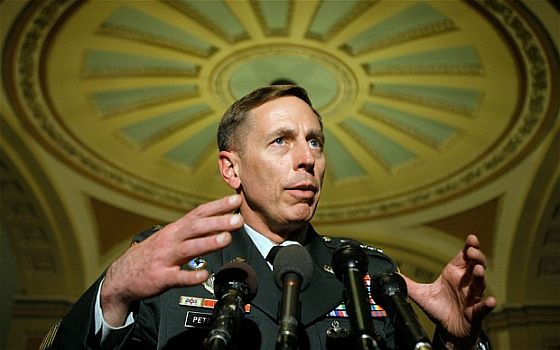
Mrs Kelley, a mother-of-three and unpaid “social liaison” for the US military in Tampa, is said to have spared no expense at such parties to honour top brass stationed at nearby US Central Command. She was pictured at one event at her $1.2 million mansion in 2010 with Gen Petraeus, who arrived in a 28-man police motorcycle escort.

No wonder Petraeus has been dubbed King David.

Spencer Ackerman and Noah Shachtman write:

If there’s a possible silver lining to this rather weird and icky cloud, it’s that these scandals might provoke a reevaluation of how the military treats its highest-ranking general officers. Today, many three and four stars are pampered like British royals – and we all know the kind of trouble those Windsors get themselves into.

“I worry about a creeping entitlement culture,” a former senior military officer tells Danger Room. “They’re so far removed from the daily realities – everything’s taken care of. There’s too many bells and whistles, too many perks,” says the former officer. “They’re ferried from place to place in black SUVs. Some of them have their own airplanes. Aides make their dinner reservations, get their clothes cleaned even cook their dinners. Many guys running big corporations aren’t living this large. And it all seems perfectly normal to them.”

Peeling away the entourages might bring some generals back down to the plane of mere mortals.

Americans have a very confused relationship with privilege. This country was founded as a republic because the idea anyone should be subject to rule under a monarch offended the conception that “all men are created equal.” But rather than completely rejecting the idea that some people can assume the right to rule over others, the preference has often seemed that “equality” can consist of common access to royal power. No one can be born a king but everyone can become a king. And thus presidents become invested with regal authority and the ability to start wars — not an actual legal right but a kind of cultural right that naturally belongs to whichever king currently rules from his white palace.

Facebooktwittermail

Neuroscience and architecture

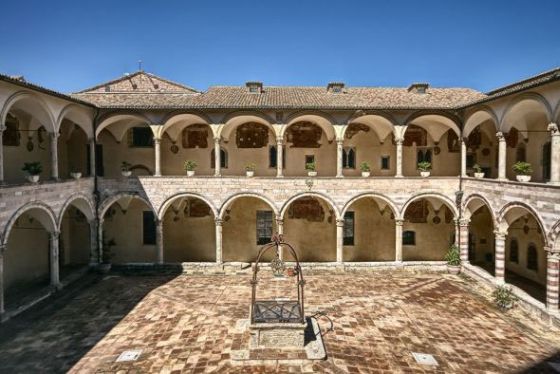
The cloister of the basilica of Assisi.

Emily Badger writes: Architects have been talking for years about “biophilic” design, “evidence based” design, design informed by the work of psychologists. But last May, at the profession’s annual convention, John Zeisel and fellow panelists were trying to explain neuroscience to a packed ballroom.

The late-afternoon session pushed well past the end of the day; questions just kept coming. It was a scene, Zeisel marveled—all this interest in neuroscience—that would not have taken place just a few years earlier.

Zeisel is a sociologist and architect who has researched the design of facilities for Alzheimer’s patients. Architects, he explains, “understand about aesthetics; they know about psychology. The next depth to which they can go is understanding the brain and how it works and why do people feel more comfortable in one space than another?”

This is an admittedly abstract concept. To help explain, architects often tell this story: Early in his career, when he was still struggling to find a cure for polio, Jonas Salk retreated to Umbria, Italy, to the monastery at the Basilica of Assisi. The 13th-century Franciscan monastery rises out of the hillside in geometric white stone, with Romanesque arches framing its quiet courtyards. Salk would insist, for the rest of his life, that something about this place—the design and the environment in which he found himself—helped to clear his obstructed mind, inspiring the solution that led to his famous polio vaccine.

“He really thought there was something to this,” says the architect Alison Whitelaw, “that the quality of the built environment could affect the performance of the brain.” [Continue reading…]

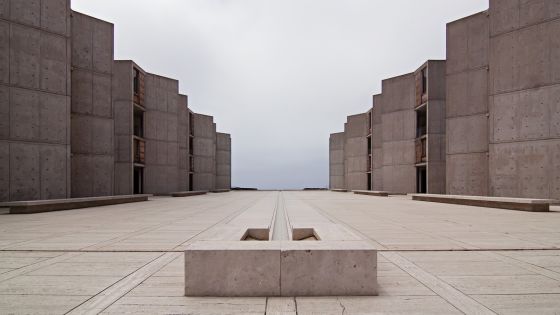
Salk Institute

If the idea that changes in the environment could bring about changes in the brain is a revelation, it’s worth drilling into the suppositions that it upturns, for it can only challenge the idea that somehow we might be unaffected by what’s around us.

Is anyone actually so oblivious to the impact of their surroundings?

If architecture often seems poorly attuned to human needs, this probably has less to do with insufficient input from neuroscientists and much more to do with what is invariably the case: that the creators of public spaces rarely spend a significant portion of their own lives occupying their own creations.

However Jonas Salk was inspired by the monastery in Assisi, it’s frankly hard to compute how that translated into the desolate features of the Salk Institute.

No doubt we should try and reap the rewards of whatever understanding neuroscience can provide, but mindful that it can only provide information. The creativity that infuses life into artistic creations requires more than the aggregation of information.

Facebooktwittermail

Is it the Petraeus or the Kelley Affair?

What quickly became known as the Petraeus Affair has now escalated dramatically in its scope. The FBI investigation that was instigated by a cyber-stalking complaint made by Jill Kelley, a volunteer social liaison to MacDill Air Force Base in Tampa Bay, Florida, has now revealed that Kelley and the top U.S. commander in Afghanistan, General John Allen, exchanged between 20,000 and 30,000 messages from 2010 to 2012. That would be an average of something like 30 messages a day!

Reuters reports: Defense Secretary Leon Panetta told reporters flying with him to Australia that he had asked that Allen’s nomination to be Commander of U.S. European Command and Supreme Allied Commander Europe be delayed “and the president has agreed.”

President Barack Obama has put the nomination on hold, the White House said on Tuesday.

Allen, who is now in Washington, was due to face a Senate confirmation hearing on Thursday, as was his successor in Afghanistan, General Joseph Dunford.

The FBI referred the case to the Pentagon on Sunday and Panetta directed the Defense Department’s Inspector General to handle the investigation. Panetta informed the top Republican and Democrat on the Senate Armed Services Committee during the flight to Australia. The House Armed Services Committee was also notified.

The U.S. defense official said that Allen denied wrongdoing and that Panetta had opted to keep him in his job while the matter was under review – and until Dunford can be confirmed to replace him, a process that gains urgency given the cloud the scandal could cast over the mission in Afghanistan.

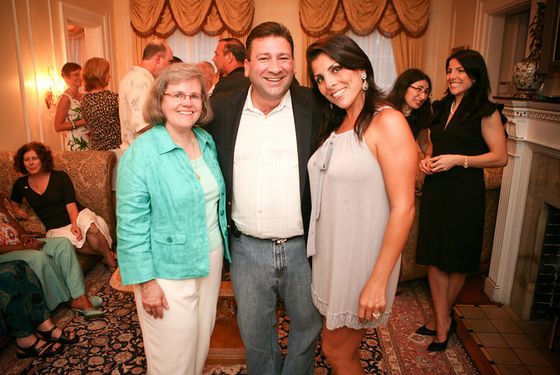
Jill and Dr. Scott Kelley alongside Holly Petraeus


A rightwing blog, The Conservative Tree House, provides a useful summary of the story so far. A new question likely to emerge in Congressional hearings on the Benghazi attack, is whether the CIA is now circumventing Executive Order 13491 — which prohibits the CIA from operating detention facilities — by outsourcing such operations to contractors.

So Jill Kelley, a Petraeus family friend, began receiving odd and harrassing e-mails about her relationship with CIA director General David Petraeus:

“More like, ‘Who do you think you are? … You parade around the base … You need to take it down a notch,’” according to the source, who was until recently at the highest levels of the intelligence community and prefers not to be identified by name.

Kelley then reaches out to a family friend who is by profession in the FBI. She asks if these unsourced e-mails reach the level of cyber-stalking.

The FBI “friend” takes her to a field office where he puts her in contact with the “cyber-crimes” division/agents. There they essentially come to the conclusion that the statute on cyber-stalking does actually seem to apply, so they open a preliminary case.

The first step in that aspect of the case is to back-check the IPs etc to find the origin of the e-mails to Kelley. That investigative part finds Paula Broadwell as the origin of the e-mails to Kelley. So the FBI gets a subpoena to dig further into the Broadwell electronic mail accounts. *Note the investigation at this point is into Paula Broadwell*

During the research of her communication it becomes apparent that she is in contact with CIA Director General David Petraeus on some personal level.

While this is occuring, the original FBI friend (unknown) of Kelley is asking the Cyber division people on the case for updates. They provide him some information based on professional courtesy. He in turn then relays this information to Jill Kelley herself, who then begins to inform her friend, General Petraeus, of the source. Essentially telling Petraeus “heads up” this woman you know has been identified as the origin of threatening e-mails to me. (*Note* whether Kelley knew of the affair aspect at this time is unknown).

Simultaneously, the FBI friend of Kelley sends a personal, perhaps flirtatious, picture to Kelley that the FBI becomes aware of (they are monitoring Kelley’s communication). The FBI, is not comfortable with the “non-professional” relationship between the FBI friend and Kelley, and they inform him he is ‘cut out’ of the story. (The FBI probably know that Kelley is also back-channelling information from this guy to her friend Gen Petraeus – any investigator would not like this loss of control). [Continue reading…]

Facebooktwittermail

Israel considers ‘reformatting’ Gaza

Once again, as Israel’s leaders contemplate the systematic slaughter of Palestinians they choose a cold and colorless metaphor: “Israel must perform a reformatting of Gaza, and rearrange it,” says Home Front Defense Minister Avi Dichter — as though the Gaza Strip were a computer disc whose contents could painlessly be erased.

What would “reformatting” look like according to Dichter?

Operation Defensive Shield — the IDF’s assault on the West Bank during the Second Intifada in 2002. That was when the slaughter in Jenin became too much even for George Bush to support, though his demands that Ariel Sharon must withdraw his forces “without delay” went unheeded.

The New York Times then reported:

Describing a visit to the Jenin camp, the United Nations envoy to the Middle East, Terje Roed-Larsen, said at a news conference here today: “We saw children looking for their parents. We saw fathers, brothers, sisters digging in the rubble in order to find the corpses of their dear ones.”

Surveying the wreckage at the camp on Thursday, Mr. Roed-Larsen called the scene “horrifying beyond belief.”

“Combating terrorism does not give a blank check to kill civilians,” he said…

The Times of Israel now reports:

The Israeli army is preparing for a ground incursion into Gaza and will launch it unless rocket fire from the Strip ends, Education Minister Gideon Sa’ar said during a visit to a school in Sderot on Monday.

“We have seen the escalations on the Gaza border increase in frequency over the past year and we need to put an end to them,” said Sa’ar a senior Likud official with close ties to the prime minister. “All the preparations for a wide-scale ground operation are being made. Unless the [missile] fire stops, such an operation will be launched.”

Sa’ar said that measures to gain international approval for an operation similar to 2008′s Cast Lead are already under way.

Defense Minister Ehud Barak addressed the possibility of such an incursion too, though more subtly. During an air defense drill Barak said actions against Hamas “may intensify and expand.”

On Monday, Barak made it clear that Israel would not hesitate to reenter Gaza. “If we are forced to go back into Gaza in order to deal Hamas a [serious] blow and restore security for all of Israel’s citizens, then we will not hesitate to do so,” he said.

The Ma’an News Agency reports: The Hamas government has filed a complaint to the UN against Israeli attacks on the Gaza Strip, a spokesman said.

Taher al-Nunu said government called on UN Secretary General Ban Ki-moon to pressure Israel to stop its attacks on civilians in Gaza.

Israeli tanks shelled Gaza City on Saturday killing four civilians and injuring at least 25. Israel’s army said it was responding to a missile attack on an Israeli military jeep which injured four soldiers.

Gaza factions fired dozens of rockets into Israel in response to the deaths, with Israel launching an airstrike early Sunday which killed two members of Islamic Jihad’s military wing.

Israel launched multiple airstrikes on the Gaza Strip overnight Sunday, with no injuries reported, and 11 rockets have been fired from Gaza since Monday morning. One rocket struck a home in the city of Netivot at around 7 a.m., causing material damage.

The Salafi organization, the Shura Council of the Mujahedeen, claimed that rocket and Israel promised a tough response.

“We have a full box of tools … that we have not yet used,” Israeli Vice Prime Minister Moshe Yaalon told Army Radio. “We will need to toughen our response until Hamas says ‘enough’ and ends the fire.”

Facebooktwittermail

Petraeus, Obama, extramarital affairs, and extra-judicial killings

Readers here might wonder why, up until now, I have posted nothing on the Petraeus affair. After all, it’s the story now gripping Washington.

The sudden departure of the director of the CIA in such ignominious circumstances marks not only the apparent end of a much celebrated career but likewise the end of speculation that Petraeus might be a latter-day Eisenhower and a future president.

In many ways the story appears utterly mundane. A middle-aged man succumbs to the irresistible attraction of a younger woman who apparently had an insatiable appetite for listening to the general talk about himself. Vanity heralds foolishness.

But there’s another story much more compelling yet which most likely will never be told. In the same week that Petraeus tendered his resignation and President Obama took 24 hours to respond, both men were involved in a decision of much greater magnitude: the issuing of orders to kill three Al Qaeda suspects. In a drone attack just outside the capital of Yemen on Wednesday morning, Adnan al-Qadhi, Rabeaa Lahib and Radwan al-Hashdhi were killed and others were injured including a boy.

It seems reasonable to assume that President Obama’s decision to authorize a drone strike in Yemen this week weighed much less heavily on his mind than the departure of the CIA chief. The incineration of Adnan al-Qadhi and his associates was simply of less consequence than the relationship between General Petraeus and Paula Broadwell.

Washington becomes ever more like The Sopranos, where casual killings provoke less anguish than fraught family relations.

The Washington Post reports:

Petraeus, who retired from the military last year, is still subject to the Uniform Code of Military Justice, which classifies adultery as a crime.

Practically speaking, however, the odds are extremely low that the military would prosecute a retired officer for having an affair, said Eugene R. Fidell, a prominent military law expert who teaches at Yale University.

“They’re as close to zero as you can get,” Fidell said. “It would have to be a grave matter before the executive branch would prosecute a retiree.”

Petraeus married Holly two months after graduating from West Point. His courtship was seen as audacious because of her father’s rank at the elite military academy. They have two children, Stephen, who became an Army officer, and Anne.

Petraeus has frequently praised his wife in public appearances for her sacrifices and contributions to his career, and he characterized his return to Washington as an opportunity for them to be closer after his years-long assignments overseas.

Facebooktwittermail

Assad: ‘We could finish everything in weeks’

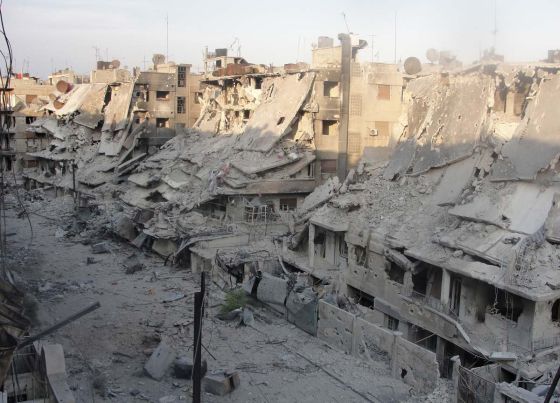
President Bashar al-Assad: 'The problem is that those terrorists are fighting from within the cities, and in the cities you have civilians. When you fight this kind of terrorists, you have to be aware that you should do the minimum damage to the infrastructure and minimum damage to the civilians because you have civilians and you have to fight, you cannot leave terrorists just killing and destroying. So, this is the difficulty in this kind of war. ' Photo: Homs, October 7, 2012

This is part of George Bush’s legacy: Bashar al-Assad’s war on terrorism.

“Terrorism” has become the glue that binds together global leaders of almost every political persuasion.

There is no civil war in Syria, no revolution or armed uprising — there are simply “terrorists” foreign and domestic who are serving as proxies for the powers the have ganged up against and demonized the Syrian president, a modest man who only holds power because this is the will of the people.

There might not be too many journalists willing to go along with this narrative, but Russia Today not only provided an interviewer willing to echo Assad’s claim that his enemy is terrorism — Sophie Shevardnadze wanted to know: “how much time do you need to crush the enemy?”

Facebooktwittermail

Provocation above the Persian Gulf

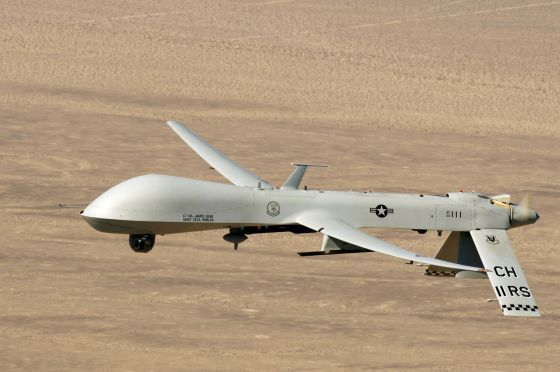
Suppose Iranian drones were spotted flying in international airspace close to New York City and U.S. air force jets were sent to intercept them. Would the drones simply be kept under surveillance so long as they remained outside U.S. territory? Or might warning shots be fired? Or might they simply be shot down?

Whichever of those outcomes transpired, no one would be in any doubt about who was being confrontational: the Iranians. And if shots were fired by Americans, their action would be described defensive.

Similarly, when U.S. drones operate just a few miles outside Iranian air space, it’s clear who is being confrontational — at least it’s clear unless you happen to be a reporter covering the Pentagon.

After two Iranian Su-25 fighter jets “fired on” an unmanned U.S. Air Force Predator drone in the Persian Gulf last week, U.S. military intelligence analysts were unsure whether the Iranian pilots missed their target or were simply firing warning shots.

CNN’s Barbara Starr, who treats the word of Pentagon officials as gospel, wrote: “But as one of the officials said, ‘it doesn’t matter, they fired on us.'”

Since the claim was that of an official, not the observation of the reporter herself, she should have described the official’s assertion as that: a claim that it makes no difference what the Iranian’s intended.

But since it’s neither the job of Pentagon spokesmen nor reporters to attempt to read the minds of Iranian pilots, then it’s better to stick with the facts.

U.S. drones were operating just outside Iranian air space and Iranian jets fired shots. The purpose of the shooting is unknown but we do know that the CIA has previously operated a fleet of surveillance drones inside Iran and famously lost one.

The New York Times reports:

The shooting, which the Pentagon said occurred Nov. 1 — five days before the American presidential election — was the first known instance of Iranian warplanes firing on an American surveillance drone.

George Little, the top Pentagon spokesman, attributed the weeklong silence on the incident to restrictions on discussing classified surveillance missions. But it doubtless will raise questions about whether that silence had been meant to forestall an international controversy before the election. Had a decision been made to officially disclose the shooting, it might have been viewed as a provocative or even partisan political act before the voting.

What none of the Pentagon reporters are willing to consider is that the operation of the drone was itself an act of provocation and that if the Iranians merely fired warning shots this indicated that they were not eager to rise to the bait.

The idea that the U.S. or Israel might actively attempt to trigger a war with Iran is not simply an obsession of those observers who persistently warn about “false flag” operations. It was one of the U.S. navy’s own top political advisers who in 2007 warned that Vice Adm. Kevin J. Cosgriff appeared to be intent on engineering a Tonkin Gulf type incident by sailing “three ‘big decks,’ as aircraft carriers are known, through the Strait of Hormuz — to put a virtual armada, unannounced, on Iran’s doorstep. No advance notice, even to Saudi Arabia and other gulf allies.”

It may indeed not matter whether the Iranians were firing warning shots or trying to bring down the unmanned aircraft; what matters more is why a drone was being flown in such a sensitive location right before the election.

Facebooktwittermail

Is Obama both entirely powerless and utterly essential?

Matt Stoller asks: What is gained by not supporting Obama for reelection? Simply put, there is power in resistance. Organized people that distrust and constrain their political leaders can have a significant impact on policymaking.

The President does not sit in the Oval Office and play a video game where he governs the country. The Presidency is constrained by the various checks and balances in our governance system, notably a partisan opposition and public opinion. Under Obama, that partisan opposition has been a right-wing Republican force buttressed by well-funded Tea Party activists. This has made it far easier for Obama to implement conservative policies. Under Mitt Romney, the Democrats will be far more likely to oppose Romney from the left, and the public will be much more likely, as it was under Bush, to mistrust its President and demand social justice.

One of the more intriguing arguments in this line came from a Canadian UAW member, Joe Emersberger, who actually tried measuring the difference between recent Republican and Democratic Presidents. He noted that Ronald Reagan was the worst President for life expectancy growth, income growth of the top one percent, deunionization, and closing the racial gap in life expectancy. But the second worst – for deunionization and share of income going to the top one percent – was actually Bill Clinton, followed by Barack Obama. George Bush did substantially better than those two on these measures, and surpassed Clinton in closing the racial life expectancy gap. This is quite possibly accurate – Clinton’s changed the country with NAFTA, a policy nearly as hostile to labor rights as Reagan’s embrace of union busting. George W. Bush though faced a hostile public and a partisan Democratic opposition. Certainly, this is not conclusive evidence, and I’m sure political scientist Larry Bartels would lay out different data. But it’s worth considering the power of this “resistance effect”. Partisan opposition isn’t worth nothing, and there’s no sense pretending it doesn’t matter.

In other words, as Glen Ford put it, Obama is not necessarily the lesser of two evils, he may be the “more effective evil”. He puts the left to sleep (whether by defunding progressive groups or allowing the destruction of Occupy encampments), and the left is where the resistance to imperial tendencies currently resides. It is this problem, of how to organize large groups of people into a political force for justice, that should concern us. [Continue reading…]

I have my doubts about the assumption that a President Romney would serve as the trigger of a “resistance effect.”

Firstly, let’s not overestimate how much resistance George W Bush provoked. Opposition to the war in Iraq accomplished very little — neither should we forget that Obama didn’t bring the troops home, the Iraqis told them to leave.

Romney will, I have no doubt, have learned plenty of useful lessons from Bush’s failures and far from being a figure who unintentionally mobilizes the left, I don’t find it difficult to see him bumbling through two terms without generating any large waves of opposition. (I don’t think, for instance, that the risk of him starting a war with Iran is as great as is feared. He would probably be more loyal to the Pentagon than Israel and the Pentagon’s opposition to such a war has been made crystal clear.)

However, he would also quite likely end up doing something of particularly long-lasting and damaging consequence: appoint as many as four Supreme Court justices, determining the political complexion of the court for as much as the next twenty-five years.

Where does the Supreme Court fit into Stoller’s argument? It doesn’t.

Facebooktwittermail

Climate change and Americanism

Katherine Stewart writes: Now, you don’t have to believe that Earth was created in six hectic days in order to be skeptical about climate science, but a large number of climate science deniers also happen to be evolution deniers.

What exactly is the theology of climate science denial? The Cornwall Alliance – a coalition whose list of signatories could double as a directory of major players in the religious right – has a produced a declaration asserting, as a matter of theology, that “there is no convincing scientific evidence that human contribution to greenhouse gases is causing dangerous global warming.”

It also tells us – on the firm foundation of Holy Scriptures – that policies intended to slow the pace of climate change represent a “dangerous expansion of government control over private life”. It also alerts us that the environmental movement is “un-Biblical” – indeed, a new and false religion. If the Cornwall Declaration seems like a tough read, you can get what you need from the organization’s DVD series: “Resisting the Green Dragon: A Biblical Response to one of the Greatest Deceptions of our Day.”

Now, this isn’t the theology of every religion in America, or of every strain of Christianity; not by a long stretch. Most Christians accept climate science and believe in protecting the environment, and many of them do so for religious as well as scientific reasons. But theirs is not the theology that holds sway in the upper reaches of the Republican party, or moves your average climate science denier Chuck. As Rick Santorum explained at an energy summit in Colorado:

“We were put on this Earth as creatures of God to have dominion over the Earth … for our benefit not for the Earth’s benefit.”

For anyone with even the most basic knowledge of Christian teachings, one of the glaring contradictions in the vigorous defense mounted by many right-wing American Christians in response to what they present as secular threats to their faith, is the fact these defenders of the faith are clearly willing to discount many of their own faith’s foundational principles.

Love of God and to love your neighbor as yourself are, the New Testament declares, the supreme commandments to followers of Christ. But how do these commandments jive with declarations such as this, from Pastor John Hagee:

This nation was not built for atheists or by atheists. It was built by Christian people who believed in the Word of God. To the atheists watching this telecast, if our belief in God offends you, move. There are planes leaving every hour on the hour, going every place on planet earth. Get on one, we don’t want you and we won’t miss you, I promise you.

Maybe the way Hagee interprets the injunction to love ones neighbor is that it requires one to first evict those neighbors one can’t love.

What Hagee’s words and those that spout from the mouths of millions of like-minded Americans reveal, is that the faith they are defending is not Christianity. It is Christian Americanism. It is the worship of this country and its creators sustained through a theological ideology designed to sustain the myths that America is blessed by God; that it was a land with no people given to people with no land; and that its settlers’ right to take what was not theirs derived from their conviction that they were receiving gifts from God.

What naturally flows from this belief in God-gifted land is a conception of divinely ordained ownership and the belief: we can do with this land what we damn well please.

What those who warn about climate change and other environmental perils are challenging has less to do with an interpretation of scientific data and much more to do with a religiopolitical conviction: we own this land.

Facebooktwittermail

America’s skewed perception of threats

The Washington Post reports: There’s one foreign policy fact that President Obama and Mitt Romney dare not mention this election season. No American general will speak of it. Nor will it displace the usual hot topics at Washington’s myriad foreign policy think tanks.

Measured by most relevant statistics, the United States — and the world — have never been safer.

Obama says terrorist networks remain the greatest threat to the United States. “We have to remain vigilant,” he warned recently. But global terrorism has barely touched most Americans in the decade since Sept. 11, 2001, with 238 U.S. citizens killed in terrorist attacks, mostly in war zones, according to the National Counterterrorism Center’s annual reports. By comparison, the Consumer Product Safety Commission found that 293Americans were crushed during the same stretch by falling furniture or televisions.

Beyond the United States, global statistics point undeniably toward progress in achieving greater peace and stability. There are fewer wars now than at any time in decades. The number of people killed as a result of armed violence worldwide is plunging as well — down to about 526,000 in 2011 from about 740,000 in 2008, according to the United Nations.

The candidates’ rhetoric, however, suggests that the globe is ablaze. “The world is dangerous, destructive, chaotic,” Romney said this summer in a speech to the Veterans of Foreign Wars convention in Nevada. Obama, though less apocalyptic than his Republican challenger, routinely talks about the critical need for “tested and proven” leadership in a “world of new threats and new challenges.”

It’s always useful to be reminded that the average American is more at risk of being crushed by furniture than killed by a terrorist, but there’s a gaping hole in this report’s analysis of a world that is supposedly becoming safer: it looks at threats purely in terms of those involving human violence.

It’s quite possible that there will never be another attack on America comparable with 9/11, but as for the risk of this nation getting pummeled by another Sandy — that’s not a question of if but when.

To the extent that an effective defense can be mounted, neither the Pentagon nor the defense industry are likely to contribute much to that effort.

What serves the interests of both the defense and oil industries is to sustain the idea that the dangers America faces all come from overseas instead of recognizing that the greatest threat we face comes from our own self-destructive way of living.

Facebooktwittermail

The creation of a U.S.-approved Syrian government in exile

Is American diplomacy an oxymoron?

The Syrian opposition has been notoriously fractured, so the goal of forging unity among what have hitherto been disparate groups clearly makes sense. What makes no sense but should be no surprise is Washington’s typical heavy-handedness in trying to achieve this goal.

An upcoming Qatar meeting “will include dozens of opposition leaders from inside Syria, including from the provincial revolutionary councils, the local ‘coordination committees’ of activists, and select people from the newly established local administrative councils.” So far so good. But then comes this message from a senior Obama administration official:

“We need to be clear: This is what the Americans support, and if you want to work with us you are going to work with this plan and you’re going to do this now,” the official said. “We aren’t going to waste anymore time. The situation is worsening. We need to do this now.”

Stand to attention and follow our instructions because America is running out of patience.

Is that the kind of admonition that’s going to smooth out all the discord? I don’t think so. What it is, is the imperial American way.
Foreign Policy‘s blog, The Cable, reports: Syrian opposition leaders of all stripes will convene in Qatar next week to form a new leadership body to subsume the opposition Syrian National Council, which is widely viewed as ineffective, consumed by infighting, and little respected on the ground, The Cable has learned.

The State Department has been heavily involved in crafting the new council as part of its effort oust Syrian President Bashar al-Assad and build a more viable and unified opposition. In September, for instance, Secretary of State Hillary Clinton met with a group of Syrian activists who were flown in to New York for a high-level meeting that has not been reported until now.

During the third and final presidential debate, Republican nominee Mitt Romney criticized President Barack Obama’s Syria policy as a failure to show “leadership” in laying the groundwork for the post-Assad era and called for “a form of council that can take the lead in Syria.”

In fact, over the last several months, according to U.S. officials and Syrian opposition figures, the State Department has worked to broaden its contacts inside the country, meeting with military commanders and representatives of local governance councils in a bid to bypass the fractious SNC.

Many in the SNC are accordingly frustrated with the level of support they’ve gotten in Washington. “The Obama administration is trying to systematically undermine the SNC. It’s very unfortunate,” one SNC leader said told The Cable.

But U.S. officials are equally frustrated with an SNC they say has failed to attract broad support, particularly from the Alawite and Kurdish minorities. The new council is an attempt to change that dynamic. Dozens of Syrian leaders will meet in the Qatari capital, Doha, on Nov. 3 and hope to announce the new council as the legitimate representative of all the major Syrian opposition factions on Nov. 7, one day after the U.S. presidential election.

The Obama administration sees the new council as a potential interim government that could negotiate with both the international community and – down the line – perhaps also the Syrian regime. The SNC will have a minority stake in the new body, but some opposition leaders are still skeptical that the effort will succeed.

Facebooktwittermail

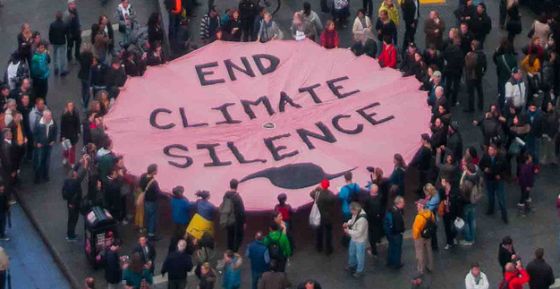
Climate change and climate silence: ‘I’m surprised it didn’t come up in one of the debates’

‘I’m surprised it didn’t come up in one of the debates,’ said many Americans in response to the fact that President Obama and Mitt Romney didn’t have a single word to say about climate change.

But Obama claims he was surprised too — the quotation above actually comes from him.

Surprised that it got left out of the talking points he had to memorize?

84% of Democrats regard global warming as a serious issue and yet Obama didn’t use any of many easy opportunities to weave this into the debates, even though it has been discussed in every presidential debate for over three decades. Not only has climate change been largely left out of both Obama and Romney’s campaigns but each candidate has championed the accelerated development of fossil fuels.

In presidential politics, it’s not that the issue of climate change has failed to be advanced — it is not even being addressed as seriously as it was 24 years ago!

As David Roberts noted: The questioner doesn’t mamby-pamby around with he-said she-said, he states flatly that “most scientists” agree and that future generations are at risk.

And neither candidate bothers with dissembling or dodging. Both acknowledge the problem and promise to address it.

In 1988! In the ensuing 24 years, U.S. politics has moved backward on this issue.

There’s lots being written these days about “climate silence.” There’s a grassroots protest underway. Coral Davenport has a piece on it at National Journal. Mike Grunwald touches on it at Time. Eugene Robinson has editorialized on it at The Washington Post. Tom Zeller Jr. has covered it, and so have ClimateWire and the L.A. Times. But by far the smartest take I’ve seen yet is from the only person in the cable news universe who takes this issue seriously, Chris Hayes:

Visit NBCNews.com for breaking news, world news, and news about the economy

Facebooktwittermail

The Benghazi attack and what the White House knew

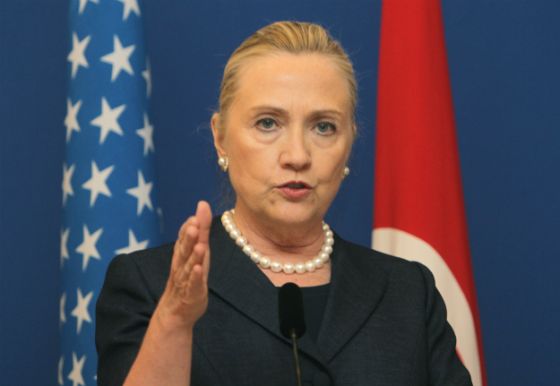
Reuters reports: U.S. Secretary of State Hillary Clinton said on Wednesday a Facebook post in which an Islamic militant group claimed credit for a recent attack on the U.S. mission in Benghazi, Libya did not constitute hard evidence of who was responsible.

“Posting something on Facebook is not in and of itself evidence. I think it just underscores how fluid the reporting was at the time and continued for some time to be,” Clinton said during an appearance with the Brazilian foreign minister at the State Department.

The report also reveals that the White House was informed by email about the attack while it was occurring — though this isn’t quite a smoking gun from a cover-up. Forty-nine minutes after first reporting the attack and that Ambassador Stevens and other staff were in the compound safe haven, a follow-up report said that “the firing at the U.S. Diplomatic Mission in Benghazi had stopped and the compound had been cleared.”

Michael Hirsh writes: It was, from the start, about as hard an intelligence problem as you can find. The date was September 11, and the CIA was stretched thin, monitoring anti-American protests in no fewer than 54 countries that day, according to Director of National Intelligence Jim Clapper. Post-Gaddafi Libya itself was still chaotic, caught up in the fog of war, and indeed Ambassador Chris Stevens, at great personal risk, had journeyed to his old Arab Spring-era stomping ground in Benghazi to assess the situation himself. Still, Clapper recently told an annual conference of intelligence professionals that there was no warning to Stevens or anyone else that he was about to be targeted by an organized extremist attack.

So in the ensuing days, the fog lifted only very gradually. The intelligence community did not see a clear way to explain the deaths of Stevens and three other Americans. And as the probe advanced they began shifting their assessment dramatically. Four days after the attacks, on September 15, intel briefers sent U.N. Ambassador Susan Rice off to tape the Sunday talk shows with talking points that suggested Stevens’ death was the result of “spontaneous” protests at the U.S. Embassy in Cairo against a short film made in California lampooning the Prophet Mohammad. And that’s what Rice said on CBS’s Face the Nation “based on the best information we have to date,” as she put it. Rice added, however, that “soon after that spontaneous protest began outside of our consulate in Benghazi, we believe that it looks like extremist elements, individuals, joined in that — in that effort with heavy weapons.”

“It was clear from the outset that a group of people gathered that evening. A key question early on was whether extremists took over a crowd or if the guys who showed up were all militants,” says an intelligence official involved in the Benghazi assessment. “It took time — until that next week — to sort through varied and sometimes conflicting accounts to understand the group’s overall composition.”

By the following week, however, the DNI came to believe that there had been no protest at all. “That was genuine fog of war issue,” said one intelligence professional involved in the Benghazi assessments. “Press reports at the time indicated there had been. It took about a week or so to iron that out.” On September 28, Shawn Turner, spokesman for Clapper’s office, said in a statement that as U.S. intelligence learned more about the attack, “we revised our initial assessment to reflect new information indicating that it was a deliberate and organized terrorist attack carried out by extremists.”

To supporters of Mitt Romney in the chattering classes and in the House of Representatives, where an investigative committee has been hard at work probing the attacks and, apparently, leaking information, there is a lot more going on here. They see a deliberate effort by the Obama Administration to play down evidence that new al Qaeda-linked terrorist groups were at work killing Americans. After all, one of the president’s big talking points in a tough election race is that he’s killed Osama bin Laden and decimated al Qaeda.

It sounds very plausible. There’s only one problem with that view: No evidence has surfaced so far to support the idea that the Obama Administration deceived the public deliberately.

CBS News reports: A Tunisian man who was arrested in Turkey this month with reported links to the attack on a U.S. consulate in Libya is facing terrorism charges, his lawyer said Wednesday, as an Egyptian official said a militant suspected of involvement was killed in clashes in Cairo.

An Egyptian interior ministry source told CBS News’ Alex Ortiz the suspect in Egypt, known only by his first name, Hazem, was killed after neighbors summoned police for a suspicious resident. The police came in and exchanged fire with the target. The man blew himself up in his apartment during the engagement with security forces.

It is unclear whether Hazem was Egyptian, or just living in Cairo.

An Egyptian official told the Associated Press the man recently returned from Libya and kept weapons in his hideout. The official, who spoke on condition of anonymity because he was not authorized to brief reporters, said an investigation into the man’s possible involvement in the consulate attack is under way.

In Tunisia, suspect Ali Harzi was repatriated on Oct. 11 by authorities in Turkey, and a judge issued his arrest warrant, lawyer Ouled Ali Anwar told The Associated Press. He said his client was told by a judge Tuesday that he has been charged with “membership of a terrorist organization in a time of peace in another country.”

U.S. officials told CBS News’ David Martin Wednesday that Harzi is not considered to be one of the ring leaders of the Benghazi attack; So far the FBI has not been allowed to question him

A person who saw Harzi’s court dossier told The Associated Press that the file links him to the Sept. 11 attack on the U.S. consulate in Benghazi that left Ambassador Christopher Stevens and three other Americans dead.

He said Harzi is one of two Tunisians reportedly arrested Oct. 3 in Turkey when they tried to enter the country with false passports. The person spoke on the condition of anonymity because he was not authorized to release the information. Harzi’s alleged role in the attack is not clear.

Anwar denied there was any evidence that Ali was implicated in the attacks. He added his client was not using a fake passport, saying he was a “scapegoat to satisfy the Americans.”

Facebooktwittermail

U.S. creates database mapping where and when it can kill its enemies

The Obama administration clearly doesn’t like the name “kill list” applied to the individuals it has targeted for remote-control execution. It has instead crafted an Orwellian alternative: “disposition matrix.”

A Washington Post report on this “blueprint for pursuing terrorists” doesn’t explain how it works until paragraph 25.

The database is meant to map out contingencies, creating an operational menu that spells out each agency’s role in case a suspect surfaces in an unexpected spot. “If he’s in Saudi Arabia, pick up with the Saudis,” the former official said. “If traveling overseas to al-Shabaab [in Somalia] we can pick him up by ship. If in Yemen, kill or have the Yemenis pick him up.”

The report says:

For an administration that is the first to embrace targeted killing on a wide scale, officials seem confident that they have devised an approach that is so bureaucratically, legally and morally sound that future administrations will follow suit.
[…]
In focusing on bureaucratic refinements, the administration has largely avoided confronting more fundamental questions about the lists. Internal doubts about the effectiveness of the drone campaign are almost nonexistent. So are apparent alternatives.

And the report says nothing about the most fundamental issue: how does the U.S. government determine “guilt” and issue death sentences without any legal process? Multi-agency processes of review and approval in which the accused has no defense are not means through which it can be determined that someone deserves to die; they are no more than legal cover designed to protect the executioners from legal culpability.

If government officials are ever seriously questioned about the principles on which they operate this policy, I expect they will employ the same logic that Israelis have used: that no one is targeted because of actions they have already committed; it will always be on the basis of the threat that they supposedly pose. That logic is meant remove the motive of revenge which would clearly entail disregard for legal process. Instead, execution is turned into a form of risk management. In other words, people are being killed because they are judged as likely to commit crimes at some point in the future.

Facebooktwittermail

The Arab Struggle

Even if the wave of upheaval reshaping the Middle East and North Africa was not inspired by Western puppet-masters, the fact that it was quick to be named the Arab Spring clearly sent out the wrong message and fueled some false expectations. The brand name was naively and glibly applied.

Smooth transitions to democracy have proved elusive and thus Spring been turned by some to Winter. Anyone who now finds it deeply depressing to survey the condition of the region should look at Hussein Agha and Robert Malley’s latest piece in the New York Review of Books. It reads like a long suicide note:

Darkness descends upon the Arab world. Waste, death, and destruction attend a fight for a better life. Outsiders compete for influence and settle accounts. The peaceful demonstrations with which this began, the lofty values that inspired them, become distant memories. Elections are festive occasions where political visions are an afterthought. The only consistent program is religious and is stirred by the past. A scramble for power is unleashed, without clear rules, values, or endpoint. It will not stop with regime change or survival. History does not move forward. It slips sideways.

Games occur within games: battles against autocratic regimes, a Sunni–Shiite confessional clash, a regional power struggle, a newly minted cold war. Nations divide, minorities awaken, sensing a chance to step out of the state’s confining restrictions. The picture is blurred. These are but fleeting fragments of a landscape still coming into its own, with only scrappy hints of an ultimate destination. The changes that are now believed to be essential are liable to be disregarded as mere anecdotes on an extended journey.

New or newly invigorated actors rush to the fore: the ill-defined “street,” prompt to mobilize, just as quick to disband; young protesters, central activists during the uprising, roadkill in its wake. The Muslim Brothers yesterday dismissed by the West as dangerous extremists are now embraced and feted as sensible, businesslike pragmatists. The more traditionalist Salafis, once allergic to all forms of politics, are now eager to compete in elections. There are shadowy armed groups and militias of dubious allegiance and unknown benefactors as well as gangs, criminals, highwaymen, and kidnappers.

Alliances are topsy-turvy, defy logic, are unfamiliar and shifting. Theocratic regimes back secularists; tyrannies promote democracy; the US forms partnerships with Islamists; Islamists support Western military intervention. Arab nationalists side with regimes they have long combated; liberals side with Islamists with whom they then come to blows. Saudi Arabia backs secularists against the Muslim Brothers and Salafis against secularists. The US is allied with Iraq, which is allied with Iran, which supports the Syrian regime, which the US hopes to help topple. The US is also allied with Qatar, which subsidizes Hamas, and with Saudi Arabia, which funds the Salafis who inspire jihadists who kill Americans wherever they can.

Further on the writers lament: “Something is wrong. Something is unnatural. It cannot end well.”

This tragic account begs a reasonable question: What were they expecting?

Or more widely I would ask of those who view Libya as being on the brink of anarchy and Syria on the road to a decade or more of civil war: If one rejects the idea that dictatorial rule can be justified in the name of stability, do you really believe that there can be such a thing as a smooth transition in which an iron grip gently yields?

Even now, journalists conjure up images of a political reconfiguration that in theory could be like a change of clothes where nothing more than a few creases need ironing out.

The proliferation of militant jihadi groups across the Arab world is posing a new threat to the region’s stability, presenting fresh challenges to emerging democracies and undermining prospects for a smooth transition in Syria should the regime fall.

Such a smooth transition might not always have been pure fantasy but it always seemed so improbable it should have been discounted — not given the weight of a prospect that could be undermined.

There never was an Arab Spring and thus now no Winter — it began and continues as a struggle.

Facebooktwittermail

Intelligence shows no planning for Benghazi consulate attack

ABC News reports: The latest intelligence assessment of the attack on the U.S. diplomatic mission in Benghazi indicates there was little if any pre-planning for it and that it was in part an opportunistic response to the protests at the U.S. Embassy in Cairo.

Ambassador Chris Stevens and three other Americans were killed in the attack, which has become a political hot potato in the presidential campaign with questions over when the Obama administration called the attack an act of terrorism.

“Right now, there isn’t any intelligence that the attackers pre-planned their assault days or weeks in advance,” said a U.S. intelligence official. “The bulk of available information supports the early assessment that the attackers launched their assault opportunistically after they learned about the violence at the U.S. Embassy in Cairo.” But the official added that “no one is ruling out that some of the attackers may have aspired to attack the U.S. in Benghazi.”

Republican lawmakers have seized on U.S. Ambassador to the U.N. Susan Rice’s comments on Sunday talk shows days on September 16 attributing the deadly Benghazi attack to spontaneous protests against an anti-Muslim film made in the U.S. that had been posted on the Internet. As more information emerged they pointed to the use of mortars and RPG’s in the attack as indicating it was not a spontaneous protest as the Obama administration had claimed, but an act of terrorism. [Continue reading…]

The boundary between ‘planned’ and ‘spontaneous’ is pretty fuzzy.

The New York Times has reported: “Benghazi militia leaders who know Ansar al-Shariah say it was capable of carrying out the attack by itself with only a few hours’ planning, and as recently as June one of its leaders, [Mohammed Ali] Zahawi, declared that it could destroy the American Mission.”

The same report also said:

Most of the attackers made no effort to hide their faces or identities, and during the assault some acknowledged to a Libyan journalist working for The New York Times that they belonged to the group. And their attack drew a crowd, some of whom cheered them on, some of whom just gawked, and some of whom later looted the compound.

The fighters said at the time that they were moved to act because of the video [Innocence of Muslims], which had first gained attention across the region after a protest in Egypt that day. The assailants approvingly recalled a 2006 assault by local Islamists that had destroyed an Italian diplomatic mission in Benghazi over a perceived insult to the prophet. In June the group staged a similar attack against the Tunisian Consulate over a different film, according to the Congressional testimony of the American security chief at the time, Eric A. Nordstrom.

For many Americans, the definition of terrorism is very broad. If Americans get attacked or killed by Muslims, it’s terrorism. The U.S. government also has its own legal definition of terrorism, but if the term is to retain any meaning at all, a distinction needs to be made between a violent protest and an act of terrorism.

The identities of the participants doesn’t determine whether an act of violence can be understood as an act of terrorism. If a few Salafists conduct an armed robbery of a store in Benghazi, even though they might have extreme views, it’s still just a robbery. Likewise, identifying the consulate’s assailants as members of Ansar al-Shariah does not in and of itself make the attack an act of terrorism — even though Americans died.

Even the fact that the attack involved the use of RPGs and mortars does not necessarily make this an act of terrorism. No doubt everyone in Benghazi knows where the U.S. consulate is located and if an Ansar al-Shariah leader had already been bragging that he could destroy the facility, it would hardly be surprising if a few of his followers had already figured out some of the logistics.

Terrorism is above all a macabre form of political theater. Acts of violence are designed to portray state power as impotent. The terrorists’ very limited power is concentrated into a dramatic event, which is why explosions serve such a purpose much more often than battles. From this perspective, the use of RPGs and mortars may say much more about the current state of Libya than the designs of the attackers.

Protest on the other hand is a participatory activity where the focus is more on the engagement than the outcome.

Did the Benghazi attackers/protesters have the intent to burn down the building? Probably. Did they hope to kill the U.S. ambassador? My guess is: probably not. In which case, in spite of the ongoing political debate this has stirred up in the U.S. presidential race, the contexts in which the attack should be placed are: 1) the fragile security state in a country that has yet to establish effective governance — those who claim Libya should already be much more stable just a year after Gaddafi’s death are either being naive or disingenuous, and 2) the political flux that is dramatically reshaping the whole region and within which power is being contested at many levels.

Or, to put it another way, the Americans who died in Benghazi happened to be in the wrong place at the wrong time.

Facebooktwittermail

Obama’s strategic drift

Rosa Brooks offers President Obama some tips on what to do if he gets re-elected:

1. Get a Strategy. No, really. We don’t currently seem to have one, grand or otherwise. We’ve got “the long war” — but we don’t seem to have a long game. Instead of a strategy, we have aspirations (“We want a stable Middle East”) and we have laundry lists (check out the 2010 National Security Strategy). But as I have written in a previous column, there’s no clear sense of what animates our foreign policy. And without a clear strategic vision of the world, there’s no way to evaluate the success or failure of different initiatives, and no way to distinguish the important from the marginal.

What does President Obama see as the one or two gravest threats to the United States? What are our one or two biggest opportunities? Is terrorism an existential threat to the United States, or a marginal threat, overshadowed by the long-term dangers posed by climate change, pandemics, and a highly manipulable global financial system? Should we focus on increasing ties in Asia, or focus on our neighbors in Central and South America? Is the United States trying to maintain global preeminence, even if it comes at the expense of other states — or are we trying to foster a global order in which the United States is but one of many strong countries, all constrained by a robust international network of laws and institutions?

If President Obama lacks a clear strategic foreign policy vision, it’s partly because the strategic planning shops within the White House’s National Security Staff (NSS) and the State Department have been marginalized and disempowered. Within the NSS, the Strategic Planning Directorate has been reduced to a speech-writing shop, without the clout to bring senior officials to the table for longer-term strategy discussions. At the State Department, the Policy Planning office — once run by such legendary figures as George Kennan and Paul Nitze — was handed off, after Anne-Marie Slaughter’s departure, to a young lawyer whose credentials include ample brains and a stint as a Clinton campaign aide, but no prior foreign policy experience.

If President Obama ekes out a victory on November 6, he should take a strategic pause. He should ensure that influential and credible people are appointed to lead the various strategic planning shops, and insist that his senior officials participate in a process to develop a clear, concise and articulable strategy, one that can guide future U.S. foreign policy and national security decisions.

All of this might be sound advice in the circumstances, but don’t Americans who are being asked to give Obama a second term deserve to already have a clear view of his strategic vision? The implicit promise here is: give me another four years and then I’ll tell you what I’m going to do. That’s not how democracy is supposed to work.

Obama’s lack of strategy is in fact the signature of his presidency — an approach which is far more reactive than directive. Early on he excused his lack of interest in prosecuting anyone for the crimes of the previous administration by claiming that he wanted to look forward, not back, but as a reactive president he is perpetually looking back.

As for why he has not been supplied with the kind of strategic thinking that could have given his first term more direction, this seems to stem from the way he responded differently to finding himself in similar circumstances as George W. Bush.

Both men entered office aware that they needed to come up with a way of handling their individual lack of experience. Bush opted to compensate by surrounding himself with strong-willed political veterans (and thereby created the space for a neoconservative takeover). Obama’s choices on the other hand seem to have been swayed by his own vanity. Rather than risk being outshone by anyone, he has generally opted to surround himself with sycophantic mediocrity.

Facebooktwittermail