Reconciliation between Fatah and Hamas, the siege of Gaza about to be lifted, and Washington’s favorite Palestinian, Salam Fayyad, directed to vacate his position as prime minister — these aren’t the changes Obama believes in. But since all that the US and Israel have been intent on doing in the name of the so-called peace process is preserving the status quo, they have effectively consigned themselves to the roles of political spectators in the New Middle East. Expect a great deal of huffing and puffing from the Israel Lobby and its representatives on Capitol Hill over the coming days.
The Arab spring has finally had an impact on the core issue of the region, the Israeli-Palestinian conflict. It came in the form of a draft agreement between Fatah and Hamas which took everyone by surprise. There are three chief reasons why, after four years of bitter and violent conflict between the rivals, Fatah acceded to all of Hamas’s political conditions to form a national unity government.
The first was the publication of the Palestine papers, the secret record of the last fruitless round of talks with Israel. The extent to which Palestinian negotiators were prepared to bend over backwards to accommodate Israel surprised even hardened cynics. The Palestinian Authority found itself haemorrhaging what little authority it had left. The second was the loss to the Palestinian president, Abu Mazen, of his closest allies in Hosni Mubarak and his henchman Omar Suleiman. While they were still around, Gaza’s back door was locked. But the third reason had little to do with either of the above: Abu Mazen’s faith in Barack Obama finally snapped. For a man who dedicated his career to the creation of a Palestinian state through negotiation, the turning point came when the US vetoed a UN resolution condemning Israel’s settlement-building. In doing so, the US vetoed its own policy. To make the point, the resolution was drafted out of the actual words Hillary Clinton used to condemn construction. Fatah’s frustration with all this has now taken political form.
Israel’s politicians reacted darkly to the news of reconciliation. From right to left, they shared an assumption which is out of date. It is that they retain the ability – and the right – to dictate what sort of state Palestinians will build on their borders. Having spent years fashioning the environment, the penny has yet to drop that a future environment composed of free Egyptians, Jordanians and even possibly Syrians could well fashion Israel’s borders. Even after Mubarak fell, the consensus was that Cairo was so preoccupied with internal problems that it lacked the energy to make foreign policy.
Not so. Yesterday foreign minister Nabil al-Arabi announced that Egypt would shortly be lifting the siege of Gaza. These events pose a direct challenge to the status quo that Israel, the US and the EU have fashioned. Do they now subvert the will of the Egyptians they claim to champion? Does the US do what it did the last time Fatah and Hamas reconciled at Mecca, and pull the plug on the unity government? Do the Quartet threaten to withdraw the PA’s funds, because, as is very likely, Salam Fayyad will no longer be there to disburse them? The US could twist Fatah’s arm, but Fatah might just sign on the dotted line all the same.
The emergence of a reconciliation deal between Hamas and Fatah on Wednesday took most observers by surprise, but behind the scenes a new cast of players had been moving the relevant pieces into place ever since a popular revolution ousted the Egyptian president Hosni Mubarak.
His regime had long declared publicly that Palestinian unity was a key foreign policy objective, and the rhetoric made sense. Hamas was proving a troubling neighbour in the Gaza Strip on Egypt’s north-eastern border and Cairo had every interest in locking the political Islamists down into a more moderate political framework. Moreover, Egypt’s stewardship of the negotiations boosted its flagging regional status and helped to ensure US political support – and money – kept flowing towards Cairo.
Egypt’s hated spymaster Omar Suleiman was placed in charge of the unity drive, but below the surface Egypt was more interested in the appearance of reconciliation talks than it was in the reality. Israel and Washington had no genuine desire to see a unified Palestinian government, and Egypt’s thinking followed suit – until, that is, nationwide protests erupted against the regime in late January, and Suleiman was promoted to vice-president in a failed attempt to shore up Mubarak’s position.
Given the country’s internal chaos, few expected his replacement, Murad Muwafi, to devote much energy to the issue of Palestinian factionalism, but in fact Muwafi took the issue seriously – so seriously, in fact, that no fewer than five Israeli delegations were dispatched to his offices in the space of a few weeks in an effort to ward off any unity deal.
Muwafi’s stance was shaped partly by the ascendancy of the career diplomat Nabil el-Arabi to the position of foreign minister in Egypt’s interim government. Arabi had a reputation for saying some decidedly undiplomatic things regarding Egypt’s close alliance with Israel under presidents Mubarak and Sadat, and as part of an internal battle to wrest control of some policy issues away from the secret services – where they had drifted under Mubarak – and back under the auspices of the foreign ministry, he began making loud and relatively critical noises about Israel, marking an important shift in rhetoric. “It is time to stop managing the [Israeli-Palestinian] conflict, it’s time to end the conflict,” he said earlier this month.
Egypt, in short, was now ready to take Palestinian reconciliation seriously, and that shift in mindset coincided with further regional turmoil: the uprising in Damascus, where most of Hamas’s leadership is based. With the long-term future of their host – Syria’s president, Bashar al-Assad – in doubt, the group’s top brass knew it could not risk alienating the Egyptians at the very moment Cairo was finally mounting a genuine push to bring Hamas and Fatah together.
Egypt’s foreign minister said in an interview with Al-Jazeera on Thursday that preparations were underway to open the Rafah border crossing with Gaza on a permanent basis.
Egyptian Foreign Minister Nabil al-Arabi told Al-Jazeera that within seven to 10 days, steps will be taken in order to alleviate the “blockade and suffering of the Palestinian nation.”
The announcement indicates a significant change in the policy on Gaza, which before Egypt’s uprising, was operated in conjunction with Israel. The opening of Rafah will allow the flow of people and goods in and out of Gaza without Israeli permission or supervision, which has not been the case up until now.
Hamas has insisted on the departure of Salam Fayyad, the Palestinian prime minister favoured by Israel and the west, under a deal agreed with its rival faction Fatah for a unity government, according to sources in Gaza.
The Islamist organisation also said it would keep control of the Gaza Strip under the accord, which is expected to be formally signed by leaders of the two factions in Cairo next week.
The plan drew further criticism on Thursday from Israel, which has said it would not deal with a Palestinian government that included members of Hamas.
However, the interim Hamas-Fatah government will have no involvement in negotiations with Israel. Talks will still be conducted by the Palestinian Liberation Organisation, headed by Palestinian president Mahmoud Abbas.
The rival Palestinian movements Fatah and Hamas agreed Wednesday to reconcile and form an interim government ahead of elections, after a four-year feud, in what both sides hailed as a chance to start a fresh page in their national history.
Israel said the accord, which was brokered in secrecy by Egypt, would not secure peace in the Middle East and urged Abbas to carry on shunning the Islamist movement, which has governed the Gaza Strip since 2007 after ousting Fatah in a civil war.
Forging Palestinian unity is regarded as crucial to reviving any prospect for an independent Palestinian state, but Western powers have always refused to deal with Hamas because of its refusal to recognize Israel and renounce violence.
“We have agreed to form a government composed of independent figures that would start preparing for presidential and parliamentary elections,” said Azzam al-Ahmad, the head of Fatah’s negotiating team in Cairo. “Elections would be held in about eight months from now,” he said, adding the Arab League would oversee the implementation of the agreement. (Reuters)
Zvi Bar’el writes: For the past four years, it has been clear to Fatah and Hamas that they had no alternative but to reach a reconciliation. The controversy was over the price. Even now, when the draft agreement is signed, the portfolio allocation, the type of election, the date of the election and the designated ministers and prime minister have yet to be agreed on.
The successful implementation of the reconciliation agreement is largely dependent on both sides recognizing that they will have to make decisions and cooperate without outside help. There is no certainty that Assad, who navigated Hamas’ diplomatic moves, is in a position to continue setting the Middle Eastern agenda, as he had hoped after Mubarak’s fall. It is clear to Fatah, and especially Mahmoud Abbas, that General Tantawi’s Egypt is not Mubarak’s Egypt and the Egyptian public pressure to open the Gaza border and the regime’s readiness to respond would deprive him of the main leverage over Hamas.
The reconciliation has direct bearing on Abbas’ intention to ask the United Nations to recognize an independent Palestinian state. Such a state would include the Gaza Strip, as had been agreed in the Oslo agreement and as Abbas reiterates constantly. Abbas will not be able to pass himself off as one who represents the Palestinian people without reconciling with Hamas, especially when Gaza has played such a major role in evoking international sympathy, perhaps even more than Abbas’ infrastructure in the West Bank.
Operation Cast Lead, the Turkish flotilla and the prolonged blockade of Gaza, as well as Israel’s settlement policy, helped Abbas persuade world leaders to remove their support from Israel’s position and adopt the Palestinian-state idea.
The reconciliation was enabled, among other things, by the fact that Hamas will not be obliged to recognize Israel, because if the United Nations recognizes the Palestinian state, Hamas’ specific recognition would be meaningless. Hamas will be part of a Palestinian government making sovereign decisions. Hamas has already said in the past it was willing to recognize all the agreements and decisions accepted by the Arab League, including the Arab Initiative.
Even the United States will not be able to object to a united Palestinian government, in which Hamas is a partner. After all, it had agreed to accept and even support, economically and militarily, a Lebanese government in which Hezbollah was partner. Nor will the United States and Europe be able to object to general elections in the territories, or deny their results, when the West is demanding Arab leaders implement democratic reforms.
Israel could find itself isolated yet again if it objects to the reconciliation or the election. (Haaretz)
David W. Lesch writes: Early this year, Syrian President Bashar al-Asad portrayed his country as being different, almost immune from the uprisings that had beset Tunisia and Egypt. The mouthpieces of the Syrian regime consistently echoed this arrogance, even to the point of siding with the protestors in their Arab brethren countries. They pointed out that the septuagenarian and octogenarian leaders of these states were out of touch with their populations. They were also corrupt lackeys of the United States. The implication, of course, was that Asad, a relatively young 45, was in touch with the Arab youth. He also confronted the United States and Israel in the region and supported the resistance forces of Hamas and Hizbullah, thus brandishing credentials that played well in the Arab street.
This may have bought him some time, but it was a misreading of the situation—or denial of it. Having met with Asad a number of times over the past 7 years, I can almost guarantee that he was absolutely shocked when the uprisings in the Arab world started to seep into his own country. I believe he truly thought he was safe and secure…and popular beyond condemnation. But not in today’s new Middle East, where the stream of information cannot be controlled as it has been in the past. The perfect storm of higher commodity prices, Wikileaks, and the youth bulge—and their weapon of mass destruction, the social media—have bared for all to see widespread socio-economic problems, corruption, and restricted political space, and authoritarian regimes can no longer shape or contain this information. In this Syria was no different.
One might recognize the stages of shock in Asad, similar to the five stages of grief. Following his denial, Asad displayed incredulity, even anger that fueled a blatant triumphalism, apparent in his initial speech of March 30 that incorrectly placed the bulk of the blame for the uprisings in Syria on conspirators and foreign enemies, thus ignoring the very real domestic problems that lay at the root of public frustration and despair.
Asad then reached the bargaining stage, where one attempts to do anything possible to postpone one’s fate. There is recognition of problems and attempts to address them, apparent in Asad’s speech to his new cabinet on April 16, when he announced the lifting of the almost 50-year state of emergency law, among other proposed reforms. But the protests and associated violence continued. The most dangerous phase could be if Asad withdraws into seclusion, trying to come to grips with the reality of the situation. This is dangerous because Bashar might cede his leadership role to others, and filling the void could be hardliners who advocate an even harsher crackdown. This may be what is happening now. One hopes that Asad passes through this stage very quickly and reasserts himself toward the final one, that of acceptance. (Syria Comment)
Dozens of tanks have been reported to be en route to Deraa, the Syrian city at the centre of protests against President Bashar al-Assad, as a series of EU nations protested at the increasingly bloody government crackdown that is now believed to have killed more than 450 people.
Deraa remained largely cut off to outside communications but sources reported gunfire again on Wednesday. Amnesty International quoted eyewitnesses who said army snipers were shooting at injured people on the streets and those who tried to reach them.
Witnesses reported seeing a convoy of at least 30 army tanks leave an area near the Golan Heights front line with Israel and head south, apparently towards Deraa, where the protests against Assad’s authoritarian regime began six weeks ago. (The Guardian)
Joshua Landis writes: Bashar al-Assad is determined to quell the Syrian revolt, which is why he has sent in the military with tanks and is now arresting the network of opposition activists and leaders that his intelligence agencies have been able to track.
There is an element of “shock and awe” to the operation. Tanks are clearly not useful for suppressing an urban rebellion, but they demonstrate the superior firepower of the state and the determination of the president. It is a classic military strategy – go hard and quick. Take out the opposition before t has a chance to harden and develop a durable command a reliable cell structure. This is precisely what the US military tried to do in Iraq. It is what it failed to do in Libya, when it allowed Qaddafi to regroup and regain control of Tripoli and Western Libya after his initial confusion and weakness.
I do not believe that the regime will be able to shut down the opposition. Unlike the Iranian opposition, which was successfully put down, the Syrian opposition is more revolutionary, even if, perhaps, not as numerous in the capital. The Green movement did not call for the overthrow of the regime and an end to the Islamic republic, but only reform. The Syrian opposition is revolutionary. Although it began by calling for reform, it quickly escalated to demand an end to the regime. It is convinced that reform of the Baathist regime is impossible and Syria must start over. It wants an end to the Baath Party, an end to Assad dynasty, an end to domination of the presidency and security forces by the Alawite religious community, and an end to the domination of the economy by the financial elite which has used nepotism, insider trading, and corruption to monopolize the ramparts of trade and industry. In short, the opposition abhors most aspects of the present regime and is working to uproot it. It is more determined and revolutionary than was the Iranian Green movement that Ahmadinejad and Ali Khamenei successfully suppressed. (Syria Comment)
Moved by escalating violence in Syria, European leaders warned Tuesday that they will impose new sanctions on Damascus unless President Bashar al-Assad halts his bloody crackdown on anti-government protesters.
The warnings reflected a growing sense of outrage in European capitals since Assad sent tanks and armored personnel carriers into the rebellious southern city of Daraa on Monday, firing at youths in the street and inflicting a death toll estimated by human rights activists at two dozen. (Washington Post)
Another 203 members of Syria’s ruling Baath party announced their resignation Wednesday in protest of the deadly crackdown on protesters, raising the number to 233, according to lists seen by AFP.
The latest group to step down were members from the Houran region, which covers the flashpoint town of Daraa in the south of the country. Earlier 30 members resigned from the restive city of Banias in northwest Syria. (AFP)
NATO plans to step up attacks on the palaces, headquarters and communications centers that Col. Muammar el-Qaddafi uses to maintain his grip on power in Libya, according to Obama administration and allied officials.
White House officials said President Obama had been briefed on the more energetic bombing campaign, which included a strike early on Monday on Colonel Qaddafi’s residential compound in the heart of Tripoli, the capital.
United States officials said the effort was not intended to kill the Libyan leader, but to take the war to his doorstep, raising the price of his efforts to continue to hold on to power. “We want to make sure he knows there is a war going on, and it’s not just in Misurata,” said a senior administration official, who requested anonymity in discussing military planning.
The NATO campaign, some officials said, arose in part from an analysis of Colonel Qaddafi’s reaction to the bombing of Tripoli that was ordered by President Ronald Reagan a quarter-century ago. Alliance officials concluded that the best hope of dislodging the Libyan leader and forcing him to flee was to cut off his ability to command his most loyal troops.
“We don’t want to kill him or make a martyr out of him in the Arab world,” said a senior NATO diplomat familiar with the evolving strategy. “But if he sees the bombing happening all around him, we think it could change his calculus.” (New York Times)
A statement in French by 61 Libyan tribal leaders, delivered to Bernard-Henri Levy. Automated translation by Google Translate.
We, heads or representatives of the tribes of Libya, met today in Benghazi, around Daihoum Doctor, member of the National Transition Council. Faced with threats to the unity of our country, facing the maneuvers and propaganda of the dictator and his family, we solemnly declare this.
Nothing can divide us.
We share the same ideal of a Libya free, democratic and united.
Every Libyan has certainly had its origins in a particular tribe. But he has complete freedom to create family ties, friendship, neighborhood or fellowship with any member of any other tribe.
We train, we, the Libyans, a single tribe, the tribe of Libyans free, fighting against oppression and the evil spirit of division.
It is the dictator, trying to play the Libyan tribes against each other, dividing the country and rule. There is truth in this myth, it has fed an ancestral opposition today to a rift between tribes of Fezzan, of Cyrenaica and Tripolitania.
Libya tomorrow, once the dictator gone, will be a united Libya, including the capital Tripoli and will be where we are finally free to form a civil society according to our wishes.
We take this message, told a French philosopher, to thank France and through France, Europe: it is they who have prevented the bloodshed that we had promised Gaddafi, it is thanks to them and with them that we build Libya free, and one tomorrow.
Evidence of the ferocity of the fighting in Libya’s western mountains was clear Monday at the Nalut central hospital. One young rebel lay dead under a shroud; nobody yet knew his name. Some were too badly injured to talk. One said a battle that day – in which loyalist troops were forced to retreat six miles with heavy losses – was a “big victory.”
“It is the heart that is fighting,” said the fighter as he lay in a hospital bed. He refused to be pictured wearing an oxygen mask “because they will say Qaddafi is winning.”
Few journalists have so far crossed into these western mountains, but the picture now emerging is that of a heavily outgunned militia – perhaps better organized than the rag-tag rebels in the east – that has leveraged local knowledge, international support, and deep-seated anger at Libyan leader Muammar Qaddafi into unlikely victories. (Christian Science Monitor)
Moammar Gadhafi has suffered military setbacks in recent days in western Libya, a sign that his grip may be slipping in the very region he needs to cling to power.
His loyalists were driven out of the center of the city of Misrata, a key rebel stronghold in Gadhafi-controlled territory. A NATO airstrike turned parts of his Tripoli headquarters into smoldering rubble. And rebel fighters seized a border crossing, breaking open a supply line to besieged rebel towns in a remote western mountain area.
Front lines have shifted repeatedly in two months of fighting, and the poorly trained, ill-equipped rebels have given no evidence that they could defeat Gadhafi on the battlefield. The Libyan leader has deep pockets, including several billion dollars in gold reserves, that could keep him afloat for months. And his forces continue to bombard Misrata from afar, unleashing a fierce barrage Tuesday on the port – the city’s only lifeline to the world. (AP)
The Western bombing campaign in Libya is now in its sixth week but despite a series of eye-catching NATO initiatives there is little sign of a decisive military shift that will bring a quick end to the war.
And there are few signs either of significant divisions within Muammar Gaddafi’s government that would hasten a political solution to the conflict.
NATO, which took over the air campaign from a coalition led by France, Britain and the United States a month ago, can point to some successes in protecting civilian populations in eastern Libya from attack including in Benghazi and Ajdabiyah.
But the siege of Misrata continues and the commander of the NATO operation, Lieutenant-General Charles Bouchard, conceded on Tuesday that the alliance had yet to remove the threat posed to civilians by Gaddafi’s forces. (Reuters)
Aisha el-Qaddafi, the daughter of Col. Muammar el-Qaddafi of Libya, likes to tell her three young children bedtime stories about the afterlife. Now, she says, they are especially appropriate.
“To make them ready,” she said, “because in a time of war you never know when a rocket or a bomb might hit you, and that will be the end.”
In a rare interview at her charitable foundation here, Ms. Qaddafi, 36, a Libyan-trained lawyer who once worked on Saddam Hussein’s legal defense team, offered a glimpse into the fatalistic mind-set of the increasingly isolated family at the core of the battle for Libya, the bloodiest arena in the democratic uprising that is sweeping the region.
She dismissed the rebels as “terrorists” but suggested that some former Qaddafi officials who are now in the opposition’s governing council still “keep in touch with us.” She pleaded for dialogue and talked about democratic reforms. But she dismissed the rebels as unfit for such talks because of their use of violence, hurled personal barbs at President Obama and Secretary of State Hillary Rodham Clinton and, at one point, appeared to disparage the basic idea of electoral democracy. (New York Times)
The secret document described Prisoner 269, Mohammed el-Gharani, as the very incarnation of a terrorist threat: “an al Qaeda suicide operative” with links to a London cell and ties to senior plotters of international havoc.
But there was more to the story, as there so often is at the Guantánamo Bay prison in Cuba. Eight months after that newly disclosed assessment of Mr. Gharani was written by military intelligence officials, a federal judge examined the secret evidence. Saying that it was “plagued with internal inconsistencies” and largely based on the word of two other Guantánamo detainees whose reliability was in question, he ruled in January 2009 that Mr. Gharani should be released. The Obama administration sent him to Chad about five months later.
The secret assessment of Mr. Gharani, like many of the detainee dossiers made available to The New York Times and other news organizations, reflected few doubts about the peril he might have posed. He was rated “high risk,” and military officials recommended that he not be freed. But now, a comparison of the assessment’s conclusions with other information provides a case study in the ambiguities that surround many of the men who have passed through the prison at Guantánamo Bay. (New York Times)
Jason Burke writes: Hidden deep in the leaked Guantánamo files is a small but important trove of information, too historical and too technical to have commanded much space in newspapers keener on hyperventilating about “nuclear al-Qaida hellstorms” this week. Each of the 700-plus files includes a short biography of its subject. These cover his “prior history” and “recruitment and travel” to wherever he became fully engaged with violent extremism and, with brutal if unintended efficiency, demolish three of the most persistent myths about al-Qaida.
The first is that the organisation is composed of men the CIA trained to fight the Soviets in Afghanistan who then turned on their mentors. In fact among the bona fide al-Qaida operatives detained in Guatánamo Bay there are very few who are actually veterans of the fighting in the 1980s, and none of these were involved with groups that received any substantial technical or financial assistance from the US, even indirectly via Pakistan.
The second is that an “international brigade” of Islamist extremists was responsible for the Soviet defeat. The records make it clear that their combat contribution was negligible.
The third myth is that most of those currently waging “jihad” against the Crusader-Zionist alliance or the “hypocrite, apostate regimes” of the Muslim world were actively recruited by al-Qaida and brought, brainwashed, to Afghanistan to fight or be trained. The descriptions of almost all those in Guantánamo genuinely associated with al-Qaida shows that in fact they spent much time and money overcoming many difficulties to find a way to reach al-Qaida. They were not dumb or vulnerable youths “groomed” to be suicide bombers; they were highly motivated, often educated and intelligent, men. (The Guardian)
An explosion early Wednesday on a gas pipeline in the northern Sinai Peninsula cut supplies of Egyptian natural gas to Israel for the second time this year, according to Israeli and Egyptian officials, in what many here suspected was an act of sabotage by local Bedouin or possibly Palestinians.
The blast came as the authorities in Cairo began to investigate public suspicions of corruption and mismanagement by the former Mubarak government in its gas export deal with Israel. It also prompted renewed calls in Israel for the country to reduce its dependency on outside sources and speed up development of its own newly found gas fields.
“Regional instability is likely to continue in the near term, and we must attain energy independence,” Danny Ayalon, the deputy foreign minister of Israel, said in a statement.
Details of who carried out the attack remained unclear. Egyptian security officials said a package containing TNT caused the blast. There were no immediate reports of casualties and it was not known how long repairs would take. (New York Times)
Rami G. Khouri writes: Syria is now the critical country to watch in the Arab world, after the homegrown regime changes in Tunisia and Egypt, and the imminent changes in Yemen and Libya.
The Syrian regime headed by President Bashar Assad is now seriously challenged by a combination of strong forces within and outside the country. His current policy of using force to quell demonstrators and making minimal reform promises has lost him credibility with many of his own citizens, largely due to his inability to respond to his citizens’ reasonable demands for democratic governance. His downfall is not imminent, but is now a real possibility.
The next few weeks will be decisive for Assad, because in the other Arab revolts the third-to-sixth weeks of street protests were the critical moment that determined whether the regime would collapse or persist. Syria is now in its fourth week. Having lost ground to street demonstrators recently, the Assad-Baathist-dominated secular Arab nationalist state’s response in the weeks ahead will likely determine whether it will collapse in ruins or regroup and live on for more years.
Assad should recognize many troubling signs that add up to a threatening trend. The number and size of demonstrations have grown steadily since late March, making this a nationwide revolt. Protesters’ demands have hardened, as initial calls for political reform and anti-corruption measures now make way for open calls for the overthrow of the regime and the trial of the ruling elite. Some portraits and statues of the current and former president are being destroyed, and government buildings attacked. More protesters openly call for the security services to be curbed – an unprecedented and important sign of the widespread popular loss of fear of security agencies that always bodes ill for such centralized systems of power.
Syrian security forces have arrested at least 500 pro-democracy activists, a rights group said, as the government continues a violent crackdown on anti-government protests across the country.
The arrests followed the deployment of Syrian troops backed by tanks and heavy armour on the streets of two southern towns, the Syrian rights organisation Sawasiah said on Tuesday.
The group said it had received reports that at least 20 people were killed in the city of Deraa in the aftermath of the raid by troops loyal to Syrian president Bashar al-Assad on Monday. But communications have been cut in the city, making it difficult to confirm the information. (Al Jazeera)
European governments urged Syria on Tuesday to end violence against demonstrators after President Bashar al-Assad sent tanks to crush opposition in the city of Deraa where an uprising against his rule first erupted.
“We send a strong call to Damascus authorities to stop the violent repression of what are peaceful demonstrations,” Italy’s Prime Minister Silvio Berlusconi said at a joint news conference with French President Nicolas Sarkozy in Rome.
International criticism of Assad’s crackdown, now in its sixth week, was initially muted but escalated after the death of 100 protesters on Friday and Assad’s decision to storm Deraa, which echoed his father’s 1982 suppression of Islamists in Hama. (Reuters)
NATO plans to step up attacks on the palaces, headquarters and communications centers that Col. Muammar el-Qaddafi uses to maintain his grip on power in Libya, according to Obama administration and allied officials.
White House officials said President Obama had been briefed on the more energetic bombing campaign, which included a strike early on Monday on Colonel Qaddafi’s residential compound in the heart of Tripoli, the capital.
United States officials said the effort was not intended to kill the Libyan leader, but to bring the war to his doorstep, raising the price of his efforts to continue to hold on to power. “We want to make sure he knows there is a war going on, and it’s not just in Misurata,” said a senior administration official, who requested anonymity in discussing military planning.
The NATO campaign, some officials said, arose in part from an analysis of Colonel Qaddafi’s reaction to the bombing of Tripoli that was ordered by President Ronald Reagan a quarter-century ago. Alliance officials concluded that the best hope of dislodging the Libyan leader and forcing him to flee was to cut off his ability to command his most loyal troops. (New York Times)
Refugees fleeing Libya’s Western Mountains told of heavy bombardment by Muammar Gaddafi’s forces as they try to dislodge rebels in remote Berber towns.
The capture of the Dehiba-Wazin crossing on the Tunisian border by rebels last week has let refugees flee in cars or on foot along rocky paths, swelling the numbers of Libyans sheltering in southern Tunisia to an estimated 30,000 people.
While the world’s attention has been on the bloody siege of the western rebel stronghold of Misrata and battles further east, fighting is intensifying in the region known as the Western Mountains.
“Our town is under constant bombardment by Gaddafi’s troops. They are using all means. Everyone is fleeing,” said one refugee, Imad, bringing his family from Kalaa in the heart of the mountains. (Reuters)
Egypt ex-minister put on trial for shootings
Habib al-Adly, Egypt’s ex-interior minister, has gone on trial in Cairo for the second time.
He is accused of having ordered the shooting of demonstrators during protests that toppled the former regime.
Adly has been charged along with six former aides, the state news agency reported on Tuesday. His case has been adjourned until late May.
He is also being held responsible for insecurity that prevailed after police disappeared from the streets of Cairo in the early days of the protests.
According to an official toll, 846 people were killed and several thousand wounded during 18 days of massive nationwide street protests that forced president Hosni Mubarak to quit on February 11. (Al Jazeera)
Yemen’s opposition has agreed to take part in a transitional government under a Gulf-negotiated peace plan for embattled leader Ali Abdullah Saleh to step aside in a month in exchange for immunity for him and his family.
A spokesman for an opposition coalition said on Monday that his group had received assurances in order to accept the deal.
“We have given our final accord to the [Gulf] initiative after having received assurances from our brothers and American and European friends on our objections to certain clauses in the plan,” Mohammed Qahtan said.
He added that the Common Front, a Yemeni parliamentary opposition coalition, had notified Gulf Cooperation Council (GCC) secretary-general Abdullatif al-Zayani of the decision.
But many pro-democracy protesters, who are not members of the coalition that agreed to the peace talks, appear to be unconvinced by the Gulf-proposed deal and have called for fresh demonstrations, as security forces continued their crackdown. (Al Jazeera)
More than half of all Egyptians would like to see the 1979 peace treaty with Israel annulled, according to results of a poll conducted by the U.S.-based Pew Research Center released Monday.
The poll highlights the deep unpopularity of the three-decade-old treaty, which is central to U.S. policy in the region and was scrupulously adhered to by former President Hosni Mubarak, until his Feb. 11 ouster.
The poll also revealed that most Egyptians are optimistic about where the country is headed following the 18-day popular uprising that brought down the president, and they look forward to greater democracy in their country.
The fall of Egypt’s autocratic leader and the rise of a more democratic system, however, could threaten relations with neighboring Israel.
According to the poll results, only 36 percent of Egyptians are in favor of maintaining the treaty, compared with 54 percent who would like to see it scrapped. (Associated Press)
Stretched close to the limit by combat in Afghanistan and determined not to get into a ground war in Libya, the Pentagon is stepping up the pressure to maintain a huge US troop presence in today’s largely peaceful Iraq. What might seem at first sight strange and unnecessary is in fact fully in line with the ambitions of those who planned the invasion eight years ago. Whether neocons or “realists”, they always wanted to have a long-term political and military footprint in the northern sector of the Middle East, strategically placed between Syria and Iran.
As with so many elements of the geopolitical strategy he inherited from George Bush, Barack Obama has gone along with it. So it should be no surprise that Admiral Mike Mullen, chairman of the joint chief of staffs, was in Baghdad on Friday urging the government to amend the agreement under which all US forces have to leave Iraq by the end of this year. Robert Gates, the US defence secretary, was in the Iraqi capital on a similar mission a few weeks earlier.
Both Sunni and Shia protesters were on the streets last week to denounce the US plans, united by a common sense of nationalism that has not been seen since the first year of the US occupation, before sectarian divisions were artificially inflamed. In Mosul around 5,000 people, including provincial council members and tribal leaders, rallied against any extension of the US presence, while supporters of the Shia cleric Moqtada al-Sadr marched in Baghdad. (Jonathan Steele)
Protesters in Saudi Arabia: “Down with the Khalifas, Down with America, Down with Israel, Down with Wahhabism!”
More Syrians are missing, hinting at a wider crackdown
Dozens of residents have disappeared in Syria since Friday, many of them from the restive city of Homs and towns on the outskirts of the capital, Damascus, human rights activists said Sunday, amid signs that the Syrian government may widen its crackdown on a five-week uprising that has already killed hundreds.
The disappearances were yet another indication that the government’s decision to lift emergency rule, in place since 1963, might prove more rhetoric than reform. Though the government has proclaimed the law’s repeal on Thursday as a sweeping step, the past few days have proven some of the bloodiest and most repressive since the uprising began.
On Friday, at least 109 people were killed, as security forces fired on protesters in 14 towns and cities. At least 12 more were killed Saturday, when mourners sought to bury the dead from the day before. Another person was reported killed Sunday in Jabla, where security forces fired on residents after the visit of the governor. “We don’t trust this regime anymore,” one protester there said. “We’re sick of it.”
Human Rights Watch called on the United Nations to set up an international inquiry into the deaths and urged the United States and Europe to impose sanctions on officials responsible for the shootings and the detentions of hundreds of protesters. (New York Times)
Iran has been targeted by a new computer virus in a “cyber war” waged by its enemies, according to a senior military official of the Islamic republic.
Gholam Reza Jalali, commander of civil defence, told the semi-official Mehr news agency on Monday that the new virus, called Stars, was being investigated by experts.
“Certain characteristics about the Stars virus have been identified, including that it is compatible with the [targeted] system,” he said.
He said that Iranian experts were still investigating the full scope of the malware’s abilities. (Al Jazeera)
Heavy fighting has raged anew in Misurata, leaving at least 25 people killed and at least 71 others critically injured as forces loyal to Muammar Gaddafi gave up more ground inside Libya’s third-largest city.
Libyan Deputy Foreign Minister Khaled Kaim said early on Sunday the army had suspended operations against rebels in Misurata, but not left the city, to enable local tribes to find a peaceful solution.
“The armed forces have not withdrawn from Misurata. They have simply suspended their operations,” Kaim told a news conference in the capital.
If the rebels don’t surrender in the next two days, armed tribesmen will fight them in place of the army, he said. (Al Jazeera)
Moammar Kadafi’s forces came by the thousands with tanks, armored vehicles and rocket launchers to quell an uprising in the forbidding Western Mountains region of Libya.
They left Zintan last month in a rout, rebels and Western journalists say, running through the woods as residents of the rebellious city pursued them using weapons and equipment seized from troops. It was a decisive battle that exposed the far western flank of Kadafi’s security forces.
“What happened here was a beautiful thing,” Milad Lameen, a 59-year-old former Libyan Airlines official and businessman who now serves as a political leader in Zintan, said in an interview conducted over Skype. “The equation was absolutely against us. But his troops and his mercenaries did not have a winning cause. We have a good cause.”
While international attention has been focused on the rebel-controlled stronghold of Benghazi in eastern Libya and the besieged coastal city of Misurata, tens of thousands of Libyans have taken control of a mountainous region stretching about 100 miles from the Tunisian border toward the capital, Tripoli. The provisional government in the far west is in touch with the rebels in Benghazi but not under their authority. (Los Angeles Times)
The international drive to freeze the Libyan regime’s foreign assets is running into stiff resistance in many parts of the world, allowing Moammar Kadafi to dig into a vast hoard of cash that has helped him cling to power as he battles rebel forces.
Although the United States and the European Union have blocked access to more than $60 billion in Libya’s overseas bank accounts and investments, other nations have done little or nothing to freeze tens of billions more that Kadafi and his family spread around the globe over the last decade, according to U.S., European and U.N. officials involved in the search for Libyan assets.
Kadafi has moved billions of dollars back to Tripoli since the rebellion began in mid-February, the officials said. The totals are not clear, in part because investigators believe the Libyan ruler made significant investments in companies and financial institutions that shield his identity.
Kadafi’s ability to skirt sanctions has undermined the Obama administration’s attempts to force his ouster after four decades in power. And his access to ready cash has hampered efforts to persuade his top aides and military commanders to defect as the conflict drags on, officials acknowledged. (Los Angeles Times)
Syrian mourners ‘cut down like weeds’
Al Jazeera’s Cal Perry writes: Every other journalist is trying to get into Syria, but on Saturday I was trying to get out. The government had made it perfectly clear: My visa was expiring and unless I left on April 23, I would “face the full force of the law”.
I had agreed the night before with my cameraman, Ben Mitchell, over a drink that neither of us wanted to discover what “full force of the law” meant. So the debate was really whether I should fly out from Damascus or drive to Amman, Jordan, and fly from there.
The decision was made that he would fly out from Damascus, the Syrian capital, with the gear and I would drive to Amman. I had left my second passport there with a friend. One for Arab countries and the other for Israel. Welcome to 21st century diplomatic relations.
I decided to wait until after noon prayers before setting out south to the border. If the roads were going to be blocked with various pieces of burning detritus, as they had the day before, I wanted to know first. It’s about 125km from Damascus to the Jordanian border – a drive that should only take an hour or so, especially with the way Syrian drivers tend to step on the gas.
I was in a really bad mood on this particular morning as I was by default being expelled from the country. I said very little to the driver as we set out, which is unusual for me. I’ve been grilled in the old school style of journalism: I can still hear the voice of one of my mentors saying “eyes and ears Mr Perry … eyes and ears”.
The only two questions I asked my driver as we left Damascus were his name, and where he was from. “Abdel … from Daraa,” he told me.
“Beautiful city,” I responded.
Truth was: I didn’t know if it was beautiful or not. It was less than four weeks ago when I tried to access the city (which lies right against the Jordanian border in the South) and was turned back by the army. It was my first week in Syria when we tried to cover the initial protests in Daraa. I remember coming across that army checkpoint and two machine-gun positions had been “pre-sighted”.
On the bloodiest day of Syria’s uprising, Rami Nakhle’s fingers drifted over the keyboard in a room silent but for the news bulletins of Al Jazeera, yet filled with the commotion on his computer screen.
As the events unfolded Friday, user names flashed and faded. Twitter flickered with agitprop and trash talk. And Facebook glided past Gmail and Skype as Mr. Nakhle joined a coterie of exiled Syrians fomenting, reporting and, most remarkably, shaping the greatest challenge to four decades of the Assad family’s rule in Syria.
“Can you hear it?” Mr. Nakhle cried, showing a video of chants for the government’s fall. “This is Syria, man! Unbelievable.”
Unlike the revolts in Egypt, Tunisia and even Libya, which were televised to the world, Syria’s revolt is distinguished by the power of a self-styled vanguard abroad to ferry out images and news that are anarchic and illuminating, if incomplete.
For weeks now, the small number of activists, spanning the Middle East, Europe and the United States, have coordinated across almost every time zone and managed to smuggle hundreds of satellite and mobile phones, modems, laptops and cameras into Syria. There, compatriots elude surveillance with e-mailed software and upload videos on dial-up connections.
Their work has ensured what was once impossible.
In 1982, Syria’s government managed to hide, for a time, its massacre of at least 10,000 people in Hama in a brutal crackdown of an Islamist revolt. But Saturday, the world could witness, in almost real time, the chants of anger and cries for the fallen as security forces fired on the funerals for Friday’s dead. (New York Times)
Syrian security forces detained dozens of opposition activists and others in raids Sunday launched less than a week after President Bashar Assad’s regime abolished emergency laws used for decades to crush dissent, a human rights activist said.
In the coastal town of Jableh, meanwhile, witnesses said that army troops and police opened fire from rooftop positions even though no protest was in progress, killing one person and wounding several others. The reports said that angry residents later blocked the main highway linking the cities of Tartous and Latakia to protest the attack.
The police sweeps, which began late Saturday, reinforce opposition claims that the repeal of the nearly 50-year-old state of emergency codes offers no protection against blitz-style detentions by Assad’s forces. (Associated Press)
When Syria’s president visited Iran late last year, he received a heroes’ medal and spoke about unbreakable bonds in a ceremony broadcast on national television.
Now, a nervous leadership in Iran has imposed a media blackout on Bashar Assad’s struggle against a swelling Syrian uprising and Tehran faces the unsettling prospect of losing its most stalwart ally in the region.
The Islamic Republic managed to choke off its homegrown “Green Revolution” after the disputed June 2009 presidential election. But now it is being dragged into the uprisings sweeping across the Middle East and stirring unrest in Syria, and unfriendly neighbor Bahrain. (Associated Press)
Iran’s supreme leader, Ayatollah Ali Khamenei, said Saturday that he remained ready to intervene in the country’s political affairs if the nation’s interests were being “neglected,” continuing a rare public flexing of his power days after a disagreement with President Mahmoud Ahmadinejad flared into the open.
In a speech to supporters in Fars Province that was broadcast live on state television, he praised Mr. Ahmadinejad’s administration. But he said that the country’s religious leadership would remain the ultimate authority. “While the leadership is alive, it will never allow deviation in the movement of the Iranian nation toward its goals,” he said.
The statement came after a week of public tension between the president and Mr. Khamenei over what was seen as an effort by Mr. Ahmadinejad to extend control over the politically sensitive Intelligence Ministry. (New York Times)
Egypt on Saturday ordered former energy minister Sameh Fahmy and six other officials to stand trial on charges related to a natural gas deal with Israel, the public prosecutor said.
The decision is part of a crackdown on graft during the 30-year rule of deposed President Hosni Mubarak by the government appointed by the military generals who now rule Egypt.
A statement from the prosecutor said the officials, who were ordered detained earlier this week, would be tried at a criminal court in Cairo at a date to be decided later.
It said they were charged with “committing the crimes of harming the country’s interests, squandering public funds and enabling others to make financial profits through selling and exporting Egyptian gas to the state of Israel at a low price below international market rates at the time of the contract.”
The statement said the deal in question caused Egypt losses worth more than $714 million and enabled a local businessman, also indicted in the same case but at large, to make financial profits.
Israel gets 40 percent of its natural gas from Egypt under an arrangement put in place after a 1979 peace deal.
Opposition groups have long complained gas was being sold at preferential prices and East Mediterranean Gas (EMG), the company which supplies it, violated bureaucratic regulations. (Reuters)
Syrian security forces fired their weapons into crowds of mourners in at least three towns on Saturday as tens of thousands of people buried protesters who were killed a day earlier in the worst bloodshed since the uprising began last month. Human rights activists and witnesses said at least 11 people were killed on Saturday.
The death toll from the protests on Friday, one of the bloodiest days in the so-called Arab Spring, had risen by Saturday to 109 people, a number that activists said was likely to rise as more bodies were returned to their families. Another group said 114 people had been killed.
The bloodshed on Saturday followed a pattern seen frequently in the tumult that has swept the Arab world. Funerals have often turned to demonstrations, where more have been killed by security forces bent on crushing dissent against authoritarian leaders. While Saturday’s death toll paled in comparison with the number killed on Friday, it suggested that the country might be entering a prolonged period of turmoil as protesters continue to press the greatest challenge to the Assad family’s four decades of rule.
President Bashar al-Assad’s government has struggled to cope with the unrest, offering concessions that would have been startling at one time, while using violence against those who persist in demonstrations. Though the revolt has drawn large numbers into the streets since it started on March 15, it has yet to achieve the critical mass of revolutions in Tunisia and Egypt. However, organizers say they believe the bloodshed may draw more people into the uprising’s fold.
In a possible sign of cracks in the government’s facade, two members of Syria’s largely powerless Parliament resigned on Saturday. The two, Khalil al-Rifai and Nasser al-Hariri, both independent lawmakers from Dara’a, where the uprising started, told Al Jazeera that they were resigning to protest the killing of demonstrators. (New York Times)
The first person to file an application under Syria’s new law “permitting” demonstrations – Fadel al-Faisal from Hassakeh in the north-east of the country – ended up being detained for several hours by the authorities, the Guardian reports.
That, basically, tells us everything we need to know about President Assad’s so-called reforms. The regime hasn’t changed its attitude, and it isn’t going to change. Though the law – at least in theory – now allows Syrians to protest, complying with the requirements is extremely difficult and its overall effect is to criminalise any demonstrations that the authorities disapprove of. (Brian Whitaker)
Col. Muammar el-Qaddafi’s forces have withdrawn from most of the besieged city of Misurata, rebel spokesmen and independent observers said Saturday, but they continued to fire artillery barrages into the heart of the city, with heavy loss of life.
Rebel leaders were puzzling over whether the move was an abrupt change in their fortunes, a subterfuge by pro-Qaddafi forces who might return in plainclothes under the guise of a tribal conflict, or a redeployment to new fronts in the mountains along the western border with Tunisia.
Rebels in Misurata, speaking over Internet phone, said that Colonel Qaddafi’s soldiers had disappeared from all but two buildings, where they were besieged while rebels demanded their surrender. Captured Libyan soldiers told Reuters that they had been ordered to withdraw, which would correspond to a plan the government announced Friday to turn the fighting there over to tribal supporters.
NATO announced that the first airstrike by a Predator drone had taken place in the Misurata area, and rebels said it destroyed government tanks stationed at the city’s vegetable market, which had been heavily contested just the day before.
Rebels were encouraged by Saturday’s developments and celebrations broke out in the provisional rebel capital of Benghazi, in the east, but there were no celebrations in Misurata, where hundreds have been killed in two months of violence. On Saturday, doctors said 24 had died and 70 were wounded, most of them civilians caught in artillery barrages.
Libya’s deputy foreign minister, Khaled Kaim, announced Friday night that the Libyan army would turn the battle for Misurata over to area tribes, some of which may have historical rivalries with the people of the city. One rebel said they already feared that the Qaddafi government was trying to inflame tribal animosities by telling residents of the nearby cities of Zliten and Bani Walid that their relatives had been killed by Misurata residents. (New York Times)
On February 17, Ahmed el-Mahdawi’s duty engineer called him from the Libyana mobile phone company’s switch room in Benghazi’s Fuihat neighbourhood. Military and internal security forces had begun brutally repressing anti-government protesters in Libya’s second-largest city, and gunfire rang out through the darkened streets.
“Ahmed, it’s dangerous, I’m going home,” the man said.
Ahmed told him to go. The man closed down the office, locked the door and left. The team would return five days later. In the meantime, protesters overthrew the city’s military garrison and ousted forces loyal to longtime Libyan leader Muammar Gaddafi. Hundreds of civilians were killed and injured.
As the violence raged, Gaddafi’s regime severed eastern Libya’s communication with the outside world, blocking internet access and international phone calls. News of the brutal crackdown leaked out through rare satellite Internet connections that allowed residents to make intermittent Skype calls, MSN chats, and sometimes upload mobile phone videos. Occasionally, an international call connected to a voice in Benghazi.
Through luck and ingenuity, Libyana, one of the country’s two main mobile phone providers, managed to stay online, providing free service throughout the uprising and allowing members of the opposition movement to communicate with one other.
Now, more than two months after the revolt began, and with eastern cities poised to soon regain internet access and international calls, Mahdawi and other local engineers explained how they kept the lines open and why they are upset that a Libyan-American executive living in the United Arab Emirates seems to have gotten all the credit. (Al Jazeera)
Everyone in opposition-held territory seems to have a story about how much nicer people are to one another now that Gaddafi is gone. “Before the revolution, you’d go out into the street and find a bunch of angry people,” says Shawg, the anesthesiologist. “They’d be taking it out on each other — you’d find a lot of fights on the street, people saying bad stuff to each other, or even [getting angry at one another while] driving. Sometimes you’d find people just fighting for the sake of fighting. Everyone was in a bad mood, all the time.”
“But after the revolution,” she continues, “we discovered that all the anger, all the negative feelings … were toward Muammar [Gaddafi] and his system. We discovered that we don’t have problems with each other — we only have a problem with the system, not with our neighbor or the guy in the market.”
The goodwill extended to taking pride in the city. Mardiya El-Fakhery, a 28-year–old anesthesiologist, recalls that before the revolution, “you’d never see Libyan boys cleaning up the street and taking ownership [of their city]. People had the attitude that [Benghazi] is already [dirty], so just let it go.” But as soon as the revolution began, she saw young boys and old men taking to the streets with brooms. The opposition government has sought to build on this goodwill around the territory their control, posting billboards throughout eastern Libya exhorting citizens to keep their cities clean. (Ryan Calder)
Yemen’s president, Ali Abdullah Saleh, agreed on Saturday to leave power after 32 years of autocratic rule, according to a top Yemeni official, but only if the opposition agrees to a list of conditions, including that he and his family be granted immunity.
Opposition leaders said they were prepared to accept most of the terms of the deal, which both they and a Yemeni official said would establish a coalition government with members of the opposition and ruling party. The president would turn over authority to the current vice president 30 days after a formal agreement was signed.
But the opposition said it could not guarantee at least one of Mr. Saleh’s demands — that demonstrations be halted — and opposition members said they would quickly present a counteroffer to the president. The opposition said it had little influence with the tens of thousands of mainly young protesters who have been demanding Mr. Saleh’s departure.
Even if the opposition and the government agree to a deal, it is unclear if the demonstrators will go along, especially after pro-government snipers brutally crushed a protest on March 18, killing 52.
Mr. Saleh is a wily political survivor, and it was unclear whether his offer was a real attempt to calm the political turmoil and growing demonstrations that have rocked his country for weeks or a way to shift blame for a stalemate to the opposition. His offer follows days of unrelenting pressure — from Saudi Arabia and other neighboring states fearful of more instability in the region — for him to step aside. (New York Times)
In a small room in Benghazi some young men and women are putting out a new opposition newspaper. “The role of the female in Libya,” reads one headline. “She is the Muslim, the mother, the soldier, the protester, the journalist, the volunteer, the citizen”, it adds.
Arab women can claim to have been all these things and more during the three months of tumult that have shaken the region. Some of the most striking images of this season of revolt have been of women: black-robed and angry, a sea of female faces in the capitals of north Africa, the Arabian peninsula, the Syrian hinterland, marching for regime change, an end to repression, the release of loved ones. Or else delivering speeches to the crowds, treating the injured, feeding the sit-ins of Cairo and Manama and the makeshift army of eastern Libya.
But as revolt turns into hiatus and stalemate from Yemen to Tunisia, Egypt and Libya, Bahrain and Syria, one thing is clear: for all their organising, marching, rabble-rousing, blogging, hunger-striking, and, yes, dying, Arab women are barely one small step forwards on the road to greater equality with their menfolk. Women may have sustained the Arab spring, but it remains to be seen if the Arab spring will sustain women. (The Guardian)
The White House has approved the use of missile-armed Predator drones to help Nato target Colonel Gaddafi’s forces in Libya.
Coalition commanders have been privately urging the Americans to provide the specialist unmanned aircraft, which have become a favoured – if controversial – weapon in Afghanistan and Pakistan.
Their ability to hone in on targets using powerful night-vision cameras is considered to be one way of helping rebels in the besieged city of Misrata, where a humanitarian crisis has unfolded in the last week.
The US defence secretary, Robert Gates, said Barack Obama had approved the use of the Predators which are armed with Hellfire missiles, signalling a marked growth in the US contribution to the Nato effort.
Gates told a Pentagon news conference that the Predator was an example of the unique US military capabilities that the president is willing to contribute while other countries enforce a no-fly zone. (The Guardian)
Libyan rebels overran forces loyal to Libyan leader Muammar Gaddafi at the international border crossing near this tiny village Thursday, wresting control of a strategic supply route.
The crossing into a mountainous region has been under government siege since Libya’s uprising began two months ago.
The early morning gunfight is the first major victory on Libya’s western front for the ragtag alliance of rebel fighters seeking to topple Gaddafi and end his four decades of authoritarian rule. (GlobalPost)
I think there is actually some benefit to the war not ending quickly with a swift Eastern conquest of the West with NATO backing. That may be what happens in the end. But in my view it would be preferable for the elites in Tripoli to gradually be pushed back and surrounded and put under such pressure that they turn on Qaddafi and declare for Free Libya. That way you don’t have a permanent group of losers, like the Sunni Arabs in Iraq, who would tend to make trouble in the medium term if not the long term.
The fight may last a few more weeks and even months, but there is not much doubt about the outcome. In the end, the Qaddafis are toast, as long as the UN allies remain committed to protecting the Libyan population from them. (Informed Comment)
“I had to change my practice from oncology surgery to war surgery,” said [Dr. Mohammed al-Fagieh, chief surgeon at Hilal Hospital in Misrata] the Edinburgh, Scotland-educated doctor with a neatly trimmed beard beneath his mask.
“We care for all types on injuries that we receive from homes, from the street, from the site of a fire,” he said. “We receive all types of injuries — destruction of limbs, upper limbs, lower limbs, neck, chest, abdomen, pelvis — everywhere. There’s no special site for any injury.”
There’s a temporary feel to the 45-bed facility, with hallways filled with boxes of medical supplies stacked five feet high. Patients are separated by sheets, with lots of people walking in and out.
Three bodies were brought in Wednesday, along with 12 severe wounds and about 25 others with lesser injuries.
On a normal day, the clinic gets 10-20 critical cases and 25-30 lighter injuries, he said. Often, they have to set up extra beds to expand it to 60.
Of seven patients in one room, three were civilians and four were fighters against Gadhafi’s troops.
One old man was fleeing his house amid shelling when he fell and broke his hip.
In the next bed, Mohammed Braiks, 27, was back for the second time. About a month ago, he was fighting with a group near Tripoli Street, the scene of the fiercest battles, when he came under machine gun fire. A close friend next to him was shot and killed. Braiks got two bullets in his left shin, one in his back and one in his hip. He spent three days in hospital.
“I got out and went back to the front,” he said.
On Tuesday, a sniper shot him in the wrist. He was hoping to have the bullet removed soon so he could rejoin the fight.
“I’ll go back to exactly where I was,” he said. (Associated Press)
This Greek passenger ferry [The Ionian Spirit] streamed toward the besieged Libyan port city of Misrata on Wednesday, its mission to deliver 500 tons of food and medical supplies and spirit away 1,000 people fleeing weeks of heavy shelling by forces loyal to ruler Moammar Gadhafi.
The ferry is part of a flotilla of ships, fishing trawlers and tug boats that have become the lifeline for the last significant rebel-held city in western Libya as it tries to hold out against a crippling siege that has dragged on for more than 50 days, devastating the city of 300,000.
They brave sailing into a port that is under frequent shelling — some of the smaller vessels have been fired on with rockets or chased by government warships.
The flotilla, motoring back and forth across Libya’s Gulf of Sirte between Misrata and the rebel capital Benghazi in the east, not only keeps residents alive. It also keeps them fighting, bringing weapons and ammunition to Misrata’s defenders. (Associated Press)
Muammar Gaddafi has remained in power for 42 years through tactful and respectful negotiation with those who disagree with him. He is adept at finding middle ground between opposing views and is known for encouraging reconciliation wherever it is possible. All those who have dealt with Gaddafi can testify that he is a reasonable, consistent, trustworthy humanitarian statesman whose word is his bond.
Are you cringing yet? Good. Then you’ll know exactly how to receive the statement by Abdul Ati al-Obeidi, Gaddafi’s foreign minister, that if the UN cancels the no-fly zone, and that if diplomatic and material support is withdrawn from the Libyan interim national council in Benghazi, Gaddafi and his hostage government will begin negotiations with the council that would lead to free elections within six months.
Obeidi has declared that discussions would include the issue of “whether the Leader [Gaddafi] should stay and in what role, and whether he should retire”. This must have come as a shock to Gaddafi himself, who maintains that he has no position of authority from which to step down.
These false promises are purely for foreign consumption and cannot be given any credence. They are intended to buy time and place domestic political pressure on the Americans, British, French, Italians and other governments to soften their stance on the Gaddafi family, who they’ve all said must leave power in accordance with the demands of the Libyan people. (Alaa al-Ameri)
Security forces in Syria fired tear gas and live ammunition Friday to disperse crowds of demonstrators who took to the streets of Damascus and other cities after the noon prayers that have been a focus of uprisings across the Arab world, according to protesters, witnesses and accounts posted on social networking sites.
The authorities had deployed police officers, soldiers and military vehicles in two of the country’s three largest cities ahead of a call for nationwide protests testing the popular reception of reforms decreed by President Bashar al-Assad as well as the momentum that organizers have sought to bring to the five-week uprising.
In the restive city of Homs, Syria’s third largest, where major protests erupted earlier in the week, activists said large numbers of security forces and plainclothes officers from the secret police flooded the city, putting up checkpoints and preventing all but a few dozen protesters from gathering.
Abu Kamel al-Dimashki, an activist in Homs reached by Skype, said that 16 of those who were protesting went missing. His account could not be confirmed independently.
“I tried to go there, but I couldn’t,” Mr. Dhimashki said. “The secret police is all over Homs. The sheik at the mosque told us after the prayers not to protest today because we would have been killed for sure.”
Several thousand protesters demonstrated in Damascus, Baniyas, Qamishli, Hama Amouda and other places, chanting “freedom, freedom and “the people want to topple the regime.” At least three people were wounded when the police opened fire on protesters in Douma, a town on the outskirts of Damascus, activists said.
Mohamad Abdel Rahman, a witness from Homs speaking on Al Jazeera, said at least one person was shot dead after he left a mosque in the Khalidiyeh neighborhood.
Earlier, residents described a mobilization in the capital, Damascus, and, in more pronounced fashion, in Homs, where a government crackdown this week dispersed one of the largest gatherings since demonstrations began last month. For days, organizers had looked to Friday as a potential show of strength for a movement that has yet to build the critical mass reached in Egypt and Tunisia. (New York Times)
An American human rights group said on Friday that the number of physicians who have gone missing in Bahrain has risen to more than 30, the latest indication that the country’s health care system being drawn into Bahrain’s confrontation with pro-democracy campaigners.
Physicians for Human Rights, with offices in Cambridge, Mass., and Washington, cited reports from Bahrain as saying that “doctors are disappearing as part of a systematic attack on medical staff. Many physicians are missing following interrogations by unknown security forces at Salmaniya Medical Complex” in Bahrain’s capital, Manama.
In a Web posting, the group published a list of more than 30 medical personnel, from ambulance drivers to consultants and surgeons, who it said had been held at secret locations.
“Although families have tried to contact administration officials, the administration denies any knowledge of their whereabouts,” the Web posting said. “According to family members, the physicians are being held incommunicado in unknown locations.”
There was no immediate response to the allegation from authorities in Bahrain, which enlisted military help from more than 2,000 troops from Saudi Arabia and the United Arab Emirates to put down a pro-democracy uprising last month and sent army and security forces to crush dissent. (New York Times)
Misurata, the only rebel-held city in western Libya, has asked that NATO troops be sent to fight alongside the rebels holding off Libyan forces, a local government representative said Tuesday.
“If they don’t come, we will die,” Nouri Abdul Ati, a member of the 17-member ruling body in Misurata, told reporters as heavy machine gun fire, rockets and mortar rounds exploded in the near distance. “Grad rockets don’t leave anybody alive,” he said, referring to the truck-mounted rockets used by the Libyan military.
The local council in this besieged city sent its plea via letter a week ago to the Transitional National Council, the national opposition government in Benghazi in eastern Libya. The letter urged that NATO or United Nations troops be asked to defend Misurata against Moammar Kadafi’s forces, Ati said. The national council has yet to reply.
“We need a force from NATO or the U.N. on the ground now,” Ati said at a house set amid date palms, as the night’s regular roar of heavy shelling commenced. “We did not accept any foreign soldiers on our land, but that was before we faced the crimes of Kadafi.” (Los Angeles Times)
As NATO struggles to break a deepening stalemate in Libya, the British announced on Tuesday that they were sending military advisers to help build up a rebel army that has stumbled against the superior forces of Col. Muammar el-Qaddafi.
The first question the British will face is “Whose army?”
For they will find themselves advising a ragtag rebel force that cannot even agree on who its top officer is, amid squabbling between two generals who both come with unsavory baggage.
The dysfunction was on full display here this week. “I control everybody, the rebels and the regular army forces,” one of the two, Gen. Khalifa Hifter, said in an interview on Monday. “I am the field commander, and Gen. Abdul Fattah Younes is chief of staff. His job is to support us in the field, and my job is to lead the fighting.”
The rebels’ civilian leadership, the Transitional National Council, has insisted, however, that General Younes remains in charge of the military. “This is not true,” an official close to the council said Tuesday when told of General Hifter’s claims. “General Younes is over him, this is for sure, and General Hifter is under him.”
General Hifter made it clear that he viewed General Younes as an officer who was serving in a support or logistical role, and he explicitly blamed him for a string of humiliating retreats by rebels along the seesawing front line between Brega and Ajdabiya, most recently on Sunday, when seven rebels were killed during a counterattack by government forces that turned into a near rout.
“All of what happened there resulted from the command of Abdul Fattah Younes,” he said. “That’s why I came back to take charge, and in the next couple days I will take charge of every unit, not one unit. I am getting ready to lead the forces from now on.”
From the beginning, the NATO military effort has been hampered by the rebels’ disorganization and lack of training, equipment and experience, which have left them unable to capitalize on the damage NATO airstrikes inflicted on Colonel Qaddafi’s forces. The British mission is aimed at addressing those shortcomings, improving the rebels’ organization, communications and logistics. (New York Times)
New tactics used by the Qaddafi forces — mixing with civilian populations, camouflaging weapons and driving pickup trucks instead of military vehicles — have made it hard for NATO pilots to find targets. At the same time, loyalist artillery and tanks have hammered the rebel-held city of Misurata, reportedly with cluster bombs, which have been banned by much of the world, making a mockery of NATO’s central mission of protecting civilians.
But as much as the new Qaddafi tactics, divisions within NATO seem to be harming the strategy, said Robin Niblett, the director of Chatham House, the Royal Institute of International Affairs in London. Only six of the 28 member countries are participating in the airstrikes, and France and Britain are doing half of them while Denmark, Norway, Belgium and Canada are doing the rest.
Prominent nations like Italy and Spain are hanging back, and others have sent planes only to support the no-fly zone, or are helping to enforce the arms embargo. The Obama administration, which has ruled out deploying American troops in Libya, announced Wednesday that it would authorize as much as $25 million in military surplus supplies, though not weapons, to the Libyan opposition forces.
“You want to send Qaddafi a message of collective will, that there’s no way out, that he’s facing a determined and unified opposition,” Mr. Niblett said. “And he’s seeing a European-led NATO that is not sufficiently cohesive.”
“If I were him, I would look at European disagreements and take heart from them, especially when the opposition appears so weak,” Mr. Niblett said.
Colonel Qaddafi “senses there is a gap between means and ends,” he added. “He can look at divisions among members of NATO and feel he can be part of a political solution, because in the end he may feel there is not sufficient cohesion to follow the strategy through to its end,” which is his ouster. (New York Times)
The French and Italian governments said Wednesday that they would join Britain in sending a small number of military liaison officers to support the ragtag rebel army in Libya, offering a diplomatic boost for the insurgent leader, Mustafa Abdel-Jalil, as he met with President Nicolas Sarkozy in Paris.
After the meeting, The Associated Press reported, Mr. Sarkozy pledged to intensify French airstrikes that started in March.
The announcements came as the international community searched for a means to break a bloody battlefield deadlock that has killed hundreds in the contested cities of Misurata and Ajdabiya and left the rebels in tenuous control of a few major coastal cities in their campaign against Col. Muammar el-Qaddafi.
They also coincided with word out of Qatar that Moussa Koussa, the former Libyan foreign minister who defected to Britain last month, was seeking asylum in that Arab emirate. In an interview with Al Arabiya, another Qaddafi minister, Abdulrahman Shalgam, said that Mr. Koussa — who has been freed of the financial sanctions slapped on all Libyan officials but who faces possible prosecution over the bombing of Pan Am flight 103 in Scotland — is most likely to remain in Qatar, where he went for a conference last week.
The decision to send military advisers seemed to push the three countries closer toward the limits of the United Nations Security Council resolution in mid-March authorizing NATO airstrikes but specifically “excluding a foreign occupation force of any form on any part of Libyan territory.” But the promised deployments also seemed a tacit admission that almost five weeks of airstrikes have not been enough to disable Colonel Qaddafi’s troops and prevent his loyalists from threatening rebel forces and civilians.
The French government spokesman, François Baroin, told reporters on Wednesday that the number of military liaison officers would be in single digits and that their mission would be to help “organize the protection of the civilian population.” The British deployment could involve up to 20 advisers. (New York Times)
In 2004, Dave Roberts, a little-known British communist running for the equally obscure Socialist Labour Party, stood as a candidate in the Leicester South by-election. He won 263 votes — just 38 more than the Monster Raving Loony Party’s candidate RU Seerious.
In other circumstances they could have been a group of British package tourists, clad in identical T-shirts, clambering on and off buses with cameras hanging around their necks.
But Libya has no tourists now, let alone of the package variety. And the 13 Britons who toured the west of the country over eight days, had a self-declared mission: to “find facts” about the situation in Gaddafi-controlled Libya to counter what they described as the manipulation and distortion of the western media.
The group, calling itself British Civilians for Peace in Libya, had found each other through word-of-mouth and the internet. They were, they said, academics, lawyers, a doctor, humanitarian campaigners and “independent journalists”, collectively outraged about the attacks on Libyan government forces by “the biggest military force in the world” – Nato.
Roberts fell in love with Gaddafi’s Libya back in 1999 when he was sent their by his SLP boss, Arthur Scargill, to attend an international youth conference in Tripoli.
After visiting the National Soap Factory, Libya’s largest, comrade Roberts was apparently so inspired by what he had seen that he delivered the following speech on behalf of the SLP’s NEC, “which was received by rapturous applause”.
He said: “Brothers and sisters, it is a great privilege to be here with you today on the occasion of your celebration of the great Al Fatah revolution. Here in the Great Socialist Jamahiriya, a free land amongst a free people, I bring you socialist and internationalist greetings from the Socialist Labour Party in Britain.
“Many young people who have been involved in the international camps during the last eight years have seen at first hand and marvelled at the great social and economic, political developments you have achieved throughout your 30 years of revolutionary struggle …
“Those of us fighting for the liberation of our countries from imperialism, and our people from capitalism, pay tribute to the generosity of the Libyan people for the solidarity they have shown to anti-imperialist and progressive movements throughout the world. We hope one day to be able to return to a future celebration of the Al Fatah revolution, and announce that we too have defeated capitalism in our countries and are joining with you in the building of a socialist world. In the meantime we say: Long live the Great Socialist Libyan Peoples Jamahiriya. Long live Muammer Al Gadaffy. Al Fatah forever!”
Meanwhile, here are some passionate performances from Muammar’s local supporters — no translation required:
In the aftermath of Israel’s 2008-2009 intervention into the Gaza Strip, Susan E. Rice, the U.S. ambassador to the United Nations, led a vigorous campaign to stymie an independent U.N. investigation into possible war crimes, while using the prospect of such a probe as leverage to pressure Israel to participate in a U.S.-backed Middle East peace process, according to previously undisclosed diplomatic cables provided by the anti-secrecy website WikiLeaks.
The documents provide a rare glimpse behind the scenes at the U.N. as American diplomats sought to shield Israel’s military from outside scrutiny of its conduct during Operation Cast Lead. Their release comes as the issue is back on the front pages of Israel’s newspapers, following the surprise recent announcement by Richard Goldstone — an eminent South African jurist who led an investigation commissioned by the U.N.’s Human Rights Council — in a Washington Post op-ed that his team had unfairly accused Israel of deliberately targeting Palestinian civilians.
The new documents, though consistent with public U.S. statements at the time opposing a U.N. investigation into Israeli military operations, reveal in extraordinary detail how America wields its power behind closed doors at the United Nations. They also demonstrate how the United States and Israel were granted privileged access to highly sensitive internal U.N. deliberations on an “independent” U.N. board of inquiry into the Gaza war, raising questions about the independence of the process.
In one pointed cable, Rice repeatedly prodded U.N. Secretary-General Ban Ki-moon to block a recommendation of the board of inquiry to carry out a sweeping inquiry into alleged war crimes by Israeli soldiers and Palestinian militants. In another cable, Rice issued a veiled warning to the president of the International Criminal Court, Sang-Hyun Song, that an investigation into alleged Israeli crimes could damage its standing with the United States at a time when the new administration was moving closer to the tribunal. “How the ICC handles issues concerning the Goldstone Report will be perceived by many in the US as a test for the ICC, as this is a very sensitive matter,” she told him, according to a Nov. 3, 2009, cable from the U.S. mission to the United Nations. (Foreign Policy)
[T]he PLO is as much a part of the crumbling Arab order as any of the collapsing regimes around it; and it is now losing the last vestiges of its founding legitimacy as a product of the era of armed struggle and the contemporary national movement forged by Yasser Arafat. Today the PLO can claim no genuine representative status; (its local arm the Ramallah PA) the PA rules by decree and is sustained by a combination of foreign aid, the power of the Israeli military, and Palestinian police action on the ground; and the factions that once were a credible reflection of the Palestinian political will (such as Fatah and the Popular Front for the Liberation of Palestine) have faded into ossified insignificance, their power-sharing formula fatally compromised by the absence of Hamas.
The Gaza-West Bank split, the experience of PA rule, the failure to stem the tide of Israeli settlement, and the increasingly strident terms for any final agreement articulated by Israel have all contributed to a new popular Palestinian mood where the goal of statehood has lost most if not all its glitter and resonance. While UN recognition will undoubtedly mark an important stage in the Palestinian struggle, there is a clear and growing realisation that this will neither fulfil Palestinian national aspirations nor address the needs of significant constituencies such as the diaspora and Israel’s Arab citizens – together a majority of the Palestinian people. For those under occupation in the West Bank or besieged in Gaza, moreover, it will have no palpable effect.
What is emerging instead is a slow but sure manifestation of a new transnational movement, centred less on statehood and more on forging a national project that will traverse the existing Palestinian divides – diaspora, occupied territories and Israeli Arab citizens – and bypass the notion of an independent Palestinian state on part of Palestinian soil.
In what may be the beginnings of an unprecedented and fertile exchange of ideas, recent meetings have brought together intellectuals, opinion-formers and policymakers from the different Palestinian constituencies to review the challenges arising from the blocked prospects for negotiations and the surging revolutions changing the map of the Arab world. This has been matched by a renewed spirit of popular activism that is starting to take hold in the occupied territories, spurred and inspired by events elsewhere in the region.
What this approach, still in nascent and tentative form, reflects may be profoundly important for the future of the struggle; a move away from seeking the ever-shifting goalposts of an inevitably constrained and incomplete form of statehood that would come at the expense of equally fundamental rights to a much broader interpretation of self-determination that includes all the divergent Palestinian constituencies, and a much wider and continuing confrontation with the Zionist enterprise in Palestine. (Ahmad Samih Khalidi)
The government in Syria tried to placate protesters with declarations of reform Tuesday while bluntly warning its people to end more than a month of demonstrations, a now-familiar strategy in one of the Arab world’s most repressive countries that has so far failed to blunt the most serious challenge to its 40-year rule.
The mix of concession and coercion came hours after police, army and the other forces of an authoritarian state were marshaled to crush one of the biggest gatherings yet by protesters bent on staging an Egyptian-style sit-in in Homs, Syria’s third-largest city. At least two people died as security forces cleared the square, protesters said, but there were conflicting accounts on casualties.
The warning by the Interior Ministry — forbidding protests “under any banner whatsoever” — suggested that the government was prepared to escalate a crackdown, even as the promised repeal of emergency law, in place since 1963, went far in meeting at least some of the demands of protests that have mirrored uprisings elsewhere in the Arab world and reverberated across a region where Syria’s influence outstretches its relative power. The repeal must still be formally approved by Parliament or the president, but that amounts to a formality.
Since the uprising began, the government has vacillated between compromise and crackdown, a formula that proved fatal for strongmen in Tunisia and Egypt. But the combination Tuesday was most remarkable for how divergent it was. Even as protesters buried those killed in Homs, the reforms ostensibly granted civil liberties, curbed the power of police and abolished draconian courts. The reforms also legalized peaceful protests — coded language for those approved by the government — as the Interior Ministry warned that it would bring to bear the full breadth of the law against any other kind of demonstration.
“The street is in one world and the president and the regime are in another,” said Wissam Tarif, executive director of Insan, a Syrian rights group, reached by telephone.
The statements followed another government crackdown on protests, this time in Homs, an industrial city near the Lebanese border.
For days, organizers in Syria have sought to replicate the experience of Tahrir Square in Cairo, where hundreds of thousands of Egyptians gathered to demand the end of President Hosni Mubarak’s three-decade rule. The square became symbol and instrument of the demonstrations, eventually forcing him to resign in February. Organizers envisioned as their equivalent Abbassiyeen Square, a crucial artery in the capital, Damascus, but were prevented by security forces. Some organizers said they turned instead to Homs, where funerals Monday for 14 demonstrators killed a day earlier drew thousands.
Some protesters said the security forces seemed taken aback by the crowds, which grew through the day. “A sit-in, a sit-in, until the government falls!” some shouted. Mr. Tarif cited witnesses who said protesters served tea and sandwiches as night fell, and organizers said mattresses were carted in so that protesters could serve in shifts.
Security forces made some attempts to disperse the crowds but relented until after midnight. Then, protesters said, a mix of soldiers, security forces and police officers attacked the crowd with tear gas and live ammunition after the crowds had dwindled. Videos posted on Facebook showed scenes of chaos as volleys of gunfire echoed over a square faintly lit by yellow streetlights. Mattresses were strewn across the square, where a portrait of President Bashar al-Assad superimposed on a Syrian flag read, “Yes to living together, no to strife.”
“This is reform? This is reform?” asked a protester in one of the videos. (New York Times)
The regime’s double-edged strategy of cracking down hard on protesters (200 have reportedly died in the last month), while simultaneously promising reform, is not working.
The protesters seem undeterred by memories of the Hama massacre in 1982, which showed just how brutal this regime can be, and each new attack fuels their anger. Monday’s protest in Homs was triggered by the deaths of 17 people in a protest on Sunday – and that protest in turn had been triggered by the death in custody of a prominent tribal figure. Deaths mean funerals, funerals mean protests and protests mean more deaths.
At the same time, the regime’s efforts to blame the demonstrations on foreign conspiracies, armed gangs, sectarian elements, militant Salafists and the like, are self-defeating. Disinformation of that kind might have worked years ago when the state had total control over the media, but today its absurdity is far too obvious.
On the reform front, protesters have every reason to be sceptical of the president’s promises: they have heard it all before and won’t take it seriously unless or until it actually happens. (Brian Whitaker)
The armed men arrived this month, pounded on the door and took Ibrahim’s cousin away. There was not a word of explanation and not a word since about where he has been taken.
“I can’t even ask anyone where my cousin is. It’s too dangerous,” the 33-year-old told two reporters who had briefly slipped away from their government minders, on a chance encounter in the mazelike streets of Tripoli’s walled old town.
“Everyone is scared,” he added, looking furtively to the right and left, wary of government informers. “We can only talk to a few close friends. We can’t trust anyone else.”
Human rights groups say the Libyan government embarked on a systematic and widespread campaign to imprison critics in Tripoli after protests against Moammar Gaddafi’s rule erupted — and were violently put down — in February. Ibrahim’s account, and that of other Tripoli residents, suggests that the campaign is continuing this month, albeit at a slower pace.
“Gaddafi and his security forces are brutally suppressing all opposition in Tripoli, including peaceful protests, with lethal force, arbitrary arrests and forced disappearances,” said Sarah Leah Whitson, Middle East and North Africa director at Human Rights Watch. “Given Libya’s record of torture and political killings, we worry deeply about the fate of those taken away.”
The rebel Transitional National Council — the de facto government in eastern Libya — says 20,000 people have been “kidnapped” by the Gaddafi government and are being held in inhumane conditions in several prisons across the capital, as well as in police and army camps and in an old tobacco factory. That figure could not be independently confirmed, but Human Rights Watch said the detentions have been significant and widespread. (Washington Post)
A month ago in Libya, troops loyal to Moammar Kadafi were advancing on opposition-held areas, tens of thousands of civilians feared for their lives, and rebel forces appeared in disarray with little prospect of driving Kadafi from power.
After four weeks and hundreds of airstrikes by the U.S. and its NATO allies, in many ways little has changed.
Kadafi’s tanks and artillery no longer threaten the de facto rebel capital of Benghazi in eastern Libya, and Kadafi’s combat aircraft and helicopter gunships are grounded. But the disorganized rebel forces are still outmatched and outnumbered by Libyan army units, which, along with their leader, show no sign of giving up.
Rather, Kadafi has intensified his counteroffensive in recent days. Human rights groups accused Kadafi’s military of using cluster bombs and truck-mounted Grad rockets to bombard residential areas of Misurata, the only city in western Libya still in rebel hands.
“We rushed into this without a plan,” said David Barno, a retired Army general who once commanded U.S. and NATO forces in Afghanistan. “Now we’re out in the middle, going in circles.” (Los Angeles Times)
Escalating violence has tempered the regional euphoria that followed the youth-led revolutions in Tunisia and Egypt. And yet, young people will continue to play an important role in the Arab Spring. This month, The New York Times interviewed more than two dozen of them, from Morocco to the West Bank, to find out how they consider their moment in history and their generation’s prospects for the future.
For those who’ve forgotten what real journalism looks like, Matt Lee provides a welcome reminder
Numbers alone tell much of the story: we are now spending 50% more (even excluding the wars in Afghanistan and Iraq) than we did on 9/11. We are spending more on the military than we did during the Cold War, when U.S. and NATO troops stared across Germany’s Fulda Gap at a real super-power foe with real tanks and thousands of nuclear weapons aimed at U.S. cities. In fact, the U.S. spends about as much on its military as the rest of the world combined.
And yet we feel less secure. We’ve waged war nonstop for nearly a decade in Afghanistan — at a cost of nearly a half-trillion dollars — against a foe with no army, no navy and no air force. Back home, we are more hunkered down and buttoned up than ever as political figures (and eager defense contractors) have sounded a theme of constant vigilance against terrorists who have successfully struck only once. Partly as a consequence, we are an increasingly muscle-bound nation: we send $1 billion destroyers, with crews of 300 each, to handle five Somali pirates in a fiberglass skiff.
While the U.S.’s military spending has jumped from $1,500 per capita in 1998 to $2,700 in 2008, its NATO allies have been spending $500 per person over the same span. As long as the U.S. is overspending on its defense, it lets its allies skimp on theirs and instead pour the savings into infrastructure, education and health care. So even as U.S. taxpayers fret about their health care costs, their tax dollars are paying for a military that is subsidizing the health care of their European allies. (Time)
A drive down Tripoli Street, Misrata, during Ramadan in August 2010, uploaded to YouTube by HoneyBees1985:
Below is a picture of the same street, taken a few days ago by Telegraph photographer, Geoff Pugh.
Through his slogan, “God, Muammar and Libya only,” Gaddafi wants to portray himself as inseparable from identity and fate of the country he controls. The assault on Misrata suggests Gaddafi believes he can only save his country by destroying it.
A walk down Tripoli Street, video posted at The Telegraph on April 12:
Click on the image below to view a larger version of this map at LibyaFeb17.com.
I have little doubt the Gaddafi regime pays close attention to the views being expressed by Western critics of the intervention in Libya.
One of the key lessons the Libyan leadership will have duly noted is that so long as Libyan civilians are killed 10 or 20 at a time, the war’s critics will view this as a moderate amount of killing — nothing that merits the application of the term massacre. At the same time, the message going out to Libyan civilians is that many observers in the West have less interest in who is getting killed than in who is doing the killing. Deaths that can be attributed to NATO reveal the dreadful consequences of foreign intervention, while those caused by Gaddafi are, supposedly, the unavoidable consequences of a “counter-insurgency” operation.
I guess it’s on this basis that Glenn Greenwald recommends an op-ed by University of Texas Associate Professor Alan Kuperman which is “well-argued and definitely worth reading.”
Human Rights Watch has released data on Misurata, the next-biggest city in Libya [after Tripoli and Benghazi] and scene of protracted fighting, revealing that Moammar Khadafy is not deliberately massacring civilians but rather narrowly targeting the armed rebels who fight against his government.
Misurata’s population is roughly 400,000. In nearly two months of war, only 257 people — including combatants — have died there. Of the 949 wounded, only 22 — less than 3 percent — are women. If Khadafy were indiscriminately targeting civilians, women would comprise about half the casualties.
Women would comprise half the casualties if most of Misrata’s men thought like the satirical Larry David. (I refer to an episode of Curb Your Enthusiasm where Larry tells his wife that in the face of an imminent terrorist attack on LA, he should probably leave town and spend the weekend golfing at Pebble Beach because it wouldn’t make sense for both of them to get killed.)
Is it conceivable that the disproportionate number of male casualties has something to do with men telling their wives and children to stay indoors while they risk their lives by going out to buy the necessities their families need to survive?
It’s telling that Kuperman would selectively use statistics from a Human Rights Watch report with the title “Libya: Government Attacks in Misrata Kill Civilians” to construct an argument on how Gaddafi is not targeting civilians.
The very next paragraph after the one from which Kuperman took his numbers states:
A second doctor, interviewed separately, said that hospitals in the city had documented about 250 dead over the past month, most of them civilians. He believed the actual number was higher because many people could not reach medical facilities.
If Kuperman and other Gaddafi apologists still want to cling to the idea that the Libyan leader is showing restraint in his attempt to crush the revolution, they better not read Human Rights Watch’s latest report on the use of cluster munitions.
Government forces loyal to the Libyan leader, Muammar Gaddafi, have fired cluster munitions into residential areas in the western city of Misrata, posing a grave risk to civilians, Human Rights Watch said today.
Human Rights Watch observed at least three cluster munitions explode over the el-Shawahda neighborhood in Misrata on the night of April 14, 2011. Researchers inspected the remnants of a cluster submunition and interviewed witnesses to two other apparent cluster munition strikes.
Based on the submunition inspected by Human Rights Watch, first discovered by a reporter from The New York Times, the cluster munition is a Spanish-produced MAT-120 120mm mortar projectile, which opens in mid-air and releases 21 submunitions over a wide area. Upon exploding on contact with an object, each submunition disintegrates into high-velocity fragments to attack people and releases a slug of molten metal to penetrate armored vehicles.
“It’s appalling that Libya is using this weapon, especially in a residential area,” said Steve Goose, arms division director at Human Rights Watch. “They pose a huge risk to civilians, both during attacks because of their indiscriminate nature and afterward because of the still-dangerous unexploded duds scattered about.”
A majority of the world’s nations have comprehensively banned the use of cluster munitions through the Convention on Cluster Munitions, which became binding international law in August 2010.
I trust that those who in the past have condemned the use of cluster munitions by countries such as the United States or Israel, will likewise now, just as loudly, condemn their use in Libya.
Meanwhile, the Daily Telegraph reports on the effects of the Libyan government forces’ use of indiscriminate violence against the civilian population in Misrata:
The university professor’s eyes were red-rimmed from sleeplessness as he stood among the mourners.
“The barrage wasn’t random, it was meant to hit civilians and Nato is doing nothing to help us,” he said, to angry growls of assent from men who gathered around.
As he spoke, eight coffins carrying the latest victims of the siege of Misurata were borne past to a makeshift, playground cemetery almost within sight of where they had died. “Gaddafi is doing this to show that Nato cannot protect civilians. What is happening is a disaster, Misurata is really a disaster,” Dr Faraj Garman said.
He and hundreds of others had gathered yesterday in the port area of Ghasr Ahmad for a funeral which mixed anger, defiance and gnawing desperation.
Early prayers had not long finished and the besieged city was emerging to its daily wartime routine yesterday when the rockets fell without warning. At least thirteen were killed and 25 wounded in heavy salvoes at 6.30am and 7.30am. Between 60 and 80 Grad rockets landed among residential streets.
The worst carnage happened as residents and migrant workers joined a long bakery queue for their daily ration of bread. When the first rockets landed, many of those waiting sheltered in a garage. Moments later a rocket struck five feet from its entrance, blasting shards of steel into those huddled inside and killing six.
I guess this would be an example of what Alexander Cockburn describes as a “tsunami of breathless reports suggests that Misrata is enduring travails not far short of the siege of Leningrad in World War 2.”
Cockburn — who obviously thinks that Gaddafi has been getting a bumb rap in the Western media — says “I’d really like to see an objective account of Qaddafi’s allocation of oil revenues versus the US’s, in terms of social improvement.” Does he imagine that such an account would reveal that Gaddafi’s rule has been benign and socially enlightened?
Anyone who still believes that Libya is in the grip of a civil war should watch the following video in order to better understand what it means to be living under the control of a man who wants to brainwash his “supporters” into believing that he, his country and God are indivisible. There’s nothing benign about an authoritarian personality cult which strips children and adults of their right and capacity to express themselves.
In a civil war, vying populations are locked in a struggle over contested claims to power and territory. In Libya the Gaddafi regime has lost control over part of the population while retaining control over the remainder. But where Gaddafi retains control, he only does so by physical and psychological force.
Kudos to Al Jazeera‘s Inside Story who made a great editorial call by airing this Libyan report without additional commentary. It really does speak for itself.
(Now back to my semi-silence — this probably isn’t the best way to use cervical traction and Prednisone.)
Update: This is in response to some reader comments.
Russia and China had the power to find out what the death toll in Benghazi would have been. Either country could have cast a veto in the Security Council and stopped the intervention. If they had, the Obama administration would have probably quietly let out a sigh of relief as it was let off the hook. But neither cast a veto. Why? Because they were not willing to bear responsibility for what Gaddafi would then do, having effectively been given a green light.
It’s one thing to say, we have no way of knowing whether there would or would not have been genocidal killing take place in a scenario that never took place, but to claim certainty about what would have happened in the absence of the intervention is to make a vacuous assertion.
Moreover, it’s hypocritical to argue that the death toll in Misrata is negligible.
My hometown New York City has a population of just over 8 million. That is 20 times the size of Misurata. So an equivalent casualty rate for NYC over a two-month period would be about 5000, right? And over a 12 month period would be 30,000? Now of course this would not be ”genocide” but it would be a massacre of immense proportions.
Consider that Gaza has a population of 1.6 million, just 4 times the size of Misurata. When Israel left 1500 Palestinians dead after its December 2008 invasion, the world cried out against such a bloody attack even to the point that a life-long Zionist by the name of Richard Goldstone felt enough pressure to head a commission that found Israel guilty of war crimes. But when the equivalent death toll in Misurata is nearly as high, our anti-anti-Qaddafi friends see this as a mere bagatelle.
Alan Kuperman is a Zionist who wants to see the US to bomb Iran. A month ago his main concern about Libya was that US opposition to Gaddafi would make the US look like an “untrustworthy ally.” In other words, if the US wanted to protect its international reputation then it better make sure Gaddafi stayed in power! I assume Kuperman is now deeply disturbed to see the Mubaraks thrown in jail.
For more on why I’m doing reduced news coverage right now, please read this post. — PW
With Tripoli’s rebel underground
He was rummaging in the boot of his car as we walked past. “Go forward,” he instructed out of the side of his mouth. “I’ll pick you up further on.”
The car circled several times before he stopped. In a snatched conversation on the phone, he told us he feared he was being watched.
Eventually he felt confident enough to draw up. “You want to go to the fish market?” he called through the lowered window. “Get in.”
No, we didn’t want to go to the fish market, but as rare and highly-restricted westerners in Tripoli, we both needed a cover story for why we were getting in a Libyan’s car.
Our contact was a middle-aged opposition activist in the heart of Muammar Gaddafi’s stronghold. Fear and danger are rife; the stakes are high.
During the course of an hour-long conversation, he told us that activists in Tripoli, frustrated by the violent suppression of peaceful protests, were now resorting to guerilla tactics to try to bring down the regime. Even suicide bombings were being considered, he said. His claims cannot be verified or properly evaluated, but they echo accounts obtained by other journalists in Tripoli, and help piece together a picture of underground opposition in the regime-held west of the country.
Our contact took us to a safe house some distance from the city centre. “I am not going to tell you my name, and I don’t want to know yours,” he said. Before we left, he insisted we delete his phone number from our mobiles.
“They are going to catch me soon,” he said with a shrug. He suspected his neighbour of being a spy for the regime – “supergrass” the word he used, reflecting his years living in the UK.
“My name is on a list. Three or four of his boys are really interested in me.” In the course of our discussion, he rarely called Gaddafi by name.
“My family don’t know about what I’m doing – even my wife,” he said. He and his fellow activists communicate using sim cards bought from migrant workers who have fled the country. They speak in code and rarely meet. They have “a few friends in Benghazi”, the heart of the rebel-held east, with whom they are in sporadic contact.
Shortly after the Libyan uprising began in the east of the country in mid-February, activists in Tripoli attempted to mount a protest in the capital’s central Green Square. It met a violent response from the regime. The rebels were forced to retreat and reconsider their tactics.
Now, the contact said, they were turning to guerrilla actions. They have attacked checkpoints across the city, killing the pro-Gaddafi militia and stealing their guns. The shooting that crackles across the city after dark, which regime officials claim is celebratory gunfire, is the work of the underground rebels, he said. “They [the regime] are covering up … Every night there are attacks. The boys [on the checkpoints] have got scared. They are only getting 40 dinars (£20) a night, and they are saying we don’t want to do this dirty work any more.” There have been fewer checkpoints since the attacks began, he claimed.
Asked how they felt about killing fellow Libyans, he replied: “If we don’t kill them, they’re going to kill us.”
The rebels, he said, were planning attacks on petrol stations. Fifteen police stations in the capital have been burned down since the uprising began, he said.
And the underground activists were preparing even bigger attacks. “People are ready for suicide bombings.” He told us the rebels were gaining access to explosives from fishermen who use dynamite to stun or kill fish to aid harvesting.
The Libyan leader himself was their number one target, he said. How would they get near him? “We will. We can get near him.” (The Guardian)
U.S. groups helped nurture Arab uprisings
Even as the United States poured billions of dollars into foreign military programs and anti-terrorism campaigns, a small core of American government-financed organizations were promoting democracy in authoritarian Arab states.
The money spent on these programs was minute compared with efforts led by the Pentagon. But as American officials and others look back at the uprisings of the Arab Spring, they are seeing that the United States’ democracy-building campaigns played a bigger role in fomenting protests than was previously known, with key leaders of the movements having been trained by the Americans in campaigning, organizing through new media tools and monitoring elections.
A number of the groups and individuals directly involved in the revolts and reforms sweeping the region, including the April 6 Youth Movement in Egypt, the Bahrain Center for Human Rights and grass-roots activists like Entsar Qadhi, a youth leader in Yemen, received training and financing from groups like the International Republican Institute, the National Democratic Institute and Freedom House, a nonprofit human rights organization based in Washington, according to interviews in recent weeks and American diplomatic cables obtained by WikiLeaks.
The work of these groups often provoked tensions between the United States and many Middle Eastern leaders, who frequently complained that their leadership was being undermined, according to the cables.
The Republican and Democratic institutes are loosely affiliated with the Republican and Democratic Parties. They were created by Congress and are financed through the National Endowment for Democracy, which was set up in 1983 to channel grants for promoting democracy in developing nations. The National Endowment receives about $100 million annually from Congress. Freedom House also gets the bulk of its money from the American government, mainly from the State Department.
No one doubts that the Arab uprisings are home grown, rather than resulting from “foreign influence,” as alleged by some Middle Eastern leaders.
“We didn’t fund them to start protests, but we did help support their development of skills and networking,” said Stephen McInerney, executive director of the Project on Middle East Democracy, a Washington-based advocacy and research group. “That training did play a role in what ultimately happened, but it was their revolution. We didn’t start it.”
Some Egyptian youth leaders attended a 2008 technology meeting in New York, where they were taught to use social networking and mobile technologies to promote democracy. Among those sponsoring the meeting were Facebook, Google, MTV, Columbia Law School and the State Department.
“We learned how to organize and build coalitions,” said Bashem Fathy, a founder of the youth movement that ultimately drove the Egyptian uprisings. Mr. Fathy, who attended training with Freedom House, said, “This certainly helped during the revolution.”
Ms. Qadhi, the Yemeni youth activist, attended American training sessions in Yemen.
“It helped me very much because I used to think that change only takes place by force and by weapons,” she said.
But now, she said, it is clear that results can be achieved with peaceful protests and other nonviolent means.
But some members of the activist groups complained in interviews that the United States was hypocritical for helping them at the same time that it was supporting the governments they sought to change.
“While we appreciated the training we received through the NGOs sponsored by the U.S. government, and it did help us in our struggles, we are also aware that the same government also trained the state security investigative service, which was responsible for the harassment and jailing of many of us,” said Mr. Fathy, the Egyptian activist.
Interviews with officials of the nongovernmental groups and a review of diplomatic cables obtained by WikiLeaks show that the democracy programs were constant sources of tension between the United States and many Arab governments.
The cables, in particular, show how leaders in the Middle East and North Africa viewed these groups with deep suspicion, and tried to weaken them. Today the work of these groups is among the reasons that governments in turmoil claim that Western meddling was behind the uprisings, with some officials noting that leaders like Ms. Qadhi were trained and financed by the United States.
Diplomatic cables report how American officials frequently assured skeptical governments that the training was aimed at reform, not promoting revolutions. (New York Times)
When I say War in Context is handmade, that’s not a figure of speech. Typing and cutting-and-pasting involve all sorts of precise flexions, animated by action potentials rippling at high speed down the median nerve which extends from the cervical spine to the hand.
For the last two months the root of my own right median nerve has been held in a vice grip — a high grade central canal stenosis, to be precise.
With physical therapy and narcotics, I’ve tried to ward off the evil effects of curse-inducing pain coursing through my arm — even though the pain kept repeating the same message. If there’s one thing that with absolute consistency aggravates this condition, it’s stretching my hand over a keyboard. The message is: stop typing.
A friendly neurosurgeon who I talked to for all of fifteen minutes, glanced over my MRI results and told me he’d be happy to slit my neck open and go to work with sharp instruments and power tools operating in close proximity to every major vessel that keeps me alive.
Afterwards he wrote (in reference to me):
I talked to him about the nature of the procedure, as well as the risks of bleeding, infection, injury to the trachea, esophagus, or carotid requiring repair, laryngeal nerve injury with hoarseness, spinal cord injury with weakness, CSF leak, and failure of bony union. We talked about the need for reoperation if this occurs. All questions were answered and no guarantees were given as the the outcome of surgery.
It’s true — he did mention the risk of hoarseness.
I’ll be sure to exhaust all my other options before I get this intimate with a virtual stranger — but that means I have to take a break from intensive blogging.
There are all sorts of things worth giving up your right arm for — except your right arm.
Meanwhile, I strongly encourage regular readers who haven’t already done so, to subscribe to War in Context by email so that I can alert you when this site and its creator are back at full strength. Prior to that, I will continue to post videos and probably the occasional must-read.
Update 4/15/11: Many thanks for all the expressions of support in comments and messages I’ve received over the last week. With the help of a naturapathic physician and regular restorative yoga and a prednisone jumpstart, I’m fairly confident I’ll be able to escape the knife. But after having done over 23,000 posts on this site over the last nine years, I’ll also need to cut back on the repetitive stress for a while.
Women in front of the court house in Benghazi demonstrating in favor of a no-fly zone, mid-March, 2011
Whether it’s on the basis of an anti-imperialist narrative or cold-blooded realism, most of the opponents of intervention in Libya have one thing in common: bar those who belong to or a have a direct affiliation with the Gaddafi family, virtually everyone whose been beating this particular antiwar drum is outside and most often many thousands of miles away from Libya.
Stephen Walt, for instance, who writes from the comfort of a tenured chair at Harvard is skeptical about whether, absent Western intervention, bodies were destined to mount up in Benghazi on a scale that could fittingly be termed “mass killings.”
To be clear, I do think rebel lives would have been lost had Qaddafi’s force taken Benghazi, and I have no doubt that the Libyan dictator would have dealt harshly with the rebel leaders and anyone who fought to the bitter end. In other words, I’m pretty sure his forces would have murdered some of the rebels and probably some innocent civilians too. But the [US] president seems to have been convinced that Qaddafi was about to unleash genuine mass killings of perhaps as many as 100,000 people, in a city of roughly 650,000 (remember his pointed reference to Benghazi being nearly the size of Charlotte?). Thus, the president’s rhetoric strongly implied that tens of thousands of innocent bystanders were about to be ruthlessly slaughtered. That same image was reinforced by media references to the “lessons of Rwanda” that supposedly had shaped the views of some of Obama’s advisors.
Yet as I noted in my piece, there were no large-scale massacres in the other cities that the loyalists had recaptured. It is easy to believe that Qaddafi would have gone after the rebel leaders and diehard followers — whom he undoubtedly regards as traitors — but turning Benghazi into a ghost town filled with corpses was probably not in his own interest.
Obviously, one can argue that any substantial loss of life is worth preventing, and that the United States and NATO were justified in intervening even if the number of people at risk was fairly small.
How does one measure a “fairly small” number? I guess Israel’s war on Gaza provides a useful guide since this particular president demonstrated his ability to do no more than monitor the situation as hundreds of civilians — men, women and children, were slaughtered in the days just before Obama was sworn in as president.
If a siege of Benghazi or a direct assault had resulted in 5-10,000 casualties would this have counted in Walt’s mind as “mass killing”? As a reference through which that term might be defined, he cites Final Solutions by Benjamin Valentino, where the author notes: “the intentional slaughter of civilians in the effort to defeat guerrilla insurrgencies was the most common impetus for mass killing in the twentieth century.”
Given that Benghazi is the rebel stronghold, the fact that mass killings did not take place in other towns that Gaddafi’s forces earlier recaptured hardly tells us much about Benghazi’s likely fate in the event that Gaddafi had the opportunity to not merely cut the uprising’s offshoots but to sever its roots.
And having said that, the dehumanizing feature of so many criticisms against intervention has less to do with the fact that some, like Walt’s, rely on an utterly dispassionate realism, than that they are so thoroughly physically and psychologically removed from the experience of individual Libyans. It is no accident that in these arguments there is no Libyan voice.
For that reason, a single vignette from the front line — not the front line on a battle field but the interface through which the outside world and Libyans can connect — can tell us far more about this war than the endless polemics that are intent on telling us what a dreadful mistake this has been.
Ryan Calder provides one such story (and many more).
Last week, during the battle for Ajdabiya, I was sharing a ride from Tobruk to Benghazi with a 25-year-old guy dressed in a green knockoff Adidas soccer jacket with yellow stripes. I struck up a conversation.
“Why are you headed to Benghazi?” I asked.
“I’m stopping in Benghazi for the night and then heading to Ajdabiya,” the young man — I’ll call him Hussein — replied.
“It’s my hometown. Going to fight.” That is, to join the rebel forces.
“Take care of yourself, man,” I said.
“Thanks. What’s your name?”
“My name’s Ryan. I’m from the United States.”
“I’m Hussein. Your name’s Bryan? I love Bryan Adams. Celine Dion, too.”
“Uh, the name’s Ryan. With an ‘R.'”
“Oh.” Hussein told me he had four brothers and one sister. Four of the five sons are fighting with the rebels.
“Your mom must be scared,” I said.
“Yup.”
Hussein had been studying engineering at a university in Benghazi for a while, but dropped out. “What’s the point?” he said. “All of my friends who had graduated weren’t getting jobs anyway.” To get a proper job — an official one, with a regular salary, he later explained — you need to have been in the army. “And even then,” he went on, “it’s pretty damn hard to get a proper job. You need connections.” Most formal employment is controlled by the state. Otherwise, people work in the informal economy.
Hussein told me he had been involved in the rebellion “from the beginning. I was one of the protesters who started even before February 17” — the revolution’s “official” start date, he said.
“How did you know to join the demonstrations in the first place?” I asked.
“Facebook,” he said.
“And how’d you get into Bryan Adams and Celine Dion?”
“Facebook, you know? And other websites. Online, people are always talking music, sharing music.”
In Benghazi’s central square, nationalist songs celebrating Libyan freedom stream out of large speakers in the tent set up by the University of Garyounis, the largest university in the city. (In Benghazi, as in Cairo and Manama, student groups, women’s activists, professional associations, and other organizations set up tents near the center of the protest action, showing their solidarity with the revolutionary cause.) One clever Shargawi (that’s what you call someone from Benghazi) remixed to a beat a speech by Qaddafi in which the colonel vowed to take Benghazi back from the rebels street by street, house by house, room by room. Titled Zenga zenga, dar dar — “Street by street, room by room” — it has become a pop sensation in liberated Libya.
Yesterday, as we drove through a checkpoint, some rebels on inspection duty asked where we were from. “I’m from the United States,” I said in Arabic. “Yeah, man! I loooove heavy metal,” he responded in English, putting his fingers up and rocking his head back and forth, doing his best Ozzy Osbourne impression.
This morning, one of the fighters I had dinner with in Brega — Khalid, a 39-year-old bakery owner from Benghazi — called me over from the next room.
“Hey Ryan — come here for a second.”
“What’s up?”
“You like Sabaringasteen?” he asked.
“Huh?”
“Sabaringasteen? You don’t know Sabaringasteen? He’s American.”
I drew a blank.
“Listen to this,” Khalid said, punching buttons on his phone. I recognized the opening snare hits and guitar riff immediately. Then the Boss’s voice kicked in. “I was … born in the USA…”
“I love Sabaringasteen,” said Khalid with a broad smile. “And Kenny Rogers. You know Kenny Rogers? Kantaree” — country — “music. I love kantaree music.” Khalid was wearing a red turtleneck and stonewashed jeans. He had a handlebar mustache and a bit of a paunch. It worked — all he needed was a ten-gallon hat.
***
As I write this, it’s 7 p.m. on March 29, and we’re driving back from Ras Lanuf to Brega. We pass young rebels with Kalashnikovs who had never touched a gun until the revolution, driving their own cars to the front, wearing camo and black-and-white checked kaffiyehs and reflective sunglasses — thawra chic. Groups of them sit by the side of the road, eating dinner. Some have brought along whatever they could find at home for protection: construction helmets, work boots, and even those plastic dive masks you wear to go snorkeling. Toyota Hilux pickup trucks zoom past, carrying Russian-made artillery pieces older than I am. This is what a 21st-century volunteer army looks like. These guys are all heart, not much coordination, and no training whatsoever.
To the north, in the stone’s throw between us and the Mediterranean, rises an orange gas flare from the Ras Lanuf Oil and Gas Processing Company. Here, from the Sirt Plain, come most of the 1.6 million barrels of oil that Libya produces each day. (Or at least, that was the figure before the revolution; it’s much lower now.) Behind us lie the gutted, burned-out shells of Qaddafi’s tanks and supply vehicles.
We pass a yellow road sign with a camel symbol on it. Camel crossing.
Muhammad, the driver, slips a CD into the stereo. The rapper Akon comes on. “You’re so beautiful… I wanna get with youuuuuu…”
Just over a week ago, President Obama gave a speech on Libya and declared: “The United States of America has done what we said we would do.”
I authorized military action to stop the killing and enforce U.N. Security Council Resolution 1973.
We struck regime forces approaching Benghazi to save that city and the people within it. We hit Qaddafi’s troops in neighboring Ajdabiya, allowing the opposition to drive them out. We hit Qaddafi’s air defenses, which paved the way for a no-fly zone. We targeted tanks and military assets that had been choking off towns and cities, and we cut off much of their source of supply. And tonight, I can report that we have stopped Qaddafi’s deadly advance.
But not in Misurata. The people there must be wondering why the sense of urgency in the international effort to protect Benghazi seems to have withered during Gaddafi’s onslaught on the third largest city in Libya.
Libyans in the besieged city of Misrata are suffering a host of horrors at the hands of forces loyal to Moammar Gadhafi, including beatings, rapes, summary executions and worsening food and medicine shortages, a spokesman for the opposition said Tuesday.
More than 1,000 people have been killed or are presumed dead since the conflict began in early February, and another 100 are listed as missing, said the spokesman, who spoke on condition that he not be identified.
“The security situation remains grave, especially in particular areas where Gadhafi’s forces are still present — whether in the form of heavy artillery tanks on the ground or in the form of groups of snipers positioned alongside some of the areas … very close to the city or in the suburbs,” he told msnbc.com via Skype from Libya’s third largest city.
Opposition fighters managed to repel an advance by Gadhafi forces from the east on Saturday, with the help of bombardments from coalition aircraft. But part of a food supply depot at the city’s port went up in flames. Though residents are grateful for the coalition’s help, they wanted to know why it did not act sooner.
“People are starting to question how come the response of the international coalition is not being … timely enough, but also well spread enough across the city boundaries and within the city center itself … to just eliminate this kind of threat to the city and its population,” the spokesman said.
Washington’s most urgent objective seems to have been to withdraw US combat aircraft as fast as possible — and to do so irrespective of whether their were forces ready to take their place.
Nato is running short of attack aircraft for its bombing campaign against Muammar Gaddafi only days after taking command of the Libyan mission from a coalition led by the US, France and Britain.
David Cameron has pledged four more British Tornado jets on top of eight already being used for the air strikes. But pressure is growing for other European countries, especially France, to offer more after the Americans withdrew their attack aircraft from the campaign on Monday.
“We will need more strike capability,” a Nato official said.
Abdul Fatah Younis, the head of the Libyan opposition’s armed forces, has accused NATO of acting too “slowly”, or not acting at all, to protect civilians in their fight against Muammar Gaddafi, the Libyan leader.
Younis’ comments came as the rebels were forced out of the oil town of Brega in the country’s east by a renewed offensive launched by Gaddafi’s forces. The rebels were forced to retreat to Ajdabiya, ending a stalemate over the last five days over who controlled Brega.
Speaking at a press conference in the opposition stronghold of Benghazi, Younis, who was formerly the country’s interior minister, said that NATO had “disappointed” the rebels, even though it is helping them.
“Unfortunately, and I am sorry to say this, NATO has disappointed us. My staff have been in contact with NATO officials to direct them to targets that should protect civilians, but until now, NATO has not given us what we need,” he said.
In particular, Younis was scathing in his criticism of the NATO response to events in Misurata, where residents have been under siege from pro-Gaddafi forces for the last 40 days. Younis said that Gaddafi had contaminated the drinking water, and that residents of the city did not have access to basic supplies.
“Civilians are dying daily because of lack of food or milk, even children are dying. Even by bombing. If NATO waits for another week, it will be a crime that NATO will have to carry. What is NATO doing? It is shelling some defined areas only,” he said.
@ChangeInLibya (via LibyaFeb27.com) provides this translation of Younis’ press conference:
Question: Why has NATO stopped striking Gaddafi forces on the ground and what is the explanation?
AbdulFatah Younis: Sadly, NATO has let us down. Myself and my officers call the NATO officers and give them the targets that if struck will protect the civilians. But respected people, the NATO coalition has not given us what we want. If NATO wanted to destroy the siege around Misratah, then it could have done so days ago. They use “killing civilians” as an excuse, “we do not want to perform air strikes for fear of killing civilians”. The area that Gaddafi forces are stationed in does not have any civilians. Plus, civilians are dying each day. Children, women and old aged that do not have any medicine, they have no milk. Children who do not have the most basic types of medicine. Children are dying each day, and they die each day from bombardment. Men and women. If NATO will wait for another week, then Misratah will be finished. No one will be alive. Its people will die and it will be a crime on the forehead of the international community till the end of time. What is NATO doing? The UN put NATO on our head like a crown and it’s not doing much. A strike here and a strike there. Let me tell you something….translate this first…
**English Translation**
AbdulFatah Younis: When a huge force of tanks, Grad missiles, rocket launchers and 155 (?) cannons appears and heads to Ajdabiya, Brega or Benghazi for example, we inform NATO instantly because we do not have the type of weaponry to block them. NATO’s reaction/respons is very slow. For our message to be delivered from one representative to another to another to the head of NATO to the Field Commander to the fighter jet pilot takes 8 hours. Is this Gaddafi force pushing forward going to wait for 8 hours until it is bombed from the air? Of course not! It will have entered the city and set it alight! NATO needs to either do its job properly with us, or I will ask the National Council of Libya to raise this concern to the UN Security Council. This matter is serious, people are dying each day and all that is mentioned is NATO is with us. Nato is with us, that’s it, where? Air strikes, yes, sometimes, but this slowness is allowing Gaddafi’s forces to kill people. After they enter a city, that’s it. You should strike him before he enters the city and I will give you the coordinates and the points of congregation and points to strikes. Even our planes, we have some planes, a few that we managed to fix after the pure Libyan revolution. We fixed some planes, we have one armed gunship, and some MIG 21s and MIG 23s. Even when we ask to bring out our planes they say no, don’t fly them. But these planes can come out quickly, after 3 minutes of a warning issued they can be in the air. This fixed plane can benefit me because its quick, on the spot, a hand’s reach away, available on the ground. They say to us no don’t use your planes. So you are not being merciful to us and neither are you allowing God’s mercy to come down to us. You were not merciful to us and neither did you allow us to use our planes. We find ourselves in the parting ways of comfort. I leave this message to you as journalists, upright and moral men and women so you can spread it to the world, so that NATO is not considered to be an “asset” helping us.
It looks like Jon Stewart has discovered his Islamophobe-within as he drums up laughs and fear among those Americans who’ve decided that Libya is the new Afghanistan and Libya’s rebels are destined to become foot soldiers for Osama bin Laden. For Stewart, the armed opponents of Gaddafi aren’t just rebels but something far more ominous: Muslim rebels.
Having implied that Libya is now the training ground for terrorists who might some day attack America, Stewart then goes on to mock the young fighters as though any revolution worthy of the name instantly spawns battalions of skilled soldiers. No doubt in the early days of the American revolution, there were plenty of English satirists who scoffed at the idea that a rag-tag army of disgruntled colonists could possibly defeat the King’s vastly superior forces. And who’s to say whether America’s revolution would have succeeded without outside support through the supply of weapons, training and then French intervention?
A story reported by Wefaq Media, translated by ShababLibya and posted on LibyaFeb17.com, shows that rebels defending Misratah are using cunning to make up for some of the disadvantages they face against Gaddafi’s much larger and better armed forces.
Several days ago, the freedom fighters unloaded the fuel station located on a service road for heavy transport vehicles. The gasoline it contained was emptied and was replaced with water instead. The freedom fighters then retreated thus leaving the fueling station to be accessible to the nearby Gaddafi brigade.
Because it’s easy to trap a mouse in a trap, the rats of Gaddafi looted the fuel station and started filling their armored vehicles with ‘fuel’! When they attempt to leave, their vehicles stopped moving , and that is when our freedom fighters ambushed them! Gaddafi’s solders were forced to flee leaving their dead vehicles behind. I guess the next time they want to fill up, they’ll have to taste the fuel to be sure.
Meanwhile, Ryan Calder on his excellent new blog, Revolutionology, reports on the Orientalist bias among the major news outlets who have an appetite for images that reinforce Western assumptions and fears about those Libyans who have taken up arms.
In an area of desert where literally hundreds of fighters are gathered, freelance photographers go for the salable shots — such as images of men reading the Quaran. These are the pictures the news agencies will have most interest in buying. Why? Because fearmongers like Jon Stewart choose to reinforce the idea that even if liberal peace-loving Americans bear no animosity to Muslims in general, Americans still have reason to be afraid any time a Muslim picks up a gun.
The American left is Muslim-friendly — so long as we’re talking about Muslims who don’t fight and preferably don’t take their religion too seriously.
Here’s a circle that should never have been closed.
The Goldstone Report, once credited with having provided a hefty shove as Israel veered towards pariah status, is now being held up by Israelis as having unintentionally demonstrated why, when the need arises, Israel will be able to launch Cast Lead Two and once again chant: “we have no choice” — no choice but to slaughter hundreds more Palestinians.
Israel grappled on Sunday with whether a retraction by a United Nations investigator regarding its actions in the Gaza war two years ago could be used to rehabilitate its tarnished international image or as pre-emptive defense in future military actions against armed groups.
The disavowal, by Richard Goldstone, a South African judge who led a panel of experts for the United Nations, appeared in an opinion article in The Washington Post. He said that he no longer believed that Israel had intentionally killed Palestinian civilians during its invasion of Gaza.
Many here considered the article truly significant. Commentary came in a flood, ranging from gracious praise to vindictive indignation. Some cited the message of Proverbs 28:13 that whoever confesses and renounces his sins “finds mercy.”
Still, the question remained whether the harm the Goldstone report caused — the ammunition it gave to those who view Israel as a pariah state and question its right to exist; the campaigns that have stopped some Israeli officials from traveling abroad for fear of arrest for war crimes — could be undone.
Prime Minister Benjamin Netanyahu told his cabinet on Sunday that Israel would work “to formulate practical and public diplomacy measures in order to reverse and minimize the great damage that has been done by this campaign of denigration against the State of Israel.”
A number of officials said that while the blow to Israel’s name had been great, the renunciation of the harshest conclusion would help in the future.
“The one point of light regards future actions,” Gabriela Shalev, a law professor and most recently Israel’s ambassador to the United Nations, said on Israel Radio. “If we have to defend ourselves against terror organizations again, we will be able to say there is no way to deal with this terror other than the same way we did in Cast Lead.”
“If I had known then what I know now, the Goldstone Report would have been a different document,” Judge Goldstone wrote in the Washington Post. But it matters little what kinds of revisions Goldstone would now make; the most significant thing is that he is perceived as having disavowed some of his own conclusions.
The political impact of the report always had more to do with the identity of its author than the report’s contents. Thus the Report of the United Nations Fact Finding Mission on the Gaza Conflict quickly became known simply as the Goldstone Report. It’s supposed authority derived not from the fact that it had been produced by independent international fact-finding mission under the auspices of the United Nations Human Rights Council — what mattered more than anything else was that Goldstone was Jewish and a Zionist.
Israel — the theory went — would be forced to sit up and pay attention if a humanitarian rebuke came from such an impeccable source. But on the contrary, Goldstone ended up being elevated to the status of presenting an existential threat to the Jewish state, on a par with Iran.
He has now effectively disarmed himself.
Israel, long enamored with the notion that its soldiers have higher moral standards than any other military force, has been quick to declare that it has been vindicated. The Goldstone Report itself has ended up better serving those who want to sustain Israel’s sense of victimhood than in being the cause of any change in Israel’s behavior.
There’s a lesson here: don’t attach too much attention to a 500-page report that few people have read, or to the ethnicity or ideology of the messenger. The reason Gaza changed the world’s view of Israel was largely thanks to on-the-ground reporting — not a report — and it came from the voices and faces and presence of young journalists who were describing what they saw, as it happened.
Al Jazeera shone the brightest spotlight on Gaza — in his report, Goldstone did little more than reiterate what we already knew.
This website or its third-party tools use cookies, which are necessary to its functioning. By closing this banner, you agree to the use of cookies.




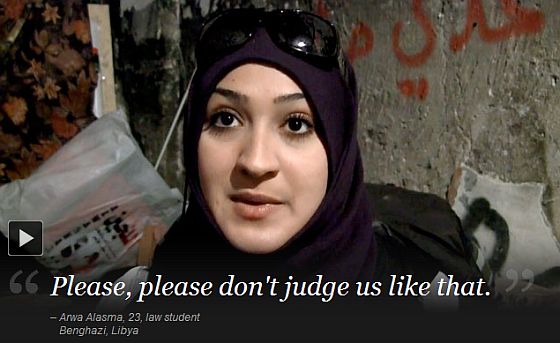

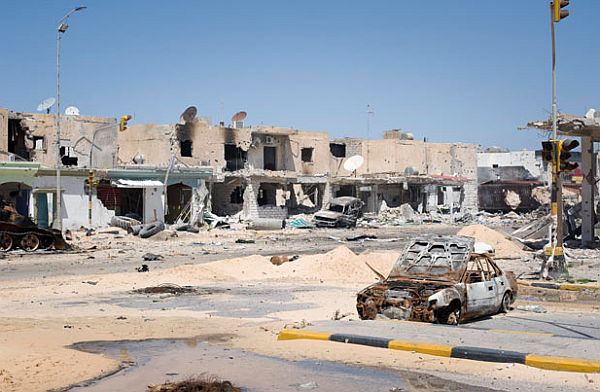


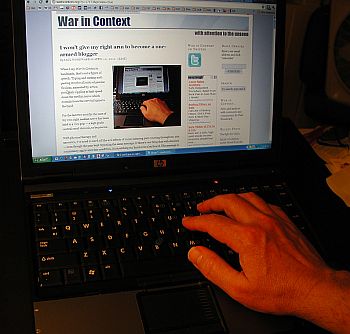 When I say War in Context is handmade, that’s not a figure of speech. Typing and cutting-and-pasting involve all sorts of precise flexions, animated by action potentials rippling at high speed down the median nerve which extends from the cervical spine to the hand.
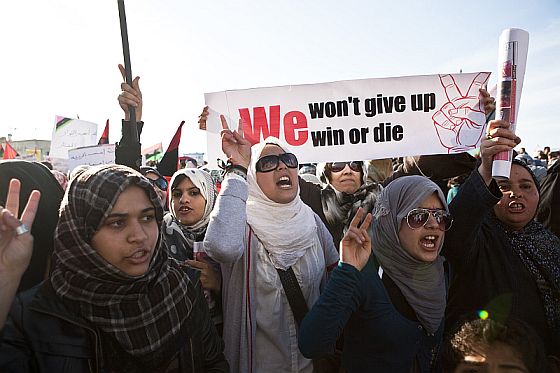

 Here’s a circle that should never have been closed.