Category Archives: Analysis

For decades, Exxon has understood the role of fossil fuels in climate change

InsideClimate News reports: At a meeting in Exxon Corporation’s headquarters, a senior company scientist named James F. Black addressed an audience of powerful oilmen. Speaking without a text as he flipped through detailed slides, Black delivered a sobering message: carbon dioxide from the world’s use of fossil fuels would warm the planet and could eventually endanger humanity.

“In the first place, there is general scientific agreement that the most likely manner in which mankind is influencing the global climate is through carbon dioxide release from the burning of fossil fuels,” Black told Exxon’s Management Committee, according to a written version he recorded later.

It was July 1977 when Exxon’s leaders received this blunt assessment, well before most of the world had heard of the looming climate crisis.

A year later, Black, a top technical expert in Exxon’s Research & Engineering division, took an updated version of his presentation to a broader audience. He warned Exxon scientists and managers that independent researchers estimated a doubling of the carbon dioxide (CO2) concentration in the atmosphere would increase average global temperatures by 2 to 3 degrees Celsius (4 to 5 degrees Fahrenheit), and as much as 10 degrees Celsius (18 degrees Fahrenheit) at the poles. Rainfall might get heavier in some regions, and other places might turn to desert.

“Some countries would benefit but others would have their agricultural output reduced or destroyed,” Black said, in the written summary of his 1978 talk.

His presentations reflected uncertainty running through scientific circles about the details of climate change, such as the role the oceans played in absorbing emissions. Still, Black estimated quick action was needed. “Present thinking,” he wrote in the 1978 summary, “holds that man has a time window of five to ten years before the need for hard decisions regarding changes in energy strategies might become critical.”

Exxon responded swiftly. Within months the company launched its own extraordinary research into carbon dioxide from fossil fuels and its impact on the earth. Exxon’s ambitious program included both empirical CO2 sampling and rigorous climate modeling. It assembled a brain trust that would spend more than a decade deepening the company’s understanding of an environmental problem that posed an existential threat to the oil business.

Then, toward the end of the 1980s, Exxon curtailed its carbon dioxide research. In the decades that followed, Exxon worked instead at the forefront of climate denial. It put its muscle behind efforts to manufacture doubt about the reality of global warming its own scientists had once confirmed. It lobbied to block federal and international action to control greenhouse gas emissions. It helped to erect a vast edifice of misinformation that stands to this day. [Continue reading…]

Facebooktwittermail

How do we get people to care about the environment? What if we’re asking the wrong question?

Brooke Jarvis writes: [Chris] Jordan is a photographer who once referred to himself, while joking with Stephen Colbert, as a paparazzo of garbage. Before going to [the Pacific atoll] Midway, he spent years trying to visually represent the baffling scale on which we produce and scrap the materials of consumer society. He explored ports and scrap yards, photographing immense, looming walls of crushed cars and oil drums, shipping containers and pallets, and later began creating digital composites to illustrate statistics too vast for the human brain to compute: a forest made from the cigarette butts thrown out every 15 seconds in the United States; a swirl of hundreds of thousands of cell phones, the discards of a single American day.

He’d created other series in the past — nature scenes, studies of alleys and puddles and urban trees bathed in the glow of neon signs — but nothing felt relevant to contemporary culture until he began trying to make the grand scale of human waste visible. It was his way of hunting the perpetual, elusive quarry familiar to environmentalists: a message that can get people to care.

But over time this work began to feel cold and conceptual, almost numbing. Jordan began to doubt that it could accomplish the breakthrough he wanted. So he started searching for something different: a way to help people make a powerful emotional connection to a broken world.

That’s when he heard about what happens to many Laysan albatrosses on the verge of flight. [Continue reading…]

Facebooktwittermail

Technology is implicated in an assault on empathy

Sherry Turkle writes: Studies of conversation both in the laboratory and in natural settings show that when two people are talking, the mere presence of a phone on a table between them or in the periphery of their vision changes both what they talk about and the degree of connection they feel. People keep the conversation on topics where they won’t mind being interrupted. They don’t feel as invested in each other. Even a silent phone disconnects us.

In 2010, a team at the University of Michigan led by the psychologist Sara Konrath put together the findings of 72 studies that were conducted over a 30-year period. They found a 40 percent decline in empathy among college students, with most of the decline taking place after 2000.

Across generations, technology is implicated in this assault on empathy. We’ve gotten used to being connected all the time, but we have found ways around conversation — at least from conversation that is open-ended and spontaneous, in which we play with ideas and allow ourselves to be fully present and vulnerable. But it is in this type of conversation — where we learn to make eye contact, to become aware of another person’s posture and tone, to comfort one another and respectfully challenge one another — that empathy and intimacy flourish. In these conversations, we learn who we are.

Of course, we can find empathic conversations today, but the trend line is clear. It’s not only that we turn away from talking face to face to chat online. It’s that we don’t allow these conversations to happen in the first place because we keep our phones in the landscape. [Continue reading…]

Facebooktwittermail

How GCHQ tracks web users’ online identities

The Intercept reports: There was a simple aim at the heart of the top-secret program: Record the website browsing habits of “every visible user on the Internet.”

Before long, billions of digital records about ordinary people’s online activities were being stored every day. Among them were details cataloging visits to porn, social media and news websites, search engines, chat forums, and blogs.

The mass surveillance operation — code-named KARMA POLICE — was launched by British spies about seven years ago without any public debate or scrutiny. It was just one part of a giant global Internet spying apparatus built by the United Kingdom’s electronic eavesdropping agency, Government Communications Headquarters, or GCHQ.

The revelations about the scope of the British agency’s surveillance are contained in documents obtained by The Intercept from National Security Agency whistleblower Edward Snowden. Previous reports based on the leaked files have exposed how GCHQ taps into Internet cables to monitor communications on a vast scale, but many details about what happens to the data after it has been vacuumed up have remained unclear.[Continue reading…]

Facebooktwittermail

Pope Francis at the UN: ‘Any harm done to the environment, is harm done to humanity’

Pope Francis addressing the United Nations General Assembly today: The work of the United Nations, according to the principles set forth in the Preamble and the first Articles of its founding Charter, can be seen as the development and promotion of the rule of law, based on the realization that justice is an essential condition for achieving the ideal of universal fraternity. In this context, it is helpful to recall that the limitation of power is an idea implicit in the concept of law itself. To give to each his own, to cite the classic definition of justice, means that no human individual or group can consider itself absolute, permitted to bypass the dignity and the rights of other individuals or their social groupings. The effective distribution of power (political, economic, defense-related, technological, etc.) among a plurality of subjects, and the creation of a juridical system for regulating claims and interests, are one concrete way of limiting power. Yet today’s world presents us with many false rights and – at the same time – broad sectors which are vulnerable, victims of power badly exercised: for example, the natural environment and the vast ranks of the excluded. These sectors are closely interconnected and made increasingly fragile by dominant political and economic relationships. That is why their rights must be forcefully affirmed, by working to protect the environment and by putting an end to exclusion.

First, it must be stated that a true “right of the environment” does exist, for two reasons. First, because we human beings are part of the environment. We live in communion with it, since the environment itself entails ethical limits which human activity must acknowledge and respect. Man, for all his remarkable gifts, which “are signs of a uniqueness which transcends the spheres of physics and biology” (Laudato Si’, 81), is at the same time a part of these spheres. He possesses a body shaped by physical, chemical and biological elements, and can only survive and develop if the ecological environment is favourable. Any harm done to the environment, therefore, is harm done to humanity. Second, because every creature, particularly a living creature, has an intrinsic value, in its existence, its life, its beauty and its interdependence with other creatures. We Christians, together with the other monotheistic religions, believe that the universe is the fruit of a loving decision by the Creator, who permits man respectfully to use creation for the good of his fellow men and for the glory of the Creator; he is not authorized to abuse it, much less to destroy it. In all religions, the environment is a fundamental good (cf. ibid.).

The misuse and destruction of the environment are also accompanied by a relentless process of exclusion. In effect, a selfish and boundless thirst for power and material prosperity leads both to the misuse of available natural resources and to the exclusion of the weak and disadvantaged, either because they are differently abled (handicapped), or because they lack adequate information and technical expertise, or are incapable of decisive political action. Economic and social exclusion is a complete denial of human fraternity and a grave offense against human rights and the environment. The poorest are those who suffer most from such offenses, for three serious reasons: they are cast off by society, forced to live off what is discarded and suffer unjustly from the abuse of the environment. They are part of today’s widespread and quietly growing “culture of waste”.

War is the negation of all rights and a dramatic assault on the environment. If we want true integral human development for all, we must work tirelessly to avoid war between nations and between peoples.

To this end, there is a need to ensure the uncontested rule of law and tireless recourse to negotiation, mediation and arbitration, as proposed by the Charter of the United Nations, which constitutes truly a fundamental juridical norm. The experience of these seventy years since the founding of the United Nations in general, and in particular the experience of these first fifteen years of the third millennium, reveal both the effectiveness of the full application of international norms and the ineffectiveness of their lack of enforcement. When the Charter of the United Nations is respected and applied with transparency and sincerity, and without ulterior motives, as an obligatory reference point of justice and not as a means of masking spurious intentions, peaceful results will be obtained. When, on the other hand, the norm is considered simply as an instrument to be used whenever it proves favourable, and to be avoided when it is not, a true Pandora’s box is opened, releasing uncontrollable forces which gravely harm defenseless populations, the cultural milieu and even the biological environment.

The Preamble and the first Article of the Charter of the United Nations set forth the foundations of the international juridical framework: peace, the pacific solution of disputes and the development of friendly relations between the nations. Strongly opposed to such statements, and in practice denying them, is the constant tendency to the proliferation of arms, especially weapons of mass destruction, such as nuclear weapons. An ethics and a law based on the threat of mutual destruction – and possibly the destruction of all mankind – are self-contradictory and an affront to the entire framework of the United Nations, which would end up as “nations united by fear and distrust”. There is urgent need to work for a world free of nuclear weapons, in full application of the non-proliferation Treaty, in letter and spirit, with the goal of a complete prohibition of these weapons.

The recent agreement reached on the nuclear question in a sensitive region of Asia and the Middle East is proof of the potential of political good will and of law, exercised with sincerity, patience and constancy. I express my hope that this agreement will be lasting and efficacious, and bring forth the desired fruits with the cooperation of all the parties involved.

In this sense, hard evidence is not lacking of the negative effects of military and political interventions which are not coordinated between members of the international community. For this reason, while regretting to have to do so, I must renew my repeated appeals regarding to the painful situation of the entire Middle East, North Africa and other African countries, where Christians, together with other cultural or ethnic groups, and even members of the majority religion who have no desire to be caught up in hatred and folly, have been forced to witness the destruction of their places of worship, their cultural and religious heritage, their houses and property, and have faced the alternative either of fleeing or of paying for their adhesion to good and to peace by their own lives, or by enslavement.

These realities should serve as a grave summons to an examination of conscience on the part of those charged with the conduct of international affairs. Not only in cases of religious or cultural persecution, but in every situation of conflict, as in Ukraine, Syria, Iraq, Libya, South Sudan and the Great Lakes region, real human beings take precedence over partisan interests, however legitimate the latter may be. In wars and conflicts there are individual persons, our brothers and sisters, men and women, young and old, boys and girls who weep, suffer and die. Human beings who are easily discarded when our only response is to draw up lists of problems, strategies and disagreements.

As I wrote in my letter to the Secretary-General of the United Nations on 9 August 2014, “the most basic understanding of human dignity compels the international community, particularly through the norms and mechanisms of international law, to do all that it can to stop and to prevent further systematic violence against ethnic and religious minorities” and to protect innocent peoples. [Continue reading…]

Facebooktwittermail

As human power keeps growing, our ability to harm or benefit other animals grows with it

Yuval Noah Harari writes: This is the basic lesson of evolutionary psychology: a need shaped thousands of generations ago continues to be felt subjectively even if it is no longer necessary for survival and reproduction in the present. Tragically, the agricultural revolution gave humans the power to ensure the survival and reproduction of domesticated animals while ignoring their subjective needs. In consequence, domesticated animals are collectively the most successful animals in the world, and at the same time they are individually the most miserable animals that have ever existed.

The situation has only worsened over the last few centuries, during which time traditional agriculture gave way to industrial farming. In traditional societies such as ancient Egypt, the Roman empire or medieval China, humans had a very partial understanding of biochemistry, genetics, zoology and epidemiology. Consequently, their manipulative powers were limited. In medieval villages, chickens ran free between the houses, pecked seeds and worms from the garbage heap, and built nests in the barn. If an ambitious peasant tried to lock 1,000 chickens inside a crowded coop, a deadly bird-flu epidemic would probably have resulted, wiping out all the chickens, as well as many villagers. No priest, shaman or witch doctor could have prevented it. But once modern science had deciphered the secrets of birds, viruses and antibiotics, humans could begin to subject animals to extreme living conditions. With the help of vaccinations, medications, hormones, pesticides, central air-conditioning systems and automatic feeders, it is now possible to cram tens of thousands of chickens into tiny coops, and produce meat and eggs with unprecedented efficiency.

The fate of animals in such industrial installations has become one of the most pressing ethical issues of our time, certainly in terms of the numbers involved. These days, most big animals live on industrial farms. We imagine that our planet is populated by lions, elephants, whales and penguins. That may be true of the National Geographic channel, Disney movies and children’s fairytales, but it is no longer true of the real world. The world contains 40,000 lions but, by way of contrast, there are around 1 billion domesticated pigs; 500,000 elephants and 1.5 billion domesticated cows; 50 million penguins and 20 billion chickens. [Continue reading…]

Facebooktwittermail

Why are the Gulf states so reluctant to take in refugees?

By Rana Jawad, University of Bath

Europe’s reaction to the refugee crisis has hardly been a calm and considered one; with fences erected and border controls reinstated, the continent’s governments are struggling to agree on a response.

But at least Europe’s governments are acting. In the Middle East, things are rather different. In particular, the Arab Gulf States are catching serious flack for their response to the crisis – or rather, their failure to respond.

One big question is reverberating in the minds of the general public, expert observers and policy-makers; why have the Gulf states, who are among the richest countries in the world, not taken in any Syrian refugees? There’s no need to rewrite the commentary that’s already out there: many articles have provided useful statistics and background information on the international conventions and treaties the Persian Gulf countries are signed up to, and their failure to honour them.

What all this misses, though, is the general lack of social justice and a social welfare ethos in the Persian Gulf and Middle East in general. This is a complex story about the mindset of a region in disunity and disarray.

Continue reading

Facebooktwittermail

Long before the refugee crisis, the world’s powers had failed the people of Syria

Rula Jebreal writes: More than two weeks have passed since the lifeless body of 3-year-old Aylan Kurdi washed ashore on a Turkish beach, forcing the world to confront the tide of Syrian asylum seekers massing at Europe’s borders. In the grim aftermath, the international response has both impressed and disappointed, as millions of hero-citizens have taken to the streets to demand compassion and offer support—and millions of others have countered with bigotry. A few countries have cracked open their borders; too many others have slammed them shut. Yet, as debate has raged over how best to respond to the crisis, there has been shockingly little discussion as to why the refugees are fleeing Syria—and how the last four years of botched international policy has helped trigger the refugee exodus.

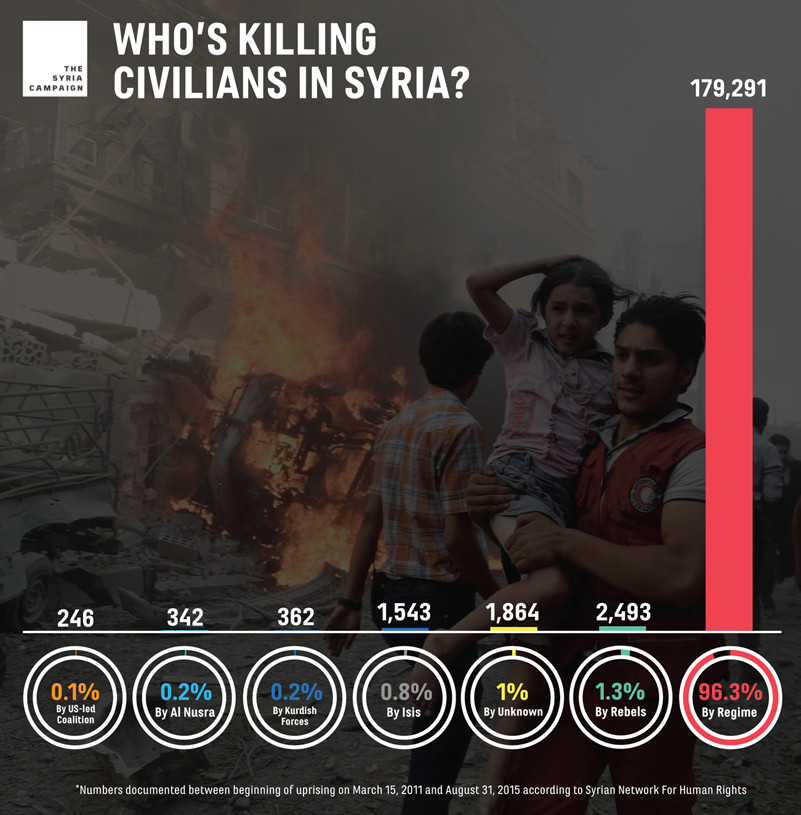
Of the thousands crossing the Mediterranean, most are fleeing the orgy of violence unleashed four years ago by President Bashar al-Assad against the citizens of his own country. That violence burst into view with the death of another young boy, 13-year-old Hamza al-Khateeb, whose brutal murder at the hands of police in the town of Daraa served as a kind of bloody prologue to the drowning death of Aylan Kurdi. Much like Kurdi, al-Khateeb was swept up by events far bigger than he was; after joining friends and family at an April 2011 protest, he was detained and then tortured. As images of al-Khateeb’s mutilated young body circulated across the Internet, mass protests erupted across Syria—from Daraa to Damascus, Aleppo to Homs—only to be met by the full, punishing force of the Assad military.

If the world’s powers had set their red line then, at the torture of al-Khateeb and the regime’s decimation of Daraa, it is possible that there might have been no refugee crisis today. But instead of supporting the revolution when it was a largely unarmed affair, the globe’s power players turned Syria into a geopolitical chessboard, actively sponsoring various sides of the conflict without concern for the civilian population. The United States and its Gulf allies pumped money and weapons into a murky constellation of rebel factions, empowering Al Qaeda affiliates that indirectly spawned the rise of the so-called Islamic State, or ISIS. Meanwhile, Russia and Iran funneled weapons, training, and funding to Assad and Hezbollah, the Lebanese Shiite militia, ensuring that the regime stayed afloat even as it subjected an untold number of Syrians to industrial-style torture and the terror of barrel bombings. [Continue reading…]

Facebooktwittermail

Putin supports Assad in ‘fighting terrorism’

CBS News: Charlie Rose: So you would like to join the United States in the fight against ISIS? That’s part of why you’re there [in Syria]. Others think that while that may be part of your goal, you’re trying to save the Assad administration because they’ve been losing ground and the war has not been going well for them. And you’re there to rescue them.

Vladimir Putin (through translator): Well, you’re right. And it’s my deep belief that any actions to the contrary in order to destroy the legitimate government will create a situation which you can witness now in the other countries of the region or in other regions, for instance in Libya, where all the state institutions are disintegrated. We see a similar situation in Iraq.

And there is no other solution to the Syrian crisis than strengthening the effective government structures and rendering them help in fighting terrorism. But at the same time, urging them to engage in positive dialogue with the rational opposition and conduct reform. [Continue reading…]

Aron Lund writes: the Kremlin has every reason to continue blurring the already indistinct dividing line between “extremist” and “moderate” rebels upon which Western states insist. Even though this neatly black and white categorization of Syria’s murky insurgency is at least partly fiction, it remains a politically indispensable formula for Western states that wish to arm anti-Assad forces. Which is precisely why erasing this distinction by extending airstrikes against all manners of rebels as part of an ostensibly anti-jihadi intervention, may turn out to be Putin’s long-term plan.

Blanket attacks on Syrian rebels on the pretext that they are all “al-Qaeda” would lead to much outraged commentary in the Western and Arab press. But to the Russian president it doesn’t matter if you think he’s Mad Vlad or Prudent Putin. He isn’t trying to win hearts and minds, least of all those of the Syrian rebels or their backers. Rather, he is trying to change the balance of power on the ground while firing missile after missile into the West’s political narrative.

Whatever one thinks of that, it is a big and bold idea of the sort that sometimes end up working. [Continue reading…]

While Putin reinforces the perception that the Assad regime is inseparable from the Syrian state, Scott Lucas writes: In Syria, the “state” and the “regime” are not the same thing. The state is the apparatus that administers the country and provides services, including education, health, and official papers that allow Syrians to marry, register property, or travel outside the country. The regime is a collection of informal networks based on personal, family, community, religious, and other ties that control the upper ranks of the state apparatus.

Before the uprising, most Syrians had an informal understanding of this distinction, particularly in areas of the country where social services were well-provided. In short, they were able to draw a line between the local branch of the Ministry of Water Resources, to which they could appeal if they had problems with their water supply, and the plainclothes officer from the Political Security Directorate who came inquiring at their door.

During the war, the regime has managed to blur this distinction to its advantage. [Continue reading…]

Facebooktwittermail

Who is Putin really protecting Assad from?

Mark N. Katz writes: Although the West may not like Assad, Russian officials and commentators are saying, his authoritarian regime is preferable to an even worse one that IS would establish that would pose a real threat to Western, as well as Russian, interests. Furthermore, Assad regime forces are needed in order to stop IS from taking over more — or even the rest — of Syria. Western insistence that Assad must step down, then, is foolish since this would gravely weaken the forces fighting against IS. The West should work with Moscow and the Assad regime against the common IS threat, and not against them.

This argument is based on the premise that the Assad regime is actively fighting against IS. There have been numerous reports, though, that the Assad regime and IS have actually not been fighting with each other, or not doing so very much. A widely quoted study by IHS Jane’s Terrorism and Insurgency Center at the end of last year noted that the Assad regime’s “counterterrorism operations…skew heavily towards groups whose names aren’t ISIS. Of 982 counterterrorism operations for the year up through Nov. 21 [2014], just 6 percent directly targeted ISIS.”

In February of this year, Time reported on a Sunni businessman with close ties to the Assad regime describing various forms of actual cooperation between the Assad regime and IS, including how the Assad regime buys oil from IS-controlled oil facilities, how Syria’s two main mobile phone operators provide service and send repair teams to IS-controlled areas, and how Damascus allows food shipments to the IS capital, Raqqa.

At the beginning of June 2015, US Embassy Damascus “accused the Syrian government of providing air support to an advance by Islamic State militants against opposition groups north of Aleppo.” In July, Turkish intelligence sources claimed that “an agreement was made between the Assad regime and ISIS to destroy the Free Syrian Army in the country’s north.”

Why would the Assad regime not fight against IS and even cooperate with it? Both of them have an interest in weakening their common foes: Syrian opposition groups supported by Turkey, Saudi Arabia, Qatar, and other countries. [Continue reading…]

Facebooktwittermail

The rise and fall of Erdogan’s Turkey

Der Spiegel reports: Traveling through Turkey reveals a country divided. On the one side, there is Erdogan’s Turkey. It includes his hometown on the Black Sea, cities of Anatolia’s economic miracle, such as Kayseri, and of course Ankara, the seat of power. The other side is the land of his enemies. It stretches from Kurdish Diyarbakir, where people fear for their lives, to the Qandil Mountains, where Kurdish fighters have holed up, and finally to Istanbul, the nucleus of Turkish democracy.

Gültan Kisanak closes her eyes as the window panes in her office begin to shake. Every few minutes, fighter planes thunder over the town hall of Diyarbakir heading toward the Qandil Mountains. There, in the autonomous region of Kurdistan, the Turkish air force has been bombing positions of the banned Kurdistan Workers’ Party (PKK) since July 24.

Kisanak, 54, is a sturdy woman whose gray hair falls down to the shoulders of her pink blazer. Since early 2014, she has been the co-mayor of Diyarbakir — the first woman to hold the job. The pro-Kurdish HDP party, which received more than 80 percent of the vote here in June, mandates that all important offices are shared between one man and one woman.

During the election campaign, the HDP billed itself not only as a party for the Kurds, but also as an advocate of gender equality and gay rights. Above all, its candidates promised to challenge Erdogan’s plan of establishing a presidential republic. As it became clear that the HDP had received a solid 13 percent of the vote on June 7, people in Diyarbakir, the largest city in the southeast, were jubilant. They danced in the streets to an endless chorus of car horns and fireworks. All that was only three months ago. Today, the mood is grim. By nightfall, it’s quiet. Stores close early and people prefer to stay home out of fear for their lives. [Continue reading…]

Facebooktwittermail

Egypt destroys thousands of homes to create ‘buffer zone’ with Gaza Strip

Human Rights Watch reports: Between July 2013 and August 2015, Egyptian authorities demolished at least 3,255 residential, commercial, administrative, and community buildings in the Sinai Peninsula along the border with the Gaza Strip, forcibly evicting thousands of people. Extended families who had lived side by side for decades found themselves dispersed, forced to abandon the multi-story houses they had built next to their relatives and passed down through generations. Some families became homeless and lived in tents or sheds on open land or in informal settlements. The Egyptian authorities razed around 685 hectares of cultivated farmland, depriving families of food and livelihood and stripping most of the border of its traditional olive, date and citrus groves. The evictions scattered families among the Sinai’s towns and villages and in some cases as far as Cairo and the Nile Delta. The Egyptian government has indicated that these evictions could continue.

The Egyptian army began demolishing buildings along the border in July 2013 as part of a reinvigorated but long-considered plan to establish a “buffer zone” with the Gaza Strip. These demolitions rapidly accelerated after October 24, 2014, when the Sinai-based armed group Ansar Beit al-Maqdis, or Supporters of Jerusalem, carried out an unprecedented attack on an army checkpoint in North Sinai governorate, reportedly killing 28 soldiers. The following month, Ansar Beit al-Maqdis pledged allegiance to the extremist group Islamic State, also known as ISIS, and changed its name to Sinai Province.

President Abdel Fattah al-Sisi, who had taken office in June 2014 after orchestrating the ouster of former president Mohamed Morsy the year before, said in a speech on national television the day after the attack that Egypt was fighting a war “for its existence.” He declared a three-month state of emergency in most of North Sinai and convened the National Defense Council and Supreme Council of the Armed Forces, which agreed on a plan to establish a “secure zone” along the Gaza border. Five days after the attack, Prime Minister Ibrahim Mehleb issued a decree ordering the “isolation” and “evacuation” of 79 square kilometers stretching along the entire Gaza border and extending between five and seven kilometers into the Sinai. The buffer zone encompassed all of Rafah, a town of some 78,000 people that lies directly on the border, as well as significant agricultural land around the town. [Continue reading…]

Facebooktwittermail

Mecca belongs to all Muslims, and Saudi Arabia shouldn’t be allowed to run it

Haroon Moghul writes: If you think the Islamic State’s war on antiquities is horrifying, you are right. But it is not exceptional. It has its roots in a perverse and excessive iconoclasm, which has seen Saudi Wahhabist mandates literally crush, demolish, smash, erase, and break down the very sites and landscapes that Muslims worldwide know so well. If you think I am exaggerating, don’t. Several years ago, I helped lead a small group of American Muslims on a pilgrimage to Mecca and Medina. We had a Saudi guide with us who, during our bus tour around Mecca and Medina, refused to let our driver stop at mosques of historical significance, because he thought we might cross the line and worship in a manner unbecoming of an austere and hardheaded Wahhabist. He treated us like children.

Which, of course, none of us were: Wahhabists, or children. (In revenge, I spent the ride back happily pointing out sites of Ottoman significance, while describing the House of Saud’s unseemly alliance with non-Muslim powers against their fellow Muslims.) My fellow pilgrims were incensed. They had paid, scrounged up and saved, and here they were, in their holy city, and they weren’t allowed to stop at, for example, the mosque where Mohammed was commanded by God to turn away from the first direction of prayer, Jerusalem, to the current direction of prayer, Mecca. (It matters if you’re Muslim.) They felt outraged. They felt they were denied the chance to experience their Islam because someone else had decided their interpretation of Islam mattered more.

And that is precisely the point. Mecca and Medina are ruled by Saudi Arabia, but they belong to the Muslim world. They are our collective sacredness. They shouldn’t be an individual possession. Islam is a very egalitarian religion. (As some Muslims joke, people who dislike organized religion should join Islam, because we’ve mastered disorganization.) Islam has few hierarchies, and those that exist are not widely shared. Why then does a regime which represents a sliver of Muslims, exports and enforces an ideology that is historically antithetical to Islam’s rich traditions of pluralism, spirituality and cosmopolitanism, allowed to control our holy cities? Why don’t everyday Muslims get a say? [Continue reading…]

Facebooktwittermail

The continuing struggle for democracy in South Africa

Kenan Malik writes: Most first-time visitors to Cape Town are mesmerized by the majesty of Table Mountain, and wowed by the vivacity of the Victorian-era waterfront. As a new visitor myself last month, I was captivated by both. But what has lodged most in my memory is something very different.

Driving from the international airport, I was struck by the sheer wretchedness of Cape Flats: the series of black townships, comprising mostly shacks with corrugated steel roofs, that stretch from the highway almost to the horizon. Few people — tourists or locals — want to talk about the Cape Flats. But there is no better starting point for a discussion of the state of contemporary South Africa.

I was shocked by the degree to which the predominant emotions, 21 years after the end of apartheid, are not of hope and expectation, but of fear and despair.

“It’s not rosy,” a leader of the United Front opposition political movement in the eastern Cape city of East London told me, “but it’s not yet totally bleak.” That was about the most optimistic view I heard. [Continue reading…]

Facebooktwittermail

The inside story of the Obama administration’s Iran diplomacy

Indira A.R. Lakshmanan writes: Covering the path to that deal was the main focus of my beat at Bloomberg News for the past seven years. I traveled more than 140,000 miles and spent months at hotels in Europe, New York, the Middle East and Central Asia, reporting on talks by Kerry and U.S. nuclear negotiators. Now that the deal is done, 12 current and former Obama administration officials intimately involved in the negotiations spoke to me last week, revealing new details for the first time. This story of the behind-the-scenes calculations along a seven-year road to a deal is based upon those accounts, as well as on hundreds of hours of reporting on the talks I did as they unfolded in recent years in capitals across three continents. [Continue reading…]

Facebooktwittermail

Pope Francis encourages Congress and the U.S. to promote a ‘culture of care’

In his address to Congress, Pope Francis said: In Laudato Si’, I call for a courageous and responsible effort to “redirect our steps” (ibid., 61), and to avert the most serious effects of the environmental deterioration caused by human activity. I am convinced that we can make a difference and I have no doubt that the United States – and this Congress – have an important role to play. Now is the time for courageous actions and strategies, aimed at implementing a “culture of care” (ibid., 231) and “an integrated approach to combating poverty, restoring dignity to the excluded, and at the same time protecting nature” (ibid., 139). “We have the freedom needed to limit and direct technology” (ibid., 112); “to devise intelligent ways of… developing and limiting our power” (ibid., 78); and to put technology “at the service of another type of progress, one which is healthier, more human, more social, more integral” (ibid., 112). In this regard, I am confident that America’s outstanding academic and research institutions can make a vital contribution in the years ahead.

A century ago, at the beginning of the Great War, which Pope Benedict XV termed a “pointless slaughter”, another notable American was born: the Cistercian monk Thomas Merton. He remains a source of spiritual inspiration and a guide for many people. In his autobiography he wrote: “I came into the world. Free by nature, in the image of God, I was nevertheless the prisoner of my own violence and my own selfishness, in the image of the world into which I was born. That world was the picture of Hell, full of men like myself, loving God, and yet hating him; born to love him, living instead in fear of hopeless self-contradictory hungers”. Merton was above all a man of prayer, a thinker who challenged the certitudes of his time and opened new horizons for souls and for the Church. He was also a man of dialogue, a promoter of peace between peoples and religions.

From this perspective of dialogue, I would like to recognize the efforts made in recent months to help overcome historic differences linked to painful episodes of the past. It is my duty to build bridges and to help all men and women, in any way possible, to do the same. When countries which have been at odds resume the path of dialogue—a dialogue which may have been interrupted for the most legitimate of reasons—new opportunities open up for all. This has required, and requires, courage and daring, which is not the same as irresponsibility. A good political leader is one who, with the interests of all in mind, seizes the moment in a spirit of openness and pragmatism. A good political leader always opts to initiate processes rather than possessing spaces (cf. Evangelii Gaudium, 222-223). [Continue reading…]

For readers unfamiliar with Thomas Merton, here’s a video with clips from the last lecture he gave, shortly before his death in 1968.

Facebooktwittermail

How Russia’s gambit in Syria changes the game

Michael Kofman writes: The Syrian refugee crisis has emerged as Europe’s paramount security problem this year and shows no signs of abating. Russia is looking to capitalize on this. More than likely, Vladimir Putin will seek to tie the issue of Ukraine-related sanctions to the common causes of fighting terrorism and stemming the tide of refugees into Europe. When the renewal of sanctions is discussed in December, Moscow will demonstrate that in contrast to “feckless” U.S. policies, it could have answers to the Syrian civil war. At the very least, Russia will pitch that its own plan to fight the Islamic State can’t be worse than whatever the Americans have been doing. This will serve as more of a diplomatic wedge than a realistic proposition to settle the Syrian conflict.

Coincidentally, the countries in Central and Southern Europe that appear least interested in accepting refugee and migrant flows, are also the ones who were unenthused about sanctioning Russia. There is a growing list of nations that Germany convinced to show European solidarity on the sanctions policy who wish to see it ended. With the war in Ukraine quieter, and Russia moving to address the conflict in Syria, it may provide good ammunition in December for those wishing to cancel sanctions. Either way, with the Russian economy suffering from low oil prices, it will be looking to incentivize the suspension of sanctions.

Assad should not be gleeful, as Moscow has come to save the Syrian Army but at the price of assuming direct control. He is dealing with a purely realist power, and if the plan changes, Russian tanks could find their way to his palace. Hafizullah Amin’s fate when the Soviet Union took over Afghanistan is a good historical lesson to ‘be careful what you wish for.’ Russia will try to reframe the Syrian Army as part of an anti-Islamic State coalition, seeking to take advantage of the empty space created by the U.S. policy in this conflict. If that should fail, Russia and Iran may agree to dispense with Assad as the price of maintaining their ability to influence Syria’s fate.

The United States faces a conundrum. Once Russia completes its deployment, it can completely undermine the U.S. effort in Syria, from no-fly zones to opposition proxies. The two sides are no closer to agreement on a framework for political settlement, but Russia and the United States are both backing the minority powers in this conflict now, while jihadists represent the dominant powers in Syria. That is a low bar for common cause, but it should give Washington pause. Meanwhile neighboring countries and Europeans are paying an increasingly high price in terms of refugees. Letting this bloody civil war continue is becoming increasingly intolerable for the West. Somewhere in the future, under the next administration, could be a large U.S. Army deployment to the Middle East as a result of how this war is being handled today. [Continue reading…]

Facebooktwittermail