Category Archives: Obama administration

The intelligence on Afghanistan that Obama refuses to reveal

Steve Coll writes: In late 2008, the United States intelligence community produced a classified National Intelligence Estimate on the war in Afghanistan that has never been released to the public. The N.I.E. described a “grim situation” overall, according to an intelligence officer’s private briefing for NATO ambassadors.

In late 2010, there was another N.I.E. on the war. This one painted a “gloomy picture,” warning that “large swaths of Afghanistan are still at risk of falling to the Taliban,” the Los Angeles Times reported. This N.I.E., too, has never been published.

This autumn, intelligence analysts have again been poring over their secret district-by-district maps of Afghanistan, finding and assessing patterns. A new N.I.E. on Afghanistan is just about finished, people familiar with the latest draft told me this week. This one looks forward to 2014, when President Obama has said U.S. troops will be reduced to a minimal number, and Afghan security forces will take the lead in the war.

The new draft Afghanistan N.I.E. is a lengthy document, running about a hundred pages or more. As is typically the case, it is a synthesis, primarily written by civilian intelligence analysts—career civil servants, mainly—who work in sixteen different intelligence agencies. These days, an Estimate usually contains “Key Judgments” backed by analysis near the front of the document. There are six such judgments in the Afghanistan draft, I was told. I wasn’t able to learn what all of them were; according to the accounts I heard, however, the draft on the whole is gloomier than the typical public statements made by U.S. military commanders in Afghanistan.

Facebooktwittermail

White House urges Egypt’s military to yield power

The New York Times reports: The White House on Friday threw its weight behind Egypt’s resurgent protest movement, urging for the first time the handover of power by the interim military rulers in the Obama administration’s most public effort yet to steer the course of the Egyptian democracy.

“The United States strongly believes that the new Egyptian government must be empowered with real authority immediately,” the White House said in a statement.

“Most importantly, we believe that the full transfer of power to a civilian government must take place in a just and inclusive manner that responds to the legitimate aspirations of the Egyptian people, as soon as possible.”

The White House released the statement as tens of thousands of demonstrators poured into Tahrir Square for what is expected to be the biggest display of anger in a week of protests against the military’s intention to retain power even after parliamentary elections that are scheduled to begin on Monday.

The statement is a significant escalation of the international pressure on the generals because the United States is among the Egyptian military’s closest allies and biggest benefactors, contributing more than $1.3 billion a year in aid.

Facebooktwittermail

America’s never-ending war

Glenn Greenwald writes: Anonymous U.S. officials this morning are announcing in The Washington Post that they have effectively defeated what they call “the organization that brought us 9/11″ — Al Qaeda — by rendering it “operationally ineffective.” Specifically, “the leadership ranks of the main al-Qaeda terrorist network have been reduced to just two figures whose demise would mean the group’s defeat, U.S. counterterrorism and intelligence officials said.” And: “asked what exists of al-Qaeda’s leadership group beyond the top two positions, the official said: ‘Not very much’.”

You might think this means that the vastly expanded National Security and Surveillance States justified in the name of 9/11, as well as the slew of wars and other aggressive deployments which it spawned, can now be reversed and wound down. After all, the stated purpose of the 2001 Authorization to Use Military Force (AUMF) which provided legal cover to all of this was expressed in the very first line: “To authorize the use of United States Armed Forces against those responsible for the recent attacks launched against the United States.” The purpose of this authorized force was equally clear and limited: “to use all necessary and appropriate force against those nations, organizations, or persons [the President] determines planned, authorized, committed, or aided the terrorist attacks that occurred on September 11, 2001, or harbored such organizations or persons.”

Now, the group which the U.S. government has always said was the one that “planned, authorized, committed, or aided the terrorist attacks that occurred on September 11, 2001″ is, according to this same government, “operationally ineffective.” So what does that mean in terms of policy? Absolutely nothing:

U.S. officials stressed that al-Qaeda’s influence extends far beyond its operational reach, meaning that the terrorist group will remain a major security threat for years.

Not just a threat — but a major security threat — “for years” to come. In fact, it turns out that the version of Al Qaeda that the U.S. just spent the last decade “defeating” on the ground that it perpetrated 9/11 does not even really matter: “U.S. counterterrorism officials now assess al-Qaeda’s offshoot in Yemen as a significantly greater threat.” Even in Pakistan, where the “effectively inoperable” group is based, the CIA refuses even to reduce its activities: “letting up now could allow them to regenerate,” an anonymous official decreed. And if that’s not enough to keep your fear levels sufficiently high to support (or at least acquiesce to) more militarism, there is always this: “The arrest this week of an alleged al-Qaeda sympathizer in New York underscored the group’s ability to inspire ‘lone wolf’ attacks.”

Facebooktwittermail

Obama reserves the right to use torture

Eric Lewis writes: As a candidate in 2008, President Obama stated categorically, “We’ll reject torture — without exception or equivocation.” During his first month in office, he made good on his pledge, signing an executive order prohibiting torture or inhumane treatment. There is no reason to doubt that the order has been followed. This was a huge step forward for the United States.

But if he loses the presidency next year, Obama’s failure to deal with the legacy of torture that he inherited may turn out to be a huge problem. He has left the door open for state-sanctioned torture to be part of the next administration’s tool kit for dealing with the “global war on terror.” The leading Republican candidates understand that in many circles advocating torture is good politics. In their debates and in their foreign policy pronouncements, they are effectively capitalizing on a series of decisions that the Obama administration made as it failed to enshrine its own ban on torture as an absolute legal norm. Torture remains on the table as a future policy choice.

So what happened? The president has rejected three clear opportunities to erect a high legal wall against the return of torture: he has made it clear that criminal prosecutions for torture will not go forward; he has opposed the creation of a truth commission to examine events comprehensively; and he has affirmatively intervened to stop civil litigation by detainees against their torturers.

When President Obama took office, I was in the midst of litigating a civil case against former Secretary of Defense Donald Rumsfeld and the military chain of command for torture. A panel of judges from the United States Court of Appeals for the District of Columbia Circuit had found that as “aliens without presence or property in the United States,” Guantánamo detainees had no right not to be tortured under the Constitution and, in any event, even if there were such rights, there was no reason that Rumsfeld and other military leaders should have been aware that the right to be free from torture was “clearly established.” Accordingly they were immune from suit. In 2009, the Supreme Court directed that the Court of Appeals reconsider its decision in light of its recent finding in Boumediene v. Bush of a constitutional right to habeas corpus for detainees at Guantánamo.

Surely, I thought, the new administration would weigh in and support the argument that there was an inarguable and fundamental right not to be tortured by the government of the United States. What’s more, supporting civil actions for damages would have allowed the facts of torture to emerge through judicial proceedings, avoiding the political conflict of direct executive involvement.

Instead, the Obama administration slammed the door on constitutional challenges to torture. It reiterated the Bush administration’s position, arguing that “aliens held at Guantánamo do not have due process rights,” limiting the Supreme Court’s decision in Boumediene to habeas corpus only. In other words, it was the position of the Obama administration that even though the Supreme Court had found a constitutional right for detainees to challenge their confinement, detainees had no constitutional right not to be tortured while in confinement. The Obama administration also insisted that it was not sufficiently clear that the Constitution prohibited torture of aliens, and so “a reasonable officer would not have concluded that plaintiffs here possessed Fifth and Eighth Amendment rights while they were detained at Guantánamo.”

Yet reasonable officers have known since the founding of the republic that military law prohibits torturing prisoners and, since the 1930s, that it was cruel and unusual punishment and a violation of due process to torture prisoners in the custody of the United States. What these officers apparently could not have been expected to figure out was whether by bringing prisoners to Guantánamo, they could evade the Constitutional ban on torture or prisoners. Finally, the Obama administration warned that civil remedies for torture would “enmesh the courts in military, national security, and foreign affairs matters that are the exclusive province of the political branches.” In plain English, it is up to us — the executive — and not you — the courts — to decide whether detainees can be tortured or not.

Facebooktwittermail

Bill McKibben, Keystone XL, and Barack Obama

Jane Mayer writes: Last spring, months before Wall Street was Occupied, civil disobedience of the kind sweeping the Arab world was hard to imagine happening here. But at Middlebury College, in Vermont, Bill McKibben, a scholar-in-residence, was leading a class discussion about Taylor Branch’s trilogy on Martin Luther King, Jr., and he began to wonder if the tactics that had won the civil-rights battle could work in this country again. McKibben, who is an author and an environmental activist (and a former New Yorker staff writer), had been alarmed by a conversation he had had about the proposed Keystone XL oil pipeline with James Hansen, the head of NASA’s Goddard Institute for Space Studies, and one of the country’s foremost climate scientists. If the pipeline was built, it would hasten the extraction of exceptionally dirty crude oil, using huge amounts of water and heat, from the tar sands of Alberta, Canada, which would then be piped across the United States, where it would be refined and burned as fuel, releasing a vast new volume of greenhouse gas into the atmosphere. “What would the effect be on the climate?” McKibben asked. Hansen replied, “Essentially, it’s game over for the planet.”

It seemed a moment when, literally, a line had to be drawn in the sand. Crossing it, environmentalists believed, meant entering a more perilous phase of “extreme energy.” The tar sands’ oil deposits may be a treasure trove second in value only to Saudi Arabia’s, and the pipeline, as McKibben saw it, posed a powerful test of America’s resolve to develop cleaner sources of energy, as Barack Obama had promised to do in the 2008 campaign.

But TransCanada, the Canadian company proposing the project, was already two years into the process of applying for the necessary U.S. permit. The decision, which was expected by the end of this year, would ultimately be made by Obama, but, because the pipeline would cross an international border, the State Department had the lead role in evaluating the project, and Secretary of State Hillary Clinton had already indicated that she was “inclined” to approve it. Both TransCanada and the Laborers’ International Union of North America touted the construction jobs that the pipeline would create and the national-security bonus that it would confer by replacing Middle Eastern oil with Canadian.

The lineup promoting TransCanada’s interests was a textbook study in modern, bipartisan corporate influence peddling. Lobbyists ranged from the arch-conservative Grover Norquist’s Americans for Tax Reform to TransCanada’s in-house lobbyist Paul Elliott, who worked on both Hillary and Bill Clinton’s Presidential campaigns. President Clinton’s former Ambassador to Canada, Gordon Giffin, a major contributor to Hillary Clinton’s Presidential and Senate campaigns, was on TransCanada’s payroll, too. (Giffin says that he has never spoken to Secretary Clinton about the pipeline.) Most of the big oil companies also had a stake in the project. In a recent National Journal poll of “energy insiders,” opinion was virtually unanimous that the project would be approved.

Facebooktwittermail

Don’t let them destroy the revolution

An anonymous #OWS activist urges President Obama to break his silence on the bloodshed in Cairo where 24 people have already been killed. But let’s not forget that this is a man who in 2006 supported the carpet-bombing of Beirut, in 2008 remained mute while Israelis slaughtered Palestinians in Gaza, and in 2009 was slow to condemn the Iranian government as it crushed the Green Revolution. Obama is consistent in this respect: he displays an unswerving loyalty to power.

President Obama, where are you? Are you not watching the same images that the world is watching of the massacres in Tahrir? Are you too busy preparing for Thanksgiving to take a minute to make a strong statement about what’s happening in a country in which your government has invested so much money and support?

Are you not outraged at the brutal suppression of pro-democracy protesters by the military junta in Egypt? If so, why have you offered no meaningful condemnation of the attempt to crush a revolution that has so inspired millions of Americans? After all, their encouragement to Occupy Wall Street might actually wind up saving your presidency.

During the fateful 18 days in January and February when Egyptians took to the streets by the millions to topple Hosni Mubarak, you remained largely silent, refusing to call directly for democracy until it was clear that young Egyptians would not be denied their wish to be free of his three-decade-long rule.

In the months since then, as thousands of Egyptians have been attacked, imprisoned, sexually assaulted and murdered by their government, the United States has not merely remained silent, but has continued to provide crucial diplomatic, economic and military aid to the regime responsible for these crimes.

Now that the facade of a democratic transition has been ripped away and Egyptians are once again battling the military government in Tahrir Square for the future of the country, your administration remains as quiet as it was in the early days of the revolution. Such silence is both morally indefensible, and politically and strategically disastrous for the US. The march for freedom in Egypt cannot be stopped, and when Egyptians finally rid themselves of the military government and establish a democratic system, the US will have few friends in Egypt, or the Arab world more broadly, if it is seen as having supported the military rather than the people at this pivotal moment.

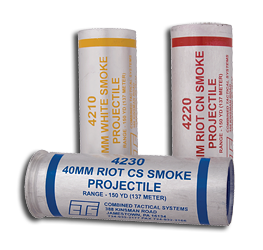
The tear gas being fired at demonstrators in Cairo is manufactured by the US company, Combined Systems.

Facebooktwittermail

U.S. warns Egypt as military stalls transition to democracy

The New York Times reports: Brazen attempts by Egypt’s interim military rulers to hold on to power long after elections have elicited a sharp reaction domestically and for the first time have prompted Washington to warn about the potential for new unrest.

After months of mixing gentle pressure with broad support for the ruling military council, the Obama administration has sharpened its tone, senior administration officials say, expressing concern that the failure to move to civilian control could undermine the defining revolt of the Arab Spring.

The shift in tone is part of a difficult balancing act for Washington, which is keen to preserve its ties to the military and its interests in the region, chiefly Egypt’s role in maintaining peace with Israel. But Washington also hopes to win favor with Egypt’s newly empowered political opposition while avoiding the appearance of endorsing the military’s stalled transition to democracy. All things considered, some here have suggested, the change in tone may be intended to placate Egyptian public opinion rather than actually press the military to give up power.

Facebooktwittermail

The Iranian-American game of chicken

Reza Marashi writes: Iranian foreign minister Ali Akbar Salehi made headlines recently when he said the Islamic Republic would like to have friendly relations with the United States—but not under the current conditions. He added that while U.S. officials express a desire for discussions, U.S. actions don’t always conform to that expression. In the meantime, “negotiations will certainly not have any meaning.”

For their part, American officials accuse the Iranians of a similar inconsistency. As Secretary of State Hillary Clinton put it recently to BBC Persian, “We are prepared to engage, if there is willingness on the other side, and we use sanctions—and the international community supports the use of sanctions—to try to create enough pressure on the regime that they do have to think differently about what they are doing.”

In an increasingly dangerous region where adversaries repeatedly provoke one another, it is important to dig beyond the rhetoric of this increasingly intense confrontation to better understand how the Iranian government views its own geopolitical standing. The thirty-two year absence of direct communication channels between America and Iran has fostered a dangerous cycle of miscalculation, misunderstanding and escalation. Salehi’s remarks reflect an Iranian view—based largely on these misperceptions and miscalculations—that time is on Tehran’s side.

Contrary to popular assumptions in Washington, the Iranian government’s skepticism regarding negotiations is not rooted in an ideological opposition to improving relations with the United States. Rather, Tehran perceives political constraints—both foreign and domestic—that limit Washington’s ability to engage in substantive diplomacy. Therefore, Iranian decision makers appear willing to wait and try again when events seem more propitious.

It is important to understand that Iran does not see itself as weakened by bilateral tensions and regional flux. Thus, hard-liners in Tehran grow more confident from perceived U.S. missteps and strongly oppose any relations with America that would require Iranian acquiescence to the status quo regional order and undermine Tehran’s perceived independence.

Iran’s long-term security calculation sees no downside in rejecting any engagement with Washington that places Iran in the role of compliant U.S. ally. Iranian decision makers see no example in the Middle East of relations with the U.S. based on equal footing. Patron-client relations are the norm, a norm Iran rejects for itself.

Facebooktwittermail

Russia promotes a “step by step” diplomatic initiative with Iran

Zvi Bar’el reports: It appears that Iranian President Mahmoud Ahmadinejad can rest easy for now, as voices coming from the European Union suggest a military operation is not in the offing. Not only do Syria and China reject such an attack, but on Monday, Germany, France and Turkey added their voices to those objecting to a military option. The United States also does not seem thrilled at the prospect of launching another war in the region.

The European and American plan to impose another dose of sanctions on Iran may be worrisome, but it likely isn’t threatening as long as China, Russia and several of the Gulf states continue regular trade relations with Iran.

The effort to impose restrictions on the export of gasoline to Iran, which can only supply 60 percent of its own demand, is unlikely to come to fruition, as some fear the restrictions would only harm the citizenry and not the regime. Furthermore, the efficacy of such a plan remains doubtful. Iran recently declared that it is capable of producing more gasoline; with a strict rationing program it might well be able to overcome the entire shortage. This would not necessarily mean that Iran could successfully supply its demand for gasoline over the long term, but it would certainly be able to significantly reduce its dependence on foreign imports.

The more ambitious aim of obtaining a UN Security Council resolution to impose international sanctions will have to wait, especially given Russia’s efforts to promote – together with Iran – a new diplomatic plan that is being dubbed “Step by Step.” Under the plan, Iran will begin to respond to the International Atomic Energy Agency’s demands. In exchange for every satisfactory response, the international community would gradually roll back the existing sanctions on Iran.

Iran’s deputy foreign minister visited Moscow last week to discuss this idea with his Russian counterpart, and on Sunday the Russian deputy foreign minister for Middle Eastern affairs, Mikhail Bogdanov, went to Tehran to discuss the joint diplomatic effort with Iranian Foreign Minister Ali Akbar Salehi.

Meanwhile, Iran is adopting a new line of public diplomacy aimed both at Europe and the United States. Yesterday Salehi declared, “Strengthening the ties between Europe and Iran will be very helpful to Europe, since if Turkey joins the European Union, Iran will be a close neighbor of Europe’s.”

Over the weekend Ahmadinejad also said that “The Iranians are a nation of culture and logic, and are not warmongers.” The remarks, made at an event marking the unveiling of ancient artifacts returned by Britain to Iran, received big headlines in the Iranian press.

It is not clear what Ahmadinejad meant by “logic,” yet it notably was Ahmadinejad who initiated the 2010 agreement to deposit Iranian uranium in Turkey. Ahmadinejad is also believed to lead a certain school of thought that maintains it is better to come to an agreement with the West now, as opposed to the views of much of the radical religious leadership, which objects to any agreement.

In the end, Ayatollah Ali Khamenei will be the one to decide whether to promote any new diplomatic options. But the assessment that he still hasn’t given the green light for the production of nuclear weapons seemingly leaves the window of diplomatic opportunity open.

Ahmadinejad also can rest easy about his domestic situation. Yesterday he got some unexpected support from Mohammad Khatami, Iran’s former president, who is considered the leader of the Iranian opposition, and who until now never failed to criticize his rival. Khatami declared that if there were an attack on Iran, all groups – those that want reform and those that don’t – would unite to rebuff the attack.

Khatami defined the Israeli threat as “psychological warfare and a bluff,” but expressed concern that such psychological warfare could persuade the international community that an attack on Iran was possible.

Iranian opposition sources say that the debate over a possible attack on Iran plays directly into Ahmadinejad’s hands, since it boosts his political position not only vis a vis the opposition, but also vis a vis the supreme leader, Khamenei, whose confidants see Ahmadinejad as a political threat.

Facebooktwittermail

Dennis Ross: The departure of Israel’s man in the White House

Max Blumenthal writes: The Friday resignation of chief White House adviser on the Middle East Dennis Ross drew sharply contrasting reactions that reflected the sectarian, pro-Israel agenda his presence in government represented.

AIPAC, the key arm of the Israel lobby, issued a rare statement hailing Ross’s legacy. “In his tireless pursuit of Middle East peace, Ambassador Ross has maintained a deep understanding of the strategic value of the US-Israel relationship and has worked vigorously to prevent Iran from acquiring nuclear weapons.”

Rashid Khalidi, a former negotiator for the PLO who now directs the Middle East Institute of Columbia’s School of International and Public Affairs, had a less positive take on Ross’s legacy.

“Since the Reagan administration, Dennis Ross has played a crucial role in crafting Middle East policies that never served peace, which is today farther away than ever,” Khalidi said. “His efforts, which contributed to the growth in the number of Israeli settlers in the occupied territories, were marked by a litany of failures. It is long overdue for him and the bankrupt policies he represents to be shown the door.”

Despite references to Ross’s pro-Israel leanings by his defenders and detractors, his full impact on the trajectory of US policy towards the Middle East in general and the Arab Israeli conflict in particular remains underrated or under-reported.

Serving in four American administrators and overseeing a long and fruitless process to secure an end to the Israeli-Palestinian conflict, Ross did more than any official to advance Israeli ambitions of expansion at the cost of Palestinian pursuit of statehood and freedom.

Inside the Obama White House, Ross made little effort to conceal his pro-Israel agenda. While serving on the President’s National Security Council, Ross actively sought to obstruct the US from pressing Israel to engage in negotiations on final status issues like borders and refugees, or to apply measures to stop its construction of settlements in occupied East Jerusalem. At the same time, Ross spearheaded Washington’s effort to punish Iran for pursuing nuclear energy capacity, pushing for harsh sanctions against Iran that have proven fruitless. The New York Times described Ross simply as “Israel’s friend in the Obama White House.”

When Ross announced his resignation this week, he chose to do so before the board members of the Jewish People Policy Institute, a Jerusalem-based think tank founded by Israel’s Jewish Agency to develop prescriptions for combating threats to “Jewish demographics” in Israel and abroad. Ross directed the think tank for several years before entering the Obama administration. By the time Ross revealed his plans to retire from government, he had already arranged for a golden parachute with one of the key arms of the Israel lobby. In December, Ross will return to the Washington Institute for Near East Policy (WINEP), a hawkish think tank that he founded in collaboration with AIPAC. After nearly three decades of advancing Israel’s interests from the inside, Ross’s career had come full circle.

Facebooktwittermail

Former Guantanamo chief prosecutor: “A pair of testicles fell off the president after Election Day”

Jason Leopold reports: Morris Davis speaks bluntly about some of President Barack Obama’s policy decisions.

“There’s a pair of testicles somewhere between the Capital Building and the White House that fell off the president after Election Day [2008],” said Davis, an Air Force colonel who spent two years as the chief prosecutor of the Guantanamo Bay prison facility, during an interview at his Washington, DC, office over the summer and in email correspondence over the past several months. “He got his butt kicked. Not just with Guantanamo but with national security in general. I’m sure there are a few areas here and there where there have been ‘change,’ but to me it seems like a third Bush term when it comes to national security.”

Davis is “hugely disappointed” that Obama reneged on a campaign promise to reject military commissions for “war on terror” detainees, which human rights advocates and defense attorneys have condemned as unconstitutional.

The first military commission of the Obama administration got underway earlier this week with the arraignment of Abd Rahim al-Nashiri, the alleged mastermind of the October 2000 bombing of the USS Cole, who is facing terrorism and murder charges, began earlier this week. If convicted, Nashiri, one of three so-called high-value detainees that the Bush administration admitted was subjected to the drowning technique known as waterboarding and other brutal torture methods at CIA black site prisons, could be executed.

Facebooktwittermail

U.S. takes the lead on behalf of cluster bombs

Glenn Greenwald writes: Slightly more than two months after he was awarded the 2009 Nobel Peace Prize, President Obama secretly ordered a cruise missile attack on Yemen, using cluster bombs, which killed 44 innocent civilians, including 14 women and 21 children, as well as 14 people alleged to be “militants.” It goes without saying that — unless you want Rick Perry to win in 2012 — this act should in no way be seen as marring Obama’s presidency or his character: what’s a couple dozen children blown up as a part of a covert, undeclared air war? If anything, as numerous Democrats have ecstatically celebrated, such acts show how Tough and Strong the Democrats are: after all, ponder the massive amounts of nobility and courage it takes to sit in the Oval Office and order this type of aggression on defenseless tribal regions in Yemen. As R.W. Appel put it on the front page of The New York Times back in 1989 when glorifying George H.W. Bush’s equally courageous invasion of Panama: “most American leaders since World War II have felt a need to demonstrate their willingness to shed blood” and doing so has become “a Presidential initiation rite.”

But one aspect of the December, 2009, attack that perhaps did merit some more critical scrutiny was the use of cluster bombs, weapons which “scatter hundreds of bomblets over a large area but with limited accuracy and high failure rates.” The inevitability of “duds” — “unexploded ordnance” — poses a great risk to civilians, often well after the conflict has ended, since — like land mines — they often detonate when stumbled into by children and other innocents long after they disperse. According to the Cluster Munitions Coalition, cluster bombs “caused more civilian casualties in Iraq in 2003 and Kosovo in 1999 than any other weapon system.” As Wired pointed out, while the U.S. used these weapons in both Iraq and Afghanistan, “neither the Taliban nor Saddam used cluster bombs against U.S. troops.

Facebooktwittermail

Guantánamo: the most expensive prison in the world

The Miami Herald reports: Guards get combat pay, just like troops in Afghanistan, without the risk of being blown up. Some commanders get to bring their families to this war-on-terror deployment. And each captive gets $38.45 worth of food a day.

The Pentagon detention center that started out in January 2002 as a collection of crude open-air cells guarded by Marines in a muddy tent city is today arguably the most expensive prison on earth, costing taxpayers $800,000 annually for each of the 171 captives by Obama administration reckoning.

That’s more than 30 times the cost of keeping a captive on U.S. soil.

It’s still funded as an open-ended battlefield necessity, although the last prisoner arrived in March 2008. But it functions more like a gated community in an American suburb than a forward-operating base in one of Afghanistan’s violent provinces.

Congress, charged now with cutting $1.5 trillion from the budget by Christmas, provided $139 million to operate the center last year, and has made every effort to keep it open — even as a former deputy commander of the detention center calls it “expensive” and “inefficient.”

“It’s a slow-motion Berlin Airlift — that’s been going on for 10 years,” says retired Army Brig. Gen. Greg Zanetti, a West Point graduate who in 2008 was deputy commander at the detention center.

Both its location and temporary nature drive up costs, says Zanetti. While there, he wrote a secret study that compared the operation to Alcatraz, noting that Attorney General Robert F. Kennedy had closed it in 1963 because it was too expensive.

Facebooktwittermail

How the 99 percent beat Keystone XL

Jamie Henn writes: On Thursday afternoon, President Obama announced that the State Department will be sending plans for TransCanada’s controversial Keystone XL pipeline back to the drawing board. Most analysts think the 12- to 18-month delay will cause enough cost overruns and missed contracts that TransCanada will have to scrap the project altogether.

Keystone XL was going to be another fuse to the largest carbon bomb in North America: the Canadian tar sands. The tar sands are the dirtiest fuel on the face of the planet, and our top climate scientist says fully exploiting them could be “essentially game over” for the climate. We haven’t defused the bomb yet, but fighting Keystone has taught us a lot about how to dismantle it.

This fight started in indigenous communities in Canada and quickly spread down the pipeline route to ranchers in Nebraska and farmers in Texas. National environmental groups picked up the beat a while back. But it was the bravery of 1,253 people that transformed Keystone XL from a regional fight into the most important environmental question facing President Obama before the 2012 election.

For two weeks this August, one person after another was led away from the White House in handcuffs protesting Keystone XL. The sit-in united a uniquely diverse movement, from consummate D.C. insiders to indigenous leaders to Tea Party supporters. I was arrested on the second Wednesday with an architect from Philadelphia, a lawyer from National Resources Defense Council, and Darryl Hannah.

From those 1,253 people, the movement quickly spread. Protests met President Obama at nearly every public campaign stop. Groups of 50 to 100 people started visiting Obama for America offices to say, “We’re not going to donate or volunteer for your campaign until President Obama lives up to the promises he made in 2008, stands up to Big Oil, and kills this pipeline.” Hundreds of people were arrested in Ottawa to turn up the heat on the Canadian government. And this Sunday, more than 12,000 people surrounded the White House in a Keystone XL protest.

Facebooktwittermail

On Iran, the U.S. has a broken national security process

Reza Marashi writes: After weeks of hyping intelligence on the military aspects of Iran’s nuclear program, the Obama administration’s public statements on the recently released International Atomic Energy Agency report are curiously moderate. Off the record, U.S. officials say that not all of America’s intelligence findings were included in the I.A.E.A. report — which aims to reflect international consensus. This fact speaks to a larger challenge — that the United States faces a credibility problem. Key countries do not share Washington’s assessment of Iran, and thus it’s unlikely that the U.S. will disclose more substantial information.

Some administration officials would like to see harder evidence made public — if for no other reason than supporting calls for more “crippling” sanctions on Iran. But U.S. intelligence agencies reportedly oppose more detailed disclosures for fear of jeopardizing intelligence-gathering and sources. The U.S. is therefore unlikely to secure more robust U.N. sanctions when it makes its case to the Security Council.

More important but less understood, however, are two longstanding and increasingly dangerous institutional problems within the U.S. government that this case has brought to the fore: an overreliance on intelligence and under-utilization of diplomatic resources when formulating Iran policy. By treating diplomacy with Iran as a reward to be earned rather than the vital national security tool that it is, American politicians have been administering a self-inflicted wound.

The recent allegations against Iran show the critical role that intelligence can play in helping policymakers gather information and make decisions on the most challenging issues. However, intelligence is not meant to be taken in isolation — and when it comes to America’s Iran policy, it almost always is.

While serving in the State Department’s Office of Iranian Affairs, I learned the 10 percent rule: intelligence is meant to make up approximately 10 percent of the overall information used to analyze strategic issues. The remaining 90 percent consists of embassy reporting and unclassified, open-source information.

As a whole, this symbiotic process is meant to provide a balanced, broader context to policymakers. Intelligence is supposed to be the missing piece of the puzzle — not the only piece. Overreliance on intelligence to support key policy decisions results in skewed or incomplete analysis that lacks the fuller context needed for sound decision-making. As this information vacuum grows over time, so too does the likelihood of misperceptions, miscalculations and dangerous mistakes.

Intelligence is not a substitute for the critical work of diplomats on the ground — and perhaps no foreign policy issue demonstrates this more forcefully than Iran. Simply put, a vital national security process has been broken for over three decades, and American politicians are exacerbating rather than repairing it.

Facebooktwittermail

We’re spending more on nukes than we did during the Cold War?!

Adam Weinstein writes: On April 5, 2009, President Barack Obama took the stage before 20,000 people in Prague’s Hradcany Square to offer an ambitious global vision. “Today, I state clearly and with conviction America’s commitment to seek the peace and security of a world without nuclear weapons,” he told the open-air audience in the former Eastern Bloc capital. “To put an end to Cold War thinking, we will reduce the role of nuclear weapons in our national security strategy, and urge others to do the same.”

The timing of his bold promise seemed perfect. Russia was ready to whittle down its destructive power; a year later, Obama and President Dmitri Medvedev would sign a treaty limiting both countries to 1,500 active warheads—though still enough to annihilate millions of people, a 50 percent reduction to each nation’s atomic arsenal. Back home, lawmakers on Capitol Hill were scrutinizing the federal budget for unnecessary spending, and nuclear weapons no longer appeared to be off limits.

Even the military brass was moving away from relying upon nuclear deterrence. The Pentagon’s 2010 Nuclear Posture Review (PDF) concluded that “[t]he massive nuclear arsenal we inherited from the Cold War era of bipolar military confrontation is poorly suited to address the challenges posed by suicidal terrorists and unfriendly regimes seeking nuclear weapons.”

But shrinking America’s nuclear arsenal has turned out to be far easier said than done. Despite the New Strategic Arms Reduction Treaty (START) cuts, federal spending on the atomic stockpile is actually beyond Cold War levels, driven by congressional hawks and powerful nuclear labs eager to “modernize” the arsenal and fund projects that could spark a new arms race.

During the Cold War, the United States spent, on average, $35 billion a year on its nuclear weapons complex. Today, it spends an estimated $55 billion. The nuclear weapons budget is spread across the Department of Defense, the Department of Energy, and the Department of Homeland Security, and the government doesn’t publicly disclose how much it spends on its various aspects, from maintaining our nuclear arsenal to defending against other countries’ nukes. Altogether, it spent at least $52.4 billion on nuclear weapons in 2008, the last year anyone attempted to piece together the total cost, according to the Carnegie Endowment for Peace. (And that doesn’t include classified programs.) That was five times the size of the State Department’s budget, seven times the EPA’s, and 14 times what the DOE spent on everything else it does.

Facebooktwittermail

Sarkozy tells truth about Netanyahu but press decide it’s too sensitive to report

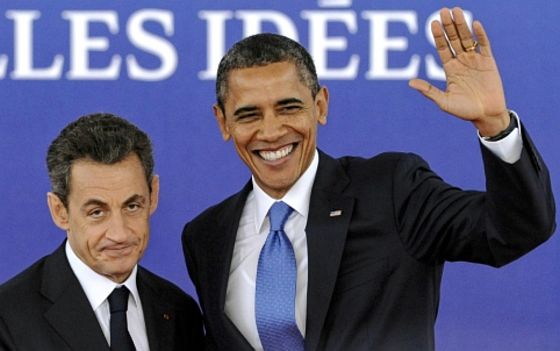
Sarkozy tells Obama, Netanyahu's a liar. Journalists blush.

“Who the fuck does he think he is? Who’s the fucking superpower here?” Bill Clinton said in exasperation about Benjamin Netanyahu after one of the Israeli prime minister’s characteristic displays of arrogance in 1996.

Now we learn that last Thursday at the G20 summit in Cannes, France’s President Nicolas Sarkozy privately described Netanyahu as a “liar” and said “I cannot stand him,” to which President Obama gave the fairly tepid response: “You’re fed up with him, but I have to deal with him every day!”

The exchange was picked up on an open microphone but the press in Cannes who overheard the presidential tête-à-tête agreed that it was too sensitive to report.

Are these journalists or presidential courtiers?

The surprising lack of coverage may be explained by a report alleging that journalists present at the event were requested to sign an agreement to keep mum on the embarrassing comments. A Reuters reporter was among the journalists present and can confirm the veracity of the comments.

A member of the media confirmed Monday that “there were discussions between journalists and they agreed not to publish the comments due to the sensitivity of the issue.”

He added that while it was annoying to have to refrain from publishing the information, the journalists are subject to precise rules of conduct.

Like when they are supposed to curtsy, make full bows, or discreetly look the other way?

Even now, now that the Sarkozy-Obama indiscretion has leaked out, there are several variations of translation of what Obama said.

“You may be sick of him, but me, I have to deal with him every day.” “You’ve had enough of him? I have to deal with him every day!”

These are different ways of translating “Tu en as marre de lui, mais moi, je dois traiter avec lui tous les jours !” That’s how Obama’s words were rendered on ArretSurImages.net.

So even though the press has broken its four day silence, instead of reporting the exact wording — words surely spoken in English — the press is merely repeating what has been reported on the French website — and even though the contents of that report have been confirmed by Reuters.

Watch out for the word sensitivity in any news report. Chances are, what it really refers to is complicity.

Facebooktwittermail

Why are we being readied for war with Iran?

If you want to start a war with Iran, apparently the lesson from Iraq is not that war is a dumb idea; it’s that the war charge cannot be led by the U.S. administration or a ragtag band of expatriates.

The pretext for war needs to be presented by an international body that is perceived as independent and objective. So, if you want to start a war with Iran, who could present a more compelling justification for war than the International Atomic Energy Agency?

But can the U.S. government rely on the IAEA to fulfill its covertly designated role?

Now that the irritatingly independent Mohamed ElBaradei is out of the way, we know — thanks to Wikileaks — that Washington is much more comfortable with the agency’s new director general, Yukiya Amano, who is “solidly in the U.S. court on every key strategic decision, from high-level personnel appointments to the handling of Iran’s alleged nuclear weapons program.”

The Obama administration, as well as being able to rely on the IAEA to align itself with U.S. goals, can of course always rely on the New York Times to fulfill its role as an informal ministry of information. Just as Izvestia functioned as the “delivered message” of the Soviet government, reporters like David Sanger gladly parrot their administration sources rather than question what they are being told.

[T]he Obama administration, acutely aware of how what happened in Iraq undercut American credibility, is deliberately taking a back seat, eager to make the conclusions entirely the I.A.E.A.’s, even as it continues to press for more international sanctions against Iran. When the director of the agency, Yukia Amano, came to the White House 11 days ago to meet top officials of the National Security Council about the coming report, the administration declined to even confirm he had ever walked into the building.

The final touches are still being put on the report and its critical annex, where some of the investigative details will be laid out, which may be released as early as Wednesday. But already Russia and China have sent a diplomatic protest to Mr. Amano, urging him to not to make details of the evidence public.

“Russia and China are of the opinion that such kind of report will only drive Iran into a corner,” they wrote in the note, which was obtained by The New York Times and is a rare instance of those countries commenting jointly.

Obtained by the New York Times — but from who?

Knowing how a piece of information enters the public domain can be as important as the information itself. If these reporters gave some indication about where the note came from, they would thereby provide a clearer indication about whose agenda is being served by its revelation.

Sources do of course often need to be concealed and over at Arms Control Wonk, Jeffrey Lewis obliges “an observer” by allowing him to remain nameless. Regular readers of ACW will know, however, that this is a blog not only with stellar contributors but also a highly informed readership. This observer writes:

For some reason, everyone and his cousin are suddenly seized the idea that there must be an urgent need to (at a minimum) contemplate whether to bomb Iran. No one can quite say why now, though. As Ari Shavit writes in Ha’aretz, with an impressive combination of eloquence and lack of substance:

For the past decade it has been clear that we are facing an Iranian deadline. Time after time the deadline has been put off. But it is real and it is imminent. Unless an international miracle, or an interior-Iranian miracle takes place, we will reach the crossroads.

‘When we stand at the crossroads we will have two options – prevention or deterrence. To launch a military offensive or to emerge from nuclear ambiguity. One way or another, all chaos will break loose in the Middle East. One way or another, all chaos will break loose in Israel. What was will be no more. A new era will begin.’

But just what technical or political fact has brought the deadline to the crossroads?

Why, exactly, is there an insistence that Iran is racing up to some undefined sharply defined point where its adversaries, Israel included, must either strike preventively or accept an uneasy relationship of mutual (nuclear) deterrence? If Iran is racing, so were Achilles and the Tortoise. It’s more like tiptoeing.

Shavit is now the umpty-teenth commentator, Israeli or otherwise, who apparently cannot imagine that nuclear opacity or ambiguity could apply to states other than Israel.

The drumbeat for war against Iran suggests that not only do Iran’s enemies regard the Islamic state’s acquisition of nuclear weapons as intolerable, but Tehran must be punished simply for its lack of transparency.

Facebooktwittermail