Category Archives: US government

Why the NSA ruling could backfire into a court disaster we’ll regret for decades

Steven Rosenfeld writes: Pundits across the political left should be careful about heaping too much praise on U.S. District Judge Richard Leon for this week’s dramatic ruling that the National Security Agency’s electronic dragnet capturing Americans’ online activities is “significantly likely” to be unconstitutional, even though it is a powerful rebuke to America’s spymasters.

That’s because Leon, a longtime Republican warrior, is as much of a legal loudmouth and rightwing activist judge as U.S. Supreme Court Justice Antonin Scalia. More importantly, his elbows-out 68-page opinion is not going to be the last word on the government’s data mining. Leon’s ruling is one of several NSA-related suits moving through the federal courts, including rulings that have reached the opposite conclusion.

“It should be noted that last month Judge Jeffrey Miller of the Southern District of California found the NSA business records program to be constitutional,” Sen. Dianne Feinstein, Senate Intelligence Committee chairwoman, said Tuesday. “Leon’s opinion also differs from those of at least 15 separate federal district court judges… Only the Supreme Court can resolve the question on the constitutionality of the NSA’s program.”

These conflicts will likely trigger a review by the Supreme Court, where the conservative majority already has sanctioned NSA electronic eavesdropping and is known for elevating government searchs over individual rights. In other words, Leon’s rebuke may help put the issue in front of a court majority that is poised to codify national security over privacy rights. [Continue reading…]

Facebooktwittermail

Three months in Rouhani’s Iran

Farideh Farhi writes: I have recently returned from a three-month trip to Iran. I arrived in Tehran in early September before the famous Rouhani/Obama phone call and departed last week as the mood was turning more skeptical regarding the potential for some sort of final nuclear deal, which, in the words of Foreign Minister Javad Zarif, would “normalize” the status of Iran’s nuclear program if it were to happen.

Frankly, sitting in Tehran, it was hard to listen to various Obama administration officials’ frenzied explanations to the US Congress and Israeli government regarding how, even with the first-step agreement, Iran will remain in dire straits. It was hard to listen without becoming skeptical about the US political environment allowing an agreement that would also be acceptable to Iran. From the receiving end of all the nuclear chatter, the whole American demeanor on Iran appears imperious, even outright uncivilized; like people speaking calmly about the taking of others’ lives and imposing further economic misery on them as options that are still very much on the table.

As I write this, news has broken that the Iranian experts engaged in talks in Vienna over the first phase of the “Joint Plan” were abruptly recalled to Tehran in reaction to the blacklisting of 19 Iranian companies by the US Treasury Department — a move that both Iran and Russia said violated the “spirit” of the Geneva accord. The spokesperson of Iran’s Foreign Ministry, Marzieh Afkham, in describing the “unconstructive moves” by the Obama Administration, regretted “serious confusion in the approach, decisions, and statements of US officials.”

When I was in Tehran, Iranian officials of various political persuasions were rather soft in their reaction to all the hard talk coming out of Washington. Several officials, including key members of the Parliament, expressed their understanding of the Obama administration’s predicament in trying to sell the Geneva agreement to the US Congress. Talk about continuing pressure on Iran did provide ammunition to folks like Hossein Shariatmadari, the hawkish chief editor of the well-known Iranian daily, Kayhan, but Washington’s verbal assaults were mostly tolerated, even if Foreign Minister Zarif acknowledged that they were making his efforts to maintain support for the agreement difficult. But it appears that the latest Treasury Department move, which followed a rather harsh op-ed in the Wall Street Journal by David Cohen, the Undersecretary for Terrorism and Financial Intelligence, made looking the other way difficult. Lest we forget: Iran also has domestic politics. Unlike its reception in Washington, the Iranian nuclear agreement was mostly greeted positively in Tehran given the general consensus that it’s time to resolve the nuclear imbroglio. But there are limits to what Tehran can ignore.

I am inclined to view this event as an “enough is enough” public statement directed at Congress and aimed at limiting further moves by the Treasury Department. Both the Obama and Rouhani administrations have raised the stakes in the talks high enough to prevent unraveling at this early stage. Nevertheless, the chances of this are quite high, particularly if the Iranian context for the decision to engage in talks in the current manner is misunderstood or willfully misconstrued. [Continue reading…]

Facebooktwittermail

The disappearance of CIA contractor Robert Levinson: A rogue operation or a rogue intelligence agency? Updated

An Associated Press investigation has revealed that Robert Levinson, a former FBI agent who went missing in Iran in 2007 and who was at that time described by the State Department as “a private citizen involved in private business in Iran,” was in fact working for the CIA. He had been hired by a team of analysts who were running a rogue intelligence operation.

A 28-year veteran of the Drug Enforcement Administration and the FBI, Robert Levinson had a natural ability to cultivate informants. Former colleagues say he was an easy conversationalist who had the patience to draw out people and win their confidence. He’d talk to anyone.

“Bob, in that sense, was fearless,” said retired FBI Assistant Director Mark Mershon, who worked with Levinson in Miami in the 1980s. “He wasn’t concerned about being turned down or turned away.”

As the Soviet Union collapsed, Levinson turned his attention away from Mafia bosses and cocaine cartels and began watching the Russian gangsters who made their homes in Florida. Russian organized crime was a niche then and Levinson made a name as one of the few investigators who understood it.

At a Justice Department organized crime conference in Santa Fe, N.M., in the early 1990s, Levinson listened to a presentation by a CIA analyst named Anne Jablonski and spotted a kindred spirit.

Jablonski was perhaps the government’s foremost expert on Russian organized crime. Former colleagues say she had an encyclopedic memory and could, at the mere mention of a crime figure, quickly explain his place in the hierarchy and his method of moving money. When White House officials had questions about Russian organized crime, they often called Jablonski directly.

In the relatively staid world of CIA analysts, Jablonski was also a quirky character, a yoga devotee who made her own cat food, a woman who skipped off to Las Vegas to renew her vows in an Elvis-themed chapel.

After the Santa Fe conference, Levinson left a note for Jablonski at her hotel and the two began exchanging thoughts on organized crime. Jablonski invited Levinson to CIA headquarters in Langley, Va., to speak to her colleagues in the Office of Russian and European Analysis.

By the time Levinson retired from the FBI in 1998, he and Jablonski were close friends. She attended his going-away party in Florida, met his family and harvested his knowledge of organized crime.

In retirement, Levinson worked as a private investigator, traveling the world and gathering information for corporate clients. Jablonski, meanwhile, thrived at the CIA. After the Sept. 11 attacks, former colleagues say, she was assigned to brief Attorney General John Ashcroft and FBI Director Robert Mueller about terrorist threats every morning.

In 2005, Jablonski moved to the Office of Transnational Issues, the CIA team that tracks threats across borders. Right away, she arranged for Levinson to speak to the money-laundering experts in the office’s Illicit Finance Group.

In a sixth-floor CIA conference room, Levinson explained how to track dirty money. Unlike the analysts in the audience, Levinson came from the field. He generated his own information.

In June 2006, the head of Illicit Finance, Tim Sampson, hired Levinson on a contract with the CIA, former officials said. Like most CIA contracts, it was not a matter of public record. But it also wasn’t classified. [Continue reading…]

Following an internal investigation into the events leading up to Levinson’s disappearance, Jablonski and Sampson were forced to resign. [The New York Times reports that Jablonski says she refused to resign and was fired. See update below.]

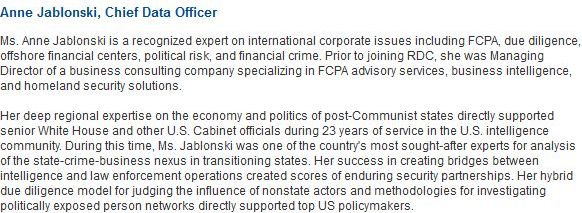
Jablonski later became chief data officer for Regulatory DataCorp, Inc. (RDC), a private intelligence company serving major banks. Yesterday evening the company’s website leadership page included this description of her:
jablonski

Today a company representative I spoke to said that she no longer works there but couldn’t tell me when she left. Presumably it was within hours of the publication of the Associated Press report.

USA Today reports that the White House strongly urged AP not to run the story:

“Without commenting on any purported affiliation between Mr. Levinson and the U.S. government, the White House and others in the U.S. Government strongly urged the AP not to run this story out of concern for Mr. Levinson’s life,” said a statement from Caitlin Hayden, a spokesperson for the National Security Council.

NBC News, however, reports that Levinson’s family believe the disclosure may be helpful:

Friends and relatives of Robert Levinson, a retired FBI agent who disappeared in Iran more than six years ago, say they hope new disclosures that he was working for the CIA will lead to more action to get him home.

“Bob is a courageous man who has dedicated himself, including risking his own life, in service to the U.S. government,” Levinson’s family said in a statement provided to NBC News. “But the U.S. government has failed to make saving this good man’s life the priority it should be.”

While the account told by the AP places emphasis on the role of Anne Jablonski, characterizing her as “quirky” (like 20 million other Americans she practices yoga) and implies that as “kindred spirits” she and Levinson perhaps carry equal responsibility for conducting a rogue operation, the story says nothing about the prevailing culture in the CIA after Vice President Dick Cheney had said that it would need to operate on “the dark side.”

The idea of a group of analysts contracting an American to conduct a clandestine mission inside Iran might sound reckless, but the fact is, they were working inside an agency that was engaged in targeted killing, torture, kidnapping, and the operation of secret prisons.

Governments, their agencies, and companies, all expect unswerving loyalty from their employees, but the obligations of loyalty invariably seem to flow in only one direction.

Update: Following the publication of the AP report, the New York Times has also released a report which it has published after receiving the Levinson family’s permission. The report contains a great deal of additional information about the fruitless efforts to find Levinson. It also contains details that raise questions about whether Jablonski was turned into a scapegoat by the CIA. It should be noted that the agency’s own investigation was triggered by the intervention of Levinson’s senator, who had himself be informed about the case by the Levinson family’s lawyer.

In March 2008, a year after Mr. Levinson’s disappearance, his wife was called to a meeting at F.B.I. headquarters. There C.I.A. officials acknowledged for the first time that he had worked for them. Had it been left up to the C.I.A., it is unlikely that meeting would have occurred.

Mr. McGee [the family lawyer] and Mr. Silverman [a retired NBC investigative producer who had arranged Levinson’s meeting in Iran] had given records from Mr. Levinson’s files that documented his C.I.A. work to the Senate Select Committee on Intelligence. Senator Bill Nelson, Democrat of Florida, called in top agency officials and demanded an explanation. Those officials said they had never been alerted that an agency contractor was missing and promised to investigate.

Not long afterward, two C.I.A. officials met with Ms. Levinson and Mr. McGee at his office in Pensacola, Fla. They started by delivering a message. “They wanted to officially apologize on behalf of the C.I.A. to the Levinson family,” Mr. McGee recalled.

According to Mr. McGee, the C.I.A. officials said that while an inquiry had not found a “smoking gun” proving that the agency knew in advance about Mr. Levinson’s trip, it did conclude that Ms. Jablonski and her boss, Mr. Sampson, had misled officials about his work.

The agency gave Ms. Jablonski, Mr. Sampson and another top C.I.A. analytical official a choice: They could resign from the agency or be fired, according to several people familiar with the matter. Mr. Sampson and the other official resigned. Ms. Jablonski said she had refused and had been fired. In 2008, when Mr. McGee made it clear he was prepared to sue the C.I.A., the agency agreed to pay $2.25 million to Christine Levinson, whether or not her husband returned.

Ms. Jablonski later said in an interview that the C.I.A.’s suggestion she had abandoned a friend to protect her career was a lie. She said she had never imagined Mr. Levinson would go to Kish and insisted that she would have stopped him had she known.

She described herself as a convenient scapegoat for the C.I.A. She said that during the agency’s internal inquiry she had been repeatedly interrogated inside a windowless room by two former operatives. The men belittled Mr. Levinson’s intelligence reports as useless and suggested she might have been complicit in his disappearance.

“For all we know, you were angry with your friend and sent him to Iran to be killed,” she said one of them told her.

Facebooktwittermail

AT&T accused of violating privacy law with sale of phone records to CIA

Ars Technica: Consumer advocates have asked the Federal Communications Commission (FCC) to declare that AT&T violated a privacy rule in the Communications Act by selling phone records to the Central Intelligence Agency (CIA).

A report last month said that “AT&T has turned over international calling records to the CIA. The telecom charges the CIA more than $10 million per year in exchange for access to metadata about calls by suspected terrorists overseas.”

In response, a group of consumer advocacy groups led by Public Knowledge filed a petition today with the FCC.

Appealing to the FCC is a new tactic against government collection of calling records. Previously, privacy advocates have tried to shut down the phone collection by filing lawsuits, including one in the Supreme Court. [Continue reading…]

Meanwhile, Reuters reports: Verizon Communications Inc told activist investors on Wednesday that it might skip a vote on a shareholder proposal that seeks details on the company’s cooperation with government surveillance efforts.

Verizon’s law firm Jones Day said in a November 25 letter that the company would exclude the measure from its 2014 proxy statement unless the activists did more to verify their eligibility to file the proposal.

The company’s response appears to be more aggressive than the stance AT&T Inc took against a similar proposal, said Jonas Kron, senior vice president for Trillium Asset Management, a co-filer of the measures at both telecommunications companies.

Facebooktwittermail

NYT and Washington Post provide cover for Israel lobby’s efforts to obstruct Iran deal

Philip Weiss writes: The lobby is doing its utmost to sandbag the breakthrough agreement between the U.S. and Iran. The Congress is now readying yet more sanctions bills; the Forward says Democrats are backing the legislation or doing nothing to oppose it because “These are the men and the women, after all, who are on a first-name basis with most of the board of AIPAC.” MJ Rosenberg says the Israel lobby is the reason Sens. Tim Kaine, Sherrod Brown and — conspicuously — progressive Elizabeth Warren have been silent on the diplomatic breakthrough.

One reason that supposed liberals can get away with this is that the New York Times and the Washington Post give them no heat. In reporting on the sanctions effort, our leading papers leave out the lobby’s role, allowing the nightflower to remain a nightflower. [Continue reading…]

Facebooktwittermail

Iran’s FM says sanctions would kill nuclear deal

Time magazine: In a wide-ranging interview with TIME in Tehran on Dec. 7, Iran’s Foreign Minister Mohammed Javad Zarif spoke to writer and Iran expert Robin Wright about how the Geneva nuclear deal came together, how the government has to appeal to Iran’s own parliament not to undermine the interim pact, and how any new sanctions passed by the United States Congress would kill the deal. The agreement, reached between Iran and six world powers in November, calls for a freeze on parts of Iran’s nuclear program in exchange for an easing of sanctions. It is meant to pave the way for a final settlement between Iran and the international community on Iran’s nuclear program. Iran says the program is for civilian purposes only; world powers fear that it has a military component. Speaking in the ornate Foreign Ministry building, Zarif also indicated that Iran might not be wedded to Syria’s President Bashar Assad, a long-time ally, and he said that Iran hoped for a “duly monitored” democratic election in Syria. Iran’s most high-profile cabinet official warned that the deepening sectarianism playing out in Syria does not recognize borders and has implications “on the streets of Europe and America.” [Continue reading…]

Facebooktwittermail

Why won’t the President rein in the intelligence community?

Ryan Lizza writes: On March 12, 2013, James R. Clapper appeared before the Senate Select Committee on Intelligence to discuss the threats facing America. Clapper, who is seventy-two, is a retired Air Force general and Barack Obama’s director of National Intelligence, in charge of overseeing the National Security Agency, the Central Intelligence Agency, and fourteen other U.S. spy agencies. Clapper is bald, with a gray goatee and rimless spectacles, and his affect is intimidatingly bureaucratic. The fifteen-member Intelligence Committee was created in the nineteen-seventies, after a series of investigations revealed that the N.S.A. and the C.I.A. had, for years, been illegally spying on Americans. The panel’s mission is to conduct “vigilant legislative oversight” of the intelligence community, but more often it treats senior intelligence officials like matinée idols. As the senators took turns at the microphone, greeting Clapper with anodyne statements and inquiries, he obligingly led them on a tour of the dangers posed by homegrown extremists, far-flung terrorist groups, and emerging nuclear powers.

“This hearing is really a unique opportunity to inform the American public to the extent we can about the threats we face as a nation, and worldwide,” Dianne Feinstein, a California Democrat and the committee’s chairman, said at one point. She asked committee members to “refrain from asking questions here that have classified answers.” Saxby Chambliss, a Georgia Republican, asked about the lessons of the terrorist attack in Benghazi. Marco Rubio, a Florida Republican, asked about the dangers of Egypt’s Muslim Brotherhood.

Toward the end of the hearing, Feinstein turned to Senator Ron Wyden, of Oregon, also a Democrat, who had a final question. The two senators have been friends. Feinstein held a baby shower for Wyden and his wife, Nancy Bass, before the birth of twins, in 2007. But, since then, their increasingly divergent views on intelligence policy have strained the relationship. “This is an issue where we just have a difference of opinion,” Wyden told me. Feinstein often uses the committee to bolster the tools that spy agencies say they need to protect the country, and Wyden has been increasingly concerned about privacy rights. For almost a decade, he has been trying to force intelligence officials like Clapper to be more forthcoming about spy programs that gather information about Americans who have no connection to terrorism.

Wyden had an uneasy kind of vindication in June, three months after Clapper’s appearance, when Edward Snowden, a former contractor at the N.S.A., leaked pages and pages of classified N.S.A. documents. They showed that, for the past twelve years, the agency has been running programs that secretly collect detailed information about the phone and Internet usage of Americans. The programs have been plagued by compliance issues, and the legal arguments justifying the surveillance regime have been kept from view. Wyden has long been aware of the programs and of the agency’s appalling compliance record, and has tried everything short of disclosing classified information to warn the public. At the March panel, he looked down at Clapper as if he were about to eat a long-delayed meal. [Continue reading…]

Facebooktwittermail

Is Silicon Valley taking a stand in favor of surveillance reform or simply assuming a posture?

Jeff Jarvis writes: Whose side are you on? That is the question MP Keith Vaz asked Alan Rusbridger last week when he challenged the Guardian editor’s patriotism over publishing Edward Snowden’s NSA and GCHQ leaks.

And that is the question answered today by eight tech giants in their letter to the White House and Congress, seeking reform of government surveillance practices worldwide. The companies came down at last on the side of citizens over spies.

Of course, they are also acting in their own economic (albeit enlightened) self-interest, for mass spying via the internet is degrading the publics’, clients’, and other nations’ trust in the cloud and its frequently American proprietors. Spying is bad for the internet; what’s bad for the internet is bad for Silicon Valley; and — to reverse the old General Motors saw — what’s bad for Silicon Valley is bad for America.

But in their letter, the companies stand first and firmly on principle. They propose that government limit its own authority, ending bulk collection of our communication. They urge transparency and oversight of surveillance, which has obviously failed thus far. And they argue against the balkanization of the net and the notion that countries may insist that data respect national borders.

Bravo to all that. I have been waiting for Silicon Valley to establish whether it collectively is a victim or a collaborator in the NSA’s web. I have wondered whether government had commandeered these companies to its ends. I have hoped they would use their power to lobby for our rights. And now I hope government — from Silicon Valley’s senator, NSA fan Dianne Feinstein, to president Obama — will listen.

This is a critical step in sparking real debate over surveillance and civil rights. It was nice that technology companies banded together once before to battle against the overreaching copyright regime known as SOPA and for our ability to watch Batman online. Now they must fight for our fundamental — in America, our constitutional — rights of speech and assembly and against unreasonable search and seizure. ‘Tis a pity it takes eight companies with silly names to do that. [Continue reading…]

The makeup of the band of corporate reformists seems to have been dictated by PowerPoint, which is to say, everyone named on the slides leaked by Snowden wants to salvage their reputation. But the problem with this type of appeal for reform is that it’s no different from the kind that might be made by any toothless advocacy group. Indeed, if these companies just want to present a wish-list of the kind of reform they claim they would like to see, then it’s pretty obvious that if no such reform is forthcoming then it will be back to business as usual.

The only thing about which we can be absolutely confident is that now, as always, corporations will act in accordance with what they determine are their own interests.

Facebooktwittermail

Intelligence contractors donate millions to intelligence watchdogs in Congress

The Center for Public Integrity: Most intelligence-related spending by the U.S. government is subject to independent scrutiny and monitoring by a small number of people — primarily, the 40 lawmakers assigned to the House and Senate intelligence committees, plus the roughly 100-member staffs of those two committees.

The lawmakers are meant to provide a key check on waste, fraud, abuse, and potential illegalities, since intelligence-related spending and activities are ordinarily well outside the public’s view.

According to a new report, however, every single one of those lawmakers has received campaign funds from twenty of the largest contractors providing intelligence services to the Defense Department, which accounted for a signficant portion of the nation’s overall $75.4 billion intelligence budget in 2012.

The total, election-related benefits for current intelligence committee members, including ex-officio members, provided by companies in the industry they directly oversee amount to at least $3.7 million from the companies’ PACs and employees since 2005, according to the report released Dec. 9 by Maplight.org, a nonpartisan group that investigates campaign finance issues.

Facebooktwittermail

The specter of global domination

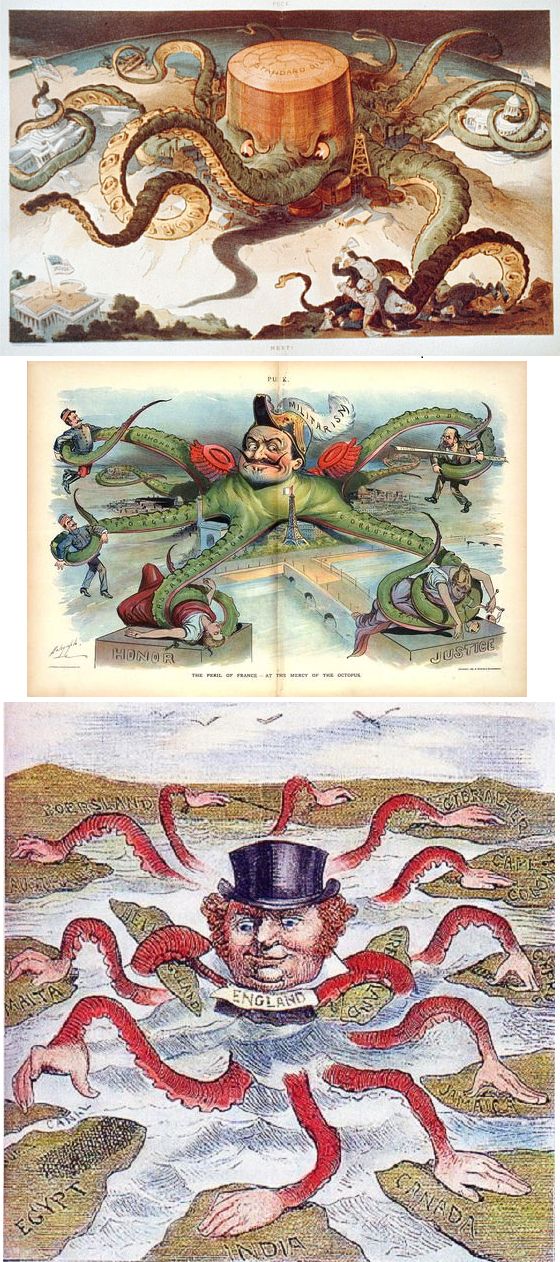
spectreWhen Ian Flemming created the fictional SPECTRE (SPecial Executive for Counter-intelligence, Terrorism, Revenge and Extortion), a terrorist organisation aimed at world domination, he chose a familiar icon — the octopus — long favored by those who want to evoke images of evil. Its tentacles represent strength, stealth, ugliness, vast reach, and ruthlessness.
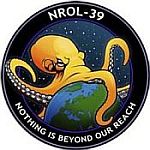
nrolFor the National Reconnaissance Office (NRO), which chose a world-grasping octopus and the slogan “Nothing is Beyond Our Reach” to adorn its latest spy satellite that launched from California on Thursday, the octopus represents “a versatile, adaptable, and highly intelligent creature.”

That’s an accurate description of an octopus as a creature but not of an octopus as a symbol.

While the mission of NROL-39 is classified, it is believed to be a remnant of the Future Imagery Architecture, a program which was described in the New York Times in 2007 as “perhaps the most spectacular and expensive failure in the 50-year history of American spy satellite projects.”

nrol-39

In a recent interview with the BBC, Glenn Greenwald said:

The goal of the United States government and the UK government, its closest surveillance ally, is to eliminate all privacy globally, by which I mean, to make every form of electronic communication by and between all human beings, collected, stored, analyzed, and monitored by the U.S. and its four English-speaking Five Eyes partners in the surveillance world.

One can view NROL-39 and its choice of symbols as yet another example of this relentless drive towards global domination in surveillance that Greenwald describes, or, one can apply a bit of analysis in a more fruitful, realistic but perhaps less hyperbolic direction.

As news reports appeared showing the NRO’s poor choice of imagery, I expect that inside the Pentagon and across the intelligence community, there was no shortage of individuals who smacked their own foreheads as they wondered: who could be so clueless? U.S. intelligence already has a massive image problem. It just got worse.

As a defense establishment agency, I’m sure the NRO does not have an artist-in-residence who is given a free hand to design and deploy a spy satellite logo of their choice. On the contrary, like any other government bureaucracy, the NRO no doubt has a careful review process through which draft designs are viewed and approved or rejected. So it’s very unlikely that when NROL-39 blasted into orbit, the global dominating octopus on its side lacked any of the sign-offs in the stages of authorization required by the agency. In other words, government officials across multiple ranks of seniority saw the logo and said: “Looks good to me.”

What the octopus logo reveals says much less about the ability of the intelligence agencies to control the world than it says about the competence and judgement of the people in charge.

The NRO is run by Betty J. Sapp and she isn’t a rocket scientist — business management is supposedly her expertise.

When those aspects of an intelligence agency’s work that are on public display evince this level of cluelessness, there’s no reason to imagine that under a cloak of secrecy it operations are more efficient.

We probably have less reason to be worried about our freedoms being curtailed than we have reason to be angry about the vast waste of resources all incurred in the name of national security.

octopus-domination

Facebooktwittermail

The best and the brightest: More members with PhDs from U.S. universities in Rouhani’s cabinet than in Obama’s

Moisés Naím writes: Hassan Rouhani, Iran’s president, has more cabinet members with Ph.D. degrees from U.S. universities than Barack Obama does. In fact, Iran has more holders of American Ph.D.s in its presidential cabinet than France, Germany, Italy, Japan, Russia, or Spain — combined.

Take, for example, Rouhani’s chief of staff, Mohammad Nahavandian. He spent many years in the United States and has a Ph.D. in economics from George Washington University. Or Javad Zarif, the foreign affairs minister and chief negotiator in the recent nuclear deal between Iran and six global powers. He studied at the University of San Francisco and completed his doctorate at the University of Denver. For five years, he lived in New York and was Iran’s ambassador to the United Nations. Ali Akbar Salehi, head of Iran’s Atomic Energy Organization, has a Ph.D. in nuclear engineering from MIT. Mahmoud Vaezi, the communication minister, studied electrical engineering at Sacramento and San Jose State Universities and was enrolled in the Ph.D. program at Louisiana State University (he ultimately earned a doctorate in international relations at Warsaw University). Other cabinet members have advanced degrees from universities in Europe and Iran. Abbas Ahmad Akhoundi, the transportation minister, has a Ph.D. from the University of London, while President Rouhani got his from Glasgow Caledonian University in Scotland. The new government in Tehran, in other words, might well be one of the most technocratic in the world.

Does this matter? On the surface, perhaps not much. We all know how often the governments of the “best and the brightest” disappoint. And it’s important to keep in mind that many of these highly credentialed cabinet members were also active participants in former Iranian administrations and backed policies that earned Iran’s theocracy its bad name. [Continue reading…]

Facebooktwittermail

Guantánamo detainees claim Poland allowed CIA torture

The Guardian reports: Lawyers for two men subject to extraordinary rendition by the CIA told the European court of human rights (ECHR) on Tuesday that Poland, which permitted a secret “black” site to operate on its territory, should be held responsible for their torture.

The two-day hearing at Strasbourg was the first time a European country has been taken to court for allowing US agencies to carry out “enhanced” interrogation and “waterboarding” programmes. In a highly unusual legal move, the media and public were barred from the opening day’s session.

The military base at Stare Kiejkuty, north of Warsaw, it was revealed, had previously been used by German intelligence and later the Soviet army during the second world war. One of the men, it was alleged, was subjected to mock executions while hooded and otherwise naked. [Continue reading…]

Facebooktwittermail

Feinstein and Rogers try to scare Americans with ooga booga terrorism threats

Mike Masnick writes: It appears that the heads of the Senate and House Intelligence Committees, Senator Dianne Feinstein and Rep. Mike Rogers, are recognizing that their strategy for keeping their co-dependent relationship with the NSA going is failing and that the American public and an increasingly large segment of Congress no longer believes their bogus claims. Perhaps that’s because every time they open their mouths, it takes all of about an hour before many of their claims are completely debunked, if not outright mocked for obviously being bogus. So their latest strategy? To basically yell “Ooga Booga Terrorists!” as loud as they can to try to scare people based on absolutely nothing. [Continue reading…]

Facebooktwittermail

Who is watching the watch lists?

Susan Stellin writes: Governments wade into treacherous waters when they compile lists of people who might cause their countries harm. As fears about Japanese-Americans and Communists have demonstrated in the past, predictions about individual behavior are often inaccurate, the motivations for list-making aren’t always noble and concerns about threats are frequently overblown.

So it might seem that current efforts to identify and track potential terrorists would be approached with caution. Yet the federal government’s main terrorist watch list has grown to at least 700,000 people, with little scrutiny over how the determinations are made or the impact on those marked with the terrorist label.

“If you’ve done the paperwork correctly, then you can effectively enter someone onto the watch list,” said Anya Bernstein, an associate professor at the SUNY Buffalo Law School and author of “The Hidden Costs of Terrorist Watch Lists,” published by the Buffalo Law Review in May. “There’s no indication that agencies undertake any kind of regular retrospective review to assess how good they are at predicting the conduct they’re targeting.”

What’s more, the government refuses to confirm or deny whether someone is on the list, officially called the Terrorist Screening Database, or divulge the criteria used to make the decisions — other than to say the database includes “individuals known or suspected to be or have been engaged in conduct constituting, in preparation for, in aid of, or related to terrorism and terrorist activities.”

Even less is known about the secondary watch lists that are derived from the main one, including the no-fly list (used to prevent people from boarding aircraft), the selectee and expanded selectee lists (used to flag travelers for extra screening at airport checkpoints), the TECS database (used to vet people entering or leaving the United States), the Consular Lookout and Support System (used to screen visa applications) and the known or suspected terrorists list (used by law enforcement in routine police encounters).

For people who have landed on these lists, the terrorist designation has been difficult to challenge legally — although that may be about to change. On Monday, a lawsuit brought by a traveler seeking removal of her name from the no-fly list, or at least due process to challenge that list, is going to trial in Federal District Court in San Francisco, after almost eight years of legal wrangling. [Continue reading…]

Facebooktwittermail

For nearly two decades the nuclear launch code at all Minuteman silos in the United States was 00000000

Karl Smallwood writes: Today I found out that during the height of the Cold War, the US military put such an emphasis on a rapid response to an attack on American soil, that to minimize any foreseeable delay in launching a nuclear missile, for nearly two decades they intentionally set the launch codes at every silo in the US to 8 zeroes.

We guess the first thing we need to address is how this even came to be in the first place. Well, in 1962 JFK signed the National Security Action Memorandum 160, which was supposed to ensure that every nuclear weapon the US had be fitted with a Permissive Action Link (PAL), basically a small device that ensured that the missile could only be launched with the right code and with the right authority.

There was particularly a concern that the nuclear missiles the United States had stationed in other countries, some of which with somewhat unstable leadership, could potentially be seized by those governments and launched. With the PAL system, this became much less of a problem.

Beyond foreign seizure, there was also simply the problem that many U.S. commanders had the ability to launch nukes under their control at any time. Just one commanding officer who wasn’t quite right in the head and World War III begins. As U.S. General Horace M. Wade stated about General Thomas Power:

I used to worry about General Power. I used to worry that General Power was not stable. I used to worry about the fact that he had control over so many weapons and weapon systems and could, under certain conditions, launch the force. Back in the days before we had real positive control [i.e., PAL locks], SAC had the power to do a lot of things, and it was in his hands, and he knew it.

To give you an idea of how secure the PAL system was at this time, bypassing one was once described as being “about as complex as performing a tonsillectomy while entering the patient from the wrong end.” This system was supposed to be essentially hot-wire proof, making sure only people with the correct codes could activate the nuclear weapons and launch the missiles.

However, though the devices were supposed to be fitted on every nuclear missile after JFK issued his memorandum, the military continually dragged its heels on the matter. In fact, it was noted that a full 20 years after JFK had order PALs be fitted to every nuclear device, half of the missiles in Europe were still protected by simple mechanical locks. Most that did have the new system in place weren’t even activated until 1977.

Those in the U.S. that had been fitted with the devices, such as ones in the Minuteman Silos, were installed under the close scrutiny of Robert McNamara, JFK’s Secretary of Defence. However, The Strategic Air Command greatly resented McNamara’s presence and almost as soon as he left, the code to launch the missile’s, all 50 of them, was set to 00000000. [Continue reading…]

Facebooktwittermail

How Congress could derail a nuclear deal with Iran

Cameron Abadi writes: When Secretary of State John Kerry joined the nuclear negotiations at the Intercontinental Hotel in Geneva last Saturday, he employed the oldest negotiating trick in the book, evoking Congress as the bad cop to the Obama administration’s good cop. Kerry told Iranian foreign minister Mohammad Javad Zarif that if they failed to reach an agreement that day, the Obama administration would be unable to prevent Congress from passing additional sanctions against Iran. Less than 24 hours later, Kerry and Zarif walked into the hotel lobby to announce that they had struck a deal to freeze Iran’s nuclear program temporarily.

In the face of criticism from members of Congress and U.S. allies in the Middle East, administration officials have insisted that the Geneva agreement is just the first step toward a more far-reaching disarmament deal. But such a deal will require that the Obama administration promise not just to forestall the imposition of new sanctions, but also to reduce dramatically the sanctions already in place. And that depends on the cooperation of a Congress that has been singularly uninterested in assuming the role of good cop in the showdown with Iran.

The White House has some discretion to rescind the Iran sanctions without Congress’s approval. The method for removing any given set of sanctions depends on how those sanctions were passed in the first place. If they’re the product of an executive order, as many of the existing sanctions against Iran are, removing them requires only that the White House decide to stop enforcing them. That’s exactly how Obama will be making good on its promise to Iran, as part of last week’s interim agreement, to restore access to $7 billion held in foreign bank accounts.

Removing sanctions that have been passed into law by Congress, however, is a much more difficult challenge. Despite the partisan gridlock in Washington over the past several years, bipartisan majorities have managed to cooperate on three separate rounds of sanctions since 2010, including measures targeting Iran’s central bank, which Iran will undoubtedly want rescinded. Removing those laws from the books will force the White House to go through Congress all over again. That will require overcoming the partisanship and procedural hurdles that have consumed Congress in recent years. [Continue reading…]

Facebooktwittermail

Pakistan’s PTI party names CIA station chief

Firedoglake: A political party in Pakistan has named the CIA station chief in the country and accused the chief and CIA director John Brennan of murder for their role in a recent drone strike in Hangu, where an Islamic school was targeted.

The drone strike on November 21 killed six and, injured a “large number of those present including children,” according to a letter submitted to police by Dr. Shireen M. Mazari, the central information secretary for Pakistan Tehreek-e-Insaf (PTI).

Following the strike in the Khyber Pakhtunkwa province, a settled urban area, a First Information Report (FIR) was submitted to a nearby police station asking them to investigate crimes committed by those who were behind the strike.

Firedoglake is not revealing the alleged station chief’s name. The identity of the alleged CIA station chief in Pakistan has already been exposed by PTI, and his alleged name is circulating in the country.

The letter nominates Brennan and alleged CIA station chief Craig Osth for “committing the gross offenses of committing murder and waging war against Pakistan.” [Continue reading…]

Facebooktwittermail

Penny Lane: Gitmo’s other secret CIA facility

The Associated Press reports: A few hundred yards from the administrative offices of the Guantánamo Bay prison, hidden behind a ridge covered in thick scrub and cactus, sits a closely held secret.

A dirt road winds its way to a clearing where eight small cottages sit in two rows of four. They have long been abandoned. The special detachment of Marines that once provided security is gone.

But in the early years after 9/11, these cottages were part of a covert CIA program. Its secrecy has outlasted black prisons, waterboarding and rendition.

In these buildings, CIA officers turned terrorists into double agents and sent them home.

It was a risky gamble. If it worked, their agents might help the CIA find terrorist leaders to kill with drones. But officials knew there was a chance that some prisoners might quickly spurn their deal and kill Americans.

For the CIA, that was an acceptable risk in a dangerous business. For the American public, which was never told, it was one of the many secret trade-offs the government made on its behalf. At the same time the government used the threat of terrorism to justify imprisoning people indefinitely, it was releasing dangerous people from prison to work for the CIA.

Nearly a dozen current and former U.S. officials described aspects of the program to The Associated Press. All spoke on condition of anonymity because they were not authorized to publicly discuss the secret program, even though it ended in about 2006. [Continue reading…]

Facebooktwittermail