Category Archives: US government

Nuclear force without nuclear restraint

Military organizations, like muscles, atrophy unless they get regular exercise. And as much as the destructive power of the Cold War’s nuclear arsenals is credited with having prevented their use, there is no form of deterrence that can have as much appeal to the military as an actual show of force. The fear of disarmament is less a fear of military vulnerability than it is a fear of military redundancy.

So, when it comes to the prospects of global nuclear disarmament it should come as no surprise that the Pentagon won’t support the elimination of one class of weapons without first winning support for an alternative. Prompt Global Strike promises to be such an alternative and one with what to the military must seem like an irresistible appeal: the prospect that it can be put into use.

The New York Times now reports:

In coming years, President Obama will decide whether to deploy a new class of weapons capable of reaching any corner of the earth from the United States in under an hour and with such accuracy and force that they would greatly diminish America’s reliance on its nuclear arsenal…

Called Prompt Global Strike, the new weapon is designed to carry out tasks like picking off Osama bin Laden in a cave, if the right one could be found; taking out a North Korean missile while it is being rolled to the launch pad; or destroying an Iranian nuclear site — all without crossing the nuclear threshold. In theory, the weapon will hurl a conventional warhead of enormous weight at high speed and with pinpoint accuracy, generating the localized destructive power of a nuclear warhead.

Prompt Global Strike should be seen not merely as an alternative to nuclear weapons but as a means through which the US military can free itself from what is known as the nuclear taboo.

In his acceptance speech for the Nobel Prize in 2005, the nuclear strategist Thomas Schelling said:

There has never been any doubt about the military effectiveness of nuclear weapons or their potential for terror. A large part of the credit for their not having been used must be due to the “taboo” that Secretary of State [John Foster] Dulles perceived to have attached itself to these weapons as early as 1953, a taboo that the Secretary deplored.

The weapons remain under a curse, a now much heavier curse than the one that bothered Dulles in the early 1950s. These weapons are unique, and a large part of their uniqueness derives from their being perceived as unique. We call most of the others “conventional,” and that word has two distinct senses. One is “ordinary, familiar, traditional,” a word that can be applied to food, clothing, or housing. The more interesting sense of “conventional” is something that arises as if by compact, by agreement, by convention. It is simply an established convention that nuclear weapons are different.

True, their fantastic scale of destruction dwarfs the conventional weapons. But as early as the end of the Eisenhower administration nuclear weapons could be made smaller in explosive yield than the largest conventional explosives.

There were military planners to whom “little” nuclear weapons appeared untainted by the taboo that they thought ought properly to attach only to weapons of a size associated with Hiroshima, or Bikini. But by then nuclear weapons had become a breed apart; size was no excuse from the curse.

This attitude, or convention, or tradition, that took root and grew over these past five decades, is an asset to be treasured.

If Obama pushes forward with Prompt Global Strike — and all the indications seem to be that he will — then his promise of guiding the world towards a nuclear weapons-free age, will not only have been hollow, it may have signaled a new age of destruction.

And with a military that still espouses a belief in the value of full-spectrum dominance; that operates a Space Command (with an insignia inspired by Star Trek); that has just launched the X-37B that (denials notwithstanding) appears geared towards the weaponization of space — no one should imagine that the Pentagon’s appetite for exercising global power is any less now than it was while the neoconservatives were in charge.

Facebooktwittermail

How the FBI and the press attempted to destroy an innocent man

The one thing we know about President Obama’s view of the war on terrorism is that he doesn’t like the name. But when it comes to one of the longest running and unresolved debates — whether counter-terrorism is a law enforcement or a military issue — it’s unclear how far the current president departs, if at all, from his predecessor.

For Obama or anyone else considering that question, the case of the anthrax attacks in 2001 is instructive and if it is possible to deduce a “lesson learned” from this, it may well be that, as this administration demonstrates with some frequency, it is much easier to kill terrorist suspects than determine their guilt.

In the account laid out in by David Freed in The Atlantic, it appears that the United States Government with the willing assistance of the American media, when unable to prove that the American research scientist, Dr Steven J Hatfill, had any role whatsoever in the anthrax attacks, concluded that if under relentless pressure he eventually committed suicide, then his death could be regarded as an admission of guilt and the case could be closed.

The FBI’s efforts, if not by the letter of the law then at least in spirit, fall little short of attempted murder. The press were fully complicit in this exercise.

“I was a guy who trusted the government,” [Hatfill] says. “Now, I don’t trust a damn thing they do.” He trusts reporters even less, dismissing them as little more than lapdogs for law enforcement.

The media’s general willingness to report what was spoon-fed to them, in an effort to reassure a frightened public that an arrest was not far off, is somewhat understandable considering the level of fear that gripped the nation following 9/11. But that doesn’t “justify the sliming of Steven Hatfill,” says Edward Wasserman, who is the Knight Professor of Journalism Ethics at Washington and Lee University, in Virginia. “If anything, it’s a reminder that an unquestioning media serves as a potential lever of power to be activated by the government, almost at will.”

In February 2008, Reggie B. Walton, the U.S. District Court judge presiding over Hatfill’s case against the government, announced that he had reviewed secret internal memos on the status of the FBI’s investigation and could find “not a scintilla of evidence that would indicate that Dr. Hatfill had anything to do with” the anthrax attacks.

Four months later, the Justice Department quietly settled with Hatfill for $5.82 million. “It allowed Doc to start over,” Connolly, his lawyer, says.

For Hatfill, rebuilding remains painful and slow. He enters post offices only if he absolutely must, careful to show his face to surveillance cameras so that he can’t be accused of mailing letters surreptitiously. He tries to document his whereabouts at all times, in case he should ever need an alibi. He is permanently damaged, Hatfill says. Yet he still professes to love America. “My country didn’t do this to me,” he is quick to point out. “A bloated, incompetent bureaucracy and a broken press did. I wouldn’t be doing what I’m doing today if I didn’t still love my country.”

Much of Hatfill’s time these days is devoted to teaching life-saving medical techniques to military personnel bound for combat. They are his “band of brothers,” and the hours he spends with them, Hatfill says, are among his happiest. He also serves as an adjunct associate professor of emergency medicine at George Washington University.

Then there is his boat.

Hatfill has committed $1.5 million to building his floating genetic laboratory, a futuristic-looking vessel replete with a helicopter, an operating room to treat rural indigenous peoples, and a Cordon Bleu–trained chef. Hatfill intends to assemble a scientific team and cruise the Amazon for undiscovered or little-known plants and animals. From these organisms, he hopes to develop new medications for leukemia, and for tuberculosis and other diseases that have been growing increasingly resistant to existing antibiotics. Any useful treatments, he says, will be licensed to pharmaceutical companies on the condition that developing nations receive them at cost. Hatfill hopes to christen the boat within two years. Scientists at USAMRIID, where the FBI once suspected him of stealing anthrax, have expressed tentative interest in helping him mount his expedition.

In addition to suing the Justice Department for violating his privacy and The New York Times for defaming him, Hatfill also brought a libel lawsuit against Don Foster, Vanity Fair, and Reader’s Digest, which had reprinted Foster’s article. The lawsuit led to a settlement whose dollar amount all parties have agreed to keep confidential. The news media, which had for so long savaged Hatfill, dutifully reported his legal victories, but from where he stands, that hardly balanced things on the ledger sheet of journalistic fairness.

Three weeks after the FBI exonerated Hatfill, in the summer of 2008, Nicholas Kristof apologized to him in The New York Times for any distress his columns may have caused. The role of the news media, Kristof wrote on August 28, is “to afflict the comfortable and comfort the afflicted. Instead, I managed to afflict the afflicted.”

Many others who raised critical questions about Hatfill have remained silent in the wake of his exoneration. Barbara Hatch Rosenberg, the molecular biologist who spurred the FBI to pursue Hatfill, retired two years ago. Through a former colleague, she declined to be interviewed for this article. Jim Stewart, the television correspondent whose report compared Hatfill to Al Capone, left CBS in 2006. Stewart admitted in a deposition to having relied, for his report, on four confidential FBI sources. When I reached the former newsman at his home in Florida, Stewart said he couldn’t talk about Hatfill because he was entertaining houseguests. When I asked when might be a good time to call back, he said, “There isn’t a good time,” and hung up.

“The entire unhappy episode” is how Don Foster, the Vassar professor who wrote the Vanity Fair article, sums up Hatfill’s story and his own role in it. Foster says he no longer consults for the FBI. “The anthrax case was it for me,” he told me recently. “I’m happier teaching. Like Steven Hatfill, I would prefer to be a private person.”

Foster says he never intended to imply that Hatfill was a murderer, yet continues to stand by his reporting as “inaccurate in only minor details.” I asked if he had any regrets about what he’d written.

“On what grounds?” he asked.

“The heartache it caused Hatfill. The heartache it caused you and Vanity Fair.”

Foster pondered the question, then said, “I don’t know Steven Hatfill. I don’t know his heartache. But anytime an American citizen, a journalist, a scientist, a scholar, is made the object of unfair or inaccurate public scrutiny, it’s unfortunate. It’s part of a free press to set that right.”

This past February, the Justice Department formally closed its investigation of the 2001 anthrax attacks, releasing more than 2,500 pages of documents, many of them heavily redacted, buttressing the government’s assertion that Bruce Ivins was solely responsible for the anthrax letters.

When I asked FBI spokesperson Debra Weierman how much money had been spent chasing Hatfill, she said the bureau was unable to provide such an accounting. She would neither confirm nor deny that the FBI ever opened any administrative inquiries into the news leaks that had defamed him. The FBI, she said, was unwilling to publicly discuss Hatfill in any capacity, “out of privacy considerations for Dr. Hatfill.” Weierman referred me instead to what she described as an “abundance of information” on the FBI’s Web site.

Information about the anthrax case is indeed abundant on the bureau’s Web site, with dozens of documents touting the FBI’s efforts to solve the murders. Included is a transcript of a press conference held in August 2008, a month after Ivins’s suicide, in which federal authorities initially laid out the evidence they had amassed against him. But beyond a handful of questions asked by reporters that day, in which his last name is repeatedly misspelled, and a few scant paragraphs in the 96-page executive summary of the case, there is no mention anywhere on the FBI’s Web site of Steven Hatfill.

Visit msnbc.com for breaking news, world news, and news about the economy

Facebooktwittermail

US Army researchers: Why the Kandahar offensive could backfire

At Wired, Nathan Hodge reports:

The southern Afghan province of Kandahar trusts the Taliban more than the government. And that’s according to a survey commissioned by the U.S. Army.

Kandahar is expected to be the focal point of operations for U.S. and NATO troops this summer, but a poll recently conducted by the Army’s controversial social science program, the Human Terrain System (HTS), is warning that rampant local corruption, and a lack of security, could undermine coalition efforts to win the support of the local population.

Among other things, the survey’s authors warned that a lack of confidence in the Afghan government “sets conditions for a disenfranchised population to respond either by not supporting the government due to its inability to deliver improvements in the quality of life or, worse yet, by supporting the Taliban.”

Facebooktwittermail

An empire decomposed: American foreign relations in the early 21st century

A must-read speech on the militarization of American diplomacy, by Chas Freeman, former US ambassador to Saudi Arabia, and the first casualty in the Israel lobby’s efforts to rein in what in its early days might have looked like a dangerously independent Obama administration.

Americans are accustomed to foreigners following us. After all, for forty years, we led the industrial democracies against the former USSR and its captive entourage. After the Soviet collapse, we bestrode the world as its sole colossus. For a while, we imagined we could do pretty much anything we wanted to do on our own. This, in the opinion of some, made followers irrelevant and leadership unnecessary.
Still, on reflection, we thought things might go better with a garland of allies and a garnish of friends. So we accepted some help from NATO members and some other foreign auxiliaries in Afghanistan. And, when we marched into the ambush of Iraq, we recruited a few other nations eager to ingratiate themselves with us to tag along in what became known as “the coalition of the billing.” In the end, however, in Iraq, it came down to us and our faithful British collaborators. Then, without even a “yo! Bush,” the Brits too were gone. And when we looked for other allies to follow us back into Afghanistan, they weren’t there.

All this should remind us that power, no matter how immense, is not by itself enough to ordain leadership. Power must be informed by vision, guided by wisdom, and embodied in strategy if it is to inspire companions and followers. We’re a bit short of believers in our leadership these days, not just on the battlefields of West Asia but at global financial gatherings, the United Nations, meetings of the G-20, among human rights and environmental activists, in the world’s regions, including our own hemisphere, and so forth. There are few places where we Americans still enjoy the credibility and command the deference we once did. A year or so ago, we decided that military means were not always the best way to solve problems and that having diplomatic allies could really help do so. But it isn’t happening.

The excesses that brought about the wide-ranging devaluation of our global standing originate, I think, in our politically self-serving reinterpretation of the Cold War soon after it ended. As George Kennan predicted, the Soviet Union was eventually brought down by the infirmities of its system. The USSR thus lost its Cold War with America and our allies. We were still standing when it fell. They lost. We won, if only by default. Yet Americans rapidly developed the conviction that military prowess and Ronald Reagan’s ideological bravado — not the patient application of diplomatic and military “containment” to a gangrenous Soviet system — had brought us victory. Ours was a triumph of grand strategy in which a strong American military backed political and economic measures short of war to enable us to prevail without fighting. Ironically, however, our politicians came to portray this as a military victory. The diplomacy and alliance management that went into it were forgotten. It was publicly transmuted into a triumph based on the formidable capabilities of our military-industrial complex, supplemented by our righteous denunciation of evil.

Many things followed from this neo-conservative-influenced myth. One conclusion was the notion that diplomacy is for losers. If military superiority was the key to “victory” in the Cold War, it followed for many that we should bear any burden and pay any price to sustain that superiority in every region of the world, no matter what people in these regions felt about this. This was a conclusion that our military-industrial complex heard with approval. It had fattened on the Cold War but was beginning to suffer from enemy deprivation syndrome — that is, the disorientation and queasy apprehension about future revenue one gets when one’s enemy has irresponsibly dropped dead. With no credible enemy clearly in view, how was the defense industrial base to be kept in business? The answer was to make the preservation of global military hegemony our objective. With no real discussion and little fanfare, we did so. This led to increases in defense spending despite the demise of the multifaceted threat posed by the USSR. In other words, it worked.

Only a bit over sixty percent of our military spending is in the Department of Defense budget, with the rest hidden like Easter eggs in the nooks and crannies of other federal departments and agencies’ budgets. If you put it all together, however, defense-related spending comes to about $1.2 trillion, or about eight percent of our GDP. That is quite a bit more than the figure usually cited, which is the mere $685 billion (or 4.6 percent of GDP) of our official defense budget. Altogether, we spend more on military power than the rest of the world — friend or foe — combined. (This way we can be sure we can defeat everyone in the world if they all gang up on us. Don’t laugh! If we are sufficiently obnoxious, we might just drive them to it.) No one questions this level of spending or asks what it is for. Politicians just tell us it is short of what we require. We have embraced the cult of the warrior. The defense budget is its totem.

The rest of this speech can be read here. Thanks to War in Context reader Delia Ruhe for bringing this to my attention.

Facebooktwittermail

Fighting American wars from on high

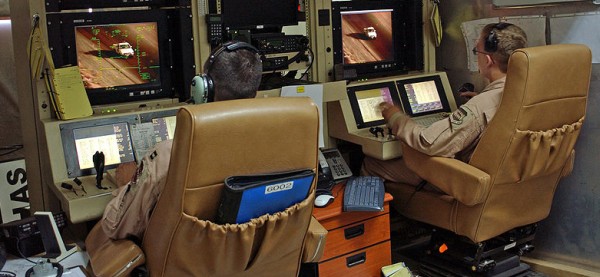
Tom Engelhardt reflects on the detachment with which the US military, operating from a position akin to that of Olympian gods, has turned people into targets:

[I]n the cities, towns, and villages of the distant lands where Americans tend to make war, civilians die regularly and repeatedly at our hands. Each death may contain its own uniquely nightmarish details, but the overall story remains remarkably repetitious. Such “incidents” are completely predictable. Even General McChrystal, determined to “protect the population” in Afghanistan as part of his counterinsurgency war, has proven remarkably incapable of changing the nature of our style of warfare. Curtail air strikes, rein in Special Operations night attacks — none of it will, in the long run, matter. Put in a nutshell: If you arrive from the heavens, they will die.

Having watched the video of the death of the 22-year-old Reuters photographer Namir Noor-Eldeen in that July 2007 video, his father said: “At last the truth has been revealed, and I’m satisfied God revealed the truth… If such an incident took place in America, even if an animal were killed like this, what would they do?”

Putting aside the controversy during the 2008 presidential campaign over the hunting of wolves from helicopters in Alaska, Noor-Eldeen may not have gone far enough. For that helicopter crew, his son was indeed the wartime equivalent of a hunted animal. An article on the front page of the New York Times recently captured this perspective, however inadvertently, when, speaking of the CIA’s aerial war over Pakistan’s tribal borderlands, it described the Agency’s unmanned drones as “observing and tracking targets, then unleashing missiles on their quarry.”

“Quarry” has quite a straightforward definition: “a hunted animal; prey.” Indeed, the al-Qaeda leaders, Taliban militants, and local civilians in the region are all “prey” which, of course, makes us the predators. That the majority of drones cruising those skies 24/7 and repeatedly launching their Hellfire missiles are named “Predators” should, then, come as no surprise.

Americans are unused to being the prey in war and so essentially incapable of imagining what that actually means, day in, day out, year after year. We prefer to think of their deaths as so many accidents or mistakes — “collateral damage” — when they are the norm, not the exception, not what’s collateral in such wars. We prefer to imagine ourselves bringing the best (of values and intentions) to a backward, ignorant world and so invariably make ourselves sound far kindlier than we are. Like the gods of Olympus, we have a tendency to flatter ourselves, even as we continually remake the “rules of engagement,” those ROEs, to suit our changing tastes and needs, while creating a language of war that suits our tender sensibilities about ourselves.

In this way, for instance, assassination-by-drone has become an ever more central part of the Obama administration’s foreign and war policy, and yet the word “assassination” — with all its negative implications, legal and otherwise — has been displaced by the far more anodyne, more bureaucratic “targeted killing.” In a sense, in fact, what “enhanced interrogation techniques” (aka torture) were to the Bush administration, “targeted killing” is to the Obama administration.

Facebooktwittermail

A presidential death warrant

American soldiers have to be trained how to kill, but for American presidents killing comes naturally.

Anyone who aspires to become president must surely ask themselves: am I willing to end someone else’s life, be that an individual or perhaps tens or hundreds of thousands or even millions of people? After all, even though it’s not spelled out in the Constitution, it’s clear that a pacifist could never hold this office. Killing comes with the territory.

Even so, I can’t help wondering when it was the Barack Obama posed this question and decided, “yes I can.”

With candidate George W Bush we didn’t need to ask the question. He had a track record — as the Governor of Texas he presided over 152 executions. But with Obama, we may never know when he came to regard killing as a tolerable part of his job.

It’s hard to imagine that as a community organizer he ever entertained the idea that wiping people out could become a dimension of working towards the greater good, yet at some point he must have seen this coming and — from all the evidence we now see — not flinched.

But to contrast Obama and Bush as killers, here’s what’s scary and yet passes without comment: Obama’s approach is dispassionate, with no explicit moral calculation. Whereas Bush felt driven to assume an air of righteousness and moral superiority, casting his actions within a drama of good and evil, Obama presents the image of an administrative process through which, after careful analysis and legal and political deliberation, lives are terminated.

Under the morally insidious rubric of “procedures” — a notion that peels away personal responsibility by replacing it with impersonal rules-based behavior — the president, the CIA, the military, the administration, the media, and the American public are all being offered an excuse to look the other way. An unnamed official assured a Washington Post reporter: “[there are] careful procedures our government follows in these kinds of cases.”

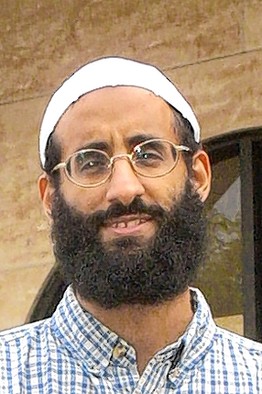
When Anwar al-Awlaki, an American born in New Mexico is shredded and incinerated — his likely fate at the receiving end of a Hellfire missile — there will be no account of the last moments of his life. No record of who happened to be in the vicinity. Most likely nothing more than a cursory wire report quoting unnamed American officials announcing that the United States no longer faces a threat from a so-called high value target.

Representative Jane Harman, Democrat of California and chairwoman of a House subcommittee on homeland security, was out prepping the media and the public on Tuesday when she called Awlaki “probably the person, the terrorist, who would be terrorist No 1 in terms of threat against us.”

Although it was only this week that a US official announced that Awlaki is now on the CIA’s assassination list, US special forces were already authorized and had made at least one attempt to kill the Muslim cleric who now resides in Yemen.

While both the military and the CIA make use of drones for the purpose of remotely controlled assassination, the fact that Awlaki is now considered a legitimate target for “lethal CIA operations” raises questions about the methods the agency might use.

Last summer CIA Director Leon Panetta shut down a secret CIA program which would have operated assassination teams for hunting down al Qaeda leaders. The news was presented as though the new administration was again distancing itself from the questionable practices of the Bush administration, yet at the time, Director of National Intelligence Dennis C Blair told Congress that the termination of that particular program did not rule out the future use of insertion teams that could kill or capture terrorist leaders.

One of the many ironies here is that the Obama administration appears to have abandoned one of the Bush era rationales for torture in favor of its own rationale for murder.

The most frequently used justification for torturing terrorist suspects has been the claim that in the scenario of a so-called ticking time bomb, vital information might be forced out of a suspect enabling an imminent act of terrorism to be thwarted.

Anwar al-Awlaki is supposedly just such a suspect. “He’s working actively to kill Americans,” an American official told the Washington Post. But whatever vital intelligence he might be able to provide, we’ll probably never know. Once dead he won’t hatch any new plots, but as for the ones already set in motion, well, we’ll just have to wait and see what sort of surprises may yet appear.

Needless to say, I am not suggesting that torturing terrorist suspects is any more acceptable than murdering them.

Ken Gude, a human rights expert from the Center for American Progress, argues that Awlaki is a legitimate target for assassination because of his claimed role in assisting the 9/11 attackers. On that basis, his killing would appear to be an act of extra-judicial punishment rather than the removal of a potential threat. But even if the administration sticks assiduously to its focus on future threats, it should not claim a God-like power to predict the future. Nor should it assume that the threat someone poses is necessarily diminished once they are dead.

In weighing the fate of Anwar al-Awlaki, this administration would do well to remember the case of Mohammed El Fazazi, a Moroccan cleric who from a Hamburg mosque preached to Mohammed Atta, Ramzi Binalshibh and Marwan al-Shehhi, three of the men who participated in the 9/11 attacks, that it was the duty of a devout Muslim to “slit the throats of non-believers.”

Eight years later, Fazazi had a new message as he appealed to Muslims to air their grievances through peaceful demonstrations. He is helping turn young men away from violent jihad. But what would stir the hearts of such men now if rather than hearing Fazazi’s moderated message, instead they held the memory of a day he became a martyr when struck by an American Hellfire missile?

Facebooktwittermail

Wars of excess

Tom Engelhardt writes:

Whether it’s 3.1 million items of equipment, or 3 million, 2.8 million, or 1.5 million, whether 341 “facilities” (not including perhaps ten mega-bases which will still be operating in 2011 with tens of thousands of American soldiers, civilians, and private contractors working and living on them), or more than 350 forward operating facilities, or 290 bases are to be shut down, the numbers from Iraq are simply out of this world.

Those sorts of figures define the U.S. military in the Bush era — and now Obama’s — as the most materiel-profligate war-making machine ever. Where armies once had baggage trains and camp followers, our camp followers now help plant our military in foreign soil, build its housing and defenses, and then supply it with vast quantities of food, water, fuel, and god knows what else. In this way, our troops carry not just packs on their backs, but a total, transplantable society right down to the PXs, massage parlors, food courts, and miniature golf courses. At Kandahar Air Base in Afghanistan, there was until recently a “boardwalk” that typically included a “Burger King, a Subway sandwich shop, three cafes, several general stores, a Cold Mountain Creamery, [and an] Oakley sunglasses outlet.” Atypically enough, however, a TGI Friday’s, which had just joined the line-up, was recently ordered shut down along with some of the other stores by Afghan war commander General Stanley McChrystal as inimical to the war effort.

The extraordinary statistics stacked up in this article are of course a testament to the massive imperial footprint imposed by the United States when it goes to war. But they are also a reflection of something else: the extraordinary impunity with which America engages in war.

The fact that the US military can be so extravagant in situating itself in its theaters of engagement is only possible because the enemy it faces has, relatively speaking, such minuscule resources with which it can strike back. There are no enemy air forces that bombard these vast American bases. There is no artillery fire.

So-called asymmetric threats may pose the enduring challenge in this environment yet they also provide a license for every imaginable excess.

Facebooktwittermail

Lies and cover-ups in the name of force protection

When a leaked US Army report recently revealed that the military regards Wikileaks as a potential force protection threat, the leak not only exposed the army’s fears but it also shed light on the breadth of this concept: force protection. From the Pentagon’s perspective, protecting American troops and making sure they stay out of harm’s way includes shielding them from unwelcome media attention and perhaps even concealing evidence of crimes.

Dan Froomkin reports on the latest example of a story the Pentagon has worked hard to supress:

Calling it a case of “collateral murder,” the WikiLeaks Web site today released harrowing until-now secret video of a U.S. Army Apache helicopter in Baghdad in 2007 repeatedly opening fire on a group of men that included a Reuters photographer and his driver — and then on a van that stopped to rescue one of the wounded men.

None of the members of the group were taking hostile action, contrary to the Pentagon’s initial cover story; they were milling about on a street corner. One man was evidently carrying a gun, though that was and is hardly an uncommon occurrence in Baghdad.

Reporters working for WikiLeaks determined that the driver of the van was a good Samaritan on his way to take his small children to a tutoring session. He was killed and his two children were badly injured.

In the video, which Reuters has been asking to see since 2007, crew members can be heard celebrating their kills.

“Oh yeah, look at those dead bastards,” says one crewman after multiple rounds of 30mm cannon fire left nearly a dozen bodies littering the street.

A crewman begs for permission to open fire on the van and its occupants, even though it has done nothing but stop to help the wounded: “Come on, let us shoot!”

Facebooktwittermail

The Israel lobby’s curious defense of an alleged Somali war criminal

Yousuf v. Samantar is the first human rights suit arising from abuses committed in Somalia under the brutal regime of Siad Barre. It is currently pending before the Supreme Court, where an odd coalition of defenders has filed briefs on behalf of the defendant, Mohammed Samantar, a prime minister under Barre and an alleged war criminal.

Among his defenders are five pro-Israel organizations — the American Jewish Congress, the Zionist Organization of America, the American Association of Jewish Lawyers And Jurists, Agudath Israel of America, and the Union of Orthodox Jewish Congregations of America in Support of Petitioner — each with a professed interest in keeping Samantar out of court. Allowing the case to proceed, they warn, would set an inviting precedent for Israel’s detractors in the human rights community, exposing current and former Israeli officials to an avalanche of litigation.

This suit was brought by the Center for Justice and Accountability and pro bono co-counsel Cooley Godward Kronish LLP in 2004 on behalf of five torture survivors: Bashe Abdi Yousuf, a young business man detained, tortured, and kept in solitary confinement for over six years; Aziz Mohamed Deria, whose father and brother were abducted by officials and never seen again; John Doe I, whose two brothers were summarily executed by soldiers; Jane Doe, a university student detained by officials, raped 15 times, and put in solitary confinement for over three years; and John Doe II, who was imprisoned for his clan affiliation and was shot by a firing squad, but miraculously survived by hiding under other dead bodies.

A strange alliance at the Supreme Court

By Sam Singer, War in Context, April 4, 2010

Mohammed Ali Samantar is the only living vestige of the Barre regime, the last government in two decades to exercise central control over Somalia and, not coincidentally, the last that was impudent enough to try. When Siad Barre was finally overthrown in 1991, Samantar, who had served as defense minister and prime minister, fled, in a storm of bullets, to Italy. He eventually made his way to Fairfax, Virginia, where he lived in suburban obscurity until a group of Somali nationals discovered him, hired a lawyer, and sued for damages. According to his accusers, the Barre regime committed unforgivable acts of violence against them and their families, offenses spanning a range of brutality from arbitrary detention, to torture, rape and extrajudicial killing. Samantar was allegedly aware of the crimes being perpetrated against civilians and yet failed to stop them. The suit was dismissed by a federal district court and then reinstated by the US Court of Appeals for the Fourth Circuit. It is now pending before the Supreme Court, where a peculiar coalition of defenders is urging reversal. Among them, to the confusion of some observers, are five prominent pro-Israel organizations, each with a professed interest in keeping Samantar out of court. In joint amicus briefs, the groups insist that as a former government official, Samantar should be immune from suit. To hold otherwise, they warn, would violate international law and set an inviting precedent for Israel’s enemies and their supporters in the human rights community.

The arrival of the Israel lobby adds geopolitical intrigue to a case that already read like a Ludlum thriller. And because it speaks to real and immediate consequences, it lends concreteness to a discussion that would have otherwise carried on in the abstract. It is one thing for a lawyer to appeal to legal authority for the proposition that the courts of one nation ought not sit in judgment of the acts of another; it is quite another for five groups purporting to represent the interests of the Israeli government to advise that doing so in this case would be to declare open season on Israeli officials in US courts.

It is not without some irony that organizations claiming to represent Israel, a state conceived in the wake of unprecedented state-sponsored violence, find their wagon hitched to the cause of an alleged war criminal. Nor does the position square, at least not at first glance, with less expansive interpretations of sovereign immunity advanced by the lobby’s constituents in the past. Just this year, Israeli victims of rocket fire on the Lebanese border sued the Iranian government, by way of its central banks, on the theory that it provided material support to Hezbollah, the source of the rockets. Last December, a pro-Israel group in Europe sued leaders of Hamas in a Belgium court, invoking what it described as the court’s “universal” jurisdiction over cases arising from war crimes. In both cases, sovereign immunity was an obstacle standing between Israeli interests and a favorable judgment; here, in Samantar’s case, supporters of Israel invoke it as a shield.

In fact, Israel is far more likely to find itself on the receiving end of a human rights suit. According to one report, nearly 1,000 suits have been filed globally against Israeli officials and military personnel alleging war crimes and other abuses. The defense ministry expects some 1,500 more will follow, many stemming from military operations in the coastal territories, but also some taking aim at the less violent aspects of Israeli anti-terror strategy, including one suit describing the security fence as a “crime against humanity.” An Israeli newspaper published a “wanted” list of current and former officials who are among the common named defendants. The list, which was republished in briefs to the Court, reads like a who’s who in Israeli political and military history. The forums for these suits vary, but they commonly feature developed Western countries that have lowered the drawbridge for human rights litigants. Steering many of the cases are nongovernmental organizations (NGOs), some based in the Middle East with ties to the Palestinian government, others based in the West and backed by the likes of the Center for Constitutional Rights and George Soros’s Open Society Institute.

In these suits supporters of Israel see pretext. They describe a more sinister objective, a coordinated effort to bring Israeli officials into federal courtrooms. The idea is to delegitimize Israel, but not before dragging officials through an invasive and costly discovery process. Do it enough and Israeli officials will start thinking twice before traveling to the United States, or, worse yet, before assuming roles that could expose them to suit. Defense experts believe the strategy fits the definition of “lawfare,” think-tank speak for the use of legal methods to achieve military goals.

In the immediate term, the briefs warn, relations between the US and Israel will suffer. Like any partnership, the US/Israeli alliance benefits from a rich and ongoing exchange of people and ideas. For the exchange to thrive, current and former Israeli officials must be able to travel to and within the United States without fear of being served with a lawsuit. By way of illustration, the American Jewish Congress recounts the story of Moshe Ya’alon, a retired Israeli general who was recently summoned to court upon arriving in Washington, D.C. for a think tank forum. The complaint, which sought damages for civilian deaths resulting from a battle on the Lebanese border between Israel and Hezbollah, was perfunctory. With respect to Ya’alon, it alleged only that he served in the army chain-of-command during the relevant period. The district court dismissed the case on jurisdictional grounds and the D.C. Circuit affirmed, concluding that the immunity of a foreign state extends to its former officials. Ya’alon never had to step foot in a courtroom. Now suppose that instead of Washington, he had been served with the suit 15 minutes away, in Arlington, Virginia. In that event the dismissal of his suit would have been appealed to the Fourth Circuit, which, as we learned in Samantar’s case, does not share the D.C. Circuit’s view on official immunity. In other words, had Ya’alon booked a hotel across the river, he might well still be there today.

A Statutory Nightmare

Naturally, US-Israeli relations didn’t figure into the Supreme Court’s questioning at oral arguments. The justices had assembled to resolve a disagreement among the federal circuit courts over whether sovereign immunity extends to officials. Accordingly, they trained their focus on Samantar and his theory of the case, which rests on the off-stated maxim that one equal has no dominion over another equal. That this saying, which encapsulates the principle of sovereign immunity, is most commonly recited in Latin suggests something about its vintage. It is as close to a truism as a proposition can come in a foggy discipline like international law, and it is an animating principle of the Foreign Sovereign Immunity Act (FSIA). That law changed the way US courts process suits against foreign governments. Before 1976, a court needed the go-ahead from the State Department before docketing such cases. When this approach proved unwieldy, Congress vested gate-keeping authority in the federal courts and then cabined it by stripping them of jurisdiction over suits against foreign states that don’t fit within a narrow set of exceptions.

Until recently it was generally accepted that these same protections applied to foreign officials. After all, a suit against a foreign official acting on behalf of a state is effectively a suit against the state. True, the caption may list the Minister of Defense rather than the Ministry of Defense, and the plaintiff may have his sights set on a personal bank account rather than the national treasury, but in either case the court is sitting in judgment of the state’s actions. It has intuitive appeal, this idea. It also has the support of the majority of the federal circuits.

But as the Fourth Circuit pointed out below, the argument is without support in the one place it needs it most–the text of the FSIA. FSIA extends sovereign immunity to “foreign states” as well as their “agencies and instrumentalities”, but it remains conspicuously silent on the matter of foreign officials. For supporters of broad immunity, this omission is proof that the identity of interests between a foreign sovereign and its officials is self-evident. Congress, they argue, had no reason to split hairs, to try to distinguish the indistinguishable. Opponents, who harbor a less attenuated view, insist that if Congress wanted to extend immunity to foreign officials, it would have said so.

The theory that foreign officials are immune from suit encounters an more mystifying problem in the Torture Victim Protection Act (TVPA), a federal law that permits victims of state-sponsored torture to bring suit in the United States against culpable foreign officials. The TVPA is one of the statutes supplying the cause of action in the suit against Samantar, but that’s not why it’s important. Rather, as Justice Kennedy pointed out during oral arguments, the text of the TVPA appears to make a mockery of the proposition that foreign officials are never amenable to suit in U.S courts. To read the law any other way would be to watch it evaporate, an entire congressional enactment rendered useless, leaving torture victims a right without a remedy. The Court, Justice Kennedy reminds, is not in the business of reading entire statutes out of existence.

Supporters of immunity for foreign officials counter that allowing the case to proceed against Samantar would be just as devastating for FSIA. As a preoccupation of Justice Breyer’s, this argument soaked up a fair amount of the Court’s time. The consensus is that opening officials to suit would allow litigants to undermine the intent of the FSIA without actually violating it. In Ya’alon’s case, instead of suing the Ministry of Defense, a lawyer with his wits about him would simply name Ya’alon, the former head of army intelligence, and the suit would survive. “What you are saying,” Breyer concluded, “is that FSIA is only good against a bad lawyer.”

Hedging, counsel for the plaintiffs reminded the Court that jurisdiction is not the only hurdle between a foreign official and liability. Once a plaintiff establishes jurisdiction, there are other age-old immunity doctrines that shield foreign officials from suit. There is the head of state doctrine, for instance, which protects current and former leaders from prosecution and civil liability, or the doctrine of diplomatic immunity, a similar, if more controversial, safeguard for diplomats and their staff. But there is no small difference between immunity from suit and immunity from liability. To have the former without the latter is to have comfort without convenience; it is, so to speak, the difference between putting up and showing up.

The Supreme Court is thus left to choose between two seemingly impossible outcomes. Extend sovereign immunity to foreign officials and the Torture Victim Protection Act is gutted, along with U.S. credibility in the human rights community. Expose them to suit and make hash of one of the core objectives of the Foreign Sovereign Immunity Act—saving key allies the expense and embarrassment of defending national security decisions in US courts. To the extent possible, courts generally try to read conflicting statutes in a way that gives effect to both. But even with so much hanging in the balance, coexistence between the TVPA and the FSIA appears impossible. Unimpressed and evidently undecided, the justices took the case under advisement.

Sam Singer is a 2009 graduate of Emory Law School and a Staff Law Clerk for the US Court of Appeals for the Seventh Circuit. His commentaries on law and politics have appeared in various publications, including The Beachwood Reporter and Culturekiosque.com. He has also reported and written articles for The Chicago Tribune and Market News International.

Facebooktwittermail

The Pentagon’s doubts about Israel began with its creation

By Mark Perry, April 1, 2010

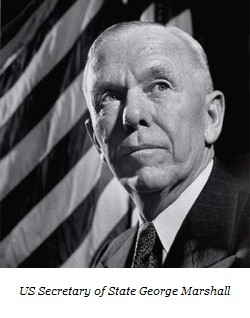
In early February of 2006, I submitted a book proposal about the wartime relationship between Generals George Marshall and Dwight Eisenhower to a group of New York publishers. I had worked on the proposal for nine months and believed it would garner significant interest. Two weeks after the submission, I received my first response — from a senior editor at a major New York publishing firm. He was uncomfortable with the proposal: “Wasn’t Marshall an anti-Semite?” he asked. I’d heard this claim before, but I was still shocked by the question. For me, George Marshall was an icon: the one officer who, more than any other, was responsible for the American victory in World War Two. He was the most important soldier of his generation — and a man of great moral and physical courage.
That Marshall was an anti-Semite has been retailed regularly since 1948 — when it became known that, by that time as US Secretary of State, he not only opposed the U.S. stance in favor of the partition of Palestine, but vehemently recommended that the U.S. not recognize the State of Israel that emerged. Harry Truman disagreed and Marshall and Truman clashed in a meeting in the Oval Office, on May 12, 1948. Truman relied on president counselor Clark Clifford to make the argument. Clifford faced Marshall: the U.S. had made a moral commitment to the world’s Jews that dated from Britain’s 1919 Balfour Declaration, he argued, and the U.S would be supported by Israel in the Middle East. The Holocaust had made Israel’s creation an imperative and, moreover, Israel would be a democracy. He then added: Jewish-Americans, were an important voting bloc and would favor the decision.

Marshall exploded. “Mr. President,” he said, “I thought this meeting was called to consider an important, complicated problem in foreign policy. I don’t even know why Clifford is here.” Truman attempted to calm Marshall, whom he admired — but Marshall was not satisfied. “I do not think that politics should play any role in our decision,” he said. The meeting ended acrimoniously, though Truman attempted to placate Marshall by noting that he was “inclined” to side with him. That wasn’t true — the U.S. voted to recognize Israel and worked to support its emerging statehood. Marshall remained enraged.

When Marshall returned to the State Department from his meeting with Truman, he memorialized the meeting:

I remarked to the president that, speaking objectively, I could not help but think that suggestions made by Mr. Clifford were wrong. I thought that to adopt these suggestions would have precisely the opposite effect from that intended by him. The transparent dodge to win a few votes would not, in fact, achieve this purpose. The great dignity of the office of the president would be seriously damaged. The counsel offered by Mr. Clifford’s advice was based on domestic political considerations, while the problem confronting us was international. I stated bluntly that if the president were to follow Mr. Clifford’s advice, and if I were to vote in the next election, I would vote against the president.

Put more simply, Marshall believed that Truman was sacrificing American security for American votes.

The Truman-Marshall argument over Israel has entered American lore – and been a subject of widespread historical controversy. Was Marshall’s opposition to recognition of Israel a reflection of his, and the American establishment’s, latent anti-Semitism? Or was it a credible reflection of U.S. military worries that the creation of Israel would engage America in a defense of the small country that would drain American resources and lives? In the years since, a gaggle of historians and politicians have weighed in with their own opinions, the most recent being Ambassador Richard Holbrooke. Writing in the Washington Post on May 7, 2008, Holbrooke noted that “beneath the surface” of the Truman-Marshall controversy “lay unspoken but real anti-Semitism on the part of some (but not all) policymakers. The position of those opposing recognition was simple – oil, numbers and history.”

But that’s only a part of the story. In the period between the end of World War Two and Marshall’s meeting with Truman, the Joint Chiefs of Staff had issued no less than sixteen (by my count) papers on the Palestine issue. The most important of these was issued on March 31, 1948 and entitled “Force Requirements for Palestine.” In that paper, the JCS predicted that “the Zionist strategy will seek to involve [the United States] in a continuously widening and deepening series of operations intended to secure maximum Jewish objectives.” The JCS speculated that these objectives included: initial Jewish sovereignty over a portion of Palestine, acceptance by the great powers of the right to unlimited immigration, the extension of Jewish sovereignty over all of Palestine and the expansion of “Eretz Israel” into Transjordan and into portions of Lebanon and Syria. This was not the only time the JCS expressed this worry. In late 1947, the JCS had written that “A decision to partition Palestine, if the decision were supported by the United States, would prejudice United States strategic interests in the Near and Middle East” to the point that “United States influence in the area would be curtailed to that which could be maintained by military force.” That is to say, the concern of the Joint Chiefs of Staff was not with the security of Israel — but with the security of American lives.

In the wake of my March 13 article in these pages (“The Petraeus Briefing: Biden’s embarrassment is not the whole story”) a storm of outrage greeted my claim that Israeli intransigence on the peace process could be costing American lives. One week after that article appeared, I called General Joe Hoar, a former CENTCOM commander and a friend. We talked about the article. “I don’t get it,” he said. “What’s the news here? Hasn’t this been said before?” If history is any guide, the answer is simple: it was said sixty years ago by one of America’s greatest soldiers. George Marshall wasn’t an anti-Semite. But he was prescient.

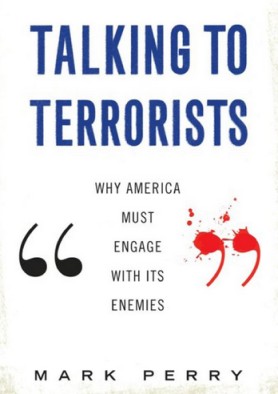
Mark Perry’s most recent book is Talking To Terrorists (Basic Books, 2010). He is also the author of Partners In Command: George Marshall and Dwight Eisenhower in War and Peace (2007) and Four Stars, The Inside Story of the Battle between the Joint Chiefs of Staff and America’s Civilian Leaders (1989).

[This article previously appeared in Foreign Policy and is reproduced here in full with the author’s permission.]

Facebooktwittermail

The president’s conscience, on hold

Dan Froomkin writes:

The White House counsel ideally serves as the president’s conscience.

But late last year, Barack Obama’s conscience was surgically removed.

Greg Craig, as Obama’s top lawyer, was the point man on a number of hot-button issues, the fieriest being how to close the prison at Guantanamo Bay. Craig argued for holding fast to the principles that Obama outlined before he became president, regardless of the immediate political consequences — an idealistic approach that, in a White House filled with increasingly pusillanimous pragmatists, earned him some powerful enemies.

After a steady drip of leaks over a period of months to the Washington Post, the New York Times, the Wall Street Journal and other news outlets to the effect that his days were numbered, Craig finally resigned in November.

He was replaced by Robert Bauer, a politically adept consummate Washington insider whose expertise is in campaign finance law — in short, a man whose job is to win elections, not defend principles.

At the same time, Attorney General Eric Holder has been increasingly marginalized and cut out of the White House decision-making loop. So now the coast is clear for the White House to make important legal and national security calls on purely political grounds.

The only question that remains is whether Obama himself will have any last-minute qualms about turning his back on his own principles.

Facebooktwittermail

Congress to Obama on Israel: Do what we say, not what we do

Following AIPAC’s lead, 327 members of Congress wrote a letter to President Obama last week whose core message resonates with the approach to politics favored by Pope Benedict: difficulties should be handled discreetly with the minimum of publicity. It’s a tried and tested practice that has throughout history been shown to be as rotten as it appears, yet it appeals to its proponents because those who follow this path have an immense tolerance for hypocrisy.

Thus, the letter to Obama read:

We recognize that, despite the extraordinary closeness between our country and Israel, there will be differences over issues both large and small. Our view is that such differences are best resolved quietly, in trust and confidence, as befits longstanding strategic allies.

As for differences between Congress and the administration, those are best handled through an open letter in which 327 publicity-conscious politicians can very visibly identify themselves as lackeys of the Israel lobby.

Had this letter to the president not been an open letter, I wonder how many signatures it would have got?

Facebooktwittermail

War tourists

The McClatchy blog, Nukes and Spooks reports:

Amongst the swirl of soldiers, diplomats and contractors at America’s largest military bases in Afghanistan are congressional delegations, CODELs as they are often called. Members of Congress and their staffs come through, take a lot of photos with various commanders and ask questions that frankly could have been answered in Washington, all over a matter of no more than a couple days. Then they head back home. The trips are as much about theater as substance. The photos make their way onto campaign materials and the visits serve as the foundation for the questions they pose to commanders when they eventually testify on Capitol Hill. As in, “Gen. McChrystal, during my visit to Afghanistan, I learned….”

The latest VIP visitor was President Obama who spent six hours in Afghanistan over the weekend. The stated purpose was to meet with Afghanistan President Hamid Karzai. But somehow the photo op with the troops made the front page of today’s New York Times.

A couple weeks ago, the State Department Inspector General released a report that found that department personnel spend so much time greeting the scores of congress members who come to visit, they don’t have enough time to do their jobs.

Facebooktwittermail

Medicating the military

Military Times reports:

At least one in six service members is on some form of psychiatric drug.
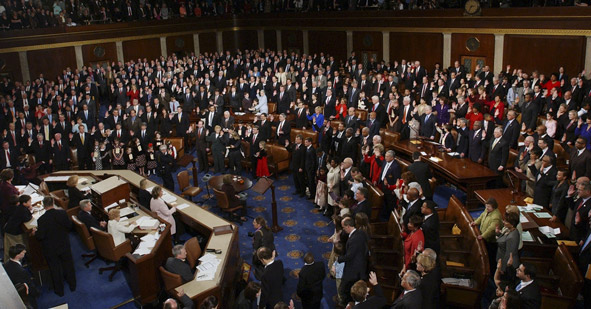
And many troops are taking more than one kind, mixing several pills in daily “cocktails” — for example, an antidepressant with an antipsychotic to prevent nightmares, plus an anti-epileptic to reduce headaches — despite minimal clinical research testing such combinations.

The drugs come with serious side effects: They can impair motor skills, reduce reaction times and generally make a war fighter less effective. Some double the risk for suicide, prompting doctors — and Congress — to question whether these drugs are connected to the rising rate of military suicides.

“It’s really a large-scale experiment. We are experimenting with changing people’s cognition and behavior,” said Dr. Grace Jackson, a former Navy psychiatrist.

A Military Times investigation of electronic records obtained from the Defense Logistics Agency shows DLA spent $1.1 billion on common psychiatric and pain medications from 2001 to 2009. It also shows that use of psychiatric medications has increased dramatically — about 76 percent overall, with some drug types more than doubling — since the start of the current wars.

(h/t to Kelley Vlahos.)

Facebooktwittermail

What planet do these people live on?

A letter signed by 300 members of Congress and sent to Secretary of State Hillary Clinton declares:

A strong Israel is an asset to the national security of the United States and brings stability to the Middle East.

What an accomplishment! That so many fallacies could be packed into a single sentence!

But the lunacy isn’t confined to Congress. Right in the middle of what is being described as the worst rift in US-Israeli relations in decades, when it comes to the business of business it’s business as usual:

Even as Prime Minister Benjamin Netanyahu received the full wrath of the Obama administration, the Defense Ministry and Pentagon were concluding yet another huge deal.

Israel will buy three new Hercules-J transport aircraft, built by Lockheed Martin, at a cost of $250 million. The planes will be manufactured according to Israeli specifications and include many systems produced by Israeli military suppliers.

The deal goes to show that a continuing diplomatic crisis between Israel and the United States has still to make itself felt as far as defense relations are concerned.

Facebooktwittermail

Time to shut down the CIA

Former CIA operative Robert Baer writes:

On January 10, 2010, CIA director Leon Panetta wrote a Washington Post op-ed in which he disputed that poor tradecraft was a factor in the Khost tragedy [after a Jordanian doctor named Humam Khalil Abu-Malal al-Balawi blew himself up, in one of the deadliest attacks in the CIA’s history]. Panetta is wrong.

An old operative I used to work with in Beirut said he would have picked up Balawi himself and debriefed him in his car, arguing that any agent worth his salt would never expose the identity of a valued asset to a foreigner like the Afghan driver. I pointed out that if he’d been there and done it that way, he’d probably be dead now. “It’s better than what happened,” he said.

One thing that should have raised doubts about Balawi was that he had yet to deliver any truly damaging intelligence on Al Qaeda, such as the location of Zawahiri or the plans for the Northwest bomb plot. Balawi provided just enough information to keep us on the hook, but never enough to really hurt his true comrades. And how was it that Balawi got Al Qaeda members to pose for pictures? This should have been another sign. These guys don’t like their pictures taken. So there were a few clear reasons not to trust Balawi, or at least to deal with him with extreme caution.

But the most inexplicable error was to have met Balawi by committee. Informants should always be met one-on-one. Always.

The fact is that Kathy [the Khost CIA base chief], no matter how courageous and determined, was in over her head. This does not mean she was responsible for what happened. She was set up to fail. The battlefield was tilted in Al Qaeda’s favor long ago—by John Deutch and his reforms, by the directors who followed him, by the decision to drop the paramilitary course from the mandatory curriculum (which would have made Kathy a lot more wary of explosives), and by two endless wars in Iraq and Afghanistan that have worn the CIA down to a nub. Had Kathy spent more time in the field, more time running informants, maybe even been stung by one or two bad doubles, the meeting in Khost probably would have been handled differently—and at the very least there would have been one dead rather than eight.

If we take Khost as a metaphor for what has happened to the CIA, the deprofessionalization of spying, it’s tempting to consider that the agency’s time has passed. “Khost was an indictment of an utterly failed system,” a former senior CIA officer told me. “It’s time to close Langley.”

Baer isn’t prepared to go that far — he still hankers for the “professionalism” of a bigone era. What he fails to note is that at the core of that lost world of espionage was a contest between spies and that on neither side did those past masters of their tradecraft have any desire to die for their cause.

Facebooktwittermail

Talking to terrorists

The Washington Post has a passage from Mark Perry’s new book, Talking to Terrorists: Why America Must Engage With Its Enemies. As Perry notes, talking to groups that the US government has labelled as “terrorists” is not only necessary but is a choice that has already been pursued and shown highly effective. As he recounts: “the real gamble in Iraq was not in deploying more troops to kill terrorists; the real gamble in Iraq was in sending marines to talk to them”.

This is how that happened:

On July 23, 2005 Marine Corps Colonel John Coleman was sitting at his desk at Camp Pendleton, Calif. when he received a telephone call from Jerry Jones – an assistant to then-Secretary of Defense Donald Rumsfeld. Jones was frantic, telling Coleman that a group of Iraqi insurgents were battling an al-Qaeda militia at al-Qaim – an Iraqi city on the Syrian border.

“They need help,” Jones said. “It’s night there now, but they’re surrounded and if we don’t do something they’ll be wiped out.” Coleman acted quickly, placing a call to the Marine Corps headquarters at Camp Fallujah in Iraq.

The next morning, at sunrise, a “package” of Cobra helicopters attacked the al-Qaeda fighters, killing dozens and scattering the rest into the desert. “It was pretty nip and tuck there for awhile,” Coleman remembers, “but I had real confidence in the Marines.”

The little-known Marine intervention in al-Qaim is now seen as a turning point in America’s war in Iraq. It was the moment at which al-Anbar tribes – the insurgents — “awakened,” turning their guns on al-Qaeda and siding with the Americans.

But the Anbar Awakening did not happen suddenly.

For eighteen months prior to the Battle of al-Qaim, U.S. Marine Corps officers had been talking to the leaders of the Iraqi insurgency in a series of meetings that began in Amman, Jordan in July of 2004. The meetings were opposed by senior State Department and Pentagon officials, who castigated the Marines for “talking to terrorists.” The Marines vehemently disagreed, quoting an insurgent leader whom they had met in Amman. “We are not your enemy,” this leader said. “Al Qaeda is your enemy. We’re different. We’re not terrorists, we’re the insurgents. There’s a difference.”

Can what the United States did in Iraq serve as a model for a larger strategy – one that will bring stability to the entire region? More specifically, should America recruit the region’s more moderate Islamist parties (like Hamas, Hezbollah and the Muslim Brotherhood) to help in its fight against al Qaeda?

For most Americans, the suggestion seems outrageous; but for increasing numbers of policymakers, there are stark differences between the three groups and al-Qaeda: each of the movements has participated in national elections (Hamas won the parliamentary vote in the Palestinian territories in 2006, while Hezbollah and the Brotherhood hold seats in the Lebanese and Egyptian parliaments), each represents a distinct and growing constituency (and provides services for them), and each has rejected al-Qaeda’s Jacobin revolutionary ideology – and is targeted by bin Laden and his followers for actually endorsing democratic principles.

“Our habit of lumping all of these groups together, of putting Hamas, Hezbollah and the Muslim Brotherhood in the same class as al-Qaeda is a terrible mistake,” former Pentagon official James Clad says. “Hamas, Hezbollah and the Muslim Brotherhood are the three most important movements in the region today – and we don’t talk to any of them. I can understand not talking to al-Qaeda, they’re dead-enders and don’t represent anyone, but refusing to have a dialogue with groups that are respected in their own societies is short-sighted and counter-productive.”

Former Marine John Coleman would agree. In the wake of the Battle of al-Qaim, Coleman points out, the Anbar Awakening united 42 Anbar clans against al-Qaeda and transformed the war in Iraq.

“Our strategy was not simply a shift in American tactics, but in American thinking,” Coleman says. “It meant abandoning the easy language of the war on terrorism for a more sophisticated strategy.” Which is to say: the real gamble in Iraq was not in deploying more troops to kill terrorists; the real gamble in Iraq was in sending marines to talk to them.

Maybe that’s what we should be doing for the entire region.

Facebooktwittermail

A trial for Saddam and a bomb for bin Laden

The Associated Press reports:

Attorney General Eric Holder told Congress on Tuesday that Osama bin Laden will never face trial in the United States because he will not be captured alive.

In testy exchanges with House Republicans, the attorney general compared terrorists to mass murderer Charles Manson and predicted that events would ensure “we will be reading Miranda rights to the corpse of Osama bin Laden” not to the al-Qaida leader as a captive.

Holder sternly rejected criticism from GOP members of a House Appropriations subcommittee, who contend it is too dangerous to put terror suspects on trial in federal civilian courts as Holder has proposed.

Unless my memory fails me, there was no outrage expressed in Congress when Saddam Hussein was captured, rather than given a summary execution. Nor were there howls of protest when he was imprisoned without torture and treated humanely. Nor were there huge objections against him going through a criminal trial. This for a man widely understood to have been responsible for the deaths of tens of thousands of Iraqis.

And let’s not forget, throughout the time Saddam was being hunted down he was presented as a greater threat to the world than Osama bin Laden.

Do American lawmakers have such little faith in the law they make or in the judicial system that applies that law, that they regard the United States legal system as too feeble an entity to justly handle the fate of one man — even a man given mythical proportions of Osama bin Laden?

As John Brennan — Assistant to the President and Deputy National Security Advisor for Homeland Security and Counterterrorism — pointed out last month, “Terrorists are not 100-feet tall. Nor do they deserve the abject fear they seek to instill.”

Facebooktwittermail