The Obama administration has repudiated some of the Bush administration’s most egregious national security policies but is in danger of institutionalizing others permanently into law, thereby creating a troubling “new normal,” according to a new report released today by the American Civil Liberties Union.
“Establishing a New Normal: National Security, Civil Liberties, and Human Rights Under the Obama Administration,” an 18-month review of the Obama administration’s record on national security issues affecting civil liberties, concludes that the current administration’s record on issues of national security and civil liberties is decidedly mixed: President Obama has made great strides in some areas, such as his auspicious first steps to categorically prohibit torture, outlaw the CIA’s use of secret overseas detention sites and release the Bush administration’s torture memos, but he has failed to eliminate some of the worst policies put in place by President Bush, such as military commissions and indefinite detention. He has also expanded the Bush administration’s “targeted killing” program.
The 22-page report, which was researched and written by staff in the ACLU’s National Security Project and Washington Legislative Office, reviews the administration’s record in the areas of transparency, torture and accountability, detention, targeted killing, military commissions, speech and surveillance and watchlists. [ACLU press release.]
On June 14, the Supreme Court buried the prospect of justice for Maher Arar, a Canadian citizen of Syrian origin who was “extraordinarily rendered” by the United States (via Jordan) to Syria in 2002. Arar was suing the US officials who authorized his secret transfer, without charge, to a country infamous for torture. With the justices’ 22-word statement, the case of Arar v. Ashcroft exited the American legal system and entered the annals of American legal history under the category “grave injustice.” Alphabetically, Arar precedes Dred Scott v. Sanford, which upheld slavery, and Korematsu v. United States, which upheld the internment of Japanese Americans. In this case, however, the grave is literal: Arar spent ten months of his year in Syrian custody confined in what he describes as “an underground grave.”
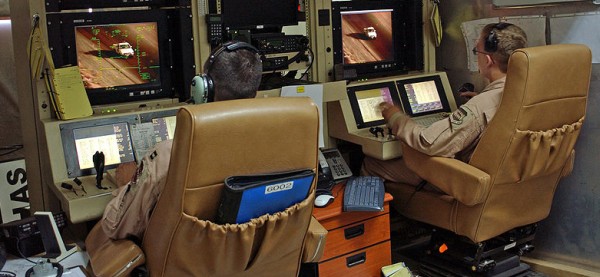
There was an age when those afraid of dying knew they should, if they could, stay away from war. They could instead, if so inclined, read about war and fantasize about battlefield heroics from the comfort of an armchair. Nowadays, America’s newest class of warriors enjoy the same comfort with as little risk.
The drone is our latest wonder weapon and a bragging point in a set of wars where there has been little enough to brag about.
CIA director Leon Panetta has, for instance, called the Agency’s drones flying over Pakistan “the only game in town” when it comes to destroying al-Qaeda; a typically anonymous U.S. official in a Washington Post report claims of drone missile attacks, “We’re talking about precision unsurpassed in the history of warfare”; or as Gordon Johnson of the Pentagon’s Joint Forces Command told author Peter Singer, speaking of the glories of drones: “They don’t get hungry. They are not afraid. They don’t forget their orders. They don’t care if the guy next to them has been shot. Will they do a better job than humans? Yes.”
Seven thousand of them, the vast majority surveillance varieties, are reportedly already being operated by the military, and that’s before swarms of “mini-drones” come on line. Our American world is being redefined accordingly.
In February, Greg Jaffe of the Washington Post caught something of this process when he spent time with Colonel Eric Mathewson, perhaps the most experienced Air Force officer in drone operations and on the verge of retirement. Mathewson, reported Jaffe, was trying to come up with an appropriately new definition of battlefield “valor” — a necessity for most combat award citations — to fit our latest corps of pilots at their video consoles. “Valor to me is not risking your life,” the colonel told the reporter. “Valor is doing what is right. Valor is about your motivations and the ends that you seek. It is doing what is right for the right reasons. That to me is valor.”
There is a simple calculus upon which American warfare depends: the fewer Americans get killed, the longer the war can continue.
Maimed Americans don’t count. As for dead or maimed non-Americans, they are a variable part of the calculus, problematic or not depending on the circumstances.
The Pentagon’s love of the drone is Washington’s dread of the dead — let’s not pretend that valor has any place in this equation.
When through the press of a button a soldier in an air-conditioned office rains down death and destruction thousands of miles away, whatever military virtues he might possess, there’s no reason to assume they include bravery. Indeed, the risk-free killing of remote warfare is really the most cowardly form of combat, far removed as it is from battlefields that demand courage because the killers risk being killed.
In Shakespeare’s Henry V, as the Battle of Agincourt is about to commence, the king addresses his men — “We few, we happy few, we band of brothers” — heavily outnumbered by the French and facing the risk of imminent slaughter.
Henry — a king who fights with his men and doesn’t simply issue commands — declares:
… he which hath no stomach to this fight,
Let him depart; his passport shall be made,
And crowns for convoy put into his purse;
We would not die in that man’s company
That fears his fellowship to die with us.
To the extent that there is a noble dimension to warfare it is this: that those willing to kill are also willing to die. Those taking the lives of others do so knowing that just as easily they could lose their own.
The technological advance of war has broken this equation and broken it so thoroughly that not only does the new class of drone-armed killers face no risk of being killed; they may not even lose any sleep.
Although President Obama acknowledges that the situation in Gaza is “unsustainable”, he refuses to draw the obvious conclusion and insist that Israel’s siege must end. But if it can’t continue, it must end, right?
The International Committee of the Red Cross and the UN are happy to adopt Obama’s term (unsustainable) but are less willing to equivocate. Indeed, the Red Cross has gone even further and accuses Israel of breaking international law through its use of collective punishment.
As the ICRC has stressed repeatedly, the dire situation in Gaza cannot be resolved by providing humanitarian aid. The closure imposed on the Gaza Strip is about to enter its fourth year, choking off any real possibility of economic development. Gazans continue to suffer from unemployment, poverty and warfare, while the quality of Gaza’s health care system has reached an all-time low.
“The closure is having a devastating impact on the 1.5 million people living in Gaza”, said Béatrice Mégevand-Roggo, the ICRC’s head of operations for the Middle East. “That is why we are urging Israel to put an end to this closure and call upon all those who have an influence on the situation, including Hamas, to do their utmost to help Gaza’s civilian population. Israel’s right to deal with its legitimate security concerns must be balanced against the Palestinians’ right to live normal, dignified lives.”
The international community has to do its part to ensure that repeated appeals by States and international organizations to lift the closure are finally heeded.
Likewise, the UN is pushing for the blockade not merely to be “eased” or — to use Tony Blair’s language — made “softer” (suggestive of a more compassionate collective punishment?). No, the siege must end.
[T]he UN said Tuesday that an international consensus has emerged demanding that Israel lift the blockade of Gaza Strip and replace it with a “different and more positive strategy.”
“The flotilla crisis is the latest symptom of a failed policy,” said Robert Serry, the UN special envoy for Middle East peace process.
“The situation in Gaza is unsustainable and the current policy is unacceptable and counter-productive, and requires a different, more positive strategy,” Serry said during a UN Security Council session on the Middle East.
Haaretz reports that Benjamin Netanyahu is looking for global support to ease the humanitarian crisis in Gaza — economic warfare has suddenly gone out of style. But the new expressions of concern for the well-being of the 1.5 million Palestinians incarcerated in Gaza — let them have snack food and soda — sounds about as humane as Marie Antoinette’s “let the eat cake.”
Israel said on Friday it wants to enlist global support to improve the flow of civilian goods to the blockaded Gaza Strip, while seeing to it that weapons do not reach the Hamas-ruled territory.
Prime Minister Benjamin Netanyahu, under rising pressure to ease Israel’s three-year siege on Gaza since a deadly raid on a Turkish-backed aid ship destined for the enclave last month, held talks on the issue with Middle East envoy Tony Blair.
“The aim of the meeting was to recruit international support behind the principle that weapons and military supportive material will not reach Gaza or Hamas, while humanitarian and civilian goods may reach the area and its residents via additional means,” Netanyahu’s office said in a statement.
Israel further eased restrictions on goods to Gaza this week by announcing it would permit additional food items such as snack foods and carbonated beverages to be imported via Israeli-controlled crossings, starting next week.
Israel’s response to the Gaza flotilla is another unfortunate example of Israel clothing its conduct in the language of international law while flouting it in practice. If you believe Israeli government spokesmen, Israel is metabolically incapable of violating international law, placing it alongside Saddam Hussein’s Information Minister in self-awareness.
Israel claims that paragraph 67(a) of the San Remo Manual on Armed Conflicts at Sea justified the Israeli operation against the flotilla. (The San Remo Manual is an authoritative statement of international law applicable to armed conflicts at sea.)
Paragraph 67(a) only permits attacks on the merchant vessels of neutral countries where they “are believed on reasonable grounds to be carrying contraband or breaching a blockade, and after prior warning they intentionally and clearly refuse to stop, or intentionally and clearly resist visit, search or capture”.
Israel argues that it gave due warnings, which were not heeded.
What Israel conveniently omits to mention is that the San Remo Manual also contains rules governing the lawfulness of the blockade itself, and there can be no authority under international law to enforce a blockade which is unlawful. Paragraph 102 of the Manual prohibits a blockade if “the damage to the civilian population is, or may be expected to be, excessive in relation to the concrete and direct military advantage anticipated from the blockade”.
“The continued policy of closure is unacceptable and politically counterproductive,” she said in a statement.
“We would like to reiterate the EU’s call for an immediate, sustained and unconditional opening of crossings for the flow of humanitarian aid, commercial goods and persons to and from Gaza.”
In spite of this appeal, the government of Cyprus has taken the extraordinary step of preventing members of the European parliament from joining the Freedom Flotilla.
Cypriot authorities prevented pro-Palestinian activists, including 30 MPs from nine European countries, from leaving the island yesterday to join a flotilla in international waters, which is on its way to blockaded Gaza.
In addition to issuing an edict banning ships headed for Gaza to set sail from the island’s ports, or dock on the island on their way back, the authorities yesterday forbade any small vessels from leaving Cyprus in case they were on their way to the flotilla of eight ships carrying around 700 peace activists, and 10,000 tonnes of humanitarian aid.
The government denied it bowed to pressure from Israel to put the ban in place.
The Hamas leader in Gaza Ismail Haniyeh said Saturday that if Israel behaved like pirates and attacked the international Freedom Flotilla carrying 10,000 tons of aid meant for Gaza, then the Palestinians will have won.
“The flotilla’s message is clear and it will reach the entire world,” Haniyeh said Saturday morning during a press conference held at the Gaza port where the ships were expected to dock.
“The meaning of the flotilla is that the entire world opposes the siege on the Gaza Strip, and if Israel behaves like pirates and sea-terrorists – we will win,” he added.
“We recommend the world send ships to the shores of Gaza, and we believe that Israel would not stop these vessels because the sea is open, and many human rights organizations have been successful in previous similar steps, and proved that breaking the siege on Gaza is possible.” John Ging, Head of United Nation’s Relief and Works Agency in the Gaza Strip.
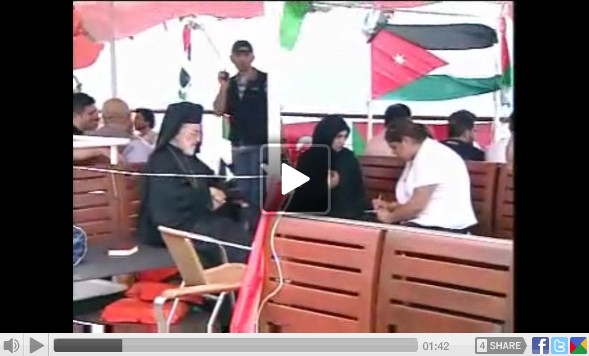
A global coalition of Palestinian support groups is taking protest to a dangerous new point of brinkmanship this week, with an attempt to crash through Israel’s naval blockade of the Gaza Strip in a flotilla of cargo and passenger boats now assembling in the eastern Mediterranean.
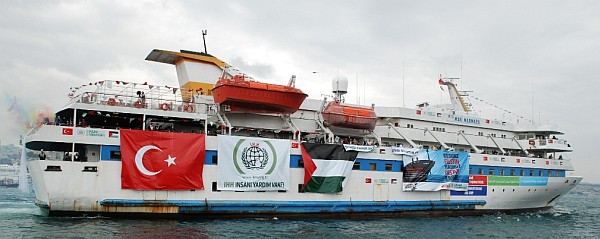
Converging at an undisclosed rendezvous in international waters, the four small cargo boats and four passenger vessels – ranging from cruisers carrying 20 to a Turkish passenger ferry for 600 – are a multimillion-dollar bid to shame the international community to use ships to circumvent Israel’s tight control on humanitarian supplies reaching war-ravaged Gaza.
As the first boat in the flotilla sailed from Dundalk, Ireland, to link up with others being readied at ports in Turkey and in Greece, Israel announced that it would bar the boats from landing.
A senior foreign ministry official described the flotilla as a ”provocation and a breach of Israeli law”.
Israeli media reports say that the Defence Minister, Ehud Barak, has formally ordered that waters off Gaza become a closed zone to a distance of 20 nautical miles.
Israel already has a ”large naval force” on manoeuvre in the area; and as a confrontation at sea looms, suspicion was taking hold in both camps.
Mechanical difficulties in the boat bound from Ireland – the 1200-tonne MV Rachel Corrie, named after an American who was crushed to death by an Israeli army bulldozer in Gaza in 2003 – prompted claims that the boat had been sabotaged. Unnamed Israeli officials have claimed elements in the flotilla would attempt to garner media attention by seeking to provoke Israeli violence.
Further complicating a tense scenario were reports of a welcome fleet of small boats attempting to put to sea from Gaza, and of an Israeli ”counter flotilla” that had assembled near Tel Aviv as a “civil initiative … not connected to any political group”.
Israel has rejected pleas by several ambassadors, most vocally by Dublin’s envoy to Tel Aviv, that their nationals on the flotilla be given safe passage to Gaza.
In the port of Agios Nikolaos, here on the Greek island of Crete, one of the lead organisers of the flotilla is the Free Gaza Movement’s Renee Jaouadi – a 34-year-old schoolteacher, formerly from Newcastle, NSW. Under the banner of the Freedom Flotilla, the protest is a $US3 million-plus ($3.6 million) operation. Apart from 10,000 tonnes of building, medical, educational and other supplies, on board are dozens of parliamentarians from around the world and professionals planning to offer their services in Gaza.
Celebrity names include the Swedish crime writer Henning Mankell and Denis Halliday, a former United Nations humanitarian co-ordinator who in 1998 resigned, protesting that economic sanctions on Iraq amounted to genocide.
On Saturday evening, attempts were under way to find a berth on the over-subscribed manifest for the activist American philosopher Noam Chomsky, who Israeli authorities last week barred from entering the West Bank where he had been invited to speak at a Palestinian university.
Five of eight previous protest boats have managed to land in Gaza. But most recently one was rammed at sea by an Israeli navy ship, and another was captured, with all on board being held in Israeli jails for up to a week before they were deported.
This is deliberately their biggest operation. Ms Jaouadi said the number of vessels and passengers in this week’s flotilla was intended to overstretch the capacity of Israel’s navy and, in the event of mass arrests, the capacity of its prisons.
“It is perfectly logical to go in by sea when entry by land and air is closed,” she said. “We are ordinary civilians doing what governments and big NGOs are refusing to do. The UN is always complaining that it can’t get supplies through: why is it not sending ships?”
A delegation from the California-based Free Palestine Movement includes Joe Meadors, a decorated Navy veteran and one of the survivors of the 1967 attack on the U.S.S. Liberty, in which Israeli fighter planes and ships killed 34 Americans and wounded 173, and Ambassador Edward L. Peck, who spent 32 years in the Foreign Service, including stints as Chief of Mission in Iraq and Mauritania, and was Deputy Director of the Cabinet Task Force on Terrorism in the Reagan administration.
“It’ll be like old home week,” said Meadors, recalling the Israeli attack he survived 43 years ago. “I’m determined to land with this internationally coordinated effort on the shores of Gaza to deliver relief to the 1.5 million inhabitants suffering under the Israeli-led illegal blockade.”
John Ging, the Director of Operations of the United Nations Relief and Works Agency for Palestine Refugees (UNRWA) in Gaza, recently called upon the international community to break the siege on the Gaza Strip by sending ships loaded with desperately needed supplies .”We believe that Israel will not intercept these vessels because the sea is open, and human rights organizations have been successful in similar previous operations proving that breaking the siege of Gaza is possible.”
Explaining his decision to participate in the convoy, Ambassador Peck said many Americans oppose Israeli’s oppressive policies in Palestine and especially Gaza, and believe that they are not in anyone’s interests, especially Israel’s. “All the peoples of the Middle East will live in peace and security”, he said, “only when, and if, all of them live in peace and security.”
Explaining his decision to participate in the convoy, Ambassador Peck said he wants to show that many Americans oppose Israeli policy and believe that it is in U.S. interests to hold Israel to accountable to international law and human rights standards. “All the peoples of the Middle East will live in peace and security only when and if all of them live in peace and security,” he said.
Ismael Patel, from Friends of Al Aqsa in Britain, describes the flotilla’s mission:
The State of Israel has no interest in flooding television screens all over the world with footage of its navy violently assaulting against peace activists at sea. It is time to remove the suffocating siege and allow residents of Gaza to have free contact with the outside world, freely operate sea and air ports of their own like any country in the world.
The Gush Shalom movement calls upon the government to allow the eight-boat aid flotilla from all over the world to reach the shores of Gaza, where they are scheduled to arrive next week, and unload the humanitarian cargo which is urgently needed by the residents of Gaza. In a letter to Defense Minister Barak, Gush Shalom calls upon him to cancel immediately the instructions given to Israeli Navy ships off the Gaza shore to intercept the aid flotilla.
“The whole world is looking. The State of Israel has no interest in flooding the international television screens with images of Israeli sailors and naval commandos violently assaulting hundreds of peace activists and humanitarian aid workers, many of them well-known in their countries. Whose interest will it serve when hours long dramatic live reports arrive from the Mediteranean, with the world’s sympathy given to hundreds of non-violent activists, on board eight boats, assaulted by the strongest military power in the Middle East?” were the words of a letter to the Defense Minister.
No harm whatsoever will be caused to Israel from the aid flotilla reaching Gaza Port and unloading a cargo of medical supplies and medicines, school supplies and construction materials to rebuild the houses destroyed by the Israeli Air Force a year and half ago and not yet been restored. On the contrary, it would be in Israel’s best interest to declare without delay that as a humanitarian gesture, the boats’ way will not be blocked. And in general, it is time to end once and for all the suffocating siege imposed on the Gaza Strip and causing terrible suffering to its million and a half inhabitants.
The siege on Gaza utterly failed in all the goals set for it by the government of Israel. The siege was supposed to result in toppling the Hamas government – and on the contrary strengthened this government, which relied on the support of a significant part of the Palestinian People. The siege was supposed to help in gaining the release of captured soldier Gilad Shalit – but on the contrary, the siege just delays that release, which could have been achieved long ago had the government of Israel agreed to the prisoner exchange deal, on which most of the details have been decided long ago. It’s time to end this cruel and pointless siege.
The residents of the Gaza Strip, like the citizens of Israel and of any other country in the world, have the right to maintain direct contacts with the outside world – to leave their country and return to it, to develop their economy, to import the products they need and export their own produce to anyone who wants to buy it, without asking or needing for permission from Israel, Egypt or any other country. Just as Israel needs no permit from any other country to operate daily the sea ports of Ashdod and Haifa and Eilat and the Ben Gurion International Airport, so are the Palestinians and their state to be entitled to run their own sea port and airport in the Gaza Strip. Let the flotilla of humanitarian aid from all over the world be given the honour of inaugurating the sovereign Palestinian Port of Gaza!
We’ve all caught the fever, every one of us who works to send boats to Gaza. From August 2006, when a handful of us started the Free Gaza Movement, every one who has joined us has been stricken with a bad case of the disease. It is chronic. It sometimes causes afflicted patients to insist that if just one more voyage can be planned to this small slice of the Mediterranean, we’ll all be in remission. There is no real cure in sight… yet.
Gaza Fever has now attacked thousands of us who have a passionate sense of justice.
The disease began shortly after Israel invaded Lebanon in 2006, as a group of us were in despair that the Palestinians, once again, were the forgotten symptom of Israel’s grand designs. As the world watched the defeat of Israel by a small band of guerrilla fighters in Lebanon, Israel decided it would take its wrath out on the Palestinians, specifically the Palestinians of Gaza. We watched as Israel, in January 2009, deliberately bombed 1.5 million Palestinians into abject poverty, a man-made catastrophe bordering on genocide.
One man in Australia suggested we sail a boat from New York to Gaza in protest of the closures there. That small idea has grown into a flotilla that leaves at the end of May with 700 people on board nine ships.
We, who have traveled by boat to Gaza, come back changed, blisters of outrage forever marking us. Those who have supported us through donations, letters, outraged picketing in front of Israeli Embassies demanding Israel stop its war crimes against a civilian population are also changed, as they watched our small boats sail into Gaza five times, cheering us on our way. Then, when our last three missions were violently stopped by Israel, thousands stepped up and donated to help us buy new boats.
In July 2009, Tun Dr.Mahathir bin Mohamad, former Prime Minister of Malaysia, and his wife, Tun Dr. Siti Hasmah bin Mohamad visited the Free Gaza Movement in Cyprus. They had heard about the voyages to Gaza and what Israel had done to the last three, ramming the Dignity, turning one back under threat of fire and hijacking the Spirit of Humanity, kidnapping the 21 human rights observers and throwing them into detention for a week.
He wanted to come and see for himself the small fishing boat that had been, in August 2008, Free Gaza’s first vessel to enter the port of Gaza in 41 years. When he and his wife stepped on this small vessel, he was shocked. “You went all the way to Gaza on this small boat? You braved the sea in a boat that was barely seaworthy?”
When we replied that, indeed, we had crossed the sea in not only this small boat, but one even smaller, 44 of us challenging Israel’s blockade on the 1.5 million Palestinians of Gaza, he caught Gaza Fever.
“You need a proper boat,” he said. “I’m going back to my people in Malaysia and see how we can help you raise money to send more boats back to Gaza.”
And that’s exactly what he and his wife did.
Follow the progress of the Freedom Flotilla on Twitter and at WitnessGAZA.
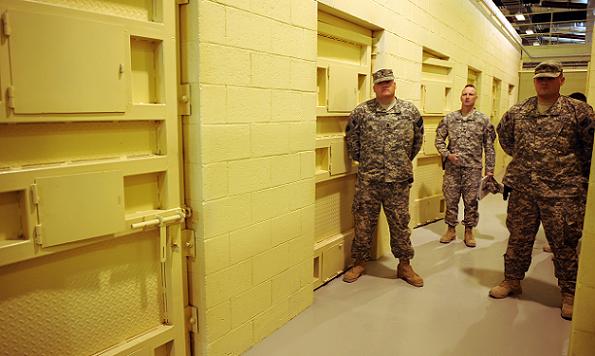
What’s the difference between a US-military-run detention facility and an intelligence gathering facility? For one thing, Red Cross officials are being prevented from seeing how prisoners are treated when held at Bagram’s intelligence gathering facility. Is that so that they can be tortured in secret?
Two days after taking office, Barack Obama signed an executive order banning torture. The era of secret detention facilities and CIA-administered waterboarding were over. Or so we thought.
The US airbase at Bagram in Afghanistan contains a facility for detainees that is distinct from its main prison, the Red Cross has confirmed to the BBC.
Nine former prisoners have told the BBC that they were held in a separate building, and subjected to abuse.
The US military says the main prison, now called the Detention Facility in Parwan, is the only detention facility on the base.
However, it has said it will look into the abuse allegations made to the BBC.
The International Committee of the Red Cross (ICRC) said that since August 2009 US authorities have been notifying it of names of detained people in a separate structure at Bagram.
“The ICRC is being notified by the US authorities of detained people within 14 days of their arrest,” a Red Cross spokesman said.
“This has been routine practice since August 2009 and is a development welcomed by the ICRC.”
The spokesman was responding to a question from the BBC about the existence of the facility, referred to by many former prisoners as the Tor Jail, which translates as “black jail”.
Prisoners say they have been kept in isolation in cold cells and subjected to sleep deprivation, but it turns out the CIA’s hands are clean — this time it’s the Defense Intelligence Agency at work. And as for the fact that the Red Cross has been barred from entering this facility, that’s because it isn’t being called a detention facility.
Defense officials said that the White House is kept appraised of the methods used by interrogators at the site. The reason why the Red Cross hasn’t been invited to tour it, officials said, was because the U.S. does not believe it to be a detention facility, classifying it instead as an intelligence gathering facility.
A Defense official said that the agency’s inspector general had launched an internal investigation into reports in the Washington Post that several teenagers were beaten by the interrogators, but [Pentagon spokesman, Bryan] Whitman disputes this.
When the Obama Administration took over, it forbade the DIA from keeping prisoners in the facility longer than 30 days, although it is not clear how that dictum is enforced. It is also not clear how much Congress knows about the DIA’s interrogation procedures, which have largely escaped public scrutiny.
“Sighs of relief will have been heard in Israel’s London embassy on Friday morning as it emerged that Britain’s Liberal Democrat party had failed to capitalize on a surge in pre-election opinion polls,” Haaretz reported.
Cleggmania might have proven to be short-lived — or at least not translated well in a parliamentary system that disregards the size of the vote. Still, I’d says those breaths released in relief should probably have been held in. An Israeli nightmare might still come to pass: Foreign Secretary Nick Clegg in a coalition government. As of Friday afternoon, that outcome is still in the cards.
But why should Israel be so afraid of Britain’s newest political star?
“Clegg is bad news for Israel,” one official here said. “His party is running on a human rights platform, and the atmosphere is hostile to Israel. We remind the Liberal Democrats of South Africa during apartheid. Even if Clegg decides not to take the foreign portfolio, the very fact that Liberal Democrats sit in the cabinet is likely to mean trouble for us.”
Israel’s Lieberman-run ministry of foreign affairs might make a mockery of diplomacy, but it should never be faulted for its bluntness: Good for human rights; bad for Israel. There’s a slogan to remember!
In the narrative that sketches the legality of the war on terrorism, the tribal nature of the “battlefield” is the pretext used to justify killing people instead of attempting to arrest them. Counterterrorism experts scoff at the notion that FBI agents (or Pakistani law enforcement officials for that matter) could possibly waltz into a village in South Waziristan and handcuff a Taliban or al Qaeda suspect. The logistics of such an operation would indeed be daunting.
But here’s the thing: The United States is now killing people when it doesn’t even have a legal basis for even initiating their capture.
In the US — and most other legal jurisdictions — an arrest warrant needs to show probable cause connecting a crime that has been committed to the person named on the warrant.
In Pakistan, the CIA can target someone for assassination without knowing their name, without witnessing them commit a crime — simply on the Orwellian pretext that their “pattern of life” can be deemed a threat to the United States.
The CIA received secret permission to attack a wider range of targets, including suspected militants whose names are not known, as part of a dramatic expansion of its campaign of drone strikes in Pakistan’s border region, according to current and former counter-terrorism officials.
The expanded authority, approved two years ago by the Bush administration and continued by President Obama, permits the agency to rely on what officials describe as “pattern of life” analysis, using evidence collected by surveillance cameras on the unmanned aircraft and from other sources about individuals and locations.
The information then is used to target suspected militants, even when their full identities are not known, the officials said. Previously, the CIA was restricted in most cases to killing only individuals whose names were on an approved list.
The new rules have transformed the program from a narrow effort aimed at killing top Al Qaeda and Taliban leaders into a large-scale campaign of airstrikes in which few militants are off-limits, as long as they are deemed to pose a threat to the U.S., the officials said.
At a time when Faisal Shahzad — a name that might not evoke much terror — is a name uppermost in many people’s minds, it’s worth remembering Mir Aimal Kasi.
In 1993 he too had conducted a pattern of life analysis, having noted the turn lane that directed traffic into the CIA’s Langley headquarters. In his targeted killing operation, he too had found the high-value targets of his choice — James Woollsey and Robert Gates — were too illusive and so he opted to shoot CIA employees whose names he didn’t know.
Soon before receiving a death sentence in 1998, Kasi told Salon:
“I am not against the USA or the American people. I am against the policies of the U.S. government toward Islamic countries or toward Muslims.”
“A lot of young people in Pakistan,” he said, “think mostly the same.”
“This is a blow back. This is a reaction. This is retaliation. And you could expect that,” Pakistani Foreign Minister Mahkdoom Qureshi told CBS News after the Times Square bombing attempt. “Let’s not be naive. They’re not going to sort of sit and welcome you eliminate them. They’re going to fight back.”
In a report on the CIA’s campaign of drone warfare in Pakistan, the Los Angeles Times recounts the stories of some of the civilian victims of the attacks.
Many of the boys that Zaman Khan grew up with in the South Waziristan town of Shakai eventually joined the Taliban. He knew they had become militants, but he never thought it odd to have them over for tea.
Whether it was because of Taliban visits or the proximity of a regular Taliban meeting place 30 yards away, Khan’s house became a target March 15, 2008.
The missile struck while everyone slept, killing Khan’s brother, Wazir Khan, 40; Wazir’s wife, Zara Bibi, 30; and their 4-year-old son, Irshad. The left half of Wazir’s body had been sheared off. Zara’s and Irshad’s bodies were charred from head to toe.
Wazir’s two other children, Noor Rehman, 10 at the time, and Ishaq Khan, 3, survived. Physically, they recovered but suffer from psychological problems, Zaman Khan said.
“Ishaq doesn’t talk at all,” Khan said. “He can’t recognize his family, and he drinks only if someone helps him.”
Three weeks after that strike, a house full of civilians in the same neighborhood was struck, instantly killing cousins Sher Maan, 20, and Azeem Ullah, 30, and Azeem’s wife, Gul Anama, 25.
“It was a huge blast that shook the ground,” said Amin Ullah, 20, a Shakai farmer.
“I believe that most of the victims of these drone attacks are innocent people,” Ullah said. “Pakistan should be carrying out these attacks. Pakistan knows the terrain, knows its people and knows the militants.”
Andrew Exum, a former Army officer in Afghanistan and Iraq, has declared the drone program counterproductive and called for an end to it. In an analysis published last year, Exum and David Kilcullen, a former counterinsurgency advisor to the head of U.S. Central Command, Army Gen. David H. Petraeus, dismissed drones as technology substituting for strategy.
“Every one of these dead noncombatants represents an alienated family, a new desire for revenge, and more recruits for a militant movement,” they wrote.
Drones have proved invaluable in Afghanistan, where they focus on surveillance, intelligence-gathering and watching over coalition troops, Exum said in an interview. But in Pakistan, the U.S. and the government in Islamabad need to make the case that the attacks are part of a joint strategy supporting Pakistani policy, he said.
“I’m not saying drones can’t be part of the solution, but right now I think they’re part of the problem,” Exum said.
Drone attacks have enraged men such as Momin Khan. On a September morning last year, Khan heard the thunderclap of a drone strike in Machis, his village in North Waziristan, and ran to see what had happened.
As he joined other villagers running down a dirt road, the 50-year-old unemployed teacher saw black smoke and flames curling out of a house about 60 yards away. The missile had killed two people there. As he ran closer, a second missile strike shook the ground.
Shrapnel from the blast cut into his shoulder and legs. He woke up in a hospital.
Four people were killed in the second strike, he said. Although Taliban militants have often used Machis as a haven, Khan said he was sure the house initially targeted had only civilians in it.
“These drones fly day and night, and we don’t know where to hide because we don’t know who they will target,” he said. “If I could, I would take revenge on America.”
Philip Alston, the United Nations special representative on extrajudicial, summary or arbitrary killings, said that without full disclosure of the CIA drone program, “the opportunities for abuse are immense.”
“The CIA is running a program that is killing a significant number of people, and there is absolutely no accountability in terms of the relevant international law,” he said.
Scott Horton, while considering some of the legal issues surrounding the program notes:
No weapons system remains indefinitely the province of a single power. Drone technology is particularly striking in this regard, because it is not really all that sophisticated. It seems clear that other powers have this technology–Israel and Iran have each been reported to be working with it, Russia and China could obviously do so easily if they desired, and the same is probably true for Britain, France, and Germany, not to mention Japan and Taiwan, where many of the cutting-edge breakthroughs in robotics actually occur. The way America uses this technology is therefore effectively setting the rules for others. Put another way, if it’s lawful for America to employ a drone to take out an enemy in the desert of Yemen, on the coast of Somalia, in a village in Sudan or Mauretania, then it would be just as lawful for Russia, or China–or, for that matter, for Israel or Iran. What kind of world is this choice then creating? Doesn’t it invariably lead us closer to the situation in which a targeted killing will be carried out in a major metropolis of Europe or East Asia, or even the United States? And doesn’t that move us in the direction of a dark and increasingly lawless world?
This is not idle speculation. The choices the United States has made are being studied very closely in capitals around the world. In Russia, for instance, national-security analysts have noted the American drone strikes with a measure of approbation, because they see such strikes as justifying lethal countermeasures of their own against perceived terrorist enemies. A number of enemies of the Russian government who were critical of policies or actions connected with the Second Chechen War have recently met violent death, often after Russian authorities linked them to Chechen terrorist groups. The Polonium poisoning of Aleksandr Litvinenko in London, for instance, or the assassination of Umar Israilov in Vienna, which Austrian prosecutors linked earlier this week to a Putin-protégé, the president of Chechnya, are two examples that suggest that Europe may have been cleared as a theater for targeted killings by a great power. The 2004 killing of former Chechen President Zelimkhan in Qatar is an example of another Russian targeted killing in the Gulf. The recent likely Israeli assassination of Mahmoud al-Mabhouh in Dubai is another instance. Targeted killings of this sort have always been with us, of course, but with the Bush-era “War on Terror” they are making a strong comeback and are gaining in claims of legitimacy and legality. The drone technology promises to take targeted killings to a whole new level.
My point here is a simple one. The United States cannot assume exclusivity in this technology, and how it uses the technology will guide others. The United States has to decide now whether it wants to legitimize a broader right of sovereign states to assassinate their enemies using drones. The consequence of such a step to the world as a whole will be severe. This also points to the danger of the United States using drones for targeted killings and keeping silent about the process, which invites the view that the practice involves an arbitrary and capricious use of power. If the United States elects to continue on its current path, it also owes the world a clear accounting for its use of drones as a vehicle for targeted killings.
Iraq’s prime minister dismissed his rival’s call for international help to resolve the country’s postelection political crisis as the dispute threatens to inflame rifts and undermine American plans for withdrawal.
In a televised speech Friday, Prime Minister Nouri Maliki, whose political bloc finished a close second behind former premier Iyad Allawi’s slate in the March 7 elections, alleged that “regional, international” players were attempting a coup d’etat against his government.
“We have accomplished very much in Iraq,” he said from the southern shrine city of Karbala, the symbolic heartland of Iraq’s Shiite Muslims, who were long oppressed under the Sunni-dominated Baath Party government of Saddam Hussein.
“We will not allow any foreign interference in our internal affairs that will breach our sovereignty,” Maliki said.
Meanwhile, earlier this week, the New York Times reported:
The torture of Iraqi detainees at a secret prison in Baghdad was far more systematic and brutal than initially reported, Human Rights Watch reported on Tuesday.
The existence of the prison, which housed mostly Sunni Arab prisoners, has created a political furor in Iraq, prompted government denials and fanned sectarian tensions.
“Abu Ghraib was a picnic” compared with the secret prison, said Sheik Abdullah Humedi Ajeel al-Yawar, one of the most influential Sunni Arab tribal leaders in the northern province of Nineveh, where the detainees were rounded up by Iraqi soldiers based on suspicions that they had links to the insurgency and brought to Baghdad with little due process. Abu Ghraib is the prison at which American guards tortured Iraqi prisoners, severely damaging Iraqis’ trust in the United States.
Human Rights Watch gained access on Monday to about 300 male detainees transferred from the once secret prison at the Old Muthanna military airfield to the Rusafa prison in Baghdad and documented its findings, which it described as “credible and consistent,” in a draft report provided to The New York Times on Tuesday by the rights group.
The group said it had interviewed 42 detainees who displayed fresh scars and wounds. Many said they were raped, sodomized with broomsticks and pistol barrels, or forced to engage in sexual acts with one another and their jailers.
Vicki Divoll, observes that President Obama’s de facto death sentence for the American Muslim cleric, Anwar al Awlaki, indicates that in its application of the law, this administration has a greater regard for Awlaki’s right to privacy than his right to life.
According to media reports, the United States has taken the apparently unprecedented step of authorizing the “targeted killing” of one of its citizens outside a war zone — though the government has not officially acknowledged it.
Unnamed intelligence and counter-terrorism sources told reporters that the Obama administration had added Anwar al Awlaki, a Muslim cleric born in New Mexico, to the CIA list of suspected terrorists who may be captured or killed. Awlaki, believed to be in hiding in Yemen, has been linked to Nidal Malik Hasan, the Ft. Hood, Texas, shooter, and to Umar Farouk Abdulmutallab, the Nigerian charged with trying to blow up an airliner in December.
The reports indicate that the administration had concluded Awlaki had taken on an operational role in terrorist attacks. His addition to the CIA list shouldn’t “surprise anyone,” according to one anonymous U.S. official quoted in the New York Times.
It is surprising, however. As a matter of U.S. law, had the administration wanted merely to listen to Awlaki’s cellphone conversations or read his e-mails, it would have needed to check with another branch of government — the judiciary. But to target him for death, the executive branch appears to have acted alone.
It adds up to this: Awlaki’s right to privacy exceeds his right to life.
Dennis Blair, the Director of National Intelligence, has indicated that Awlaki enjoys no special privileges simply by virtue of being America, and that might be so. Yet it’s hard to believe that Awlaki would now be in the CIA’s hit list were it not for three additional enabling factors: that he possesses an Arabic name, that he is a Muslim, and that he is not white.
On his first day in office, President Barack Obama promised that he would close the Bush-era prison at Guantanamo Bay, Cuba, “as soon as practicable” and “no later than one year from the date of this order.” The announcement was met with relief, even joy, by those, like me, who had opposed the very existence of Guantanamo on the grounds that it represented a legal black hole where the distinction between guilt and innocence had been obliterated, respect for the rule of law was mocked, and the rights of prisoners were dismissed out of hand. We should have known better.
By now, it’s painfully obvious that the rejoicing, like the president’s can-do optimism, was wildly premature. To the dismay of many, that year milestone passed, barely noticed, months ago. As yet there is no sign that the notorious eight-year-old detention facility is close to a shut down. Worse yet, there is evidence that, when it finally is closed, it will be replaced by two Guantanamos — one in Illinois and the other in Afghanistan. With that, this president will have committed himself in a new way to the previous president’s “long war” and the illegal principles on which it floundered, especially the idea of “preventive detention.”
For those who have been following events at Guantanamo for years, perhaps this should have come as no surprise. We knew just how difficult it would be to walk the system backwards toward extinction, as did many of the former lawyer-critics of Guantanamo who joined the Obama administration. The fact is: once a distorted system has been set in stone, the only way to correct it is to end the distortion that started it: indefinite detention.
There has been almost universal silence among Congressional Democrats on the Obama administration’s recently revealed decision to authorize the assassination of a US citizen, Anwar al-Awlaki. Al-Awlaki, who now lives in Yemen, has been accused of providing inspiration for Umar Farouk Abdulmutallab, the alleged “underwear bomber,” and Major Nidal Malik Hasan, the alleged Fort Hood shooter. In recent weeks, there has been a dramatic surge in US government chatter about the alleged threat posed by al-Awlaki, with anonymous US officials accusing him of directly participating in terror “plots” (his family passionately disputes this).
Several Democrats refused, through spokespeople, to comment on the assassination plan when contacted by The Nation, including Senator Russ Feingold and Representative Jan Schakowsky, both of whom serve on the Intelligence Committees. Representative Jane Harman, who serves on the Homeland Security Committee, said recently that Awlaki is “probably the person, the terrorist, who would be terrorist No. 1 in terms of threat against us.”
An issue related to this assassination plan that has thus far received no attention is its implications for the court martial of Nidal Malik Hasan. If Anwar al-Awlaki was arrested and brought back to the United States, he would undoubtedly be a key witness in Hasan’s trial, given the widely reported email correspondence between the Texas shooter and Awlaki. Won’t killing a potential witness prejudice the outcome of the trial?
In The Price of Assassination, Robert Wright reflects on the pitfalls of President Obama’s policy of so-called targeted killing.
Wright comes closest to hitting the right target when he says:
Terrorists are nourished ultimately by a grass-roots sense of injustice.
And one good way to stoke a sense of injustice is to fire missiles into cars, homes and offices in hopes of killing terrorists, while in fact killing no few innocent civilians. Estimates of the ratio of civilians to militants killed are all over the map — 50 to 1 or 10 to 1 or 1 to 2 or 1 to 10 — but the estimate of the Pakistani people, which is all that matters, tends toward the higher end.
The higher end is actually off the scale that Wright cites since he only looks at American sources. And since it seems reasonable to assume that the Pakistanis count their own dead more carefully than Americans do, the high end, as reported by Dawn newspaper, may also be a more accurate count and measure of the accuracy of Obama’s targeted killing program: 140 innocents civilians killed each time an al Qaeda or Taliban “target” was hit in 2009.
Any policy of targeted killing — whether conducted by the US or Israel — faces an obvious problem that must surely have given rise to the name, targeted killing. These actions result in a significant amount of indiscriminate killing, yet indiscriminate killing is, we are constantly reminded, the province of terrorism.
So how does a state counter the charge that its methods mirror those of terrorists? By claiming — without much foundation — that the carnage it causes is precise. We are highly discriminating killers who hit our targets with pinpoint accuracy — pinpoints that often turn out to be occupied by an unfortunate number of untargeted people.
But to turn to another of Wright’s points — that terrorists are nourished by a grass-roots sense of injustice — here he glides over the issue that the very term terrorism is designed to conceal: that just causes very often spawn acts of violence and that those engaged in this violence are genuinely dedicated to those causes, not merely being nourished by them.
In other words, by invoking the word terrorism we refuse to look at its political roots. And even in those cases where a just political cause is widely acknowledged — such as with the Palestinian national movement — we imagine that its violent manifestations can be legitimately marginalized rather than seen as a compelling gauge of the depth of the grievance.
When the question, is it right?, is made subordinate to the question, is it legal?, we succumb to the tyranny of law.
Once in a while a rare individual when confronting a contradiction between these two will refuse to be tyrannized. Anat Kam might be just such an individual, though as Richard Silverstein (who has covered this story in greater detail than anyone else) speculates, she may have simply been “an aspiring journalist who found herself in a position to advance her career.”
The story of her house arrest and impending trial have been the focus of huge attention inside and outside Israel but within the current media frenzy the real story is getting much less attention. That is the story which Kam revealed and which was reported in Haaretz two years ago.
But in case anyone is naive enough to imagine that a Haaretz report might inhibit the sense of impunity that guides Israel’s security forces, another report from less than four months ago makes it clear that those acting in the name of the state see few limitations on how they exercise their power. On December 26 Haaretz reported:
An investigation into an overnight Israel Defense Forces operation in the West Bank city of Nablus early Saturday suggests that Israeli soldiers may have executed two of the three Palestinian militants who were killed, the left wing rights group B’Tselem said Saturday.
In the operation, the IDF killed three Al Aqsa Martyrs Brigades operatives, whom officials said were responsible for a shooting attack on Thursday which killed 40-year-old father of seven Meir Hai of the settlement of Shavei Shomron. The troops surrounded the homes of the three and called for them to exit, and killed them when they refused to surrender.
According to B’Tselem, in two of the three cases the troops behaved as if they were preparing for an execution, not an arrest. Relatives and eyewitnesses told B’Tselem that the two were unarmed and did not attempt to flee, and that the soldiers weren’t trying to stop them, but rather shot them from close range once their identity was revealed.
Little has changed since the story that triggered the Anat Kam affair was first reported.
License to kill
Uri Blau, Haaretz, December 4, 2008
The Israeli Defense Forces highest commanders approved the killing of innocent people while targeted assassinations were being carried out, in spite of an Israeli High Court ruling that prohibited such operations. Moreover, the claim that the targets of such operations represented “ticking time bombs” was exposed as a fraud when an inconvenient scheduling conflict — the visit of a senior American official — required that a murder be postponed.
The announcement made by the Israel Defense Forces’ spokesman on June 20, 2007 was standard: “Two armed terrorists belonging to the Islamic Jihad terror organization were killed last night during the course of a joint activity of the IDF and a special force of the Border Police in Kafr Dan, northwest of Jenin. The two terrorists, Ziad Subahi Mahmad Malaisha and Ibrahim Ahmed Abd al-Latif Abed, opened fire at the force during its activity. In response the force fired at them, killing the terrorists. On their bodies two M-16 rifles, a pistol and ammunition were found. It was also discovered that the terrorists were involved in planning suicide attacks against the Israeli home front, including the attempt in Rishon Letzion last February.”
The laconic announcement ignores one important detail: Malaisha was a target for assassination. His fate had been decided several months earlier, in the office of then head of Central Command, Yair Naveh. As far as the public was concerned, on the other hand, the last declared assassination carried out by the IDF in the West Bank took place in August 2006; at the end of that year the High Court of Justice set strict criteria regarding the policy of assassinations in the territories.
A Haaretz Magazine investigation reveals for the first time operational discussions in which the fate of wanted men and innocent people was decided, in apparent disregard of the High Court decision. Thus it was revealed that the IDF approved assassination plans in the West Bank even when it would probably have been possible to arrest the wanted men – in contradiction to the State’s statement to the High Court – and that in cold military terminology the most senior IDF echelons approve, in advance and in writing, the harming of innocent Palestinians during the course of assassination operations. Moreover, it turns out that the assassination of a target the defense establishment called part of a “ticking infrastructure” was postponed, because it had been scheduled to take place during the visit of a senior U.S. official.
Leading legal experts who were asked to react to the documents say that the IDF is operating in contradiction to a High Court ruling. “Morality is a very difficult issue,” Prof. Mordechai Kremnitzer of Hebrew Univeristy said. “The thought that there are people who sit behind a desk and determine that someone is fated to die is a frightening thought.” Continue reading →
This website or its third-party tools use cookies, which are necessary to its functioning. By closing this banner, you agree to the use of cookies.