Category Archives: human rights

A presidential death warrant

American soldiers have to be trained how to kill, but for American presidents killing comes naturally.

Anyone who aspires to become president must surely ask themselves: am I willing to end someone else’s life, be that an individual or perhaps tens or hundreds of thousands or even millions of people? After all, even though it’s not spelled out in the Constitution, it’s clear that a pacifist could never hold this office. Killing comes with the territory.

Even so, I can’t help wondering when it was the Barack Obama posed this question and decided, “yes I can.”

With candidate George W Bush we didn’t need to ask the question. He had a track record — as the Governor of Texas he presided over 152 executions. But with Obama, we may never know when he came to regard killing as a tolerable part of his job.

It’s hard to imagine that as a community organizer he ever entertained the idea that wiping people out could become a dimension of working towards the greater good, yet at some point he must have seen this coming and — from all the evidence we now see — not flinched.

But to contrast Obama and Bush as killers, here’s what’s scary and yet passes without comment: Obama’s approach is dispassionate, with no explicit moral calculation. Whereas Bush felt driven to assume an air of righteousness and moral superiority, casting his actions within a drama of good and evil, Obama presents the image of an administrative process through which, after careful analysis and legal and political deliberation, lives are terminated.

Under the morally insidious rubric of “procedures” — a notion that peels away personal responsibility by replacing it with impersonal rules-based behavior — the president, the CIA, the military, the administration, the media, and the American public are all being offered an excuse to look the other way. An unnamed official assured a Washington Post reporter: “[there are] careful procedures our government follows in these kinds of cases.”

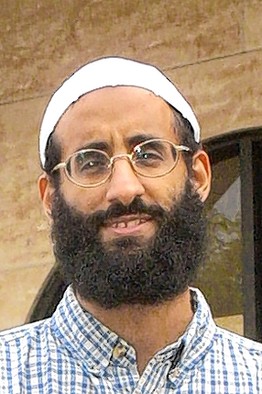
When Anwar al-Awlaki, an American born in New Mexico is shredded and incinerated — his likely fate at the receiving end of a Hellfire missile — there will be no account of the last moments of his life. No record of who happened to be in the vicinity. Most likely nothing more than a cursory wire report quoting unnamed American officials announcing that the United States no longer faces a threat from a so-called high value target.

Representative Jane Harman, Democrat of California and chairwoman of a House subcommittee on homeland security, was out prepping the media and the public on Tuesday when she called Awlaki “probably the person, the terrorist, who would be terrorist No 1 in terms of threat against us.”

Although it was only this week that a US official announced that Awlaki is now on the CIA’s assassination list, US special forces were already authorized and had made at least one attempt to kill the Muslim cleric who now resides in Yemen.

While both the military and the CIA make use of drones for the purpose of remotely controlled assassination, the fact that Awlaki is now considered a legitimate target for “lethal CIA operations” raises questions about the methods the agency might use.

Last summer CIA Director Leon Panetta shut down a secret CIA program which would have operated assassination teams for hunting down al Qaeda leaders. The news was presented as though the new administration was again distancing itself from the questionable practices of the Bush administration, yet at the time, Director of National Intelligence Dennis C Blair told Congress that the termination of that particular program did not rule out the future use of insertion teams that could kill or capture terrorist leaders.

One of the many ironies here is that the Obama administration appears to have abandoned one of the Bush era rationales for torture in favor of its own rationale for murder.

The most frequently used justification for torturing terrorist suspects has been the claim that in the scenario of a so-called ticking time bomb, vital information might be forced out of a suspect enabling an imminent act of terrorism to be thwarted.

Anwar al-Awlaki is supposedly just such a suspect. “He’s working actively to kill Americans,” an American official told the Washington Post. But whatever vital intelligence he might be able to provide, we’ll probably never know. Once dead he won’t hatch any new plots, but as for the ones already set in motion, well, we’ll just have to wait and see what sort of surprises may yet appear.

Needless to say, I am not suggesting that torturing terrorist suspects is any more acceptable than murdering them.

Ken Gude, a human rights expert from the Center for American Progress, argues that Awlaki is a legitimate target for assassination because of his claimed role in assisting the 9/11 attackers. On that basis, his killing would appear to be an act of extra-judicial punishment rather than the removal of a potential threat. But even if the administration sticks assiduously to its focus on future threats, it should not claim a God-like power to predict the future. Nor should it assume that the threat someone poses is necessarily diminished once they are dead.

In weighing the fate of Anwar al-Awlaki, this administration would do well to remember the case of Mohammed El Fazazi, a Moroccan cleric who from a Hamburg mosque preached to Mohammed Atta, Ramzi Binalshibh and Marwan al-Shehhi, three of the men who participated in the 9/11 attacks, that it was the duty of a devout Muslim to “slit the throats of non-believers.”

Eight years later, Fazazi had a new message as he appealed to Muslims to air their grievances through peaceful demonstrations. He is helping turn young men away from violent jihad. But what would stir the hearts of such men now if rather than hearing Fazazi’s moderated message, instead they held the memory of a day he became a martyr when struck by an American Hellfire missile?

Facebooktwittermail

The Israel lobby’s curious defense of an alleged Somali war criminal

Yousuf v. Samantar is the first human rights suit arising from abuses committed in Somalia under the brutal regime of Siad Barre. It is currently pending before the Supreme Court, where an odd coalition of defenders has filed briefs on behalf of the defendant, Mohammed Samantar, a prime minister under Barre and an alleged war criminal.

Among his defenders are five pro-Israel organizations — the American Jewish Congress, the Zionist Organization of America, the American Association of Jewish Lawyers And Jurists, Agudath Israel of America, and the Union of Orthodox Jewish Congregations of America in Support of Petitioner — each with a professed interest in keeping Samantar out of court. Allowing the case to proceed, they warn, would set an inviting precedent for Israel’s detractors in the human rights community, exposing current and former Israeli officials to an avalanche of litigation.

This suit was brought by the Center for Justice and Accountability and pro bono co-counsel Cooley Godward Kronish LLP in 2004 on behalf of five torture survivors: Bashe Abdi Yousuf, a young business man detained, tortured, and kept in solitary confinement for over six years; Aziz Mohamed Deria, whose father and brother were abducted by officials and never seen again; John Doe I, whose two brothers were summarily executed by soldiers; Jane Doe, a university student detained by officials, raped 15 times, and put in solitary confinement for over three years; and John Doe II, who was imprisoned for his clan affiliation and was shot by a firing squad, but miraculously survived by hiding under other dead bodies.

A strange alliance at the Supreme Court

By Sam Singer, War in Context, April 4, 2010
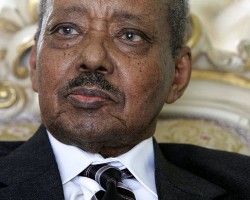
Mohammed Ali Samantar is the only living vestige of the Barre regime, the last government in two decades to exercise central control over Somalia and, not coincidentally, the last that was impudent enough to try. When Siad Barre was finally overthrown in 1991, Samantar, who had served as defense minister and prime minister, fled, in a storm of bullets, to Italy. He eventually made his way to Fairfax, Virginia, where he lived in suburban obscurity until a group of Somali nationals discovered him, hired a lawyer, and sued for damages. According to his accusers, the Barre regime committed unforgivable acts of violence against them and their families, offenses spanning a range of brutality from arbitrary detention, to torture, rape and extrajudicial killing. Samantar was allegedly aware of the crimes being perpetrated against civilians and yet failed to stop them. The suit was dismissed by a federal district court and then reinstated by the US Court of Appeals for the Fourth Circuit. It is now pending before the Supreme Court, where a peculiar coalition of defenders is urging reversal. Among them, to the confusion of some observers, are five prominent pro-Israel organizations, each with a professed interest in keeping Samantar out of court. In joint amicus briefs, the groups insist that as a former government official, Samantar should be immune from suit. To hold otherwise, they warn, would violate international law and set an inviting precedent for Israel’s enemies and their supporters in the human rights community.

The arrival of the Israel lobby adds geopolitical intrigue to a case that already read like a Ludlum thriller. And because it speaks to real and immediate consequences, it lends concreteness to a discussion that would have otherwise carried on in the abstract. It is one thing for a lawyer to appeal to legal authority for the proposition that the courts of one nation ought not sit in judgment of the acts of another; it is quite another for five groups purporting to represent the interests of the Israeli government to advise that doing so in this case would be to declare open season on Israeli officials in US courts.

It is not without some irony that organizations claiming to represent Israel, a state conceived in the wake of unprecedented state-sponsored violence, find their wagon hitched to the cause of an alleged war criminal. Nor does the position square, at least not at first glance, with less expansive interpretations of sovereign immunity advanced by the lobby’s constituents in the past. Just this year, Israeli victims of rocket fire on the Lebanese border sued the Iranian government, by way of its central banks, on the theory that it provided material support to Hezbollah, the source of the rockets. Last December, a pro-Israel group in Europe sued leaders of Hamas in a Belgium court, invoking what it described as the court’s “universal” jurisdiction over cases arising from war crimes. In both cases, sovereign immunity was an obstacle standing between Israeli interests and a favorable judgment; here, in Samantar’s case, supporters of Israel invoke it as a shield.

In fact, Israel is far more likely to find itself on the receiving end of a human rights suit. According to one report, nearly 1,000 suits have been filed globally against Israeli officials and military personnel alleging war crimes and other abuses. The defense ministry expects some 1,500 more will follow, many stemming from military operations in the coastal territories, but also some taking aim at the less violent aspects of Israeli anti-terror strategy, including one suit describing the security fence as a “crime against humanity.” An Israeli newspaper published a “wanted” list of current and former officials who are among the common named defendants. The list, which was republished in briefs to the Court, reads like a who’s who in Israeli political and military history. The forums for these suits vary, but they commonly feature developed Western countries that have lowered the drawbridge for human rights litigants. Steering many of the cases are nongovernmental organizations (NGOs), some based in the Middle East with ties to the Palestinian government, others based in the West and backed by the likes of the Center for Constitutional Rights and George Soros’s Open Society Institute.

In these suits supporters of Israel see pretext. They describe a more sinister objective, a coordinated effort to bring Israeli officials into federal courtrooms. The idea is to delegitimize Israel, but not before dragging officials through an invasive and costly discovery process. Do it enough and Israeli officials will start thinking twice before traveling to the United States, or, worse yet, before assuming roles that could expose them to suit. Defense experts believe the strategy fits the definition of “lawfare,” think-tank speak for the use of legal methods to achieve military goals.

In the immediate term, the briefs warn, relations between the US and Israel will suffer. Like any partnership, the US/Israeli alliance benefits from a rich and ongoing exchange of people and ideas. For the exchange to thrive, current and former Israeli officials must be able to travel to and within the United States without fear of being served with a lawsuit. By way of illustration, the American Jewish Congress recounts the story of Moshe Ya’alon, a retired Israeli general who was recently summoned to court upon arriving in Washington, D.C. for a think tank forum. The complaint, which sought damages for civilian deaths resulting from a battle on the Lebanese border between Israel and Hezbollah, was perfunctory. With respect to Ya’alon, it alleged only that he served in the army chain-of-command during the relevant period. The district court dismissed the case on jurisdictional grounds and the D.C. Circuit affirmed, concluding that the immunity of a foreign state extends to its former officials. Ya’alon never had to step foot in a courtroom. Now suppose that instead of Washington, he had been served with the suit 15 minutes away, in Arlington, Virginia. In that event the dismissal of his suit would have been appealed to the Fourth Circuit, which, as we learned in Samantar’s case, does not share the D.C. Circuit’s view on official immunity. In other words, had Ya’alon booked a hotel across the river, he might well still be there today.

A Statutory Nightmare

Naturally, US-Israeli relations didn’t figure into the Supreme Court’s questioning at oral arguments. The justices had assembled to resolve a disagreement among the federal circuit courts over whether sovereign immunity extends to officials. Accordingly, they trained their focus on Samantar and his theory of the case, which rests on the off-stated maxim that one equal has no dominion over another equal. That this saying, which encapsulates the principle of sovereign immunity, is most commonly recited in Latin suggests something about its vintage. It is as close to a truism as a proposition can come in a foggy discipline like international law, and it is an animating principle of the Foreign Sovereign Immunity Act (FSIA). That law changed the way US courts process suits against foreign governments. Before 1976, a court needed the go-ahead from the State Department before docketing such cases. When this approach proved unwieldy, Congress vested gate-keeping authority in the federal courts and then cabined it by stripping them of jurisdiction over suits against foreign states that don’t fit within a narrow set of exceptions.

Until recently it was generally accepted that these same protections applied to foreign officials. After all, a suit against a foreign official acting on behalf of a state is effectively a suit against the state. True, the caption may list the Minister of Defense rather than the Ministry of Defense, and the plaintiff may have his sights set on a personal bank account rather than the national treasury, but in either case the court is sitting in judgment of the state’s actions. It has intuitive appeal, this idea. It also has the support of the majority of the federal circuits.

But as the Fourth Circuit pointed out below, the argument is without support in the one place it needs it most–the text of the FSIA. FSIA extends sovereign immunity to “foreign states” as well as their “agencies and instrumentalities”, but it remains conspicuously silent on the matter of foreign officials. For supporters of broad immunity, this omission is proof that the identity of interests between a foreign sovereign and its officials is self-evident. Congress, they argue, had no reason to split hairs, to try to distinguish the indistinguishable. Opponents, who harbor a less attenuated view, insist that if Congress wanted to extend immunity to foreign officials, it would have said so.

The theory that foreign officials are immune from suit encounters an more mystifying problem in the Torture Victim Protection Act (TVPA), a federal law that permits victims of state-sponsored torture to bring suit in the United States against culpable foreign officials. The TVPA is one of the statutes supplying the cause of action in the suit against Samantar, but that’s not why it’s important. Rather, as Justice Kennedy pointed out during oral arguments, the text of the TVPA appears to make a mockery of the proposition that foreign officials are never amenable to suit in U.S courts. To read the law any other way would be to watch it evaporate, an entire congressional enactment rendered useless, leaving torture victims a right without a remedy. The Court, Justice Kennedy reminds, is not in the business of reading entire statutes out of existence.

Supporters of immunity for foreign officials counter that allowing the case to proceed against Samantar would be just as devastating for FSIA. As a preoccupation of Justice Breyer’s, this argument soaked up a fair amount of the Court’s time. The consensus is that opening officials to suit would allow litigants to undermine the intent of the FSIA without actually violating it. In Ya’alon’s case, instead of suing the Ministry of Defense, a lawyer with his wits about him would simply name Ya’alon, the former head of army intelligence, and the suit would survive. “What you are saying,” Breyer concluded, “is that FSIA is only good against a bad lawyer.”

Hedging, counsel for the plaintiffs reminded the Court that jurisdiction is not the only hurdle between a foreign official and liability. Once a plaintiff establishes jurisdiction, there are other age-old immunity doctrines that shield foreign officials from suit. There is the head of state doctrine, for instance, which protects current and former leaders from prosecution and civil liability, or the doctrine of diplomatic immunity, a similar, if more controversial, safeguard for diplomats and their staff. But there is no small difference between immunity from suit and immunity from liability. To have the former without the latter is to have comfort without convenience; it is, so to speak, the difference between putting up and showing up.

The Supreme Court is thus left to choose between two seemingly impossible outcomes. Extend sovereign immunity to foreign officials and the Torture Victim Protection Act is gutted, along with U.S. credibility in the human rights community. Expose them to suit and make hash of one of the core objectives of the Foreign Sovereign Immunity Act—saving key allies the expense and embarrassment of defending national security decisions in US courts. To the extent possible, courts generally try to read conflicting statutes in a way that gives effect to both. But even with so much hanging in the balance, coexistence between the TVPA and the FSIA appears impossible. Unimpressed and evidently undecided, the justices took the case under advisement.

Sam Singer is a 2009 graduate of Emory Law School and a Staff Law Clerk for the US Court of Appeals for the Seventh Circuit. His commentaries on law and politics have appeared in various publications, including The Beachwood Reporter and Culturekiosque.com. He has also reported and written articles for The Chicago Tribune and Market News International.

Facebooktwittermail

Obama finds killing more convenient than trials or detention

Mind-reading is something that political commentators generally avoid. No one can claim to be any good at it. Yet even if we rarely find out what is actually going on inside a politician’s mind, there are moments when it seems impossible to avoid asking — even without the hope of getting an answer — what was he thinking?

One such moment came as soon as President Obama entered the White House when he signed an executive order to close Guantanamo. Symbolically, this appeared to mark the end of George Bush’s war on terrorism.

Obama had a wry expression on his face.

They have no idea.

Is that what he was he thinking, even at that moment when Obama euphoria was at its height?

Indeed, we really did have no idea that the president who had promised to end the mindset that led to war would within months of taking office have authorized even more extrajudicial killings than his predecessor and that a take-no-prisoners killing practice would be followed in order to avoid the legal complications of detention.

“Extrajudicial killing” is an Orwellian expression. In plain language it is murder.

Consider the case of Saleh Ali Saleh Nabhan who was killed in a helicopter attack in Somalia last year. Officials debated whether the militant suspected of being linked to al Qaeda should be captured but opted to kill him instead in part because they weren’t sure where he could be detained.

As the Los Angeles Times reports, the administration is still struggling to come up with its own version of Guantanamo, minus the name:

The White House is considering whether to detain international terrorism suspects at a U.S. military base in Afghanistan, senior U.S. officials said, an option that would lead to another prison with the same purpose as Guantanamo Bay, which it has promised to close.

The idea, which would require approval by President Obama, already has drawn resistance from within the government. Army Gen. Stanley A. McCrystal, the top commander of U.S. and NATO forces in Afghanistan, and other senior officials strongly oppose it, fearing that expansion of the U.S. detention facility at Bagram air base could make the job of stabilizing the country even tougher.

That the option of detaining suspects captured outside Afghanistan at Bagram is being contemplated reflects a recognition by the Obama administration that it has few other places to hold and interrogate foreign prisoners without giving them access to the U.S. court system, the officials said.

Without a location outside the United States for sending prisoners, the administration must resort to turning the suspects over to foreign governments, bringing them to the U.S. or even killing them.

In one case last year, U.S. special operations forces killed an Al Qaeda-linked suspect named Saleh Ali Saleh Nabhan in a helicopter attack in southern Somalia rather than trying to capture him, a U.S. official said. Officials had debated trying to take him alive but decided against doing so in part because of uncertainty over where to hold him, the official added.

Facebooktwittermail

Obama advisers set to recommend military tribunals for alleged 9/11 plotters

The Washington Post reports:

President Obama’s advisers are nearing a recommendation that Khalid Sheik Mohammed, the self-proclaimed mastermind of the Sept. 11, 2001, attacks, be prosecuted in a military tribunal, administration officials said, a step that would reverse Attorney General Eric H. Holder Jr.’s plan to try him in civilian court in New York City.

The president’s advisers feel increasingly hemmed in by bipartisan opposition to a federal trial in New York and demands, mainly from Republicans, that Mohammed and his accused co-conspirators remain under military jurisdiction, officials said. While Obama has favored trying some terrorism suspects in civilian courts as a symbol of U.S. commitment to the rule of law, critics have said military tribunals are the appropriate venue for those accused of attacking the United States.

Scott Horton comments:

In sharp violation of rules of prosecutorial conduct and ethics, political figures in the White House are engaged in the micromanagement of decisions concerning the prosecution of individual criminal defendants. Rahm Emanuel is a political figure, without any serious legal expertise or abilities. He openly presented the question as a matter of political opportunity—thereby infecting the criminal justice system with political horse-trading. This is more than just unseemly. It presents a direct affront to the integrity of the criminal justice system. After eight years in which Karl Rove manipulated essential prosecutorial decisions at Justice, now his successor is engaged in the same type of misconduct. But unlike Rove, Emanuel does it openly.

Facebooktwittermail

The Guantánamo “Suicides”: A Camp Delta sergeant blows the whistle

In Harper’s, Scott Horton writes:

When President Barack Obama took office last year, he promised to “restore the standards of due process and the core constitutional values that have made this country great.” Toward that end, the president issued an executive order declaring that the extra-constitutional prison camp at Guantánamo Naval Base “shall be closed as soon as practicable, and no later than one year from the date of this order.” Obama has failed to fulfill his promise. Some prisoners there are being charged with crimes, others released, but the date for closing the camp seems to recede steadily into the future. Furthermore, new evidence now emerging may entangle Obama’s young administration with crimes that occurred during the George W. Bush presidency, evidence that suggests the current administration failed to investigate seriously—and may even have continued—a cover-up of the possible homicides of three prisoners at Guantánamo in 2006.

Facebooktwittermail

Genuine American exceptionalism on due process

Glenn Greenwald on America’s disregard for due process:

If there’s any country which can legitimately claim that Islamic radicalism poses an existential threat to its system of government, it’s Pakistan. Yet what happens when they want to imprison foreign Terrorism suspects? They indict them and charge them with crimes, put them in their real court system, guarantee them access to lawyers, and can punish them only upon a finding of guilt. Pakistan is hardly the Beacon of Western Justice — its intelligence service has a long, clear and brutal record of torturing detainees (and these particular suspects claim they were jointly tortured by Pakistani agents and American FBI agents, which both governments deny). But just as is true for virtually every Western nation other than the U.S., Pakistan charges and tries Terrorism suspects in its real court system.

The U.S. — first under the Bush administration and now, increasingly, under Obama — is more and more alone in its cowardly insistence that special, new tribunals must be invented, or denied entirely, for those whom it wishes to imprison as Terrorists (along those same lines, my favorite story of the last year continues to be that the U.S. compiled a “hit list” of Afghan citizens it suspected of drug smuggling and thus wanted to assassinate [just as we do for our own citizens suspected of Terrorism], only for Afghan officials — whom we’re there to generously teach about Democracy — to object on the grounds that the policy would violate their conceptions of due process and the rule of law). Most remarkably, none of this will even slightly deter our self-loving political and media elites from continuing to demand that the Obama administration act as self-anointed International Arbiter of Justice and lecture the rest of the world about their violations of human rights.

Facebooktwittermail

The attrition of bravery

In Shakespeare’s Henry V, as the Battle of Agincourt is about to commence, the king addresses his men — “We few, we happy few, we band of brothers” — heavily outnumbered by the French and facing the risk of imminent slaughter.

Henry — a king who fights with his men and doesn’t simply issue commands — declares:

… he which hath no stomach to this fight,
Let him depart; his passport shall be made,
And crowns for convoy put into his purse;
We would not die in that man’s company
That fears his fellowship to die with us.

To the extent that there is a noble dimension to warfare it is this: that those willing to kill are also willing to die. Those taking the lives of others do so knowing that just as easily they could lose their own.

The technological advance of war has broken this equation and broken it so thoroughly that not only do a new class of killers face no risk of being killed; they may not even lose any sleep.

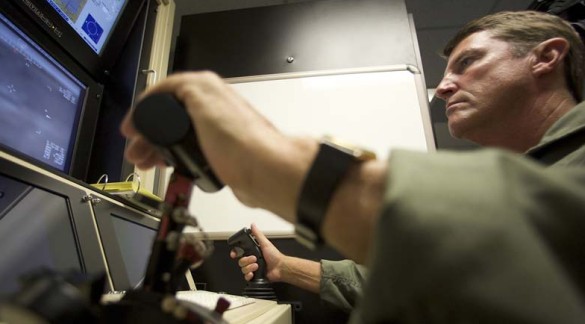
A drone pilot can fire on an insurgent dug into the Afghan hills and be home in time for a backyard barbecue. In just an hour or two, the pilot can go from a heated argument with a spouse to a tense radio conversation with an amped-up soldier pinned down by weapons fire.

“On the drive out here, you get yourself ready to enter the compartment of your life that is flying combat,” said retired Col. Chris Chambliss, who until last summer commanded drone operations at Creech Air Force Base, the command center for seven Air Force bases in the continental U.S. where crews fly drones over Iraq and Afghanistan. “And on the drive home, you get ready for that part of your life that’s going to be the soccer game.”

Drone crews don’t put their lives at risk. Instead, they juggle vast streams of video and data. With briefings both before and after their missions, their workdays typically stretch to 10 or 11 hours. Many of the pilots are experienced military fliers, but the camera operators tend to be much younger — often only 19 or 20, and new to the stresses of combat.

Mirroring the remote warfare of the drone operator is an unspoken compact between civilians and soldiers: The threshold at which this nation offers its tacit consent to war now corresponds not with the degree to which we embrace its gravity but the degree to which it can be ignored.

Ours have become wars of indifference whose advance is commensurate with the attrition of bravery.

Facebooktwittermail

The Dubai-Payoneer connection

As I noted below, the New York-based company Payoneer is linked to Israel in a number of ways, not least through it’s Israeli CEO, Yuval Tal, a former member of an elite combat unit of the Israel Defense Forces and former Vice President of Business Development for the Tel Aviv-based technology company, Radware. Tal describes how Payoneer operates in this video.

As Clayton Swisher notes:

Mr Tal did not exactly conceal his prior affiliations when he appeared on Fox News during the 2006 Lebanon war. He opined then that “this is a war that Israel cannot afford to lose”.
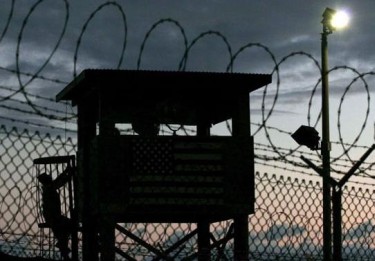
If Tal or his Payoneer firm are in any way involved in the conspiracy to help a foreign intelligence service (like, say providing Mossad operatives with credit cards), he may soon find himself in his own battle with little prospects of winning – in a US courtroom.

The Federal Bureau of Investigation (FBI) is the lead agency with statutory authority and responsibilities for investigating foreign espionage activities on US soil. It’s a job they take seriously and with a proven record of not shying away from the numerous instances when America’s special ally played foul.

As an initial inquiry, I imagine case agents will subpoena all financial records associated with the fraudulently issued credit cards. This would include the original credit card applications, which requires such things as a delivery address (to mail the card to), social security numbers, dates of birth, and employment information.

If the applications were made on paper, then the documents may contain all manner of evidence, from handwriting samples to fingerprints. There will be a similar trail to pore over if the applications were made over the phone or electronically via computer.

I also smell money laundering, as the money was supposedly dumped into prepaid accounts to conceal its purpose and origination. So US investigators may even want to tap in on the US treasury department’s crack financial investigator, Financial Crimes Enforcement Network (FINCEN).

Beneath an article about Payoneer appearing at TechCrunch, a commenter suggests: “payoneer is definitely in the legal gray area when it comes to the patriot’s act, anti-money laundering, and a host of other laws around ‘know your customer'”
Tal answers:

Payoneer is meticulously compliant with all federal, state and MasterCard regulations, including AML, BSA, Patriot act, KYC etc. There is nothing grey about it. As a certified MasterCard Member Service Provider we undergo rigorous ongoing diligence related, among others, to our regulatory compliance level.

If Payoneer comes under investigation, the FBI and US government regulatory agencies will not simply take Tal at his word. They will want to know exactly how Payoneer cards could be used by individuals with false identification.

Facebooktwittermail

Are we living in the post-moral age?

Rafi Eitan, an Israeli elder statesman and former intelligence officer is perhaps best known for having led the Mossad operation that captured Adolf Eichmann, architect of the Holocaust, and brought him back to face trial and execution in Israel in 1962.

In an interview with Haaretz this week, Eitan summed up the Zeitgeist in which we live — the Israelification of the Western world which unfolded after 9/11:

when there is a war on terror you conduct it without principles. You simply fight it.

President Bush, with his Manichaean view of the world, wanted to paint his war on terror in quasi-moral terms. President Obama has distilled it to its unprincipled essence.

The arc that has led from twisted morality to a rarefied amorality reached its completion point this week when the Obama administration made its determination that the authors of the former administration’s torture policies had done no more than make an error of judgment.

Newsweek reports:

The chief author of the Bush administration’s “torture memo” told Justice Department investigators that the president’s war-making authority was so broad that he had the constitutional power to order a village to be “massacred,” according to a report by released Friday night by the Office of Professional Responsibility.

The views of former Justice lawyer John Yoo were deemed to be so extreme and out of step with legal precedents that they prompted the Justice Department’s internal watchdog office to conclude last year that he committed “intentional professional misconduct” when he advised the CIA it could proceed with waterboarding and other aggressive interrogation techniques against Al Qaeda suspects.

The report by OPR concludes that Yoo, now a Berkeley law professor, and his boss at the time, Jay Bybee, now a federal judge, should be referred to their state bar associations for possible disciplinary proceedings. But, as first reported by NEWSWEEK, another senior department lawyer, David Margolis, reviewed the report and last month overruled its findings on the grounds that there was no clear and “unambiguous” standard by which OPR was judging the lawyers. Instead, Margolis, who was the final decision-maker in the inquiry, found that they were guilty of only “poor judgment.”

The report, more than four years in the making, is filled with new details into how a small group of lawyers at the Justice Department, the CIA, and the White House crafted the legal arguments that gave the green light to some of the most controversial tactics in the Bush administration’s war on terror. They also describe how Bush administration officials were so worried about the prospect that CIA officers might be criminally prosecuted for torture that one senior official—Attorney General John Ashcroft—even suggested that President Bush issue “advance pardons” for those engaging in waterboarding, a proposal that he was quickly told was not possible.

At the core of the legal arguments were the views of Yoo, strongly backed by David Addington, Vice President Dick Cheney’s legal counsel, that the president’s wartime powers were essentially unlimited and included the authority to override laws passed by Congress, such as a statute banning the use of torture. Pressed on his views in an interview with OPR investigators, Yoo was asked:

“What about ordering a village of resistants to be massacred? … Is that a power that the president could legally—”

“Yeah,” Yoo replied, according to a partial transcript included in the report. “Although, let me say this: So, certainly, that would fall within the commander-in-chief’s power over tactical decisions.”

“To order a village of civilians to be [exterminated]?” the OPR investigator asked again.

“Sure,” said Yoo.

Yoo is depicted as the driving force behind an Aug. 1, 2002, Justice Department memo that narrowly defined torture and then added sections concluding that, in the end, it essentially didn’t matter what the fine print of the congressionally passed law said: The president’s authority superseded the law and CIA officers who might later be accused of torture could also argue that were acting in “self defense” in order to save American lives.

Where does Obama stand?

“I’m a strong believer that it’s important to look forward and not backwards, and to remind ourselves that we do have very real security threats out there.”

Terrorism — even if this administration thinks the term is passé — remains the only reality. Obama’s cynical mastery rests in his ability to sustain the terror zeitgeist without using the word.

Principles? They’re a distraction — a preoccupation and an indulgence for those of us little folks who do not daily wrestle with the moral ambiguity of governance.

Facebooktwittermail

Our human rights vs. The others

Glenn Greenwald writes:

Ten American Baptists were arrested two weeks ago in Haiti on charges that they exploited the chaos in that country by attempting to smuggle 33 young Haitian children across the border without permission — either to bring them to a life of Christianity or (as some evidence suggests) to filter them into a child trafficking ring. National Review‘s Kathryn Jean Lopez is deeply upset by the plight of at least one of the detained Americans, Jim Allen, whom she contends (based exclusively on his family’s claims) is innocent. Lopez demands that the State Department do more to “insist” upon Allen’s release, and — most amazingly of all — complains about the conditions of his detention. She has the audacity to cite a Human Rights Watch description of prison conditions in Haiti as “inhumane.” Lopez complains that Allen was waterboarded, stripped, frozen and beaten has “hypertension,” was shipped thousands of miles away to a secret black site beyond the reach of the ICRC and then rendered to Jordan allowed to speak to his wife only once in the first ten days of his confinement, and was consigned to years in an island-prison cage with no charges denied his choice of counsel for a few days (though he is now duly represented in Haitian courts by a large team of American lawyers).

Facebooktwittermail

Obama’s take-no-prisoners approach

A year ago, when President Obama signed his executive order to close Guantanamo he said: “the message we are sending around the world is that the United States intends to prosecute the ongoing struggle against violence and terrorism, and we are going to do so vigilantly; we are going to do so effectively; and we are going to do so in a manner that is consistent with our values and our ideals.”

It is now plain that Obama’s solution to the dilemma of how to interrogate and incarcerate suspected terrorists is chillingly simple: kill them.

The Obama administration’s kill-first policy relies first and foremost on this fact: the United States can act with impunity. Indeed, a president who was welcomed by the world largely because he was seen as the antithesis of his predecessor, appears in fact to believe that under the protection of a cool and sophisticated persona he has latitude to go further than Bush — as though the former president’s greatest failing was his style.

The Washington Post reports:

When a window of opportunity opened to strike the leader of al-Qaeda in East Africa last September, U.S. Special Operations forces prepared several options. They could obliterate his vehicle with an airstrike as he drove through southern Somalia. Or they could fire from helicopters that could land at the scene to confirm the kill. Or they could try to take him alive.

The White House authorized the second option. On the morning of Sept. 14, helicopters flying from a U.S. ship off the Somali coast blew up a car carrying Saleh Ali Nabhan. While several hovered overhead, one set down long enough for troops to scoop up enough of the remains for DNA verification. Moments later, the helicopters were headed back to the ship.

The strike was considered a major success, according to senior administration and military officials who spoke on the condition of anonymity to discuss the classified operation and other sensitive matters. But the opportunity to interrogate one of the most wanted U.S. terrorism targets was gone forever.

The Nabhan decision was one of a number of similar choices the administration has faced over the past year as President Obama has escalated U.S. attacks on the leadership of al-Qaeda and its allies around the globe. The result has been dozens of targeted killings and no reports of high-value detentions.

Facebooktwittermail

Obama’s secret prisons in Afghanistan endanger us all

Johann Hari writes:

Osama Bin Laden’s favourite son, Omar, recently abandoned his father’s cave in favor of spending his time dancing and drooling in the nightclubs of Damascus. The tang of freedom almost always trumps Islamist fanaticism in the end: three million people abandoned the Puritan hell of Taliban Afghanistan for freer countries, while only a few thousand faith-addled fanatics ever traveled the other way. Osama’s vision can’t even inspire his own kids. But Omar Bin Laden says his father is banking on one thing to shore up his flailing, failing cause — and we are giving it to him.
The day George W. Bush was elected, Omar says, “my father was so happy. This is the kind of president he needs — one who will attack and spend money and break [his own] country.” Osama wanted the US and Europe to make his story about the world ring true in every mosque and every mountain-top and every souq. He said our countries were bent on looting Muslim countries of their resources, and any talk of civil liberties or democracy was a hypocritical facade. The jihadis I have interviewed — from London to Gaza to Syria — said their ranks swelled with each new whiff of Bushism as more and more were persuaded. It was like trying to extinguish fire with a blowtorch.

The revelations this week about how the CIA and British authorities handed over a suspected jihadi to torturers in Pakistan may sound at first glance like a hangover from the Bush years. Barack Obama was elected, in part, to drag us out of this trap — but in practice he is dragging us further in. He is escalating the war in Afghanistan, and has taken the war to another Muslim country. The CIA and hired mercenaries are now operating on Obama’s orders inside Pakistan, where they are sending unmanned drones to drop bombs and sending secret agents to snatch suspects. The casualties are overwhelmingly civilians. We may not have noticed, but the Muslim world has: check out al-Jazeera any night.

Facebooktwittermail

Former boy soldier, youngest Guantanamo detainee, heads toward military tribunal

The Washington Post reported:

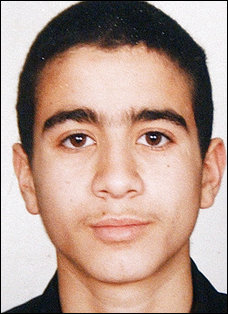
Omar Khadr, the youngest detainee at Guantanamo Bay, Cuba, was 15 when he allegedly threw a grenade that killed a U.S. Special Forces medic in Afghanistan. Now, more than seven years later, Khadr is drawing the Obama administration into a fierce debate over the propriety of putting a child soldier on trial.

The struggle against al-Qaeda has thrown up few detainees with as baleful and unlikely a background as Khadr’s — a father who moved his family to Afghanistan and inside Osama bin Laden’s circle of intimates when Omar was 10; a mother and sister who said the Sept. 11, 2001, attacks were deserved; and a brother, the black sheep of the clan, who said he became a CIA asset after his capture in Afghanistan.

This background has convinced U.N. officials, human rights advocates and defense lawyers that Khadr, a Canadian citizen, was an indoctrinated child soldier and, in line with international practice in other conflicts, should be rehabilitated, not prosecuted.

Facebooktwittermail

White House ‘deeply disappointed’ after British court upholds the law. Judge says MI5 operates ‘culture of suppression’

The story of Binyam Mohamed is probably one of the most under-reported stories of the war on terrorism — it has still only partially been told. If, as the former Guantanamo prisoner alleges, he had his genitals sliced with a scalpel after being captured by the US, then the defenders of so-called “harsh interrogation techniques” should finally be rendered mute and duly shamed.

The Daily Mail said:

By any measure, the treatment meted out to Binyam Mohamed was medieval in its barbarity.

Shackled in total blackness in the CIA’s ‘dark prison’ in Kabul, he was forced to listen to ear-splitting music 24 hours a day for a month.

In Morocco he was hung from walls and ceilings and repeatedly beaten, his penis and chest were sliced with a scalpel and hot, stinging liquid poured into the open wounds.

‘They cut all over my private parts,’ he wrote in his diary. ‘One of them said it would be better just to cut it off, as I would only breed terrorists.’

The Obama administration, which has consistently acted like putty in the hands of the intelligence services, regards the exposure of criminal actions by those services as a national security threat. In truth it is the US-sanctioned use of torture that poses a much more serious threat to this nation.

As The Guardian noted, the ruling by three of Britain’s most senior judges, “shattered the age-old ­convention that the courts cannot ­question claims by the government relating to national security, whatever is done in its name, in an unprecedented ruling that is likely to cause deep anxiety among the security and intelligence agencies.”

This is how democracy is supposed to work. Both in Britain and the US, all too often the phrase “national security” really means protection of the power-holders. A judiciary that is truly independent cannot allow any government to protect its own interests at the expense of the nation it serves.

Afua Hirsch describes in greater legal detail how the British government disregarded 400 years of legal precedence in its effort to suppress revelations about the use of torture.

The Guardian reported:

MI5 faced an unprecedented and damaging crisis tonight after one of the country’s most senior judges found that the Security Service had failed to respect human rights, deliberately misled parliament, and had a “culture of suppression” that undermined government assurances about its conduct.

The condemnation, by Lord Neuberger, the master of the rolls, was drafted shortly before the foreign secretary, David Miliband, lost his long legal battle to suppress a seven-paragraph court document showing that MI5 officers were involved in the ill-treatment of a British resident, Binyam Mohamed.

Amid mounting calls for an independent inquiry into the affair, three of the country’s most senior judges – Lord Judge, the lord chief justice, Sir Anthony May, president of the Queen’s Bench Division, and Lord Neuberger – disclosed evidence of MI5’s complicity in Mohamed’s torture and unlawful interrogation by the US.

So severe were Neuberger’s criticisms of MI5 that the government’s leading lawyer in the case, Jonathan Sumption QC, privately wrote to the court asking him to reconsider his draft judgment before it was handed down.

The judges agreed but Sumption’s letter, which refers to Neuberger’s original comments, was made public after lawyers for Mohamed and media organisations, including the Guardian, intervened.

They argued that Neuberger had privately agreed with Sumption to remove his fierce criticisms without giving then the chance to contest the move.

At The Atlantic, Marc Ambinder said:

The White House hinted today that it may have to alter long-standing intelligence sharing arrangements with the United Kingdom after the release of information provided to the Brits about the confinement and interrogation of one of its citizens, Binyam Mohamed.

“The United States government made its strongly held views known throughout this process. We appreciate that the UK Government stood by the principle of protecting foreign government intelligence in its court filings,” said Ben LaBolt, a White House spokesperson. “We’re deeply disappointed with the court’s judgment today, because we shared this information in confidence and with certain expectations.”

LaBolt’s statement hinted that the US might reevaluate the type of information it shares with British counterterrorism and intelligence agencies.

“As we warned, the court’s judgment will complicate the confidentiality of our intelligence-sharing relationship with the UK, and it will have to factor into our decision-making going forward. This just means that we need to redouble our efforts to work through this challenge, because the UK remains a key partner in our collective efforts to suppress terrorism and other threats to our national security.”

With respect to LaBolt, I think this is a bluff. The US shares more raw data and polished intel product with Britain on a daily basis than any other country in the world, and that’s not going to change. Perhaps the US will be more careful in certain documents that might find their way into the UK court system — but it’s hard to imagine that intelligence cooperation between the two countries will really be damaged by today’s revelation.

Facebooktwittermail

How the CIA became dumb and dangerous

Melvin A Goodman and Philip Giraldi — former CIA officers with decades of experience — both agree that the agency’s focus on paramilitary operations has undermined its core intelligence mission.

Giraldi writes:

It has been observed that no countries on the earth but the United States and Israel claim extraterritoriality, i.e. the right to seize or attack anyone anywhere and at any time based on evidence that is secret. The foul-up at Base Chapman [in which seven CIA officers were killed in a suicide attack] is reflective of the transformation of CIA into a Washington-sanctioned retribution machine, something not unlike the terrorist groups that it claims to oppose rather than an intelligence agency. It is telling that after the slaughter at Base Chapman senior Agency officers immediately announced that they would get revenge and the pace of drone attacks has dramatically increased, killing few or no actual terrorists but many civilians and further destabilizing an already tottering Pakistan. The broader problems that the Agency is experiencing are revealed in CIA’s eight years of largely unrewarding effort against “international terrorism,” a symptom of a systemic failure to understand much less identify and penetrate groups that are, ironically, constantly looking for volunteers to fill their ranks. CIA’s traditional strength in recruiting agents and collecting intelligence has all but disappeared, subsumed into a paramilitary mission to launch hellfire missile firing drones, which is also almost certainly a reflection of the White House’s perception of what needs to be done. If that is so, the tactic is ultimately self defeating in that it produces more enemies that it is able to eliminate, making failure in Afghanistan an absolute certainty.

Likewise, Goodman says:

In a democracy, where laws are derived from broad principles of right and wrong and where those principles are protected by agreed procedures, it is not in the interest of the state to flout those procedures at home, or to permit extra-legal activities abroad, which have complicated the task of maintaining credible relations with our allies in the battle against terrorism.

The CIA’s most important mission remains the preparation of independent analysis of international issues for senior decision makers; therefore, it is essential to protect the integrity of objective and balanced intelligence. The CIA gives far too much attention to support for the Pentagon and to current intelligence. In the past, CIA analysis served to contradict or at least temper the worst-case analysis of the Pentagon, but this is no longer the case.

President Harry Truman created the CIA to produce strategic intelligence that was not beholden to policy and political interests; President Obama must restore this mission.

Facebooktwittermail

‘When Guantanamo walked in the door, Rahm walked out’

In her New Yorker piece on Attorney General Eric Holder and the Khalid Sheikh Mohammed trial, Jane Mayer describes White House Chief of Staff, Rahm Emanuel’s role in blocking the investigation of torture by the CIA:

Emanuel viewed many of the legal problems that [Greg] Craig [Obama’s first White House counsel] and Holder were immersed in as distractions. “When Guantánamo walked in the door, Rahm walked out,” the informed source said. Holder and Emanuel had been collegial since their Clinton Administration days. Holder’s wife, Sharon Malone, an obstetrician, had delivered one of Emanuel’s children. But Emanuel adamantly opposed a number of Holder’s decisions, including one that widened the scope of a special counsel who had begun investigating the C.I.A.’s interrogation program. Bush had appointed the special counsel, John Durham, to assess whether the C.I.A. had obstructed justice when it destroyed videotapes documenting waterboarding sessions. Holder authorized Durham to determine whether the agency’s abuse of detainees had itself violated laws. Emanuel worried that such investigations would alienate the intelligence community. But Holder, who had studied law at Columbia with Telford Taylor, the chief American prosecutor in the Nuremberg trials, was profoundly upset after seeing classified documents explicitly describing C.I.A. prisoner abuse. The United Nations Convention Against Torture requires the U.S. to investigate credible torture allegations. Holder felt that, as the top law-enforcement officer in the U.S., he had to do something.

Emanuel couldn’t complain directly to Holder without violating strictures against political interference in prosecutorial decisions. But he conveyed his unhappiness to Holder indirectly, two sources said. Emanuel demanded, “Didn’t he get the memo that we’re not re-litigating the past?”

Facebooktwittermail

Off with his head!

Matthew Yglesias writes:

If the President wants to do something like implement a domestic policy proposal he campaigned on—charge polluters for global warming emissions, for example—he faces a lot of hurdles. He needs majority support on a House committee or three. He also needs majority support on a Senate committee or three. Then he needs to get a majority in the full House of Representatives. And then he needs to de facto needs a 60 percent supermajority in the Senate. And then it’s all subject to judicial review.

But if Scooter Libby obstructs justice, the president has an un-reviewable, un-checkable power to offer him a pardon or clemency. If Bill Clinton wants to bomb Serbia, then Serbia gets bombed. If George W Bush wants to hold people in secret prisons and torture them, then tortured they shall be. And if Barack Obama wants to issue a kill order on someone or other, then the order goes out. And if Congress actually wants to remove a president from office, it faces extremely high barriers to doing so.

Whether or not you approve of this sort of executive power in the security domain, it’s a bit of a weird mismatch. You would think that it’s in the field of inflicting violence that we would want the most institutional restraint. Instead, the president faces almost no de facto constraints on his deployment of surveillance, military, and intelligence authority but extremely tight constraint on his ability to implement the main elements of the his domestic policy agenda.

This kind of presidential power looks “weird” if viewed from a constitutional vantage point but maybe not as weird as an expression of American culture.

Having moved to this country twenty years ago from the country that America successfully wrestled its independence from, it’s often struck me that Americans did not fully reject the concept of monarchical rule; they simply wanted a kind of modified monarchy.

First off, the monarch would need to be a native — a vehement “no” to foreign rule.

Next, the monarch would need to be one of the people, be elected and not restricted to a line of inheritance. It wasn’t that Americans did want a king; they simply wanted everyone to be able to nurture the fantasy that some day they too might become the king.

But dynasties are OK. In fact, the occasional dynasty helps burnish the executive’s regal image.

And what’s more befitting of the powers of an American king than that he should be able to occasionally proclaim: “Off with his head!”

Who knows, maybe in a few years the old regal custom of hosting public executions will be re-instituted. No doubt they’d get excellent ratings on cable news.

Facebooktwittermail

Murder with impunity

Glenn Greenwald writes:

… even if you’re someone who does want the President to have the power to order American citizens killed without a trial by decreeing that they are Terrorists (and it’s worth remembering that if you advocate that power, it’s going to be vested in all Presidents, not just the ones who are as Nice, Good, Kind-Hearted and Trustworthy as Barack Obama), shouldn’t there at least be some judicial approval required? Do we really want the President to be able to make this decision unilaterally and without outside checks? Remember when many Democrats were horrified (or at least when they purported to be) at the idea that Bush was merely eavesdropping on American citizens without judicial approval? Shouldn’t we be at least as concerned about the President’s being able to assassinate Americans without judicial oversight? That seems much more Draconian to me.

It would be perverse in the extreme, but wouldn’t it be preferable to at least require the President to demonstrate to a court that probable cause exists to warrant the assassination of an American citizen before the President should be allowed to order it? That would basically mean that courts would issue “assassination warrants” or “murder warrants” — a repugnant idea given that they’re tantamount to imposing the death sentence without a trial — but isn’t that minimal safeguard preferable to allowing the President unchecked authority to do it on his own, the very power he has now claimed for himself? And if the Fifth Amendment’s explicit guarantee — that one shall not be deprived of life without due process — does not prohibit the U.S. Government from assassinating you without any process, what exactly does it prohibit?

Greenwald makes a series of excellent points but I would add one major point that really should come in front of the whole discussion: the idea that a legal distinction should be made between American citizens and non-Americans is a thoroughly un-American idea.

The Declaration of Independence does not say:

We hold these truths to be self-evident, that all Americans are created equal, that they are endowed by their Creator with certain unalienable Rights, that among these are Life, Liberty and the pursuit of Happiness.

It didn’t say “Americans”, it said “all men” — a declaration of what were taken to be universal human values.

To be concerned about whether the president has claimed to right to murder Americans is really missing the point. What in practice this and the former president are doing is not exercising any kind of specially fabricated legal right; they are committing murder exclusively where they believe they can get away with it.

Assassinations taking place in the tribal areas of Pakistan, in Yemen and Somalia, are all occurring in environments whose lawlessness means that US government officials can be reliably confident that they can act with relative legal impunity.

Facebooktwittermail