Marc Lynch talks about the role of Al Jazeera, the internet and social media, as facilitators supporting the Tunisian revolution.
Laila Lalami writes:
What is striking about the Tunisian revolution is how little attention it received in the mainstream American press. The Washington Post mentioned the protests for the first time on January 5, two and a half weeks into the unrest, when it ran a wire report about the burial of Bouazizi. Time ran its first piece about the protests later yet, on January 12. Even those who, like Thomas Friedman, specialize in diagnosing the ills of the “Arab street” did not show much interest.
When the mainstream press finally paid attention, it was often to explain the success of the Tunisian revolution in terms of technology. “Tunisian Protests Fueled by Social Media Networks,” read one typical headline, from CNN. Was it Twitter, which allowed activists to communicate swiftly and widely with one another? Was it YouTube, where videos of protesters and police abuse were posted? Or was it WikiLeaks, whose cables revealed that Ben Ali and his entourage were mind-bogglingly corrupt? But Twitter seemed to be most helpful in keeping those of us outside the country informed, since few in the Western media were reporting the story; YouTube was censored in the country; and WikiLeaks didn’t reveal anything that the Tunisian people did not already know.
In contrast, the Iran uprising of 2009 captured much of the American media’s attention. The Atlantic‘s Andrew Sullivan posted videos, tweets and eyewitness accounts during the weekend following the Iranian elections. William Kristol took to the pages of the Washington Post to applaud the brave protesters. In The Weekly Standard Michael Goldfarb urged the president to speak up for the Iranians on the street. Although Twitter, YouTube and Facebook were used widely to disseminate information, Ahmadinejad remained in power, highlighting the limits both of social networks and foreign media in affecting internal developments.
The Tunisian revolution occurred thanks primarily to the men and women who protested despite the intimidation, beatings, tear gas and bullets. The death of Bouazizi, the refusal of Gen. Rachid Ammar to obey Ben Ali’s orders to shoot, the arrest of dissident Hamma Hammami and the solidarity of trade unions and professionals with college students—all these factors played an incremental role in keeping the momentum going. In this modern revolution, the protesters had access to Internet tools that made it easier for them to get the word out, but those tools on their own could not topple a dictator.
The initial lack of interest by the American press in the Tunisian protests may have something to do with the fact that there was no Islamic angle: the Tunisians were not trying to oust an Islamic regime, nor were they supporters of a religious ideology. In other words, this particular struggle for freedom was not couched in simple terms that are familiar to the Western media—Islam, bad; America, good—so it took a while for our commentariat to notice.




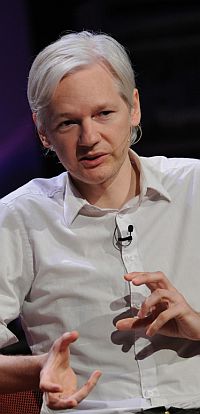 Almost 40 years later, Wikileaks founder Julian Assange sees himself in the same role — with a difference. Assange seems to have become caught up in the mystique of whistleblowing and allowed the actors and the mechanism through which they reveal secrets to assume as much importance as the secrets themselves.
 It would appear that Bradass87 is a 22-year old intelligence analyst, Private Bradley Manning. He was arrested on May 26 and was transferred today from Kuwait to Quantico, Virginia where he is in military custody and has been placed on
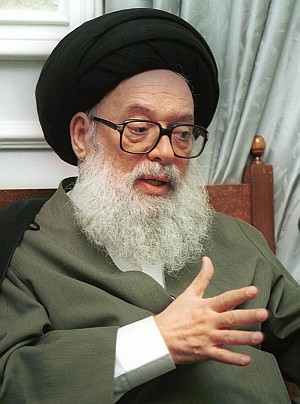 When you visited him you could be sure of a real debate, a respectful argument and you knew you would leave his presence feeling a better person. That for me is the real effect of a true man of religion; leaving an impact on everyone he meets, no matter what their faith. Sheikh Fadlallah passed away yesterday. Lebanon is a lesser place the day after but his absence will be felt well beyond Lebanon’s shores. I remember well when I was nominated ambassador to Beirut, a muslim acquaintance sought me out to tell me how lucky I was because I would get a chance to meet Sheikh Fadlallah. Truly he was right. If I was sad to hear the news I know other peoples’ lives will be truly blighted. The world needs more men like him willing to reach out across faiths, acknowledging the reality of the modern world and daring to confront old constraints. May he rest in peace.