Category Archives: Issues

Under every scenario, Israel continues expanding settlements

In an editorial, the New York Times says: Many of Mr. Netanyahu’s accusations and those of his supporters misrepresent the history of Israeli-American relations, malign Mr. Obama and his secretary of state, John Kerry, and confuse what should be a serious debate over the future of a negotiated peace between Israelis and Palestinians, which seems further away every day. With less than three weeks before Mr. Obama leaves office, Mr. Kerry on Wednesday finally gave the speech he wanted to give two years ago — a passionate, blunt and detailed warning about why the two-state solution is in jeopardy and how it might yet be salvaged before incalculable damage is done to Israel and the region.

Inconveniently for Mr. Netanyahu’s claim that the Security Council resolution was the result of perfidy by Mr. Obama, the measure was adopted 14 to 0, with support from Russia, China and Egypt, among others. It declared that the settlements, in territory that Israel captured from Jordan during the Arab-Israeli War of 1967, have no legal validity; affirming longstanding United Nations and American policy, it cited the Fourth Geneva Convention of 1949, which prohibits any occupying power from transferring its own people to conquered territory.

The most politically volatile feature of the new resolution was that it explicitly condemned Israeli settlements in East Jerusalem. Mr. Netanyahu has emphasized that the language did not distinguish between Jerusalem and the West Bank and hence treated the Jewish Quarter of Jerusalem’s Old City and the Western Wall, the holiest place where Jews can pray, as occupied territory.

Under any negotiated solution to the conflict, Israelis expect their capital to be Jerusalem. But Palestinians also expect to have areas of Jerusalem as their capital, and to have access to Muslim holy sites there. That is why this resolution did not represent a change in the position of the United Nations, which has referred to Jerusalem in many such statements backed by past American administrations. Under Mr. Obama, the United States continues to subscribe to the position enshrined in the 1993 Oslo accords that the future of Jerusalem, like that of the West Bank, should be decided through negotiation — not by diktat by either side.

Anyone who doesn’t think so hasn’t looked at the map or studied the history of the settlement movement. Right-wing Israeli settlers have been quite open for decades about their patient approach to claiming Jerusalem and the West Bank by strategically placing settlements to prevent the creation of a viable Palestinian state. Since 2009, when Mr. Obama took office, the number of Israeli settlers in the West Bank has grown to around 400,000, a gain of more than 100,000, and the number of settlers in East Jerusalem has grown to roughly 208,000, from 193,000, according to Americans for Peace Now. During the same period, construction has begun on over 12,700 settlement units on the West Bank.

Supporters of Mr. Netanyahu argue that Mr. Obama has now only inflamed the Israeli right and encouraged more settlement-building, as if this Israeli government would otherwise show restraint. This is the cynical logic of the settlement movement: When the world is silent, Israel can build settlements; when the world objects, Israel must build settlements. Under any scenario, settlements will grow, and the possibility of a two-state solution will recede. [Continue reading…]


Facebooktwittermail

Open society needs defending

George Soros writes: Open societies are in crisis, and various forms of closed societies – from fascist dictatorships to mafia states – are on the rise. How could this happen? The only explanation I can find is that elected leaders failed to meet voters’ legitimate expectations and aspirations and that this failure led electorates to become disenchanted with the prevailing versions of democracy and capitalism. Quite simply, many people felt that the elites had stolen their democracy.

After the collapse of the Soviet Union, the US emerged as the sole remaining superpower, equally committed to the principles of democracy and free markets. The major development since then has been the globalization of financial markets, spearheaded by advocates who argued that globalization increases total wealth. After all, if the winners compensated the losers, they would still have something left over.

The argument was misleading, because it ignored the fact that the winners seldom, if ever, compensate the losers. But the potential winners spent enough money promoting the argument that it prevailed. It was a victory for believers in untrammeled free enterprise, or “market fundamentalists,” as I call them. Because financial capital is an indispensable ingredient of economic development, and few countries in the developing world could generate enough capital on their own, globalization spread like wildfire. Financial capital could move around freely and avoid taxation and regulation. [Continue reading…]

Facebooktwittermail

How the U.S. came to abstain on a UN resolution condemning Israeli settlements

The Washington Post reports: On Dec. 21, amid his morning workout, an afternoon round of golf and a family dinner with friends, President Obama interrupted his Hawaii vacation to consult by phone with his top national security team in Washington. Egypt had introduced a resolution at the U.N. Security Council condemning Israeli settlements as illegal, and a vote was scheduled for the next day.

The idea had been circulating at the council for months, but the abrupt timing was a surprise. Obama was open to abstaining, he said on the call, provided the measure was “balanced” in its censure of terrorism and Palestinian violence and there were no last-minute changes in the text.

Skeptics, including Vice President Biden, warned of fierce backlash in Congress and in Israel itself. But most agreed that the time had come to take a stand. The rapid increase of Israeli settlements in the West Bank and East Jerusalem, despite escalating U.S. criticism, could very well close the door to any hope of negotiating side-by-side Israeli and Palestinian states. Pending Israeli legislation would retroactively legalize settlements already constructed on Palestinian land.

The resolution’s sponsors, four countries in addition to Egypt, were determined to call a vote before Obama left office. A U.S. veto would not only imply approval of Israeli actions but also likely take Israel off the hook for at least the next four years during President-elect Donald Trump’s administration.

The United States, in discussions with New Zealand and indirectly with Egypt, insisted it would not even consider the matter unless the resolutions were more balanced to reflect criticism of Palestinian violence along with condemnation of Israeli settlements, according to U.S. officials.

The officials categorically denied Israeli allegations this week that the United States secretly pushed the resolutions. An Egyptian newspaper report alleging that Rice and Kerry met in early December with Palestinian negotiator Saeb Erekat and the head of Palestinian intelligence to plot the resolution was false, officials said. While Kerry and Rice met separately with Erekat during a visit here, they said, there was no intelligence official and no discussion of a resolution. [Continue reading…]

As far as these claims of orchestration go, the most likely collaboration going on has been between the offices of Prime Minister Netanyahu and Egyptian President Sisi. The Egyptians don’t want to get punished by Israel or the incoming Trump administration and thus duly conjured up or at least obligingly published a “leaked document.”

Facebooktwittermail

Putin’s perfect storm

Brian Whitmore writes: One announcement came from Berlin. Another came from Washington. And they came weeks apart.

German intelligence warned in late November that Russia had launched a campaign to meddle in upcoming elections to the Bundestag. And in early December, the CIA said it concluded that Moscow had already interfered in the U.S. presidential election.

In any other year, either of these claims would probably have been astonishing, sensational, and even mind-blowing.

Not in 2016.

This was the year such things became routine as the Kremlin took the gloves off in its nonkinetic guerrilla war against the West.

It was the year Russia’s long-standing latent support for the xenophobic and Euroskeptic far right became manifest, open, and increasingly brazen.

It was the year cyberattacks moved beyond trolling and disruption and toward achieving specific political goals.

It was the year long-cultivated networks of influence across the West were activated.

It was the year the Kremlin expanded its disinformation campaign beyond Ukraine and the former Soviet space and aimed it at destabilizing the West itself.

It was the year Moscow turned Western democracy into a weapon — against Western democracy.

And most importantly, with the West suffering from one of its worst crises of confidence in generations, 2016 was the year Moscow began to see results. [Continue reading…]

Facebooktwittermail

The Mosul Dam is failing

Dexter Filkins writes: On the morning of August 7, 2014, a team of fighters from the Islamic State, riding in pickup trucks and purloined American Humvees, swept out of the Iraqi village of Wana and headed for the Mosul Dam. Two months earlier, ISIS had captured Mosul, a city of nearly two million people, as part of a ruthless campaign to build a new caliphate in the Middle East. For an occupying force, the dam, twenty-five miles north of Mosul, was an appealing target: it regulates the flow of water to the city, and to millions of Iraqis who live along the Tigris. As the ISIS invaders approached, they could make out the dam’s four towers, standing over a wide, squat structure that looks like a brutalist mausoleum. Getting closer, they saw a retaining wall that spans the Tigris, rising three hundred and seventy feet from the riverbed and extending nearly two miles from embankment to embankment. Behind it, a reservoir eight miles long holds eleven billion cubic metres of water.

A group of Kurdish soldiers was stationed at the dam, and the ISIS fighters bombarded them from a distance and then moved in. When the battle was over, the area was nearly empty; most of the Iraqis who worked at the dam, a crew of nearly fifteen hundred, had fled. The fighters began to loot and destroy equipment. An ISIS propaganda video posted online shows a fighter carrying a flag across, and a man’s voice says, “The banner of unification flutters above the dam.”

The next day, Vice-President Joe Biden telephoned Masoud Barzani, the President of the Kurdish region, and urged him to retake the dam as quickly as possible. American officials feared that ISIS might try to blow it up, engulfing Mosul and a string of cities all the way to Baghdad in a colossal wave. Ten days later, after an intense struggle, Kurdish forces pushed out the isis fighters and took control of the dam.

But, in the months that followed, American officials inspected the dam and became concerned that it was on the brink of collapse. The problem wasn’t structural: the dam had been built to survive an aerial bombardment. (In fact, during the Gulf War, American jets bombed its generator, but the dam remained intact.) The problem, according to Azzam Alwash, an Iraqi-American civil engineer who has served as an adviser on the dam, is that “it’s just in the wrong place.” Completed in 1984, the dam sits on a foundation of soluble rock. To keep it stable, hundreds of employees have to work around the clock, pumping a cement mixture into the earth below. Without continuous maintenance, the rock beneath would wash away, causing the dam to sink and then break apart. But Iraq’s recent history has not been conducive to that kind of vigilance. [Continue reading…]

Facebooktwittermail

With new monuments in Nevada, Utah, Obama adds to his environmental legacy

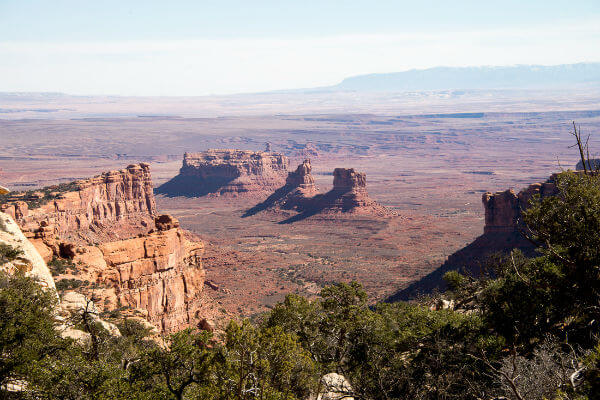
The Washington Post reports: President Obama on Wednesday created new national monuments in a sacred tribal site in southeastern Utah and in a swath of Nevada desert, after years of political fights over the fate of the areas.

The designations further cement Obama’s environmental legacy as one of the most consequential — and contentious — in presidential history. He has invoked his executive power to create national monuments 29 times during his tenure, establishing or expanding protections for more than 553 million acres of federal lands and waters.

Environmental groups have praised the conservation efforts, but critics say they amount to a federal land grab. Some worry that the new designations could fuel another armed protest by antigovernment forces inspired by the Cliven Bundy family, such as the takeover of the Malheur National Wildlife Refuge in Oregon this year.

Obama’s newest designations include two sprawling Western landscapes that are under threat, yet also where local residents are deeply divided on how the land should be used.

In Utah, where the federal government owns about two-thirds of the land, the designation of another 1.35 million acres to create the Bears Ears National Monument undoubtedly will prove polarizing.

For the first time, Native American tribes will offer management input for a national monument through an inter-tribal commission. Five tribes that often have been at odds — the Hopi, Navajo, Uintah and Ouray Ute, Ute Mountain Ute and Pueblo of Zuni — will together have responsibility for protecting an area that contains well-preserved remnants of ancestral Pueblo sites dating back more than 3,500 years.

“We have always looked to Bears Ears as a place of refuge, as a place where we can gather herbs and medicinal plants, and a place of prayer and sacredness,” Russell Begaye, president of the Navajo Nation, said in a call with reporters Wednesday. “These places — the rocks, the wind, the land — they are living, breathing things that deserve timely and lasting protection.” [Continue reading…]

Facebooktwittermail

Netanyahu to be investigated for bribery, fraud

The Times of Israel reports: Attorney General Avichai Mandelblit has reportedly approved a full criminal investigation of Prime Minister Benjamin Netanyahu into allegations of bribery and fraud.

Netanyahu will be investigated by police for two separate cases and will be called in for police questioning in the coming days, Channel 10 reported on Wednesday.

Asked by The Times of Israel, the Justice Ministry — under whose auspices the attorney general operates — declined to comment Wednesday evening on the report. There was no immediate response from the Prime Minister’s Office.

Earlier this month, Zionist Union MK Erel Margalit and Eldad Yaniv, a lawyer and Labor party activist, petitioned the High Court of Justice to demand the Attorney General answer why had not yet opened an investigation despite what they called “overwhelming evidence.”

Writing on Facebook hours before the Channel 10 report, Yaniv said that Mandelblit “realized there was no other choice but to open an investigation’ after meetings with senior investigators.

“The police have weighty proof linking Bibi to suspicions of bribery and fraud,” Yaniv wrote. [Continue reading…]

Facebooktwittermail

Kerry rebukes Israel, calling settlements a threat to peace

The New York Times reports: Secretary of State John Kerry warned Prime Minister Benjamin Netanyahu of Israel on Wednesday that the Israeli government was undermining any hope of a two-state solution to its decades-long conflict with the Palestinians, and said that the American vote in the United Nations last week was driven by an effort to save Israel from “the most extreme elements” in its own government.

With only 23 days left as secretary of state, Mr. Kerry, the former presidential candidate who made the search for peace in the Middle East one of the driving missions of his four years as secretary, spoke with clear frustration about Mr. Netanyahu’s continued support of settlements “strategically placed in locations that make two states impossible.” But he spoke knowing that the incoming administration of President-elect Donald J. Trump may well abandon the key principles that the United States has used for decades of Middle East negotiations.

“The status quo is leading toward one state, or perpetual occupation,” Mr. Kerry said, his voice animated. He argued that Israel, with a growing Arab population, could not survive as both a Jewish state and a democratic state unless it embraced the two-state approach that a succession of American presidents have advocated. [Continue reading…]

The New York Times reports: Israeli leaders postponed plans on Wednesday to move ahead with new housing in East Jerusalem, just hours before Secretary of State John Kerry delivered a much-anticipated speech outlining an American vision for peace with the Palestinians.

The Jerusalem city planning committee, which was reported to be acting at the behest of the national government, canceled at the last moment a scheduled vote on permits for 618 new housing units in the predominantly Palestinian eastern section of the city. Members of the committee said the delay came at the request of Prime Minister Benjamin Netanyahu. [Continue reading…]

Facebooktwittermail

Putin TV: Aleppo slaughter is fake news

The Daily Beast reports: It’s been less than a week since Syrian Prime Minister Bashar al-Assad thanked Russian President Vladimir Putin for helping “liberate Aleppo.” But that isn’t stopping Russian propagandists — and their allies on the American fringe — from denying that civilians were bombed there at all.

Both Kremlin-backed networks and American far right websites have adopted and deployed the Western buzzword “fake news” for the very real bombings in Aleppo. Worse, they’re dubbing private American citizens “professional propagandists” for starting fundraisers in support of afflicted Syrian civilians.

Aleppo has been the home of a forced evacuation over the past several weeks — leaving traditional Western media reporters unable to gain firsthand access to the atrocities. But reports from nonpartisan, international human rights groups and videos from the scene show bombed-out buildings and dead civilians in the streets. [Continue reading…]

Facebooktwittermail

John Kerry, in a final, pointed plea, will outline a vision of Mideast peace

The New York Times reports: In a last-chance effort to shape the outlines of a Middle East peace deal, Secretary of State John Kerry is to outline in a speech on Wednesday the Obama administration’s vision of a final Israeli-Palestinian accord based on bitter lessons learned from an effort that collapsed in 2014.

A senior State Department official said that Mr. Kerry, who will be out of office in less than a month and no longer in a position to negotiate any deal, will use his remarks to confront Prime Minister Benjamin Netanyahu of Israel, who has charged that the United States “orchestrated” a United Nations Security Council resolution last week condemning Israel’s continued building of settlements in the West Bank and East Jerusalem. The United States abstained from the resolution, infuriating Mr. Netanyahu.

The speech, the latest salvo in a final conflict between Mr. Netanyahu and Mr. Obama as Donald J. Trump prepares to assume the presidency, will make the case that “the vote was not unprecedented” and that Mr. Obama’s decision “did not blindside Israel.” Mr. Kerry, the official said, would cite other cases in which Washington officials had allowed similar votes under previous presidents.

The official, who spoke on the condition of anonymity to describe a coming speech, said Mr. Kerry would also argue that, with the notable exception of Israel, there was a “complete international consensus” against further settlements in areas that might ultimately be the subject of negotiations.

At this late date, weeks ahead of the inauguration of Mr. Trump, who openly lobbied on Israel’s side against the United Nations resolution, it is unclear what Mr. Kerry hopes to achieve from the speech, other than to leave a set of principles that he believes will one day emerge as the basis for talks, if and when they resume.

Mr. Kerry, the official said, has long wanted to give a speech outlining an Israeli-Palestinian peace deal but was held back by White House officials, who saw it as unnecessary pressure on Israel that would anger Mr. Netanyahu. But that objection was lifted last week as Mr. Obama and Mr. Kerry agreed the time had come to abstain on the United Nations resolution. That decision led to one of the biggest breaches yet in the rocky American-Israeli relationship during the Obama years. [Continue reading…]

Facebooktwittermail

Netanyahu ‘told New Zealand backing UN vote would be declaration of war’

The Guardian reports: Benjamin Netanyahu reportedly told New Zealand’s foreign minister that support for a UN resolution condemning Israeli settlement-building in the occupied territories would be viewed as a “declaration of war”.

According to reports in Israeli media, the Israeli PM called Murray McCully, the foreign minister of New Zealand, before Friday’s resolution, which was co-sponsored by Wellington. Netanyahu told him: “This is a scandalous decision. I’m asking that you not support it and not promote it.

“If you continue to promote this resolution, from our point of view it will be a declaration of war. It will rupture the relations and there will be consequences. We’ll recall our ambassador [from New Zealand] to Jerusalem.”

McCully, however, refused to back down, telling Netanyahu: “This resolution conforms to our policy and we will move it forward.”

A western diplomat confirmed that the call took place and described the conversation as “harsh”.

The details of the call – disclosed in Haaretz – suggest a mounting sense of panic on the part of Netanyahu in the run-up to the UN security council resolution that passed on Friday demanding an end to settlement building.

As well as the Netanyahu call, a senior official in Israel’s foreign ministry called New Zealand’s ambassador to Israel, Jonathan Curr, and warned that if the resolution came to a vote, Israel might close its embassy in Wellington in protest.

Israel responded furiously to the vote, threatening diplomatic reprisals against the countries that voted in favour. Diplomatic ties with New Zealand were temporarily severed and ambassador Itzhak Gerberg was recalled.

But in a sign that the international pressure may be being felt by the Netanyahu administration, scheduled plans to consider for approval 600 new settlement houses in occupied east Jerusalem were abruptly removed from the agenda of the city’s municipality on Wednesday.

Netanyahu’s language and behaviour – which has resulted in ambassadors being reprimanded and consultations with foreign leaders, including the UK’s Theresa May, cancelled – has raised eyebrows among foreign diplomats, who point out that the UN resolution does no more than confirm the longstanding view of the international community on Jewish settlements. [Continue reading…]

Facebooktwittermail

The secret wealth of the royal family running ‘Al Saud Inc’

The New York Times reports from Tangiers: Behind a tall perimeter wall, studded with surveillance cameras and guarded by Moroccan soldiers, a sprawling new palace for King Salman of Saudi Arabia rose on the Atlantic coast here last summer.

Even as the Saudi government canceled a quarter of a trillion dollars’ worth of projects back home as part of a fiscal austerity program, workers hustled to finish bright blue landing pads for helicopters at the vacation compound and to erect a tent the size of a circus big-top where the king could feast and entertain his enormous retinue.

The royal family’s fortune derives from the reserves of petroleum discovered during the reign of Salman’s father, King Abdulaziz ibn Saud, more than 75 years ago. The sale of oil provides billions of dollars in annual allowances, public-sector sinecures and perks for royals, the wealthiest of whom own French chateaus and Saudi palaces, stash money in Swiss bank accounts, wear couture dresses under their abayas and frolic on some of the world’s biggest yachts out of sight of commoners.

King Salman serves as chairman of the family business unofficially known as “Al Saud Inc.” Sustained low oil prices have strained the economy and forced questions about whether the family — with thousands of members and still growing — can simultaneously maintain its lavish lifestyle and its unchallenged grip on the country. [Continue reading…]

Facebooktwittermail

Netanyahu’s conviction that the world needs Israel more than Israel needs the world

Raphael Ahren writes: One of the thirteen principles of the Jewish faith, compiled by the medieval philosopher Maimonides, reads as follows: “I believe with perfect faith in the coming of the Messiah, and although he may tarry, I wait every day for his coming.”

Replace “the Messiah” with “a drastic increase in Israel’s global popularity,” and you’ll get the first article of faith from Prime Minister Benjamin Netanyahu’s foreign policy gospel.

It is his ironclad belief, despite significant evidence to the contrary, that Israel’s standing in the world is terrific and will imminently become even better that lies behind the array of dramatic punitive steps he took this week against the 14 countries who supported Friday’s anti-settlement resolution at the UN Security Council, and the one who abstained — the United States.

Netanyahu’s deep-seated conviction that the world no longer much cares about the settlements, or Palestinian statehood, but is extremely thirsty for Israel’s high-tech prowess and anti-terrorism know-how, has been undented by even the most crushing diplomatic defeats. [Continue reading…]

Facebooktwittermail

Syrian medical facilities were attacked more than 250 times this year

Huffington Post reports: The first airstrike hit at 9:02 on the morning of Feb. 15. As rescue teams dashed to the scene, warplanes circled back for a “double tap,” pummeling the isolated hospital in northwestern Syria a second time, minutes later. And a third. And a fourth.

Twenty-five people died, including nine health care workers and five children. Staff and volunteers who survived the onslaught at the Doctors Without Borders-supported facility rushed victims to the next closest emergency center in a nearby town. The bombs followed.

It’s an utterly grim and tragic irony: Hospitals are now among the most dangerous places in Syria. There have been 252 attacks on Syrian health care centers in 2016 so far, according to the Syrian American Medical Society, a nonprofit organization. Countless men, women and children suffering from injury or illness in the war-torn country have endangered their lives simply by seeking treatment. Many of the brave doctors who voluntarily walk into hospitals to help those in need ― dismally aware of the grave personal risk ― never come back out. [Continue reading…]

Facebooktwittermail

Trump rewards big donors with jobs and access

Politico reports: More than a third of the almost 200 people who have met with President-elect Donald Trump since his election last month, including those interviewing for administration jobs, gave large amounts of money to support his campaign and other Republicans this election cycle.

Together the 73 donors contributed $1.7 million to Trump and groups supporting him, according to a POLITICO analysis of Federal Election Commission records, and $57.3 million to the rest of the party, averaging more than $800,000 per donor.

Donors also represent 39 percent of the 119 people Trump reportedly considered for high-level government posts, and 38 percent of those he eventually picked, according to the analysis, which counted candidates named by the transition and in news reports.

While campaign donors are often tapped to fill comfy diplomatic posts across the globe, the extent to which donors are stocking Trump’s administration is unparalleled in modern presidential history, due in part to the Supreme Court decisions that loosened restrictions on campaign contributions, according to three longtime campaign experts. [Continue reading…]

Facebooktwittermail

Muslims in a Bible Belt town hold their breath

The Washington Post reports: It was here, in this midsize college town in the dead center of Tennessee, that a right-wing effort to ban Islamic law found one of its first sponsors. Here, too, a congressman co-sponsored a plan to “defund Muslim ‘refugees’ ” and local residents sued to block construction of the only mosque, a fight that ended at the Supreme Court.

The town’s Muslims carried on through all of that, raising their children, saying their prayers, teaching at college, filling people’s prescriptions and filling their tanks, contributing to the civic life in a city of 126,000. They felt the familiar grief and fear of reprisal last year when a Muslim man killed four Marines in Chattanooga, 90 minutes away.

Now Donald Trump — a man who has repeatedly cast doubt on the patriotism of Muslims — is the president-elect, and he has selected a national security adviser, retired Lt. Gen. Michael Flynn, who has called Islam a “cancer.” And a deep unease has again seeped into the daily life of many here in this Muslim community of about 1,500.

There has been a smattering of post-election harassment and insults — at schools, in parking lots, on the road — but nothing to take to the police or put Murfreesboro back in the national headlines.

“Right now, we’re hoping that it’s going to be calm,” said Saleh Sbenaty, an engineering professor at Middle Tennessee State University and one of the founders of the Islamic Center of Murfreesboro. “But we don’t know if it’s the calm before the storm or the calm after the storm.” [Continue reading…]

Facebooktwittermail

Netanyahu goes to war with the world

David Horovitz writes: …the failed pre-vote diplomatic maneuvering by Netanyahu gives credence to those of his critics who argue that he has entered panic mode. For all the serenity and confidence he exudes in his public appearances, and for all that he is appeasing parts of his right-wing constituency — a critical imperative for retaining power — his tactics on Thursday were a mess, and he now seems to be deepening the damage.

While you might justify calling in the next president to thwart the current president if you’ve thought the high-risk gambit all the way through, you’re going to look worse than foolish if you fail to do your homework and wind up losing.

And that’s exactly what happened. Trump answered Netanyahu’s call, reached out to Egypt’s President Abdel-Fattah el-Sissi, and the resolution was withdrawn. A Pyrrhic victory. Within hours, Senegal, Venezuela, Malaysia and New Zealand had stepped in to advance the very same resolution, and there was nothing that even the president-elect could do about that. So Trump wasted his pre-presidential capital, Sissi was humiliated, and Israel lost the vote.


Netanyahu, and those advising him, might be sensibly dismayed by Trump’s dispassionate response to the setback. Initially, at least, there was no fervent defense of Jerusalem as Israel’s capital, no pledge to reverse the pernicious decree, just a mild, rather ho-hum tweet on Saturday, that the “big loss yesterday for Israel in the United Nations will make it much harder to negotiate peace. Too bad, but we will get it done anyway!”

More urgently, though, the prime minister should be considering whether a similar inadequately calculated process is now playing out again. Those who seek to harm Israel will themselves be harmed, he has been warning. This is “the swan song of the old world, that is anti-Israel,” he declared on Saturday night. Soon Trump will be president, and the Israel-bashers will have hell to pay.

But there are two major flaws in that argument. Trump is not yet president. And not everybody who voted for that UNSC resolution loathes Israel.

Yet Netanyahu has taken them all on. With a lack of courtesy he would rightly castigate if the tables were turned, he summoned the ambassadors of the 12 yes-voting countries with which Israel has diplomatic relations for a dressing-down on Christmas Day. Imagine the outrage were a host country to call in the Israeli envoy on, say, Rosh Hashanah.

He ordered his ministers to minimize their dealings with these 12 countries. He canceled, or chose not to schedule, a meeting — depending on whose account you believe — with Britain’s Prime Minister Theresa May at the World Economic Forum in Davos next month. Theresa May, who last week enthused about “remarkable” Israel at a Conservative Friends of Israel lunch, in a speech overflowing with admiration and empathy for the Jewish state. Likewise, he chose not to arrange a meeting with Xi Jinping, the president of China, a country with which Netanyahu has striven for years to bolster relations. He summoned home his ambassadors from Senegal and New Zealand. He cancelled a visit to Israel this week by the prime minister of Ukraine, who just so happens to be Jewish.

“They are spitting at us,” he was reported on Sunday to have been telling colleagues. “We will respond with power.” But we are one, small Israel, and it is our interest to widen support for our cause among the nations, to engage, to dialogue, to explain. We rightly condemn boycotts. Now Netanyahu is instituting them.

For all his fury at the perfidy of the international community, his sense of grievance and injustice, the question he must be asked is whether this is going to work. The Obama administration still has more than three weeks left in office. Kerry has said he will soon make a speech setting out his Middle East vision. On January 15, France is convening a summit on the Israeli-Palestinian conflict, and Netanyahu now reportedly fears that the scheming US administration, in coordination with the other Middle East Quartet members — Russia, the EU and the reviled UN — will utilize that gathering to draw up a second UN Security Council resolution to enshrine the parameters of a Palestinian state.

To again quote Kerry at the Saban Forum, “we have always stood against any imposition of a, quote, ‘final status solution.’” But in the current frenetic atmosphere, Netanyahu — rightly or wrongly — sees danger. Casting around for leverage, on Saturday night he warned that Israel’s friends in Congress would draw up legislation to punish states and organizations, such as the UN, that seek to harm Israel. “We won’t let anybody hurt the State of Israel,” he vowed.

But the inconvenient truth is that while 14 nations supported Resolution 2334, and the US chose not to oppose it, those 14 are not all enemies of Israel, far from it, and the United States certainly isn’t. The Czech Republic and Panama might, just might, have voted no, or abstained, but basically the entire world rejects the legality of the settlement enterprise. And much of that world, as Netanyahu has in the recent past enthusiastically highlighted, either broadly supports Israel or is moving in that direction. [Continue reading…]

Facebooktwittermail