Category Archives: Issues

Schooled in nature

lichen5

Jay Griffiths writes: In Mexico City, the cathedral – this stentorian thug of a cathedral – is sinking. Built to crush the indigenous temple beneath it, while its decrees pulverised indigenous thinking, Mexico City Metropolitan Cathedral is sinking under the weight of its own brutal imposition.

Walking nearby late one night, I was captivated by music. Closer, now, and I came upon an indigenous, pre-Hispanic ceremony being danced on the pavement hard by the cathedral. Copal tree resin was burning, marigolds were scattered like living coins, people in feather headdresses and jaguar masks danced to flutes, drums, rattles and shell-bells. While each cathedral column was a Columbus colonising the site, the ceremony seemed to say: We’re still here.

A young man watched me awhile, as I was taking notes, and then approached me smiling.

‘Do you understand Nahuatl?’ he asked.

Head-shaking smile.

‘Do you want me to explain?’

Yes!

He spent an hour gently unfurling each word. Abjectly poor, his worn-out shoes no longer even covered his feet and his clothes were rags, but he shone with an inner wealth, a light that was his gift, to respect the connections of the world, between people, animals, plants and the elements. He spoke of the importance of not losing the part of ourselves that touches the heart of the Earth; of listening within, and also to the natural world. Two teachers. No one has ever said it better.

‘Your spirit is your maestro interno. Your spirit brought you here. You have your gift and destiny to complete in this world. You have to align yourself in the right direction and carry on.’ And he melted away, leaving me with tears in my eyes as if I had heard a lodestar singing its own quiet truthsong.

A few days earlier, I’d been invited to the Centre for Indigenous Arts in Papantla, in the Mexican state of Veracruz, 300km east of Mexico City. The centre was celebrating the anniversary of its founding (in 2006), and promoting indigenous education: decolonised schooling. Not by chance, it is 12 October, the day when, in 1492, Christopher Columbus arrived in the so-called New World. Here, they come not to praise Columbus but to bury his legacy because – as an act of pointed protest – this date is now widely honoured as the day of indigenous resistance. [Continue reading…]


Facebooktwittermail

The global impact of transnational criminal cartels

shadow16

Eduardo Salcedo-Albarán and Luis Jorge Garay-Salamanca report: In the early morning hours of Friday, January 8, 2016, Mexican marines closed in on the world’s most wanted man: Joaquín Guzmán Loera, better known as El Chapo, a notorious drug trafficker with a net worth estimated near $1 billion. The climactic shootout in Sinaloa, Mexico, took place after Guzmán made a getaway into the sewer system from a house that the authorities had been watching. He was finally apprehended after he reemerged and stole a car. His capture brought to a close six months of humiliation for the Mexican government, which had struggled to explain how Guzmán could escape from a maximum-security prison by walking into the shower, under full view of a video camera, and slipping away through a tiny hole in the floor that led to a 30-foot-deep, mile-long tunnel that had taken perhaps a year to construct. It was the second time that El Chapo had broken out of prison under the noses of Mexican officials. Mexican officials are currently debating whether to hold Guzmán — really, whether they can hold him or — extradite him to the United States, where he faces indictments in multiple federal courts on drug trafficking and murder charges. His organization, the Sinaloa cartel, has smuggled vast quantities of drugs into the United States through elaborate tunnel systems near the border between the two countries.

In Mexico, the confrontation between cartels such as Sinaloa, Los Zetas, and Caballeros Templarios (Knights Templar) has cost nearly 44,000 lives during the presidency of Enrique Peña Nieto. Human rights organizations counted more than 100,000 deaths during the tenure of Nieto’s predecessor. These and other criminal networks originating in Mexico pay bribes and co-opt police chiefs, mayors, local legislators, and municipal and state police. They infiltrate state institutions, such as courts and attorney offices, especially at the local level, spreading corruption and violence across the country. Though usually defined as “Mexican drug cartels,” they don’t confine their operations to Mexico or their activities to drug trafficking. They extort, kidnap, and murder across Mexico, Guatemala, Honduras, and El Salvador. Los Zetas has perpetrated mass murders in Guatemala, while members of Sinaloa operate in Colombia and Venezuela.

As the United States’ interest in extraditing Guzmán shows, the impact of these activities is often felt beyond Latin America. In 2012, the U.S. Justice Department’s Criminal Division pointed out that at least $881 million in proceeds from drug trafficking, some of which involved Sinaloa in Mexico and the Norte del Valle cartel in Colombia, had been laundered through HSBC Bank USA, without being detected. A U.S. district court requested extradition of former Guatemalan president Alfonso Portillo in 2013, and convicted him in 2014, for laundering millions of dollars through American bank accounts with the help of Jorge Armando Llort, whom he had appointed director of a semi-state-owned bank, Banco de Crédito Hipotecario Nacional. No Guatemalan courts sentenced the bank’s director or the former president.

What few observers realize is that, while El Chapo’s capture made for a dramatic story, the criminal operations of his Sinaloa cartel will proceed almost as if nothing happened. In his notorious Rolling Stone interview with Sean Penn, El Chapo observed: “The day I don’t exist, it’s not going to decrease in any way at all. Drug trafficking does not depend on just one person.”

Sinaloa and other criminal cartels have evolved structures that no longer depend on the direction of single leaders. They have become transnational criminal networks — enormous, decentralized, and difficult to map and control. Their operations, too, have become more varied, not only in their criminal activities but in their infiltration and co-optation of legal entities, including government and law enforcement. Even in some countries with strong rule-of-law traditions, they have overcome judicial systems, reconfigured state institutions, and influenced formal democratic processes. [Continue reading…]

Facebooktwittermail

Tilting at algorithms in Bernieland

Jeremy Stahl writes: Around 10:30 p.m. Eastern on Tuesday, a triumphant Hillary Clinton offered her defeated Democratic presidential primary rival Sen. Bernie Sanders an olive branch. “Let there be no mistake: Sen. Sanders, his campaign, and the vigorous debates that we’ve had about how to raise incomes, reduce inequality, and increase upward mobility have been very good for the Democratic Party and for America,” she told the crowd of supporters at Brooklyn’s Navy Yard as she celebrated becoming the first woman to head a major party ticket in American history.

Three hours later and roughly 2,500 miles away, out came Sanders himself, introduced to a crowd of a few thousand supporters at the Barker Hangar as “the next president of the United States.” To roaring applause, he promised to “take our fight” to the July Democratic National Convention in Philadelphia. He closed his speech with the mantra “the struggle continues.”

What he meant by this promise was unclear. I think I know what some of his dead-enders heard, however. “Without all this rigging he would have won already,” said Heather Kim, a schoolteacher and member of a Koreans for Sanders California group. “We all know, she’s stolen the vote, her and the media,” Linda Bassett chimed in.

When confronted with the sheer unlikelihood of fraud being perpetrated on that scale and with the margin of victory, which had climbed to about 3.5 million votes by the end of the night, the women remained credulous. “I don’t put it past them,” Bassett said. “When it goes to be counted, they’ve got all those computerized machines. We know that there’s algorithms.” A third member of this crew — all in their late 50s or early 60s — concurred. “I was there in 2004 in Ohio, I know the shit they pull,” Margie Hoyt said, seeming to nod to accusations of vote machine tampering by Republicans during that election. [Continue reading…]

Facebooktwittermail

A racist presidential candidate for a racist party

Andrew Rosenthal writes: When Donald Trump attacked a federal judge whose parents were born in Mexico, Hispanic Americans were outraged. Other minority groups saw a pattern of bigotry. Democrats had a hard time concealing their glee. Republican leaders pretended they disapproved.

Well, to be fair, they did disapprove in a way — not because Trump believes the things he says, but because he says them so directly.

Far too many Republicans share this kind of racism and have for a long time. Trump has just dispensed with dog whistles and revels in his bigotry instead. But this is the party the Republicans have been deliberately and assiduously building for many decades, the party of division and intolerance. George H.W. Bush’s racist tactics in 1988 against Michael Dukakis — the Willie Horton ad in particular — seem almost genteel by comparison.

Today’s Republicans have stymied every effort at reforming immigration, at achieving true equality for women, at ending the scourge of racist drug laws and criminal sentencing rules. The Republican Party has generated a wave of laws designed to make it harder for black Americans and other minorities to vote. It’s not that Republicans don’t want to deport millions of Mexicans and ban Muslims from our shores. They just don’t like to talk about it in the open. [Continue reading…]

Facebooktwittermail

The meaningless politics of liberal democracies

Emma Green writes: Ben Affleck has become an unlikely spokesman for a view on Islam held by many on the American left. In 2014, the actor made a now-famous stand against Bill Maher and Sam Harris in defense of Muslims, arguing that it’s wrong to make generalizations about the religion based on ideological extremists and terrorists. “How about the more than 1 billion people who aren’t fanatical, who don’t punch women, who just want to go to school, have some sandwiches, and pray five times a day?” he said.

In his new book Islamic Exceptionalism, Shadi Hamid — an Atlantic contributor, a scholar at Brookings, and a self-identified liberal — calls Affleck’s declaration a “well-intentioned … red herring.” Islam really is different from other religions, he says, and many Muslims view politics, theocracy, and violence differently than do Christians, Jews, or non-religious people in Europe and the United States.

Perhaps his most provocative claim is this: History will not necessarily favor the secular, liberal democracies of the West. Hamid does not believe all countries will inevitably follow a path from revolution to rational Enlightenment and non-theocratic government, nor should they. There are some basic arguments for this: Islam is growing, and in some majority-Muslim nations, huge numbers of citizens believe Islamic law should be upheld by the state. But Hamid also thinks there’s something lacking in Western democracies, that there’s a sense of overarching meaninglessness in political and cultural life in these countries that can help explain why a young Muslim who grew up in the U.K. might feel drawn to martyrdom, for example. This is not a dismissal of democracy, nor does it comprehensively explain the phenomenon of jihadism. Rather, it’s a note of skepticism about the promise of secular democracy — and the wisdom of pushing that model on other cultures and regions.

Most Islamists — people who, in his words, “believe Islam or Islamic law should play a central role in political life” — are not terrorists. But the meaning they find in religion, Hamid said, helps explain their vision of governance, and it’s one that can seem incomprehensible to people who live in liberal democracies.

I spoke with Hamid recently about Islamism, ISIS, and the “patronizing” assumptions Americans sometimes make about Islam. Our conversation has been edited and condensed for clarity. [Continue reading…]

Facebooktwittermail

Israeli minister wants to annex half of West Bank and kick out the Palestinians

The Washington Post reports: A top Israeli minister said he wants the government to take complete control of more than half of the West Bank and remove the Palestinian residents of the territory.

While traveling with Prime Minister Benjamin Netanyahu on a state visit to Russia on Tuesday, Agriculture Minister Uri Ariel told the Times of Israel that the world should forget about a Palestinian state.

“We have to aspire to the annexation of Area C; these are areas where there are no Arabs at all,” Ariel said. “We would remove a few thousand, who do not constitute a significant numerical factor.”

According to the Oslo Accords, the West Bank is divided into three areas. Area C comprises more than 60 percent of the West Bank and is under complete Israeli military control, both for security and civil affairs. [Continue reading…]

Facebooktwittermail

Guantánamo lawyers deny colluding with judge in key 9/11 case

The Guardian reports: The military lawyers prosecuting the self-proclaimed architect of the 9/11 attacks have struck back against accusations that they colluded with a military judge to destroy evidence relevant to Khalid Sheikh Mohammed’s defense.

In the latest sign that the US’s premier military commission at Guantánamo Bay is becoming what one observer likened to a “schoolyard brawl”, the prosecutors said Mohammed’s attorneys had cynically pursued a “scorched-earth litigation strategy” that involves “batter[ing] the reputation” of the army colonel presiding over the case.

In a 24 May military commissions filing recently unsealed to the public, the prosecution accuses Mohammed’s defense team of bad faith and shoddy lawyering and says the true goal of its counterparts was to destroy the credibility of the controversial military trial system.

Yet in the filing, the chief commissions prosecutor, Brigadier General Mark Martins, and his team elide the central charge in the controversy: the destruction of evidence in a death penalty case.

Last month, Mohammed’s attorneys leveled the extraordinary allegation that military judge and army colonel James Pohl had secretly issued an order permitting the government to destroy evidence that he had earlier publicly agreed to preserve. While extensive classification rules render central facts in the case difficult to conclusively determine, other rulings suggest the evidence in question concerns Mohammed’s torture by the CIA at secret prisons. [Continue reading…]

Facebooktwittermail

Bernie Sanders’ choice: What to do when winter is coming?

David Corn writes: In the HBO series Game of Thrones, one overwhelming theme has dominated the six seasons: humans should not get lost in bickering for power when an existential threat looms. All the various clans — the Lannisters, the Starks, the Targaryens, the Boltons, the Tyrells, the Baratheons, and others — waste blood and treasure vying for control of this throne or that castle, while a zombie army with the capacity to eradicate humanity is slowly advancing from the north. Oh fools, you mortals be. And as the political primary season draws to an end, Democrats are in a position similar to that of the assorted houses of Westeros. An existential threat is on the horizon: Donald Trump. He’s a narcissistic bigot who in power could be a profound danger. He seems to lack a basic understanding of the nuclear arsenal of which he would be in charge. He claims climate change is a hoax. He has vowed to play chicken with the debt ceiling. It is not hard to envision him triggering (or ignoring) crises that would threaten the survival of the United States or other parts of the globe. If he accepted budgets from the Republican-controlled Congress, millions of low- and middle-income Americans would lose assistance. And his Supreme Court appointments could well restrict reproductive rights, bolster corporate interests, and approve further erosions of voting rights. Make America great again? No, with Trump, winter is coming.

Given this harsh reality, Sen. Bernie Sanders, the socialist independent turned Democrat who has run a stupendous campaign that has promoted progressive causes and inspired millions, has a stark choice. To continue his crusade to win the Democratic Party’s crown or to drop his claim and join forces with a rival to form a common front against the Night’s King (that is, Trump). And he ought to reach a decision soon. [Continue reading…]

Facebooktwittermail

How to make racist comments without being a racist

The New York Times reports: Speaker Paul D. Ryan, the nation’s highest-ranking Republican, on Tuesday called Donald J. Trump’s remarks about a Latino judge “racist,” an extraordinary indictment that generated a fresh wave of criticism and panic from other Republicans. By the end of the day, Mr. Trump was forced into a rare moment of damage control and said that his words had been “misconstrued.”

Mr. Trump, who said last week that a Mexican-American judge in a case involving Trump University was biased against him because of his heritage, issued a statement Tuesday saying, “I do not feel that one’s heritage makes them incapable of being impartial.” He added that he was simply questioning whether he was receiving a fair trial, but he did not apologize for his remarks, something many Republicans had urged him to do.

Mr. Ryan said Mr. Trump’s criticism of the judge, Gonzalo P. Curiel of United States District Court, was “the textbook definition of a racist comment.” But Mr. Ryan also reiterated his support for Mr. Trump, the presumptive Republican presidential nominee. [Continue reading…]

The Republicans, such as Ryan, who are disavowing Trump’s racist comments yet reiterating their support for him, are less concerned that Trump is indeed a racist than they insist he must stop sounding like a racist.

Paradoxically, on the one hand they acknowledge that racism is manifest in behavior — such as the comments someone makes — and yet they also seem to be saying that someone can engage in racist behavior without being a racist.

It’s either that, or what Ryan et al are really saying is this: We know Trump’s a racist but we wish he’d stop making it so obvious.

Trump’s statement that from now on he’ll stop talking about the Trump University court case, suggests he got the message. The question now is not whether he’s a racist but whether he can keep his mouth shut. That seems about as likely as it is for his hair to stay in place.

Facebooktwittermail

The kinds of surveillance people want

shadow2

If you use a credit card, your daily activities are under continuous surveillance. Information gathered from each transaction is monitored and analysed, not by the NSA, but by the financial companies themselves.

Most cardholders who are aware of this are grateful for the fact. It means that if or when you get a phone call or text message from the company telling you they’ve noticed suspicious activity on your account, the chances are that the warning is warranted and some fraud can get snipped in the bud.

Suppose your online activity was being monitored in an analogous way — not to spot fraud but instead to spot symptoms of undiagnosed disease — would you welcome this kind of surveillance?

Right now, this is a hypothetical question, but it probably won’t be long before automated health-tracking systems emerge. Perhaps health insurance companies will offer a discount to individuals who opt-in for the service.

The hyperbole surrounding the issue of surveillance usually looks at it through the lens of the intelligence agencies and political oppression, but what may in the long run be much more significant, socially, is the kind of benign surveillance that caters to our needs — that makes life easier by anticipating our needs.

Needs easily met create an expanding field of things we take for granted, but with that comes a diminishing state of awareness. For some people, the fewer their cares, the more creative they become, but more often it seems like ease fuels a hunger for stimulation and distraction.

The surveillance state we are moving into is not one where we are at much risk of getting whisked away by the secret police, but rather it is one in which we are likely to submerge deeper and deeper into the oblivion of convenience.

The New York Times reports: Microsoft scientists have demonstrated that by analyzing large samples of search engine queries they may in some cases be able to identify internet users who are suffering from pancreatic cancer, even before they have received a diagnosis of the disease.

The scientists said they hoped their work could lead to early detection of cancer. Their study was published on Tuesday in The Journal of Oncology Practice by Dr. Eric Horvitz and Dr. Ryen White, the Microsoft researchers, and John Paparrizos, a Columbia University graduate student.

“We asked ourselves, ‘If we heard the whispers of people online, would it provide strong evidence or a clue that something’s going on?’” Dr. Horvitz said.

The researchers focused on searches conducted on Bing, Microsoft’s search engine, that indicated someone had been diagnosed with pancreatic cancer. From there, they worked backward, looking for earlier queries that could have shown that the Bing user was experiencing symptoms before the diagnosis. Those early searches, they believe, can be warning flags. [Continue reading…]

Facebooktwittermail

Why the world is drawing battle lines against American tech imperialism

Farhad Manjoo writes: Imagine you are a French lawmaker. For decades, you have protected your nation’s cultural output with the diligence of a gardener tending a fragile patch against invasive killer weeds.

You have imposed quotas on the French film industry, required radio stations to play more French music than anyone seems to want to listen to, and you have worked methodically to exempt your actions from international free-trade rules.

And now, out of nowhere, come a handful of American technology companies to wash away all your cultural defenses. Suddenly just about everything that a French citizen buys, reads, watches or listens to flows in some way or another through these behemoths.

There is Facebook co-opting your news media. Amazon is dominating book sales, while YouTube and Netflix are taking over television and movies. And the smartphone, arguably the most important platform for entertainment in this era, is controlled almost entirely by Apple and Google.

This backdrop of social anxiety explains why Europe is on the march against American tech giants. European governments have been at the forefront of an effort to limit the reach of tech companies, most often through privacy regulations and antitrust investigations. Now the European Commission is considering rules that would require streaming companies like Netflix to carry and even pay for local content in the markets they serve.

The European efforts are just a taste of a coming global freak-out over the power of the American tech industry. Over the next few years, we are bound to see increasing friction between the tiny group of tech companies that rule much of the industry and the governments that rule the lands those companies are trying to invade. [Continue reading…]

Facebooktwittermail

The dangerous new age of global autarky

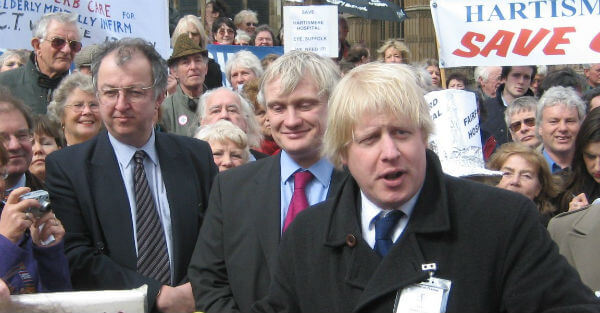
British Conservative MP and Brexit supporter, Boris Johnson

British Conservative MP and Brexit supporter, Boris Johnson

Catherine Rampell writes: The age of autarky is again upon us.

Britain, in two weeks, will vote on whether to leave the European Union, that great postwar project to promote both peace and prosperity.

No matter that economists have almost uniformly warned that a possible “Brexit” would devastate the British economy, with an estimated cost of approximately $6,000 per British household. Disregard news that markets are already freaking out about the consequences for the pound and the overall financial sector; that high-skilled talent has become skittish about moving to the British isles, whose relationship to the E.U. in a post-Brexit world is as yet unknown; and that foreign clients have begun suspending or delaying contracts with British companies.

Who cares that these small islands, so dependent on the continent for both what they consume and where they send their exports, are putting so much economic activity at risk?

Many Brits want to withdraw, to show they’re separate and politically self-determined and not really into all this expensive pan-ethnic, pan-European unity rubbish. So withdraw they might. Recent polls show the “leave” and “stay” contingents about evenly split.

Financially self-defeating as it may seem, the British are hardly alone in their flirtation with economic, political and cultural separatism. [Continue reading…]

Facebooktwittermail

UN includes — then removes — Saudi coalition from list of child violators in Yemen

At Human Rights Watch, Kristine Beckerle writes: Every year, the United Nations secretary-general releases a “list of shame” of government forces and armed groups that have committed grave violations against children during armed conflict. This year, the Saudi-led coalition fighting in Yemen was listed for the first time, identified as being responsible for killing and maiming children in Yemen and for attacks on schools and hospitals.

There was a six-fold increase in the killing and maiming of children in Yemen during 2015, with at least 785 children killed and 1,168 injured, according to the secretary-general’s report. The Saudi-led coalition was responsible for 60 percent of these child deaths and injuries.

The UN recorded 101 attacks on schools and hospitals in Yemen, double the number of attacks recorded in 2014. The Saudi-led coalition was responsible for nearly half of these attacks. Almost all caused the partial or complete destruction of facilities. [Continue reading…]

The Associated Press reports: Following a vehement protest from Saudi Arabia, Secretary-General Ban Ki-moon on Monday removed the Saudi-led coalition fighting Shiite rebels in Yemen from a list of government forces that committed grave violations against children last year, pending a joint review of cases.

Saudi Arabia’s U.N. Ambassador Abdallah Al-Mouallimi insisted “the removal is unconditional and irreversible,” explaining that the government has no problem with a review and is confident it will conclude that the coalition was “wrongly placed on the list.”

Earlier, he asked for an immediate correction saying Saudi Arabia’s inclusion on the list was based on “inaccurate and incomplete” information. [Continue reading…]

Facebooktwittermail

Mocking Putin got me sent to Twitter gulag

@DarthPutinKGB writes: I run the @DarthPutinKGB “parody” account. The inverted commas are over the word parody for a reason. An account parodying any part of the Kremlin will, by definition, sound almost identical to a verified Kremlin account. From passing homophobic laws while posing for homoerotic photo shoots, to putting dead people on trial for crimes they got murdered for exposing, to denying and then later admitting the presence of their armed forces in numerous conflicts, when it comes to the Kremlin, it can be hard to tell reality from parody.

The account portrays Putin as a maniacal, sinister villain bent on world domination who thinks nothing of murdering those who irritate him while he drops vodka (and real) bombs. He also thinks he is God’s gift to women but is in fact that drunk you can find in any bar on a Friday night who makes women’s skin crawl as he desperately tries to get laid.

Darth Putin is also a pathological liar who would deny it snows in Russia with a straight face if he needed to. Beneath it all, deep down he knows he’s just an emperor currently in the late stages of a massive wardrobe malfunction that he prays no one will eventually notice. Maybe this is why some struggle to tell if it’s parody or not. [Continue reading…]

Facebooktwittermail

Rebecca Gordon: Justice for torturers?

If you happen to be a potential American war criminal, you’ve had a few banner weeks.  On May 9th, Defense Secretary Ashton Carter presented former Secretary of State and National Security Adviser Henry Kissinger with the Department of Defense Distinguished Public Service Award, that institution’s highest honorary award for private citizens.”  In bestowing it on the 92-year-old who is evidently still consulting for the Pentagon, he offered this praise: “While his contributions are far from complete, we are now beginning to appreciate what his service has provided our country, how it has changed the way we think about strategy, and how he has helped provide greater security for our citizens and people around the world.”

Certainly people “around the world” will remember the “greater security” offered by the man who, relaying an order from President Richard Nixon for a “massive” secret bombing campaign in Cambodia, used a line that may almost be the definition of a war crime: “Anything that flies on anything that moves.”  The result: half a million tons of bombs dropped on that country between 1969 and 1973 and at least 100,000 dead civilians.  And that’s just to start down the well-cratered road to the millions of dead he undoubtedly has some responsibility for.  Public service indeed.

Meanwhile, speaking of American crimes in the Vietnam era, former Nebraska Senator Bob Kerrey, who ran for president of the U.S. and then became the president of the New School in New York City, was just appointed to “lead” Fulbright University Vietnam, the first private American-backed school there.  Its opening was announced by President Obama on his recent visit to that country.  Only one small problem: we already know of some children who won’t be able to apply for admission.  I’m thinking of the progeny-who-never-were of the 13 children killed by a team of U.S. SEALs under Kerrey’s command and on his orders in South Vietnam in 1969 (along with a pregnant woman, and an elderly couple whose three grandchildren were stabbed to death by the raiders) — all of whom were reported at the time as dead Vietcong guerillas.

It seems that if you are a distinguished citizen of the most exceptional country on the planet, even war crimes have their rewards.  Consider, for instance, the millions of dollars that were paid for memoirs by top Bush administration officials responsible for creating an American offshore torture regime at CIA “black sites” around the world.  Must-reads all!  With that in mind, turn to TomDispatch regular Rebecca Gordon, author most recently of American Nuremberg: The U.S. Officials Who Should Stand Trial for Post-9/11 War Crimes, to consider what “justice” for such figures might look like in a different and better world. Tom Engelhardt 

Crimes of the War on Terror
Should George Bush, Dick Cheney, and others be jailed?
By Rebecca Gordon

“The cold was terrible but the screams were worse,” Sara Mendez told the BBC. “The screams of those who were being tortured were the first thing you heard and they made you shiver. That’s why there was a radio blasting day and night.”

In the 1970s, Mendez was a young Uruguayan teacher with leftist leanings. In 1973, when the military seized power in her country (a few months before General Augusto Pinochet’s more famous coup in Chile), Mendez fled to Argentina. She lived there in safety until that country suffered its own coup in 1976. That July, a joint Uruguayan-Argentine military commando group kidnapped her in Buenos Aires and deposited her at Automotores Orletti, a former auto repair shop that would become infamous as a torture site and paramilitary command center. There she was indeed tortured, and there, too, her torturers stole her 20-day-old baby, Simón, giving him to a policeman’s family to raise.

Continue reading

Facebooktwittermail

New York State to boycott business with groups that back boycott of Israel

The New York Times reports: Gov. Andrew M. Cuomo of New York ordered agencies under his control on Sunday to divest themselves of companies and organizations aligned with a Palestinian-backed boycott movement against Israel.

Wading into a delicate international issue, Mr. Cuomo set executive-branch and other state entities in opposition to the Boycott, Divestment and Sanctions movement, or B.D.S., which has grown in popularity in some quarters of the United States and elsewhere, alarming Jewish leaders who fear its toll on Israel’s international image and economy.

Mr. Cuomo made his announcement in a speech at the Harvard Club in Manhattan to an audience including local Jewish leaders and lawmakers, describing the B.D.S. movement as an “economic attack” on Israel.

“We cannot allow that to happen,” the governor said, adding that, “If you boycott against Israel, New York will boycott you.”

Alphonso David, the counsel to the governor, said that the executive order was specifically aimed at the B.D.S. movement launched in 2005, but that it would apply to any boycott targeting Israel. [Continue reading…]

Facebooktwittermail

FBI wants access to Internet browser history without a warrant in terrorism and spy cases

The Washington Post reports: The Obama administration is seeking to amend surveillance law to give the FBI explicit authority to access a person’s Internet browser history and other electronic data without a warrant in terrorism and spy cases.

The administration made a similar effort six years ago but dropped it after concerns were raised by privacy advocates and the tech industry.

FBI Director James B. Comey has characterized the legislation as a fix to “a typo” in the Electronic Communications Privacy Act, which he says has led some tech firms to refuse to provide data that Congress intended them to provide.

But tech firms and privacy advocates say the bureau is seeking an expansion of surveillance powers that infringes on Americans’ privacy. [Continue reading…]

Facebooktwittermail

With Trump’s racism out in the open, how does he ‘come around’?

To say that Donald Trump has become an embarrassment to Republicans is an understatement. Yet with Trump’s racism now on open display when it comes to his criteria for suspecting judicial bias, the Republican establishment has yet to truly disown him.

For instance, Trump supporter, Newt Gingrich, says Trump’s remarks about American-born District Judge Gonzalo Curiel were “inexcusable.”

The implication being made by most of these critics is that using skills which have thus far not been evident, Trump might somehow be able to maneuver his way out of this situation. What’s he going to say that can undo what he’s done?

He’s already used all those gambits about how much he loves Mexicans and Muslims, but with his racism so far out in the open, the question isn’t about how he can make amends; it’s about the racism that permeates the Republican Party.

Disavowals of racism coming from individuals who are nevertheless willing to see their party led by a racist, make it all the more evident that it is the GOP’s long-standing toleration of thinly veiled racism that provided one of the central driving forces behind the Trump campaign.

What Trump has done is made it virtually impossible for anyone to plausibly pretend that he is not a racist. And as much as Trump imagines he’s cast aside the shackles of political correctness, the appearance of racism in contemporary America is indeed inexcusable. There’s no way to complete the sentence: Trump’s a racist, but…

Facebooktwittermail