Category Archives: Issues

‘Children today are less free than they have ever been’

Jenny Anderson writes: “Something in modern life is undermining mental health,” Jean Twenge, a professor of psychology at San Diego State University, wrote in a recent paper.

Specifically, something is undermining young people’s mental health, especially girls.

In her paper, Twenge looks at four studies covering 7 million people, ranging from teens to adults in the US. Among her findings: high school students in the 2010s were twice as likely to see a professional for mental health issues than those in the 1980s; more teens struggled to remember things in 2010-2012 compared to the earlier period; and 73% more reported trouble sleeping compared to their peers in the 1980s. These so-called “somatic” or “of-the-body” symptoms strongly predict depression.

“It indicates a lot of suffering,” Twenge told Quartz.

It’s not just high school students. College students also feel more overwhelmed; student health centers are in higher demand for bad breakups or mediocre grades, issues that previously did not drive college kids to seek professional help. While the number of kids who reported feeling depressed spiked in the 1980s and 1990s, it started to fall after 2008. It has started rising again:

Kids are being diagnosed with higher levels of attention-deficit hyperactivity disorder (ADHD), and everyone aged 6-18 is seeking more mental health services, and more medication.

The trend is not a uniquely American phenomenon: In the UK, the number of teenagers (15-16) with depression nearly doubled between the 1980s and the 2000s and a recent survey found British 15-year-olds were among the least happy teenagers in the world (those in Poland and Macedonia were the only ones who were more unhappy).

“We would like to think of history as progress, but if progress is measured in the mental health and happiness of young people, then we have been going backward at least since the early 1950s,” Peter Gray, a psychologist and professor at Boston College, wrote in Psychology Today.

Researchers have a raft of explanations for why kids are so stressed out, from a breakdown in family and community relationships, to the rise of technology and increased academic stakes and competition. Inequality is rising and poverty is debilitating.

Twenge has observed a notable shift away from internal, or intrinsic goals, which one can control, toward extrinsic ones, which are set by the world, and which are increasingly unforgiving.

Gray has another theory: kids aren’t learning critical life-coping skills because they never get to play anymore.

“Children today are less free than they have ever been,” he told Quartz. And that lack of freedom has exacted a dramatic toll, he says.

“My hypothesis is that the generational increases in externality, extrinsic goals, anxiety, and depression are all caused largely by the decline, over that same period, in opportunities for free play and the increased time and weight given to schooling,” he wrote. [Continue reading…]


Facebooktwittermail

Sheldon Adelson is poised to give Donald Trump a $100 million donation boost

The New York Times reports: The casino magnate Sheldon G. Adelson told Donald J. Trump in a private meeting last week that he was willing to contribute more to help elect him than he has to any previous campaign, a sum that could exceed $100 million, according to two Republicans with direct knowledge of Mr. Adelson’s commitment.

As significant, Mr. Adelson, a billionaire based in Las Vegas, has decided that he will significantly scale back his giving to congressional Republicans and direct most of his contributions to groups dedicated to Mr. Trump’s campaign. The two Republicans familiar with Mr. Adelson’s plans spoke anonymously because they were not authorized to discuss the matter publicly.

Mr. Adelson’s pledge to Mr. Trump, the presumptive Republican presidential nominee, comes at an opportune time. Mr. Trump has relied on a mix of his own wealth and small-dollar contributions to finance his primary effort and lacks the sort of major donor network needed to sustain him in the general election. Mr. Trump has said that he may need $1 billion for the campaign but has only recently begun scheduling fund-raisers and hiring finance staff members. Many of the Republican Party’s wealthiest contributors, including the billionaire brothers Charles G. and David H. Koch, have indicated they are unlikely to give to his candidacy. [Continue reading…]

Chas Danner writes: Trump has often boasted about how he was self-funding his campaign and thus wasn’t beholden to special interest groups or wealthy donors like, well, Sheldon Adelson:


[Continue reading…]

Facebooktwittermail

With Iran-backed conversions, Shiites gain ground in Africa

The Wall Street Journal reports: Walking from classroom to classroom at the Ahl ul Bayt Linguistic Center, which teaches Arabic and Islam, director Ahmed Tijani pointed at his students, a mixture of teens and young adults.

“This one is Shiite, these ones are also Shiite,” he said. “And these ones, they are still Sunni.”

Mr. Tijani, whose office in the Cameroonian capital is decorated with an Iranian flag and a poster of Iran’s supreme leader, Ayatollah Ali Khamenei, was also once a Sunni Muslim. Then he made the life-changing choice of enrolling at a similar Iranian-funded academy in the coastal city of Douala.

Since converting to Shiite Islam a decade ago, the 39-year-old educator has risen through the ranks, establishing this school in Yaoundé and even visiting Iran on a government-sponsored trip in 2012.

“There is a big difference between Shiite Islam and Sunni Islam,” he said. “Only the Shiites are spreading the truth.”

Such sectarian talk used to be exceedingly rare in much of Africa. So were actual Shiites. The few who could be found in Africa belonged to immigrant communities from Lebanon or the Indian subcontinent. Now, parts of the continent’s Sunni Muslim heartland are living through the biggest wave of Sunni-to-Shiite conversions since many Sunni tribes of southern Iraq adopted Shiism in the 19th century.

Hard figures are difficult to come by. But in Nigeria alone, Africa’s most populous nation, some 12% of its 90-million-strong Muslim population have identified themselves as Shiite in a recent survey by the Pew Research Center, up from virtually zero in 1980. The number is 21% for the Muslims of Chad, 20% for Tanzania, and 8% for Ghana, according to the survey.

That demographic change is occurring just as the Muslim world becomes increasingly polarized along sectarian lines, with Saudi Arabia, a self-proclaimed standard-bearer of the Sunni cause, engaged in proxy struggles from Yemen to Syria to Bahrain against a rival axis led by Iran’s Shiite theocracy.

“The core of the Saudi-Iranian confrontation over power and territory is in the Middle East. But West African Shiites are of symbolic value to Iran, for it to be able to say that its vision of Islam is expanding rather than shrinking. They give Iran more of a claim that they’re able to speak for Muslims in the whole world,” said Vali Nasr, dean of the School of Advanced International Studies at Johns Hopkins University and author of a book on the Shiite revival. [Continue reading…]

Facebooktwittermail

‘Take it off! This is America!’: Man who yanked hijab pleads guilty to religious obstruction

The Washington Post reports: Near the end of his Southwest Airlines flight from Chicago to Albuquerque in December, Gill Parker Payne decided he had to take action.

Seated a few rows in front of him was a woman he had never met before. She was wearing a religious headscarf, known as a hijab, which Payne recognized as a Muslim practice. He stood up, walked down the aisle and stopped next to her seat. Looking down at the woman, Payne instructed her to remove the covering.

“Take it off! This is America!” Payne, 37, later recalled saying. When she didn’t do it herself, Payne did: He grabbed the hijab from the back and pulled it all off. Violated, the woman, identified by the Justice Department only as K.A., quickly pulled the hijab back over her head.

On Friday, as part of a plea deal with the federal government, Payne pleaded guilty to obstructing the woman’s exercise of her religious beliefs. “Because I forcibly removed K.A.’s hijab, I admit that the United States can prove beyond a reasonable doubt that I intentionally obstructed K.A.’s free exercise of her religious beliefs,” he said in a written statement in the plea agreement.

Payne awaits sentencing. He faces a maximum penalty of one year in jail and a fine of up to $100,000.

“No matter one’s faith, all Americans are entitled to peacefully exercise their religious beliefs free from discrimination and violence,” Vanita Gupta, head of the Justice Department’s civil rights division, said in a statement. “Using or threatening force against individuals because of their religion is an affront to the fundamental values of this nation.” [Continue reading…]

Facebooktwittermail

What leads engineers to become jihadists?

structure12

In a review of Engineers of Jihad: The Curious Connection between Extremism and Education, by Diego Gambetta and Steffen Hertog, Ursula Lindsey writes: The second argument advanced by the authors to explain the “strange correlation” between studying engineering and joining a jihadist group is based on a comparative study of the political affinities of the members of radical left- and right-wing groups in the West. It shows that engineers are overrepresented among right-wing radicals generally (while humanities and social science students are more abundant among left-wing militants).

The authors suggest that Islamist and right-wing militants share a number of personality traits that have been shown to be associated with political conservatism. These include a propensity to feel disgust; a strong identification with an “in-group” and hostility toward those who don’t belong to it; and a discomfort with ambiguity and open-ended discussions (known in the literature as a “need for closure”). In Islamist circles, the authors write, “proneness to disgust is related to the strong reaction to perceived corruption of customs and a desire for social and sexual purity. In-group bias is related to a marked aversion for those who are different, be they immigrants, ethnic others, or infidels. The most multifaceted of these traits, need for closure (NFC), is related to a strong preference for hierarchy and social order and an aversion to change, which can reach the extreme of longing for a mythical past.”

Because of these underlying affinities, the authors speculate, some individuals may be “attracted to engineering as a discipline that provides concrete, unambiguous answers, and recoil from the open-ended project of natural science and the ambiguities of the humanities and social sciences.” Engineering students, “like followers of text-based religions, rely more strongly on answers that have already been given.” [Continue reading…]

Facebooktwittermail

‘You want a description of hell?’ OxyContin’s 12-hour problem

The Los Angeles Times reports: The drugmaker Purdue Pharma launched OxyContin two decades ago with a bold marketing claim: One dose relieves pain for 12 hours, more than twice as long as generic medications.

Patients would no longer have to wake up in the middle of the night to take their pills, Purdue told doctors. One OxyContin tablet in the morning and one before bed would provide “smooth and sustained pain control all day and all night.”

On the strength of that promise, OxyContin became America’s bestselling painkiller, and Purdue reaped $31 billion in revenue.

But OxyContin’s stunning success masked a fundamental problem: The drug wears off hours early in many people, a Los Angeles Times investigation found. OxyContin is a chemical cousin of heroin, and when it doesn’t last, patients can experience excruciating symptoms of withdrawal, including an intense craving for the drug.

The problem offers new insight into why so many people have become addicted to OxyContin, one of the most abused pharmaceuticals in U.S. history. [Continue reading…]

Facebooktwittermail

Four ideas about the crisis of the Arab world that need to be repudiated

sykes-picot

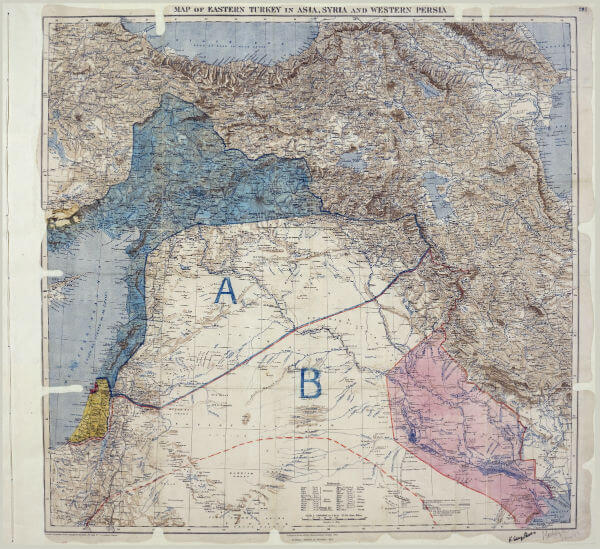
An editorial in The Economist says: Arab states are suffering a crisis of legitimacy. In a way, they have never got over the fall of the Ottoman empire. The prominent ideologies — Arabism, Islamism and now jihadism — have all sought some greater statehood beyond the frontiers left by the colonisers. Now that states are collapsing, Arabs are reverting to ethnic and religious identities. To some the bloodletting resembles the wars of the former Yugoslavia in the 1990s. Others find parallels with the religious strife of Europe’s Thirty Years War in the 17th century. Whatever the comparison, the crisis of the Arab world is deep and complex. Facile solutions are dangerous. Four ideas, in particular, need to be repudiated.

First, many blame the mayhem on Western powers — from Sykes-Picot to the creation of Israel, the Franco-British takeover of the Suez Canal in 1956 and repeated American interventions. Foreigners have often made things worse; America’s invasion of Iraq in 2003 released its sectarian demons. But the idea that America should turn away from the region — which Barack Obama seems to embrace — can be as destabilising as intervention, as the catastrophe in Syria shows.

Lots of countries have blossomed despite traumatic histories: South Korea and Poland — not to mention Israel. As our special report (see article) sets out, the Arab world has suffered from many failures of its own making. Many leaders were despots who masked their autocracy with the rhetoric of Arab unity and the liberation of Palestine (and realised neither). Oil money and other rents allowed rulers to buy loyalty, pay for oppressive security agencies and preserve failing state-led economic models long abandoned by the rest of the world.

A second wrong-headed notion is that redrawing the borders of Arab countries will create more stable states that match the ethnic and religious contours of the population. Not so: there are no neat lines in a region where ethnic groups and sects can change from one village or one street to the next. A new Sykes-Picot risks creating as many injustices as it resolves, and may provoke more bloodshed as all try to grab land and expel rivals. Perhaps the Kurds in Iraq and Syria will go their own way: denied statehood by the colonisers and oppressed by later regimes, they have proved doughty fighters against IS. For the most part, though, decentralisation and federalism offer better answers, and might convince the Kurds to remain within the Arab system. Reducing the powers of the central government should not be seen as further dividing a land that has been unjustly divided. It should instead be seen as the means to reunite states that have already been splintered; the alternative to a looser structure is permanent break-up.

A third ill-advised idea is that Arab autocracy is the way to hold back extremism and chaos. In Egypt Mr Sisi’s rule is proving as oppressive as it is arbitrary and economically incompetent. Popular discontent is growing. In Syria Bashar al-Assad and his allies would like to portray his regime as the only force that can control disorder. The contrary is true: Mr Assad’s violence is the primary cause of the turmoil. Arab authoritarianism is no basis for stability. That much, at least, should have become clear from the uprisings of 2011.

The fourth bad argument is that the disarray is the fault of Islam. Naming the problem as Islam, as Donald Trump and some American conservatives seek to do, is akin to naming Christianity as the cause of Europe’s wars and murderous anti-Semitism: partly true, but of little practical help. Which Islam would that be? The head-chopping sort espoused by IS, the revolutionary-state variety that is decaying in Iran or the political version advocated by the besuited leaders of Ennahda in Tunisia, who now call themselves “Muslim democrats”? To demonise Islam is to strengthen the Manichean vision of IS. The world should instead recognise the variety of thought within Islam, support moderate trends and challenge extremists. Without Islam, no solution is likely to endure. [Continue reading…]

Facebooktwittermail

Britain should stop trying to pretend that its empire was benevolent

By Alan Lester, University of Sussex

The recent debacle of David Cameron’s filmed condemnation of Nigerian and Afghan corruption and the Queen’s remark on Chinese officials’ rudeness highlights the persistence of imperial thinking in Britain. There seems to be a continuing assumption within the British establishment that it sets an example for others to follow and that the British are owed deference by others.

Ever since evangelical antislavery activists campaigned for Britain to abolish the transatlantic slave trade, Britons have assured themselves that imperial overrule is compatible with the “benign tutelage” of other races and nations. Unlike the other European empires, Britons tell themselves, theirs was an empire founded on humanitarian compassion for colonised subjects.

The argument runs like this: while the Spanish, Portuguese, French, Belgians and Germans exploited and abused, the British empire brought ideas of protection for lesser races and fostered their incremental development. With British tutelage colonised peoples could become, eventually, as competent, as knowledgeable, as “civilised” as Britain itself. These platitudes have been repeated time and again – they are still at the heart of most popular representations of the British Empire.

Even when we are encouraged to pay attention to empire’s costs as well as its benefits, these costs are imagined solely in terms of specific incidents of violence such as the Amritsar Massacre in India or the suppression of the Mau Mau rebellion in Kenya. Britain has excused itself from that most structural injustice of empire – the slave trade itself – by the fact that it was Britain that pioneered its abolition.

Continue reading

Facebooktwittermail

No, Donald Trump has not softened his stance on banning Muslims

The Washington Post reports: As headlines popped up this week declaring that Donald Trump had softened his position on banning most foreign Muslims from entering the United States, some Republicans celebrated the news.

“Glad he’s walking it back,” Sen. Jeff Flake (R-Ariz.) tweeted on Thursday.

Except that Trump has not actually walked anything back. The presumptive Republican nominee still wants to ban nearly all members of the world’s fastest-growing religion from entering the United States in an effort to prevent terrorist attacks. [Continue reading…]

Facebooktwittermail

Facebook news selection is in hands of editors not algorithms, documents show

The Guardian reports: Leaked documents show how Facebook, now the biggest news distributor on the planet, relies on old-fashioned news values on top of its algorithms to determine what the hottest stories will be for the 1 billion people who visit the social network every day.

The documents, given to the Guardian, come amid growing concerns over how Facebook decides what is news for its users. This week the company was accused of an editorial bias against conservative news organizations, prompting calls for a congressional inquiry from the US Senate commerce committee chair, John Thune.

The boilerplate about its news operations provided to customers by the company suggests that much of its news gathering is determined by machines: “The topics you see are based on a number of factors including engagement, timeliness, Pages you’ve liked and your location,” says a page devoted to the question “How does Facebook determine what topics are trending?”

But the documents show that the company relies heavily on the intervention of a small editorial team to determine what makes its “trending module” headlines – the list of news topics that shows up on the side of the browser window on Facebook’s desktop version. The company backed away from a pure-algorithm approach in 2014 after criticism that it had not included enough coverage of unrest in Ferguson, Missouri, in users’ feeds. [Continue reading…]

Facebooktwittermail

War crimes in Aleppo and Daraya

Amnesty reports: Armed groups surrounding the predominantly Kurdish Sheikh Maqsoud district of Aleppo city have repeatedly carried out indiscriminate attacks – possibly including with chemical weapons – that have struck civilian homes, markets and mosques, killing and injuring civilians, and have displayed a shameful disregard for human life, said Amnesty International today.

Two of the armed groups conducting attacks on Sheikh Maqsoud – Ahrar al Sham and Army of Islam – have sent representatives to the UN-brokered negotiations on Syria in Geneva, while the others have approved delegates to represent them at the talks.

There are around 30,000 civilians living in Sheikh Maqsoud, a district controlled by the Kurdish People’s Protection Unit (YPG) forces, and the area has come under sustained attack from opposition armed groups who control areas to the north, east and west of the district.

Among the weapons used by the armed groups are unguided projectiles which cannot be accurately aimed at specific targets, including home-made “Hamim” rockets and projectiles fitted with gas canisters known as “hell cannons”.

Amnesty has obtained the names of at least 83 civilians, including 30 children, who were killed by attacks in Sheikh Maqsoud between February and April. More than 700 civilians were also injured, according to the local field hospital. Video evidence seen by Amnesty shows artillery shelling, and rocket and mortar attacks carried out by the Fatah Halab (Aleppo Conquest) coalition of armed groups in the area, targeting YPG forces. [Continue reading…]

Vice News reports: Omar’s daughter is two months old, but he still hasn’t met her. He lives in Daraya, a rebel-controlled suburb of Damascus that’s besieged by the Syrian regime. His wife and child live just a few kilometers to the west, in the neighboring rebel suburb of Moadamiya. The Syrian army cut the road between the two enclaves in January shortly before his daughter was born.

On Thursday, Omar eagerly awaited the arrival of an international aid convoy that was scheduled to bring medicine and baby formula into Daraya. The Syrian government agreed to the delivery, and it was organized by the United Nations, the International Committee of the Red Cross (ICRC), and the Syrian Arab Red Crescent.

It would have been the first convoy to reach Daraya since it was first besieged in 2012 — but the trucks didn’t make it to the town.

According to the ICRC, it was turned away at the last checkpoint outside of Daraya. Just minutes after the convoy was sent back, the Local Council of Daraya — a committee that operates as the local government — reported that the Syrian army had shelled a group of civilians who’d gathered to receive the aid. A father and son were killed and five other civilians were injured, the council said.

The Syrian Observatory for Human Rights, a British-based monitoring group, said Syrian troops loyal to President Bashar al-Assad’s regime had fired into the town.

After the shelling, Omar rushed to a nearby field hospital where the wounded were being treated.

“The people are now filled with frustration and anger,” he told VICE News via messaging app. “To be honest, at this point we no longer trust the international community or the UN.”

Though it’s just a 20-minute drive from the center of Damascus, Daraya is one of the most isolated places in Syria: it’s been under siege for over four years, and it’s one of the few areas where no aid convoys have ever been permitted to enter. According to residents interviewed by VICE News, people survive on meager meals of lentil and rice soup that are often fortified with weeds or grass. The water supply was cut off two years ago. [Continue reading…]

Facebooktwittermail

Bill and Melinda Gates Foundation divests entire holding in BP

The Guardian reports: The Bill and Melinda Gates Foundation has sold off its entire holding in oil giant BP, in a move welcomed by fossil fuel divestment campaigners.

Bill Gates has called the selling off of coal, oil and gas stocks a “false solution” to climate change, but the known investments of his foundation in major fossil fuel companies has fallen by 85% since 2014.

The foundation, which has spent many billions of dollars improving global health, sold its $187m stake in BP between September and December 2015, according to recent regulatory filings to the US Securities and Exchange Commission (SEC).

It had previously dumped its entire $824m holding in ExxonMobil. BP posted a record $6.5bn annual loss in February while ExxonMobil is under investigation about whether it lied in the past to investors about the threat of climate change.

The Guardian’s Keep it in the Ground campaign has called on the Gates foundation to divest its $40bn endowment from fossil fuels. [Continue reading…]

Facebooktwittermail

Bernie Sanders could still win the Democratic nomination — no, seriously

Seth Abramson writes: Last night on CNN, while discussing Bernie Sanders’ landslide victory over Hillary Clinton in West Virginia — which followed a 5-point Sanders win in Indiana last week — Michael Smerconish said that “Democratic super-delegates might have to rethink” their support of Hillary Clinton given how dramatically better Sanders fares in head-to-head match-ups against Donald Trump.

After Clinton’s Indiana loss, John King had told CNN viewers that “if Sanders were to win nine out of ten of the remaining contests, there’s no doubt that some of the super-delegates would panic. There’s no doubt some of them would switch to Sanders. What he has to do is win the bulk of the remaining contests. Would that send jitters, if not panic, through the Democratic Party? Yes. Yes it would.”

So what gives? Isn’t this thing over?

Almost, but not quite.

What Smerconish (and Wolf Blitzer) were discussing last night, and John King was discussing last week, is a very simple theory — call it “run-the-table” — which is easy enough to understand if you simply know the history of Democratic super-delegates and what’s happened in the 2016 Democratic primary since Super Tuesday.

So here it is — both a brief history of the “super-delegate” and an explanation of the “run-the-table” scenario that increasingly is making it into the mainstream media. [Continue reading…]

Facebooktwittermail

Why many of Iran’s ‘moderates’ say they prefer Trump to Clinton

Jeremy Shapiro and Ellie Geranmayeh write: Much of the world seems fairly put off by Donald Trump. Europeans are annoyed that he has threatened to withdraw from NATO. The Japanese and South Koreans seem upset about his intention to withdraw US troops from their shores. Mexicans dislike him so much they are selling Donald Trump piñatas like hotcakes. Even the Chinese seem worried about his idea to slap them with a 45 percent tariff and his support for a nuclear-armed Japan.

So does anyone outside of America like Trump? Many people point to Russian President Vladimir Putin. He and Trump have expressed admiration for each other’s leadership qualities. But beyond Putin, there is (unsurprisingly) little foreign support for Trump’s trademark blend of American nationalism and xenophobia.

Recent conversations, however, have led us to suspect that there might be another country of potential Trump supporters out there: Iran. [Continue reading…]

Facebooktwittermail

Trump’s empty administration

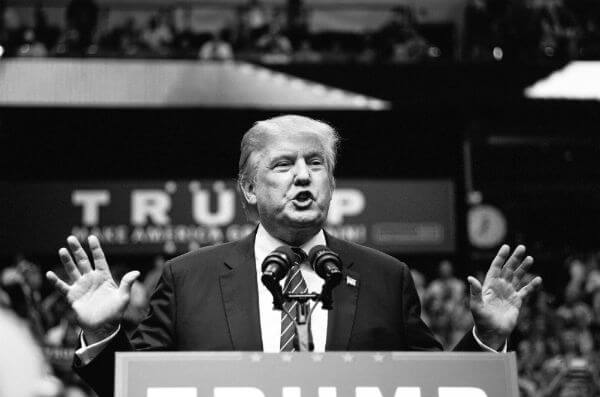
trump-bw

Politico reports: Top Republican political leaders aren’t the only ones shunning their party’s presidential nominee — a vast number of highly skilled managers and policy experts, veterans of recent GOP administrations who would normally be expected to fill key positions for a new White House, are also vowing to sit out a Donald Trump presidency.

And while the failure of the two Presidents Bush or House Speaker Paul Ryan to endorse the presumptive nominee carries political consequences, the absence of policy veterans in a new administration would have a substantive effect on the running of government.

POLITICO interviewed nearly five dozen Republicans over the past two weeks — people with experience working in government and who understand how Congress can enact, or shred, a new president’s agenda — and heard the same sentiment expressed repeatedly. If Trump doesn’t change his tune or extend much longer olive branches, many of these government veterans say they intend to cede highly coveted administration posts to less-experienced competitors.

“I would never serve in a Trump administration,” said James Capretta, a former Office of Management and Budget official under George W. Bush. “The person at the top is unfit for the presidency. He’s made that very clear with his behavior.” [Continue reading…]

Facebooktwittermail

Lack of plan for ISIS detainees raises human rights concerns

The New York Times reports: The Islamic State calls them “inghimasi” — zealous foot soldiers who intend to fight to their deaths. And as the American-backed coalition has reclaimed territory from the group in Iraq and Syria, that fervor has kept prisoners from being much of a problem: The shooting only stops when almost every Islamic State fighter has been killed.

But that could change as the coalition moves toward the Islamic State’s largest urban strongholds — Mosul, Iraq, and Raqqa, Syria — raising a potential problem for the United States. If the coalition is successful and thousands of ordinary members of a collapsing Islamic State have nowhere left to retreat, will they start to surrender in greater numbers? And if so, who will be responsible for imprisoning them?

After the experiences of the past decade in the wars in Afghanistan and Iraq, the Obama administration is determined not to revive large-scale detention operations. But it is far from clear whether allies on the ground — especially rebels in Syria — are prepared to hold large numbers of prisoners, raising the prospect of an ugly aftermath to any victory.

“If they’re not killed but detained, we are concerned about the standards of care, who would do it and how it would be done,” Peter Maurer, the president of the International Committee of the Red Cross, said in an interview. [Continue reading…]

Facebooktwittermail

The FBI is keeping 80,000 secret files on the Saudis and 9/11

The Daily Beast reports: The Obama administration may soon release 28 classified pages from a congressional investigation that allegedly links Saudis in the United States to the 9/11 attackers. A former Republican member of the 9/11 Commission alleged Thursday that there was “clear evidence” of support for the hijackers from Saudi officials.

But in Florida, a federal judge is weighing whether to declassify portions of some 80,000 classified pages that could reveal far more about the hijackers’ Saudis connections and their activities in the weeks preceding the worst attack on U.S. soil.

The still-secret files speak to one of the strangest and most enduring mysteries of the 9/11 attacks. Why did the Saudi occupants of a posh house in gated community in Sarasota, Florida, suddenly vanish in the two weeks prior to the attacks? And had they been in touch with the leader of the operation, Mohamed Atta, and two of his co-conspirators?

No way, the FBI says, even though the bureau’s own agents did initially suspect the family was linked to some of the hijackers. On further scrutiny, those connections proved unfounded, officials now say.

But a team of lawyers and investigative journalists has found what they say is hard evidence pointing in the other direction. Atta did visit the family before he led 18 men to their deaths and murdered 3,000 people, they say, and phone records connect the house to members of the 9/11 conspiracy. [Continue reading…]

Facebooktwittermail