Category Archives: Issues

ISIS and Nusra put Yarmouk civilians in line of fire

Al Jazeera reports: Deadly fighting between the Islamic State of Iraq and the Levant (ISIL) and the al-Nusra Front has put civilians, mostly Palestinian refugees, in danger yet again in the Yarmouk refugee camp in southern Damascus.

Issam, a 54-year-old resident of Yarmouk, said that civilians have called for a temporary humanitarian ceasefire from the armed groups but have yet to receive a response.

“There is not a piece of bread left in this camp,” he told Al Jazeera by telephone while the sound of gunfire rang out behind him. “There isn’t medicine or water for drinking.” [Continue reading…]

Facebooktwittermail

U.S. corporations have $1.4tn hidden in tax havens, claims Oxfam report

The Guardian reports: US corporate giants such as Apple, Walmart and General Electric have stashed $1.4tn (£980bn) in tax havens, despite receiving trillions of dollars in taxpayer support, according to a report by anti-poverty charity Oxfam.

The sum, larger than the economic output of Russia, South Korea and Spain, is held in an “opaque and secretive network” of 1,608 subsidiaries based offshore, said Oxfam.

The charity’s analysis of the financial affairs of the 50 biggest US corporations comes amid intense scrutiny of tax havens following the leak of the Panama Papers.

And the charity said its report, entitled Broken at the Top was a further illustration of “massive systematic abuse” of the global tax system.

Technology giant Apple, the world’s second biggest company, topped Oxfam’s league table, with some $181bn held offshore in three subsidiaries. [Continue reading…]

Facebooktwittermail

Does it take 8 years to decide whether to declassify 28-pages of 9/11 report?

The Daily Beast reports: By the end of President Obama’s term in office, the administration hopes to decide whether to declassify a controversial portion of Congress’ investigation into the 9/11 attacks, the White House said Tuesday. The so-called “28 pages,” which have never been publicly released, are said to implicate Saudi government officials and civilians in the deadliest act of terrorism on U.S. soil.

The administration had directed a “declassification review” of the material from the Joint Congressional Inquiry into the terrorist attacks in 2014. Former lawmakers who have read the classified pages say they describe a financial and logistical support network for the 19 hijackers, most of them Saudi citizens, while they were in the U.S. The report was released in December 2002.

“That review process remains underway, but every effort is being taken to complete it before the end of the Administration,” Ned Price, the spokesperson for the National Security Council, told The Daily Beast in a statement. [Continue reading…]

Facebooktwittermail

Islamist radicals are a threat. But do you need to attack their religion?

Ishaan Tharoor writes: Islam is not a monolithic thing. It’s embraced by multitudes that speak different languages, think different thoughts and grapple with different challenges every day. It has no central, governing institution and no shortage of internal debates and schisms.

Some analysts point out that the attacks on Islam aren’t really about religion, per se. “Their ‘cultural racism’ portrays Muslims as an irremediable, jihadist fifth column,” writes journalist and critic Adam Shatz in an incisive essay about the Charlie Hebdo editorial and its boosters. “Their fear of Islam has less to do with the religion than with the people who practice it.”

That was very much on show in the face of Europe’s migrant crisis, when fears of a “jihadist fifth column” consumed a segment of the Western public and shaped the response to what aid groups and the United Nations desperately plead is, first and foremost, a humanitarian tragedy in the Middle East.

Given the violence in Brussels and Paris, these fears are understandable. But it’s a case of seeing a vast forest when there are only a few trees.

“Claiming that Europe faces a Muslim invasion has become standard fare for a range of politicians and political parties in Europe,” noted Nate Schenkkan, the project director behind a recent Freedom House report on the rise of illiberal politics in parts of the continent. “This kind of speech undermines democracy by rejecting one of its fundamental principles — equality before the law. There is a danger that this kind of hateful, paranoid speech will lead to violence against minorities and refugees.”

This “hateful, paranoid speech” has its obvious political uses, though. Fiery populists on both sides of the pond have pointed to the threat of Islam when campaigning, often with success, in recent local elections.

The trouble is that pinning the radicalization and criminality of a small minority on whole communities — a whole religion, even — obscures more than it reveals. It reduces to abstraction what are far more complicated and important problems to consider, such as lapses in security and intelligence as well as troubles over assimilation and integration.

And, as myriad experts on counterterrorism policy and the Middle East have argued, it trades in the same logic that is employed by Islamist organizations.

“Promoting a clash of civilizations and destroying the reality of productive coexistence between Muslims and non-Muslims was always at the heart of al-Qaeda’s strategy. The Islamic State has avowed the same goal of eliminating the ‘gray zones’ of toleration,” writes Marc Lynch, professor of international affairs at George Washington University. “With American political discourse these days, the prospects for escaping the iron logic of this strategy have never looked more dismal.” [Continue reading…]

Facebooktwittermail

The strange history of secularism twists debate about British Muslim attitudes

By Humeira Iqtidar, King’s College London

Governments in Britain have tended to treat Muslim citizens much like colonial administrations treated their subjects. Intermediaries – tribal leaders or religious figures – are found to establish communication between the empire and its people. One positive thing about a recent ICM poll of British muslims is that it offers an alternative. The survey, carried out for a Channel 4 documentary, was never going to be able to reflect the complexity of British Muslim life accurately, but it does signal a shift by engaging directly with Muslim citizens.

How poll data is used is one way to test how colonialism’s legacy might linger on. The Daily Mail chose for its headline the quote: “Muslims are not like us and we should just accept that they will not integrate …” while Sky News highlighted that: “Half of British Muslims want homosexuality banned.”

Few media outlets rushed to use the headline that “86% of Muslims feel strong affiliation with UK, higher than the national average”, although this too is one of the findings from the survey. It is an “us and them” framework that fails to spark debate about who “we” might be and why “they”, with all their differences, might need greater integration with us, as the report has suggested.

We don’t have space here to discuss how the category Muslim may be broken up across class, regional or ethnic background. Nor will we get into comparisons with others: whether, for instance, British Catholics, or for that matter, members of the Conservative Party, might have similar sentiments towards homosexuality.

Continue reading

Facebooktwittermail

Syrian refugees in Lebanon are falling into slavery and exploitation

By Katharine Jones, Coventry University

Five years after the beginning of the Syrian conflict, Syrians now make up the largest refugee population in the world. Of the 5m women, men and children who fled Syria, more than 1m sought protection in Syria’s neighbour and former “colony”, Lebanon. But safety eludes them: hundreds of thousands of refugees who’ve fled to Lebanon now face abject poverty, living in precarious and often unsafe accommodation, and scraping by with the barest of means.

A new report from the Centre for Trust, Peace and Social Relations at Coventry University, supported by the Freedom Fund, has also found that more and more refugees in Lebanon are falling prey to slavery and exploitation.

One of the biggest problems is child labour. We estimate that 60-70% of Syrian refugee children (those under 18) in Lebanon are working. Rates are even higher in the Beqaa Valley in the east of the country, where children aged as young as five pick beans, figs and potatoes. In towns and cities, Syrian children work on the streets, begging, selling flowers or tissues, shining shoes, and cleaning car windscreens. Children also work in markets, factories, auto repair shops, aluminium factories, grocery and coffee shops, in construction and running deliveries.

Syrian families in Lebanon are increasingly marrying their young teenage daughters to older Syrian men, usually aged in their twenties and thirties. While we did not find evidence of child trafficking as has been reported in the refugee camps of Jordan, girls often do not consent to these marriages, and they cannot realistically choose to leave their husbands. Once married, they very probably have no choice about whether or when to have sex, and are likely to face domestic violence.

Beyond child marriage, sexual exploitation is a growing issue for female refugees in Lebanon. Humanitarian organisations in Lebanon often talk about “survival sex” among refugee populations – for example, sex as a form of payment to people smugglers.

Continue reading

Facebooktwittermail

Apple iPhone unlocking manoeuvre likely to remain secret

Reuters reports: The company that helped the FBI unlock a San Bernardino shooter’s iPhone to get data has sole legal ownership of the method, making it highly unlikely the technique will be disclosed by the government to Apple or any other entity, Obama administration sources said this week.

The White House has a procedure for reviewing technology security flaws and deciding which ones should be made public. But it is not set up to handle or reveal flaws that are discovered and owned by private companies, the sources said, raising questions about the effectiveness of the so-called Vulnerabilities Equities Process.

The secretive process was created to let various government interests debate about what should be done with a given technology flaw, rather than leaving it to agencies like the National Security Agency, which generally prefers to keep vulnerabilities secret so they can use them. [Continue reading…]

Facebooktwittermail

Oil industry knew of ‘serious’ climate concerns more than 45 years ago

The Guardian reports: The oil industry’s knowledge of dangerous climate change stretches back to the 1960s, with unearthed documents showing that it was warned of “serious worldwide environmental changes” more than 45 years ago.

The Stanford Research Institute presented a report to the American Petroleum Institute (API) in 1968 that warned the release of carbon dioxide from burning fossil fuels could carry an array of harmful consequences for the planet.

The emergence of this stark advice follows a series of revelations that the fossil fuel industry was aware of climate change for decades, only to publicly deny its scientific basis.

“Significant temperature changes are almost certain to occur by the year 2000 and these could bring about climatic change,” the 1968 Stanford report, found and republished by the Center for International Environmental Law, states. “If the Earth’s temperature increases significantly, a number of events might be expected to occur including the melting of the Antarctic ice cap, a rise in sea levels, warming of the oceans and an increase in photosynthesis.

“It is clear that we are unsure as to what our long-lived pollutants are doing to our environment; however, there seems to be no doubt that the potential damage to our environment could be severe.” [Continue reading…]

Facebooktwittermail

Sanders campaign’s new Jewish outreach director is outspoken Israel critic

The Times of Israel reports: Simone Zimmerman, the Bernie Sanders campaign’s newly hired national Jewish outreach coordinator, is quite familiar with the American Jewish establishment.

She is used to fighting against it.

During the 2014 Gaza war, Zimmerman was one of the leaders of a group of young Jews that held regular protest vigils outside the offices of the Conference of Presidents of Major American Jewish Organizations, reading the names of Palestinians and Israelis killed in the conflict.

She opposes Israel’s occupation, wants Hillel to allow participation by groups that support the Boycott, Divestment and Sanctions movement against Israel, is against Jewish federation funding for Israeli projects in the West Bank and wrote favorably of the efforts of Jewish Voice for Peace, a pro-BDS group, to get “international corporations to stop profiting off human rights abuses.” (The Anti-Defamation League has called JVP one of America’s top 10 anti-Israel groups.) [Continue reading…]

Facebooktwittermail

Panama raids offices of Mossack Fonseca law firm

Reuters reports: Panama’s attorney general late on Tuesday raided the offices of the Mossack Fonseca law firm to search for any evidence of illegal activities, authorities said in a statement.

The Panama-based law firm is at the center of the “Panama Papers” leaks scandal that has embarrassed several world leaders and shone a spotlight on the shadowy world of offshore companies.

The national police, in an earlier statement, said they were searching for documentation that “would establish the possible use of the firm for illicit activities.” The firm has been accused of tax evasion and fraud. [Continue reading…]

Facebooktwittermail

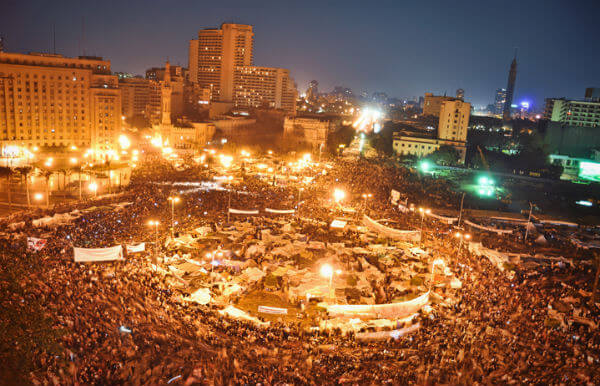
Most young Arabs reject ISIS and think ‘caliphate’ will fail, poll finds

Tahrir_Square

The Guardian reports: The vast majority of young Arabs are increasingly rejecting Islamic State and believe the extremist group will fail to establish a caliphate, a poll has found.

Only 13% of Arab youths said they could imagine themselves supporting Isis even if it did not use much violence, down from 19% last year, while 50% saw it as the biggest problem facing the Middle East, up from 37% last year, according to the 2016 Arab Youth Survey.

However, concern is mounting across the region as a chronic lack of jobs and opportunities were cited as the principal factor feeding terrorist recruitment. In eight of the 16 countries surveyed, employment problems were a bigger pull factor for Isis than extreme religious views.

The eighth annual survey provides a snapshot of the aspirations of 200 million people. It found that five years after the start of the Arab spring, most youngsters prioritise stability over democracy. Optimism that the region would be better off in the wake of the 2011 uprisings has been steadily declining.

In 2016, only 36% of young people said they felt the Arab world was in better shape following the upheaval, down from 72% in 2012. The majority (53%) agreed that maintaining stability was more important than promoting democracy (28%). In 2011, 92% of Arab youth said “living in a democracy” was their most cherished wish. [Continue reading…]

Facebooktwittermail

Muslims used to love living in Tennessee — now it’s a nightmare

BuzzFeed reports: The fire department called before dawn. Daoud Abudiab and his 13-year-old daughter were already awake, so they got in the car quickly. From about a mile away, Abudiab saw a plume of black smoke rising above the low skyline and started getting nervous. He thought back to the arguments over whether to mark the Islamic Center of Columbia, Tennessee, the only mosque in the hundred-mile stretch between Nashville and Huntsville, with a large sign or a small, unassuming one. They had opted for a large one.

Abudiab and his daughter could feel the heat of the fire when they stood at the yellow police tape. A black swastika was spray-painted on the mosque’s facade. Flames pushed out from the burst windows and up through the collapsed roof. Abudiab’s wife arrived with the rest of the kids, followed by other congregants and their families.

Abudiab looked at the women and all he saw was headscarves. “Go home,” he pleaded. “Don’t go out. Don’t go to Walmart. Don’t go anywhere.”

The ringleader of the band of white supremacists who burned down the mosque with Molotov cocktails justified the act by saying, “What goes on in that building is illegal according to the Bible.” This was February 2008. The theory of Barack Obama’s crypto-Islamism was faint chatter on the fringes. But in the years after Obama’s election, Tennessee became a key battleground in a national anti-Muslim movement whose influence has culminated, for now, in the presidential campaigns of Republican frontrunners Donald Trump and Ted Cruz, both of whom are being advised by people whose views on Islam were once considered too extreme for mainstream politics. [Continue reading…]

Facebooktwittermail

Russia almost delivers S-300 missiles to Iran soon really perhaps

Sputnik News reports: Russia has delivered the first batch of the S-300 air defense systems to Iran, Deputy Prime Minister Dmitry Rogozin said Monday. [Continue reading…]

Mehr News Agency reports: Foreign Ministry Spokesman Jaberi Ansari who was speaking in his weekly press conference announced the implementation of first phase of S-300 missile contract between Iran and Russia.

Hossein Jaberi Ansari also reaffirmed the upcoming visit of EU Foreign Policy Chief Federica Mogherini who is scheduled to arrive in Tehran on Sarturday. Mogherini will head a 7-member delegation of High-ranking EU officials.

In response to a question on delivery of Russian advanced defense missile system S-300, of which the first part is reportedly delivered to Iran through Caspian Sea, Jaberi Ansari confirmed that the first phase of the Iran-Russia contract on the systems is implemented; “we had already announced that despite several times of change in time of delivery, the deal is on its path of implementation and today I should announce that the first phase of the agreement is implemented and the process will continue.” [Continue reading…]

Sputnik News reports: Kremlin spokesman Dmitry Peskov on Monday declined to comment on reports that deliveries of Russian S-300 air defense systems to Iran have begun. [Continue reading…]

Tasnim News Agency reports: The head of Russia’s industrial conglomerate Rostec had said last month that Iran would take delivery of the first shipment of S-300 missile defense system in August or September this year.

“I think we will deliver the S-300 by the end of the year,” Sergei Chemezov said on March 11. “The first delivery will be in September or August.” [Continue reading…]

The Times of Israel reports: The incident sowed confusion in both English and Persian media. [Continue reading…]

Facebooktwittermail

Syria peace talks — democracy left out in the cold

Saleh M. Mohamed writes: This week, United Nations talks meant to chart a path toward a peaceful, democratic future for Syria are set to resume in Geneva. But, in an absurd twist, the legitimate representatives of a large, democratically governed area in the country will not be invited to attend.

This area is called Rojava, in the northern part of Syria, and despite its frequent description as “Kurdish,” it is governed inclusively by Kurds, Arabs, and the area’s other ethnic groups. Furthermore, its self-defense forces are part of the Syrian Democratic Forces backed by the United States that have advanced toward Raqqa, the center of the Islamic State’s power in Syria.

Both in strategic and moral terms, Rojava’s existence is a rare bright spot in this conflict. So the exclusion of its representatives from the U.N. process is not only unfair, but makes no sense if the aim of the talks is to establish a viable path to democracy in Syria.

The primary reason for this injustice is that Turkey opposes Rojava’s military force, the People’s Protection Units, or Y.P.G., claiming it is one and the same with the P.K.K., a Kurdish group with a long history of armed conflict with the Turkish government.

This is not true. Both groups are Kurdish, but the Syrian Kurds, with their Arab allies and international support, are locked in a difficult, but thus far successful, battle against the Islamic State. The Y.P.G.’s fight is about Syria, not Turkey. Its role is to defend the institutions of self-government in Northern Syria (the party of which I am co-president, the Democratic Union Party, is part of this political coalition, along with other parties and civil society organizations).

It’s a fair question to ask what kind of democracy this is. Its central philosophy is that people should govern themselves from the bottom up, and so as much decision making as possible is left to local assemblies. These assemblies, furthermore, are designed to ensure a voice for non-Kurdish minorities and for women. This is real and genuinely inclusive democracy, and it deserves to be supported, not ignored. [Continue reading…]

Facebooktwittermail

How the expanding U.S. role in Iraq is kept quiet by pretending it’s not expanding

The New York Times reports: There are roughly 5,000 American service members in Iraq according to current Pentagon estimates, but the number often varies, sometimes daily, by hundreds. That number is higher than the cap the White House set last year, which limited the number of troops to be deployed to Iraq to 3,870. But under policies created by the military after the attacks of Sept. 11, 2001, service members who are planning to spend less than four months in a war zone are not counted.

Sergeant Cardin [who was killed on March 19] and the Marines [with him at Fire Base Bell, south of Mosul] were scheduled to be deployed in Iraq temporarily, so they did not count against the cap.

At the height of the war in 2007, the United States had roughly 165,000 troops deployed in 500 bases and outposts across Iraq. Mr. Obama, who ran for president in 2008 vowing to end the United States’ involvement, fulfilled his pledge when he pulled all American troops out of the country in 2011. But as the Islamic State has strengthened its hold in the region in the past two years, Mr. Obama has sent thousands of American service members back in. [Continue reading…]

Facebooktwittermail

Two ways the war in Yemen is turning into a disaster for the U.S.

Ishaan Tharoor writes: Two significant reports last week illustrated the awkward role of the United States in the ongoing conflict in Yemen, which has claimed thousands of lives, seen the virtual collapse of the fragile Yemeni state, and sparked a grim humanitarian crisis in what was already the Middle East’s most impoverished nation.

An investigation by Human Rights Watch published on Wednesday alleged that at least two deadly airstrikes by the Saudi-led coalition last month used munitions supplied by the United States. The attack, which hit a town in northwestern Yemen, killed at least 97 civilians, including 25 children.

Last month also marked the anniversary of Saudi Arabia’s entrance into the civil war on its southern border — an intervention that has seen Riyadh and its allies get bogged down in a difficult battle with the country’s Houthi rebels, who still control the capital Sanaa and much of northern Yemen.

Separately, a Reuters special report raised the possibility that al-Qaeda in the Arabian Peninsula, the terror group’s influential Yemeni wing — long the target of U.S. counterterror operations — has gained ground in the shadow of the Saudi-led war, exploiting Yemen’s security vacuum to consolidate its position in a string of coastal cities while building up an impressive treasury of plundered wealth. [Continue reading…]

Facebooktwittermail

UK took weeks to act on Cairo student killing concerns

Middle East Eye reports: The British foreign secretary expressed serious concerns about allegations of Egyptian security service involvement in the killing of a Cambridge University student in Cairo weeks before the UK government called for a “full and transparent” investigation into the case, Middle East Eye can reveal.

In a 24 March letter obtained exclusively by MEE, Foreign Secretary Philip Hammond wrote to Prime Minister David Cameron warning that reports that Egyptian security forces were involved in the death of Giulio Regeni would be an “extremely concerning development” if proved correct.

Regeni’s battered body was found in a ditch nine days after he had gone missing on 25 January, the anniversary of the Tahrir Square revolution.

The 28-year-old was in Egypt researching labour movements – a contentious subject in the country – as part of his doctoral studies at Cambridge.

The government led by President Abdel Fattah al-Sisi has faced accusations that its security forces were responsible for Regeni’s torture and death. It has repeatedly denied the allegations.

Relations between Italy and Egypt have soured in recent days over the investigation. Officials from Cairo refused to hand over what Rome saw as vital evidence, including mobile phone records and CCTV footage from the night Regeni went missing.

On Friday, Italy recalled its ambassador to Egypt for consultations in protest of the lack of progress in the probe.

Two weeks earlier in his letter to the prime minister whom he addresses as “David”, Hammond writes, “My officials have followed the case of Mr Regeni closely since his disappearance”.

“The UK is aware of reports of the Egyptian security forces’ involvement in Mr Regeni’s death. If substantiated, this would be an extremely concerning development,” the Foreign Secretary added. [Continue reading…]

Facebooktwittermail