Category Archives: Issues

A secret license to kill

David Cole writes:

On Friday, a front-page New York Times story reported that a rift has emerged within the Obama Administration over whether it has authority to kill “rank-and-file” Islamist militants in foreign countries in which there is not an internationally recognized “armed conflict.” The implications of this debate are not trivial: Imagine that Russia started killing individuals living in the United States with remote-controlled drone missiles, and argued that it was justified in doing so because it had determined, in secret, that they posed a threat to Russia’s security, and that the United States was unwilling to turn them over. Would we calmly pronounce such actions compliant with the rule of law? Not too likely.

And yet that is precisely the argument that the Obama Administration is now using in regard to American’s own actions in places like Yemen and Somalia—and by extension anywhere else it deems militant anti-US groups may be taking refuge. On the same day the Times article appeared, John Brennan, President Obama’s senior advisor on homeland security and counterterrorism, gave a speech at Harvard Law School in which he defended the United States’ use of drones to kill terrorists who are far from any “hot battlefield.” Brennan argued that the United States is justified in killing members of violent Islamist groups far from Afghanistan if they pose a threat to the United States, even if the threat is not “imminent” as that term has traditionally been understood. (As if to underscore the point, The Washington Post reports that the US has “significantly increased” its drone attacks in Yemen in recent months, out of fears that the government may collapse.)

In international law, where reciprocity governs, what is lawful for the goose is lawful for the gander. And when the goose is the United States, it sets a precedent that other countries may well feel warranted in following. Indeed, exploiting the international mandate to fight terrorism that has emerged since the September 11 attacks, Russia has already expanded its definition of terrorists to include those who promote “terrorist ideas”—for example, by distributing information that might encourage terrorist activity— and to authorize the Russian government to target “international terrorists” in other countries. It may seem fanciful that Russia would have the nerve to use such an authority within the United States—though in the case of Alexsander Litvinenko it appears to have had few qualms about taking extreme measures to kill an individual who had taken refuge in the United Kingdom. But it is not at all fanciful that once the US proclaims such tactics legitimate, other nations might seek to use them against their less powerful neighbors.

Facebooktwittermail

Saudi Arabia executes man convicted of ‘sorcery’

Saudi Arabia’s government should establish an immediate moratorium on executions in the kingdom, Amnesty International said today after a Sudanese man convicted of “sorcery” was put to death.

Abdul Hamid bin Hussain bin Moustafa al-Fakki was beheaded in Madina on Monday. Saudi Arabia has now executed 44 people this year. Eleven were foreign nationals.

“Abdul Hamid’s execution is appalling as is Saudi Arabia’s continuing use of this most cruel and extreme penalty,” said Malcolm Smart, Amnesty International’s Director for the Middle East and North Africa.

“That he should have been executed without having committed anything that would appear to constitute a crime is yet another deeply upsetting example of why the Saudi Arabian government should immediately cease executions and take steps to abolish the death penalty.”

The crime of “sorcery” is not defined in Saudi Arabian law but it has been used to punish people for the legitimate exercise of their human rights, including their right to freedom of expression.

Abdul Hamid bin Hussain bin Moustafa al-Fakki was arrested in 2005 after he was entrapped by a man working for the Mutawa’een (religious police) who asked him to produce a spell that would lead to the man’s father leaving his second wife.

It was alleged that Abdul Hamid said he would do this in exchange for 6,000 Saudi Arabian riyals (approximately US$1,600).

Reportedly beaten after his arrest, Abdul Hamid is believed to have been coerced to confess to carrying out acts of sorcery.

He was sentenced to death by the General Court in Madina in March 2007. Few details are available about his trial but he is reported to have been tried behind closed doors and without legal representation.

Facebooktwittermail

U.S. assembling secret drone bases in Africa, Arabian Peninsula, officials say

The Washington Post reports:

The Obama administration is assembling a constellation of secret drone bases for counterterrorism operations in the Horn of Africa and the Arabian Peninsula as part of a newly aggressive campaign to attack al-Qaeda affiliates in Somalia and Yemen, U.S. officials said.

One of the installations is being established in Ethi­o­pia, a U.S. ally in the fight against al-Shabab, the Somali militant group that controls much of that country. Another base is in the Seychelles, an archipelago in the Indian Ocean, where a small fleet of “hunter-killer” drones resumed operations this month after an experimental mission demonstrated that the unmanned aircraft could effectively patrol Somalia from there.

The U.S. military also has flown drones over Somalia and Yemen from bases in Djibouti, a tiny African nation at the junction of the Red Sea and the Gulf of Aden. In addition, the CIA is building a secret airstrip in the Arabian Peninsula so it can deploy armed drones over Yemen.

The rapid expansion of the undeclared drone wars is a reflection of the growing alarm with which U.S. officials view the activities of al-Qaeda affiliates in Yemen and Somalia, even as al-Qaeda’s core leadership in Pakistan has been weakened by U.S. counterterrorism operations.

The U.S. government is known to have used drones to carry out lethal attacks in at least six countries: Afghanistan, Iraq, Libya, Pakistan, Somalia and Yemen. The negotiations that preceded the establishment of the base in the Republic of Seychelles illustrate the efforts the United States is making to broaden the range of its drone weapons.

The island nation of 85,000 people has hosted a small fleet of MQ-9 Reaper drones operated by the U.S. Navy and Air Force since September 2009. U.S. and Seychellois officials have previously acknowledged the drones’ presence but have said that their primary mission was to track pirates in regional waters. But classified U.S. diplomatic cables show that the unmanned aircraft have also conducted counterterrorism missions over Somalia, about 800 miles to the northwest.

The cables, obtained by the anti-secrecy group WikiLeaks, reveal that U.S. officials asked leaders in the Seychelles to keep the counterterrorism missions secret. The Reapers are described by the military as “hunter-killer” drones because they can be equipped with Hellfire missiles and satellite-guided bombs.

To allay concerns among islanders, U.S. officials said they had no plans to arm the Reapers when the mission was announced two years ago. The cables show, however, that U.S. officials were thinking about weaponizing the drones.

Facebooktwittermail

Afghanistan is lurching towards a civil war

Shashank Joshi writes:

If Nato’s strategy in Afghanistan seems familiar, that may be because it increasingly seems borrowed from the Black Knight of Monty Python fame, who, after losing both arms, insists that “it’s just a flesh wound”.

When Afghan insurgents laid waste to government buildings in Kabul last week, the US ambassador explained, perhaps in case we’d misunderstood the 24-hour siege, that “this really is not a very big deal”. A day earlier he’d lamented that “the biggest problem in Kabul is traffic”. Apparently not.

A week on, someone has blown up Afghanistan’s former president, Burhanuddin Rabbani, in the heart of the capital. This is a big deal. It shatters the idea that our enemies are on the ropes, and pushes the country closer to civil war.

Rabbani chaired the High Peace Council, a body tasked with bringing senior Taliban figures in from the cold, but he was always a strange choice as peacemaker. He was a blood-soaked Tajik warlord, who, alongside Afghanistan’s other minorities, had spent the 1990s battling the mostly Pashtun Taliban in a brutal civil war. Rabbani eventually led this Northern Alliance to victory in 2001, helped along by the US Air Force and CIA paramilitaries on horseback. Rabbani’s allies formed a political party, the United National Front, and were given plum ministerial positions.

Years later, with an insurgency raging, Hamid Karzai toyed with the idea of reconciling with the Taliban, perhaps even sharing power. When the US announced that its soldiers would leave by 2014, this became more urgent. Between 2006 and 2010, 80 per cent of the Afghan government’s total spending came from outside. Its choice was simple: reconcile, or die a slow but sure death.

But not everyone saw it like this. The northerners grew frightened. Some had grown fat on Western money in government, while others simply detested the Taliban for the same reasons we do. Last summer, Karzai sacked his anti-Taliban spy chief Amrullah Saleh to ease the way for talks. Saleh railed against this, insisting that “there must not be a deal with the Taliban. Ever”. Along with other veterans from the Panjshir Valley in northern Afghanistan, he’s emerged as a political force against reconciliation, drawing crowds of thousands with his denunciations of the Taliban as Pakistani stooges.

Rabbani’s assassination is so dangerous precisely because it sharpens these fears of minority communities. The northern forces never disarmed, and they’ve probably begun rebuilding their strength to prepare for the worst-case scenario. They would find willing sponsors. In the 1990s, Russia, Iran and India chipped in. Today, a richer and more ambitious India would hit back at the rise of Pakistani influence in Afghanistan that would result from any Taliban takeover. Delhi already sends billions of dollars, and probably sees Saleh and his allies as guarantors of Indian interests.

In short, a civil war is a distinct possibility. It would further destabilise Pakistan’s fragile borderlands, and extinguish all hope of nation-building in Afghanistan. It’s hardly surprising, then, that the US ambassador would prefer to focus on the Kabul traffic rather than intractable ethnic politics.

Facebooktwittermail

Sadr’s path could determine how Iraq turns

The New York Times reports:

In a classroom in Sadr City, the bustling neighborhood of the Shiite poor, dozens of men in white shirts and black pants received the most basic of Islamic religious instruction: how to wash before praying.

“After you wash your left hand, you must be sure to avoid any water drops on the right hand,” declared the instructor.

The men, once members of the Mahdi Army, the militia of the radical Shiite cleric Moktada al-Sadr, fought the Americans in the first years of the occupation and say they will again if Mr. Sadr gives the order. But for now they have come to wage a different battle in the ranks of the Mumahidoon, the successor to the Mahdi Army that, besides offering its members lessons in the Koran, organizes soccer teams, provides circumcision for the babies of poor families, picks up trash after religious pilgrimages and teaches computer literacy.

On the eve of what is likely to be a nearly complete withdrawal of United States forces from Iraq, one of the great questions is what Mr. Sadr is going to do. The Mumahidoon is one possible direction.

Created after Mr. Sadr disbanded the Mahdi Army in 2008, it is a lesser-known spoke of an Islamist movement that, like Hezbollah in Lebanon and Hamas in Gaza and in the West Bank, has used political, military and social arms — with financial support from Iran — to galvanize a Shiite underclass and stake out a prominent role in public life.

But Mr. Sadr also seems to be trying out several other roles, including street provocateur and vocal resister of American influence. The direction he decides on will determine in great part the immediate future of the country as the American military role diminishes.

Facebooktwittermail

Libyan rebels discover Gaddafi’s chemical weapons

The Guardian reports:

Libyan rebel forces claim to have discovered banned chemical weapons stockpiles in southern desert areas captured from Gaddafi loyalists in the last few days.

Spokesmen for the National Transitional Council (NTC) said a depot had been found in the Jufra area, 435 miles (700km) south of Tripoli, during part of an offensive against regime strongholds in the remote south of the country.

The rebels also say they have now taken most of Sebha, the largest town in the area whose tribes were long seen as loyal to Gaddafi and is an important staging post for travel to Niger, where some former regime figures have fled. Libyan officials have confirmed that a senior intelligence officer was captured there two days ago.

It had been thought that Gaddafi himself might have been hiding in Sebha along with his fugitive second son, Saif al-Islam, but NTC fighters found no trace of them.

In New York, Libya’s new leaders were welcomed this week at the UN.

Libya’s new flag flew at the United Nations on Tuesday for the first time since Muammar Gaddafi’s overthrow as U.S. President Barack Obama called for the last of the deposed leader’s loyalists to stop fighting.

International leaders at a high-level U.N. conference on Libya congratulated Libyans — and themselves — for Gaddafi’s removal by NATO-backed rebels in a seven-month-old conflict.

U.N. Secretary-General Ban Ki-moon, welcoming Libya’s new leaders into the international community, said the Security Council had acted to protect the Libyan people from violence.

“Today, we must once again respond with such speed and decisive action — this time to consolidate peace and democracy,” Ban added.

Libya has reverted to the flag that was used from 1951 until 1977 when Gaddafi, who ruled for nearly 42 years, introduced a green flag for his Libyan Arab Jamahiriya, or people’s republic.

Libya’s new rulers, finally recognized on Tuesday by the African Union, are still trying to dislodge well-armed Gaddafi loyalists from several towns and have yet to start a countdown toward writing a new constitution and holding elections.

They face questions about whether they can unify a country divided on tribal, regional and ideological lines.

Mustafa Abdul Jalil, president of Libya’s ruling National Transitional Council (NTC), promised a spirit of tolerance and reconciliation and appealed for international assistance to help his country emerge from conflict and build democracy.

Meanwhile, Reuters reports:

A prominent critic of Libya’s new rulers said on Tuesday interim Prime Minister Mahmoud Jibril should resign over what he said was a failure to supply ammunition to troops fighting forces still loyal to Muammar Gaddafi.

Demands have been made before for members of the country’s National Transitional Council (NTC) to step down, but the latest intervention is likely to add to pressure on Jibril, who is already struggling with a stalled military offensive and a failure to form a new government.

Influential Islamist scholar Ali Al-Sallabi told Reuters that Jibril was responsible for failing to get enough ammunition to anti-Gaddafi forces struggling to take Sirte, one of the last remaining bastions of the former veteran ruler.

Sallabi, jailed in the 1980s for opposition activities, suggested ammunition levels among NTC forces were dangerously low.

“No doubt on the eastern front the ammunition has finished. We should ask Mr. Jibril, why did it finish?,” he said, speaking through a translator.

“Now there is an immense mass of revolutionaries that do not want Jibril. Accordingly, Mr. Jibril should resign. Why is he insisting to continue? Such persistence I see is a political mistake which is not in the interest of the Libyan people.”

NTC military spokesman Ahmed Bani denied that supplies were a problem. “There’s enough ammunition. The fighters say there is enough,” he told Reuters.

Since the fall of Tripoli a month ago, Sallabi has emerged as a prominent spokesman for groups of Islamists unhappy about what they see as attempts by Benghazi-based NTC leaders to exclude them from political life.

He has no formal political role but is a significant voice in Libyan affairs because he has good relations with Qatar, an influential backer of the NTC, and has a wide network of contacts in global Islamist circles.

He also is a friend of Tripoli’s military commander Abdel Hakim Belhadj, a rising Islamist figure in post-Gaddafi Libya.

Sallabi’s brother, Ismail, a commander of anti-Gaddafi fighters, earlier this month called on the NTC to resign because they were “remnants of the old regime.”

Sallabi’s pressure comes at a delicate moment for Jibril. His administration is in political limbo after he failed to get the full backing of the NTC for an enlarged executive committee, or cabinet, with himself ruling as both prime minister and foreign minister.

The executive committee was dissolved last month after procedural errors in an investigation into the unexplained killing of the NTC’s military chief. Sources familiar with the negotiations said that one of the sticking points in the weekend meeting was the future role of Jibril in the new cabinet.

In a telephone interview with Reuters from Qatar, where he is temporarily based, Sallabi said Jibril had failed to cultivate good relations with neighbouring countries such as Algeria, Niger, Chad and Tunisia.

Facebooktwittermail

Is Turkey the best model for Arab democracy?

Mark LeVine writes:

Judging by the hero’s welcome given to Turkish Prime Minister Recep Tayyip Erdogan in his just-completed tour of the Arab world, it’s not surprising that, once again, Turkey is being held up as “the best model for change” across the region.

Those boosting Turkey’s standing include not merely Erdogan and the country’s increasingly bold leadership, but equally political commentators across the Arab world (and indeed, around the globe), and millions of Arabs hoping to establish truly democratic societies in the wake of the Arab revolutions.

There is no doubt that the Turkey of 2011 is a remarkable success story in many areas, particularly compared with the political, economic and cultural state of the country less than a generation ago.

But is the country really a model for Arab pro-democracy revolutionaries to look to, as they struggle to establish democratic political systems in the ashes of decades of dictatorship, amid political and economic marginalisation? Let’s look at the record.

At first glance, Turkey has become a model of democracy and pluralism, and is serving as a beacon for other Islamically oriented parties looking to participate in their emerging political systems. Culturally speaking, the country is, ostensibly, an equally inspiring model: Istanbul is one of the world’s most vibrant and open cities, while the country’s long Mediterranean coastline remains largely a (thankfully) undiscovered hybrid of local and cosmopolitan cultures.

Turkey has had several substantially free and fair elections and a national referendum in the past decade, which have seen one party – the Justice and Development Party (AKP) – achieve and maintain power, and substantively change the country’s constitution, all against the wishes of the previously all-powerful military. Just as importantly, the AKP is not trying to stamp out criticism by its rivals; last year’s constitutional referendum saw particularly intense debate, with Istanbul and other cities festooned with posters freely comparing Erdogan to Hitler.

Yet a slightly deeper look at Turkey’s record on political democracy, an examination that moves beyond the usual focus on elections, reveals a country that still has a long way to go before it can be considered fully “free”.

Facebooktwittermail

Obama’s passivity could pave the way to a civil uprising against Israel

Akiva Eldar writes:

To realize the extent to which the lame-duck candidate has regressed from the positions of the new and promising President Obama, the speech to the United Nations in September 2011 should be compared to one he gave in Cairo in 2009. At that time he pledged to “personally pursue this outcome with all the patience that the task requires,” and said “… it is time for all of us to live up to our responsibilities.” Yesterday he sent the occupied and the occupier, the strong and the weak, to solve the core issues on their own.

In Cairo he recalled, along with Jewish suffering in the Holocaust, the “daily humiliations … that come with the occupation.” And he added: “Let there be no doubt: The situation for the Palestinian people is intolerable.” He even compared the struggle of the Palestinians for freedom to the struggle of black people in the United States for equal rights. On Wednesday, Obama paid pursed lip service to the legitimate aspirations and forgot to mention the occupation.

In June 2009, Obama spoke of “the obligations that the parties have agreed to under the road map.” He meant, among other things, and perhaps mainly, Israel’s obligation to completely stop construction in the settlements and dismantle the outposts built after March 2001. To remove all doubt, he stated resolutely: “It is time for these settlements to stop.”

On Wednesday, not one word of criticism was heard about Israel creating unilateral physical facts on the ground. To the 2011-model Obama, only the Palestinians’ approach to the United Nations is unilateral, objectionable and meriting the death penalty.

Facebooktwittermail

Obama to UN: yada yada yada — Israelis applaud

In case anyone is in any doubt that President Obama’s comments on the Israeli-Palestinian conflict, delivered to the UN General Assembly this morning, were nothing more than a string of worthless peace-process platitudes, then listen to the rave review he got from Israeli foreign minister Avigdor Lieberman: “I congratulate President Obama, and I am ready to sign on this speech with both hands.” Prime Minister Netanyahu and opposition leader Tzipi Livni were similarly pleased.

As usual Israel and the United States are speaking with one voice: Israel’s.

One year ago, I stood at this podium and called for an independent Palestine. I believed then – and I believe now – that the Palestinian people deserve a state of their own. But what I also said is that genuine peace can only be realized between Israelis and Palestinians themselves. One year later, despite extensive efforts by America and others, the parties have not bridged their differences. Faced with this stalemate, I put forward a new basis for negotiations in May. That basis is clear, and well known to all of us here. Israelis must know that any agreement provides assurances for their security. Palestinians deserve to know the territorial basis of their state.

I know that many are frustrated by the lack of progress. So am I. But the question isn’t the goal we seek – the question is how to reach it. And I am convinced that there is no short cut to the end of a conflict that has endured for decades. Peace will not come through statements and resolutions at the UN – if it were that easy, it would have been accomplished by now. Ultimately, it is Israelis and Palestinians who must live side by side. Ultimately, it is Israelis and Palestinians – not us – who must reach agreement on the issues that divide them: on borders and security; on refugees and Jerusalem.

Peace depends upon compromise among peoples who must live together long after our speeches are over, and our votes have been counted. That is the lesson of Northern Ireland, where ancient antagonists bridged their differences. That is the lesson of Sudan, where a negotiated settlement led to an independent state. And that is the path to a Palestinian state.

We seek a future where Palestinians live in a sovereign state of their own, with no limit to what they can achieve. There is no question that the Palestinians have seen that vision delayed for too long. And it is precisely because we believe so strongly in the aspirations of the Palestinian people that America has invested so much time and effort in the building of a Palestinian state, and the negotiations that can achieve one.

America’s commitment to Israel’s security is unshakeable, and our friendship with Israel is deep and enduring. And so we believe that any lasting peace must acknowledge the very real security concerns that Israel faces every single day. Let’s be honest: Israel is surrounded by neighbors that have waged repeated wars against it. Israel’s citizens have been killed by rockets fired at their houses and suicide bombs on their buses. Israel’s children come of age knowing that throughout the region, other children are taught to hate them. Israel, a small country of less than eight million people, looks out at a world where leaders of much larger nations threaten to wipe it off of the map. The Jewish people carry the burden of centuries of exile, persecution, and the fresh memory of knowing that six million people were killed simply because of who they were.

These facts cannot be denied. The Jewish people have forged a successful state in their historic homeland. Israel deserves recognition. It deserves normal relations with its neighbors. And friends of the Palestinians do them no favors by ignoring this truth, just as friends of Israel must recognize the need to pursue a two state solution with a secure Israel next to an independent Palestine.

That truth – that each side has legitimate aspirations – is what makes peace so hard. And the deadlock will only be broken when each side learns to stand in each other’s shoes. That’s what we should be encouraging. This body – founded, as it was, out of the ashes of war and genocide; dedicated, as it is, to the dignity of every person – must recognize the reality that is lived by both the Palestinians and the Israelis. The measure of our actions must always be whether they advance the right of Israeli and Palestinian children to live in peace and security, with dignity and opportunity. We will only succeed in that effort if we can encourage the parties to sit down together, to listen to each other, and to understand each other’s hopes and fears. That is the project to which America is committed. And that is what the United Nations should be focused on in the weeks and months to come.

The New York Times reports:

Less than an hour after Mr. Obama spoke, President Nicolas Sarkozy of France stood at the same podium in a sharp repudiation, calling for a General Assembly resolution that would upgrade the Palestinians to “observer status,” as a bridge towards statehood. “Let us cease our endless debates on the parameters,” Mr. Sarkozy said. “Let us begin negotiations and adopt a precise timetable.”

For Mr. Obama, the challenge in crafting the much-anticipated General Assembly address on Wednesday was how to address the incongruities of the administration’s position: the president who committed himself to making peace between the Israelis and the Palestinians a priority from Day One, who still has not been able to even get peace negotiations going after two and a half years; the president who opened the door to Palestinian state membership at the United Nations last year ending up threatening to veto that very membership; the president who was determined to get on the right side of Arab history ending up, in the views of many on the Arab street, on the wrong side of it on the Palestinian issue.

The US-Israeli message to Palestinians remains now what it has long been: the Palestinians deserve a state, but not just yet.

So if you’re looking for Palestine, all you need to do is find your way to the end of the peace process rainbow — it’s right there, alongside a pot of gold.

But if the White House is still willing to collude with its Israeli partners in refusing to set a deadline for the creation of a Palestinian state, France’s president issued Obama a stern warning:

“Each of us knows that Palestine cannot immediately obtain full and complete recognition of the status of United Nations member state,” he said. “But who could doubt that a veto at the Security Council risks engendering a cycle of violence in the Middle East?”

Those who still declare their belief that a two-state solution is the only viable solution to the conflict must move beyond their endless repetition of the parameters of such a solution and declare without equivocation when a Palestinian state must be created.

Without a date there will be no state.

Facebooktwittermail

U.S. should recognize Palestinian state

Zvi Bar’el writes:

Memory is short and forgetfulness is often deliberate, but 23 years ago the UN General Assembly decided to move its session from New York to Switzerland so that Palestine Liberation Organization head Yasser Arafat could deliver a speech. The reason: U.S. Secretary of State George Schultz refused to issue Yasser Arafat an entry visa to the United States.

Today too, with the opening of the session of the General Assembly, Washington is standing like a fortified wall blocking the entry of Palestine to the UN building. Although Palestinian Authority President Mahmoud Abbas has no problem getting a visa, when he comes to ask for a state for the Palestinians he is put on a roller coaster. The list of threats and future punishments to be imposed on him and his country, if it is established, guarantees that this will be a state that is battered from birth.

Here is colonialism in all its glory. After all, the United States agrees that there should be a Palestinian state, it even twisted the arm of Prime Minister Benjamin Netanyahu a little bit, cautiously so it wouldn’t hurt, so that he would blurt out the necessary formula “two states for two peoples.” U.S. President Barack Obama even spoke about the optimal borders of the Palestinian state and Abbas was not yet required to recognize Israel.

After all, Arafat already recognized it. Palestine fulfilled all the threshold conditions. And still, this state has only one chance of being born the American way. Through negotiations that will lead to a consensual agreement and a handshake. And if Israel’s hand is missing, never mind, the Palestinians will wait until it grows.

But Abbas has learned a thing or two from Israel. The main lesson he has learned is that his real negotiations are not with Israel but with Washington. The second lesson: The negotiations must not take place on a playing field that is convenient for Obama, but rather at the United Nations. There Obama is not facing a beggarly Palestinian Authority that can be frightened with a shout, but 193 countries, each of which must be negotiated with.

New York is not Ramallah. Abbas saw how Israel chose its own playing field in the U.S. Congress, and carefully responded in kind. Instead of going out on a limb, he planted the tree by himself, nurtured it, diligently recruited most of the countries in the world, was helped substantially by Israel’s mistakes, took good advantage of Jerusalem’s isolation, examined the pros and cons and decided that even in loss there would be great gain.

If the United States casts a veto in the UN Security Council, it will cause more damage to Washington than to Abbas; if he makes do with recognition in the General Assembly, it will be in exchange for an American commitment to support a Palestinian state if negotiations fail, as they will.

Abbas caused Washington to be embroiled in a dispute with its European colleagues, and presented Israel as a cripple. He is forcing the United Nations to do what it usually fails to do: to find a peaceful solution to conflicts. As a bonus he caused Netanyahu to say that he is going to deliver a “speech of truth” at the United Nations, thereby admitting in effect that until now he has been lying.

The panic in Washington is genuine. It was evident when David Hale, Obama’s special envoy, was unable to control his temper and simply shouted at Abbas when he understood that he had no intention of retreating from his initiative.

Anger and helplessness could also be detected in the voice of U.S. Secretary of State Hillary Clinton, when she announced that the United States would cast a veto in the Security Council. Suddenly she realized that the Israeli-Palestinian conflict is not only “the business of the parties involved” but threatens Washington’s regional and international status.

If the United States fails to recognize the Palestinian state, it will have difficulty sidelining its rivals in the new Middle East, where the public has more power than the rulers; if it recognizes the Palestinian state, it will have to ensure its sustainability, in other words, to direct the sanctions against Israel. Truly a bad situation for a great power that aspires to draw the map of the new Middle East.

Had it only made an effort to achieve genuine negotiations when that was still possible, had it invested its efforts into reaching an agreement that it is now investing in preventing the declaration of independence, had it shared the threats equally between the PA and Israel, it may not have found itself in this difficult situation.

It should at least recognize the state now. It should recall what has happened since it refused to grant Arafat his visa.

Facebooktwittermail

Living under Israeli occupation in the West Bank

Younes Arar from the Center for Freedom and Justice in Beit Ommar talks to Robert Wright at Bloggingheads.tv. See also the Palestine Solidarity Project.

Earlier this month, the International Middle East Media Center reported:

As Israel decided to further arm the settlers by providing them with stun grenades and tear gas bombs, the settlers, supported by extremist right wing factions in Israel, are preparing a plan to “respond to any popular Palestinian move that will likely take place as the Palestinian leadership asks the United Nations this month to recognize a Palestinian State with East Jerusalem as its capital.

Extremist right-wing factions in Israel are preparing a plan dubbed “children against children, women and women”, as part of settlers’ activities and attacks against the unnamed Palestinian population in the West Bank and in occupied East Jerusalem.

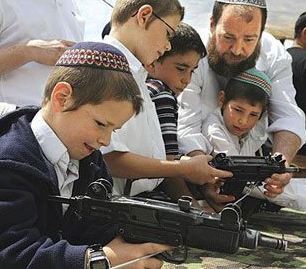
Jewish settlers, illegally living in the occupied territories, are a largely armed population and well trained for combat situations.

The settlers currently own more than half a million automatic rifles, and practically unlimited amounts of ammunition.

A number of fundamentalist settler organizations confirmed that the preparations started last month, and that plans to attack Palestinian areas are already in place to contain the anticipated Palestinian popular activities.

Facebooktwittermail

Iraq joins calls for Assad to step down in Syria

The New York Times reports:

After months of striking a far friendlier tone toward the government of President Bashar al-Assad of Syria, the Iraqi government has joined a chorus of other nations calling on him to step down.

An adviser to the Iraqi prime minister, Nuri Kamal al-Maliki, said in an interview with The New York Times on Tuesday that the Iraqi government had sent messages to Mr. Assad that said he should step down.

“We believe that the Syrian people should have more freedom and have the right to experience democracy,” said the adviser, Ali al-Moussawi. “We are against the one-party rule and the dictatorship that hasn’t allowed for the freedom of expression.”

The statements from Mr. Moussawi mark a significant change for Iraq. When the United States and several of its major allies called in August for Mr. Assad to cede power, the Iraqi government appeared to be more in line with Iran, which has supported Mr. Assad. The same day as the American statement, Mr. Maliki gave a speech warning Arab leaders that Israel would benefit the most from the Arab Spring.

“There is no doubt that there is a country that is waiting for the Arab countries to be ripped and is waiting for internal corrosion,” Mr. Maliki said in that speech. “Zionists and Israel are the first and biggest beneficiaries of this whole process.”

Facebooktwittermail

More than 5,000 killed in Syria, report says

GlobalPost reports:

Alarming new statistics from human rights researchers in Syria show that more than 5,300 people are now believed to have been killed since the uprising began six months ago, roughly double the current United Nations estimate and three times the Assad regime’s official tally.

In a new report, Avaaz, the global campaign group and its partner Insan, a leading Syrian human rights organization, say they have verified the names of 3,004 people killed, while an additional 2,356 people have been registered as dead, but have not yet been verified.

All but 300 of the casualties are Syrian civilians killed by Syrian President Bashar al-Assad’s security forces, the rights groups reported.

Facebooktwittermail

Arab League parliament urges Syria suspension

Al Jazeera reports:

An Arab parliamentary body has called for the suspension of the membership of Syria and Yemen in the Arab League in a bid to put pressure on the two countries to heed popular demands for reforms.

The call was put out on Tuesday following a committee meeting of the Arab Parliament, a body to which members of the Arab League send representatives.

The head of the committee, which met at the Arab League’s headquarters in Cairo, said that “mass slaughter” was taking place in Syria and Yemen and called on the league to deal with the countries in a similar way to how it dealt with Libya.

After a crackdown by the government of Muammar Gaddafi on pro-democracy protesters, the Arab League suspended Libya’s Arab League membership in February.

“We call on the Arab states to freeze the membership of Damascus in the Arab League and urge the Arab leaders to take more active stands in that regard if the Syrian leadership did not … stop violence and withdraw its security forces and army … and form a national unity government from all political powers,” said Tawfik Abdallah of the Arab Parliamentarians Political Affairs and National Security Committee.

Facebooktwittermail

OPEC rulers pay their subjects $1 trillion to keep quiet

Bloomberg reports:

Saudi Arabia will spend $43 billion on its poorer citizens and religious institutions. Kuwaitis are getting free food for a year. Civil servants in Algeria received a 34 percent pay rise. Desert cities in the United Arab Emirates may soon enjoy uninterrupted electricity.

Organization of Petroleum Exporting Countries members are poised to earn an unprecedented $1 trillion this year, according to the U.S. Energy Department, as the group’s benchmark oil measure exceeded $100 a barrel for the longest period ever. They are promising to plow record amounts into public and social programs after pro-democracy movements overthrew rulers in Tunisia, Egypt and Libya and spread to Yemen and Syria.

Unlike past booms, when Abu Dhabi bought English soccer club Manchester City and Qatar acquired a stake in luxury carmaker Porsche SE, Gulf nations pledged $150 billion in additional spending this year on their citizens. They will need to keep U.S. benchmark West Texas Intermediate crude oil at more than $80 a barrel to afford their promises, according to Bank of America Corp.

“A sharp increase in spending to accommodate social pressures has averted potential disquiet over governance in most countries, though in the longer-term economic reforms will be needed to buoy private-sector growth and job creation,” Jean- Michel Saliba, a London-based economist at Bank of America, said in an e-mail Sept. 8. “Without the social spending, Gulf protests would possibly move the nations toward constitutional monarchy.”

Facebooktwittermail

The 2012 contest to show who loves Israel the most

Daniel Levy writes:

[I]t is in the realm of background noise, more than votes or dollars, that Israel really features as a campaign issue. John Heilemann, in an excellent New York Magazine piece, puts it like this: “the outsize attention they command and the ear-splitting volume of the collective megaphone they (Jews) wield.” Having to deal with relentless calls, op-eds, congressional resolutions and meeting requests (a monumental waste of administration and campaign time) is probably what seals the deal for kicking the Israel issue into the long grass by kissing the ring (or maybe the tuchus, in this case).

While the way in which Israel plays out as an issue with American Jews will not move the dial on next year’s elections, it will have other effects – not least on US policy and interests vis à vis Israel, the region and beyond. On the Republican side, Israel will be the center piece of a narrative that seeks to portray the president’s foreign policy as being too forgiving towards adversaries (with Iran topping the list) and too harsh with allies (see Israel). This is clearly not lined up to be a foreign policy election, and a Bin Laden-slaying incumbent is less easily portrayed as being soft on terror. But to divide the world beyond America’s shores between Judeo-Christian forces of light and Muslim forces of darkness nicely dovetails with a growing (and ugly) theme in domestic politics – sharia law care-mongering. It also still acts as a dog-whistle for the “Obama is a secret Muslim” crew.

Of greater significance for America’s future is how the Israel issue, especially if spun as electorally useful, can help bind neoconservatism to Tea Party-oriented Republicanism. A small-government, no-tax and debt-obsessed Tea Party agenda is an unnatural match for the war-mongering and global domination fantasies of neoconservatives. These trends have clashed already – for instance, with regard to America’s continued role in Afghanistan or its involvement in Libya. If Israel is to be kept far away from this equation and the neoconservatives are to maintain their iron grip on Republican foreign policy, then it is terribly convenient to spread the idea that Israel not only plays well in the bible belt, but that it can also help win the borscht belt. The almost total disappearance of realist or internationalist Rockefeller Republicanism from the party’s foreign policy arena (think GHW Bush, Scowcroft, Baker, and later, Hagel, Powell, and Chaffee) has made Republican and Likud policies indistinguishable.

That is a problem not only for Democrats, but also for America. It used to be claimed that Israel was a cause above partisan politics. Any such notion is utter nonsense today. If one assumes that: (a) Democrat-leaning Jews do largely care about Israel but not from a fundamentalist or hawkish perspective; and (b) that leading Democratic politicians tend to be in the same boat (both reasonable hypotheses); then Democrats have two possible options in responding to this new political reality. They can either make the argument for a different kind of pro-Israel policy or be playing permanent catch-up with the Republican/Likud right. Leading Jewish public intellectuals have been making the case for the former approach, a new movement (J Street) generated momentum for that option, and in a seminal essay, Peter Beinart provided a strong theoretical underpinning for the idea that this made for both good policy and good politics, given Jewish generational attitude shifts. President Obama and some leading figures in his administration initially seemed to concur – that being serious and responsible towards Israeli and American interests meant pushing for a two-state solution immediately, and standing against obstacles to that outcome such as settlements.

But through a combination of insufficient attention to detail, insufficient courage when the going got tough and insufficient coherence inside the administration, the latter approach eventually won out. Administration policy has increasingly become “we’re as pro-Israel as the Republicans and they can define pro-Israel as whatever they like.”

Facebooktwittermail

Rick Perry, the Likudnik

Haaretz reports:

Except for the fact that the proceedings were held in English, an Israeli attending Texas Governor Rick Perry’s “press conference” at the W Hotel in midtown Manhattan Tuesday morning might be excused for imagining that he was in the middle of a pep rally for one of Israel’s right-wing politicians, and a hard-liner at that.

Flanked by two of the Knesset’s most hard-core peace process pooh-poohers, the Likud’s Danny Danon and Shas’ Nissim Ze’ev, and enthusiastically encouraged by an organized band of Orthodox Jewish cheerleaders, Perry adopted the rhetoric of Israel’s radical right lock, stock and barrel, repeating the word “appeasement” in all its inflections, in order to hammer home a not-too-subtle association between President Obama’s Middle East peace policies in 2011 and Neville Chamberlain Munich capitulations in 1938.

Against the backdrop of the upcoming drama at the UN, Perry castigated Obama’s “arrogant” attitude towards Israel, dismissed negotiations based on the 1967 borders, issued the obligatory pledge to move the American embassy to Jerusalem, dismissed most of the Palestinians as schemers or terrorists or both and garnished, with Danon smiling contentedly at his side, with an unprecedented carte blanche for Israel to build in the settlements as much as it pleases.

Perry, obviously, harbors no hope of securing even a single vote from the 2 million strong Arab-American community, which will come as welcome news for Obama, who is increasingly and rather ironically being viewed by Arab voters as “too pro-Israel”. Furthermore, by surrounding himself with staunch Israeli right-wingers and no less zealous Orthodox figures from New York, Perry may also be signaling that, at least in the upcoming Republican primaries, he does not expect to get many votes from less conservative and more mainstream Jewish supporters, who are in any case uncomfortable with the Texas governor’s evangelical enthusiasm.

Ever since the sensational victory of Republican Bob Turner in New York’s traditionally democratic and heavily-Jewish Ninth Congressional District last week, the issue of the Jewish vote and of the candidates’ attitudes towards Israel has featured prominently in the media discourse.

Yesterday’s no-holds-barred bashing of Obama by the Republican frontrunner – endorsed, as it was, by members of Israel’s ruling coalition – is a clear sign that the injection of Israel and the importation of its divisive internal conflicts into the upcoming American election campaign may run dangerously deeper than most mainstream Jewish leaders had feared.

Though the winners and losers are still hard to predict at this early stage, it seems safe to assume that after the votes are cast come November 2012, both the spirit of political bipartisanship as well as the already–fraying unity of the American Jewish community in support of Israel will be counted as the clear-cut casualties.

Facebooktwittermail

Obama’s Jewish problem

John Heilemann writes:

Again and again, when Israel has been embroiled in international dustups—over its attack last year on a flotilla filled with activists headed from Turkey to Gaza, to cite but one example—the White House has had Israel’s back. The security relationship between the countries, on everything from intelligence sharing to missile-­defense development to access to top-shelf weapons, has never been more robust. And when the Cairo embassy was seized and Netanyahu called to ask for Obama’s help with rescuing the last six Israelis trapped inside the building, the president not only picked up the phone but leaned hard on the Egyptians to free those within. “It was a decisive moment,” Netanyahu recalled after the six had been freed. “Fateful, I would even say.”

All of which raises an interesting, perplexing, and suddenly quite pressing question: How, exactly, did Obama come to be portrayed, and perceived by many American Jews, as the most ardently anti-Israel president since Jimmy Carter?

This meme, of course, has been gathering steam for some time, peddled mainly by right-wing Likudophiles here and in the Holy Land. But last week, it took center stage in the special election in New York’s Ninth Congressional District, maybe the most Jewish district in the nation and one held by Democrats since 1923. When the smoke cleared, the Republican had won—and Matt Drudge was up with a headline blaring REVENGE OF THE JEWS.

Obama’s people deny up and down that the loss of a seat last occupied by Anthony Weiner portends, well, pretty much anything for 2012. But the truth is that they are worried, and worried they should be, for the signs of Obama’s slippage among Jewish voters are unmistakable. Last week, a new Gallup poll found that his approval rating in that cohort had fallen to 55 percent—a whopping 28-point drop since his inauguration. And among the high-dollar Jewish donors who were essential to fueling the great Obama money machine last time around, stories of dismay and disaffection are legion. “There’s no question,” says one of the president’s most prolific fund-raisers. “We have a big-time Jewish problem.”

It’s often said that Netanyahu has an exquisitely calibrated feel for American politics and great savvy in working its press corps. Both are true and both have helped him enormously in resisting the pressure brought to bear by Team Obama. But the administration has also sabotaged itself, in particular by frequently failing to speak with one voice to Israel.

Through much of 2009 and 2010, Obama’s people were divided over just how hard to lean on Netanyahu when it came to negotiating with the Palestinians. On one side were many central figures who favored the tough-love approach: Obama, Clinton, Mitchell, Emanuel. On the other were Dennis Ross, the president’s special assistant on the Middle East, and Tom Donilon, his national-security adviser. “The underlying argument of Dennis and Tom was that you’ll never get the Israelis to do anything by pushing them,” says one official. “The contrary argument is, there’s no evidence you’ll ever get them to do anything without pushing them.”

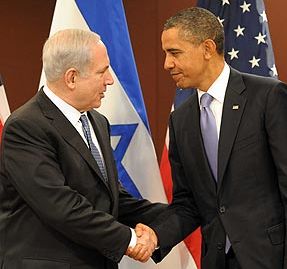
For Netanyahu, however, the internal division within the administration was a gift. Wary of Emanuel and senior adviser David Axelrod—Netanyahu was quoted in the Israeli press calling them “self-hating Jews,” though he later denied it—he turned to those in the White House who were more sympathetic. “What you had was Bibi doing this go-to-mommy, go-to-­daddy thing,” says the same official. “Which meant there was never a real, effective, tough negotiation with Israel, because every time you tried to say something tough, he’d go to someone else who would tell him, ‘Don’t worry about it.’ ”

Netanyahu’s penchant for forum shopping goes a long way toward explaining the bilateral conniption that erupted this past May. After briefly negotiating face-to-face last fall, the Israelis and the Palestinians were again at loggerheads. For weeks this spring, the administration debated internally how to modify U.S. policy in light of that breakdown as well as the dawning of the Arab Spring and the wave of instability engulfing the region.

With the new Republican Congress having invited Netanyahu to address a full joint session—making him only the fourth foreign leader (along with Yitzhak Rabin, Nelson Mandela, and Winston Churchill) to have been granted the privilege more than once—Obama was planning a major speech on the Middle East ahead of Bibi’s. The question was whether the president should lay out a framework for a two-state solution, including principles on borders, security, Jerusalem, and refugees. Clinton and Mitchell were in favor of including all four; Ross and Donilon were in favor of including none, and until a few days before the speech, it appeared that they would have their way. But in the end, Obama opted for two: principles on borders and security.

Everyone knew that the language on borders would stir up a hell of a fuss, though in truth there was nothing terribly controversial about what Obama said. The 1967 lines plus land swaps has been for decades the geographic template for any plausible two-state solution, and was employed (almost fruitfully) by Clinton, Ehud Barak, and Yasser Arafat in 2000 and (again, almost fruitfully) by Bush, Ehud Olmert, and Abbas in 2008. The trouble was that its explicit embrace by Obama caught Netanyahu by surprise, almost certainly because Dennis Ross had assured him privately that it wouldn’t be in the speech.

Netanyahu threw a nutty. Before he departed Israel for Washington, his office issued a statement saying that the “Prime Minister expects to hear a reaffirmation from President Obama of U.S. commitments made to Israel in 2004 … commitments [that] relate to Israel not having to withdraw to the 1967 lines.” The statement was extraordinary on multiple levels: in its sheer presumptuousness (“expects”?); in its willful misreading of Obama’s words (ignoring the part about land swaps); and in its total neglect of the many hard-line pro-Israel positions the president had advanced, including a scornful rejection of the Palestinian statehood bid at the U.N., sharp criticism of Israel-denying Hamas, skeptical questioning of its new alliance with Israel-accepting Fatah, and harsh condemnation of Iran and Syria.

The next day, Netanyahu delivered his on-camera lecture to Obama. What enraged the president and his team wasn’t the impudence on display; they could live with that. It was the dishonesty at the heart of the thing. “I’ve been in more than one meeting with Bibi where he used the same language to describe the outlines of a deal,” one official says. “It’s outrageous—attacking the president for something he didn’t say, claiming he was putting Israel’s security at risk for stating out loud a position Bibi himself holds privately.”

But Netanyahu knew he could get away with it—so staunch and absolute is the bipartisan support he commands in the U.S. Garishly illuminating the point, on the night before his speech to Congress, the prime minister attended the annual AIPAC policy conference in Washington, where he was the headline speaker at the event’s gala banquet. Before he took the stage, three announcers, amid flashing spotlights and in the style of the introductions at an NBA All-Star game, read the names of every prominent person in the room, including 67 senators, 286 House members, and dozens of administration and Israeli officials, foreign dignitaries, and student leaders. (The roll call took half an hour.) When Harry Reid spoke, he obliquely but unambiguously chastised Obama for endorsing the use of the 1967 lines as the basis for a peace deal: “No one should set premature parameters about borders, about building, or about anything else.” The ensuing ovation was deafening—but a mere whisper compared with the thunderous waves of applause that poured over Netanyahu.

The next day came his speech to Congress, in which he spelled out demands that were maximal by any measure: recognition by the Palestinians of Israel as a Jewish state as a precondition for negotiations, a refusal to talk if Hamas is part of the Palestinian side, an undivided Jerusalem as Israel’s capital, and absolutely no right of return for Palestinian refugees. Taken as a whole, his whirlwind Washington visit provided a strong dose of clarity: With Barak having moved his newly formed Independence Party into Netanyahu’s governing coalition, its new stability has reduced to near zero the incentives for him to take the risks required for peace.

In the eyes of some observers, Netanyahu’s performance over those days suggested something else: that he was taking sides in the 2012 race. As Time’s Joe Klein sharply noted, Netanyahu “has now, overtly, tossed his support to the Republicans.” With cover from Bibi, Mitt Romney pronounced that Obama had “thrown Israel under the bus.” Michele Bachmann tweeted that his “call for 1967 borders will cause chaos, division & more aggression in Middle East and put Israel at further risk.” Tim Pawlenty (remember him?) called Obama’s policy “a disaster waiting to happen.” And Ron Paul declared, “Unlike this president, I do not believe it is our place to dictate to Israel how to run her affairs.”

So much pandering, so little time! Republicans sucking up to Israel, and by extension Jewish voters, is nothing new; and in the past, it has come to naught. Might this election be different? Some political professionals think so. The perception of Obama as harboring antipathy to Israel, they argue, makes 2012 a ripe opportunity for the right Republican to swipe a larger than usual share of Jewish votes and/or pick the Obama campaign’s pocket. Skeptical? I would be, too, except for one thing: the sight of the Obamans scrambling to make sure it doesn’t happen.

Facebooktwittermail