Category Archives: Issues

NEWS & EDITOR’S COMMENT: Refusing to end the torture debate

Inside a 9/11 mastermind’s interrogation

In a makeshift prison in the north of Poland, Al Qaeda’s engineer of mass murder faced off against his Central Intelligence Agency interrogator. It was 18 months after the 9/11 attacks, and the invasion of Iraq was giving Muslim extremists new motives for havoc. If anyone knew about the next plot, it was Khalid Shaikh Mohammed.

The interrogator, Deuce Martinez, a soft-spoken analyst who spoke no Arabic, had turned down a C.I.A. offer to be trained in waterboarding. He chose to leave the infliction of pain and panic to others, the gung-ho paramilitary types whom the more cerebral interrogators called “knuckledraggers.”

Mr. Martinez came in after the rough stuff, the ultimate good cop with the classic skills: an unimposing presence, inexhaustible patience and a willingness to listen to the gripes and musings of a pitiless killer in rambling, imperfect English. He achieved a rapport with Mr. Mohammed that astonished his fellow C.I.A. officers.

A canny opponent, Mr. Mohammed mixed disinformation and braggadocio with details of plots, past and planned. Eventually, he grew loquacious. “They’d have long talks about religion,” comparing notes on Islam and Mr. Martinez’s Catholicism, one C.I.A. officer recalled. And, the officer added, there was one other detail no one could have predicted: “He wrote poems to Deuce’s wife.”

Mr. Martinez, who by then had interrogated at least three other high-level prisoners, would bring Mr. Mohammed snacks, usually dates. He would listen to Mr. Mohammed’s despair over the likelihood that he would never see his children again and to his catalog of complaints about his accommodations.

“He wanted a view,” the C.I.A. officer recalled.

The story of Mr. Martinez’s role in the C.I.A.’s interrogation program, including his contribution to the first capture of a major figure in Al Qaeda, provides the closest look to date beneath the blanket of secrecy that hides the program from terrorists and from critics who accuse the agency of torture.

Beyond the interrogator’s successes, this account includes new details on the campaign against Al Qaeda, including the text message that led to Mr. Mohammed’s capture, the reason the C.I.A. believed his claim that he was the murderer of the Wall Street Journal reporter Daniel Pearl and the separate teams at the C.I.A.’s secret prisons of those who meted out the agony and those who asked the questions.

In the Hollywood cliché of Fox’s “24,” a torturer shouts questions at a bound terrorist while inflicting excruciating pain. The C.I.A. program worked differently. A paramilitary team put on the pressure, using cold temperatures, sleeplessness, pain and fear to force a prisoner to talk. When the prisoner signaled assent, the tormenters stepped aside. After a break that could be a day or even longer, Mr. Martinez or another interrogator took up the questioning.

Mr. Martinez’s success at building a rapport with the most ruthless of terrorists goes to the heart of the interrogation debate. Did it suggest that traditional methods alone might have obtained the same information or more? Or did Mr. Mohammed talk so expansively because he feared more of the brutal treatment he had already endured? [complete article]

Editor’s Comment — When Scott Shane refers to “the interrogation debate,” he’s already revealing an implicit position that runs as a subtle thread all the way through this article: if “it” works then it’s arguably justified.

The preponderance of the evidence he presents, suggests that the good old torture routine — which might not fit the Fox 24 cliche but falls squarely inside a long cinematic tradition where thugs and calm interrogators work hand-in-hand — really did work. And if it worked, maybe it shouldn’t be sullied with the term only critics use and be called “torture.”

Except — and this is of course where Shane egregiously misframes the debate — the heart of the debate is not whether torture can be shown to be expedient: it is whether the methods of interrogation used fit an internationally recognized definition of torture.

Since no less of a military authority than Abu Ghraib investigator, Major General Antonio Taguba, has come out and unequivocally declared that, “only question that remains to be answered is whether those who ordered the use of torture will be held to account,” one has to ask: Why is the New York Times still willing to suggest that the debate on torture has not been answered?


Facebooktwittermail

NEWS & EDITOR’S COMMENT: New York Times sends signal to Iran

U.S. says exercise by Israel seemed directed at Iran

Israel carried out a major military exercise earlier this month that American officials say appeared to be a rehearsal for a potential bombing attack on Iran’s nuclear facilities.

Several American officials said the Israeli exercise appeared to be an effort to develop the military’s capacity to carry out long-range strikes and to demonstrate the seriousness with which Israel views Iran’s nuclear program.

More than 100 Israeli F-16 and F-15 fighters participated in the maneuvers, which were carried out over the eastern Mediterranean and over Greece during the first week of June, American officials said. [complete article]

Editor’s Comment — Does the New York Times have a vital role to play in defending Israel from an Iranian nuclear threat? If the answer is ‘yes’, then I can understand why the paper would run a report like this. But if the paper’s primary responsibility is to report, then it has no business turning itself into an adjunct of either the US government or the Israeli government as it is doing so in this case. Performing government service here means disseminating information that no government official is willing to disseminate openly.

A senior Pentagon official who has been briefed on the exercise, and who spoke on condition of anonymity because of the political delicacy of the matter, said the exercise appeared to serve multiple purposes.

One Israeli goal, the Pentagon official said, was to practice flight tactics, aerial refueling and all other details of a possible strike against Iran’s nuclear installations and its long-range conventional missiles.

A second, the official said, was to send a clear message to the United States and other countries that Israel was prepared to act militarily if diplomatic efforts to stop Iran from producing bomb-grade uranium continued to falter.

“They wanted us to know, they wanted the Europeans to know, and they wanted the Iranians to know,” the Pentagon official said. “There’s a lot of signaling going on at different levels.”

But the NYT isn’t just describing the signaling — it’s part of the signaling loop. It thereby in the most insidious way inserts itself into a political process wherein it serves a role in applying pressure on all the parties involved.

Anonymous sourcing is required in a story like this, not because of — as the NYT puts it — “the political delicacy of the matter.” It’s used because journalists willing to prostitute themselves to their sources give those sources complete freedom to pick and choose which questions they want to answer. Indeed, they hand the reporter the story on a plate and then the newspaper happily gets the message out.

How would this story be approached if it was real journalism? It would dig into some of the key political question here: To what degree are the United States and Israel pursuing a coordinated political and military strategy in confronting Iran? Is the Pentagon — with a nod and a wink — helping relay Israel’s signal to Iran, or is it signaling to all concerned that Israel is a free agent whose actions might conflict with American interests?

These are the kinds of questions that don’t get answered when journalists turn themselves into the mouthpieces of anonymous sources.

How Iran would retaliate if it comes to war

Pressure is building on Iran. This week Europe agreed to new sanctions and President Bush again suggested something more serious – possible military strikes – if the Islamic Republic doesn’t bend to the will of the international community on its nuclear program.

But increasingly military analysts are warning of severe consequences if the US begins a shooting war with Iran. While Iranian forces are no match for American technology on a conventional battlefield, Iran has shown that it can bite back in unconventional ways.

Iranian networks in Iraq and Afghanistan could imperil US interests there; American forces throughout the Gulf region could be targeted by asymmetric methods and lethal rocket barrages; and Iranian partners across the region – such as Hezbollah in Lebanon – could be mobilized to engage in an anti-US fight. [complete article]

Facebooktwittermail

FEATURE & EDITOR’S COMMENT: Guantanamo: Beyond the law

GUANTANAMO: BEYOND THE LAW

An eight-month McClatchy investigation of the detention system created after the Sept. 11 terrorist attacks has found that the U.S. imprisoned innocent men, subjected them to abuse, stripped them of their legal rights and allowed Islamic militants to turn the prison camp at Guantanamo Bay, Cuba into a school for jihad.

America’s prison for terrorists often held the wrong men

The militants crept up behind Mohammed Akhtiar as he squatted at the spigot to wash his hands before evening prayers at the Guantanamo Bay detention camp.
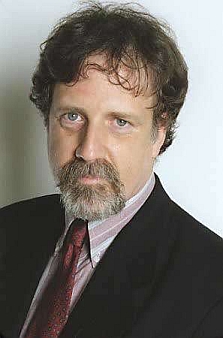
They shouted “Allahu Akbar” — God is great — as one of them hefted a metal mop squeezer into the air, slammed it into Akhtiar’s head and sent thick streams of blood running down his face.

Akhtiar was among the more than 770 terrorism suspects imprisoned at the U.S. naval base at Guantanamo Bay, Cuba, after the Sept. 11, 2001, terrorist attacks. They are the men the Bush administration described as “the worst of the worst.”

But Akhtiar was no terrorist. American troops had dragged him out of his Afghanistan home in 2003 and held him in Guantanamo for three years in the belief that he was an insurgent involved in rocket attacks on U.S. forces. The Islamic radicals in Guantanamo’s Camp Four who hissed “infidel” and spat at Akhtiar, however, knew something his captors didn’t: The U.S. government had the wrong guy.

“He was not an enemy of the government, he was a friend of the government,” a senior Afghan intelligence officer told McClatchy. Akhtiar was imprisoned at Guantanamo on the basis of false information that local anti-government insurgents fed to U.S. troops, he said.

An eight-month McClatchy investigation in 11 countries on three continents has found that Akhtiar was one of dozens of men — and, according to several officials, perhaps hundreds — whom the U.S. has wrongfully imprisoned in Afghanistan, Cuba and elsewhere on the basis of flimsy or fabricated evidence, old personal scores or bounty payments. [complete article]

Editor’s Comment — McClatchy Newspapers should be commended for taking on this Pulitzer-worthy project. Even so, the real turning point in American perceptions of Guantanamo may not come until the day that former detainees are allowed to testify in Congress. Only then, when they are offered the dignity of a public hearing that receives saturation media coverage, will we start to absorb the depth of the offense that Guantanamo has been and the breadth of the culpability that Americans share in acquiescing to the Bush administration’s suspension of the law and of human rights.

Facebooktwittermail

CAMPAIGN 08 & EDITOR’S COMMENT: The New York Times misreports Obama on undivided Jerusalem

Obama’s comments on Israel stir criticism in U.S.

The morning after claiming the Democratic nomination, Senator Barack Obama spoke to skeptical members of a pro-Israel lobby and made a pledge that some of them found pleasantly surprising: “Jerusalem will remain the capital of Israel, and it must remain undivided.”

That statement generated a storm of controversy in the Middle East, with one Kuwaiti daily calling it “a slap in the face” to Arabs. And over the last 24 hours, as Mr. Obama and his campaign have sought to explain his initial remarks, and suggested that an undivided Jerusalem would be hard to achieve, they have been accused of backtracking, which has generated a new round of criticism, this one here at home among Jewish groups. [complete article]

Editor’s CommentThe Wikipedia entry for New York Times reporter, Larry Rohter, notes that he has been “criticized in various fora for sloppy journalism, including the use of questionable sources and shallow understanding of the local politics of the areas he covered.”

Here he goes again.

Rohter writes that Obama “suggested that an undivided Jerusalem would be hard to achieve”. The reporter reiterates this further into the article:

In an interview with CNN on Thursday, Mr. Obama was asked about criticisms from the Arab world, and whether his remarks meant that Palestinians had no claim to Jerusalem.

“Well,” he replied, “obviously it’s going to be up to the parties to negotiate a range of these issues,” including the status of Jerusalem.

While restating his support for an undivided city, he also said, “My belief is that, as a practical matter, it would be very difficult to execute.”

In fact, Obama said the opposite. This is from the transcript of the interview with CNN’s Candy Crowley:

CROWLEY: I want to ask you about something you said in APAC yesterday. You said that Jerusalem must remain undivided. Do the Palestinians have no claim to Jerusalem in the future?

OBAMA: Well, obviously, it’s going to be up to the parties to negotiate a range of these issues. And Jerusalem will be part of those negotiations.

CROWLEY: But you would be against any kind of division of Jerusalem?

OBAMA: My belief is that, as a practical matter, it would be very difficult to execute. And I think that it is smart for us to — to work through a system in which everybody has access to the extraordinary religious sites in old Jerusalem but that Israel has a legitimate claim on that city.

Obama says a division of Jerusalem would be hard to achieve, not as Rohter reports that “an undivided Jerusalem would be hard to achieve”.

Is Rohter ignorant about the outcome of the Six-Day War in 1967? Or is this just sloppy weekend reporting? Buried on the inside pages – who’s going to read it anyway? What’s it matter if the paper of record gets the record wrong?

Facebooktwittermail

CAMPAIGN 08 & EDITOR’S COMMENT: “Undivided” means open access

Obama clarifies united Jerusalem comment

Presumptive Democratic presidential nominee Barack Obama did not rule out Palestinian sovereignty over parts of Jerusalem when he called for Israel’s capital to remain “undivided,” his campaign told The Jerusalem Post Thursday.

“Jerusalem will remain the capital of Israel, and it must remain undivided,” Obama declared Wednesday, to rousing applause from the 7,000-plus attendees at the American Israel Public Affairs Committee policy conference.

But a campaign adviser clarified Thursday that Obama believes “Jerusalem is a final status issue, which means it has to be negotiated between the two parties” as part of “an agreement that they both can live with.”

“Two principles should apply to any outcome,” which the adviser gave as: “Jerusalem remains Israel’s capital and it’s not going to be divided by barbed wire and checkpoints as it was in 1948-1967.”

He refused, however, to rule out other configurations, such as the city also serving as the capital of a Palestinian state or Palestinian sovereignty over Arab neighborhoods.

“Beyond those principles, all other aspects are for the two parties to agree at final status negotiations,” the Obama adviser said.

Many on the right of the political spectrum among America’s Jews welcomed Obama’s remarks at AIPAC, but the clarification of his position left several cold.

“The Orthodox Union is extremely disappointed in this revision of Senator Obama’s important statement about Jerusalem,” said Nathan Diament, director of public policy for the Union of Orthodox Jewish Congregations. He had sent out a release Wednesday applauding Obama’s Jerusalem remarks in front of AIPAC.

“In the current context, everyone understands that saying ‘Jerusalem… must remain undivided’ means that the holy city must remain unified under Israeli rule, as it has been since 1967,” Diament explained.

“If Senator Obama intended his remarks at AIPAC to be understood in this way, he said nothing that would reasonably lead to such a different interpretation.”

Morton Klein, president of the Zionist Organization of America and another Jewish activist who had originally lauded Obama’s statement, now called the candidate’s words “troubling.”

“It means he used the term inappropriately, possibly to mislead strong supporters of Israel that he supports something he doesn’t really believe,” Klein charged.

But congressman Robert Wexler, a Democrat from Florida with ties to the Jewish community and a long-time supporter of Obama, rejected the idea that the Illinois senator had been misleading with his comments.

“Everyone knows that Jerusalem is a final status issue. That is not a secret to anyone. Senator Obama says emphatically that should the Israelis and the Palestinians negotiate [an agreement], he will respect their conclusions and that he will not dictate a particular resolution.”

And some groups were pleased by the clarification on Jerusalem provided by the campaign.

“There was reaction from some of our base who were taken aback by it and thought he was undermining the peace process,” said Americans for Peace Now spokesman Ori Nir, who described his organization as “gratified” by the clarified position which seems to follow APN’s policy that sovereignty of Jerusalem could be shared in a final peace settlement.

Obama has faced questions about his support for Israel from hawkish quarters of the Jewish community, and his campaign said the speech before AIPAC, following a town hall meeting at a Florida synagogue last month, were key elements in shoring up the Jewish vote, which generally goes to the Democrats.

“We think we’ve gotten a good reaction to the speech and we’re pleased that we’ve gotten a good reaction,” said the campaign adviser of the candidate’s AIPAC address, which received multiple sustained standing ovations.

Palestinian factions though were particularly troubled by the original speech’s original language on an undivided Jerusalem.

“This statement is totally rejected,” said Palestinian Authority Chairman Mahmoud Abbas, whom a top aide described as “disappointed.”

“The whole world knows that holy Jerusalem was occupied in 1967 and we will not accept a Palestinian state without having Jerusalem as the capital of a Palestinian state,” Abbas said.

The Obama campaign adviser said that whatever the international reaction, it was important for the Illinois senator to “make his positions clear.”

“Our main audience is American voters at the moment. Other people want to know where he stands and it’s important that they do know where he stands,” he said.

Speaking generally about the speech, which also stressed the importance of a secure Israel and the need to isolate Hamas, Hamas official Sami Abu Zuhri told Reuters: “Obama’s comments have confirmed that there will be no change in the US administration’s foreign policy on the Arab-Israeli conflict.”

Prime Minister Ehud Olmert, however, called Obama’s address “moving,” adding that he was also impressed by the speeches delivered at the same conference by Democratic rival, Hillary Clinton, and presumptive Republican nominee, John McCain.

Olmert spoke to all three candidates by phone Thursday as he wrapped up a three-day visit to Washington. [complete article]

Editor’s Comment — The Washington Post said:

Obama quickly backtracked today in an interview with CNN.

“Well, obviously, it’s going to be up to the parties to negotiate a range of these issues. And Jerusalem will be part of those negotiations,” Obama said when asked whether Palestinians had no future claim to the city.

Obama said “as a practical matter, it would be very difficult to execute” a division of the city. “And I think that it is smart for us to — to work through a system in which everybody has access to the extraordinary religious sites in Old Jerusalem but that Israel has a legitimate claim on that city.”

That’s probably good enough to back him out of the cul-de-sac he drove into yesterday, but he would surely have been better off not using the word “undivided” in the first place. Anyone who has been concerned about whether Obama can be taken at his word, just got freely handed a reason to be “troubled.”

Facebooktwittermail

CAMPAIGN 08 & EDITOR’S COMMENT: Obama pays homage to AIPAC

Arabs shocked by Obama speech

Arab leaders have reacted with anger and disbelief to an intensely pro-Israeli speech delivered by Barack Obama, the US Democratic presumptive presidential nominee.
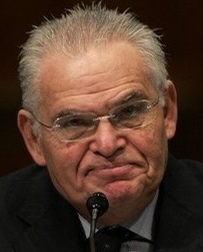
Obama told the influential annual policy conference of the American Israel Public Affairs Council (Aipac): “Jerusalem will remain the capital of Israel and it must remain undivided.”

His comments appalled Palestinians who see occupied East Jerusalem as part of a future Palestinian state.

Saeb Erekat, the chief Palestinian negotiator, told Al Jazeera on Thursday: “This is the worst thing to happen to us since 1967 … he has given ammunition to extremists across the region”. [complete article]

It’s a mitzvah

As a pandering performance, it was the full Monty by a candidate who, during the primary, had positioned himself to Hillary Clinton’s left on matters such as Iran. Yesterday, Obama, who has generally declined to wear an American-flag lapel pin, wore a joint U.S.-Israeli pin, and even tried a Hebrew phrase on the crowd.

Obama even outdid President Bush in his pro-Israel sentiments. On the very day that Obama vowed to protect Jerusalem as Israel’s capital — drawing a furious denunciation from the Palestinian Authority — Bush announced that he was suspending a move of the U.S. Embassy to Jerusalem.

The transformation — mostly in tone, but occasionally in substance — might qualify as what Obama likes to call the same old Washington “okey-doke.” And the candidate is uncomfortable with such things, as evidenced by his struggle to pronounce the name of the Iranian president, Mahmoud Ahmadinejad. It came out as “Mahmoud . . . Ahmin — Ahmeninejad.”

The crowd of 7,000 loved him anyway. He received 13 standing ovations, more than twice the number granted the next act, Hillary Clinton. The AIPAC faithful gushed about his performance as they left the Washington Convention Center. “He doesn’t even read! He has an extemporaneous delivery,” one woman recounted, evidently unaware that Obama had read every word from a teleprompter. [complete article]

John McCAIPAC

When John McCain went before the American Israel Public Affairs Committee (AIPAC) on June 2, he could not have been more obsequious to this group that has done more than any other in the United States to block a just solution to the Palestinian quest for statehood.

With Joe Lieberman in tow, McCain opened by saying that “it’s a pleasure, as always, to be in the company” of AIPAC.

Tone deaf to Israel’s brutalization of the Palestinians, McCain called Israel “an inspiration to free nations everywhere.” [complete article]

Editor’s Comment — Yesterday was the day the “change” bubble burst. Obama’s performance at AIPAC shows that his grasp of Middle East politics has yet to rise to the level of George Bush’s! That’s an incredible thing to have to say (especially for someone who still intends to vote Democrat) but what Obama demonstrated was the myopia of a candidate who has thrown principle to the wind and decided he will say anything to secure votes and donations. His was a polished performance in the politics of business-as-usual, burnished with a genuflection to Zionism that was utterly uncalled for.

How did it happen?

I can only suppose that having become so deeply enmeshed in Hillary Clinton’s psyche, Obama decided he’d couldn’t hold back in parroting her down to a T if he was to win over her rightwing Jewish supporters. Having made that choice, he then thought, what the hell? I’ll see if I can pull in the whole Likudnik crowd as well. The only surprise is that he didn’t toss in a promise to totally obliterate Iran if that should become necessary.

If there’s a silver lining here — and one for which Obama deserves no credit — it is that he appears to have given a boost to Palestinian solidarity as Mahmoud Abbas reaches out to Hamas. Abbas may have finally recognized that, at least for Palestinians, the prospect of a new administration in Washington offers no basis for hope.

The idiocy to which Obama has fallen victim is that, like so many diehard supporters of Israel (whose love of Israel generally runs so deep they wouldn’t dream of living there), he is — as chief Palestinian negotiator Saeb Erekat put it — “being more Israeli than the Israelis themselves.”

And on the issue of an “undivided Jerusalem,” Obama would do well to reflect on the observations of someone who lives there, who describes himself as a Zionist and who offered these remarks to Hillary Clinton last fall after she made the same ill-conceived pledge.

Gershom Gorenberg wrote last October:

Jerusalem, Hillary, is divided by more fault lines than run under California, even if it is also stitched together by livelihoods and water mains and friendships that grow like hardy weeds.

The Israeli consensus that the city must never be divided has broken down. Vice Prime Minister Haim Ramon is reportedly pushing a plan to turn most Arab neighborhoods over to Palestinian rule, even if other members of the ruling Kadima party would rather give up less land in Jerusalem. Your position paper defends a stance that is already spoken of here in past tense, in a tone reserved for the naiveté of youth.

I’d like to believe that what you really mean by “undivided Jerusalem” is what your very closest adviser laid out in his parameters for an Israeli-Palestinian peace at the end of his term as president in January 2001: Jerusalem should be an “open and undivided city” but the capital of two independent states, with Palestinian parts of the city under Palestinian rule. Turning those parameters into reality would require inspired negotiating, with immense American investments of time and prestige, and such investments dried up completely very soon after Bill laid out his vision. As we all know, his successor doesn’t do negotiating.

I suspect, however, that you wrote what you did because advisers believe that you need to support an outdated position in order to win Jewish support. Far away as I am, I also suspect that your advisers are giving obsolete counsel. American Jews are even more fed up than other Americans are with the Republicans. In 2006, 87 percent of them voted for Democratic candidates for the House.

Let me suggest a more honest and more honorable position on Israel: The greatest contribution that America can make to Israeli security is to help it reach peace with the Palestinians, and as president you will resume that effort where it was abandoned in 2001. If asked about Jerusalem, say that the sides will have to come to an agreement, and you are committed to help them do so. The Clinton parameters are still a good basis for that. If you don’t take this position, I hope that your Democratic rivals do. It would make me more hopeful about the future of my fractured city.

And if Obama’s support for an undivided Jerusalem isn’t just shameless pandering to AIPAC, how come he didn’t make this commitment in his Israel Fact Sheet [PDF] last year when it was already spelled out in Hillary’s Plan For Israel?

Facebooktwittermail

CAMPAIGN 08: The predator state

Obama needs a better reading list

For Mr. Zakaria, the truly enlightened Americans, the ones who understand the coming order, are apparently Goldman Sachs, McKinsey & Company and assorted business chieftains. When Mr. Zakaria writes that Third World leaders “have heard Western CEOs explain where the future lies,” he means it not as a sarcastic slap at those CEOs but as homage to their wisdom.

Average Americans, meanwhile, give Mr. Zakaria fits, what with their stubborn ignorance of foreign ways and their doubts about free trade. This attitude, in turn, has opened up “a growing gap between America’s worldly business elite and cosmopolitan class, on the one hand, and the majority of the American people, on the other.”

A warning here, senator. This is not an idea that will endear you to the people of Montana, or Ohio, or Pennsylvania. Were you to integrate it into your stump speech, you might even deliver the South Side of Chicago over to John McCain.

One more reason to be leery of all this market idolatry: It’s wrong. Take the aspect of the “new era” that Mr. Zakaria most admires – “the free movement of capital,” the international loans and investments he worships as “globalization’s celestial mechanism for discipline.” In point of fact, the rise of China and India – Mr. Zakaria’s own paradigm cases – was possible only because those countries shunned global commercial credit markets in the 1970s, allowing them to avoid the interest-rate shock of the early ’80s.

How do I know this? It’s all explained in a far more worthwhile new book, “The Predator State,” by James K. Galbraith. At your next photo-op, Mr. Obama, I hope to see you half way through it. [complete article]

The predator state

Today, the signature of modern American capitalism is neither benign competition, nor class struggle, nor an inclusive middle-class utopia. Instead, predation has become the dominant feature—a system wherein the rich have come to feast on decaying systems built for the middle class. The predatory class is not the whole of the wealthy; it may be opposed by many others of similar wealth. But it is the defining feature, the leading force. And its agents are in full control of the government under which we live.

Our rulers deliver favors to their clients. These range from Native American casino operators, to Appalachian coal companies, to Saipan sweatshop operators, to the would-be oil field operators of Iraq. They include the misanthropes who led the campaign to abolish the estate tax; Charles Schwab, who suggested the dividend tax cut of 2003; the “Benedict Arnold” companies who move their taxable income offshore; and the financial institutions behind last year’s bankruptcy bill. Everywhere you look, public decisions yield gains to specific private entities.

For in a predatory regime, nothing is done for public reasons. Indeed, the men in charge do not recognize that “public purposes” exist. They have friends, and enemies, and as for the rest—we’re the prey. Hurricane Katrina illustrated this perfectly, as Halliburton scooped up contracts and Bush hamstrung Kathleen Blanco, the Democratic governor of Louisiana. The population of New Orleans was, at best, an afterthought; once dispersed, it was quickly forgotten. [complete article]

Facebooktwittermail

CAMPAIGN 08 & EDITOR’S COMMENT: How much does it hurt to be scolded by the NYT’s public editor?

Entitled to their opinions, yes. But their facts?

On May 12, The Times published an Op-Ed article by Edward N. Luttwak, a military historian, who argued that any hopes that a President Barack Obama might improve relations with the Muslim world were unrealistic because Muslims would be “horrified” once they learned that Obama had abandoned the Islam of his father and embraced Christianity as a young adult…

I interviewed five Islamic scholars, at five American universities, recommended by a variety of sources as experts in the field. All of them said that Luttwak’s interpretation of Islamic law was wrong.
David Shipley, the editor of the Op-Ed page, said Luttwak’s article was vetted by editors who consulted the Koran, associated text, newspaper articles and authoritative histories of Islam. No scholars of Islam were consulted because “we do not customarily call experts to invite them to weigh in on the work of our contributors,” he said.

That’s a pity in this case, because it might have sparked a discussion about whether Luttwak’s categorical language was misleading, at best.

Editor’s Comment — The New York Times’ “public editor” (appointed by the public was he?) Clark Hoyt, describes Edward Luttwak as a military historian. Luttwak could also — and I would say with greater precision — be described as a shit stirrer. His column “President apostate?” was nothing more than a disingenuous argument with the apparent purpose of poisoning the presidential campaign.

Luttwak wrote:

…most citizens of the Islamic world would be horrified by the fact of Senator Obama’s conversion to Christianity once it became widely known — as it would, no doubt, should he win the White House. This would compromise the ability of governments in Muslim nations to cooperate with the United States in the fight against terrorism, as well as American efforts to export democracy and human rights abroad.

That an Obama presidency would cause such complications in our dealings with the Islamic world is not likely to be a major factor with American voters, and the implication is not that it should be. But of all the well-meaning desires projected on Senator Obama, the hope that he would decisively improve relations with the world’s Muslims is the least realistic.

By chance, in today’s Washington Post, Azadeh Moaveni provides some contradicting evidence right from the axis of evil:

Most Iranians belong to generations with compelling reasons to admire the United States. Those old enough to remember the shah’s era are nostalgic for the prosperity and international standing Iran once enjoyed; those born after the revolution see no future for themselves in today’s Iran and adopt their parents’ gilded memories as their own. These longings have young and old Iranians alike following the U.S. election. Most seem to favor Sen. Barack Obama, who they believe will patch up relations with Iran.

Until that is — Luttwak would have us believe — they discover Obama is an apostate.

The fact is, those who are pushing the Obama-is-or-was-a-Muslim line, have only one purpose in mind: to tap into a rich vein of Islamophobia that they hope will be able to propel John McCain into the White House.

The New York Times turned over a portion of its op-ed page to serve that purpose and now the op-ed page editor David Shipley has received a rebuke from the public editor. I imagine Shipley feels — in the immortal words of Denis Healey — like he just got savaged by a dead sheep.

Facebooktwittermail

OPINION & EDITOR’S COMMENT: The moral relativism that supports torture

Where is the outrage?

Are we Americans truly savages or merely tone-deaf in matters of morality, and therefore more guilty of terminal indifference than venality? It’s a question demanding an answer in response to the publication of the detailed 370-page report on U.S. complicity in torture, issued last week by the Justice Department’s inspector general.

Because the report was widely cited in the media and easily accessed as a pdf file on the Internet, it is fair to assume that those of our citizens who remain ignorant of the extent of their government’s commitment to torture as an official policy have made a choice not to be informed. A less appealing conclusion would be that they are aware of the heinous acts fully authorized by our president but conclude that such barbarism is not inconsistent with that American way of life that we celebrate. [complete article]

Editor’s Comment — There are many reasons that torture, as a moral and political issue, has never really gained enough traction to concern Americans as much as does, for instance, the price of gasoline. It’s not simply that it’s an issue that has very little direct impact on most people’s lives. Most importantly, we live in a culture that adheres to no moral absolutes when it comes to the use of violence.

Three out of ten Americans believe that torture is never justified. That’s the same number who oppose the death penalty. So, given that most Americans do believe that the state should be invested with the power to take away someone’s life, it doesn’t seem particularly surprising that a similar number would condone the use of torture.

Although moral relativism is supposedly the sin of the secular left, nowhere is it more starkly evident than in the co-existence of the “right to life” and support for capital punishment. What this conjunction reveals is that far from any absolute value being attached to life, the key issue for those who see no contradiction between these two views is the presence or absence of innocence. If most Americans thought that the victims of torture were also innocent, then there would undoubtedly be popular outrage.

The war on terrorism as a popular cause has always relied on the willingness of the Bush administration to toss aside the legal principal, innocent until proven guilty. Willingly, the public has accepted the idea that a terrorist suspect is no different than a terrorist. And this blurring of a distinction between guilt and suspicion is rooted in the use of the word: terrorist. It labels the person rather than the action.

Facebooktwittermail

NEWS, CAMPAIGN 08 & EDITOR’S COMMENT: Talking to Iran

Petraeus: diplomacy, not force, with Iran

Army Gen. David H. Petraeus, President Bush’s nominee to lead U.S. forces in the Middle East and Central Asia, supports continued U.S. engagement with international and regional partners to find the right mix of diplomatic, economic and military leverage to address the challenges posed by Iran.

In written answers to questions posed by the Senate Armed Services Committee, where he will testify today, Petraeus said the possibility of military action against Iran should be retained as a “last resort.” But he said the United States “should make every effort to engage by use of the whole of government, developing further leverage rather than simply targeting discrete threats.”

Petraeus’s views echoed those expressed by Defense Secretary Robert M. Gates, who this month said that talks with Iran could be useful if the right combination of incentives and pressures could be developed. [complete article]

Straw-man diplomacy

On the Friday before the 2004 presidential election, Osama bin Laden released a videotape slamming George W. Bush, which more than a few people took as a tacit endorsement of John Kerry. The CIA saw it differently, though. According to Ron Suskind’s fine book, The One Percent Doctrine, Deputy Director John McLaughlin said, “Bin Laden certainly did a nice favor today for the President.” It seemed obvious to the top CIA analysts that bin Laden wanted to keep Bush — who had let the terrorists off the hook in Afghanistan and launched the war in Iraq, a great recruiting tool for al-Qaeda — in power.

Which raises the question: Who are the bad guys rooting for in 2008? John McCain would have you believe the answer is clear. Barack Obama wants to meet with the leaders of enemy states, especially Iran, “which would increase their prestige,” McCain says, and convey the impression of American weakness. To punctuate the point, McCain persistently barks that Obama wants to meet with the Iranian President, Mahmoud Ahmadinejad, a flagrant anti-Semite but a relatively powerless figurehead. Obama did say during a debate last summer that he would meet with foreign leaders without preconditions. “He shorthanded the answer,” Senator Joe Biden recently said. Ever since, Obama has been creatively fuzzy when asked directly if he would meet with Ahmadinejad — and he has begun to point out that the real leaders of Iran are the clerics led by the Supreme Leader Ayatullah Ali Khamenei, who controls Iran’s foreign policy and its nuclear program. Obama has also been explicit about the need to start with lower-level talks, a presidential summit coming only if there were progress in those negotiations. In his previous, straight-talking incarnation, McCain would have allowed Obama the modifications to his shorthand answer and debated the issue on the merits. Not this year.

When I asked McCain on May 19 why he kept linking Obama to Ahmadinejad, he said that Ahmadinejad represents Iran at the U.N., which is a fair point, and that the “average American” thinks he’s the leader of Iran, which he isn’t. Indeed, it could be argued that McCain’s Ahmadinejad obsession “increases the prestige” of a relatively powerless loudmouth for domestic political gain. Linking Obama to the world’s most famous anti-Semite certainly doesn’t hurt McCain among Jewish retirees in Florida, a swing state. In any case, don’t be surprised if Ahmadinejad pulls a bin Laden and “denounces” McCain just before the election this year.

Why? Because the last thing Iran’s leaders want is an American President who doesn’t play the role of the Great Satan. They need the mirage of an implacable, saber-rattling foe to distract their population from the utter incompetence of their government. [complete article]

Editor’s Comment — The question about whether President Obama should or shouldn’t be willing to meet President Ahmadinejad is in large part a product of the trivialization of politics as practiced by George Bush.

Because Bush liked to make trite remarks like, “I was able to get a sense of his soul,” after meeting Vladamir Putin, and because Bush liked to suggest that a handshake could be worth as much as a treaty, we’ve been led to entertain the comic book notion that once the big guys get along then everything else can be worked out.

If the US engages Iran, the presidential photo-op will most likely come only after a lion’s share of the serious work has already been done. The real question is this: Is the United States ready to swallow its pride and engage with representatives of the Islamic Republic of Iran, thereby implicitly recognizing the legitimacy of the Islamic state? In other words, thirty years after the Shah’s ouster, is America able to come to terms with the fact that it no longer has any say in how Iran is governed?

If and when representatives of the two governments meet, initially the only issue each side should be trying to determine about the other, is whether these particular representatives have been duly empowered to speak for their government. This, perhaps more than anything else, is what the US government will have difficulty figuring out.

Joe Klein says, “the last thing Iran’s leaders want is an American President who doesn’t play the role of the Great Satan,” but Klein should know better than to talk about what “Iran’s leaders want” — as though there was a clear consensus. The Great Satan works well for Ahmadinejad but the same cannot be said of his strongest political adversary, Ayatollah Akbar Hashemi Rafsanjani. Indeed, whoever happens to wield the most political power in Iran by late 2009, their posture towards the United States is clearly going to be strongly influenced by how many thousand American troops remain in Iraq and how many US warships are cruising the Gulf.

If we can get past the comic book language and stop using the phrase, “talking to the enemy,” we might then be able to discuss the real but less catchy issue: diplomatic engagement with unfriendly states.

It really should be a non-issue. If diplomats aren’t employed to engage unfriendly states, what on earth is the function of diplomacy? Just to arrange cocktail parties for visiting dignitaries?

Facebooktwittermail

CAMPAIGN 08 & EDITOR’S COMMENT: Listening to rural America

A country voice on rural voters

Q: Let’s talk about the South, and about those regional, rural voters. You call yourself a rural advocate, albeit an avowed Democrat. In 2004, Senator John Kerry pretty much wrote off the South. As the electoral votes shift southward, with population growth, what are your recommendations for a Democratic candidate to woo Southern voters? Should a vice presidential choice come from the South. Will Nascar dads still be sought out in 2008?

dave-mudcat-saundersA: The Center for Rural Strategies, a non-partisan think tank in Whitesburg, Kentucky, did a poll on October 26, 2006. When asked what was the top issue going into the midterm elections, 38 percent of the respondents said “lack of economic fairness”. There’s the message.

Although everybody brings up Jim Webb when talk of military and foreign policy emerges, Obama needs to spend some quality time with Webb talking about economic fairness. Webb, who has evolved from a Scots-Irish Appalachian icon into rural America’s champion for economic fairness, knows more about the dire implications of lack of economic fairness for rural America and can put a face on it better than anyone alive. Jim has written tens of thousands of words on the subject, including his new book, “A Time To Fight.”

While I’m talking about Webb, he would be my first choice for vice president. Talk about a guy who could lead Obama through the culture. I sometimes wonder if Jim isn’t the father, son, and holy ghost of rural culture. And if the party really wants the “Reagan Democrats” back in the tent, I can’t think of anybody better to stand at the entrance than Jim. He’s the bell cow for those guys.

As far as the “Nascar Dad” is concerned, I still don’t understand what that was all about. I guess since “Soccer Moms” was such a popular catch phrase in 2000 that somebody thought it would be cute to use “Nascar Dads” as a catch phrase in 2004. Although I was heavily involved in the Nascar push, I never embarked on the project just to get males. Forty percent of the Nascar fans are women. I think a great new permutation for 2008 would be, “No More Lies.” [complete article]

Why don’t those hillbillies like Obama?

In analyzing the returns from last week’s West Virginia Democratic primary, a phalanx of reporters and commentators have explained Hillary Clinton’s landslide victory by pointing out that West Virginians are a special set of Democrats, white, low income and undereducated. Some, like Josh Marshall of Talking Points Memo and Jonathan Tilove of the Newhouse papers, have linked the lackluster performance of Barack Obama in West Virginia to a larger Appalachian problem. These writers connect the presumptive nominee’s defeat in West Virginia, his previous losses in Ohio and Pennsylvania, and an anticipated poor outing in Tuesday’s Kentucky primary, to the historical, geographic and cultural imperatives shared by Appalachian mountain people.

The legions of pseudonym-laden online posters who follow in political punditry’s wake are less restrained in describing the shortcomings of Sen. Clinton’s Appalachian supporters. They suggest it has to do with her voters being racist, toothless, shoeless, and prone to marrying their cousins. In short, they characterize these “special” Democrats in much the same terms they used in quieter times to describe Republicans. [complete article]

Editor’s Comment — Whether the Obama campaign feels it does or doesn’t have a strategic need to embrace the rural voters, what seems more important is that rural America becomes an integral part of a campaign that in spirit focuses on inclusion. The bridge that crosses the urban-rural divide is respect.

Facebooktwittermail

OPINION & EDITOR’S COMMENT: The belligerent power

Who’s the real appeaser?

President Bush chose an odd place and time to claim that talking to “terrorists and radicals” in the Middle East is like appeasing Hitler in the 1930s. As Bush was speaking in Israel, his preferred strategy against such adversaries was collapsing next door in Lebanon. Over the past two weeks the Lebanese government, which is strongly backed by Washington, decided to confront the Shiite group Hizbullah by firing a loyalist who was head of security at Beirut airport and suspending the group’s dedicated phone network. The Iranian-backed Hizbullah retaliated, taking over large parts of Beirut and paralyzing the country. Last week the Lebanese cabinet humiliatingly reversed itself on both fronts. Iran 1, USA 0.

The Bush administration’s strategy against Hizbullah has consisted of a mix of isolation, belligerence and military pressure. It refuses to talk to the group or its supporters in Tehran and Damascus. Two years ago, Washington unquestioningly supported Israeli Prime Minister’s Ehud Olmert’s decision to attack southern Lebanon, Hizbullah’s stronghold. The United States provides the Lebanese government and Army with aid and has responded to the current crisis by promising to speed up delivery of weapons. Yet today Hizbullah is stronger in Lebanon, Iran is more influential in the region, and the United States and its ally, Prime Minister Fuad Siniora, have been marginalized. [complete article]

Editor’s Comment — It’s not so long ago that it was commonly understood that if you could sit down and talk with your adversary, that, in and of itself, counted as a victory. It meant that the subtler, more constructive and precise power of discourse could – even if only temporarily – replace the blunt power of violence, intimidation and threats. And since it was the belligerent who generally lacked an interest in talking, the challenge was not to get the other side to meet a set of preconditions for negotiation; the challenge was to get the other side to negotiate.

For the last seven years, the Bush administration has been the belligerent power. As the party with a conviction in its ability to be the dominant force – its ability to wield the most destructive power – it is the one that has been unwilling to talk. It protects its ‘right’ to use violence.

When Bush characterizes talking as a form of capitulation, what he is really doing is expressing his conviction in the necessity of forcing the other side into submission. From that perspective, there is of course nothing to negotiate.

Facebooktwittermail

Updated – NEWS & EDITOR’S COMMENT: How to spot bullshit

The article linked to below has been updated. The White House has now issued a flat denial of the earlier JP report.

‘Bush intends to attack Iran before the end of his term’

US President George W. Bush intends to attack Iran in the upcoming months, before the end of his term, Army Radio quoted a senior official in Jerusalem as saying Tuesday.

The official claimed that a senior member of the president’s entourage, which concluded a trip to Israel last week, said during a closed meeting that Bush and Vice President Dick Cheney were of the opinion that military action was called for.

However, the official continued, “the hesitancy of Defense Secretary Robert Gates and Secretary of State Condoleezza Rice” was preventing the administration from deciding to launch such an attack on the Islamic Republic, for the time being.

The report stated that according to assessments in Israel, recent turmoil in Lebanon, where Hizbullah de facto established control of the country, was advancing an American attack.

Bush, the officials said, opined that Hizbullah’s show of strength was evidence of Iranian President Mahmoud Ahmadinejad’s growing influence. They said that according to Bush, “the disease must be treated – not its symptoms.”

In an address to the Knesset during his visit here last week, Bush said that “the president of Iran dreams of returning the Middle East to the Middle Ages.”

“America stands with you in firmly opposing Iran’s nuclear weapons ambitions,” Bush said. “Permitting the world’s leading sponsor of terror to possess the world’s deadliest weapon would be an unforgivable betrayal of future generations. For the sake of peace, the world must not allow Iran to have a nuclear weapon.” [complete article]

Editor’s Comment — This article requires careful reading. Here’s why I’d say it’s bullshit:

1. The headline. The statement is in quotes but the “quote” gets paraphrased in the article. If you’ve got a killer quote – even one from a nameless senior official – you don’t turn it into a paraphrase.

2. Straight after leading with the quoteless quote, the article pushes back by saying that Bush and Cheney are of “the opinion that military action is called for.” Being of the opinion its called for is not the same as saying its going to happen.

3. Is Ed Gillespie (or whoever this senior member of Bush’s entourage was) really going to say to the Israelis, “Bush and Cheney want to attack, but right now their hands are tied by Rice and Gates”? If that was the case, it sounds more like someone saying, “You know, we really want to help you, but we can’t.” More likely, the statement took a form something like this: “President Bush and Vice President Cheney are fully aware that military action may be called for before they leave office, but right now there’s a lot of debate going on between the White House and State and Defense on whether this is the right time to move ahead.”

4. When Bush stands up in front of the Knesset and says, “the world must not allow Iran to have a nuclear weapon,” he’s making it pretty clear that the US is not going to act unilaterally.

5. When Bush spoke directly to the Jerusalem Post a few days ago, he told them that “before leaving office he wants a structure in place for dealing with Iran.” That does not sound like a coded way of saying the US is going to attack Iran. It sounds very much like he saying that he’s going to make sure that the next president is hemmed in by the policies that the Bush administration has set.

Facebooktwittermail

NEWS, OPINION & EDITOR’S COMMENTS: Time for the pragmatists to stand up and be counted

Israel to agree unofficially to Egypt cease-fire deal; skeptical Barak to discuss plan with Mubarak Monday

Israel plans to accept the Egyptian-mediated cease-fire proposal with Hamas in the Gaza Strip, but does not intend to officially declare a commitment to it. Instead, Israel will treat the deal struck indirectly with Hamas as a series of steps beginning with a lull in hostilities, followed by gradual relaxation of the financial blockade of Gaza.

Ehud Barak, who will discuss the cease-fire with Egyptian President Hosni Mubarak in Sharm el-Sheikh Monday, is skeptical about the chances of achieving long-term quiet with Hamas, and his feelings are shared by Prime Minister Ehud Olmert and Foreign Minister Tzipi Livni.

However, Barak, who will be attending the World Economic Forum, is set to tell Mubarak and Egyptian intelligence chief Omar Suleiman that Israel is prepared to stop its military activities in Gaza if Hamas stops firing rockets at Israel. Israel will also try to get Egypt to step up efforts to stop weapons from being smuggled into Gaza. Barak is also expected to say that Israel will lift the blockade and open border crossings only if progress is made on talks aimed at releasing captive soldier Gilad Shalit.

Once quiet reigns, Israel hopes to gradually raise the number of trucks allowed to bring goods into the Strip (only about 60 trucks a day, on average, are now allowed in). If a deal is reached on returning Shalit, in exchange for Israel’s release of 450 prisoners, Israel would also agree to reopen the Rafah crossing, essentially lifting the blockade almost completely. [complete article]

Is Israel breaking its own taboo on talks with Hamas?

Participants at a recent inner cabinet meeting were listening to details of the Egyptian mediation initiative between Israel and Hamas on a cease-fire in the Gaza Strip recently, when a senior minister reportedly reminded those present that Israel does not negotiate, directly or indirectly, with Hamas. Shin Bet security service head Yuval Diskin interrupted, saying there was no other way to describe the talks.

A letter to Prime Minister Ehud Olmert, Defense Minister Ehud Barak and Foreign Minister Tzipi Livni, the details of which were revealed Friday, called for the indirect and secret talks with Hamas to be recognized. As for Israel’s greatest concerns – that Hamas will use a lull in hostilities to rearm and that Egypt’s promises to fight weapons smuggling bear no weight – the writers of the letter offered no solution.

Among the signatories’ names, that of MK Yossi Beilin (Meretz) is to be expected. More surprising are the names of the former Shin Bet chief Ephraim Halevi, who has actually been calling for talks with Hamas in recent months, along with former chief of staff Amnon Lipkin-Shahak and Brigadier General (res.) Shmuel Zakai, a former Gaza Division commander. This is an attempt to provide a military stamp of approval to a step Israel has officially sworn it would not take. What was taboo two years ago is no longer. [complete article]

Editor’s Comment — There’s one thing that George Bush, John McCain, and Barak Obama all currently claim: talking to Hamas is a bad idea. So what do they each have to say about the fact that Israel has abandoned this principle?

The Israelis are doing lots of posturing – claiming that talks have not been negotiations, saying that they won’t express their official commitment to a ceasefire with Hamas – but the reality is clear: the policy of attempting to defeat Hamas through a war of attrition has failed.

The presidential campaigns and the American press will of course all press along as though nothing has changed.

Israel’s ‘American problem’

When the prime minister of Israel, Ehud Olmert, arrived at a Jerusalem ballroom in February to address the grandees of the Conference of Presidents of Major American Jewish Organizations (a redundancy, since there are no minor American Jewish organizations), he was pugnacious, as is customary, but he was also surprisingly defensive, and not because of his relentlessly compounding legal worries. He knew that scattered about the audience were Jewish leaders who considered him hopelessly spongy — and very nearly traitorous — on an issue they believed to be of cosmological importance: the sanctity of a “united” Jerusalem, under the sole sovereignty of Israel.

These Jewish leaders, who live in Chicago and New York and behind the gates of Boca Raton country clubs, loathe the idea that Mr. Olmert, or a prime minister yet elected, might one day cede the Arab neighborhoods of East Jerusalem to the latent state of Palestine. These are neighborhoods — places like Sur Baher, Beit Hanina and Abu Dis — that the Conference of Presidents could not find with a forked stick and Ari Ben Canaan as a guide. And yet many Jewish leaders believe that an Israeli compromise on the boundaries of greater Jerusalem — or on nearly any other point of disagreement — is an axiomatic invitation to catastrophe.

One leader, Joshua Katzen, of the Jewish Institute for National Security Affairs, told me, “I think that Israelis don’t have the big view of global jihad that American Jews do, because Israelis are caught up in their daily emergencies.” When I asked him how his Israeli friends responded to this, he answered: “They say, ‘When your son has to fight, you can have an opinion.’ But I tell them that it is precisely because your son has to fight that you have a harder time seeing the larger picture.”

When I spoke to Mr. Olmert a few days after his meeting with the Conference of Presidents, he made only brief mention of his Diaspora antagonists; he said that certain American Jews he would not name have been “investing a lot of money trying to overthrow the government of Israel.” But he was expansive, and persuasive, on the Zionist need for a Palestinian state. Without a Palestine — a viable, territorially contiguous Palestine — Arabs under Israeli control will, in the not-distant future, outnumber the country’s Jews. [complete article]

Editor’s Comment — We hear a lot about the existential threats that Israel faces, but an American plot to overthrow the government of Israel? And the accusation comes from the Israeli prime minister? Shouldn’t that be headline news?

Facebooktwittermail

CAMPAIGN 08 & EDITOR’S COMMENT: On Appalachia

Skirting Appalachia

As Hillary Clinton’s rout in West Virginia underscores, Appalachia is not Obama country. Of 410 counties in the region, which stretches from New York to Mississippi, Barack Obama has won only 48 (12 percent) so far. Of the counties he has lost, nearly 80 percent have been by a margin of more than 2 to 1. The region is whiter, poorer, older, more rural and less educated than the rest of the country, and seems to be voting like a bloc.

In fact, it hasn’t been Democratic country for the last two presidential elections. Only 48 of the counties voted for John Kerry in 2004, down from 66 counties (or 16 percent) that went for Al Gore in 2000. The only states with counties in the region that have consistently voted Democratic in the last four such elections have been New York, Pennsylvania and Maryland. [complete article]

Editor’s Comment — While the word “change” might be the leading motif in the Obama campaign, the spirit of inclusion comes a close second.

The idea of writing off Appalachia might make strategic sense as Charles Blow convincingly argues, but even so, it would run against the spirit of the campaign. Moreover, a region that is used to being written off really deserves better.

Having lived on the Blue Ridge for the last six years, I’ve learned a bit about how the mountaineers think.

Two days after Obama’s big loss in West Virginia and a day after his big win with the Edwards endorsement, I got the chance to take the political pulse locally when I went to renew my driver’s license.

One of the privileges of rural life is the pleasure of being able to go to a DMV office, find no line, and get helped by a government official who’s more interested in talking politics than getting stuck in a bureaucratic rut. This mountaineer was exactly the kind of voter that Obama should have his eye on: a loyal Edwards supporter who wants a president who looks out for the working folk and will help restore the respect that America has lost around the world. She wasn’t sure if Obama would be on the side of the workers. She’d never heard that he was a community organizer. She didn’t know he’d passed up the opportunity for a lucrative career on Wall Street. She simply didn’t know enough about the candidate.

Listen to the pundits and you’d conclude that the single most important thing to know about Appalachia is that it’s mostly white, but I’d say the key issue here is respect. Skirting Appalachia is no better than saying, you people don’t matter.

Facebooktwittermail

FEATURE: Land or peace?

Talking to the enemy

The conflict with the Arabs has cast a long shadow over Israel’s history. In the Declaration of Independence in Tel Aviv, on 14 May 1948, the founding fathers extended their hand in peace to all the neighbouring states and their peoples. Today, Israel is still at war with Syria and Lebanon and locked into a bitter conflict with the Palestinians of Gaza and the West Bank. The explanation that Israelis usually give for the failure to achieve peace in the Middle East can be summed up in two words: Arab intransigence. Israel’s image of itself is that of a decent, rational, peace-loving nation that resorts to military power in self-defence only. The image of the Arabs, on the other hand, is that of a fanatical, hostile enemy that understands only the language of force. The reality is more complex.

The general picture that emerges of Israeli statecraft in the first 60 years of statehood is one of routine, often unthinking reliance on military force and a reluctance to engage in meaningful diplomacy to resolve the conflict with its neighbours. Another trait, common to Labour and Likud leaders alike, is a blind spot when it comes to the Palestinian people and a desire to bypass them by concluding bilateral deals with the rulers of the neighbouring Arab states. [complete article]

The power network

The seven-and-a-half-year vacuum in Arab- Israeli peacemaking under George W Bush ends next January. Bush refused to play ball, but he wouldn’t let anyone else on the field: not the UN, not Russia, not the European Union. The only legacies he leaves his successor to build upon are secret, deniable talks among intelligence agencies and the familiar engagement of violence.

Israel’s public posture has always been that it would never speak with those who did not recognise its “right to exist”. Putting aside the obvious fact that “right to exist” is meaningless in international law, Israel has talked for years with those who did not recognise it. It had contacts with King Hussein of Jordan, and it warned the governments of Egypt, Saudi Arabia and Sudan of plots in 1977 to overthrow their regimes. It sold arms to Iran during the Iran-Iraq War of the 1980s, and it talked to the PLO for years before Yitzhak Rabin met Yasser Arafat at the White House. It has spoken through mediators to Hamas and Hezbollah. It is now talking to Syria, through Turkey and various independent peacemakers, though Syria assists Hezbollah and Hamas. Nothing will come of this, as the Syrian president now admits, without US involvement. And Washington does not want to get involved. [complete article]

Facebooktwittermail

CAMPAIGN 08 EDITORIAL: New York Times joins the gutter press

New York Times tries to out-Murdoch Murdoch

Does Rupert Murdoch have a mole among the editors of the New York Times? Or is the Times merely adopting the reflex that a Murdoch threat often seems to inspire: mimicry. (That’s how CNN fought back against Fox – it simply became more like Fox.)

Gracing Monday’s op-ed page is a contribution as deserving of space as would be a diatribe from David Duke: “President Apostate?” by Edward N. Luttwak.

Is the New York Times trying to steal readers from the New York Post?

After the Jeremiah Wright furor had the unintended consequence of nixing the “Obama’s a Muslim” rumor, the New York Times — with the implausible deniability of using the voice of an op-ed contributor — revives the so-called Muslim slur in its alternate form: Obama was a Muslim.

Daniel Pipes and other Islamophobes have been pushing this around for a while, but now it gets dignified by appearing on the pages of the “paper of record.”

Rather than struggling to express how infuriating I find it that the New York Times would publish a piece like this, I’m happy to say that I stumbled on someone else’s response – a response wonderfully prescient because it was written almost six months before Luttwak’s recycled bilge spilled out.

It came in a comment by Al-Hayat‘s Washington Bureau Chief, Salameh Nematt. He was responding to the same apostate argument, at that time being pushed by Nibras Kazimi of Talisman’s Gate:

Interesting point, but I believe the fact that Obama’s father abandoned him as a kid, and his mother raised him as a Christian absolves him of responsibility. That’s my fatwa for whatever it is worth. However, I believe an Islamic fatwa declaring him an apostate and calling for Muslims to spill his blood would probably guarantee him his party’s nomination for president.

Touché!

Facebooktwittermail

CAMPAIGN 08 & EDITOR’S COMMENT: The new McCarthyism

Informal Obama adviser steps aside over Hamas talks

One of the Obama campaign’s informal Middle East advisers, Robert Malley, confirms to NBC NEWS that he has resigned from any role in the campaign because critics have tried to make an issue of his meetings with Hamas. The Times of London called him about it this morning, and has posted a story online. As a result, he called Obama’s campaign today and took himself out of any future role.

Malley’s paid job is with the International Crisis Group, which, he says, requires him to meet with Hamas and others. Malley worked for six and a half years at the Clinton National Security Council under Tony Lake and Sandy Berger. Lake is now one of Obama’s top foreign policy advisors.

Speaking to NBC NEWS, Malley said, “I decided based on the fact that this was becoming a distraction that it was best that I remove myself from any association with the campaign.” [complete article]

Editor’s Comment — Even though Malley resigned, the Murdoch-owned Times couldn’t resist giving this story the headline: “Barack Obama sacks adviser over talks with Hamas.” Neither The Times nor NBC News saw fit to reprint a statement in defense of Robert Malley that was issued in February and that was signed by Bill Clinton’s former National Security Adviser and two former US ambassadors to Israel. This is what they wrote:

Over the past several weeks, a series of vicious, personal attacks have been launched against one of our colleagues, Robert Malley, who served as President Clinton’s Special Assistant for Arab-Israeli affairs. They claim that he harbours an anti-Israeli agenda and has sought to undermine Israel’s security. These attacks are unfair, inappropriate and wrong. They are an effort to undermine the credibility of a talented public servant who has worked tirelessly over the years to promote Arab-Israeli peace and US national interests. They must stop.

We have real differences among us about how best to conduct US policy toward the Middle East and what is the right way to build a lasting two-state solution that protects Israel’s security. But whatever differences do exist, there is no disagreement among us on one core issue that transcends partisan or other divides: that the US should not and will not do anything to undermine Israel’s safety or the special relationship between our two nations. We have worked with Rob closely over the years and have no doubt he shares this view and has acted consistent with it.

We face a critical period in the Middle East that demands sustained, determined and far-sighted engagement by the United States. It is not a time for scurrilous attacks against someone who deserves our respect.
Sincerely,

Samuel (Sandy) Berger
Former National Security Advisor
Amb. Martin Indyk
Former Ambassador to Israel and Egypt
and Assistant Secretary of
State for Near East Affairs

Amb. Daniel C. Kurtzer
Former Ambassador to Israel
Aaron David Miller
Former Senior Adviser for Arab-
Israeli Negotiations, Department
of State

Amb. Dennis Ross
Former Special Envoy of the President to the Middle East

I guess having influential and highly respected friends and colleagues ultimately doesn’t count for much in a political environment that has been shaped by the New McCarthyism.

Facebooktwittermail