Category Archives: Issues

OPINION: Second thoughts on Charlie Wilson’s War

Second thoughts on Charlie Wilson’s War

I have some personal knowledge of Congressmen like Charlie Wilson (D-2nd District, Texas, 1973-1996) because, for close to twenty years, my representative in the 50th Congressional District of California was Republican Randy “Duke” Cunningham, now serving an eight-and-a-half year prison sentence for soliciting and receiving bribes from defense contractors. Wilson and Cunningham held exactly the same plummy committee assignments in the House of Representatives — the Defense Appropriations Subcommittee plus the Intelligence Oversight Committee — from which they could dole out large sums of public money with little or no input from their colleagues or constituents.

Both men flagrantly abused their positions — but with radically different consequences. Cunningham went to jail because he was too stupid to know how to game the system — retire and become a lobbyist — whereas Wilson received the Central Intelligence Agency Clandestine Service’s first “honored colleague” award ever given to an outsider and went on to become a $360,000 per annum lobbyist for Pakistan. [complete article]

Facebooktwittermail

NEWS & REVIEW: Taxi to the Dark Side

The power of authority: a dark tale

Frank Gibney was old and sick and a little more than a month away from dying. But he was filled with righteous anger, and he had some things to say. He told his son, the documentary filmmaker Alex Gibney, to unplug a noisy oxygen machine and to grab a video camera.

The older Mr. Gibney, a journalist and scholar who died in April, had served as a naval interrogator in World War II. In a moving statement that serves as a sort of coda to “Taxi to the Dark Side,” a new documentary about the Bush administration’s interrogation policies in the post-9/11 world, he said it had never occurred to him to use brutal techniques on the Japanese prisoners in his custody.

“We had the sense that we were on the side of the good guys,” Frank Gibney said, seething. “People would get decent treatment. And there was the rule of law.”

There would seem to be an enormous distance between the Bagram Air Base in Afghanistan, where the central events in “Taxi to the Dark Side” take place, and Enron’s headquarters in Houston, where the machinations of white-collar criminals brought down the giant energy company and became the backdrop for Mr. Gibney’s entertaining 2005 documentary, “Enron: The Smartest Guys in the Room.” But Mr. Gibney said the two projects have common themes.

“The subject of corruption unites my films,” he said. “‘Enron’ was about economic corruption, and ‘Taxi’ is about the corruption of the rule of law.” [complete article]

Padilla sues John Yoo over detention

Jose Padilla, the American citizen who was held in military detention for more than three years as an enemy combatant, filed a lawsuit Friday against a former Justice Department lawyer who helped provide the legal justifications for what the suit says was Mr. Padilla’s unconstitutional confinement and “gross physical and psychological abuse.”

The lawyer, John C. Yoo, now a law professor at the University of California, Berkeley, wrote or helped prepare a series of legal memorandums on interrogations and the treatment of detainees after the Sept. 11 attacks. [complete article]

Foiling U.S. plan, prison expands in Afghanistan

As the Bush administration struggles for a way to close the military prison at Guantanamo Bay, Cuba, a similar effort to scale down a larger and more secretive American detention center in Afghanistan has been beset by political, legal and security problems, officials say.

The American detention center, established at the Bagram military base as a temporary screening site after the invasion of Afghanistan in 2001, is now teeming with some 630 prisoners — more than twice the 275 being held at Guantanamo. [complete article]

Facebooktwittermail

NEWS: Key “Sunni Awakening” leader killed

Suicide bomber kills key Sunni leader in Baghdad

A suicide bomber assassinated a key leader of American-backed militia forces in a Sunni stronghold of Baghdad on Monday morning, the latest attack on nationalist Sunnis who have recently allied themselves with American troops. That attack, and a second bomb that exploded minutes later, killed at least six and wounded another 26 in total, hospital officials said.

The killing of the militia leader, Col. Riyadh al-Samarrai, on the fringes of north Baghdad’s Adhamiyah district, was one of the most significant attacks so far on leaders of former Sunni insurgents who have banded into militias, known as Awakening groups, to fight extremist militants.

Colonel Samarrai was one of the leaders of the Sunni Awakening movement in Adhamiyah, and was also a close aide and a security adviser to the head of the Sunni Endowment, which oversees Iraq’s Sunni mosques and is one of the most powerful Sunni institutions in Iraq. [complete article]

Facebooktwittermail

NEWS & EDITOR’S COMMENT: The new Cambodia?

U.S. considers new covert push within Pakistan

President Bush’s senior national security advisers are debating whether to expand the authority of the Central Intelligence Agency and the military to conduct far more aggressive covert operations in the tribal areas of Pakistan.

The debate is a response to intelligence reports that Al Qaeda and the Taliban are intensifying efforts there to destabilize the Pakistani government, several senior administration officials said.

Vice President Dick Cheney, Secretary of State Condoleezza Rice and a number of President Bush’s top national security advisers met Friday at the White House to discuss the proposal, which is part of a broad reassessment of American strategy after the assassination 10 days ago of the Pakistani opposition leader Benazir Bhutto. There was also talk of how to handle the period from now to the Feb. 18 elections, and the aftermath of those elections. [complete article]

Editor’s Comment — It’s never enough just to know what was said; we need to know who was talking.

This is a report that illustrates well the need for newspapers to limit their use of anonymous sources. The key to unlocking the article’s significance is knowing who was talking to the New York Times. On that basis we could attempt to understand the sources’ motives for making this information public. For instance, if the sources are intelligence officials we’d have reason to think they might be talking to the press in an effort to kill a harebrained plan before it gains momentum. If on the other hand the sources are inside the White House, then we’d have to wonder whether a political agenda was trumping the need for operational security. Myers, Sanger, and Schmitt should know the answer, but of course their sacred duty to protect the confidentiality of their sources prevents them from adding meaning that currently only they are in a position to discern. Still, why call it reporting if the reporter is only willing to tell part of the story?

What’s more important? That the New York Times is able to protect the privilege of its access to those in power, or that it uses all its means to hold those in power accountable to the people they represent?

Since the Grey Lady is so firmly wedded to its institutional authority, what can we do but go back to parsing the Times as though we were reading Pravda.

This is what I’m able to glean. President Bush, who was in the White House on Friday, did not attend the meeting. The key players at the meeting are named in the article and since they didn’t include Bush, it seems reasonable to infer he wasn’t there. Too busy? We do know for sure that Defense Secretary Gates wasn’t there, so it looks like this was Cheney’s meeting.

Midway through the article, our steely reporters toss in an idle piece of speculation about why the discussions in the White House were taking place: “In part, the White House discussions may be driven by a desire for another effort to capture or kill Osama bin Laden and his deputy, Ayman al-Zawahri.” Does this mean that the Times was told by its sources, this was the main reason for the discussions, but you can’t attribute that to your sources, or was this just some journalistic day-dreaming? Let’s assume the former. And if that’s the case, this discussion may have more to do with domestic American politics than a desire to bring stability to Pakistan.

Perhaps the most revealing lines in the report are these: “The Bush administration has not formally presented any new proposals to Mr. Musharraf, who gave up his military role last month, or to his successor as the army chief, Gen. Ashfaq Parvez Kayani, who the White House thinks will be more sympathetic to the American position than Mr. Musharraf…. But at the White House and the Pentagon, officials see an opportunity in the changing power structure for the Americans to advocate for the expanded authority [of the CIA] in Pakistan, a nuclear-armed country.” In this changing power structure, the administration’s focus remains unchanged: its interest in working more closely with Pakistan’s military than with its civilians. At the same time, the administration appears to want to communicate indirectly with Pakistan’s military by getting its ideas floated in the press. Is this a case of putting the word out to see if it provokes civil unrest?

It’s starting to sound like Cheney might be on the war path again. Iran is off the table, but maybe Pakistan will provide the CIA with an opportunity to help the administration pull its chestnuts out of the fire before November ’08. If they haul in or kill America’s most-wanted men, the presidential race might be nudged back onto national security, and maybe Bush and Cheney won’t go down in history as the men who destroyed the Republican Party.

Could Pakistan go up in flames in the process, al Qaeda’s leaders elude capture and the war in Afghanistan expand into a full-fledged regional war? These are all risks the vice president might be willing to take.

But I digress. The reporters at Pravda — I mean the Times — could do a bit more to enlighten us, couldn’t they?

Facebooktwittermail

NEWS, FEATURE & EDITOR’S COMMENT: Pakistan’s complex political landscape

Next-gen Taliban

The intelligence officer I met in Dera Ismail Khan, whose area of operations included the Taliban-ruled enclave of South Waziristan, maintains that his contacts with the militants were severed long ago. “We can hardly work there anymore,” he told me. “The Taliban suspect everyone of spying. All of our sources have been slaughtered.”
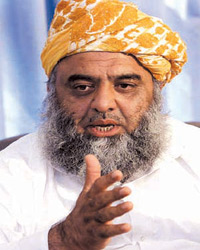
maulana-fazlur-rehman.jpgI asked [Jamiat Ulema-e-Islam chief, Maulana Fazlur] Rehman, who used to refer to the Taliban as “our boys,” if he still considered the Taliban, even those who might be firing rockets at his house, his boys. “Definitely,” he replied. “But because of America’s policies, they have gone to the extreme. I am trying to bring them back into the mainstream. We don’t disagree with the mujahedeen’s cause, but we differ over priorities. They prefer to fight, but I believe in politics.”

Mushahid Hussain, secretary general of the pro-Musharraf faction of the Pakistan Muslim League, told me that no one can negotiate the politics of the North-West Frontier Province better than Rehman. “We know that we need a bearded, turbaned guy out there,” Hussain told me. It is perhaps a measure of how inextricable Islamism and politics have become in Pakistan that even the United States would deal with an anti-American like Rehman. In September, he had the first meeting of his 30-year political career with an American ambassador. What did Rehman and Anne Patterson, the American envoy, discuss? “She urged me to form an electoral alliance with Benazir Bhutto and Musharraf,” he told me a few days after the meeting. “I am not against it. But politically, because of the American presence in Afghanistan and rising extremism, it is a bit hard for us to afford.” Plus, the fact that the Americans thought Bhutto could tackle the Taliban had simply baffled him. “She has no strategy in those areas, and nothing to do with those people,” he said.

When asked if Patterson’s meeting signaled a change in American attitudes, an embassy spokeswoman said it “reflects our approach to democratic politics in Pakistan” and was “part of a process of talking to all those who represent political movements in Pakistan, across the spectrum.” The U.S. has given more than $5 billion to Pakistan in the past few years to fight Islamist militants, but recent reports suggest that the aid has not been effective. Late last month, Congress put restrictions on some military aid and called for the restoration of democratic rights. [complete article]

Democracy gets small portion of U.S. aid

Two years before Benazir Bhutto was assassinated while leading her Pakistan People’s Party in its campaign against the rule of President Pervez Musharraf, the Bush administration devoted this much new aid money to strengthen political parties in Pakistan: $0.

The entire U.S. budget for democracy programs in Pakistan in 2006 amounted to about $22 million, according to State Department documents, much of it reserved for aiding the Election Commission — an entity largely controlled by Musharraf. That $22 million was just a small fraction of the $1.6 billion in aid the United States gave Pakistan that year, and it was equivalent to the value of jet engine and helicopter spare parts that Pakistan purchased in 2006 with the help of U.S. funds.

In the past year, as Musharraf’s grip on power became increasingly fragile, the Bush administration has scrambled to build contacts with the opposition and to provide expertise to opposition parties. The money devoted to democracy programs in the 165 million-person country was almost doubled in the fiscal 2008 budget, to $41 million, but that is still less than the $43 million set aside for such efforts in Kosovo, the former Albanian enclave of Serbia with a population of 2 million. In the region, U.S. democracy programs aimed at Afghanistan, Iraq, Iran and Egypt are all larger than the effort in Pakistan. [complete article]

At the heart of Pakistan, life keeps a normal beat

The presence of a Western journalist provokes rowdy debates. The collective answer to the question ‘Is the West anti-Islamic?’ is that governments are, but people are not. Razzaq, the teashop owner, answers the question of whether the dozen or so men there feel themselves to be Pakistani, Sindhi or Muslim. ‘We are Muslim and then Pakistani,’ he says to general approbation. The television, momentarily ignored, is tuned to a satellite TV station broadcasting in the local Sindhi, not Urdu, the national language.

Faith and politics are intertwined with local identity, too. Radical Islam that probably led to the killing of Bhutto is seen as foreign here, where the folksy, pluralistic Barelvi strand of the faith is dominant.

‘We are not extreme,’ said Maja Ali, Old Jatoi’s storekeeper. ‘We are Sindhis. We are secular and democratic people. We are not sectarian. We are not like people in other parts of Pakistan.’ The regional pride is sometimes hidden, but always there in the background. When one of the rare local supporters of Benazir Bhutto blames ‘the Punjab’ for her death, he is at the same time accusing the army, dominated by Pakistanis originating in the eastern province, and expressing a long-standing resentment against the politically and economically dominant north.

But the political debate does not last long. The villagers return to topics of more interest: the cricket, inflation and the interesting stories about the barber’s wife who, everyone agrees, is as beautiful as the heroine of a Bollywood movie, the highest possible praise. [complete article]

See also, It’s troubled, but it’s home (Mohsin Hamid).

Editor’s Comment — It’s not that the United States needs to be spending more on “democracy promotion” in Pakistan or anywhere else. Such efforts can rightly be regarded as intrusive. The need is simply to spend less on butressing governments that suppress the rights of their own people to self-determination. The will of the people has to be expressed — guess what? — by the people.

Facebooktwittermail

NEWS, ANALYSIS & EDITOR’S COMMENT: How stable is “stability”?

Ghosts that haunt Pakistan

The legend cultivated by Pakistani politicians like Ms. Bhutto and her principal civilian rival, Nawaz Sharif, cast the generals as the main villains in stifling democracy, emerging from their barracks to grab power out of Napoleonic ambition and contempt for the will of ordinary Pakistanis. It is a version of history calculated to appeal strongly to Western opinion. But it has been carefully drawn to excuse the role the politicians themselves have played in undermining democracy, by using mandates won at the polls to establish governments that rarely amounted to much more than vehicles for personal enrichment, or for pursuing vendettas against political foes.

William Dalrymple, a British author who has written widely about India and Pakistan, put it bluntly in an article for Britain’s left-of-center Guardian newspaper in 2005. “As Pakistan shows, rigid, corrupt, unrepresentative and flawed democracies without the strong independent institutions of a civil society — a free press, an independent judiciary, an empowered election commission — can foster governments that are every bit as tyrannical as any dictatorship,” he wrote. “Justice and democracy are not necessarily synonymous.” [complete article]

Musharraf apparently riding out crisis

In the first days after the Dec. 27 attack, the already unpopular Musharraf’s grip on power seemed to hang in the balance. Riots raged for three days in Karachi, Bhutto’s hometown, and across her home province of Sindh.

Much of the fury over the killing of the former prime minister and one of the most popular politicians in the country’s history was aimed directly at one man: the president. In a dozen cities, demonstrators shouted slogans such as “Musharraf, dog!” and “Musharraf, killer!”

But a scant week later, analysts and observers said the Pakistani leader appeared to have weathered the storm, methodically taking a series of steps aimed at shoring up his position, at least in the short term. [complete article]

See also, Bhutto was killed by single assassin, say investigators (The Observer), U.S. relying on two in People’s Party to help stabilize Pakistan (WP), and Sharif carrying the torch of opposition in Pakistan (LAT).

Editor’s Comment — Remember who said, “it is the practice of democracy that makes a nation ready for democracy, and every nation can start on this path”? Of course President Bush was talking about Iraq and the Middle East and it was four years ago. Pakistan isn’t in the Middle East, neoconservatism is festering in the garbage can of history, and the word on everyone’s lips is not “democracy”; it’s “stability.”

Facebooktwittermail

NEWS & EDITOR’S COMMENT: Sibel Edmonds claims nuclear secrets have been sold

For sale: West’s deadly nuclear secrets

A whistleblower has made a series of extraordinary claims about how corrupt government officials allowed Pakistan and other states to steal nuclear weapons secrets.

Sibel Edmonds, a 37-year-old former Turkish language translator for the FBI, listened into hundreds of sensitive intercepted conversations while based at the agency’s Washington field office.

She approached The Sunday Times last month after reading about an Al-Qaeda terrorist who had revealed his role in training some of the 9/11 hijackers while he was in Turkey.

Edmonds described how foreign intelligence agents had enlisted the support of US officials to acquire a network of moles in sensitive military and nuclear institutions.

Among the hours of covert tape recordings, she says she heard evidence that one well-known senior official in the US State Department was being paid by Turkish agents in Washington who were selling the information on to black market buyers, including Pakistan.

The name of the official – who has held a series of top government posts – is known to The Sunday Times. He strongly denies the claims. [complete article]

Editor’s Comment — According to Australia’s Luke Ryland (via The Brad Blog), the “well-known senior official” is Marc Grossman. For detailed background on Sibel Edmond’s efforts to make her story known, see David Rose’s Vanity Fair article from 2005, An inconvenient patriot.

Facebooktwittermail

OPINION: Hopes on the rise

How Obama’s message found its mark

The big question of Barack Obama’s campaign has always been whether his high-flying rhetoric could ever produce real results. Sure, he could create crowds visible from space, but during the summer—when his polls flattened and his backers got nervous—political elites wondered whether he had peaked. He was the girl you dated, not the girl you married, plenty of political analysts told me.

Not any more. In the campaign’s first test, Obama has beaten two tough opponents by a healthy margin. For a candidate promising to create a movement—an “army for change,” as he calls it—a victory like this not only helps his political prospects in the upcoming primaries. It substantiates a key element of the theory of his candidacy, that he can mobilize people behind a movement. [complete article]

Facebooktwittermail

OPINION: Turning east

Dealing with the dragon

On both Wednesday and Thursday, the price of oil briefly hit $100 a barrel. The new record made headlines, as well it should have. But what does it mean, aside from the obvious point that the economy is under extra pressure?

Well, one thing it means is that we’re having the wrong discussion about foreign policy.

Almost all the foreign policy talk in this presidential campaign has been motivated, one way or another, by 9/11 and the war in Iraq. Yet it’s a very good bet that the biggest foreign policy issues for the next president will involve the Far East rather than the Middle East. In particular, the crucial questions are likely to involve the consequences of China’s economic growth. [complete article]

Facebooktwittermail

FEATURE & EDITOR’S COMMENT: Guiliani’s war dreams

Declaring forever war

Like most Americans, I knew little about Rudolph Giuliani, save that he had been the very successful mayor of New York City catapulted to iconic status for his cool-headed demeanor after the Sept. 11 attacks. I was curious about where he stood as a presidential candidate, so in April 2007, I joined nearly 3,000 other Texas A&M faculty and students to hear him speak.

After saying some nice things about his host, President George H.W. Bush, Rudy launched into a stemwinder about the “war on Islamic fundamentalist terrorism” that basically repudiated everything the former president stood for in his foreign policy. Moreover, in the space of 40 minutes, Giuliani never once mentioned Osama bin Laden, the man who masterminded the attack on his city.

I was so appalled by the mayor’s simplistic message that terrorists were attacking us because they “oppose our freedom and … want to impose their ideology on us” that I ignored protocol and challenged him during the Q&A. To the accompaniment of hisses from the rabidly pro-Rudy students, I reminded the mayor that Islamic fundamentalists in Saudi Arabia, Iran, and elsewhere in the Middle East have taken our side against al-Qaeda at various times. Like the students, Hizzonor was not amused, and I got five minutes of unvarnished Rudy chiding me for just not getting it.

To the cheers of the partisan crowd, Giuliani argued that my “failure to see the connection between Islamic fundamentalist terrorist groups [was] a recipe for disaster.” In his view, the campaign of radical Islamic terrorism began back in the 1960s and 1970s and included things like the Black September attack upon Israeli Olympic athletes at Munich in 1972. He ridiculed my call to disaggregate the terrorist threat, saying it ignored the fact that Yasir Arafat, whom, he lamented, we helped win the Nobel Prize, was responsible for “slaughtering 29 Americans” over the years. I learned later that Giuliani was so annoyed by my hectoring that he complained about it at the reception after the talk. He was reportedly shocked to learn that I was not some lefty professor but a member of the faculty at the Bush School. [complete article]

Editor’s Comment — Guiliani might still be pinning all his hopes on Florida, but after winning just 3% of the Republican vote in Iowa, he’s starting to look less dangerous and more of a crank. While the candidate was smiling off his miserable performance, John Podhoretz made the farcical claim that the “result in Iowa could not have been better for Giuliani tactically.” How many more such tactical successes can Guiliani suffer before it destroys his campaign?

Facebooktwittermail

NEWS: Hamas no compromise on prisoners; Fatah’s popularity falling

Meshal: No compromise on terms for Shalit deal

The exiled leader of the militant Palestinian Hamas group said Friday that Israel Defense Forces soldier Gilad Shalit, captured by Hamas-linked militants in a cross-border raid in June 2006, will not be released without the freedom of Palestinians held in Israeli jails.

“The matter of the prisoners bloodies our heart,” Khaled Meshal said, indicating that it was a painful topic, and added that Gilad Shalit will not be released “unless our prisoners are released.” He did not give further details.

Meshal also said that Hamas rejected a European offer for an indirect meeting with Israel to discuss a possible truce, adding that the Palestinian people have no choice other than resistance. Speaking at a rally in Damascus marking Hamas’ 20th anniversary, Khaled Meshal also called on Palestinian President Mahmoud Abbas to hold unconditional talks with Hamas. [complete article]

Poll: Fatah losing support among West Bank, Gaza Palestinians

Despite international political and financial support, the popularity of the Fatah faction headed by Palestinian President Mahmoud Abbas has declined over the past month, partially because of mistrust in the group’s leaders, according to a poll published Friday.

Fatah still commands a strong lead over the Islamic militant Hamas group that controls Gaza, with 39 percent of Palestinians trusting it, as opposed to 16 percent backing for Hamas. But in November, 46 percent of those surveyed for a similar poll favored Fatah, and 13 percent backed Hamas.

Forty-one percent of those polled said they didn’t trust either faction, up from 32 percent in November. The telephone poll, conducted in late December by Near East Consulting, interviewed 959 Palestinians in the West Bank and Gaza. It had a margin of error of 3.2 percentage points. [complete article]

Facebooktwittermail

NEWS: The threat from the militias; divisions among Sunnis

Exit al-Qaeda. Enter the militias?

In 2007 the United States military put its most dangerous enemy on the run. In 2008 it may face an even more entrenched foe. Al-Qaeda in Iraq (AQI), the primary target of the American troop surge and counter-insurgency strategy, appears to be on its last legs after a year of being attacked from all sides. But Shi’ite militias, which have deep roots in Iraq’s Shi’a communities and the Shi’ite-dominated government, may now pose a more serious long-term threat.

In some ways AQI was a victim of its own success. It is practically the only organization in Iraq that all the other players in the country saw as an unacceptable threat. Both the U.S. military and the Shi’ite-dominated government had fought the Sunni jihadist group for years. By the beginning of 2007, Sunni tribal leaders and nationalist insurgents had also begun battling with their former allies in AQI in order to retake control of Sunni communities. [complete article]

Sunnis divided in Anbar province

From a podium decked in flowers and the Iraqi flag, a Sunni Muslim sheik in a pinstriped suit politely welcomed the Shiite guests who had driven up from Baghdad, before launching into a tirade about the lack of jobs and essential services in this former insurgent bastion.

The focus of his anger, however, was not the Shiite-led national government, but fellow Sunni Arabs on the Anbar provincial council.

Anbar is the success story of the U.S. strategy to combat the insurgency from the ground up by striking alliances with local leaders. But though the tribal sheiks’ rebellion against the militants they once backed has calmed the region and opened the door to political dialogue with Iraq’s majority Shiites, it has deepened divisions among Sunnis.

As violence has faded, an argument has been raging over who really speaks for Iraq’s Sunni Arab minority: the province’s largely secular and fiercely independent tribal leaders, who resisted the U.S. invasion, or the main Sunni political party, an Islamist group led by former exiles who cooperated with the Americans from the start. [complete article]

Facebooktwittermail

NEWS & OPINION: Saudi Arabia silences its critics

Al Jazeera no longer nips at Saudis

“The gulf nations now feel they are all in the same boat, because of the threat of Iran, and the chaos of Iraq and America’s weakness,” said Mustafa Alani, a security analyst at the Gulf Research Center in Dubai. “So the Qataris agreed to give the Saudis assurances about Al Jazeera’s coverage.”

Those assurances, Mr. Alani added, were given at a September meeting in Riyadh, the Saudi capital, between King Abdullah of Saudi Arabia and top officials in the Qatari government. For the meeting, aimed at resolving a long-simmering feud between the nations, the Qataris brought along an unusual guest: the chairman of Al Jazeera’s board, Sheik Hamad bin Thamer al-Thani.

Al Jazeera’s general manager, Waddah Khanfar, did not reply to phone and e-mail requests for comment. But several employees confirmed that the chairman of the board had attended the meeting. They declined to give their names, citing the delicacy of the issue. The governments of Qatar and Saudi Arabia have remained silent on the matter.

Repercussions were soon felt at Al Jazeera.

“Orders were given not to tackle any Saudi issue without referring to the higher management,” one Jazeera newsroom employee wrote in an e-mail message. “All dissident voices disappeared from our screens.”

The employee noted that coverage of Saudi Arabia was always politically motivated at Al Jazeera — in the past, top management used to sometimes force-feed the reluctant news staff negative material about Saudi Arabia, apparently to placate the Qatari leadership. But he added that the recent changes were seen in the newsroom as an even more naked assertion of political will.

“To improve their relations with Qatar, the Saudis wanted to silence Al Jazeera,” he wrote. “They got what they wanted.” [complete article]

Saudi Arabia’s promised reforms

King Abdullah of Saudi Arabia did the right thing when he pardoned the “Qatif girl.” The perfect injustice of the case, in which a young woman was gang raped and then sentenced to 200 lashes for being alone in a car with a man to whom she was not married, left him no choice. Now another ugly face of Saudi justice has been revealed, one that cannot be explained by religion, ancient tradition or culture. The detention last month of an outspoken blogger, Fouad al-Farhan — only confirmed by the Interior Ministry this week — is an act of thoroughly modern despotism and one the king should immediately overrule. [complete article]

Facebooktwittermail

NEWS: Nuclear insecurity

Video of sleeping guards shakes nuclear industry

Kerry Beal was taken aback when he discovered last March that many of his fellow security guards at the Peach Bottom nuclear power plant in Pennsylvania were taking regular naps in what they called “the ready room.”

When he spoke to supervisors at his company, Wackenhut Corp., they told Beal to be a team player. When he alerted the regional office of the Nuclear Regulatory Commission, regulators let the matter drop after the plant’s owner, Exelon, said it found no evidence of guards asleep on the job.

So Beal videotaped the sleeping guards. The tape, eventually given to WCBS, a CBS television affiliate in New York City, showed the armed workers snoozing against walls, slumped on tabletops or with eyes closed and heads bobbing.

The fallout of the broadcast is still being felt. Last month, Exelon, the country’s largest provider of nuclear power, fired Wackenhut, which had guarded each of its 10 nuclear plants. The NRC is reviewing its own oversight procedures, having failed to heed Beal’s warning. And Wackenhut says that the entire nuclear industry needs to rethink security if it hopes to meet the tougher standards the NRC has tried to impose since the Sept. 11, 2001, terrorist attacks on the United States. [complete article]

Facebooktwittermail

OPINION: Obama’s moment

The two earthquakes

obama.jpgIowa won’t settle the race, but the rest of the primary season is going to be colored by the glow of this result. Whatever their political affiliations, Americans are going to feel good about the Obama victory, which is a story of youth, possibility and unity through diversity — the primordial themes of the American experience.
And Americans are not going to want to see this stopped. When an African-American man is leading a juggernaut to the White House, do you want to be the one to stand up and say No? [complete article]

See also, Judge him by his laws (Charles Peters).

Facebooktwittermail

NEWS: Investigation into the destruction of the torture tapes

Justice Dept. sets criminal inquiry on CIA tapes

Attorney General Michael B. Mukasey said Wednesday that the Justice Department had elevated its inquiry into the destruction of Central Intelligence Agency interrogation videotapes to a formal criminal investigation headed by a career federal prosecutor.

The announcement is the first indication that investigators have concluded on a preliminary basis that C.I.A. officers, possibly along with other government officials, may have committed criminal acts in their handling of the tapes, which recorded the interrogations in 2002 of two operatives with Al Qaeda and were destroyed in 2005.

C.I.A. officials have for years feared becoming entangled in a criminal investigation involving alleged improprieties in secret counterterrorism programs. Now, the investigation and a probable grand jury inquiry will scrutinize the actions of some of the highest-ranking current and former officials at the agency.

The tapes were never provided to the courts or to the Sept. 11 commission, which had requested all C.I.A. documents related to Qaeda prisoners. The question of whether to destroy the tapes was for nearly three years the subject of deliberations among lawyers at the highest levels of the Bush administration. [complete article]

Lawmaker told CIA not to destroy tapes

The top Democrat on the House Intelligence Committee warned in a 2003 letter that destroying videotapes of terrorist interrogations would put the CIA under a cloud of suspicion, according to a newly declassified copy of the letter.

“Even if the videotape does not constitute an official record that must be preserved under the law, the videotape would be the best proof that the written record is accurate, if such record is called into question in the future,” Rep. Jane Harman, D-Calif., wrote in a Feb. 10, 2003 letter to then-CIA general counsel Scott Muller. “The fact of destruction would reflect badly on the agency.”

Harman’s office released the declassified letter on Thursday, a day after the Justice Department announced it had opened a criminal investigation into the destruction of the tapes. The letter notes that a copy also went to then-CIA Director George Tenet. [complete article]

Probe leader called a tough prosecutor

John H. Durham, who was appointed yesterday to lead a criminal probe into the destruction of the CIA’s interrogation tapes, oversaw corruption charges against a Republican governor in Connecticut, put away FBI agents in Boston and prosecuted many of New England’s Mafia bosses.

Former colleagues said the deputy U.S. attorney is known for seeking maximum sentences, shunning plea bargains and avoiding the spotlight. Four friends said they could not recall him losing a case in more than 30 years as a prosecutor, almost all of it spent fighting organized crime and gang violence in Connecticut. [complete article]

Editor’s Comment — I surely won’t be the first to make this observation, but Durham’s experience in investigating the Mafia should serve him well when it comes to uncovering the workings of the Bush adminstration.

Facebooktwittermail

NEWS, ANALYSIS & INTERVIEW: America’s attention shifting away from Iraq

On campaign trail, domestic issues now outweigh Iraq

The Democratic and Republican presidential candidates are navigating a far different set of issues as they approach the Iowa caucuses on Thursday than when they first started campaigning here a year ago, and that is likely to change even more as the campaigns move to New Hampshire and across the country.

Even though polls show that Iowa Democrats still consider the war in Iraq the top issue facing the country, the war is becoming a less defining issue among Democrats nationally, and it has moved to the back of the stage in the rush of campaign rallies, town hall meetings and speeches that are bringing the caucus competition to an end. Instead, candidates are being asked about, and are increasingly talking about, the mortgage crisis, rising gas costs, health care, immigration, the environment and taxes.

The shift suggests that economic anxiety may be at least matching national security as a factor driving the 2008 presidential contest as the voting begins. [complete article]

Edwards calls for quick end to Iraq training

John Edwards says that if elected president he would withdraw the American troops who are training the Iraqi army and police as part of a broader plan to remove virtually all American forces within 10 months.

Mr. Edwards, the former senator from North Carolina who is waging a populist campaign for the Democratic nomination, said that extending the American training effort in Iraq into the next presidency would require the deployment of tens of thousands of troops to provide logistical support and protect the advisers.

“To me, that is a continuation of the occupation of Iraq,” he said in a 40-minute interview on Sunday aboard his campaign bus as it rumbled through western Iowa. [complete article]

Attacker bombs pro-U.S. Sunnis in Iraq

A suicide bomber in turbulent Diyala Province detonated an explosive vest on Wednesday at a checkpoint operated by armed Sunni Arab tribesmen who have turned against Al Qaeda in Mesopotamia and pledged support to the United States military.

The bomber emerged from behind a fruit stand near the checkpoint in downtown Baquba, leapt onto the hood of a BMW and detonated the explosives, killing Abu Sadjat, a local tribal chief who had just left a meeting with American military officials. The Iraqi police said the blast killed at least six Iraqis and wounded 22 others. [complete article]

Seven questions: Gen. David Petraeus on winding down the surge

Foreign Policy: These days when you speak about the surge, you always highlight positive developments but you also appear very cautious. What are your concerns?

Gen. David Petraeus: We are trying to be cautious as we describe the progress that is taking place in Iraq. It has been substantial. We have seen a consistent reduction in the level of violence—a reduction of 60 percent since June, really to a level not seen since the spring of 2005. There has been a corresponding reduction in the loss of civilian lives, Iraqi, and coalition force casualties. Having said all that, it is a fragile achievement, and there are a number of concerns that we do have. We feel as if we’ve knocked al Qaeda to the canvas, but we know that, like any boxer, they can come back up off that canvas and lend a big, right-hand punch. We also have concerns about the militias and the elements of the [Mahdi Army] militia that have not been honoring Moqtada al-Sadr’s cease-fire pledge.

FP: Based on the experience of the British, who as they draw down are leaving a lot of instability behind them in southern Iraq, how can you can be confident going forward as U.S. forces withdraw?

DP: We have already begun a reduction, and we’ll reduce another number over the course of the next seven months. We do that with a reasonable degree of confidence because our surge is taking place and the Iraqi surge is taking place as well, and it amplifies what we have done. In fact, the Iraqis have formed 160,000 police, soldiers, border police, and other security force elements during the past year. To be sure, there’s an uneven nature to their quality, to their capability, and to their level of training and equipping, but they’re significant in quantity. And quantity does mean quality in counterinsurgency operations, because you’ve got to secure so many infrastructures against the terrorist and insurgent and militia elements. We think that what we have been handing over has been winnowed down in terms of the nature of the problem in a way that they can handle it. And only when they can handle it we will have this transfer. [complete article]

Facebooktwittermail

EDITORIAL: The vanishing facade of democracy

The vanishing facade of democracy

The undemocratic tendencies of Pervez Musharraf have never deeply offended President Bush. Even after declaring a state of emergency, firing the Supreme Court and jailing most of his political opponents, Bush claimed that, “truly,” Musharraf was “somebody who believes in democracy.” Bush, on the other hand, is somebody who truly believes in loyalty. This is the glue that holds together the edifice of his own power. Musharraf might be Bush’s most dangerous friend but the fear of what might happen if the general feels betrayed indicates why, in the name of democracy, the president has so far only asked his friend to set aside his military uniform but not relinquish the presidency.

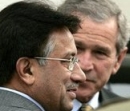
pervez-and-george.jpgAccording to Bruce Riedel, former CIA officer, National Security Council staff member and now a Brookings fellow, when Deputy Secretary of State John D. Negroponte went to Islamabad in September, “he basically delivered a message to Musharraf that we would stand by him, but he needed a democratic facade on the government, and we thought Benazir was the right choice for that face.”

The message from the Bush administration to Musharraf over the last seven years has been consistent: the appearance of democracy (or at least the promise of democracy) is more important than democracy itself.

Now, after it turns out that democracy will need a new face in Pakistan, we learn from Bhutto’s aides, that there is damning evidence that Pakistan’s Inter-Services Intelligence agency, have been busy laying the groundwork for rigging the upcoming parliamentary elections. Bhutto’s Pakistan People’s Party (PPP) has prepared a detailed report that Benazir Bhutto herself planned to share with two members of Congress in a meeting due to take place the day she was assassinated. The PPP trusted Senator Arlen Specter, a Republican, and Democratic Congressman Patrick Kennedy, rather than representatives from the Bush administration which they regard as too closely aligned with Musharraf. From The Independent we learn that:

The report compiled by the PPP apparently includes information on an alleged “safehouse” being run by the ISI in a neighbourhood of Islamabad called G-5, from which the rigging operation was run. “It was compiled from sources within the [intelligence] services who were working directly with Benazir Bhutto,” said Mr Lashari [a member of the PPP election monitoring cell].

The report names a recently retired ISI officer who has allegedly been running the rigging unit and claims he worked in tandem with another named senior intelligence officer. It also claims that US aid funds were being used for the projects.

At the heart of the scheme, the report says, was a project in which ballot papers – stamped in favour of the Pakistan Muslim League-Q (PML-Q), which supports Mr Musharraf – were to be produced by the intelligence agencies in about 100 constituencies. Mr Lashari said the effort was directed at constituencies where the result was likely to be decided by a small margin, so it would not be obvious. “They diverted money from aid activities. We had evidence of where they were spending the money,” he added.

Is it possible that the Bush administration already knew of, or had received intimations that Musharaff’s intelligence services had such a scheme in operation? Even before Bhutto’s assassination and while expectations of vote rigging remained high, the administration had no qualms about sending an assistant secretary of state up to Capitol Hill to assert in the face of deep skepticism that, “I do think they can have a good election. They can have a credible election. They can have a transparent election and a fair election.”

The aroma of complicity (which it should be noted necessitates neither foreknowledge, nor support, but simply acquiescence) is perhaps evident in the way Washington responded to Bhutto’s assassination. First came the chorus that this was the dastardly work of al Qaeda, or one of its allies, the Taliban leader, Baitullah Meshud, who is effectively the Amir of South Waziristan. Then some intelligence sources started pulling back from that line and instead suggested that this was the work of al Qaeda infiltrators in the lower echelons of Pakistan’s intelligence services. What no administration official was willing to concede was that the jihadists might in this instance have been acting as minions for high-ranking intelligence officers.

Ever since 9/11, President Bush has been a captive of his own for-us-or-against-us logic when it comes to dealing with Pervez Musharraf. If Musharraf could not be painted as an ally, the risks of turning him into an enemy seemed too daunting to contemplate. In Musharraf’s hands, nuclear deterrence became a principle with new meaning as it served to deter threats to a regime rather than a state.

Pakistan’s nuclear arsenal continues to protect Musharraf’s power for as long as Washington is paralyzed by the fear that nuclear material could slip out of his control and fall into the hands of al Qaeda. What Bush wants us to view as the Musharraf nuclear insurance policy is in fact a nuclear protection racket. Fearful of the mayhem that the boss’ removal might unleash, we have funneled billions of dollars in aid to Pakistan’s military, no strings attached, all in the tenuous name of keeping the neighborhood safe.

To those with a firm grasp on power, democracy must always appear risky and threatening. Democracy necessarily entails the dispersal of power and challenges the claims of those who would make themselves the guardians of power. Yet the pledge that all such guardians effectively make with the people they claim to be serving amounts to this: Trust me, because I can’t trust you.

Facebooktwittermail