Category Archives: Turkey

Return of the Turks as Middle East kingmaker

Joshua Walker writes:

“Enough we say, the decision belongs to the people of the brotherly Egyptian and Tunisian nations… Turkey shares the grief of these nations as well as their hopes.” So-declared a self-confident Turkish Prime Minister Recep Tayyip Erdogan on Tuesday in his prime-time speech on recent events in the Middle East that received broad coverage regionally. While commentators point to the protests and revolutions in the Arab world as being the most recent example of the crumbling vestiges of the Cold War, the more significant long-term global trend is strangely familiar to the Turks. Protests in Tunisia have already overthrown the rule of a 23 year-old regime and inspired a similar uprising in the form of Egypt’s ongoing protest movement. Lebanon’s continuing instability and threats of Tunisian-inspired revolutions in Yemen and even Jordan further add to the significance of the moment we are witnessing in the Arab world.

The unprecedented levels and inter-linkages of the protests against the traditional authoritarian regimes represented most starkly by President Mubarak, has brought the Middle East back to a period more reminiscent of the breakup of the Ottoman Empire and the rise of Arab nationalism than anything seen in recent memory.

The declarations and prognostications of analysts across the Arab world in the wake of these events has focused on the grassroots movements and pent-up resentments that led to the protests along with debates about the level of US involvement from twitter feeds to President Obama’s statements. However the effect of this on the regional dynamics that has ushered in the remarkable arrival of a new player to the game of Middle Eastern great-power politics and the sidelining of traditional players is equally important to pay attention to.

Facebooktwittermail

Turkey’s dynamic role in the Middle East

James Traub writes:

In the fall of 2009, relations between Serbia and Bosnia — never easy since the savage civil war of the 1990s — were slipping toward outright hostility. Western mediation efforts had failed. Ahmet Davutoglu, the foreign minister of Turkey, offered to step in. It was a complicated role for Turkey, not least because Bosnia is, like Turkey, a predominantly Muslim country and Serbia is an Orthodox Christian nation with which Turkey had long been at odds. But Davutoglu had shaped Turkey’s ambitious foreign policy according to a principle he called “zero problems toward neighbors.” Neither Serbia nor Bosnia actually shares a border with Turkey. Davutoglu, however, defined his neighborhood expansively, as the vast space of former Ottoman dominion. “In six months,” Davutoglu told me in one of a series of conversations this past fall, “I visited Belgrade five times, Sarajevo maybe seven times.” He helped negotiate names of acceptable diplomats and the language of a Serbian apology for the atrocities in Srebrenica. Bosnia agreed, finally, to name an ambassador to Serbia. To seal the deal, as Davutoglu tells the tale, he met late one night at the Sarajevo airport with the Bosnian leader Haris Silajdzic. The Bosnian smoked furiously. Davutoglu, a pious Muslim, doesn’t smoke — but he made an exception: “I smoked; he smoked.” Silajdzic accepted the Serbian apology. Crisis averted. Davutoglu calls this diplomatic style “smoking like a Bosnian.”

Davutoglu (pronounced dah-woot-OH-loo) has many stories like this, involving Iraq, Syria, Israel, Lebanon and Kyrgyzstan — and most of them appear to be true. (A State Department official confirmed the outlines of the Balkan narrative.) He is an extraordinary figure: brilliant, indefatigable, self-aggrandizing, always the hero of his own narratives. In the recent batch of State Department cables disclosed by WikiLeaks, one scholar was quoted as anointing the foreign minister “Turkey’s Kissinger,” while in 2004 a secondhand source was quoted as calling him “exceptionally dangerous.” But his abilities, and his worldview, matter because of the country whose diplomacy he drives: an Islamic democracy, a developing nation with a booming economy, a member of NATO with one foot in Europe and the other in Asia. Turkey’s prime minister, Recep Tayyip Erdogan, is a canny, forward-thinking populist who has drastically altered Turkish politics. Erdogan and Davutoglu share a grand vision: a renascent Turkey, expanding to fill a bygone Ottoman imperial space.

In as much as this New York Times Magazine article is filled with interesting anecdotes, it presents a useful portrait of Davutoglu. At the same time, it is peppered with insinuations and overt claims that Davutoglu and the government he represents have over-sized ambitions which implicitly infringe on America’s “right” to impose its power.

This image of the Turks as upstarts is epitomized in a statement from one of Traub’s sources. Noting the opposition Turkey faces in Washington, Traub writes:

The truth is that for all his profound knowledge of the history of civilizations, Davutoglu misread the depth of feeling in the U.S. about both Israel and Iran, or perhaps overestimated Turkey’s importance. This is the danger of postimperial grandiosity. “They talk as if they expect a merger between Turkey and the E.U.,” says Hugh Pope, head of the Turkish office of the International Crisis Group. “They think they’re more important than Israel.”

Turkey — a country with a population close to 80 million; 17th largest economy in the world; located at a strategic hub between three continents that could reasonably be called the center of the world; a bridge between the West and the Islamic world — and they have the audacity to imagine they are more important than a country smaller than New Jersey that throughout its existence has been a center and source of strife?! How dare the Turks!

Traub’s account is at its worst when he deals with the Mavi Marmara massacre — an event he clearly didn’t take the trouble to research with any care. “The flotilla refused Israel’s demands to alter course, and a helicopter-borne commando assault on the Mavi Marmara, the lead ship, turned deadly, with eight Turkish citizens and one American killed.” In fact, it had altered course, was heading west and was in international waters. But such details would obscure the intended narrative that the flotilla was in some sense a Turkish act of provocation and Israel’s response unavoidable.

Traub notes:

One of Davutoglu’s greatest diplomatic achievements was the creation of a visa-free zone linking Turkey, Jordan, Lebanon and Syria, thus reconstituting part of the old Ottoman space. The four countries have agreed to move toward free trade, as well as free passage, among themselves. As part of the zero-problems policy, Turkey moved to resolve longstanding tensions with Cyprus and Armenia and, more successfully, with Greece and Syria. Turkey’s decades of suppression of Kurdish demands for autonomy put it at odds with the new government of Iraqi Kurdistan, which sheltered Kurdish resistance fighters. But the Erdo­gan government reached out to Kurdistan, America’s strongest ally in the region. Relations with the Bush administration had been rocky since 2003, when Turkey’s Parliament voted against permitting U.S. forces to enter Iraq through southeastern Turkey. But by now the U.S. was eager to use Turkey as a force for regional stability. The rapprochement with Kurdistan thus smoothed relations with Washington and made Turkey a major player in Iraqi affairs. Turkish firms gained a dominant position not only in Kurdistan but also, increasingly, throughout Iraq. And Iraqi Kurdish leaders had cracked down on the rebels. It was a diplomatic trifecta.

But Davutoglu’s vision extended far beyond securing the neighborhood for Turkish commerce. One of his pet theories is that the United States needs Turkey as a sensitive instrument in remote places. “The United States,” he says, in his declamatory way, “is the only global power in the history of humanity which emerged far away from the mainland of humanity,” which Davutoglu calls Afro-Eurasia. The United States has the advantage of security and the disadvantage of “discontinuity,” in regard to geography as well as history, because America has no deep historic relationship to the Middle East or Asia. In Davutoglu’s terms, the U.S. has no strategic depth; Turkey has much. “A global power like this, a regional power like that have an excellent partnership,” Davutoglu concludes with a flourish.

Davutoglu’s point about the effects of America’s geographic isolation is well made, though it clearly doesn’t impress Traub.

Perhaps it would have been helpful if the reporter had made some attempt to contextualize the Turkish foreign minister’s initiatives by contrasting them with the diplomatic successes of the US in the Middle East over the last decade, or the vision that animates the work of the current US Secretary of State.

Facebooktwittermail

Turkey’s rise points to the post-American Middle East

In the New York Times, Anthony Shadid writes:

In a series of stalemates — from the Arab-Israeli conflict to Lebanon — Turkey has proved the most dynamic, projecting an increasingly assertive and independent foreign policy in an Arab world bereft of any country that matches its stature. Its success is a subtle critique of America’s longstanding policy in the Middle East of trying to isolate and ostracize its enemies. From Hezbollah here to the followers of a populist, anti-American cleric in Iraq, Turkey has managed to forge dialogue with America’s enemies and allies alike.

“Turkey has become, I think, until the contrary is proven, an indispensable state in the reorganizing of this region,” said Sarkis Naoum, an analyst and prominent columnist in Beirut.

So far, the interventions of Turkey and others in the Lebanese crisis are mostly symbolic, ventures into a maddeningly complex political landscape that hews to a formula of “no victor, no vanquished.” But in contrast to past crises, when Turkey was virtually irrelevant, the new effort signals the country’s ascent as a regional superpower.

Facebooktwittermail

Turks see US as biggest external threat, poll results show

Hürriyet Daily News reports:

Some 43 percent of Turks perceive the United States as the country’s biggest threat, followed by Israel, according to a broad survey carried out in December.

“This the highest ratio ever on the external threat question among our surveys,” Professor Özer Sencar, chairman of Ankara-based MetroPOLL Strategic and Social Research Center, told the Hürriyet Daily News & Economic Review on Wednesday.

“The U.S. foreign politics since the Iraqi invasion, the hood incident [the U.S. detention of Turkish soldiers during the Iraq war], the war in Afghanistan, repeated Armenian bills in the U.S. Congress and the negative statements that Turkish leaders make about the U.S. and Israel play a major role in this perception,” Sencar said.

Facebooktwittermail

In Iraq, Turkey demonstrates the effectiveness of soft power

Anthony Shadid reports:

A Turkey as resurgent as at any time since its Ottoman glory is projecting influence through a turbulent Iraq, from the boomtowns of the north to the oil fields near southernmost Basra, in a show of power that illustrates its growing heft across an Arab world long suspicious of it.

Its ascent here, in an arena contested by the United States and Iran, may prove its greatest success so far, as it emerges from the shadow of its alliance with the West to chart an often assertive and independent foreign policy.

Turkey’s influence is greater in northern Iraq and broader, though not deeper, than Iran’s in the rest of the country. While the United States invaded and occupied Iraq, losing more than 4,400 troops there, Turkey now exerts what may prove a more lasting legacy — so-called soft power, the assertion of influence through culture, education and business.

“This is the trick — we are very much welcome here,” said Ali Riza Ozcoskun, who heads Turkey’s consulate in Basra, one of four diplomatic posts it has in Iraq.

Turkey’s newfound influence here has played out along an axis that runs roughly from Zakho in the north to Basra, by way of the capital, Baghdad. For a country that once deemed the Kurdish region in northern Iraq an existential threat, Turkey has embarked on the beginning of what might be called a beautiful friendship.

In the Iraqi capital, where politics are not for the faint-hearted, it promoted a secular coalition that it helped build, drawing the ire of Iraq’s prime minister, Nuri Kamal al-Maliki, along the way. For Iraq’s abundant oil and gas, it has positioned itself as the country’s gateway to Europe, while helping to satisfy its own growing energy needs.

Just as the Justice and Development Party of Prime Minister Recep Tayyip Erdogan has reoriented politics in Turkey, it is doing so in Iraq, with repercussions for the rest of the region.

Facebooktwittermail

Israel’s central role in ‘the new Cold War’

Even if Britain has yet to enact promised changes to the law in order to protect Israeli war criminals from facing the risk of arrest while visiting the UK, it would appear that some form of understanding is already in place so that Tamir Pardo, the new head of Mossad, will be able to visit in January.

An outline of some of the key issues on Pardo’s agenda when he meets Britain’s intelligence chiefs reveals the depth of Mossad’s operations across the Middle East. It also reveals that Israel sees itself having a pivotal role in what Pardo is branding “the new Cold War” between Russia and the West.

The Daily Telegraph reports:

[Pardo] is expected to brief officials on Mossad’s plans to provide Britain and Nato with increased intelligence over Iran’s nuclear weapons programme. Mossad has a network of undercover agents in the country.

He also intends to increase Mossad’s role in Yemen and to spearhead the hunt for al-Qaeda’s new chief of military operations, Saif al-Adel, who Mossad believe is based in Somalia.

At the same time he wants to expand Mossad’s watch over the SVR, Russia’s foreign intelligence service, which is an increasing presence in Syria and Turkey – and is using both countries as launch pads from which to enter Europe. In his first briefing to senior staff after he took up his new post, Mr Pardo said Mossad had a key role to play in helping the West win what he called “the new Cold War”.

With Mossad conducting operations in Iran, Yemen and Somalia, Israel sees itself as an indispensable partner with the United States in the enduring global conflict through which each nation now defines its identity and upon which each has become economically dependent. No two nations on the planet are more threatened by the possibility of peace.

Facebooktwittermail

The end of hypocrisy

Carne Ross has provided one of the most concise and cogent analyses of the impact of the WikiLeaks cables release and concludes that the challenge this event has thrown up can only be met with one solution: “that governments must close the divide between what they say, and what they do.”

A knee-jerk response to the prospect that diplomacy might not enjoy the confidentiality that it supposedly requires has been the assertion that this confidentiality is the basis of trust. Confidentiality, we are told, fosters candor. Behind closed doors, everyone becomes honest. Right.

On the contrary, what the cables actually reveal is what one might expect: that absent the political accountability that comes from publicly declaring ones objectives, confidentiality provides space for adventurism and for the promotion of policies that might be disowned if ever made public.

The cables reveal leaders across the Middle East — leaders all of whom have been blessed by the United States as “moderates” — whose overriding interest is the protection of their own autocratic power in the name of American-backed “regional stability.”

Even when it comes to candid assessments delivered by diplomats to their own government, such honesty often comes loaded with bias. Consider, for instance, this cable from Ambassador James Jeffrey while he served in Ankara. Referring to the foreign policy objectives outlined by Turkey’s foreign minister Ahmet Davutoglu representing the ruling AKP, Jeffrey writes sourly:

[T]he AKP’s constant harping on its unique understanding of the region, and outreach to populations over the heads of conservative, pro-US governments, have led to accusations of “neo-Ottomanism.” Rather than deny, Davutoglu has embraced this accusation. Himself the grandson of an Ottoman soldier who fought in Gaza, Davutoglu summed up the Davutoglu/AKP philosophy in an extraordinary speech in Sarajevo in late 2009 (REF A). His thesis: the Balkans, Caucasus, and Middle East were all better off when under Ottoman control or influence; peace and progress prevailed. Alas the region has been ravaged by division and war ever since. (He was too clever to explicitly blame all that on the imperialist western powers, but came close). However, now Turkey is back, ready to lead — or even unite. (Davutoglu: “We will re-establish this (Ottoman) Balkan”).

If Hillary Clinton did not rely on her ambassador’s confidential opinion but actually read Davutoglu’s speech, she might have come to a different conclusion.

The Turkish foreign minister said: “We want to have a new Balkan region, based on political dialogue, economic interdependency and cooperation, integration and cultural harmony and tolerance.”

The thrust of his argument was that the Balkans had thrived not by virtue of Ottoman rule per se, but because of the dynamism fostered by “multicultural coexistence.” Likewise, he portrayed contemporary Turkey’s strength as being multicultural: “Turkey is a small Balkan, a small Middle East, a small Caucasus. We have more Bosnians living in Turkey than in Bosnia, more Albanians living in Turkey than in Albania, more Chechens living in Turkey than in Chechnya, more Abkhazians living in Turkey than in Abkhazia, and we have Kurds, Arabs, Turks together.”

Is this the perspective of a man enthralled by a romanticized Ottoman golden age, or is Davutoglu offering a glimpse at the kind of multicultural future on which the region and the world surely depends?

But enough of my preamble — here’s what Ross writes:

It will take a long time, perhaps many years, for the full impact of the WikiLeaks disclosure of thousands of US diplomatic cables to become known. Make no mistake: this is an event of historic importance — for all governments, and not only the US.

As politicians of all sides bellow their condemnation of WikiLeaks, governments are with some desperation trying to pretend that it’s business as usual. But the truth is that something very dramatic in the world of diplomacy has just taken place, and thus indeed in the way that the world runs its business. History may now be dated pre- or post-WikiLeaks.

The mainstream press has as usual missed the story, with their obsession with Iran or Qaddafi’s voluptuous nurse or Karzai’s corruption — which, incidentally, is reported by US diplomats in excruciating detail. But this event carries a much deeper significance than merely the highly-embarrassing and in some cases dangerous revelations in the enormous trove of documents. No one, and neither the US State Department nor WikiLeaks, can say with any confidence whether the effects of this massive disclosure will be good or bad, for in truth no one can know. There will be many and long-lasting consequences. That is all that can be known with any certainty at this point.

The presumption that governments can conduct their business in secret with one another, out of sight of the populations they represent, died this week. Diplomats and officials around the world are slowly realizing that anything they say may now be one day published on the Internet. Governments are now frantically rushing to secure their data and hold it more tightly than ever, but the horse has bolted. If a government as technically sophisticated and well protected as the US can suffer a breach of this magnitude, no government is safe. Politicians can demand the prosecution of Julian Assange or — absurdly — that WikiLeaks be designated as a terrorist organization, but the bellows of anger are tacit admission that government’s monopoly on its own information is now a thing of the past.

Hillary Clinton has described the WikiLeaks disclosures as an attack on the “international community.” But in truth this is something else: an attack on the governments that make up the current international system of diplomacy. The deep-seated assumption, both among the public and political classes, that governments have business that they should conduct in secret with one another has been shattered. Pause, incidentally, to observe the politicians and commentators declaring the need for governments to operate in secrecy, when they don’t even know what government is keeping secret. From this day forward, it will be ever more difficult for governments to claim one thing, and do another. For in making such claims, they are making themselves vulnerable to WikiLeaks of their own.

Why? Because the most damaging thing about the WikiLeaks disclosures is not the fact that they happened (though this is bad enough for the US government) but the revelation, long suspected but now proven, of the yawning discrepancy between US words and actions in that most contested area, the Middle East. Cable after cable details the extraordinarily intimate and co-dependent relations between the US and various despotic and unpleasant Arab regimes. One Arab intelligence chief plots with American officials to target Iranian groups, or confront Hezbollah. Another undemocratic Arab leader invites US bombers to attack targets in his own territory. It is this discrepancy — between word and deed — that will keep the wind in WikiLeaks’ sails, and others like them, for long to come.

Governments around the world are this week telling each other that nothing has really changed and that if they restrict the circulation of those really sensitive telegrams and glue up all the USB slots in their computers, that this won’t happen to them. But it will. There will be more such revelations, not about the US (which so far has been the main target of WikiLeaks’ somewhat arbitrary attentions), but others — British, Chinese? — for the reality is that electronic data is formidably difficult to protect.

The reason is simple. In order to be effective as organizations, governments and foreign offices are required to circulate sensitive data, so that their officials and diplomats actually know what’s going on. One reason why the UN is ineffective as an organization is because nothing is secret there, and as a result no one circulates anything sensitive. Don’t buy the argument that the really important stuff is kept Top Secret and hasn’t been compromised. Even a cursory perusal of the WikiLeaks archive reveals cables that are the very meat and drink of diplomacy — what foreign leaders and governments really think, and what they really want in their relations with the US.

Governments are therefore confronted with an insoluble conundrum. If they restrict and protect the data, and perhaps even stop recording the most delicate information (as no doubt some diplomats are now considering), they will inevitably reduce their operational effectiveness. If they circulate the data widely, as the US did before WikiLeaks, they will risk compromise on this devastating scale.

There is in fact only one enduring solution to the WikiLeaks problem and this is perhaps the goal of WikiLeaks, though this is sometimes hard to discern. That is that governments must close the divide between what they say, and what they do. It is this divide that provokes WikiLeaks; it is this divide that will provide ample embarrassment for future leakers to exploit. The only way for governments to save their credibility is to end that divide and at last to do what they say, and vice versa, with the assumption that nothing they may do will remain secret for long. The implications of this shift are profound, and indeed historic.

Facebooktwittermail

Only the end of the West can save the West

The West is dead. Long live Turkey.

No, that isn’t meant to be some prophetic statement about the Islamization of Europe and the collapse of Western civilization. It’s simply a way of saying that what the West needs more than anything else is to find a way of redefining itself. None is more obvious than through seeing Turkey as the physical and metaphorical boundary which reveals that what we call the West only came into being and acquired its dynamic nature through its interactions with the rest of the world. The West, with a rippling eastern boundary and its abundance of vibrant ports is what it is by virtue of its ability to absorb what is foreign — not shield it out.

The easiest way Europe — and by extension the West — can redefine itself is by embracing Turkey and its dynamic role in the Middle East.

The Economist reports:

Turkish foreign policy used to be simple. Ever since Ataturk dragged the country into the modern world by driving out the sultan, adopting the Latin alphabet and abolishing the Muslim caliphate, the country has leant westwards. Since the second world war that has meant joining NATO (in 1952), backing the West against the Soviet Union and aspiring to join the European project. Like America, Turkey was also consistently pro-Israel.

It largely ignored the rest of its region, which includes most of the countries that were once part of the Ottoman empire. In his book “The New Turkish Republic”, Graham Fuller, a former CIA analyst and academic, recalls telling a Turkish friend that he was a Middle East expert, only to be asked, “so why are you in Turkey?” In similar vein, Turkish diplomats would tell their Western friends that “we live in a bad neighbourhood” and that “the Turk’s only friend is another Turk.”

Over the past few years all this has changed. Rather than feeling sorry for itself over its rough surroundings and lack of friends, Turkey has a new policy of “zero problems with the neighbours”. It is no longer carping at Armenia over its allegations of genocide in 1915 or reproaching the Arab world for its British-supported “stab in the back” in 1917-18. Instead it is cultivating new friendships in the region, offering trade, aid and visa-free travel. And far from backing Israel militarily and diplomatically, Turkey has become a leading critic.

The man largely responsible for engineering this dramatic shift is Ahmet Davutoglu, Turkey’s foreign minister since 2009. Before that he was an international-relations adviser to Mr Erdogan. In 2001, before the AK government came to power, Mr Davutoglu published a book, “Strategic Depth”, that set out a new policy of engagement with the region. He rejects accusations that he is “neo-Ottoman”, yet his doctrine certainly involves rebuilding ties round the former Ottoman empire.
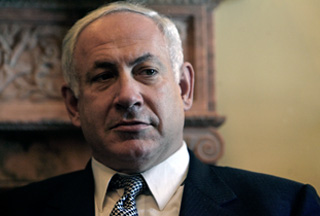
Mr Davutoglu is an engaging, bookish character with a formidable knowledge of history. He thinks that Turkey made a mistake by ignoring its backyard for so long, and he is convinced that its new strategy of asserting its interests, both in the region and in the world, makes his country more, not less, attractive to the West. Nothing infuriates him more than articles in Western publications suggesting that Turkey has tilted east, or even claiming that “we have lost Turkey.” “Who is we?” he asks. After all, Turkey maintains NATO’s biggest army after America’s; it is committed in Afghanistan and other trouble spots; and it is negotiating to join the EU. As Mr Davutoglu puts it, “Turkey is not an issue; it is an actor.” His country now matters more than ever to Europe and the West, he claims.

Facebooktwittermail

Turkey’s search for regional power

At Middle East Report, Yüksel Taşkın from Marmara University in Istanbul writes:

Under the government of Prime Minister Recep Tayyip Erdoğan, Turkey is carving out a greater role for itself in Middle Eastern affairs. Since 2008, Turkey has sought the role of Middle East intermediary in trying to broker a peace agreement between Israel and Syria and to resolve the Iranian nuclear crisis. This more independent and assertive foreign policy has put Turkey increasingly at odds with two of its long-standing allies, Israel and the United States. A crucial ally for the US in its war on Iraq, Turkey now refuses to comply with US policy on Iran. The Turkish government also has become more outspoken against Israeli violations of Palestinian rights in the West Bank and Gaza, placing it on a diplomatic collision course with Israel. Three months after the Israeli assault on a Gaza-bound Turkish aid vessel, the Obama administration is reportedly warning Turkey that if its relations with Israel do not improve, and if Turkey does not temper its opposition to US policy on Iran, Congress may halt arms sales to Turkey.[1]

The deterioration in relations between Turkey and its Western allies has led many commentators to conclude that there has been a decidedly eastward shift in Turkish foreign policy. In fact, Turkey’s positions have inspired many journalists and policy analysts to postulate that Turkey is pursuing an “Islamic” agenda that entails a deliberate distancing from the West. This hypothesis has seemed plausible to some because the ruling Justice and Development Party (AKP, by its Turkish acronym) is rooted in the banned Islamist parties of the 1980s and 1990s. The historian Bernard Lewis, for instance, speculated that in a decade Turkey might resemble the Islamic Republic of Iran.[2] New York Times columnist Thomas Friedman opined that “Turkey’s Islamist government [is] seemingly focused not on joining the European Union but the Arab League — no, scratch that, on joining the Hamas-Hezbollah-Iran resistance front against Israel.”[3] Similar interpretations emanate from the secular establishment in Turkey. Oktay Ekşi, a columnist for the Hurriyet newspaper, argues that the AKP’s concerted efforts to attain Turkish accession to the EU were a ploy to gain “support in the West to overcome the secularists.”[4] Some analysts have even suggested that the AKP is pursuing a “neo-Ottomanist” agenda, seeking to claim the mantle of the last great Islamic empire. Johns Hopkins University professor (and former Bush administration official) Eliot Cohen wrote, “A combination of Islamist rule, resentment at exclusion from Europe and a neo-Ottomanist ideology that envisions Turkey as a great power in the Middle East have made Turkey a state that is often plainly hostile not only to Israel but to American aims and interests.”[5]

Such analyses misinterpret the AKP government’s objective, which is not to break with Turkey’s traditional cooperation with the US and EU but to increase Turkey’s relative autonomy vis-à-vis those powers. Rather than a rupture with the past, Turkey’s new approach marks a change in tactics in pursuit of the same goal.

Facebooktwittermail

Turkey’s diplomatic persistence with Iran may pay off

The Wall Street Journal reports:

Iran has pledged to stop enriching uranium to the higher grade needed for a medical research reactor if world powers agree to a fuel-swap deal it outlined earlier this year with Turkey and Brazil, Turkish Foreign Minister Ahmet Davutoglu said Wednesday.

The offer marks the latest in an international tug-of-war over the nuclear ambitions of Iran, which denies international allegations that it is pursuing nuclear weaponry. U.S. and European diplomats say Iran’s offer suggests it has felt the pinch of a rash of economic sanctions imposed on Tehran since June.

The United Nations imposed sanctions in part because Iran insisted it would continue enriching nuclear fuel to 20%, a level Tehran said was necessary to fuel a medical-research reactor and that the U.S. and others feared was a step toward creating nuclear weapons.

Mr. Davutoglu said Iranian foreign minister Manouchehr Mottaki offered to change Tehran’s position on continuing enrichment when the two men met in Istanbul on Sunday. Mr. Mottaki had said “there will be no need for Iran to continue 20% enrichment if the Tehran Agreement was realized and the country gets the fuel it needs,” Mr. Davutoglu told a joint press conference with German Foreign Minister Guido Westerwelle on Wednesday.

The Obama administration is said to be “studying” the discussions. I would hope that behind the scenes they are sending unambiguous positive signals to Turkey. The issue of continued enrichment was the supposedly the reason for earlier rejecting the Turkish-Brazilian brokered deal with Iran. If Turkey can now deliver on the administration’s key demands, we will get to find out whether Washington is operating in good faith. Let’s see.

Facebooktwittermail

IHH — The Foundation for Human Rights and Freedoms and Humanitarian Relief

At Huffington Post, Iara Lee from Cultures of Resistance, writes:

In the immediate aftermath of the massacre aboard the Mavi Marmara on May 31st, 2010, while journalists and activists were detained and isolated from the world, the Israeli government was quick to unleash their own version of events. Like the physical assault on the boat, the Israeli media assault was also reckless, clumsy, malicious, and dangerous. They were cynical enough to understand that first impressions in the mainstream American media are what count, and with this in mind they began to frantically hurl the word “terrorist” in reference to both the victims of their attack, as well as one of the main organizers of the Gaza Freedom Flotilla, the Turkish NGO IHH. It is a curious thing that few people asked the Israeli government why they would release “terrorists” that they had in their custody, and even fewer asked for (or received) solid evidence to support this claim. Despite the fact that several courageous journalists both in the US and abroad thoroughly debunked the Israeli account of what happened (this includes deliberately doctored footage along with the libelous accusations of links to terrorism), the damage was done.

Before speakers from the Mavi Marmara were scheduled to speak in New York about what happened on May 31st, local politicians began to put forth the rhetoric of their Israeli handlers, using slanderous language to demonize the victims of Israel’s illegal act of war. And most recently, 87 US senators have urged President Obama to launch an investigation of whether or not IHH should be added to the US list of foreign terrorist organizations.

I am a firm believer that actions speak louder than words, and in this spirit I thought it might help to take a closer look at IHH, and judge this group based on their actions, rather than empty words.

IHH began in 1992 as a humanitarian mission to offer relief to victims injured and displaced during the Bosnian war. They have held Special Consultative Status with the United Nations Economic and Social Council since 2004, and since becoming a fully-registered NGO in 1995, IHH — The Foundation for Human Rights and Freedoms and Humanitarian Relief — has accumulated more than 60,000 volunteers for their grassroots humanitarian efforts in 120 countries all over the world. Since May 31st, the number of volunteers has skyrocketed.

After the attack on the Mavi Marmara, I had an opportunity to ask the vice president of IHH, Huseyin Oruc, about accusations of IHH terror links. While he was not interested in dignifying such claims, he was very emphatic about the transparency of IHH’s work over the years, and hoped people would look at their large-scale sanitation and medical missions around the African continent — including 40,000 cataract surgeries in Sudan alone, clean water projects in Ethiopia- and IHH’s extensive work dealing with orphans in Iraq, Afghanistan, Pakistan, Bangladesh, and Gaza. While they are an Islamic organization, Oruc told me that IHH refuses to differentiate who receives attention based on religion, race, or political affiliation, and has noted their various projects in South America where Muslim populations are slight.

Their modus operandi is simple and direct. Given the neutrality of their humanitarian mission, IHH has been able to access some of the most inaccessible and dangerous regions of the world to help those most in need. Like most NGOs, this means they must coordinate with local governments in order to reach these populations. So while they must communicate with the Hamas government of Gaza to help civilians there, they must likewise do so with Fatah in the West Bank, Al Shabab in Somalia, the military junta in Myanmar and so on. Oruc was adamant that this did not mean IHH endorses any of those governments, and said that anyone who cared to investigate their work would find nothing other than great successes in helping ordinary people in situations of war, poverty, and natural disasters in places such as Haiti, Indonesia, and even the US in the aftermath of Hurricane Katrina. He also told me people were free to investigate their funding, most of which comes from lower and middle class donors, while the rest is raised through food fairs, auctions for Turkish artifacts, and other cultural events. By its own mandate, IHH is not beholden to any government or business interests.

We must remember that an attack on IHH is an attack on all humanitarian groups around the world. Given that IHH is among the most courageous humanitarian NGOs in the world — risking their lives to work in places like Somalia, cleaning up American messes in Iraq and Afghanistan — our politicians should perhaps be thanking them, rather than trying to tarnish their stellar reputation. Thankfully, IHH’s track record speaks for itself, as do the actions of their accusers — a comparison which does not calculate favorably for the Israeli government when asking just who, exactly, the terrorists are.

Facebooktwittermail

The shifting sands of state power in the Middle East

In The Washington Quarterly, Alastair Crooke writes:

In his commendably candid interview with Time in January 2010, President Barack Obama noted that managing politics in the Israeli–Palestinian conflict “is just really hard.” The president, however, might well have been speaking about the Middle East as a whole. It is not just the Israeli-Palestinian track that has been difficult, so too have the Iranian and Syrian tracks, where engagement has not taken traction. Iran, Iraq, Israel, Lebanon, Syria—nothing has been exactly easy for US policymakers this past year. To be fair to the president, he has taken office at a time when the whole region is journeying into a new era. In a sense, the president is facing the consequences of three key events that took place in the region more than 20 years ago.

That the dynamics for change arising from this triumvirate of events should have culminated at the outset of Obama’s term is unfortunate. But the reality is that the strategic balance within the Middle East was already tipping. Change on several planes—at conventional state politics, economics, and within Islam—were already underway. The consequence of this is that the United States’ old allies in the ‘‘southern tier’’—namely Egypt and Saudi Arabia—are likely to wield less influence in the future. The ‘‘northern tier’’—which includes Turkey along with Iran, Qatar, Syria, and possibly Iraq and Lebanon—represents the nascent “axis of influence” for the coming regional era, barring war.

The prospective bitter struggle—already begun—over the future of the region, and over the shaping of Islam closely interconnected to the balance of power, will not see a region that becomes any “easier” for the United States to deal with. The question is whether or not the United States can accommodate some of the unfolding changes. As it remains obsessed with dissections of Israeli politics and bilateral relations, can it even recognize the broader regional changes? Will it adjust to them, or will the United States seek to inoculate itself by clinging to nation-state structures from the 1920s?

Download the complete article in PDF format here.

Facebooktwittermail

The Obama administration adopts an imperious tone with Turkey

Philip H Gordon is the US Assistant Secretary of State at the Bureau of European and Eurasian Affairs. He sat down with an AP reporter this week to talk about Turkey.

Turkey is alienating US supporters and it needs to demonstrate its commitment to partnership with the West, Gordon says. “We think Turkey remains committed to NATO, Europe and the United States, but that needs to be demonstrated,” he said. “There are people asking questions about it in a way that is new, and that in itself is a bad thing that makes it harder for the United States to support some of the things that Turkey would like to see us support.”

“There are people…” Gordon say. And those people would be? Oh yeah — members of the United States Congress who serve at the pleasure of the Israel lobby.

Gordon cited Turkey’s vote against a U.S.-backed United Nations Security Council resolution on new sanctions against Iran and noted Turkish rhetoric after Israel’s deadly assault on a Gaza-bound flotilla last month. The Security Council vote came shortly after Turkey and Brazil, to Washington’s annoyance, had brokered a nuclear fuel-swap deal with Iran as an effort to delay or avoid new sanctions.

Some U.S. lawmakers who have supported Turkey warned of consequences for Ankara since the Security Council vote and the flotilla raid that left eight Turks and one Turkish-American dead. The lawmakers accused Turkey of supporting a flotilla that aimed to undermine Israel’s blockade of Gaza and of cozying up to Iran.

The raid has led to chilling of ties between Turkey and Israel, countries that have long maintained a strategic alliance in the Middle East.

Turkey’s ambassador to the United States, Namik Tan, expressed surprise at Gordon’s comments. He said Turkey’s commitment to NATO remains strong and should not be questioned.

“I think this is unfair,” he said.

Tan said Turkish officials have explained repeatedly to U.S. counterparts that voting against the proposed sanctions was the only credible decision after the Turkish-brokered deal with Iran. Turkey has opposed sanctions as ineffective and damaging to its interests with an important neighbor. It has said that it hopes to maintain channels with Tehran to continue looking for a solution to the standoff over Iran’s alleged nuclear arms ambitions.

“We couldn’t have voted otherwise,” Tan said. “We put our own credibility behind this thing.”

Tan said that Turkish Prime Minister Recep Tayyip Erdogan was expected to discuss these issues with President Barack Obama on the margins of a summit of world economic powers in Toronto on Saturday.

Gordon said Turkey’s explanations of the U.N. episode have not been widely understood in Washington.

“There is a lot of questioning going on about Turkey’s orientation and its ongoing commitment to strategic partnership with the United States,” he said. “Turkey, as a NATO ally and a strong partner of the United States not only didn’t abstain but voted no, and I think that Americans haven’t understood why.”

Just two weeks ago, before Gordon decided his primary duty was to placate the Israel lobby, in an interview with the BBC he rejected the suggestion that the US and Turkey have become strategic competitors in the Middle East.

“I think the United States and Turkey remain strategic partners,” he said. “We have so many interests in common. We can have disagreements, and there are things we disagree on, not least the vote on Iran at the United Nations. Throughout that process we have been frank with each other about our differences. We’ve explained to them why we think it was important for countries to vote yes in the Iran resolution. They have explained to us why they think the Tehran declaration was something worth pursuing. And we’ve explained to them what we think the shortcomings are. That’s what friends and partners do.”

But can friends be so overbearing that they issue demands for a demonstration of commitment to their partnership?

The US wants Turkey to help advance America’s agenda in the Middle East. Is the Obama administration helping advance Turkey’s agenda in the region? Turkey after all is now in a much stronger position to promote regional stability than any of its Western tutors.

As deeply in debt as the United States is, there is one currency that it can use without fear of ever running short and it’s a currency whose value is appreciated in every corner of the globe. It’s called respect. A little goes a long way.

Facebooktwittermail

Syria’s new alliances

At Foreign Policy, Helena Cobban writes:

From 2003 to 2008, when the Bush White House was working hard to encircle and isolate Syria, with a definite view to overthrowing the Asad regime, Damascus’s strengthening tie to NATO member Turkey provided what regime insiders have described as “almost literally, a lifeline for us.”

Today, Syria’s relationship with Turkey has matured even further. At the official level, Syria now has a “no-visa” open border with Turkey, and just last week Turkey’s large, state-backed company Turk Telekom announced a massive deal to install a 2,500-kilometer, state-of the-art fiber-optic network in Syria, Jordan, and Saudi Arabia that will link those three countries through Turkey to European networks.

At the popular level, Syrians have really appreciated the opportunity to travel freely throughout Turkey, and to trade with it. (Along the way, they even somehow forgot their country’s longtime claim to the lovely seaside province of Alexandretta, which is now Turkey’s province of Hatay.) Many Syrian citizens see their ties to Turkey as providing a valuable counterbalance to their government’s much older ties to Iran. They see Turkey as providing a much more attractive example than Iran for how a traditional Middle Eastern country can successfully modernize.

The Turkish government’s growing activism on the Palestinian cause, and in particular on Gaza, has been more recent icing on the Syrian-Turkish cake.

Facebooktwittermail

Time for the West to shed its cultural arrogance

“The westerly excrescence of the continent of Asia,” is how the British historian Barry Cunliffe describes Europe’s topographic form. It’s a useful image because it emphasizes what this nominal continent is anchored on to rather than what sets it apart. Seen in this way, the importance of Turkey — a figurative bridge between two continents that actually reveals how indivisible they are — cannot be overestimated. Yet now more than ever, Europe’s eastern edge is being viewed warily.

Western disquiet about the political trajectory upon which Turkey might be heading has been growing ever since the AK party became the dominant political force. At the same time, there’s no denying that under Islamist governance Turkey’s economy has thrived as never before. But what offends Western capitals more than anything else right now is the perception that Turkey no longer looks up to its cultural superiors.

“Who do they think they are?” the Americans, Germans and French must be muttering as they witness Turkey step out of line by voting against Security Council sanctions on Iran. Worst of all, why does the Turkish prime minister repeatedly insist on exposing the obsequious nature of the ways in which so many Western governments indulge Israel?

Just as Recep Tayyip Erdogan has embarrassed most Arab leaders by presenting a model of leadership that cannot be emulated without democracy, he likewise exposes the weakness of Western leaders — politicians who instead of showing leadership have become service managers catering to the needs of special interests.

In this context, Turkey’s rising power is increasingly being characterized as a rogue tendency. Maturity is being cast as insubordination.

But at the Financial Times, Philip Stephens explains why the claim that “Turkey has been lost,” really has no foundation.

[T]he message I took from policymakers and business leaders at a recent conference in Istanbul convened by Chatham House was far more subtle than the present discourse in the west. Far from turning its back on Europe, the [Turkish] government hopes that the country’s rising regional influence will strengthen its claim for admission [to the EU].

It is not often these days that you hear anyone praise the EU. Turkish politicians are the exception. The Union, one of Mr Erdogan’s ministers told the conference, had been a “greatest peace project in the history of mankind”. Securing Turkey’s membership remained a “national and a strategic” objective.

Nor, according to ministers, had Turkey taken pleasure in opposing a new UN Security Council sanctions resolution against Iran – a vote that followed an abortive Turkish-Brazilian initiative to broker a deal over Tehran’s nuclear ambitions.

The initiative, which would have seen the transfer of part of Iran’s stockpile of uranium to Turkey, was dismissed in Washington as at best naive. Ankara was accused of falling into an Iranian trap. Turkish ministers offer a rather different version of events. The terms of proposal, they insist, were entirely consistent with those set out in a private letter sent to Mr Erdogan in April by US president Barack Obama. The initiative was never promoted as a comprehensive solution, but rather as a confidence-building measure that could lead to broader negotiations with Tehran.

Whatever the precise details and chronology, nothing that I heard in Istanbul spoke to a nation looking for a breach with the west; what I took away instead was that 20 years after the end of the cold war Turkey has decided that it can sometimes shape its own foreign policy. Membership of the west once meant doing whatever Washington said. Now it has interests, opinions and rights of its own.

For many Americans, and for some Europeans, this is more than irritating. The Turkey of their imagination was one forever in their debt and forever grateful for any seat at the western table.

The irony, of course, is that the new, assertive, Turkey has more to offer the west than its pliant precedessor. With a mind of its own, it has greater strategic credibility in the Middle East and the Muslim world. This is the Turkey the west really must not lose.

Facebooktwittermail

Credibility, once shredded, is impossible to piece together again

“The man who ordered the attack on the aid flotilla to Gaza, set up the inquiry, chose its members and determined its mandate, has announced its outcome even before it has started,” wrote Chris Doyle, noting Benjamin Netanyahu’s visible satisfaction, confident that he has mounted an effective response to international pressure.

If the only audience the Israeli prime minister needed to satisfy was made up by the likes of Jeremy Ben-Ami and Barack Obama, Netanyahu could indeed take satisfaction as he proves how easy it is to win unprincipled support.

On the day of the Mavi Marmara massacre, J Street’s president Ben-Ami issued a statement which included this:

There will undoubtedly be calls in the coming days for a UN investigation into today’s events. A credible, independent commission appointed by the Israeli government should provide the world with a full and complete report into the causes and circumstances surrounding the day’s events and establish responsibility for the violence and bloodshed.

The world? And which world would that be?

There is nothing mysterious about the nature of credibility, but if the Israeli government and members of the pro-Israel lobby and the Obama administration assign themselves the exclusive role of being the arbiters of “credibility” then the term as applied has itself lost credibility.

The real arbiters of credibility have to include the Turkish government and the Turkish people. In its May 31 statement and a statement issued yesterday, J Street makes no reference to them.

Indeed, echoing those who see all Israeli violence as justifiable we hear J Street repeat the mantra, Israel has the right to self-defense.

Given that there has not been a single call for Israel to renounce its right to self-defense, this reiteration of Israel’s “defensive” posture implicitly endorses the claim that the attack on the Mavi Marmara in international waters was itself an act of self-defense.

The New York Times editorial board — not renowned for its political courage — managed to be bold enough to say that on this matter Israel cannot simply investigate itself. The paper has called for an inquiry overseen by The Quartet and says that Israeli and Turkish representation would have to be included: “That is in Israel’s clear interest. And it is in Turkey’s clear interest. The Obama administration should be pressing both its allies to embrace the idea.”

Anyone who now holds the position that this is Israel’s business and Israel can somehow impartially investigate itself, apparently regards the families of the dead as irrelevant.

But as an editorial in Haaretz makes clear, a move by Netanyahu that J Street, the Obama administration and other Israeli apologists have welcomed, does not meet the credibility test even inside Israel.

The government’s efforts to avoid a thorough and credible investigation of the flotilla affair seem more and more like a farce. The conclusions of an ostensible probe are intended to justify retroactively the decision to blockade Gaza, to forcibly stop the Turkish aid flotilla in international waters and to use deadly force on the deck of the Mavi Marmara.

To make the costume seem credible, the Prime Minister’s Bureau asked a retired Supreme Court justice, Yaakov Tirkel, to chair the committee. Alongside him will sit foreign observers in order to legitimize the conclusions in international public opinion. Prime Minister Benjamin Netanyahu even pledged to testify before the committee, together with Defense Minister Ehud Barak, other ministers and the chief of staff, so “the truth will come out.”

The truth that Netanyahu wishes to bring out involves the identity of the flotilla’s organizers, its sources of funding and the knives and rods that were brought aboard. He does not intend to probe the decision-making process that preceded the takeover of the ship and the shortcomings that were uncovered. As far as Netanyahu is concerned, it will be enough for television channels to broadcast footage of dark-suited jurists, and politicians addressing them, to present the semblance of an “examination.”

But Netanyahu’s panel will have no powers, not even those of a government probe, and its proposed chairman does not believe in such a panel. In an interview to Army Radio, Tirkel said there is no choice but to establish a state committee of inquiry. He opposed bringing in foreign observers and made clear that he is not a devotee of drawing conclusions about individuals and dismissing those responsible for failures. When a Haaretz reporter confronted Tirkel about these remarks, the former justice evaded the question saying, “I don’t remember what I said.”

The disagreements that erupted at the week’s end between Netanyahu and his deputy, Strategic Affairs Minister Moshe Ya’alon, over the question of whether Ya’alon was updated in time about the action underscored the suspicion of serious faults in the decision-making process with regard to the flotilla. Instead of being part of the whitewash, Tirkel, whose dodging of his earlier statements does him no honor, should return his mandate to the prime minister and demand that Netanyahu establish a government committee of inquiry with real powers. The public, as Netanyahu said, has a right to know the truth.

Facebooktwittermail

In a different voice: a letter from Israel

Ronen Shamir, a professor of sociology and law who chairs the Department of Sociology and Anthropology at Tel Aviv University, writes in Today’s Zaman:

The truth must be said: The present-day Israeli regime is not interested in peace. The Israeli establishment has become prisoner to an ever growing public of Jewish fanatics — informed by messianic visions of Greater Israel — who over the years not only irreversibly settled in the occupied West Bank, with state funding, but have also penetrated the ranks of army officers, the civil service and the government. The outcome is that the current Israeli regime is firmly grounded in a religiously guided, ultranationalist and xenophobic worldview, one which is bound to bring calamity to the whole region, including Israel.

Deteriorating relations with Turkey are, sadly, an inevitable outcome of a siege mentality common among Israelis. For many, criticism of Israel’s policies from abroad is not heeded as yet more proof that “the world is against us” in general and that “the world is anti-Semitic” in particular. The Israeli regime, for its part, fosters this view, one that deliberately obscures the crucial difference between criticism of Israeli policies and a principled stand against Israel’s right to exist. The two become one in the Israeli media, the Israeli political propaganda machine, and ultimately, in the Israeli mind. Things became worse when criticism came from Turkey. Over the course of less than two years, following a string of events that reached its tragic climax last month, Turkey has been systematically demonized by the Israeli government. Relying on and further fostering well-embedded stereotypes of Muslims among Israeli Jews, Turkey — abstracted and depicted as a homogenous social-political entity — is now portrayed as the natural ally of militant and radical Islamists around the world.

It is in the context of such a cynical trope, at this dangerous juncture, that I wish to express my personal apology to the Turkish people for the deadly attack on the flotilla. It is also at this point in time that I believe it important to remember that there are many Israelis who are shocked and dismayed by the way Israel is governed, by the continuous blockade of Gaza and by Israel’s unwillingness to put an end to its occupation and repression of the Palestinian people. There are also many Israelis who understand and lament the folly involved in losing a long-time ally like Turkey, another step along a suicidal road that is leading us into an abyss.

Facebooktwittermail