Category Archives: United States

Who made Apple successful? America’s deification of the entrepreneur

Strictly speaking, Tim Cook is not an entrepreneur since he didn’t start Apple — he simply replaced the irreplaceable Steve Jobs. Since then, the company has increased in value by $350 billion.

Since Apple’s success has continued without Jobs, is this a reflection of the talent of the less charismatic Cook?

“Tim Cook has created as much value as Steve Jobs,” says a headline in Quartz above a photo of a triumphant Cook.

“How high can he go?” asks the caption.

Buried down in the report is a note of realism: “How much credit does a CEO deserve for the performance of his company?”

I guess Apple’s 98,000 employees deserve to share some of the credit alongside their new leader.

And then there are the people who actually make the products that Apple sells, but who don’t even get the honor or financials rewards of being Apple employees.

Apple doesn’t make anything. It simply designs products and unless those designs were transformed into physical devices by human hands and machines operated by people, the designs themselves would remain nothing more than wonderfully intricate dreams.

While Apple has come to embody the dream of American free market capitalism, the people who turned that dream into a reality aren’t American — they’re mostly Chinese — but from Apple and its admirers, they receive virtually no credit.

Facebooktwittermail

Germany struggles to make room for Syrian refugees

The New York Times reports: Ahmad Mahayni, a 38-year-old businessman from Damascus, is one of about 200,000 people expected to throw themselves on Germany’s mercy this year and apply for asylum.

Mr. Mahayni is resourceful, and he seems determined to build a future for his family. He helps out in the refugee facility where he was sent after arriving at the Berlin airport and telling the police that he was seeking asylum. A fairly fluent English speaker, he quickly figured out that “the key of success here is the language” and began taking 10 hours of German class each week.

But even as refugees like Mr. Mahayni work hard to adapt to their new homes in Germany, Germans are contending with a stream of new arrivals.

Three and a half years of war in Syria have produced the world’s worst refugee crisis, the United Nations says. In Germany now, refugees are arriving by the thousands, and even in the country where a Nazi past constantly evokes reminders of a special duty to help, the welcome mat is wearing thin.

To a large extent, the reluctance begins with a question of where to house ever more arrivals. Cities from Hamburg to Munich to Berlin have variously resorted to tents and modified shipping containers, and even talked of vast ships — a solution last used in the 1990s, when the Balkan wars created a similar influx into a recently reunited Germany.

The problem has grown so acute that Chancellor Angela Merkel has summoned the governors of Germany’s 16 states to meet in the coming weeks. Her vice chancellor, the Social Democratic leader Sigmar Gabriel, has already urged the allocation of an extra billion euros, or about $1.2 billion, in aid to hard-pressed communities. The authorities admit that they failed to anticipate such a wave of refugees and in recent years tore down too many empty buildings that could have been useful now. [Continue reading…]

Bill Frelick writes: With the number of Syrian refugees in the Middle East hitting 3 million, it’s worth examining how the United States and other countries not on the frontline of the conflict have stepped in to help countries like Lebanon, Jordan, and Turkey. These countries have the misfortune to be neighbors not only of Syria, but of Iraq and Israel/Palestine as well, other places that have been the source of millions of refugees.

Consider this: Lebanon is hosting 1.14 million refugees from Syria, the equivalent of 83 million refugees in the United States — or the combined population of California, Texas, and New York. And what has the United States done to relieve the human burden on Lebanon and Syria’s other neighbors? In the first 10 months of fiscal year 2014, the US admitted a grand total of 63 Syrian refugees. [Continue reading…]

Facebooktwittermail

The well-oiled politics of North Dakota

Deborah Sontag writes: In late June, as black and gold balloons bobbed above black and gold tables with oil-rig centerpieces, the theme song from “Dallas” warmed up the crowd for the “One Million Barrels, One Million Thanks” celebration.

The mood was giddy. Halliburton served barbecued crawfish from Louisiana. A commemorative firearms dealer hawked a “one-million barrel” shotgun emblazoned with the slogan “Oil Can!” Mrs. North Dakota, in banner and crown, posed for pictures. The Texas Flying Legends performed an airshow backlit by a leaping flare of burning gas. And Gov. Jack Dalrymple was the featured guest.

Traveling through the “economically struggling” nation, Mr. Dalrymple told the crowd, he encountered many people who asked, “Jack, what the heck are you doing out there in North Dakota?” to create the fastest-growing economy, lowest unemployment rate and (according to one survey) happiest population.

“And I enjoy explaining to them, ‘Yes, the oil boom is a big, big help,’ ” he said.

Outsiders, he explained, simply need to be educated out of their fear of fracking: “There is a way to explain it that really relaxes people, that makes them understand this is not a dangerous thing that we’re doing out here, that it’s really very well managed and very safe and really the key to the future of not only North Dakota but really our entire nation.”

Tioga, population 3,000, welcomed North Dakota’s first well in 1951, more than a half-century before hydraulic fracturing liberated the “tight oil” trapped in the Bakken shale formation. So it was fitting that Tioga ring in the daily production milestone that had ushered the Bakken into the rarefied company of historic oil fields worldwide.

But Tioga also claims another record: what is considered the largest on-land oil spill in recent American history. And only Brenda Jorgenson, 61, who attended “to hear what does not get said,” mentioned that one, sotto voce.

The million-barrel bash was devoid of protesters save for Ms. Jorgenson, a tall, slender grandmother who has two wells at her driveway’s end and three jars in her refrigerator containing blackened water that she said came from her faucet during the fracking process. She did not, however, utter a contrary word.

“I’m not that brave (or stupid) to protest among that,” she said in an email afterward. “I’ve said it before: we’re outgunned, outnumbered and out-suited.” [Continue reading…]

Facebooktwittermail

The U.S. can’t effectively promote democracy abroad unless it works better at home

Larry Diamond writes: In the global democracy promotion community, few actors are paying attention to the growing signs of fragility in the more liberal developing democracies, not to mention the more illiberal ones.

Broadly, we know why democracy and freedom are slipping back. What Francis Fukuyama calls “neo-patrimonial” tendencies are resurgent. Leaders who think they can get away with it are eroding democratic checks and balances, hollowing out accountability institutions, overriding term limits and normative restraints, and accumulating power and wealth for themselves and their families, cronies, clients, and parties.

Space for opposition parties, civil society, and the media is shrinking, and international support for them is drying up. Ethnic, religious, and other identity cleavages polarize many societies that lack well-designed democratic institutions to manage those cleavages. State structures are too often weak and porous, unable to secure order, protect rights, meet the most basic social needs, or rise above corrupt, clientelistic, and predatory impulses. Democratic institutions — parties and parliaments — are often poorly developed, and the bureaucracy lacks the policy expertise, and even more so the independence, neutrality, and authority, to effectively manage the economy. So weak economic performance, and certainly rising inequality, is added to the mix.

It isn’t easy to develop democracy in poor countries and weak states. And there is a significant failure rate even in middle-income countries. But if we don’t become more focused, more creative, more determined, more resourceful, and less apologetic in promoting democracy, the democratic recession is going to mutate into a wave of democratic regression, a bleak period for freedom, political stability, and the American national interest.

So what is to be done?

We need to begin by disaggregating the problem. Let’s start at the top of the hierarchy of democratic development and work down. I used to add at the end of this kind of lecture a reflective caveat,

“Physician, heal thyself.” In other words, we can’t be credible and effective in promoting democracy abroad if we don’t reform and improve its functioning at home. That was usually the last imperative I mentioned. Now it needs to be the first.

Like many of you who travel widely, I am increasingly alarmed by how pervasive and corrosive is the worldwide perception — in both autocracies and democracies — that American democracy has become dysfunctional and is no longer a model worth emulating. Fortunately, there are many possible models, and most American political scientists never recommended that emerging democracies copy our own excessively veto-ridden institutions. Nevertheless the prestige, the desirability, and the momentum of democracy globally are heavily influenced by perceptions of how it is performing in its leading examples. If we do not mobilize institutional reforms and operational innovations to reduce partisan polarization, encourage moderation and compromise, energize executive functioning, and reduce the outsized influence of money and special interests in our own politics, how are we going to be effective in tackling these kinds of challenges abroad? [Continue reading…]

Facebooktwittermail

Studs Terkel on death and forgiveness in America

Studs Terkel, who put oral history on the American map with one spectacular book after another, was a small man who had a knack for making everyone around him feel larger than life. He taught me the first significant lesson I learned as a book editor — and he didn’t even know it. I stumbled into Pantheon Books in the summer of 1976, hired (on the basis of remarkably little) by André Schiffrin, who ran that pioneering publishing outfit. I had only the most minimal idea of what a book editor was or did, but on one thing I was clear: I was going to put new voices between covers. (I would later start calling them “voices from elsewhere, even when the elsewhere is here.”) I couldn’t have been less interested in well known or famous writers. I was, that is, something of a reverse snob.

Nonetheless, one day that first fall André came into my office with the manuscript of Stud Terkel’s memoir, Talking to Myself, which was to be published the following spring. He asked me to read it because Studs — he claimed — wanted my reaction. A longtime Chicago radio personality, who had even hosted an early, unscripted TV show, “Studs’ Place,” set in a fictional bar (the “Cheers” of its era), he was well known indeed. The first book he and André had done together, Division Street: America, had broken into bestsellerdom and neither of them had ever looked back.

Studs didn’t know me from a hole in the wall, so I didn’t take the request seriously until André returned a few days later to ask whether I had read the manuscript. I hadn’t. He said, “Please do. Studs is waiting anxiously.” Anxiously? That was hard to imagine, but when your boss insists… so I went home, read it, and two days later let him know what I thought. (What could you think, given that Studs was fantastic at what he did?) Soon after, he put me on the phone with Studs to tell him just how good it was and make a few modest, last-minute suggestions.

So many years later, I still remember that unforgettable voice (possibly the last on Earth out of which a cigar emerged) saying something like, “Do you really mean it, Tom?” What I’ll specifically never forget was the quaver in it, the shiver that seemed like a caricature of fear. After all, he was the best-known author I’d ever talked to and, as a young man with enough doubts of my own, it had never crossed my mind that a successful writer might feel vulnerable when it came to his latest work or give a damn about the opinion of a total nobody. In a way, that moment taught me everything I needed to know about the essential vulnerability of the writer and, thanks to Studs, I never looked back.

For years, André, who was his editor, would call me in to take a final look at his oral histories. (It was like sending in the second team.) Only after I left Pantheon did I became Studs’ primary editor. It was the experience of a lifetime. Just to give you a little taste of the man, I’m including excerpts from the only letter of his I still have, typed by hand, filled with X’d out words, and further hand-corrected in pen. It came with the first batch of rough interviews for the final book we worked on together, an oral history of political activism aptly titled Hope Dies Last. By that time, Studs was in his early nineties and still a human dynamo.  Maxwell Perkins, whom he mentions, was a famed editor who joined the venerable firm of Scribner’s wanting to publish vibrant young voices and ended up working with, among others, F. Scott Fitzgerald, Ernest Hemingway, and most famously the novelist Thomas Wolfe who simply couldn’t stop writing, which meant that his books involved marathon bouts of editing. Here, then, are the first two paragraphs of that letter in his telegraphese.

“Post-election day,” Studs began. “A hell of a time to write about hope… The ton of stuff — good and less than good. Since what you have is the raw stuff — I have already tossed aside about 20 [interviews] — I shall, of course, begin my cuts shortly after you receive this messy letter.

“You’ll be my Maxwell Perkins, though you don’t wear a hat, and I’m your Thomas Wolfe, though a foot and a half shorter than he was…”

And here’s how he ended: “I’m eagerly looking forward to your reactions when you get this bundle. Horrified [though] you may be by its bulk, remember you’re my Maxwell Perkins. If it works out, I’ll buy you a hat.”

What a guy (even if I never got that hat)! I always considered it appropriately Studsian that the book preceding Hope Dies Last was his oral history of death, Will the Circle Be Unbroken?: Reflections on Death, Rebirth, and Hunger for a Faith. Studs himself died in 2008. Circle has just been reissued in paperback with a new Jane Gross introduction by the New Press, the publishing house that André, who died last December, set up after he was forced out of Pantheon by Sy Newhouse, the right-wing owner of its parent company, Random House.

Given the grim panorama of death these days — from beheadings to pandemics — and the hysteria accompanying it all, I thought it might be both a relief and a change of pace at TomDispatch to turn back to Studs’ oral history of death, which as its editor I can testify is moving and uncannily uplifting. That, of course, is not as odd as it sounds from the man who was the troubadour for the extraordinary ordinary American. Thanks to the kindness of his publisher, the New Press, I’ve chosen two interviews from that book which stayed in my mind these last 13 years: the first focuses on an impulse that may be among the hardest to understand and yet most moving to encounter, forgiveness; and the second, from this country’s medical front lines, centers on a subject that, unfortunately, is still all too timely: the trauma deaths of young Americans from gunshot wounds. This is the only book I ever remember editing while, in some cases, crying. Tom Engelhardt

“You got into my heart violently, but you’re there”
Trauma, death, and forgiveness on the front lines of American life
By Studs Terkel

[The following is excerpted from the new paperback edition of Studs Terkel’s oral history of death, Will The Circle Be Unbroken?: Reflections on Death, Rebirth, and Hunger for a Faith, with special thanks to his publisher, the New Press.]

“The Other Son”
Maurine Young

In contrast to her husband’s introspective nature, she is outgoing, a large-boned woman, overflowing with gusto and ebullience. She frequently laughs out loud.

I’m a forty-six-year-old woman of Jewish-Gentile descent — my father’s a Jew, my mother’s a Gentile. My parents divorced when I was young, and I was raised by my stepfather — raised Catholic. He was a truck driver. My younger brother, Mark, became a truck driver. I went to public school. But I went to the Catholic catechism every Wednesday. I did the confirmation and all that kind of stuff. I got close to age twelve, thirteen, and I began to see what I was saved from. I was saved from Hell. But what Catholicism wasn’t teaching me was what I was saved to. They didn’t tell me how to live with God and experience a taste of Heaven on Earth, now. So I began to pull away from the Church. It just didn’t meet my needs.

Continue reading

Facebooktwittermail

Rory Fanning: Why do we keep thanking the troops?

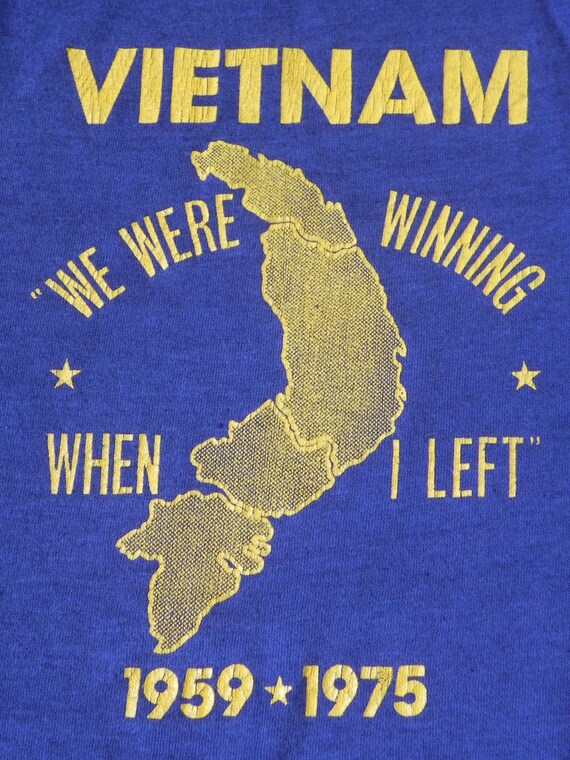
More than a few times I’ve found myself in a crowd of Vietnam veterans, and more than a few times at least one of them was wearing a curious blue or yellow t-shirt.  Once that shirt undoubtedly fit a lean physique of the late 1970s or early 1980s, but by the time I saw it modeled, in the 2000s, it was getting mighty snug.  Still, they refused to part with it.  On it was some variation of the outline of a map of Vietnam with bit of grim humor superimposed: “Participant, Southeast Asia War Games, 1961-1975: Second Place.”

I was always struck by it.  These men of the “Me Generation” had come home to the sneers and backhanded comments of the men of the “Greatest Generation,” their fathers’ era.  They had supposedly been the first Americans to lose a war.  However, instead of the defensive apparel donned by some vets (“We were winning when I left”), they wore their loss for all to see, pride mingling with a sardonic sense of humor.

Today’s military is made up of still another generation, the Millennials, representatives of the 80 million Americans born between 1980 and 2000.  In fact, with nearly 43% of the active duty force age 25 or younger and roughly 66% of it 30 or under, it’s one of the most Millennial-centric organizations around.

As a whole, the Millennials have been regularly pilloried in the press for being the “Participation Trophy Generation.”  Coddled, self-centered, with delusions of grandeur, they’re inveterate narcissists with outlandish expectations and a runaway sense of entitlement.  They demand everything, they’re addicted to social media, fast Wi-Fi, and phablets, they cry when criticized, they want praise on tap, and refuse to wear anything but their hoodies and “fuck you flip-flops” like the face of their generation, the Ur-millennial: Mark Zuckerberg!

At least that’s the knock on them. Then again, when didn’t prior generations knock the current one?

The National Institutes of Health did determine people in their 20s have Narcissistic Personality Disorder three times more often than those 65 or older and a recent survey by Reason and pollster Rupe did find that those 18-24 are indeed in favor of participation trophies unlike older Americans who overwhelmingly favor winnersonly prizes.  Still, it’s a little early to pass blanket judgment on an entire generation of whom the youngest members are only on the cusp of high school.  The Millennials may yet surprise even the most cantankerous coots. Time will tell.

The Millennial military, however, isn’t doing the generation any favors.  Despite its dismal record when it comes to winning wars and a recent magnification of its repeated failures in Iraq, today’s military seems to crave and demand that its soldiers, sailors, marines, and airmen be thanked and lauded at every turn.  As a result, the Pentagon is involved in stage-managing all manner of participation-trophy spectacles to make certain they are — from the ballpark to the NASCAR track to the Academy of Country Music’s “An All-Star Salute to the Troops” concert at the MGM Grand in Las Vegas earlier this year.

And like those great enablers of the Millennial trophy kids, so-called helicopter parents, the American public regularly provides cheap praise and empty valorization for veterans, writes Rory Fanning in TomDispatch debut.  A veteran of the war in Afghanistan — having served two tours with the 2nd Army Ranger Battalion before becoming a conscientious objector — Fanning explores America’s thank-you-for-your-service culture, what vets are actually being thanked for, and why Rihanna’s hollow patriotism left him depressed.  His moving new book, Worth Fighting For: An Army Ranger’s Journey Out of the Military and Across America, captures his 3,000-mile trek through and encounter with this country, an unforced march meant to honor Pat Tillman and question the nature of our recent wars.

I don’t get to hang out with Vietnam vets as much as I used to, but late one night a year or two ago I found myself with a few of them in an almost deserted bar.  Having ducked out of the annual meeting of a veterans’ group, we ordered some beers from a Millennial-age waiter.  He asked if my 60-something compatriots were attending the nearby conference and they mumbled that they indeed were.  The waiter seemed to momentarily straighten up.  “Thank you for your service,” he solemnly intoned before bounding off to get the beers.  One of veterans — a Marine who had seen his fair share of combat — commented on how much he hated that phrase.  “They do it reflexively.  That’s how they’ve been raised,” I replied.  “I hope they wise up,” said another of the vets.  Time — as with all things Millennial — will tell. Nick Turse

Thank you for your valor, thank you for your service, thank you, thank you, thank you…
Still on the thank-you tour-of-duty circuit, 13 years later
By Rory Fanning

Last week, in a quiet indie bookstore on the north side of Chicago, I saw the latest issue of Rolling Stone resting on a chrome-colored plastic table a few feet from a barista brewing a vanilla latte.  A cold October rain fell outside. A friend of mine grabbed the issue and began flipping through it. Knowing that I was a veteran, he said, “Hey, did you see this?” pointing to a news story that seemed more like an ad.  It read in part:

“This Veterans Day, Bruce Springsteen, Eminem, Rihanna, Dave Grohl, and Metallica will be among numerous artists who will head to the National Mall in Washington D.C. on November 11th for ‘The Concert For Valor,’ an all-star event that will pay tribute to armed services.”

“Concert For Valor? That sounds like something the North Korean government would organize,” I said as I typed Concertforvalor.com into my MacBook Pro looking for more information.

The sucking sound from the espresso maker was drowning out a 10-year-old Shins song. As I read, my heart sank, my shoulders slumped.

Continue reading

Facebooktwittermail

Resolve: Obama lacks what America lacks

USA Today reports: Americans should be braced for a long battle against the brutal terrorist group Islamic State that will test U.S. resolve — and the leadership of the commander in chief, says Leon Panetta, who headed the CIA and then the Pentagon as Al Qaeda was weakened and Osama bin Laden killed.

“I think we’re looking at kind of a 30-year war,” he says, one that will have to extend beyond Islamic State to include emerging threats in Nigeria, Somalia, Yemen, Libya and elsewhere.

In his first interview about his new book, Worthy Fights: A Memoir of Leadership in War and Peace, Panetta argues that decisions made by President Obama over the past three years have made that battle more difficult — an explosive assessment by a respected policymaker of the president he served.

Even before it’s published Tuesday by Penguin Press, the 512-page book has provoked rebukes at the State Department and by Vice President Biden. But Panetta says he was determined to write a book that was “honest,” including his high regard for the president on some fronts and his deep concern about his leadership on others.

In an interview at his home with Capital Download, USA TODAY’s video newsmaker series, Panetta says Obama erred:

• By not pushing the Iraqi government harder to allow a residual U.S. force to remain when troops withdrew in 2011, a deal he says could have been negotiated with more effort. That “created a vacuum in terms of the ability of that country to better protect itself, and it’s out of that vacuum that ISIS began to breed.” Islamic State also is known as ISIS and ISIL.

• By rejecting the advice of top aides — including Panetta and then-secretary of State Hillary Rodham Clinton — to begin arming Syrian rebels in 2012. If the U.S. had done so, “I do think we would be in a better position to kind of know whether or not there is some moderate element in the rebel forces that are confronting (Syrian President Bashar) Assad.”

• By warning Assad not to use chemical weapons against his own people, then failing to act when that “red line” was crossed in 2013. Before ordering airstrikes, Obama said he wanted to seek congressional authorization, which predictably didn’t happen.

The reversal cost the United States credibility then and is complicating efforts to enlist international allies now to join a coalition against the Islamic State, Panetta says. “There’s a little question mark to, is the United States going to stick this out? Is the United States going to be there when we need them?”

Showing leadership in the fight against ISIS is an opportunity “to repair the damage,” he says. He says it’s also a chance for Obama to get a fresh start after having “lost his way.”

On Friday, the terrorist group released a video that showed the beheading of a fourth Westerner, British aid worker Alan Henning, and threatened to execute American hostage Abdul-Rahman (formerly Peter) Kassig next.

Panetta’s behind-the-scenes account of events during Obama’s first term, including the internal debate over helping Syrian rebels, is consistent with those in memoirs published this year by Hillary Clinton and Robert Gates, whom Panetta succeeded as Defense secretary.

But Panetta’s portrait of Obama is more sharply drawn and explicitly critical.

He praises the president for “his intelligence, his convictions, and his determination to do what was best for the country.” He notes that Obama has faced bitter opposition, especially from congressional Republicans. He credits him with scoring significant progress in fighting terrorism and righting the economy.

In the book’s final chapter, however, he writes that Obama’s “most conspicuous weakness” is “a frustrating reticence to engage his opponents and rally support for his cause.” Too often, he “relies on the logic of a law professor rather than the passion of a leader.” On occasion, he “avoids the battle, complains, and misses opportunities.”

In the interview, Panetta says he thinks Obama “gets so discouraged by the process” that he sometimes stops fighting.

Whenever American politicians and pundits make Churchillian statements about the need for or the testing of American resolve, it’s hard to take these words seriously.

If, as Leon Panetta predicts, the fight against ISIS will require a 30-year war, rather than suggest that this will test American resolve, an honest assessment would surely conclude that the U.S. is incapable of making this kind of commitment.

But more than this, to say that this nation is incapable of making a 30-year commitment of any kind, is a much more damning critique than to point to the limits of U.S. military power.

Another way of describing this deficit in American resolve is to say that as a culture, America lacks the capacity to focus on the interests of the next generation.

The price of wanting to have it all and have it now, is that immediate gratification always comes at someone else’s expense. We steal the future.

If the fight against ISIS or any other grandiose undertaking is engaged in the name of defending the American way of life, I don’t think that’s a worthy cause — indeed, I’d say it’s a huge part of the problem.

Facebooktwittermail

The seeds of failure in Syria and Ukraine were planted long ago

Kennette Benedict writes: In September the United States, along with European and Middle Eastern partners, deployed air power to destroy the radical forces that are occupying territory on the Iraqi-Syrian border. And in his September 24 speech to the UN General Assembly, US President Barack Obama harshly criticized Moscow for seizing Ukrainian territory and backing separatists, saying that “we will impose a cost on Russia for aggression.”

Though more than 1,000 miles apart, these two foreign policy challenges for the United States have much in common. For the sake of civilians — ordinary people trying to make a living, feed their children, and live with a modicum of dignity — we all hope that efforts to end violent conflict in the Middle East and Ukraine will succeed. But Washington’s approach to both problems is ad-hoc and may be much too late. Without new institutions of regional governance, economic integration, and cultural dialogue, these efforts will likely fail to bring about peace and stability.

By “too late” I mean years and even decades too late. That’s because the two major foreign policy debacles the United States faces today could have been avoided by building new institutions when the opportunity first presented itself at the end of the Cold War.

In the 1990s, though, the US foreign policy community fell into intellectual disarray. The hostilities between the United States and the Soviet Union had seemed nearly immutable, and ideological positions blinded even intelligent analysts to the need for a far-reaching post-Cold War plan. Very few had been contemplating what would be needed once the USSR collapsed. There were no plans to help build former Soviet societies after years of economic stagnation and environmental neglect, as there had been for Germany and Japan after World War II. Nor were proposals for international cooperation to prevent future schisms and new “cold wars” given much thought. The national security and foreign policy establishments in the United States and Europe did not undertake any thoroughgoing reviews or take seriously any new ideas that went beyond the already-existing United Nations. [Continue reading…]

Facebooktwittermail

Causes of California drought linked to climate change

EurekAlert!: The atmospheric conditions associated with the unprecedented drought currently afflicting California are “very likely” linked to human-caused climate change, Stanford scientists say.

In a new study, a team led by Stanford climate scientist Noah Diffenbaugh used a novel combination of computer simulations and statistical techniques to show that a persistent region of high atmospheric pressure hovering over the Pacific Ocean that diverted storms away from California was much more likely to form in the presence of modern greenhouse gas concentrations.

The research, published on Sept. 29 as a supplement to this month’s issue of the Bulletin of the American Meteorological Society, is one of the most comprehensive studies to investigate the link between climate change and California’s ongoing drought.

“Our research finds that extreme atmospheric high pressure in this region—which is strongly linked to unusually low precipitation in California—is much more likely to occur today than prior to the human emission of greenhouse gases that began during the Industrial Revolution in the 1800s,” said Diffenbaugh, associate professor of Environmental Earth System Science at Stanford and a senior fellow at the Stanford Woods Institute for the Environment.

The exceptional drought currently crippling California is by some metrics the worst in state history. Combined with unusually warm temperatures and stagnant air conditions, the lack of precipitation has triggered a dangerous increase in wildfires and incidents of air pollution across the state. A recent report estimated that the water shortage would result in direct and indirect agricultural losses of at least $2.2 billion, and lead to the loss of more than 17,000 seasonal and part-time jobs in 2014 alone. Such impacts prompted California Governor Jerry Brown to declare a drought emergency, and the federal government to designate all 58 California counties as “natural disaster areas.” [Continue reading…]

Facebooktwittermail

Taylor and Appel: The subprime education scandal

We used to hear more often about those malignant institutions serving, or rather plaguing, the poor: the loan sharks who charged 100% or more per year in interest, the furniture or radios that ended up costing several times their value on the installment plan. Two or three decades ago, however, we didn’t think of an education as being part of the landscape of predation upon the poor. Now, as Astra Taylor and Hannah Appel explain, when it comes to a new crew of “for-profit” colleges, higher education has gone hyena and is tearing at the financial flesh of the poor.

Even mainstream institutions can be sketchy these days, if you look closely enough. Most liberal arts college programs give their students a vague, if exhilarating, sense that the best possible outcome of their vocation is practically an inevitability, and yet there are far from enough tenure-track jobs, top galleries, or niches on bestseller lists for all the people being educated.

Though people make it in all these fields, they are a tiny minority.  So many others pay their dues and get little for it, except whatever is inherently meaningful in their education, which won’t, of course, lighten their loan burden at all.

Once upon a time, it was different. The radicalism of the 1960s, for instance, should be chalked up in part to the great freedom of youth at a time when the fat of the land seemed inexhaustible and the safety net unbreakable. The two radicals I know who became wanted fugitives in the 1970s and then tenured faculty members (now retired with pensions) operated in a more forgiving era — and a more affluent one.

My parents believed that any kind of bachelor’s degree pretty much guaranteed your white-collar future, and that was a truth of their era. Thirty years ago, when I came along, it was already less of a reality; today, so much less than that. Still, the hangover from that conviction lingers. I went to California’s public universities as their golden age of nearly free and superb education was ending and got through college scrambling to the sound of doors shutting behind me. It was all part of the end of an egalitarian dream birthed and nurtured by the New Deal of the 1930s, the creation of social security in the 1940s, and the Great Society programs of the 1960s. It’s now popular to say that, as president, Richard Nixon was to the left of Barack Obama, but what that means is that our society was then closer to a social democracy (and that since we’re really bad at talking about it, we’d rather focus our attention on figureheads).

Maybe communism was good for us after all, at least — as David Graeber argues — in scaring the powers that be into offering their own limited versions of equality and opportunity. California’s Proposition 13, enacted in 1978, was the beginning of the end of that dream, arising as it did from the now-entrenched belief that what we have separately beats whatever we have together anytime. Taxes were portrayed as the nails that stuck every breadwinning Jesus to his own personal cross, rather than the way to keep roads and bridges and schools in shape, have safe drinking water and, like, a postal system and libraries (and also a giant military eating up more than half of the federal government’s discretionary spending). As the retreat into the private sphere began in earnest, people started forgetting how good, how secure life had been, while Republicans launched the mantra that future tax cuts would be a magical ointment capable of curing anything.

Part of the great work of Occupy Wall Street was to make some of the brutality of the current economy visible. People whose lives were being ravaged by housing, medical, and educational debt came out of the shame and the shadows to testify, while activists and homeowners took action against foreclosures and banks. From the beginning Astra Taylor, author of The People’s Platform: Taking Back Power and Culture in the Digital Age, was part of that movement and moment.  Her work there led to her involvement with Strike Debt and the fledgling Debt Collective. Now, she and Hannah Appel focus on the conditions that produced the perfect educational storm in the form of the private for-profit university/corporation. Rebecca Solnit

Education with a debt sentence
For-profit colleges as American dream crushers and factories of debt
By Astra Taylor and Hannah Appel

Imagine corporations that intentionally target low-income single mothers as ideal customers. Imagine that these same companies claim to sell tickets to the American dream — gainful employment, the chance for a middle class life. Imagine that the fine print on these tickets, once purchased, reveals them to be little more than debt contracts, profitable to the corporation’s investors, but disastrous for its customers. And imagine that these corporations receive tens of billions of dollars in taxpayer subsidies to do this dirty work. Now, know that these corporations actually exist and are universities.

Over the last three decades, the price of a year of college has increased by more than 1,200%. In the past, American higher education has always been associated with upward mobility, but with student loan debt quadrupling between 2003 and 2013, it’s time to ask whether education alone can really move people up the class ladder. This is a question of obvious relevance for low-income students and students of color.

Continue reading

Facebooktwittermail

Fear of ISIS and warnings about ‘wide open’ U.S. borders fuels Islamophobia

Fox News reports: Midland County Sheriff Gary Painter said that law enforcement agencies along the “wide open” border have received alerts to be on the lookout for terrorists from the Islamic State of Iraq and Syria crossing into the United States.

Painter, who said he has worked along the border for “about eight years,” stated that alerts have been issued to border law enforcement to be on the lookout for suspicious terrorist activity, specifically involving ISIS cells being smuggled into the United States.

“I received an intelligence report that said that there was ISIS cells that were active in the Juarez area, which is the northern part of the Chihuahua state, and that they were moving around over there, that there was some activity…” Painter told Fox News. The report asked “for the sheriffs along the border to be on the alert, for all law enforcement to be on the alert, and to be on the lookout for these people maybe trying to come across.”

Painter sidestepped any direct knowledge that ISIS, specifically, is along the border, but he reiterated that the border “is wide open.” [Continue reading…]

Facebooktwittermail

Steve Fraser: The return of the titans

Think of this as the year that democracy of, by, and for the billionaires shall not perish from the Earth — not when we’re on a new electoral playing field in a political world in which distinctions are no longer made between unlimited money and unlimited speech.  In other words, these days, if you have billions of dollars, you can shout from the skies and the rest of us have to listen.  If, as Steve Fraser points out today, we’ve been witnessing the return of “family capitalism on steroids,” nowhere has it been bigger than in American politics, aided and abetted by that ultimate family institution, the Supremes (and I’m not, of course, talking about the classic Motown group).

We’re still almost two months from the midterm elections in which the Republicans already have the House of Representatives essentially wrapped up and ads for Senate races are zipping onto TV screens in “battleground states” at a dizzying pace.  To fund those ads and other campaign initiatives, dollars by the millions are pouring into the coffers of “dark money” outfits in a way guaranteed to leave the record for spending on midterm elections in a ditch at the side of the road.  We now have our first estimates of what election 2014 is going to look like as a billionaire’s playground; and count on it, you’re going to hear the words “record,” “billionaire,” and “ads” a lot more until November.

“Outside groups” have already spent $120 million on TV ads alone, more than half that sum coming from those dark-money groups that don’t have to let anyone know who their contributors are.  At the top of that shadowy list are six outfits linked to David and Charles Koch, the billionaire brothers from Wichita. Together, those groups have already sent a mind-spinning 44,000 ads into the politico-sphere in those battleground states, and the Kochs’ Americans for Prosperity (AFP) leads the pack with 27,000 of them. In the end, AFP alone is expected to put $125 million into this year’s midterm elections, a figure that should take your breath away and yet that’s only a start.

Sheldon Adelson, of casino fame, may, for example, put $100 million of his $31.6 billion fortune into this campaign season, shuttling much of it through dark-money outfits, including AFP. On the liberal side of the spectrum, environmentalist and billionaire Tom Steyer has pledged to sink $50 million into campaigns to promote candidates ready to act on global warming (though there is little question that, in the billionaire sweepstakes, the right-wing ones are going to outspend the liberal ones, and Republicans outspend Democrats).

In all of this, you can see the urge of America’s new crop of billionaires to “play god” at our expense and with our lives — to decide for us, ad by ad, dark-money outfit by dark-money outfit, how we should organize ourselves politically. Historian Steve Fraser, TomDispatch regular, author of Wall Street: America’s Dream Palace, and co-founder (with me) of the American Empire Project, has rubbed elbows with many a billionaire — on the page, if not in life. From this country’s earliest tycoons to the latest batch of family capitalists, he finds one overwhelming, unifying trait: a deep-seated belief, in a country that worships self- or family-made money, that the more billions you have, the more you should be listened to. In his upcoming book, The Age of Acquiescence: The Life and Death of American Resistance to Organized Wealth and Power, he explores how, in our second (even more) gilded age, others with little money also came to believe that, rather than resist it. Tom Engelhardt

Playing God
The rebirth of family capitalism or how the Koch Brothers, Sheldon Adelson, Sam Walton, Bill Gates, and other billionaires are undermining America
By Steve Fraser

George Baer was a railroad and coal mining magnate at the turn of the twentieth century.  Amid a violent and protracted strike that shut down much of the country’s anthracite coal industry, Baer defied President Teddy Roosevelt’s appeal to arbitrate the issues at stake, saying, “The rights and interests of the laboring man will be protected and cared for… not by the labor agitators, but by the Christian men of property to whom God has given control of the property rights of the country.”  To the Anthracite Coal Commission investigating the uproar, Baer insisted, “These men don’t suffer. Why hell, half of them don’t even speak English.”

We might call that adopting the imperial position.  Titans of industry and finance back then often assumed that they had the right to supersede the law and tutor the rest of America on how best to order its affairs.  They liked to play God.  It’s a habit that’s returned with a vengeance in our own time.

Continue reading

Facebooktwittermail

America’s island mentality

“Traveling in Europe made me understand that America has an island mentality: No one exists except us. There’s a whole other world out there, but most Americans – all they know is America” — will.i.am

A recent Pew poll asked Americans about what they perceive as “global threats facing the U.S.” the threat from ISIS being among them. The news is that 67% of Americans view ISIS as a major threat to the U.S. — a threat only exceeded by the threat from “Islamic extremist groups like Al Qaeda.”

I guess that after more than a decade of indoctrination in which we have been led to regard Al Qaeda as the purest distillation of evil ever known, it will take some time for the average American to accept the idea that there could actually be anything worse than Al Qaeda.

Even so, the fact that most Americans now perceive ISIS as a major threat doesn’t really reveal a whole lot more than the fact that most Americans watch television.

What I find more interesting than the numbers is the premise behind the pollster’s question: that something could be a global threat and yet not necessarily be a threat to America.

This is a reflection of the prevailing mentality among Americans: that America and the world are in some sense separable.

America can be engaged with or disengaged from the rest of the world because, supposedly, if we are so inclined, the rest of the world can be shut out while America tends to its own affairs.

Is it any wonder that a nation that has such difficulty in seeing itself as part of and as inseparable from the world, also has difficulty viewing climate change — the greatest challenge facing our planet — as a threat?

The Pew poll found that 52% of Americans view the spread of infectious diseases as a threat to the U.S., lower, for instance, than the perceived threat from North Korea’s nuclear program.

No doubt for most people being questioned, when it comes to infectious diseases the issue of the Ebola outbreak in West Africa will have been uppermost in their minds.

President Obama’s announcement on Sunday about a U.S. response to the crisis again reflects America’s island mentality. This is how he framed the urgency of the issue:

“If we don’t make that effort now, and this spreads not just through Africa but other parts of the world, there’s the prospect then that the virus mutates. It becomes more easily transmittable. And then it could be a serious danger to the United States.”

He also said, “We have to make this a national security priority.”

For the United States, the Ebola outbreak is less of a humanitarian issue than it is a threat to America’s security.

It’s as though if health workers in Africa could guarantee that the disease was contained and there was no risk of it spreading overseas, then the U.S. would have no reason to be concerned.

America sees itself as a generous country, in part because Americans have a staggering level of ignorance about how much foreign aid the U.S. grants.

Americans on average believe that 28% of the federal budget — more than is spent on defense — is spent on foreign aid when in reality it is just 1%! When informed about actual spending, the majority of Americans say that 1% is about right or too much — only 28% say that 1% of the budget is too little.

What these numbers imply is that most Americans perceive the world as a drain on this nation’s resources. Having been led from birth to believe that this is the greatest nation on earth, how could the rest of the world be perceived otherwise?

When Obama lays out his strategy for dealing with ISIS this evening, it goes without saying that one of the central pillars of his argument will be that this organization poses a threat to America’s national security. To present ISIS in any other way would risk implying that the threat which ISIS poses across the Middle East constitutes a sufficiently urgent threat that even if it was to advance no further, this should nevertheless concern Americans. Such an argument would likely elicit a shrug — we don’t live in the Middle East so why should we care?

The idea that we might care because we all live on the same planet, breath the same air, and inhabit the same world, has little traction in the hearts and minds of Americans who see the world as somewhere else.

The idea that those whose lives are not in danger have a responsibility to pay attention to the needs of those in peril, is a humanitarian impulse which in an era of unquestioned realism, is always a lower priority than the national interest.

Returning to the question about global threats, rather than ask Americans a conceptually mangled question about threats to the U.S., it might have been more interesting to try and gauge awareness about actual global threats, which is to say, threats that are global in scale.

These would be — at least by my reckoning:

  • the excessive production of greenhouse gases by human activity resulting in climate change
  • the Holocene extinction — the mass extinction of species and loss of biodiversity that has resulted from human activity
  • population displacement which now exceeds 50 million people, the largest number since World War II
  • industrialized agriculture involving the use of toxic pesticides and genetically modified crops which poisons the food chain, degrades ecosystems, resulting in the loss of topsoil thereby undermining the basis for agriculture
  • nuclear weapons both in existing arsenals and through proliferation
  • infectious diseases including antibiotic resistant superbugs
  • chronic illness caused by unhealthy lifestyles, poor nutrition, and profit driven pharmaceutical protocols promoted by the disease-maintenance industry
  • racism and other forms of intolerance which undermine the growth of political pluralism
  • the endangered ethnosphere in which the accumulated knowledge of indigenous peoples, their languages and cultures is rapidly being lost
  • homogenized global culture in which human aspirations are manipulated in the service of commerce
  • technological dependence through which intelligence is being displaced from minds into devices
  • inequality stemming from inadequate political representation and excessive corporate power
  • ignorance resulting in the proliferation of all the above threats.

Compared with these issues, I don’t believe that ISIS constitutes a global threat, yet it nevertheless poses an urgent threat calling for a global response — a response that should not be artificially separated from the need to envision a post-war Syria.

Facebooktwittermail

It’s not just the South and Fox News: Liberals have a white privilege problem too

Joseph Heathcott writes: I spent 12 years of my life in St. Louis. I went to college there. Got married. Landed my first teaching job. Bought my first house. Between door-knocking for candidates and causes, driving around on ice cold nights in a homeless shelter van, and breaking bread in people’s homes and churches and synagogues, I came to know the metropolis well. I came to love and admire its many communities — including Ferguson: so tenacious, so full of hardworking families trying to stay afloat, trying to dismantle racial apartheid and make a better life for their children.

But each time I tried to write about Ferguson, I could only stare into the blank screen, dumbfounded. It wasn’t the killing of Michael Brown that left me speechless: tragically, the murder of black men by police is common. It wasn’t the riots that stumped me: Ferguson residents are rightfully fed up with being treated as second-class citizens. It wasn’t even the ludicrous spectacle of a hyper-militarized police response. I’ve been following that story for years.

No, what dumbfounded me was the outpouring of white anger and resentment. As police, pundits, politicians and their supporters sought control over the narrative of events in Ferguson, they drew from the deep well of moral panic and race hatred that in many ways define our contemporary political landscape. I am not talking about the moronic counter-protests by the Klan, or the impending race war hallucinated by capital-R Racists. I am talking about the insidious language of white privilege — the civil, polite, unconscious adoption by white people of racially normative viewpoints that give us comfort and help explain the world on our terms.

For those of us born with white skin, white privilege is the air we breathe; we don’t even have to think about it. It is like the fish that never notices the water in which it swims. It is a glorious gift we have given to ourselves through the social order we have constructed, from top to bottom and bottom to top. It is the pillage of continents, the enslavement of people, the hatred of dark-skinned “others,” all somehow magically laundered by our commitments to democracy, self-reliance, individualism and the “post-racial, color-blind society.” It is our abject unwillingness to confront our history, to correct the deficits of our memory, to lean against the amnesia of a white story told. [Continue reading…]

Facebooktwittermail

Aviva Chomsky: What’s at stake in the border debate

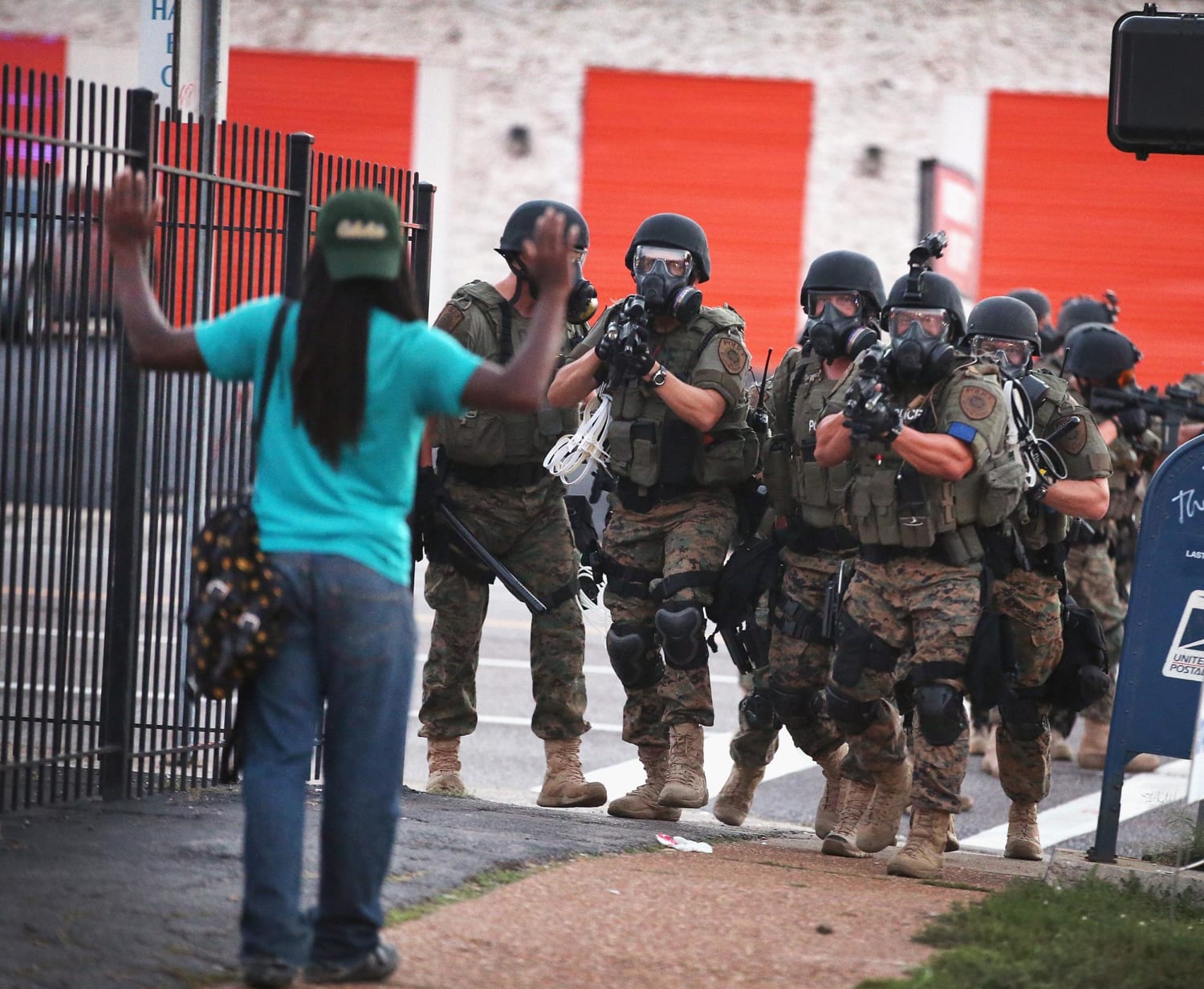
The militarization of the police has been underway since 9/11, but only in the aftermath of the six-shot killing of an unarmed teenager in Ferguson, Missouri, with photos of streets in a St. Louis suburb that looked like occupied Iraq or Afghanistan, has the fact of it, the shock of it, seemed to hit home widely.  Congressional representatives are now proposing bills to stop the Pentagon from giving the latest in war equipment to local police forces.  The president even interrupted his golfing vacation on Martha’s Vineyard to return to Washington, in part for “briefings” on the ongoing crisis in Ferguson.  So militarization is finally a major story.

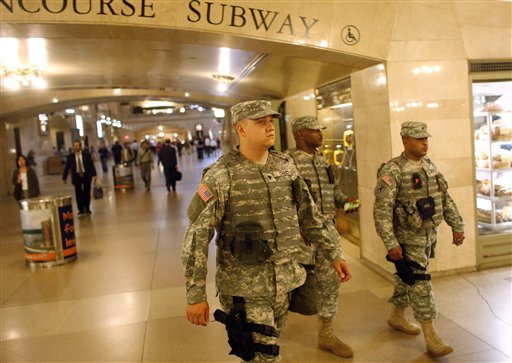
And that’s no small thing.  On the other hand, the news from Ferguson can’t begin to catch the full process of militarization this society has been undergoing or the way America’s distant wars are coming home. We have, at least, a fine book by Radley Balko on how the police have been militarized.  Unfortunately, on the subject of the militarization of the country, there is none.  And yet from armed soldiers in railway stations to the mass surveillance of Americans, from the endless celebration of our “warriors” to the domestic use of drones, this country has been undergoing a significant process of militarization (and, if there were such a word, national securitization).

Perhaps nowhere has this been truer than on America’s borders and on the subject of immigration.  It’s no longer “give me your tired, your poor, your huddled masses yearning to breathe free.”  The U.S. is in the process of becoming a citadel nation with up-armored, locked-down borders and a Border Patrol operating in a “Constitution-free zone” deep into the country.  The news is regularly filled with discussions of the need to “bolster border security” in ways that would have been unimaginable to previous generations.  In the meantime, the Border Patrol is producing its own set of Ferguson-style killings as, like SWAT teams around the U.S., it adopts an ever more militarized mindset and the weaponry to go with it.  As James Tomsheck, the former head of internal affairs for U.S. Customs and Border Protection, put it recently, “It has been suggested by Border Patrol leadership that they are the Marine Corps of the U.S. law enforcement community.  The Border Patrol has a self-identity of a paramilitary border security force and not that of a law enforcement organization.”

It’s in this context that the emotional flare-up over undocumented Central American children crossing the southern border by the thousands took place.  In fact, without the process of militarization, that “debate” — with its discussion of “invasions,” “surges,” “terrorists,” and “tip of the spear” solutions — makes no sense.  Its language was far more appropriate to the invasion and occupation of Iraq than the arrival in this country of desperate kids, fleeing hellish conditions, and often looking for their parents.

Aviva Chomsky is the author of a new history of just how the words “immigration” and “illegal” became wedded — it wasn’t talked about that way not so many decades ago — and how immigrants became demonized in ways that are familiar in American history.  The Los Angeles Times has hailed Undocumented: How Immigration Became Illegal for adding “smart, new, and provocative scholarship to the immigration debate.” As in her book, so today at TomDispatch, Chomsky puts the most recent version of the immigration “debate” into a larger context, revealing just what we prefer not to see in our increasingly up-armored nation. Tom Engelhardt

America’s continuing border crisis
The real story behind the “invasion” of the children
By Aviva Chomsky

Call it irony or call it a nightmare, but the “crisis” of Central American children crossing the U.S.-Mexican border, which lasted for months amid fervent and angry debate, is now fading from the news.  The media stories have been legion, the words expended many.  And yet, as the “crisis” leaves town, as the sound and fury die down and attention shifts elsewhere (even though the children continue to arrive), the real factors that would have made sense of what’s been happening remain essentially untouched and largely unmentioned.  It couldn’t be stranger — or sadder.

Since late June 2014, the “surge” of those thousands of desperate children entering this country has been in the news.  Sensational stories were followed by fervent demonstrations and counter-demonstrations with emotions running high.  And it’s not a debate that stayed near the southern border either.  In my home state, Massachusetts, Governor Deval Patrick tearfully offered to detain some of the children — and that was somehow turned into a humanitarian gesture that liberals applauded and anti-immigrant activists decried.  Meanwhile the mayor of Lynn, a city north of Boston, echoed nativists on the border, announcing that her town didn’t want any more immigrants.  The months of this sort of emotion, partisanship, and one-upmanship have, however, diverted attention from the real issues.  As so often is the case, there is so much more to the story than what we’ve been hearing in the news.

Continue reading

Facebooktwittermail

Ferguson and Gaza: The definitive study of how they are and are not similar

David Palumbo-Liu writes: As photographs and videoclips from Ferguson overwhelmed our mediascapes, they created a strange double-optic. They seemed overlaid upon representations of events that had previously dominated our public consciousness: Images of the massive and on-going destruction of Gaza by the Israeli military. This stereoscopic image immediately drew bloggers, pundits and op-ed writers to rush to draw parallels. Indeed, in graphic terms alone the image of tear gas canisters filling the air with toxic smoke and of protesters hurling them back defiantly seemed exactly the same. And when tweets offering advice to demonstrators in Ferguson emerged from Palestinians, and reports of Ferguson police having been trained by Israelis surfaced, all that only seemed to complete the equation: Ferguson is Gaza.

There are many parallels and resonances to be sure, and below I will get to some key ones. But I have delayed responding because, as a comparatist, and also as someone concerned about racism in the U.S. and the racist policies of Israel, it is important to weigh things in as dispassionate a way as possible, to do justice to both sides.

Many years ago, the eminent British Marxist historian Raymond Williams reflected on conversations he was having with Palestinian literary critic and activist Edward Said. Williams was particularly interested in seeing just how much of his work on British working class culture, history, and society could be understood as having to do in any way with Said’s concerns regarding Israel-Palestine, most especially with regard to what was going on then: the brutal Israeli bombing and invasion of Lebanon in 1982. Regarding that catastrophe, Hadas Thier writes, “During the course of Israel’s bombardment of the country, civilians and civilian infrastructure were systematically attacked, refugee camps and Lebanese towns were leveled, Beirut was battered for seventy-five days, and after all military objectives were met, the affair concluded with a grotesque massacre of women, children, and the elderly at the Sabra and Shatila refugee camps.” Williams’ conclusion is instructive:

The analysis of history is not a subject separate from history, but the representations are part of the history, contribute to the history, are active elements in the way that history continues; in the way forces are distributed; in the way people perceive situations, both from inside their own pressing realities and from outside them; if we are saying this is a real method, then the empirical test it’s being put to here is that comparable methods of analysis are being applied to situations which are very far apart in space, have many differences of texture, and have very different consequences in the contemporary world. There is an obvious distance from what is happening in the English countryside, or in the English inner cities, to the chaos in Lebanon. Yet nevertheless I think it is true that the method, the underlying method, found a congruity.

This discretion, this caution to pay attention to how history is represented and to get the historical record straight despite surface similarities, is found as well in the Nigerian novelist Chimamanda Ngozi Adichie’s novel on Biafra, “Half of a Yellow Sun.” At one point she tells of a journalist’s hesitation at making comparisons between Biafra and other historical events: “After he writes this, he mentions the German women who fled Hamburg with the charred bodies of their children stuffed in suitcases, the Rwandan women who pocketed tiny parts of their mauled babies. But he is careful not to draw parallels.”

How then can we strike a balance between on the one hand reacting viscerally to the images from Ferguson, which point to the long and constantly replenished history of police assaults on black bodies, and the images of Israel’s murderous rampage in Gaza, an assault continuous with Israel’s history of oppression and persecution of an entire people, while on the other hand resisting drawing too quickly an immediate, provocative, but inexact parallel?

It is in the median space between declaring an equivalence and withdrawing into discreet silence that we should concentrate our energies. Comparisons may be “odious,” to quote Shakespeare, but they can also be instructive. They help us tease out the specifics while coming to understand basic and important similarities. To do this one needs to employ a “congruent” method.

Here are five ways we can see congruence in what is happening in Ferguson and in Gaza. [Continue reading…]

Facebooktwittermail

James Foley: U.S. and U.K. try to identify ISIS militant with British accent

The Guardian reports: Prof Peter Neumann, director of the International Centre for the Study of Radicalisation at King’s College London, said the militant was chosen to front the video to cause maximum impact in the west. “This is significant because it signifies a turn towards threatening the west. They are saying we’re going to come after you if you bomb us,” he said.

Neumann said British fighters had been carrying out “horrific acts” like beheadings, torture and executions for a year and a half, but this appeared to be the first with a western victim. He added: “They clearly wanted someone who spoke fluent English because they wanted it to create maximum impact, especially in the US, and because there are not that many Americans it was probably the best second option. They want this to have maximum impact on the west and for parts of it to be streamed on American television networks they needed an English speaker, so it was more about the English language than the nationality.

“It’s not significant that British fighters have been beheading and torturing because that’s been happening for a year and a half. That sort of horrific stuff is something British jihadis have been doing for some time. You will find a number of instances of British jihadis executing, torturing and beheading other people – and we know it’s not just Brits but other Europeans doing it – and occasionally this has come to the surface. Most people beheaded before were not westerners so that’s why this is different. The significant thing is that this was an American and was connected to a direct message that ‘we are targeting you’.”

Leading figures in the counter-terrorism field said it would be possible for intelligence services to identify the militant, despite it being filmed in an unknown location with the fighter dressed head to toe in black. Dr Claire Hardaker, a linguistics experts at Lancaster University, studied the clip and said the man’s vowels marked him out as likely from the south-east of England, but most likely from London. “We’re definitely looking at a British accent, from the south and probably from London, Kent or Essex. He does something interesting when he says ‘Muslims’. You typically get ‘Muzlims’ but he says something closer to ‘Musslims’.”

Dr Afzal Ashraf, of the Royal United Services Institute, said many of the estimated 500 British fighters in Syria and Iraq had left criminal pasts in the UK so were likely to be known to police. Intelligence agencies would also be using linguistics technology to track down the man, he said. [Continue reading…]

Facebooktwittermail

What I did after police killed my son

Michael Bell writes: After police in Kenosha, Wis., shot my 21-year-old son to death outside his house ten years ago — and then immediately cleared themselves of all wrongdoing — an African-American man approached me and said: “If they can shoot a white boy like a dog, imagine what we’ve been going through.”

I could imagine it all too easily, just as the rest of the country has been seeing it all too clearly in the terrible images coming from Ferguson, Mo., in the aftermath of the killing of Michael Brown. On Friday, after a week of angry protests, the police in Ferguson finally identified the officer implicated in Brown’s shooting, although the circumstances still remain unclear.

I have known the name of the policeman who killed my son, Michael, for ten years. And he is still working on the force in Kenosha.

Yes, there is good reason to think that many of these unjustifiable homicides by police across the country are racially motivated. But there is a lot more than that going on here. Our country is simply not paying enough attention to the terrible lack of accountability of police departments and the way it affects all of us—regardless of race or ethnicity. Because if a blond-haired, blue-eyed boy — that was my son, Michael — can be shot in the head under a street light with his hands cuffed behind his back, in front of five eyewitnesses (including his mother and sister), and his father was a retired Air Force lieutenant colonel who flew in three wars for his country — that’s me — and I still couldn’t get anything done about it, then Joe the plumber and Javier the roofer aren’t going to be able to do anything about it either. [Continue reading…]

Facebooktwittermail