The Wall Street Journal reports: The Syrian army has used lethal chemical weapons during the country’s civil war, Israel’s top military intelligence analyst said Tuesday, heightening pressure on the White House to intervene more directly against strongman Bashar-al Assad.
“According to our professional assessment, the regime has used deadly chemical weapons against armed rebels on a number of occasions in the past few months,” said Brig. Gen. Itai Brun, who heads the research division of Israel’s intelligence branch.
Israel’s first public allegation of Syrian chemical-weapons use followed disclosures last week that Britain and France believe they have credible evidence that Syria has used chemical weapons in small amounts.
U.S. officials said they were investigating the allegation. But they quickly voiced strong caution about the assessment—which, if borne out, could force the U.S. to make good on its threats to take action if Syria’s government were to use chemical weapons against its people. A senior U.S. defense official played down what he called “low-confidence assessments by foreign governments” and said it would take time to reach a U.S. determination that could be the basis for U.S. action.
That sharp response appeared to convey a U.S. government caught off guard. Gen. Brun delivered his assessment at a security conference in Tel Aviv just as U.S. Defense Secretary Chuck Hagel was wrapping up two days of meetings with Israel’s civilian and military leaders. His agenda was topped by talks on Iran and on strengthening coordination over the security of Syria’s chemical weapons.
Video: Israel’s occupation outsourced to the Palestinian Authority
Searching for future terrorists… and unicorns

A future terrorist is as real as a unicorn, yet I guarantee if Homeland Security went to a Congressional appropriations committee and asked for additional funding to improve their ability to find future terrorists, legislators would approve the request and double the amount.
To imagine that there could be such a person as a future terrorist is to think of terrorism as being like a disease — a disease in which someone can harbor the virus before displaying any symptoms.
Consider the Tsarnaev brothers. Not even senators John McCain or Lindsey Graham would claim that either of these young men was born a terrorist. The concept of the born-terrorist is reserved for those whose sociopathic fear of existential threats licenses its own racial or ethnic hatred.
So, given that neither brother was always a terrorist, there was a period — for each of them, the majority of their lives — in which neither could be described as bearing any of the traits of a terrorist. Then, at some point in the fairly recent past, the intention to engage in an act of terrorism took shape. Prior to that point neither of them was a future terrorist. They were no different from you or me.
Throughout human history, ordinary people have done terrible things and one of the ways that the innocent attempt to insulate themselves from such horrors is to imagine that the perpetrators are marked in some way. We decide that the ordinariness must have been a facade concealing an underlying evil. In this way we protect ourselves from the fear that anyone could go bad.
From what is being reported on the initial interviews currently taking place with Dzhokhar, it appears that Tamerlan, the older brother, came up with a plan, and then persuaded his younger brother to participate. (It’s worth noting that Dzhokhar was being questioned while heavily sedated and “alert, mentally competent and lucid”. I’m picturing the upcoming trial with an FBI agent facing cross-examination as a defense attorney says with incredulity: “You’re telling me the defendant was heavily sedated and alert? That sounds like falling asleep while wide awake.”)
There is lots of speculation right now about the possible role of a trip to Russia that Tamerlan made in early 2012 and whether he might have received some kind of training or direction from Chechen rebels. Why did he make this trip? The question is posed with great gravity — even though a rather obvious answer is already available: he went to visit relatives.
Perhaps the key question is, what was the tipping point? Someone can be a misanthrope, believe in all sorts of conspiracy theories, hate Americans, support extremism, have sympathies with terrorists and yet not cross the line by plotting to carry out an act of terrorism or support the efforts of others to do so.
When the FBI interviewed Tamerlan in 2011, did they miss an opportunity to “detect a future terrorist” as Talking Points Memo poses the question? Wrong question.
The FBI did its job and looked for evidence of “terrorism activity.” It didn’t find any. Neither the FBI nor any other government agency should be in the business of fortune telling, which is to say, forming an opinion that someone might become a terrorist in the future and then giving that opinion legal weight.
If we start looking for people who might become terrorists, why not also look out for politicians who might become corrupt, or bankers who might commit fraud? All about us are people who might someday become criminals.
While the FBI appears to have done its job properly, it’s quite possible that the tipping point at which Tamerlan’s radical leanings crossed the line and turned towards terrorist activity was triggered by the Department of Homeland Security.
On September 5, 2012, six days after Dzhokhar’s application for U.S. citizenship had been approved, Tamerlan filed his own application. His was not approved, the reason being that the earlier FBI interview threw up red flags. The mere fact that he had been interviewed, and not the FBI’s findings, appears to have meant that a division was now being placed between Tamerlan and his brother.
Tamerlan had aspired to compete as a boxer in the U.S. Olympic team but that dream would never be realized without a path to citizenship.
Did the feeling that he was being rejected by the country which was embracing his brother, propel both of them towards self destruction?
Immigrants have all kinds of reasons for wanting to become American citizens — mostly personal and economic — and there may have been good reasons to carefully scrutinize Tamerlan’s application beyond the mere fact that he had been interviewed by the FBI.
For instance, were the FBI a bit less fixated on radical Islam they might have wanted to know more about Tamerlan’s reading interests and specifically his interest in crime.
His Amazon wish-list included: The I.D. Forger: Homemade Birth Certificates & Other Documents Explained; Secrets of a Back Alley ID Man: Fake Id Construction Techniques of the Underground; Organized Crime: An Inside Guide to the World’s Most Successful Industry; Blood and Honor: Inside the Scarfo Mob, the Mafia’s Most Violent Family; and Five Families: The Rise, Decline, and Resurgence of America’s Most Powerful Mafia Empires.
For all the telltale signs of a future terrorist, there seem to have been just as many revealing a future gangster. Even so, there’s a huge difference between having an interest in crime and deciding to carry out a crime.
In a democracy, the legal system cannot be allowed to overextend itself by looking for ill-defined precursors of crime. If the state can hunt future terrorists that hunt will sooner or later also include opponents of the government — anyone whose alleged criminality is determined not by their behavior but by their ideas.
How the hyperkinetic media is breeding a new generation of terrorists
Scott Atran writes: “Americans refuse to be terrorized,” declared President Barack Obama in the aftermath of the Boston Marathon bombings. “Ultimately, that’s what we’ll remember from this week.” Believe that, and I’ve got a bridge to sell you in Brooklyn.
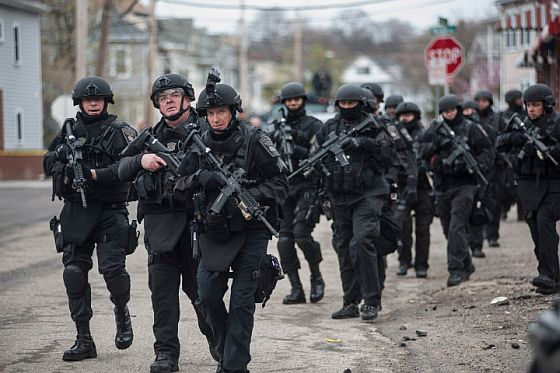
The Boston bombings have provoked the most intense display of law enforcement and media coverage since the 9/11 attacks. Greater Boston was in full lockdown: “a ghost town,” “a city in terror,” “a war zone,” screamed the headlines. Public transit was stopped, a no-fly zone proclaimed, people told to stay indoors, schools and universities closed, and hundreds of FBI agents pulled from other pressing investigations to focus exclusively on the case — along with thousands upon thousands of other federal, state, and city agents equipped with heavy weapons and armored vehicles. It all came close to martial law, with all the tools of the security state mobilized to track down a pair of young immigrants with low-tech explosives and small arms who failed to reconcile their problems of identity and became suspected amateur terrorists.
Not that the events weren’t shocking and brutal. But this law enforcement and media response, of course, is part of the overall U.S. reaction to terrorism since 9/11, when perhaps never in history have so few, armed with so few means, caused so much fear in so many. Indeed, as with the anarchists a century ago, last week’s response is precisely the outsized reaction that sponsors of terrorism have always counted on in order to terrorize.
Nothing compares to the grief of parents whose child has been murdered like 8-year-old Martin Richard, except perhaps the collective grief of many parents, as for the 20 children killed in last December’s school massacre in Newtown, Conn. Yet, despite the fact that the probability of a child, or anyone else in the United States, being killed by a terrorist bomb is vastly smaller than being killed by an unregistered handgun — or even by an unregulated fertilizer plant — U.S. politicians and the public seem likely to continue to support uncritically the extravagant measures associated with an irrational policy of “zero tolerance” for terrorism, as opposed to much-more-than-zero tolerance for nearly all other threats of violence. Given the millions of dollars already spent on the Boston bombing investigation and the trillions that the national response to terrorism has cost in little more than a decade, the public deserves a more reasoned response. We can never, ever be absolutely safe, no matter how much treasure we spend or how many civil liberties we sacrifice. [Continue reading…]
Inside America’s dirty wars
Jeremy Scahill writes: Anwar al-Awlaki’s youngest brother, Ammar, was nothing like him. While Anwar embraced a radical interpretation of Islam and preached jihad against the United States, Ammar was pursuing a career at an oil company in Yemen. Ammar was Canadian-educated and politically well connected. He dressed in blue jeans, wore hip Armani eyeglasses and sported a goatee. His hair was slicked back, and he had the latest iPhone. In February 2011, Ammar told me, he was in Vienna on a business trip. He had just returned to his hotel after sampling some of the local cuisine with an Austrian colleague when the phone in his room rang. “Hello, Ammar?” said a man with an American accent. “My wife knows your wife, and I have a gift for her.”
Ammar went down to the lobby and saw a tall, thin white man in a crisp blue suit. They shook hands. “Can we talk a bit?” the man asked, and the two sat down in the lobby. “I don’t actually have a gift for your wife. I came from the States, and I need to talk to you about your brother.”
“I’m guessing you’re either FBI or CIA,” Ammar said. The man smiled. Ammar asked him for identification.
“Come on, we’re not FBI, we don’t have badges to identify us,” the man said. “The best I can do is, I can show you my diplomatic passport…. Call me Chris,” the American added.
“Was that your name yesterday?” Ammar replied.
Chris made it clear that he worked for the CIA. He told Ammar that the United States had a task force dedicated to “killing or capturing your brother”—and that while everyone preferred to bring Anwar in alive, time was running out. “He’s going to be killed, so why don’t you help in saving his life by helping us capture him?” Chris said. Then he added, “You know, there’s a $5 million bounty on your brother’s head. You won’t be helping us for free.”
Ammar told Chris that he didn’t want the money, that he hadn’t seen Anwar since 2004 and had no idea where he was. The American countered, “That $5 million would help raise [Anwar’s] kids.”
“I don’t think there’s any need for me to meet you again,” Ammar told Chris. Even so, the American told Ammar to think it over, perhaps discuss it with his family. “We can meet when you go to Dubai in two weeks,” he said. Ammar was stunned: his tickets for that trip had not yet been purchased, and the details were still being worked out. Chris gave Ammar an e-mail address and said he’d be in touch. [Continue reading…]
The Constitution applies to us all, including the Boston bombings suspect
Erwin Chemerinsky writes: On Monday morning, Boston bombing suspect Dzhokhar Tsarnaev was charged with using a weapon of mass destruction. According to a transcript of that proceeding, a magistrate at Tsarnaev’s hospital bedside read him the Miranda warning, informing him of his right to counsel and his right to remain silent. But among the things we don’t know is if, or to what extent, Tsarnaev was interrogated before being informed of his rights.
Over the weekend, Atty. Gen. Eric H. Holder Jr. gave every indication that he intended to have Tsarnaev questioned without the Miranda warning. We have to hope that didn’t happen. The Constitution is not like a deck chair, to be brought out in good weather and then put away and ignored when the seas get rough. Tsarnaev is entitled to the same constitutional protections as any other criminal defendant.
The Constitution provides protections to all those accused of crime, including the privilege against self-incrimination, the right to counsel, the right to a speedy trial in front of a jury, and the right to have guilt proved beyond a reasonable doubt.
There is no exception in the Constitution, or ever recognized by the Supreme Court, for especially horrible crimes or for ones that can be labeled terrorism. [Continue reading…]
Tamerlan Tsarnaev seemed more American than Chechen
The Associated Press reports: The elder suspect in the Boston bombings regularly attended a mosque and spent time learning to read the Quran, but he struggled to fit in during a trip to his ancestral homeland in southern Russia last year, his aunt said.
Tamerlan Tsarnaev seemed more American than Chechen and “did not fit into the Muslim life” in Russia’s Caucasus, Patimat Suleimanova told The Associated Press. She said when Tsarnaev arrived in January 2012, he wore a winter hat with a little pompom, something no local man would wear, and “we made him take it off.”
[…]
Suleimanova, who wore a pea-green headscarf, said her nephew prayed regularly and studied the Muslim holy book. “He needed this. This was a necessity for him,” she said.Every day, using Skype, he spoke to his American-born wife, who had recently converted to Islam, and at times she instructed him on how to observe religious practices correctly when he lapsed, Suleimanova said Sunday from her home in Makhachkala, the capital of Dagestan. She said her nephew was considering bringing his wife to Dagestan.
How Boston exposes the frailty of American democracy

Police state -- on the way or already here?
In the aftermath of 9/11, there were many political leaders and commentators who said that the attacks should serve as a warning that terrorists had the potential to cause even greater harm — in the most alarmist scenarios through the use of nuclear weapons.
All the evidence over the last decade suggests however that as the American inclination to overreact to terrorism has amplified, terrorists are being offered greater opportunities to maximize their political influence with the use of progressively less force. An event smaller than 9/11 could now have even more catastrophic consequences.
If two men could kill three people and shut down a major city, what would happen if eight men killed twelve people? Imagine if a Boston-type bombing was to happen in New York, Chicago, Dallas, and Los Angeles all on the same day.
America would shut down. Even if only briefly, martial law of some type would likely be imposed in most major cities. At least that’s the risk of a massive overreaction to what would objectively have been a series of minor acts of terrorism.
And if that’s the risk of what might be triggered by twelve deaths, then attacks that resulted in the deaths of two or three hundred Americans would pose a very real threat to democracy. The hysterical screams about the urgency of making America safe by all means necessary would drown out every voice of reason.
For those who are willing to pay attention, there’s a kind of Taoist principle that can be extracted from these observations:
Security is self-corrupting. The more we crave absolute security, the more vulnerable we make ourselves. Conversely, the more willing we are to accept insecurity, the more resilient we will be.
As America becomes ever more risk-averse, its security becomes ever more brittle.
The real threat does not come from terrorism; it comes from those shouting “terrorism!”
The Tsarnaevs seemed quintessentially American
Charles King writes: Ever since the suspects in the Boston Marathon bombing were identified as ethnic Chechens, the national conversation about the incident has seemed to focus on the connection between the violence and Chechnya. The two brothers, Tamerlan and Dzhokhar Tsarnaev, certainly lived in two places at once: in Cambridge, Massachusetts, and in an imagined homeland in Chechnya and the North Caucasus more broadly. And although their ancestral land was something they knew mainly through family stories and nationalist mythology, they reveled in that part of their identity — at least judging from their social media profiles and the other traces they left in the public domain. In other words, the Tsarnaevs seemed quintessentially American. Perhaps that is one reason their involvement in the Boston bombing is so horrifying.
Observers have already pointed out two elements of the brothers’ story that investigators will no doubt pursue: Tamerlan’s being visited by U.S. law enforcement officers in 2011 on a tip from an unnamed foreign government and his six-month visit to Russia, including to his father’s home in the North Caucasus republic of Dagestan, in 2012.
The North Caucasus region has seen no shortage of bombs and assassinations, and people from the area have been responsible for spectacularly brutal attacks on civilians in other parts of Russia, including the 2004 hostage crisis at an elementary school that left 380 dead and the 2010 suicide bombings on the Moscow subway that killed forty.
So far, however, there is no direct information linking the North Caucasus to the attack in Boston; armed groups in the region, including the Dagestani branch of the so-called Caucasus Emirate — the jihadist network in the North Caucasus headed by Chechen warlord Doku Umarov — issued a formal statement denying any connection to the Tsarnaev brothers. The jihadists claimed instead that the brothers were pawns in an elaborate attempt by Russian security services to turn American opinion against the North Caucasus underground and against Muslims more generally. That might be far-fetched, but it would hardly be the line of argument the Emirate would pursue if it were suddenly using American operatives to expand attacks outside of Russia. The logical thing would have been for the Emirate to claim responsibility. [Continue reading…]
Boston bombing will boost U.S. support for Israel
Haaretz reports: Ron Dermer, a diplomatic advisor to Prime Minister Benjamin Netanyahu and candidate for the post of Israeli ambassador to Washington, told a closed meeting of U.S. Jewish leaders in New York last week that the Boston marathon bombings would increase American support for Israel – just as that support increased following the attacks on Sept. 11, 2001.
Dermer made his remarks last Wednesday, two days after explosions rocked the Boston Marathon, killing three people and wounding nearly 200 more. Dermer, considered one of Netanyahu’s closest associates, is currently on vacation, after having finished his stint as a senior adviser at the Prime Minister’s Bureau.
“The bulk of the American people stand firmly with Israel and identify with Israel,” Dermer said, in a video filmed by blogger Jacob Kornbluh. “If you can look, historically, there was a big change after 9/11, and I am sure that after the tragic bombing in Boston, people will identify more with Israel and its struggle against terrorism and we can maintain that support.”
Over half of Guantanamo Bay prisoners on hunger strike as number increases to 84
The Independent reports: Over half of all detainees at the US-run Guantanamo Bay military prison are now taking part in a hunger strike, with many being force-fed, a US military spokesman confirmed today.
The number of prisoners on hunger strike has risen to 84, an increase of 32 since last Wednesday, with 16 now receiving “enteral feedings,” a process involving being force-fed via tubes.
Inmates at the facility, which houses 166 detainees, have been refusing food since 6 February, when they claim prison officials searched their Korans for contraband, an act they considered to be religious desecration. Officials denied mishandling the Islamic holy book. Some prisoners, including Shaker Aamer, the last British inmate being held there, have since said they are continuing the strike in protest against their incarceration at Guantanamo for 11 years without charge or trial.
Egypt’s growing black market a sign of economic woes
The Washington Post reports: The yellow horse-drawn gasoline tank is out in the open, on a busy highway that snakes along a poor slum in eastern Cairo. Trucks and cars stop to fill up. Pedestrians come by, too, with plastic containers to fill.
The yellow tank isn’t alone. Mini-tankers and canisters of illegal diesel fuel have become ubiquitous in Egypt. Vendors hawk the fuel in crowded neighborhoods, next to shops and idle police officers who do little to stop the sales.
Egypt’s rapidly expanding black market for fuel — and for foodstuffs, other commodities and U.S. dollars — may be the most tangible illustration of just how badly the economy of this vast Arab nation is failing, two years after the fall of Hosni Mubarak.
The prices of most basic goods, like fuel and flour, have been fixed for decades, with Egypt pouring roughly a quarter of its GDP into a bloated and deeply inefficient national subsidy system each year.
But after two years of political turmoil, weak governance, a devastated tourism industry and sapped investments, the government is quickly running out of money to foot the bill.
Egyptian economists say the government, confronted with reduced purchasing power, is buying less wheat and diesel from abroad. But they said it is unclear whether that is the main cause of the shortages, or whether the scarcity is driven mostly by the growing black market and the hoarding of goods by ordinary Egyptians who are anxious about the unstable economy.
One way or another, the supply of subsidized goods is drying up, breaking down the long-standing subsidy system and pushing those who can afford it to the black market. [Continue reading…]
Ian Henderson and repression in Bahrain: a forty-year legacy
IPS reports: Ian Henderson’s death announcement Apr. 15 in Bahrain brings to an end the life of a British expatriate who was the architect and supervisor of the harsh internal security policies of the al-Khalifa ruling family since the early days of independence over 40 years ago.
Henderson’s life’s work intertwined intimately with al-Khalifa, especially with the family’s all-powerful perennial Prime Minister Khalifa bin Salman, the ruler’s brother.
The policies of discrimination, exclusion, and intolerance practiced by the Sunni minority ruling family against the Shia majority were designed and executed by Henderson and his subordinates and blessed by the prime minister. They have been grounded in fear, repression, systematic violations of human rights, and in some cases torture.
This is the legacy that Ian Henderson has bequeathed to the people of Bahrain.
Henderson was a British national and a colonial officer who was renowned for using violent tactics to subdue the anti-British Mau Mau movement in Kenya. After independence, the British government in 1968 removed him from Kenya and installed him in Bahrain as a security adviser to Al-Khalifa.
Three years later, when Bahrain acquired its independence from Britain, the Bahraini prime minister retained Henderson as his security adviser and head of Bahrain’s Security and Intelligence Service.
His department employed British, Bahrainis, Omanis, Jordanians, Sudanese, Pakistanis, and others. He was responsible directly to the prime minister and acted in his name. The main mission of Henderson’s BSIS was to penetrate dissident and pro-democracy groups – Sunni and Shia – and defeat them.
The Security Service under Henderson’s supervision and control commonly practiced fear, intimidation, and “enhanced interrogation methods”. Like the prime minister, in the early 1970s Henderson perceived all human rights advocates and proponents of the constitution and an elected parliament as “radicals”, “extremists”, and “terrorists”. Many were arrested without due process or clear charges and often beaten and tortured. [Continue reading…]
Music: Avishai Cohen — ‘Smash’
Why always YouTube? Which were the terrorists’ Netflix picks?
It has become so commonplace, no one gives it a second thought: nothing tells us more about a terrorist’s radical leanings than the jihadist videos and extremist sermons that show up on a playlist of an individual who turns to violence, or so we are told.
As the Washington Post reports:
In a few months, starting last August, the YouTube account in the name of Tamerlan Tsarnaev took on an increasingly puritanical religious tone. It moved from secular militancy to Islamist certainty.
Through YouTube we catch a glimpse of the inner workings of the terrorist’s mind.
What’s curious about this belief is that it goes unchallenged in a context where it is also the largely unchallenged conventional wisdom that violence on the screen, if it comes from Hollywood, has little connection with violence on the street.
There is, supposedly, some mysterious dividing line that cleanly separates the images which entertain from those that indoctrinate.
I don’t buy it.
From 1986 to 1990, the writer, Brian Keenan, was held hostage in Beirut. Even though he was a British passport holder (Irish as well), the Thatcher government left him to rot because they refused to talk to terrorists. If there was a silver lining to that neglect it was that Keenan produced an extraordinary account of his experience in An Evil Cradling.
Having taught at the American University of Beirut for about four months before his abduction, Keenan had had plenty of opportunities to see the fighters who roamed the streets of Lebanon’s war ravaged capital and he made this observation:
The man unresolved in himself chooses, as men have done throughout history, to take up arms against his sea of troubles. He carries his Kalashnikov on his arm, his handgun stuck in the waistband of his trousers, a belt of bullets slung around his shoulders. I had seen so many young men in Beirut thus attired, their weapons hanging from them and glistening in the sun. The guns were symbols of potency. The men were dressed as caricatures of Rambo. Many of them wore a headband tied and knotted at the side above the ear, just as the character in the movie had done. It is a curious paradox that this Rambo figure, this all-American hero, was the stereotype, which these young Arab revolutionaries had adopted. They had taken on the cult figure of the Great Satan they so despised and whom they claimed was responsible for all the evil in the world.
Just as much as America is condemned because of its oppressive power and its support for oppressors, its culturally unbound iconography is revered for its legitimization and romanticizing of violence.
Which makes me wonder… As analysts sift through the digital trails left on YouTube and elsewhere that shine light on what might have inspired the Tsarnaev brothers, what about their favorite movies?
As far as I’m aware, Netflix doesn’t have much on jihadist themes but it surely has plenty of movies that would feed the hopes of someone imagining they could get away with an audacious crime; that they could outgun the cops during a hair-raising chase through the streets of an American city; that the rebel with a cause sometimes wins.
If the Tsarnaevs’ YouTube choices tell us so much, then surely their movie choices do as well.
America’s willingness to be terrified by terrorism
Numerous times this week, the question has been raised about whether the perpetrators of the Marathon bombing might have been inspired by Inspire — the online magazine published by al-Qaeda in the Arabian Peninsula.
Perhaps a more pertinent question is this: in what ways might events of the last few days provide inspiration to the writers at Inspire?
Although terrorism looks like mindless violence, generally speaking it employs a ruthless logic: how is it possible to yield the maximum political effect with the minimum of resources.
Terrorism aims to upturn a power differential and make the weak look powerful and the powerful look weak. This is what gives the dramatic effect of an explosion its irresistible appeal. The explosion symbolizes the power of the bomber — at least, that’s the intention.
Whether a bombing has that effect will largely be determined by the response of the authorities and the media. In America, as has become depressingly evident, when the terrorists shout “jump”, America jumps.
Which leads to perhaps the most striking image of the week: that a nineteen-year-old fugitive, probably wounded and almost certainly out of luck, is given the power to shut down a major American city.
No doubt, Dzhokhar Tsarnaev fit the description — armed and dangerous — but unfortunately, so do many other men roaming the streets of cities across America.
The truth is, the dire urgency of his capture said less about the threat he posed than it did about the massive embarrassment law enforcement would face the longer he remained on the run — especially after having already been firmly in their sights.
If it turns out that capturing him alive was preeminent among the concerns of those pursuing him, then that is commendable, since he’s probably now the only person who can explain why he and his brother carried out Monday’s bombing.
Even so, there remains an overarching lesson from these events — that the primary lesson from 9/11 remains unlearned: that worse than terrorism is an overreaction to terrorism.
As Michael Cohen notes:
Londoners, who endured IRA terror for years, might be forgiven for thinking that America over-reacted just a tad to the goings-on in Boston. They’re right – and then some. What we saw was a collective freak-out like few that we’ve seen previously in the United States. It was yet another depressing reminder that more than 11 years after 9/11 Americans still allow themselves to be easily and willingly cowed by the “threat” of terrorism.
After all, it’s not as if this is the first time that homicidal killers have been on the loose in a major American city. In 2002, Washington DC was terrorised by two roving snipers, who randomly shot and killed 10 people. In February, a disgruntled police officer, Christopher Dorner, murdered four people over several days in Los Angeles. In neither case was LA or DC put on lockdown mode, perhaps because neither of these sprees was branded with that magically evocative and seemingly terrifying word for Americans, terrorism.
* * *
No one is born a terrorist and everyone has the capacity to engage in deadly violence. The fact that people find it so perplexing and disturbing that a kid with “a heart of gold” could have inflicted such horrific suffering on others, says as much about our lack of imagination as it says about the human capacity for brutality.
In reality, the chances are that most people either know, are related to, or have met a mass killer. But the commonplace mass killing which is rarely named as such, is not called terrorism but service to the nation.
Bombs and missiles are instruments of mass killing that have been used by Americans in, among other places, Iraq, Afghanistan, Pakistan, Yemen, Somalia, Serbia, Grenada, Lebanon, Vietnam, Korea, Japan, and Germany. Those responsible for the killing might not have focused their attention on destroying lives, while believing the ends justified means, that orders had to be followed, that “we had no choice” — none of which actually mitigates the effects.
And this leads to the basic problem with the self-righteous and ritualistic condemnations of terrorism that always follow an atrocity: these disavowals of violence come from those who in other circumstances regard violence as perfectly legitimate.
In reality, the most vociferous opponents of terrorism are those who see in it a threat to their own monopoly on violence.
* * *
While the identities of the bombers remained unknown, the question that was perhaps uppermost in most people’s minds was whether this was a case of foreign or domestic terrorism.
The domestic moment came early on Friday morning when it became known that the suspects were still in Boston, their home town.
Up until the FBI made public their images, they had made an obvious choice: stay at home and continue daily life as usual, which for Dzhokhar included attending a party two days after the bombing.
The foreign-domestic distinction is an artifice. Not only does it imply that a sharp line can be drawn separating American and non-American, but also that so-called domestic terrorism is somehow more benign. Moreover, it implies that real Americans are born here.
Dzhokhar Tsarnaev is a U.S. citizen and his brother a legal permanent resident, yet the fact that they carried out their attack in their home town will not in the eyes of many, be sufficient reason to call this domestic terrorism. It seems that once a foreigner, always a foreigner — whatever ones citizenship.
* * *
Senator Charles E. Grassley says, “Given the events of this week, it’s important for us to understand the gaps and loopholes in our immigration system,” meaning what?
Children entering the United States as immigrants should now be screened in order to assess the chances that they might become terrorists? What kind of warning signs might be observed in a nine-year-old indicating that a decade later he might turn to making bombs?
When it comes to the game of spot the future terrorist, the FBI showed how difficult that is when they interviewed Tamerlan Tsarnaev in 2011. Even with access to the U.S. government’s vast databases the FBI found nothing. Some take this to mean that they didn’t look hard enough. In truth, what this reveals is that there is a huge difference between evidence and conjecture.
Law enforcement should not be in the business of manufacturing or magnifying mere suspicions.
* * *
“Dzhokhar Tsarnaev will not hear his Miranda rights before the FBI questions him Friday night. He will have to remember on his own that he has a right to a lawyer, and that anything he says can be used against him in court, because the government won’t tell him. This is an extension of a rule the Justice Department wrote for the FBI — without the oversight of any court — called the ‘public safety exception.'”
There seems to be a widening attitude, especially among Republicans, that Constitutional rights are a privilege.
Jeffrey Dahmer, other mass murderers, and members of organized crime have all been read their Miranda rights. What makes Tsarnaev more dangerous than any of them?
Who gets served by treating every terrorist as though he was ten feet tall?
* * *
For over a decade, Americans have been told that terrorism poses a threat that cannot be addressed by the existing legal system; that a new domain of law must be constructed to handle this new threat.
What has actually been created is a new domain of pseudo-law where the roles of law making, law enforcement, and judiciary, are role into a single political authority.
Even if there has been no coup d’etat, nor extended imposition of martial law, this is nonetheless the dawning of an insidious and piecemeal form of fascism.
It does not impose itself with an iron fist but grows upon us slowly, so that painlessly freedom can be lost as it is gradually forgotten.

Half of Syrian population ‘will need aid by end of year’
The Guardian reports: More than half the population of Syria is likely to be in need of aid by the end of the year, the UN high commissioner for refugees has warned, while labelling the ever-worsening crisis as the most serious the global body has dealt with.
António Guterres, who has led the UNHCR through the worst of the refugee crises in Afghanistan and Iraq, said the Syrian civil war was more brutal and destructive than both and was already the worst humanitarian disaster since the end of the cold war.
His assessment came as the UN released new data on the numbers of refugees, which revealed that 6.8 million Syrians need aid. That figure is likely to reach at least 10 million, more than half the pre-war population of the country.
Another UN body, Unicef, says half of those in need are children.
“I don’t remember any other crisis where we are having 8,000 per day [fleeing across borders], every day since February,” Guterres said in an interview with the Guardian. “There will very likely be 3.5 million by the end of the year. We will have half the population of Syria in dire need of assistance and this is incomprehensible.” [Continue reading…]
Last British resident in Guantánamo ‘may never be allowed home’
The Observer reports: The last British resident being held in Guantánamo Bay may never be allowed to return to his family in London because of an alleged “secret deal” between US authorities, Saudi Arabia and the British security services.
Shaker Aamer, 46, has been in the Cuban detention centre for more than 11 years without charge or trial, and has been cleared for release since 2007.
This month, two Metropolitan police detectives interviewed Aamer, gathering an estimated 150 pages of testimony and allegations that MI5 and MI6 were complicit in his torture. These included claims that a British officer was present while US soldiers tortured him and that MI6 officers made allegations to the CIA they knew to be false, including that Aamer was a member of al-Qaida. His legal team alleges that the US, Saudi Arabia – where Aamer was born – and the UK security services are trying to ensure that he never goes home.
Were he to return, he would almost certainly become a key witness in Scotland Yard’s investigation into allegations of British complicity in torture in the post 9/11 era. [Continue reading…]