Iran wants a nuclear deal, not war

Hossein Mousavian writes: To stop Iran achieving “critical capability” to produce nuclear weapons in the coming months, President Obama must impose “maximal” sanctions – that is the message of a new report issued in Washington by five senior non-proliferation specialists.

They call on Obama to implement a de facto international embargo on all investments in, and trade with, Iran, declaring: “A successful outcome in any negotiations with Iran depends on the immediate implementation of these sanctions, along with simultaneously reinforcing the credibility of President Obama’s threat to use military force, if necessary, to prevent Iran from acquiring nuclear weapons.”

Although the report is the work of The Project on US Middle East Nonproliferation Strategy – and is supposedly about nonproliferation – its authors have concentrated on punitive measures against Iran, and none against Israel. However, Iran has been fairly compliant: it has ratified the Nuclear Non-Proliferation Treaty (NPT) and has given the International Atomic Energy Agency (IAEA) more than 4,000 man-days’ worth of inspections in recent years. According to the US National Intelligence Estimate’s assessment in 2007 and 2011, Iran does not have an active nuclear-weapons programme.

There is no conclusive evidence that Iran has made any effort to build the bomb since 2003, and Iran’s leadership has not yet made a political decision to do so. In contrast, Israel is not a signatory to the NPT, has not permitted the IAEA even a single inspection and possesses hundreds of nuclear weapons. The reasons that international efforts to realise a “nuclear-weapon-free zone in the Middle East” have made no progress since Iran proposed the idea almost 40 years ago must therefore be clear. [Continue reading…]

Facebooktwittermail

Mali: A disaster 50 years in the making

At his blog, Dekhnstan, Nasser Weddady puts the conflict in Mali in historical context. The idea that the current fighting is fallout from the NATO intervention in Libya has been popularized by Glenn Greenwald and others, yet that analysis conveniently ignores the fact that the jihadi presence in northern Mali, long pre-dated Gaddafi’s fall.

By the time Qadhafi’s regime in Libya fell, northern Mali had been home to Jihadi elements that left Algeria a decade earlier after being thoroughly defeated in the civil war. By 2002, remnants of Algeria’s GIA [from which GSPC (Salafist Group for Preaching and Combat) splintered and later changed its name to Al-Qaeda in the Islamic Maghreb (AQIM)] found sanctuary behind the borders away from their nemesis the Algeria’s army. They were also attracted by the allure of making easy money by partnering in the flourishing Saharan smuggling commerce. Drugs, tobacco, weapons and stolen cars provided a lucrative alternative to war.

Jihadis made new and strange bedfellows in that period. Mali, Algeria, Mauritania and Senegal army officers started to skim off the new source of wealth. Getting a cut from the smuggling revenues in exchange for looking the other way was the the policy for almost a decade. Jihadis venture capitalism extended to an even more lucrative business: kidnapping western hostages all over the Sahara yielded over 90 Million Euros over a decade. Unlike the conspiracy theorists and snake oil merchants claim, things are a tad more complex in reality, and at times, even more unflattering to our world’s big powers.

Time and again, European nations chose to negotiate, and pay ransom money. Germany, Italy, Spain, France cut deals with hostage takers not thinking much of it. After all, Europe’s politicians thought the savages were deep in the Sahara and did not pose much of a threat beyond their forsaken deserts. Or at best, let the Malians deal with them. Complacency was Europe’s strategy.

Slowly but surely, the region became a Jihadi Eldorado. The modus operandi was very simple: why get killed trying to create an Islamist emirate in “apostate-ruled” neighboring countries when you can build your own sanctuary AND have the West pay for it? Even better, now that you are flush with cash, blend into the local communities. Those whom you cannot buy, you marry. To Azawadis the offering was: Bamako [the Mali government] cannot build you a water well? Here’s a cash wad of Euros, go build it yourself.

Once the nexus was set up, there was no going back. The joint Franco-Mauritanian operations of 2010 and 2011 were just grandiose hostage release operations. By then, the United States had been pursuing its own classical approach of throwing money at problems it cannot deal with. Development programs were set up in Mali to reward the democratic progress. Military assistance in the form of training for the Malian military was ongoing. The US even tried very hard to get the neighboring countries to start a meaningful cooperation.

Algerians were miffed by the suggestion that they should be told what to do about their own security. Morocco was scheming and trying to make itself relevant in a problem it has nothing to do with just to score points over Algeria. Burkina Faso and Mauritania were fighting their own covert wars by proxy. Mali’s government was doing nothing meaningful about the Jihadis in Azawad. Instead it was locked in a war of words with Mauritania’s General Aziz who seemed intent on humiliating then President Amadou Toumni Touré for daring to oppose his coup of 2008.

When it was not busy blogging from Germany on its Maghrebia news website, America’s Africa Command (Africom) in charge of the Sahel region, was in earnest trying to make sense of this maze of interests, pushing for a regional command to deal with the lawless mess that Azawad was slowly progressing.. All things considered, these efforts’ ultimate outcome is not encouraging because yet again their premise is profoundly flawed: no country around Mali, or in West Africa has the muscle, nor the will to engage in an open war which in essence is a nation-building exercise.

All of these schemes and plans became moot by the time Ansar Dine’s columns pushed south from its Azawadi sanctuary. The skeleton of an untested idea became a doctrinal principle in France’s Operation Serval: we will stop the Jihadis, but the Africans will have to go north and defeat the enemy– said France. This plan of an ECOWAS force that will spearhead the fight with the backing of the African Union, and the necessary paperwork from the UN Security Council is a recipe for disaster. Rotten and corrupt militaries, commanded by equally corrupt leaders cannot be a credible partner once the shooting starts. This line of thinking owes a lot more to post-colonial discourses than it does to the practical matter of drying out the northern Malian jihadi swamp.

The other principle complicating matters is Africa’s biggest taboo. Today, no one is willing to recognize that Mali, like most of Africa, is an artificial construct. Just like the Middle East’s levant, countries were created without much thought of whether they made sense for those destined to live in them. Ethnic groups with competing cultures were condemned to live in them. Maybe they will end up making sense in the future, but just as in Mali, that will cost a lot of blood and treasure. [Continue reading…]

Facebooktwittermail

France in Mali: The longue durée of imperial blowback

Mark LeVine writes: The dispatching of French soldiers to beat back rapidly advancing Salafi militants in northern Mali represents the convergence of multiple circles of blowback from two centuries of French policies in Africa. Some date back to the beginning of the 19th century, others to policies put in place during the last few years. Together, they spell potential disaster for France and the United States (the two primary external Western actors in Mali today), and even more so for Mali and the surrounding countries.

Only two outcomes, together, can prevent the nightmare scenario of a huge failed state in the heart of Africa spreading violence across the continent. First, the French-led assault on the north must manage to force most of the Salafi fighters out of the populated areas presently under their control and install a viable African-led security force that can hold the population centres for several years. If that weren’t difficult enough, French and international diplomats must create space for the establishment of a much more representative and less corrupt Malian government, one which can and will negotiate an equitable resolution to the decades long conflict with the Touareg peoples of the North, whose latest attempt violently to carve out a quasi-independent zone in the north early last year helped create the political and security vacuum so expertly, if ruthlessly, exploited by al-Qaeda in the Islamic Maghrib (AQIM) and its allied radical groups.

The first and largest circle of blowback returns to French colonial policy in North and West Africa, which was responsible for the creation of most of the states that are involved in the present conflict. France began deliberately to colonise large swaths of West Africa at the start of the 19th century, gaining control of what today is Mauritania and Senegal by 1815, followed by the invasion of Algeria in 1830, Tunisia in 1881, French Guinea, the Ivory Coast, and the French Sudan (which would become Mali) – in the 1890s, Niger in 1903-4 and Morocco in 1912.

It is impossible to know how the map of Africa would have evolved without European colonialism to shape it. What is sure, however, is that the European “scramble for Africa” that dominated the 19th century – and in which local rulers played a willing part whenever it served their interests – ensured that European powers would create the territorial foundation for modern nation-states whose borders bore little correspondence to the ethnic and religious geography of the continent. Mali in particular was composed of several distinct ethnic, linguistic and what today are considered “racial” groups. Its brief and ill-fated union with Senegal at the time of independence in 1960 highlights the artificial foundation of the region’s states and their borders. [Continue reading…]

Facebooktwittermail

Palestinian ghettos were always the plan

Amira Hass writes: When Habayit Hayehudi party leader and rising political star Naftali Bennett calls for annexing Area C, the part of the West Bank under full Israeli security and civil control, he is following the logic of every single Israeli government: maximize the territory, minimize the Arabs.

Some may even interpret this as elections propaganda in favor of Habayit Hayehudi and endorse it warmly.

Bennett can propose annexation because every governing coalition since the Six-Day War – whether it was led by the Likud or Labor (or its precursor, Alignment) party, and whether its partners were Mafdal, Shas or Meretz – laid the spiritual and policy groundwork for him.

According to Bennett, about 60 percent of the West Bank – a.k.a. Area C – is annexable. What’s important about Area C is not whether 50,000 Palestinians live there, as democratic, benevolent Bennett claims, while suggesting to naturalize them and grant them Israeli citizenship, or whether the number is around 150,000 (as my colleague Chaim Levinson reminded us earlier this week).

Don’t worry. Even if there are 300,000 Palestinians living in Area C and all of them agree to become citizens, the Israeli bureaucracy will find ways to embitter their lives (the way it does the lives of the Bedouin in the Negev), revoke their citizenship (the way it does the residency status of Palestinians in East Jerusalem) and leave them without the little share of their land they still have (the way it did to the Palestinian citizens of Israel within the 1948 borders). This is why Bennett can allow himself to be munificent.

The true story behind area C is that there aren’t 400,000 Palestinians living there today; the villages have not expanded in accordance with their natural population growth; the number of residents has not grown; the herders can no longer graze their flocks freely; many of the inhabitants lack access to water, electricity, school and medical clinics; Israel has not been taken to the International Criminal Court in the Hague for destroying the cisterns; there are no paved roads in and between villages.

Many of the people have been living in tents and caves for 30 to 40 years – against their will and contrary to their hopes – and the Palestinian towns cannot expand properly and remove old industrial zones a reasonable distance from residential neighborhoods.

As I have said a million times and will say another million times: Area C is a tremendous success of Israeli policy and its implementers, the army and the Civil Administration. It is part of a farsighted, well-executed, perfectly thought-out policy that has succeeded precisely in that there aren’t 400,000 Palestinians living in the area. Bennett is probably decent/honest enough to acknowledge the debt he owes to the previous generations of Israeli politicians and military officials who warmed the country up for his annexation plan, ensuring its acceptance would be as effortless as a knife cutting butter in the sun.

In an interview on Israeli television in 2008, Uzi Arad, who went on to become Benjamin Netanyahu’s national security adviser, said:

[A]t the end of the day, I don’t think the majority of Israelis want to see themselves responsible for the Palestinians. We do not want to control the Palestinian population. It’s unnecessary. What we do want is to care for our borders, for the Jewish settlements and for areas which are unpopulated and to have our security interests served well. But also to take under our responsibility these populations which, believe me, are not the most productive on earth, would become a burden. We want to relieve ourselves of the burden of the Palestinian populations – not territories. It is territory we want to preserve, but populations we want to rid ourselves of.

Facebooktwittermail

Collapse

At the New York Times, Robert F Worth writes: As the uprising closed in around him, the Libyan dictator Col. Muammar el-Qaddafi warned that if he fell, chaos and holy war would overtake North Africa. “Bin Laden’s people would come to impose ransoms by land and sea,” he told reporters. “We will go back to the time of Redbeard, of pirates, of Ottomans imposing ransoms on boats.”

In recent days, that unhinged prophecy has acquired a grim new currency. In Mali, French paratroopers arrived this month to battle an advancing force of jihadi fighters who already control an area twice the size of Germany. In Algeria, a one-eyed Islamist bandit organized the brazen takeover of an international gas facility, taking hostages that included more than 40 Americans and Europeans.

Coming just four months after an American ambassador was killed by jihadists in Libya, those assaults have contributed to a sense that North Africa — long a dormant backwater for Al Qaeda — is turning into another zone of dangerous instability, much like Syria, site of an increasingly bloody civil war. The mayhem in this vast desert region has many roots, but it is also a sobering reminder that the euphoric toppling of dictators in Libya, Tunisia and Egypt has come at a price.

“It’s one of the darker sides of the Arab uprisings,” said Robert Malley, the Middle East and North Africa director at the International Crisis Group. “Their peaceful nature may have damaged Al Qaeda and its allies ideologically, but logistically, in terms of the new porousness of borders, the expansion of ungoverned areas, the proliferation of weapons, the disorganization of police and security services in all these countries — it’s been a real boon to jihadists.”

Last year, Malley wrote: The US cooperated with Gulf Arab monarchies and sheikhdoms in deposing Qaddafi yesterday and in opposing Assad today. It says it must be on the right side of history. Yet those regimes do not respect at home the rights they piously pursue abroad. Their purpose is neither democracy nor open societies. They are engaged in a struggle for regional domination. What, other than treasure, can proponents of a self-styled democratic uprising find in countries whose own system of governance is anathema to the democratic project they allegedly promote?

The new system of alliances hinges on too many false assumptions and masks too many deep incongruities. It is not healthy because it cannot be real. Something is wrong. Something is unnatural. It cannot end well.

This may indeed not end well but I question the idea that either the Arab Spring or NATO intervention in Libya should be viewed as the starting point.

I would go back to the Vietnam War. That was when American power suffered its first major blow. Less than a decade later, the Soviet Union had stepped into its own quagmire in Afghanistan leading to an even greater defeat and soon the end of the Cold War.

Though the U.S. claimed victory, there was no knockout punch — its opponent had staggered out of the ring leaving the American world champion to indulge in unipolar global power and the short-lived “end of history.”

History rebegan on 9/11, an attack perceived in much of the world and especially the Middle East, less as being emblematic of a diabolical threat from Islamic extremism and more as the United States receiving a well-deserved punch in the nose.

That a nation so powerful could so easily be brought to its knees by so few people was instructive, for this was the power that propped up so many of the Middle East’s authoritarian regimes and was the guarantor of the status quo.

9/11 did not just signal that a small band of terrorists were willing to go to extreme lengths in pursuit of an impossible goal; more importantly, it showed that American power was brittle and that those who depended on that power were similarly vulnerable.

America’s efforts to reestablish its power through wars in Iraq and Afghanistan had the opposite effect and confirmed that the era of seemingly invincible American power was over. This is what opened the doors to the Arab Spring.

Viewed most broadly, the emerging trend is one in which there is an ever widening arc of dwindling state power.

The stability of the West seems to derive mostly from its control of resources — it’s hard to claim that we enjoy the benefits of representative government.

Libertarians and survivalists might welcome or think they are prepared for the collapse of state power, but to those of us who regard climate change as the most urgent issue we must tackle, the idea that this can happen without the instruments of government and law seems like sheer fantasy.

Our failed states might never resemble those in Africa; lawlessness is less likely to appear in the guise of militias than through the expansion of the power of the deep transnational state — corporate interests whose sole guiding principle is the pursuit of profit.

Facebooktwittermail

How we forgot the value of time

Fast food, instant messaging, plug and play, push-button publishing, drive-thru weddings, drive-thru funerals — have it all, and have it now.

We have made time our enemy.

Waiting, patience, endurance, persistence — anything that takes time, supposedly wastes time, if you believe that time must be grasped.

What this mentality expresses is a form of time deprivation — a sense that however much we do and however fast we do it, we will never have enough time. We are all time-poor and can afford to give very little of it away. Time given is time lost.

Learning how to experience time in a different way can sometimes mean having to live in a different world. For me, that opportunity came a few decades ago while living in India, where a trip to the bank could take a couple of hours, buying a train ticket most of a day, and making an international phone call might take more than a day. In such circumstances you either surrender or go insane.

There are however ways in which some people experience a much more expansive sense of time — time not even bound by one life but stretching back many generations.

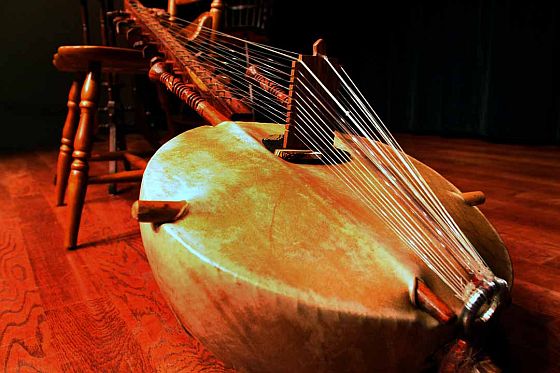
Toumani Diabaté is a Malian kora player and a griot. A kora is a West African harp and a griot is a custodian of oral tradition — in Diabaté’s case by belonging to a lineage of musicians in which father taught son, one after another for 71 generations.

In the video below, Diabaté gives a solo performance demonstrating the kora’s exquisite delicacy and range, while interspersed in the music are clips from an interview in which he talks about Malian history and the role of music in the Manden Empire.

For those of us from cultures spellbound by the power of the written word, it’s difficult to appreciate the significance and value of oral traditions. The idea that knowledge could only be spoken and passed along from hand to hand — the idea that knowledge resides in the whole person and that it can only be passed on when people come in physical contact — might seem like a constraint and a deficit, restricted to people who lack more portable and reproducible mediums of communication. In contrast, we have come to believe that knowledge can be embedded in inanimate devices and that the acquisition of knowledge depends above all on access to those devices.

Most of us have not experienced apprenticeship or learned the ways in which knowledge often resides in the smallest details. This is the knowledge of craft which builds in increments through patient repetition. And as Diabaté demonstrates, knowledge acquired in this way goes far beyond the talent of an individual, becoming an aggregation of learning that spans centuries. One man becomes the vessel containing the wisdom of all his ancestors. His actions are not his alone as hands, long gone, animate those that live now.

Facebooktwittermail

Beyond al Qaeda

Howard W French writes: Pundits who bang on about the events in Mali on television today speculate glibly about the possible linkup of militant Islamic movements in places like Mauritania, Mali, Algeria, and northern Nigeria, potentially constituting a vast sea of Muslim radicalism and hostility to the West. They would do better to understand that such currents are inherent to the politics and culture of this region and are in no way a recent import. Rejection of borders and of the European drawn states is as old as the borders themselves, and Islam has always played a central role in this, as intellectual base, religious justification and rallying catalyst. These currents have been given added force and coherence by the age-old movement of peoples and ideas via pastoralism, overland pilgrimage to Mecca and the existence of large, sprawling and aggrieved transnational ethnic groups — like the Tuareg, Hausa, and Fulani, to name three — whose interests were never considered by the imperial mapmakers.

Most of those who write on today’s crisis seem to ignore that the Tuareg, who are a key to events in Mali, have been sporadically fighting for decades against the country of that name we see on the map. During a visit I made to Timbuktu in the 1990s, Tuareg rebels fired mortars into the town that landed within meters of my hotel with no prior warning, scrambling tourists and creating a state of emergency.

As for other rebel groups in the region, their general pattern has been to raise tensions like this, forcing the government, in effect, to sue for peace by offering money, talks about greater autonomy, or other concessions. What was new this time had less to do with the presence in the equation of an al Qaeda spinoff than with the fact that there has been no government worthy of the name in the capital, Bamako, since a military coup overthrew the elected president last March.

Before we start breaking out hammers in search of nails, this crisis should serve as a powerful reminder of the necessity of much stronger preventive diplomacy in Africa in general, a thread that runs through major crises in Rwanda, the Congo and most recently Côte d’Ivoire. When I spent time in Mali in the summer of 2011, Western diplomats seemed scantily informed and almost blasé about the situation there; this at a time when the political cognoscenti was already warning of an advanced state of rot that involved mounting corruption, drug trafficking, and high-level dawdling over rising Islamic militancy.

However, even the best diplomacy, which we clearly haven’t had in Africa, won’t change the fact that the Sahel is in for a period of extended unrest and uncertainty. Its vastness contains some of the most sparsely inhabited real estate anywhere, peppered here and there by far-flung population centers with little economic viability or connection to the outside world. Places like these are easy to attack and hard to hold, and the militants’ game of blackmail for greater resources is extremely tempting.

Whatever the political or religious labels of the militants, however, the biggest driver of turmoil in this region in the future will be population. The peoples of the arid Sahel have some of the highest birth rates in the world, and there is little prospect that they will be able to accommodate the quadrupling or more of their populations, as projected by the U.N., before century’s end. Under such scenarios, Mali will go from 16 million or so today to 75 million people. Even poorer Niger, next door, will surge from today’s similar population base to 125 million.

Explosions like these will make a mockery of the political map of Africa that is familiar today, as major ethnic clusters outstrip the claims of the present-day states to govern them. Al Qaeda in the Islamic Maghreb surely must be dealt with now, but over time it will be the least of our worries.

Facebooktwittermail

Was al Qaeda given a safe haven in northern Mali?

In an extract from his forthcoming book, Andy Morgan writes about ties that are claimed to have been secretly formed between the Malian government and Al Qaida in recent years. “There are facts about Al Qaida in the Islamic Maghreb (AQIM) that are reassuringly hard and verifiable. The organisation exists. It’s run by Algerian Arabs. It’s made a home from home in the north east of Mali… It earns millions and millions of euros from kidnapping westerners.”

With a couple of rare if significant exceptions, AQIM have never actually kidnapped their victims on Malian soil. They’ve only brought them back to Mali for safe-keeping. And with the equally rare exception of a major clash north of Timbuktu in July 2009, in which 28 soldiers were killed, the Malian army have never actually lead a full frontal assault on Al Qaida.

These two facts alone have lead many conspiracy theorists and almost the entire Touareg intelligentsia at home and abroad, to conclude that Al Qaida were invited on to Malian soil by the Malian government in order to the discredit the Touareg nationalist movement and mask the illegal trafficking going on in the north, from which a number of middle-ranking and senior Malian officials were drawing hefty amounts of black cash. In the atmosphere of anti-Islamist paranoia that seized the world following the 9/11 attacks, it was expedient for any government to twist the international image of a recalcitrant separatist movement and pass it off as an Islamist terror one instead. The strategy masked the true nature of the separatist struggle, confused international opinion and secured almost immediate benefits in the form of better diplomatic and security ties with the USA and Europe, more military aid, both in money and in kind. That’s what happened in Mali in the years following 2003.

The problem with the theory of collusion between AQIM and the Malian government is that no firm evidence has ever been produced to back it up. No one has actually photographed or recorded a Malian army officer or secret service agent chatting with an Al Qaida emir, or taking possession of a fat brown envelope full of narco-cash in some distant corner of the northern deserts. Of course, that’s the nature of this shadowy world. Nothing is ever written down. Dirty deals are done behind closed doors, or on an impossibly remote sand dune right in the middle of nowhere. The north of Mali has been closed to outsiders, especially journalists, for years. AQIM money is carefully laundered through various banks and legitimate businesses in Mali, Niger, Mauritania and further afield. Or it’s used to buy huge herds that chomp happily on the pastures of the north, away from the prying eyes of the world. There are no witnesses on record because there has never been any proper investigation. And even if there had been, who would risk their skin to expose skullduggery at such high levels. Fully uncovering the matrix of villainy that has been choking Tinariwen’s homeland since the beginning of the millennium presents a journalistic challenge that would make Watergate look like an episode of Miss Marple.

At the moment, all it can ever boil down to is one enormous hunch, a devil’s choice between a damning and a marginally less damning scenario. At best, finding AQIM on their territory, the Malian government just left them there to fester, knowing full well that their presence would putrefy the social fabric of the northern deserts. They did this because they didn’t want to risk Malian lives by taking fight to the terrorists, and / or because there were Northern Arabs in the Malian army and secret services who had strong family and cultural ties to AQIM and encouraged its presence on Malian soil because it provided an effective screen behind which they could continue with their high-stakes smuggling. Furthermore, AQIM’s presence in the north east would sully the Touareg independence cause with the taint of Islamic terrorism, an especially apt consideration following the Touareg rebellion of May 23rd 2006. At worst, all of the above is true, except that instead of waking up one morning and finding them there, the Malians actually invited AQIM to come and establish their iniquitous presence on this once open and welcoming land. That Malian policy towards AQIM should have been quite so cynical might come as quite a surprise to many. Diplomats at the US Embassy in Bamako were certainly quit taken aback when, in October 2006, a key official in the Malian Ministry of Territorial Administration told them that hostilities between the GSPC and the latest in a long line of Touareg rebel movements, the ADC, worked to the government of Mali’s advantage. Following clashes between the Touareg rebels and the GSPC, the terrorists had vowed to wipe out the ADC leadership. “The enemy of my enemy is my friend,” stated the Malian politician. Exactly how friendly, he refused to say.

Facebooktwittermail

Palestinian activists bemoan their lost Arab Spring

Asmaa al-Ghoul writes: “Is it easier to get a visa to Belgium or Sweden? How do I apply for asylum? Should I tear up my passport or hide it? Will the iris scan be conducted in the first country in which I arrive or the country in which I will seek asylum?” These questions, among others, are what busy the mind of 23-year-old Mahmoud Yahya these days.

Only a year ago Mahmoud was optimistic for change, and two years ago in 2011, Mahmoud took to the streets to effect that change. He says he felt like a giant then, capable of anything.

Mahmoud told Al-Monitor, “With every passing year, my despair increases. When I recall what I was like a year ago, I remember the hope I had that our hate-filled political and social reality could change. But when I look at how I was at the beginning of 2011, I cannot believe how convinced I was that I was Superman, and the same goes for how I saw all the other young people. The Arab revolutions had truly changed us.”

He added, “For the first time we felt like we had some agency. We went out to the streets on Dec. 5, 2010, and we confronted Central Security of the deposed government without blinking an eye. We broke through our collective fear and took to the streets protesting the closure of the Sharek Youth Forum. We took to the streets again in 2011 during the Egyptian and Syrian revolutions and were imprisoned and beaten, which also happened to our counterparts in the West Bank. Finally we had our own revolution on Mar. 15, 2011. Our defining chant was, “The people want to end the division!” They beat us, slandered us, broke our limbs, smeared our reputation and blackmailed us, which culminated in the killing of our Italian comrade Vittorio by unknown assailants. From that moment on, sadness and frustration would silence us forever.”

Mahmoud gazed at the ceiling, eyes welling up, “We believe in our strength, but we were romantic. When I saw all of the March 15 activists emigrating and traveling away from Gaza, I knew that we had failed to bring about our Palestinian Spring, so I decided to travel as well.” [Continue reading…]

Facebooktwittermail

The death of Fatah and the future of Palestine

Dalia Hatuqa writes: After nearly a half-century of existence, Fatah has left many loyalists and critics alike pondering its accomplishments. On New Year’s Eve, the Palestinian political party — which has led the Palestine Liberation Organization (PLO) for decades and currently holds the presidency of the Palestianian Authority (PA) — celebrated its 48th anniversary. In Ramallah, a few thousand mostly young men marched across the West Bank city to the Muqata’, the headquarters of the PA president and Fatah leader, Mahmoud Abbas. The streets were lined with the party’s younger supporters, some elderly veterans clad in military fatigues and several high-ranking members of the group’s leadership who are based in the West Bank.

As the marchers converged upon the headquarters — once a ravaged icon of the second Intifada, today it stands a revamped modern military compound — many started to trickle away. Addressing the enthusiastic group that remained, Abbas, looking every day of his 77 years, spoke of Palestinian leaders of years past. He started with Yasser Arafat, a Palestinian figure unrivaled in his persona, then moved on to Abu Jihad and Abu Eyad — both icons of Palestinian resistance — and Sheikh Ahmed Yassin, Hamas’s late spiritual leader, whose group Fatah has been at loggerheads with since it wrested control of the Gaza Strip in 2007.

Abbas recited the litany of names as if lamenting his party’s failure to deliver a unifying leader since Arafat to guide Palestinians through exceptionally troubling times: a moribund peace process, dire economic circumstances brought about by dwindling international aid, mushrooming Israeli settlements, and a political and geographical rift with the Gaza Strip.

Besides the marching band and the rally, few people in town seemed aware, let alone interested, in the festivities. Discussion of the economy and the E1 Israeli settlement plan dominated TV and radio station talk shows and café conversations. On the domestic political front, Fatah hasn’t been faring as well as should be expected on its home turf. During last October’s municipal elections, only 54 percent of eligible voters turned out to cast their ballots. Despite a Hamas boycott, Fatah was unable to present a unified front and many of its members broke with the party line by running on independent platforms. [Continue reading…]

Facebooktwittermail

America’s self-sufficiency and self-destruction

The xenophobic slogan — we must end our dependence on Middle East oil — popularized by American politicians throughout the last decade, will soon become a reality.

It was always obvious that this was a pathological mutation of the laudable goal, we must end our dependence on oil. But political operatives couldn’t resist hijacking that aspiration, injecting America’s post 9/11 fear of the Middle East and then tying that fear to the sacrosanct American way of life.

Thus we end up with the perverse contradiction of a president who in one breath acknowledges the threat posed by climate change, yet in the next champions the goal of “energy security” — a goal which will be accomplished during the most environmentally destructive chapter in America’s oil glutenous history.

The Guardian reports: Warnings that the world is headed for “peak oil” – when oil supplies decline after reaching the highest rates of extraction – appear “increasingly groundless”, BP’s chief executive said on Wednesday.

Bob Dudley’s remarks came as the company published a study predicting oil production will increase substantially, and that unconventional and high-carbon oil will make up all of the increase in global oil supply to the end of this decade, with the explosive growth of shale oil in the US behind much of the growth.

As a result, the oil and gas company forecasts that carbon dioxide emissions will rise by more than a quarter by 2030 – a disaster, according to scientists, because if the world is to avoid dangerous climate change then studies suggest emissions must peak in the next three years or so.

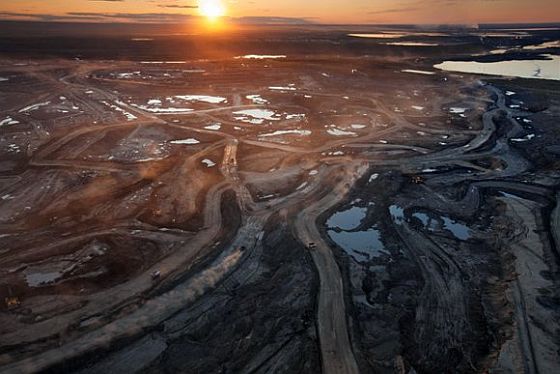
So-called unconventional oil – shale oil, tar sands and biofuels – are the most controversial forms of the fuel, because they are much more carbon-intensive than conventional oilfields. They require large amounts of energy and water, and have been associated with serious environmental damages.

While some new conventional oilfields are likely to come on stream before 2020, they will be balanced out by those being depleted.

BP predicts that by 2030, the US will be self-sufficient in energy, with only 1% coming from imports, the company’s analysts predict. That would be a remarkable turnaround for a country that as recently as 2005, before the shale gas boom, was one of the biggest global oil importers. [Continue reading…]

Facebooktwittermail

Tribalism and the Syrian crisis

Tareq al-Abd writes: Prominent tribal figures have become omnipresent in Syrian opposition meetings, at a time when the regime is also hosting meeting after meeting for these same leaders. All of this is transpiring amid fears that societal unity will once again become fragmented, opening the door to tribal clashes in the worst possible scenario that could face Syria.

Tribal influence has returned to the forefront of the country’s political scene. Although their presence on the ground fluctuates between weak in some areas to effective in others, the impression is that Syrian society still longs for the old days of tribal friction and polarization, despite the fact that cohesion between some of them has played a positive role in avoiding disputes. As a result, there is a new drive to monitor the country’s tribal communities, their influence and relationship with the regime, be they for or against the current government.

The Syrian tribes are spread throughout all the regions of the country, from the extreme northeast in the plains of al-Jazira and the Euphrates river valley, all the way to the Badiya desert, Homs, Hama and the Damascus countryside, as well as the southern regions of Hauran and Jabal al-Druze. All these tribes are interconnected and have relationships with neighboring countries, especially Iraq and Jordan, with some tribes even claiming ties in Saudi Arabia. Furthermore, many inhabitants of Mount Lebanon still retain a strong connection to their places of origin in southern Syria and maintain good relations with their relatives there, while others have Turkish ancestry, such as the Abazaid clan in Daraa. [Continue reading…]

Facebooktwittermail

Laying bare the facts about Netanyahu and the settlements

Lara Friedman writes: On December 31, 2012, Time Magazine published an article entitled, “The West Bank’s 2012: The Year of the Israeli Settlement.” Earlier this week, the Israeli Peace Now movement released a new report that makes a case for a different title: 2009-2013: the Years of the Israeli Settlements. The new report (which I co-authored) details the Netanyahu government’s record on settlements over the course of its past 4 years in office. The results are incontrovertible: by every objective measure, the Netanyahu government has demonstrated that it is determined to use settlements to destroy the very possibility of the two-state solution.

Peace Now documents how, under the Netanyahu government, constructed started on 6867 new units in settlements. More than one-third of these starts were in settlements located east of the planned route of Israel’s separation barrier—areas that it cannot plausibly be argued will remain under Israeli control after a Israeli-Palestinian peace agreement. In the years preceding the Netanyahu government, only 20 percent of new construction was in settlements in these areas. Much of this new construction was triggered by the Netanyahu government, which tacitly encouraged settlers to begin new construction in the period leading up the 10-month settlement “moratorium” and then insisted that such construction must be allowed to continue during the moratorium.

Peace Now also documents the record number of tenders for new construction in settlements issued under the Netanyahu government, following the expiration of the settlement “moratorium.” We’re talking about tenders for 5302 new units in settlements in the West Bank and East Jerusalem—a number that erases the impact of the moratorium. [Continue reading…]

Facebooktwittermail

Mali’s music and the soul of Africa: Salif Keita

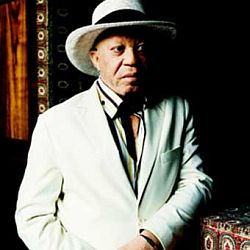
Salif Keita

Angelique Kidjo, Beninoise singer-songwriter: Exiled in Paris from my native Benin in west Africa, I started to study music in a jazz school in 1985. I could hear the passion the great jazzmen had for African music. John Coltrane had written a song called Dahomey Dance after the name of my country and it has been said that Miles Davis’s modal approach in Kind of Blue was inspired by a performance of the Ballets de Guinée that he attended. But African music in the 80s was just about dance, partying, Congolese guitars and “la Sape”, the Zairian form of dandyism. I was so frustrated. I could not imagine how to reconcile in my music the beauty of the traditional music of my youth with the modern sounds of jazz. Then, in 1987, came Salif Keita’s album Soro. It was a grand revelation for me. In the opening of the song Sina, his most amazing voice felt like an incantation. It was surrounded by mystical minor chords and backed by the funkiest Malian polyrhythms you could imagine! The emotion it carried gave me a sense that African culture had unlimited depth and power and could also touch your heart like nothing you had heard before.

(Some readers here might not have noticed this site has a music section which includes playlists from many artists around the world including Salif Keita.)

Facebooktwittermail

Syrian rebels accuse jihadist groups of trying to hijack revolution

Martin Chulov reports: Over the past six weeks a once co-operative arrangement between Aleppo’s regular Free Syrian Army units and al-Nusra has become one of barely disguised distrust.

A week of interviews with rebel groups in north Syria has revealed a schism developing between the jihadists and residents, which some rebel leaders predict will eventually spark a confrontation between the jihadists and the conservative communities that agreed to host them.

Some already talk of an Iraq-style “awakening” – a time in late-2006 as when communities in the Sunni heartland cities of Fallujah and Ramadi turned on al-Qaida groups in their midst that had tried to impose sharia law and enforce their will through the gun barrel.

“We’ll fight them on day two after Assad falls,” a commander said. “Until then we will no longer work with them.”

In recent weeks Liwa al-Tawhid and other militias who form part of the Free Syrian Army have started their own operations, without inviting al-Nusra along.

A raid on an infantry school north of Aleppo was one such occasion; so are attacks against Batallion 80 on the outskirts of the city’s international airport and a military base to the east, known as Querres.

“They are not happy with us,” the rebel leader said. “But they had been hoarding all their weapons anyway.”

Another significant issue for rebel leaders is what to do with state assets that have fallen into the hands of the opposition.

“They see stealing things that used to belong to the government, like copper factories, or any factory, as no problem,” said the rebel commander. “They are selling it to the Turks and using the money for themselves. This is wrong. This is money for the people.”

On Monday al-Nusra units went to a state-owned water factory on the Euphrates river. They invited regular rebel units to go with them as they picked through parts inside the factory for selling to whoever wanted them.

One unit did join the jihadists. Others refused.

“These are Syrian assets for Syrian people,” said a rebel commander who did not want to be named. “They see this as an open pasture for them to do as they please. Our job is to protect the state for life after Assad, not to destroy it.”

Money is flowing to al-Nusra. Members acknowledge that they receive cash from benefactors in the Sunni Arab world. But their coffers are also being filled with a garage sale of state assets, largely conducted by al-Nusra leaders.

A rebel unit pulled up on a main road in eastern Aleppo just up the road from the al-Nusra base. Pigeons circled over the city’s ancient citadel, which soared from a hilltop in the near distance.

Another rebel approached, this time to complain that young girls in his village had been pledged as brides to anyone who joined al-Nusra. “This is part of the employment benefits,” he said.

For now, community leaders seem to be able to say no to al-Nusra suitors who come calling, but fear these rights might be whittled away if the group consolidates its influence. [Continue reading…]

Facebooktwittermail