The Palestine Papers — live updates

6:29 Ali Abunimah writes:

One of the more astonishing revelations in The Palestine Papers — detailed records and minutes of the Middle East peace process leaked to Al Jazeera — is that the administration of US President Barack Obama effectively repudiated the Road Map, which has formed the basis of the “peace process” since 2003. In doing so it has backed away even from commitments made by the George W. Bush administration and blown an irreparable hole in the already threadbare “two-state solution.”

But even worse, the US position perhaps unwittingly opens the door to dangerous Israeli ambitions to transfer — or ethnically cleanse — non-Jewish Palestinian citizens of Israel in order to create an ethnically pure “Jewish state.”

Alastair Crooke writes:

Al Jazeera’s release of The Palestine Papers helps to make clear why there is no Palestinian state. It illuminates a key flaw in Palestinian and western understanding of Israeli thinking. It is this flaw which helps explain why a state has failed to emerge – despite the many, many opportunities in the last nineteen years in which it could have.

The root premise has been, since the outset of the ‘process’, that Israel was intent on having and maintaining a Jewish ‘majority’ within Israel, and that with time – and a growing Palestinian population – Israel would have to acquiesce to a Palestinian state simply to maintain its Jewish majority: that is, by losing Palestinians into their own state, Israel’s Jewish majority could be conserved – and by these means, and only by such means, finally could such a majority be conserved.

It is a very compelling narrative. It suggested that a Palestinian state was inevitable: Palestinians simply had to ‘prove’ their readiness to assume statehood to Israel – and a state would be given them.

Professor Mushtaq Khan from London’s School of Oriental and African Studies argued in a recent talk that it was precisely this type of analysis that lay behind Fatah’s approach to Oslo. It explains, he argues, why the Palestinian leadership at this time never made real attempts to create serious bargaining power vis-à-vis Israel: the leadership simply did not think it necessary. They saw their task to be ‘confidence building’ with the Israelis.

“The Obama way”:

4.29: At a moment when the success of the Tunisian revolution is sending a message across the region about the effectiveness of people’s power and arousing renewed hope for the restoration of lost dignity, the image of Palestinian negotiators ingratiating themselves before Israeli ministers, strikes a very discordant note.

When Ahmed Qurei, a former Palestinian prime minister, told Israel’s foreign minister Tzipi Livni that, “I would vote for you,” he might have been joking, but such a fawning expression of admiration for a minister who so strongly supported the slaughter of Palestinians in Gaza, exposes the Palestinian leadership in the worst possible light.

3.30: Mark Perry and Ali Abunimah describe how the Obama administration, contrary the image it presented as being willing to put pressure on the Netanyahu government, has in fact never swerved from the role of acting as “Israel’s lawyer”:

A series of six key documents dating from February of 2009 – a core element of the confidential memos, monographs and meeting notes leaked to Al Jazeera as part of The Palestine Papers – show that George Mitchell and his coordinating team, as well as Secretary of State Hillary Clinton, have consistently pressured Palestinian negotiators (and in particular chief negotiator Saeb Erekat) to accept Israeli demands on a host of core negotiating issues.

In addition, the documents show that the United States has been willing to ignore and even abandon key agreements and principles that, in years past, it insisted both parties follow. The evidence for this, in the documents, is compelling – even overwhelming. It explodes the idea that the Obama administration ever even attempted to pull the United States off a doomed course.

The evidence that America remains Israel’s lawyer emerges first in the account of a February 27, 2009 meeting between Mitchell and key members of his team, with Saeb Erekat (and a top assistant) at the U.S. Consulate in Jerusalem.

3.08: Al Jazeera reveals Israeli plans for the expulsion of Israel’s Arab population:

During several 2008 meetings with Palestinian negotiators, Livni proposed annexing Arab villages to the future Palestinian state, forcing tens of thousands of Israeli Arabs to choose between their citizenship and their land.

“The US position on borders perhaps unwittingly opens the door to dangerous Israeli ambitions to transfer — or ethnically cleanse — non-Jewish Palestinian citizens of Israel in order to create an ethnically pure ‘Jewish state.'”

Her clearest language came on June 21, 2008, when she told senior Palestinian negotiators Ahmed Qurei and Saeb Erekat that their land swaps should include Israeli Arab villages. Udi Dekel, a top adviser to the then-Israeli prime minister Ehud Olmert, rattled off a list of villages that would be annexed to Palestine.

Livni: We have this problem with Raja [Ghajar] in Lebanon. Terje Larsen put the blue line to cut the village in two. [This needs to be addressed.] We decided not to cut the village. It was a mistake. The problem now, those living on Lebanese soil are Israeli citizens.

Dekel: Barka, Barta il Sharqiya, Barta il [Garbiya], Betil, Beit Safafa…

Qurei: This will be difficult. All Arabs in Israel will be against us.

Becker: We will need to address it somehow. Divided. All Palestinian. All Israeli.

Two months earlier, in another meeting with Qurei and Erekat, Livni herself mentioned the same villages, describing them – their status in the state of Israel – as a problem in need of resolution.

Livni: Let us be fair. You referred to 1967 line. We have not talked about Jerusalem yet. There are some Palestinian villages that are located on both sides of the 1967 line about which we need to have an answer, such as Beit Safafa, Barta’a, Baqa al-Sharqiyeh and Baqa al-Gharbiyyeh.

Livni’s choice of words is striking. Beit Safafa, Barta’a and Baqa al-Gharbiyya all sit at least partly on the Israeli side of the Green Line; their inhabitants carry Israeli passports, pay taxes to the Israeli government, and overwhelmingly self-identify as Israelis.

But Livni describes them as Palestinians – and suggests that they do not belong in the state of Israel.

2.19: It has long been understood that a negotiated agreement between Israelis and Palestinians would involve so-called “land swaps” through which some of the occupied territory outside Israel’s 1967 borders on which Jewish settlements have been constructed would become part of Israel, in exchange for areas of land within the ’67 borders that would become part of the new Palestinian state.

The following exchange between Israeli and Palestinian negotiators during a meeting held on March 12, 2008, makes it clear that the Israelis do not even recognize the existence of the 1967 line. Keep in mind that these were negotiators representing the so-called moderate government of Ehud Olmert.

The following Israeli [I] and Palestinian [P] negotiators attended the meeting: Israeli: Udi Dekel [UD] and Dani Tirza [DT]; Palestinian: Dr. Samih Al-Abed [SA], Khaled Elgindy [KE], Nizar Farsakh [NF].

Udi Dekel [I]: Now, about today’s meeting, I don’t know what Abu Alaa and [Tzipi] Livni agreed but, as I understand it, we need to agree on a common language when it comes to territory and borders. From your side, I know there was discussion of percentages, or areas (in sq. km)… In the previous two meetings with Abu Alaa and Livni, we started to explain all the considerations of what we mean when we talk of territory and borders.

SA [P]: You are jumping directly into discussing areas. We need to discuss parameters or guidelines. You spoke of sq. km, but we already have a starting point, which is 1967. We just need to have all the maps. This is what we need for a breakthrough. We must have a common language, agree on common maps and data, and then we can have a discussion about the issues.

UD [I]: As you know, our guiding principles are UNSC Res. 242, the need for boundaries that can provide security for Israel, and we’re talking about the situation on the ground, as per Pres. Bush’s letter.

SA [P]: Do you mean the situation as it was then, or now?

UD [I]: Reality now… But we’re not going to argue. We can’t change reality on the ground. We don’t see the 1967 border as a reference, first because we don’t even know exactly where the line is.

SA [P]: We have all the maps that were signed by you.

UD [I]: But that wasn’t exactly the line on the ground.

SA [P]: If not the 1967 line, then what is your reference?

UD [I]: We said already, the situation on the ground.

SA [P]: The wall?

UD [I]: The security fence is not a border. Unfortunately, it is needed for security. Every week we intercept 3 to 4 suicide bombers. As we’ve said before, the fence is not a border and can be moved like we did with Lebanon.

NF [P]: What is your frame of reference?

UD [I]: We’re talking about blocs of settlements—not far in the West Bank, but close to the area we are talking about—are to be part of Israel. In Oslo we used the West Bank outline map.

DT [I]: It is the West Bank outline map, in which under our law Israeli military law is applied.

SA [P]: This is your law. In our law, the line is 1967.

DT [I]: Based on which maps? There is no…

SA [P]: This is the standard we’ve worked from, from Oslo to Taba… we are not going to discuss any other line. If we’re going to waste time this is something else.

UD [I]: This is your opinion, but not our opinion. It is very difficult to locate the exact line of the situation that existed on 4 June 1967.

1.54: This is one of those days when a lot of American journalists must know what it felt like being a native journalist in the Soviet Union — never allowed to swerve from the official line. At the Los Angeles Times, Edmund Sanders yawns: “The documents so far haven’t revealed anything that someone moderately familiar with the Mideast hasn’t already heard.”

12.19: Amjad Atallah suggests that the release of the Palestine Papers “may have the same emotive impact among Palestinians that the suicide of Mohamed Bouazizi had in Tunisia” — another event in which Al Jazeera‘s groundbreaking news coverage played a key role.

WikiLeaks’ data dump of U.S. diplomatic records; the demonstrations in Tunisia, Algeria, Egypt, Jordan, and Yemen; and Hezbollah’s success in Lebanon have created an atmosphere of empowerment among a normally dispirited Arab public. Change is no longer impossible — and the United States no longer needs to be the agent of change.

This means there may be more exhibitions of “people power” with unpredictable consequences. The Arab authoritarian systems (most with the support of the U.S. government) are ill-equipped to deal positively with this type of demand for change.

Different forces in the region will now begin to see how they can take advantage for good or bad from this new reality. Unfortunately, if the United States stays true to form, we’ll simply struggle to see whether we can maintain the status quo.

In other words, President Obama is likely to yet again act as an obstacle, not an instrument of change in the world.

11.59: Noam Sheizaf assesses the effect of the Palestine Papers on the Israeli side.

Prime Minister Netanyahu will probably not suffer any damage on the home front, at least in the short term. Netanyahu might even use the papers to claim that his government’s construction projects in occupied East Jerusalem pose no threat to the peace process, since the Palestinians have already agreed to give up most of the Jewish neighborhoods in this part of the city.

The Israeli government would also benefit from a renewal of the internal war on the Palestinian side. For years, Israel has tried (and for the most part, succeeded) to break Palestinian society into sub-groups with different political interests and agendas. When those groups fight each other, the Palestinian cause suffers.
Yet from a wider perspective, the release of the Palestinian offers during the 2008 talks serves as proof that Israel in fact had a partner for peace on the Palestinian side. Actually, the question from now on will be whether Israel itself is a partner for an agreement. Furthermore, after the steps Palestinian and Israeli negotiators took towards each other in previous rounds of talks, the current Israeli offers, such as a temporary state on half of the West Bank’s territory, will appear cynical and unrealistic.

For years, Israel has used the peace process as a way to hold back international pressure on the Palestinian issue. It will be harder to do so from now on. This will be Netanyahu’s greatest problem.

11.47: Rashid Khalidi on Democracy Now!: Leaked “Palestine Papers” underscore weakness of Palestinian Authority, rejectionism of Israel and U.S.

“The biggest Yerushalayim in Jewish history”

11.35: In the Financial Times [registration required], Nadia Hijab writes:

When, some 30 years on, the late Palestinian leader Yasser Arafat returned from the failed Camp David summit in 2000, he was excoriated by the US and Europe for rejecting Israel’s “generous offer”. By contrast, many Palestinians heaved a sigh of relief that Mr Arafat had refused to sign an agreement that would have ceded Jerusalem, and trisected the West Bank.

Now these new leaks reveal that it is the PLO/PA that has been making the generous offers, and Israel has been rejecting them. If the documents are to be believed, almost all of East Jerusalem has been on the table. Perhaps this time we should be grateful Israel hasn’t signed.

What next? The Palestinian leadership have two plausible options, but will likely take neither.

The first would to be attempt to retake the high ground. This would mean dissolving the PA, and refocusing its attention on the PLO’s primary task – the liberation of Palestine. This would also involve repairing relations with Hamas, and trying to bring all Palestinian political and civil forces into a rejuvenated organisation.

The second is to continue down the road of hoping that someone, somewhere will exert pressure on Israel to give up the occupied territories and recognise Palestinian rights.

10.56: The Guardian describes anger and disbelief among Palestinians in Gaza reacting to the release of the Palestine Papers:

Tailor Maher Mohammad, 50, said the revelations were incredible. “I couldn’t believe my eyes when I watched it, this is cheating to Palestinian people. Jerusalem is a holy land, nobody can make concessions regarding it because it’s not for Palestinians only but for all Muslims.”

Mahmoud Ismael, 58, a shopkeeper, questioned the motives of the person who leaked the documents. Palestinians, he added, expected little from their leaders whether Fatah or Hamas. “Both of them don’t care about Palestine, they care only about their benefits,” he said.

Salah Bardaweel, a senior Hamas leader, said the organisation was studying the document. “We are asking the president Mahmoud Abbas to go to the public and announce his position on what was leaked by Al Jazeera, and make it clear we don’t accept that and assure the Palestinian principles on the key issues.”

The main problem now, he added, was “not between Hamas and Fatah, it’s now between the Palestinian people and the Palestinian negotiator”.

10.03: Palestinian chief negotiator Saeb Erekat accused of treason:

9.23: Some Palestinians who don’t like the message have attacked the messenger. AJ’s Alan Fisher tweets: “The crowd has managed to get into the office in Ramaallah. #aljazeera’s staff is ok. Some walls have graffiti”. Fisher nows says the crowd has gone and the AJ building is under police protection.

9.17: An editorial in The Guardian said:

[The British member of parliament] Gerald Kaufman once described Labour’s 1983 manifesto as the longest suicide note in history. If ever a set of documents merits this epithet, it is surely the one we publish today. Written by Palestinian officials, obtained by al-Jazeera and shared with the Guardian, the papers are the confidential record of 10 years of efforts to seek a peace agreement with Israel.

It is hard to tell who appears worst: the Palestinian leaders, who are weak, craven and eager to shower their counterparts with compliments; the Israelis, who are polite in word but contemptuous in deed; or the Americans, whose neutrality consists of bullying the weak and holding the hand of the strong. Together they conspire to build a puppet state in Palestine, at best authoritarian, at worst a surrogate for an occupying force. To obtain even this form of bondage, the Palestinians have to flog the family silver. Saeb Erekat, the PLO chief negotiator, is reduced at one point to pleading for a fig leaf: “What good am I if I’m the joke of my wife, if I’m so weak,” he told Barack Obama’s Middle East envoy George Mitchell.

9.12: AJ’s Clayton Swisher outlines the land swap agreement that Palestinian negotiators were offering — a swap that would be like exchanging real estate in Manhattan for vacant desert lots in Arizona:

9.05: Tariq Ali says that the extent of the capitulation documented in the papers would have shocked even Edward Said, who at its inception described the Oslo peace process as a ‘Palestinian Versailles’:

Even he would have been taken aback by the sheer scale of what the PLO leadership agreed to surrender: virtually everything except their own salaries. Their weaknesses, inadequacies and cravenness are now in the public domain.

Now we know that the capitulation was total, but still the Israeli overlords of the PLO refused to sign a deal and their friends in the press blamed the Palestinians for being too difficult. They wanted Palestine to be crushed before they would agree to underwrite a few moth-eaten protectorates that they would supervise indefinitely. They wanted Hamas destroyed. The PLO agreed. The recent assault on Gaza was carried out with the approval of Abbas and Hosni Mubarak in Egypt, not to mention Washington and its EU. The PLO sold out in a literal sense. They were bought with money and treated like servants. There is TV footage of Ehud Barak and Bill Clinton at Camp David playfully tugging at Arafat’s headgear to stop him leaving. All three are laughing. Many PLO supporters in Palestine must be weeping as they watch al-Jazeera and take in the scale of the betrayal and the utter cynicism of their leaders. Now we know why the Israel/US/EU nexus was so keen to disregard the outcome of the Palestinian elections and try to destroy Hamas militarily.

9.00: Haaretz‘s Akiva Eldar says Palestine Papers trump US State Department cables released by WikiLeaks:

The documents revealed by Al Jazeera are much more important than the documents recently released by WikiLeaks. The former document the talks that took place in 2008 between the head of the Palestinian negotiating team and then Foreign Minister Tzipi Livni, as well as with American officials, which is not just a chapter in history.

The compromises presented by the Palestinians vis-a-vis permanent borders in the West Bank and East Jerusalem are relevant to today. The Palestinian map that was shown to Ehud Olmert and representatives of the Bush administration was presented again two months ago to representatives of President Barack Obama, as well as Obama’s Mideast envoy George Mitchell and later Netanyahu’s representative Isaac Molcho. Molcho refused to accept the document.

The leaked documents completely discredit the claim that there is “no peace partner” made by the leader of the newly formed Atzmaut faction, Ehud Barak, and his boss, Benjamin Netanyahu.

8.53: Al Jazeera interviews Abdel Bari Atwan, Editor Al-Quds Al-Arabi

Facebooktwittermail

The Palestine Papers

Introducing the Palestine Papers:

Over the last several months, Al Jazeera has been given unhindered access to the largest-ever leak of confidential documents related to the Israeli-Palestinian conflict. There are nearly 1,700 files, thousands of pages of diplomatic correspondence detailing the inner workings of the Israeli-Palestinian peace process. These documents – memos, e-mails, maps, minutes from private meetings, accounts of high level exchanges, strategy papers and even power point presentations – date from 1999 to 2010.

The material is voluminous and detailed; it provides an unprecedented look inside the continuing negotiations involving high-level American, Israeli, and Palestinian Authority officials.

Al Jazeera will release the documents between January 23-26th, 2011. They will reveal new details about:

  • the Palestinian Authority’s willingness to concede illegal Israeli settlements in East Jerusalem, and to be “creative” about the status of the Haram al-Sharif/Temple Mount;
  • the compromises the Palestinian Authority was prepared to make on refugees and the right of return;
  • details of the PA’s security cooperation with Israel;
  • and private exchanges between Palestinian and American negotiators in late 2009, when the Goldstone Report was being discussed at the United Nations.

In The Guardian, Seumas Milne and Ian Black write:

The overall impression that emerges from the documents, which stretch from 1999 to 2010, is of the weakness and growing desperation of PA leaders as failure to reach agreement or even halt all settlement temporarily undermines their credibility in relation to their Hamas rivals; the papers also reveal the unyielding confidence of Israeli negotiators and the often dismissive attitude of US politicians towards Palestinian representatives.

Last night Erekat said the minutes of the meetings were “a bunch of lies and half truths”. Qureia told AP that “many parts of the documents were fabricated, as part of the incitement against the … Palestinian leadership”.

However Palestinian former negotiator, Diana Buttu, called on [chief Palestinian negotiator, Saeb] Erekat to resign following the revelations. “Saeb must step down and if he doesn’t it will only serve to show just how out of touch and unrepresentative the negotiators are,” she said.

In an article on the origin of the documents, The Guardian reported:

The bulk of the documents are records, contemporaneous notes and sections of verbatim transcripts of meetings drawn up by officials of the Palestinian negotiation support unit (NSU), which has been the main technical and legal backup for the Palestinian side in the negotiations.

The unit has been heavily funded by the British government. Other documents originate from inside the PA’s extensive US- and British-sponsored security apparatus.

The Israelis, Americans and others kept their own records, which may differ in their accounts of the same meetings. But the Palestinian documents were made and held confidentially, rather than for overt or public use, and significantly reveal large gaps between the private and stated positions of Palestinian and, in fewer cases, Israeli leaders.

The documents – almost all of which are in English, which was the language used by both sides in negotiations – were leaked over a period of months from several sources to Al Jazeera. The bulk of them have been independently authenticated for The Guardian by former participants in the talks and by diplomatic and intelligence sources.

The NSU – formally part of the Palestine Liberation Organisation (PLO) – is based in the West Bank town of Ramallah under the chief Palestinian negotiator, Saeb Erekat. It has drawn heavily on the expertise of Palestinian-American and other western-trained diaspora Palestinian lawyers for technical support in negotiations.

Al Jazeera has made the complete searchable database of the documents available on its new Transparency Unit site.

Karma Nabulsi writes:

It’s over. Given the shocking nature, extent and detail of these ghastly revelations from behind the closed doors of the Middle East peace process, the seemingly endless and ugly game is now, finally, over. Not one of the villains on the Palestinian side can survive it. With any luck the sheer horror of this account of how the US and Britain covertly facilitated and even implemented Israeli military expansion – while creating an oligarchy to manage it – might overcome the entrenched interests and venality that have kept the peace process going. A small group of men who have polluted the Palestinian public sphere with their private activities are now exposed.

For us Palestinians, these detailed accounts of the secretly negotiated surrender of every one of our core rights under international law (of return for millions of Palestinian refugees, on annexing Arab Jerusalem, on settlements) are not a surprise. It is something that we all knew – in spite of official protests to the contrary – because we feel their destructive effects every day. The same is true of the outrageous role of the US and Britain in creating a security bantustan, and the ruin of our civic and political space. We already knew, because we feel its fatal effects.

For the overwhelming majority of Palestinians, official Palestinian policy over these past decades has been the antithesis of a legitimate, or representative, or even coherent strategy to obtain our long-denied freedom. But this sober appreciation of our current state of affairs, accompanied by the mass protests and civil society campaigns by Palestinian citizens, has been insufficient, until now, to rid us of it.

The release into the public domain of these documents is such a landmark because it destroys the final traces of credibility of the peace process. Everything to do with it relied upon a single axiom: that each new initiative or set of negotiations with the Israelis, every policy or programme (even the creation of undemocratic institutions under military occupation), could be presented as carried out in good faith under harsh conditions: necessary for peace, and in the service of our national cause. Officials from all sides played a double game vis-à-vis the Palestinians. It is now on record that they have betrayed, lied and cheated us of basic rights, while simultaneously claiming they deserved the trust of the Palestinian people. [Continue reading…]

Facebooktwittermail

Globalized kidnapping backed by the US

Christian Science Monitor reports:

They came for Ismail Abubakar at nightfall on Aug. 9, 2010, plucking him from an outdoor market near the mosque where he had just finished teaching young Kenyans how to read the Quran.

The plainclothes Kenyan police shoved him into a car, took away his cellphone, hooded him, and drove him to a nearby police camp. Within hours, Mr. Abubakar – nicknamed “Mzungu” because of his pink albino skin – would be transported to Uganda to face charges for the July 11 suicide bombings that killed 76 people in Kampala, Uganda’s capital.

Three months later, Abubakar and two dozen other bombing suspects were released for lack of evidence. But the story of his rendition, and the ongoing detention of nine other Kenyans for the bombing, highlights a troubling pattern of extra-judicial abduction and human rights abuses as Africa increases efforts, often at the request of US counterterrorism officials, to combat rising Islamic terrorism.

Abubakar says he was “shocked” when investigators told him that he was about to be charged in the Kampala blasts. “I had never been to the west side of Nairobi, let alone go to Uganda,” he said.

When he was released Nov. 30, Abubakar was penniless and feared being rearrested. Donations from Ugandan Muslims helped him get to the Kenyan border. A travel document from the Ugandan government that said he was no longer a terrorism suspect helped him get across. “I was detained for nothing,” he said.

While condemned by human rights activists and the European Parliament, and criticized by some US military officials as “counterproductive,” renditions are seen by at least 28 US allies as a necessary weapon in the battle against terrorism. Estimates of the number of renditions since the US-led war on terror began after 9/11 are educated guesses, but some human rights organizations put the number over 1,000, and the British human rights group Cageprisoners estimates that 88 men, women, and children have been subjected to extrajudicial transfers from Kenya as of 2007.

Facebooktwittermail

The demand for dignity surpasses all others

There are those who want to portray the emerging trend of self-immolation across the Middle East as the expression of suicidal desperation. For instance, Adam Lankford, attempts to explain away the death of Mohamed Bouazizi — the man who triggered the Tunisian revolution — suggesting that:

By setting himself on fire near a government building during a period of political turmoil, Bouazizi must have anticipated that his act would be interpreted as a sign of political protest. And those who followed him were also no doubt aware of how their actions would be interpreted in this climate. However, it is relatively common for depressed and suicidal people to try to latch on to something bigger and more significant than themselves in their last moments on Earth — regardless of their primary agenda.

Subsequent deaths have been referred to as “copycats” — as though the most intensely solitary moment of anyone’s life would be shaped by thoughts of imitation.

Such observations are glib interpretations of death made by those who view it from a comfortably safe distance.

Michael Slackman recounts the story of an Egyptian man, Abdo Abdel-Moneim Hamadah, which is strikingly similar to that of Mohamed Bouazizi.

Mr. Hamadah had a small sandwich shop in Ismailia. The government bureaucracy suddenly denied him access to a monthly allowance of cheap, state-subsidized bread. After he set himself on fire, the government-controlled media said he was suicidal over that issue.

A relative said, however, that his protest was not about bread but dignity, the same intangible that drove Mr. Bouazizi to light himself on fire and that the governments here and around the region have yet to redress. The relative said Mr. Hamadah snapped after a government official agreed to give him back the bread, not because he was entitled to it, but as charity.

“They spoke to him like he was a beggar,” said the relative, who spoke anonymously for fear of government retribution. After Mr. Hamadah burned himself, the relative said, the government turned over the cheap bread.

“He got his rights,” the relative said. That, he said, was all Mr. Hamadah had been seeking.

In these acts of self immolation, individuals when stripped of every other power are asserting the one and only power they still possess: the power to end their own lives. Whether or not conceived as a revolutionary trigger, this is without question, a political action. It is a demand that the state not treat an individual life as worthless — a demand that such a life not be disregarded and treated with contempt.

The New York Times reports on the political shifts now evident in many quarters of the Middle East, through which ideology is being set aside in response to an even more urgent demand for the restoration of human dignity and liberation from oppression.

Egypt’s most powerful and proscribed opposition movement, the Muslim Brotherhood, has decided that it will not participate in an antigovernment demonstration this week for a curious reason: The protest conflicts with a national holiday honoring the police.

“We should all be celebrating together,” said Essam el-Erian, a senior member of the group, offering an explanation that seemed more in line with government thinking than that of an outlawed Islamist organization whose members are often jailed.

That type of calculation, intended to avoid a direct confrontation with the state, is helping build momentum, many here say, for a political evolution — in Egypt and around the region — where calls for change are less and less linked to a particular ideology like Islamism. Instead, analysts and activists say the forces that brought people to the streets in Tunisia and excited passions across the Middle East are far more fundamental and unifying: concrete demands to end government corruption, institute the rule of law and ease economic suffering.

This is a relatively nascent development in a society like Egypt, which has been depoliticized over the past three decades of President Hosni Mubarak’s one party, authoritarian rule, experts said. But the shift seems to be striking fear in the country’s leadership, which has successfully pacified opposition by oppressing those it cannot co-opt, but which remains anxious about the prospect of a popular revolt, political analysts and activists said.

“Ideology now has taken a back seat until we can get rid of this nightmare confronting everyone,” said Megahed Melligi, 43, a longtime member of the Muslim Brotherhood in Egypt who said he quit the group three years ago out of frustration. “This nightmare is the ruling party and the current regime. This is everyone’s nightmare.”

In 1979, the Iranian revolution introduced the Muslim world to the force of political Islam, which frightened entrenched leaders, as well as the West. That ideology still has a powerful hold on people’s imaginations across the region, which continues to feed fighters to jihadist movements. But like Arabism and socialism before it, the political Islam of Ayatollah Ruhollah Khomeini of Iran and the radicalized ideology of Al Qaeda and Osama bin Laden have failed to deliver in practical ways for the millions of people across the Middle East who live in bastions of autocratic rule.

That failure — and now the unexpected success of Tunisians in bringing down their government — appears to be at the heart of a political recalculation among some about how best to effect change in the Arab world. The Tunisians were joined together by anger at oppression and corruption rather than any overarching philosophy.

Facebooktwittermail

America’s treatment of detainees

Glenn Greenwald writes:

Amnesty International has written a letter to Defense Secretary Robert Gates objecting to the conditions of Bradley Manning’s detention, which was first reported here. The group denounces the oppressive conditions under which Manning is being held as “unnecessarily harsh and punitive,” and further states they “appear to breach the USA’s obligations under international standards and treaties, including Article 10 of the International Covenant on Civil and Political Rights.” The letter describes Manning’s treatment as particularly egregious “in view of the fact that he has no history of violence or disciplinary infractions and that he is a pre-trial detainee not yet convicted of any offence.” Moreover:

The harsh conditions imposed on PFC Manning also undermine the principle of the presumption of innocence, which should be taken into account in the treatment of any person under arrest or awaiting trial. We are concerned that the effects of isolation and prolonged cellular confinement . . . may, further, undermine his ability to assist in his defence and thus his right to a fair trial.

The letter follows a report from Manning’s lawyer, former Lt. Col. David Coombs, that the conditions of his detention temporarily worsened in the past week, prompting a formal complaint under the Uniform Code of Military Justice. [Continue reading…]

Facebooktwittermail

The National Security State of America

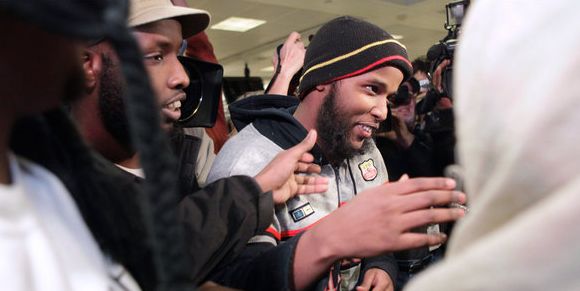
An American teenager, forced into temporary exile and then tortured in Kuwait– almost certainly with the knowledge of the Obama administrationhas been freed.

A Northern Virginia teen who had been barred from flying home from Kuwait landed in Washington on Friday morning, four weeks after being detained, allegedly beaten by Kuwait authorities and questioned by FBI agents about possible terrorist connections.

Gulet Mohamed, dressed in a worn hooded sweat shirt and sweat pants, was embraced by his family after he arrived at Dulles International Airport, the end of an ordeal that he said had “made me stronger.”

The United States “is built upon fighting for your rights,” Mohamed, 19, said in an interview.

Civil liberties groups charge that his case is the latest episode in which the U.S. government has temporarily exiled U.S. citizens or legal residents so they can be questioned about possible terrorist links without legal counsel.

The American Civil Liberties Union is suing the U.S. government on behalf of 17 citizens or legal residents who were not allowed to board flights to, from or within the United States, presumably because, like Mohamed, they were on the government’s no-fly list. Of those stranded overseas, all were eventually told they could return, often after they agreed to speak to the FBI. None was arrested upon their return.

The ACLU suit, filed in Portland, Ore., alleges that Americans placed on the no-fly list are denied due process because there is no effective way to challenge their inclusion. The government does not acknowledge that any particular individual is on the no-fly list or its other watch lists. Nor will it reveal the exact criteria it uses to place people on its list.

Meanwhile, the Washington Post reports:

The drone technology that has revolutionized warfare in Iraq, Afghanistan and Pakistan is entering the national airspace: Unmanned aircraft are patrolling the border with Mexico, searching for missing persons over difficult terrain, flying into hurricanes to collect weather data, photographing traffic accident scenes and tracking the spread of forest fires.

But the operation outside Austin [described at the beginning of this report] presaged what could prove to be one of the most far-reaching and potentially controversial uses of drones: as a new and relatively cheap surveillance tool in domestic law enforcement.

For now, the use of drones for high-risk operations is exceedingly rare. The Federal Aviation Administration – which controls the national airspace – requires the few police departments with drones to seek emergency authorization if they want to deploy one in an actual operation. Because of concerns about safety, it only occasionally grants permission.

But by 2013, the FAA expects to have formulated new rules that would allow police across the country to routinely fly lightweight, unarmed drones up to 400 feet above the ground – high enough for them to be largely invisible eyes in the sky.

Facebooktwittermail

Why the FBI wants you to join Facebook

Evgeny Morozov, author of The Net Delusion: The Dark Side Of Internet Freedom, interviewed by RFE/RL:

RFE/RL: One of your chapters is called “Why The KGB Wants You To Join Facebook.” Why does the KGB want us to join Facebook?

Evgeny Morozov: Part of the argument I’m making in the book is that authoritarian governments have immensely benefited from the web, and I point to three features. One of them is propaganda; one of them is new ways of censorship; and one of them is increased surveillance, more sophisticated surveillance.

The reason why the KGB wants you to join Facebook is because it allows them to, first of all, learn more about you from afar. I mean, they don’t have to come and interrogate you, and obviously you disclose quite a bit. It allows them to identify certain social graphs and social connections between activists. Many of these relationships are now self-disclosed by activists, by joining various groups. You can actually go and see which causes are more popular than others.

But also, it is possible to start identifying trends on the macro level. You can actually go and, using data posted to social-media sites (not just Facebook — I’m talking here more broadly about blogs and about tweets), you can actually start identifying which way social sentiment in a country is going. And that way you may get ahead of real developments.

If the Tunisian government had a sophisticated system of data-mining and analyzing everything that is happening in the country on social media, I bet they would have been much better prepared for what followed. Much of that outrage has been growing on Facebook early on and it was possible to go and check how angry people really were.

And I think many of these tools have already been developed by Western companies mostly, to do brand analysis. So there are a lot of interesting tools already to track consumer sentiment toward goods, and they can very easily be redeployed to study political sentiment. So this is one of the things which I think drives interest from governments in social media.

And not just authoritarian countries, but in the West as well. We have something called In-Q-Tel, which is the venture fund of the CIA, which has been investing in such social-media tracking and monitoring tools for several years now. It is definitely something that is attractive to all governments — not just authoritarian ones.

Facebooktwittermail

A president with no principles

Maybe Barack Obama thinks of himself as some kind of Taoist president — attuned to the moment, like water that effortlessly flows around rocks, the warrior who can deflect every blow through the power of non-resistance.

Before he entered office, he exhibited a certain kind of poise that allowed some of us to indulge in fantasies about how radically different he might be from his predecessor.

An abundance of possibility was wrapped in an equal amount of mystery, but once he assumed office we’d all get to find out who Obama really is — except, two years later it sometimes seems harder to determine what, if anything, this president stands for than it was when he was a candidate.

Midway through his first term, some observers will say it’s too early to make judgments about the man, but if we can’t judge him now, what’s the basis on which to judge whether he’s worth voting for again? The next two years during which most of his actions will have been tailored to enhance his re-electability?

When it comes to determining what Obama stands for, I’d say the absence of evidence is already evidence of absence. We don’t know what Obama stands for because he doesn’t stand for anything — which is precisely why some of his wild-eyed enemies see him as some kind of Manchurian candidate.

That suspicion no longer seems so far off the mark. There is plenty of evidence that he has allowed himself to become an instrument of external forces — those forces simply aren’t as exotic as the ones the conspiracy theorists imagined.

Jacob Bronsther writes:

Quick quiz: In one sentence, describe FDR’s political philosophy. Good, now summarize Reaganism. Pretty easy, right?

OK, do the same for President Obama. Still thinking? Don’t worry, Mr. Obama is, too. And that’s bad news for all of us. Because no matter how you feel about Obama, his lack of clear philosophical values is not only a political problem for Democrats but a moral problem for America.

It didn’t start like this. Obama surfed into the White House on a wave of seeming principle: change, bipartisanship, reason, deliberation, pragmatism. What we didn’t realize is that all these concepts are methodological. They concern the process of forming public policy. But they are not bedrock principles upon which we can orient the ends of government.

They are so general that they provide little analytical or moral traction. Who objects to deliberation and evidence-based policy? Well, maybe George W. Bush, which is why Obama’s “change” narrative worked so well in the election. But since his inauguration, Obama’s methodological political theory has proved thin and sometimes incoherent. He will never support tax cuts for the rich, until he will. He criticizes Bush’s expansive view of presidential war powers, then adopts it. The list goes on.

It’s not that he breaks his policy promises more than other politicians. It’s not that he seeks compromise – a virtue. It’s not even that his policies are wrongheaded. It’s the fact that when he compromises, when he reaches policy conclusions, there’s no sense that it derives from anything other than ad hoc balancing.

There is no well of enduring principle upon which he seems to draw. Even if he’s a pragmatist, eschewing universal principles in favor of context-specific values and concerns, we still don’t know what those temporal values and concerns are, or why he believes in them. So far he’s the piecemeal president.

Facebooktwittermail

Britain’s humiliation in Palestine

In The Observer, Rachel Cooke writes:

In 1999, shortly after his film about the British peace-keeping force in Bosnia, Warriors, was screened by the BBC, Peter Kosminsky received a letter. It was from an old soldier, who had found Warriors moving, and wanted to thank its director. At the end of the letter, though, was a line – thrown out more in hope than expectation – that caught Kosminsky’s eye. “You should do a film about the British soldiers who were in Palestine,” it said. “No one remembers us.”

As psychological bullets go, this one was well aimed. Kosminsky is nothing if not in the business of remembering. The kind of things that governments like to forget are his stock in trade. Down the years, he has made films on a variety of uncomfortable subjects, from the activities of the police in Northern Ireland (Shoot to Kill) and New Labour control-freakery (The Project), to British-born Muslim suicide bombers (Britz) and the suicide of Dr David Kelly (The Government Inspector), each one trailing controversy – if not always a sudden bout of recovered memory on the part of the establishment – in its wake. The soldier’s letter was duly passed to Kosminsky’s researchers, who began interviewing veterans.

Between 1945 and 1948, some 100,000 soldiers served in the British-controlled Mandate of Palestine. Kosminsky’s team spoke to around 80; he found the men’s stories to be both gripping and moving, so he carried on, wading next through letters, diaries, memoirs and history books. Slowly, a theme began to emerge. “The thing that came out most strongly,” he says, “was that the men all arrived in Palestine feeling incredibly pro-Jewish. A few of them had helped to liberate the [concentration] camps, so they had seen what had happened [to the Jews] with their own eyes. And everyone had heard the stories and seen the newsreels.

“When Jewish refugees arrived in Palestine off the boats, and were caged and beaten by British forces [the British placed strict limitations on Jewish immigration to Palestine], many soldiers didn’t like it all. They knew what these people had been through. Over time, though, the soldiers’ attitudes changed. Some of this was just the usual British support for the underdog; there’s no question that by 1948 [when Israel declared itself an independent state] the Arabs were perceived as that. But also, if you’re being attacked on a daily basis [by the Jewish resistance], if you’re under constant threat of kidnap, if you’re confined to barracks behind a lot of razor wire, your feelings are bound to change.”

Kosminsky’s first idea was to make a drama about a British soldier who would exemplify this shift. “I suppose it started out as standard Kosminsky fare, which was pointing the finger at Britain. First of all, these men don’t have a memorial; they’re forgotten. It’s only recently that they were allowed to march to the Cenotaph. When they came back to Britain, no one wanted to know; pulling out of Palestine was a terrible humiliation, a total defeat. Second, we were the colonial power in Palestine and, as in so many other examples of our retreat from Empire, we left it totally fucked up. Chaos. We washed our hands of it. I wanted to say: if you think the Israeli-Palestinian situation is not our problem, think again. We were there, we left, and 60 years later, it is still a problem.”

The trouble was, something else kept nagging away at him. “The more I read their stories, the more I began to be struck by some odd parallels,” he says. “For instance, if there’s a suicide bombing in Israel, usually the Israeli Defence Force immediately goes [to the West Bank or Gaza] and blows up the house of the bomber. I’d always assumed this tactic had been invented in the modern era. But in the veterans’ interviews, they described doing exactly the same thing. When a member of Etzel [the Israeli name for Irgun, the Zionist paramilitary group that operated in the Mandate of Palestine from 1931 until 1948] or Lehi [better known as the Stern Gang, another militant Zionist group] attacked them, the British would find the family home and dynamite it.”

On the other side stood the Irgun, as ruthless as any 21st-century terrorist organisation. When the King David Hotel in Jerusalem, which served as the British Mandatory authorities’ headquarters, was bombed in July 1946, 91 people died, many of them civilians. “They were extremely effective. You only have to compare the attack on the King David to something like the Brighton Bomb [in which the IRA killed five people] to see that. There’s a moving memoir by the colonial secretary, who survived. He spent a week attending the funerals of his friends, became unhinged and had to be invalided out. He lost his reason.”

Somewhere along the line, Kosminsky decided that his film would need to tell two stories: one set in the Mandate of Palestine, the other in Israel, 2011.

Eleven years later and the result of all this research and ambition is shortly to be screened on Channel 4. Was it worth it? I think it would have been worth it if it had taken him twice as long. The Promise, which will be screened in four parts, and runs to some seven and a half hours, is the best thing you are likely to see on television this year, if not this decade. It is not only that it is so exciting, moving, and full of exquisite performances; it’s also that the extraordinary detail and thoughtfulness of it – the sheer scale of the canvas on which its director works – subtly imparts so many emotional and factual truths that you feel your own allegiances, whatever they may be, suddenly shifting uneasily, sometimes on a minute-by-minute basis. Revelatory is an overused word, but The Promise is exactly that: the power of its storytelling will open eyes more effectively than any leaked document, any piece of rhetoric, any news bulletin.

Facebooktwittermail

The rise of the new plutocracy

At the Atlantic, Chrystia Freeland writes:

If you happened to be watching NBC on the first Sunday morning in August last summer, you would have seen something curious. There, on the set of Meet the Press, the host, David Gregory, was interviewing a guest who made a forceful case that the U.S. economy had become “very distorted.” In the wake of the recession, this guest explained, high-income individuals, large banks, and major corporations had experienced a “significant recovery”; the rest of the economy, by contrast—including small businesses and “a very significant amount of the labor force”—was stuck and still struggling. What we were seeing, he argued, was not a single economy at all, but rather “fundamentally two separate types of economy,” increasingly distinct and divergent.

This diagnosis, though alarming, was hardly unique: drawing attention to the divide between the wealthy and everyone else has long been standard fare on the left. (The idea of “two Americas” was a central theme of John Edwards’s 2004 and 2008 presidential runs.) What made the argument striking in this instance was that it was being offered by none other than the former five-term Federal Reserve Chairman Alan Greenspan: iconic libertarian, preeminent defender of the free market, and (at least until recently) the nation’s foremost devotee of Ayn Rand. When the high priest of capitalism himself is declaring the growth in economic inequality a national crisis, something has gone very, very wrong.

This widening gap between the rich and non-rich has been evident for years. In a 2005 report to investors, for instance, three analysts at Citigroup advised that “the World is dividing into two blocs—the Plutonomy and the rest”:

In a plutonomy there is no such animal as “the U.S. consumer” or “the UK consumer”, or indeed the “Russian consumer”. There are rich consumers, few in number, but disproportionate in the gigantic slice of income and consumption they take. There are the rest, the “non-rich”, the multitudinous many, but only accounting for surprisingly small bites of the national pie.

Before the recession, it was relatively easy to ignore this concentration of wealth among an elite few. The wondrous inventions of the modern economy—Google, Amazon, the iPhone—broadly improved the lives of middle-class consumers, even as they made a tiny subset of entrepreneurs hugely wealthy. And the less-wondrous inventions—particularly the explosion of subprime credit—helped mask the rise of income inequality for many of those whose earnings were stagnant.

But the financial crisis and its long, dismal aftermath have changed all that. A multibillion-dollar bailout and Wall Street’s swift, subsequent reinstatement of gargantuan bonuses have inspired a narrative of parasitic bankers and other elites rigging the game for their own benefit. And this, in turn, has led to wider—and not unreasonable—fears that we are living in not merely a plutonomy, but a plutocracy, in which the rich display outsize political influence, narrowly self-interested motives, and a casual indifference to anyone outside their own rarefied economic bubble.

Facebooktwittermail

It’s nice to have Twitter, but it’s even nicer to have the army on your side

Noting that Tunisia did not just have a Twitter revolution, Doyle McManus writes:

Now that the dust has settled, it’s clearer that Tunisia’s upheaval, like all revolutions, arose from local circumstances that don’t foretell what will happen anywhere else. Ben Ali’s government was a family-run kleptocracy; the economy was stagnant; and most important, he had failed at a dictator’s first job: securing the loyalty of the armed forces. Next door, Algeria has corruption, unemployment and demonstrations too, but its armed forces are the core of its government and unlikely to switch sides. An old-fashioned lesson for revolutionaries: It’s nice to have Twitter, but it’s even nicer to have the army on your side.

The Economist makes a similar point:

There is another way in which Tunisia’s experience could prove subtly inspiring. “The one constant in revolutions is the primordial role played by the army,” said Jean Tulard, a French historian of revolutions, in an interview in Le Monde. So far Tunisia’s army, kept small to forestall coup attempts, has won kudos for holding the fort, and not playing politics. Yet it is the army which is believed to have persuaded Mr Ben Ali to leave. Perhaps a few generals elsewhere in the Arab world are thinking that they, too, might better serve their countries by doing something similar.

Meanwhile, in Tunisia, some of the police are switching sides.

Al Jazeera reports:

Thousands of demonstrators, including police officers, lawyers and students, have taken to the streets of Tunisia’s capital in another day of upheaval in the North African country.

While many protesters are continuing to demand the dissolution of the interim government, police officers who have also joined the protests are seeking better working conditions and an improvement to what they call unfair media portrayal.

Facebooktwittermail

Turkey’s dynamic role in the Middle East

James Traub writes:

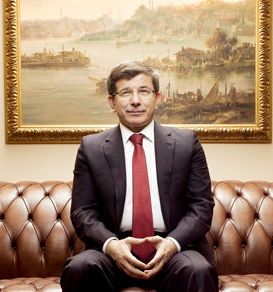
In the fall of 2009, relations between Serbia and Bosnia — never easy since the savage civil war of the 1990s — were slipping toward outright hostility. Western mediation efforts had failed. Ahmet Davutoglu, the foreign minister of Turkey, offered to step in. It was a complicated role for Turkey, not least because Bosnia is, like Turkey, a predominantly Muslim country and Serbia is an Orthodox Christian nation with which Turkey had long been at odds. But Davutoglu had shaped Turkey’s ambitious foreign policy according to a principle he called “zero problems toward neighbors.” Neither Serbia nor Bosnia actually shares a border with Turkey. Davutoglu, however, defined his neighborhood expansively, as the vast space of former Ottoman dominion. “In six months,” Davutoglu told me in one of a series of conversations this past fall, “I visited Belgrade five times, Sarajevo maybe seven times.” He helped negotiate names of acceptable diplomats and the language of a Serbian apology for the atrocities in Srebrenica. Bosnia agreed, finally, to name an ambassador to Serbia. To seal the deal, as Davutoglu tells the tale, he met late one night at the Sarajevo airport with the Bosnian leader Haris Silajdzic. The Bosnian smoked furiously. Davutoglu, a pious Muslim, doesn’t smoke — but he made an exception: “I smoked; he smoked.” Silajdzic accepted the Serbian apology. Crisis averted. Davutoglu calls this diplomatic style “smoking like a Bosnian.”

Davutoglu (pronounced dah-woot-OH-loo) has many stories like this, involving Iraq, Syria, Israel, Lebanon and Kyrgyzstan — and most of them appear to be true. (A State Department official confirmed the outlines of the Balkan narrative.) He is an extraordinary figure: brilliant, indefatigable, self-aggrandizing, always the hero of his own narratives. In the recent batch of State Department cables disclosed by WikiLeaks, one scholar was quoted as anointing the foreign minister “Turkey’s Kissinger,” while in 2004 a secondhand source was quoted as calling him “exceptionally dangerous.” But his abilities, and his worldview, matter because of the country whose diplomacy he drives: an Islamic democracy, a developing nation with a booming economy, a member of NATO with one foot in Europe and the other in Asia. Turkey’s prime minister, Recep Tayyip Erdogan, is a canny, forward-thinking populist who has drastically altered Turkish politics. Erdogan and Davutoglu share a grand vision: a renascent Turkey, expanding to fill a bygone Ottoman imperial space.

In as much as this New York Times Magazine article is filled with interesting anecdotes, it presents a useful portrait of Davutoglu. At the same time, it is peppered with insinuations and overt claims that Davutoglu and the government he represents have over-sized ambitions which implicitly infringe on America’s “right” to impose its power.

This image of the Turks as upstarts is epitomized in a statement from one of Traub’s sources. Noting the opposition Turkey faces in Washington, Traub writes:

The truth is that for all his profound knowledge of the history of civilizations, Davutoglu misread the depth of feeling in the U.S. about both Israel and Iran, or perhaps overestimated Turkey’s importance. This is the danger of postimperial grandiosity. “They talk as if they expect a merger between Turkey and the E.U.,” says Hugh Pope, head of the Turkish office of the International Crisis Group. “They think they’re more important than Israel.”

Turkey — a country with a population close to 80 million; 17th largest economy in the world; located at a strategic hub between three continents that could reasonably be called the center of the world; a bridge between the West and the Islamic world — and they have the audacity to imagine they are more important than a country smaller than New Jersey that throughout its existence has been a center and source of strife?! How dare the Turks!

Traub’s account is at its worst when he deals with the Mavi Marmara massacre — an event he clearly didn’t take the trouble to research with any care. “The flotilla refused Israel’s demands to alter course, and a helicopter-borne commando assault on the Mavi Marmara, the lead ship, turned deadly, with eight Turkish citizens and one American killed.” In fact, it had altered course, was heading west and was in international waters. But such details would obscure the intended narrative that the flotilla was in some sense a Turkish act of provocation and Israel’s response unavoidable.

Traub notes:

One of Davutoglu’s greatest diplomatic achievements was the creation of a visa-free zone linking Turkey, Jordan, Lebanon and Syria, thus reconstituting part of the old Ottoman space. The four countries have agreed to move toward free trade, as well as free passage, among themselves. As part of the zero-problems policy, Turkey moved to resolve longstanding tensions with Cyprus and Armenia and, more successfully, with Greece and Syria. Turkey’s decades of suppression of Kurdish demands for autonomy put it at odds with the new government of Iraqi Kurdistan, which sheltered Kurdish resistance fighters. But the Erdo­gan government reached out to Kurdistan, America’s strongest ally in the region. Relations with the Bush administration had been rocky since 2003, when Turkey’s Parliament voted against permitting U.S. forces to enter Iraq through southeastern Turkey. But by now the U.S. was eager to use Turkey as a force for regional stability. The rapprochement with Kurdistan thus smoothed relations with Washington and made Turkey a major player in Iraqi affairs. Turkish firms gained a dominant position not only in Kurdistan but also, increasingly, throughout Iraq. And Iraqi Kurdish leaders had cracked down on the rebels. It was a diplomatic trifecta.

But Davutoglu’s vision extended far beyond securing the neighborhood for Turkish commerce. One of his pet theories is that the United States needs Turkey as a sensitive instrument in remote places. “The United States,” he says, in his declamatory way, “is the only global power in the history of humanity which emerged far away from the mainland of humanity,” which Davutoglu calls Afro-Eurasia. The United States has the advantage of security and the disadvantage of “discontinuity,” in regard to geography as well as history, because America has no deep historic relationship to the Middle East or Asia. In Davutoglu’s terms, the U.S. has no strategic depth; Turkey has much. “A global power like this, a regional power like that have an excellent partnership,” Davutoglu concludes with a flourish.

Davutoglu’s point about the effects of America’s geographic isolation is well made, though it clearly doesn’t impress Traub.

Perhaps it would have been helpful if the reporter had made some attempt to contextualize the Turkish foreign minister’s initiatives by contrasting them with the diplomatic successes of the US in the Middle East over the last decade, or the vision that animates the work of the current US Secretary of State.

Facebooktwittermail

Lebanon Druze leader Walid Jumblatt sides with Hezbollah in crisis

The Los Angeles Times reports:

The U.S.-backed parliamentary coalition led by caretaker Prime Minister Saad Hariri was on the verge of losing its tenuous grip on the Lebanese government after a key politician defected Friday to support the Shiite militant group Hezbollah.

The decision by Walid Jumblatt, a Druze chieftain and longtime player amid Lebanon’s fractious parties, to back Hezbollah, which is supported by Syria, highlighted the dangerous regional maneuverings across the troubled Lebanese political scene. The move was a blow to Washington, which had worked with Hariri until his 14-month-old unity government collapsed this month.

“The party will stand firm in support of Syria and the resistance,” Jumblatt, head of the Progressive Socialist Party, said at a news conference in Beirut. He did not, however, reveal how many of the 11 members of parliament with his party would side with him. But Jumblatt’s support is crucial for any party jockeying to form a government.

Facebooktwittermail

Algeria’s midwinter uproar

Jack Brown writes:

Soon after the onset of protests which eventually toppled Zine El Abidine Ben Ali in Tunisia, a wave of riots swept through Algeria as well, with many neighborhoods in the capital of Algiers and dozens of smaller cities overwhelmed by thousands of angry young men who closed down streets with burning tires, attacked police stations with rocks and paving stones, and set fire to public buildings. For Algerians a few years older than the rioters, these events recalled the uprising of October 1988, in which violent unrest upended the single-party state.

The disturbances of January 2011 were sparked by a sudden increase in commodity food prices, local journalists maintained, although much of the international press also linked them to a domino effect emanating from neighboring Tunisia. Both of these accounts are strikingly incomplete, however: Food price spikes were certainly one immediate cause of the Algerian unrest, but they were not the underlying reason that crowds of youths spontaneously decided to set upon policemen and other symbols of the state. Likewise, the theory of Tunisian contagion, while it may capture another contributing factor, ignores the national economic and political specificities that both triggered the Algerian rioting and determined its eventual course.

In Algeria, in contrast to (formerly) famously quiet Tunisia, rioting is anything but unprecedented. Local street violence is almost a regular occurrence, and appears to have become a primary means for the country’s deprived to express discontent with a state that otherwise would pay them little attention. In some cases, groups of disenfranchised Algerians show notable self-awareness about the role of rioting, warning about the possibility of turmoil and even calling press conferences to discuss plans to raise a ruckus in the streets if certain demands are not met. Despite the unusual salience of urban unrest in Algerian politics, the midwinter riots fizzled out without really shaking the state. A more detailed comparison with Tunisia’s protests is useful for understanding why.

Facebooktwittermail

Protests in Jordan

Brian Whitaker writes:

The “Tunisia effect” continues. Several thousand protesters took to the streets of Jordan yesterday, for the second Friday in succession. More than 5,000 marched in the centre of Amman, with smaller demonstrations in several other cities, according to agency reports. The protesters are said to have ranged across the spectrum, from leftists and trade unionists to Islamists.

As in the earlier stages of the Tunisian uprising, the mobilising factor is economic hardship, though there are also calls for the prime minister and government to resign.

Yesterday’s Jordan Times reported that the government is to “reset” its spending priorities to address rising living costs, with pay rises for government employees and increased susbsidies on some goods. However, this can really be no more than a temporary palliative and the protesters seem to recognise that.

Trade unionist Maisarah Malas told AFP: “These measures are designed to drug people, nothing more. We need comprehensive reforms.”

Facebooktwittermail

Al Jazeera owned the Tunisia story

Reuters reports:

As events unfolded in Tunisia, a country where Al Jazeera’s bureau had been closed, the channel again innovated among Arab broadcasters by using mobile phone footage and social media.

It no longer has a news monopoly in the Arabic satellite TV space. And some viewers say it treads a fine line between reporting and taking sides. But they stay glued regardless.

“Al-Jazeera is like a media brigade,” said Jordanian Maisara Malass, an opposition activist. “By its coverage of events it has helped far more than any other outlet such as Facebook to spread the revolution from one city to the other.”

From its very early days, Al Jazeera stunned the Arab world with heated debates and tough questioning of Arab officials, until then virtually unheard of. It won broad international attention, and U.S. grumbles, with its 2003 Iraq war coverage.

Tunisia may prove another defining moment. Al Jazeera was swifter than most to grasp the enormity of the protests that delivered what many Arabs thought impossible — an Arab autocrat hurled out of office by ordinary people.

“This marks the maturity of Jazeera television as a political force that can play a role in changing political orders,” Beirut-based analyst Rami Khouri wrote, saying that the channel’s avid viewers “may want to launch their own protests.”

When Tunisia’s Mohamed Bouazizi, who set himself on fire because police seized his vegetable cart, an act that spurred the protests, Al Jazeera was one of the first outlets to broadcast pictures of his self-immolation.

“Al Jazeera’s strength has been that it ‘owned’ the Tunisia story,” said Firas Al-Atraqchi, a former senior editor for an Al Jazeera website and now at the American University in Cairo (AUC). “Others had to catch up and try and ride its coat-tails.”

The channel relied on mobile footage for 60 percent of its material to circumvent an official media blackout, a channel executive said. To some, that made it seem part of the revolt or that it was siding with protesting Tunisians.

“Al Jazeera was like one of those protesting in the streets of Tunis and made people live with the events,” said Zeid Abu Oudeh, founder of Jordan Days, a Jordanian website and blog styled after YouTube.

Facebooktwittermail