Noam Chomsky: A leading principle of international relations theory is that the state’s highest priority is to ensure security. As Cold War strategist George F. Kennan formulated the standard view, government is created “to assure order and justice internally and to provide for the common defense.”
The proposition seems plausible, almost self-evident, until we look more closely and ask: Security for whom? For the general population? For state power itself? For dominant domestic constituencies?
Depending on what we mean, the credibility of the proposition ranges from negligible to very high.
Security for state power is at the high extreme, as illustrated by the efforts that states exert to protect themselves from the scrutiny of their own populations.
In an interview on German TV, Edward J. Snowden said that his “breaking point” was “seeing Director of National Intelligence, James Clapper, directly lie under oath to Congress” by denying the existence of a domestic spying program conducted by the National Security Agency.
Snowden elaborated that “The public had a right to know about these programs. The public had a right to know that which the government is doing in its name, and that which the government is doing against the public.”
The same could be justly said by Daniel Ellsberg, Chelsea Manning and other courageous figures who acted on the same democratic principle.
The government stance is quite different: The public doesn’t have the right to know because security thus is undermined—severely so, as officials assert. [Continue reading…]
Peter Van Buren: The next battleground in the war on whistleblowers
Who can keep up? The revelations — mainly thanks to the documents Edward Snowden took from the National Security Agency — are never-ending. Just this week, we learned that GCHQ, the British intelligence agency whose activities are interwoven with the NSA’s, used a program called Optic Nerve to intercept and store “the webcam images of millions of internet users not suspected of wrongdoing” (including Americans). As the Guardian reported, “In one six-month period in 2008 alone, the agency collected webcam imagery — including substantial quantities of sexually explicit communications — from more than 1.8 million Yahoo user accounts globally.” Yahoo is now outraged; the Internet Association, a trade group for the giants of the industry, has condemned the program; and three U.S. senators announced an investigation of possible NSA involvement.
At about the same time, Glenn Greenwald revealed that GCHQ was engaging in “extreme tactics of deception and reputation-destruction.” These included “‘false flag operations’ (posting material to the internet and falsely attributing it to someone else), fake victim blog posts (pretending to be a victim of the individual whose reputation they want to destroy), and posting ‘negative information’ on various forums.” Again, this was evidently happening with the knowledge, if not collusion, of the NSA.
Meanwhile, with Washington entering a self-proclaimed era of “reform” when it comes to spying on Americans, we just got a striking you-can’t-win-for-losing Catch-22 message from the front lines of the surveillance wars. Claiming that recent pending lawsuits make it necessary, the Obama administration has requested permission to hang on to phone metadata “on billions of U.S. phone calls indefinitely instead of destroying it after five years.” Hmmm… this may be the only example we have of the U.S. intelligence community fighting tooth and nail to stick to the letter of the law.
And mind you, that’s just dipping a toe in the positively oceanic global surveillance waters. It’s been nine months since the Snowden revelations began and who can keep it all straight? Nonetheless, it’s possible to put everything we know so far into a simple message about our American world-in-the-making: the surveillance part of the national security state has, in its own mind, no boundaries at all. As a result, there is no one, nor any part of communications life on this planet, that is out of bounds to our surveillers.
Given what we now know, it’s easy to ignore what we don’t know about how our government is acting in our name. That’s why the figure of the whistleblower — and the Obama administration’s urge to suppress whistleblowing of any sort — remains so important. How are we ever to know anything about the workings of that secret state of ours if someone doesn’t tell us? As a result, TomDispatch remains dedicated to documenting the Obama administration’s ongoing war against those who have the urge to bring the secret workings of the national security state to our attention — especially in cases like Robert MacLean’s, where otherwise little notice is paid in the mainstream media. So today, we’re publishing a follow-up to our earlier story about MacLean, again by TomDispatch regular Peter Van Buren. Himself a State Department whistleblower, Van Buren takes another deep dive into the dark territory he has dubbed post-Constitutional America. Tom Engelhardt
Silencing whistleblowers Obama-style
Supreme Court edition?
By Peter Van BurenThe Obama administration has just opened a new front in its ongoing war on whistleblowers. It’s taking its case against one man, former Transportation Security Administration (TSA) Air Marshal Robert MacLean, all the way to the Supreme Court. So hold on, because we’re going back down the rabbit hole with the Most Transparent Administration ever.
Despite all the talk by Washington insiders about how whistleblowers like Edward Snowden should work through the system rather than bring their concerns directly into the public sphere, MacLean is living proof of the hell of trying to do so. Through the Supreme Court, the Department of Justice (DOJ) wants to use MacLean’s case to further limit what kinds of information can qualify for statutory whistleblowing protections. If the DOJ gets its way, only information that the government thinks is appropriate — a contradiction in terms when it comes to whistleblowing — could be revealed. Such a restriction would gut the legal protections of the Whistleblower Protection Act and have a chilling effect on future acts of conscience.
Having lost its case against MacLean in the lower courts, the DOJ is seeking to win in front of the Supreme Court. If heard by the Supremes — and there’s no guarantee of that — this would represent that body’s first federal whistleblower case of the post-9/11 era. And if it were to rule for the government, even more information about an out-of-control executive branch will disappear under the dark umbrella of “national security.”
In the Ukraine crisis, the U.S. has a credibility problem
Eugene Robinson writes: Is it just me, or does the rhetoric about the crisis in Ukraine sound as if all of Washington is suffering from amnesia? We’re supposed to be shocked — shocked! — that a great military power would cook up a pretext to invade a smaller, weaker nation? I’m sorry, but has everyone forgotten the unfortunate events in Iraq a few years ago?
My sentiments, to be clear, are with the legitimate Ukrainian government, not with the neo-imperialist regime in Russia. But the United States, frankly, has limited standing to insist on absolute respect for the territorial integrity of sovereign states.
Before Iraq there was Afghanistan, there was the Persian Gulf War, there was Panama, there was Grenada. And even as we condemn Moscow for its outrageous aggression, we reserve the right to fire deadly missiles into Pakistan, Yemen, Somalia and who knows where else.
None of this gives Russian President Vladimir Putin the right to pluck Crimea from the rest of Ukraine and effectively reincorporate the historic peninsula into the Russian empire. But it’s hard to base U.S. objections on principle — even if Putin’s claim that Russian nationals in Crimea were being threatened turn out to be as hollow as the Bush administration’s claim that Saddam Hussein had weapons of mass destruction. [Continue reading…]
U.K. seeking to ensure Russia sanctions do not harm British financial interests
The Guardian reports: Britain is drawing up plans to ensure that any EU action against Russia over Ukraine will exempt the City of London, according to a secret government document photographed in Downing Street.
As David Cameron said Britain and its EU partners would put pressure on Moscow after it assumed control of Crimea, a government document drawn up for a meeting of senior ministers said that “London’s financial centre” should not be closed to Russians. It did say that visa restrictions and travel bans could be imposed on Russian officials.
The picture of the document was taken by the freelance photographer Steve Back, who specialises in spotting secret documents carried openly by officials entering Downing Street. The document was in the hands of an unnamed official attending a meeting of the national security council (NSC) called by the prime minister to discuss the Ukrainian crisis. [Continue reading…]
Business as usual: Victoria Nuland back in Kiev
Assistant Secretary of State Victoria Fuck-the-EU Nuland is back in Kiev. Is she there to wave her middle finger in the direction of Russia?
Obama: The U.S. may soon be unable to defend Israel from international isolation
Jeffrey Goldberg writes: When Israeli Prime Minister Benjamin Netanyahu visits the White House tomorrow, President Barack Obama will tell him that his country could face a bleak future — one of international isolation and demographic disaster — if he refuses to endorse a U.S.-drafted framework agreement for peace with the Palestinians. Obama will warn Netanyahu that time is running out for Israel as a Jewish-majority democracy. And the president will make the case that Netanyahu, alone among Israelis, has the strength and political credibility to lead his people away from the precipice.
In an hourlong interview Thursday in the Oval Office, Obama, borrowing from the Jewish sage Rabbi Hillel, told me that his message to Netanyahu will be this: “If not now, when? And if not you, Mr. Prime Minister, then who?” He then took a sharper tone, saying that if Netanyahu “does not believe that a peace deal with the Palestinians is the right thing to do for Israel, then he needs to articulate an alternative approach.” He added, “It’s hard to come up with one that’s plausible.”
Unlike Netanyahu, Obama will not address the annual convention of the American Israel Public Affairs Committee, a pro-Israel lobbying group, this week — the administration is upset with Aipac for, in its view, trying to subvert American-led nuclear negotiations with Iran. In our interview, the president, while broadly supportive of Israel and a close U.S.-Israel relationship, made statements that would be met at an Aipac convention with cold silence.
Obama was blunter about Israel’s future than I’ve ever heard him. His language was striking, but of a piece with observations made in recent months by his secretary of state, John Kerry, who until this interview, had taken the lead in pressuring both Netanyahu and the Palestinian leader, Mahmoud Abbas, to agree to a framework deal. Obama made it clear that he views Abbas as the most politically moderate leader the Palestinians may ever have. It seemed obvious to me that the president believes that the next move is Netanyahu’s. [Continue reading…]
Russia and the West are tearing Ukraine apart. Both sides must stand down now or face the consequences
Anatol Lieven writes: If there is one absolutely undeniable fact about Ukraine, which screams from every election and every opinion poll since its independence two decades ago, it is that the country’s population is deeply divided between pro-Russian and pro-Western sentiments. Every election victory for one side or another has been by a narrow margin, and has subsequently been reversed by an electoral victory for an opposing coalition.
What has saved the country until recently has been the existence of a certain middle ground of Ukrainians sharing elements of both positions; that the division in consequence was not clear cut; and that the West and Russia generally refrained from forcing Ukrainians to make a clear choice between these positions.
During George W. Bush’s second term as president, the U.S., Britain, and other NATO countries made a morally criminal attempt to force this choice by the offer of a NATO Membership Action Plan for Ukraine (despite the fact that repeated opinion polls had shown around two-thirds of Ukrainians opposed to NATO membership). French and German opposition delayed this ill-advised gambit, and after August 2008, it was quietly abandoned. The Georgian-Russian war in that month had made clear both the extreme dangers of further NATO expansion, and that the United States would not in fact fight to defend its allies in the former Soviet Union.
In the two decades after the collapse of the USSR, it should have become obvious that neither West nor Russia had reliable allies in Ukraine. As the demonstrations in Kiev have amply demonstrated, the “pro-Western” camp in Ukraine contains many ultra-nationalists and even neo-fascists who detest Western democracy and modern Western culture. As for Russia’s allies from the former Soviet establishment, they have extracted as much financial aid from Russia as possible, diverted most of it into their own pockets, and done as little for Russia in return as they possibly could.
Over the past year, both Russia and the European Union tried to force Ukraine to make a clear choice between them—and the entirely predictable result has been to tear the country apart. Russia attempted to draw Ukraine into the Eurasian Customs Union by offering a massive financial bailout and heavily subsidized gas supplies. The European Union then tried to block this by offering an association agreement, though (initially) with no major financial aid attached. Neither Russia nor the EU made any serious effort to talk to each other about whether a compromise might be reached that would allow Ukraine somehow to combine the two agreements, to avoid having to choose sides. [Continue reading…]
Ukrainians, take it from a Bosnian: the EU flag is just a rag in the wind
Andrej Nikolaidis writes: Jorge Luis Borges once said that a true gentleman is interested in lost causes only. If you’re looking for a decent contemporary lost cause, you will surely find it in Ukraine, since if it comes to war, no matter who wins, most of the ordinary people will be losers.
We, the citizens of Bosnia, can tell you a thing or two about being losers. It was April 1992, during the start of Sarajevo’s siege. I was a long-haired teenager, dressed in blue jeans and a shirt with the famous black and white “Unknown Pleasures” print. From the window of my suburban flat, I was watching the Yugoslav People Army’s cannons, located in the Lukavica army camp, firing projectiles on Sarajevo. That army was controlled by Slobodan Milošević, the president of Serbia.
The National Radio was broadcasting Bosnian president Alija Izetbegović‘s discussion with Yugoslav army general Milutin Kukanjac. Izetbegovic asked the army to stop the bombing. Kukanjac claimed that not a single shot was fired from his army positions. I remember like it was yesterday that my glass of milk was jumping on the table to the rhythm of cannonballs “not fired” on Sarajevo.
When common people find themselves in the middle of a geopolitical storm – as the citizens of Ukraine do now, or my family back then in Bosnia – the dilemma “is this glass half empty or half full?” is irrelevant: soon, it will be broken.
The people in Bosnia were so full of optimism during the first days, even months, of war. Neighbours were saying that the west would never allow it to happen because “we are Europe”. My aunt went to Belgrade, but refused to take her money from a Sarajevo bank. It will be over in a week; we’ll be back soon, she said. President Izetbegovic, in his TV address to the people, said: “Sleep peacefully: there will be no war.”
Well, we woke up after a four-year nightmare.
Now, the events in Ukraine seem to us Bosnians like a terrifying deja vu. The parallels between Ukraine now and Bosnia in 1992 are obvious. The Russian army acted aggressively towards Ukraine, as Milošević’s army did in Bosnia. Putin had strong support in parts of Ukraine, as Milošević had in large parts of Bosnia and Herzegovina. Now Kiev has the support of the EU and the US, as Sarajevo did. We even had Bono and Pavarotti singing about Miss Sarajevo. Yet all the musical telegrams of support from the free world didn’t stop the ethnic cleansing in eastern Bosnia, close to the Serbian border. [Continue reading…]
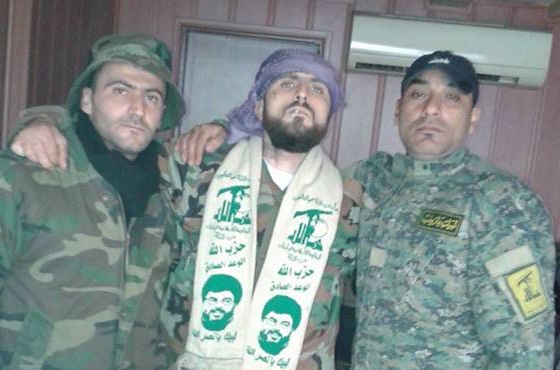
American gangsters fighting for Assad

The Washington Post reports: Two Los Angeles gang members appear to have joined the flow of foreigners flocking to fight in Syria – in this instance, on the side of President Bashar al-Assad. In a video posted online, the two men boast that they are on the front lines and fire their guns in the direction of what they call “the enemigos.”
One of the men identifies himself as Creeper from the Sur-13 or Surenos, a loose affiliation of southern California gangs linked to the Mexican mafia. He rolls up his sleeves to show his gang tattoos and greets fellow gang members Capone-E and Crazy Loco.
The other says he is called Wino, and belongs to a gang called Westside Armenian Power. Members of the Armenian Christian minority in Syria are known to be staunch supporters of Assad.
The video was posted on YouTube yesterday by MEMRI after being posted on Facebook on December 6. MEMRI is a pro-Israeli propaganda outfit based in Washington DC. However, based on the content of the Facebook page of Westside Armenian Power member, “Wino Ayee Peeyakan,” there seems little reason to doubt that he has indeed hooked up with Hezbollah fighters and has spent time in Syria.

In March, 2011, the FBI reported:
The Southern California crime ring called Armenian Power may look like a traditional street gang — members identify themselves with tattoos and gang clothing — but the group is really an international organized crime enterprise whose illegal activities allegedly range from bank fraud and identity theft to violent extortion and kidnapping.
Operation Power Outage — a nearly three-year investigation conducted by our Eurasian Organized Crime Task Force in Los Angeles — culminated last week with the arrests of 83 Armenian Power members on a variety of federal and state charges that include racketeering, drug trafficking, smuggling cell phones into prisons, and theft from the elderly. All told, the group allegedly bilked victims out of at least $10 million.
In one scheme, Armenian Power — known as AP — caused more than $2 million in losses when members secretly installed “skimming” devices in cash register credit card swipe machines at Southern California 99 Cents Only stores to steal customer account information. Then they used the skimmed information to create counterfeit debit and credit cards to empty accounts.
“There is no crime too big or too small for this group,” said Special Agent Louis Perez, who supervises the Eurasian Organized Crime Task Force that built the case against AP.
“This is not just a group of thugs committing crimes in their neighborhood,” added Perez. “AP is sophisticated, and they have international ties. That’s what sets them apart from traditional gangs.”
Perez is quick to point out, though, that despite their white-collar crimes, “these are dangerous people. Just because they make money through fraud, these guys are not accountants. They use violence to get what they want,” he said, explaining that one AP extortion trademark is to shoot people in the legs “to send a message.”
AP membership — thought to number about 200 — consists mainly of individuals whose heritage goes back to Armenia and other Eastern Bloc countries. While the group got its start as a street gang in East Hollywood in the 1980s, AP is now less concerned with controlling neighborhood turf as it expands its criminal activities with other organized crime groups.
For example, AP is closely allied with the Mexican Mafia, a prison gang that controls much of the narcotics distribution and other criminal activity within California’s correctional facilities. AP’s leadership also maintains ties to Armenia and Russia and deals directly with top organized crime figures in those countries — even to the point of using respected organized crime mediators — known as “thieves-in-law” — to settle disputes.
How we understand what others think, believe, feel, and want
Nicholas Epley writes: One of the most amazing court cases you probably have never heard of had come down to this. Standing Bear, the reluctant chief of the Ponca tribe, rose on May 2, 1879, to address a packed audience in a Nebraska courtroom. At issue was the existence of a mind that many were unable to see.
Standing Bear’s journey to this courtroom had been excruciating. The U.S. government had decided several years earlier to force the 752 Ponca Native Americans off their lands along the fertile Niobrara River and move them to the desolate Indian Territory, in what is now northern Oklahoma. Standing Bear surrendered everything he owned, assembled his tribe, and began marching a six-hundred-mile “trail of tears.” If the walk didn’t kill them (as it did Standing Bear’s daughter), then the parched Indian Territory would. Left with meager provisions and fields of parched rock to farm, nearly a third of the Poncas died within the first year. This included Standing Bear’s son. As his son lay dying, Standing Bear promised to return his son’s bones to the tribe’s burial grounds so that his son could walk the afterlife with his ancestors, according to their religion. Desperate, Standing Bear decided to go home.
Carrying his son’s bones in a bag clutched to his chest, Standing Bear and twenty-seven others began their return in the dead of winter. Word spread of the group’s travel as they approached the Omaha Indian reservation, midway through their journey. The Omahas welcomed them with open arms, but U.S. officials welcomed them with open handcuffs. General George Crook was ordered by government officials to return the beleaguered Poncas to the Indian Territory.
Crook couldn’t bear the thought. “I’ve been forced many times by orders from Washington to do most inhuman things in dealings with the Indians,” he said, “but now I’m ordered to do a more cruel thing than ever before.” Crook was an honorable man who could no more disobey direct orders than he could fly, so instead he stalled, encouraging a newspaper editor from Omaha to enlist lawyers who would then sue General Crook (as the U.S. government’s representative) on Standing Bear’s behalf. The suit? To have the U.S. government recognize Standing Bear as a person, as a human being. [Continue reading…]
Talking Neanderthals challenge assumptions about the origins of speech
University of New England, Australia: We humans like to think of ourselves as unique for many reasons, not least of which being our ability to communicate with words. But ground-breaking research by an expert from the University of New England shows that our ‘misunderstood cousins,’ the Neanderthals, may well have spoken in languages not dissimilar to the ones we use today.
Pinpointing the origin and evolution of speech and human language is one of the longest running and most hotly debated topics in the scientific world. It has long been believed that other beings, including the Neanderthals with whom our ancestors shared the Earth for thousands of years, simply lacked the necessary cognitive capacity and vocal hardware for speech.
Associate Professor Stephen Wroe, a zoologist and palaeontologist from UNE, along with an international team of scientists and the use of 3D x-ray imaging technology, made the revolutionary discovery challenging this notion based on a 60,000 year-old Neanderthal hyoid bone discovered in Israel in 1989.
“To many, the Neanderthal hyoid discovered was surprising because its shape was very different to that of our closest living relatives, the chimpanzee and the bonobo. However, it was virtually indistinguishable from that of our own species. This led to some people arguing that this Neanderthal could speak,” A/Professor Wroe said.
“The obvious counterargument to this assertion was that the fact that hyoids of Neanderthals were the same shape as modern humans doesn’t necessarily mean that they were used in the same way. With the technology of the time, it was hard to verify the argument one way or the other.”
However advances in 3D imaging and computer modelling allowed A/Professor Wroe’s team to revisit the question.
“By analysing the mechanical behaviour of the fossilised bone with micro x-ray imaging, we were able to build models of the hyoid that included the intricate internal structure of the bone. We then compared them to models of modern humans. Our comparisons showed that in terms of mechanical behaviour, the Neanderthal hyoid was basically indistinguishable from our own, strongly suggesting that this key part of the vocal tract was used in the same way.
“From this research, we can conclude that it’s likely that the origins of speech and language are far, far older than once thought.”
Music: Tigran Hamasyan — ‘Road Song’
![]()
The crisis in Crimea could lead the World into a second Cold War
Dmitri Trenin writes: In Moscow, there is a growing fatigue with the west, with the EU and the United States. Their role in Ukraine is believed to be particularly obnoxious: imposing on Ukraine a choice between the EU and Russia that it could not afford; supporting the opposition against an elected government; turning a blind eye to right-wing radical descendants of wartime Nazi collaborators; siding with the opposition to pressure the government into submission; finally, condoning an unconstitutional regime change. The Kremlin is yet again convinced of the truth of the famous maxim of Alexander III, that Russia has only two friends in the world, its army and its navy. Both now defend its interests in Crimea.
The Crimea crisis will not pass soon. Kiev is unlikely to agree to Crimea’s secession, even if backed by clear popular will: this would be discounted because of the “foreign occupation” of the peninsula. The crisis is also expanding to include other players, notably the United States. So far, there has been no military confrontation between Russian and Ukrainian forces, but if they clash, this will not be a repeat of the five-day war in the South Caucasus, as in 2008. The conflict will be longer and bloodier, with security in Europe put at its highest risk in a quarter century.
Even if there is no war, the Crimea crisis is likely to alter fundamentally relations between Russia and the west and lead to changes in the global power balance, with Russia now in open competition with the United States and the European Union in the new eastern Europe. If this happens, a second round of the cold war may ensue as a punishment for leaving many issues unsolved – such as Ukraine’s internal cohesion, the special position of Crimea, or the situation of Russian ethnics in the newly independent states; but, above all, leaving unresolved Russia’s integration within the Euro-Atlantic community. Russia will no doubt pay a high price for its apparent decision to “defend its own” and “put things right”, but others will have to pay their share, too.
Disappointed Syrians warn Ukrainians not to seek U.S. help
Mike Giglio reports: Some Syrians have a simple message for Ukrainians waiting for a response from the U.S. and the West as the crisis in Crimea unfolds: Don’t get your hopes up.
The Syrian uprising grinds into its third year this month, and many in the opposition see a long string of broken promises from an international community that voiced support for their fight to overthrow their Russia-backed president, Bashar al-Assad.
With Russia now sending its forces to the Ukrainian region of Crimea, and with worries that it might invade the mainland, western leaders have been swift with recriminations. President Barack Obama warned Russia on Friday that there would be “costs” for its aggression.
But Syrian rebels and activists reiterated one piece of advice for the Ukrainians whose protest movement toppled the country’s president, a Russian ally, last week. “Make sure that you achieve whatever you’re aiming for with your own hands,” Abdullah Ismail, a rebel coordinator based on the Turkish border, told BuzzFeed. “That’s the only way to avoid relying on promises.”
“Ukrainians must believe only in themselves,” said Barzan Iso, a Syrian-Kurdish journalist and activist.
In interviews, each of the Syrians was quick to point out the sea of differences between the two countries and between their two revolutions. Their advice was meant not to draw a comparison, but to help those Ukrainians against Russian intervention better understand their enemy — and, even more so, their supposed allies in the west. [Continue reading…]
Ukraine: what will happen now?
Ian Traynor writes: In his 14 years in power grieving the loss of the Soviet empire, Vladimir Putin has launched three wars against Russia’s neighbours and territories formerly under the Kremlin’s domination. As a newly appointed prime minister in 1999, before becoming president on New Year’s Day 2000, he began with a war in Chechnya, brutally suppressing an armed insurrection against Moscow’s rule in the north Caucasus and razing the provincial capital, Grozny.
In 2008, the former KGB officer ordered a blitzkrieg against Georgia, partitioning the country in five days. He remains in control of 20% of Russia’s Black Sea neighbour: the territories of South Ossetia and Abkhazia. The Russian military also controls a slice of Moldova known as Transnistria in a frozen conflict dating from the collapse of the Soviet Union.
In the Crimea and Ukraine, however, in the event of full-scale war, Putin has opted for a game-changer with the potential to be Europe’s worst security nightmare since the revolutions of 1989 and the bloodiest since Slobodan Milosevic’s attempts to wrest control of former Yugoslavia resulted in four lost wars, more than 100,000 dead, and spawned seven new countries in the Balkans. Ukraine is a pivotal country on the EU’s eastern and Russia’s south-western borders. Territorially it is bigger than France. Its population is greater than those of Poland or Spain at 46 million. It has a proper military and is well armed. Ukraine was the Soviet Union’s arms manufacturing base; it remains in the top league of global arms exporters.
Ukraine’s military machine is no match for Russia’s. It has around 130,000 troops compared to around 850,000 in Russia. Its forces in Crimea are no match for the 15,000-plus men serving with the Russian Black Sea fleet in Sevastopol. Russia has more men in its western military division than there are in the entire Ukrainian armed forces. Ratios of fighter aircraft, attack helicopters, special forces units and Black Sea warships are similarly one-sided.
But Ukraine’s forces could inflict a lot of damage if forced to defend their country. With this in mind, three broad scenarios suggest themselves: [Continue reading…]
Russia takes control over Crimea
The Wall Street Journal reports: Ukrainian Prime Minister Arseniy Yatsenyuk said Sunday that his country was “on the brink of disaster” and personally blamed Russian President Vladimir Putin for bringing the two nations to the verge of war.
With more than 6,000 airborne and naval forces, Russia has taken complete operational control over the Crimean peninsula in Ukraine and appears to be preparing to occupy the territory, a senior Obama administration official said Sunday.
“Russian forces now have complete operational control of the Crimean peninsula, some 6,000-plus airborne and naval forces, with considerable materiel,” the official said in a briefing for reporters. “There is no question that they are in an occupation position in Crimea, that they are flying in reinforcements, and they are settling in.” [Continue reading…]
Baltic states at risk if West doesn’t act says Estonian lawmaker
The Wall Street Journal reports: An Estonian member of European Parliament said on Sunday the three Baltic states may be vulnerable if the international community doesn’t put adequate pressure on Russian President Vladimir Putin to remove troops from the Crimean peninsula.
“This is a critical point in European history,” Tunne Kelam said during an interview on the sidelines of a peaceful protest against Russia here. “If [the West] submits to this situation and accepts the occupation of Crimea or East Ukraine, anything could happen. This is a definite danger also for the Baltic states.”
The three Baltic nations—Estonia, Lithuania and Latvia—were part of the former Soviet Union and have moved toward the European Community since gaining independence. All three are members of the European Union and Estonia and Latvia are participating in the bloc’s common currency.
Mr. Kelam said that in recent years Russia has been practicing tactical military maneuvers and the “intent of these has been to practice invading neighboring countries to protect fellow Russians.” [Continue reading…]
Rouhani tells Iran generals to cut hostile rhetoric
Reuters reports: President Hassan Rouhani urged Iran’s military leaders on Saturday to let diplomacy prevail in dealing with potential foreign threats, in a clear reference to efforts to end the nuclear dispute and decades of hostile relations with the West.
“It is very important to formulate one’s sentences and speeches in a way that is not construed as threat, intention to strike a blow,” Rouhani said in a meeting with Iran’s top military echelon.
“We must be very careful in our calculations. Launching missiles and staging military exercises to scare off the other side is not good deterrence, although a necessity in its proper place,” the official IRNA news agency quoted him as saying.
“A misfire could burst into flames and wreak havoc to everything.” [Continue reading…]