Al Jazeera trial: prosecution presents contents of journalists’ hotel rooms

The Guardian reports: The second day of the trial of three al-Jazeera journalists in Egypt descended into farce on Wednesday when prosecutors presented the entire contents of their raided hotel rooms as evidence, and another co-defendant said he did not understand what the trial was about.

Australian ex-BBC correspondent Peter Greste, Canadian-Egyptian ex-CNN journalist Mohamed Fahmy, and local producer Baher Mohamed are among 20 people on trial in Egypt on charges of spreading misinformation and aiding terrorists. The case has sparked international outcry, and been portrayed worldwide as a serious attack on Egyptian press freedom.

But the case took a tragicomic turn when prosecutors presented box after box of everyday items and broadcast equipment as evidence of the defendants’ alleged terrorism – many as innocuous as electric cables, a computer keyboard, and a bumbag belonging to Peter Greste.

At one point judge Mohamed Nagy lost count of the number of cameras he had been shown, and struggled to open two of the suitcases in which the evidence was contained. Throughout the proceedings, two birds trapped inside the courtroom flew overhead. [Continue reading…]

Facebooktwittermail

Obama knew CIA secretly monitored intelligence committee, senator claims

The Guardian reports: A leading US senator has said that President Obama knew of an “unprecedented action” taken by the CIA against the Senate intelligence committee, which has apparently prompted an inspector general’s inquiry at Langley.

The subtle reference in a Tuesday letter from Senator Mark Udall to Obama, seeking to enlist the president’s help in declassifying a 6,300-page inquiry by the committee into torture carried out by CIA interrogators after 9/11, threatens to plunge the White House into a battle between the agency and its Senate overseers.

McClatchy and the New York Times reported Wednesday that the CIA had secretly monitored computers used by committee staffers preparing the inquiry report, which is said to be scathing not only about the brutality and ineffectiveness of the agency’s interrogation techniques but deception by the CIA to Congress and policymakers about it. The CIA sharply disputes the committee’s findings.

Udall, a Colorado Democrat and one of the CIA’s leading pursuers on the committee, appeared to reference that surreptitious spying on Congress, which Udall said undermined democratic principles.

“As you are aware, the CIA has recently taken unprecedented action against the committee in relation to the internal CIA review and I find these actions to be incredibly troubling for the Committee’s oversight powers and for our democracy,” Udall wrote to Obama on Tuesday.

Independent observers were unaware of a precedent for the CIA spying on the congressional committees established in the 1970s to check abuses by the intelligence agencies.

“In the worst case, it would be a subversion of independent oversight, and a violation of separation of powers,” said Steven Aftergood, an intelligence analyst at the Federation of American Scientists. “It’s potentially very serious.” [Continue reading…]

Facebooktwittermail

Inside the corridor of death — Assad’s war against Syrian civilians

syria-sniper

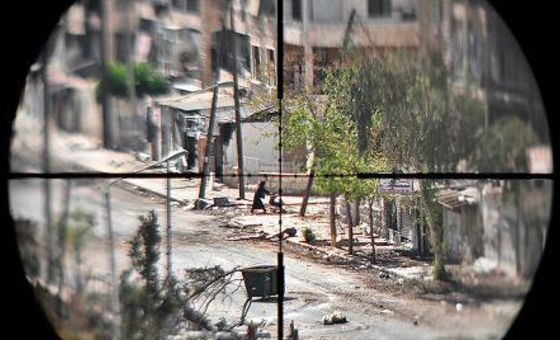
Zaher Sahloul writes: In the last day of my medical mission to Aleppo in October 2013, I was asked to examine a toddler who had arrived at our hospital after being shot in the head by a sniper one hour earlier. His name was Hamza Ramadan, and he was just three years old. His heart was beating, but he exhibited no other signs of life. I was told that snipers had targeted Hamza, his mother, and his sister as they tried to sprint through the passage separating the opposition-controlled east side of Aleppo to the regime-controlled west.

That two-block street has now come to be known as “The Corridor of Death” (“Maabar Almawet” in Arabic). Snipers perched on the roofs of three regime-controlled buildings at the end of the passage have turned the place into a killing ground. Hamza’s mother and sister were killed instantly. Their bodies were rushed to the hospital, along with Hamza’s, in the back of a car owned by bystanders. (Ambulances are a luxury in Aleppo. According to the World Health Organization, more than 75 percent of Syria’s ambulances have been damaged in the conflict.)

Since the start of the first demonstrations in 2011, the Syrian regime has tried to cast the whole opposition as extremists and terrorists. This has been an effective strategy, playing into the fears of al Qaeda and jihadists that are prevalent in the United States and Europe. The more recent influx of foreign jihadists into Syria has added some legitimacy to such claims. The Western media has fallen into the regime’s trap, portraying the conflict as a fight between the government and terrorists — and sometimes implicitly justifying the regime’s crimes against its own people. The reality, as I saw it, is far more malicious: The government of President Assad is waging war not only against an armed enemy, but also against its own population.

My medical mission to Aleppo was organized by the Syrian American Medical Society (SAMS), a group dedicated to helping the victims of the war. My aim was to serve the victims of war in that ancient city and world heritage site, now the epicenter of aerial bombing and shelling. No amount of disaster management or trauma care training could have possibly prepared me for the brutal reality of the hospital I visited. At the hospital, which was code-named “M-1” for security reasons, the vast majority of our patients were local residents injured by shrapnel from barrel bomb attacks or indiscriminate shelling from fights between rebels and regime troops. But many, like Hamza, were civilians targeted in the most direct and ruthless way possible: by snipers.

The use of snipers gives the lie to government propaganda. Snipers know exactly whom they’re shooting. When snipers look through their telescopic sights at someone’s head or chest, they know if the target is a child or a fighter. According to the Aleppo Civilian Medical Council, snipers in the “Corridor of Death” gun down five to 20 civilians every day. Most of the victims die instantly. Those who survive are likely to suffer lifelong disabilities: amputations, loss of an eye, or spinal cord injury and paralysis are just a few on a long list of possibilities. The Oxford Research Group reports that 11,420 children (aged 17 and under) were recorded killed in the Syrian conflict by end of August 2013, from an overall total of 113,735 civilians and combatants killed. One in four of those child deaths were caused by small arms fire, including children targeted and summarily executed by snipers. Hamza was one of those unlucky children. [Continue reading…]

Facebooktwittermail

Ukraine crisis: The impact on nuclear proliferation

o13-iconSteven Pifer writes: Russia’s military occupation of Ukrainian territory on the Crimean peninsula constitutes a blatant violation of the commitments that Moscow undertook in the 1994 Budapest Memorandum on Security Assurances for Ukraine. The United States and United Kingdom, the other two signatories, now have an obligation to support Ukraine and penalize Russia.

When the Soviet Union collapsed in 1991, Ukraine found itself holding the world’s third largest nuclear arsenal, including some 1,900 strategic nuclear warheads that had been designed to attack the United States. Working in a trilateral dialogue with Ukrainian and Russian negotiators, American diplomats helped to broker a deal —the January 1994 Trilateral Statement — under which Ukraine agreed to transfer all of the strategic nuclear warheads to Russia for elimination and to dismantle all of the strategic delivery systems on its territory.

Kiev did this on the condition that it receive security guarantees or assurances. The Budapest Memorandum, signed on December 5, 1994, by the leaders of Ukraine, Russia, the United States and the United Kingdom (the latter three being the depositary states of the Non-Proliferation Treaty, that is, the states that receive the accession documents of other countries that join the treaty) laid out a set of assurances for Ukraine. These included commitments to respect Ukraine’s independence, sovereignty and existing borders; to refrain from the threat or use of force against Ukraine’s territorial integrity and independence; and to refrain from economic coercion against Ukraine. [Continue reading…]

Facebooktwittermail

As China looks on, Putin poses risky dilemma for the West

a13-iconDavid Rohde writes: One senior Obama administration official called Vladimir Putin’s actions in the Ukraine “outrageous.” A second described them as an “outlaw act.” A third said his brazen use of military force harked back to a past century.

“What we see here are distinctly 19th and 20th century decisions made by President Putin,” said the official who spoke on condition of anonymity to a group of reporters. “But what he needs to understand is that in terms of his economy, he lives in the 21st century world, an interdependent world.”

James Jeffrey, a retired career U.S. diplomat, said that view of Putin’s mindset cripples the United States’ response to the Russian leader. The issue is not that Putin fails to grasp the promise of western-style democratic capitalism. It is that he and other American rivals flatly reject it.

“All of us that have been in the last four administrations have drunk the Kool-Aid,” Jeffrey said, referring to the belief that they could talk Putin into seeing the western system as beneficial. “‘If they would just understand that it can be a win-win, if we can only convince them’ – Putin doesn’t see it,” Jeffrey said. “The Chinese don’t see it. And I think the Iranians don’t see it.”

Jeffrey and other experts called for short-term caution in the Ukraine. Threatening military action or publicly baiting Putin would likely prompt him to seize more of Ukraine by force. [Continue reading…]

Facebooktwittermail

A Siberian giant virus and the butterfly effect

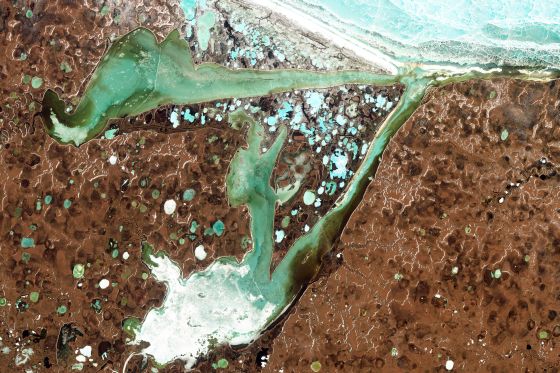
Omulyakhskaya and Khromskaya Bays lie along the northern Siberian coast, where permafrost blankets the land around the bays. Photo: NASA Earth Observatory

Omulyakhskaya and Khromskaya Bays lie along the northern Siberian coast, where permafrost blankets the land around the bays. Photo: NASA Earth Observatory

Embedded in the mud, glistening green and gold and black, was a butterfly, very beautiful and very dead.

“Not a little thing like that! Not a butterfly!” cried Eckels.

It fell to the floor, an exquisite thing, a small thing that could upset balances and knock down a line of small dominoes and then big dominoes and then gigantic dominoes, all down the years across Time. Eckels’ mind whirled. It couldn’t change things. Killing one butterfly couldn’t be that important! Could it? — Ray Bradbury, A Sound of Thunder, 1952

As one of the massive and probably irreversible consequences of climate change, the melting of the Northern Hemisphere’s permafrost is not an example of the butterfly effect. Yet the discovery of a giant virus which has come back to life after 30,000 years of frozen dormancy, suggests many possibilities including some akin to those envisaged by Ray Bradbury is his famous science fiction story.

Whereas his narrative required that the reader suspend disbelief by entertaining the idea of time travel, the thawing tundra may produce a very real kind of time travel if any viruses or other microbes were to emerge as new invasive species.

Rather than being transported geographically as a result of human activity, these will spring suddenly from a distant past into an environment that may lack necessary evolutionary adaptations to accommodate their presence.

We are assured that Pithovirus sibericum poses no threat to humans — it just attacks amoebas. But our concern shouldn’t be limited to fears about the reemergence of something like an ancient strain of smallpox.

The rebirth of a pathogen that could strike phytoplankton — producers of half the world’s oxygen — would have a devastating impact on the planet.

BBC News reports: The ancient pathogen was discovered buried 30m (100ft) down in the frozen ground.

Called Pithovirus sibericum, it belongs to a class of giant viruses that were discovered 10 years ago.

These are all so large that, unlike other viruses, they can be seen under a microscope. And this one, measuring 1.5 micrometres in length, is the biggest that has ever been found.

The last time it infected anything was more than 30,000 years ago, but in the laboratory it has sprung to life once again.

Tests show that it attacks amoebas, which are single-celled organisms, but does not infect humans or other animals.

Co-author Dr Chantal Abergel, also from the CNRS, said: “It comes into the cell, multiplies and finally kills the cell. It is able to kill the amoeba – but it won’t infect a human cell.”

However, the researchers believe that other more deadly pathogens could be locked in Siberia’s permafrost.

“We are addressing this issue by sequencing the DNA that is present in those layers,” said Dr Abergel.

“This would be the best way to work out what is dangerous in there.”

The researchers say this region is under threat. Since the 1970s, the permafrost has retreated and reduced in thickness, and climate change projections suggest it will decrease further.

It has also become more accessible, and is being eyed for its natural resources.

Prof Claverie warns that exposing the deep layers could expose new viral threats.

He said: “It is a recipe for disaster. If you start having industrial explorations, people will start to move around the deep permafrost layers. Through mining and drilling, those old layers will be penetrated and this is where the danger is coming from.”

He told BBC News that ancient strains of the smallpox virus, which was declared eradicated 30 years ago, could pose a risk. [Continue reading…]

Facebooktwittermail

Can plants make choices?

a13-iconHelmholtz Centre for Environmental Research: Plants are also able to make complex decisions. At least this is what scientists from the Helmholtz Center for Environmental Research (UFZ) and the University of Göttingen have concluded from their investigations on Barberry (Berberis vulgaris), which is able to abort its own seeds to prevent parasite infestation. The results are the first ecological evidence of complex behaviour in plants. They indicate that this species has a structural memory, is able to differentiate between inner and outer conditions as well as anticipate future risks, scientists write in the renowned journal American Naturalist — the premier peer-reviewed American journal for theoretical ecology.

The European barberry or simply Barberry (Berberis vulgaris) is a species of shrub distributed throughout Europe. It is related to the Oregon grape (Mahonia aquifolium) that is native to North America and that has been spreading through Europe for years. Scientists compared both species to find a marked difference in parasite infestation: “a highly specialized species of tephritid fruit fly, whose larvae actually feed on the seeds of the native Barberry, was found to have a tenfold higher population density on its new host plant, the Oregon grape”, reports Dr. Harald Auge, a biologist at the UFZ.

This led scientists to examine the seeds of the Barberry more closely. Approximately 2000 berries were collected from different regions of Germany, examined for signs of piercing and then cut open to examine any infestation by the larvae of the tephritid fruit fly (Rhagoletis meigenii). This parasite punctures the berries in order to lay its eggs inside them. If the larva is able to develop, it will often feed on all of the seeds in the berry. A special characteristic of the Barberry is that each berry usually has two seeds and that the plant is able to stop the development of its seeds in order to save its resources. This mechanism is also employed to defend it from the tephritid fruit fly. If a seed is infested with the parasite, later on the developing larva will feed on both seeds. If however the plant aborts the infested seed, then the parasite in that seed will also die and the second seed in the berry is saved. Continue reading

Facebooktwittermail

Court bans activities of Hamas in Egypt

Reuters reports: An Egyptian court on Tuesday banned all Hamas activities in Egypt in another sign that the military-backed government aims to squeeze the Palestinian Islamist group that rules the neighboring Gaza Strip.

Hamas is an offshoot of Egypt’s Muslim Brotherhood, which the authorities have declared a terrorist group and which they have repressed systematically since the army ousted one of its leaders, Mohamed Mursi, from the presidency in July.

“The court has ordered the banning of Hamas’s work and activities in Egypt,” the judge, who asked not to be named, told Reuters.

During his year in power, Mursi gave red-carpet treatment to Hamas, angering many secular and liberal Egyptians who saw this as part of a creeping Islamist takeover following the 2011 uprising that toppled autocrat Hosni Mubarak.

The military-buttressed authorities now classify Hamas as a significant security risk, accusing it of supporting an Islamist insurgency that has spread quickly since Mursi’s fall, allegations the Palestinian group denies. [Continue reading…]

Facebooktwittermail

Iranian academics embrace U.S. sociologist in rare visit

n13-iconThe Washington Post reports: The presence of a prominent American scholar on Iranian university campuses this week, and the wide and positive reception he is receiving, is a sign that authorities here are attempting to fulfill promises of more openness in academia.

On Sunday, Tehran University’s School of Social Sciences hosted an event discussing the theory and work of Immanuel Wallerstein, a well-known critic of capitalism, best known for his world-systems analysis and his views about the decline of major powers, including the United States.

“I’m not sure what attracts people to my work. Maybe it’s that I’m an American, I say things that Americans don’t usually say and I have an analysis which seems to resonate in a lot of countries,” the 84-year-old Wallerstein said in an interview Monday.

Hundreds of students and professors crammed into the campus’ largest auditorium to hear Wallerstein’s remarks, which were preceded by discussions of his work by top Iranian sociologists, almost all of them delivered in English, a rarity in Iran.

“No government or social movement can be taken seriously if it is not addressing the issues of today,” Wallerstein told the audience toward the end of his hour-long speech, which at times dealt with topics that are often considered taboo in the Islamic republic, including women’s rights and corruption.

Wallerstein also spoke at Iran’s Centre for Strategic Studies, a think tank co-founded by Iran’s president, Hassan Rouhani. [Continue reading…]

Facebooktwittermail

Russia’s creeping annexation of Crimea

n13-iconNatalia Antelava writes: Andrei Ivaninchenko, a captain in the Ukrainian Army, didn’t have time to listen to Russian President Vladimir Putin on Tuesday afternoon. Ivaninchenko was busy coördinating talks between his commanders and senior Russian officers, checking on his troops, and taking an inventory of his food and water supplies.

By the time that Putin broke his silence over the movement of Russian troops into Crimea, the blockade of Ivaninchenko’s base on the outskirts of Sebastopol had entered its fourth day. But if he had taken the time to listen to Putin, he would have learned that the Russian soldiers pointing guns at him were merely figments of his imagination.

In his first press conference since the crisis began, Putin announced that no Russian troops — apart from those already stationed at the Russian Navy base in Sebastopol — were present anywhere in Crimea. When he was asked about the hundreds of well-armed soldiers in unmarked Russian uniforms who have been positioned outside of military sites and administrative buildings across the peninsula, Putin called them “self-organized local forces of volunteers.” As to their uniforms, Putin added that they could have been purchased at any store.

“If that’s the case,” Ivaninchenko said, looking straight at the armed men who were standing on the other side of an iron gate from us, “these are just bandits or irregular militiamen, and we should have no qualms about going out and shooting them.” But several Ukrainian Army officers told me that they are under strict orders from their own commanders to avoid any confrontation. “It will only take one shot,” Ivaninchenko told me, “and the whole of Crimea will be set on fire.” [Continue reading…]

Facebooktwittermail

Tide of opinion turns against Russia in Ukraine’s east

Reuters reports: More than 1,000 demonstrators with Ukrainian flags took to the streets of the eastern Ukrainian city of Donetsk on Tuesday, for the first time outnumbering pro-Moscow youths who have seized its government building, which flies the Russian flag.

President Vladimir Putin’s declaration on Saturday that Russia had the right to invade Ukraine was accompanied by pro-Russian demonstrations across Ukraine’s mainly Russian-speaking south and east.

But in the four days since, the tide of opinion in eastern cities appears to be turning back towards Kiev.

Bearing placards with slogans such as: “I am Russian. I don’t need protection,” the protesters marched near the occupied regional government building, staying far enough away to avoid clashing with the pro-Russian youths still inside.

“My parents are from Russia. I was born in Ukraine, but I am Russian. My children and grandchildren were born here. We are for Ukraine,” said Natalia Sytnik, who turned out to protest against the prospect of a Russian invasion. [Continue reading…]

Facebooktwittermail

Cyberattacks rise as Ukraine crisis spills to internet

n13-iconThe New York Times reports: The crisis in Ukraine has spread to the Internet, where hackers from both sides are launching large cyberattacks against opposing news organizations.

Security experts say that they are currently witnessing unusually large denial-of-service attacks, also called DDoS attacks, in which hackers flood a website with traffic to knock it offline. The attacks have been directed at both pro-Western and pro-Russian Ukrainian news sites.

In at least one case, hackers successfully defaced the website of the Kremlin-financed news network Russia Today, replacing headlines and articles containing the word “Russia” with the word “nazi.”

Experts say the attacks on pro-Western Ukrainian news sites closely resemble the attacks on Chechnyan news sites, which security experts say are under almost constant siege.

Matthew Prince, the chief executive and a co-founder of Cloudflare, a San Francisco company that helps websites speed up performance and mitigate DDoS attacks, said in an interview Tuesday that while this week’s attacks were similar to the attacks on Chechnyan news sites that use Cloudflare, it was not clear who was responsible for the attacks. [Continue reading…]

Facebooktwittermail

First Russian shots fired in Crimea

This is the nature of military escalation: it can just as easily be triggered by the fears of individual soldiers as it can by high-level decision making.

Channel 4 News reports: The first shots of the Russian occupation of Crimea were fired overnight at Belbek air force base. Luckily, they were into the air.

“But the Russians said if we did not stop, they would fire at our legs,” said Major Sergey Golovchanskyi of the Ukrainian air force.

He was among some 100 Ukrainian air force who had decided that they were going to take back the planes which the Russians had seized a couple of days ago. They marched up to the runway gate with a circular saw. That was when the Russians threatened them. They stopped, and the standoff continues. [Continue reading…]

Facebooktwittermail

Why Russia isn’t taking the U.S. seriously

John Judis, at The New Republic, interviews Dmitri K. Simes, president of The Center for the National Interest and publisher of the foreign policy journal The National Interest.

John Judis: So, is a civil war likely at this point? What do you think is going on?

Dmitri K. Simes: Well, I think it still is unlikely, it’s not impossible but it’s unlikely. It’s very clear that Crimea is under Russian control and that is hard to change. There is nothing anyone can do about it, except negotiate. And if Moscow uses force there, that may lead to a dangerous escalation. Still, Russia’s presence does not yet mean that Crimea will become a part of Russia. There was a hopeful sign yesterday, when the new prime minister of Crimea announced that they would postpone the referendum on their statehood. That statement was clearly coordinated with the Kremlin. So there may well be an opportunity if we want to use it, to negotiate what exactly what this referendum would be about — about a union with Russia, about full independence, about extended autonomy. That still may be negotiable. Crimea will probably not be an integral part of Ukraine any longer. As far as Russian troops moving into eastern Ukraine, I still consider this highly unlikely and avoidable, but of course it also depends on what the government in Kiev is going to do.

JJ: Russians now charge that the U.S. and E.U. interfered — they’re blaming the Americans and the European Union—how do you assess the Obama administration’s performance so far?

DKS: I think it has contributed to the crisis. Because there was a legitimate government in Kiev, led by President Viktor Yanukovych. Yanukovych is a despicable character. He also is inept. He was the principal architect of his own demise. Yet he was legally elected. He commanded a clear majority in the Ukrainian parliament. And essentially the United States and the European Union have decided to side with the protesters. Let me say, too, if they were using that kind of force and those techniques against a friendly government we would not call them protesters, we would call them rebels. We have sided with these protesters slash rebels. We used them to pressure Yanukovych to negotiate a deal, which the European governments fully endorsed, and which had the support of the Obama administration.

When the rebels used the momentum from the deal essentially to remove Yanukovych and his whole government from power, we have accepted that as if it were normal to remove a legally elected government by force. More than 100 deputies from the Rada from the former ruling party, the Party of Regions, would not come to the Rada, and those from the Party of the Regions that voted with the opposition, some of them were clearly intimidated, and others belonged to Ukrainian oligarchs who were allowed to play a role in politics. And while those deputies normally belong to the Party of Regions, actually they were controlled by the oligarchs, who were pressured by the West to change sides. So that’s what led to the new government coming to power in Kiev. You could not ignore this process if you wanted to know why the Russians decided to interfere.

Now, I understand that we favored the rebels. And I also again have to say that looking at Yanukovych, he clearly was unsavory, and unpopular, and inept, and I can understand why we would not do anything to promote his questionable legitimacy. But we have to realize, that as we were applying this pressure on the Ukrainian political process to promote those we favor, we clearly were rocking the political boat in Ukraine, a country deeply divided, a country with different religions, different histories, different ethnicities. And it was that process of rocking the boat that led to the outcome have seen. That is not to justify what Putin has done, that is not to say that the Russians are entitled to use their troops on the territory of another state. But let me say this: any Russian wrongdoings should not be used as an alibi for the incompetence of the Obama administration. [Continue reading…]

Facebooktwittermail

Has Putin lost his mind?

When a professor of journalism refers to Julia Ioffe, a senior editor at The New Republic, putting on “a clinic with her writing and reporting on Russia and Ukraine,” I’m assuming that’s meant as a compliment — a way of signalling to his students and Twitter followers: this is what insightful journalism looks like:


This is how Ioffe’s clinic opens:

In Sunday’s New York Times, Peter Baker reported that German Chancellor Angela Merkel had tried talking some sense into Vladimir Putin. The Russian leader has an affinity for the Germans and Merkel especially: He served in the KGB in East Germany, where Merkel grew up. And yet, nothing:

Chancellor Angela Merkel of Germany told Mr. Obama by telephone on Sunday that after speaking with Mr. Putin she was not sure he was in touch with reality, people briefed on the call said. “In another world,” she said.

If you weren’t sure of the veracity of that little reportorial nugget, all doubt should’ve vanished after Putin’s press conference today.

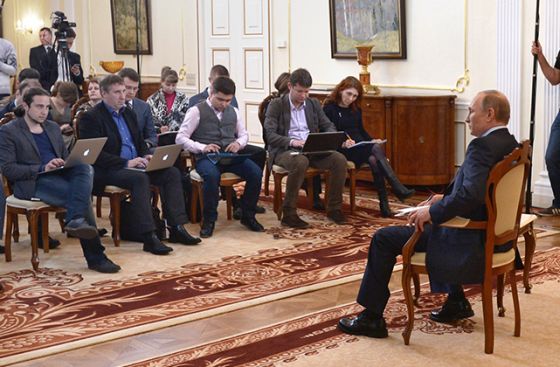
Slouching in a fancy chair in front of a dozen reporters, Putin squirmed and rambled. And rambled and rambled. He was a rainbow of emotion: Serious! angry! bemused! flustered! confused! So confused.

The Russian president, slouching in a fancy chair — that’s a very evocative image.

But Ioffe doesn’t just leave it to her word and her readers’ powers of imagination to conjure up a picture of the scene; she kindly provides a link. It’s what I’d call a cover-your-ass link, or a don’t-click-on-this link. Which is to say, writers sometimes make misleading statements or exaggerate, but then point to their source as though this will absolve them of any responsibility for misinforming their readers.
putin-chair

Do armrests make a chair fancy? That’s the only difference between Putin’s chair and the ones being used by the reporters — most of whom have laptops which are easier to use when elbows aren’t hitting armrests. As for Putin’s slouch, granted, he probably does not have every single lower vertebrae thrust hard against the chair’s back, but by that measure, who doesn’t slouch?

How about this president in his fancy chair? He didn’t even manage to put on a neck tie before he met his White House guests:
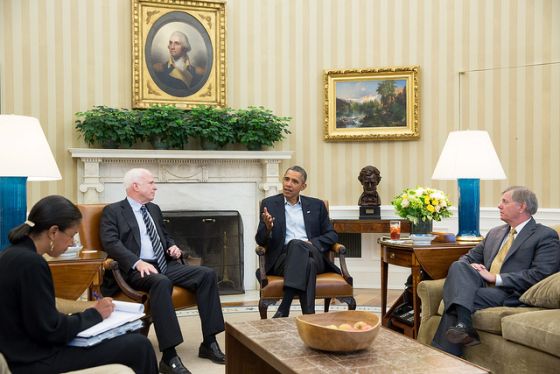
obama-chair

I’m all in favor of journalists adding narrative color to their reporting, but when it turns out that Putin wasn’t sitting in a fancy chair and he wasn’t slouching, why am I supposed to swallow Ioffe’s emphatic claim: “Putin has lost it”?

Aside from the circumstantial evidence for questioning Putin’s sanity — his posture and his self-aggrandizing chair — the substance of Ioffe’s diagnosis is rendered in her delivery of the Russian president’s rambling statement:

Victor Yanukovich is still the acting president of Ukraine, but he can’t talk to Ukraine because Ukraine has no president. Ukraine needs elections, but you can’t have elections because there is already a president. And no elections will be valid given that there is terrorism in the streets of Ukraine. And how are you going to let just anyone run for president? What if some nationalist punk just pops out like a jack-in-the-box? An anti-Semite? Look at how peaceful the Crimea is, probably thanks to those guys with guns holding it down. Who are they, by the way? Speaking of instability, did you know that the mayor of Dniepropetrovsk is a thief? He cheated “our oligarch, [Chelsea owner Roman] Abramovich” of millions. Just pocketed them! Yanukovich has no political future, I’ve told him that. He didn’t fulfill his obligations as leader of the country. I’ve told him that. Mr. Putin, what mistakes did Yanukovich make as president? You know, I can’t answer that. Not because I don’t know the answer, but because it just wouldn’t be right of me to say. Did you know they burned someone alive in Kiev? Just like that? Is that what you call a manifestation of democracy? Mr. Putin, what about the snipers in Kiev who were firing on civilians? Who gave them orders to shoot? Those were provocateurs. Didn’t you read the reports? They were open source reports. So I don’t know what happened there. It’s unclear. But did you see the bullets piercing the shields of the Berkut [special police]. That was obvious. As for who gave the order to shoot, I don’t know. Yanukovich didn’t give that order. He told me. I only know what Yanukovich told me. And I told him, don’t do it. You’ll bring chaos to your city. And he did it, and they toppled him. Look at that bacchanalia. The American political technologists they did their work well. And this isn’t the first time they’ve done this in Ukraine, no. Sometimes, I get the feeling that these people…these people in America. They are sitting there, in their laboratory, and doing experiments, like on rats. You’re not listening to me. I’ve already said, that yesterday, I met with three colleagues. Colleagues, you’re not listening. It’s not that Yanukovich said he’s not going to sign the agreement with Europe. What he said was that, based on the content of the agreement, having examined it, he did not like it. We have problems. We have a lot of problems in Russia. But they’re not as bad as in Ukraine. The Secretary of State. Well. The Secretary of State is not the ultimate authority, is he?

And so on, for about an hour. And much of that, by the way, is direct quotes.

Now compare this with an actual translated transcript of what Putin said: Continue reading

Facebooktwittermail

Syria: The roots of Jabhat Al Nusra’s pragmatism

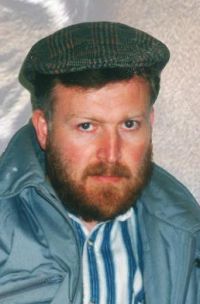
Abu-Musab-al-SuriHassan Hassan writes: A top Sharia official in Jabhat Al Nusra, the Al Qaeda formal affiliate in Syria, has acknowledged for the first time that his faction is influenced by the teachings of Abu Musab Al Suri, a Syrian jihadist who fought the Assad regime in the 1970s and 1980s, before becoming one of the world’s most renowned jihadist ideologues. The acknowledgement did not spark much media attention, but is hugely significant for understanding the ideological underpinnings of Syria’s jihadist groups.

Dr Sami Al Oraidi – who was mentioned by Jabhat Al Nusra leader Abu Muhammad Al Jolani in his only media interview as an official who represents the group’s ideology – listed 19 recommendations by Abu Musab on his Twitter account, writing: “We have been able to implement some of them, but we could not implement others.”

The idea that the group is influenced by Abu Musab’s teachings had been long suspected by some jihadist watchers. On this day last year, I wrote in this space that multiple sources had told me that the ideologue’s writings had been cited privately by members and leaders of Jabhat Al Nusra. But the revelation by the group’s official is the first evidence to the claims. In practice, the influence by Abu Musab can help to explain the group’s dynamism, relative to like-minded groups.

The essence of Abu Musab’s teachings is that a new generation of jihadists should be committed to an “individualised” jihad, which places their ideology above and beyond any organisational affiliation. This way of thinking is geared towards shielding the jihad from organisational mistakes through decentralisation: jihadists could pursue their aims without waiting to be guided by an elite vanguard that made all the important decisions.

In the United States and Europe, the legacy of Abu Musab is often associated with lone-wolf attacks, which pose a profound security challenge for the West. But in Muslim-dominated societies such as in Syria, “individualised jihad” and other aspects of Abu Musab’s teachings play out differently.

In practice, jihadists in Syria focus on ensuring that the country will remain a place to wage jihad on a personal or group level, regardless of the political outcome. The priority is to establish deep ties with local communities even if that requires flexibility on some principles.

The strategies derived from Abu Musab’s guidelines to win hearts and minds are largely four-fold: provide services to people, avoid being seen as extremists, maintain strong relationships with communities and other fighting groups, and put the focus on fighting the regime. [Continue reading…]

In 2006, Lawrence Wright wrote: Suri was born into a middle-class family in Aleppo, Syria, in 1958, the year of bin Laden’s birth. Red-haired and sturdily built, he has a black belt in judo; his real name is Mustafa Setmariam Nasar. He became involved in politics at the University of Aleppo, where he studied engineering. Later, he moved to Jordan, where he joined the Muslim Brotherhood, an Islamist group that opposed Syria’s dictator, Hafez al-Assad. In 1982, Assad decided that the Brotherhood posed a threat to his authority, and his troops slaughtered as many as thirty thousand people in the city of Hama, one of the group’s strongholds. The ruthlessness of Assad’s response shocked Suri. He renounced the Brotherhood, which he held responsible for provoking the destruction of Hama, and took refuge in Europe for several years. In 1985, he moved to Spain, where he married and became a Spanish citizen; two years later, he found his way to Afghanistan, where he met Osama bin Laden. Continue reading

Facebooktwittermail