Fox News contributor Dennis Kucinich’s latest interview with Assad

An interview between Dennis Kucinich and Bashar al-Assad took place yesterday (?) and according to Damascus is due to be broadcast this evening. As Kucinich and Assad spoke to each other in English, hopefully there weren’t any problems in translation as happened two years ago when some of Kucinich’s statements were subject to “mistranslations” when published in English by the Syrian Arab News Agency. At that time, Fox News reported:

It’s unclear exactly which statements he claims were taken out of context. It’s also unclear how a mistranslation could have occurred since Kucinich speaks English and the article was written in English.

But that was before Kucinich became a Fox contributor. Maybe Fox gave him a crash course on how to speak English in Syria before this week’s visit.

It looks like — at least from Assad’s perspective — the interview went well:

Facebooktwittermail

UN data on sarin attack points to Assad’s top forces

C.J. Chivers reports: Details buried in the United Nations report on the Syrian chemical weapons attack point directly at elite military formations loyal to President Bashar al-Assad, some of the strongest findings to date that suggest the government gassed its own people.

The inspectors, instructed to investigate the attack but not to assign blame, nonetheless listed the precise compass directions of flight for two rocket strikes that appeared to lead back toward the government’s elite redoubt in Damascus, Mount Qasioun, which overlooks and protects neighborhoods and Mr. Assad’s presidential palace and where his Republican Guard and the army’s powerful Fourth Division are entrenched.

“It is the center of gravity of the regime,” said Elias Hanna, a retired general in the Lebanese Army and a lecturer on strategy and geopolitics at the American University of Beirut. “It is the core of the regime.”

In presenting the data concerning two rocket strikes — the significance of which was not commented upon by the United Nations itself — the report provides a stronger indication than the public statements of intelligence services of the United States, France or Britain that the Syrian military not only carried out the attack, but apparently did so brazenly, firing from the same neighborhoods or ridges from which it has been firing high-explosive conventional munitions for much of the war.

Looming over a tense capital and outlying neighborhoods bristling with anger and fear, Mount Qasioun is Damascus’s most prominent military position. It is also a complex inseparably linked to the Assad family’s rule, a network of compounds and positions occupied by elite units led by members of the president’s inner circle and clan.

The units based on the mountain are “as close to the Assad regime as it’s going to get,” said Emile Hokayem, an analyst at the International Institute for Strategic Studies. Mr. Hokayem added that theories that the chemicals had been launched by a rebel mole seeking to discredit the government were unlikely because of the solidity and tight control of those units. [Continue reading…]

Facebooktwittermail

On smoking guns and false flags

Ever since August 21 there has been a proliferation of rumors among what I dub the false flag brigade, supporting the view that whatever happened in the suburbs of Damascus that day had nothing to do with the Assad regime. “The event” whose nature is still being disputed was supposedly an attempt to trigger Western military intervention in Syria for the purpose of bringing down the regime.

The many videos of the dead and dying made it hard to dispute that something catastrophic had occurred. Initial reports that the areas in which the dead were concentrated had come under rocket attack from Syrian government forces and that rockets were landing without exploding — a signature of chemical weapons whose toxicity would be degraded by a large explosion — were countered with vague stories about rebels having released the chemicals in a false flag operation.

Some stories involved the use of improvised rockets (which turned out not to be rockets “Hell Cannons“) while others claimed the chemicals had been released from weapons that had been transported into the target areas and then handled improperly.

One of the most significant features of the alternative theories on the chemical attack was that none appear to have promoted the most plausible explanation on how rebels could have used chemical weapons: that they were using weapons captured from government stockpiles.

For narrative purposes, there were two problems in suggesting that rebels were using such weapons. Firstly, that would require an admission that the government possesses such weapons — an admission that many anti-interventionists are unwilling to make. But secondly, and more importantly, to suggest that chemical weapons have fallen into the hands of rebels is to conjure up a scenario that it has long been stated by the U.S. government would trigger a necessity for military intervention, including the use of ground forces.

Having said that, during the period between the attacks and the release of the UN report investigating the use of chemical weapons, there has been no physical evidence discovered that lends weight to any alternative explanation. And since no convincing alternative has emerged, those who resist the assertion that the regime launched the attacks have increasingly simply voiced skepticism about the evidence supporting the widely accepted interpretation of what happened.

Given that there are multiple sources of evidence showing the distinctive design of the type of rocket used in the attack (a design shown in the UN report), the regime and those who currently want to portray it as a victim of false accusations would at this point be best served by evidence showing the same type of rocket being used by rebels.

Lo and behold, a LiveLeak account created on September 16 has provided all the requirements — smoking guns, gas masks, glimpses of what look like the same kind of rocket and “jihadists” who have helpfully attached flags to their howitzer identifying their militia. Brown Moses Blog has subsequently posted the videos on YouTube.

Eliot Higgins writes: The men in the video claim to be Liwa al-Islam, and the many flags in the video are also marked Liwa al-Islam. In the videos they are shown to launch the same unusual munitions (I’ve dubbed UMLACAs) used in the August 21st sarin attack.

Obviously, this is meant to be proof that Liwa al-Islam were responsible for the August 21st attack, but there’s a lot about it that seems dubious.

First of all the video quality is awful, so it’s very difficult to make out a lot of details. It’s also rather odd it’s so dark when August 21st was a full moon, and there’s no lights in the city visible. Apart from that, there’s three things the videos seem designed to really push, that the UMLACAs are being used, it’s August 21st (repeated on each of the videos), and it’s Liwa al-Islam. They don’t just say they are Liwa al-Islam, but everything is draped in Islamic black standards with Liwa al-Islam written on it.

A look though YouTube channels used by Liwa al-Islam, here and here, doesn’t seem to show videos where they’ve draped black flags over the weapons they are using, as seen in these new videos, and the new videos also don’t appear to have the Liwa al-Islam logo anywhere, which they do seem to like plastering all over their equipment. It’s also a bit odd they’d cover everything with the logo, yet film it using such a poor quality camera.

After the August 21 attacks, let’s just imagine that a team in Syrian government intelligence was assigned the task of producing “evidence” which could be circulated on social media that would support the claims that the attacks had been carried out by Assad’s opponents. What would the “evidence” need to contain?

1. Clearly identifiable culprits: The LiveLeak videos are labelled “Syrian terrorists.August 21” and prominently display Liwa al-Islam flags.
2. Elements that will signal to non-experts that chemical weapons are involved: The men in the videos are wearing gas masks.
3. Recognizable munitions: Even while most of what’s happening in the videos is shrouded in darkness, there are multiple shots of what look like the rocket sections of what Higgins has called UMLACAs.

How difficult would it be for the regime to pull this off? Not very difficult.

If these videos are not Syrian government propaganda or do in fact indicate that chemical weapons have fallen into the hands of opposition fighters, the regime now has a problem.

With Russia’s support it is now pursuing a political strategy that hinges on its ability to secure and destroy its chemical weapons stockpiles. An ongoing visible demonstration of this commitment will serve as a kind of insurance policy that makes Assad’s continued rule an unpalatable yet a seeming necessity in the eyes of the Obama administration.

If, however, Syria lacks this ability, then sooner or later chemical weapons are very likely to be used again. At that time, the regime will be accused of either have reneged on its commitment to abandon its chemical weapons arsenal, or, to have lost control. Either way, the regime will no longer be viewed as indispensable.

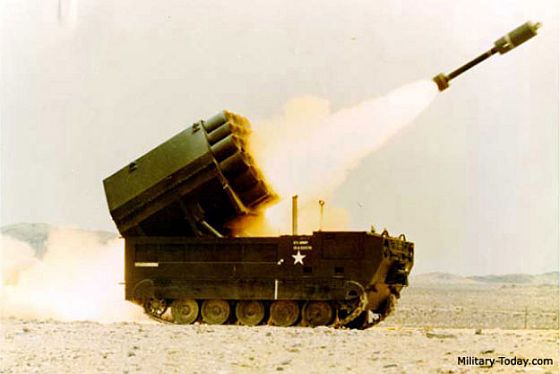
Footnote: I missed this when it appeared in Foreign Policy three weeks ago, but it looks like Syria’s “unique” chemical weapons munitions were actually modeled on an American design.

American Surface Launch Unit-Fuel Air Explosive from the 1970s.

American Surface Launch Unit-Fuel Air Explosive from the 1970s.

Facebooktwittermail

Mapping the sarin flight path

sarin-flight-path

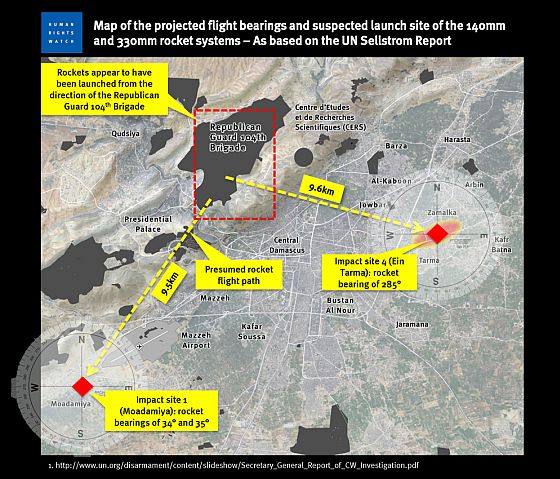
Human Rights Watch: The UN inspectors investigating the chemical weapons attack on two suburbs in Damascus last month weren’t supposed to point the finger at the party responsible for the killings. But even so, the Sellstrom report revealed key details of the attack that strongly suggest the government is to blame, and may even help identify the location from which the Sarin-filled rockets that killed hundreds of people on August 21 were fired.

In appendix 5 of their report, after describing the size and structure of two rocket delivery systems used, they go one step further and actually reveal the direction some of the rockets likely came from. Using standard field investigative techniques examining the debris field and impact area where the rockets struck, the report provides precise azimuths, or angular measurements, that allow us to work out the actual trajectory of the rockets.

“Impact site number 1 (Moadamiya) and impact site number 4 (Ein Tarma),” the inspectors wrote, “provide sufficient evidence to determine, with a sufficient degree of accuracy, the likely trajectory of the projectiles.” They go on to say that 3 of the rockets they inspected had bearings of 34 and 35 degrees for 2 of the rockets that landed in Moadamiya, and 285 degrees for 1 of the rockets that landed in Ein Tarma.

Connecting the dots provided by these numbers allows us to see for ourselves where the rockets were likely launched from and who was responsible.

The two attack locations are located 16 kilometers apart, but when mapping these trajectories, the presumed flight paths of the rockets converge on a well-known military base of the Republican Guard 104th Brigade, situated only a few kilometers north of downtown Damascus and within firing range of the neighborhoods attacked by chemical weapons.

According to declassified reference guides, the 140mm artillery rocket used on impact site number 1 (Moadamiya) has a minimum range of 3.8 kilometers and a maximum range of 9.8 kilometers. The Republican Guard 104th Brigade is approximately 9.5 km from the base. While we don’t know the firing range for the 330mm rocket that hit impact site number 4, the area is only 9.6km away from the base, well within range of most rocket systems. [Continue reading…]

Facebooktwittermail

Sarin: the deadly history of the nerve agent used in Syria

The Guardian reports: Now we know. On the morning of 21 August, as the air above Damascus cooled, rockets filled with the nerve agent sarin fell on rebel-held suburbs of the Syrian capital and left scores of men, women and children dead or injured. UN inspectors had been in the country for three days, on a mission to investigate allegations of earlier atrocities. They quickly changed tack. They brokered a temporary ceasefire with the regime and the rebels and made straight for Ghouta. Video reports from the area showed hospital staff overwhelmed and desperate.

Never before had UN inspectors worked under such pressure and in the midst of a war zone. The small team, headed by the Swedish chemical weapons expert Åke Sellström, was threatened with harm. Their convoy was shot at. But their 41-page report was completed in record time.

Sarin was that breed of accident that scientists come to regret. Its inventors worked on insecticides made from organophosphate compounds at the notorious IG Farben chemical company in Nazi Germany. In 1938, they hit on substance 146, a formula that caused massive disruption to the nervous system. The chemical name was isopropyl methylfluorophosphate, but the company renamed it sarin to honour the chemists behind the discovery – Schrader, Ambros, Ritter and Van der Linde – according to Benjamin Garrett’s 2009 book The A to Z of Nuclear, Biological and Chemical Warfare. The chemical they created had the grim distinction of being many times more lethal than cyanide.

Substance 146 is not hard to make, but it is hard to make without killing yourself. There are more than a dozen recipes that lead to sarin, but all require technical knowhow, proper lab equipment and a serious regard for safety procedures. One major component is isopropanol, more commonly known as rubbing alcohol. Another is made by mixing methylphosphonyl dichloride with hydrogen or sodium fluoride. But methylphosphonyl dichloride is not easy to come by. Under the Chemical Weapons Convention it is listed as a schedule 1 substance, making it one of the most restricted chemicals in existence. [Continue reading…]

Facebooktwittermail

The big issues revolve around Tehran

Rami G Khouri writes: The Moscow-Washington tango that resulted in the Syrian chemical weapons agreement was a first-class diplomatic show that will be analyzed by political scientists and pretzel makers for a generation. As always in successful diplomacy, every actor in the spectacle claims victory and national strategic benefits. The complexity of the cause-and-effect debate is what interests the pretzel makers, whose own fine handiwork defies the attempts of rational people to determine with precision where the pretzel starts and where it ends.

The Russian-American agreement on Syria begs analysis and any possible credible answers on three important questions. The first is for academics and historians because it is unlikely to receive a definitive answer: What role did the American threat of the use of force against Syria play in pushing the parties to an agreement?

Arguments on both sides of this question reflect existing ideological positions on issues such as the degree of coherence in U.S. policy in the Middle East and the efficacy and ethics of Washington’s proclivity to use military force unilaterally and at will anywhere in the world. This is a fascinating and important debate because the U.S. will threaten or use force again and again – as President Barack Obama and Secretary of State John Kerry both repeated several times in recent days while explaining their policies toward Syria and Iran.

The second key issue to examine now is how the agreement will impact the internal fighting in Syria, and the condition of Syria and Syrians.

I expect fighting to continue unabated across the country, and increase in places, as both sides seek to show that they gained from the accord – while their respective external supporters in the United States, Russia, Iran and Saudi Arabia will continue to feed them money and guns. Any drop in American aid to rebels will be compensated for by increased Arab Gulf aid.

The third and most important political question that the U.S.-Russia agreement raises is about its likely implications for a set of critical relationships revolving around a central actor in this wider drama–Iran. In the short run two dynamics matter here: American and Russian relations with Iran, and Iranian-Saudi Arabian relations. [Continue reading…]

Facebooktwittermail

Iran moves to mend ties with West

The New York Times reports: Iran’s supreme leader seemed to put his authority behind Iran’s moderate new president on Tuesday, calling for “heroic leniency” in navigating the country’s diplomatic dispute with the West.

The president, Hassan Rouhani, was elected in June on a moderate platform of ending the nuclear standoff with the West and increasing personal freedoms. In a speech to the Revolutionary Guards, considered stalwarts of the conservative wing of the government, the supreme leader, Ayatollah Ali Khamenei, said he was “not opposed to proper moves in diplomacy.”

Enlarging on that theme, he said, “I agree with what I called ‘heroic leniency’ years ago, because such an approach is very good and necessary in certain situations, as long as we stick to our main principles.”

In what may be a further signal that Mr. Rouhani’s victory in the June election has created a chance for intensified diplomacy, the country’s Foreign Ministry confirmed on Tuesday that he had exchanged letters with President Obama.

But asked about the tone of Mr. Obama’s letter — something the Iranians are extremely sensitive about — Marzieh Afkham, the ministry spokeswoman, said Iran expected improvement in the way Washington talked to Iran.

“Unfortunately, the U.S. administration is still adopting the language of threat while dealing with Iran,” Ms. Afkham said at a weekly news conference. “We have announced that this needs to change into the language of respect.” [Continue reading…]

Facebooktwittermail

For Americans, al Qaeda is less deadly than cantaloupe

Michael Meurer writes: One of the most important revelations from the international drama over Edward Snowden’s NSA leaks in May is the exposure of a nearly lunatic disproportion in threat assessment and spending by the US government. This disproportion has been spawned by a fear-based politics of terror that mandates unlimited money and media attention for even the most tendentious terrorism threats, while lethal domestic risks such as contaminated food from our industrialized agribusiness system are all but ignored. A comparison of federal spending on food safety intelligence versus antiterrorism intelligence brings the irrationality of the threat assessment process into stark relief.

In 2011, the year of Osama bin Laden’s death, the State Department reported that 17 Americans were killed in all terrorist incidents worldwide. The same year, a single outbreak of listeriosis from tainted cantaloupe killed 33 people in the United States. Foodborne pathogens also sickened 48.7 million, hospitalized 127,839 and caused a total of 3,037 deaths. This is a typical year, not an aberration.

We have more to fear from contaminated cantaloupe than from al-Qaeda, yet the United States spends $75 billion per year spread across 15 intelligence agencies in a scattershot attempt to prevent terrorism, illegally spying on its own citizens in the process. By comparison, the Food and Drug Administration (FDA) is struggling to secure $1.1 billion in the 2014 federal budget for its food inspection program, while tougher food processing and inspection regulations passed in 2011 are held up by agribusiness lobbying in Congress. The situation is so dire that Jensen Farms, the company that produced the toxic cantaloupe that killed 33 people in 2011, had never been inspected by the FDA. [Continue reading…]

To note that Americans face more threats related to food safety than terrorism may be a useful way of highlighting the miniscule threat posed by terrorism, but it doesn’t mean we should start getting more afraid of food.

Fear is a bigger problem than food safety.

The more we learn about the ecology of the human body, the more apparent it becomes that a significant number of modern health problems are a result of excessive cleanliness. In our effort to produce pathogen-free environments we are destroying the bacteria upon which good health depends.

Facebooktwittermail

The world’s vanishing ice

Union of Concerned Scientists: In the next few days the Arctic sea ice will reach its minimum extent for 2013. At the end of this year’s summer melt season, the areal extent covered by sea ice was more than a million square kilometers below the 30-year average. That’s a lot of ice missing compared to an average year. An area of frozen ocean—ten times the size of Indiana, or four times the size of Colorado, or a third bigger than Texas—is just not there this summer.

While this is shocking and part of a several-decade decline in Arctic sea ice, what’s also alarming is the lack of substantive media coverage. The decline in Arctic sea ice should concern all of us in the same way that a collapse of the economic system does. It deserves front page billing. A recent Nature commentary stated that “the costs of a melting Arctic will be huge, because the region is pivotal to the functioning of Earth systems such as oceans and the climate.” They don’t mince their words.

Here are five reasons why the decline of the Arctic sea ice matters:

1. Sea ice reflects sunlight, keeping earth cool

When bright, reflective sea ice melts, it gives way to a darker ocean. More heat is absorbed by a darker surface, leading to more warming. This is known as the ice-albedo feedback effect. Largely due to the recent dramatic loss of sea ice and this feedback, the Arctic is now warming at twice the global rate. [Continue reading…]

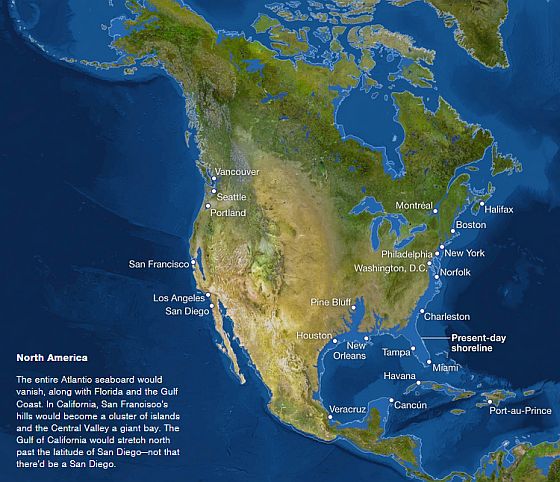
National Geographic depicts the world without ice: All the ice on land has melted and drained into the sea, raising it 216 feet and creating new shorelines for our continents and inland seas.

There are more than five million cubic miles of ice on Earth, and some scientists say it would take more than 5,000 years to melt it all. If we continue adding carbon to the atmosphere, we’ll very likely create an ice-free planet, with an average temperature of perhaps 80 degrees Fahrenheit instead of the current 58.

ice-melted

Facebooktwittermail

Brazil looks to break from U.S.-centric Internet

Phys.org: Brazil plans to divorce itself from the U.S.-centric Internet over Washington’s widespread online spying, a move that many experts fear will be a potentially dangerous first step toward fracturing a global network built with minimal interference by governments.

President Dilma Rousseff ordered a series of measures aimed at greater Brazilian online independence and security following revelations that the U.S. National Security Agency intercepted her communications, hacked into the state-owned Petrobras oil company’s network and spied on Brazilians who entrusted their personal data to U.S. tech companies such as Facebook and Google.

The leader is so angered by the espionage that on Tuesday she postponed next month’s scheduled trip to Washington, where she was to be honored with a state dinner.

Internet security and policy experts say the Brazilian government’s reaction to information leaked by former NSA contractor Edward Snowden is understandable, but warn it could set the Internet on a course of Balkanization.

“The global backlash is only beginning and will get far more severe in coming months,” said Sascha Meinrath, director of the Open Technology Institute at the Washington-based New America Foundation think tank. “This notion of national privacy sovereignty is going to be an increasingly salient issue around the globe.”

While Brazil isn’t proposing to bar its citizens from U.S.-based Web services, it wants their data to be stored locally as the nation assumes greater control over Brazilians’ Internet use to protect them from NSA snooping.

The danger of mandating that kind of geographic isolation, Meinrath said, is that it could render inoperable popular software applications and services and endanger the Internet’s open, interconnected structure. [Continue reading…]

Facebooktwittermail

Fisa court: no telecoms company has ever challenged phone records orders

The Guardian reports: No telecommunications company has ever challenged the secretive Foreign Intelligence Surveillance court’s orders for bulk phone records under the Patriot Act, the court revealed on Tuesday.

The secretive Fisa court’s disclosure came inside a declassification of its legal reasoning justifying the National Security Agency’s ongoing bulk collection of Americans’ phone records.

Citing the “unprecedented disclosures” and the “ongoing public interest in this program”, Judge Claire V Eagan on 29 August not only approved the Obama administration’s request for the bulk collection of data from an unidentified telecommunications firm, but ordered it declassified. Eagan wrote that despite the “lower threshold” for government bulk surveillance under Section 215 of the Patriot Act compared to other laws, the telephone companies who have received Fisa court orders for mass customer data have not challenged the law.

“To date, no holder of records who has received an Order to produce bulk telephony metadata has challenged the legality of such an Order,” Eagan wrote. “Indeed, no recipient of any Section 215 Order has challenged the legality of such an order, despite the mechanism for doing so.”

That complicity has not been total. Before the Bush administration moved the bulk phone records collection under the authority of the Fisa court, around 2006, Qwest Communications refused to participate in the effort. [Continue reading…]

Facebooktwittermail

One in three Americans link Syria to Armageddon

end-times-syria

Americans are famous for their optimism, yet a third of Americans think that the end of the world is just around the corner. And this is the scariest part of that equation: the people who believe in Armageddon also think they are going to heaven.

In the culture of fear promoted by the national security state, the icon of ultimate menace is the terrorist who is willing to martyr himself, yet with its vast armies of End Times believers, America itself surely poses a much graver threat to the world when a large proportion of the population believe that there personal salvation is linked to global destruction.

Lifeway Research: The threat of airstrikes against Syria has more than a few Americans thinking about the end of the world.

A recent poll from Nashville-based LifeWay Research found that almost one in three Americans see Syria’s recent conflict as part of the Bible’s plan for the end times.

One in four think that a U.S. military strike in Syria could lead to Armageddon. One in five believes the world will end in their lifetime.

Those results surprised Ed Stetzer, president of LifeWay Research.

Previous U.S. military action, like the war in Afghanistan or air strikes during 1990s war in Bosnia, didn’t get the same reaction, said Stetzer. But the fact that Syria shares a border with Israel, and is specifically mentioned in the Bible, has people thinking about the end times.

“We weren’t talking about Armageddon during the air strikes on Bosnia,” he said.

Israel and the End Times

Israel plays a major role in biblical prophecy, particularly in the Christian theology known as premillennial dispensationalism.

That theology inspired the best-selling Late Great Planet Earth in the 1970s as well as the Left Behind book series. A big budget remake of Left Behind is currently in the works.

Most premillennial dispensationalists believe Christians will instantly disappear from the earth during an event called the rapture, followed by seven years of war and catastrophe. After the battle of Armageddon, Jesus will return and set up his kingdom on earth.

Stetzer said he could see why linking Bible prophecy to Syria is appealing to many Christians.

It’s not that Christians want the world to end or want to see airstrikes, which will lead to suffering, Stetzer said. But they do want Jesus to return to set things right.

“For Christians, the end of the world doesn’t mean despair,” he said. “The end is really a new beginning.”

Differing opinions

LifeWay Research asked three questions about Syria and the end of the world as part of a telephone survey of 1,001 Americans conducted September Sept. 6-10, 2013.

Thirty-two percent of those polled agree with the statement, “I believe the battles in Syria are all part of the prophecies of the Book of Revelation,” Forty-nine percent disagree.

Twenty-six percent of those surveyed agree with statement, “I believe that U.S. military intervention in Syria might lead to the Battle of Armageddon that’s spoken about in the Book of Revelation.”

Women (36 percent) are more likely than men (28 percent) to see a link between current events in Syria and the Bible.

Those in the South (40 percent) and with household incomes under $25,000 (41 percent are more likely to see Syria’s woes in the Bible. Those in the Northeast (24 percent) or with incomes over $75,000 (20 percent) are more skeptical.

The biggest difference came when people responded to the statement, “I believe the world will end in my lifetime.”

Overall, 18 percent agree while 70 percent disagree.

But 30 percent of those with under $25,000 in household income agree. By contrast, 9 percent of those in households over $75,000, agree with that statement.

Religion and age also played in a role in how people responded to the poll.

Those who attend worship once or twice a month are more likely to see a tie between Syria’s trouble and the book of Revelation (51 percent agree), as are evangelical, born again, and fundamentalist Christians (58 percent agree.)

Fewer of those who rarely (25 percent) or never attend (14 percent) agree.

Older Americans are more likely to think U.S. airstrikes could lead to the battle of Armageddon, with 34 percent of those over 65 agreeing. Only 21 percent of those 18 to 29 agree.

Younger Americans, however, are more likely to think the world would end in their lifetime. Twenty-four percent of those 18 to 29 agree, as opposed to only 15 percent of those over 65.

About a third (32%) of evangelical, born-again, fundamentalist Christians believe the world will end in their lifetime.

The Rev. Mark Hitchcock, pastor of Faith Bible Church in Edmond, Okla., believes the Bible does predict future events in the Middle East.

But Hitchcock, who teaches about Bible prophecy at Dallas Theological Seminary—an institution historically connected to dispensationalism– and authored The End: A Complete Overview of Bible Prophecy and the End of Days, doesn’t think the trouble in Syria was predicted in the Bible.

Hitchcock believes people want answers in troubled times. Economic hard times, political unrest and violence overseas have many Americans fearful, he said.

That makes them more likely to see unrest in the Middle East as a sign that God is acting in the world.

“They want to know that God is in charge,” he said. “They want to know that someone has his hands on the wheel.”

Given that Lifeway Research is a Christian organization, some readers might be skeptical about its polling methods being free from bias, but as far as I can tell from this FAQ, they use industry-standard techniques to ensure accurate polling results.

Facebooktwittermail

Another day, another massacre

Whatever else anyone wants to say about yesterday’s shooting spree by Navy veteran Aaron Alexis in Washington yesterday, the event was as American as apple pie.

Information somehow deemed of relevance to his killing of 12 people, ranges from the ridiculous — he was having difficulty finding parking spaces (which is not to minimize the frustration that can cause) — to the ridiculously obscure — he had “an abiding interest in Buddhism and Thai culture”.

And why, pray tell, did a New York Times reporter give greater prominence to Alexis’ interest in Buddhism, than to his PTSD?

[A construction manager] said he was in New York during the Sept. 11 attacks, and described to a detective “how those events had disturbed him,” according to the detective’s report. His father told investigators that Mr. Alexis had problems associated with post-traumatic stress disorder, and had been an “active participant” in rescue attempts on Sept. 11.

A 9/11 survivor with PTSD — that might be of more relevance than the parking situation or the interest in Buddhism.

Above all, the most blindingly obvious fact about the case is that whatever gave rise to the troubles inside Alexis’ mind — and I don’t think we need the findings of any investigation to conclude that he did indeed have a troubled mind — the vehicle that translated his cognitive state into a physical reality was a gun.

In other countries there are just as many people with just as deeply troubled minds, but outside America it’s much less common that the bridge between extreme emotions and the world is a lethal weapon.

Killing people is the way some Americans talk. Guns give them a voice. The message is banal — bang, you’re dead — yet it’s America’s mantra from Washington to Hollywood.

MedStar Washington Hospital Center Chief Medical Officer Janis Orlowski made this plea for an end to gun violence:

“Let’s get rid of this. This is not America. This is not Washington D.C. This is not good. So we have got to work to get rid of this.”

But this is America and it is Washington DC. Nothing can change without confronting reality and there is no question that gun violence is part of the American way of life.

Moreover, the gun in the hand of the individual mirrors the violent power of the nation.

Michael Vlahos writes:

We are Americans, and Americans are by definition, exceptional, because we are chosen. No one else: Not ancien monarchs and sultans, not Victorian prime ministers and les présidents, can go forth among humanity today and lay waste to the wicked. Only we Americans are entitled to do so, declaring all the while the unimpeachable righteousness of what we do.

But behind this love of violent power and this insistence on being exceptional, is a shadow — a gnawing sense of inferiority: that minus its guns and minus its exceptionalism America might be looked down upon.

At heart, America is troubled by an abiding fear of the world.

Facebooktwittermail

Al Raqqa: The reality of the military brigades and the administration of a liberated Syrian city

Al-Raqqa

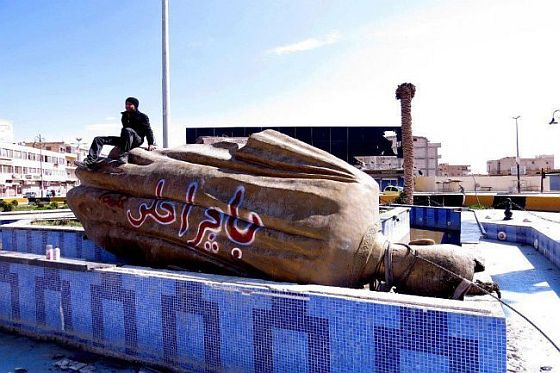
The Syrian playwright, Mohammed Al Attar, describes the complex relationships between each of the militias and the civilian society in Al Raqqa, 100 miles east of Allepo, the first regional capital in liberated Syria to have experienced some degree of autonomy.

Even though the Assad regime has no control over the city on the ground, it persists in bombing, much of it in the form of explosive barrels, dropped randomly by helicopters. “The explosive barrel is the epitome of meaningless death in a war deliberately launched by the regime against its revolutionary subjects. In the eyes of those being bombed from the air, the missiles fired from fighter jets are a far more honourable weapon. They may be more devastating, but at least you don’t have to sit there waiting for them to drop on you, pointlessly.”

Al Raqqa defies the bombardment in a number of ways. Those who remain (and those who have returned) continue their desperate struggle for daily bread, a struggle that is no simple matter these days. There are a very few public service providers that still receive their salaries from the central government (Communications and Electricity) and others whose salaries have been either totally suspended or that have been paid just once in the last six months (Water and Health for example). These providers of vital services continue to work on a voluntary basis with support from the local council, which itself has extremely limited resources. The other problem currently facing Al Raqqa’s residents is the agricultural sector. There are a number of pressing questions surrounding the fate of limited-income farmers. How can they meet the cost of seed and fertilizer now that the admittedly limited government subsidies have been cut off? The fertilizer that is being imported from Turkey is prohibitively expensive. How will the purchase and distribution of crops be regulated? The civil authorities find themselves burdened with new and weighty responsibilities that the Syrian political opposition has completely failed to deal with. The political opposition has no presence on the ground in Al Raqqa. Effective institutions affiliated with the National Coalition or other groups are nowhere to be found. Certain of its representatives make fleeting visits, but that is all. Confronted with all manner of pressing challenges, it is the local council that shoulders the lion’s share of the burden. There are some praiseworthy initiatives, such as an effort to establish a police force, and a very limited number of these policemen have begun to enforce a traffic system, but its work is limited by the new force’s lack of training, equipment and support for its role. Indeed, it is a decisive test of the city’s ever-present armed brigades and their willingness to keep out of civil affairs. The local council has also revived the city’s municipal offices and started working on keeping the city clean.

But hope rests on the youth and the various civil society blocs they created following the liberation of the city. There are currently forty-one civil society organizations in Al Raqqa and though the scope and effectiveness of their activities varies hugely from one to another, they provide incontrovertible evidence of Syrians’ desire to restore an effective role to civil society. There are groups for rights activists, for the independent media, for teachers and students, for activists from the non-violent protest movement, for those working in development, small-scale economic projects and emergency relief. There are even groups for the theatre and the arts. Some of those who work in these groups were detained two or three times by the regime prior to liberation. It is they who give you hope. Their voices carry a weight that cannot be ignored. Moreover, these groups play a role in maintaining dynamic and flexible relations with the armed groups. These relationships are vital for keeping channels of communication open between the two sides, channels in which personal contacts are of supreme importance. All these forms of interaction are vital to the process of identifying and isolating those who communicate poorly or outright refuse all communication (ISIS [Islamic State in Iraq and Syria], for instance). These days, Al Raqqa’s residents increasingly tend to distinguish between those who bear arms to continue their struggle against the regime and those who do so to impose a dictatorship of another kind or to triumph in purely local power struggles. All these types are present in Al Raqqa today. Most of the time, public reception is the determining factor in one party gaining the ascendency over others.

Despite their weariness and the difficulties of their daily lives (all of them serious obstacles blocking the revolutionary’s movement’s return to full strength) there are clear indications that the city’s civilian population is unwilling to tolerate these new dictatorial practices. Souad, a primary school teacher, leaves home every evening to demonstrate in various locations around the city, carrying signs that reject ISIS’s behavior and demanding the release of all those they have detained. Souad often goes to stand outside their headquarters, an act of open defiance, prompting some of its members to try and dissuade her from her what she is doing.

On the evening of August 10, in response to the harassment of civilians by members of the Ahrar Al Sham Movement [one of the strongest Syrian Islamist militias and a rival of ISIS], residents gathered together spontaneously, their assembly becoming a fully-fledged demonstration against the actions of the Movement’s members. Some members of the Movement then opened fire to disperse the demonstrators, and the city seethed with rage, only for the Movement to issue a statement hours later in which they declared that the members responsible for the original grievance had been dismissed and those of them who had fled were being pursued to bring them to justice.

A few days later on August 14, when ISIS detonated its car bomb about the headquarters of the Ahfad Al Rasul Brigade in the old train station, civilians attempted to intervene to remove the wounded and allow passage to ambulances. Once more they were dispersed with gunfire from ISIS fighters.

These events take place against a backdrop of rising anger at the ongoing abductions of well-known figures in the city, to which was added the rumour that Father Paolo [a Jesuit priest] had been murdered by his abductors. The rumour was later denied, but confirming any information about the group’s prisoners remains impossible due to the inaccessibility of sources within the group itself. The most recent information concerning Father Paolo was leaked by a mujahid who had left the group and informed those close to him that he had seen Paolo alive at the Al Baath Dam (which is under ISIS’s control) before he was transported to another headquarters in the village of Al Akirshi, near Al Raqqa.

These successive events appear to be indicators of a deepening enmity between Al Raqqa’s civilians and the armed brigades, ISIS in particular. The civilians do not seem to be in a position of strength when it comes to these types of confrontations, yet at the same time they have never before been so determined and set on continuing their struggle. Every single person I met saw themselves as part of a popular and radical revolt that has not yet ended. They had removed a totalitarian and tyrannical regime from their city. Today, they see this achievement as just one step along the long and hard road to their goal: a free, just and proud nation…And they do not look like they will be giving up any time soon.

Facebooktwittermail

White House says Obama won’t meet with new Iranian leader

The Hill reports: The White House is denying that President Obama has any intention of meeting with Iran’s new president in what would be the first such encounter since the 1979 Islamic revolution.

British and Israeli media reported over the weekend that such a meeting could happen on the margins of the United Nations General Assembly in New York next week. President Hassan Rouhani, a relative moderate, is expected to address the world body on Sept. 24.

“There are currently no plans for the president and President Rouhani to meet at UNGA,” National Security Council spokeswoman Bernadette Meehan told The Hill in an email.

Facebooktwittermail

Israel prefers al Qaeda rather than Assad

The Jerusalem Post reports: “Bad guys” backed by Iran are worse for Israel than “bad guys” who are not supported by the Islamic Republic, Israel’s outgoing ambassador to the US Michael Oren told The Jerusalem Post in a parting interview.

Oren, in the interview that is to be published in full on Friday, traced the evolution of Israel’s message on Syria during the three weeks of the chemical weapons crisis.

“The initial message about the Syrian issue was that we always wanted [President] Bashar Assad to go, we always preferred the bad guys who weren’t backed by Iran to the bad guys who were backed by Iran,” he said.

This was the case, he said, even if the other “bad guys” were affiliated to al-Qaida.

“We understand that they are pretty bad guys,” he said, adding that this designation did not apply to everyone in the Syrian opposition. “Still, the greatest danger to Israel is by the strategic arc that extends from Tehran, to Damascus to Beirut. And we saw the Assad regime as the keystone in that arc. That is a position we had well before the outbreak of hostilities in Syria. With the outbreak of hostilities we continued to want Assad to go.”

Amid reports that Assad may be moving some of his chemical weapons arsenal out of the country, Oren reiterated Israel’s position that it will not tolerate attempts to transfer these arms – or game changing weapons – to Hezbollah.

“The chemical weapons were an American red line, it wasn’t an Israel red line,” Oren said. “Our red line was that if Iran and Syria try to convey chemical weapons or game changing weaponry to Hezbollah or other terrorist organizations, that Israel would not remain passive. We were prepared to stand by the red line, and still are.” [Continue reading…]

Facebooktwittermail

Two-state illusion

Ian S. Lustick writes: Conceived as early as the 1930s, the idea of two states between the Jordan River and the Mediterranean Sea all but disappeared from public consciousness between 1948 and 1967. Between 1967 and 1973 it re-emerged, advanced by a minority of “moderates” in each community. By the 1990s it was embraced by majorities on both sides as not only possible but, during the height of the Oslo peace process, probable. But failures of leadership in the face of tremendous pressures brought Oslo crashing down. These days no one suggests that a negotiated two-state “solution” is probable. The most optimistic insist that, for some brief period, it may still be conceivable.

But many Israelis see the demise of the country as not just possible, but probable. The State of Israel has been established, not its permanence. The most common phrase in Israeli political discourse is some variation of “If X happens (or doesn’t), the state will not survive!” Those who assume that Israel will always exist as a Zionist project should consider how quickly the Soviet, Pahlavi Iranian, apartheid South African, Baathist Iraqi and Yugoslavian states unraveled, and how little warning even sharp-eyed observers had that such transformations were imminent.

In all these cases, presumptions about what was “impossible” helped protect brittle institutions by limiting political imagination. And when objective realities began to diverge dramatically from official common sense, immense pressures accumulated.

JUST as a balloon filled gradually with air bursts when the limit of its tensile strength is passed, there are thresholds of radical, disruptive change in politics. When those thresholds are crossed, the impossible suddenly becomes probable, with revolutionary implications for governments and nations. As we see vividly across the Middle East, when forces for change and new ideas are stifled as completely and for as long as they have been in the Israel-Palestinian conflict, sudden and jagged change becomes increasingly likely.

History offers many such lessons. Britain ruled Ireland for centuries, annexing it in 1801. By the mid-19th century the entire British political class treated Ireland’s permanent incorporation as a fact of life. But bottled-up Irish fury produced repeated revolts. By the 1880s, the Irish question was the greatest issue facing the country; it led to mutiny in the army and near civil war before World War I. Once the war ended, it took only a few years until the establishment of an independent Ireland. What was inconceivable became a fact.

France ruled Algeria for 130 years and never questioned the future of Algeria as an integral part of France. But enormous pressures accumulated, exploding into a revolution that left hundreds of thousands dead. Despite France’s military victory over the rebels in 1959, Algeria soon became independent, and Europeans were evacuated from the country.

And when Mikhail S. Gorbachev sought to save Soviet Communism by reforming it with the policies of glasnost and perestroika, he relied on the people’s continuing belief in the permanence of the Soviet structure. But the forces for change that had already accumulated were overwhelming. Unable to separate freedom of expression and market reforms from the rest of the Soviet state project, Mr. Gorbachev’s policies pushed the system beyond its breaking point. Within a few years, both the Soviet Union and the Communist regime were gone.

Obsessive focus on preserving the theoretical possibility of a two-state solution is as irrational as rearranging deck chairs on the Titanic rather than steering clear of icebergs. But neither ships in the night nor the State of Israel can avoid icebergs unless they are seen. [Continue reading…]

Facebooktwittermail

Israel has 80 nuclear warheads, can make 115 to 190 more, report says

The Los Angeles Times reports: Israel has 80 nuclear warheads and the potential to double that number, according to a new report by U.S. experts.

In the Global Nuclear Weapons Inventories, recently published in the Bulletin of the Atomic Scientists, proliferation experts Hans M. Kristensen and Robert S. Norris write that Israel stopped production of nuclear warheads in 2004.

But the country has enough fissile material for an additional 115 to 190 warheads, according to the report, meaning it could as much as double its arsenal.

Previous estimates have been higher but the new figures agree with the 2013 Stockholm International Peace Research Institute yearbook on armament and international security. The yearbook estimated 50 of Israel’s nuclear warheads were for medium-range ballistic missiles and 30 were for for bombs carried by aircraft, according to a report in the Guardian.

Although widely assumed a nuclear power, Israel has never acknowledged possessing nuclear weapons or capabilities and continues to maintain its decades-old “strategic ambiguity” policy on the matter, neither confirming nor denying foreign reports on the issue.

nuclear-inventory

Hans M. Kristensen and Robert S. Norris write: Excessive secrecy prevents the public from knowing the exact number of nuclear weapons in the world. Although the United States, Russia, Britain, and France have taken steps to increase the transparency of their nuclear stockpiles—both past and present—China, Pakistan, India, Israel, and North Korea continue to refuse to provide basic information about their arsenals. Moreover, an unfortunate new trend is emerging, in that countries that previously provided estimates of the other nations’ nuclear forces have curtailed their release of such information. Secrecy creates uncertainty, mistrust, and misunderstandings. Increased transparency would alleviate this potentially dangerous situation.

We estimate that, combined, the nine nations with nuclear weapons possess more than 10,000 nuclear warheads in their military stockpiles. In addition, several thousand US and Russian retired (but still intact) warheads are in storage, awaiting dismantlement. If the military stockpiles and the retired warheads are counted together, we estimate that the worldwide inventory includes more than 17,000 warheads. The overwhelming portion of that inventory consists of US and Russian warheads, which account for more than 90 percent of all warheads in the world.

Approximately 4,400 warheads—nearly half of all stockpiled warheads—are deployed on missiles or at bases with operational launchers. Of these, we estimate that roughly 1,800 US and Russian warheads are on high alert atop long-range ballistic missiles that are ready to launch 5 to 15 minutes after receiving an order.

Overall, today’s warhead inventories are considerably lower than the Cold War peak of more than 70,000 warheads in the mid-1980s, but the level is still high, considering that the Cold War ended more than 20 years ago. The United States and Russia continue to retain nuclear arsenals that are 10 to 20 times greater than any other state’s. If the trend over time is followed, the US and Russian arsenals (and to a lesser extent those of France and Britain) will continue to decline, but at a slower pace than during the past two decades.

As for China, Pakistan, India, Israel, and North Korea, these nations have nuclear stockpiles that are minuscule in comparison with those of Russia and the United States, but more difficult to estimate. Even so, all of these countries (with the possible exception of North Korea) have sufficient numbers of warheads and delivery systems to inflict enormous destruction over significant ranges with catastrophic humanitarian and climatic consequences in their regions and beyond.

Moreover, in contrast with the United States, Russia, France, and Great Britain, the stockpiles of China, Pakistan, India, and possibly of Israel and North Korea, are likely to increase, although at a much slower pace than prevailed during the US–Soviet arms race of the Cold War. [Continue reading…]

Facebooktwittermail