Monthly Archives: January 2008

OPINION: Fighting terrorism with terrorists

Fighting terrorism with terrorists

In the fall of 2002, the Indonesian island of Bali, once known for its luscious beaches and vibrant Hindu culture, became synonymous with terror and radicalism. After a massive bombing in Bali’s nightclub district killed more than 200 people, the world suddenly realized what many locals had known for years: Indonesia, the largest Muslim nation on Earth, faced a serious internal terror threat.

Even before the Bali attack, Indonesia had suffered a wave of bombings in the winter of 2000, and earlier that year someone had bombed the Jakarta Stock Exchange. The Al Qaeda affiliate Jemaah Islamiah was actively recruiting across the archipelago, establishing radical schools to train a young generation of jihadis and planning attacks in Indonesia and throughout the region, including in the Philippines and Thailand.

But today, Indonesia has become a far different kind of example. Even as terrorism continues to grow more common in nations from Pakistan to Algeria, Indonesia is heading in the opposite direction, destroying its internal terrorist networks and winning the broader public battle against radicalism. And it has done so not only by cracking heads but by using a softer, innovative plan that employs former jihadis to wean radicals away from terror. [complete article]

Facebooktwittermail

OPINION: Second thoughts on Charlie Wilson’s War

Second thoughts on Charlie Wilson’s War

I have some personal knowledge of Congressmen like Charlie Wilson (D-2nd District, Texas, 1973-1996) because, for close to twenty years, my representative in the 50th Congressional District of California was Republican Randy “Duke” Cunningham, now serving an eight-and-a-half year prison sentence for soliciting and receiving bribes from defense contractors. Wilson and Cunningham held exactly the same plummy committee assignments in the House of Representatives — the Defense Appropriations Subcommittee plus the Intelligence Oversight Committee — from which they could dole out large sums of public money with little or no input from their colleagues or constituents.

Both men flagrantly abused their positions — but with radically different consequences. Cunningham went to jail because he was too stupid to know how to game the system — retire and become a lobbyist — whereas Wilson received the Central Intelligence Agency Clandestine Service’s first “honored colleague” award ever given to an outsider and went on to become a $360,000 per annum lobbyist for Pakistan. [complete article]

Facebooktwittermail

NEWS & REVIEW: Taxi to the Dark Side

The power of authority: a dark tale

Frank Gibney was old and sick and a little more than a month away from dying. But he was filled with righteous anger, and he had some things to say. He told his son, the documentary filmmaker Alex Gibney, to unplug a noisy oxygen machine and to grab a video camera.

The older Mr. Gibney, a journalist and scholar who died in April, had served as a naval interrogator in World War II. In a moving statement that serves as a sort of coda to “Taxi to the Dark Side,” a new documentary about the Bush administration’s interrogation policies in the post-9/11 world, he said it had never occurred to him to use brutal techniques on the Japanese prisoners in his custody.

“We had the sense that we were on the side of the good guys,” Frank Gibney said, seething. “People would get decent treatment. And there was the rule of law.”

There would seem to be an enormous distance between the Bagram Air Base in Afghanistan, where the central events in “Taxi to the Dark Side” take place, and Enron’s headquarters in Houston, where the machinations of white-collar criminals brought down the giant energy company and became the backdrop for Mr. Gibney’s entertaining 2005 documentary, “Enron: The Smartest Guys in the Room.” But Mr. Gibney said the two projects have common themes.

“The subject of corruption unites my films,” he said. “‘Enron’ was about economic corruption, and ‘Taxi’ is about the corruption of the rule of law.” [complete article]

Padilla sues John Yoo over detention

Jose Padilla, the American citizen who was held in military detention for more than three years as an enemy combatant, filed a lawsuit Friday against a former Justice Department lawyer who helped provide the legal justifications for what the suit says was Mr. Padilla’s unconstitutional confinement and “gross physical and psychological abuse.”

The lawyer, John C. Yoo, now a law professor at the University of California, Berkeley, wrote or helped prepare a series of legal memorandums on interrogations and the treatment of detainees after the Sept. 11 attacks. [complete article]

Foiling U.S. plan, prison expands in Afghanistan

As the Bush administration struggles for a way to close the military prison at Guantanamo Bay, Cuba, a similar effort to scale down a larger and more secretive American detention center in Afghanistan has been beset by political, legal and security problems, officials say.

The American detention center, established at the Bagram military base as a temporary screening site after the invasion of Afghanistan in 2001, is now teeming with some 630 prisoners — more than twice the 275 being held at Guantanamo. [complete article]

Facebooktwittermail

NEWS: Key “Sunni Awakening” leader killed

Suicide bomber kills key Sunni leader in Baghdad

A suicide bomber assassinated a key leader of American-backed militia forces in a Sunni stronghold of Baghdad on Monday morning, the latest attack on nationalist Sunnis who have recently allied themselves with American troops. That attack, and a second bomb that exploded minutes later, killed at least six and wounded another 26 in total, hospital officials said.

The killing of the militia leader, Col. Riyadh al-Samarrai, on the fringes of north Baghdad’s Adhamiyah district, was one of the most significant attacks so far on leaders of former Sunni insurgents who have banded into militias, known as Awakening groups, to fight extremist militants.

Colonel Samarrai was one of the leaders of the Sunni Awakening movement in Adhamiyah, and was also a close aide and a security adviser to the head of the Sunni Endowment, which oversees Iraq’s Sunni mosques and is one of the most powerful Sunni institutions in Iraq. [complete article]

Facebooktwittermail

NEWS & EDITOR’S COMMENT: The new Cambodia?

U.S. considers new covert push within Pakistan

President Bush’s senior national security advisers are debating whether to expand the authority of the Central Intelligence Agency and the military to conduct far more aggressive covert operations in the tribal areas of Pakistan.

The debate is a response to intelligence reports that Al Qaeda and the Taliban are intensifying efforts there to destabilize the Pakistani government, several senior administration officials said.

Vice President Dick Cheney, Secretary of State Condoleezza Rice and a number of President Bush’s top national security advisers met Friday at the White House to discuss the proposal, which is part of a broad reassessment of American strategy after the assassination 10 days ago of the Pakistani opposition leader Benazir Bhutto. There was also talk of how to handle the period from now to the Feb. 18 elections, and the aftermath of those elections. [complete article]

Editor’s Comment — It’s never enough just to know what was said; we need to know who was talking.

This is a report that illustrates well the need for newspapers to limit their use of anonymous sources. The key to unlocking the article’s significance is knowing who was talking to the New York Times. On that basis we could attempt to understand the sources’ motives for making this information public. For instance, if the sources are intelligence officials we’d have reason to think they might be talking to the press in an effort to kill a harebrained plan before it gains momentum. If on the other hand the sources are inside the White House, then we’d have to wonder whether a political agenda was trumping the need for operational security. Myers, Sanger, and Schmitt should know the answer, but of course their sacred duty to protect the confidentiality of their sources prevents them from adding meaning that currently only they are in a position to discern. Still, why call it reporting if the reporter is only willing to tell part of the story?

What’s more important? That the New York Times is able to protect the privilege of its access to those in power, or that it uses all its means to hold those in power accountable to the people they represent?

Since the Grey Lady is so firmly wedded to its institutional authority, what can we do but go back to parsing the Times as though we were reading Pravda.

This is what I’m able to glean. President Bush, who was in the White House on Friday, did not attend the meeting. The key players at the meeting are named in the article and since they didn’t include Bush, it seems reasonable to infer he wasn’t there. Too busy? We do know for sure that Defense Secretary Gates wasn’t there, so it looks like this was Cheney’s meeting.

Midway through the article, our steely reporters toss in an idle piece of speculation about why the discussions in the White House were taking place: “In part, the White House discussions may be driven by a desire for another effort to capture or kill Osama bin Laden and his deputy, Ayman al-Zawahri.” Does this mean that the Times was told by its sources, this was the main reason for the discussions, but you can’t attribute that to your sources, or was this just some journalistic day-dreaming? Let’s assume the former. And if that’s the case, this discussion may have more to do with domestic American politics than a desire to bring stability to Pakistan.

Perhaps the most revealing lines in the report are these: “The Bush administration has not formally presented any new proposals to Mr. Musharraf, who gave up his military role last month, or to his successor as the army chief, Gen. Ashfaq Parvez Kayani, who the White House thinks will be more sympathetic to the American position than Mr. Musharraf…. But at the White House and the Pentagon, officials see an opportunity in the changing power structure for the Americans to advocate for the expanded authority [of the CIA] in Pakistan, a nuclear-armed country.” In this changing power structure, the administration’s focus remains unchanged: its interest in working more closely with Pakistan’s military than with its civilians. At the same time, the administration appears to want to communicate indirectly with Pakistan’s military by getting its ideas floated in the press. Is this a case of putting the word out to see if it provokes civil unrest?

It’s starting to sound like Cheney might be on the war path again. Iran is off the table, but maybe Pakistan will provide the CIA with an opportunity to help the administration pull its chestnuts out of the fire before November ’08. If they haul in or kill America’s most-wanted men, the presidential race might be nudged back onto national security, and maybe Bush and Cheney won’t go down in history as the men who destroyed the Republican Party.

Could Pakistan go up in flames in the process, al Qaeda’s leaders elude capture and the war in Afghanistan expand into a full-fledged regional war? These are all risks the vice president might be willing to take.

But I digress. The reporters at Pravda — I mean the Times — could do a bit more to enlighten us, couldn’t they?

Facebooktwittermail

NEWS, FEATURE & EDITOR’S COMMENT: Pakistan’s complex political landscape

Next-gen Taliban

The intelligence officer I met in Dera Ismail Khan, whose area of operations included the Taliban-ruled enclave of South Waziristan, maintains that his contacts with the militants were severed long ago. “We can hardly work there anymore,” he told me. “The Taliban suspect everyone of spying. All of our sources have been slaughtered.”
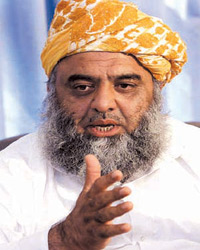
maulana-fazlur-rehman.jpgI asked [Jamiat Ulema-e-Islam chief, Maulana Fazlur] Rehman, who used to refer to the Taliban as “our boys,” if he still considered the Taliban, even those who might be firing rockets at his house, his boys. “Definitely,” he replied. “But because of America’s policies, they have gone to the extreme. I am trying to bring them back into the mainstream. We don’t disagree with the mujahedeen’s cause, but we differ over priorities. They prefer to fight, but I believe in politics.”

Mushahid Hussain, secretary general of the pro-Musharraf faction of the Pakistan Muslim League, told me that no one can negotiate the politics of the North-West Frontier Province better than Rehman. “We know that we need a bearded, turbaned guy out there,” Hussain told me. It is perhaps a measure of how inextricable Islamism and politics have become in Pakistan that even the United States would deal with an anti-American like Rehman. In September, he had the first meeting of his 30-year political career with an American ambassador. What did Rehman and Anne Patterson, the American envoy, discuss? “She urged me to form an electoral alliance with Benazir Bhutto and Musharraf,” he told me a few days after the meeting. “I am not against it. But politically, because of the American presence in Afghanistan and rising extremism, it is a bit hard for us to afford.” Plus, the fact that the Americans thought Bhutto could tackle the Taliban had simply baffled him. “She has no strategy in those areas, and nothing to do with those people,” he said.

When asked if Patterson’s meeting signaled a change in American attitudes, an embassy spokeswoman said it “reflects our approach to democratic politics in Pakistan” and was “part of a process of talking to all those who represent political movements in Pakistan, across the spectrum.” The U.S. has given more than $5 billion to Pakistan in the past few years to fight Islamist militants, but recent reports suggest that the aid has not been effective. Late last month, Congress put restrictions on some military aid and called for the restoration of democratic rights. [complete article]

Democracy gets small portion of U.S. aid

Two years before Benazir Bhutto was assassinated while leading her Pakistan People’s Party in its campaign against the rule of President Pervez Musharraf, the Bush administration devoted this much new aid money to strengthen political parties in Pakistan: $0.

The entire U.S. budget for democracy programs in Pakistan in 2006 amounted to about $22 million, according to State Department documents, much of it reserved for aiding the Election Commission — an entity largely controlled by Musharraf. That $22 million was just a small fraction of the $1.6 billion in aid the United States gave Pakistan that year, and it was equivalent to the value of jet engine and helicopter spare parts that Pakistan purchased in 2006 with the help of U.S. funds.

In the past year, as Musharraf’s grip on power became increasingly fragile, the Bush administration has scrambled to build contacts with the opposition and to provide expertise to opposition parties. The money devoted to democracy programs in the 165 million-person country was almost doubled in the fiscal 2008 budget, to $41 million, but that is still less than the $43 million set aside for such efforts in Kosovo, the former Albanian enclave of Serbia with a population of 2 million. In the region, U.S. democracy programs aimed at Afghanistan, Iraq, Iran and Egypt are all larger than the effort in Pakistan. [complete article]

At the heart of Pakistan, life keeps a normal beat

The presence of a Western journalist provokes rowdy debates. The collective answer to the question ‘Is the West anti-Islamic?’ is that governments are, but people are not. Razzaq, the teashop owner, answers the question of whether the dozen or so men there feel themselves to be Pakistani, Sindhi or Muslim. ‘We are Muslim and then Pakistani,’ he says to general approbation. The television, momentarily ignored, is tuned to a satellite TV station broadcasting in the local Sindhi, not Urdu, the national language.

Faith and politics are intertwined with local identity, too. Radical Islam that probably led to the killing of Bhutto is seen as foreign here, where the folksy, pluralistic Barelvi strand of the faith is dominant.

‘We are not extreme,’ said Maja Ali, Old Jatoi’s storekeeper. ‘We are Sindhis. We are secular and democratic people. We are not sectarian. We are not like people in other parts of Pakistan.’ The regional pride is sometimes hidden, but always there in the background. When one of the rare local supporters of Benazir Bhutto blames ‘the Punjab’ for her death, he is at the same time accusing the army, dominated by Pakistanis originating in the eastern province, and expressing a long-standing resentment against the politically and economically dominant north.

But the political debate does not last long. The villagers return to topics of more interest: the cricket, inflation and the interesting stories about the barber’s wife who, everyone agrees, is as beautiful as the heroine of a Bollywood movie, the highest possible praise. [complete article]

See also, It’s troubled, but it’s home (Mohsin Hamid).

Editor’s Comment — It’s not that the United States needs to be spending more on “democracy promotion” in Pakistan or anywhere else. Such efforts can rightly be regarded as intrusive. The need is simply to spend less on butressing governments that suppress the rights of their own people to self-determination. The will of the people has to be expressed — guess what? — by the people.

Facebooktwittermail

NEWS, ANALYSIS & EDITOR’S COMMENT: How stable is “stability”?

Ghosts that haunt Pakistan

The legend cultivated by Pakistani politicians like Ms. Bhutto and her principal civilian rival, Nawaz Sharif, cast the generals as the main villains in stifling democracy, emerging from their barracks to grab power out of Napoleonic ambition and contempt for the will of ordinary Pakistanis. It is a version of history calculated to appeal strongly to Western opinion. But it has been carefully drawn to excuse the role the politicians themselves have played in undermining democracy, by using mandates won at the polls to establish governments that rarely amounted to much more than vehicles for personal enrichment, or for pursuing vendettas against political foes.

William Dalrymple, a British author who has written widely about India and Pakistan, put it bluntly in an article for Britain’s left-of-center Guardian newspaper in 2005. “As Pakistan shows, rigid, corrupt, unrepresentative and flawed democracies without the strong independent institutions of a civil society — a free press, an independent judiciary, an empowered election commission — can foster governments that are every bit as tyrannical as any dictatorship,” he wrote. “Justice and democracy are not necessarily synonymous.” [complete article]

Musharraf apparently riding out crisis

In the first days after the Dec. 27 attack, the already unpopular Musharraf’s grip on power seemed to hang in the balance. Riots raged for three days in Karachi, Bhutto’s hometown, and across her home province of Sindh.

Much of the fury over the killing of the former prime minister and one of the most popular politicians in the country’s history was aimed directly at one man: the president. In a dozen cities, demonstrators shouted slogans such as “Musharraf, dog!” and “Musharraf, killer!”

But a scant week later, analysts and observers said the Pakistani leader appeared to have weathered the storm, methodically taking a series of steps aimed at shoring up his position, at least in the short term. [complete article]

See also, Bhutto was killed by single assassin, say investigators (The Observer), U.S. relying on two in People’s Party to help stabilize Pakistan (WP), and Sharif carrying the torch of opposition in Pakistan (LAT).

Editor’s Comment — Remember who said, “it is the practice of democracy that makes a nation ready for democracy, and every nation can start on this path”? Of course President Bush was talking about Iraq and the Middle East and it was four years ago. Pakistan isn’t in the Middle East, neoconservatism is festering in the garbage can of history, and the word on everyone’s lips is not “democracy”; it’s “stability.”

Facebooktwittermail

NEWS & EDITOR’S COMMENT: Sibel Edmonds claims nuclear secrets have been sold

For sale: West’s deadly nuclear secrets

A whistleblower has made a series of extraordinary claims about how corrupt government officials allowed Pakistan and other states to steal nuclear weapons secrets.

Sibel Edmonds, a 37-year-old former Turkish language translator for the FBI, listened into hundreds of sensitive intercepted conversations while based at the agency’s Washington field office.

She approached The Sunday Times last month after reading about an Al-Qaeda terrorist who had revealed his role in training some of the 9/11 hijackers while he was in Turkey.

Edmonds described how foreign intelligence agents had enlisted the support of US officials to acquire a network of moles in sensitive military and nuclear institutions.

Among the hours of covert tape recordings, she says she heard evidence that one well-known senior official in the US State Department was being paid by Turkish agents in Washington who were selling the information on to black market buyers, including Pakistan.

The name of the official – who has held a series of top government posts – is known to The Sunday Times. He strongly denies the claims. [complete article]

Editor’s Comment — According to Australia’s Luke Ryland (via The Brad Blog), the “well-known senior official” is Marc Grossman. For detailed background on Sibel Edmond’s efforts to make her story known, see David Rose’s Vanity Fair article from 2005, An inconvenient patriot.

Facebooktwittermail

NEWS & OPINION: Mismeasuring regional dynamics

Why U.S. strategy on Iran is crumbling

‘Everywhere you turn, it is the policy of Iran to foment instability and chaos,” Defense Secretary Robert Gates warned Gulf dignitaries in Bahrain last month. But in reality, everywhere you turn, from Qatar to Saudi Arabia to Egypt, you now see Iranian leaders shattering longstanding taboos by meeting cordially with their Arab counterparts.

The Gulf has moved away from American arguments for isolating Iran. American policymakers need to do the same.

The states of the Gulf Cooperation Council (GCC) are accommodating themselves to Iran’s growing weight in the region’s politics. They remain key parts of America’s security architecture in the region, hosting massive US military bases and underwriting the American economy in exchange for protection. But as Saudi analyst Khalid al-Dakheel argues, they are no longer content sitting passively beneath the US security umbrella and want to avoid being a pawn in the US-Iranian struggle for power. Flush with cash, they are not interested in a war that would mess up business. [complete article]

Yo, anyone who fears Iran

The smart people are getting out of Jerusalem next week. Traffic mayhem is assured as George Bush and his entourage, about 800 souls, guarded by thousands of Israeli police, are whisked about in a fleet of armoured vehicles, complete with a bespoke helicopter brought in to fly the president to Capernaum, in northern Israel, where Jesus chose his apostles.

What is less clear is what Mr Bush will bring his hosts apart from gridlock. The man who hoped his invasion of Iraq in 2003 was going to bring peace to Palestine and democracy to the Arabs has not exactly over-achieved. So the main aims of the tour he begins on January 8th are more limited: to give a nudge to the Israeli-Palestinian peace talks he launched in Annapolis in November and to shore up America’s allies against Iran. [complete article]

Iran ‘could restore ties with U.S.’

Iran’s supreme leader, Ayatollah Ali Khamenei, has said relations with the US could be restored in the future.

In a speech to students, he said the time was not right to restore ties, but if it were ever in Iran’s interests he would endorse such a move. [complete article]

Hezbollah sets resolution terms

The Lebanese opposition group Hezbollah has said openly that it will not allow a president to be elected unless it gets a third of the cabinet seats.

This would give Hezbollah and its allies a veto over key decisions. The Hezbollah leader, Hassan Nasrallah, blamed the US for obstructing a solution to Lebanon’s political crisis by opposing such a move. [complete article]

Facebooktwittermail

OPINION: Hopes on the rise

How Obama’s message found its mark

The big question of Barack Obama’s campaign has always been whether his high-flying rhetoric could ever produce real results. Sure, he could create crowds visible from space, but during the summer—when his polls flattened and his backers got nervous—political elites wondered whether he had peaked. He was the girl you dated, not the girl you married, plenty of political analysts told me.

Not any more. In the campaign’s first test, Obama has beaten two tough opponents by a healthy margin. For a candidate promising to create a movement—an “army for change,” as he calls it—a victory like this not only helps his political prospects in the upcoming primaries. It substantiates a key element of the theory of his candidacy, that he can mobilize people behind a movement. [complete article]

Facebooktwittermail

OPINION: Turning east

Dealing with the dragon

On both Wednesday and Thursday, the price of oil briefly hit $100 a barrel. The new record made headlines, as well it should have. But what does it mean, aside from the obvious point that the economy is under extra pressure?

Well, one thing it means is that we’re having the wrong discussion about foreign policy.

Almost all the foreign policy talk in this presidential campaign has been motivated, one way or another, by 9/11 and the war in Iraq. Yet it’s a very good bet that the biggest foreign policy issues for the next president will involve the Far East rather than the Middle East. In particular, the crucial questions are likely to involve the consequences of China’s economic growth. [complete article]

Facebooktwittermail

FEATURE & EDITOR’S COMMENT: Guiliani’s war dreams

Declaring forever war

Like most Americans, I knew little about Rudolph Giuliani, save that he had been the very successful mayor of New York City catapulted to iconic status for his cool-headed demeanor after the Sept. 11 attacks. I was curious about where he stood as a presidential candidate, so in April 2007, I joined nearly 3,000 other Texas A&M faculty and students to hear him speak.

After saying some nice things about his host, President George H.W. Bush, Rudy launched into a stemwinder about the “war on Islamic fundamentalist terrorism” that basically repudiated everything the former president stood for in his foreign policy. Moreover, in the space of 40 minutes, Giuliani never once mentioned Osama bin Laden, the man who masterminded the attack on his city.

I was so appalled by the mayor’s simplistic message that terrorists were attacking us because they “oppose our freedom and … want to impose their ideology on us” that I ignored protocol and challenged him during the Q&A. To the accompaniment of hisses from the rabidly pro-Rudy students, I reminded the mayor that Islamic fundamentalists in Saudi Arabia, Iran, and elsewhere in the Middle East have taken our side against al-Qaeda at various times. Like the students, Hizzonor was not amused, and I got five minutes of unvarnished Rudy chiding me for just not getting it.

To the cheers of the partisan crowd, Giuliani argued that my “failure to see the connection between Islamic fundamentalist terrorist groups [was] a recipe for disaster.” In his view, the campaign of radical Islamic terrorism began back in the 1960s and 1970s and included things like the Black September attack upon Israeli Olympic athletes at Munich in 1972. He ridiculed my call to disaggregate the terrorist threat, saying it ignored the fact that Yasir Arafat, whom, he lamented, we helped win the Nobel Prize, was responsible for “slaughtering 29 Americans” over the years. I learned later that Giuliani was so annoyed by my hectoring that he complained about it at the reception after the talk. He was reportedly shocked to learn that I was not some lefty professor but a member of the faculty at the Bush School. [complete article]

Editor’s Comment — Guiliani might still be pinning all his hopes on Florida, but after winning just 3% of the Republican vote in Iowa, he’s starting to look less dangerous and more of a crank. While the candidate was smiling off his miserable performance, John Podhoretz made the farcical claim that the “result in Iowa could not have been better for Giuliani tactically.” How many more such tactical successes can Guiliani suffer before it destroys his campaign?

Facebooktwittermail

ANALYSIS & OPINION: Pakistan’s future (and past)

Should America dump its man in Pakistan?

The assassination of former Prime Minister Benazir Bhutto killed the Bush administration’s last hope that Pakistani President Pervez Musharraf could simultaneously defeat al Qaida and the Taliban and return his country to democratic rule.

Now, Pakistani experts said, the administration faces a tough choice: Press its unpopular and isolated ally to resign or share the blame as Musharraf drags his nation toward a violent implosion that could give Islamic extremists a more extensive haven in western Pakistan than the one they already have.

“Musharraf has become a symbol of everything that is wrong,” said Ijaz Khan, a Peshawar University professor of international relations. “He can no longer be part of the solution. This is what Washington must understand. [complete article]

Bhutto’s deadly legacy

Within her own party, she declared herself the president for life and controlled all decisions. She rejected her brother Murtaza’s bid to challenge her for its leadership and when he persisted, he was shot dead in highly suspicious circumstances during a police ambush outside the Bhutto family home.

Benazir Bhutto was certainly a brave and secular-minded woman. But the obituaries painting her as dying to save democracy distort history. Instead, she was a natural autocrat who did little for human rights, a calculating politician who was complicit in Pakistan’s becoming the region’s principal jihadi paymaster while she also ramped up an insurgency in Kashmir that has brought two nuclear powers to the brink of war. [complete article]

Analysts: Scotland Yard may find little to do in Pakistan

Scotland Yard’s investigators may not have much to work with in the assassination of Benazir Bhutto in Pakistan, leading to an inquiry that raises more questions than answers, analysts say.

They say the arrival from London of one of the world’s most famous police squads is likely to make little difference in a country with a long tradition of political murders and an equally long tradition of failing to solve them. [complete article]

A look into Pakistan’s political future

Hassan Abbas, a research fellow at the Belfer Center’s Project on Managing the Atom and International Security Program, Harvard University, and a former Pakistani government official who served in the administrations of prime minister Benazir Bhutto and President Pervez Musharraf, shares his thoughts with Kaveh Afrasiabi on how the general elections on February 18 will pan out. [complete article]

Facebooktwittermail

NEWS: Hamas no compromise on prisoners; Fatah’s popularity falling

Meshal: No compromise on terms for Shalit deal

The exiled leader of the militant Palestinian Hamas group said Friday that Israel Defense Forces soldier Gilad Shalit, captured by Hamas-linked militants in a cross-border raid in June 2006, will not be released without the freedom of Palestinians held in Israeli jails.

“The matter of the prisoners bloodies our heart,” Khaled Meshal said, indicating that it was a painful topic, and added that Gilad Shalit will not be released “unless our prisoners are released.” He did not give further details.

Meshal also said that Hamas rejected a European offer for an indirect meeting with Israel to discuss a possible truce, adding that the Palestinian people have no choice other than resistance. Speaking at a rally in Damascus marking Hamas’ 20th anniversary, Khaled Meshal also called on Palestinian President Mahmoud Abbas to hold unconditional talks with Hamas. [complete article]

Poll: Fatah losing support among West Bank, Gaza Palestinians

Despite international political and financial support, the popularity of the Fatah faction headed by Palestinian President Mahmoud Abbas has declined over the past month, partially because of mistrust in the group’s leaders, according to a poll published Friday.

Fatah still commands a strong lead over the Islamic militant Hamas group that controls Gaza, with 39 percent of Palestinians trusting it, as opposed to 16 percent backing for Hamas. But in November, 46 percent of those surveyed for a similar poll favored Fatah, and 13 percent backed Hamas.

Forty-one percent of those polled said they didn’t trust either faction, up from 32 percent in November. The telephone poll, conducted in late December by Near East Consulting, interviewed 959 Palestinians in the West Bank and Gaza. It had a margin of error of 3.2 percentage points. [complete article]

Facebooktwittermail

NEWS: The threat from the militias; divisions among Sunnis

Exit al-Qaeda. Enter the militias?

In 2007 the United States military put its most dangerous enemy on the run. In 2008 it may face an even more entrenched foe. Al-Qaeda in Iraq (AQI), the primary target of the American troop surge and counter-insurgency strategy, appears to be on its last legs after a year of being attacked from all sides. But Shi’ite militias, which have deep roots in Iraq’s Shi’a communities and the Shi’ite-dominated government, may now pose a more serious long-term threat.

In some ways AQI was a victim of its own success. It is practically the only organization in Iraq that all the other players in the country saw as an unacceptable threat. Both the U.S. military and the Shi’ite-dominated government had fought the Sunni jihadist group for years. By the beginning of 2007, Sunni tribal leaders and nationalist insurgents had also begun battling with their former allies in AQI in order to retake control of Sunni communities. [complete article]

Sunnis divided in Anbar province

From a podium decked in flowers and the Iraqi flag, a Sunni Muslim sheik in a pinstriped suit politely welcomed the Shiite guests who had driven up from Baghdad, before launching into a tirade about the lack of jobs and essential services in this former insurgent bastion.

The focus of his anger, however, was not the Shiite-led national government, but fellow Sunni Arabs on the Anbar provincial council.

Anbar is the success story of the U.S. strategy to combat the insurgency from the ground up by striking alliances with local leaders. But though the tribal sheiks’ rebellion against the militants they once backed has calmed the region and opened the door to political dialogue with Iraq’s majority Shiites, it has deepened divisions among Sunnis.

As violence has faded, an argument has been raging over who really speaks for Iraq’s Sunni Arab minority: the province’s largely secular and fiercely independent tribal leaders, who resisted the U.S. invasion, or the main Sunni political party, an Islamist group led by former exiles who cooperated with the Americans from the start. [complete article]

Facebooktwittermail

NEWS & OPINION: Saudi Arabia silences its critics

Al Jazeera no longer nips at Saudis

“The gulf nations now feel they are all in the same boat, because of the threat of Iran, and the chaos of Iraq and America’s weakness,” said Mustafa Alani, a security analyst at the Gulf Research Center in Dubai. “So the Qataris agreed to give the Saudis assurances about Al Jazeera’s coverage.”

Those assurances, Mr. Alani added, were given at a September meeting in Riyadh, the Saudi capital, between King Abdullah of Saudi Arabia and top officials in the Qatari government. For the meeting, aimed at resolving a long-simmering feud between the nations, the Qataris brought along an unusual guest: the chairman of Al Jazeera’s board, Sheik Hamad bin Thamer al-Thani.

Al Jazeera’s general manager, Waddah Khanfar, did not reply to phone and e-mail requests for comment. But several employees confirmed that the chairman of the board had attended the meeting. They declined to give their names, citing the delicacy of the issue. The governments of Qatar and Saudi Arabia have remained silent on the matter.

Repercussions were soon felt at Al Jazeera.

“Orders were given not to tackle any Saudi issue without referring to the higher management,” one Jazeera newsroom employee wrote in an e-mail message. “All dissident voices disappeared from our screens.”

The employee noted that coverage of Saudi Arabia was always politically motivated at Al Jazeera — in the past, top management used to sometimes force-feed the reluctant news staff negative material about Saudi Arabia, apparently to placate the Qatari leadership. But he added that the recent changes were seen in the newsroom as an even more naked assertion of political will.

“To improve their relations with Qatar, the Saudis wanted to silence Al Jazeera,” he wrote. “They got what they wanted.” [complete article]

Saudi Arabia’s promised reforms

King Abdullah of Saudi Arabia did the right thing when he pardoned the “Qatif girl.” The perfect injustice of the case, in which a young woman was gang raped and then sentenced to 200 lashes for being alone in a car with a man to whom she was not married, left him no choice. Now another ugly face of Saudi justice has been revealed, one that cannot be explained by religion, ancient tradition or culture. The detention last month of an outspoken blogger, Fouad al-Farhan — only confirmed by the Interior Ministry this week — is an act of thoroughly modern despotism and one the king should immediately overrule. [complete article]

Facebooktwittermail

NEWS: Nuclear insecurity

Video of sleeping guards shakes nuclear industry

Kerry Beal was taken aback when he discovered last March that many of his fellow security guards at the Peach Bottom nuclear power plant in Pennsylvania were taking regular naps in what they called “the ready room.”

When he spoke to supervisors at his company, Wackenhut Corp., they told Beal to be a team player. When he alerted the regional office of the Nuclear Regulatory Commission, regulators let the matter drop after the plant’s owner, Exelon, said it found no evidence of guards asleep on the job.

So Beal videotaped the sleeping guards. The tape, eventually given to WCBS, a CBS television affiliate in New York City, showed the armed workers snoozing against walls, slumped on tabletops or with eyes closed and heads bobbing.

The fallout of the broadcast is still being felt. Last month, Exelon, the country’s largest provider of nuclear power, fired Wackenhut, which had guarded each of its 10 nuclear plants. The NRC is reviewing its own oversight procedures, having failed to heed Beal’s warning. And Wackenhut says that the entire nuclear industry needs to rethink security if it hopes to meet the tougher standards the NRC has tried to impose since the Sept. 11, 2001, terrorist attacks on the United States. [complete article]

Facebooktwittermail

OPINION: Obama’s moment

The two earthquakes

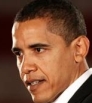
obama.jpgIowa won’t settle the race, but the rest of the primary season is going to be colored by the glow of this result. Whatever their political affiliations, Americans are going to feel good about the Obama victory, which is a story of youth, possibility and unity through diversity — the primordial themes of the American experience.

And Americans are not going to want to see this stopped. When an African-American man is leading a juggernaut to the White House, do you want to be the one to stand up and say No? [complete article]

See also, Judge him by his laws (Charles Peters).

Facebooktwittermail