Monthly Archives: August 2011

Israel’s growing protest movement presents a looming threat to settlers

Israel’s protest movement which has come to life and grown rapidly over the last three weeks has steered clear of the issue of the occupation. Yet the one group in Israel that has been largely absent in the call for social justice is the far right including settlers in the West Bank, this being the segment of Israeli society that has the deepest investment in the perpetuation of the status quo.

Dimi Reider, an Israeli journalist and co-editor of 972 Magazine, speaks to Amy Goodman on Democracy Now!

In the New York Times, Dimi Reider and Aziz Abu Sarah write:

There are profound and institutionalized economic disparities between Arabs and Jews in Israel. But when it comes to housing prices, an Israeli Arab who makes $1,000 a month and pays $500 in rent can still find common ground with an Israeli Jew making $2,000 and giving $1,000 to the landlord.

On Saturday, approximately 150,000 people flocked to the streets of Tel Aviv, Jerusalem, Haifa, Beersheba and many small suburbs and towns to protest the rising cost of living. It was Israel’s largest demonstration on any issue in over a decade, and organizers are calling for an even larger protest this weekend, mimicking the snowballing weekly rallies of the Arab Spring.

The protests that are paralyzing Israel began on July 14, when a few professionals in their 20s decided they could no longer tolerate the city’s uncontrolled rents, and pitched six tents at the top of the city’s most elegant street, Rothschild Boulevard. Three weeks later, the six tents have swelled to over 400, and more than 40 similar encampments have spread across the country, forming unlikely alliances between gay activists and yeshiva students, corporate lawyers and the homeless and ultra-Orthodox Jews and Israeli Arabs.

So far, the protesters have managed to remain apolitical, refusing to declare support for any leader or to be hijacked by any political party. But there is one issue conspicuously missing from the protests: Israel’s 44-year occupation of the Palestinian territories, which exacts a heavy price on the state budget and is directly related to the lack of affordable housing within Israel proper.

According to a report published by the activist group Peace Now, the Israeli government is using over 15 percent of its public construction budget to expand West Bank settlements, which house only 4 percent of Israeli citizens. According to the Adva Center, a research institute, Israel spends twice as much on a settlement resident as it spends on other Israelis.

Indeed, much of the lack of affordable housing in Israeli cities can be traced back to the 1990s, when the availability of public housing in Israel was severely curtailed while subsidies in the settlements increased, driving many lower-middle-class and working-class Israelis into the West Bank and Gaza Strip — along with many new immigrants.

Israel today is facing the consequences of a policy that favors sustaining the occupation and expanding settlements over protecting the interests of the broader population. The annual cost of maintaining control over Palestinian land is estimated at over $700 million.

Noam Sheizaf reports on the political impact the protests may have, as indicated by recent polls.

While it would be unwise to try and predict what sort of effect these unprecedented demonstrations will have on Israeli politics, the polls do confirm some of the hunches we had in the last three weeks, and most notably, a potential for far-reaching changes in the political system in the years to come.

The support for the protest crosses sectors and party lines. According to Channel 10’s poll conducted on Monday, 88 percent of Israelis support the protest. The middle class parties lead the way: 98 percent of Kadima voters (!), 95 percent of Labor’s and even 85 percent of Netanyahu’s Likud voters find the protest just. Even if these figures dropped in the last couple of days—which had some fractions and public disputes in the protest movement—they are still exceptionally high.

The attempts to discredit the protest have mostly failed. Government spokesperson and rightwing organizations tried to tie the protest to left wing movements, claiming that it is a politically-motivated move aimed personally against PM Netanyahu. Still, 74 percent of the public think that the protest is a genuine one, and only 22 percent find it to be politically motivated.

The hard right is the only group not identifying with the protest. Half of Shas’ voters and most of those voting for the settlers’ parties think the protest is politically motivated. Voters of those parties are more inclined to oppose the protest than any other group. I believe that these groups sense that the protest might challenge the dominant political arrangements in Israel – ones with benefit the settlers and the religious parties.

Carlo Strenger writes:

The current uprising has given Israeli liberals a voice again. Its authenticity could not be disputed: to this day there is no clear leadership. The atmosphere on the boulevard, where hundreds of tents fill the tree-lined spaces, feels like a remake of Woodstock. The demands sound eminently reasonable to all sectors of Israel’s population.

But the apolitical character of the protest is being challenged. Netanyahu is already claiming that the protesters are driven by political motivations. His intent is clear: he wants to delegitimise them and claim that their real goal is to topple his government. This, he hopes, will weaken nationwide support for their demands. On Monday, members of the Likud central committee started to say that the demonstrators are just a bunch of sushi eaters with nargilas (Arab pipes) – ie leftist radicals – and that the media was exaggerating their numbers.

Because the process so far has been rather chaotic, it is very difficult to predict what it will lead to. If the Likud and Yisrael Beitenu step up their attack, the protesters will not have any choice but to confront the current coalition in the political arena as well.

They will have to say that taxpayers’ money in Israel has been spent lavishly in the occupied territories; that billions of shekels go to child support for the ultra-Orthodox, most of whom do not contribute to the economy; that the silent collusion of Israel’s governments with the settlers is ruining the country morally, politically and economically. In the end, the call for social justice and the demand to reinstate liberal values in Israel cannot be separated.


Facebooktwittermail

Syrian tanks thrust into Hama, 45 reported killed

Reuters reports:

At least 45 civilians were killed in a tank assault by Syrian President Bashar al-Assad’s forces to occupy the center of Hama, an activist said on Thursday, in a sharp escalation of a military campaign aimed at ending an uprising against his rule.

Reacting to intensifying assaults on Syrian cities and towns, the U.N. Security Council overcame deep divisions and condemned Assad’s bloody crackdown on civilian protesters. It was the first substantive action by the United Nations on Syria’s five-month-old uprising for political freedoms.

An activist who managed to leave the besieged city told Reuters that 40 people were killed by heavy machinegun fire and shelling by tanks in al-Hader district north of the Orontes river on Wednesday and early on Thursday.

The activist, who gave his name as Thaer, said five more people from the Fakhri and Assa’ad families, including two children, were killed as they were trying to leave Hama by car on the al-Dhahirya highway.

Syrian authorities have expelled most independent media, making it difficult to verify witness accounts and official statements.

Residents earlier said tanks had advanced into central Hama on Wednesday after heavily shelling the city and occupied the main Orontes Square, the site of some of the largest protests against Assad, who succeeded his father, the late President Hafez al-Assad, in 2000.

Snipers spread onto rooftops and into the nearby citadel. They said shelling concentrated on al-Hader district, large parts of which were razed in 1982 when forces loyal to Hafez al-Assad overran Hama to crush Islamist insurgents, killing many thousands of people.

Facebooktwittermail

Italy edges closer to ‘burqa ban’ law

Al Jazeera reports:

An Italian parliamentary commission has approved a draft law that would ban women from wearing veils that cover their faces in public, if passed by parliament in September.

The draft approved by the constitutional affairs commission on Tuesday would prohibit women from wearing a burqa, niqab or any other garb that covers the face in such circumstances.

It would expand a decades-old law that for security reasons prohibits people from wearing face-covering items such as masks in public places.

Women who violate the ban would face fines of $140 to $400, while third parties who force women to cover their faces in public would be fined $42,000 and face up to 12 months in jail.

Italy, an overwhelmingly Catholic country with a small Muslim minority, is the latest European country to act against the burqa. France and Belgium have banned the wearing of burqa-style Islamic dress in public, as has a city in Spain. The Belgium law cited security concerns.

Facebooktwittermail

US troops in Iraq: to stay or to go?

The New York Times reports:

The narrative of American officialdom here, civilian and military alike, is that United States muscle is used merely in service of supporting Iraq’s fledgling democracy. Iraq’s leaders and soldiers are the ones responsible, and seek American support only as needed. That may be literally true, but the reaction to a botched weekend raid in a village north of the capital that left three men dead, none the targeted insurgent, laid bare another truth: In Iraq, where grievances run deep, America will still bear the brunt of the blame when things go wrong, even if the facts don’t completely align.

On Saturday news began filtering out of Al Rufait, the grape farming village near Saddam Hussein’s hometown, Tikrit, that a nighttime operation conducted by Iraqi and American forces aimed at a suspected member of Al Qaeda had turned in to a shootout involving bullets, grenades and American Apache helicopters that left the tribal Sheik and two others dead, and several wounded, including two young girls.

A cloud of competing stories emerged, but the outrage from village residents and local officials was directed at the Americans, even though it was Iraq’s own security forces in charge of the mission, and Iraqi soldiers far outnumbered the amount of American boots on the ground, a United States military spokesman said.

Stories of American complicity in civilian deaths here are rare these days, and we made plans to head to the village the next morning. Before 8 a.m., two tribal leaders met us on the side of the main highway that connects the capital with the country’s north, and we followed their white pickup through winding roads that cut through vast green fields of grape vines. Visiting a village in the Sunni triangle suspected of having Al Qaeda sympathies on a day of anger toward a suspected American role in the killing of a respected tribal leader is a fraught exercise, and for only the second time of nearly a year in Iraq, I heard the metallic clank of one of our guards chambering a round in his assault rifle.

But the villagers were respectful, and just wanted to tell their story to a Western journalist, even if none of the customary tribal traditions such as a cup of chai were on offer. Surrounded by perhaps two dozen men, they took us through the village, recounting the raid and blaming the Americans. Not a cross word was said about Iraqi forces who the Americans said led the raid, nor of the Iraqi legal system, which had validated the raid with a judicial warrant.

“We will follow them to America and file cases there against them,” one of the villagers said. “There were more than 30 people here that saw what happened and all are ready to be witnesses.”

One tribal sheik, Youseff Ahmad, spoke about the debate about the future role of United States forces here that has dominated Iraqi public life of late. “We want them to leave, even before the end of this year,” Mr. Ahmad said. “They’ve destroyed us. They’ve only brought killing and disaster.”

Facebooktwittermail

Where is the American version of Breivik and why has he not struck yet? Or has he?

Max Blumenthal writes:

Few political terrorists in recent history took as much care to articulate their ideological influences and political views as Anders Behring Breivik did. The right-wing Norwegian Islamophobe who murdered 76 children and adults in Oslo and at a government-run youth camp spent months, if not years, preparing his 1,500 page manifesto.

Besides its length, one of the most remarkable aspects of the manifesto is the extent to which its European author quoted from the writings of figures from the American conservative movement. Though he referred heavily to his fellow Norwegian, the blogger Fjordman, it was Robert Spencer, the American Islamophobic pseudo-academic, who received the most references from Breivik — 55 in all. Then there was Daniel Pipes, the Muslim-bashing American neoconservative who earned 18 citations from the terrorist. Other American anti-Muslim characters appear prominently in the manifesto, including the extremist blogger Pam Geller, who operates an Islamophobic organization in partnership with Spencer.

Breivik may have developed his destructive sensibility in the stark political environment of a European continent riveted by mass immigration from the Muslim world, but his conceptualization of the changes he was witnessing reflect the influence of a cadre of far-right bloggers and activists from across the Atlantic Ocean. He not only mimicked their terminology and emulated their language, he substantially adopted their political worldview. The profound impact of the American right’s Islamophobic subculture on Breivik’s thinking raises a question that has not been adequately explored: Where is the American version of Breivik and why has he not struck yet? Or has he?

Many of the American writers who influenced Breivik spent years churning out calls for the mass murder of Muslims, Palestinians and their left-wing Western supporters. But the sort of terrorism these US-based rightists incited for was not the style the Norwegian killer would eventually adopt. Instead of Breivik’s renegade free-booting, they preferred the “shock and awe” brand of state terror perfected by Western armies against the brown hordes threatening to impose Sharia law on the people in Peoria. This kind of violence provides a righteous satisfaction so powerful it can be experienced from thousands of miles away.

And so most American Islamophobes simply sit back from the comfort of their homes and cheer as American and Israeli troops — and their remote-controlled aerial drones — leave a trail of charred bodies from Waziristan to Gaza City. Only a select group of able-bodied Islamophobes are willing to suit up in a uniform and rush to the front lines of the clash of civilizations. There, they have discovered that they can mow down Muslim non-combatants without much fear of legal consequences, and that when they return, they will be celebrated as the elite Crusader-warriors of the new Islamophobic right — a few particularly violent figures have been rewarded with seats in Congress. Given the variety of culturally acceptable, officially approved outlets for venting violent anti-Muslim resentment, there is little reason for any American to follow in Breivik’s path of infamy.

Facebooktwittermail

Dropping of the last mask of democracy

Omar Barghouti writes:

“You should definitely postpone your book launch in Jerusalem”, warned a close friend who felt that the planned event for launching my recently published book on the Palestinian-led movement for boycott, divestment, and sanctions (BDS) against Israel. He warned it might be too risky in light of the recently passed Israel law that effectively bans support for the thriving boycott movement. At the packed bookshop-cafe in occupied East Jerusalem last Thursday, however, the engaged and Italian-coffee scented atmosphere was almost jubilant, as if declaring a collective defiance of Israel’s latest draconian measure.

Much controversy has arisen since the Israeli parliament passed legislation that would effectively criminalize support for any boycott against Israel or its institutions, under threat of heavy penalties and worse, without the need to prove “guilt”. Dozens of Israeli civil society organizations and leading legal scholars, including many opposing the boycott, have resolutely opposed this exceptionally authoritarian law on diverse grounds, ranging from the most principled to the downright pragmatic.

Missing in most of the debate is the Palestinian perspective, which is undoubtedly most relevant given that this law was entirely motivated by the spectacular growth in recent years of the global boycott, divestment and sanctions (BDS) movement against Israel, which was launched in 2005 and is led by the largest coalition of Palestinian civil society parties, unions, and NGOs: the Boycott National Committee (BNC).

While expressing alarm at this latest repressive attempt by Israel to crush Palestinian peaceful resistance and support for it among conscientious Israelis, a BNC statement conveyed confidence that this law will bolster the spread of BDS even faster among liberal communities the world over. Hind Awwad, coordinator with the BNC, reacted: “This new legislation, which violates international law, is testament to the success of the rapidly growing global BDS movement and a realization within political elites inside Israel that the state is becoming a world pariah in the way that South Africa once was.”

Facebooktwittermail

The disturbing copy-and-paste habits of Arizona’s far-right state Senate president

Jeff Biggers reports:

As President Obama and congressional leaders wrangled over the debt ceiling last Saturday evening, Russell Pearce, Arizona’s controversial state Senate president, turned to Facebook to express his own personal outrage.

“Folks,” he wrote, “if there was ever an argument for NO to raising the debt limit and YES to stop the reckless socialist spending in this Gangster Government in DC. Watch this video.”

The video showed an “Elaborate Welfare Housing Project” built for “illegal immigrants” and funded through alleged “refugee pay.”

Just one problem: The five-month-old viral video — which was created by a far-right gadfly from Tacoma, Wash. — had already been thoroughly debunked by the Tacoma News Tribune. By Sunday morning, Pearce had deleted the post from his Facebook site.

But this was hardly the first time that Pearce, whose ultraconservative immigration views have won him national attention and who will face a historic recall election in his Arizona district on Nov. 8, associates himself with the work of a fringe character.

For several years, media outlets in Arizona and at the national level have explored links between Pearce and extremist groups, and in 2006 he was caught circulating a Holocaust-denying article from a West Virginia-based white supremacist group. In issuing an apology, Pearce claimed to not have known about the National Alliance’s views.

But a new examination of Pearce’s website and public statements reveals that the self-proclaimed architect of Arizona’s “papers please” immigration law has regularly borrowed significant portions of text from the writings of hard-line white nationalists, fringe anti-immigrant activists, and others whose views far fall outside the mainstream and presented them as his own.

Facebooktwittermail

Air Force cites New Testament, ex-Nazi, to train officers on ethics of launching nuclear weapons

Last week, Jason Leopold reported in Truthout:

The United States Air Force has been training young missile officers about the morals and ethics of launching nuclear weapons by citing passages from the New Testament and commentary from a former member of the Nazi Party, according to newly released documents.

The mandatory Nuclear Ethics and Nuclear Warfare session, which includes a discussion on St. Augustine’s “Christian Just War Theory,” is led by Air Force chaplains and takes place during a missile officer’s first week in training at Vandenberg Air Force Base in California.

St. Augustine’s “Qualifications for Just War,” according to the way it is cited in a 43-page PowerPoint presentation, are: “to avenge or to avert evil; to protect the innocent and restore moral social order (just cause)” and “to restore moral order; not expand power, not for pride or revenge (just intent).”

The Air Force documents were released under the Freedom of Information Act (FOIA) and provided to Truthout by the Military Religious Freedom Foundation (MRFF), a civil rights organization. MRFF President Mikey Weinstein said more than 30 Air Force officers, a majority of whom describe themselves as practicing Protestants and Roman Catholics, have contacted his group over the past week in hopes of enlisting him to work with the Air Force to have the Christian-themed teachings removed from the nuclear weapons ethics training session. [Full disclosure: Weinstein is a member of Truthout’s Board of Advisers.]

Included with the PowerPoint presentation are more than 500 pages of other documents pertaining to a missile officer’s first week of training, which takes place before they are sent to one of three Air Force bases to guard the country’s Intercontinental Ballistic Missile (ICBM) arsenal and, if called upon to do so by the president, launch their nuclear-armed Minuteman IIIs.

One of the most disturbing slides quotes Wernher Von Braun, a former member of the Nazi Party and SS officer. Von Braun, regarded as the father of the US space program, is not being cited as a scientific expert, rather he’s specifically being referenced as a moral authority, which is remarkable considering that the Nazi scientist used Jews imprisoned in concentration camps and captured French anti-Nazi partisans and civilians to help build the V-2 rocket, a weapon responsible for the death of thousands of British civilians.

“We knew that we had created a new means of warfare and the question as to what nation, to what victorious nation we were willing to entrust this brainchild of ours was a moral decision [emphasis in document] more than anything else,” Von Braun said upon surrendering to American forces in May 1945. “We wanted to see the world spared another conflict such as Germany had just been through and we felt that only by surrendering such a weapon to people who are guided by the Bible could such an assurance to the world be best secured.” [emphasis in document]

The Washington Post reported on Tuesday:

The Air Force has suspended a training course for nuclear missile launch officers that used Bible passages and religious imagery to teach them about the ethics of war.

The course had apparently been taught by chaplains at Vandenberg Air Force Base in California for more than 20 years, but officials pulled the plug after an article from the liberal Web site Truthout.org appeared online last week.

The group obtained a PowerPoint presentation used in the course that referenced religious figures including Abraham, John the Baptist and Saint Augustine. The presentation also said that there are “many examples of believers engaged in wars in the Old Testament” and “no pacifistic sentiment in mainstream Jewish history.”

David Smith, a spokesman for the Air Force’s Air Education and Training Command, said that the program had initially been designed to “help folks understand why we’re doing what we’re doing. In the missile launch industry, it takes a certain mindset to be able to walk in the door and say, yes, I can do that.”

But he added: “Senior leadership looked at [the material for the course] and said, no, we could do better than this.”

The reversal marks a victory for the Military Religious Freedom Foundation, a watchdog group that provided the documents to Truthout and that has waged a series of battles, legal and otherwise, to preserve the separation of church and state in the services.

Facebooktwittermail

Egyptians watch in disbelief as Mubarak goes on trial

Al-Masry Al-Youm reports:

In downtown Cairo on Wednesday morning, people huddled around television sets to watch an historical moment unfold as former President Hosni Mubarak, his two sons Gamal and Alaa, and former Interior Minister Habib al-Adly faced trial on charges of murder for killing protesters during the 18-day uprising that led to Mubarak’s resignation.

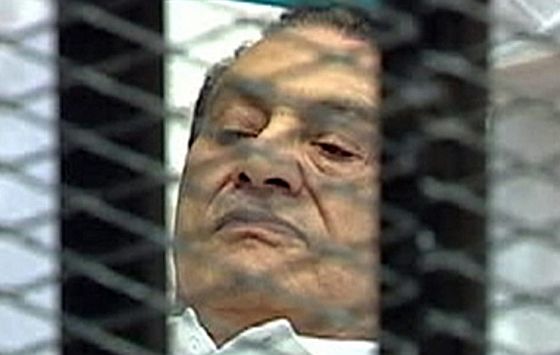
Their gazes were glued to the TV screens in disbelief as they watched the dictator who ruled them for 30 years lying on a hospital bed inside a cage, wearing the white uniform of a defendant.

In a car parts shop downtown, a dozen people stood chatting and waiting in anticipation. When the former president appeared on screen, the observers cheered. Then suddenly quiet fell on the shop. As the employees of the shop and passersby watched the trial, they demanded complete silence, asking anyone who talked to remain quiet.

Many around Cairo expressed joy that some kind of real justice is being served.

“This is a historic day,” said Islam Khalil, a 28-year-old lawyer. “It shows progress and development of our country. I feel that I took my right and the rights of all those who have been living under his suppression.”

Mostafa, who owns a clothing shop in Bab al-Louk, agreed. “Glimpses of justice are finally starting to show in the country. I do not feel sorry for him. If someone stole LE 100 from you, would you be sorry for that person? What if he stole a whole country?” he said.

Anthony Shadid reports:

The sheer symbolism of the day made it one of the most visceral episodes in modern Arab history. In a region whose destiny was so long determined by rulers who deemed their people unfit to rule, one of those rulers was being tried by his public. On this day, the aura of power — uncontested and distant — was made mundane, and Mr. Mubarak, dressed in white and bearing a look some read as disdain, was humbled.

“The first defendant, Mohammed Hosni al-Sayyid Mubarak,” the judge, Ahmed Rifaat, said, speaking in a wood-paneled courtroom to a cage holding Mr. Mubarak, his two sons, Gamal and Alaa, former Interior Minister Habib e-Adly and six other senior officers.

“Sir, I am present,” Mr. Mubarak replied into a microphone, from his bed.

“You heard the changes that the prosecutor made against you,” the judge said from the podium. “What do you say?”

“I deny all these accusations completely,” he replied, wearily waving his hand.

Then he handed the microphone to his son, Gamal.

The trial began precisely at its start time, 10 a.m. in Cairo. While the other defendants took a seat, Mr. Mubarak’s sons remained standing, the youngest, Gamal, seeming to block the view of his father from the cameras in the courtroom. Mr. Mubarak appeared tired but alert, occasionally speaking with his sons, who both held Korans.

As Mr. Mubarak denied the charges in the proceedings, which were broadcast on a large-screen television outside the police academy, his opponents gathered there roared in disapproval.

“Then who did it?” some asked.

The scene was tumultuous there on a sun-drenched parking lot, with a few dozen of Mr. Mubarak’s supporters sharing space with his opponents. At times, they scuffled; in intermittent clashes, the two sides threw rocks at each other. As Mr. Mubarak arrived at the courtroom, some of his supporters cried, waving pictures that read, “The insult to Mubarak is an insult to all honorable Egyptians.” Others shouted adulation at the screen.

“We love you, Mr. President,” some chanted.

Those sentiments were overwhelmed by the denunciations of his critics, in a trial that seemed to incarnate all the frustrations and degradations of a state that treated its people as rabble. Someone was finally being held to account, many said Wednesday.

Facebooktwittermail

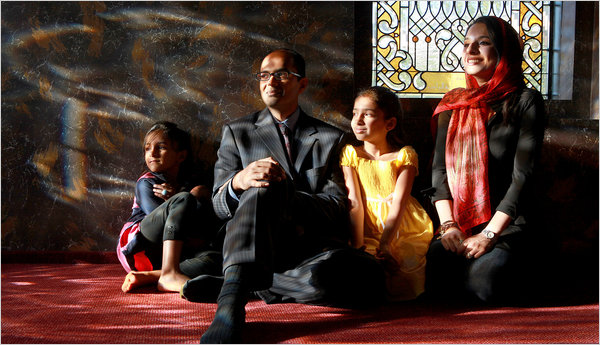
Patriotic American Muslims viewed with suspicion by many fellow citizens

Which religious group of Americans has the most positive view of their fellow American Muslims? American Jews.

Which religious group of Americans has the greatest appreciation for religious pluralism in America? American Muslims.

American Muslims and American Jews have almost exactly the same level of support — about 80% — for a two-state solution to the Palestinian-Israeli conflict. The least level of support comes from Protestants — 69%.

Only 56% of Protestants believe that Muslims living in America have no sympathy for al Qaeda.

48% of Muslim Americans say that they have personally experienced racial or religious discrimination in the last year.

These are some of the findings from a new Gallop poll on Muslim Americans.

Christian Science Monitor reports:

A poll released Thursday revealed curious contradictions in the Muslim-American community, which is more enthused about its country and president than any other religious group, yet is the least politically active and faces the greatest discrimination.

The Gallup poll on American religious groups offers a counterpoint to the stereotype that Muslims in the US lead isolated lives because they do not feel comfortable fitting in or associating with mainstream American culture. Moreover, it also offers insights into the Muslim-American experience – from how dramatically the election of President Obama affected them to how little they trust the activists who work on their behalf.

In total, the poll paints a picture of a community characterized by optimism but still seeking acceptance among its fellow citizens.

Facebooktwittermail

What does social justice mean in Israel?

Dahlia Scheindlin and Joseph Dana write:

The popular, mass protests here that began as a cry of rage against housing prices have evolved admirably into a public outcry against a slew of deep-rooted problems in Israeli social and economic life. Visiting the tent camps early every day, we’ve watched the protest grow from a motley band of wishful Woodstockers at the tip of Rothschild Boulevard two weeks ago, to a sort of mini-metropolis spreading close to the end of the road. There’s a first aid tent courtesy of Physicians for Human Rights, “Settle the Negev and the Galil” tents, ideological discussions, guitar and drum sing-alongs, Kabalat Shabbat, Friday night dinner, outdoor films about revolutionary themes, families with babies, and endlessly creative slogans. There are tents down near the central bus station, in a cat and mouse game with the municipality, which is trying to break up their camp.

Every grievance is coming out: there are slogans against the huge concentration of the country’s wealth into the hands of a very few, slogans raging against enormous economic gaps between rich and poor in Israel, lists of demands for just resource distribution and for various elements of a welfare state, salary hikes and lower costs, better education conditions and health care; against the national housing committees law, against the government, for Tahrir. At 10pm on Friday night, when a song group spontaneously burst into chants of “The people! Want! Social Justice!” one young woman sang out beatifically, “The people! Want! All Sorts of Things!”

Many are saying that this is something new, especially after Saturday night turned into Israel’s largest-ever social protest, as Maariv’s print headline proclaimed. A new language is being developed: silent hand gestures replace Israeli shouting matches. The hyper-fragmented groups in Israel are listening to each other, hammering out common ground to combat shared economic desperation.

Just don’t mention Israel’s occupation of the West Bank, or even the neutral local euphemism “medini” [lit: political/diplomatic] issues. Just leave out the institutional inequality most Palestinian citizens of Israel experience here – inequality of other groups is welcome.

I learned this the hard way. After a number of conversations with protesters, including some of its organizers (the protests are actually notably non-cohesive) – it became very clear that one of the top strategic goals is to avoid being branded as “left.” Joseph feels the environment around this topic is so toxic, he has tried to avoid even raising questions about why a ‘social justice revolution’ does not address the inequality of all those living under Israeli control. Even soft questions are met with hard responses from many who passionately demand that the protests be given time, space and compassion to grow inside Israeli society.

In this revolution, strategic thinking says that the current government can delegitimize the protest by making it look like lefties. The whole country will believe the government, because everybody hates the left. Indeed, the Prime Minister tried just this, branding them left-wing rabble rousers in the very first week. He failed – perhaps because of the revolutionary success in focusing on social issues only.

If the protests are labeled “left,” in revolutionary thinking, then ergo they are either – a. a conspiracy to overthrow the current government by opposition parties or groups (which somehow delegitimizes the policy goals), or b. a conspiracy by anti-Israel leftists to tie everything back to the occupation and force this or any government to cave in to the Palestinians. The revolution is too important to be branded.

Anyway, as a young woman in a long skirt and a sweet smile pleaded with me at 1am on Friday night, the Israeli-Palestinian cause is a different struggle. Why do I have to bring it to Rothschild?

Many Israelis, not just right-wingers, deride the left for a reductionist “occupation, occupation, occupation,” approach as if it is the source of all social ills. We believe there are other sources – but that other social ills can never truly be solved without a just resolution of the conflict, whatever it is. Joseph and I agree on this, although we may not agree on what that resolution is.

In Lia Tarachansky’s report for the Real News Network we see one protester holding up a sign saying “The solution is in Judea and Samaria,” implying Israel’s housing shortage can be solved by expanding settlements. Yet the sign draws boos from many Israelis around this settler.

Another protester says, “They talk about security, terrorism, terrorism, terrorism — it’s not enough for people anymore. They have to stop telling us fairy tales that because of security we must tolerate everything.”

Facebooktwittermail

Frank Gaffney says Pres. Bachmann could uproot Muslim Brotherhood infiltrators in U.S.

When Frank Gaffney uses the phrase “stealth jihad” he sounds like he believes what he’s talking about. Whether he or any of the other “counter-jihadist” propagandists actually believed all the stories they promoted about the supposed threat from Islam when they first started evangelizing for their cause, I don’t know. But at this point it seems like they have quite successfully indoctrinated themselves. What can begin as cynical political opportunism quite easily transmutes into hardened ideology for the simple reason that no one has the intellectual honesty to see themselves as a fraud.

ThinkProgress reports from the Western Conservative Summit in Denver, CO:

Last week, journalist Eli Lake reported that, in order to glean a perspective on Republican presidential candidate Michele Bachmann’s prospective foreign policy, sources repeatedly told him he “should talk to Frank Gaffney.”

Gaffney told Lake that his work and that of the neoconservative think-tank he runs, the Center for Security Policy, were “a resource she has tapped.” Gaffney described Bachmann as a “friend” with whom he’d shared his Team B II report alleging that the Obama administration has been infiltrated by the Muslim Brotherhood (in fairness to the Obama administration, Gaffney accuses just about everyone he disagrees with — including the organizers of the conservative CPAC conference — of being part of the Islamist group).

In an exclusive interview with ThinkProgress at the Western Conservative Conference in Denver, CO, Gaffney again described Bachmann as a friend and said he hadn’t been officially advising her since she declared her run for the GOP nomination. But he did say he could count on Bachmann to work at cleansing the country of the pernicious influence of the Muslim Brotherhood:

Ali Gharib reports that the anti-Islam movement is turning the negative publicity they are currently receiving into a fund-raising opportunity.

When the accused Norwegian right-wing terrorist Anders Breivik‘s so-called manifesto surfaced on the internet in the aftermath of the attacks, many commentators quickly took note of the citations to — and wholesale reproduction of pieces by — a group of American bloggers who fancy themselves “counter-Jihadists.” Though no mainstream media outlets alleged that any responsibility for the attack rested with Islamophobic bloggers like Pamela Geller and Robert Spencer, the clear influence they had on Breivik’s anti-Muslim ideology garnered coverage in outlets like the New York Times.

Now Geller and Spencer are leveraging all the attention to raise funds from their supporters. In the past week, both Geller and the David Horowitz Freedom Center — the group that houses Spencer’s Jihad Watch blog — sent out e-mail portraying themselves of victims of what Horowitz, in his letter, called attacks from the “international left.”

In his July 26 email, Horowitz wrote that Spencer was under scrutiny “[b]ecause some of Robert’s ideas happen to have been cited by the lunatic responsible for the carnage.” According to a ThinkProgress analysis of Breivik’s so-called manifesto, Spencer and his Jihad Watch blog were cited a combined 162 times in the 1,500-page document. (Horowitz was cited once.)

Horowitz goes on to offer up a pamphlet he and Spencer are writing — titled: “Islamophobia: Thought Crime of the Totalitarian Future” — and asks for donations, linking to a page to donate online.

Facebooktwittermail

Islamophobia, Zionism and the Norway massacre

In a Washington Post op-ed, Abraham Foxman, national director of the Anti-Defamation League compared the Islamophobia that led Anders Behring Breivik to massacre 77 innocent people in Norway to the anti-Semitism that resulted in the Holocaust.

Ali Abunimah welcomes the fact that Foxman is echoing what he and many others have pointed out in recent years.

Foxman points the finger – as others have rightly done – at extreme Islamophobic agitators such as Robert Spencer and Pamela Geller, co-founders of “Stop Islamisation of America” – whose hate-filled writings Breivik cited in his manifesto.

So far, Foxman has it right. But then he drops a clue about what really frightens him:

“One bizarre twist to Breivik’s warped worldview was his pro-Zionism – his strongly expressed support for the state of Israel. It is a reminder that we must always be wary of those whose love for the Jewish people is born out of hatred of Muslims or Arabs.”

Who does Foxman think he is kidding? There is nothing “bizarre” about this at all. Indeed Foxman himself has done much to bestow credibility on extremists who have helped popularise the Islamophobic views he now condemns. And he did it all to shore up support for Israel.

After Norway, Foxman may fear that the Islamophobic genie he helped unleash is out of control, and is a dangerous liability for him and for Israel.

Many American Zionists embraced Islamophobic demagoguery after the September 11, 2001 attacks.

Their logic was encapsulated in then-Israeli opposition leader Benjamin Netanyahu’s notorious assessment that the attacks – which killed almost 3,000 people – would be beneficial for Israel.

Asked what the 9/11 atrocities would mean for US-Israeli relations, Netanyahu told The New York Times, “It’s very good”, before quickly adding, “Well, not very good, but it will generate immediate sympathy” and would “strengthen the bond between our two peoples, because we’ve experienced terror over so many decades, but the United States has now experienced a massive hemorrhaging of terror”.

In order for Israel and the United States to have the same enemy, the enemy could not just be the Palestinians, who never threatened the United States in any way. It had to be something bigger and even more menacing – and Islam fit the bill. The hyped-up narrative of an all-encompassing Islamic threat allowed Israel to be presented as the bastion of “western” and “Judeo-Christian” civilisation facing down encroaching Muslim barbarity. No audience was more receptive than politically influential, white, right-wing Christian evangelical pastors and their flocks.

Facebooktwittermail

It’s time to scrutinize Fox

Michael Massing says that now Rupert Murdoch’s media empire is under examination, it’s time to scrutinize Fox News.

Since being launched in 1996, Fox has had a profound and toxic effect on the press and politics in this country. With a daily prime-time viewership of around 2 million—more than that of CNN and MSNBC combined—it has become the Republican Party’s most powerful booster. “Republicans originally thought that Fox worked for us, and now we are discovering we work for Fox,” David Frum, a former George W. Bush speechwriter, has observed. Fox has put several Republican presidential hopefuls on its payroll and allowed other candidates to fund-raise on its shows. After appearing on Sean Hannity’s program, for instance, 2010 senatorial candidate Sharron Angle boasted that that she had raised $40,000 before even leaving the studio.

Fox has helped to foster the Tea Party and amplify its message. In the days prior to the nationwide Tea Party gatherings on April 15, 2009, Fox ran more than 100 promos touting both its coverage and the movement. (“Americans outraged over unfair and crippling taxes,” went one. “They fight for their future. Neil Cavuto [a Fox anchor] is giving them a voice.”) The endless publicity given the Tea Party, in turn, helped make possible the sweeping Republican gains in the 2010 midterm elections. According to New York magazine, FOX News president Roger Ailes, disappointed with the Republican presidential field, called New Jersey Governor Chris Christie to urge him to enter the race—one of a number of king-making bids by Ailes, who, the magazine observed, has in a sense become “the head of the Republican Party.”

Unlike the News of the World, there’s no indication (as of now) that Fox has engaged in illegal activity. What it has done is violate every journalistic and ethical standard. It has promoted preposterous conspiracy theories, peddled blatant falsehoods, and given a soapbox to all sorts of cranks and crackpots. It ballyhooed President Obama’s “terrorist fist jab,” spread false reports that he attended a madrasa, gave Donald Trump a platform for questioning the president’s US citizenship, and endlessly promoted “Climategate,” the faux-controversy surrounding the leak of emails from climate specialists at the University of East Anglia in England. According to a public-opinion study released six months after the invasion of Iraq, 67 percent of regular Fox viewers believed that the United States had found clear evidence that Saddam Hussein had worked closely with al-Qaeda; another poll released last December reported that 60 percent of Fox viewers believe that most scientists have concluded that climate change is not occurring—examples of how the network has contributed to the steady seepage of know-nothingness throughout the American body politic.

Facebooktwittermail

Syria — ‘Hama is getting massacred’

The New York Times reports:

Syrian security forces bombed the central city of Hama for a second day on Monday as the government pressed its campaign to crush a four-month-old popular uprising against the government of President Bashar al-Assad. On Sunday, at least 70 people were killed when the military and security forces assaulted Hama and other restive cities before dawn, in the broadest and fiercest crackdown yet.

The shelling resumed Monday in the early hours of the morning as people were returning home from mosques where they had performed dawn prayers, according to residents and protesters. At least three people were killed, according to activists.

Obada Arwany, an activist reached by telephone, said that tanks had entered two neighborhoods, Al Qousour and Al Hamidiya, and bombed residential buildings there. One man died in his sleep when his house was bombed and another was killed by a sniper’s bullet as he was getting in his car.

“The city is like a ghost town,” Mr. Arwany said. “We were not expecting this at all. Hama is getting massacred.”

Facebooktwittermail

Pamela Geller condemns victims of terrorism in Norway

Anyone can denounce violence. Ku Klux Klan leaders and all sorts of other hatemongers are well practiced in making pro forma statements about being law-abiding, peace-loving Americans. So when Pamela Geller says “I abhor violence” but then goes on to describe the victims of Anders Behring Breivik’s shooting rampage as members of an “indoctrination camp” who can reasonably be compared to Hitler Youth, we all know what she’s really saying: they had it coming.

Charles Johnson writes:

After spending a few days mouthing the expected rote denunciations of Oslo terrorist Anders Behring Breivik, Pamela Geller was clearly chafing at the bit to get back to her usual fare, and today she did just that by attacking Breivik’s victims: SUMMER CAMP? ANTISEMITIC INDOCTRINATION TRAINING CENTER!!!!!! – Atlas Shrugs.

She agrees with Breivik’s assessment of the camp, wholeheartedly. According to Geller, the children at the camp were being indoctrinated with “a pro-Islamic agenda,” and the “jihad-loving media” are hiding it from true patriots like her.

She’s careful to mouth more platitudes about deploring any kind of violence — except “self defense” — but then makes the same argument Breivik made: that the camp was turning out enemies of Western civilization.

If you follow Geller’s argument to its sickening logical conclusion, it leads directly to Anders Behring Breivik.

As for Geller’s glaring ignorance about Norwegian society, it’s summed up here where she describes the function of the Labour party “indoctrination camp”:

It’s so the junior members of the aristocracy can be properly told what to think and can network with each other in preparation for their brilliant careers ruling over the peasants.

The peasants? Norway happens to have the most educated population in the world. And when it comes to distribution of wealth, Norway is in reality the kind of country most Americans dream they could live.

Facebooktwittermail

Since 9/11 the overwhelming majority of terrorism in the US has been homegrown

Charles P. Pierce pieces together the fragments of the story of homegrown terrorism in the United States over the last decade starting with an event that barely made the news — the placing of an IED in Spokane, Washington, that had it exploded during Martin Luther King Day celebrations in January — as its maker intended — would have killed and maimed dozens of men, women and children.

At the beginning of this year, not long after they’d found the bomb on the bench in Spokane, a journalist named David Neiwert put together a list of nearly thirty acts of right-wing political violence that had taken place, or had been foiled, in the United States since the summer of 2008 — or roughly since Barack Obama’s presidency began to be seen as a genuine possibility. The list began with Jim David Adkisson, who killed two people in a Unitarian church in Tennessee because he was angry at how “liberals” were “destroying America.” It included two episodes in April 2009, one in Pittsburgh and one in Florida, in which men who were sure that Barack Obama’s government was coming for their guns opened fire on law-enforcement officers who had come to investigate them on other matters.

Some of the crimes on the list were briefly sensational — Scott Roeder’s murder of Dr. George Tiller in Wichita, or Joseph Andrew Stack‘s flying his small plane into a building in Austin in protest of the Internal Revenue Service, or the incoherent array of violent crimes committed by the “Sovereign Citizens Movement.” But most of them barely made the national radar at all. In December 2008, a woman in Belfast, Maine, named Amber Cummings shot to death her sleeping husband, James, who’d been savagely abusing her. Upon arriving at the Cummings home, investigators found Nazi paraphernalia and a stash of chemicals indicating that was preparing to make a “dirty bomb” that he planned to detonate at Obama’s inauguration. Except in the local media, that aspect of the case disappeared completely. James Cummings and his bomb had nothing to do with Scott Roeder’s handgun or Joe Stack’s airplane.

It is a fertile time for such things. The country elected a black president with an exotic name. The economy, wrecked by a rigged game at the highest levels, continued to grind through a jobless recovery. The national dialogue grows coarser and wilder, and does so at a pace accelerated by technology. People sense the fragmentation — things are falling apart — even while they take refuge in those fragments of life that seem safest and most familiar.

But there is something about fragments that nobody talks about. It is a property first harnessed in 1784 by an officer of the artillery in the British army. He surmised that if you filled an artillery shell with fragments, you could wreak havoc far in excess of what would occur if the shell simply exploded. The destruction would breed upon itself. Propelled with sufficient force, the fragments would make new fragments of whatever they hit — a cart, a tree, a human femur — and, in turn, these new fragments would fly off to do their own damage. The officer’s name was Henry Shrapnel.

The bomb in the bag on the bench in Spokane was a shrapnel bomb, a direct descendant of Henry Shrapnel’s original brainchild. It was specifically designed and carefully placed to create an expanding killing zone, a sideways rain of lethal fragments. A child could have been killed by the blast itself, or by a piece of the bench, or by a chunk of the child’s own father. After all, shrapnel is nothing more than undifferentiated fragments with sufficient force applied.

That the bomb did not do what it was designed to do was a combination of luck and human agency. (It was a triumph for public employees, to put it in the context of our current political argument.) That the events of January 17 largely have faded from the news has nothing to do with luck at all. That is all human agency — how a fragmented country gathers the pieces of an event like this and tries to construct from them, not necessarily the truth of what happened, but a story that the country can live with, one more fragment among dozens of others that the country has remembered to forget.

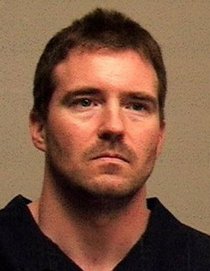
On March 9, 2011 in Addy, Washington, 55 miles north of Spokane, the FBI arrested an Army veteran named Kevin Harpham and charged him with attempting to use a weapon of mass destruction and possession of an unregistered explosive.

The Southern Poverty Law Center says:

The emerging picture suggests 36-year-old Kevin William Harpham is a “lone wolf’’ with a military ordnance background and apparently increasingly extreme radical-right views that may have prompted the attempt to carry out a mass murder on the late civil rights leader’s birthday. He is also a man who has joined a neo-Nazi group, apparently posted to racial extremist websites and worried that the 9/11 attacks were actually a government conspiracy.

The domestic terrorism suspect faces the possibility of life in prison if convicted of the initial two charges he faces: attempting to use a weapon of mass destruction and possession of an improvised explosive device. Other federal charges could come when a federal grand jury in Spokane reviews the case on March 22.

“This one is very serious,” federal defender Roger Peven said outside the courtroom, moments after he was appointed to represent Harpham.

The backpack bomb, reportedly containing shrapnel dipped in rat poison to enhance bleeding, was spotted moments before hundreds of people were to march by it. Authorities rerouted the parade immediately.

At some risk, a bomb squad defused the device and kept it intact — likely leading the FBI to capture a windfall of forensic evidence, possibly including fingerprints and DNA that could have identified Harpham as the suspect.

The affidavit of probable cause used to affect the suspect’s arrest is sealed from public inspection — another indication of the secrecy surrounding the 51-day investigation by the FBI’s Inland Northwest Joint Terrorism Task Force.

Despite the official secrecy, Harpham has left Internet fingerprints and other public records that give a glimpse of him.

Internet postings believed to be those of the former Army artillery soldier suggest he had an interest in old cars, metal fabrication, the neo-Nazi National Alliance and conspiracy theories associated with the attack on the World Trade Center on Sept. 11, 2001.

Facebooktwittermail

Benghazi clash exposes cracks in rebel ranks

The New York Times reports:

Rebel fighters challenging the rule of Col. Muammar el-Qaddafi waged an eight-hour gunfight here in their de facto capital on Sunday, against what their leaders called a “fifth column” of Qaddafi loyalists who had posed as a rebel brigade. It was the latest sign of discord and trickery in the rebel ranks to emerge in the four days since the killing of the rebels’ top military leader, Gen. Abdul Fattah Younes, a former Qaddafi confidant who had defected to their side.

The mysterious circumstances of his death have raised new questions about his own loyalties, and about the unity and discipline of the rebel troops. The rebel leaders’ response to the killing has produced a cascade of conflicting stories, hints of conflicts within the rebel government and signs that its leaders are deeply fearful of tribal animosities within their ranks, despite their efforts to portray Libya’s tribal rivalries as antiquated and obsolete.

At the same time, leaders have taken an increasingly hostile and, some journalists said, threatening tone toward the news media.

The developments come at a time when many foreign governments, including the United States, are recognizing the rebels’ governing council as the legitimate government of Libya, with the possibility of turning over to the rebels millions of dollars in frozen Qaddafi government assets.

The gunfight in the city began on Sunday just after midnight and lasted until about 8 a.m. Neighbors hid in their homes as assault rifles, revolvers and rocket-propelled grenades rang out, badly damaging homes and cars around the license plate factory where the so-called fifth column group, numbering several dozen people, was holed up.

In one house that was opened to reporters, the trail of a wounded fighter’s blood led down the stairs from a blast hole made by a grenade. But reporters were not allowed in the factory.

At a news conference on Sunday, rebel leaders said that three of their own fighters had died and eight were wounded in besieging and ultimately capturing the fighters in the factory. Of the fighters in the factory, they said, four died and at least 12 were wounded.

Rebel leaders said they had undertaken the assault in part because of a new drive to bring quasi-independent armed brigades around the city under the direct authority of the rebel military and security forces. It has been five months since the Libyan conflict broke out, and nearly as long since the rebels first talked of establishing a unified command. But the killing of General Younes focused new attention on the disorder among their brigades.

Asked why the rebel security forces had not moved sooner against the so-called fifth column, Mustapha el-Sagazly, the deputy interior minister, said that the group had associated itself with a prominent local tribe that officials were afraid to alienate. “Since the issue of the tribes is sensitive, we did not want to stop them, from the early days,” he said.

To reduce the chances of a tribal backlash, the rebels recruited soldiers and mediators from the same tribe for the assault, Mr. Sagazly said. He declined to name the tribe for fear of insulting it, noting that “most of the sons of the tribe” sided against the group in the factory. He also said that the group in the factory turned out to include some fighters from other tribes and even from other North African countries.

Through the weekend, rebel leaders continued to issue various conflicting and incomplete accounts of the circumstances surrounding the death of General Younes, perhaps trying to tamp down anger over the death among the general’s tribe, the Obeidi, the largest in the eastern Libya.

There were reports on Sunday that the rebel government was moving to name another member of General Younes’s tribe, Suleiman al-Obeidi, as his successor. And whatever suspicious there may have been about General Younes, rebel officials now universally refer to him as a “martyr.”

The Guardian reports:

Outwardly, foreign backers of the rebels insist the NTC is sound, with French defence minister Gerard Longuet saying Paris was not pushing for an immediate resolution: “Impatience is never a good adviser.” He insisted an end to the conflict rested with the people of the Libyan capital: “Things have to move in Tripoli. To put it clearly, the population has to rise up.”

Nerves remain frayed in Benghazi and questions remain over the role, if any, of NTC officials in the death of Younis, following an admission that he had been arrested for questioning on treason allegations just hours before his death.

In London, the defence secretary, Liam Fox, would not be drawn on the assassination. “It’s not yet clear who carried out the killing, and there are claims and counter-claims,” he said. “It will be at least several days until we know exactly what the situation was. There has always been a mixture of people who make up the opposition forces – hardly surprising given the country’s history – and it would be for the Libyans themselves to sort out exactly how any power structure develops post-Gaddafi.”

Sir Menzies Campbell, former leader of the Liberal Democrats, said the killing raised questions about the stability of the NTC and demonstrated the need for a “wholesale” review of policy. He told Sky News: “The assassination has thrown into fairly sharp focus the whole question of the Transitional National Council. What kind of government [it would be], for example, [if] it ever got to Tripoli.

“I also think that claims of success have always got to be taken with a certain amount of scepticism because it’s not about just taking ground temporarily, its taking it permanently. I’ve been saying I think we should take this period for a wholesale examination of policy.

“I supported the military action – I continue to support the British government’s involvement – but I think we have to have a pretty clearer view about what the NTC would be like were they ever to get to Tripoli.”

Facebooktwittermail