Author Archives: News Sources

How companies learn your secrets

Charles Duhigg writes: Andrew Pole had just started working as a statistician for Target in 2002, when two colleagues from the marketing department stopped by his desk to ask an odd question: “If we wanted to figure out if a customer is pregnant, even if she didn’t want us to know, can you do that? ”

Pole has a master’s degree in statistics and another in economics, and has been obsessed with the intersection of data and human behavior most of his life. His parents were teachers in North Dakota, and while other kids were going to 4-H, Pole was doing algebra and writing computer programs. “The stereotype of a math nerd is true,” he told me when I spoke with him last year. “I kind of like going out and evangelizing analytics.”

As the marketers explained to Pole — and as Pole later explained to me, back when we were still speaking and before Target told him to stop — new parents are a retailer’s holy grail. Most shoppers don’t buy everything they need at one store. Instead, they buy groceries at the grocery store and toys at the toy store, and they visit Target only when they need certain items they associate with Target — cleaning supplies, say, or new socks or a six-month supply of toilet paper. But Target sells everything from milk to stuffed animals to lawn furniture to electronics, so one of the company’s primary goals is convincing customers that the only store they need is Target. But it’s a tough message to get across, even with the most ingenious ad campaigns, because once consumers’ shopping habits are ingrained, it’s incredibly difficult to change them.

There are, however, some brief periods in a person’s life when old routines fall apart and buying habits are suddenly in flux. One of those moments — the moment, really — is right around the birth of a child, when parents are exhausted and overwhelmed and their shopping patterns and brand loyalties are up for grabs. But as Target’s marketers explained to Pole, timing is everything. Because birth records are usually public, the moment a couple have a new baby, they are almost instantaneously barraged with offers and incentives and advertisements from all sorts of companies. Which means that the key is to reach them earlier, before any other retailers know a baby is on the way. Specifically, the marketers said they wanted to send specially designed ads to women in their second trimester, which is when most expectant mothers begin buying all sorts of new things, like prenatal vitamins and maternity clothing. “Can you give us a list?” the marketers asked.

“We knew that if we could identify them in their second trimester, there’s a good chance we could capture them for years,” Pole told me. “As soon as we get them buying diapers from us, they’re going to start buying everything else too. If you’re rushing through the store, looking for bottles, and you pass orange juice, you’ll grab a carton. Oh, and there’s that new DVD I want. Soon, you’ll be buying cereal and paper towels from us, and keep coming back.”

The desire to collect information on customers is not new for Target or any other large retailer, of course. For decades, Target has collected vast amounts of data on every person who regularly walks into one of its stores. Whenever possible, Target assigns each shopper a unique code — known internally as the Guest ID number — that keeps tabs on everything they buy. “If you use a credit card or a coupon, or fill out a survey, or mail in a refund, or call the customer help line, or open an e-mail we’ve sent you or visit our Web site, we’ll record it and link it to your Guest ID,” Pole said. “We want to know everything we can.” [Continue reading…]


Facebooktwittermail

Nanosecond trading could make markets go haywire

Wired reports: The afternoon of May 6, 2010 was among the strangest in economic history. Starting at 2:42 p.m. EDT, the Dow Jones stock index fell 600 points in just 6 minutes. Its nadir represented the deepest single-day decline in that market’s 114-year history. By 3:07 p.m., the index had rebounded. The “flash crash,” as it came to be known, was big, unexpected and scary — and a new study says flash events actually happen routinely, at speeds so fast they don’t register on regular market records, with potentially troubling consequences for market stability.

The analysis involved five years of stock market trading data gathered between 2006 and 2011 and sorted in fine-grained, millisecond-by-millisecond detail. Below the 950-millisecond level, where computerized trading occurs so quickly that human traders can’t even react, no fewer than 18,520 crashes and spikes occurred. The study’s authors call those events “financial black swans,” though they’re so common that the black swan label probably doesn’t fit anymore.

Moreover, those events fell into patterns that didn’t fit market patterns seen at other time scales. It’s as if computerized trading has created a new world, one where the usual rules don’t apply, populated by algorithms and only dimly understood by the people who made them. The extent to which that world influences our own — perhaps making events like the 2010 flash crash more likely, or causing markets to be generally more volatile — is an open question.

“There’s this whole world below 650 milliseconds. It’s like landing on another planet,” said Neil Johnson, a complex systems specialist at the University of Miami and co-author of the study, released Feb. 7 on arXiv [PDF]. “It’s an enormous part of the market which is out of human reach. We have a glimpse of the kind of ecology that’s going on down there.”

Facebooktwittermail

The things that Anthony Shadid taught me

Thanassis Cambanis writes: Anthony Shadid never seemed to be in a hurry. If you needed him, or simply wanted his company, he would linger to chat and fix you with a gaze that defined undivided attention. He gave the impression that nothing was more important to him than whomever he happened to be speaking to, even if he had a dozen deadlines. His hospitable nature blended seamlessly with Levantine mores, but I think it originated in equal measure from his origins in Lebanon, in Oklahoma, and in his entirely exceptional soul.

Often, I was scared when I was with Anthony. He reassured in the most primal manner, by example. The day after Saddam Hussein fled Baghdad, hundreds of journalists, Iraqi fortune seekers, and U.S. Marines thronged the front lot of the Palestine Hotel. In a panic, I found Anthony in his room upstairs, surrounded by stacks of bottled water. “You have time for a coffee?” he inquired, as if I were the busy one, as if time were limitless. Around him, in a way, it was. The more he slowed things down in the minute, the more minutes he seemed to pack into a day. He connected with so many of us — artists, political activists, militiamen, families, working people, fellow journalists, heads of state — and each of us felt that we had shared something alone with Anthony. And we had. That bounty was one of his many gifts.

On Christmas eve in 2003, we drove into Baghdad together. His first marriage was failing, and he spent that long night in Iraq’s western desert speaking of his daughter, Laila, and of the Iraq story, both of which he loved in different ways. He felt ineluctably that he could not leave that story at a crucial time. It was a commitment shouldered without arrogance but with a clear — and in my opinion, correct — assessment that if he didn’t tell the stories he was telling, no one would.

That commitment awed and inspired us all. Readers saw it in his dispatches from Iraq over more than a decade. Colleagues saw it in Iraq, Lebanon, the West Bank, Libya, and countless other places. He was devoted to better coverage of the Arab world. He lived that devotion in his own writing, about which nothing need be said because it so authoritatively speaks for itself, but also in the countless invisible acts he did to make the work of others better. He shared contacts with novice reporters he just had met. He took hours to mentor strangers and friends alike, about brief dispatches or sprawling book projects. He was the least selfish reporter I ever met, and he was the one who had the most to share, which he did compulsively.

I am not alone when I say I wanted to be more like Anthony Shadid, in my approach to people, to stories, to the region that was his destiny and which became my own focus. The people he wrote about were never subjects. They each were a world, in which he became engrossed for the entirety of the length of his relationship to them, whether it lasted an hour or a year. In Iraq, he taught me history. In Lebanon, as we criss-crossed the front lines in the 2006 war, he showed me what courage looks like. I drove him around the border, where he translated the conversations we had with people. At one point, alone on an exposed ridge, we heard a steady patter of mortar shells, each one closer to us than the next. We realized we weren’t approaching somebody else’s front line; we alone were the targets. “What do you think?” he said, unhurriedly. “Should we go?” I answered by running back to the car. Anthony, as always, was full of grace.

We all know how he brought that grace to the stories of people at war and in revolt across the Arab world. Soon, when the book he had labored over for half a decade is released next month, we might learn how he applied that delicacy to the tale of his ancestral home in Marjayoun. He lovingly rebuilt the manse on a hill overlooking the Hula Valley, and in the process fell in love anew with his wife Nada. With Marjayoun and Nada, Anthony opened a new chapter in happiness, which blossomed on his face when he was with them or with his daughter Laila. [Continue reading…]

Facebooktwittermail

Remembering Anthony Shadid

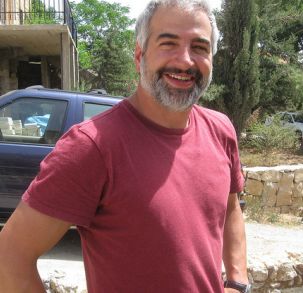
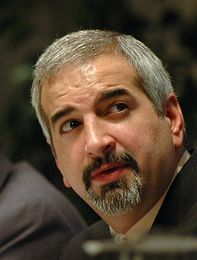
Quil Lawrence writes: I met Anthony Shadid on a ruined airstrip in western Afghanistan in the winter of 2001-’02. He was sporting a beard and longer hair in those days that made him look a little like a crusading Arab warrior. We spoke briefly and exchanged a few bits of useful news about the place. As I recall his face now, I realize Anthony’s secret: His sincerity was piercing, disarming and infectious.

Over the next decade, I got to watch Anthony’s genuine curiosity overcome the suspicions of refugees, ambassadors and warlords, as he soaked up their stories and rendered them with great generosity of spirit. His writing could inspire kinship between Americans from his native Oklahoma and the terrified people of Baghdad, the demonstrators in Cairo, the rebel fighters in Libya and Syria.

The year after we met in Afghanistan, I saw Anthony in Washington, D.C. — he was just back from a stint in Israel and the Palestinian territories. I asked him how it went, and he replied with unfeigned nonchalance, “Not that good. I got shot.”

Anthony had been reporting in Ramallah in 2002 and took a bullet in the back of his shoulder. He believed it was fired by Israeli Defense Forces. The wound was complicated because Anthony refused to leave Ramallah unless his Palestinian colleague could cross the checkpoint with him. Over the years, Anthony was beaten and abducted while covering the news. He knew he was taking risks. But he also knew (though his unassuming nature would have never let him say it) that he was fulfilling his life’s mission, explaining the Arab world to Americans with a fluency and empathy perhaps no other reporter could match.

Steve Coll writes: Anthony Shadid’s third book, “House of Stone,” is due to be published in several weeks. It is described by the publisher as a “a memoir of home, family and a lost Middle East.” The project, when Shadid talked about it occasionally, was more personal than that sort of subtitle can easily convey. Shadid grew up in Oklahoma, in a family of Lebanese origin. He attended the University of Wisconsin and went into newspaper work. Like many American writers whose families arrived here from somewhere else, he was drawn gradually to the landscape of his family’s origins. “House of Stone” tells the story of Shadid’s efforts to rebuild — and excavate the history of — a family property in Lebanon. When he spoke about that project, and the life he had forged in Lebanon to carry it out, he mentioned a theme that was always present in his newspaper correspondence: that the “zone of crisis” frame that so often surrounded reporting from the Middle East was frustrating and inadequate. The Arab world, like any other, was not best understood by focusing exclusively on its wars and conflicts (although he did not shy away from any of those, or whitewash their ugliness) but through its longer, subtler narratives of family, time, and transition. “House of Stone” is such a narrative.

Shadid, who died on Thursday at the age of forty-three, while covering the conflict in Syria for the Times, apparently of an asthma attack, was, over the last decade or more, the most intrepid, empathetic, fully engaged correspondent working in the Middle East for American audiences. He had many gifts and was an exceptionally graceful, easy, and generous man, but among the qualities that distinguished his work was the sheer commitment of it. When he came to the Washington Post about a decade ago to serve as a correspondent, I was working as an editor at the paper. I asked a standard job interview question about his goals in the years ahead, and he provided one of the most striking, emphatic answers I can recall from countless discussions of that type: He intended to move to the Middle East, to chronicle in every dimension possible the upheavals in Arab societies that would inevitably follow the September 11th attacks, and to do nothing else, professionally. If we, the Post, would facilitate this ambition, he would be grateful, but that was the only job he was interested in or would be for years to come, he said. It is rare for anyone — never mind a writer — to possess such clarity. And Shadid carried out his plan exactly as he said he would, just not for the full measure of years that we would have wished.

Facebooktwittermail

Remembering Anthony Shadid: In Assad’s Syria, there is no imagination

On November 8, 2011, Anthony Shadid wrote: The House of Assad evokes an imperial sense of power, or at least its trappings, with iconography that one scholar described as infused with “laudatory slogans and sempiternal images.”

But my first impression of Rami Makhlouf, President Bashar al-Assad’s cousin and one-time confidante, was of his unassuming quality. Here was a tycoon, a figure as rich as he was loathed, who eschewed formalities and ceremony. I had seen it before, in men like Saad Hariri, a former prime minister in Lebanon, lavished with so much privilege and so much wealth that pretensions become unnecessary. Even his most brazen threats seemed more pleading than menacing, as if I should understand the logic behind them. Don’t the Israelis know that they will suffer if we do; don’t the Europeans; don’t the Americans realize that we are the bulwark before forces that they can’t imagine — Islamists, chaos, wars roiling an already combustible region?

By the end of several hours interviewing Makhlouf in May, it was not pomp, not imagery and not detachment that denoted the imperium. It was the pronouns. The way he used them said much about how power has been exercised in the Arab world and why it has finally begun to crumble.

“We believe there is no continuity without unity,” he told me. “As a person, each one of us knows we cannot continue without staying united together.”

He echoed an Arabic proverb – alaya wa ala aadai’i ya rab.

Translated loosely, it means that we won’t go down alone.

“We will not go out, leave on our boat, go gambling, you know,” he told me at his plush, wood-paneled headquarters in Damascus. “We will sit here. We call it a fight until the end.” He added later: “They should know when we suffer, we will not suffer alone.”

What Makhlouf, a businessman with no title, no official capacity save his membership in the president’s family, suggested was that Syria belonged to them: its property and people, their aspirations and fate, their history and their future. In essence, consciously or not, he gave voice to the sign that has long marked the crossing for visitors across the rocky wadis dividing Lebanon and Syria.

“Assad’s Syria,” it reads. [Continue reading…]

Facebooktwittermail

Remembering Anthony Shadid: In Iraq — A boy who was ‘like a flower’

From Baghdad on March 30, 2003, Anthony Shadid wrote: On a cold, concrete slab, a mosque caretaker washed the body of 14-year-old Arkan Daif for the last time.

With a cotton swab dipped in water, he ran his hand across Daif’s olive corpse, dead for three hours but still glowing with life. He blotted the rose-red shrapnel wounds on the soft skin of Daif’s right arm and right ankle with the poise of practice. Then he scrubbed his face scabbed with blood, left by a cavity torn in the back of Daif’s skull.

The men in the Imam Ali mosque stood somberly waiting to bury a boy who, in the words of his father, was “like a flower.” Haider Kathim, the caretaker, asked: “What’s the sin of the children? What have they done?”

In the rituals of burial, the men and their families tried, futilely, to escape the questions that have enveloped so many lives here in fear and uncertainty. Beyond some neighbors, family, and a visitor, there were no witnesses; the funeral went unnoticed by a government that has eagerly escorted journalists to other wartime tragedies. Instead, Daif and two cousins were buried in the solitude of a dirt-poor, Shiite Muslim neighborhood near the city limits.

The boys were killed at 11 a.m. today when, as another relative recalled, “the sky exploded.” Daif had been digging a trench in front of the family’s concrete shack that could serve as a shelter during the bombing campaign that continues day and night. He had been working with Sabah Hassan, 16, and Jalal Talib, 14. The white-hot shrapnel cut down all three. Seven other boys were wounded.

The explosion left no crater, and residents of the Rahmaniya neighborhood struggled to pinpoint the source of the destruction. Many insisted they saw an airplane. Some suggested Iraqi antiaircraft fire had detonated a cruise missile in the air. Others suggested rounds from antiaircraft guns had fallen back to earth and onto their homes.

Whoever caused the explosion, the residents assigned blame to the United States, insisting that without a war, they would be safe. “Who else could be responsible except the Americans?” asked Mohsin Hattab, a 32-year-old uncle of Daif.

“This war is evil. It’s an unjust war,” said Imad Hussein, a driver and uncle of Hassan. “They have no right to make war against us. Until now, we were sitting in our homes, comfortable and safe.”

As he spoke, the wails of mourners pouring forth from homes drowned out his words. He winced, turning his head to the side. Then he continued. “God will save us,” he said softly.

At the mosque, hours after the blast, Kadhim and another caretaker prepared Daif’s body for burial — before sundown, as is Islamic custom.

Bathed in the soft colors of turquoise tiles, the room was hushed, as the caretakers finished the washing. They wrapped his head, his gaze fixed, with red and yellow plastic. They rolled the corpse in plastic sheeting, fastening it with four pieces of white gauze — one at each end, one around his knees and one around his chest.

Kadhim worked delicately, his gestures an attempt to bring dignity to the corpse. He turned Daif’s body to the side and wrapped it in a white sheet, secured with four more pieces of gauze. Under their breaths, men muttered prayers, breaking the suffocating silence that had descended. They then moved toward the concrete slab and hoisted the limp body into a wood coffin.

“It’s very difficult,” said Kadhim, as the men closed the coffin.

On Friday, he had gone to another mosque, Imam Moussa Kadhim, to help bury dozens killed when a blast ripped through a teeming market in the nearby neighborhood of Shuala. The memories haunted him. He remembered the severed hands and heads that arrived at the Shiite mosque. He recalled bodies, even that of an infant, with gaping holes.

“It was awful and ugly,” he said. “This is the first time I’ve ever seen anything like this.” [Continue reading…]

Facebooktwittermail

New York Times loses an indispensable correspondent

The New York Times reports: Anthony Shadid, a gifted newspaper correspondent whose graceful dispatches for both The New York Times and The Washington Post covered nearly two decades of Middle East conflict and turmoil, died, apparently of an asthma attack, on Thursday while on a reporting assignment in eastern Syria. Tyler Hicks, a Times photographer who was with Mr. Shadid, carried his body across the border to Turkey.

Mr. Shadid, 43, had been reporting inside Syria for a week, gathering information on the Free Syrian Army and other armed elements of the resistance to the government of President Bashar al-Assad, whose military forces have been engaged in a harsh repression of the political opposition in a conflict that is now nearly a year old.

The Syrian government, which tightly controls foreign journalists’ activities in the country, had not been informed of his assignment by The Times.

The exact circumstances of Mr. Shadid’s death and his precise location inside Syria when it happened were not immediately clear.

But Mr. Hicks said that Mr. Shadid, who had asthma and had carried medication with him, began to show symptoms as both of them were preparing to leave Syria on Thursday, and the symptoms escalated into what became a fatal attack. Mr. Hicks telephoned his editors at The Times, and a few hours later he was able to take Mr. Shadid’s body into Turkey.

Jill Abramson, the executive editor, informed the newspaper’s staff Thursday evening in an e-mail. “Anthony died as he lived — determined to bear witness to the transformation sweeping the Middle East and to testify to the suffering of people caught between government oppression and opposition forces,” she wrote.

The assignment in Syria, which Mr. Shadid arranged through a network of smugglers, was fraught with dangers, not the least of which was discovery by the pro-government authorities in Syria. The journey into the country required both Mr. Shadid and Mr. Hicks to travel at night from Turkey to a mountainous border area adjoining Syria’s Idlib Province, where the demarcation line is a barbed-wire fence. Mr. Hicks said they squeezed through the fence’s lower portion by pulling the wires apart, and guides on horseback met them on the other side. It was on that first night, Mr. Hicks said, that Mr. Shadid suffered an initial bout of asthma, apparently set off by an allergy to the horses, but he recovered after resting.

On the way out a week later, however, Mr. Shadid suffered a more severe attack — again apparently set off by proximity to the horses of the guides, Mr. Hicks said, as they were walking toward the border. Short of breath, Mr. Shadid leaned against a rock with both hands.

“I stood next to him and asked if he was O.K., and then he collapsed,” Mr. Hicks said. “He was not conscious and his breathing was very faint and very shallow.” After a few minutes, he said, “I could see he was no longer breathing.”

Mr. Hicks said he administered cardiopulmonary resuscitation for 30 minutes but was unable to revive Mr. Shadid.

The death of Mr. Shadid, an American of Lebanese descent who had a wife and two children, abruptly ended one of the most storied careers in modern American journalism. Fluent in Arabic, with a gifted eye for detail and contextual writing, Mr. Shadid captured dimensions of life in the Middle East that many others failed to see. Those talents won him a Pulitzer Prize for international reporting in 2004 for his coverage of the American invasion of Iraq and the occupation that followed, and a second Pulitzer in 2010, also for his Iraq reporting. He also was a finalist in 2007 for his coverage of Lebanon, and has been nominated by The Times for his coverage of the Arab Spring uprisings that have transfixed the Middle East for the past year.

In December, during a brief break from reporting in the Middle East, Shadid was interviewed by Terry Gross and reflected on the Arab Spring.

Facebooktwittermail

Israelis prepare for war with Iran

Larry Derfner reports: After bombs went off near Israeli embassies in New Delhi and Tbilisi, and a man with an Iranian passport accidentally blew himself up in Bangkok, Israeli Prime Minister Binyamin Netanyahu couldn’t let the opportunity pass. Yediot Aharonot, the country’s most widely read newspaper, reported Wednesday:

An updated list of talking points distributed by the national advocacy desk in the Prime Minister’s Office sought to connect the wave of terror with the international community’s efforts at tightening sanctions on Iran, and also to prepare the ground for a military option to stop Iran’s nuclear program.

According to Yediot, the new talking points read: “Iran and Hizbullah are behind these terror attempts. If this is what Iran is doing now, imagine what it will do if its nuclear arms project reaches the goal.” The tabloid’s story was headlined “Iran’s long arm,” and the subhead read, “Israel to the world: ‘Terror acts show nuclear Iran cannot be allowed.’” The story’s ominous tone meshed perfectly with the talking points.

Israel’s whole body politic – politicians, media, influential public figures and public at large – is now leaning into a war with Iran. Defense Secretary Leon Panetta’s recently reported opinion that Israel would likely strike between April and June is shared, give or take a month or two, by countless others.

The consequences of such an attack range from a bilateral missile war and intensified international terror attacks, to a regional war involving weapons of mass destruction. Israel may not pull the trigger, of course. But at this point, that seems the only realistic working assumption.

Israeli talking points are coming faster and sharper. Iran’s nuclear project is marching toward the “zone of immunity,” says Defense Minister Ehud Barak. “It is our duty to rely on ourselves when we are concerned with a threat to our very existence,” says Netanyahu. Their apparent aim is to create an aura of inevitability around an imminent Israeli strike. Leading the drive, Netanyahu and his one-time army commando unit leader, Barak, want full support at home and no serious opposition from the U.S. if and when they send the jet bombers on their mission. Naturally, they would prefer that the U.S. do the job – inflicting lasting damage on Iran’s nuclear infrastructure could well be beyond Israel’s military capability – but from here, at least, the American military option looks unlikely, certainly within a time frame Israel accepts.

Some skeptics think Netanyahu and Barak may just be engaging in psychological warfare aimed at keeping Western economic pressure on Iran, the goal being to force or scare the Tehran regime into giving up its pursuit of nuclear weapons, which it denies pursuing. But it’s hard to imagine anything short of visibly destroyed hardware on a massive scale that might convince Israel’s leadership that the nuclear threat had been lifted.

Yet while there is skepticism about the leadership team’s true intentions, there is virtually none being expressed here about the wisdom of going to war. The paucity of dissent is remarkable, not to say depressing, in a country that prides itself on being a “vibrant democracy.”

At the end of last week, the media were talking about which towns had good bomb shelters and air raid sirens and which didn’t. The likelihood that Israel would soon be attacking Iran had begun to sink in. An antiwar demonstration was held across the boulevard from the Defense Ministry compound in Tel Aviv. About 25 people showed up. They held signs that read, “Don’t bomb – talk” to the evening rush hour traffic going past. One driver honked. [Continue reading…]

Facebooktwittermail