Author Archives: News Sources

Globalized kidnapping backed by the US

Christian Science Monitor reports:

They came for Ismail Abubakar at nightfall on Aug. 9, 2010, plucking him from an outdoor market near the mosque where he had just finished teaching young Kenyans how to read the Quran.

The plainclothes Kenyan police shoved him into a car, took away his cellphone, hooded him, and drove him to a nearby police camp. Within hours, Mr. Abubakar – nicknamed “Mzungu” because of his pink albino skin – would be transported to Uganda to face charges for the July 11 suicide bombings that killed 76 people in Kampala, Uganda’s capital.

Three months later, Abubakar and two dozen other bombing suspects were released for lack of evidence. But the story of his rendition, and the ongoing detention of nine other Kenyans for the bombing, highlights a troubling pattern of extra-judicial abduction and human rights abuses as Africa increases efforts, often at the request of US counterterrorism officials, to combat rising Islamic terrorism.

Abubakar says he was “shocked” when investigators told him that he was about to be charged in the Kampala blasts. “I had never been to the west side of Nairobi, let alone go to Uganda,” he said.

When he was released Nov. 30, Abubakar was penniless and feared being rearrested. Donations from Ugandan Muslims helped him get to the Kenyan border. A travel document from the Ugandan government that said he was no longer a terrorism suspect helped him get across. “I was detained for nothing,” he said.

While condemned by human rights activists and the European Parliament, and criticized by some US military officials as “counterproductive,” renditions are seen by at least 28 US allies as a necessary weapon in the battle against terrorism. Estimates of the number of renditions since the US-led war on terror began after 9/11 are educated guesses, but some human rights organizations put the number over 1,000, and the British human rights group Cageprisoners estimates that 88 men, women, and children have been subjected to extrajudicial transfers from Kenya as of 2007.

Facebooktwittermail

America’s treatment of detainees

Glenn Greenwald writes:

Amnesty International has written a letter to Defense Secretary Robert Gates objecting to the conditions of Bradley Manning’s detention, which was first reported here. The group denounces the oppressive conditions under which Manning is being held as “unnecessarily harsh and punitive,” and further states they “appear to breach the USA’s obligations under international standards and treaties, including Article 10 of the International Covenant on Civil and Political Rights.” The letter describes Manning’s treatment as particularly egregious “in view of the fact that he has no history of violence or disciplinary infractions and that he is a pre-trial detainee not yet convicted of any offence.” Moreover:

The harsh conditions imposed on PFC Manning also undermine the principle of the presumption of innocence, which should be taken into account in the treatment of any person under arrest or awaiting trial. We are concerned that the effects of isolation and prolonged cellular confinement . . . may, further, undermine his ability to assist in his defence and thus his right to a fair trial.

The letter follows a report from Manning’s lawyer, former Lt. Col. David Coombs, that the conditions of his detention temporarily worsened in the past week, prompting a formal complaint under the Uniform Code of Military Justice. [Continue reading…]

Facebooktwittermail

The National Security State of America

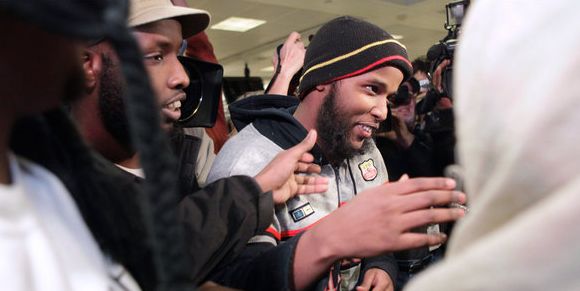
An American teenager, forced into temporary exile and then tortured in Kuwait– almost certainly with the knowledge of the Obama administrationhas been freed.

A Northern Virginia teen who had been barred from flying home from Kuwait landed in Washington on Friday morning, four weeks after being detained, allegedly beaten by Kuwait authorities and questioned by FBI agents about possible terrorist connections.

Gulet Mohamed, dressed in a worn hooded sweat shirt and sweat pants, was embraced by his family after he arrived at Dulles International Airport, the end of an ordeal that he said had “made me stronger.”

The United States “is built upon fighting for your rights,” Mohamed, 19, said in an interview.

Civil liberties groups charge that his case is the latest episode in which the U.S. government has temporarily exiled U.S. citizens or legal residents so they can be questioned about possible terrorist links without legal counsel.

The American Civil Liberties Union is suing the U.S. government on behalf of 17 citizens or legal residents who were not allowed to board flights to, from or within the United States, presumably because, like Mohamed, they were on the government’s no-fly list. Of those stranded overseas, all were eventually told they could return, often after they agreed to speak to the FBI. None was arrested upon their return.

The ACLU suit, filed in Portland, Ore., alleges that Americans placed on the no-fly list are denied due process because there is no effective way to challenge their inclusion. The government does not acknowledge that any particular individual is on the no-fly list or its other watch lists. Nor will it reveal the exact criteria it uses to place people on its list.

Meanwhile, the Washington Post reports:

The drone technology that has revolutionized warfare in Iraq, Afghanistan and Pakistan is entering the national airspace: Unmanned aircraft are patrolling the border with Mexico, searching for missing persons over difficult terrain, flying into hurricanes to collect weather data, photographing traffic accident scenes and tracking the spread of forest fires.

But the operation outside Austin [described at the beginning of this report] presaged what could prove to be one of the most far-reaching and potentially controversial uses of drones: as a new and relatively cheap surveillance tool in domestic law enforcement.

For now, the use of drones for high-risk operations is exceedingly rare. The Federal Aviation Administration – which controls the national airspace – requires the few police departments with drones to seek emergency authorization if they want to deploy one in an actual operation. Because of concerns about safety, it only occasionally grants permission.

But by 2013, the FAA expects to have formulated new rules that would allow police across the country to routinely fly lightweight, unarmed drones up to 400 feet above the ground – high enough for them to be largely invisible eyes in the sky.

Facebooktwittermail

Why the FBI wants you to join Facebook

Evgeny Morozov, author of The Net Delusion: The Dark Side Of Internet Freedom, interviewed by RFE/RL:

RFE/RL: One of your chapters is called “Why The KGB Wants You To Join Facebook.” Why does the KGB want us to join Facebook?

Evgeny Morozov: Part of the argument I’m making in the book is that authoritarian governments have immensely benefited from the web, and I point to three features. One of them is propaganda; one of them is new ways of censorship; and one of them is increased surveillance, more sophisticated surveillance.

The reason why the KGB wants you to join Facebook is because it allows them to, first of all, learn more about you from afar. I mean, they don’t have to come and interrogate you, and obviously you disclose quite a bit. It allows them to identify certain social graphs and social connections between activists. Many of these relationships are now self-disclosed by activists, by joining various groups. You can actually go and see which causes are more popular than others.

But also, it is possible to start identifying trends on the macro level. You can actually go and, using data posted to social-media sites (not just Facebook — I’m talking here more broadly about blogs and about tweets), you can actually start identifying which way social sentiment in a country is going. And that way you may get ahead of real developments.

If the Tunisian government had a sophisticated system of data-mining and analyzing everything that is happening in the country on social media, I bet they would have been much better prepared for what followed. Much of that outrage has been growing on Facebook early on and it was possible to go and check how angry people really were.

And I think many of these tools have already been developed by Western companies mostly, to do brand analysis. So there are a lot of interesting tools already to track consumer sentiment toward goods, and they can very easily be redeployed to study political sentiment. So this is one of the things which I think drives interest from governments in social media.

And not just authoritarian countries, but in the West as well. We have something called In-Q-Tel, which is the venture fund of the CIA, which has been investing in such social-media tracking and monitoring tools for several years now. It is definitely something that is attractive to all governments — not just authoritarian ones.

Facebooktwittermail

Britain’s humiliation in Palestine

In The Observer, Rachel Cooke writes:

In 1999, shortly after his film about the British peace-keeping force in Bosnia, Warriors, was screened by the BBC, Peter Kosminsky received a letter. It was from an old soldier, who had found Warriors moving, and wanted to thank its director. At the end of the letter, though, was a line – thrown out more in hope than expectation – that caught Kosminsky’s eye. “You should do a film about the British soldiers who were in Palestine,” it said. “No one remembers us.”

As psychological bullets go, this one was well aimed. Kosminsky is nothing if not in the business of remembering. The kind of things that governments like to forget are his stock in trade. Down the years, he has made films on a variety of uncomfortable subjects, from the activities of the police in Northern Ireland (Shoot to Kill) and New Labour control-freakery (The Project), to British-born Muslim suicide bombers (Britz) and the suicide of Dr David Kelly (The Government Inspector), each one trailing controversy – if not always a sudden bout of recovered memory on the part of the establishment – in its wake. The soldier’s letter was duly passed to Kosminsky’s researchers, who began interviewing veterans.

Between 1945 and 1948, some 100,000 soldiers served in the British-controlled Mandate of Palestine. Kosminsky’s team spoke to around 80; he found the men’s stories to be both gripping and moving, so he carried on, wading next through letters, diaries, memoirs and history books. Slowly, a theme began to emerge. “The thing that came out most strongly,” he says, “was that the men all arrived in Palestine feeling incredibly pro-Jewish. A few of them had helped to liberate the [concentration] camps, so they had seen what had happened [to the Jews] with their own eyes. And everyone had heard the stories and seen the newsreels.

“When Jewish refugees arrived in Palestine off the boats, and were caged and beaten by British forces [the British placed strict limitations on Jewish immigration to Palestine], many soldiers didn’t like it all. They knew what these people had been through. Over time, though, the soldiers’ attitudes changed. Some of this was just the usual British support for the underdog; there’s no question that by 1948 [when Israel declared itself an independent state] the Arabs were perceived as that. But also, if you’re being attacked on a daily basis [by the Jewish resistance], if you’re under constant threat of kidnap, if you’re confined to barracks behind a lot of razor wire, your feelings are bound to change.”

Kosminsky’s first idea was to make a drama about a British soldier who would exemplify this shift. “I suppose it started out as standard Kosminsky fare, which was pointing the finger at Britain. First of all, these men don’t have a memorial; they’re forgotten. It’s only recently that they were allowed to march to the Cenotaph. When they came back to Britain, no one wanted to know; pulling out of Palestine was a terrible humiliation, a total defeat. Second, we were the colonial power in Palestine and, as in so many other examples of our retreat from Empire, we left it totally fucked up. Chaos. We washed our hands of it. I wanted to say: if you think the Israeli-Palestinian situation is not our problem, think again. We were there, we left, and 60 years later, it is still a problem.”

The trouble was, something else kept nagging away at him. “The more I read their stories, the more I began to be struck by some odd parallels,” he says. “For instance, if there’s a suicide bombing in Israel, usually the Israeli Defence Force immediately goes [to the West Bank or Gaza] and blows up the house of the bomber. I’d always assumed this tactic had been invented in the modern era. But in the veterans’ interviews, they described doing exactly the same thing. When a member of Etzel [the Israeli name for Irgun, the Zionist paramilitary group that operated in the Mandate of Palestine from 1931 until 1948] or Lehi [better known as the Stern Gang, another militant Zionist group] attacked them, the British would find the family home and dynamite it.”

On the other side stood the Irgun, as ruthless as any 21st-century terrorist organisation. When the King David Hotel in Jerusalem, which served as the British Mandatory authorities’ headquarters, was bombed in July 1946, 91 people died, many of them civilians. “They were extremely effective. You only have to compare the attack on the King David to something like the Brighton Bomb [in which the IRA killed five people] to see that. There’s a moving memoir by the colonial secretary, who survived. He spent a week attending the funerals of his friends, became unhinged and had to be invalided out. He lost his reason.”

Somewhere along the line, Kosminsky decided that his film would need to tell two stories: one set in the Mandate of Palestine, the other in Israel, 2011.

Eleven years later and the result of all this research and ambition is shortly to be screened on Channel 4. Was it worth it? I think it would have been worth it if it had taken him twice as long. The Promise, which will be screened in four parts, and runs to some seven and a half hours, is the best thing you are likely to see on television this year, if not this decade. It is not only that it is so exciting, moving, and full of exquisite performances; it’s also that the extraordinary detail and thoughtfulness of it – the sheer scale of the canvas on which its director works – subtly imparts so many emotional and factual truths that you feel your own allegiances, whatever they may be, suddenly shifting uneasily, sometimes on a minute-by-minute basis. Revelatory is an overused word, but The Promise is exactly that: the power of its storytelling will open eyes more effectively than any leaked document, any piece of rhetoric, any news bulletin.

Facebooktwittermail

The rise of the new plutocracy

At the Atlantic, Chrystia Freeland writes:

If you happened to be watching NBC on the first Sunday morning in August last summer, you would have seen something curious. There, on the set of Meet the Press, the host, David Gregory, was interviewing a guest who made a forceful case that the U.S. economy had become “very distorted.” In the wake of the recession, this guest explained, high-income individuals, large banks, and major corporations had experienced a “significant recovery”; the rest of the economy, by contrast—including small businesses and “a very significant amount of the labor force”—was stuck and still struggling. What we were seeing, he argued, was not a single economy at all, but rather “fundamentally two separate types of economy,” increasingly distinct and divergent.

This diagnosis, though alarming, was hardly unique: drawing attention to the divide between the wealthy and everyone else has long been standard fare on the left. (The idea of “two Americas” was a central theme of John Edwards’s 2004 and 2008 presidential runs.) What made the argument striking in this instance was that it was being offered by none other than the former five-term Federal Reserve Chairman Alan Greenspan: iconic libertarian, preeminent defender of the free market, and (at least until recently) the nation’s foremost devotee of Ayn Rand. When the high priest of capitalism himself is declaring the growth in economic inequality a national crisis, something has gone very, very wrong.

This widening gap between the rich and non-rich has been evident for years. In a 2005 report to investors, for instance, three analysts at Citigroup advised that “the World is dividing into two blocs—the Plutonomy and the rest”:

In a plutonomy there is no such animal as “the U.S. consumer” or “the UK consumer”, or indeed the “Russian consumer”. There are rich consumers, few in number, but disproportionate in the gigantic slice of income and consumption they take. There are the rest, the “non-rich”, the multitudinous many, but only accounting for surprisingly small bites of the national pie.

Before the recession, it was relatively easy to ignore this concentration of wealth among an elite few. The wondrous inventions of the modern economy—Google, Amazon, the iPhone—broadly improved the lives of middle-class consumers, even as they made a tiny subset of entrepreneurs hugely wealthy. And the less-wondrous inventions—particularly the explosion of subprime credit—helped mask the rise of income inequality for many of those whose earnings were stagnant.

But the financial crisis and its long, dismal aftermath have changed all that. A multibillion-dollar bailout and Wall Street’s swift, subsequent reinstatement of gargantuan bonuses have inspired a narrative of parasitic bankers and other elites rigging the game for their own benefit. And this, in turn, has led to wider—and not unreasonable—fears that we are living in not merely a plutonomy, but a plutocracy, in which the rich display outsize political influence, narrowly self-interested motives, and a casual indifference to anyone outside their own rarefied economic bubble.

Facebooktwittermail

It’s nice to have Twitter, but it’s even nicer to have the army on your side

Noting that Tunisia did not just have a Twitter revolution, Doyle McManus writes:

Now that the dust has settled, it’s clearer that Tunisia’s upheaval, like all revolutions, arose from local circumstances that don’t foretell what will happen anywhere else. Ben Ali’s government was a family-run kleptocracy; the economy was stagnant; and most important, he had failed at a dictator’s first job: securing the loyalty of the armed forces. Next door, Algeria has corruption, unemployment and demonstrations too, but its armed forces are the core of its government and unlikely to switch sides. An old-fashioned lesson for revolutionaries: It’s nice to have Twitter, but it’s even nicer to have the army on your side.

The Economist makes a similar point:

There is another way in which Tunisia’s experience could prove subtly inspiring. “The one constant in revolutions is the primordial role played by the army,” said Jean Tulard, a French historian of revolutions, in an interview in Le Monde. So far Tunisia’s army, kept small to forestall coup attempts, has won kudos for holding the fort, and not playing politics. Yet it is the army which is believed to have persuaded Mr Ben Ali to leave. Perhaps a few generals elsewhere in the Arab world are thinking that they, too, might better serve their countries by doing something similar.

Meanwhile, in Tunisia, some of the police are switching sides.

Al Jazeera reports:

Thousands of demonstrators, including police officers, lawyers and students, have taken to the streets of Tunisia’s capital in another day of upheaval in the North African country.

While many protesters are continuing to demand the dissolution of the interim government, police officers who have also joined the protests are seeking better working conditions and an improvement to what they call unfair media portrayal.

Facebooktwittermail

Lebanon Druze leader Walid Jumblatt sides with Hezbollah in crisis

The Los Angeles Times reports:

The U.S.-backed parliamentary coalition led by caretaker Prime Minister Saad Hariri was on the verge of losing its tenuous grip on the Lebanese government after a key politician defected Friday to support the Shiite militant group Hezbollah.

The decision by Walid Jumblatt, a Druze chieftain and longtime player amid Lebanon’s fractious parties, to back Hezbollah, which is supported by Syria, highlighted the dangerous regional maneuverings across the troubled Lebanese political scene. The move was a blow to Washington, which had worked with Hariri until his 14-month-old unity government collapsed this month.

“The party will stand firm in support of Syria and the resistance,” Jumblatt, head of the Progressive Socialist Party, said at a news conference in Beirut. He did not, however, reveal how many of the 11 members of parliament with his party would side with him. But Jumblatt’s support is crucial for any party jockeying to form a government.

Facebooktwittermail

Algeria’s midwinter uproar

Jack Brown writes:

Soon after the onset of protests which eventually toppled Zine El Abidine Ben Ali in Tunisia, a wave of riots swept through Algeria as well, with many neighborhoods in the capital of Algiers and dozens of smaller cities overwhelmed by thousands of angry young men who closed down streets with burning tires, attacked police stations with rocks and paving stones, and set fire to public buildings. For Algerians a few years older than the rioters, these events recalled the uprising of October 1988, in which violent unrest upended the single-party state.

The disturbances of January 2011 were sparked by a sudden increase in commodity food prices, local journalists maintained, although much of the international press also linked them to a domino effect emanating from neighboring Tunisia. Both of these accounts are strikingly incomplete, however: Food price spikes were certainly one immediate cause of the Algerian unrest, but they were not the underlying reason that crowds of youths spontaneously decided to set upon policemen and other symbols of the state. Likewise, the theory of Tunisian contagion, while it may capture another contributing factor, ignores the national economic and political specificities that both triggered the Algerian rioting and determined its eventual course.

In Algeria, in contrast to (formerly) famously quiet Tunisia, rioting is anything but unprecedented. Local street violence is almost a regular occurrence, and appears to have become a primary means for the country’s deprived to express discontent with a state that otherwise would pay them little attention. In some cases, groups of disenfranchised Algerians show notable self-awareness about the role of rioting, warning about the possibility of turmoil and even calling press conferences to discuss plans to raise a ruckus in the streets if certain demands are not met. Despite the unusual salience of urban unrest in Algerian politics, the midwinter riots fizzled out without really shaking the state. A more detailed comparison with Tunisia’s protests is useful for understanding why.

Facebooktwittermail

Protests in Jordan

Brian Whitaker writes:

The “Tunisia effect” continues. Several thousand protesters took to the streets of Jordan yesterday, for the second Friday in succession. More than 5,000 marched in the centre of Amman, with smaller demonstrations in several other cities, according to agency reports. The protesters are said to have ranged across the spectrum, from leftists and trade unionists to Islamists.

As in the earlier stages of the Tunisian uprising, the mobilising factor is economic hardship, though there are also calls for the prime minister and government to resign.

Yesterday’s Jordan Times reported that the government is to “reset” its spending priorities to address rising living costs, with pay rises for government employees and increased susbsidies on some goods. However, this can really be no more than a temporary palliative and the protesters seem to recognise that.

Trade unionist Maisarah Malas told AFP: “These measures are designed to drug people, nothing more. We need comprehensive reforms.”

Facebooktwittermail

Al Jazeera owned the Tunisia story

Reuters reports:

As events unfolded in Tunisia, a country where Al Jazeera’s bureau had been closed, the channel again innovated among Arab broadcasters by using mobile phone footage and social media.

It no longer has a news monopoly in the Arabic satellite TV space. And some viewers say it treads a fine line between reporting and taking sides. But they stay glued regardless.

“Al-Jazeera is like a media brigade,” said Jordanian Maisara Malass, an opposition activist. “By its coverage of events it has helped far more than any other outlet such as Facebook to spread the revolution from one city to the other.”

From its very early days, Al Jazeera stunned the Arab world with heated debates and tough questioning of Arab officials, until then virtually unheard of. It won broad international attention, and U.S. grumbles, with its 2003 Iraq war coverage.

Tunisia may prove another defining moment. Al Jazeera was swifter than most to grasp the enormity of the protests that delivered what many Arabs thought impossible — an Arab autocrat hurled out of office by ordinary people.

“This marks the maturity of Jazeera television as a political force that can play a role in changing political orders,” Beirut-based analyst Rami Khouri wrote, saying that the channel’s avid viewers “may want to launch their own protests.”

When Tunisia’s Mohamed Bouazizi, who set himself on fire because police seized his vegetable cart, an act that spurred the protests, Al Jazeera was one of the first outlets to broadcast pictures of his self-immolation.

“Al Jazeera’s strength has been that it ‘owned’ the Tunisia story,” said Firas Al-Atraqchi, a former senior editor for an Al Jazeera website and now at the American University in Cairo (AUC). “Others had to catch up and try and ride its coat-tails.”

The channel relied on mobile footage for 60 percent of its material to circumvent an official media blackout, a channel executive said. To some, that made it seem part of the revolt or that it was siding with protesting Tunisians.

“Al Jazeera was like one of those protesting in the streets of Tunis and made people live with the events,” said Zeid Abu Oudeh, founder of Jordan Days, a Jordanian website and blog styled after YouTube.

Facebooktwittermail

Islamists and the democratization of the Middle East

Olivier Roy notes that there was no visible Islamist dimension to the uprising in Tunisia.

Instead, the protesters were calling for freedom, democracy and multi-party elections. Put more simply, they just wanted to get rid of the kleptocratic ruling family.

At the end, when the real “Islamist” leaders returned from exile in the West (yes they were in the West, not in Afghanistan or Saudi Arabia), they, like Rached Ghannouchi, spoke of elections, coalition government and stability, all the while keeping a low profile.

Have the Islamists disappeared?

No. But in North Africa, at least, most of them have become democrats. True, fringe groups have followed the path of a nomadic global jihad and are roaming the Sahel in search of hostages, but they have no real support in the population. That is why they went to the desert.

Nevertheless, these highway robbers are still branded as a strategic threat by Western governments at a loss to design a long-term policy. Other Islamists have just given up politics and closed their door, pursuing a pious, conservative, but apolitical way of life. They put a burqa on their lives as well as on their wives.

But the bulk of the former Islamists have come to the same conclusion of the generation that founded the Justice and Development Party in Turkey: There is no third way between democracy and dictatorship. There is just dictatorship and democracy.

Facebooktwittermail

The role of Al Jazeera and the internet in the Tunisian revolution

Marc Lynch talks about the role of Al Jazeera, the internet and social media, as facilitators supporting the Tunisian revolution.

Laila Lalami writes:

What is striking about the Tunisian revolution is how little attention it received in the mainstream American press. The Washington Post mentioned the protests for the first time on January 5, two and a half weeks into the unrest, when it ran a wire report about the burial of Bouazizi. Time ran its first piece about the protests later yet, on January 12. Even those who, like Thomas Friedman, specialize in diagnosing the ills of the “Arab street” did not show much interest.

When the mainstream press finally paid attention, it was often to explain the success of the Tunisian revolution in terms of technology. “Tunisian Protests Fueled by Social Media Networks,” read one typical headline, from CNN. Was it Twitter, which allowed activists to communicate swiftly and widely with one another? Was it YouTube, where videos of protesters and police abuse were posted? Or was it WikiLeaks, whose cables revealed that Ben Ali and his entourage were mind-bogglingly corrupt? But Twitter seemed to be most helpful in keeping those of us outside the country informed, since few in the Western media were reporting the story; YouTube was censored in the country; and WikiLeaks didn’t reveal anything that the Tunisian people did not already know.

In contrast, the Iran uprising of 2009 captured much of the American media’s attention. The Atlantic‘s Andrew Sullivan posted videos, tweets and eyewitness accounts during the weekend following the Iranian elections. William Kristol took to the pages of the Washington Post to applaud the brave protesters. In The Weekly Standard Michael Goldfarb urged the president to speak up for the Iranians on the street. Although Twitter, YouTube and Facebook were used widely to disseminate information, Ahmadinejad remained in power, highlighting the limits both of social networks and foreign media in affecting internal developments.

The Tunisian revolution occurred thanks primarily to the men and women who protested despite the intimidation, beatings, tear gas and bullets. The death of Bouazizi, the refusal of Gen. Rachid Ammar to obey Ben Ali’s orders to shoot, the arrest of dissident Hamma Hammami and the solidarity of trade unions and professionals with college students—all these factors played an incremental role in keeping the momentum going. In this modern revolution, the protesters had access to Internet tools that made it easier for them to get the word out, but those tools on their own could not topple a dictator.

The initial lack of interest by the American press in the Tunisian protests may have something to do with the fact that there was no Islamic angle: the Tunisians were not trying to oust an Islamic regime, nor were they supporters of a religious ideology. In other words, this particular struggle for freedom was not couched in simple terms that are familiar to the Western media—Islam, bad; America, good—so it took a while for our commentariat to notice.

Facebooktwittermail

Tunisia’s Islamist democrats

The New York Times reports:

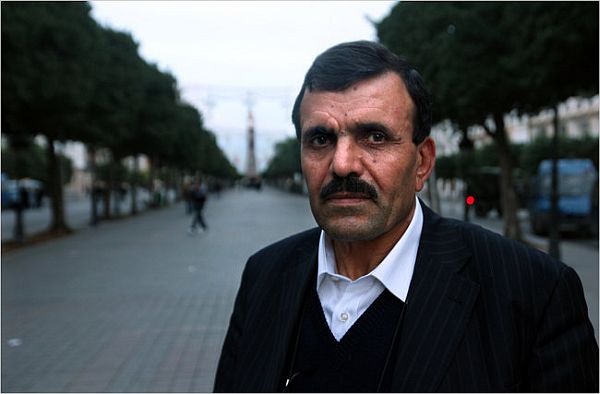
Ali Larayedh was imprisoned and tortured for 14 years for his role as a leader of the outlawed Islamist movement here, then hounded for the past six years by the omnipresent Tunisian secret police.

But six days after the ouster of this country’s dictator, Zine el-Abidine Ben Ali, Mr. Larayedh now basks in a singular celebrity. He is one of the few remaining leaders of the only credible opposition movement in Tunisia’s history. And in the aftermath of Mr. Ben Ali’s flight, that movement’s potential reincarnation is perhaps the most significant variable in Tunisia’s post-revolutionary future — yearned for by legions of working-class and rural Tunisians, viewed with just as much apprehension by the cosmopolitan coastal elite.

In an interview in the lobby of the Africa Hotel here, Mr. Larayedh insisted that his party posed no threat to Tunisians or to tourists sipping French wine in their bikinis along the Mediterranean beaches. Years of contemplation in prison and exile had helped his party, known as Al-Nahda, or the Renaissance, to “enlarge our views to encompass Western values,” he said. The result, he said, is a uniquely liberal version of Islamist politics, though one that remains unapologetic about its past calls for violence against American interests in the region.

“We are still against the political agenda of American interference in Arabic countries,” he said. “America is still supporting some dictatorships in Arabian countries, for example Ben Ali.”

But on other matters, Mr. Larayedh struck a conciliatory note.

“We are Muslim, but we are not against modernism,” he said. And he cited his party’s strong embrace of women’s rights, even to the point of advocating a quota to ensure a minimum representation of women in Parliament, “until they get their voices.”

Facebooktwittermail

Islamophobia ‘acceptable’ in UK

Al Jazeera reports:

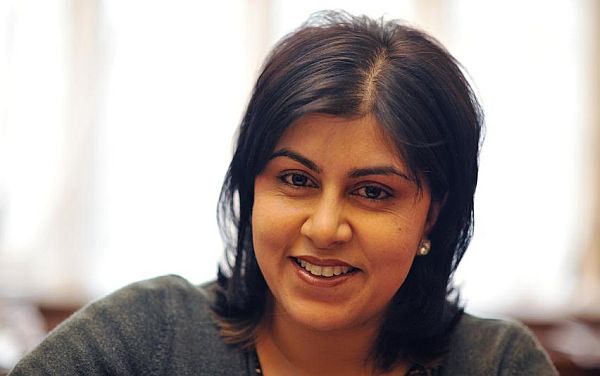
Prejudice against Muslims has “passed the dinner-table test” and become socially acceptable in Britain, the chairwoman of the country’s ruling Conservative party has said.

Sayeeda Warsi, the first British Muslim woman to join the country’s cabinet, said in a speech at the University of Leicester on Thursday that Britain is becoming a less tolerant place for believers.

Warsi said that dividing Muslims into “moderate” and “extremist” fuels intolerance as does “the patronising, superficial way faith is discussed in certain quarters, including the media”.

The Pakistan-born minister has previously criticised parts of British society for demonizing Muslims in response to the threat from small numbers of extremists.

Facebooktwittermail

U.N. resolution on Israeli settlements puts Obama in a diplomatic bind

Tony Karon writes:

It was always going to be a struggle for the U.S. to dissuade its Arab allies from going ahead with a U.N. Security Council resolution condemning Israeli settlements. But last week’s “people power” rebellion in Tunisia has made Washington’s effort to lobby against the plan more difficult. Tunisia has given the autocratic leaders of countries such as Egypt and Jordan more reason to fear their own people. For those regimes, symbolically challenging unconditional U.S. support for Israel is a low-cost gesture that will play well on restive streets.

Going ahead with the resolution, which was discussed on Wednesday at the Security Council and demands an immediate halt to all Israeli settlement construction in the West Bank and East Jerusalem, is, of course, a vote of no-confidence in U.S. peacemaking efforts. And it creates a headache for the Obama Administration over whether to invoke the U.S. veto — as Washington has traditionally done on Council resolutions critical of Israel. The twist this time: the substance of the resolution largely echoes the Administration’s own stated positions.

Washington had hoped that signaling its intention to veto such a resolution would force the Palestinians and their Arab backers to hold it back. But they went ahead and placed it on the Council’s agenda (a vote is unlikely for a few more weeks), putting the U.S. on the spot. After all, the Obama Administration has demanded that Israel end settlement construction to allow peace talks to go forward. After a 10-month partial moratorium expired last September, Israel resumed vigorous construction, and has resisted pressure from Washington for any further freeze. U.S. Deputy U.N. Ambassador Rosemary DiCarlo said on Wednesday that the U.S. opposed bringing the settlement issue to the Council “because such action moves us no closer to a goal of a negotiated final settlement” and could even undermine progress toward it. But that argument is unlikely to convince most of the international community, given the obvious stalemate in the peace process — there are no negotiations under way, and the Palestinians have refused to restart them until Israel halts its settlement construction. Initial responses at the Security Council reflect unanimous international support for the demand that Israel stop building settlements. If a vote were held today, the U.S. would be the only possible nay.

Facebooktwittermail

Blackwater founder backs mercenary crusade in Somalia

The New York Times reports:

Erik Prince, the founder of the international security giant Blackwater Worldwide, is backing an effort by a controversial South African mercenary firm to insert itself into Somalia’s bloody civil war by protecting government leaders, training Somali troops, and battling pirates and Islamic militants there, according to American and Western officials.

The disclosure comes as Mr. Prince sells off his interest in the company he built into a behemoth with billions of dollars in American government contracts in Iraq and Afghanistan, work that mired him in lawsuits and investigations amid reports of reckless behavior by his operatives, including causing the deaths of civilians in Iraq. His efforts to wade into the chaos of Somalia appear to be Mr. Prince’s latest endeavor to remain at the center of a campaign against Islamic radicalism in some of the world’s most war-ravaged corners.

Facebooktwittermail