Author Archives: News Sources

How to kill gentiles and influence people: Israeli rabbis defend book’s shocking religious defense of killing non-Jews

Max Blumenthal reports:

When I went into the Jewish religious book emporium, Pomeranz, in central Jerusalem to inquire about the availability of a book called Torat Ha’Melech, or the King’s Torah, a commotion immediately ensued. “Are you sure you want it?” the owner, M. Pomeranz, asked me half-jokingly. “The Shabak [Israel’s internal security service] is going to want a word with you if you do.” As customers stopped browsing and began to stare in my direction, Pomeranz pointed to a security camera affixed to a wall. “See that?” he told me. “It goes straight to the Shabak!”

As soon as it was published late last year, Torat Ha’Melech sparked a national uproar. The controversy began when an Israeli tabloid panned the book’s contents as “230 pages on the laws concerning the killing of non-Jews, a kind of guidebook for anyone who ponders the question of if and when it is permissible to take the life of a non-Jew.” According to the book’s author, Rabbi Yitzhak Shapira, non-Jews are “uncompassionate by nature” and should be killed in order to “curb their evil inclinations.” “If we kill a gentile who has has violated one of the seven commandments… there is nothing wrong with the murder,” Shapira insisted. Citing Jewish law as his source (or at least a very selective interpretation of it) he declared: “There is justification for killing babies if it is clear that they will grow up to harm us, and in such a situation they may be harmed deliberately, and not only during combat with adults.”

Meanwhile, Associated Press reports:

An influential Israeli rabbi known for his vitriolic pronouncements against Arabs says Palestinians and their leader should “perish from this world.”

Israel Army Radio quoted Ovadia Yosef Sunday as saying the Palestinians were “evil, bitter enemies of Israel” and Palestinian President Mahmoud Abbas should be struck with a plague. He made the remarks in a Saturday night sermon.

Haaretz adds:

The United States on Sunday condemned remarks by the spiritual leader of Israel’s leading ultra-Orthodox party, Rabbi Ovadia Yosef, who said the Palestinians should “perish”.

“We regret and condemn the inflammatory statements by Rabbi Ovadia Yosef,” U.S. State Department spokesman Philip J. Crowley. “These remarks are not only deeply offensive, but incitement such as this hurts the cause of peace.”


Facebooktwittermail

Al-Qaida in Yemen: Poverty, corruption and an army of jihadis willing to fight

In a two-part series, The Guardian‘s intrepid Ghaith Abdul-Ahad reports from Yemen:

With its conservative Islam, ragged mountains, unruly tribes and problems of illiteracy, unemployment and extreme poverty, Yemen has been dubbed the new Afghanistan by security experts.

The Guardian spent two months in the country, travelling to the tribal regions of Abyan and Shabwa, where al-Qaida has set up shop and where suspected US drone attacks have killed scores of civilians and few insurgents. Speaking to jihadis, security officials and tribesmen, it became clear how a combination of government alliances, bribes, broken promises and bungled crackdowns has allowed Islamists to flourish and led to the emergence of the country as a regional hub for al-Qaida.

You don’t have to go deep into the mountains to hear the jihadi message. One Friday, sitting on the roof of a hotel in Sana’a, I hear the amplified prayers of a preacher ring out at the end of his sermon: “God condemn the Jews and the Christians … God make their wives and children our slaves … God defeat them and make the believers victorious.”

Ahmad al-Daghasha, a Yemeni writer who specialises in Islamic and jihadi issues, says two factors are responsible for the growing influence of al-Qaida. “First there is the local situation, which is miserable, politically and economically,” he says. “That situation is translated into many forms of resistance – the jihadis and al-Qaida are only one. Then there is the foreign oppression that we all see on television – whether in Iraq, Afghanistan or Palestine – that gives al-Qaida’s rhetoric legitimacy.”

In the second-part of this report, Ghaith Abdul-Ahad writes:

Ferocious blood feuds have been raging for years in Shabwa. Almost every tribesman in the region finds himself entangled in the cycle of revenge.

The barren desert and mountain are divided into patches of small tribal war zones. As we travelled in Shabwa we often had to leave the main track and drive deep into the desert to avoid passing through the land of a tribe with which someone in our car had a blood feud.

“We would like to go to school,” says Ibrahim, a hazel-eyed 16-year-old tribesman who was sitting in the back of the car with a wrapped head shawl. “But we had to stop, because someone might track us there and kill us.”

I asked him if he had seen much fighting. “Yes,” he answered. “Many times.”

The tribesmen exist in perpetual poverty in this harsh landscape. When ‑ if ‑ water comes, it moves fast down thin rocky valleys, leaving the desert as thirsty as before. Apart from a few patches of farmed land, the rest is desert.

Being so poor, the people have little to fight over except their honour.

The only way for an insult to be avenged was by killing the enemy, calling his name so he would turn – it’s a shame to kill a man in his back – and shoot him while looking into his eyes. The culture of hospitality is taken so seriously that one tribal feud that has been going for two years was over a guest who was insulted.

Ali tells how the inter-tribal battles sometimes included heavier armaments. “Last year we besieged a neighbouring tribe. We took anti-aircraft guns and mortars. We shelled them for three days and we besieged them for weeks, until they had nothing to eat but biscuits.”

Against this backdrop of armed, perpetually fighting tribes, where it sometimes seems every other man is wanted by the authorities for a murder or two, al-Qaida can easily blend in. Their gunmen are little different from any other gunman wanted by authority and seeking shelter among his tribe.

“There are few believers [jihadis] who live in the mountains,” an old man in Hateem told me, “but we haven’t seen them do anything wrong here. We don’t care if they have killed someone in America; here in Shabwa they haven’t committed a crime and they should be respected like any other man.”

Facebooktwittermail

Saudi Arabia: the end of progress without change

A reader alerted me to a speech Chas Freeman gave earlier this year in a noble effort to educate fellow Americans on the little understood nation of Saudi Arabia (where Freeman served as US ambassador from 1989 to 1992).

I have been asked to speak to you about the Kingdom of Saudi Arabia. This is a topic I have never before addressed to an American audience. Why bother?

We Americans reserve the right to have strong opinions on the basis of little or no knowledge. There are few countries that better exemplify our assertive ignorance of foreign geography, history, and culture than Saudi Arabia. Most of us are convinced that Saudis are Muslim zealots, control the world’s oil prices, and are absurdly rich, anti-feminist, and undemocratic. They hate our values and want to destroy us. Talk radio confirms this. What more needs to be said?

On reflection, a lot does. Neither caricature nor a priori reasoning is a sound basis for policy. A distorted view of foreign realities precludes success at dealing with them. There is much at stake in our relationship with Saudi Arabia. We can ill afford to get it wrong.

That country is, of course, the heartland of Islam and the custodian of the world’s largest oil reserves. It lies athwart transport routes between Asia, Europe, and Africa. It is at the center of a growing concentration of global capital. Under any circumstances, the Kingdom of Saudi Arabia would be important. It is all the more so in an era when we Americans are at war with ever more peoples in the Islamic world, depend on ever greater amounts of imported energy, and need ever larger foreign loans to run our government and sustain our life style.

Yet Saudi Arabia is little known. It is the only society on the planet not to have been penetrated by Western colonialism. No European armies breached its borders; no missionaries; no merchants. Its capital, Riyadh, was long off limits to infidels; the holy cities of Mecca and Medina remain so today. When Westerners finally came to Saudi Arabia, we came not as the vindicators of our presumed cultural superiority, but as hired help. As a result, some say that Saudis secretly see the world’s peoples as divided into two basic categories: (1) fellow Saudis; and (2) potential employees. Be that as it may, foreigners, Western, Asian, or Arab, who have lived in Saudi Arabia all see it as a very strange place — one that is not easy to understand and that remains at odds with many of the values non-Saudis profess.

The Kingdom has long stood apart from global norms. Its system of government draws on tribal and Islamic traditions rather than Western models. Its king presides rather than rules over the royal family and Saudi society. His responsibility is less to make decisions than to shape and proclaim consensus, while assuring a share of the national wealth to all, especially the least privileged. Saudi Arabia levies no taxes on its citizens, other than the religious tithe known as “zakat” — a two-and-a-half percent annual donation of private capital to charity and other public purposes. All Saudis enjoy free education and medical care from birth to death and can pursue these services at home or abroad, as they wish. The Kingdom has no parliament, though it does have elaborate informal mechanisms for consultation with its citizens on policy matters. Saudi Arabia reverses and thereby affirms a basic principle of American political philosophy. “No representation without taxation.”

Facebooktwittermail

How Arabs view the anti-mosque movement

Marc Lynch writes:

Two recent arguments about the impact of the rising anti-Islam trend in the U.S. — from the Stupid!Storm around the Manhattan mosque to the lunacy of “national burn a Quran day” — on the Arab world strike me as not quite right. Last week, Bill Kristol cited the translation of a column by Saudi TV station al-Arabiya director Abd al-Rahman al-Rashed downplaying the relevance of the mosque as evidence that the argument should be over. Meanwhile, several recent articles claim that the mosque had become the #1 topic of discussion on jihadist forums. Both are wrong, in different ways. Most Arab columnists agree with the argument that the anti-mosque movement will badly harm Arab and Muslim views of the United States, contra Rashed, but there isn’t as much active discussion of it in the forums as you’d expect. That isn’t a reason to relax, though. The impact is likely to be felt not so much on extremists, whose views about America are rather fixed, but on the vast middle ground, the Arab and Muslim mainstream which both the Bush and Obama administrations have recognized as crucial both for defeating al-Qaeda and for achieving broad American national interests. And that mainstream, not the extremists themselves, is where our attention needs to be focused.

A closer look at Arab mainstream media and jihadist forum debates shows what I mean. A scan of the major op-ed pages quickly reveals that Rashed is very much a minority voice in the unfolding Arab debate. Rashed’s column caught the attention of anti-mosque activists such as Kristol, because it suited their needs. But if Kristol really wants Americans to take their cues from Arab columnists, here’s a more representative sample of commentary over the last few days:

In “Jihadi forums silent on Cordoba controversy,” Max Fisher finds “the fact that they discuss the issue so little among themselves suggests the extent to which the jihadis consider the fight over the Cordoba Center as having nothing to do with them.”

Facebooktwittermail

Pastor’s plan to burn Koran fuels tensions

The New York Times reports:

If building an Islamic center near ground zero amounts to the epitome of Muslim insensitivity, as critics of the project have claimed, what should the world make of Terry Jones, the evangelical pastor here who plans to memorialize the Sept. 11 attacks with a bonfire of Korans?

Mr. Jones, 58, a former hotel manager with a red face and a white handlebar mustache, argues that as an American Christian he has a right to burn Islam’s sacred book because “it’s full of lies.” And in another era, he might have been easily ignored, as he was last year when he posted a sign at his church declaring “Islam is of the devil.”

But now the global spotlight has shifted. With the debate in New York putting religious tensions front and center, Mr. Jones has suddenly attracted thousands of fans and critics on Facebook, while around the world he is being presented as a symbol of American anti-Islamic sentiment.

Muslim leaders in several countries, including Egypt and Indonesia, have formally condemned him and his church, the Dove World Outreach Center.

An Islamic group in England has also incorporated his efforts into a YouTube video that encourages Muslims to “rise up and act,” widening a concern that Mr. Jones — though clearly a fringe figure with only 50 members in his church — could spark riots or terrorism.

“Can you imagine what this will do to our image around the world?” said Ibrahim Hooper, a spokesman for the Council on American-Islamic Relations in Washington. “And the additional danger it will add whenever there is an American presence in Iraq or Afghanistan?”

Facebooktwittermail

How 30 million DVDs sent in 2008 election fuel the anti-mosque debate today

At TPMMuckraker, Rachel Slajda reports:

In the last weeks before the 2008 elections, an organization called the Clarion Fund spent some $16 million to reprint and distribute 28 million copies of their 2005 film about radical Islam and terrorist groups. “Obsession” was inserted into newspapers — and packaged with scary photos of scarf-clad men — in swing states.

That move, funded by a single anonymous donor, may still be echoing in 2010’s protests about the Cordoba House and other mosques around the country.

“The single most powerful piece of media over the past five years that has been effective in persuading average Americans to the Islamist threat has been ‘Obsession,'” Tom Trento, the director of the Florida Security Council, told TPMmuckraker today. Trento said he participated in the multimillion-dollar distribution of the film by giving out tens of thousands of copies at both parties’ 2008 conventions.

Facebooktwittermail

For critics of Islam,’sharia’ becomes shorthand for extremism

The Washington Post reports:

Protesters of the proposed Islamic center near Ground Zero waved signs there Sunday with a single word: sharia.

Their reference to Islam’s guiding principles has become a rallying cry for those critical of Islam, who use the word to conjure images of public stonings and other extreme forms of punishment in countries such as Saudi Arabia or Afghanistan and argue that those tenets are somehow gaining a foothold in the United States.

Blogs with names such as Creeping Sharia and Stop Shariah Now are proliferating. A pamphlet for a “tea party” rally last weekend in Fort Walton Beach, Fla., asked: “Why do Muslims want to take over the world and place us under Shariah law?” Former GOP House speaker Newt Gingrich amplified that point in a much-publicized speech a few weeks ago, exploring what he calls “the problem of creeping sharia.”

The fact that the word has become akin to a slur in some camps is an alarming development to many religious and political leaders. “We are deeply saddened by those who denigrate a religion which in so many ways is a religion of compassion,” Peg Chemberlin, president of the National Council of Churches, said in a statement this month signed by 40 national religious leaders.

Sharia in Arabic means “way” or “path.” Muslims agree that sharia is God’s law, but there is little consensus on the particulars. To some, sharia is a set of rules that are codified and unchanging. To others, it’s a collection of religious principles that shift over time.

Facebooktwittermail

Pakistan’s misery shows no sign of abating

At The Atlantic, Max Fisher looks at five long-term effects of the Pakistan floods:

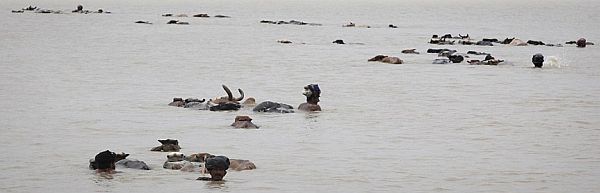
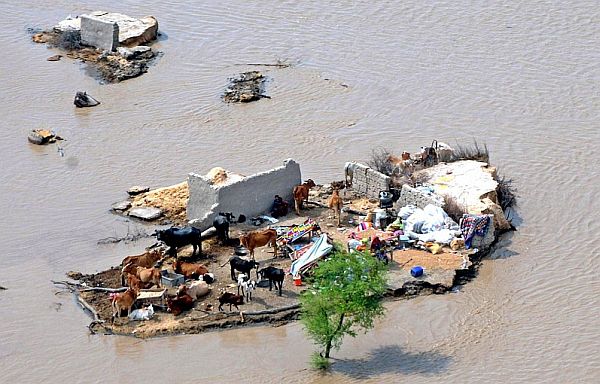
After weeks of flooding in Pakistan displaced two million people and left more than 10 million at risk of disease outbreak because they lack access to clean water, renewed flooding in Pakistan has displaced an additional one million people over the past 48 hours alone, setting back a relief effort that has struggled due to paltry donations. The displaced, often physically inaccessible to relief workers due to Pakistan’s badly damaged infrastructure, face threats of disease, starvation, and dehydration. But even once the immediate humanitarian crises of the flood pass, experts say the floods will leave their impact on Pakistan and the region for years or decades.

Rebecca Barber, from Oxfam, recounts some of the personal losses incurred by individuals:

In a camp in Khairpur, in Sindh, a man told me that he had paid 20,000 rupees ($A260) to evacuate himself and his family from his village when the flood warning came. To cover the costs, he sold the household’s entire crop of wheat. Between himself, his father and his uncle, the family had owned 13 buffalo. But they couldn’t afford to bring them with them when they evacuated, and all drowned when the floodwaters washed through the village. Three of his brothers have stayed behind, camping out on some nearby high land to keep an eye on what’s left of their homes. The village is under more than 1.5 metres of water, and he says he thinks it will be two years before they’ll be able to cultivate again.

In another camp, a man told me that his family had left behind eight goats, two cows and two buffalo when the army evacuated them. He and his family were “tenant farmers” – living on and cultivating the landlord’s land. In addition to the goats, cows and buffalo, they’d owned a small vegetable plot. They’d subsisted day to day on the small profits from the livestock, the vegetables they grew themselves, and a small potion of the landlord’s crops. But the work won’t start again until January next year, when the time for harvesting sugarcane comes around. Until then, he says he’ll go to one of the cities and look for casual labouring work. He won’t get more than 100 rupees (a bit over $1) a day though, nothing like enough to feed a family of 10. And there’s no savings to see them through. His daughter said she’d lost the dowry she’d kept in a trunk for six years: clothes, gold, cooking utensils, and cash.

Facebooktwittermail

CIA making secret payments to members of Karzai administration

The Washington Post reports:

The CIA is making secret payments to multiple members of President Hamid Karzai’s administration, in part to maintain sources of information in a government in which the Afghan leader is often seen as having a limited grasp of developments, according to current and former U.S. officials.

The payments are long-standing in many cases and designed to help the agency maintain a deep roster of allies within the presidential palace. Some aides function as CIA informants, but others collect stipends under more informal arrangements meant to ensure their accessibility, a U.S. official said.

The CIA has continued the payments despite concerns that it is backing corrupt officials and undermining efforts to wean Afghans’ dependence on secret sources of income and graft.

The U.S. official, speaking on condition of anonymity, said a significant number of officials in Karzai’s administration are on the payroll. Paul Gimigliano, a CIA spokesman, disputed that characterization, saying, “This anonymous source appears driven by ignorance, malice or both.”

A former agency official said the payments were necessary because “the head of state is not going to tell you everything” and because Karzai often seems unaware of moves that members of his own government make.

The disclosure comes as a corruption investigation into one of Karzai’s senior national security advisers – and an alleged agency informant – puts new strain on the already fraying relationship between Washington and Kabul.

Facebooktwittermail

Beirut in Baghdad: Is the ‘Lebanonization’ of Iraq complete?

At Foreign Policy, Lara Setrakian writes:

Four years after a flurry of predictions about the “Lebanonization” of Iraq, they may be coming true. “Lebanonization” was a derogatory term, a hint at imminent civil war, political deadlock, Iran’s hand in local militias and on many domestic levers. The columns and commentary on Iraq’s “Lebanonization” issued a collective “uh oh,” warning the state would fall apart like Lebanon did from 1975-1991.

What moved the term through officialdom was a perception that Iran and Syria were playing Iraq the way they played Lebanon in 1980s: perpetuating a status quo of chaos, then profiting from the melee. The Sadrists were like Hezbollah-in-waiting, tied to Tehran and using force to stymie Iraq’s government, if they couldn’t control it outright.

“What prompted me to use the term was the external dynamic … and it has still has some validity,” said Ambassador Ryan Crocker, who has served as the top U.S. diplomat in both Iraq and Lebanon. He concedes that at present, in Iraq as in Lebanon, Iran has a virtual veto – influence enough to block any major decision that crosses its interests.

“Iran can’t call the shots in Iraq. They can’t make things happen, but they can screw things up. And they play a long game … they’re waiting for us to be gone to make life harder for Iraqis.”

Today the “Lebanonization” of Iraq is a different story, in which the parallels are mostly political. In Iraq’s March election and its tussled aftermath — there’s still no government in place and likely won’t be one until after Ramadan — analysts see a repeat of Lebanon’s 2009 parliamentary poll. In both cases a “pro-U.S.” leader edges out the Iran-backed alliance, but it’s a watered-down win. The country triangulates the interests of its three main blocs (Iraq: Shiite, Sunni, Kurd; Lebanon: Sunni, Shiite, Christian) through a long negotiation (this week talks in Baghdad broke down). Then a government theoretically comes together, balancing power among its political actors, whose voters cluster around their ethnic or religious base.

“The comparison holds. Today, Iraq has a Lebanon-style government: tribes with guns and a state that’s not able to provide what a state should provide, like basic security,” said Paul Salem from the Carnegie Endowment’s Beirut office. In the vacuum, violent groups from al Qaeda in Iraq to Salafist movements in Northern Lebanon undo law and order.

Facebooktwittermail

Turkey’s search for regional power

At Middle East Report, Yüksel Taşkın from Marmara University in Istanbul writes:

Under the government of Prime Minister Recep Tayyip Erdoğan, Turkey is carving out a greater role for itself in Middle Eastern affairs. Since 2008, Turkey has sought the role of Middle East intermediary in trying to broker a peace agreement between Israel and Syria and to resolve the Iranian nuclear crisis. This more independent and assertive foreign policy has put Turkey increasingly at odds with two of its long-standing allies, Israel and the United States. A crucial ally for the US in its war on Iraq, Turkey now refuses to comply with US policy on Iran. The Turkish government also has become more outspoken against Israeli violations of Palestinian rights in the West Bank and Gaza, placing it on a diplomatic collision course with Israel. Three months after the Israeli assault on a Gaza-bound Turkish aid vessel, the Obama administration is reportedly warning Turkey that if its relations with Israel do not improve, and if Turkey does not temper its opposition to US policy on Iran, Congress may halt arms sales to Turkey.[1]

The deterioration in relations between Turkey and its Western allies has led many commentators to conclude that there has been a decidedly eastward shift in Turkish foreign policy. In fact, Turkey’s positions have inspired many journalists and policy analysts to postulate that Turkey is pursuing an “Islamic” agenda that entails a deliberate distancing from the West. This hypothesis has seemed plausible to some because the ruling Justice and Development Party (AKP, by its Turkish acronym) is rooted in the banned Islamist parties of the 1980s and 1990s. The historian Bernard Lewis, for instance, speculated that in a decade Turkey might resemble the Islamic Republic of Iran.[2] New York Times columnist Thomas Friedman opined that “Turkey’s Islamist government [is] seemingly focused not on joining the European Union but the Arab League — no, scratch that, on joining the Hamas-Hezbollah-Iran resistance front against Israel.”[3] Similar interpretations emanate from the secular establishment in Turkey. Oktay Ekşi, a columnist for the Hurriyet newspaper, argues that the AKP’s concerted efforts to attain Turkish accession to the EU were a ploy to gain “support in the West to overcome the secularists.”[4] Some analysts have even suggested that the AKP is pursuing a “neo-Ottomanist” agenda, seeking to claim the mantle of the last great Islamic empire. Johns Hopkins University professor (and former Bush administration official) Eliot Cohen wrote, “A combination of Islamist rule, resentment at exclusion from Europe and a neo-Ottomanist ideology that envisions Turkey as a great power in the Middle East have made Turkey a state that is often plainly hostile not only to Israel but to American aims and interests.”[5]

Such analyses misinterpret the AKP government’s objective, which is not to break with Turkey’s traditional cooperation with the US and EU but to increase Turkey’s relative autonomy vis-à-vis those powers. Rather than a rupture with the past, Turkey’s new approach marks a change in tactics in pursuit of the same goal.

Facebooktwittermail

Liberal defenders of “mosque” get it wrong

Aisha Ghani points out that much of the liberal defense of Park51 requires that the center be shown as presenting a sanitized form of Islam.

[I]t is clear that the kindergarten logic of “hear no evil, see no evil” is being utilized in order to sway public opinion in favor of the Center, but while the success of these maneuvers remains to be seen, its damage is immediately apparent. The message being sent is loud and clear: if Park51 ‘sounds’ nothing like mosque, claims to ‘be’ nothing like a mosque, and, ‘looks’ nothing like a mosque, then, and only then, does it emerge a defensible endeavor within the United States.

Apart from the fact that these maneuvers do little by way of providing Americans with a reason to be self-reflexive — that is, to ponder the possibility of coexistence with Muslims without requiring, first, that those Muslims sanitize their identities and their places of worship — yet another danger exists in the fact that if these additives, this supplementary discourse (of community center and interfaith dialogue) continues to be the basis upon which Park51 emerges worthy of defense, then on what grounds will other mosques — which do not claim to be anything more or (perhaps, in Park51’s case) ‘less’ than a mosque — be defended?

Other red flags emerge when we take note of how Imam Rauf and Daisy Khan’s ‘personal’ relationship to Islam (a relationship that associates itself with ‘sufi’ ideology and is identified as ‘moderate’ Islam) has been ascribed to Park51. When these disclaimers are showcased in the media, they are presented not as interesting facts about two individuals, but as some of Park51’s most ‘appealing’ features, a major ‘selling point’ in subsequent liberal discourse.

The narrative of fitting in, of assimilation and integration that is being established through Park51 produces a dangerous set of ‘if, then’ contingencies that we should all be wary of, and which index the precise problem of this moment in American history; a moment in which the terms and conditions being articulated in the Park51 debate have, in fact, already been established as the ground rules for determining who gets recognized as the ‘right’ kind of Muslim in America. Sadly, this ‘conditional’ recognition also suggests that only the claims of certain kinds of Muslims will be recognized as legitimate or worthy of defense.

(H/t Pulse.)

Facebooktwittermail

The man who won the war in Iraq

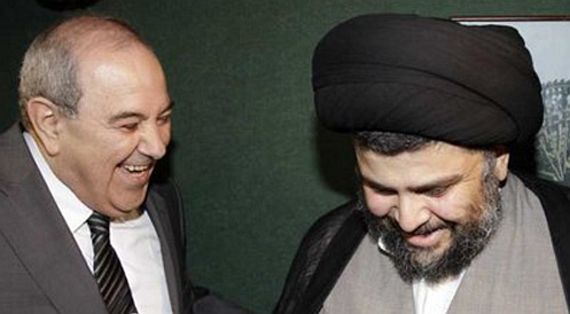
After Moqtada al-Sadr’s recent meeting with Ayad Allawi — a top contender for the prime minister post in Iraq — Babak Dehghanpisheh considers Sadr’s current position as a kingmaker in Iraqi politics and his larger ambitions.

Sadr can, rightfully, claim that his movement is one of the few on the Iraqi political scene that’s homegrown. Compare this to the Sadrists’ top rivals in the Islamic Supreme Council of Iraq (ISCI). For years, they’ve tried to fight the image that they were brought in on American tanks and are beholden to both Washington and Tehran, even changing their name because the Supreme Council for the Islamic Revolution in Iraq sounded too Iranian. They tried appropriating the image of Iraq’s most senior cleric, Ayatollah Ali Sistani, to woo more supporters (there are still posters up around Baghdad showing the late ISCI leaders Ayatollah Mohammad Baqer Hakim and Abdul Aziz Hakim beside Sistani). Nothing worked. ISCI got wiped out at the polls in March and also had a pretty dismal showing during provincial elections last year.

The Sadrists, by contrast, aren’t going anywhere — which puts Washington, among others, in a bind. Sadr’s supporters are more than just a political party. The cleric is clearly following the Hezbollah model, creating a populist political movement backed by a battle-hardened militia. The language Sadr uses when discussing the U.S. presence in Iraq — resistance, occupation, martyrdom — could easily have been taken from a speech by Hezbollah’s leader, Hassan Nasrallah. All this has discouraged U.S. officials from holding talks with Sadr — something they’ve never done since 2003. It’s not exactly like Sadr has gone out of his way to open up a dialogue, either. In fact, Sadr and many of his top aides have made it clear that the Mahdi Army won’t disarm as long as there are American troops on Iraqi soil.
[…]
Sadr’s ambitions don’t cover Iraq’s domestic agenda alone. His high-profile trips to Jordan, Turkey, Lebanon, Saudi Arabia and elsewhere indicate that he wants to be seen as a prominent regional player. He would like to promote his Mahdi Army as a member of the so-called “axis of resistance” made up by Hezbollah and Hamas, both of which have made their names by confronting the United States and Israel.

Facebooktwittermail

“Ground Zero mosque” is the new “death panels”

Jeffrey Feldman writes:

Cordoba House is not some sudden and new issue, but the latest attempt by the Republican Party to displace meaningful political debate with pitch-fork-and-torches style mass hysteria.

The themes of these newest wave of delirium are familiar: Muslim conspiracy; infiltration by foreign terrorists; Liberal collusion.

Are we a nation ruled by mass hysteria — a nation that sees conspiracy behind every unfamiliar face? Or are we a nation that raises above the tyranny of the mob roused to rid the village of those in league with the Devil? Those are the questions that the Mayor and President should have asked, but nobody seems to be asking them.

When mass hysteria has been allowed in the past to drive public policy it lead inexorably to shameful results that destroyed lives and weakened democratic society.

William Dalrymple writes:

Feisal Abdul Rauf of the Cordoba Initiative is one of America’s leading thinkers of Sufism, the mystical form of Islam, which in terms of goals and outlook couldn’t be farther from the violent Wahhabism of the jihadists. His videos and sermons preach love, the remembrance of God (or “zikr”) and reconciliation. His slightly New Agey rhetoric makes him sound, for better or worse, like a Muslim Deepak Chopra. But in the eyes of Osama bin Laden and the Taliban, he is an infidel-loving, grave-worshiping apostate; they no doubt regard him as a legitimate target for assassination.

For such moderate, pluralistic Sufi imams are the front line against the most violent forms of Islam. In the most radical parts of the Muslim world, Sufi leaders risk their lives for their tolerant beliefs, every bit as bravely as American troops on the ground in Baghdad and Kabul do. Sufism is the most pluralistic incarnation of Islam — accessible to the learned and the ignorant, the faithful and nonbelievers — and is thus a uniquely valuable bridge between East and West.

The great Sufi saints like the 13th-century Persian poet Rumi held that all existence and all religions were one, all manifestations of the same divine reality. What was important was not the empty ritual of the mosque, church, synagogue or temple, but the striving to understand that divinity can best be reached through the gateway of the human heart: that we all can find paradise within us, if we know where to look. In some ways Sufism, with its emphasis on love rather than judgment, represents the New Testament of Islam.

Facebooktwittermail

In Iraq, Western clocks, but Middle Eastern time

Anthony Shadid writes:

Iraq today is replete with American-ordered deadlines, timetables and benchmarks that sought to create realities where realities never existed. The administration is leaving now on its own terms. Perhaps staying would make an already traumatized Iraq worse; much of its dysfunction dates to the American occupation and its earliest days. But the very nature of America’s departure — with no government formed, an unpredictable Iraqi military, and deep popular disenchantment with a hapless political elite — underscores one of the most enduring traits of American strategy in the Middle East.

Powerful but fickle, the United States has never seemed to understand time, at least not in the way it is acknowledged by Islamic activists willing to serve decades in jail, Syrian presidents assured that American policies will eventually change, and Iraq’s neighbors, who bide their turn to fill the vacuum left by an American departure.

Its policies — support for Israel and authoritarian Arab governments, the invasion of Iraq and war in Afghanistan — may shape sentiments toward it. But time, an American measure of it, often shapes the way it acts.

“It certainly is American politics and it is American culture, the sense that we are an impatient people,” said Ryan C. Crocker, a former ambassador to Iraq and veteran diplomat in the Arab world. “ ‘Tomorrow or the day after tomorrow, at the latest, and if that’s not going to happen, we’re going to move on.’ ”

The Middle East has long suffered under a peculiarly American notion that if the world’s greatest power wants something, it will somehow come to pass, on its schedule. In Lebanon, the Palestinian territories and Syria, the messy realities never quite fit. Since 2003, they rarely have in Iraq, either.

Facebooktwittermail

Why silence over Kashmir speaks volumes

Pankaj Mishra writes:

Once known for its extraordinary beauty, the valley of Kashmir now hosts the biggest, bloodiest and also the most obscure military occupation in the world. With more than 80,000 people dead in an anti-India insurgency backed by Pakistan, the killings fields of Kashmir dwarf those of Palestine and Tibet. In addition to the everyday regime of arbitrary arrests, curfews, raids, and checkpoints enforced by nearly 700,000 Indian soldiers, the valley’s 4 million Muslims are exposed to extra-judicial execution, rape and torture, with such barbaric variations as live electric wires inserted into penises.

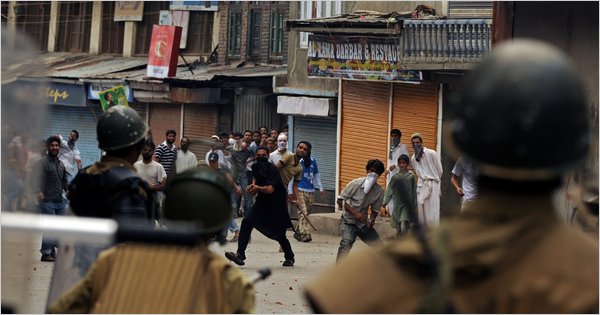
Why then does the immense human suffering of Kashmir occupy such an imperceptible place in our moral imagination? After all, the Kashmiris demanding release from the degradations of military rule couldn’t be louder and clearer. India has contained the insurgency provoked in 1989 by its rigged elections and massacres of protestors. The hundreds of thousands of demonstrators that fill the streets of Kashmir’s cities today are overwhelmingly young, many in their teens, and armed with nothing more lethal than stones. Yet the Indian state seems determined to strangle their voices as it did of the old one. Already this summer, soldiers have shot dead more than 50 protestors, most of them teenagers.

The New York Times this week described the protests as a comprehensive “intifada-like popular revolt“. They indeed have a broader mass base than the Green Movement does in Iran. But no colour-coded revolution is heralded in Kashmir by western commentators. The BBC and CNN don’t endlessly loop clips of little children being shot in the head by Indian soldiers. Bloggers and tweeters in the west fail to keep a virtual vigil by the side of the dead and the wounded. No sooner than his office issued it last week, the UN secretary general, Ban Ki-moon, hastened to retract a feeble statement expressing concern over the situation in Kashmir.

New York Times: Phone cameras fuel Kashmir’s ‘intifada.’

Facebooktwittermail