This week, in Libya, thousands of people celebrated carrying posters of “The Fantastic Four”: Obama, Rice, French President Nicolas Sarkozy and UK Prime Minister David Cameron. All four played a leading role in supporting the people of Libya in their overthrow of a tyrant. But it was America that played the crucial role. It was America that decided at a key moment to “invest in protecting the lives of others” and to join with NATO not to overthrow a regime, but to help the people of Libya make the regime change that only they could effect.
That is leadership. That is smart. And this is what victory feels like.
President Obama’s critics are on the verge of witnessing a third major Obama success in the Arab world in 2011.
First, longtime Egyptian strongman Hosni Mubarak was deposed after Obama refused to support him against the Egyptian people at the moment of truth. Second, Osama bin Laden, America’s archenemy #1, was killed by Navy SEALS on direct orders from Obama in a risky cross-border raid into Pakistan. And now, Muammar Gaddafi — a man whose presence on the international stage has mocked any reasonable definition of sanity for more than four decades — is about to be knocked out of power by an international coalition in which Obama ensured that the U.S. played a leading team role.
Fareed Zacharia, heralding a new era in U.S. foreign policy, writes:
The United States decided that it was only going to intervene in Libya if it could establish several conditions:
1) A local group that was willing to fight and die for change; in other words, “indigenous capacity”.
2) Locally recognized legitimacy in the form of the Arab League’s request for intervention.
3) International legitimacy in the form of United Nations Security Council Resolution 1973.
4) Genuine burden sharing with the British and French spelling out precisely how many sorties they would be willing to man and precisely what level of commitment they would be willing to provide.
It was only when all those conditions were fulfilled that the Obama Administration agreed to play a pivotal but supporting role in the Libya operation.
Perhaps if Obama gets re-elected (though I wouldn’t place large bets on that yet), he’ll invite a few Libyans to Washington so that they can celebrate the pivotal role they played in securing his second term.
Needless to say, I jest. Even Obama’s most loyal boosters would be forced to concede that hardly any votes in the 2012 presidential election will end up being swayed by the outcome of the Libyan revolution.
So let’s assume that Zacharia and Rubin and Cirincione are simply celebrating what they regard as a foreign policy success (and are not driven just by some idea that the outcome in Libya is good for Obama), what should we make of their analysis?
As usual it comes weighted down by the conceit that Washington is the center of the world.
Libyans who spent the last six months fighting for their country — they are just supporting actors with the honor of rolling out a red carpet along which America can now stride on its way to glory.
Has everyone forgotten? The idea that on Libya, Obama “led from behind” was a facetious way of spinning the fact that in this intervention, he really was the reluctant partner. US involvement was agreed to on the strict condition that American soldiers could maintain a comfortable distance from Libya, while their commander in chief kept his distance from Congress and the media.
America’s arm-length involvement in Libya was indeed a success, but not in the sense that success is now being paraded. It was a success in as much as it is clear to most people (at least outside Washington) that victory in Libya belongs to the people of Libya. They know they couldn’t have succeeded without Western support, but it is Libyans who died in their thousands while their allies shed not a single drop of blood.
Sarkozy, Cameron, Obama, and Rice — these were the supporting actors. NATO’s involvement was much more reluctant than it was opportunistic and it was driven by fears about the potential price of non-involvement.
Those who now want to construct out of this a model for other interventions seem to have no more imagination than those who not long ago employed the simplistic argument that what “worked” in Iraq should work in Afghanistan.
Washington was able to help out a bunch of Arabs in Libya when they got in trouble — should be able to do the same in Syria. Right?
The lesson to take away from Libya is that in the Arab Awakening no two uprisings are the same and no idea is more dangerous than that a successful intervention can be replicated.
The creation of a Jewish state, right from the moment of its conception, was never compatible with the development of democracy.
Democracy rests on the recognition of the political rights and power of dēmos, the people, and in as much as it allows for any kind of discrimination it does so by empowering the under-privileged. The idea that there could be such as thing as a Jewish democracy which helps preserve the Jewish character of the state at the expense of the interests of non-Jewish minorities is an insult to the idea of democracy.
Even so, since this is a contradiction that doesn’t seem to trouble most Jewish Israelis the most immediate democratic threat to Israel does not come from inside its borders — it comes from Egypt.
A year ago, if in response to an attack emanating from inside Egypt’s borders Israel had “retaliated” by launching attacks on Gaza, it would have been confident that it’s military action would have received a fairly muted response from the Mubarak regime. Demonstrations on the streets of Cairo would have done little to damage Egypt’s cordial relations with Israel.
Now everything has changed. Thus on Monday, even while rockets were still be fired at Israel from Gaza the Netanyahu cabinet voted to refrain from any action that could lead to an all-out war against Hamas. Gone is some of the hubris that fueled Israel’s 2009 war on Gaza, Operation Cast Lead.
Why? Israel can no longer be guided by its confidence that it can punish the population of Gaza with total impunity. Now its calculus must take into consideration the mood of 80 million Egyptians who can do much more than just shout on the streets — they can influence the policies of their own government. That power is still muted by military rule, but everything Israel does to alienate Egypt now has much greater potential to define and sour future Israeli-Egyptian relations.
After the Eilat attacks last week, Israel was swift to launch what Netanyahu described as retaliatory air strikes against the leaders of the Popular Resistance Committees in Gaza, even though the Israeli Defense Forces’ spokesperson later denied that the IDF believes the PRC was responsible.
At the same time, Netanyahu’s choice to hit Gaza may have had as much to do with Israel’s wariness about challenging Egypt.
One of the assumptions enshrined in the Camp David Accords was that the demilitarization of Sinai was in Israel’s security interests, but that is no longer the case. Since the fall of Mubarak, militants in the peninsula have taken advantage of the security vacuum, launching multiple rocket attacks, and now, evidence suggests, attacking Israelis outside Eilat.
Before he then pointed the finger at Gaza, Israeli minister of defense Ehud Barak last week acknowledged: “The attacks demonstrate the weakening of Egypt’s control over the Sinai peninsula and the expansion of terrorist activity there.”
Even so, Israel’s political leaders share the same fear of acts of terrorism that politicians do everywhere — that such acts risk making the state look impotent. To have responded to the attacks by saying that Israel would engage in intense diplomatic dialogue with Egypt in order to improve security would not have been enough, yet neither could Israel afford to disregard Egyptian sovereignty by pursuing militants across the border.
The only muscle-flexing alternative was to strike Gaza. But even with its show of force, Israel now feels constrained.
What emerged most clearly from Netanyahu’s and Barak’s statements to the cabinet was that Israel lacks the international legitimacy needed for a large-scale operation in Gaza. The diplomatic crisis with Egypt [following the deaths of three Egyptian policemen killed by Israelis during the Eilat attacks] further constrains Israel’s freedom of action.
“The prime minister thinks it would be wrong to race into a total war in Gaza right now,” one of Netanyahu’s advisors said. “We are preparing to respond if the fire continues, but Israel will not be dragged into places it doesn’t want to be.”
Several Netanyahu aides detailed the constraints on Israeli military action, most of which are diplomatic.
“There’s a sensitive situation in the Middle East, which is one big boiling pot; there’s the international arena; there’s the Palestinian move in the Untied Nations in September,” when the Palestinians hope to obtain UN recognition as a state, one advisor enumerated. “We have to pick our way carefully.”
For Israel, the regional expansion of democracy is clearly problematic. No longer can it take comfort in the deals it once made with a small handful of autocratic allies. Arab populations whose views could all too easily be ignored in the past, now have new power to make themselves heard and the voice of democracy frightens Israel.
To all those who argued that NATO’s involvement would irredeemably taint the Libyan revolution, here’s an idea that could be too much to wrap your mind around.
Look at the ongoing struggle in Syria, the brutally crushed revolution in Bahrain, the unfinished revolution in Egypt and then consider this possibility: Libya may turn out to be the first Arab country that really gets a fresh start.
No doubt it will be messy and who’s to say where it might lead, but Libya now appears to be on the brink of getting a chance to rebuild itself not only free from a dictatorial hand but also free from the regime through which that hand extended its power.
It might not quite all be over — Gaddafi’s death, departure or capture will be the final act — but the idea that Gaddafi’s supporters formed one side in a civil war looks flimsier than ever. MSNBC reports:
Libyan rebels moved into the capital Tripoli on Sunday and came within two miles of the city center, as Moammar Gadhafi’s defenders melted away. The rebel leadership said Gadhafi’s son and one-time heir apparent Seif al-Islam has been arrested.
Associated Press reporters with the rebels said they met little resistance as they moved from the western outskirts into the capital in a dramatic turning of the tides in the 6-month-old Libyan civil war. The rebels took control of one neighborhood, Ghot Shaal, on the western edge of the city. They set up checkpoints as rebel trucks rolled into Tripoli.
One of the rebels, Mohammed al-Zawi, 30, said he was in a convoy of more than 10 trucks that entered Ghot Shaal. He said they progressed as far as the neighborhood of Girgash, about a mile and a half from Green Square, where Gadhafi supporters have gathered nightly throughout the uprising to rally for their leader of more than 40 years.
He said the rebels came under fire from a sniper on a rooftop in the neighborhood.
“They will enter Green Square tonight, God willing,” al-Zawi said.
Sidiq al-Kibir, the rebel leadership council’s representative for the capital Tripoli, confirmed the arrest of Seif al-Islam to the AP but did not give any further details.
Earlier, Gadhafi said he will stay in Tripoli “until the end” and called on his supporters around the country to help liberate the capital from a rebel offensive.
He said in an audio message played over state television he was “afraid that Tripoli will burn” and he said he would provide weapons to supporters to fight off the rebels.
Associated Press reporters with the rebels said they reached the Tripoli suburb of Janzour around nightfall Sunday. They were greeted by civilians lining the streets and waving rebel flags. Hours earlier, the same rebel force of hundreds drove out elite forces led by Gadhafi’s son Khamis in a brief gunbattle.
The elated fighters danced and cheered, hauling off truckloads of weapons and advanced full speed toward the capital in pickup trucks. Ahmed al-Ajdal, 27, a fighter from Tripoli, was loading up a truck with ammunition.
“This is the wealth of the Libyan people that he was using against us,” he said, pointing to his haul. “Now we will use it against him and any other dictator who goes against the Libyan people.”
NATO called the situation in Libya “very fluid” on Sunday as rebel fighters streamed into the capital Tripoli, and said the rule of Gadhafi was “crumbling.”
How could the rebels make such a rapid advance? Because Gaddafi loyalists eventually realized they were supporting a lost cause. They have nothing to fight for.
What now? Are Libyans about to create a Western-friendly liberal democracy? No one in Washington or the other NATO capitals has the faintest idea. And that’s the point.
All those who see the heavy hand of Western imperialism shaping events have a distorted perception of how much power the US and the West are really able to exert. Sure, there’s no limit on how much power they want to exert, but at the end of the day their power has very real limits and as we will see, Libya’s future will be determined by the people on the ground — not those in the sky.
Three days after the attacks by gunmen outside Eilat in southern Israel, what do we know about the identities of the gunmen? Almost nothing.
In the mainstream media they are blithely referred to as “Palestinian gunmen” yet so far the only basis for this description is the unsubstantiated word of Israeli officials. Those officials have provided no real evidence to back up their claims.
Prime Minister Benjamin Netanyahu was quick to assign responsibility for the attacks with the Gaza-based Popular Resistance Committees yet both they and Hamas denied any involvement.
Generally speaking, Palestinian militant groups are not shy about claiming responsibility for attacks against Israelis — especially those that can be described as military operations where Israeli soldiers are killed or injured. Indeed, the problem is more often that too many groups — not too few — want to claim the honor.
This suggests a rather obvious explanation about why no Palestinian group announced that it directed the attacks: it wasn’t a Palestinian operation.
The Israeli Defense Forces spokesperson refused to endorse Netanyahu’s assertion about the PRC role and the only “proof” of Palestinian involvement the IDF presented was the use of Kalashnikovs — as though 100 million Kalashnikovs, 20% of the firearms available on the planet, are now stockpiled in Gaza!
What other evidence is there about the gunmen? They were wearing Egyptian military uniforms.
Just before the Eilat attacks, Egyptian security forces declared Operation Eagle — an effort to bring security to the lawless Sinai — a success.
Deputy Interior Minister Ahmad Gamal Eddin said at a press conference last week that the campaign has so far managed to arrest members of al-Takfeer wal-Hijra and to collect arms and illegally acquired military uniforms.
Militant Salafists based in the Sinai are believed to have been periodically blowing up the Egypt-Israel gas pipeline this year. They are well-armed and possess Egyptian military uniforms. Were they behind the Eilat attacks? It seems a bit more plausible than the IDF’s Kalashnikov-based analysis.
Meanwhile, Hamas has once again agreed to take the lead in enforcing a ceasefire with Israel.
A Hamas official in Gaza says that all of Gaza’s militant groups have agreed to a cease-fire aimed at ending a three-day round of violence with Israel.
The official says Egypt helped broker the cease-fire, which will go into effect this evening. He says Egypt told the groups that Israel would halt its airstrikes only if the Palestinian groups stopped shooting first, and that Hamas security personnel would enforce the agreement.
He spoke on condition of anonymity Sunday because the agreement had not officially been made public.
Earlier on Sunday, AP reported that Israeli officials arrived in Cairo. Moreover, Israeli sources confirmed that the reduced IDF strikes on Gaza in the last 24 hours was an intentional move aimed at allowing Egypt to mediate a cease-fire, as well as out of fear for the defense and diplomatic relationship with Egypt.
Meanwhile, Defense Minister Ehud Barak issued a harsh warning to those responsible for the latest rocket fire on southern Israel, saying those who act against Israel “will have their heads separated from their bodies.”
Thus speaks Israel’s own Salafist military commander.
In a telephone address to the Libyan people, Muammar Gaddafi appealed to them to “Go forward, go forward,” and he then hung up. An advance is indeed under way, but not the one Brother Muammar was asking for.
“If you can call any mobile number in Tripoli, you will hear in the background the beautiful sound of the bullets of freedom,” Anwar Fekini, a rebel leader from the mountainous region in western Libya, told the New York Times yesterday.
Phone calls to several Tripoli residents from different neighborhoods confirmed widespread gunfire and explosions. And there were reports of frequent NATO jet overflights and airstrikes — a common accompaniment to the drumbeat of the rebel advance in the past week.
But a report from Russia Today has a different angle. “[E]yewitnesses say the gunfire is sporadic and the explosions heard are victory celebrations of Gaddafi loyalists.”
Apparently the RT website does have some kind of editorial review since that line doesn’t appear in later version of this report. I guess even the most stalwart Gaddafi sympathizers have a hard time believing Gaddafi loyalists are detonating victory bombs.
Mahdi Nazemroaya, reporting for RT, says that the mainstream media is part of the NATO war machine, so I guess reports about Gaddafi’s imminent defeat, the continued defection of senior officials, and now large anti-government protests inside Tripoli are all just part of the misinformation campaign designed to demoralize Gaddafi’s supporters. And I guess if you subscribe to the notion that most of the reports coming out of Libya right now are misinformation, there’s no point reading any more of this post.
Taher, a resident and fighter close to the center of Tripoli, tells Al Jazeera that those inside the city now rising up against Gaddafi forces are not getting the support from NATO that they want — so much for the idea that everything now taking place is being choreographed by NATO.
The fighting in Tripoli comes after days of battlefield defeats left Muammar Gaddafi’s government and troops penned ever more tightly in the besieged capital. Although the scale of the clashes was impossible to determine, there were widespread claims among the Libyan rebels that Gaddafi’s 41-year rule was edging ever closer to collapse.
As gunfire was still audible outside, a government spokesman, Moussa Ibrahim, told reporters the incidents were “isolated” and short-lived. He blamed “armed gangs” of a few dozen rebels who had sneaked into Tripoli, including foreign mercenaries, some of whom had been captured.
“Sure, there were some armed militants who escaped into some neighbourhoods and there were some scuffles, but we dealt with it within a half hour and it is now calm,” the spokesman said.
He added: “I ensure Libyans that Gaddafi is your leader … Tripoli is surrounded by thousands to defend it.”
Later in the evening news agencies in Tripoli reported that the sound of gunfire appeared to diminish – although why was not clear. “It has become much less,” said a Reuters reporter. “Almost a minute went by without the sound of gunfire.”
Two Tripoli residents in different parts of the city also said the sound of shooting, which earlier had been intense, had subsided, suggesting Gadaffi’s forces remained largely in control. The reports of clashes in Tripoli came in the midst of a febrile mood among rebel forces, who swapped rumours and fired weapons in celebration, convinced that Gaddafi’s days are almost over.
One of the few things that was certain was that the long anticipated battle for Tripoli itself – if not here yet – was coming closer.
Tarachansky: On what are you basing your conclusion that this group [the Popular Resistance Committees] is responsible for the terror attacks?
IDF Spokesperson: We did not say that this group was responsible for the terror attack. We based this on intelligence information as well as some facts that [we] actually presented an hour ago to some wires and journalists. Some of the findings that were from the bodies of the terrorists, and they are using for example Kalashnikov bullets and Kalashnikov rifles are very common in Gaza —
Tarachansky: Many terrorist groups use Kalashnikovs —
IDF Spokesperson: No, not many terror groups. I’m not saying — I’m referring to the terrorists that came from Gaza.
Tarachansky: Prime Minister Netanyahu said today that the group that was responsible for the terror attack was the one that was eliminated [in Gaza] and you’re saying that’s not the case?
IDF Spokesperson: I don’t know what he said [when speaking on Israeli national television] — I’m not Prime Minister Netanyahu. I’m saying that the group came from Gaza and I’m giving you proof why it came from Gaza — how we know it came from Gaza. This is all I’m saying.
The Kalashnikov is the most widely available weapon on the planet. According to Jane’s Infantry Weapons 2009/2010 this rifle is in use in over 70 countries. An estimated 20% of all firearms available worldwide are of the Kalashnikov family.
So, the IDF says it “knows” the gunmen came from Gaza because they were using Kalashnikovs. That’s about as logical as saying they know they came from Gaza because they appeared to be Arabs.
Why then is Israel now bombing Gaza? Simply because it bombs Gaza every chance it gets. It bombs Gaza knowing that Washington will never object. It bombs Gaza because whenever Jews are killed the easiest form of revenge is to kill Palestinians — even when those particular Palestinians most likely have nothing whatsoever to do with the deaths that triggered this particular cycle of violence.
Israelis who today for some reason feel safer because Gaza is getting bombed, might pause to consider this question: why would a member of the group that launched attacks outside Eilat yesterday — a group supposedly based in Gaza and sworn to the destruction of Israel — today blow himself up in an attack on Egyptian soldiers?
Many Israelis might avoid attempting to answer such a question and respond that it’s a jungle out there beyond Israel’s borders, as does commentator Yigal Walt, who writes:
The halcyon days of Oslo and dreams of a “New Middle East” and open borders between Israel and its neighbors are long gone; instead, we are facing a Mideast that is crueler and more dangerous than ever. As it did in the face of Palestinian murderousness in the past decade, Israel’s government must embark on a national project aimed at building large, effective fences around much of the country.
The notion of fences may be unsavory to many of us, but ignoring reality would not be a wise move. Should we fail to protect our villa by all means necessary, we shall find ourselves increasingly vulnerable to the Arab jungle around us.
As for those who have an interest in evidence, rather than taking comfort in deeply ingrained prejudice, the evidence suggests that the men who attacked Israelis yesterday and Egyptians today are in conflict with both states. More than likely, this has much less to do with Gaza or the Palestinian national cause than it has with the aspirations of radical groups based in the Sinai.
Those responsible for maintaining Israel’s security quickly claimed they knew exactly who was behind yesterday’s attacks in Eilat and duly dispatched the Israeli air force to rain down missiles on Gaza. No one explained why, if Israeli intelligence was so good, they had not prevented the attacks. Even so, the domestically perceived legitimacy of a security state depends less on its ability to thwart terrorism than its willingness to make a timely show of force. Indeed, the occasional tragedy has obvious political utility. The attacks in Eilat serve to remind Israelis that the state created as a safe haven for Jews can only remain safe so long as everyone remains afraid.
The problem with fear though, is that it inhibits curiosity — a population that lives in fear has a visceral need for security that overrides the cognitive need for understanding. Once hit, the reflex to hit back marginalizes the need to understand who, how and why.
In attempting to understand attacks that took place on the edge of the Sinai, the likelihood is that the explanation about who launched the attacks and why, would be found not elsewhere but in the Sinai itself.
The Egyptian army and police are cracking down in an “anti-terror” operation in the Sinai area of Egypt, state-owned media reported on Tuesday, as reports emerge of Osama bin Laden’s doctor surfacing in the area.
Police said they found hand grenades, machine guns, rocket-propelled grenades and ammunition in the operation that targets Sinai “terror cells” suspected in attacks on a gas pipeline to Israel and a police station in the border town of el-Arish.
One person was killed and 12 were arrested on Monday, the first day of the operation, said Hazem al-Maadawi, a police officer involved in the offensive.
Citing an unnamed security official, state news agency EgyNews said authorities are targeting 15 more people who participated in attacks at an el-Arish police station — some of whom are members of the extremist Jaish el-Islam group, which is affiliated with al Qaeda.
The crackdown comes amid new developments on the whereabouts of a bin Laden associate.
Ramzi Mahmoud Al Mowafi, the doctor of the late al Qaeda leader, escaped from a Cairo prison during the Egyptian revolution earlier this year and has resurfaced in the country’s North Sinai area, an official said.
“Al Mowafi, also known among his fellow Jihadists as the ‘chemist,’ escaped from a maximum security prison in Cairo on January 30 while serving a life sentence,” Maj. Yaser Atia from Egyptian General Security told CNN Monday. According to prison records, Al Mowafi was sentenced to life for a “military case” — but more details were not immediately known.
Bin Laden’s longtime personal doctor and an explosives expert, Al Mowafi was born in Egypt in 1952. He left for Afghanistan to join al Qaeda, according to the data listed in his prison records.
“Al Mowafi was seen in Sinai by several Jihadist(s) according to witness testimonials,” Gen. Sameh Seif Al Yezen said. “I know he is very dangerous and that he had set up his own laboratory in Tora Bora with bin Laden. A full report will be published on this matter in the upcoming week.”
A general in Egypt’s intelligence service, who did not want to be identified because he is not authorized to speak with the media, told CNN that “Al Mowafi surfaced in el-Arish and communicated with several ‘terrorists’ from the Egyptian Takfir wal-Hijra and the Palestinian Islamic Army.”
Takfir wal-Hijra is a militant Islamist group.
The general added, “Al Qaeda is present in Sinai, mainly in the area of Sakaska close to Rafah.”
Andrew McGregor provides more historical background on the region.
As the meeting point of Asia and Africa, the Sinai has always been important to Egypt’s security. Though the Sinai has been, with brief interruptions, a part of Egypt in one form or another since the time of the First Egyptian Dynasty (c. 3100 – 2890 B.C.E.), it has also been regarded as something apart from the Egypt of the Nile and Delta, a remote wasteland useful for mineral exploitation and strategic reasons but otherwise best left (outside of Egyptian security outposts) to the unruly Semitic and Bedouin tribes that have called the Sinai home since ancient times. The effect of these policies is that the Sinai Bedouin form only a tiny minority of Egypt’s total population, but retain an absolute majority in the Sinai.
In recent decades, however, Cairo has attempted to impose the deeply infiltrated security regime that existed in the rest of the country up until last January’s revolution. Many Bedouin involved in traditional smuggling activities found themselves in Egyptian prisons serving long sentences in often brutal conditions. The attempt to impose a security regime on the freedom-minded Bedouin led to a greater alienation of the tribesmen from the state, and the Egyptian uprising presented an opportunity to quickly roll back decades of attempts to impose state control on life in the Sinai. Most importantly, it opened the door for those influenced by the Salafist movements of neighboring Gaza to begin operations.
There are roughly 15 Bedouin tribes in the Sinai. In the politically sensitive northeast region (including al-Arish and the border area) the most important are the Sawarka and Rumaylat. There are also significant Palestinian populations in al-Arish and the border towns of Rafah and Zuwaid.
Local Bedouin took the opportunity of storming the Sinai’s prisons, freeing an unknown number of Bedouin smugglers and Palestinian militants. In nearly all cases they were unopposed by prison staff. One of the escapees was Ali Abu Faris, who was convicted for involvement in the Sharm al-Shaykh bombings that killed 88 people in 2005. Others freed included Lebanese and Palestinian prisoners convicted more recently of planning terrorist operations in Egypt (see Terrorism Monitor, June 12, 2009). Since emptying the prisons the tribesmen have warned the police to stay out of the main smuggling centers on penalty of death and the region has been effectively operating without any type of government.
But even if Israel faces a threat emanating from Egypt, Gaza presents a more convenient target of retaliation — even if this now opens a new risk of escalation.
There was a time when attacks such as those in southern Israel on Thursday might have been assumed to be the work of Hamas, out to torpedo the peace process. But there is no peace process to torpedo; it sank without trace some years ago without any help from Hamas. And Hamas is facing a potential crisis because its Syrian patron, the regime of President Bashar al-Assad, may be on its way out of power, jeopardizing the status of the Hamas political leadership and headquarters in Damascus. The situation in Syria, and the new possibilities opened up by the overthrow of President Hosni Mubarak in Egypt and the growing influnence of Hamas’ Egyptian founding organization, the Muslim Brotherhood, give Hamas nothing to gain and much to lose by making life difficult for the military leadership in Cairo. Attacking Israel from Egyptian soil makes little sense for Hamas given its current political and diplomatic needs.
And a new crisis in Gaza hardly suits the agenda of President Abbas and the Palestinian Authority: They plan next month to seek U.N. recognition of Palestinian statehood on the 1967 lines, and it hardly helps their case to have the fact that they have no control over events in Gaza — a substantial part of the state they are claiming — so graphically demonstrated.
But for a bit player like the PRC [Popular Resistance Committees] — if, indeed, it was responsible — or any other smaller groups challenging Hamas’ authority and pressing their own claims, the fall of President Hosni Mubarak in February and the weakening of his police state created a new opportunity to slip the shackles of Hamas’ cease-fire by leaving Gaza and launching an attack from Sinai. As our own Abigail Hauslohner has reported, Sinai has become a playground for Bedouin smugglers and various jihadists since Mubarak’s fall, with salafist groups (who share an ideology with al-Qaeda) believed to have been behind repeat attacks on the natural gas pipeline that runs through Sinai to Israel.
Thursday’s attacks came just days after 1,000 Egyptian troops launched an operation in northern Sinai against Islamist cells believed to be inspired by al-Qaeda, which had challenged Hamas in Gaza. Israel gave its approval for the operation — the 1979 Camp David Agreement requires Israeli approval for Egypt to deploy significant numbers of troops in Sinai — and so did Hamas.
The fall of Mubarak had created a vacuum in Sinai into which some of Hamas’ rivals have been able to move to provoke a confrontation that Hamas had been trying to avoid. But once the Israelis are bombing Gaza, Hamas may find it difficult or impolitic to restrain its own armed wing, or other groups from firing at Israel. So the danger of escalation becomes more acute. On the Israeli side, too. Defense Minister Ehud Barak seemed to hint that Israel may be planning a more sustained attack on Gaza, warning on Thursday that Israel sees the territory as “a source of terror, and we will take full-force action against them.”
Today’s attacks in southern Israel in which gunmen killed eight people were clearly carefully planned. It seems reasonable to assume that as much attention was given to the attacks’ timing.
The Magen David Adom ambulance service said seven people were killed along the road, just meters from the border with Egypt. The military put the number of wounded at around 25.
Israeli special forces were called in and engaged the gunmen as police and the military closed roads around Eilat, a popular Red Sea resort. The military said between two and four gunmen were killed. Israeli media reports said up to seven were killed.
The Israeli government was swift to assign responsibility for the attacks as spokesman Mark Regev said Israel “has specific and precise information that these terrorists who targeted Israelis today came out of the Gaza Strip.”
Israeli security officials had been tracking the militants from the Gaza Strip, where plans were laid for the attack, into the lawless Sinai desert that since the fall of Hosni Mubarak has offered a more and more accessible back door to Israel. But somehow, the militants found a way to strike first, killing seven Israelis on a lonely desert highway.
“It wasn’t supposed to end this way,” a senior Israeli intelligence officer tells TIME. “And now we have to find out why it didn’t end the way it should have.”
Retaliatory airstrikes in Gaza today were aimed at members of the Popular Resistance Committees. Reports on Twitter describe ongoing Israeli missile strikes on multiple locations across Gaza.
One of the other immediate results of the attacks was that J14 protests scheduled to take place across Israel were cancelled. That decision was then reversed and Saturday night’s main rally in Tel Aviv will take the the form of a quiet memorial march with torches and candles.
Will this be the moment at which Israelis once again close ranks as they find solidarity through opposition to a common enemy? In other words, is the J14 movement about to fizzle out?
If every act of terrorism can be regarded as a form of bloody political theater, it’s hard to imagine that the organizers of this performance would have been oblivious about who happened to be in the audience at this time. A group of Republican members of Congress is visiting Israel this week, with another batch scheduled to arrive this weekend, Politico notes.
No doubt many of the visiting Americans will have exceptionally harsh words for one of their colleagues upon their return to Washington. Sen. Patrick Leahy’s effort to apply sanctions against Israeli special forces units accused of human rights violations, now looks particularly badly timed.
Just as Benjamin Netanyahu felt that the 9/11 attacks were good for Israel, it’s hard not to believe that he must feel that today’s attacks are good for his government.
And just in case anyone in Turkey still holds out any hope that Israel might apologize for murdering nine of its citizens just over a year ago, today’s events will merely make this week’s refusal even more emphatic.
Meanwhile, Hamas is cooperating with the Egyptian government in an effort to shut down an al Qaeda affiliate based in Gaza.
Hamas has responded to Egypt’s request to crack down on the Army of Islam and prevent its forces from infiltrating through the tunnels into Egypt.
A security source said clashes took place on Wednesday between Hamas and the Army of Islam in Gaza in a bid to capture their leader Mumtaz Daghmash, who is accused of carrying out bombings and terrorist attacks in Egypt.
Hamas met on Wednesday with officials of the Egyptian intelligence service to agree on border control measures with a view to preventing attacks by elements of the Army of Islam and the Jaljalat organization, which is affiliated with Al-Qaeda.
The Egyptian military and police sent a large number of special forces troops into North Sinai a week ago in an effort to crack down on armed criminal gangs and insurgents in the peninsula. The initiative, named Operation Eagle, saw Egyptian army tanks and troops deployed to the streets of Sinai towns for the first time since the 1970s.
Egyptian security forces in the northern Sinai Peninsula arrested 20 people, including Palestinians, suspected of involvement in attacks on police stations and a natural gas pipeline to Israel, the state-run Middle East News Agency said.
Some of the suspects belong to “jihadi cells,” and others are accused of criminal activities, MENA reported today, citing Saleh el-Masri, the Northern Sinai security chief, as saying. Those arrested include Egyptians from other provinces who have been recruited and sent to Sinai, it reported.
Violence in Sinai since the ouster of former President Hosni Mubarak prompted security forces to conduct an operation to capture “criminals and extremists” in the peninsula, the state-run Al Ahram newspaper said on Aug. 16. Egyptian gas supplies to Israel were disrupted after four attacks on the pipeline network from Feb. 5 to July 12.
El-Masri said forces discovered a workshop that manufactures explosive devices, explosive belts and landmines, MENA reported. He stressed the importance of the cooperation of tribal leaders in the area with the army and other forces to restore security in Sinai, it said.
Since it began, Israel’s J14 ‘social justice’ movement, has made what was ostensibly a tactical choice to be apolitical and sidestep the divisive issue of the occupation.
Following a chorus of appeals to take a stand on this pivotal issue, the movement has implicitly done just that.
On August 14, a month after the demonstrations began, the movement finally tackled the situation across the Green Line. But instead of connecting the concept of social justice to the rights of everyone living under Israeli control, July 14 officially endorsed (website is in Hebrew) a tent protest for “social justice” in the illegal West Bank mega-settlement of Ariel.
Presumably J14’s Ariel protesters welcome the latest news about their illegal settlement:
Defense Minister Ehud Barak has approved the building of 277 apartments the West Bank settlement of Ariel, defying U.S. criticism of continued settlement construction.
Barak authorized the construction in Ariel, the core of the settlement bloc deepest inside the West Bank. One hundred of the apartments will house Israelis evacuated in 2005 from a Gaza Strip settlement.
Many of Israel’s bravest and most admirable opponents of the occupation—people like [Jeff] Halper, Bernie Avishai, Gideon Levy, Yitzhak Laor, and others—are enthusiastic about the protest movement. Others, like Akiva Eldar, Amira Hass, and Uri Avnery, while of course strongly supporting the social justice goals, are uneasy about the decision to exclude the occupation or skeptical about the likely outcome. For example, Hass writes: “In the coming months, as the movement grows, it will split. Some will continue to think and demand ‘justice’ within the borders of one nation, always at the expense of the other nation that lives in this land. Others, however, will understand that this will never be a country of justice and welfare if it is not a state of all its citizens.”
In light of divisions within the Israeli left and the persuasive arguments on both sides of the debate, an outsider is in no position to reach a confident assessment about the issue. Yet, I can’t help feeling uncomfortable about the current strategy of the protest leaders. First, there is an important difference between the social justice protests and the last mass protests in Israel, which were over Israel’s complicity in the 1982 Sabra and Shatilla massacres in Lebanon. The latter was unambiguously driven by moral considerations; the former, while certainly containing a moral component, is also driven simply by economic self-interest, especially since it has become a populist movement linking the Israeli right with the left. For that reason, there is little reason to be hopeful that the movement signals a moral transformation of Israeli society.
As far as Ami Kaufman is concerned, J14 is really about one thing: money.
Although the protesters are demanding “social justice,” what they’re really asking for is “more money!” – as painful as that may sound. What they’re really shouting is, “Hey! How about a little less capitalism, and a tad more socialism!” Let’s not forget what triggered these demos: Daphne Leef couldn’t afford her rent and set up a Facebook page. It doesn’t get more financial than that.
This revolution is all about money. Sure, there are also elements of “justice” in it (better education for all, health services for all, better taxation, the end of rampant privatization and more) – but the engine of this movement is the realization of people that the system is screwing them. The system gives too much to the rich, and less to them.
Haggai Matar, the Israeli refusenik and activist who until now was ready to pronounce the fight against the occupation a failure, is not ready to write off J14.
It is still too early to predict exactly where the “J14” social protest movement is heading. But for the first time in decades, perhaps, we are witnessing the impossible becoming possible. What appeared to be a mere fantasy half a year ago, while we were watching the people of Egypt take their dreams into the streets, has become a vivid reality.
For example, on the very first day after the Rothschild camp was erected, I met a young Tel Aviv friend with no background in political activism, who decided to protest his high rent. In a discussion about the struggle, he was very adamant about the need to avoid any issue that was not directly related to the housing problem. A week later, I ran into him again, lecturing passionately to friends about why this must be a struggle to change the entire economic system, not just the rent. I learnt that between our two meetings he participated in several workshops about the economy, which took place in the tent camp, and watched films critical of privatization. This has radicalized him in a way that was never before possible in the militaristic security-driven discourse that ruled Israeli political culture since before 1948.
The very next day we witnessed the first mass demonstration in the streets of Tel Aviv and it was here that I first felt that the “people” in the slogan “the people demand social justice” might for the first time actually refer to all Israel’s people or citizens, not just Jews. This simple republican notion, with its radical potential of including Jews and Palestinians in the same mainstream movement against neo-liberal capitalism, would soon prove its worth. The following week’s rally, probably the biggest demonstration in Israeli history, already featured a Palestinian speaker, an Israeli citizen, on stage (Dimi wrote about this here).
Just seven short days after that, more than ten Palestinian tent camps were set up within Israel’s borders. Palestinian citizens have joined the “encampments assembly” – the national leadership of the struggle. Their demands for recognition of “unrecognized” villages and for construction permits on their own lands are being integrated into the official struggle agenda. Last Saturday night’s protest, which focused on the periphery rather than Tel Aviv, saw Palestinian citizens as major partners, if not outright initiators. This was true not only in bi-national Jaffa and Haifa, but also in Be’er Sheva and Afula, where populations are almost entirely Jewish. On the central stages of all these demonstrations, speakers repeated the notion of Jewish-Arab partnership. Raja Za’atry, member of the Higher Arab Monitoring Committee in Israel, welcomed demonstrators to the “Red Haifa”, and said that “hunger and humiliation, just like capital, have no homeland or language… This struggle belongs to everyone!”
After a recent speech, John Brennan, a longtime former CIA officer and currently President Obama’s counter-terrorism advisor, took a question from John Hopkins professor of strategic studies, Elliot Cohen, on the US policy of so-called targeted killing. Brennan responded by highlighting the “surgical” precision that Obama has insisted upon when the US chooses its targets.
If there are terrorists who are in an area where there are women and children or others, we do not take such action that might put those innocent men, women and children in danger. In fact I can say that the types of operations that the US has been involved in — in the counter-terrorism realm — that nearly for the past year there hasn’t been a single collateral death because of the exceptional proficiency, precision, of the capabilities that we have been able to develop.
Brennan might have been repeating what he had been told by the CIA and their reports may have stated that in each drone attack over the said period no civilians were knowingly killed. But ignorance is no defense.
Indeed, the CIA’s lack of interest in the truth is evident in the fact that they have been eager to refute the findings on the latest research on civilian casualties from drone attacks on the tribal areas of Pakistan before such findings had even been published.
One in seven of all US strikes appear to have resulted in child fatalities.
Between 2,292 and 2,863 people have died in the attacks.
Since Obama took office, those attacks have occurred on average once every four days.
Among those killed only 126 militants have been named.
Credible news reports indicate that between 385-775 civilians have been killed, including 164 children.
On May 6, a Central Intelligence Agency drone fired a volley of missiles at a pickup truck carrying nine militants and bomb materials through a desolate stretch of Pakistan near the Afghan border. It killed all the militants — a clean strike with no civilian casualties, extending what is now a yearlong perfect record of avoiding collateral deaths.
Or so goes the United States government’s version of the attack, from an American official briefed on the classified C.I.A. program. Here is another version, from a new report compiled by British and Pakistani journalists: The missiles hit a religious school, an adjoining restaurant and a house, killing 18 people — 12 militants, but also 6 civilians, known locally as Samad, Jamshed, Daraz, Iqbal, Noor Nawaz and Yousaf.
CIA drone strikes have led to far more deaths in Pakistan than previously understood, according to extensive new research published by the Bureau. More than 160 children are among at least 2,292 people reported killed in US attacks since 2004. There are credible reports of at least 385 civilians among the dead.
In a surprise move, a counter-terrorism official has also released US government estimates of the numbers killed. These state that an estimated 2,050 people have been killed in drone strikes – of whom all but an estimated 50 are combatants.
The Bureau’s fundamental reassessment of the covert US campaign involved a complete re-examination of all that is known about each US drone strike.
The study is based on close analysis of credible materials: some 2,000 media reports; witness testimonies; field reports of NGOs and lawyers; secret US government cables; leaked intelligence documents, and relevant accounts by journalists, politicians and former intelligence officers.
The Bureau’s findings are published in a 22,000-word database which covers each individual strike in Pakistan in detail. A powerful search engine, an extensive timeline and searchable maps accompany the data.
The result is the clearest public understanding so far of the CIA’s covert drone war against the militants. Yet US intelligence officials are understood to be briefing against the Bureau’s work, claiming ‘significant problems with its numbers and methodologies.’
Iain Overton, the Bureau’s editor said: ‘It comes as no surprise that the US intelligence services would attack our findings in this way. But to claim our methodology is problematic before we had even published reveals how they really operate. A revelation that is reinforced by the fact that they cannot bring themselves to refer to non-combatants as what they really are: civilians and, all too often, children’.
The Bureau’s data reveals many more CIA attacks on alleged militant targets than previously reported. At least 291 US drone strikes are now known to have taken place since 2004.
The intended targets – militants in the tribal areas – appear to make up the majority of those killed. There are 126 named militants among the dead since 2004, though hundreds are unknown, low-ranking fighters. But as many as 168 children have also been reported killed among at least 385 civilians.
More than 1,100 people are also revealed to have been injured in the US drone attacks – the first time this number has been collated.
In the wake of the Bureau’s findings Amnesty International has called for more CIA transparency.
But transparency is not what intelligence agencies trade in — “transparency” is for them nothing more than another name for public relations.
“Mercenary” is a word with lots of ugly connotations — not least for men who’ve been jailed for being mercenaries.
So, Bancroft Global Development, a private company based in Washington DC currently providing “military services” for the US State Department and the UN in Mogadishu, doesn’t like the term “mercenaries.” It describes itself instead as a non-governmental organization dedicated to finding permanent solutions to violent conflict. It also has what might be a unique distinction of operating in the United States as a 501(c)3 not-for-profit charitable organization.
The Obama administration clearly doesn’t feel comfortable employing mercenaries or “mentors,” as Bancroft’s soldiers call themselves, and so they get paid by the governments of Uganda and Burundi who then get reimbursed by the State Department.
Richard Rouget, the French-born South-African Bancroft employee who is the primary source for the New York Times article cited below, let’s the company’s PR mask fall momentarily and reveals a 19th century colonial mentality when he refers to his Somali adversaries as “savages”.
This is how GUD (founded in 1968) and a similar ultra-right group, Unité Radicale, were described in The Guardian:
Both the GUD and UR, founded in 1998, are rabidly racist, anti-semitic and anti-American, declared enemies of “global, cosmopolitan finance”, supportive of the September 11 attacks and believers in la France blanche .
While they profess to be genuine “nationalist revolutionaries” rather than neo-Nazis, the paraphernalia of the Third Reich is never far from their gatherings.
Meanwhile, through its creation of the Somali National Security Agency — an intelligence organization financed largely by the CIA — the Obama administration is backing what one Somali official says is becoming a “government within a government.”
“No one, not even the president, knows what the NSA is doing,” he said. “The Americans are creating a monster.”
Richard Rouget, a gun for hire over two decades of bloody African conflict, is the unlikely face of the American campaign against militants in Somalia.
A husky former French Army officer, Mr. Rouget, 51, commanded a group of foreign fighters during Ivory Coast’s civil war in 2003, was convicted by a South African court of selling his military services and did a stint in the presidential guard of the Comoros Islands, an archipelago plagued by political tumult and coup attempts.
Now Mr. Rouget works for Bancroft Global Development, an American private security company that the State Department has indirectly financed to train African troops who have fought a pitched urban battle in the ruins of this city against the Shabab, the Somali militant group allied with Al Qaeda.
The company plays a vital part in the conflict now raging inside Somalia, a country that has been effectively ungoverned and mired in chaos for years. The fight against the Shabab, a group that United States officials fear could someday carry out strikes against the West, has mostly been outsourced to African soldiers and private companies out of reluctance to send American troops back into a country they hastily exited nearly two decades ago.
“We do not want an American footprint or boot on the ground,” said Johnnie Carson, the Obama administration’s top State Department official for Africa.
A visible United States military presence would be provocative, he said, partly because of Somalia’s history as a graveyard for American missions — including the “Black Hawk Down” episode in 1993, when Somali militiamen killed 18 American service members.
Still, over the past year, the United States has quietly stepped up operations inside Somalia, American officials acknowledge. The Central Intelligence Agency, which largely finances the country’s spy agency, has covertly trained Somali intelligence operatives, helped build a large base at Mogadishu’s airport — Somalis call it “the Pink House” for the reddish hue of its buildings or “Guantánamo” for its ties to the United States — and carried out joint interrogations of suspected terrorists with their counterparts in a ramshackle Somali prison.
And while Washington continues to look at Somalia through the mind-numbing prism of “global terrorism,” the people of this war-torn nation struggle to survive.
A staggering ten percent of children under five are now dying from starvation every 11 weeks.
Ten per cent of Somali children aged under five are dying every 11 weeks in the country’s devastating famine, which is spreading faster than aid agencies can cope with, UN officials warned on Wednesday.
The UN representative to Somalia also told the UN Security Council that warlords will take control of areas of Mogadishu abandoned by Islamist insurgents last weekend unless the transitional government quickly gets a grip.
The envoy, Augustine Mahiga, said about half the Somali population, about 3.7 million people, are now at risk from famine. The UN estimates that more than 12 million are affected across East Africa.
Across the famine zone, more than 13 children out of every 10,000 aged under five die each day, Mahiga said. ‘This means that 10 per cent of children under five are dying every 11 weeks. These figures are truly heart-wrenching,’ the envoy told the council, appealing for greater international assistance.
The UN has asked for one billion dollars for Somalia, but Catherine Bragg, the deputy UN emergency relief coordinator, said less than half the sum has been raised.
Norway's prison guards undergo two years of training at an officers' academy and enjoy an elevated status compared with their peers in the U.S. and Britain. Their official job description says they must motivate the inmate 'so that his sentence is as meaningful, enlightening and rehabilitating as possible,' so they frequently eat meals and play sports with prisoners. At Halden high-security prison, half of all guards are female, which its governor believes reduces tension and encourages good behavior. -- Time Magazine
Reading Anders Behring Breivik’s account of his preparations for his July 22 attacks in Oslo and Utøya evokes a certain dread at the sight of such a deliberate effort to cause carnage. Breivik expresses no doubt about what he is doing other than the fear that he might run out of funds and be unable to rent the car in which he intends to load explosives.
Mass murder, committed with such cold calculation surely merits the harshest punishment. Many Americans are thus now perplexed to learn about the apparent leniency of Norway’s penal system. Eli Lake’s views, as expressed in conversation with Hans-Inge Lango, will be shared by many.
But if Norway’s approach to crime is really sending the wrong message, just look at the numbers: an incarceration rate of 71 per 100,000 Norwegians versus 743 per 100,000 Americans; and while in Norway 80% of prisoners once released never return to jail, in the US almost 70% end up back behind bars.
Americans should not be asking whether Norway is capable of being tough enough with terrorists, but instead why a country that spends more on its security than any other also imprisons more of its own citizens than any other. (And for any of the xenophobes out there who might want to attribute America’s high incarceration rate to the high number of immigrants in this country, Germany has a similar proportion of immigrants and an incarceration rate of 85 per 100,000.)
When terrorism has a white face it invariably gets marginalized in the popular narrative. The lone wolf, the outsider, the sociopath — in many cases these portraits of misanthropic, isolated individuals who turn to violence are quite accurate.
The Oslo killings, however, should be seen in a different light since there is a wealth of evidence to suggest that the perpetrator of this atrocity, even if it turns out he was acting alone, was very much part of a political movement — a movement whose leading ideologues regularly appear on Fox News and have high public profiles.
Anders Behring Breivik, the 32-year-old Norwegian man widely assumed to be responsible for the mass murder that took place in Oslo yesterday, is being referred to as a Christian fundamentalist in many press reports.
His comments appearing on the political website Document.no suggest however that this is a rather misleading description. His views, as revealed there, are ideological rather than religious with his preeminent focus being his opposition to multiculturalism. (Quotations of Breivik appearing below come from a translation provided by Doug Saunders.)
In the United States, one of the most prominent public faces of the movement to which Breivik belongs is that of the notorious right-wing, pro-Israel, Islamophobic blogger, Pamela Geller, whose principal mouthpiece is Atlas Shrugs.
The poster below shows a recent event which she backed, along with Robert Spencer who operates Jihad Watch.
The World War Two iconography they employ — battleships, tanks and squadrons of bombers — makes it clear that they regard their campaign against “Islamization” as a kind of war. One of the battles in that war played out in Oslo yesterday.
Breivik, who probably sees himself as one of SIOE’s “freedom fighters,” describes himself as a cultural conservative and anti-Marxist liberal. In his comments at Document.no, he says little about his religious beliefs and seems to see his Christian identity primarily as a cultural identity. He writes:
I myself am a Protestant and baptized / confirmed to me by my own free will when I was 15
But today’s Protestant church is a joke. Priests in jeans who march for Palestine and churches that look like the minimalist shopping centers. I am a supporter of an indirect collective conversion of the Protestant church back to the Catholic. In the meantime, I vote for the most conservative candidates in church elections.
The only thing that can save the Protestant church is to go back to basics.
These are the preeminent voices promoting fear and hatred of Islam across Europe and America. But they also form — at least in Breivik’s mind — the “epicenter” of “political analysis” on the threat posed to cultural conservatives by multiculturalism in Europe and America. He recommends Fjordman’s book, “Defeating Eurabia,” as “the perfect Christmas gift for family and friends.”
Do any of the leaders of Stop Islamization of America (SIOA) and Stop Islamization of Europe (SIOE) advocate that their “freedom fighters” should adopt violent tactics such as those employed by Breivik? Perhaps not. Indeed, I have little doubt that in the coming days we will hear many vociferous disavowals of their having any association with the Norwegian. But have no doubt, while they might have a sincere revulsion for Breivik’s actions, they cannot so easily disassociate themselves from the ideas that drove him to murder almost a hundred innocent people.
Two years ago, Breivik called on fellow Norwegians to form a youth action group “that represents our ideological platform (anti-racist but critical of multiculturalism / Islamization etc).” He saw the group developing as part of Stop Islamization of Europe or as a new group that would model itself on SIOE and the English Defense League.
“For me it is very hypocritical to treat Muslims, Nazis and Marxists differ[ently]. They are all supporters of hate-ideologies,” Breivik writes. There is a whiff of the Bush doctrine here — that we should not differentiate between terrorists and those who harbor them. There’s also a hint of Bin Laden’s idea of the near enemy and the far enemy.
Breivik argues that cultural conservatives should not identify their main opponents as Jihadists, but instead should focus their attention on those he regards as the “facilitators” of Jihadists, namely, the proponents of multiculturalism. Hence his vehement opposition to Norway’s Labour Party and its leader, Prime Minister Jens Stoltenberg.
Those in the anti-Islam movement who now want to distance themselves from Breivik will proclaim that they are opponents of hatred and maybe that’s true — but that’s how he sees himself too: as a man dedicating his life to combating the “hate ideologies.”
As the last decade has demonstrated, whether it’s on the level of governments or individuals, those who take up a banner in the name of a crusade against hatred have a surprising willingness to employ violence in pursuit of that goal.
A former senior C.I.A. official says that officials in the Bush White House sought damaging personal information on a prominent American critic of the Iraq war in order to discredit him.
Glenn L. Carle, a former Central Intelligence Agency officer who was a top counterterrorism official during the administration of President George W. Bush, said the White House at least twice asked intelligence officials to gather sensitive information on Juan Cole, a University of Michigan professor who writes an influential blog that criticized the war.
In an interview, Mr. Carle said his supervisor at the National Intelligence Council told him in 2005 that White House officials wanted “to get” Professor Cole, and made clear that he wanted Mr. Carle to collect information about him, an effort Mr. Carle rebuffed. Months later, Mr. Carle said, he confronted a C.I.A. official after learning of another attempt to collect information about Professor Cole. Mr. Carle said he contended at the time that such actions would have been unlawful.
It is not clear whether the White House received any damaging material about Professor Cole or whether the C.I.A. or other intelligence agencies ever provided any information or spied on him. Mr. Carle said that a memorandum written by his supervisor included derogatory details about Professor Cole, but that it may have been deleted before reaching the White House. Mr. Carle also said he did not know the origins of that information or who at the White House had requested it.
Intelligence officials disputed Mr. Carle’s account, saying that White House officials did ask about Professor Cole in 2006, but only to find out why he had been invited to C.I.A.-sponsored conferences on the Middle East. The officials said that the White House did not ask for sensitive personal information, and that the agency did not provide it.
“We’ve thoroughly researched our records, and any allegation that the C.I.A. provided private or derogatory information on Professor Cole to anyone is simply wrong,” said George Little, an agency spokesman.
In 2005, after a long career in the C.I.A.’s clandestine service, Mr. Carle was working as a counterterrorism expert at the National Intelligence Council, a small organization that drafts assessments of critical issues drawn from reports by analysts throughout the intelligence community. The council was overseen by the newly created Office of the Director of National Intelligence.
Mr. Carle said that sometime that year, he was approached by his supervisor, David Low, about Professor Cole. Mr. Low and Mr. Carle have starkly different recollections of what happened. According to Mr. Carle, Mr. Low returned from a White House meeting one day and inquired who Juan Cole was, making clear that he wanted Mr. Carle to gather information on him. Mr. Carle recalled his boss saying, “The White House wants to get him.”
“ ‘What do you think we might know about him, or could find out that could discredit him?’ ” Mr. Low continued, according to Mr. Carle.
Mr. Carle said that he warned that it would be illegal to spy on Americans and refused to get involved, but that Mr. Low seemed to ignore him.
“But what might we know about him?” he said Mr. Low asked. “Does he drink? What are his views? Is he married?”
Mr. Carle said that he responded, “We don’t do those sorts of things,” but that Mr. Low appeared undeterred. “I was intensely disturbed by this,” Mr. Carle said.
He immediately went to see David Gordon, then the acting director of the council. Mr. Carle said that after he recounted his exchange with Mr. Low, Mr. Gordon responded that he would “never, never be involved in anything like that.”
Mr. Low was not at work the next morning, Mr. Carle said. But on his way to a meeting in the C.I.A.’ s front office, a secretary asked if he would drop off a folder to be delivered by courier to the White House. Mr. Carle said he opened it and stopped cold. Inside, he recalled, was a memo from Mr. Low about Juan Cole that included a paragraph with “inappropriate, derogatory remarks” about his lifestyle. Mr. Carle said he could not recall those details nor the name of the White House addressee.
He took the document to Mr. Gordon right away, he said. The acting director scanned the memo, crossed out the personal data about Professor Cole with a red pen, and said he would handle it, Mr. Carle said. He added that he never talked to Mr. Low or Mr. Gordon about the memo again.
In an interview, Mr. Low took issue with Mr. Carle’s account, saying he would never have taken part in an effort to discredit a White House critic. “I have no recollection of that, and I certainly would not have been a party to something like that,” Mr. Low said. “That would have simply been out of bounds.”
So there we have two non-denial denials from George Little, a CIA spokesman, and David B Low, a key suspect in this dirty tricks operation.
Little says the records have been searched and nothing was found. And are we supposed to have forgotten that the CIA has a history of destroying damaging records?
As for Low — not only a former intelligence officer but also an attorney — he employs the standard line, “I have no recollection,” fully aware that some day a prosecutor might present him with a piece of evidence that miraculously jogs his memory.
(While Low is a decorated intelligence officer, his career development outside the intelligence community was focused on business. “In the private sector, Mr. Low was president of the largest US apartment company, was responsible for US corporate acquisitions for a British industrial company, and was general counsel for the investment advisors to the Imperial Government of Iran under the Shah. Mr. Low practiced corporate law on Wall Street at White & Case.”)
So what now? Juan Cole says: “I hope that the Senate and House Intelligence Committees will immediately launch an investigation of this clear violation of the law by the Bush White House and by the CIA officials concerned.”
But this isn’t just a matter for Congress; it should also involve the Justice Department.
And what are the chances of that happening? Not very good with an administration that is dedicated to “looking forward” rather being willing to expose the crimes of its predecessor.
Where will you be at 6pm US Eastern on Saturday when the Great Earthquake strikes? I haven’t decided, but I think I’ll take the day off.
For those who imagine life is like a movie, here’s a song fit for the closing credits — and, for those of us in the northern latitudes, the approach of summer.
Angelique Kidjo sings Gershwin’s Summertime in her native language, Fon.
Tomorrow is the end of the world as we know it, folks – or at least it is according to US Christian broadcaster Harold Camping, who has calculated that 21 May is Judgment Day. Camping, who runs the Family Radio network in the US, has offered several “infallible proofs” that the Rapture – when God will welcome all good and just souls into the kingdom of heaven – will occur tomorrow.
Good Christians have known for a long time what to expect, of course. The New Testament’s 1 Thessalonians 4:15-17 lays it out pretty neatly: “… and the dead in Christ shall rise first: Then we which are alive and remain shall be caught up together with them in the clouds, to meet the Lord in the air: and so shall we ever be with the Lord”. Stirring stuff, but it’s not the only Judgment Day guide. Modern, literary primers are in plentiful supply – and chief among them is the Left Behind series of books by Tim LaHaye and Jerry B Jenkins.
LaHaye’s own website describes him as “a noted author, minister, and nationally recognised speaker on Bible prophecy”. He and Jenkins are also, one imagines, not short of a bob or two – Jenkins’s site says the series has sold 70m copies worldwide. So presumably, camels and eyes of needles being what they are, the non-believers are not all that’ll be left behind by 22 May.
(For those unfamiliar with antiquated English colloquialisms, a “bob” is a shilling or 12 pence in Britain’s old currency.)
While most of America is celebrating the death of Osama bin Laden, it’s worth giving credit where credit is due: he didn’t just nurse a quixotic ambition — to attack the US economy — but he also figured out how it could be done and succeeded. Perhaps he was inspired by the AIDS virus and realized that, just like triggering a deadly auto-immune reaction, the only way to attack America was to trick the US government into conducting and expanding the attack itself.
In a clear-eyed analysis of the cost of the massive convulsion called a global war on terrorism, the National Journal makes one mistake — the headline: “The Cost of bin Laden: $3 Trillion Over 15 Years.”
The real cost of al Qaeda’s attacks on US embassies, the USS Cole, New York and Washington DC was a few billion dollars. Beyond that, the additional cost was the cost of America’s overreaction.
If bin Laden and his cohorts had carefully studied the synergy through which American fearfulness, the mass media, commercial interests and political opportunism so easily combine to fuel national hysteria, they would have realized that all they needed to do was engineer a sufficiently potent catalyst (9/11), following which virtually no further effort would be required. Indeed, al Qaeda’s method of “attack” has now evolved to the point where it can attack America simply with ideas about the possibility of an attack.
It has harnessed the counterpart of asymmetric warfare which is asymmetric fear — a state of trauma in which smaller and smaller threats provoke more and more extreme reactions.
If a day ever comes when an America president can boldly declare that al Qaeda has been defeated, have little doubt that the US taxpayer will still be required to incur the massive cost of protecting this country from al Qaeda redux — an organization that has no name and in fact does not exist but lurks in the unmappable territory of the future, just waiting to pounce.
The most expensive public enemy in American history died Sunday from two bullets.
As we mark Osama bin Laden’s death, what’s striking is how much he cost our nation—and how little we’ve gained from our fight against him. By conservative estimates, bin Laden cost the United States at least $3 trillion over the past 15 years, counting the disruptions he wrought on the domestic economy, the wars and heightened security triggered by the terrorist attacks he engineered, and the direct efforts to hunt him down.
What do we have to show for that tab? Two wars that continue to occupy 150,000 troops and tie up a quarter of our defense budget; a bloated homeland-security apparatus that has at times pushed the bounds of civil liberty; soaring oil prices partially attributable to the global war on bin Laden’s terrorist network; and a chunk of our mounting national debt, which threatens to hobble the economy unless lawmakers compromise on an unprecedented deficit-reduction deal.
All of that has not given us, at least not yet, anything close to the social or economic advancements produced by the battles against America’s costliest past enemies. Defeating the Confederate army brought the end of slavery and a wave of standardization—in railroad gauges and shoe sizes, for example—that paved the way for a truly national economy. Vanquishing Adolf Hitler ended the Great Depression and ushered in a period of booming prosperity and hegemony. Even the massive military escalation that marked the Cold War standoff against Joseph Stalin and his Russian successors produced landmark technological breakthroughs that revolutionized the economy.
Perhaps the biggest economic silver lining from our bin Laden spending, if there is one, is the accelerated development of unmanned aircraft. That’s our $3 trillion windfall, so far: Predator drones.
You can’t talk like a five-year old without ending up thinking like a five-year old, yet this is the mentality many Americans bring to bear when they look at the world through the prism of 9/11.
America is at war with “bad guys” and on Monday morning “we got him” — the baddest guy of all.
To the non-American ear there is something at turns amusing then disturbing about the fact that full-grown adults, including literate and less literate presidents, can, without any sense of irony, use this kind of comic-book language. Yet beneath these simplistic expressions is a sense of innocence that Americans cling to, born from the notion that this is a nation that can do no wrong; that at worst America can be misguided but its errors will ultimately never obscure its intrinsic virtue.
What 9/11 and its aftermath did was to widen the gap between the way America sees itself and the way it is seen by the world. If some of us might have hoped that this nation had grown up a bit over the last decade, there has been little evidence of that over the last few days.
On Thursday, President Obama was presented with an opportunity that had slipped through the fingers of his two predecessors: to “take out” Osama bin Laden.
At a moment when hesitation might have been seen as risking political suicide (Obama could have been destroyed by knowledge that he dithered and let America’s nemesis take flight), the president did just that: he put off making a decision.
Why? We’ll probably never know, but the fact was, the timing was awkward. A strike in Pakistan in the early hours of Friday would have happened at the same time that the global media’s attention was focused on London. A royal wedding and two billion viewers’ eyes represented an advertising cash-cow that few news producers would be willing to drag themselves away from.
The wedding played out and payed off just as everyone had hoped and within hours was to be followed by a drama hot enough to be turned into a Hollywood blockbuster.
US special forces swept into Pakistan and during an intense firefight ended the life and career of the most wanted terrorist on the planet. Faced by the overwhelming power of US Navy Seals, bin Laden acted just the way we’d been led to expect an evil low-life would: he used his wife as a human shield and tried to save his own skin. But justice was served — at least justice as a form of storytelling.
Only after bin Laden’s bloody body had been dumped in the Indian ocean did a more accurate and less glorious narrative emerge. This is the story that Hollywood will have a hard time telling.
The firefight was over before soldiers had even entered bin Laden’s house — a house on the edge of town, not a luxury mansion on an imposing hilltop.
Administration officials said that the only shots fired by those in the compound came at the beginning of the operation, when Bin Laden’s trusted courier, Abu Ahmed al-Kuwaiti, opened fire from behind the door of the guesthouse adjacent to the house where Bin Laden was hiding.
After the Seal members shot and killed Mr. Kuwaiti and a woman in the guesthouse, the Americans were never fired upon again.
They simply located, shot and killed the remaining men in the house. The surviving women and nine children had their hands bound and were then left in the company of the dead — with the exception of bin Laden and his son whose bodies were removed.
Bin Laden’s 12-year-old daughter Safia is said to have witnessed her father’s death. Will Americans ever hear her story? Are the expressions on her face or those of any of the other children still etched in the memories of the soldiers who killed their parents? If so, will those memories ever be recounted or must they be consigned to a national security vault of silence?
The story of 9/11 that America has been telling itself for ten years is what drove young people to the streets to celebrate bin Laden’s death in the early hours of Monday morning, but it’s not a story that resonates much beyond these shores. It is and never was an axis around which the world was meant to revolve.
In a letter to one of Pakistan’s leading newspapers, Moez Mobeen from Islamabad, explains why the 9/11 narrative has such little meaning in a region which for most Americans is defined by the 2001 attacks.
It has long been argued by western thinkers and strategists especially the policymakers that the West is not at war with the Muslim world; that it does not believe in the clash of civilisations and that the Muslim World generally does not have any reservations about the foreign policies pursued by the western nations. This was the point which Obama emphasised in his speech announcing the death of Osama bin Laden. Whatever the American narrative be, it is certain that the Muslim world does not believe in it. It is all but obvious that Osama bin Laden’s Al-Qaeda, Mullah Omer’s Taliban, Tahir Yuldashev’s Islamic Movement of Uzbekistan, Ahmad Yasin’s Hamas, Abu Sayyaf’s Harkat ul Islamiyah, to name a few, are reactionary movements formed to protest and fight against foreign policies pursued by the West with regard to the Muslim world. Obama may try to present these movements as the common enemies of humanity but the fact remains that for the Muslim world these movements are resistance movements fighting the imperial forces and their allies. If indeed it is the slaughter of Muslims which worries Obama then how does he justify the death of over one million Muslims in Iraq after the US imposed a brutal and destructive war there? How does he account for the deaths of tens of thousands of innocent civilians in Afghanistan at the hands of the US forces?
The Muslim world does not view its relationship with the West through the prism of the 9/11; it does not think that the wars in Afghanistan or Iraq are legitimate. It sees its relationship with the West with regards to the foreign policies of the western countries. Justice may have been done and closure achieved for the families who suffered losses on 9/11, but the Muslim world stills mourns the death of millions of its sons and daughters with no justice and no closure in sight.
The American story is a story of power and virtue we keep telling ourselves as though it would quickly be forgotten or disbelieved if not reinforced through constant repetition. Yet what might be conceived as a form of self- and national affirmation serves no good if it refuses to accommodate reality. If our self-image is not informed and modified by the perceptions of others, it is no more than a conceit — a picture we can only believe in by refusing to see ourselves through the eyes of others.
I have little doubt the Gaddafi regime pays close attention to the views being expressed by Western critics of the intervention in Libya.
One of the key lessons the Libyan leadership will have duly noted is that so long as Libyan civilians are killed 10 or 20 at a time, the war’s critics will view this as a moderate amount of killing — nothing that merits the application of the term massacre. At the same time, the message going out to Libyan civilians is that many observers in the West have less interest in who is getting killed than in who is doing the killing. Deaths that can be attributed to NATO reveal the dreadful consequences of foreign intervention, while those caused by Gaddafi are, supposedly, the unavoidable consequences of a “counter-insurgency” operation.
I guess it’s on this basis that Glenn Greenwald recommends an op-ed by University of Texas Associate Professor Alan Kuperman which is “well-argued and definitely worth reading.”
Human Rights Watch has released data on Misurata, the next-biggest city in Libya [after Tripoli and Benghazi] and scene of protracted fighting, revealing that Moammar Khadafy is not deliberately massacring civilians but rather narrowly targeting the armed rebels who fight against his government.
Misurata’s population is roughly 400,000. In nearly two months of war, only 257 people — including combatants — have died there. Of the 949 wounded, only 22 — less than 3 percent — are women. If Khadafy were indiscriminately targeting civilians, women would comprise about half the casualties.
Women would comprise half the casualties if most of Misrata’s men thought like the satirical Larry David. (I refer to an episode of Curb Your Enthusiasm where Larry tells his wife that in the face of an imminent terrorist attack on LA, he should probably leave town and spend the weekend golfing at Pebble Beach because it wouldn’t make sense for both of them to get killed.)
Is it conceivable that the disproportionate number of male casualties has something to do with men telling their wives and children to stay indoors while they risk their lives by going out to buy the necessities their families need to survive?
It’s telling that Kuperman would selectively use statistics from a Human Rights Watch report with the title “Libya: Government Attacks in Misrata Kill Civilians” to construct an argument on how Gaddafi is not targeting civilians.
The very next paragraph after the one from which Kuperman took his numbers states:
A second doctor, interviewed separately, said that hospitals in the city had documented about 250 dead over the past month, most of them civilians. He believed the actual number was higher because many people could not reach medical facilities.
If Kuperman and other Gaddafi apologists still want to cling to the idea that the Libyan leader is showing restraint in his attempt to crush the revolution, they better not read Human Rights Watch’s latest report on the use of cluster munitions.
Government forces loyal to the Libyan leader, Muammar Gaddafi, have fired cluster munitions into residential areas in the western city of Misrata, posing a grave risk to civilians, Human Rights Watch said today.
Human Rights Watch observed at least three cluster munitions explode over the el-Shawahda neighborhood in Misrata on the night of April 14, 2011. Researchers inspected the remnants of a cluster submunition and interviewed witnesses to two other apparent cluster munition strikes.
Based on the submunition inspected by Human Rights Watch, first discovered by a reporter from The New York Times, the cluster munition is a Spanish-produced MAT-120 120mm mortar projectile, which opens in mid-air and releases 21 submunitions over a wide area. Upon exploding on contact with an object, each submunition disintegrates into high-velocity fragments to attack people and releases a slug of molten metal to penetrate armored vehicles.
“It’s appalling that Libya is using this weapon, especially in a residential area,” said Steve Goose, arms division director at Human Rights Watch. “They pose a huge risk to civilians, both during attacks because of their indiscriminate nature and afterward because of the still-dangerous unexploded duds scattered about.”
A majority of the world’s nations have comprehensively banned the use of cluster munitions through the Convention on Cluster Munitions, which became binding international law in August 2010.
I trust that those who in the past have condemned the use of cluster munitions by countries such as the United States or Israel, will likewise now, just as loudly, condemn their use in Libya.
Meanwhile, the Daily Telegraph reports on the effects of the Libyan government forces’ use of indiscriminate violence against the civilian population in Misrata:
The university professor’s eyes were red-rimmed from sleeplessness as he stood among the mourners.
“The barrage wasn’t random, it was meant to hit civilians and Nato is doing nothing to help us,” he said, to angry growls of assent from men who gathered around.
As he spoke, eight coffins carrying the latest victims of the siege of Misurata were borne past to a makeshift, playground cemetery almost within sight of where they had died. “Gaddafi is doing this to show that Nato cannot protect civilians. What is happening is a disaster, Misurata is really a disaster,” Dr Faraj Garman said.
He and hundreds of others had gathered yesterday in the port area of Ghasr Ahmad for a funeral which mixed anger, defiance and gnawing desperation.
Early prayers had not long finished and the besieged city was emerging to its daily wartime routine yesterday when the rockets fell without warning. At least thirteen were killed and 25 wounded in heavy salvoes at 6.30am and 7.30am. Between 60 and 80 Grad rockets landed among residential streets.
The worst carnage happened as residents and migrant workers joined a long bakery queue for their daily ration of bread. When the first rockets landed, many of those waiting sheltered in a garage. Moments later a rocket struck five feet from its entrance, blasting shards of steel into those huddled inside and killing six.
I guess this would be an example of what Alexander Cockburn describes as a “tsunami of breathless reports suggests that Misrata is enduring travails not far short of the siege of Leningrad in World War 2.”
Cockburn — who obviously thinks that Gaddafi has been getting a bumb rap in the Western media — says “I’d really like to see an objective account of Qaddafi’s allocation of oil revenues versus the US’s, in terms of social improvement.” Does he imagine that such an account would reveal that Gaddafi’s rule has been benign and socially enlightened?
Anyone who still believes that Libya is in the grip of a civil war should watch the following video in order to better understand what it means to be living under the control of a man who wants to brainwash his “supporters” into believing that he, his country and God are indivisible. There’s nothing benign about an authoritarian personality cult which strips children and adults of their right and capacity to express themselves.
In a civil war, vying populations are locked in a struggle over contested claims to power and territory. In Libya the Gaddafi regime has lost control over part of the population while retaining control over the remainder. But where Gaddafi retains control, he only does so by physical and psychological force.
Kudos to Al Jazeera‘s Inside Story who made a great editorial call by airing this Libyan report without additional commentary. It really does speak for itself.
(Now back to my semi-silence — this probably isn’t the best way to use cervical traction and Prednisone.)
Update: This is in response to some reader comments.
Russia and China had the power to find out what the death toll in Benghazi would have been. Either country could have cast a veto in the Security Council and stopped the intervention. If they had, the Obama administration would have probably quietly let out a sigh of relief as it was let off the hook. But neither cast a veto. Why? Because they were not willing to bear responsibility for what Gaddafi would then do, having effectively been given a green light.
It’s one thing to say, we have no way of knowing whether there would or would not have been genocidal killing take place in a scenario that never took place, but to claim certainty about what would have happened in the absence of the intervention is to make a vacuous assertion.
Moreover, it’s hypocritical to argue that the death toll in Misrata is negligible.
My hometown New York City has a population of just over 8 million. That is 20 times the size of Misurata. So an equivalent casualty rate for NYC over a two-month period would be about 5000, right? And over a 12 month period would be 30,000? Now of course this would not be ”genocide” but it would be a massacre of immense proportions.
Consider that Gaza has a population of 1.6 million, just 4 times the size of Misurata. When Israel left 1500 Palestinians dead after its December 2008 invasion, the world cried out against such a bloody attack even to the point that a life-long Zionist by the name of Richard Goldstone felt enough pressure to head a commission that found Israel guilty of war crimes. But when the equivalent death toll in Misurata is nearly as high, our anti-anti-Qaddafi friends see this as a mere bagatelle.
Alan Kuperman is a Zionist who wants to see the US to bomb Iran. A month ago his main concern about Libya was that US opposition to Gaddafi would make the US look like an “untrustworthy ally.” In other words, if the US wanted to protect its international reputation then it better make sure Gaddafi stayed in power! I assume Kuperman is now deeply disturbed to see the Mubaraks thrown in jail.
This website or its third-party tools use cookies, which are necessary to its functioning. By closing this banner, you agree to the use of cookies.




 Richard Rouget, the French-born South-African Bancroft employee who is the primary source for the New York Times article cited below, let’s the company’s PR mask fall momentarily and reveals a 19th century colonial mentality when he refers to his Somali adversaries as “savages”.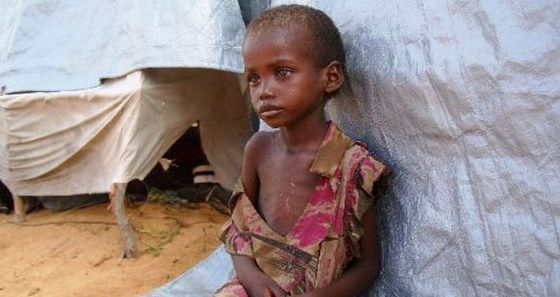



 Anders Behring Breivik, the 32-year-old Norwegian man widely assumed to be responsible for the mass murder that took place in Oslo yesterday, is being referred to as a

 Angelique Kidjo sings Gershwin’s Summertime in her native language, Fon.