Category Archives: GOP

We’ve been warned: the system is ready to blow

From Britain, Larry Elliott writes:

For the past two centuries and more, life in Britain has been governed by a simple concept: tomorrow will be better than today. Black August has given us a glimpse of a dystopia, one in which the financial markets buckle and the cities burn. Like Scrooge, we have been shown what might be to come unless we change our ways.

There were glimmers of hope amid last week’s despair. Neighbourhoods rallied round in the face of the looting. The Muslim community in Birmingham showed incredible dignity after three young men were mown down by a car and killed during the riots. It was chastening to see consumerism laid bare. We have seen the future and we know it sucks. All of which is cause for cautious optimism – provided the right lessons are drawn.

Lesson number one is that the financial and social causes are linked. Lesson number two is that what links the City banker and the looter is the lack of restraint, the absence of boundaries to bad behaviour. Lesson number three is that we ignore this at our peril.

From Washington, Steven Pearlstein writes:

Another great week for Corporate America!

The economy is flatlining. Global financial markets are in turmoil. Your stock price is down about 15 percent in three weeks. Your customers have lost all confidence in the economy. Your employees, at least the American ones, are cynical and demoralized. Your government is paralyzed.

Want to know who is to blame, Mr. Big Shot Chief Executive? Just look in the mirror because the culprit is staring you in the face.

J’accuse, dude. J’accuse.

You helped create the monsters that are rampaging through the political and economic countryside, wreaking havoc and sucking the lifeblood out of the global economy.

Did you see this week’s cartoon cover of the New Yorker? That’s you in top hat and tails sipping champagne in the lifeboat as the Titanic is sinking. Problem is, nobody thinks it’s a joke anymore.

Did you presume we wouldn’t notice that you’ve been missing in action? I can’t say I was surprised. If you’d insisted on trotting out those old canards again, blaming everything on high taxes, unions, regulatory uncertainty and the lack of free-trade treaties, you would have lost whatever shred of credibility you have left.

My own bill of particulars begins right here in Washington, where over the past decade you financed and supported the growth of a radical right-wing cabal that has now taken over the Republican Party and repeatedly made a hostage of the U.S. government.

When it started out all you really wanted was to push back against a few meddlesome regulators or shave a point or two off your tax rate, but you were concerned it would look like special-interest rent-seeking. So when the Washington lobbyists came up with the clever idea of launching a campaign against over-regulation and over-taxation, you threw in some money, backed some candidates and financed a few lawsuits.

The more successful it was, however, the more you put in — hundreds of millions of the shareholders’ dollars, laundered through once-respected organizations such as the Chamber of Commerce and the National Association of Manufacturers, phoney front organizations with innocent-sounding names such as Americans for a Sound Economy, and a burgeoning network of Republican PACs and financing vehicles. And thanks to your clever lawyers and a Supreme Court majority that is intent on removing all checks to corporate power, it’s perfectly legal.

And from Omaha, Nebraska, Warren Buffett writes:

Our leaders have asked for “shared sacrifice.” But when they did the asking, they spared me. I checked with my mega-rich friends to learn what pain they were expecting. They, too, were left untouched.

While the poor and middle class fight for us in Afghanistan, and while most Americans struggle to make ends meet, we mega-rich continue to get our extraordinary tax breaks. Some of us are investment managers who earn billions from our daily labors but are allowed to classify our income as “carried interest,” thereby getting a bargain 15 percent tax rate. Others own stock index futures for 10 minutes and have 60 percent of their gain taxed at 15 percent, as if they’d been long-term investors.

These and other blessings are showered upon us by legislators in Washington who feel compelled to protect us, much as if we were spotted owls or some other endangered species. It’s nice to have friends in high places.

Last year my federal tax bill — the income tax I paid, as well as payroll taxes paid by me and on my behalf — was $6,938,744. That sounds like a lot of money. But what I paid was only 17.4 percent of my taxable income — and that’s actually a lower percentage than was paid by any of the other 20 people in our office. Their tax burdens ranged from 33 percent to 41 percent and averaged 36 percent.

If you make money with money, as some of my super-rich friends do, your percentage may be a bit lower than mine. But if you earn money from a job, your percentage will surely exceed mine — most likely by a lot.

To understand why, you need to examine the sources of government revenue. Last year about 80 percent of these revenues came from personal income taxes and payroll taxes. The mega-rich pay income taxes at a rate of 15 percent on most of their earnings but pay practically nothing in payroll taxes. It’s a different story for the middle class: typically, they fall into the 15 percent and 25 percent income tax brackets, and then are hit with heavy payroll taxes to boot.

Back in the 1980s and 1990s, tax rates for the rich were far higher, and my percentage rate was in the middle of the pack. According to a theory I sometimes hear, I should have thrown a fit and refused to invest because of the elevated tax rates on capital gains and dividends.

I didn’t refuse, nor did others. I have worked with investors for 60 years and I have yet to see anyone — not even when capital gains rates were 39.9 percent in 1976-77 — shy away from a sensible investment because of the tax rate on the potential gain. People invest to make money, and potential taxes have never scared them off. And to those who argue that higher rates hurt job creation, I would note that a net of nearly 40 million jobs were added between 1980 and 2000. You know what’s happened since then: lower tax rates and far lower job creation.


Facebooktwittermail

How the GOP and America’s Arab allies support slavery

Time magazine reports:

Three days before the congressional elections last fall, Hillary Rodham Clinton stood halfway around the world, pledging to young victims of human trafficking at Cambodia’s s Siem Reap Center that they would continue to enjoy the support of the U.S. State Department, which then provided some $336,000 to the shelter. The acclaimed center, situated near the magnificent temples of Angkor Wat, was an oasis of peace for some 50 survivors who, before they were rescued or escaped, had endured slavery in brothels, where they were forced to have sex with as many as 30 men a day. At the shelter, they received counseling, studied hairdressing, learned to sew, and otherwise worked to rebuild their lives and reclaim their humanity. In the evening, they did aerobics together.

On Monday afternoon, some eight months after that visit, as she unveiled the State Department’s 11th annual Trafficking in Persons (TIP) Report to a packed room in the department’s ornate Benjamin Franklin Room, Clinton only hinted that the result of the congressional elections had left the long-term value of her pledge to the survivors in doubt. “Even in these tight economic times, we need to find ways to do better,” Clinton told the overflow crowd.

Clinton’s confidence belied the fact that in April, Congress slashed the grant-making capacity of the State Department’s Office to Monitor and Combat Trafficking in Persons. When the Republicans won the House last November, the office’s $21.2 million annual budget to fight the war on slavery was already microscopic. At the time, it was barely equal to the U.S. government’s daily budget to fight the war on drugs. For fiscal year 2012, Congress sliced away nearly a quarter of those antislavery funds, as part of its broader $8 billion State Department budget cuts.

Brian Whitaker writes:

Efforts to combat human rights abuses are easily undermined by politics. Often – and with good reason – the US and other western countries are accused of highlighting abuses by their enemies while turning a blind eye to similar abuses by their friends.

One way of pushing political considerations into the background is to look at the problem comparatively, by considering where each country stands in relation to others. That is what the US state department has been doing for 11 years now, with its global reports on human trafficking.

The result, as seen in the latest report issued on Monday, is a robust critique, which places some of the staunchest US allies – Kuwait and Saudi Arabia – in the same rotten boat as long-time foes such as Cuba, North Korea and Iran.

“Trafficking in persons” covers various forms of exploitation including, in the words of the international Palermo protocol, “sexual exploitation, forced labour or services, slavery or practices similar to slavery, servitude or the removal of organs”.

Facebooktwittermail

U.S. Libya mission exposes divisions in Congress and within GOP

The New York Times reports:

It is a familiar pattern in a government of checks and balances: members of Congress almost instinctively criticize the foreign adventures of a president from the opposite party.

But the current imbroglio in Congress over the American involvement in Libya exposes a deep and unusual foreign policy schism within the Republican Party, driven in large part by a Tea Party-infused House whose members are more fiscally conservative, particularly constitutionalist, less internationalist and, in many cases, too young to have been politically influenced by the cold war that informed the more established members of the party.

The divisions came to the fore on Tuesday when Senator John McCain, an Arizona Republican, introduced a measure with Senator John Kerry, a Massachusetts Democrat, to offer President Obama official Congressional authorization for the Libyan operation.

The legislation is an effort to blunt a series of House measures expected to seek to cut off financing for the operations in Libya as early as Thursday.

In introducing it, Mr. McCain chastised House Republicans for seeking to end the Libya mission. “Is this the time for Americans to tell all of these different audiences that our heart is not in this,” Mr. McCain said, “that we have neither the will nor the capability to see this mission through, that we will abandon our closest friends and allies on a whim? These are questions every member of Congress needs to think about long and hard, especially my Republican colleagues.”

House members of both parties and various political stripes seemed undaunted. Representative Dennis J. Kucinich, a Democrat of Ohio, will offer an amendment to a Pentagon spending bill to deny money for operations in Libya, as will Representative Justin Amash of Michigan, a Republican freshman.

Meanwhile, AFP reports:

Italy on Wednesday called for an immediate halt to hostilities in Libya to allow humanitarian aid to reach the population in the strife-torn country, while NATO defended the credibility of its air war after a bomb misfired killing civilians.

On the diplomatic front, China said it recognises Libya’s opposition National Transitional Council (NTC) as an “important dialogue partner.”

Italian Foreign Minister Franco Frattini warned on Tuesday that NATO’s credibility was “at risk” following the civilian casualties, and urged it to ensure it was not providing ammunition to Kadhafi’s propaganda war.

Frattini followed up his comments in a speech on Wednesday to the lower house of parliament in Rome.

“With regard to NATO, it is fair to ask for increasingly detailed information on results as well as precise guidelines on the dramatic errors involving civilians,” he said.

The comments came after NATO admitted a bomb misfired in Tripoli at the weekend, killing nine people according to Moamer Kadhafi’s regime.

Facebooktwittermail

GOP splitting over U.S. role in Libya and Afghanistan

The Los Angeles Times reports:

Republicans are facing a widening fissure over the U.S. role on the world stage as party leaders decide whether to confront President Obama this week over his policy toward Libya.

House Speaker John A. Boehner (R-Ohio) and other congressional Republican leaders have said that U.S. involvement in NATO’s bombing campaign, which hit the 90-day mark Sunday, violates the War Powers Act. The House could seek to cut off money for the war as it takes up the annual Pentagon spending bill this week.

Several of the party’s potential presidential candidates have called for the U.S. to quit the fight in Libya and questioned the depth of U.S. involvement in Afghanistan.

Other Republicans have begun pushing back, criticizing what they see as a growing isolationist agenda within the party. The result is that Republicans, once relatively unified on foreign policy issues, now have a division that parallels the long-standing split in Democratic ranks.

The New York Times reports:

Since the United States handed control of the air war in Libya to NATO in early April, American warplanes have struck at Libyan air defenses about 60 times, and remotely operated drones have fired missiles at Libyan forces about 30 times, according to military officials.

The most recent strike from a piloted United States aircraft was on Saturday, and the most recent strike from an American drone was on Wednesday, the officials said.

While the Obama administration has regularly acknowledged that American forces have continued to take part in some of the strike sorties, few details about their scope and frequency have been made public.

The unclassified portion of material about Libya that the White House sent to Congress last week, for example, said “American strikes are limited to the suppression of enemy air defense and occasional strikes by unmanned Predator” drones, but included no numbers for such strikes.

The New York Times reports:

Reports that a guard at the hotel housing foreign journalists here had been fatally shot sent a tremor of anxiety through the Qaddafi government’s media operation on Monday.

While Qaddafi loyalists said the guard accidentally shot himself with his own weapon while eating a late dinner at the end of the hotel two days earlier, at least two people working for the government said on the condition of anonymity that he was killed by rebel snipers.

The guard had been assigned to protect a prominent state television commentator known for his outspoken criticism of the rebels. The commentator, Yousef Shakeer, had taken refuge with his family inside the safety of the hotel because of rebel death threats against him.

In a brief interview, Mr. Shakeer said the government had identified his would-be assassin as a past member of the Libyan Islamist Fighting Group, a jihadist group that dates back years, and he affirmed the government’s account that the guard accidentally shot himself on Saturday night.

While the details of the shooting could not be confirmed, it came amid growing reports of episodes of violence between local rebels challenging the government of Col. Muammar el-Qaddafi and his security forces. Some Tripoli residents said Monday that the sense of danger from the ground was compounding the effect of the escalation of NATO strikes from above.

Facebooktwittermail

Meet the white supremacist leading the GOP’s anti-Sharia crusade

Mother Jones reports:

Last week, legislators in Tennessee introduced a radical bill that would make “material support” for Islamic law punishable by 15 years in prison. The proposal marks a dramatic new step in the conservative campaign against Muslim-Americans. If passed, critics say even seemingly benign activities like re-painting the exterior of a mosque or bringing food to a potluck could be classified as a felony.

The Tennessee bill, SB 1028, didn’t come out of nowhere. Though it’s the first of its kind, the bill is part of a wave of related measures that would ban state courts from enforcing Sharia law. (A court might refer to Sharia law in child custody or prisoner rights cases.) Since early 2010, such legislation has been considered in at least 15 states. And while fears of an impending caliphate are myriad on the far-right, the surge of legislation across the country is largely due to the work of one man: David Yerushalmi, an Arizona-based white supremacist who has previously called for a “war against Islam” and tried to criminalize adherence to the Muslim faith.

Yerushalmi, a lawyer, is the founder of the Society of Americans for National Existence (SANE), which has been called a “hate group” by the Council on American-Islamic Relations (CAIR). His draft legislation served as the foundation for the Tennessee bill, and at least half a dozen other anti-Islam measures—including two bills that were signed into law last year in Louisiana and Tennessee.

Facebooktwittermail

“Terrorism” is now a fabrication of a national security state

This is not a conspiracy theory. To say that terrorism is a fabrication of a national security state is to say that when the label “terrorist” starts being indiscriminately applied to anyone who threatens the government we have taken another step towards totalitarianism.

Rep. Peter King, R-N.Y., the incoming chairman of the House Committee on Homeland Security, is calling for WikiLeaks to be designated a terrorist organization.

At Slate, David Weigel writes:

As Republicans come into power, they’re going to explore what can be done. They can’t do much. But let’s be honest. The quest to find some way to define Assange’s group as terrorists is not about fighting terrorism. It’s about indulging the fantasy, well put by Cornell law professor William Jacobson, of Assange being hunted down like a Robert Ludlum villain and possibly “killed while resisting arrest.”

And all of this assumes there’s something talismanic about declaring someone a “terrorist.” In reality, American agents could capture any boogeyman they wanted and prosecute him in the United States. The 1992 decision in U.S. v. Alvarez-Machain affirmed that the government was within its rights when a Mexican citizen was abducted and brought to the U.S. to be tried for the murder of a Drug Enforcement Administration agent. “We have kidnapped people to bring them to justice,” explains David Cole, a law professor at Georgetown. “Whether it applies in this case, I don’t know.”

It probably doesn’t. What’s being lost in the James Bond scenarios about taking down WikiLeaks is that its current, highly embarrassing leaks don’t actually threaten American intelligence assets. They create problems for diplomats, and by extension they embarrass the United States. They cause the State Department to lose face. That’s not terrorism as we define it.

So how does King or anyone else turn Julian Assange into a terrorist? They either have to define terrorism in some real way that would eventually open up media organizations to terror charges of their own, or WikiLeaks actually has to do something materially to benefit terrorists. Neither scenario seems likely. What is likely: None of this gets past the shouting stage.

Weigel’s analysis may be sound in the short term but the broader question is not legal. It is whether in American popular discourse the term “terrorist” continues to acquire legitimacy in broader and broader applications or whether those who criticize the term’s flagrant abuse are able to shout louder and get more widely heard. So far the terrorists are winning.

Facebooktwittermail

Cantor recants

MJ Rosenberg writes:

[Soon-to-be House Majority Leader Eric Cantor] has been an AIPAC cutout since he first was elected to office. He’s been to more AIPAC meetings than he can probably count. And he should have figured out by now that the lobby is extremely careful, obsessively careful, to always emphasize loyalty to the United States while simultaneously endorsing Israeli policies that undermine our foreign policy objectives.

AIPAC officials never, ever, say that when push comes to shove their loyalty is with Israel not the United States. In fact, the accusation that this is the case is the charge AIPAC hates most.

But the soon-to-be Majority Leader came right out and said it: Israel, right or wrong.

It took a few days for Cantor to understand how utterly offensive his statement was. (He might have heard from a few Tea Party types who, say what you will about them, tend to take their patriotism seriously.)

So today Cantor explained he was misunderstood. His inconvenient truth, his gaffe, was replaced by a laughable untruth.

This is how the Washington Post‘s Dana Milbank reports it:

Brad Dayspring, Cantor’s press guy, tells me Cantor’s promise that the Republican majority would “serve as a check on the administration” was “not in relation to U.S./Israel relations.”

Mmmm. So Cantor’s pledge to stand with Netanyahu against Obama was “not in relation to US/Israel relations” despite the context of Cantor’s statement — just before Netanyahu’s meeting with Clinton — and the fact that the person he was talking to was the Prime Minister of Israel.

So, what was Cantor’s pledge “in relation to”?

Was it in relation to either repealing “Don’t Ask, Don’t Tell” or the Bush tax cuts for millionaires? Maybe it was about farm subsidies.

Facebooktwittermail

Beware the white Obama

Pepe Escobar writes:

The American right’s “road map” for these past two years has been to declare Obama an abysmal failure since January 20, 2008, and to do absolutely zilch to help the country out of its political/economic/cultural quagmire. Now – at least in theory – their bluff has been called by the American electorate.

Or has it? To talk about incoherence is a huge understatement. Americans have told exit polls they almost equally blame Wall Street (35%), Bush (30%) and Obama (23%) for the current economic disaster. Obama royally screwed up by bailing out Wall Street the way he did. But now the electorate has decided to reward a whole bunch of clowns and crooks who caused the debacle in the first place – among other things by endorsing George W Bush’s tax cuts and two trillionnaire, unwinnable wars. The tearful John Boehner – probably the next speaker of the House – is very tight with (what else is new?) financial lobbyists. Angry Americans voted – once again – for Wall Street.

The heart of the (sorry) matter is that Obama and the Democrats did not even strive to meet the great expectations awakened by the 2008 “Change we can believe in” collective rapture. They sowed the seeds of their own doom instead. No wonder they were deserted en masse by young people, ethnic minorities, pacifists and environmentalists while at the same time masses of enraged centrists, moderates and independents sought refuge in the right. Add to it the electorate’s gullibility in its manipulation by corporate media.
[…]
Flash forward to 2012; to the sound of Aretha Franklin singing Don Covay’s See Saw – “going up, down, all around/ like a see saw” – scores of US voters will have finally noticed they threw the bums out just to bring in another basket of equally lame bums.

United States corporate media is not emitting a peep about it but Obama should really start worrying about his white mirror – Marco Rubio, who has just won a senate seat for Florida. Rubio, 39, intelligent, good-looking, good orator, promises the world to people and has “American Dream” written all over his bio.

Born in Miami, raised in Vegas (where his Cuban exile parents worked hard in a hotel), good football player, hard-working college student, law degree, Catholic, blonde wife from a Colombian family, four kids – as a bonus to the establishment Rubio is not a wacko (although Palin loves him unconditionally). Mike Huckabee – former presidential candidate and now Fox News pundit – says he’s “our Obama, with more substance”. And crucially, his political godfather is none other than Jeb Bush. Establishment Republicans won’t allow Palin to grab a presidential nomination even over their dead bodies. Thus Rubio may be their savior for 2012.

An inept/indecisive Obama allowed Republicans to get away with murder – as in not being held accountable for the monster financial/economic mess and on top of it being allowed to exploit and profit from the all-American rage provoked by their “policies”. Now, after the “shellacking”, it’s about time for the president to show some balls and start playing offense. He could start by firing everyone at the White House. It won’t happen. Get ready; white Obama will eat him for breakfast in 2012.

Facebooktwittermail

Wall Street’s best friend: The Tea Party

In Salon, Andrew Leonard writes:

Call it the amazing bank bailout boomerang. Even though few things enrage Tea Party rebels more than government checks made out to Wall Street financial companies, the reverse dynamic does not seem to be a problem. The top 12 Senatorial candidates most favored by Tea Partiers have already hauled in $4.6 million in campaign contributions from Wall Street. Even more amazing is a tidbit reported by the Washington Post:

The two top recipients of money from companies receiving TARP funds are the top two House Republicans, Minority Leader John A. Boehner (Ohio) with $200,000 and Republican Whip Eric Cantor (Va.) with $187,000. They are followed by the ranking members of two key House committees, Spencer Bachus (Ala.) on Financial Services and Dave Camp (Mich.) on the tax-writing committee.

Let’s spell that out: The Wall Street banks that were bailed out with taxpayer money are using their profits to bankroll Republicans who now claim to be unalterably opposed to any more bailouts, ever, for all time, in any universe — even though the original TARP bailout was a Republican idea, signed into law by a Republican president, with the strong backing of the Republican leadership of both the House and Senate.

OK. We know that Wall Street always backs the likely winner, and its priorities here are obvious: weaken financial reform legislation and head off any tax hikes that could discomfit the wealthy. But there is still a massive paradox in play. Republican electoral momentum is in no small part fueled by Tea Party resentment against the government/Wall Street nexus. The roots of that Tea Party anger can be traced directly back to one signal event: the bank bailout.

The TARP bank bailout was extraordinarily unpopular with both the left and the right. While the financial crisis caused by irresponsible banks crushed average Americans, causing millions to lose both their homes and jobs, the banks got a massive get-out-of-jail-free card. Never mind the (probably valid) rationalization that it all would have been much worse if the banking system had simply been allowed to fail. That may well be true, but it’s equally true that the banks got bailed out while the majority of Americans got screwed. There are plenty of other motivating forces behind Tea Party rage — fear of big government “socialism” and racial antagonism, to name just two — but that sense of basic unfairness generated by the sight of fat cat elites getting away with murder is the bedrock foundation underlying populist anger.

Facebooktwittermail

Scapegoating-psychology and rising xenophobia in America

Peter Beinart compares the mood in America with the hysteria that provoked the Palmer Raids in 1919 and the anti-Communist fearmongering of McCarthyism that began in the late 1940s.

Ever since 9/11, according to opinion polls, Republicans have worried more about terrorism than have Democrats. Initially, this fear translated into overwhelming support for military action abroad. But as Republicans (like everyone else) have grown tired and embittered by America’s wars, they have turned their anxiety inward, lured by the same idea that attracted Palmer and the McCarthyites: that America could guarantee its safety on the cheap by ferreting out the real threat, which resides within.

Has, we must fight them over there so we don’t have to fight them here, been turned into, why fight them over there when we can fight them here?

I don’t believe the driving force here is, as Beinart suggests, a desire to guarantee safety on the cheap. Rather, this is about age-old scapegoating-psychology and the political opportunities this crude dynamic opens up.

In a period of economic depression, with high unemployment and a pervasive sense that the nation is heading in the wrong direction, many Americans are experiencing a growing sense of powerlessness. Through scapegoating, they can foster the illusion that they are reclaiming control over our own lives. They can focus their animus on a clearly identifiable enemy — Islam.

In scapegoating, by definition, the enemy must be weaker than those on the attack — which is why even at the height of the financial crisis, popular anger at bankers never became as strong as current Islamophobia. It’s the same as the way a guy who’s treated as a drudge at work then finds his “strength” by abusing his wife.

The more that Muslims can be made to feel like outsiders, the more those who have defined them as other can feel empowered.

Meanwhile, with the emerging visceral sense that American renewal can be delivered by purging this country of its “foreign” elements, a political horizon is opening for conservatives such as Newt Gingrich — a man who has no apparent compunction about harnessing popular power even when delivered from the ugliest source.

Gingrich clearly smells presidential opportunity in rising xenophobia and is channeling this into an attack on President Obama whose “foreignness” derives from his Kenyan ancestry and even the fact that he grew up in Hawaii!

Gingrich claims that Dinesh D’Souza has provided “stunning insight” into Obama, in a Forbes cover story, where the president is characterized as “a Luo tribesman.”

David Frum, a neoconservative and former speech writer for George W Bush, sees Gingrich’s perspective as now providing the foundation for the White Party’s political platform.

With the Forbes story and now the Gingrich endorsement, the argument that Obama is an infiltrating alien, a deceiving foreigner — and not just any kind of alien, but specifically a Third World alien — has been absorbed almost to the very core of the Republican platform for November 2010.

Rush Limbaugh has been claiming for almost 2 years that President Obama is bent upon “redistribution” and “reparations.” Following D’Souza, Gingrich has now stepped up to suggest that this redistribution is motivated by anti-white racial revenge. If Obama wants to expand health coverage, tighten bank regulation, and create government make-work projects it’s not because he shares the same general outlook on the world as Walter Mondale or Ted Kennedy or so many other liberals, living and dead, all of them white and northern European. No, Obama wants to do what he does because he thinks like an African, and not just any kind of African but (in D’Souza’s phrase) “a Luo tribesman.”

It is to vindicate this African tribal dream that Obama wishes to raise the taxes of upper-income taxpayers and redistribute money away from these meritorious individuals. D’Souza contends that Obama is acting to vindicate his father’s supposed dream of overthrowing the global order and ending the global domination of the white race over other peoples.

If only it were true, the anticolonialist in me facetiously says. This global reordering must surely eventually come, but I have my doubts whether Obama will have much if any role in bringing it about.

Much more significant in the current context is the fact that an event which two years ago was seen as a reflection of America’s political maturity — the election of an African-American president — is now serving as a opportunity for America to regress into some of the ugliest recesses of its past.

Facebooktwittermail

“Ground Zero mosque” is the new “death panels”

Jeffrey Feldman writes:

Cordoba House is not some sudden and new issue, but the latest attempt by the Republican Party to displace meaningful political debate with pitch-fork-and-torches style mass hysteria.

The themes of these newest wave of delirium are familiar: Muslim conspiracy; infiltration by foreign terrorists; Liberal collusion.

Are we a nation ruled by mass hysteria — a nation that sees conspiracy behind every unfamiliar face? Or are we a nation that raises above the tyranny of the mob roused to rid the village of those in league with the Devil? Those are the questions that the Mayor and President should have asked, but nobody seems to be asking them.

When mass hysteria has been allowed in the past to drive public policy it lead inexorably to shameful results that destroyed lives and weakened democratic society.

William Dalrymple writes:

Feisal Abdul Rauf of the Cordoba Initiative is one of America’s leading thinkers of Sufism, the mystical form of Islam, which in terms of goals and outlook couldn’t be farther from the violent Wahhabism of the jihadists. His videos and sermons preach love, the remembrance of God (or “zikr”) and reconciliation. His slightly New Agey rhetoric makes him sound, for better or worse, like a Muslim Deepak Chopra. But in the eyes of Osama bin Laden and the Taliban, he is an infidel-loving, grave-worshiping apostate; they no doubt regard him as a legitimate target for assassination.

For such moderate, pluralistic Sufi imams are the front line against the most violent forms of Islam. In the most radical parts of the Muslim world, Sufi leaders risk their lives for their tolerant beliefs, every bit as bravely as American troops on the ground in Baghdad and Kabul do. Sufism is the most pluralistic incarnation of Islam — accessible to the learned and the ignorant, the faithful and nonbelievers — and is thus a uniquely valuable bridge between East and West.

The great Sufi saints like the 13th-century Persian poet Rumi held that all existence and all religions were one, all manifestations of the same divine reality. What was important was not the empty ritual of the mosque, church, synagogue or temple, but the striving to understand that divinity can best be reached through the gateway of the human heart: that we all can find paradise within us, if we know where to look. In some ways Sufism, with its emphasis on love rather than judgment, represents the New Testament of Islam.

Facebooktwittermail

GOP support may be vital to Obama on Afghan war

GOP support may be vital to Obama on Afghan war

As President Obama prepares to decide whether to send additional troops to Afghanistan, the political climate appears increasingly challenging for him, leaving him in the awkward position of relying on the Republican Party, and not his own, for support.

The simple political narrative of the Afghanistan war — that this was the good war, in which the United States would hunt down the perpetrators of the Sept. 11 attacks — has faded over time, with popular support ebbing, American casualties rising and confidence in the Afghan government declining. In addition, Afghanistan’s disputed election, and the attendant fraud charges that have been lodged against President Hamid Karzai, are contributing further to the erosion of public support.

A CBS News poll released on Tuesday reports that 41 percent of those polled wanted troop levels in Afghanistan decreased, compared with 33 percent in April. Far fewer people — 25 percent — wanted troop levels increased, compared with 39 percent in April. And Mr. Obama’s approval rating for his handling of Afghanistan has dropped eight points since April, to 48 percent. [continued…]

Afghan vote results likely to be delayed

Afghanistan’s volatile presidential election process moved closer to violent confrontation Wednesday, even as officials said releasing the final results from the Aug. 20 polls would be further delayed because of slow vote counting and an even slower effort to investigate hundreds of fraud complaints.

The tension was exacerbated by a suicide bombing outside a mosque in the capital of northeastern Laghman province Wednesday morning. A senior official of the national intelligence service and 23 others were killed; scores were wounded.

Election officials announced Wednesday that President Hamid Karzai, who is seeking reelection, had widened his lead over the main challenger, Abdullah Abdullah, an ophthalmologist and former foreign minister. With about 3.7 million valid votes from 60 percent of polling stations tallied, they said, Karzai leads Abdullah 47.2 to 32.5 percent. [continued…]

Karzai’s election victory seen as inevitable, despite claims of fraud

Richard Holbrooke, the US special envoy to the Afghanistan-Pakistan region, dismissed as fantasy the reports that Washington was seeking a run-off against Dr Abdullah. “We have no candidates and no preference as to a first-round victory or a run-off,” Mr Holbrooke said. It was up to the Electoral Complaints Commission to rule on the fraud claims before the final result was proclaimed this month. “The post-election phase, the phase of determining who won, is going to be critical in determining the future of Afghanistan,” he said.

Mr Holbrooke and others among the 27 international envoys played down the likely scope of the irregularities. Many of the 2,500 complaints referred to the same incidents, they said.

“During the process, there will be many claims of irregularities,” Mr Holbrooke said. “That happens in democracies, even when they are not in the middle of a war.”

Bernard Kouchner, the French Foreign Minister, acknowledged concern but said that the election had been a triumph “at a time of serious danger for each of the men and women who dipped their fingers in ink to vote”. [continued…]

Facebooktwittermail

OPINION: Die-hard Bush supporters have a death grip on their party

Fighting words

As the tide goes out on President Bush’s foreign policy, the mass of flotsam left behind includes a Republican Party that no longer knows how to be reasonable. Whenever its leading Presidential candidates appear before partisan audiences, they try to outdo one another in pledging loyalty oaths to the use of force, pandering to the war lobby as if they were Democrats addressing the teachers’ union. Giuliani has surrounded himself with a group of advisers—from Norman Podhoretz to the former Pentagon official Michael Rubin—who, having got Iraq spectacularly wrong, seem determined to make up for it by doing the same thing in Iran. Giuliani approaches foreign policy in the same mood of barely restrained eagerness for confrontation with which, as mayor of New York, he went after criminals. He has essentially promised to go to war with Iran in order to prevent it from acquiring nuclear weapons, and he recently suggested that waterboarding is only torture when the wrong people are doing it, and blamed the “liberal media” for giving it a bad name. He has said that he would improve America’s miserable image around the world by threatening State Department diplomats with unnamed consequences unless they defend United States foreign policy more aggressively. “The era of cost-free anti-Americanism must end,” Giuliani snarled in the polite pages of Foreign Affairs, which had invited candidates to lay out their views. [complete article]

Facebooktwittermail

FEATURE: Dowd’s split with Bush

Bush strategist looks back in sadness

Matthew Dowd knows sorrow and loss. He has been divorced twice. A daughter died two months after she was born. And then there is the added heartbreak — a word he uses — of his split with President Bush.

Dowd, 46, is one of the nation’s leading political strategists, a onetime Democrat who switched sides to help put Bush in the White House, then win a second term. He spent years shaping and promoting Bush’s policies — policies that Dowd now views with a mixture of anguish and contempt.

He began expressing his disillusionment, tentatively at first, at a UC Berkeley conference in January. Since then, he has grown more forceful.

On the administration’s response to the Sept. 11 attacks: “I asked, ‘Why aren’t we doing bonds, war bonds? Why aren’t we asking the country to do something instead of just . . . go shopping and get back on airplanes?’ ” [complete article]

Facebooktwittermail

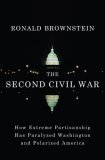
REVIEW: The Second Civil War

Division of the U.S. didn’t occur overnight

During President George W. Bush’s first term, one of his senior political advisers summed up the prevailing philosophy at the White House like this: “This is not designed to be a 55 percent presidency,” he said. “This is designed to be a presidency that moves as much as possible of what we believe into law while holding 50 plus one of the country and the Congress.” Bold ideas that could mobilize his conservative Republican base were prized over efforts to convince independent voters in the center; sharp divisions over the administration’s policies were regarded as proof of Mr. Bush’s decisiveness and willingness to challenge conventional thinking.

amazon-secondcivilwar.jpgAs the veteran political reporter Ronald Brownstein observes in his timely and compelling new book, this is very much how President Bush has governed: “In his congressional strategy he consistently demonstrated that he would rather pass legislation as close as possible to his preferences on a virtually party-line basis than make concessions to reduce political tensions or broaden his support among Democrats.” And in his dealings with both Congress and other nations before the invasion of Iraq, Mr. Brownstein goes on, Mr. Bush “sought not to construct a consensus for a common direction on Iraq, but rather to obtain acquiescence for the undeviating direction he had charted in his own mind.” [complete article]

Facebooktwittermail

FEATURE & OPINION: End of times for the Christian right

The evangelical crackup

Just three years ago, the leaders of the conservative Christian political movement could almost see the Promised Land. White evangelical Protestants looked like perhaps the most potent voting bloc in America. They turned out for President George W. Bush in record numbers, supporting him for re-election by a ratio of four to one. Republican strategists predicted that religious traditionalists would help bring about an era of dominance for their party. Spokesmen for the Christian conservative movement warned of the wrath of “values voters.” James C. Dobson, the founder of Focus on the Family, was poised to play kingmaker in 2008, at least in the Republican primary. And thanks to President Bush, the Supreme Court appeared just one vote away from answering the prayers of evangelical activists by overturning Roe v. Wade.

Today the movement shows signs of coming apart beneath its leaders. It is not merely that none of the 2008 Republican front-runners come close to measuring up to President Bush in the eyes of the evangelical faithful, although it would be hard to find a cast of characters more ill fit for those shoes: a lapsed-Catholic big-city mayor; a Massachusetts Mormon; a church-skipping Hollywood character actor; and a political renegade known for crossing swords with the Rev. Pat Robertson and the Rev. Jerry Falwell. Nor is the problem simply that the Democratic presidential front-runners — Senator Hillary Rodham Clinton, Senator Barack Obama and former Senator John Edwards — sound like a bunch of tent-revival Bible thumpers compared with the Republicans.

The 2008 election is just the latest stress on a system of fault lines that go much deeper. The phenomenon of theologically conservative Christians plunging into political activism on the right is, historically speaking, something of an anomaly. Most evangelicals shrugged off abortion as a Catholic issue until after the 1973 Roe v. Wade decision. But in the wake of the ban on public-school prayer, the sexual revolution and the exodus to the suburbs that filled the new megachurches, protecting the unborn became the rallying cry of a new movement to uphold the traditional family. Now another confluence of factors is threatening to tear the movement apart. The extraordinary evangelical love affair with Bush has ended, for many, in heartbreak over the Iraq war and what they see as his meager domestic accomplishments. That disappointment, in turn, has sharpened latent divisions within the evangelical world — over the evangelical alliance with the Republican Party, among approaches to ministry and theology, and between the generations. [complete article]

Rudy, the values slayer

Since the dawn of the new century, it has been the rarely questioned conventional wisdom, handed down by Karl Rove, that no Republican can rise to the top of the party or win the presidency without pandering as slavishly as George W. Bush has to the most bullying and gay-baiting power brokers of the religious right.

When Rudy’s candidacy started to show legs, pundits and family values activists alike assumed that ignorant voters knew only his 9/11 video reel and not his personal history or his stands on issues. “Americans do not yet realize how far outside of the mainstream of conservative thought that Mayor Giuliani’s social views really are,” declared Tony Perkins, the Family Research Council leader, in February. But despite Rudy’s fleeting stabs at fudging his views, they are well known now, and still he leads in national polls of Republican voters and is neck and neck with Fred Thompson in the Bible Belt sanctuary of South Carolina.

There are various explanations for this. One is that 9/11 and terrorism fears trump everything. Another is that the rest of the field is weak. But the most obvious explanation is the one that Washington resists because it contradicts the city’s long-running story line. Namely, that the political clout ritualistically ascribed to Mr. Perkins, James Dobson of Focus on the Family, Gary Bauer of American Values and their ilk is a sham.

These self-promoting values hacks don’t speak for the American mainstream. They don’t speak for the Republican Party. They no longer speak for many evangelical ministers and their flocks. The emperors of morality have in fact had no clothes for some time. Should Rudy Giuliani end up doing a victory dance at the Republican convention, it will be on their graves. [complete article]

Facebooktwittermail

ANALYSIS: How the Christian right could defeat Giuliani

How the Christian right could defeat Rudy — and make Hillary president

One of Rudy Giuliani’s chief attractions to Republican primary voters is supposed to be electability. “We’re going to need the strongest possible Republican who can win in every state,” the former New York City mayor said during an August campaign stop, “and I’m the only one who can do that.” Giuliani, the narrative goes, can change the electoral map of the country, taking stronghold states away from the Democrats and providing the last, best defense against the looming specter of President Hillary Clinton.

But the largest single voting bloc in the GOP is not ready for the coronation of a pro-choice candidate like Giuliani. A group of key Christian conservative leaders voted at a Sept. 29 meeting in Salt Lake City to consider supporting a socially conservative third-party candidate if Giuliani is the Republican nominee; the same group will meet in Washington on Saturday for further discussion of the third-party option. Conservative anger is real, at least for now. As longtime conservative activist Richard Viguerie, who was at the first meeting, told Salon, “If Giuliani is the nominee, it will be the end of the Republican Party. There’s no way that conservatives are going to continue to play the role of mistress, and here’s a man who’s wrong on every single social issue.” Viguerie predicts disaster for a Giuliani candidacy. “In a two-way race, I think he’d be hard-pressed to get 40 percent of the vote. In a three-way race, he won’t come close.” [complete article]

Facebooktwittermail