Category Archives: Obama administration

Pakistan hits back at US commander over journalist’s murder claim

The Guardian reports:

Pakistan has lashed out at America’s top-ranking military officer, Admiral Mike Mullen, on Friday, saying that its relations with the US have been further damaged by his remarks blaming the Islamabad government for the killing, torture and murder of a Pakistani journalist.

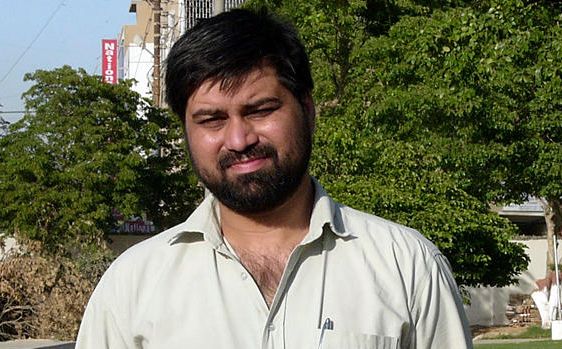
The chairman of the joint chiefs of staff shocked Islamabad by saying publicly what US officials had confirmed only in private: that the Pakistani government had “sanctioned” the killing of Syed Saleem Shahzad, the investigative reporter for Asia Times Online whose mutilated body was found on 30 May in a canal 40 miles from the capital. He had been writing about jihadist infiltration of the Pakistani military.

Pakistan’s information minister, Firdous Ashiq Awan, told a news conference Mullen had made an “extremely irresponsible and unfortunate statement”.

“This statement will create problems and difficulties for the bilateral relations between Pakistan and America. It will definitely deal a blow to our common efforts with regard to the war on terror,” she said, without going into details.

Facebooktwittermail

Pro-Palestinian activists ‘at large’ inside Israel

In the days before hundreds of pro-Palestinian activists tried invade Israel on board an Air Flotilla, five managed to get past security and are on the loose inside Israel. The future of the Jewish state could be in jeopardy.

Noam Sheizaf reports:

Panic. There is no other way to describe the Israeli reaction to a plan organized by a few activists—no more than a thousand, according to the most generous estimates—to try and travel to the West Bank via Ben Gurion International Airport. A handful of those visitors arrived (five of them have already been deported), and it seems that the whole country has gone mad.

Haaretz has reported a special deployment of hundreds of police officers and special units both inside and outside the terminals, “in case one of the arrivals tries to set himself on fire.” The Petach Tikva court, in charge of the airport area, is to have more arrest judges on alert, and the minister for Hasbara (propaganda) Yuli Edelstein demanded that the government take no chances, “because we should remember what happened on 9/11.”

All this, lets not forget, in order to welcome between a few dozen to a few hundred Westerners (most of them quite old, according to reports), who would arrive on separate flights and on different hours, who went through extensive security checks before boarding their planes, and who openly declared their intentions to visit the Palestinian territories. This is the national threat that has captured all the headlines for some days now in a country armed with one of the strongest armies in the world as well as an extensive arsenal of nuclear bombs.

Gideon Levy writes:

The danger is tangible. It is approaching our shores at alarming speed. It is approaching us from the air, from the sea and from the land and nobody can stop it. Someone must do something, quickly. Warning, danger! Israel is losing its senses.

We had not yet finished celebrating our victories – killing those who sought to cross the border on Nakba Day, thwarting the flotilla to Gaza, not handing bodies over to the Palestinians and saving Amir Peretz from a British prison – when we were already forced to prepare for the next existential threat: activists flying in from Europe.

Here’s a safe bet: We’re going to win another sweeping victory. The public security minister said “hooligans,” the police commissioner promised that “we won’t treat them gently.” The prime minister held a special “security” consultation before taking off for Romania and hundreds of policemen and security guards, both uniformed and plainclothes, as well as Shin Bet and Mossad agents deployed in Ben-Gurion Airport.

Our next great victory is already assured. Early yesterday afternoon, our forces scored their first triumph on the battlefield: Five activists were expelled.

If it weren’t so sad, it would be funny. Israel is becoming grotesque. Nonviolent demonstrators, some of them well-wishers, who pose no threat to Israel’s security, wish to go to Gaza, some by sea and some by air. Yet they are being portrayed as enemies of the state and of the people, not to mention of all humanity. Israel is employing its entire arsenal of tricks to prevent them from carrying out their legitimate protest.

First Israel magnifies the danger, then it legitimizes all means against it. And finally, it glorifies the achievement of destroying it.

Meanwhile, a high profile panel of experts which recently met in Jerusalem debated whether President Obama is showing enough love for Israel.

Elliott Abrams, former senior White House adviser in the George W. Bush administration, asserted: “There is no great love in his heart for Israel.” At the same time, Abrams felt assured that America as a nation has enough love for Israel thanks to tens of millions of right-wing Christians who will only vote for pro-Israel candidates.

Members of the panel connected to the current administration countered that it too is overflowing with the devotion that Israelis have come to expect from Washington.

“The notion that Obama does not have the requisite love, or cares in his kishkas [guts], defies the facts,” said [former Florida Democratic Congressman Robert] Wexler, today the president of the S. Daniel Abraham Center for Middle East Peace in Washington.

Former IDF spokesman Ruth Yaron countered that even with all that, Israelis want to feel the love, not just hear that the president has done a great deal for security cooperation.

“I’m not questioning his love,” she said. “I would say please make sure this love is not only felt, but also seen by countries around us.”

Without feeling secure in this love and a feeling that Israel will never be left to “walk alone,” the country would be less willing to take risks, Yaron said.

This dimension of the Israeli psyche – of wanting to feel, and not only hear, about the love – was dismissed as “neurosis” by [Martin] Indyk, who today is vice president of the Brookings Institution.

Saying that Obama is not a “warm and cuddly guy,” and calling him “no drama Obama,” Indyk said that the only intimate relationship Obama has with any foreign leader is with Russian President Dmitry Medvedev.

Calling Yaron’s description of Israel’s psyche the picture of a “neurotic nation,” Indyk said, “It’s time to grow up. We should get over the question of whether he loves me or he loves me not, and focus on question of finding a solution to conflict with the Palestinians.

“When Israel decides by itself to solve that problem, it will have the overwhelmingly cuddly support of the US president.”

Facebooktwittermail

Obama under fire over detention of terror suspect on US navy ship

The Guardian reports:

The Obama administration approved the secret detention of a Somali terror suspect on board a US navy ship, where for two months he was subjected to military interrogation in the absence of a lawyer and without charge.

The capture and treatment of Ahmed Abdulkadir Warsame has rekindled the debate within the US about the appropriate handling of terror suspects. Republicans in Congress have objected to Warsame being brought to New York this week to be tried in a criminal court – an attempt by the Obama administration to avoid sending the prisoner to Guantánamo Bay, which it has promised to close.

From the opposite viewpoint, civil rights groups have objected to the secret questioning of Warsame on board a navy vessel, an innovation that they fear could see a new form of the CIA’s widely discredited “black site” detention centres around the world.

There is some evidence that the US government is turning to detention at sea as a way of avoiding legal and political impediments in the treatment of terror suspects, both domestically and on the international stage.

Facebooktwittermail

Time to ditch the Oslo Accords

Akiva Eldar writes:

In October 1991 he came with U.S. President George H.W. Bush to the Madrid Conference, which squandered the fruits of the Gulf War victory. In September 1993 he celebrated, with U.S. President Bill Clinton, the birth of the battered Oslo Accords. In early 1997 he managed to get Prime Minister Benjamin Netanyahu to sign the Hebron Accord, which left tens of thousands of Palestinians to the mercy of the students of Rabbi Dov Lior of Kiryat Arba. In late 1998 he was among those who gave birth to the Wye River Memorandum, which died in infancy. In 2000 he was a senior partner to the reverberating failure of American diplomacy in Israeli-Syrian and Israeli-Palestinian negotiations. And here he is again, this time as U.S. President Barack Obama’s special envoy responsible for prolonging the death throes of the terminally ill patient known as the peace process.

Before Dennis Ross’ comeback, our acquaintance managed to write a new book (together with David Makovsky ) called “Myths, Illusions, and Peace: Finding a New Direction for America in the Middle East.”

It would be tough to find a bigger expert than Ross on the myths and illusions related to peace between Israel and the Palestinians. For years he has been nurturing the myth that if the United States would only meet his exact specifications, the Israeli right would offer the Arabs extensive concessions.

During the years he headed the American peace team, Israeli settlement construction ramped up. Now Ross, the former chairman of the Jewish People Policy Institute, is trying to convince the Palestinians to give up on bringing Palestinian independence for a vote in the United Nations in September and recognize the State of Israel as the state of the Jewish people – in other words, as his country, though he was born in San Francisco, more than that of Palestinian Authority President Mahmoud Abbas, who was born in Safed.

If they give up on the UN vote, Ross argues, then Netanyahu will be so kind as to negotiate a final-status agreement with them. Has anyone heard anything recently about a construction freeze in the settlements?

Ross is trying to peddle the illusion that the most right-wing government Israel has ever seen will abandon the strategy of eradicating the Oslo approach in favor of fulfilling the hated agreement. In an effort to save his latest boss from choosing between recognizing a Palestinian state at the risk of clashing with the Jewish community and voting against recognition at the risk of damaging U.S. standing in the Arab world, Ross is trying to drag the Palestinians back into the “peace process” trap.

If Obama really intended to justify his receipt of the Nobel Peace Prize, he would not have left the solution to the Israeli-Palestinian conflict in the hands of this whiz at the never-ending management of the conflict.

Let us hope that the Palestinians are not tempted to give up on the UN vote in favor of the appearance of negotiations, which will serve to further prolong settlement expansion under the cover of the Oslo Accords. All we need is to recall the statement by Netanyahu, in which he was recorded telling settlers in Ofra in 2001 that he had previously extorted from the Americans a commitment that he would be the one to determine what qualifies as the “defined military sites” in the territories that will remain under Israeli control.

Netanyahu said that from his perspective the entire Jordan Valley qualifies. “Why is this important?” he asked. “Because from that moment I put a halt to the Oslo Accords.”

As for Foreign Minister Avigdor Lieberman, the Palestinians need to trap him with his own words; he had previously threatened that if the United Nations recognizes a Palestinian state, Israel will annul the Oslo Accords.

If I were in Abbas’ place, I would tell Dennis Ross that he should tell his president to forget about negotiations without recognition in writing from Netanyahu stating that the permanent borders will be based on the 1967 lines with agreed-upon changes and committing to a total freeze of settlement construction during negotiations and a set timetable for withdrawal from the territories.

You don’t want Oslo? Fine, we don’t need it. No more “Palestinian Authority”; no more Area A, B or C (a division that has in effect created a Land of the Settlers on 60 percent of the territory ); no more “peace process.”

Restore military rule in the West Bank. At the same time, you can reoccupy Gaza and go back to Gush Katif.

According to the Oslo Accords, the final-status agreement was supposed to have been decided upon 13 years ago – meaning that we would be celebrating its bar mitzvah this year. On September 13, the accords themselves will be turning 18, the number signifying life in the Jewish mystical tradition. The time has come to put the Oslo Accords out of their misery.

Facebooktwittermail

Obama plans re-election campaign visit to Israel

Why hasn’t President Obama visited Israel yet? Is his love of the Jewish state not deep enough? Does he not have a strong enough commitment to the unshakable relationship with America’s closest ally?

I guess no one need have worried over such troubling questions when the answer has long been obvious: Obama always intended to visit Israel when to do so would yield the maximum political profit, i.e. during the 2012 presidential campaign.

Of course his visit will be billed as part of his presidential rather than election campaign agenda, but have no doubt: it will be a campaign event.

James Cunningham, the outgoing U.S. ambassador to Israel, said Tuesday that U.S. President Barack Obama intends on visiting Israel.

Cunningham mentioned that Israel is on Obama’s agenda during a farewell meeting with Knesset Speaker Reuven Rivlin, who thanked Cunningham for his service as the two discussed the current state of U.S.-Israel relations.

In their discussion, Rivlin told Cunningham that many Israelis feel the mood in the White House has changed for the worse. “[They worry] Israel has become a burden rather than a strategic asset to the United States,” Rivlin said.

The same theme appears in this report:

Every year, a few days before the Fourth of July, the U.S. ambassador’s residence in Herzliya Pituach opens its gate to thousands of guests in a celebration of American independence. The usual ritual – lots of American kitsch, a notable presence of the business, political and military elite, McDonald’s and Pizza Hut stands and sappy speeches by the prime minister and the president.

Over the past three years, despite the growing tensions between Washington and Jerusalem, the event held last Thursday did not rock the boat. Prime Minister Benjamin Netanyahu played the role he was assigned. “When the American people celebrate their independence, the people in Israel celebrate with them, – because we know how blessed we are, how meaningful what happened on July 4, 1776 is for us,” he said. “Over the years we have had to defend ourselves again and again. Our freedom, our independence. This struggle was possible because of the U.S.’ support.”

Netanyahu kept congratulating and the audience kept cheering, yet beneath the surface it is clear that the relations between the U.S. and Israel are undergoing a crisis, and that both sides are re-examining those very relations. There is a reason that these days there is a cynical remark being uttered around Washington – “For the U.S., Israel has been turned lately from an asset to a pain in the ass-et.”

Facebooktwittermail

US officials say ISI murdered Pakistani journalist

The New York Times reports:

Obama administration officials believe that Pakistan’s powerful spy agency ordered the killing of a Pakistani journalist who had written scathing reports about the infiltration of militants in the country’s military, according to American officials.

New classified intelligence obtained before the May 29 disappearance of the journalist, Saleem Shahzad, 40, from the capital, Islamabad, and after the discovery of his mortally wounded body, showed that senior officials of the spy agency, the Directorate for Inter-Services Intelligence, directed the attack on him in an effort to silence criticism, two senior administration officials said.

The intelligence, which several administration officials said they believed was reliable and conclusive, showed that the actions of the ISI, as it is known, were “barbaric and unacceptable,” one of the officials said. They would not disclose further details about the intelligence.

But the disclosure of the information in itself could further aggravate the badly fractured relationship between the United States and Pakistan, which worsened significantly with the American commando raid two months ago that killed Osama bin Laden in a Pakistan safehouse and deeply embarrassed the Pakistani government, military and intelligence hierarchy. Obama administration officials will deliberate in the coming days how to present the information about Mr. Shahzad to the Pakistani government, an administration official said.

The disclosure of the intelligence was made in answer to questions about the possibility of its existence, and was reluctantly confirmed by the two officials. “There is a lot of high-level concern about the murder; no one is too busy not to look at this,” said one.

A third senior American official said there was enough other intelligence and indicators immediately after Mr. Shahzad’s death for the Americans to conclude that the ISI had ordered him killed.

“Every indication is that this was a deliberate, targeted killing that was most likely meant to send shock waves through Pakistan’s journalist community and civil society,” said the official, who like others spoke on the condition of anonymity because of the delicate nature of the information.

Facebooktwittermail

Criminalising Palestinian solidarity

Maureen Murphy writes:

The United States government has criminalised the Palestinian people, and now it is increasingly treating US citizens who stand in solidarity with Palestine as criminals as well – including those courageously putting their lives on the line to break the siege on Gaza.

I am a Palestine solidarity activist in the US, and one of 23 US citizens who have been issued with a subpoena to appear before a federal grand jury as part of what the government has said is an investigation into violations of the laws banning material support to foreign “terrorist organisations”.

None of us have given money or weapons to any group on the State Department’s foreign terrorist organisation list. But what many of us have done is participate in or help organise educational trips to meet with Palestinians and Colombians resisting the US-funded military regimes they live under.

The goal of these trips is to learn about the human rights violations happening in these places and to bring those stories back home to the US, to educate people and to organise to change US foreign policy for the better.

Travel for such purposes should be protected by the First Amendment of the US Constitution. But a year ago the US Supreme Court decided in Holder vs. Humanitarian Law Project to dramatically expand the government’s definition of what constitutes material support for a foreign terrorist organisation.

Now the government considers travel to places like the West Bank and Colombia to be a predicate or justification for opening up an investigation and issuing search warrants to raid activists’ homes and seize their belongings. Political speech if made in a “coordinated way” can be construed as material support.

Facebooktwittermail

Torture crimes officially, permanently shielded

Glenn Greenwald writes:

In August, 2009, Attorney General Eric Holder — under continuous, aggressive prodding by the Obama White House — announced that three categories of individuals responsible for Bush-era torture crimes would be fully immunized from any form of criminal investigation and prosecution:  (1) Bush officials who ordered the torture (Bush, Cheney, Rice, Powell, Ashcroft, Rumsfeld); (2) Bush lawyers who legally approved it (Yoo, Bybee, Levin), and (3) those in the CIA and the military who tortured within the confines of the permission slips they were given by those officials and lawyers (i.e., “good-faith” torturers).  The one exception to this sweeping immunity was that low-level CIA agents and servicemembers who went so far beyond the torture permission slips as to basically commit brutal, unauthorized murder would be subject to a “preliminary review” to determine if a full investigation was warranted — in other words, the Abu Ghraib model of justice was being applied, where only low-ranking scapegoats would be subject to possible punishment while high-level officials would be protected.

Yesterday, it was announced that this “preliminary review” by the prosecutor assigned to conduct it, U.S. Attorney John Durham, is now complete, and — exactly as one would expect — even this category of criminals has been almost entirely protected, meaning a total legal whitewash for the Bush torture regime:

The Justice Department has opened full criminal investigations of the deaths in CIA custody of two detainees, including one who perished at Iraq’s notorious Abu Ghraib prison, U.S. officials said Thursday.

The decision, announced by Attorney General Eric H. Holder Jr., means continued legal jeopardy for several CIA operatives but at the same time closes the book on inquiries that potentially threatened many others. A federal prosecutor reviewed 101 cases in which agency officers and contractors interrogated suspected terrorists during years of military action after the Sept. 11, 2001, attacks but found cause to pursue criminal cases in only two. . . .

The two token cases to be investigated involve the most grotesque brutality imaginable: they apparently are (1) a detainee who froze to death in an American secret prison in Afghanistan in 2002 after being ordered stripped and chained to a concrete floor, and (2) the 2003 death of a detainee at Abu Ghraib whose body was infamously photographed by Abu Ghraib giving a thumbs-up sign.  All other crimes in the Bush torture era will be fully protected.

Facebooktwittermail

Costs of war: 225,000 killed, $3.2-4 trillion

On September 14, 2001, when President Bush shouted through a bullhorn to rescue workers at the ruins of the World Trade Center, he said: “I can hear you! I can hear you! The rest of the world hears you! And the people — and the people who knocked these buildings down will hear all of us soon!”

In response the workers shouted: “U.S.A.! U.S.A.! U.S.A.! U.S.A.! U.S.A.! U.S.A.! U.S.A.! U.S.A.! ”

But suppose Bush had added this: “And for every innocent life lost here, we will kill a hundred more innocent people. And we will get our vengeance — even if it means driving the country into economic ruin.”

Would the crowd have then fallen silent? Would Americans, still in shock, have realized that their government was seeking support for what amounted to a collective act of insanity?

The “Costs of War” report from the Watson Institute for International Studies at Brown University says:

The President of the United States has told the American people and the rest of the world that even as the U.S. withdraws some troops from Afghanistan and continues to withdraw from Iraq, the wars will continue for some years. The debate over why each war was begun and whether either or both should have been fought continues.

What we do know, without debate, is that the wars begun ten years ago have been tremendously painful for millions of people in Afghanistan, Iraq, and Pakistan, and the United States, and economically costly as well. Each additional month and year of war will add to that toll. To date, however, there has been no comprehensive accounting of the costs of the United States’ wars in Afghanistan, Iraq, and Pakistan. The goal of the Costs of War project has been to outline a broad understanding of the domestic and international costs and consequences of those wars. The Eisenhower Research Project based at Brown University assembled a team that includes economists, anthropologists, political scientists, legal experts, and a physician to do this analysis.

We asked:

  • What have been the wars’ costs in human and economic terms?
  • How have these wars changed the social and political landscape of the United States and the countries where the wars have been waged?
  • What will be the long term legacy of these conflicts for veterans?
  • What is the long term economic effect of these wars likely to be?
  • Were and are there alternative less costly and more effective ways to prevent further terror attacks?

Some of the project’s findings:

  • While we know how many US soldiers have died in the wars (just over 6000), what is startling is what we don’t know about the levels of injury and illness in those who have returned from the wars. New disability claims continue to pour into the VA, with 550,000 just through last fall. Many deaths and injuries among US contractors have not been identified.
  • At least 137,000 civilians have died and more will die in Afghanistan, Iraq, and Pakistan as a result of the fighting at the hands of all parties to the conflict.
  • The armed conflict in Pakistan, which the U.S. helps the Pakistani military fight by funding, equipping and training them, has taken as many lives as the conflict in neighboring Afghanistan.
  • Putting together the conservative numbers of war dead, in uniform and out, brings the total to 225,000.
  • Millions of people have been displaced indefinitely and are living in grossly inadequate conditions. The current number of war refugees and displaced persons — 7,800,000 — is equivalent to all of the people of Connecticut and Kentucky fleeing their homes.
  • The wars have been accompanied by erosions in civil liberties at home and human rights violations abroad.
  • The human and economic costs of these wars will continue for decades, some costs not peaking until mid-century. Many of the wars’ costs are invisible to Americans, buried in a variety of budgets, and so have not been counted or assessed. For example, while most people think the Pentagon war appropriations are equivalent to the wars’ budgetary costs, the true numbers are twice that, and the full economic cost of the wars much larger yet. Conservatively estimated, the war bills already paid and obligated to be paid are $3.2 trillion in constant dollars. A more reasonable estimate puts the number at nearly $4 trillion.
  • As with former US wars, the costs of paying for veterans’ care into the future will be a sizable portion of the full costs of the war.
  • The ripple effects on the U.S. economy have also been significant, including job loss and interest rate increases, and those effects have been underappreciated.
  • While it was promised that the US invasions would bring democracy to both countries, Afghanistan and Iraq, both continue to rank low in global rankings of political freedom, with warlords continuing to hold power in Afghanistan with US support, and Iraqi communities more segregated today than before by gender and ethnicity as a result of the war.
  • Serious and compelling alternatives to war were scarcely considered in the aftermath of 9/11 or in the discussion about war against Iraq. Some of those alternatives are still available to the U.S.

There are many costs of these wars that we have not yet been able to quantify and assess. With our limited resources, we focused on U.S. spending, U.S. and allied deaths, and the human toll in the major war zones, Afghanistan, Iraq and Pakistan. There is still much more to know and understand about how all those affected by the wars have had their health, economies, and communities altered by the decade of war, and what solutions exist for the problems they face as a result of the wars’ destruction.

The Costs of War Since 2001: Iraq, Afghanistan, and Pakistan” (PDF)

Facebooktwittermail

The UN already voted for a Palestinian state — in 1947

Josh Ruebner writes:

Palestinians are now preparing an application for the State of Palestine to become a full member of the UN and engaging in a diplomatic offensive to add to the approximately 120 countries already recognizing Palestinian statehood in advance of this September’s UN General Assembly meeting.

The Obama administration is predictably and unalterably opposed to this initiative. At last month’s American Israel Public Affairs Committee policy conference, the president pledged that “No vote at the United Nations will ever create an independent Palestinian state…the United States will stand up against efforts to single Israel out at the United Nations…Israel’s legitimacy is not a matter for debate.”

By equating Palestinian efforts to seek their rights at the UN with the “delegitimization” of Israel and by attempting to subvert this initiative, President Obama is historically, morally, and politically wrong.

Although he may win applause from Israel’s supporters by claiming that the UN cannot vote for Palestinian statehood, President Obama is powerless to change the historical record. The UN already voted for the creation of an independent Palestinian state when it passed General Assembly Resolution 181 in 1947, partitioning historic Palestine into a Jewish state (55 percent of the territory) and an Arab State (45 percent), with Jerusalem as an open, international city. Ironically, this resolution would not have passed without the aggressive U.S. lobbying effort that accompanied it.

Ever since the UN voted to partition Palestine, at a time when Palestinians owned 93 percent of the land and Jews 7 percent, Israel’s ceaseless quest to depopulate, colonize, and annex as much Palestinian land as possible has been the primary factor preventing the establishment of an independent Palestinian state.

Palestinians have waited 64 years since the partition of Palestine to live in freedom on at least a portion of their homeland. By attempting to force Palestinians back to never-ending negotiations with Israel, President Obama is subjecting Palestinian freedom to Israel’s timetable.

Facebooktwittermail

How Boeing ripped off American taxpayers

The Project on Government Oversight reports:

$644.75 for a small gear smaller than a dime that sells for $12.51: more than a 5,100 percent increase in price. $1,678.61 for another tiny part, also smaller than a dime, that could have been bought within DoD for $7.71: a 21,000 percent increase. $71.01 for a straight, thin metal pin that DoD had on hand, unused by the tens of thousands, for 4 cents: an increase of over 177,000 percent.

Taxpayers were massively overcharged in dozens of transactions between the Army and Boeing for helicopter spare parts, according to a full, unredacted Department of Defense Office of Inspector General (DoD OIG) audit that POGO is making public for the first time. The overcharges range from 33.3 percent to 177,475 percent for mundane parts, resulting in millions of dollars in overspending.

The May 3, 2011, unclassified “For Official Use Only” report is 142 pages. Prior to POGO’s publication of the full report, the only publicly available version was a 3-page “results in brief” on the DoD OIG’s website, first reported by Bloomberg News. The findings in the results in brief, while shocking on their own, pale in comparison to the detail contained within the full report. The DoD OIG scrutinized Army Aviation and Missile Life Cycle Management Command (AMCOM) transactions with Boeing that were in support of the Corpus Christi Army Depot (CCAD) in Texas. The audit focused on 24 “high-dollar” parts. Boeing had won two sole-source contracts (the second was a follow-on contract awarded last year) to provide the Army with logistics support—one of those support functions meant Boeing would help buy and/or make spare parts for the Army—for two weapons systems: the Boeing AH-64 Apache and Boeing CH-47 Chinook helicopters.

Overall, for 18 of 24 parts reviewed, the DoD OIG found that the Army should have only paid $10 million instead of the nearly $23 million it paid to Boeing for these parts—overall, taxpayers were overpaying 131.5 percent above “fair and reasonable” prices. The audit says Boeing needs to refund approximately $13 million Boeing overcharged for the 18 parts. Boeing had, as of the issuance of the audit, refunded approximately $1.3 million after the DoD OIG issued the draft version of its report. Boeing also provided a “credit” to the Army for another part for $324,616. The Army has resisted obtaining refunds worth several million dollars on some of the overpriced spare parts, in opposition to the DoD IG’s recommendations. For instance, one of the IG’s recommendations was that the Army should request a $6 million refund from Boeing for charging the Army for higher subcontractor prices even though Boeing negotiated lower prices from those subcontractors. In response, the Army said that “there is no justification to request a refund.”

In calculating what it says the Army should have paid, the DoD OIG assumed Boeing reasonably should charge a 34 percent surcharge fee for overhead, general and administrative costs, and profit, according to the audit report.

Above and beyond what the DoD OIG viewed as fair and reasonable (including the 34 percent surcharge), Boeing’s average overcharges to the Army for these 18 parts range from 33.3 percent to as much as 5,434 percent, based on the DoD OIG’s analysis.

What is even more shocking is the difference in prices the Army would have paid if it procured many of these parts directly from the Defense Logistics Agency (DLA) and from the Army’s own procurement offices, the audit shows. The largest percentage differences cited in the DoD OIG report—such as the 177,475 percent example (which is not among the 18 parts the report focuses on)—compare DLA unit prices to Boeing unit prices.

Meanwhile, NPR reports:

The amount the U.S. military spends annually on air conditioning in Iraq and Afghanistan: $20.2 billion.

That’s more than NASA’s budget. It’s more than BP has paid so far for damage during the Gulf oil spill. It’s what the G-8 has pledged to help foster new democracies in Egypt and Tunisia.

“When you consider the cost to deliver the fuel to some of the most isolated places in the world — escorting, command and control, medevac support — when you throw all that infrastructure in, we’re talking over $20 billion,” Steven Anderson tells weekends on All Things Considered guest host Rachel Martin. Anderson is a retired brigadier general who served as Gen. David Patreaus’ chief logistician in Iraq.

Facebooktwittermail

A little house of secrets on the Great Plains

Reuters reports:

The secretive business havens of Cyprus and the Cayman Islands face a potent rival: Cheyenne, Wyoming.

At a single address in this sleepy city of 60,000 people, more than 2,000 companies are registered. The building, 2710 Thomes Avenue, isn’t a shimmering skyscraper filled with A-list corporations. It’s a 1,700-square-foot brick house with a manicured lawn, a few blocks from the State Capitol.

Neighbors say they see little activity there besides regular mail deliveries and a woman who steps outside for smoke breaks. Inside, however, the walls of the main room are covered floor to ceiling with numbered mailboxes labeled as corporate “suites.” A bulky copy machine sits in the kitchen. In the living room, a woman in a headset answers calls and sorts bushels of mail.

A Reuters investigation has found the house at 2710 Thomes Avenue serves as a little Cayman Island on the Great Plains. It is the headquarters for Wyoming Corporate Services, a business-incorporation specialist that establishes firms which can be used as “shell” companies, paper entities able to hide assets.

Wyoming Corporate Services will help clients create a company, and more: set up a bank account for it; add a lawyer as a corporate director to invoke attorney-client privilege; even appoint stand-in directors and officers as high as CEO. Among its offerings is a variety of shell known as a “shelf” company, which comes with years of regulatory filings behind it, lending a greater feeling of solidity.

“A corporation is a legal person created by state statute that can be used as a fall guy, a servant, a good friend or a decoy,” the company’s website boasts. “A person you control… yet cannot be held accountable for its actions. Imagine the possibilities!”

Among the entities registered at 2710 Thomes, Reuters found, is a shelf company sheltering real-estate assets controlled by a jailed former prime minister of Ukraine, according to allegations made by a political rival in a federal court in California.

The owner of another shelf company at the address was indicted in April for allegedly helping online-poker operators evade a U.S. ban on Internet gambling. The owner of two other firms there was banned from government contracting in January for selling counterfeit truck parts to the Pentagon.

All the activity at 2710 Thomes is part of a little-noticed industry in the U.S.: the mass production of paper businesses. Scores of mass incorporators like Wyoming Corporate Services have set up shop. The hotbeds of the industry are three states with a light regulatory touch-Delaware, Wyoming and Nevada.

The pervasiveness of corporate secrecy on America’s shores stands in stark contrast to Washington’s message to the rest of the world. Since the September 11 attacks in 2001, the U.S. has been calling forcefully for greater transparency in global transactions, to lift the veil on shadowy money flows. During a debate in 2008, presidential candidate Barack Obama singled out Ugland House in the Cayman Islands, reportedly home to some 12,000 offshore corporations, as “either the biggest building or the biggest tax scam on record.”

Yet on U.S. soil, similar activity is perfectly legal. The incorporation industry, overseen by officials in the 50 states, has few rules. Convicted felons can operate firms which create companies, and buy them with no background checks.

Facebooktwittermail

No effort being spared by Israel to sink the flotilla

“Dear IDF: If you end up shooting any Americans on the new Gaza flotilla — well, most Americans are cool with that. Including me” — a provocative tweet from Joshua Treviño, co-founder of the popular conservative blog RedState.

“How do you feel about the IDF shooting journalists on board the flotilla?” asks Joseph Dana (@ibnezra) who is reporting for The Nation.

“As you’ve fairly clearly aligned yourself with the flotilla’s goals, @ibnezra, I don’t care what happens to you,” comes the response.

There’s little doubt Treviño wants to bait supporters of the flotilla. The question is: are most Americans cool with the prospect of Israeli soldiers shooting unarmed American protesters?

That’s a loaded question, Treviño would no doubt retort: “the aim of the Flotilla is not humanitarian, but political: to open up supply lines to Hamas, so it can wreak further violence,” he claims.

The Obama administration could be perceived as sharing his view.

“We underscore that delivering or attempting or conspiring to deliver material support or other resources to or for the benefit of a designated foreign terrorist organization, such as Hamas, could violate U.S. civil and criminal statutes and could lead to fines and incarceration,” State Department spokeswoman Victoria Nuland warned on Friday.

What the State Department and others have failed to note is that the goal of The Audacity of Hope and the Americans on board, is to break the illegal Israeli blockade of Gaza simply by reaching the Palestinian enclave. The ship is not carrying any humanitarian aid.

The idea that the goal of the flotilla is to open up supply lines for Hamas is absurd for two reasons.

Firstly, throughout the duration of the blockade of Gaza, Hamas’ supply lines have never been severed. Thousands of tunnels have operated running under Gaza’s southern border throughout the siege.

Secondly, the borders that need opening are those controlled by Israel. Does anyone imagine that when this happens, the Israelis will be opening up new supply lines for Hamas?

Having flattened much of Gaza during Operation Cast Lead in late December 2008 and early January 2009, Israel has long argued that it cannot allow the free flow of construction materials into Gaza because they could be used by Hamas to construct bunkers and bombs.

But since the fall of Mubarak, such materials have been streaming into Gaza unimpeded by Egyptian authorities — a steady flow of 3,000 tons a day.

The New York Times reports on how these materials are being used:

Streets are being paved and buildings constructed.

“Mubarak was crushing us before,” said Mahmoud Mohammad, a subcontractor whose 10-man crew in Gaza City was unloading steel bars that were carried through the tunnels and were destined for a new restaurant. “Last year we were sitting at home. The contractor I work for has three major projects going.”

Nearby, Amer Selmi was supervising the building of a three-story, $2 million wedding hall. Most of his materials come from the tunnels.

Karim Gharbawi is an architect and building designer with 10 projects under way, all of them eight- and nine-story residential properties. He said there were some 130 engineering and design firms in Gaza. Two years ago, none were working. Today, he said, all of them are.

As Israel prepares for a showdown on the high seas and the potentially embarrassing prospect of detaining a shipload of mostly middle-aged American Jews, its latest threat has been directed at the press.

Israel’s Government Press Office issued a letter Sunday to foreign journalists, warning them that participating in the upcoming flotilla sailing to Gaza is illegal under Israeli law, and could result in anyone who joins the convoy being barred from Israel for up to 10 years.

The letter, signed by GPO director Oren Helman, states that the flotilla “is a dangerous provocation that is being organized by western and Islamic extremist elements to aid Hamas.”

Helman asks editors to inform journalists that the Israel Defense Forces have been ordered to stop the convoy of ships from reaching Gaza, given that “The flotilla intends to knowingly violate the blockade that has been declared legally and is in accordance with all treaties and international law.”

Furthermore, the letter says, “participation in the flotilla is an intentional violation of Israeli law and is liable to lead to participants being denied entry into the State of Israel for ten years, to the impoundment of their equipment and to additional sanctions.”

The Foreign Press Association today urged the Israeli government to reverse its threat to punish journalists covering the Gaza flotilla, saying that the move “sends a chilling message to the international media and raises serious questions about Israel’s commitment to freedom of the press.”

There are now suggestions that Israel’s hysterical fear of the flotilla has reached such heights that for the sake of avoiding another public relations debacle, Israel is willing to threaten the future of Greece.

A press release from US Boat to Gaza issued today says:

Passengers on the U.S. Boat to Gaza, The Audacity of Hope, are asking Greek government officials to clarify whether the boat they are leasing is being blocked from leaving Greece because of an anonymous request of a private citizen concerning the seaworthiness of the ship or whether a political decision has been made by the Greek government in response to U.S. and Israeli government pressure. They specifically want to know if the U.S. is using its leverage at the International Monetary Fund over the implementation of an ongoing bailout of European banks with massive Greek debts to compel the Greek government to block the U.S. Boat to Gaza from leaving Greece.

On the morning of June 23, the American passengers learned that a “private complaint” had been filed against the U.S. Boat to Gaza, which is part of an international flotilla scheduled to sail to Gaza in the next few days. This complaint, its origin still unknown to the Americans, claimed that the boat is “not seaworthy” and therefore requires a detailed inspection. On June 25 a police order declared that until the complaint is resolved the boat will not be permitted to leave.

The passengers are wondering if Israel, which has extensive economic trade and investments in Greece, is using its clout to pressure the Greek government. “Israel has said openly that it is pressuring governments to try to stop the flotilla, and clearly Greece is a key government since several of the boats plan to leave from Greece,” says passenger Medea Benajmin. “It is unconscionable that Israel would take advantage of the economic hardship the Greek people are experiencing to try to stop our boat or the flotilla.”

The Greek government is already fighting for its life in the face of widespread opposition to imposed austerity measures. It can hardly afford to be seen to be bowing to Israeli pressure.

Evangelos Pissias, one of the Greek members of the Flotilla II steering committee, says:

From our side, we are not aggressive. But we are a proud people. We have self-respect. We think that dignity is beyond everything. And the Israeli government hurts our dignity… We are sure that the Greek people will not accept any action that will put obstacles in the way of our project, because they supported our project. Our project is among the most grass-rooted of campaigns, regarding all the partners that worked together to build the Flotilla II. The Greek people will not accept any kind of interference, and they will not accept any subordination from our government.

Facebooktwittermail

House rebukes Obama on Libya, but won’t cut funds

The Los Angeles Times reports:

The House of Representatives refused to either endorse or curtail U.S. involvement in Libya, delivering a mixed message Friday that highlighted deep divisions surrounding the issue.

By an overwhelming margin, lawmakers refused to sanction U.S. participation in a NATO campaign of airstrikes in the North African country, a vote that amounted to a rare, bipartisan rebuke of a president’s foreign policy during an active military conflict.

Minutes later, however, a Republican-led effort to try to curb financial support for U.S. involvement also failed. A majority of Democrats and a group of Republicans rejected the bill to cut funding for combat activities — surprising GOP leaders, who tailored the bill at the last minute to suit the rank and file.

Both measures were largely symbolic. The first measure, which would have authorized U.S. involvement, was not expected to pass the Republican-led House, where fiscal conservatives and “tea party” freshmen have expressed increased skepticism about stretching the military thin.

The second bill, to cut off funding, had virtually no chance of passing the Senate, much less garnering a presidential signature.

GOP leaders framed the vote as an attempt to rein in the president, who decided not to seek authorization under the 1973 War Powers Act for U.S. participation in a NATO military effort.

Meanwhile, Patrick Cockburn reports:

Human rights organisations have cast doubt on claims of mass rape and other abuses perpetrated by forces loyal to Colonel Muammar Gaddafi, which have been widely used to justify Nato’s war in Libya.

Nato leaders, opposition groups and the media have produced a stream of stories since the start of the insurrection on 15 February, claiming the Gaddafi regime has ordered mass rapes, used foreign mercenaries and employed helicopters against civilian protesters.

An investigation by Amnesty International has failed to find evidence for these human rights violations and in many cases has discredited or cast doubt on them. It also found indications that on several occasions the rebels in Benghazi appeared to have knowingly made false claims or manufactured evidence.

The findings by the investigators appear to be at odds with the views of the prosecutor of the International Criminal Court, Luis Moreno-Ocampo, who two weeks ago told a press conference that “we have information that there was a policy to rape in Libya those who were against the government. Apparently he [Colonel Gaddafi] used it to punish people.”

Facebooktwittermail

U.S. ‘concerned’ at Syria border move

Al Jazeera reports:

US Secretary of State Hillary Clinton has said that her country is concerned by reports that Syria is massing troops near the border with Turkey, which could escalate the crisis in the region, and is discussing the issue with Turkish officials.

Clinton said the reported move by Syria to surround and target the town of Khirbet al-Jouz just 500 metres from the Turkish border marked a worrying new phase of Syria’s attempt to quash anti-government protests.

“If true, that aggressive action will only exacerbate the already unstable refugee situation in Syria,” Clinton said late on Thursday.

“Unless the Syrian forces immediately end their attacks and their provocations that are not only now affecting their own citizens but (raising) the potential of border clashes, then we’re going to see an escalation of conflict in the area.”

Clinton said she had discussed the situation with Turkish Foreign Minister Ahmet Davutoglu and that President Barack Obama had also talked to Turkish Prime Minister Tayyip Erdogan.

Meanwhile, the European Union is preparing a draft statement questioning the legitimacy of Syria’s leaders, expected to be released on Friday.

Facebooktwittermail

Canada’s tar sands carbon bomb

The Tar Sands are the most environmentally devastating project on earth, involving extracting oil from a mix of clay and other materials, from underneath Canada’s Boreal forest. The refining process is complex and very energy intensive.

TransCanada, one of the largest companies involved in tar sands exploration, has proposed a 1,661 mile, 36-inch extension of the newly built Keystone Pipeline from Alberta, Canada to oil refineries of the United States. This would expand the capacity for refining oil produced from Alberta tar sands by approximately one million barrels per day.

Bill McKibben, Naomi Klein, James Hansen et al write:

As you know, the planet is steadily warming: 2010 was the warmest year on record, and we’ve seen the resulting chaos in almost every corner of the earth.

And as you also know, our democracy is increasingly controlled by special interests interested only in their short-term profit.

These two trends collide this summer in Washington, where the State Department and the White House have to decide whether to grant a certificate of ‘national interest’ to some of the biggest fossil fuel players on earth. These corporations want to build the so-called ‘Keystone XL Pipeline’ from Canada’s tar sands to Texas refineries.

To call this project a horror is serious understatement. The tar sands have wrecked huge parts of Alberta, disrupting ways of life in indigenous communities—First Nations communities in Canada, and tribes along the pipeline route in the U.S. have demanded the destruction cease. The pipeline crosses crucial areas like the Oglalla Aquifer where a spill would be disastrous—and though the pipeline companies insist they are using ‘state of the art’ technologies that should leak only once every 7 years, the precursor pipeline and its pumping stations have leaked a dozen times in the past year. These local impacts alone would be cause enough to block such a plan. But the Keystone Pipeline would also be a fifteen hundred mile fuse to the biggest carbon bomb on the continent, a way to make it easier and faster to trigger the final overheating of our planet, the one place to which we are all indigenous.

How much carbon lies in the recoverable tar sands of Alberta? A recent calculation from some of our foremost scientists puts the figure at about 200 parts per million. Even with the new pipeline they won’t be able to burn that much overnight—but each development like this makes it easier to get more oil out. As the climatologist Jim Hansen (one of the signatories to this letter) explained, if we have any chance of getting back to a stable climate “the principal requirement is that coal emissions must be phased out by 2030 and unconventional fossil fuels, such as tar sands, must be left in the ground.” In other words, he added, “if the tar sands are thrown into the mix it is essentially game over.” The Keystone pipeline is an essential part of the game.

Facebooktwittermail

U.S. says Gaddafi might flee Tripoli

The Wall Street Journal reports:

New U.S. intelligence shows Col. Moammar Gadhafi is “seriously considering” fleeing Tripoli for a more secure location outside the capital, according to U.S. officials, raising the prospect that the Libyan leader’s hold on power is increasingly fragile.

The intelligence depicts a Libyan leader who “doesn’t feel safe anymore” in Tripoli because of stepped-up strikes by North Atlantic Treaty Organization aircraft and by battlefield gains by rebel forces, according to a senior U.S. national-security official briefed on the recent reports that the intelligence community has shared with the White House and other agencies.

The timing behind any possible move isn’t known and doesn’t appear to be imminent, a U.S. official said. Such intelligence has been seen before, although with less intensity. U.S. intelligence agencies have seen no indications that Col. Gadhafi intends to leave the country, the officials said.

Nonetheless, U.S. officials believe military pressure on Tripoli in recent days has prompted Col. Gadhafi to seek safer ground, after more than three months of allied attacks. Col. Gadhafi has several residences and other facilities outside Tripoli to which he could relocate, said a senior U.S. defense official.

Ali Al-Isawi, the vice president of the executive office of Libya’s Transitional National Council in Benghazi, writes:

The world knows there is no future for democracy in Libya while Kadafi remains in power. The Libyan opposition’s Transitional National Council, recognized by more than a dozen European nations, is generally considered the only legitimate ruling interim authority in Libya until stability can be restored and full, free elections can be held.

Despite some assistance from many countries, the council is finding it increasingly difficult to provide essential services as the conflict drags on. The council must provide for residents and displaced people in the eastern half of the country, where it is in authority, and it must coordinate humanitarian aid and medical supplies for besieged areas, such as Misurata, and in refugee camps along Libya’s borders.

The council was unable to pay the May salaries for employees in the public sector. We have purchased fuel on credit. Medical supplies are at a critically low level. We have no drugs available for cancer, heart and kidney patients or for those suffering from psychological ailments. Anesthesia supplies are running low as the conflict creates major casualties in need of immediate treatment and care.

Facebooktwittermail