Category Archives: Obama administration

Beyond the brink of a diplomatic fiasco

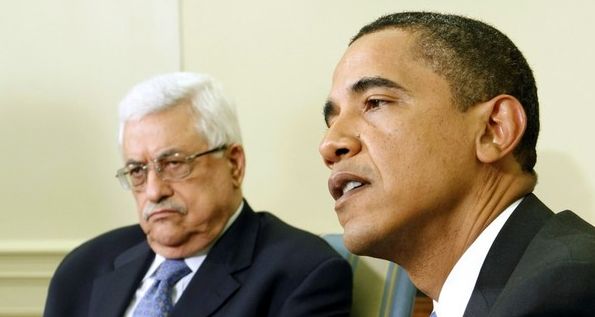
After coming away from a dinner hosted by American Jewish leaders for Mahmoud Abbas, Roger Cohen comes away “convinced the United States is on the brink of a diplomatic fiasco.”

Less than a month after President Obama put the imprimatur of a White House ceremony on renewed Israeli-Palestinian talks, the negotiations are close to breakdown. If that happens, as Netanyahu and Abbas know, Obama would look amateurish.

The two leaders need the United States, an incentive to avoid humiliating Obama. But with just a couple of days to the expiration Sunday of an Israeli freeze on settlement construction in the West Bank, both sides are digging in. Despite Obama’s public plea to Netanyahu — “It makes sense to extend that moratorium” — the Israeli government seems to have rejected a formal extension.

That would be a terrible mistake. Obama should fight it until the last minute. His international credibility is on the line.

Cohen regards Netanyahu’s decision on whether he will call for a three-month extension of the settlement “freeze,” “a test case of Israeli seriousness about peace.”

Really?

This is how serious the settlement freeze has been so far.

In the third quarter of 2009, before the restrictions were imposed last November, there were 2,790 settlement homes in various stages of construction, according to Israel’s Central Bureau of Statistics. The number rose to 2,955 in the last quarter of 2009, reflecting a last-minute surge of housing starts in the days leading up to the freeze.

In the first quarter of 2010, with the freeze in full effect, the number stood at 2,517.

That means that even months into the halt, the number of homes under construction had declined by only about 10 percent.

So, the continuation of a modest slow down in settlement expansion for three months will prove Netanyahu’s serious about peace?

Who knew peace could come be promised that easily?

Facebooktwittermail

Obama’s war of political necessity

Candor cost Gen Stanley McChrystal his job as US commander in Afghanistan, while President Obama was credited with a political masterstroke — replacing the general with a loose tongue with a general with a golden tongue.

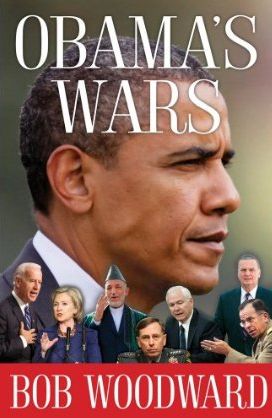
But maybe Bob Woodward’s new book, Obama’s Wars, would not be treated as a source of revelations if more attention had been paid to what McChrystal said than the way he said it.

The renegade general’s portrayal of a president who “didn’t seem very engaged,” suggests that Obama’s claim as both candidate and president — that Afghanistan was a war of necessity — was a political posture that would eventually prove to be untenable.

In June, Michael Hastings wrote:

Even though he had voted for Obama, McChrystal and his new commander in chief failed from the outset to connect. The general first encountered Obama a week after he took office, when the president met with a dozen senior military officials in a room at the Pentagon known as the Tank. According to sources familiar with the meeting, McChrystal thought Obama looked “uncomfortable and intimidated” by the roomful of military brass. Their first one-on-one meeting took place in the Oval Office four months later, after McChrystal got the Afghanistan job, and it didn’t go much better. “It was a 10-minute photo op,” says an adviser to McChrystal. “Obama clearly didn’t know anything about him, who he was. Here’s the guy who’s going to run his fucking war, but he didn’t seem very engaged. The Boss was pretty disappointed.”

Bob Woodward (no relation to me) now portrays a commander in chief intensely focused on getting out of Afghanistan and surrounded by advisers who fought with each other.

The president concluded from the start that “I have two years with the public on this” and pressed advisers for ways to avoid a big escalation, the book says. “I want an exit strategy,” he implored at one meeting. Privately, he told Vice President Joseph R. Biden Jr. to push his alternative strategy opposing a big troop buildup in meetings, and while Mr. Obama ultimately rejected it, he set a withdrawal timetable because, “I can’t lose the whole Democratic Party.”

But Mr. Biden is not the only one who harbors doubts about the strategy’s chances for success. Lt. Gen. Douglas E. Lute, the president’s Afghanistan adviser, is described as believing that the president’s review did not “add up” to the decision he made. Richard C. Holbrooke, the president’s special representative for Afghanistan and Pakistan, is quoted saying of the strategy that “it can’t work.”

Obama’s problem: either an exit strategy was a necessity or the war was a necessity but he couldn’t argue for both.

Besides, whatever he might actually believe, he had already boxed himself in by pursuing a political strategy that hinged on his ability to portray himself as an opponent to the war in Iraq who was not an opponent of war per se.

The war in Afghanistan was Obama’s shield against Republican attacks. “I am not opposed to all wars. I’m opposed to dumb wars,” he said in 2002 when laying out his credentials as an un-antiwar Illinois State Senator.

If Obama as a candidate and as president was to have been more candid, he might have expanded on a theme he touched on only briefly — his affinity with Ronald Reagan but more specifically their apparent shared belief that American wars are best fought in secret using mercenaries.

While the reporting on Woodward’s book is likely to focus on the infighting surrounding a president who appears to lack conviction, the New York Times report also has new details on a covert war in which it seems likely that the Durand Line (dividing Afghanistan and Pakistan) means as little to the US government as it does to the Pashtun people.

[Obama’s Wars] reports that the CIA has a 3,000-man “covert army” in Afghanistan called the Counterterrorism Pursuit Teams, or CTPT, mostly Afghans who capture and kill Taliban fighters and seek support in tribal areas. Past news accounts have reported that the CIA has a number of militias, including one trained on one of its compounds, but not the size of the covert army.

I guess they couldn’t call them the neo-mujahadeen — or what might be even more fitting: the Afghan Contras.

As a Journeyman TV report revealed earlier this year and as has been demonstrated many times before, US-backed militias often end up becoming death squads.

Update: Justin Elliott at Salon picks up the same theme and includes a paragraph that appeared in an earlier version of the New York Times report:

Mr. Woodward reveals the code name for the CIA.’s drone missile campaign in Pakistan, Sylvan Magnolia, and writes that the White House was so enamored of the program that Mr. Emanuel would regularly call the CIA director, Leon E. Panetta, asking, “Who did we get today?”

The White House chief of staff sounds just like former President Bush with his adolescent, comic-book conception of push-button warfare. Hellfire missiles don’t indiscriminately shred human bodies and destroy homes — they “get” targets and the targets can be chalked up on a scoreboard.

Did an editor at the New York Times decide that the man who might be hoping to become the next mayor of Chicago should be saved some embarrassment?

Facebooktwittermail

Obama edges to the dark side

Mark Levine writes:

President Obama has essentially continued almost every major Bush security policy, either by default or design. State secrets, targeted killings, renditions and indefinite detention, opposing the right of habeas corpus, preventing victims of admitted torture from seeking judicial redress, expanding the Afghan war while moving – however gingerly – to secure a long-term presence in Iraq; all these must surely be making Bush, and especially Cheney, happy and wealthier men.

As Michael Hayden, Bush’s last CIA Director, put it in a recent interview, “Obama has been as aggressive as Bush” in defending executive prerogatives and powers that have enabled and sustained the ‘war on terror.’

But just how close to the dark side Obama has moved became evident in the last couple of weeks, specifically from two angles.

In the first, a federal appeals court overturned a lower court decision allowing former CIA prisoners to sue companies that participated in their rendition and torture in overseas prisons. In deciding that the plaintiffs could not sue despite an ample public (rather than classified) record supporting their claims, Judge Raymond C. Fisher supported the Obama Administration’s contention that, in his words, sometimes there is a “painful conflict between human rights and national security” in which the former must be sacrificed to preserve the latter.

But this is an utterly ludicrous concept, since a core reason for so much of the frustration, nihilistic anger, radicalisation and ultimately violence involved in Islamist terrorism and insurgencies lies precisely in the long term, structural denial of the most basic human rights by governments in the region, the lion’s share of whom continue to be supported by the United States despite their behaviour on the grounds of ‘national security’.

What neither Attorney General Eric Holder nor the President seems to understand is that there can be no contradiction between human rights and national security, since the absence of human rights can never but lead to a lack of security.

What’s more, the very idea in the globalised era that one country’s “national” security (especially that of the global “hyper-power,” the United States) can be defined apart from and in contrast to the security of other nations is so ridiculous. One wonders how supposedly intelligent people, like former law school professors – turned presidents, can in good faith imagine and declare it.

Facebooktwittermail

What really shapes Muslim perceptions of America

As American politicians, administration officials, military leaders and commentators from across the political spectrum denounced a plan to burn Qurans in Florida, preeminent among the reasons given for this condemnation was that such an act would cast the United States in a very unfavorable light and expose American soldiers to greater danger — that it would lend strength to those radical voices who insist that America is hostile to Islam.

The US has spent most of the last decade at war in Muslim countries, as a result of which hundreds of thousands have died and millions been forced to abandon their homes, but it’s as though these facts alone would not have been sufficient to color Muslim perceptions of America.

Occupations in Iraq and Afghanistan, drone attacks in Pakistan, missile strikes in Yemen and Somalia, thinly veiled threats against Iran, Abu Ghraib, Guantanamo, secret prisons, renditions and torture — all of these merely raised doubts about US intentions. It was Pastor Terry Jones who had the power to solidify anti-American hostility across the Muslim world.

I guess if you believed that, then it would also somehow make sense that two recent reports about the actions of American soldiers in Afghanistan and Iraq have been given so little attention in the media.

The Seattle Times reports:

As part of one of the widest-ranging U.S. war-crime cases to emerge from the conflict in Afghanistan, charging documents released Wednesday allege soldiers took finger bones and other body parts cut from Afghan corpses.

The documents provide new public details of the cases against a dozen soldiers who served a year in southern Afghanistan with a Western Washington-based Stryker infantry brigade.

The most serious charges involve the alleged slayings of three Afghans in January, February and May. Five soldiers, all stationed at Joint Base Lewis-McChord, are accused of involvement in one or more of the murders. They face penalties that range up to life imprisonment or death.

Meanwhile, Robert Fisk, in an article on the brutal practice of ‘honor’ killing refers to terrible stories of gang rape by United States personnel in Abu Ghraib.

You hear this repeatedly in Amman, and a very accurate source of mine in Washington — a man who deals with military personnel — tells me they are true. This, he says, is why Barack Obama changed his mind about releasing the photographs which George W Bush refused to make public. The pictures we saw — of the humiliation of men — were outrageous enough. But the ones we haven’t seen show Americans raping Iraqi women.

Lima Nabil, a journalist who now runs a home for on-the-run girls, sips coffee as the boiling Jordanian sun frowns through the window at us. “In Abu Ghraib,” she says, “women were tortured by the Americans much more than the men. One woman said she witnessed five girls being raped. Most of the women in the prison were raped — some of them left prison pregnant. Families killed some of these women — because of the shame.”

Obama’s refrain has been that we need to look forward, not back — that it’s time to turn the page — but the past lingers. Turning away usually simply means that we are choosing to ignore the ways in which the past is still present.

In an interview with Paul Jay from the RealNews Network, David Gardner, foreign affairs editor at the Financial Times talks about the UK’s ongoing investigation into the war in Iraq and some of the ways history may be repeating itself as the West confronts Iran.

Facebooktwittermail

Scapegoating-psychology and rising xenophobia in America

Peter Beinart compares the mood in America with the hysteria that provoked the Palmer Raids in 1919 and the anti-Communist fearmongering of McCarthyism that began in the late 1940s.

Ever since 9/11, according to opinion polls, Republicans have worried more about terrorism than have Democrats. Initially, this fear translated into overwhelming support for military action abroad. But as Republicans (like everyone else) have grown tired and embittered by America’s wars, they have turned their anxiety inward, lured by the same idea that attracted Palmer and the McCarthyites: that America could guarantee its safety on the cheap by ferreting out the real threat, which resides within.

Has, we must fight them over there so we don’t have to fight them here, been turned into, why fight them over there when we can fight them here?

I don’t believe the driving force here is, as Beinart suggests, a desire to guarantee safety on the cheap. Rather, this is about age-old scapegoating-psychology and the political opportunities this crude dynamic opens up.

In a period of economic depression, with high unemployment and a pervasive sense that the nation is heading in the wrong direction, many Americans are experiencing a growing sense of powerlessness. Through scapegoating, they can foster the illusion that they are reclaiming control over our own lives. They can focus their animus on a clearly identifiable enemy — Islam.

In scapegoating, by definition, the enemy must be weaker than those on the attack — which is why even at the height of the financial crisis, popular anger at bankers never became as strong as current Islamophobia. It’s the same as the way a guy who’s treated as a drudge at work then finds his “strength” by abusing his wife.

The more that Muslims can be made to feel like outsiders, the more those who have defined them as other can feel empowered.

Meanwhile, with the emerging visceral sense that American renewal can be delivered by purging this country of its “foreign” elements, a political horizon is opening for conservatives such as Newt Gingrich — a man who has no apparent compunction about harnessing popular power even when delivered from the ugliest source.

Gingrich clearly smells presidential opportunity in rising xenophobia and is channeling this into an attack on President Obama whose “foreignness” derives from his Kenyan ancestry and even the fact that he grew up in Hawaii!

Gingrich claims that Dinesh D’Souza has provided “stunning insight” into Obama, in a Forbes cover story, where the president is characterized as “a Luo tribesman.”

David Frum, a neoconservative and former speech writer for George W Bush, sees Gingrich’s perspective as now providing the foundation for the White Party’s political platform.

With the Forbes story and now the Gingrich endorsement, the argument that Obama is an infiltrating alien, a deceiving foreigner — and not just any kind of alien, but specifically a Third World alien — has been absorbed almost to the very core of the Republican platform for November 2010.

Rush Limbaugh has been claiming for almost 2 years that President Obama is bent upon “redistribution” and “reparations.” Following D’Souza, Gingrich has now stepped up to suggest that this redistribution is motivated by anti-white racial revenge. If Obama wants to expand health coverage, tighten bank regulation, and create government make-work projects it’s not because he shares the same general outlook on the world as Walter Mondale or Ted Kennedy or so many other liberals, living and dead, all of them white and northern European. No, Obama wants to do what he does because he thinks like an African, and not just any kind of African but (in D’Souza’s phrase) “a Luo tribesman.”

It is to vindicate this African tribal dream that Obama wishes to raise the taxes of upper-income taxpayers and redistribute money away from these meritorious individuals. D’Souza contends that Obama is acting to vindicate his father’s supposed dream of overthrowing the global order and ending the global domination of the white race over other peoples.

If only it were true, the anticolonialist in me facetiously says. This global reordering must surely eventually come, but I have my doubts whether Obama will have much if any role in bringing it about.

Much more significant in the current context is the fact that an event which two years ago was seen as a reflection of America’s political maturity — the election of an African-American president — is now serving as a opportunity for America to regress into some of the ugliest recesses of its past.

Facebooktwittermail

In asymmetric diplomacy the Palestinians are guaranteed to lose

Hussein Agha and Robert Malley write:

The status quo, though sub-optimal, presents no imminent danger to Israel. What Israelis want from an agreement is something they have learned either to live without (Palestinian recognition) or to provide for themselves (security). The demographic threat many invoke as a reason to act — the possibility that Arabs soon might outnumber Jews, forcing Israel to choose between remaining Jewish or democratic — is exaggerated. Israel already has separated itself from Gaza. In the future, it could unilaterally relinquish areas of the West Bank, further diminishing prospects of an eventual Arab majority. Because Israelis have a suitable alternative, they lack a sense of urgency. The Palestinians, by contrast, have limited options and desperately need an agreement.

In any event, Abbas will return to a fractured, fractious society. If he reaches a deal, many will ask in whose name he was bartering away Palestinian rights. If negotiations fail, most will accuse him of once more having been duped. If Netanyahu comes back with an accord, he will be hailed as a historic leader. His constituency will largely fall in line; the left will have no choice but to salute. If the talks collapse, his followers will thank him for standing firm, while his critics are likely in due course to blame the Palestinians. Abbas will be damned if he does and damned if he doesn’t. Netanyahu will thrive if he does and survive if he doesn’t. One loses even if he wins; the other wins even if he loses. There is no greater asymmetry than that.

The Ma’an news agency reports:

Videos of Palestinian leaders asking the Israeli public to join them as “partners for peace” were coordinated and co-implemented by the Palestinian arm of the Geneva Initiative, the organization’s director confirmed.

The first phase in a mass-media campaign – funded by USAID – “aims to counter the myth that there is no partner on the Palestinian side,” director of the Israeli branch Gadi Baltiansky explained.

Three clips were released on Israeli TV on Sunday featuring Palestinian members of the peace delegation to Washington, each declaring themselves a “partner for peace.”

“Shalom to you in Israel, I know we have disappointed you, I know we have been unable to deliver peace for the last 19 years,” chief PLO negotiator Saeb Erekat says in his short appearance, while Yasser Abed Rabbo warns of the “dangers for both of us” if talks fail.

Following attacks on Israeli settlers in the West Bank on Tuesday and Wednesday, the Wall Street Journal reported:

Mahmoud Ramahi, a Hamas lawmaker based in the West Bank, said he believes this week’s attacks were likely calculated to cause a rift between Palestinian Authority security forces and Israeli forces and show that Hamas is still a vibrant force on the ground that cannot be ignored.

“This proves that the only way to deal with Hamas is for the Palestinian Authority to sit with Hamas and make a reconciliation deal to build a common strategy. Hamas is a reality,” he said. “The United States and the Palestinian Authority have to sit and talk with it.”

Hamas’s political leaders, such as Mr. Ramahi, say they aren’t privy to discussions within the group’s military wing. That apparent division underscores the diffuse power structure the group cultivates. Hamas’s military wing claimed responsibility for both of this week’s attacks and on Thursday promised more.

The orders to carry out the attacks could have come from any number of different power centers. The group’s top leaders are based in Damascus. The leadership there tends to adopt a harder, more militant line. But it is also thought to be heavily influenced by Syria, which can, if it desires, rein the group in, according to analysts.

The group’s leadership in Gaza, which has to live with any retaliation from Israel, has tended to be more pragmatic and moderate. Just hours before Tuesday’s attack, Hamas authorities in Gaza arrested a group of militants from another faction inside the territory trying to fire rockets into Israel.

This week’s attacks could also have been ordered or carried out by a militant cell operating on its own initiative. Israeli security officials believe a small number of militants in the West Bank are directly controlled by Hezbollah or Iran. In the past, Hamas’s leadership has claimed responsibility for attacks carried out by other factions, said retired Brig. Gen. Shalom Harari, a former Israeli intelligence officer who has been studying Hamas for a quarter century.

“Hamas’s infrastructure in the West Bank has been very heavily hurt by ongoing operations by the Palestinian Authority and the Israeli army the last two or three years, and not many cells are left there that can operate,” said Gen. Harari. “If it’s really Hamas, then this is a sleeping cell that they kept for special occasions.”

Meanwhile, Reuters reported:

Hours before peace talks were set to begin in Washington, Jewish settlers defiantly announced plans on Thursday to launch new construction in their West Bank enclaves in a test of strength with Palestinian Islamists.

Naftali Bennett, director of the settlers’ YESHA council, told Reuters settlers would begin building homes and public structures in at least 80 settlements, breaking a partial government freeze on building that ends on September 26.

“The idea is that de facto it (the freeze) is over,” Bennett said, criticizing the U.S.-sponsored Israeli-Palestinian talks as aiming for a “phony peace” and rejecting Palestinian demands for a halt to settlement building on land they want for a state.

Facebooktwittermail

The fountainhead of global strife

If the Obama administration had been as visionary as Obamamania promised it might be, Chas Freeman might not have merely been briefly offered the post of chair of the National Intelligence Council; he could have become a fine Secretary of State. Instead, the Israel lobby made sure he gained no position at all, but by doing so ensured that he would retain the freedom to speak with more candor than any government official ever dares.

In a speech he delivered yesterday in Norway, Freeman laid out the US role in seeking and obstructing Middle East peace, with a clarity and style rarely found in foreign policy discourse.

Islam charges rulers with the duty to defend the faithful and to uphold justice. It demands that they embody righteousness. The resentment of mostly Muslim Arabs at their governing elites’ failure to meet these standards generates sympathy for terrorism directed not just at Israel but at both the United States and Arab governments associated with it.

The perpetrators of the September 11, 2001, terrorist attack on the United States saw it in part as reprisal for American complicity in Israeli cruelties to Palestinians and other Arabs. They justified it as a strike against Washington’s protection of Arab governments willing to overlook American contributions to Muslim suffering. Washington’s response to the attack included suspending its efforts to make peace in the Holy Land as well as invading and occupying Afghanistan and Iraq. All three actions inadvertently strengthened the terrorist case for further attacks on America and its allies. The armed struggle between Americans and Muslim radicals has already spilled over to Pakistan, Yemen, Somalia, and other countries. Authoritative voices in Israel now call for adding Iran to the list of countries at war with America. They are echoed by Zionist and neo-conservative spokesmen in the United States,

The widening involvement of Americans in combat in Muslim lands has inflamed anti-American passions and catalyzed a metastasis of terrorism. It has caused a growing majority of the world’s 1.6 billion Muslims to see the United States as a menace to their faith, their way of life, their homelands, and their personal security. American populists and European xenophobes have meanwhile undercut liberal and centrist Muslim arguments against the intolerance that empowers terrorism by equating terrorism and its extremist advocates with Islam and its followers. The current outburst of bigoted demagoguery over the construction of an Islamic cultural center and mosque in New York is merely the most recent illustration of this. It suggests that the blatant racism and Islamophobia of contemporary Israeli politics is contagious. It rules out the global alliances against religious extremists that are essential to encompass their political defeat.

Freeman went on to say:

Vague promises of a Palestinian state within a year now waft through the air. But the “peace process” has always sneered at deadlines, even much, much firmer ones. A more definitive promise of an independent Palestine within a year was made at Annapolis three years ago. Analogous promises of Palestinian self-determination have preceded or resulted from previous meetings over the decades, beginning with the Camp David accords of 1979. Many in this audience will recall the five-year deadline fixed at Oslo. The talks about talks that begin tomorrow can yield concrete results only if the international community is prepared this time to insist on the one-year deadline put forward for recognizing a Palestinian state. Even then there will be no peace unless long-neglected issues are addressed.

Peace is a pattern of stability acceptable to those with the capacity to disturb it by violence. It is almost impossible to impose. It cannot become a reality, still less be sustained, if those who must accept it are excluded from it. This reality directs our attention to who is not at this gathering in Washington and what must be done to remedy the problems these absences create.

Obviously, the party that won the democratically expressed mandate of the Palestinian people to represent them — Hamas — is not there. Yet there can be no peace without its buy-in.

Peacemaking must engage those who are willing to use violence. Yet this assertion — whose truth is so obvious — is still being treated as a bold idea.

The narrative of peace promoted through the Bush era and still being propagated by Obama, suggests that peace is somehow produced by rallying together everyone who is willing to denounce violence — as though those who are willing to use violence will lose that capacity if they can be sufficiently marginalized. But on the contrary, political marginalization invariably has the opposite effect as those whose grievances are ignored, look for increasingly extreme means to make themselves heard.

Facebooktwittermail

Terrorism is like advertising — it short-circuits the rational mind

Update below

If there’s just one lesson we can draw from the last decade it is this: utter the word “terrorism” and thought grinds to a halt, perceptions become blinkered and the power of human intelligence is suddenly put on hold.

Consider the attack near Hebron in the West Bank yesterday in which four Israelis were gunned down by Palestinian gunmen.

A report in the Jerusalem Post conveys a particularly harrowing moment in the attack’s aftermath as volunteers from Zaka, the Israeli community emergency response network, arrived at the scene of the shooting.

Zaka volunteer Momy Even-Haim was dispatched to the scene of the attack with his colleagues, when to his horror he discovered that his wife was among the dead.

“We saw a crying volunteer, and at first we did not understand what was happening — he has seen many disasters before,” Zaka volunteer Isaac Bernstein told The Jerusalem Post.

“Then he started shouting, ‘That’s my wife! That’s my wife!’ We took him away from the scene immediately,” Bernstein added. Even-Haim was taken to his home in Beit Hagai by his colleagues.

Tragedy takes infinite forms. Those in closest proximity can never be expected to respond rationally but from a distance, rationality is not only possible — it is essential.

Instead though, this attack — like so many before — has produced a series of highly predictable knee-jerk responses.

The White House issued a statement saying:

The United States condemns in the strongest possible terms the terrorist attack today perpetrated by Hamas in which four Israelis were killed in the southern West Bank. We express our condolences to the victims’ families and call for the terrorists behind this horrific act to be brought to justice. We note that the Palestinian Authority has condemned this attack. On the eve of the re-launch of direct negotiations between Israelis and Palestinians, this brutal attack underscores how far the enemies of peace will go to try to block progress. It is crucial that the parties persevere, keep moving forward even through difficult times, and continue working to achieve a just and lasting peace in the region that provides security for all peoples.

Is Washington already ahead of Israel in identifying the culprits?

That seems unlikely. Much more likely is that the White House is content to parrot press reports in which representatives of Hamas are quoted claiming responsibility for the attack. If Hamas claims responsibility, its claim will be accepted at face value; if it were to deny responsibility, it’s denial would be treated with skepticism. That’s the way the “analytical” process works.

Israeli press reports are less clear on the matter.

In Haaretz, Avi Issacharoff and Amos Harel report:

Even though no official claim of responsibility was made, the investigation by the security services of Israel and the Palestinian Authority suggest that the culprits were a cell which identifies itself, more or less, with Hamas. Fauzi Barhum, one of the spokesmen for the group in the Gaza Strip, did not openly claim responsibility for the attack, but hinted that his group was behind the shooting.

“The resistance continues everywhere,” he said.

In recent months the Hamas leadership in the Gaza Strip and Damascus has pressed West Bank-based teams of gunmen to resume the attacks in an effort to make it more difficult on the Palestinian Authority and stir up tension with Israel.

Two months ago a large Hamas network was uncovered in the southern Hebron Hills, a “sleeper cell” that was revived, whose members are suspected of murdering an Israeli policeman in a similar shooting incident, along the same route, several kilometers from the spot of last night’s terror attack.

A cell which identifies itself “more or less” with Hamas — that’s pretty vague. Moreover, a previously unknown group calling itself the Al-Haq (“Rights”) Brigades has claimed responsibility for Tuesday’s shooting, according to the Ma’an news agency.

As for Issacharoff and Harel’s claim that a Hamas cell was responsible for the June Hebron Hills shooting, that also is far from clear. When suspects were arrested by Israel’s internal security services, Shin Bet, Haaretz reported:

It is unclear… who is responsible for the establishment of this group, which is reportedly affiliated to Palestinian President Mahmoud Abbas’ Fatah movement. Israeli security sources have been examining the possibility that the gunmen behind the June 14 attack were from various Palestinian militant groups.

Whether or not Hamas had a role in yesterday’s attack it is too soon to tell. And even if some or all of the gunmen turn out to belong to the movement does not necessarily reveal a great deal about the level of command and control or political motives for the attack.

Whatever the motives, the outcome itself has opened political opportunities to each constituency that now portrays itself as a victim.

Given that the attack took place in an area controlled by the IDF, President Abbas could have taken the opportunity to point out that the attack underlines the fact that there can ultimately be no security solution to the political conflict. Instead, Palestinian security services have been quick to launch what is being described as one of the largest arrest waves of all time in the West Bank.

Hamas lawmaker Omar Abdel-Raziq said more than 150 members had been detained, and others had been summoned to police stations for questioning.

He accused Abbas of trying to please the Israelis.

“These are political arrests,” he said. “They are trying to tell the Israelis that they are capable of doing the job after the attack.”

At the funerals of the four Israelis killed, settler leaders took the opportunity to push for settlement expansion, call for vengeance (a call which has already been acted upon), deny the existence of the Palestinian people and make a thinly-veiled appeal for ethnic cleansing:

Rabbi Dov Lior of Kiryat Arba eulogized the victims saying that “this is a grave tragedy for the families, for the people of Israel and for the state. God, avenge the spilled blood of your servants.”

“There is an army, which must be used,” Rabbi Lior continued. “The mistake is to think that an agreement can be reached with these terrorists. Every Jew wants peace, but these evildoers want to destroy us. We need to give them the right of return and return them to the countries from which they came.”

When President Obama tries to press Benjamin Netanyahu to extend the so-called settlement freeze, the Israeli prime minister will no doubt tell him solemnly that in light of recent events, his hands are well and truly tied.

They shoot and we build has become the settlers’ slogan — one that is almost certainly to Netanyahu’s liking.

Update: In a conversation I just had with Hamas expert, Mark Perry, he made the point that when it comes to identifying armed militants in the West Bank, the Al Qassam Brigade (affiliated with Hamas) and the Al Aqsa Brigade (affiliated with Fatah) are virtually indistinguishable in most of the area, but particularly in Hebron. The clearest differentiation in armed groups is between those who are on the Palestinian Authority’s payroll and those who aren’t.

Mark also pointed out that if the Obama administration was not trapped inside its own terrorism rhetoric, they could point out that the attack underlines the unnecessary vulnerability that Israeli’s expose themselves to by grabbing Palestinian land and building settlements.

Facebooktwittermail

CIA wants to cover up US war crimes in Yemen

A missile strike on December 17 in Yemen last year that killed 41 people including 21 children and 14 women was most likely the result of a US cruise missile strike — an opening shot in a US military campaign that began without notice and has never been officially confirmed.

Amnesty International says it has obtained photographs apparently showing the remnants of missiles known to be held only by U.S. forces at the site of the air strike against al Qaeda suspects.

“The Yemeni authorities have a duty to ensure public safety and to bring to justice those engaged in attacks that deliberately target members of the public, but when doing so they must abide by international law,” said Malcolm Smart, Amnesty International’s Director for the Middle East and North Africa Programme. “Enforced disappearances, torture and other ill-treatment, and extrajudicial executions are never permissible, and the Yemeni authorities must immediately cease these violations.”

“It is particularly worrying that states such as Saudi Arabia and the USA are directly or indirectly aiding the Yemeni government in a downward spiral away from previously improving human rights record.”

The Washington Post now reports that the CIA is likely to have a larger role in President Obama’s expanding war in Yemen.

Proponents of expanding the CIA’s role argue that years of flying armed drones over Pakistan have given the agency expertise in identifying targets and delivering pinpoint strikes. The agency’s attacks also leave fewer telltale signs.

“You’re not going to find bomb parts with USA markings on them,” the senior U.S. official said.

Facebooktwittermail

How Pakistan shut down Afghan-Taliban peace talks

In the New York Times, Dexter Filkins reports:

When American and Pakistani agents captured Abdul Ghani Baradar, the Taliban’s operational commander, in the chaotic port city of Karachi last January, both countries hailed the arrest as a breakthrough in their often difficult partnership in fighting terrorism.

But the arrest of Mr. Baradar, the second-ranking Taliban leader after Mullah Muhammad Omar, came with a beguiling twist: both American and Pakistani officials claimed that Mr. Baradar’s capture had been a lucky break. It was only days later, the officials said, that they finally figured out who they had.

Now, seven months later, Pakistani officials are telling a very different story. They say they set out to capture Mr. Baradar, and used the C.I.A. to help them do it, because they wanted to shut down secret peace talks that Mr. Baradar had been conducting with the Afghan government that excluded Pakistan, the Taliban’s longtime backer.

In the weeks after Mr. Baradar’s capture, Pakistani security officials detained as many as 23 Taliban leaders, many of whom had been enjoying the protection of the Pakistani government for years. The talks came to an end.

The events surrounding Mr. Baradar’s arrest have been the subject of debate inside military and intelligence circles for months. Some details are still murky — and others vigorously denied by some American intelligence officials in Washington. But the account offered in Islamabad highlights Pakistan’s policy in Afghanistan: retaining decisive influence over the Taliban, thwarting archenemy India, and putting Pakistan in a position to shape Afghanistan’s postwar political order.

“We picked up Baradar and the others because they were trying to make a deal without us,” said a Pakistani security official, who, like numerous people interviewed about the operation, spoke anonymously because of the delicacy of relations between Pakistan, Afghanistan and the United States. “We protect the Taliban. They are dependent on us. We are not going to allow them to make a deal with Karzai and the Indians.”

My question: Did the New York Times really need six months to piece this story together?

Back on February 17, I wrote a post headlined: “Was the arrest of the Taliban’s second-in-command a strategic blunder?” This is what I wrote:

The capture of the Taliban’s second in command, Mullah Abdul Ghani Baradar, has been hailed as a huge blow to the Taliban but it may turn out to deliver an even bigger blow to President Obama’s hopes for an early withdrawal of US troops from Afghanistan.

Hajji Agha Lalai, former head of the Afghan government-led reconciliation process in Kandahar, who has dealt with members of the Taliban leadership council for several years, said Mullah Baradar was “the only person intent on or willing for peace negotiations.”

Last month Baradar facilitated an inconclusive meeting in Dubai between midlevel Taliban commanders and Kai Eide, the departing top UN official in Kabul, according to McClatchy newspapers.

Saeed Shah reported:

According to Vahid Mojdeh, a former Afghan official who worked under the Taliban, Baradar was instrumental in reining in insurgent violence, by banning sectarian killings and indiscriminate bombings.

“Baradar was an obstacle against al-Qaida, who wanted to make an operation in Afghanistan like they did in Iraq,” Mojdeh said. “But Baradar would not allow them to kill Shias” – the minority Muslim sect – “or set off explosions in crowded places.”

Pakistani analysts said Baradar’s capture suggested either that Islamabad had abandoned its attempt to promote peace talks or the Taliban number two had fallen afoul of the Pakistani authorities. Analysts said Baradar was the most likely point of contact for any future talks.

“This is inexplicable. Pakistan has destroyed its own credentials as a mediator between Taliban and Americans. And the trust that might have existed between Taliban and Pakistan is shattered completely,” said Rustam Shah Mohmand, a former Pakistani ambassador to Kabul after the overthrow of the Taliban.

The capture of Mullah Baradar has been widely reported as the result of a coordinated operation between the US and Pakistan, but so far the story seems very murky.

On Tuesday, February 9, the New York Times reported:

Pakistan has told the United States it wants a central role in resolving the Afghan war and has offered to mediate with Taliban factions who use its territory and have long served as its allies, American and Pakistani officials said.

The offer, aimed at preserving Pakistan’s influence in Afghanistan once the Americans leave, could both help and hurt American interests as Washington debates reconciling with the Taliban.

Pakistan’s army chief, Gen. Ashfaq Parvez Kayani, made clear Pakistan’s willingness to mediate at a meeting late last month at NATO headquarters with top American military officials, a senior American military official familiar with the meeting said.

The report said that General Kayani rebuffed US pressure to expand operations against the Taliban in North Waziristan because “the Pakistani Army still regarded India as its primary enemy and was stretched too thin to open a new front.”

Within days we learn of Mullah Baradar’s arrest in Karachi, Pakistan. His capture could cripple the Taliban’s military operations, at least in the short term, says Bruce Riedel, an adviser to the Obama administration. Others in Washington describe this as a huge blow to the Taliban.

But the New York Times now reports:

The arrest followed weeks of signals by Pakistan’s military chief, Gen. Ashfaq Parvez Kayani — to NATO officials, Western journalists and military analysts — that Pakistan wanted to be included in any attempts to mediate with the Taliban.

Even before the arrest of the Taliban commander, Mullah Abdul Ghani Baradar, a senior Pakistani intelligence official expressed irritation that Pakistan had been excluded from what he described as American and Afghan approaches to the Taliban.

“On the one hand, the Americans don’t want us to negotiate directly with the Taliban, but then we hear that they are doing it themselves without telling us,” the official said in an interview. “You don’t treat your partners like this.”

Mullah Baradar had been a important contact for the Afghans for years, Afghan officials said. But Obama administration officials denied that they had made any contact with him.

Whatever the case, with the arrest of Mullah Baradar, Pakistan has effectively isolated a key link to the Taliban leadership, making itself the main channel instead.

While Washington denied prior negotiations with Baradar, a US intelligence official in Europe claimed otherwise:

“I know that our people had been in touch with people around him and were negotiating with him,” the official said, speaking on the condition of anonymity because he was not authorized to discuss the issue.

“So it doesn’t make sense why we bite the hand that is feeding us,” the official added. “And now the Taliban will have no reason to negotiate with us; they will not believe anything we will offer or say.”

Update (2/17/10): In an interview on NPR Ahmed Rashid speculated that now that Baradar is in custody he could be in a better position to negotiate. Why? Because he’s not going anywhere?

Much more plausible is that the Pakistanis pulled him in — Rashid acknowledges that Baradar’s whereabouts have never been unknown to the ISI — because they didn’t want to be cut out of the negotiating loop by Americans negotiating directly with the Taliban. In other words, Pakistan is not willing to see a deal agreed to end this war without being able to dictate some of the terms.

If that is the case, no wonder The White House asked its news outlet (the New York Times) to sit on the story for a few days while they decided how it should be told.

Facebooktwittermail

Obama administration carries on the peace talks “tradition”

If you’re wondering how seriously to take the latest peace process gambit, this, from the Los Angeles Times, sums up the spirit of the latest move:

One White House official on Friday described peace talks as a “tradition” in which every American president must participate.

“This is something that there has been a long-standing U.S. commitment to engage with the Israelis and Palestinians on,” said John Brennan, assistant to the president for counter-terrorism and homeland security. “Previous administrations have dedicated much effort and energy to this, and the Obama administration is carrying this tradition on.”

Pardoning a Thanksgiving turkey, the National Christmas Lighting Ceremony, and sponsoring peace talks between the Israelis and the Palestinians — these are among the varied and wonderful traditions followed by American presidents and Barack Obama is no exception.

The New York Times strikes a more somber tone:

There is little confidence — close to none — on either side that the Obama administration’s goal of reaching a comprehensive deal in one year can be met.

Instead, there is a resigned fatalism in the air. Most analysts view the talks as pairing the unwilling with the unable — a strong right-wing Israeli coalition led by Prime Minister Benjamin Netanyahu with no desire to reach an agreement against a relatively moderate Palestinian leadership that is too weak and divided to do so.

“These direct negotiations are the option of the crippled and the helpless,” remarked Zakaria al-Qaq, vice president of Al Quds University and a Palestinian moderate, when asked his view of the development. “It is an act of self-deception that will lead nowhere.”

And Nahum Barnea, Israel’s pre-eminent political columnist, said in a phone interview: “Most Israelis have decided that nothing is going to come out of it, that it will have no bearing on their lives. So why should they care?”

That such a dismissive tone comes not from the known rejectionists — the Islamists of Hamas who rule in Gaza and the leadership of the Israeli settler community in the West Bank — but from mainstream thinkers is telling of the mood.

Some Israelis who have spent their professional lives on peace talks with the Palestinians were upset by the fear that failed talks could prove worse than no talks. Yossi Beilin, for example, who left politics in 2008 after years as a leftist member of Parliament and government minister, said Friday that the Obama administration was wrong to set a one-year goal without consequences.

“I think this is a huge mistake by the U.S. administration,” he said by telephone. “There is not a chance in the world that in a year — or two or three — peace can be achieved. The gap between the sides is too big. Netanyahu did not come to power to divide Jerusalem or find a solution to the Palestinian refugees.”

Facebooktwittermail

Israeli attack on Iran not imminent

If there was a ministry of information it would release reports like this: “US Assures Israel That Iran Threat Is Not Imminent.” But why would Washington need to create such an agency when the New York Times so gladly provides the service?

In a report transparently written as a quasi-official response to Jeffrey Goldberg’s “The Point of No Return,” we learn that contrary to all the feverish speculation about an imminent strike on Iran, it turns out everything’s cool.

And maybe it is — though the Times’ Mazzetti and Sanger could do more credible reporting if they made an effort not to sound like a mouthpiece for the administration.

The one priceless quote in their article comes from Gary Samore, President Obama’s top adviser on nuclear issues, who when referring to an anticipated one year “dash time” that the Iranians would need to convert nuclear material into a working weapon, said: “A year is a very long period of time.”

Israeli officials said their assessments were coming into line with the American view, but they remain suspicious that Iran has a secret enrichment site yet to be discovered.

American officials said, in contrast to a year ago, that Iran’s nuclear program was not currently the central focus of discussions between top leaders in Washington and Jerusalem. During the last visit to Washington by Prime Minister Benjamin Netanyahu of Israel in early July, the Iranian program was relatively low on the agenda, according to one senior administration official.

The next time Netanyahu takes questions from the press, maybe someone can ask him whether he agrees with the White House’s assessment about the nature of time and that a year is indeed a very long period.

Another issue the article touches upon is the breakout capacity for the long-delayed National Intelligence Estimate. Since the White House seems eager to say what the NIE will say even before its been released, can we interpret this as an effort to shape the report that is itself supposed to shape the administration’s policy?

Finally, just to be sure that the Israel lobby does not become too despondent when they hear another war might not be just around the corner (despite their best efforts), the article closes by saying:

Even as American and Israeli officials agree that the date that Iran is likely to have a nuclear weapon has been pushed into the future, that does not mean that Israel has abandoned the idea of a possible military strike.

American officials said that Israel was particularly concerned that, over time, Iran’s supreme leader could order that nuclear materials be dispersed to secret locations around the country, making it less likely that an Israeli military strike would significantly cripple the program.

So have no fear — the option of a strike is still on the table, or to be precise, at some indeterminate point in the future there might be a strike and it could happen sooner rather than later because at some point (future or past) the Iranians could hide everything and maybe they already have secret facilities in which case the opportunity to destroy them has already past. Clear?

Facebooktwittermail

Obama’s defense of religious freedom

On Friday, Glenn Greenwald wrote:

This is one of the most impressive and commendable things Obama has done since being inaugurated:

President Obama delivered a strong defense on Friday night of a proposed Muslim community center and mosque near ground zero in Manhattan, using a White House dinner celebrating Ramadan to proclaim that “as a citizen, and as president, I believe that Muslims have the same right to practice their religion as anyone else in this country” . . . .

“I understand the emotions that this issue engenders. Ground zero is, indeed, hallowed ground,” the president said in remarks prepared for the annual White House iftar, the sunset meal breaking the day’s fast.

But, he continued: “This is America, and our commitment to religious freedom must be unshakable. The principle that people of all faiths are welcome in this country, and will not be treated differently by their government, is essential to who we are” . . . .

What makes this particularly commendable is there is virtually no political gain to be had from doing it, and substantial political risk. Polls shows overwhelming opposition to the mosque nationwide (close to 70% opposed), and that’s true even in New York, where an extraordinary “50% of Democrats, 74% of Republicans, and 52% of ‘non-enrolled’ voters, don’t want to see the mosque built.” The White House originally indicated it would refrain from involving itself in the dispute, and there was little pressure or controversy over that decision. There was little anger over the President’s silence even among liberal critics. And given the standard attacks directed at Obama — everything from being “soft on Terror” to being a hidden Muslim — choosing this issue on which to take a very politically unpopular and controversial stand is commendable in the extreme.

On Saturday, Obama was questioned by CNN on the reaction provoked by his speech the night before. Obama responded:

My intention was to simply let people know what I thought. Which was that in this country, we treat everybody equally in accordance with the law. Regardless of race. Regardless of religion. I was not commenting on and will not comment on the wisdom of making a decision to put a mosque there. I was commenting very specifically on the right that people have that dates back to our founding. That’s what our country’s about and I think it’s very important that as difficult as some of these issues are, we stay focused on who we are as a people and what our values are all about.

Fair enough?

Well not if you’re a journalist who wants to construct a story about the president who “seemed to contradict himself.”

In a country that has a constitution that protects religious freedom by separating Church and State, what business does any politician have in expressing an opinion about the wisdom of building a house of worship anywhere? Just because this is a representative democracy doesn’t mean elected politicians have an obligation to reflect the bigotry of their constituents.

Facebooktwittermail

Obama’s secret war

The Bush administration was well known for its lack of accountability and its disregard for international law, yet if the lead proponents of outlaw governance — men such as Dick Cheney and his chief of staff David Addington — preferred to operate in the shadows, there was a political form of accountability in as much as their approach was seen as an integral feature of the neoconservative agenda — an agenda that got roundly criticized in many quarters.

This is what makes President Obama’s approach in some ways more dangerous than that of the neocons.

The New York Times reports on Obama’s secret war being conducted in Yemen and elsewhere which discredited neocons must now be applauding not only because this administration has in in so many ways adopted their approach but because this approach has now become institutionalized and legitimized by an administration that is not weighed down by the ideological baggage of its predecessor.

A convergence between the CIA — operating increasingly as a paramilitary organization — and the Pentagon — conducting more and more clandestine operations — has produced an American killing machine that operates with minimal political and legal oversight. As the Times says: “the American military campaign in Yemen began without notice in December and has never been officially confirmed.”

“Where we want to get is to much more small scale, preferably locally driven operations,” said Representative Adam Smith, Democrat of Washington, who serves on the Intelligence and Armed Services Committees.

“For the first time in our history, an entity has declared a covert war against us,” Mr. Smith said, referring to Al Qaeda. “And we are using similar elements of American power to respond to that covert war.”

Some security experts draw parallels to the cold war, when the United States drew heavily on covert operations as it fought a series of proxy battles with the Soviet Union.

And some of the central players of those days have returned to take on supporting roles in the shadow war. Michael G. Vickers, who helped run the C.I.A.’s campaign to funnel guns and money to the Afghanistan mujahedeen in the 1980s and was featured in the book and movie “Charlie Wilson’s War,” is now the top Pentagon official overseeing Special Operations troops around the globe.

Facebooktwittermail

A campaign for war with Iran begins

In response to Jeffrey Goldberg’s Atlantic article, “The Point of No Return,” Trita Parsi writes in Salon:

Whether characterizing it as “mainstreaming war with Iran” or “making aggression respectable,” Goldberg’s article serves to create a false narrative that claims that the two failed meetings held between the U.S. and Iran last October constitute an exhaustion of diplomacy, that deems the Obama administration’s crippling, indiscriminate sanctions on Iran a failure only weeks after they’ve been imposed, and that then leaves only one option remaining on the table: an American or Israeli military strike. And on top of that, if President Obama doesn’t green light a bombing campaign, Israel will have no choice but to bomb itself, even though it isn’t well-equipped to do so, according to Goldberg.

It is important to note that the aim of this unfolding campaign may not be to pressure Obama into military action. It could just as much serve to portray Obama as weak and indecisive on national security issues that are of grave concern to the U.S. and that are of existential nature to Israel. This portrayal will give the Republicans valuable ammunition for the November congressional elections as well as for the 2012 presidential race.

Indeed, the likely political motivation for this unfolding campaign should not be underestimated. Just as much that the building blocks of the Iraq war were put into place under the Clinton years — most importantly with the passage of the Iraq Liberation Act in 1998 — serious preparation for selling an Iran war to the American public under a Republican president (Palin?) in 2013 must be undertaken now, both to establish the narrative for that sell and to use the narrative to remove any obstacles in the White House along the way.

Facebooktwittermail

What would George Orwell say about the US withdrawal from Iraq?

By Hannah Gurman

As the Second World War drew to a close, George Orwell looked back on the various prognoses of war and peace that had emerged in recent years:

“All political thinking for years past has been vitiated in the same way,” he observed. “People can foresee the future only when it coincides with their own wishes, and the most grossly obvious facts can be ignored when they are unwelcome.”

Over the next several years, Orwell would elaborate a dystopian vision of the emerging Cold War, a vision in which warring superpowers would use distorted and self-serving political rhetoric to battle each other and their citizens.

In recent weeks, we have reached another historic juncture. The Iraq War, or at least the American military’s role in it, is drawing to a symbolic close. To mark this moment, the U.S. Ministry of Information has put its spin machine in high gear. Orwell would have had a field day with this one. He could not have invented a more Orwellian tale than the actual story of the U.S. withdrawal from Iraq.

Here is the official version, championed in its earlier moments by Bush, Petraeus, and other congressional hawks, and now trumpeted almost as loudly by the White House and State Department: Violence is down. Iraqis are finally (it’s about time, guys) taking responsibility for their own security. The March elections were a great step forward. Iraq, we can safely say, is on the path to a brighter future.

This story marks the last chapter in the surge narrative that took root in 2006, a narrative in which General David Petraeus is credited with turning the war around. Proponents of this story know better than to declare victory, a word that has largely fallen out of the official lexicon. But the word success, which has taken its place, is everywhere. And while it doesn’t quite afford that nationalist sense of superiority to which Americans have long been accustomed, success does provide a certain contentment and satisfaction over a job well done. It allows for that perennial optimism that never quite goes out of fashion in the American way of war.

It is telling though not surprising that Obama chose a military audience to deliver his official remarks on the nominal end of America’s seven-year occupation of Iraq. Like all American, and especially all Democratic presidents, Obama rarely misses a moment to pay tribute to the troops — perhaps the only thing that no loyal American can question regardless of how unjust the wars America fights may be. “As we mark the end of America’s combat mission in Iraq,” President Obama declared, “a grateful America must pay tribute to all who served there.”

There is nothing fundamentally new in this story. It is just the latest version of a longstanding nationalist narrative in which, no matter how the story begins, the U.S. always ends up on the right side of history. For the most loyal devotees of this narrative, even Vietnam is not an exception. Were it not for that cheap congress, those pesky journalists, and those traitorous anti-war activists, they insist, we would’ve won that war too. Never mind that we had allied ourselves with a corrupt government that cared little about the people of Vietnam. Never mind that the enemy saw this as just the latest in a decades-long war against foreign occupiers. Never mind that, as Daniel Ellsberg has said, we were not just “on the wrong side” of this war. “We were the wrong side.”

As with the hawk’s version of Vietnam’s ignominious conclusion, the tale of America’s withdrawal from Iraq is characterized by contradictions, half-truths, and huge blind spots. It is a story told by officials with jobs and reputations to protect. It is a myth bought and sold by Americans who want to believe in a benevolent image of their country in the world. And most important of all, it is a fairy tale that systematically elevates the good news about Iraq and avoids any talk of the long-term devastation this war has wreaked on the people there.

In recent months, as the deadline for troop withdrawal has neared, Ambassador Christopher Hill has become a more visible prop in the administration’s official spin machine, deflecting any arrows aimed at the armor that is the official success narrative. When NPR’s Steve Inskeep asked him whether Iraq might still collapse, Hill said that he looked at the situation “in pretty optimistic terms.” That’s easy for Hill to say. He is leaving Iraq this month to become the dean of the international relations program at Denver University.

The success story is a bit harder to feed to the Iraqis who actually experience the realities on the ground in Iraq, and who, unlike Hill, will continue to face these realities on a daily basis. In an interview on Al Jazeera’s “Inside Iraq” television show in April, Jassim Al-Assawi challenged the ambassador’s rosy assessment of the March parliamentary elections, pointing out that a number of elected ex- Baathist officials had been denied seats in parliament. When questioned about the legality of this measure, as well as other serious problems of Iraqi governance, Hill tried to convince his interviewer that he was not the Iraqi government. “I’m just the US ambassador,” he said. “I’m not the prime minister” of Iraq. “I’m not a judge in Baghdad.”

Good thing. Because, according to the most recent Brookings index of Iraq, 135 of 869 judges in Iraq have been removed on charges of corruption. Overall, when it comes to corruption, Iraq ranks 176 out of 180 countries. Thus, it should come as no surprise that nine billion dollars of oil revenue intended for reconstruction has gone missing.

Of course, the state of Iraq’s political and judicial institutions has never been the strongest thread in the success narrative. The security story, on the other hand, is ostensibly on firmer ground, and has therefore figured prominently in the official version of the story. Here’s Obama on the progress of security in Iraq:

Today – even as terrorists try to derail Iraq’s progress – because of the sacrifices of our troops and their Iraqi partners, violence in Iraq continues to be near the lowest it’s been in years. And next month, we will change our military mission from combat to supporting and training Iraqi security forces. In fact, in many parts of the country, Iraqis have already taken the lead for security.

In this effort to play up the security achievements of Iraq, Obama bracketed the spikes in violence in recent months and used the word terrorist to avoid the deeper and more complex political history of both the Sadrist and Sunni insurgencies.

There is no denying that violence is down from its highest levels, and that is a good thing. But the Ministry of Information distorts all reality when it suggests that the Iraqi army and police are ready to “take the lead” in maintaining this security. As of December 2009, there were 664,000 Iraqi security forces. This reflects only the number of authorized personnel, however, and is not an indicator of operational readiness.

In September 2009, the Iraqi Army had close to 250 battalions. But only about 50 of them were deemed capable of planning, executing, and sustaining counterinsurgency operations on their own. The rest were either completely incapable or required assistance from coalition forces. This isn’t news to Iraqi military leaders. Lieutenant General Babker Zerbari, Iraq’s most senior military officer, has said that his security forces won’t be able to take the lead until 2020 and has asked the US to delay its planned withdrawal.

While the weavers of the success story have distorted the security situation in Iraq, they have hardly said a peep about the disaster that is Iraq’s infrastructure and essential services. As of February 2009, 80 percent of the population still lacked access to sanitation services, 55 percent lacked access to potable water, and 50 percent still had serious electricity shortages. As late as May 2010, Brookings estimated that 30,000-50,000 private generators were making up for shortages in the national grid.

Healthcare is also in dire straits. New studies reveal soaring cancer rates in Fallujah and other cities that were heavily targeted by U.S. forces. This news comes against the backdrop of a mass exodus of doctors from the country. Twenty thousand of Iraq’s thirty-four thousand registered physicians left Iraq after the US invasion. As of April 2009, fewer than 2,000 returned, the same as the number who were killed during the course of the war.

The shortage of doctors in Iraq is just one facet of the much bigger population displacement as a result of the war. As of January 2009, there were still 2 million Iraqi refugees living outside of the country, and as of April 2010, there were 2,764,000 internally displaced people living in Iraq.

    “War against a foreign country only happens when the moneyed classes think they are going to profit from it.” –George Orwell, New Statesmen (1937)

In 2002, the State Department’s “Future of Iraq” group predicted that the toppling of the Saddam regime would usher in a period of great economic boom. That turned out not to be the case, at least not initially. Iraq’s instability kept multinational corporations out of Iraq for awhile, but in recent years, that’s been changing. In 2008 and 2009, Foreign Direct Investment went up tenfold in Iraq. Not surprisingly, officials have been framing this as great news for the country. In 2009, the website of Operation Iraqi Freedom proudly advertised that the governor of Anbar was named FDI magazine’s “Global Personality of the Year.” What the website does not advertise is that the huge oil and natural gas companies competing for Anbar’s natural resource wealth have little interest in helping the people of Anbar, but are instead focused on their bottom lines. That entails plans for using cheap foreign labor from China and other countries. It is unlikely that anything more than a small portion of their earnings will actually trickle down to ordinary Iraqis.

The oil and gas companies are not the only ones who will profit from the postwar order in Iraq. The United States military and defense industry will make out well too. Despite claims to the contrary, this is not the end of the US military presence in Iraq. In addition to the several bases that will remain active, housing the soldiers and private contractors whose titles will change to advisors, there will be an indefinite state of dependency on US-manufactured weapons and technology. Defense companies, such as ARINC will continue to make hundreds of millions providing Mi-17 helicopters and other military hardware and logistics to Iraq.

While the Ministry of Information does not advertise the reality of America’s enduring military presence in Iraq, it is quick to announce a civilian “surge” in the country. Along these lines, officials have been boasting about the massive US embassy in Baghdad. “Along with the Great Wall of China,” said Ambassador Hill, “its one of those things you can see with the naked eye from outer space. I mean it’s huge.” Indeed. At 104 acres, it is the largest U.S. embassy in the world. In addition to six apartment buildings, it has a luxury pool, as well as a water and sewage treatment plan. Stop for a second and reflect on these last two amenities. They give you some measure of what American officials really know but aren’t saying about the state of drinking water and sanitation in Iraq. The State Department has requested a mini-army to protect this Fortress America — including 24 Black Hawk helicopters and 50 bomb-resistant vehicles. Again, stop for a minute and ask yourself what this says about security in Iraq. This shadow army says a lot about what American officials really think about the state of security in Iraq.

    “Who Controls the Past Controls the Future. Who Controls the Present Controls the Past” –George Orwell, 1984 (1949)

Given all the damage that remains in Iraq, it is no wonder that some Iraqis are confused and angry at the rosy pronouncements about Iraq’s path to progress. Without masking his hostility and frustration, Jassim Al-Assawi pressed ambassador Hill to explain why, despite all the problems Iraq is currently experiencing, he remains so optimistic. After waxing poetic about the heroism and drive of the Iraqi people, Hill simply insisted, “There’s no going back, only forward.”

This last statement encapsulates what is perhaps the most important function of the success narrative. All this talk about moving forward is also an insistence on not looking back, especially not to 2003. The U.S. has sought to control the past of the Iraq War by rejecting and effectively erasing it, willfully marginalizing the very act that got this whole story going in the first place. The Bush administration needed to scratch 2003 out in order to minimize its own role in the destruction of Iraq and the suffering of its people. Now, the Obama administration has picked up the eraser in order to convince everyone that this is a “responsible” withdrawal.

No matter how much the U.S government erases the past or predicts the future of Iraq, ordinary Iraqis will continue to face the more messy and complicated realities of the present. I dare Obama and everyone else in the spin machine to go to Iraq and look a child in the eyes. A child who, seven years after the US invasion, still lacks adequate housing, drinking water, sanitation, electricity, and education. Now, tell that child that the war in Iraq was a success.

Hannah Gurman is an Assistant Professor at New York University’s Gallatin School.

Facebooktwittermail

America and Iran: strikes, sanctions and scapegoats

Gary Sick writes:

For the pundits, there are only two questions about U.S.-Iran relations that are of any importance: (1) Will Israel and/or the United States attack Iran? and (2) will the new sanctions have enough bite to persuade Iran to change its nuclear policy? Despite all the printers ink spilled on these two issues, the answers are an easy no and no.

Neither the United States nor Israel will take the military option off the table, thereby giving the pundits (and the crowd that is dying to repeat Iraq) latitude to keep the distant prospect of military action on the front pages, where it has been for years. As a lede, it sells columns and newspapers, so it will not go away. But as analysis it is either blinded by the momentary hype or else is simple wish fulfillment.

Uber-neocon John Bolton had it right. If any such attack were to occur, it would have been at the end of the Bush administration when there was nothing left to lose. Bolton thought it was so inevitable that he predicted it unequivocally in a Wall Street Journal column in 2008. Dick Cheney apparently agreed, judging from his subsequent statements of regret. So it is fair to say that George W. Bush, after looking the potential consequences, resisted the advice of his neocon advisers, his previously dominant vice president, and the reported direct request from the government of Israel — and rejected a strike. What is the likelihood that Barack Obama, with the same catastrophic scenario before him, will approve? Forget it.

One of the more enlightening parts of Jeffrey Goldberg’s “The Point of No Return,” conveyed the same point:

“We all watched his speech in Cairo,” a senior Israeli official told me, referring to the June 2009 speech in which Obama attempted to reset relations with Muslims by stressing American cooperativeness and respect for Islam. “We don’t believe that he is the sort of person who would launch a daring strike on Iran. We are afraid he would see a policy of containing a nuclear Iran rather than attacking it.”

This official noted that even Bush balked at attacking Iran’s nuclear facilities, and discouraged the Israelis from carrying out the attack on their own. (Bush would sometimes mock those aides and commentators who advocated an attack on Iran, even referring to the conservative columnists Charles Krauthammer and William Kristol as “the bomber boys,” according to two people I spoke with who overheard this.)

“Bush was two years ago, but the Iranian program was the same and the intent was the same,” the Israeli official told me. “So I don’t personally expect Obama to be more Bush than Bush.”

Facebooktwittermail