Category Archives: Obama administration

Clinton: Israel’s settlement offer falls short of U.S. wishes

Clinton: Israel’s settlement offer falls short of U.S. wishes

Israel’s offer to restrain settlement expansion is an unprecedented and positive step but still falls short of Washington’s wishes, U.S. Secretary of State Hillary Clinton said on Monday.

“The Israelis have responded to the call of the U.S., the Palestinians and the Arab world to stop settlement activity by expressing a willingness to restrain settlement activity,” she told reporters in the Moroccan city of Marrakesh.

“This offer falls far short of what our preference would be but if it is acted upon it will be an unprecedented restriction on settlements and would have a significant and meaningful effect on restraining their growth.” [continued…]

Editor’s Comment — Now as always, the substance of US-Israeli relations is a process through which agreements can be found on language.

Israel seeks and promotes the “right” language and it vigorous fights against the “wrong” language.

Meanwhile Israel will do whatever it chooses. It’s only concern with its American friends is that they have the good manners to talk about Israel’s actions in a favorable way. Thousands of housings units will continue to be built on occupied Palestinian territory but even as this is happening, Israel will be lauded for its “restraint.”

Benjamin Netanyahu is no doubt now glowing with satisfaction as his erstwhile harsh teacher, an administration that only a few months ago admonished the Israeli leader for not doing his “homework” on halting settlement growth, has now become an obedient and loving student.

Israel’s pathological view of peacemaking

Like Israel’s government, Israel’s public never tires of proclaiming to pollsters its aspiration for peace and its support of a two-state solution. What the polls do not report is that this support depends on Israel defining the terms of that peace, its territorial dimensions, and the constraints to be placed on the sovereignty of a Palestinian state.

An American president who addresses the Arab world and promises a fair and evenhanded approach to peacemaking is immediately seen by Israelis as anti-Israel. The head of one of America’s leading Jewish organizations objected to the appointment of Senator Mitchell as President Obama’s peace envoy because, he said, his objectivity and evenhandedness disqualified him for this assignment.

The Israeli reaction to serious peacemaking efforts is nothing less than pathological — the consequence of an inability to adjust to the Jewish people’s reentry into history with a state of their own following 2,000 years of powerlessness and victimhood.

Former Prime Minister Yitzhak Rabin, whose assassination by a Jewish right-wing extremist is being remembered this week in Israel, told Israelis at his inauguration in 1992 that their country is militarily powerful, and neither friendless nor at risk. They should therefore stop thinking and acting like victims.

Prime Minister Benjamin Netanyahu’s message that the whole world is against Israel and that Israelis are at risk of another Holocaust — a fear he invoked repeatedly during his address in September at the United Nations General Assembly in order to discredit Judge Richard Goldstone’s Gaza fact-finding report — is unfortunately still a more comforting message for too many Israelis. [continued…]

Palestinians say new U.S. approach imperils peace

Palestinian officials on Sunday criticized the United States for what one called “backpedaling” on demands that Israel stop settlement construction in the occupied West Bank, saying the Obama administration’s change of approach on the issue damaged the likelihood of a peace agreement.

“If America cannot get Israel to implement a settlement freeze, what chance do the Palestinians have of reaching agreement” on the even more complex set of issues involved in final peace talks, chief Palestinian negotiator Saeb Erekat said in a written statement.

“We are at a critical moment,” Erekat said. “The way forward, however, is not to drop the demand for Israel to comply with its obligations.” [continued…]

Editor’s Comment — This is how the narrative has been twisted:

Although Israeli Prime Minister Binyamin Netanyahu rebuffed the initial U.S. demand, he also offered alternatives that, while short of what the Palestinians wanted, were still characterized by Secretary of State Hillary Rodham Clinton over the weekend as “unprecedented” concessions made in hopes of helping direct talks resume.

Netanyahu has shown flexibility and the Palestinians are being intransigent. No suggestion that the Palestinians’ mistake was simply to believe that President Obama was a man of his word.

‘Barghouti to run for presidency if Abbas resigns’

Marwan Barghouti instead of Mahmoud Abbas? The associates of the senior Fatah leader jailed in Israel are examining the possibility that he will announce his candidacy for president should elections be held as planned and should the current president surprisingly decide not to run again for the post.

Recently, following the dead end reached in the peace talks, officials close to Palestinian President Mahmoud Abbas reported that the Abbas is exhausted. However, Abbas has not threatened to resign, though his associates say that the option cannot be ruled out that he will not run in the upcoming presidential elections.

“True the president is exhausted; true he is not satisfied with the situation; and true he prefers not to contend, but, as of now, and I say this with confirmed information, the president will be the Fatah candidate in the elections. The question is whether the elections will be held,” said a senior Fatah source to Ynet. [continued…]

Jordan and Egypt accuse Israel of ‘derailing’ peace efforts

Leaders of Jordan and Egypt on Sunday warned that Israel’s unilateral actions in East Jerusalem and other Arab areas were “derailing” efforts aimed at resuming peace negotiations with the Palestinians, and would thereby have a “catastrophic” effect on the region.

The remarks came in a joint communique issued at the end of a whirlwind visit to Cairo by Jordan’s King Abdullah II where he held talks with Egyptian President Hosni Mubarak, according to Jordan’s official Petra news agency.

The two leaders discussed the “catastrophic consequences on the region’s stability and security resulting from the failure to seize the current opportunity for making peace,” the statement said.] [continued…]

Facebooktwittermail

America, stop sucking up to Israel

America, stop sucking up to Israel

Now is the time to say to the United States: Enough flattery. If you don’t change the tone, nothing will change. As long as Israel feels the United States is in its pocket, and that America’s automatic veto will save it from condemnations and sanctions, that it will receive massive aid unconditionally, and that it can continue waging punitive, lethal campaigns without a word from Washington, killing, destroying and imprisoning without the world’s policeman making a sound, it will continue in its ways.

Illegal acts like the occupation and settlement expansion, and offensives that may have involved war crimes, as in Gaza, deserve a different approach. If America and the world had issued condemnations after Operation Summer Rains in 2006 – which left 400 Palestinians dead and severe infrastructure damage in the first major operation in Gaza since the disengagement – then Operation Cast Lead never would have been launched.

It is true that unlike all the world’s other troublemakers, Israel is viewed as a Western democracy, but Israel of 2009 is a country whose language is force. Anwar Sadat may have been the last leader to win our hearts with optimistic, hope-igniting speeches. If he were to visit Israel today, he would be jeered off the stage. The Syrian president pleads for peace and Israel callously dismisses him, the United States begs for a settlement freeze and Israel turns up its nose. This is what happens when there are no consequences for Israel’s inaction. [continued…]

Justice Goldstone and the Jews

We Jews should be very proud of Richard Goldstone. In an ancient tradition of Jewish self-questioning and uncomfortable truth-telling, the author of the recent report from the UN Fact Finding Mission on the Gaza Conflict has braved personal vilification and institutional mendacity to describe the crimes committed by Israeli forces in the course of their invasion of Gaza in December 2008.

To be sure, the Goldstone Report also itemizes the crimes of Hamas, notably in its campaign of rocket-firing into Israel. But the scale of human rights abuses by Israel vastly outdoes anything Hamas could hope to have achieved: Israeli civilian victims of Hamas rocket attacks numbered less than ten. The attack on Gaza by the IDF resulted in at least 1,100 Palestinian civilian deaths. The major perpetrator of human rights abuses in this conflict is without question the State of Israel, and Justice Goldstone records as much.

That the Israel of Benjamin Netanyahu has chosen to conduct an international campaign against Justice Goldstone and his report need not surprise us. Israel refused to cooperate with the UN investigation; long before its conclusions were published, Netanyahu had set in motion a campaign to deny and denigrate them. More dispiriting, and of greater political consequence, is the pitiful and humiliating response of the Obama Administration. The “fierce urgency of now” apparently required that Washington join Tel Aviv in discrediting the Goldstone Report, and with it the UN inquiry. [continued…]

Israel wants to seek, not have, peace with Syria

It’s hard not to marvel at Defense Minister Ehud Barak’s rhetorical skills, how he constantly invents a new way – an original expression – to not say anything. Last week he described Syria as a “central brick in any stable peace agreement.” But there will be no peace with Syria because Israel, according to Barak, “has sought in the past and will continue to seek in the future ways to advance peace with Syria.”

Still, Syria will certainly earn a few more terms of endearment, maybe even move up from “central brick” to “cornerstone,” and if it behaves itself, “linchpin.” Who knows, Syria may even win the gold and become the “bedrock” of a stable peace agreement. But because Israel is so busy seeking ways to advance peace with Syria, there will be no peace. [continued…]

Gas from Gaza, mobile phones in Palestine and a $1m peace prize …Tony Blair and the Middle Eastern Eldorado

… a Mail on Sunday investigation reveals that [Tony Blair] has been mixing business with Middle East politics since the early years of his premiership and that, since becoming a part-time peace envoy on leaving office in 2007, he has exploited his superb contacts to pursue a multi-million-pound fortune.

Some of the most potentially lucrative of those relationships can be traced back to that BG Gaza gas deal – connections that helped pave the way to the opening up of the Arab world’s new Eldorado, the colossal and mostly untapped wealth of Colonel Gaddafi’s Libya.

‘In Arabic, there is a special word – “eghtina”,’ said Khadr Musleh, a political analyst in the Palestinian West Bank capital, Ramallah.

‘It means “self-enrichment through public office”. It doesn’t imply anything illegal and in the Middle East it’s considered totally normal. Yet it is a little surprising to see a former British Prime Minister and international peace envoy behaving in the same way.’

Blair’s Middle East-focused business career has been a triumph. The access to the region’s rulers conferred by his position as an ex-PM and peace envoy must have huge attraction for potential clients of Tony Blair Associates, the secretive ‘consultancy’ that does not publish accounts which he runs with Jonathan Powell, his former Downing Street chief of staff. Its first clients are two of the world’s richest families – the royals of Kuwait and Abu Dhabi.

Tony Blair Associates is modelled on Henry Kissinger Associates, an outfit led by President Nixon’s former Secretary of State. Fittingly, perhaps, Kissinger was on the jury that awarded Blair the $1million Dan David Prize earlier this year, the ‘Israeli Nobel Prize’. Like Blair, Kissinger is employed by American bank JP Morgan. The citation praised Blair’s ‘exceptional leadership’ and ‘moral courage’.

Blair has promised to give most of the prize to his Faith Foundation, a charity set up to promote religious understanding. Thanks to his lucrative contract to advise JP Morgan for a salary of £2million a year, he does not need the money. [continued…]

Prosecutor: top scientist Nozette admitted actual spying for Israel

Did a federal prosecutor just make the inflammatory accusation that top government scientist Stewart Nozette has admitted to giving classified information to the Israeli government?

By our reading of this AP story, that’s exactly what happened at a hearing in U.S. district court in Washington yesterday.

Nozette is accused of attempted espionage for allegedly selling classified information to an FBI employee posing as a Mossad agent. But the Feds have explicitly said that Israel is not accused of any wrongdoing. [continued…]

Facebooktwittermail

Why the Iranian nuclear deal was bound to fail

Why the Iranian nuclear deal was bound to fail

The surest sign yet that the Iranian nuclear deal is in deep trouble is its endorsement by Israel’s prime minister, Benjamin Netanyahu.

“A positive first step,” Mr Netanyahu called the deal. This was in marked contrast to his own defence minister, Ehud Barak, who complained earlier that the agreement accorded Iran “legitimisation for enriching uranium for civilian purposes on its soil, contrary to the understanding that those negotiating with it have about its real plans”.

Mr Barak and Mr Netanyahu march in lockstep when it comes to Iran. The reason for their apparent disagreement is simple. Mr Barak dismissed the proposed deal when it looked as if Iran might accept it. Mr Netanyahu’s approval came only after Iran’s response was interpreted by the western powers as a “no”. [continued…]

Why Obama’s Iran policy will fail

While the tone of the Obama administration is different from that of its predecessor, and some of its foreign policies diverge from those of George W. Bush, at their core both administrations subscribe to the same doctrine: Whatever the White House perceives as a threat — whether it be Iran, North Korea, or the proliferation of long-range missiles — must be viewed as such by Moscow and Beijing.

In addition, by the evidence available, Barack Obama has not drawn the right conclusion from his predecessor’s failed Iran policy. A paradigm of sticks-and-carrots simply is not going to work in the case of the Islamic Republic. Here, a lesson is readily available, if only the Obama White House were willing to consider Iran’s recent history. It is unrealistic to expect that a regime which fought Saddam Hussein’s Iraq (then backed by the United States) to a standstill in a bloody eight-year war in the 1980s, unaided by any foreign power, and has for 30 years withstood the consequences of U.S.-imposed economic sanctions will be alarmed by Washington’s fresh threats of “crippling sanctions.” [continued…]

Facebooktwittermail

Goldstone vs US House of Representatives

Goldstone vs US House of Representatives

“We were disturbed by the lethality and toxicity of weapons used in Gaza, some of which have been in Western arsenals since the Cold War, such as white phosphorous, which incinerated 14 people, including several children in one attack; flechettes, small darts that are designed to tumble upon entering human flesh in order to cause maximum damage, strictly in breach of the Geneva Convention; and highly carcinogenic tungsten shrapnel and dime munitions, which contain tungsten in powder form. There is also a whole cocktail of other problematic munitions suspected to have been used.

“There are a number of other post-conflict issues in Gaza that need to be addressed. The land is dying. There are toxic deposits from all the munitions that have been dropped. There are serious issues with water—its depletion and its contamination. There is a high instance of nitrates in the soil that is especially dangerous to children. If these issues are not addressed, Gaza may not even be habitable by World Health Organization norms.” — Colonel Desmond Travers, one of the four members of the United Nations Fact Finding Mission on the Gaza Conflict, interviewed by Ken Silverstein.

______

When the House of Representatives is about to pass a non-binding resolution condemning the Goldstone report [PDF] on Israel’s war crimes in Gaza and Josh Block (spokesman for the American Israel Public Affairs Committee) says: “AIPAC, in concert with every mainstream pro-Israel organization in the United States, supports this important resolution,” it’s fair to conclude that AIPAC doesn’t simply support the resolution; it almost certainly had a major role in drafting the resolution.

Rabid opposition to the Goldstone report reached a hyperbolic peak this week when the Simon Wiesenthal Center referred to this serious legal finding as “the ‘Magna Carta’ of international terrorists”.

Why the hysteria?

The UN General Assembly is set to debate the report on Wednesday and in so doing will further enhance the legitimacy of what has already become a highly influential document.

As Israel has framed the issue, the legitimization of Goldstone is part of a campaign to delegitimize the Jewish state. But on the contrary, in recognition of the effectiveness of Israel’s own legal system, the Goldstone report has called on Israel “to launch appropriate investigations that are independent and in conformity with international standards, into the serious violations of International humanitarian and International Human Rights Law reported by the Mission and any other serious allegations that might come to its attention.”

The Washington Post, reporting on the move in the House, said:

The resolution, co-sponsored by the two senior members of the House Foreign Affairs Committee, Rep. Howard L. Berman (D-Calif.) and Ileana Ros-Lehtinen (R-Fla.), charges that the report by South African jurist Richard Goldstone for the U.N. Human Rights Council is “irredeemably biased and unworthy of further consideration or legitimacy,” in part because it was based on “a flawed and biased mandate,” and that the militant group Hamas was able to “significantly shape the findings of the investigation.”

Goldstone categorically rejects that assertion: “The allegation that Hamas was able to shape the findings of my report or that it pre-screened the witnesses is devoid of truth. I challenge anyone to produce evidence in support of it.”

The Post also said:

Goldstone, in a letter to Berman and Ros-Lehtinen, has complained of numerous inaccuracies in the resolution about his report. But Lynne Weil, a spokeswoman for Berman, said that the chairman believes Goldstone’s letter contains “a number of points that are inaccurate” and that he will “issue a complete response” to Goldstone before the House vote.

What follows is Justice Goldstone’s letter where clause by clause he exposes the flaws in the House resolution:

The Honorable Howard Berman
Chairman, House Committee on Foreign Affairs

The Honorable Ileana Ros-Lehtinen
Ranking Member, House Committee on Foreign Affairs

October 29, 2009

Dear Chairman Berman and Ranking Member Ros-Lehtinen,

It has come to my attention that a resolution has been introduced in the Unites States House of
Representatives regarding the United Nations Fact Finding Mission on the Gaza Conflict, which I
led earlier this year.

I fully respect the right of the US Congress to examine and judge my mission and the resulting
report, as well as to make its recommendations to the US Executive branch of government.
However, I have strong reservations about the text of the resolution in question – text that
includes serious factual inaccuracies and instances where information and statements are taken
grossly out of context.

I undertook this fact-finding mission in good faith, just as I undertook my responsibilities vis à
vis the South African Standing Commission of Inquiry Regarding Public Violence and
Intimidation, the International War Crimes Tribunal on the former Yugoslavia, the International
Criminal Tribunal for Rwanda, the International Panel of the Commission of Enquiry into the
Activities of Nazism in Argentina, the Independent International Commission on Kosovo, and the
Volker Committee investigation into the UN’s Iraq oil-for-food program in 2004/5.

I hope that you, in similar good faith, will take the time to consider my comments about the
resolution and, as a result of that consideration, make the necessary corrections.

Whereas clause #1: “Whereas, on January 12, 2009, the United Nations Human Rights Council passed Resolution A/HRC/S-9/L.1, which authorized a `fact-finding mission’ regarding Israel’s conduct of Operation Cast Lead against violent militants in the Gaza Strip between December 27, 2008, and January 18, 2009;”

This whereas clause ignores the fact that I and others refused this original mandate, precisely
because it only called for an investigation into violations committed by Israel. The mandate given
to and accepted by me and under which we worked and reported reads as follows:

“. . .to investigate all violations of international human rights law and international humanitarian
law that might have been committed at any time in the context of the military operations that
were conducted in Gaza during the period from 27 December 2008 and 18 January 2009, whether
before, during or after”.

Whereas clause #2: “Whereas the resolution pre-judged the outcome of its investigation, by one-sidedly mandating the `fact-finding mission’ to `investigate all violations of international human rights law and International Humanitarian Law by . . . Israel, against the Palestinian people . . . particularly in the occupied Gaza Strip, due to the current aggression’”

This whereas clause ignores the fact that the expanded mandate that I demanded and received
clearly included rocket and mortar attacks on Israel and as the report makes clear was so
interpreted and implemented. It was the report carried out under this broadened mandate – not the
original, rejected mandate – that was adopted by the Human Rights Council and that included the
serious findings made against Hamas and other militant Palestinian groups.

Whereas clause #3: “Whereas the mandate of the `fact-finding mission’ makes no mention of the relentless rocket and mortar attacks, which numbered in the thousands and spanned a period of eight years, by Hamas and other violent militant groups in Gaza against civilian targets in Israel, that necessitated Israel’s defensive measures;”

This whereas clause is factually incorrect. As noted above, the expanded mandate clearly
included the rocket and mortar attacks. Moreover, Chapter XXIV of the Report considers in
detail the relentless rocket attacks from Gaza on Israel and the terror they caused to the people
living within their range. The resulting finding made in the report is that these attacks constituted
serious war crimes and possibly crimes against humanity.

Whereas clause #4: “Whereas the `fact-finding mission’ included a member who, before joining the mission, had already declared Israel guilty of committing atrocities in Operation Cast Lead by signing a public letter on January 11, 2009, published in the Sunday Times, that called Israel’s actions `war crimes’;”

This whereas clause is misleading. It overlooks, or neglects to mention, that the member concerned, Professor Christine Chinkin of the London School of Economics, in the same letter, together with other leading international lawyers, also condemned as war crimes the Hamas rockets fired into Israel.

Whereas clause #5: “Whereas the mission’s flawed and biased mandate gave serious concern to many United Nations Human Rights Council Member States which refused to support it,
including Bosnia and Herzegovina, Cameroon, Canada, France, Germany, Italy, Japan, the Netherlands, the Republic of Korea, Slovakia, Slovenia, Switzerland, Ukraine, and the United Kingdom of Great Britain and Northern Ireland;”

This whereas clause is factually incorrect. The mandate that was given to the Mission was certainly not opposed by all or even a majority of the States to which reference is made. I am happy to provide further details if necessary.

Whereas clause #6: “Whereas the mission’s flawed and biased mandate troubled many distinguished individuals who refused invitations to head the mission;”

This whereas clause is factually incorrect. The initial mandate that was rejected by others who
were invited to head the mission was the same one that I rejected. The mandate I accepted was
expanded by the President of the Human Rights Council as a result of conditions I made.

Whereas clause #8: “Whereas the report repeatedly made sweeping and unsubstantiated determinations that the Israeli military had deliberately attacked civilians during Operation Cast Lead;”

This whereas clause is factually incorrect. The findings included in the report are neither “sweeping” nor “unsubstantiated” and in effect reflect 188 individual interviews, review of more than 300 reports, 30 videos and 1200 photographs. Additionally, the body of the report contains a plethora of references to the information upon which the Commission relied for our findings.

Whereas clause #9: “Whereas the authors of the report, in the body of the report itself, admit that `we did not deal with the issues . . . regarding the problems of conducting military operations in civilian areas and second-guessing decisions made by soldiers and their commanding officers `in the fog of war.’;”

This whereas clause is misleading. The words quoted relate to the decision we made that it would have been unfair to investigate and make finding on situations where decisions had been made by Israeli soldiers “in the fog of battle”. This was a decision made in favor of, and not against, the interests of Israel.

Whereas clause #10: “Whereas in the October 16th edition of the Jewish Daily Forward, Richard Goldstone, the head of the `United Nations Fact Finding Mission on the Gaza Conflict’, is quoted as saying, with respect to the mission’s evidence-collection methods, `If this was a court of law, there would have been nothing proven.’”

The remark as quoted is both inaccurate and taken completely out of context. What I had explained to The Forward was that the Report itself would not constitute evidence admissible in court of law. It is my view, as jurist, that investigators would have to investigate which allegations they considered relevant. That, too, was why we recommended domestic investigations into the allegations.

Whereas clause #11: “Whereas the report, in effect, denied the State of Israel the right to self- defense, and never noted the fact that Israel had the right to defend its citizens from the repeated violent attacks committed against civilian targets in southern Israel by Hamas and other Foreign Terrorist Organizations operating from Gaza;”

It is factually incorrect to state that the Report denied Israel the right of self-defense. The report examined how that right was implemented by the standards of international law. What is commonly called ius ad bellum, the right to use military force was not considered to fall within our mandate. Israel’s right to use military force was not questioned.

Whereas clause #12: “Whereas the report largely ignored the culpability of the Government of Iran and the Government of Syria, both of whom sponsor Hamas and other Foreign Terrorist Organizations;”

This whereas clause is misleading. Nowhere that I know of has it ever been suggested that the Mission should have investigated the provenance of the rockets. Such an investigation was never on the agenda, and in any event, we would not have had the facilities or capability of investigating these allegations. If the Government of Israel has requested us to investigate that issue I have no doubt that we have done our best to do so.

Whereas clause #14: “Whereas, notwithstanding a great body of evidence that Hamas and other violent Islamist groups committed war crimes by using civilians and civilian institutions, such as mosques, schools, and hospitals, as shields, the report repeatedly downplayed or cast doubt upon that claim;”

This is a sweeping and unfair characterization of the Report. I hope that the Report will be read by those tasked with considering the resolution. I note that the House resolution fails to mention that notwithstanding my repeated personal pleas to the Government of Israel, Israel refused all cooperation with the Mission. Among other things, I requested the views of Israel with regard to the implementation of the mandate and details of any issues that the Government of Israel might wish us to investigate.

This refusal meant that Israel did not offer any information or evidence it may have collected regarding actions by Hamas or other Palestinian groups in Gaza. Any omission of such information and evidence in the report is regrettable, but is the result of Israel’s decision not to cooperate with the Fact-Finding mission, not a decision by the mission to downplay or cast doubt on such information and evidence.

Whereas clause #15: “Whereas in one notable instance, the report stated that it did not consider the admission of a Hamas official that Hamas often `created a human shield of women, children, the elderly and the mujahideen, against [the Israeli military]’ specifically to `constitute evidence that Hamas forced Palestinian civilians to shield military objectives against attack.’;”

This whereas clause is misleading, since the quotation is taken out of context. The quotation is
part of a section of the report dealing with the very narrow allegation that Hamas compelled
civilians, against their will, to act as human shields. The statement by the Hamas official is
repugnant and demonstrates an apparent disregard for the safety of civilians, but it is not evidence
that Hamas forced civilians to remain in their homes in order to act as human shields. Indeed,
while the Government of Israel has alleged publicly that Hamas used Palestinian civilians as
human shields, it has not identified any cases where it claims that civilians were doing so under
threat of force by Hamas or any other party.

Whereas clause #16: “Whereas Hamas was able to significantly shape the findings of the investigation mission’s report by selecting and prescreening some of the witnesses and intimidating others, as the report acknowledges when it notes that `those interviewed in Gaza appeared reluctant to speak about the presence of or conduct of hostilities by the Palestinian armed groups . . . from a fear of reprisals’;”

The allegation that Hamas was able to shape the findings of my report or that it pre-screened the
witnesses is devoid of truth. I challenge anyone to produce evidence in support of it.

Sincerely,

Justice Richard J. Goldstone

Facebooktwittermail

Why Iran will push back on the West’s nuclear offer

Why Iran will push back on the West’s nuclear offer

As the world has waited for Iran’s response to the latest nuclear deal offered by the West, conventional wisdom has held that Tehran has been playing for time, testing the limits of international political resolve, and hamstrung by internal political divisions. There’s a measure of truth to all three claims, as official sources in Tehran have begun to indicate that Iran will accept the framework of the deal, but demand important changes. But the root of the problem may be that while the agreement is envisaged as a first step, the two sides don’t share a common destination.

The draft agreement discussed at talks in Vienna last week would have Iran ship 2,645 pounds of its low-enriched uranium (some three quarters of the stockpile enriched at its Natanz facility) to Russia by the end of this year. There it would be enriched to a higher grade and converted into fuel plates in France, after which it would be shipped back to Iran to power the Tehran medical research reactor. Western governments, which fear that Iran has already stockpiled enough enriched uranium to be reprocessed it into a single bomb, like that the deal would remove most of Tehran’s stockpile, and return it in a state difficult for Iran to weaponize. Though there are no signs that Iran is currently working on a turning its uranium into an actual bomb, the West wants the material moved out of Iran in a single shipment, and by the end of this year. That way, they say, it will take Tehran another year to replenish its stockpile to current levels, setting back the supposed “ticking clock” of a potential Iranian bomb, and allowing more time to negotiate an end to Iran’s enrichment program.

Iran, needless to say, sees things very differently. It has no intention of relinquishing its uranium-enrichment program, which it insists is for the peaceful purposes of a civilian energy program and is its right as a signatory to the Non-Proliferation Treaty (NPT). And what it likes most about the Vienna deal is that it can be read as tacit acceptance of Iranian enrichment; the stockpile at the heart of the deal, after all, was enriched in violation of U.N. Security Council resolutions. But Iran doesn’t trust the intentions of some of its interlocutors, particularly France, which has adopted the most hawkish position among the Western powers against any Iranian enrichment. In other words, the very thing that Western powers like about the proposal — that it separates Iran from its uranium stockpile — is precisely what the Iranians fear as a prelude to moves to end all of its enrichment. [continued…]

Iran hints at uranium plan changes

A high-ranking Iranian official said Tuesday that even if the country agreed to a United Nations-sponsored plan to ship its enriched uranium abroad for further processing, it would not ship it all at once, Iranian news media reported.

That position, if maintained, could undermine the entire plan. The French government, a party to the deal, has made it clear that the uranium must be shipped all at once before the end of the year.

Iran has said it will formally respond on Friday to the proposal, which is intended to delay the country’s ability to produce a nuclear weapon for about a year and buy time for a broader diplomatic solution to the nuclear standoff. [continued…]

Weapons of mass distraction

If Iranian negotiators haven’t read Avner Cohen’s book Israel and the Bomb, they should. They’d find out that Oct. 30 is the 41st anniversary of the beginning of the series of negotiations that culminated in American recognition of Israel’s “nuclear ambiguity.” They might learn some useful lessons.

As the worldwide media weighs and critiques Iran’s dilatory response (or lack of satisfactory response) to western pressures over its nuclear program, Israeli diplomats and pundits are reiterating that, no matter what Iran says, it is nonetheless trying to exploit the pretext of a peaceful nuclear program to develop a nuclear weapons program.

After all, Israelis know how the game is played. They wrote the rules.

On Oct. 30, 1968, US Assistant Defense Secretary Paul Warnke began a series of negotiations with then-Israeli Ambassador Yitzchak Rabin, who would become Israel’s fifth Prime Minister in 1974. [Awarded the 1994 Nobel Peace Prize for shaking hands with Yassir Arafat, Rabin was assassinated by a right wing Jewish fanatic at a Jerusalem peace rally a year later.] Although Warnke had not been provided with the CIA’s assessment of Israel’s nuclear weapons program, he nevertheless suspected that Israel had the capability of producing a nuclear bomb and quite possibly had already done so. He proposed a Memorandum of Understanding (MOU) that linked Israel’s signature on the NPT not only to the sale of the Phantom jets Israel wanted from the U.S. but to the transformation of the U.S. into Israel’s main arms supplier, a role that had, until the 1967 “Six Day” war, been filled by France.

As reconstructed and recounted by Avner Cohen in his 1998 book (pp. 307-318), based on once-classified documents, Warnke met with Rabin on Nov. 12, and attempted to clarify the assertion, “Israel will not be the first to introduce nuclear weapons into the area.” Rabin replied that it meant, “We would not be the first to introduce nuclear weapons.” [continued…]

Iranian-American dual loyalty?

The campaign against J Street has contained a fairly amount of anti-Arab and anti-Muslim bigotry, epitomized by former AIPAC staffer Lenny Ben-David’s attack on any J Street donors unfortunate enough to have Arab names. Now comes a new and equally unseemly line of attack, centering on an Iran panel at the recent J Street conference that featured National Iranian American Council (NIAC) president Trita Parsi. Parsi, Michael Goldfarb of the Weekly Standard claims, is “the Iranian regime’s man in Washington.” Jeffrey Goldberg of the Atlantic similarly accuses Parsi of “doing a lot of leg-work for the Iranian regime.”

To begin with, it’s worth noting the inaccuracy of the charge. NIAC was harshly critical of the Iranian government’s crackdown on protesters following the disputed elections in June, issuing a June 20 statement “strongly condemn[ing] the government of Iran’s escalating violence against demonstrators” and calling for new elections. A later statement urged the Obama administration not to neglect human rights issues in the course of its diplomacy with Iran. Anyone who followed the post-election crisis closely — no matter where they came from on the ideological spectrum — soon came to rely on NIAC’s blog as an indispensabe source of news and analysis about the protests. And Parsi (who has in the past written for IPS) became the most prominent proponent of engagement to change his stance in the wake of the elections, calling for a “tactical pause” in U.S. diplomacy while the political situation within Iran developed. [continued…]

Pragmatists in Tehran

Direct U.S.-Iranian negotiations in Geneva and Vienna this month over Iran’s nuclear program demonstrate something very positive about the prospects for U.S. diplomacy with Iran: When given the chance to engage directly with the United States, Iran will take that chance and pursue negotiations in an active and constructive way.

This does not mean that Iran will automatically give the United States what it wants. But it does mean that Iran will approach negotiations with the United States in a rational manner grounded in Iranian national security interests. This should not come as a surprise: It is how Iran has approached previous episodes of engagement with the United States — including two years of extremely constructive official talks between the U.S. and Iran over Afghanistan and al Qaeda, following the 9/11 attacks (talks in which I directly participated).

Now that Tehran has asked for an extension of the deadline for its response to a proposal to ship most of Iran’s low enriched uranium out of the country for fabrication into fuel rods, it is important to remember Tehran’s history of pragmatic cooperation and avoid distorting events or overreacting. [continued…]

House panel approves bill to punish Iran

A House committee, seeking to pressure Iran to abandon its nuclear ambitions, approved a bill Wednesday aimed at punishing Tehran by cutting off its access to gasoline and other refined petroleum products.

The measure, which would give the president powers to take action against foreign companies that sell refined petroleum to Iran, is popular on Capitol Hill, and three-quarters of House members have cosponsored the legislation.

But the measure could undermine Obama administration efforts to negotiate with Iran over its nuclear development program. If talks fail and further sanctions become necessary, administration officials prefer to enact measures supported by many countries, rather than just one. [continued…]

Facebooktwittermail

Afghanistan doesn’t need more troops

Afghanistan doesn’t need more troops

From the beginning of 2007 to March 2008, the 82nd Airborne Division’s strategy in Khost proved that 250 paratroopers could secure a province of a million people in the Pashtun belt. The key to success in Khost—which shares a 184 kilometer-long border with Pakistan’s lawless Federally Administered Tribal Areas—was working within the Afghan system. By partnering with closely supervised Afghan National Security Forces and a competent governor and subgovernors, U.S. forces were able to win the support of Khost’s 13 tribes.

Today, 2,400 U.S. soldiers are stationed in Khost. But the province is more dangerous.

Mohammed Aiaz, a 32-year-old Khosti advising the Khost Provincial Reconstruction Team, puts it plainly: “The answer is not more troops, which will put Afghans in more danger.” If troops don’t understand Afghan culture and fail to work within the tribal system, they will only fuel the insurgency. When we get the tribes on our side, that will change. When a tribe says no, it means no. IEDs will be reported and no insurgent fighters will be allowed to operate in or across their area.

Khost once had security forces with tribal links. Between 1988 and 1991, the Soviet client government in Kabul was able to secure much of eastern and southern Afghanistan by paying the tribal militias. Khost was secured by the 25th Division of the Afghan National Army (ANA), which incorporated militias with more than 400 fighters from five of Khost’s 13 major tribes. The mujahedeen were not able to take Khost until internal rifts among Pashtuns in then-President Mohammed Najibullah’s government resulted in a loss of support for the militias in Khost and, eventually, the defection of the 25th Division in April 1991. [continued…]

Obama seeks study on local leaders for troop decision

President Obama has asked senior officials for a province-by-province analysis of Afghanistan to determine which regions are being managed effectively by local leaders and which require international help, information that his advisers say will guide his decision on how many additional U.S. troops to send to the battle.

Obama made the request in a meeting Monday with Vice President Biden and a small group of senior advisers helping him decide whether to expand the war. The detail he is now seeking also reflects the administration’s turn toward Afghanistan’s provincial governors, tribal leaders and local militias as potentially more effective partners in the effort than a historically weak central government that is confronting questions of legitimacy after the flawed Aug. 20 presidential election. [continued…]

More schools, not troops

Dispatching more troops to Afghanistan would be a monumental bet and probably a bad one, most likely a waste of lives and resources that might simply empower the Taliban. In particular, one of the most compelling arguments against more troops rests on this stunning trade-off: For the cost of a single additional soldier stationed in Afghanistan for one year, we could build roughly 20 schools there.

It’s hard to do the calculation precisely, but for the cost of 40,000 troops over a few years — well, we could just about turn every Afghan into a Ph.D.

The hawks respond: It’s naïve to think that you can sprinkle a bit of education on a war-torn society. It’s impossible to build schools now because the Taliban will blow them up.

In fact, it’s still quite possible to operate schools in Afghanistan — particularly when there’s a strong “buy-in” from the local community.

Greg Mortenson, author of “Three Cups of Tea,” has now built 39 schools in Afghanistan and 92 in Pakistan — and not one has been burned down or closed. The aid organization CARE has 295 schools educating 50,000 girls in Afghanistan, and not a single one has been closed or burned by the Taliban. The Afghan Institute of Learning, another aid group, has 32 schools in Afghanistan and Pakistan, with none closed by the Taliban (although local communities have temporarily suspended three for security reasons). [continued…]

Reported ties from CIA to a Karzai spur rebukes

Senior lawmakers from both parties on Wednesday criticized what American officials said were financial ties between the Central Intelligence Agency and Ahmed Wali Karzai, a brother of the Afghan president, with one top Democrat suggesting that intelligence officials had misled him about Mr. Karzai’s role in Afghanistan’s opium trade.

The Democrat, Senator John Kerry of Massachusetts, chairman of the Foreign Relations Committee, demanded that members of Congress receive “untainted” information about Mr. Karzai’s drug connections in light of a news report that Mr. Karzai was on the C.I.A. payroll. [continued…]

Facebooktwittermail

Brother of Afghan leader is said to be on CIA payroll

Brother of Afghan leader is said to be on CIA payroll

Ahmed Wali Karzai, the brother of the Afghan president and a suspected player in the country’s booming illegal opium trade, gets regular payments from the Central Intelligence Agency, and has for much of the past eight years, according to current and former American officials.

The agency pays Mr. Karzai for a variety of services, including helping to recruit an Afghan paramilitary force that operates at the C.I.A.’s direction in and around the southern city of Kandahar, Mr. Karzai’s home.

The financial ties and close working relationship between the intelligence agency and Mr. Karzai raise significant questions about America’s war strategy, which is currently under review at the White House.

The ties to Mr. Karzai have created deep divisions within the Obama administration. The critics say the ties complicate America’s increasingly tense relationship with President Hamid Karzai, who has struggled to build sustained popularity among Afghans and has long been portrayed by the Taliban as an American puppet. The C.I.A.’s practices also suggest that the United States is not doing everything in its power to stamp out the lucrative Afghan drug trade, a major source of revenue for the Taliban.

More broadly, some American officials argue that the reliance on Ahmed Wali Karzai, the most powerful figure in a large area of southern Afghanistan where the Taliban insurgency is strongest, undermines the American push to develop an effective central government that can maintain law and order and eventually allow the United States to withdraw.

“If we are going to conduct a population-centric strategy in Afghanistan, and we are perceived as backing thugs, then we are just undermining ourselves,” said Maj. Gen. Michael T. Flynn, the senior American military intelligence official in Afghanistan. [continued…]

Editor’s CommentAndrew Exum says this is the most important article on Afghanistan you’ll read this week:

Why, you ask? Because if this is true, and if the CIA is empowering Ahmed Wali Karzai at the same time in which NATO/ISAF is saying abusive local power-brokers are a threat to mission success, then this is yet another example of NATO/ISAF carrying out one campaign in Afghanistan while the CIA carries out another — with both campaigns operating at cross purposes to one another. I should say here that I am in no position to confirm or deny this report. I can, however, say that numerous military officials in southern Afghanistan with whom I have spoken identify AWK and his activities as the biggest problem they face — bigger than the lack of government services or even the Taliban. And so if AWK is “the agency’s guy”, that leads to a huge point of friction between NATO/ISAF and the CIA.

At some point, the CIA’s Congressional overseers — who’ve already complained that they have been misled by the agency on multiple occasions — should start asking some fundamental questions about the institution.

In this decade the CIA has had a central role in the biggest intelligence failure the US has ever had; it has implemented a torture program; operated ghost prisons; conducted kidnapping operations; and provided support for drug warlords. The list could I’m sure be made much longer. At what point will the conclusion be drawn that this Cold War anachronism does more to threaten than protect America’s national security?

Gunmen attack UN workers in Kabul

Taliban gunmen stormed a guest house in central Kabul on Wednesday morning, killing six United Nations employees and two Afghan security officials, according to U.N. officials, the police and the Afghan Interior Ministry.

One of those killed was an American security guard who battled the attackers as they came through the front gate in the predawn hours, according to an American who was staying in the guest house and who joined in the gun battle before shepherding 25 other residents to safety.

The police said one of the victims, a woman, had been shot in the head, and another burned to death. A cellphone video taken by a security official and seen by a reporter showed just the head and torso of a third victim, apparently cut in half when one of the attackers detonated his suicide vest. [continued…]

Editor’s Comment — While the Taliban say this attack is intended to deter people from assisting in the November 7 runoff election it clearly also challenges the concept of a strategy based on protecting the most populated parts of Afghanistan. Reinforce the perception that the center of Kabul is unsafe and it gets hard to promote the idea that anywhere can be made safe.

Add to that the fact that the Taliban has the upper hand even when outnumbered by 12 to 1 and the argument that tens of thousands more American troops will enhance security becomes increasingly implausible.

A crash course in democracy

The decision by both Afghan President Hamid Karzai and his main rival, former Foreign Minister Abdullah Abdullah, to accept a runoff election is a welcome development that provides the Afghan government with an opportunity to restore its damaged credibility. The runoff election now faces two main challenges: making the process more credible and ensuring the election actually contributes to security. Setting Nov. 7 as the date for the election makes both impossible.

Nationwide elections in any country are logistically difficult. In Afghanistan, they’re a nightmare. Funds need to be mobilized (the last elections cost more than $500 million), new poll workers need to be hired (or fired), observers have to be recruited, voters reassured, and security forces redeployed. Because ballots are often transported by donkey, it could take weeks to distribute them to Afghanistan’s remotest areas. A mad rush will be the only way to get all of this done, and such haste will not contribute to a credible process.

The first step in ensuring a credible election, therefore, is to postpone the date for the runoff. [continued…]

Facebooktwittermail

A letter from Afghanistan that every American must read

A letter from Afghanistan that every American must read

“… I have lost understanding of and confidence in the strategic purposes of the United States’ presence in Afghanistan. I have doubts and reservations about our current strategy and planned future strategy, but my resignation is based not upon how we are pursuing this war, but why and to what end. To put simply: I fail to see the value or the worth in continued U.S. casualties or expenditures or resources in support of the Afghan government in what is, truly, a 35-year old civil war.” From Matthew P Hoh, Senior Civilian Representative, Zabul Province, Afghanistan, in his letter of resignation to the State Department.

For weeks, President Obama and his advisers in the White House and from the Pentagon have been wrestling over the formulation of a revised strategy for Afghanistan. Central to that debate has been the question of how to respond to Gen Stanley McChrystal’s request for tens of thousands more American troops.

But perhaps the most important question — one which the president and his advisers have no doubt studiously avoided asking — is whether this war is worth fighting.

Matthew Hoh, a former US Marine captain who fought in Iraq, and who later served as a civilian State Department representative in the Zabul province of Afghanistan, in a letter of resignation submitted in early September, provided a definitive statement on the war’s failure — in its conception, its execution, and its aims. Rarely, if ever, has such an damning indictment of this war been so clearly and powerfully expressed.

The Washington Post reported:

The reaction to Hoh’s letter was immediate. Senior U.S. officials, concerned that they would lose an outstanding officer and perhaps gain a prominent critic, appealed to him to stay.

U.S. Ambassador Karl W. Eikenberry brought him to Kabul and offered him a job on his senior embassy staff. Hoh declined. From there, he was flown home for a face-to-face meeting with Richard C. Holbrooke, the administration’s special representative for Afghanistan and Pakistan.

“We took his letter very seriously, because he was a good officer,” Holbrooke said in an interview. “We all thought that given how serious his letter was, how much commitment there was, and his prior track record, we should pay close attention to him.”

The Post has published Hoh’s letter in a printable format [PDF] which is likely to result in the whole letter not being widely read. In order to encourage readers to absorb the full force of this testimony, I’ve reproduced the letter in full below — the only place (as far as I’m aware) that it can currently be found on the web in a user-friendly format.

“We are spending ourselves into oblivion”

Dear Ambassador Powell,

It is with great regret and disappointment I submit my resignation from my appointment as a Political Officer in the Foreign Service and my post as the Senior Civilian Representative for the U.S. Government in Zabul Province. I have served six of the previous ten years in service to our country overseas, to include deployment as a U.S. Marine officer and Department of Defense civilian in the Euphrates and Tigris River Valleys of Iraq in 2004-2005 and 2006-2007. I did not enter into this position lightly or with any undue expectations nor did I believe my assignment would be without sacrifice hardship or difficulty. However, in the course of my five months of service in Afghanistan, in both Regional Commands East and South, I have lost understanding of and confidence in the strategic purposes of the United States’ presence in Afghanistan. I have doubts and reservations about our current strategy and planned future strategy, but my resignation is based not upon how we are pursuing this war, but why and to what end. To put simply: I fail to see the value or the worth in continued U.S. casualties or expenditures or resources in support of the Afghan government in what is, truly, a 35-year old civil war.

This fall will mark the eighth year of U.S. combat, governance and development operations within Afghanistan. Next fall, the United States’ occupation will equal in length the Soviet Union’s own physical involvement in Afghanistan. Like the Soviets, we continue to secure and bolster a failing state, while encouraging an ideology and system of government unknown and unwanted by its people.

If the history or Afghanistan is one great stage play, the United States is no more than a supporting actor, among several previously, in a tragedy that not only pits tribes, valleys, clans, villages and families against one another, but, from at least the end of King Zahir Shah’s reign, has violently and savagely pitted the urban, secular, educated and modem of Afghanistan against the rural, religious, illiterate and traditional. It is this latter group that composes and supports the Pashtun insurgency. The Pashtun insurgency, which is composed of multiple, seemingly infinite, local groups, is fed by what is perceived by the Pashtun people as a continued and sustained assault, going back centuries, on Pashtun land, culture, traditions and religion by internal and external enemies. The U.S. and NATO presence and operations in Pashtun valleys and villages, as well as Afghan army and police units that are led and composed of non-Pashtun soldiers and police, provide an occupation force against which the insurgency is justified. In both RC East and South, I have observed that the bulk of the insurgency fights not for the white banner of the Taliban, but rather against the presence of foreign soldiers and taxes imposed by an unrepresentative government in Kabul.

The United States military presence in Afghanistan greatly contributes to the legitimacy and strategic message of the Pashtun insurgency. In a like manner our backing of the Afghan government in its current form continues to distance the government from the people. The Afghan government’s failings, particularly when weighed against the sacrifice of American lives and dollars, appear legion and metastatic:

• Glaring corruption and unabashed graft;
• A President whose confidants and chief advisers comprise drug lords and war crimes villains, who mock our own rule of law and counternarcotics efforts;
• A system of provincial and district leaders constituted of local power brokers, opportunists and strongmen allied to the United States solely for, and limited by, the value of our USAID and CERP contracts and whose own political and economic interests stand nothing to gain from any positive or genuine attempts at reconciliation; and
• The recent election process dominated by fraud and discredited by low voter turnout, which has created an enormous victory for our enemy who now claims a popular boycott and will call into question worldwide our government’s military, economic and diplomatic support for an invalid and illegitimate Afghan government.

Our support for this kind of government, coupled with a misunderstanding of the insurgency’s true nature, reminds me horribly of our involvement with South Vietnam; an unpopular and corrupt government we backed at the expense of our Nation’s own internal peace, against an insurgency whose nationalism we arrogantly and ignorantly mistook as a rival to our own Cold War ideology.

I find specious the reasons we ask for bloodshed and sacrifice from our young men and women in Afghanistan. If honest, our stated strategy of securing Afghanistan to prevent al-Qaeda resurgence or regrouping would require us to additionally invade and occupy western Pakistan, Somalia, Sudan, Yemen, etc. Our presence in Afghanistan has only increased destabilization and insurgency in Pakistan where we rightly fear a toppled or weakened Pakistani government may lose control of nuclear weapons. However, again, to follow the logic of our stated goals we should garrison Pakistan, not Afghanistan. More so, the September 11th attacks, as well as the Madrid and London bombings, were primarily planned and organized in Western Europe; a point that highlights the threat is not one tied to traditional geographic or political boundaries. Finally, if our concern is for a failed state crippled by corruption and poverty and under assault from criminal and drug lords, then if we bear our military and financial contributions to Afghanistan, we must reevaluate our commitment to and involvement in Mexico.

Eight years into war, no nation has ever known a more dedicated, well trained, experienced and disciplined military as the U.S. Armed Forces. I do not believe any military force has ever been tasked with such a complex, opaque and Sisyphean mission as the U.S. military has received in Afghanistan. The tactical proficiency and performance of our Soldiers, Sailors, Airmen and Marines is unmatched and unquestioned. However, this is not the European or Pacific theaters of World War II, but rather is a war for which our leaders, uniformed, civilian and elected, have inadequately prepared and resourced our men and women. Our forces, devoted and faithful, have committed to conflict in an indefinite and unplanned manner that has become a cavalier, politically expedient and Pollyannaish misadventure. Similarly, the United States has a dedicated and talented cadre of civilians, both U.S. government employees and contractors, who believe in and sacrifice for their mission, but have been ineffectually trained and led with guidance and intent shaped more by the political climate in Washington, D.C. than in Afghan cities, villages, mountains and valleys.

“We are spending ourselves into oblivion” a very talented and intelligent commander, one of America’s best, briefs every visitor, staff delegation and senior officer. We are mortgaging our Nation’s economy on a war, which, even with increased commitment, will remain a draw for years to come. Success and victory, whatever they may be, will be realized not in years, after billions more spent, but in decades and generations. The United States does not enjoy a national treasury for such success and victory.

I realize the emotion and tone of my letter and ask you excuse any ill temper. I trust you understand the nature of this war and the sacrifices made by so many thousands of families who have been separated from loved ones deployed in defense of our Nation and whose homes bear the fractures, upheavals and scars of multiple and compounded deployments. Thousands of our men and women have returned home with physical and mental wounds, some that will never heal or will only worsen with time. The dead return only in bodily form to be received by families who must be reassured their dead have sacrificed for a purpose worthy of futures lost, love vanished, and promised dreams unkept. I have lost confidence such assurances can anymore be made. As such, l submit my resignation.

Sincerely,

Matthew P. Hoh
Senior Civilian Representative
Zabul Province, Afghanistan

cc:
Mr. Frank Ruggiero
Ms. Dawn Liberi
Ambassador Anthony Wayne
Ambassador Karl Eikenberry

This letter was addressed to:
Ambassador Nancy J. Powell
Director General of the Foreign Service and Director of Human Resources
U.S. Department of State
2201 C Street NW

Facebooktwittermail

‘Iran is our friend,’ says Turkish PM Recep Tayyip Erdogan

‘Iran is our friend,’ says Turkish PM Recep Tayyip Erdogan

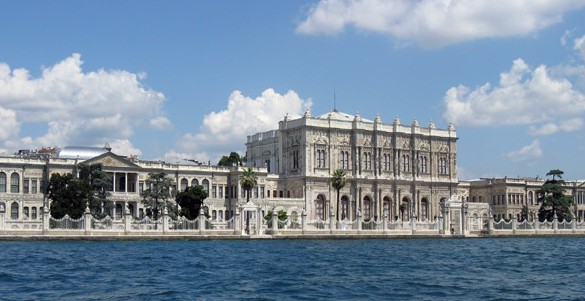
With its stunning vistas and former Ottoman palaces, the banks of the Bosphorus – the strategic waterway that cuts Istanbul in half and divides Europe from Asia – may be the perfect place to distinguish friend from foe and establish where your country’s interests lie.

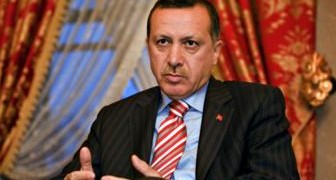
And sitting in his grandiose headquarters beside the strait, long the symbol of Turkey’s supposed role as bridge between east and west, Recep Tayyip Erdogan had little doubt about who was a friend and who wasn’t.
Mahmoud Ahmadinejad, Iran’s radical president whose fiery rhetoric has made him a bête noire of the west? “There is no doubt he is our friend,” said Erdogan, Turkey’s prime minister for the last six years. “As a friend so far we have very good relations and have had no difficulty at all.”

What about Nicolas Sarkozy, president of France, who has led European opposition to Turkey’s bid to join the EU and, coincidentally, adopted a belligerent tone towards Iran’s nuclear programme? Not a friend?

“Among leaders in Europe there are those who have prejudices against Turkey, like France and Germany. Previously under Mr Chirac, we had excellent relations [with France] and he was very positive towards Turkey. But during the time of Mr Sarkozy, this is not the case. It is an unfair attitude. The European Union is violating its own rules.

“Being in the European Union we would be building bridges between the 1.5bn people of Muslim world to the non-Muslim world. They have to see this. If they ignore it, it brings weakness to the EU.” [continued…]

Editor’s Comment — When President Obama addressed the Turkish parliament on April 6, he said: “Turkey’s greatness lies in your ability to be at the center of things. This is not where East and West divide – this is where they come together.”

Turkey has since been making great strides with its “zero problems with neighbors” policy as Foreign Minister Ahmet Davutuoğlu engages erstwhile adversaries emphasising “a common history, a common fate and a common future.”

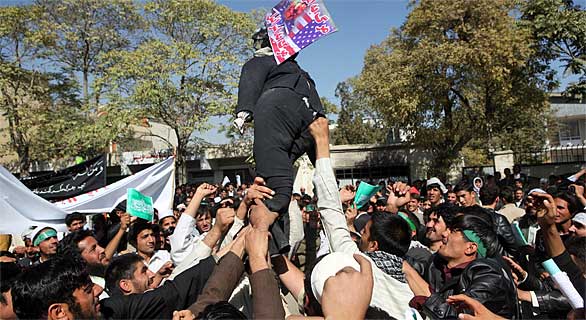
Meanwhile, at the hub of America’s active and violent engagement with the Muslim world, in Kabul, American flags and effigies of Obama are being burned in protest.

The White House should be asking: how come the Turks are having so much more success in practicing what we preach?

In the aftermath of the war on Gaza, Turkey has been uncompromising and principled in its criticisms of Israel. When asked whether he fears that this might risk harming Turkish-US relations, Erdogan dismisses the suggestion, saying: “I don’t think there is any possibility of that. America’s policy in this region is not dictated by Israel.”

Is that wishful thinking, or is it a polite and indirect way of telling Obama that it’s time to stiffen his backbone?

Facebooktwittermail

Rory Stewart: The T. E. Lawrence of Afghanistan – UPDATED

Rory Stewart: The T. E. Lawrence of Afghanistan

What would [Rory] Stewart’s version of muddling through in Afghanistan look like? While General Stanley McChrystal’s counterinsurgency plan calls for more than 100,000 American troops, and Joe Biden’s bare-bones counterterrorism proposal reportedly keeps troop numbers around their current level of 68,000, Stewart believes the foreign-troop presence in Afghanistan should actually be reduced–all the way down to 20,000. Those troops would then be used exclusively to fight Al Qaeda terrorists; the Taliban would no longer be an enemy. At the same time, while Stewart’s plan envisions continued aid to Afghans to support electricity, water, health, education, and agriculture development, the United States would cease with its state-building project and essentially leave the Kabul government to its own devices.

Stewart’s plan stems from his strange mixture of pessimism and optimism. On the one hand, he argues that the Afghan central government lacks the strength or legitimacy to actually run the country, nor does he have much faith in the ability of the United States to help it on those counts. “I have some friends in Afghanistan who will say, ‘If the U.S. government is infinitely flexible, capable, superbly informed, able to deliver programs precisely in every rural area, and its soldiers are able to avoid killing anybody and can identify exactly which tribal chief at the sub-district level to deal with, everything will be fine,’” Stewart says. “To which my answer is, ‘That’s a big if, and that’s not how our bureaucracies and administrations work.'” But Stewart also believes that things in Afghanistan aren’t as precarious as some fear. “There’s a certain kind of worst-case scenario view that Afghanistan is like this horrendous nightmare and, if we don’t get in there and sort it out, we’ll have global jihad, we’ll have a completely destabilized region, terrorists will have their hands on Pakistan’s nuclear arsenal, American credibility will be finished forever,” Stewart says. “And these are not really, I think, fully developed positions.”

Under a “muddling through” plan, Stewart concedes that the Taliban might take some provincial capitals in Southern Afghanistan, but he believes that the Hazara, Tajik, and Uzbek populations are stronger than they were in 1996 and, thus, would be able to keep the Taliban out of their areas. He also thinks it would take a minimal foreign military presence to prevent the Taliban from marching into Kabul. With the Taliban confined to certain parts of Afghanistan and its ability to exploit the ideology of religious resistance lessened due to the absence of a substantial foreign military presence, the rest of the country would, with substantial foreign assistance, be able to develop. Although his walk across Afghanistan led Stewart to believe that the country is, in some respects, ungovernable, it also gave him great faith in individual Afghans, on whom he depended for food, lodging, and frequently directions. (He didn’t carry a detailed map on his trek, since it might have made people think he was a British spy.) “We do consistently overestimate our own capacity and underestimate the capacity of others,” he says. “In every case, Afghans are more competent, more canny, more capable than we acknowledge, and we are less so.” [continued…]

UPDATE: Editor’s Comment — Readers who have been following the extraordinary career of Rory Stewart may be interested to hear that yesterday he took the first step in the next chapter: he was selected as the Conservative Party candidate for the English constituency of Penrith and The Border. This is a safe Conservative seat and with the Labour Party struggling in the polls, Stewart stands a good chance of not only entering Parliament after the next general election in Britain but quite likely gaining a position in the next British government. Talent is no guarantee of success in politics, but it will be interesting to see how far Stewart advances and what he might accomplish.

Taliban demand election boycott

The Taliban called on Afghans to boycott the upcoming presidential elections runoff and threatened to attack polling sites, sparking fears that thousands of voters will stay home on election day.

“The Islamic Emirate of Afghanistan urges the people of Afghanistan to not participate in the elections, and once again prove that they are true believers,” the group said in a statement emailed to the Wall Street Journal, using a name referring to the Taliban and allied groups.

“All mujahedeen are ordered to do their best to disrupt the elections and carry out attacks on enemy outposts and prevent people from going to the polling centers,” the statement continued. The group hinted that they would target election workers and voters. “If anyone, including the participants and the workers, gets harmed they have only themselves to blame, since the Islamic Emirate warned them in advance.” [continued…]

Afghan challenger considers runoff boycott

The challenger to President Hamid Karzai is considering boycotting the upcoming runoff if his demands are not met to remove the leaders of Afghanistan’s election commission who he believes are biased against him, campaign officials said Sunday.

Despite his public promises that he will participate in the Nov. 7 runoff, Abdullah Abdullah has been discussing the possibility of pulling out, an outcome that could create a new political crisis and throw the legitimacy of any new government into question. His aides argue that it would be dangerous to enter an election that might reproduce the massive fraud that discredited the vote in August.

Abdullah’s main running mate, Homayoun Shah Assefy, said that it was clear that the United States and the international community would resist such a boycott but that it might be necessary if the Independent Election Commission is not purged of its prominent Karzai supporters. [continued…]

Facebooktwittermail

Karzai rules out sharing power

Karzai rules out sharing power

President Hamid Karzai’s team shifted aggressively into campaign mode Saturday and ruled out any possibility of a power-sharing deal with challenger Abdullah Abdullah ahead of a runoff election in two weeks…

Snow and freezing weather could make voting impossible in some parts of the country. And many people say there is not enough time to replace and vet election officials to prevent fraud. Karzai initially received 54 percent of the vote, but nearly one-third of his votes were considered rigged and he finished with 49 percent.

“When you have a million-odd votes thrown out, you’ve got to ask yourself, what was the IEC doing and who is going to be held accountable?” said Saad Mohseni, an owner of a prominent media company in Afghanistan.

Election officials plan to reduce the number of polling places from about 6,300 to about 5,800 in an attempt to prevent fraud in volatile areas where votes were recorded at stations that never opened.

One senior Western diplomat, speaking on the condition of anonymity because he was not authorized to speak to the media by name, said there was “way over a 50-50 chance” that the runoff would be held despite the potential problems. [continued…]

If this is progress, what would an Afghan disaster look like?

U.S. commanders on the ground are not setting nearly as much store by the election saga as are their political overlords in Washington. Gen McChrystal is making clear that Mr Obama can no longer afford to delay the issue of reinforcements, stressing that simply stopping the Taliban from extending its control over much of the countryside in the south and east will require 40,000 more troops – and he would prefer 80,000. Moreover, logistical constraints mean they can be introduced only at a rate of around 4,000 a month.

The war may look unwinnable to any student of history, but Americans often imagine themselves immune to history’s rules, and Mr Obama doesn’t want to go into the next election being pilloried for “losing” Afghanistan (not that the Taliban will necessarily sweep back into Kabul, but they could do a pretty good job of surrounding the cities and choking Nato supply lines).

So it’s a safe bet that Mr Obama will escalate US military involvement, even as he promises increasingly sceptical Democrats that the Afghan security forces are being “trained” to take over security in the near future. This, too, is something of a fiction: when 4,000 US Marines deployed in Helmand shortly before the election, they took with them 400 Afghan troops who showed little appetite for getting out among the people. Close to 100,000 Afghan troops have been trained, but how effective they are in fighting the Taliban is anybody’s guess. [continued…]

How they convinced Karzai

What perhaps finally brought Karzai into the real world was [Rahm] Emanuel going public with a statement on October 18—which Kerry had been privately drumming into Karzai for days—that Obama would not commit to sending any more US troops to Afghanistan until there was a “legitimate” and “new” government in Kabul.

The underlying message was that if Karzai still refused to listen he could be held responsible for allowing Afghanistan to go down the tubes or be taken over by the Taliban. Even though Karzai has a gigantic ego and was still in a state of denial, he could not get around that one.

Kerry, Eikenberry, and Emanuel had one thing going for them that others working the Afghan shift in the White House—Richard Holbrooke, Joe Biden, James Jones, General David Petraeus, and even Obama himself—did not have. These three had never criticized Karzai in public before. Karzai intensely dislikes the other White House players because they have hurt his ego by dishonoring him and criticizing him in public. Over such knowledge and niceties does the world turn and turn again. [continued…]

Facebooktwittermail

Iran and America: Obama and the “velvet coup”

Iran and America: Obama and the “velvet coup”

Iran’s supreme leader Ayatollah Ali Khamenei and his army commanders have, in their response to the street-protests that erupted across the country after the controversial presidential election of 12 June 2009, employed a routine accusation against the United States: that it had initiated a “velvet revolution” in the country.

All the evidence suggests that the popular demonstrations were a spontaneous reaction to what was widely perceived to be a fraudulent result. Indeed, it is more plausible that the United States unwillingly helped to achieve the reverse of what Ayatollah Khamenei (and other hardline leaders) charged it with: namely, facilitating the regime’s effort to steal the elections and launch a “velvet coup d’état”.

The primary responsibility for what has happened in Iran since the election lies with the hardline core of the Iranian regime. But the ability of the Islamic Republic’s rulers to consolidate their power has – it is clear in retrospect – been aided by the sense of safety it had acquired from possible attack by the US. [continued…]

News of Iran’s detained ‘blogfather’

Human Rights Activists has received reports which suggest that the blogger, Hossein Derakhshan, who was arrested on Nov. 2, 2008, has spent the first eight months of his detention in solitary confinement and different wards of the Evin prison upon his return to Iran. During that time he has been subjected to various physical and psychological pressure tactics and multiple transfers.

He has been beaten repeatedly and has been forced to do squats in cold showers. His interrogators have threatened to arrest his father and his sister unless he confessed to espionage charges. With the start of the massive arrests after the presidential election, and as result of cell shortages in Evin prison, Derakhshan was transferred to Ward 2A of the IRGC prison, where he shared his cell with newly arrested people. [continued…]

Facebooktwittermail

War fever at the New York Times: a five-day log

War fever at the New York Times: a five-day log

When five days pour forth a lead story on the way “a coordinated assault” of the Taliban and Al Qaeda in Pakistan has caused a grave risk to American interests; a lead about the serious counter-offensive mounted by Pakistan; a flash suitable for any date but run as a lead concerning the heroin trade of the Taliban (“Vast Network Reaps Millions from Drugs”); the launching of a serial memoir by a reporter “Held Captive by the Taliban,” which will extend to five parts; a flattering stoic-soldier profile of General McChrystal in the Times Magazine; a Pakistan follow-up suggesting that Pakistan’s army’s now fights well but is “meeting strong resistance” from the Taliban and cannot win without help; a sequence of three stories by different hands, tracing with approval the acquiescence of President Hamid Karzai in calls for a run-off (the very agreement the administration made a precondition for expanded American commitment); two op-eds over three days by military men not of the highest rank, urging escalation; and a reckless “scoop,” filled sparsely with random and often anonymous interviews regarding the supposed discontents within the armed forces at the length of the administration’s pause — when all this is the fruit of five days’ harvest at the Times, the conclusion draws itself. The New York Times wants a large escalation in Afghanistan. The paper has been made nervous by signs that the president may not make the big push for a bigger war; and they are showing what the rest of his time in office will be like if he does not cooperate. [continued…]

Obama’s war logic

The White House logic that a decision on sending further troops would have to wait for the election debacle to be resolved is faulty, however. And Defense Secretary Robert Gates was among those willing to point that out. “We’re not just going to sit on our hands, waiting for the outcome of this election and for the emergence of a government in Kabul,” Gates said Tuesday. “The outcome of the elections and the problems with the elections have complicated the situation for us. But the reality is, it’s not going to be complicated one day and simple the next.”

Indeed, for purposes of creating a representative government as the foundation of U.S. counterinsurgency strategy, the key flaw of Afghanistan’s August election was not the widespread ballot fraud; it was the fact that almost 3 out of 4 voters didn’t show up at the polls because of the Taliban security threat. So, while a runoff election might satisfy the fraud complaints, it won’t make the resulting government much more representative unless millions more voters show up at the polls this time. But the deteriorating security situation and limits of the appeal of both candidates give little reason to expect that the rerun would see a voter surge; turnout in a runoff, if anything, could be even lower.

What’s more, despite the findings of the electoral commission, there’s widespread doubt in Kabul over whether a runoff vote will actually proceed. A power-sharing deal between Karzai and Abdullah is considered the much more likely outcome. But in reality, the manner in which the electoral stalemate is resolved doesn’t substantially alter the basic choice facing Obama: either send tens of thousands more U.S. troops, which U.S. commander General Stan McChrystal says are necessary simply to halt the Taliban’s advance, or draw down to a policing operation against al-Qaeda and abandon the goal of defeating the Taliban. [continued…]

Everything you have been told about Afghanistan is wrong: the three great falacies

Every military counter-insurgency strategy hits up against the probability that it will, in time, create more enemies than it kills. So you blow up a suspected Taliban site and kill two of their commanders – but you also kill 98 women and children, whose families are from that day determined to kill your men and drive them out of their country. Those aren’t hypothetical numbers. They come from Lt. Col. David Kilcullen, who was General Petraeus’ counter-insurgency advisor in Iraq. He says that US aerial attacks on the Afghan-Pakistan border have killed 14 al-Qa’ida leaders, at the expense of more than 700 civilian lives. He says: “That’s a hit rate of 2 per cent on 98 per cent collateral. It’s not moral.” It explains the apparent paradox that broke the US in Vietnam: the more “bad guys” you kill, the more you have to kill.

There is an even bigger danger than this. General Petraeus’s strategy is to drive the Taliban out of Afghanistan. When he succeeds, they run to Pakistan – where the nuclear bombs are.

To justify these risks, the proponents of the escalation need highly persuasive arguments to show how their strategy slashed other risks so dramatically that it outweighed these dangers. It’s not inconceivable – but I found that, in fact, the case they give for escalating the war, or for continuing the occupation, is based on three premises that turn to Afghan dust on inspection. [continued…]

Facebooktwittermail

US cuts funding to Iran opposition

US cuts funding to Iran opposition

In an apparent shift from the Bush administration’s efforts to foster regime change in Iran by financing opposition groups, the Obama White House has all but dismantled the Iran Democracy Fund.

While the move has been criticised by neo-conservatives in the US, it has been welcomed by Iranian human rights and pro-democracy activists.

The controversial program was initiated by the Bush administration in an effort to topple the clerical regime in Tehran by financing Iranian NGOs.

While heralded by some in Washington, reactions in Iran to the program were overwhelmingly negative. [continued…]

Scholar who was held after disputed Iranian election is given at least 12 years

An Iranian-American scholar who was jailed during the protests following Iran’s disputed presidential election has been sentenced to at least 12 years on charges of acting against national security, Iranian state media reported Tuesday.

Kian Tajbaksh, a sociologist and urban planner with a doctorate from Columbia, was arrested July 9 and testified during a mass trial of opposition supporters in August.

American officials have repeatedly called on Tehran to release Mr. Tajbaksh, who was the only American citizen included in the mass show trials that followed Iran’s postelection unrest. He spent four months in prison in 2007 on charges of endangering national security. [continued…]

Facebooktwittermail

Jordan king warns over US Mideast policy

Jordan king warns over US Mideast policy

Jordan’s king said in comments published Monday that the U.S. administration seems to be focusing more of its attention on Iran and less on resolving the Israeli-Palestinian conflict, saying time was running out to make peace.

In an interview with Italian daily La Repubblica, King Abdullah II said the region’s hopes for peace were huge at the start of the Obama administration, but now sees the “goal getting farther away.”

“I’ve heard people in Washington talking about Iran, again Iran, always Iran,” Abdullah was quoted as saying. “But I insist on, and keep insisting on the Palestinian question: the Israeli-Palestinian conflict is the most serious threat to the stability of the region and the Mediterranean.” [continued…]

Editor’s Comment — Having just won the Nobel Peace Prize for advancing global diplomacy, President Obama should reflect some more on how engagement really works. The United States will talk to its adversaries, Obama boldly declared before getting elected. So far so good.

But engagement is sure to lead to a dead end unless it functions effectively as a two-way street. Washington has shown its readiness to talk, but is it ready to listen? Engagement can be as boneheaded as non-engagement if it doesn’t involve listening.

Abdullah, Erdogan and others are telling the US that this administration’s approach to the Middle East is failing. Is the administration listening?

Stop Palestinian suffering for Mideast peace, says Erdoğan

Peace cannot be established in the Middle East when the suffering of the Palestinians continues and the Gaza Strip remains a wreck, Turkish Prime Minister Recep Tayyip Erdoğan said Monday.

Speaking at the Istanbul Forum organized by Stratim, Seta and the German Marshall Fund, Erdoğan said the Palestinian question is at the center of all problems in the Middle East. The prime minister recalled that Turkey vocalized its disapproval of the previous year’s bombing of the Gaza Strip, adding: “We criticized steps that were serving no purpose, but which increased suffering and sabotaged the peace process. We will continue to criticize it today, too. We will criticize anything similar taking place in other areas.” [continued…]

Turkish president: ‘Brave criticism’ of Israel to continue

Turkey will continue to criticize its ally Israel with “courage” if it engages in “mistakes”, Turkish President Abdullah Gül said Sunday, continuing the verbal sparring between the two countries over the situation in Gaza.

Turkey is one of the “rare” countries to have good relations with both Arab countries and Israel, Gul said during an interview with public teleivision TRT.

“But this does not mean that Turkey will not raise its voice against errors if they are made. We should not think that Turkey will keep silent,” he said. [continued…]

How do Turkey and Israel measure each other’s love?

…in Israel’s eyes, Turkey is seen as two states – one in the form of the military, twin sister of Israel, the other political, leaning toward Islam and making friends with Syria and Iran. Thus, insolent Israel decided in a typical manner not to take Turkey’s politicians seriously and to adopt the Turkish army. Israel was also certain all these years that Turkey, backward and poor, needed its sole friend in the Middle East because it was not accepted in the region due to its Ottoman history and close ties with Israel and the United States, and therefore could not do without Israel.

So in Israel, people have been quick to conclude that “something went wrong” in Turkey. Suddenly the government rules the army instead of the army, Israel’s loyal friend, telling the government what to do. Israelis did not think for a minute that the Turkish army might also have had enough.

Turkey has changed; inwardly, for the most part. In a long and difficult process it has become a more democratic country. The army is still dominant, but less public in its role in the civilian domain. Turkey has overcome most of its economic problems and has been transformed into a regional economic power. It is a real strategic asset for the United States, increasing its importance after the Iraq war. It has also developed a different regional strategy.

Whoever reads what Foreign Minister Ahmet Davutoglu says recognizes that Turkey aspires to become an influential player not only in the Middle East but also in the Caucasus and Asia. It is involved in the fighting in Afghanistan, is forming an economic alliance with Iraq, plans to invest billions of dollars in Egypt, and its annual trade with Iran stands at $9 billion, with Syria at $1.5 billion.

And here is the paradox. This is the only Muslim country that is not harshly criticized, whether by Iran or any Arab state, for having such close ties with Israel. As such, it could have served as an excellent mediator between Israel and the Arab countries had Israel not considered it an obvious satellite state. [continued…]

Facebooktwittermail

Iran ‘doubts’ over nuclear deal

Iran ‘doubts’ over nuclear deal

Iran appears to be backing away from a proposed deal to resolve the crisis over its nuclear programme, Iranian media reports suggest.

A state TV channel said Iran wanted to import fuel for its research reactor, without sending its own enriched uranium out of the country. [continued…]

Russia worries about the price of oil, not a nuclear Iran

Last Wednesday in Moscow, the remaining illusions the Obama administration held for cooperation with Russia on the Iranian nuclear program were thrown in Secretary of State Hillary Clinton’s face. Stronger sanctions against Iran would be “counterproductive,” said Russian Foreign Minister Sergei Lavrov, just days after President Dmitry Medvedev said sanctions were likely inevitable. This apparent inconsistency should remind us that Mr. Medvedev is little more than a well-placed spectator, and that Prime Minister Vladimir Putin, who discounted sanctions in a statement from Beijing, is still the voice that matters.

This slap comes after repeated concessions—canceling the deployment of missile defenses in Eastern Europe, muted criticism of Russia’s sham regional elections—from the White House. Washington’s conciliatory steps have given the Kremlin’s rulers confidence they have nothing to fear from Mr. Obama on anything that matters.

And nothing matters more to Mr. Putin and his oligarchs than the price of oil. Even with oil at $70 a barrel, Russia’s economy is in bad straits. Tension in the Middle East, even an outbreak of war, would push energy prices higher. A nuclear-armed Iran would, of course, be harmful to Russian national security, but prolonging the crisis is beneficial to the interests of the ruling elite: making money and staying in power. [continued…]

Iran will up uranium enrichment ‘if Vienna talks fail’

The Iran Atomic Energy Organisation said on Monday it will continue to enrich uranium up to the five percent level or even to the higher 20 percent grade if talks on a third-party enrichment deal fail.

“The Islamic Republic of Iran… will continue its enrichment activities inside Iran up to the five percent level,” the official IRNA news agency quoted the organisation’s spokesman Ali Shirzadian as saying.

“But if the negotiations do not yield the desired results, Iran will start enriching uranium to the 20 percent level for its Tehran reactor. It will never give up this right.” [continued…]

Facebooktwittermail

Kerry: Obama would be ‘irresponsible’ to send more troops to Afghanistan now

Kerry: Obama would be ‘irresponsible’ to send more troops to Afghanistan now

Sen. John Kerry cautioned President Obama Saturday against raising troop levels in Afghanistan, saying it would be “entirely irresponsible” to do so while the Afghan government remains in turmoil following national elections.

“It would be entirely irresponsible for the president of the United States to commit more troops to this country, when we don’t even have an election finished and know who the president is and what kind of government we’re working in, with,” Kerry told CNN’s John King in an interview set to air Sunday at 9 a.m. on State of The Union. [continued…]

‘Brick wall’ feared in Afghan election

There is a growing fear among Western officials in Afghanistan that President Hamid Karzai and the nation’s Independent Election Commission will not accept the findings of a United Nations-backed fraud investigation that is expected to call for a runoff to settle Afghanistan’s disputed presidential election.

Such a decision by Karzai would deepen Afghanistan’s political crisis and leave no clear method for resolving the allegations of massive fraud that have undermined the credibility of the election, which was held nearly two months ago. It would also be a setback for the Obama administration, which has urged the candidates to follow the electoral process to yield a legitimate winner.

“That’s the brick wall,” said one Western official in Kabul familiar with the process. “It’s going to be quite chaotic and confusing.” [continued…]

Allies press Karzai to accept election audit results

There were also reports that foreign envoys were pressing both sides to work out a power-sharing deal. A senior American official noted that Mr. Karzai and Mr. Abdullah together won more than 70 percent of the votes cast in the first round, enough to give a unity government credibility.

But the Obama administration is adamant that it is not pushing for a deal.

“We’re not trying to prevent a second round,” said the official, who spoke on the condition of anonymity because of the delicacy of the matter. “The issue is not about a runoff. The issue is getting a legitimate president.”

It was unclear how seriously either candidate was taking the idea of a unity government. Neither candidate has completely ruled it out, but each insists that the current process play out first.

Meanwhile, preparations for a second round of voting are well under way. Ballots for a second round were printed in London and shipped to Kabul, the American official said. [continued…]

Facebooktwittermail

Mitchell the man for the job?

Mitchell the man for the job?

Senator George Mitchell is one of America’s most impressive public servants.

He has served the state of Maine well, chaired any number of commissions for various presidents since his senate retirement and patiently plodded through years of work and negotiations with historically opposed foes in the Northern Ireland peace process and achieved peace.

However, he may not be the right envoy to restart Israeli-Palestinian talks.

Mitchell telegraphed the problem from the day that Barack Obama, the US president, announced his appointment on the first work day of the new administration.

Mitchell said that all parties would have to be patient and that it takes years for a process such as the one being envisioned – to create peace between two eventually viable states of Israel and Palestine – to come to fruition.

However, he failed to acknowledge that the negotiations over what Palestine would eventually become have been taking place for decades and have involved many US presidents.

He is not starting at zero and there is not much time left to achieve a new and more constructive ‘equilibrium’ between Israel and Palestine. I prefer the term ‘equilibrium’ over the more hopeful and naïve goal of ‘peace’. [continued…]

Facebooktwittermail