Rep. Alan Grayson writes: In the 1970s, Congressman Otis Pike of New York chaired a special congressional committee to investigate abuses by the American so-called “intelligence community” – the spies. After the investigation, Pike commented:
It took this investigation to convince me that I had always been told lies, to make me realize that I was tired of being told lies.
I’m tired of the spies telling lies, too.
Pike’s investigation initiated one of the first congressional oversight debates for the vast and hidden collective of espionage agencies, including the Central Intelligence Agency (CIA), the Federal Bureau of Investigation (FBI), and the National Security Agency (NSA). Before the Pike Commission, Congress was kept in the dark about them – a tactic designed to thwart congressional deterrence of the sometimes illegal and often shocking activities carried out by the “intelligence community”. Today, we are seeing a repeat of this professional voyeurism by our nation’s spies, on an unprecedented and pervasive scale.
Recently, the US House of Representatives voted on an amendment – offered by Representatives Justin Amash and John Conyers – that would have curbed the NSA’s omnipresent and inescapable tactics. Despite furious lobbying by the intelligence industrial complex and its allies, and four hours of frantic and overwrought briefings by the NSA’s General Keith Alexander, 205 of 422 Representatives voted for the amendment.
Though the amendment barely failed, the vote signaled a clear message to the NSA: we do not trust you. [Continue reading…]
Category Archives: US government
NSA scrambles to defend itself
Having intelligence community leaders like Director of the National Security Agency Keith Alexander and Director of National Intelligence James Clapper as front-line defenders for the NSA turned out to be an ineffective strategy when both were exposed as liars. So, the NSA must now communicate indirectly, relying on journalists who are willing to function as mouthpieces for the agency.
Following the latest revelations about eavesdropping on the private communications of German Chancellor Angela Merkel and other foreign leaders, the Associated Press’s intelligence writer, Kimberly Dozier, offers explanations on how and why the NSA spies on U.S. allies. It’s unlikely that the answers she offers are a summation of her own deep knowledge of the way the NSA works. Much more likely, this is simply the summation of an NSA background briefing. Read this as a paraphrase of the NSA speaking for itself.
First off comes this claim: that “intercepting foreign diplomats’ or leaders’ communications, like the alleged eavesdropping on Merkel, as well as on Brazilian President Dilma Rousseff and former Mexican President Felipe Calderon” is spying that the NSA “is authorized to do”. The intended takeaway from that statement is: we didn’t break U.S. law. The question which this statement fudges, however, is whether the NSA was directed to carry out such surveillance.
Then we come to the basic question:
Q: Why bug the phone of an ally?
A: Even a close ally like Merkel doesn’t share everything with the Americans, but decisions she makes can have a major impact on U.S. foreign, defense and economic policy overseas. Merkel’s center-right Christian Democratic party just won an election, and she is in the process of wooing other German political parties to form a coalition government. The party she chooses could pull her political policies in a different direction, in terms of counterterrorism cooperation with the U.S., for instance, or perhaps the new coalition might chill Merkel’s support of the NATO mission in Afghanistan.
Say what?! The NSA needs to bug Merkel’s phone so that the U.S. can receive advance notice of the political makeup of the coalition she is forming? It can’t simply rely on conventional diplomatic and political channels of communication? That’s ridiculous — unless it’s meant to imply that the U.S. wants to covertly exercise some influence on the outcome of that political process.
I don’t actually believe that’s the implication because I don’t think anyone in Washington or at the NSA is crazy enough to imagine that the U.S. could successfully interfere in the domestic politics of its allies in this way.
There is a much simpler answer to this question and it’s offered by a career American official with long experience in Europe who spoke to the New York Times. Why bug the phone of an ally? Because you can.
The report notes: “Administration officials say the National Security Agency, in its push to build a global data-gathering network that can reach into any country, has rarely weighed the long-term political costs of some of its operations.”
By all appearances, the NSA is now in cry-baby mode and instead of acknowledging that it is suffering the effects of self-inflicted wounds, it wants to cast itself as victim. The Washington Post provides emotional support:
U.S. officials are alerting some foreign intelligence services that documents detailing their secret cooperation with the United States have been obtained by former National Security Agency contractor Edward Snowden, according to government officials.
Snowden, U.S. officials said, took tens of thousands of documents, some of which contain sensitive material about collection programs against adversaries such as Iran, Russia and China. Some refer to operations that in some cases involve countries not publicly allied with the United States.
The process of informing officials in capital after capital about the risk of disclosure is delicate. In some cases, one part of the cooperating government may know about the collaboration while others — such as the foreign ministry — may not, the officials said. The documents, if disclosed, could compromise operations, officials said.
The notifications come as the Obama administration is scrambling to placate allies after allegations that the NSA has spied on foreign leaders, including German Chancellor Angela Merkel. The reports have forced the administration to downplay operations targeting friends while also attempting to preserve other programs that depend on provisional partners. In either case, trust in the United States may be compromised.
“It is certainly a concern, just as much as the U.S. collection [against European allies] being put in the news, if not more, because not only does it mean we have the potential of losing collection, but also of harming relationships,” a congressional aide said.
The Office of the Director of National Intelligence is handling the job of informing the other intelligence services, the officials said. ODNI declined to comment.
In one case, for instance, the files contain information about a program run from a NATO country against Russia that provides valuable intelligence for the U.S. Air Force and Navy, said one U.S. official, who requested anonymity to discuss an ongoing criminal investigation. Snowden faces theft and espionage charges.
The narrative thrust here is that while the NSA is dealing with damage control, the cause of the damage was not the agency’s operations; it was Snowden’s revelations.
Instead of facing reality, the intelligence community would apparently now rather engage in a farcical exercise: present itself as victim of what it regards as the mischievous actions as a single man. The problem with this narrative (apart from the fact that it clearly misrepresents Edward Snowden’s actions) is that it actually underlines the inherent weakness of the bloated post 9/11 intelligence edifice: that is, that its weakness derives in large part from its sheer size.
As much as the actions of the NSA should be viewed in geopolitical terms, they should also be seen as the result of the beguiling power of technology. That is to say, when something is presented as being technically feasible — such as recording all the metadata associated with global communications — then that possibility becomes so alluring, that more fundamental questions get shunted to one side.
An obsession with accumulating more and more information turns into a maniacal desire. The expansion of the intelligence gathering process becomes a self-justifying, blindly funded enterprise which loses sight of basic questions about the value of the data, the means through which it can be productively analyzed, and the social and political implications of sanctioning perpetually expanding mass surveillance along with highly ill-advised targeted surveillance.
Hagel pushes for greater secrecy in U.S. Defense Department
American Forces Press Service reports: Defense Secretary Chuck Hagel recently directed that DOD organizations take additional steps to ensure unclassified controlled technical information is protected from cyber intrusions.
“Stolen data provides potential adversaries extraordinary insight into the United States’ defense and industrial capabilities and allows them to save time and expense in developing similar capabilities,” Hagel said in a memo dated Oct. 10.
“Protection of this data is a high priority for the department and is critical to preserving the intellectual property and competitive capabilities of our national industrial base and the technological superiority of our fielded military systems,” he added.
As the world has become increasingly dependent on electronic data, traditional physical security concepts are no longer valid, said Jennifer Elzea, a Defense Department spokesperson.
Washington Post reporters collude with source of ‘secret memos’ on drone strikes in Pakistan
The Washington Post reports:
Despite repeatedly denouncing the CIA’s drone campaign, top officials in Pakistan’s government have for years secretly endorsed the program and routinely received classified briefings on strikes and casualty counts, according to top-secret CIA documents and Pakistani diplomatic memos obtained by The Washington Post.
The files describe dozens of drone attacks in Pakistan’s tribal region and include maps as well as before-and-after aerial photos of targeted compounds over a four-year stretch from late 2007 to late 2011 in which the campaign intensified dramatically.
Markings on the documents indicate that many of them were prepared by the CIA’s Counterterrorism Center specifically to be shared with Pakistan’s government. They tout the success of strikes that killed dozens of alleged al-Qaeda operatives and assert repeatedly that no civilians were harmed.
It’s easy to conjure an image of reporters Bob Woodward and Greg Miller studying these documents and their markings, amazed at the trove of information they stumbled upon. But who are they kidding?
The key word in the opening sentence of their report is “obtained.”
I have a hunch these documents weren’t obtained while rummaging through dumpsters behind the some State Department offices. Neither do I imagine were they were handed to Woodward in a dimly lit parking garage by an anonymous source. Neither do I believe a new whistle-blower is involved.
If the reporting was more honest it would not evoke an aura of mystery by using this shadowy expression, obtained. It would instead refer to memos provided to the Washington Post.
As gifts rather than a discovery, the key questions are who provided the memos and what was the source’s objective?
With Bob Woodward’s name in the byline, it’s reasonable to assume that this is a case of an official leak in exchange for services rendered.
The principle service comes in the form of the headline: “Secret memos reveal explicit nature of U.S., Pakistan agreement on drones”
It sounds like the CIA is pushing back against Pakistani Prime Minister Nawaz Sharif’s demand that the U.S. needs to respect Pakistan’s “sovereignty and territorial integrity” and end drone strikes.
The purpose of the CIA in leaking these memos is to show that drone strikes have been conducted with the Pakistani government’s cooperation. But given the relative power of the U.S. and Pakistan, that cooperation is more like the kind the mafia earns through a protection racket.
The report later says:
In a measure of the antagonism between the two sides, a 2010 memo sent by Pakistan’s Ministry of Foreign Affairs to its embassy in Washington outlined a plan to undermine the CIA.
“Kindly find enclosed a list of 36 U.S. citizens who are [believed] to be CIA special agents and would be visiting Pakistan for some special task,” said the memo, signed by an official listed as the country’s director general for Americas. “Kindly do not repeat not issue visas to the same.”
Referring to this as a plan to undermine the CIA, is a curious choice of phrase.
The report makes no mention of an event in early 2011 that seriously ruptured U.S.-Pakistani relations, revealing the threat the CIA poses far beyond Waziristan.
Raymond Davis, a 36-year-old former special forces soldier employed by the CIA, was arrested after he shot two suspected armed robbers in Lahore.
Shortly after the killings, The Guardian reported:
Pakistani prosecutors accuse the spy of excessive force, saying he fired 10 shots and got out of his car to shoot one man twice in the back as he fled. The man’s body was found 30 feet from his motorbike.
“It went way beyond what we define as self-defence. It was not commensurate with the threat,” a senior police official involved in the case told the Guardian.
The Pakistani government is aware of Davis’s CIA status yet has kept quiet in the face of immense American pressure to free him under the Vienna convention. Last week President Barack Obama described Davis as “our diplomat” and dispatched his chief diplomatic troubleshooter, Senator John Kerry, to Islamabad. Kerry returned home empty-handed.
Many Pakistanis are outraged at the idea of an armed American rampaging through their second-largest city.
A passage in the Post’s report that seems revealing in a way that doesn’t serve the CIA’s interests is this:
[T]he documents also reveal a major shift in the CIA’s strategy in Pakistan as it broadened the campaign beyond “high-value” al-Qaeda targets and began firing missiles at gatherings of low-level fighters.
The files trace the CIA’s embrace of a controversial practice that came to be known as “signature strikes,” approving targets based on patterns of suspicious behavior detected from drone surveillance cameras and ordering strikes even when the identities of those to be killed weren’t known.
At times, the evidence seemed circumstantial.
On Jan. 14, 2010, a gathering of 17 people at a suspected Taliban training camp was struck after the men were observed conducting “assassination training, sparring, push-ups and running.” The compound was linked “by vehicle” to an al-Qaeda facility hit three years earlier.
On March 23, 2010, the CIA launched missiles at a “person of interest” in a suspected al-Qaeda compound. The man caught the agency’s attention after he had “held two in-car meetings, and swapped vehicles three times along the way.”
Other accounts describe militants targeted because of the extent of “deference” they were shown when arriving at a suspect site. A May 11, 2010, entry noted the likely deaths of 12 men who were “probably” involved in cross-border attacks against the U.S. military in Afghanistan.
Although often uncertain about the identities of its targets, the CIA expresses remarkable confidence in its accuracy, repeatedly ruling out the possibility that any civilians were killed.
One table estimates that as many as 152 “combatants” were killed and 26 were injured during the first six months of 2011. Lengthy columns with spaces to record civilian deaths or injuries contain nothing but zeroes.
Those assertions are at odds with research done by human rights organizations, including Amnesty International, which released a report this week based on investigations of nine drone strikes in Pakistan between May 2012 and July 2013. After interviewing survivors and assembling other evidence, the group concluded that at least 30 civilians had been killed in the attacks.
White House spokesman Jay Carney acknowledged Tuesday that drone strikes “have resulted in civilian casualties” but defended the program as highly precise and said there is a “wide gap” between U.S. estimates and those of independent groups.
That someone targeted by a missile strike could be described as a “person of interest” is beyond Orwellian.
In law enforcement parlance, a person of interest is someone that authorities are investigating — someone who may end up being arrested.
To catch the “interest” of the Obama administration, however, apparently means marked for killing. Maybe the expression is an abbreviation: such-and-such is a person the U.S. would be interested in eliminating. A type of person who might be described in an addendum to Obama’s kill list — on his wish list. An opportunistic target; a person of interest.
What the report makes clear is that a person of interest turns out to be someone who catches the CIA’s attention on the basis of mere suspicion. The agency forms the impression this person’s up to no good and so kills him — just to be safe.
As damning as this account might sound, we then come to what can be called the bureaucrat’s defense: the records show…
Amnesty International can issue a damning report on the civilian casualties from drone strikes, but from Obama on downwards, everyone can plead innocence. How? By citing official records which show columns of zeros when it comes to civilians killed or injured.
Mistakes, there may have been a few, but every strike was launched on good faith by an honest American, serving this nation and blessed by God.

American terrorism: ‘Will I be next?’ Drone strikes in Pakistan
I wasn’t scared of drones before, but now when they fly overhead I wonder, will I be next?
– Nabeela, eight-year-old granddaughter of US drone strike victim Mamana BibiOn a sunny afternoon in October 2012, 68-year-old Mamana Bibi was killed in a drone strike that appears to have been aimed directly at her. Her grandchildren recounted in painful detail to Amnesty International the moment when Mamana Bibi, who was gathering vegetables in the family fields in Ghundi Kala village, northwest Pakistan, was blasted into pieces before their eyes. Nearly a year later, Mamana Bibi’s family has yet to receive any acknowledgment that it was the US that killed her, let alone justice or compensation for her death.
Earlier, on 6 July 2012, 18 male laborers, including at least one boy, were killed in a series of US drone strikes in the remote village of Zowi Sidgi. Missiles first struck a tent in which some men had gathered for an evening meal after a hard day’s work, and then struck those who came to help the injured from the first strike. Witnesses described a macabre scene of body parts and blood, panic and terror, as US drones continued to hover overhead.
The use of pilotless aircraft, commonly referred to as drones, for surveillance and so-called targeted killings by the USA has fast become one of the most controversial human rights issues in the world. In no place is this more apparent than in Pakistan.
The circumstances of civilian deaths from drone strikes in northwest Pakistan are disputed. The USA, which refuses to release detailed information about individual strikes, claims that its drone operations are based on reliable intelligence, are extremely accurate, and that the vast majority of people killed in such strikes are members of armed groups such as the Taliban and al-Qa’ida. Critics claim that drone strikes are much less discriminating, have resulted in hundreds of civilian deaths, some of which may amount to extrajudicial executions or war crimes, and foster animosity that increases recruitment into the very groups the USA seeks to eliminate.
According to NGO and Pakistan government sources the USA has launched some 330 to 374 drone strikes in Pakistan between 2004 and September 2013. Amnesty International is not in a position to endorse these figures, but according to these sources, between 400 and 900 civilians have been killed in these attacks and at least 600 people seriously injured. [Continue reading…]
See Amnesty’s 76-page report, ‘Will I be Next?’ U.S. Drone Strikes in Pakistan.
The U.S. government’s secrecy problem just got worse
Elizabeth Goitein writes: It is no secret that the United States government has too many secrets. Long before Edward Snowden’s revelations about mass surveillance by the National Security Agency, experts and government insiders were raising alarms about “overclassification.” The Public Interest Declassification Board, an independent advisory committee created by Congress, reported in November 2012 that “present practices for classification and declassification of national security information are outmoded, unsustainable and keep too much information from the public.” Two weeks ago, the Department of Justice’s inspector general issued a review of the department’s classification practices, concluding that “DOJ is susceptible to misclassification.”
At least some of the secrecy tidal wave can be attributed to an explosion in the amount of information — of all kinds — that the government generates. Since the beginning of the modern classification system in 1940, officials have classified documents unnecessarily, whether by rote or to hide embarrassing information. In the era of typewriters and carbon copies, however, the amount of secret paperwork generated was comprehensible in scale. Today, any individual item of classified information may generate hundreds or even thousands of classified emails or intranet posts. When combined with the dramatic growth of the U.S. national security establishment, the data revolution has turned overclassification into a multi-petabyte problem. In fiscal year 2012 alone, there were more than 95 million decisions to classify information.
But the increase in secrecy is not simply quantitative; it is qualitative, too. The government has begun to advance bold new justifications for classifying information that threaten to erode the principled limits that have existed — in theory, if not always in practice — for decades. The cost of these efforts, if they remain unchecked, may be the American public’s ability to hold its government accountable. [Continue reading…]
Security check now starts long before you fly
The New York Times reports: The Transportation Security Administration is expanding its screening of passengers before they arrive at the airport by searching a wide array of government and private databases that can include records like car registrations and employment information.
While the agency says that the goal is to streamline the security procedures for millions of passengers who pose no risk, the new measures give the government greater authority to use travelers’ data for domestic airport screenings. Previously that level of scrutiny applied only to individuals entering the United States.
The prescreening, some of which is already taking place, is described in documents the T.S.A. released to comply with government regulations about the collection and use of individuals’ data, but the details of the program have not been publicly announced.
It is unclear precisely what information the agency is relying upon to make these risk assessments, given the extensive range of records it can access, including tax identification number, past travel itineraries, property records, physical characteristics, and law enforcement or intelligence information.
The measures go beyond the background check the government has conducted for years, called Secure Flight, in which a passenger’s name, gender and date of birth are compared with terrorist watch lists. Now, the search includes using a traveler’s passport number, which is already used to screen people at the border, and other identifiers to access a system of databases maintained by the Department of Homeland Security.
Privacy groups contacted by The New York Times expressed concern over the security agency’s widening reach.
“I think the best way to look at it is as a pre-crime assessment every time you fly,” said Edward Hasbrouck, a consultant to the Identity Project, one of the groups that oppose the prescreening initiatives. “The default will be the highest, most intrusive level of search, and anything less will be conditioned on providing some additional information in some fashion.” [Continue reading…]
The DIA needs to know what’s happening everywhere at all times
This did not appear in The Onion — maybe that’s who WTOP’s J.J. Green writes for in his spare time.
It’s 9:51 a.m. on Aug. 23 at the Defense Intelligence Agency headquarters.
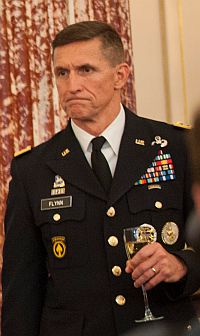
Army Lt. Gen. and DIA Director Michael T. Flynn surprises everyone in the room when he stands up and tells his staff, “Twenty minutes and I’ll be back.”
“Yes, sir — got it,” responds one of his aides.
With several staffers trailing him, Flynn then sets out with this reporter for a secret place that no journalist has ever seen.DIA Director Michael T. Flynn cools off when suffering from information overload.
“I want to show you a place, because it will give you an impression … of our ability to watch the world,” Flynn says.
The fast-paced, unprecedented walk through one of the most secretive places in the intelligence community is punctuated by the fact that an audio recording device is allowed to capture it all.
“You’re moving from the new building, which is — we’re on Bolling Air Force Base — and you’re moving to the old building,” says Flynn as the tour progresses. Layer by layer, he unveils the DIA’s enormous global responsibility, which boils down to one thing: preventing the U.S. from being blindsided by strategic surprise.
This mission breaks down into further areas of focus, Flynn says.
“There’s something called tactical surprise, something called strategic surprise and there’s clairvoyance,” he says, keeping a steady pace and walking briskly toward the agency’s situation center.
Negotiating a series of elevator rides, floors, twists and turns in the building, Flynn points out the difficulty of clairvoyance.
“You just can’t predict the classic black swan or aw-shucks moment that occurs when you wish you knew what was going to happen,” he says.
Flynn believes in order to avoid tactical and strategic surprises, the agency has to be able to operate within and understand what’s happening in any given environment.
He points out that when looking at the ever-changing intelligence enigma that is today’s world, there often are missing pieces the DIA has to account for in its analytical efforts.
Dealing with “strategic surprise for me, it’s kind of like every day we’re trying to put together this 5,000-piece (jigsaw) puzzle but we don’t have the box top to look at,” Flynn says.
“As something begins to build up — it may be the underpinnings of an insurgency or the thriving or lack of or the hopelessness within a society — (those elements) start to tell us things about something that may happen or not happen in a particular environment.”
The DIA needs to know what’s happening everywhere at all times, so the agency has thousands of personnel spread out across 142 countries, in multiple war zones and simmering hot spots. This means there is a constant blast of information and threats flowing back to Flynn, and just as many decisions that have to be made.
Nearing the entrance of the situation center, he is asked how he keeps up with it all.
“Really trusting the leaders that we have” and rising very early each day, he says.
“It starts probably about 4:30 every morning,” Flynn says. “It’s like eating five meals a day instead of sitting down at dinner. It’s constantly being fed to you. I have to discipline myself in what I call my own battle rhythm.”
As the door to the agency situation center begins to slowly open, the rhythm he speaks of is clearly present inside this top-secret world.
How the U.S. poisoned Iraq
MSNBC reports: Between 2002 and 2005, U.S. forces shot off 6 billion bullets in Iraq (something like 300,000 for every person killed). They also dropped 2,000 to 4,000 tons of bombs on Iraqi cities, leaving behind a witch’s brew of contaminants and toxic metals, including the neurotoxins lead and mercury. Mozhgan Savabieasfahani, an Iranian-born toxicologist at the University of Michigan School of Public Health, is studying the health impact, and her early findings are worrying. Last year, in a study published with Iraqi colleagues, she reported staggering increases in birth defects in the heavily bombarded cities of Basrah and Fallujah. The increases started in the early 90s, after the bombings of the first Gulf War, and continued right through 2011.
In Basrah, the group’s analysis of hospital records revealed 16-fold increase in birth defects among babies delivered between 1994 and 2003 (from 1.4 to 23 per 1,000 live births), and another 48% rise between 2003 to 2009 (from 23 to 48). Likewise, a survey of 56 families in Fallujah showed a 50% increase in birth defects between 1991 and 2010, along with an eightfold increase in miscarriages. Neurological defects are now pervasive in both cities. And though the causes are still uncertain, Savabieasfahani has cited lead and mercury as likely culprits. In Basrah, she found that teeth from malformed children contained three times more lead than teeth from normal ones. In Fallujah, children with birth defects harbored five times more lead than normal kids from the same city, and six times more mercury.
“The explosion of bombs creates fine metal-containing dust particles that linger in the air and can be inhaled by the public,” Savabieasfahani wrote in an essay for Al Jazeera last week. “Metals are persistent in the environment and metal-containing fine dust may be re-injected into the air periodically as a result of wind and air turbulence. Iraq is well known for its strong and frequent sandstorms, which can easily render contaminated dust airborne. Since war debris and the wreckage from ammunition and bombs remain unabated in the environment, the weathering process facilitates continuous metal release into the environment.”
Are Basrah and Fallujah just sentinels of a wider crisis? In an initial effort to find out, the World Health Organization has helped Iraq’s health ministry sample birth-defect incidence across eight regions of the country. The survey is reportedly finished, but the findings are still under review in Baghdad. (Our calls to the health ministry weren’t returned.) Whatever the survey turns up, Savabiesfahani is deeply worried about the trends already documented in Basrah and Fallujah. “We can’t wish this away,” she says. “We need immediate efforts to identify and clean up the sources of hazardous waste. We can’t let this fester the way Agent Orange did in Vietnam.” [Continue reading…]
In mountains of scrap, America leaves its mark on Afghanistan
After thirteen years of war, a mission long described as an effort to win hearts and minds, for many Afghans for generations to come, the enduring memory of America will be of this nation’s grotesque wastefulness. America will have become synonymous with trash as the legacy of a pointless war will be precisely that: a pile of trash.
But as if to highlight America’s exceptional relationship with trash, in this instance in an orgy of destruction, items of value are first getting crushed before they get left behind.
The Washington Post reports: The armored trucks, televisions, ice cream scoops and nearly everything else shipped here for America’s war against the Taliban are now part of the world’s biggest garage sale. Every week, as the U.S. troop drawdown accelerates, the United States is selling 12 million to 14 million pounds of its equipment on the Afghan market.
Returning that gear to the United States from a landlocked country halfway around the world would be prohibitively expensive, according to U.S. officials. Instead, they’re leaving behind $7 billion worth of supplies, a would-be boon to the fragile Afghan economy.
But there’s one catch: The equipment is being destroyed before it’s offered to the Afghan people — to ensure that treadmills, air-conditioning units and other rudimentary appliances aren’t used to make roadside bombs.
“Many non-military items have timing equipment or other components in them that can pose a threat. For example, timers can be attached to explosives. Treadmills, stationary bikes, many household appliances and devices, et cetera, have timers,” said Michelle McCaskill, a spokeswoman for the Pentagon’s Defense Logistics Agency.
That policy has produced more scrap metal than Afghanistan has ever seen. It has also led to frustration among Afghans, who feel as if they are being robbed of items such as flat-panel televisions and armored vehicles that they could use or sell — no small thing in a country where the average annual income hovers at just over $500.
In Afghanistan, nicknamed the “graveyard of empires,” foreign forces are remembered for what they leave behind. In the 1840s, the British left forts that still stand today. In the 1980s, the Russians left tanks, trucks and aircraft strewn about the country. The United States is leaving heaps of mattresses, barbed wire and shipping containers in scrap yards near its shrinking bases.
“This is America’s dustbin,” said Sufi Khan, a trader standing in the middle of an immense scrap yard outside Bagram air base, the U.S. military’s sprawling headquarters for eastern Afghanistan. [Continue reading…]
Obama colludes with CIA in effort to block release of Senate’s damning report on torture
Jane Mayer reports: Last night, along with the bill reopening the government, the Senate confirmed Stephen W. Preston, the top lawyer at the C.I.A., to move to the Pentagon to serve in the same role there. The vote slipped by unnoticed by most, but on close inspection, it revealed previously unreleased documents that lift the lid on an unusual standoff between Congress and the Obama Administration’s C.I.A. At its core is a bitter disagreement over an apparently devastating, and still secret, report by the Senate Intelligence Committee documenting in detail how the C.I.A.’s brutalization of terror suspects during the Bush years was unnecessary, ineffective, and deceptively sold to Congress, the White House, the Justice Department, and the public. The report threatens to definitively refute former C.I.A. personnel who have defended the program’s integrity. But so far, to the consternation of several members of the Intelligence Committee, the Obama Administration, like Bush’s before it, is keeping the damning details from public view.
Preston’s confirmation became a proxy skirmish in the fight. Obama reportedly hoped to get Preston confirmed before the congressional recess this past summer. Instead, Senator Mark Udall, a Democrat from Colorado, who is a member of both the Senate Select Committee on Intelligence and the Armed Services Committee, put a “hold” on Preston’s confirmation until he answered a set of additional, and previously undisclosed, questions. A copy of these seven questions, and Preston’s answers, obtained by The New Yorker (below), sheds new light on the conflict.
The questions and answers make clear that Udall, who has pushed vigorously for the report’s release, voted to confirm Preston only after he believed that the general counsel distanced himself from his own intelligence agency’s defiant and defensive stance on the six-thousand-three-hundred page report, which cost forty million dollars to produce. Democrats on the Senate Intelligence Committee, including Chairwoman Dianne Feinstein, are pushing to declassify and publicly release it. But John Brennan, the agency’s director, a career C.I.A. officer, and an Obama confidant, is apparently resisting disclosure, and challenging many of the report’s conclusions.
On June 27th, the C.I.A. delivered an impassioned rebuttal of the report to the committee. Last month marked the last of numerous meetings between C.I.A. and Intelligence Committee personnel over the disputed report. They did not go well, according to several informed sources. Meanwhile, despite Obama’s calls for increased transparency, the White House has apparently sat on the sidelines, urging the two intransigent sides to work out their differences. Without White House involvement, the standoff is likely to remain a huge battle. [Continue reading…]
How the CIA and the Taliban undermined the global campaign to eradicate polio
The New York Times, July 2012: Did the killing of Osama bin Laden have an unintended victim: the global drive to eradicate polio?
In Pakistan, where polio has never been eliminated, the C.I.A.’s decision to send a vaccination team into the Bin Laden compound to gather information and DNA samples clearly hurt the national polio drive. The question is: How badly?
After the ruse by Dr. Shakil Afridi was revealed by a British newspaper a year ago, angry villagers, especially in the lawless tribal areas on the Afghan border, chased off legitimate vaccinators, accusing them of being spies.
And then, late last month, Taliban commanders in two districts banned polio vaccination teams, saying they could not operate until the United States ended its drone strikes. One cited Dr. Afridi, who is serving a 33-year sentence imposed by a tribal court, as an example of how the C.I.A. could use the campaign to cover espionage.
“It was a setback, no doubt,” conceded Dr. Elias Durry, the World Health Organization’s polio coordinator for Pakistan. “But unless it spreads or is a very longtime affair, the program is not going to be seriously affected.”
Reuters, October 18, 2013: A Taliban ban on vaccination is exacerbating a serious polio outbreak in Pakistan, threatening to derail dramatic progress made this year towards wiping out the disease worldwide, health officials say.
Health teams in Pakistan have been attacked repeatedly since the Taliban denounced vaccines as a Western plot to sterilize Muslims and imposed bans on inoculation in June 2012.
In North Waziristan, a region near the Afghan border that has been cordoned off by the Taliban, dozens of children, many under the age of two, have been crippled by the viral disease in the past six months.
And there is evidence in tests conducted on sewage samples in some of the country’s major cities that the polio virus is starting to spread beyond these isolated pockets and could soon spark fresh polio outbreaks in more densely populated areas.
“We have entered a phase that we were all worried about and were afraid might happen,” Elias Durry, head of the Global Polio Eradication Initiative (GPEI) in Pakistan, told Reuters in a telephone interview.
“The risk is that as long as the virus is still circulating, and as long as we have no means of reaching these children and immunizing them to interrupt virus transmission, it could jeopardize everything that has been done so far – not only in Pakistan, but also in the region and around the globe.”
Documents reveal role of NSA’s targetted surveillance in drone warfare
NSA surveillance allowed the CIA to kill Hassan Ghul, a key al Qaeda operative, in a drone strike in Pakistan a year ago.
What further evidence could anyone need to accept that mass surveillance is necessary for America’s national security?
Sadly, that’s probably a strong argument in the sense that it’s an argument likely have its intended effect. Which is to say, if people believe that sifting through everyone’s email is what it takes to eliminate al Qaeda, then most Americans will probably acquiesce to this loss of privacy — a small price to pay in the fight against terrorism, so the thinking is meant to go.
The Washington Post reports:
It was an innocuous e-mail, one of millions sent every day by spouses with updates on the situation at home. But this one was of particular interest to the National Security Agency and contained clues that put the sender’s husband in the crosshairs of a CIA drone.
Days later, Hassan Ghul — an associate of Osama bin Laden who provided a critical piece of intelligence that helped the CIA find the al-Qaeda leader — was killed by a drone strike in Pakistan’s tribal belt.
The U.S. government has never publicly acknowledged killing Ghul. But documents provided to The Washington Post by former NSA contractor Edward Snowden confirm his demise in October 2012 and reveal the agency’s extensive involvement in the targeted killing program that has served as a centerpiece of President Obama’s counterterrorism strategy.
An al-Qaeda operative who had a knack for surfacing at dramatic moments in the post-Sept. 11 story line, Ghul was an emissary to Iraq for the terrorist group at the height of that war. He was captured in 2004 and helped expose bin Laden’s courier network before spending two years at a secret CIA prison. Then, in 2006, the United States delivered him to his native Pakistan, where he was released and returned to the al-Qaeda fold.
But beyond filling in gaps about Ghul, the documents provide the most detailed account of the intricate collaboration between the CIA and the NSA in the drone campaign.
The Post is withholding many details about those missions, at the request of U.S. intelligence officials who cited potential damage to ongoing operations and national security.
The NSA is “focused on discovering and developing intelligence about valid foreign intelligence targets,” an NSA spokeswoman said in a statement provided to The Post on Wednesday, adding that the agency’s operations “protect the nation and its interests from threats such as terrorism and the proliferation of weapons of mass destruction.”
So, for readers who don’t parse the reporting carefully, the narrative thread here is that contrary to the claims of its critics, the NSA isn’t in the business of spying on Americans; it has a vital role in hunting down terrorists.
But keep going — all the way down to paragraphs fourteen and fifteen:
The [leaked] documents do not explain how the Ghul e-mail was obtained or whether it was intercepted using legal authorities that have emerged as a source of controversy in recent months and enable the NSA to compel technology giants including Microsoft and Google to turn over information about their users. Nor is there a reference to another NSA program facing scrutiny after Snowden’s leaks, its metadata collection of numbers dialed by nearly every person in the United States.
To the contrary, the records indicate that the agency depends heavily on highly targeted network penetrations to gather information that wouldn’t otherwise be trapped in surveillance nets that it has set at key Internet gateways. [Emphasis mine.]
Or, to put it more bluntly, we have yet to be shown any evidence that mass surveillance plays any significant role in the war against al Qaeda. In tracking down Ghul, the crucial element appears to have been “a surveillance blanket over dozens of square miles of northwest Pakistan” — not a surveillance blanket covering the world.
And having said that, even while mass surveillance by the NSA seems to have prompted greater concern among Americans both inside and outside Washington than many other forms of America’s outlaw conduct over the last decade, the larger issue about which far fewer people show any interest is the policy of sanctioned assassination.
That an American president can now operate like a mafia boss is apparently OK — so long as every man on his hit list has an Arabic name.
The New York Times v. Obama
In an editorial, the Washington Times says: The New York Times intends to take its case against the Obama administration to the Supreme Court. In July, the 4th U.S. Circuit Court of Appeals sided with administration lawyers in ruling that New York Times reporter James Risen must reveal the confidential sources he used for a series of articles and a 2006 book, “State of War,” about the CIA’s bungled efforts to stop Iran’s nuclear program. On Tuesday, the 4th Circuit refused to change its mind, leaving the Supreme Court with the final say in the matter.
Mr. Risen’s investigative work has assumed new significance now that we’ve learned the breathtaking scope of the National Security Agency collection of telephone calls, emails and GPS location data. Mr. Risen won the 2006 Pulitzer Prize for exposing the existence of a domestic wiretapping program. This was a thin slice of the larger program, but it was a hotly guarded secret at the time. Attorney General Eric H. Holder Jr. personally authorized government agents to go after Mr. Risen in court, which gives his instructions every appearance of payback.
The federal government should never be allowed to engage in vendettas against the press, and this is not special pleading for newspapers. Exposing embarrassing foreign-policy failures and the existence of constitutionally questionable domestic surveillance enterprises is precisely the job of reporters in a free society. The Founding Fathers understood this, which is why the language of the First Amendment plainly says that Congress can’t do anything to abridge the freedom of the press. James Madison explained further that “the liberty of conscience and of the press cannot be canceled, abridged, restrained or modified by any authority of the United States.” Abridging press freedom is abridging the speech of everyone. [Continue reading…]
How the NSA and FBI foil weak oversight
Yochai Benkler writes: Over 20 congressional bills aim to address the crisis of confidence in NSA surveillance. With Patriot Act author and Republican Congressman Jim Sensenbrenner working with Vermont Democratic Senator Patrick Leahy on a bipartisan proposal to put the NSA’s metadata program “out of business“, we face two fundamentally different paths on the future of government surveillance.
One, pursued by the intelligence establishment, wants to normalize and perpetuate its dragnet surveillance program with as minimal cosmetic adjustments as necessary to mollify a concerned public. The other challenges the very concept that dragnet surveillance can be a stable part of a privacy-respecting system of limited government.
Pervasive surveillance proponents make two core arguments.
First, bulk collection saves Americans from foreign terrorists. The problem with this argument is that all publicly available evidence presented to Congress, the judiciary, or independent executive branch review suggests that the effect of bulk collection has been marginal. Perhaps, this paucity of evidence is what led General Alexander and other supporters to add cyber security as a backup exigency to justify the program.
The second argument that defenders of mass surveillance offer is that detailed, complex and faithfully-executed rules for how the information that is collected will be used are adequate replacements for what the fourth amendment once quaintly called “probable cause” and a warrant “particularly describing the place to be searched, and the persons or things to be seized”. The problem with this second argument is that it combines two fundamentally incompatible elements.
Mass surveillance represents a commitment to near-universal all-seeing gaze, so as to assess and respond to threats that can arise anywhere, at any time. Privacy as a check on government power represents a constitutional judgment that a limited government must have limited power to inspect our daily lives, and that an omniscient government is too powerful for mere rules to restrain. The experience of the past decade confirms this incompatibility. Throughout its lifetime, NSA dragnet surveillance has repeatedly and persistently violated any rules in place meant to constrain it. [Continue reading…]
AIPAC’s lackeys in Congress ready to obstruct Iran talks
Foreign Policy reports: The Obama administration is facing an unexpected hurdle in its new nuclear talks with Iran – a sizeable bloc of Democratic lawmakers who have made clear that they would break with the White House and fight any effort to lift the current sanctions on Tehran.
The future of those sanctions is a key issue in this week’s negotiations in Geneva between senior officials from Iran and the U.S., the most serious talks between the two longtime adversaries in decades. Iranian Foreign Minister Mohamad Javad Zarif kicked off Monday’s session with a PowerPoint presentation, delivered in English, which offered to put new limits on his country’s nuclear program in exchange for easing the Western sanctions that have devastated the Iranian economy and decimated the value of its currency.
The White House has already signaled a potential openness to that kind of deal, but a wide array of powerful Democrats — including the top members of both the Senate and House foreign affairs committees — strongly oppose lifting any of the existing sanctions on Iran unless Tehran offers concessions that go far beyond anything Zarif has talked about in Geneva. The American Israel Public Affairs Committee, one of the most powerful lobbies in Washington, has also promised to do everything in its power to keep the punitive measures in place.
“If the president were to ask for a lifting of existing sanctions it would be extremely difficult in the House and Senate to support that,” Rep. Steve Israel (D-NY), chairman of the Democratic Congressional Campaign Committee, told The Cable. “I’m willing to listen but I think that asking Congress to weaken and diminish current sanctions is not hospitable on Capitol Hill.”
“I’d say no,” said Sen. Bob Casey (D-PA) when asked if he’d accept a presidential plea to lift sanctions. “They’ve got a long way to go to demonstrate the kind of credibility that would lead us to believe we can move in a conciliatory direction. And sanctions are what has strengthened the administration’s hand.”
Opposition from Democratic lawmakers represents more than just a political headache for the administration. Congress has the power to impose, modify or remove sanctions regardless of what the White House wants, and it has shown a willingness to overrule the administration in the past. [Continue reading…]
Court rejects appeal bid by Risen in leak case
The New York Times reports: A federal appeals court on Tuesday declined to hear an appeal by James Risen, an author and a reporter for The New York Times, who was ordered in July to testify in the trial of a former Central Intelligence Agency official accused of leaking information to him.
The decision, by the full United States Court of Appeals for the Fourth Circuit, is expected to set up an appeal by Mr. Risen to the Supreme Court in what has become a major case over the scope and limitations of First Amendment press freedoms.
“We are disappointed by the Fourth Circuit’s ruling,” said Joel Kurtzberg, a lawyer for Mr. Risen. “My client remains as resolved as ever to continue fighting.”
In July, a three-judge panel of the appeals court ruled in a 2-to-1 decision to order Mr. Risen to testify in the trial of the C.I.A. officer, Jeffrey Sterling. It is rare for a full appeals court to grant petitions to rehear cases that have already been decided by a panel. Still, the vote count was notably lopsided: 13 voted to reject the petition, while only Judge Roger L. Gregory, who had cast the dissenting vote in July, wanted to grant it. [Continue reading…]
Naming the dead: the victims of U.S. drone attacks in Pakistan
The Bureau of Investigative Journalism: Over the past nine years, the tribal region of Pakistan’s north west has been hit by hundreds of drone attacks as the CIA has sought to stamp out al Qaeda fighters and the militant groups that have given them shelter.
Missiles launched from these high-tech, unmanned aircraft have hit homes, cars, schools, shops and gatherings. At least 2,500 people have been killed, according to data already collected by the Bureau as part of our wider Covert Drone War research.
Senior US officials have described drones as highly precise weapons that target and kill enemies of the US. John Brennan, who oversaw the development of the drone campaign and is now director of the CIA, has called drone technology an ‘essential tool’ for its ‘surgical precision – the ability, with laser-like focus, to eliminate the cancerous tumour called an al Qaeda terrorist while limiting damage to the tissue around it.’
Those killed by drones include high-ranking militant leaders – figures such as Abu Yahya al Libi, al Qaeda’s feared second-in-command, or Baitullah Mehsud, commander of the Pakistan Taliban (TTP).
But according to credible media reports analysed by the Bureau, the dead also include at least 400 civilians. Some were unlucky enough to be nearby when militants were attacked. Others were killed alongside their husbands or fathers, who were believed to be militants. Still others were mistaken for terrorists by drone operators sitting thousands of miles away.
In most cases, there is little information available about who the drones are really killing. Most of the dead – an estimated four-fifths of those killed – are believed to be militants. But their deaths are typically reported as a number – their names, origins and livelihoods remain a mystery.
For so many people to die in obscurity, unnamed and unacknowledged, is a tragedy. But it is a further tragedy that the public, and even policy makers, are unable to properly test whether drones are ‘highly precise weapons’ when so little is known about who is actually dying.
Through Naming the Dead, the Bureau aims to increase the transparency around this conflict and inform the public debate. Initially this project will record all names published in open-source material – in credible reports by journalists, in legal documents presented in court, in academic studies and in field investigations carried out by human rights groups. [Continue reading…]