Category Archives: US government

Aftershock hits Haiti; U.S. troops guard convoys in Port-au-Prince

Aftershock hits Haiti; U.S. troops guard convoys in Port-au-Prince

A massive aftershock jolted awake thousands of earthquake victims and relief workers in this ravaged capital early Wednesday, sparking new cries of fear and sorrow even as an enormous international aid effort continued. [continued…]

U.S. troops pour into Haiti on aid mission

The U.S. Army arrived to Haiti’s capital in dramatic style on Tuesday, landing on the lawn of the crumpled presidential palace in Black Hawk helicopters to the cheers of Haitians eager for help and more security after last week’s earthquake. [continued…]

US mercenaries set sights on Haiti

We saw this type of Iraq-style disaster profiteering in New Orleans, and you can expect to see a lot more of this in Haiti over the coming days, weeks and months. Private security companies are seeing big dollar signs in Haiti thanks in no small part to the media hype about “looters.” After Katrina, the number of private security companies registered (and unregistered) multiplied overnight. Banks, wealthy individuals, the US government all hired private security. I even encountered Israeli mercenaries operating an armed checkpoint outside of an elite gated community in New Orleans. They worked for a company called Instinctive Shooting International. (That is not a joke). [continued…]

Doctor: misinformation and racism have frozen recovery effort at General Hospital in Port-au-Prince

“Tere are no security issues,” says Dr. Evan Lyon of Partners in Health, reporting from the General Hospital in Port-Au-Prince in Haiti, where 1,000 people are in need of operations. Lyon said the reports of violence in the city have been overblown by the media and have affected the delivery of aid and medical services. [continued…]


Facebooktwittermail

The crime of not “looking backward”

The crime of not “looking backward”

The single biggest lie in War on Terror revisionist history is that our torture was confined only to a handful of “high-value” prisoners. New credible reports of torture continuously emerge. That’s because America implemented and maintained a systematic torture regime spread throughout our worldwide, due-process-free detention system. There have been at least 100 deaths of detainees in American custody who died during or as the result of interrogation. Gen. Barry McCaffrey said: “We tortured people unmercifully. We probably murdered dozens of them during the course of that, both the armed forces and the C.I.A.” Gen. Antonio Taguba said after investigating the Abu Ghraib abuses and finding they were part and parcel of official policy sanctioned at the highest levels of the U.S. Government, and not the acts of a few “rogue” agents: “there is no longer any doubt as to whether the current administration has committed war crimes. The only question that remains to be answered is whether those who ordered the use of torture will be held to account.”

Despite all of this, our media persists in sustaining the lie that the torture controversy is about three cases of waterboarding and a few “high-value” detainees who were treated a bit harshly. That’s why Horton’s story received so little attention and was almost completely ignored by right-wing commentators: because it shatters the central myth that torture was used only in the most extreme cases — virtual Ticking Time Bomb scenarios — when there was simply no other choice. Leading American media outlets, as a matter of policy, won’t even use the word “torture.” This, despite the fact that the abuse was so brutal and inhumane that it led to the deaths of helpless captives — including run-of-the-mill detainees, almost certainly ones guilty of absolutely nothing — in numerous cases. These three detainee deaths — like so many other similar cases — illustrate how extreme is the myth that has taken root in order to obscure what was really done. [continued…]

Facebooktwittermail

FBI broke law for years in phone record searches

FBI broke law for years in phone record searches

The FBI illegally collected more than 2,000 U.S. telephone call records between 2002 and 2006 by invoking terrorism emergencies that did not exist or simply persuading phone companies to provide records, according to internal bureau memos and interviews. FBI officials issued approvals after the fact to justify their actions.

E-mails obtained by The Washington Post detail how counterterrorism officials inside FBI headquarters did not follow their own procedures that were put in place to protect civil liberties. The stream of urgent requests for phone records also overwhelmed the FBI communications analysis unit with work that ultimately was not connected to imminent threats.

A Justice Department inspector general’s report due out this month is expected to conclude that the FBI frequently violated the law with its emergency requests, bureau officials confirmed. [continued…]

Facebooktwittermail

Dr Aafia Siddiqui goes on trial

Dr Aafia Siddiqui goes on trial

As Dr Aafia Siddiqui goes on trial in a federal court in New York City her case is unknown to most Americans yet in her native Pakistan the frail neuroscientist, mother of three and reputed al Qa’eda associate has become a cause célèbre.

Last week Pakistan’s Prime Minister Yousuf Raza Gilani said that he had been in direct communication with Pakistan’s mission in the United States for the provision of all possible assistance and cooperation for her release, News International reported. He said that the government had also engaged lawyers to defend her in the court.

At a pre-trial hearing last week the defence team rejected the charge of shooting at FBI agents since there were no fingerprints or other forensic evidence that she even picked up the gun, the Associated Press of Pakistan reported. “We’re not saying she did it in self-defence. We’re not saying it was an accident. We’re saying she simply did not do it,’ defence attorney Linda Moreno told US District Judge Richard Berman.

In The Guardian, Decan Walsh told the story whose plausibility will be weighed in the Manhattan courtroom. [continued…]

Facebooktwittermail

After the earthquake, how to rebuild Haiti from scratch

After the earthquake, how to rebuild Haiti from scratch

President Obama has declared that the United States will not forsake Haiti in its moment of agony. Honoring this commitment would be a first for Washington.

To prevent a deepening spiral of death, the United States will have to do things differently than in the past. American relief and development institutions do not function properly, and to believe otherwise would be to condemn Haiti’s poor and dying to our own mythology.

In Haiti, we are facing not only a horrific natural disaster but the tectonics of nature, poverty and politics. Even before last week’s earthquake, roughly half of the nation’s 10 million inhabitants lived in destitution, in squalid housing built of adobe or masonry without reinforcements, perched precariously on hillsides. The country is still trying to recover from the hurricanes of 2008 as well as longtime social and political traumas. The government’s inability to cope has been obvious, but those of us who have been around Haiti for many years also know about the lofty international promises that follow each disaster — and how ineffectual the response has been each time. [continued…]

Why Haiti matters

… above all, we act for a very simple reason: in times of tragedy, the United States of America steps forward and helps. That is who we are. That is what we do. For decades, America’s leadership has been founded in part on the fact that we do not use our power to subjugate others, we use it to lift them up — whether it was rebuilding our former adversaries after World War II, dropping food and water to the people of Berlin, or helping the people of Bosnia and Kosovo rebuild their lives and their nations.

At no time is that more true than in moments of great peril and human suffering. It is why we have acted to help people combat the scourge of HIV/AIDS in Africa, or to recover from a catastrophic tsunami in Asia. When we show not just our power, but also our compassion, the world looks to us with a mixture of awe and admiration. That advances our leadership. That shows the character of our country. And it is why every American can look at this relief effort with the pride of knowing that America is acting on behalf of our common humanity. [continued…]

Editor’s Comment — When human misery is at its most extreme and acute, is this the time to start singing praise to America?

President Obama is sending the fleet, soldiers, and relief to Haiti because… because that’s what we do: we’re Americans.

Instead, why not because… the Haitians, dirt poor, are nevertheless just like us (even though they’re not Americans)?

Is it possible to offer help without turning the occasion into a demonstration of national sainthood?

Of course there is nothing uniquely American about seeing crude nationalistic PR opportunities riding on tragedy.

Israelis, acutely conscious of the extent to which their national reputation has been shredded in recent years, clearly see in Haiti a stage for demonstrating the depth of compassion that exists in the Jewish state.

If the devastation wrought on southern Lebanon in 2006 and in Gaza a year ago and the ongoing merciless siege of Gaza all serve to reinforce an image of Zionist brutality, then sending teams of doctors to Haiti might go some way to counter that impression.

That at least seems to be the thinking behind Haaretz‘s headline story today, “Life amid death: Baby born in Israeli field hospital in Haiti” – a gripping narrative from the intrepid Natasha Mozgovaya.

She starts:

Amid the tragedy and devastation encompassing the Haitian capital of Port-au-Prince since Tuesday’s 7.0-magnitude earthquake, a happy event took place Sunday inside the field hospital erected by the Israeli relief delegation in the city. Doctor Shir, who works at Hadassah, delivered the first healthy baby in the Israeli hospital.

The mother told Dr. Shir that she would name her son Israel. “Amid all the death around us,” the doctor said, “it is very symbolic.” He added that childbirth in Haiti doesn’t usually take place in a hospital in the impoverished country, and that this particular woman received the best care from the best doctors.

Oh my! Israeli doctors in an Israeli hospital delivering a baby called Israel! And who would have thought little Israel could do so much good so far away?

Here’s one Haitian who was dumb-founded:

One of the Israeli search and rescue teams on Saturday freed 69-year-old France Gilles from the rubble.

“We told him we were from Israel and he asked if we were mocking him,” one rescuer said.

As for the non-Israeli relief efforts, well, when non-Israelis try and rescue someone the victim doesn’t survive:

Elsewhere, a British team was able to make contact with a woman trapped beneath the debris but was unable to reach her. Before they could dig their way through, a Haitian bulldozer destroyed the remains of the building and the woman was recovered, dead.

Poor woman, that the Israelis couldn’t get there first. When they do, they heroically save lives:

At another site Israelis spoke with a trapped man, seemingly the only survivor after a building collapsed. Following several hours of excavation, rescuers had succeeded in injecting him with fluids, one worker said, and that the team hoped to extricate him within a few more hours.

“We’ve had to drill through a concrete girder, as he is trapped between pipes and planking,” said Liron Shapira, deputy commander of the Israeli delegation. “We have already removed most of the piping and have managed to attach intravenous drips to his torso. As far as we are concerned, as soon as the drips are attached we can proceed smoothly. Now we need to remove the debris from around his legs. Then we should be able to pull him free.”

And might there be a religious dimension in the league table of compassion?

Distress has clearly not bred solidarity and shouts and elbows fly as the needy jostle for food. Three young women from Wisconsin – Susan, Becky and Jamie, volunteers at a Catholic orphanage – are trying to board their flight. “Don’t tell her anything,” one of the girls warns her friend, pointing at me. “She’ll use it to take our place on the flight.” Only after I explain that I have no intention of stealing their seats do they calm down. “We were originally supposed to leave today but because there are no phones or communications we didn’t know if there was a flight, so we came anyway.”

OK, cynicism aside, Israel’s 220-strong relief team is impressive coming from a country of just 7.5 million. Mind you, Iceland, a country that’s bankrupt and has a population of just 320,000 has managed to send a 37-strong search and rescue team. Good on those plucky Icelanders!

Facebooktwittermail

Elite US troops ready to combat Pakistani nuclear hijacks

Elite US troops ready to combat Pakistani nuclear hijacks

The US army is training a crack unit to seal off and snatch back Pakistani nuclear weapons in the event that militants, possibly from inside the country’s security apparatus, get their hands on a nuclear device or materials that could make one.

The specialised unit would be charged with recovering the nuclear materials and securing them.

The move follows growing anti-Americanism in Pakistan’s military, a series of attacks on sensitive installations over the past two years, several of which housed nuclear facilities, and rising tension that has seen a series of official complaints by US authorities to Islamabad in the past fortnight.

“What you have in Pakistan is nuclear weapons mixed with the highest density of extremists in the world, so we have a right to be concerned,” said Rolf Mowatt-Larssen, a former CIA officer who used to run the US energy department’s intelligence unit. “There have been attacks on army bases which stored nuclear weapons and there have been breaches and infiltrations by terrorists into military facilities.” [continued…]

Facebooktwittermail

Obama pledges aid to Haiti

Obama pledges aid to Haiti

President Obama on Thursday promised $100 million along with more American troops for the relief effort in Haiti, vowing that the United States would stand with the impoverished nation as it grappled with the devastation of its capital city.

The Pentagon sent 125 soldiers from the 82nd Airborne Division based at Fort Bragg, N.C., and said that by the end of the week their number would grow to 3,000. Military officials said their primary mission would be to provide security as aid began to arrive.

Those Army troops will be supplemented in the coming days by 2,000 Marines from Camp Lejeune, N.C., who are scheduled to arrive in Haiti by Monday. [continued…]

Editor’s Comment — How much is $100 million?

As much as the US Department of Defense spends in one hour, each hour, 24/7, 365 days a year. (In this case the DoD is of course making a major effort to help the people of Haiti so the US contribution will be more than $100 million.)

But since the United States is expected to spend over $880 billion on defense in 2010, it’s worth asking: Forgetting about the humanitarian imperative, which makes a more significant contribution to the US national security? A $100 million spent on relief work in Haiti or $100 million spent on the war in Afghanistan? (Before Obama announced his surge plan, the war was estimated to be costing $133 million a day.)

Facebooktwittermail

How I fought the intelligence turf wars — and lost

How I fought the intelligence turf wars — and lost

In recent weeks, following the shocks of the Christmas Day bomber and the Dec. 30 attack on a U.S. base in Afghanistan, observers have tried to understand why U.S. intelligence failed so badly. President Barack Obama argued that the intelligence-gatherers have been doing a bang-up job, while the analysts back at home have not. The Christmas attack, he said, was “a failure to integrate and understand the intelligence that we already had.” Then a New York Times article asserted that the problem is really communication between different sectors. Finally, the senior U.S. military intelligence officer in Afghanistan, Maj. Gen. Michael Flynn, blasted intelligence-gathering in Afghanistan, calling data “only marginally relevant” because it was disconnected from local politics and conditions on the ground.

But any evaluation that merely blames the analysts, the intelligence-gatherers, or even both of their abilities to communicate misses the point: Major parts of the system itself are broken, and no surface-level changes will fix that.

The trouble starts with bias. I spent a few years working in the field as an intelligence collector, a few more directing operations, and a few back in Washington as an analyst and manager. Like everyone else in the business, I have preferences for certain ways of collecting information. But part of the reason that U.S. intelligence has so much difficulty catching terrorists and quashing insurgencies is that these biases aren’t just individual — they are corporate. [continued…]

Bomber urged more attacks before striking CIA

A double agent who killed seven CIA officers in Afghanistan sent a plea to Islamist writers a few weeks earlier urging them to launch suicide attacks, the SITE Intelligence monitoring group said, citing a militant forum.

The agent, Humam Khalil Abu Mulal al-Balawi, himself a former prolific writer on pro-al Qaeda Internet forums, urged fellow propagandists “nearly 50 days ago” to come to the “battlefield,” SITE reported an associate of Balawi’s as saying.

“Beware, beware that you are satisfied with writing on the forums without going to the battlefield in the Cause of Allah,” a January 10 posting on the al-Fallujah forum by the associate, Abu Kandahar, quoted Balawi as saying. [continued…]

Jordanians question alliance with US after Humam al-Balawi’s CIA suicide bombing

The father received the bearded mourners with dry eyes, his grief tempered by the conviction that his son, a martyr to the cause of al-Qaeda’s jihad, was already in Heaven.

It is a common enough spectacle in the Islamist badlands of the Middle East or Central Asia — but yesterday’s funeral was not in Afghanistan, nor even Pakistan. The farewell to Mahmoud Zaydan, 35, a teacher of Arabic and the Koran who was killed at the weekend by a US drone in Waziristan, Pakistan, took place in the peaceful Jordanian town of Irbid.

Jordan has long been one of America’s closest allies in the region but only recently have Jordanians discovered how close to home the War on Terror is being waged. A suicide bombing last month at a CIA base in Afghanistan, perpetrated by a Jordanian double agent — and targeting, along with seven CIA officers, a fellow Jordanian — has put the country on the international terror map. [continued…]

Facebooktwittermail

How the US military is betraying its own wounded

How the US military is betraying its own wounded

In 2007, a high-ranking Navy doctor sent a sobering warning to colleagues: The service may be discharging soldiers for misconduct when in fact they are merely displaying symptoms of post-traumatic stress disorder.

By doing so, the anonymous doctor noted in a memo to other medical administrators, the service may be denying those troops their rights to Veterans Affairs benefits — including treatment for medical conditions they incurred while serving on the battlefield.

In the future, any military personnel facing dismissal for misconduct after a deployment should be screened first for PTSD, the memo said. The recommendation was never implemented. [continued…]

Facebooktwittermail

Making sense of the new CIA battlefield in Afghanistan

Making sense of the new CIA battlefield in Afghanistan

It was a Christmas and New Year’s from hell for American intelligence, that $75 billion labyrinth of at least 16 major agencies and a handful of minor ones. As the old year was preparing to be rung out, so were our intelligence agencies, which managed not to connect every obvious clue to a (literally) seat-of-the-pants al-Qaeda operation. It hardly mattered that the underwear bomber’s case — except for the placement of the bomb material — almost exactly, even outrageously, replicated the infamous, and equally inept, “shoe bomber” plot of eight years ago.

That would have been bad enough, but the New Year brought worse. Army Major General Michael Flynn, U.S. and NATO forces deputy chief of staff for intelligence in Afghanistan, released a report in which he labeled military intelligence in the war zone — but by implication U.S. intelligence operatives generally — “clueless.” They were, he wrote, “ignorant of local economics and landowners, hazy about who the powerbrokers are and how they might be influenced… and disengaged from people in the best position to find answers… Eight years into the war in Afghanistan, the U.S. intelligence community is only marginally relevant to the overall strategy.”

As if to prove the general’s point, Humam Khalil Abu-Mulal al-Balawi, a Jordanian doctor with a penchant for writing inspirational essays on jihadi websites and an “unproven asset” for the CIA, somehow entered a key Agency forward operating base in Afghanistan unsearched, supposedly with information on al-Qaeda’s leadership so crucial that a high-level CIA team was assembled to hear it and Washington was alerted. He proved to be either a double or a triple agent and killed seven CIA operatives, one of whom was the base chief, by detonating a suicide vest bomb, while wounding yet more, including the Agency’s number-two operative in the country. The first suicide bomber to penetrate a U.S. base in Afghanistan, he blew a hole in the CIA’s relatively small cadre of agents knowledgeable on al-Qaeda and the Taliban. [continued…]

Facebooktwittermail

How this suicide bomber opened a new front in Al-Qaeda’s war

How this suicide bomber opened a new front in Al-Qaeda’s war

According to the guard, Balawi had been to the base before. He claimed that before the doctor reached the first gate, the Afghan security guards in charge of the perimeter security were instructed by US soldiers to go into their rooms.

“They did not want any Afghans to see Balawi,” he said. A US army vehicle then led the car through the next two gates, reaching the inside of the base before stopping outside a block of buildings used by the CIA and military intelligence to debrief their sources.

As Balawi stepped out of the car, seven CIA officers and a handful of soldiers gathered around. According to the guard, it was then that Balawi detonated his bomb, killing eight and injuring six.

Arghawan, still sitting in the driver’s seat, survived the initial blast but a US soldier shot him in the head with his pistol, assuming that he was part of the bomb plot.

“There were lots of body parts,” said the guard. “The suicide bomber’s legs were all that was left of him. He had hidden the bomb beneath his pattu.”

According to one US intelligence official, the explosive was so powerful that it killed agency operatives who were as far as 50ft away. [continued…]

Editor’s Comment — Arghawan, the Afghan army commander who drove Balawi into the base, “clearly knew” Balawi, Arghawan’s driver told The Sunday Times. So, given that as the Washington Post says, “Virtually everyone within sight of the suicide blast died,” Arghawan would have been the crucial witness who could describe what happened — were it not for the fact that he got executed by an American soldier.

Pakistan’s volatile tribal areas draw foreign militants

As Pakistan’s army pushes ever deeper into the country’s mountainous tribal regions in a bid to flush out extremists, they are making a startling discovery – the majority of fighters are foreigners, and not just from Afghanistan.

Uzbeks, Europeans, Afghans, Russians and even a few Caucasian Americans all have been arrested along the rugged border with Afghanistan as the military presses its operation in North and South Waziristan.

Col Nadeem Mirza, the military commander, told The National on an exclusive trip to the region: “Our intelligence had informed us that al Qa’eda followers were hiding in the tribal agencies but no one was expecting to find so many foreigners and al Qa’eda members here. It seemed like these areas had become a fortress for al Qa’eda.” [continued…]

The terrorist mind: an update

Despite the lack of a single terrorist profile, researchers have largely agreed on the risk factors for involvement. They include what Jerrold M. Post, a professor of psychiatry, political psychology and international affairs at George Washington University, calls “generational transmission” of extremist beliefs, which begins early in life; a strong sense of victimization and alienation; the belief that moral violations by the enemy justify violence in pursuit of a “higher moral condition;” the belief that the terrorists’ ethnic, religious or nationalist group is special and in danger of extinction, and that they lack the political power to effect change without violence. [continued…]

Facebooktwittermail

Bomber who attacked CIA workers calls it revenge

Bomber who attacked CIA workers calls it revenge

The Jordanian doctor who killed seven CIA employees in a suicide attack in Afghanistan said in a video broadcast posthumously today that all jihadists must attack U.S. targets to avenge the death of Pakistani Taliban chief Baitullah Mehsud.

The video showed Humam Khalil Abu-Mulal Balawi — whom the CIA had cultivated as an asset against Al Qaeda — sitting with Mehsud’s successor in an undisclosed location. It essentially confirmed the Pakistani Taliban’s claim of responsibility for one of the worst attacks in CIA history, though analysts said Al Qaeda and Afghan militants likely played roles, too.

Speaking in Arabic in the video shown on Al Jazeera, the Arabic network, and Aaj, a Pakistani channel, Balawi noted that the Pakistani Taliban had given shelter to “emigrants” — Muslim fighters from abroad.

Mehsud, the group’s longtime leader, was killed in August by a CIA missile strike. [continued…]

Editor’s Comment — As the CIA’s director, Leon Panetta no doubt sees it as his duty to try and lift morale in the agency, yet in an op-ed for tomorrow’s Washington Post he says this:

This was not a question of trusting a potential intelligence asset, even one who had provided information that we could verify independently. It is never that simple, and no one ignored the hazards. The individual was about to be searched by our security officers — a distance away from other intelligence personnel — when he set off his explosives.

Say what? What’s “a distance away from other intelligence personnel” supposed to mean? Outside the doorway of a conference room? What’s the point of trying to search someone after they’ve already reached a location where they can cause carnage? Panetta’s goal appears to be to snuff out the notion that the CIA is getting sloppy with its security procedures. He accomplishes the opposite.

Facebooktwittermail

White House aides said to chafe at slow pace of Afghan surge

White House aides said to chafe at slow pace of Afghan surge

Senior White House advisers are frustrated by what they say is the Pentagon’s slow pace in deploying 30,000 additional troops to Afghanistan and its inability to live up to an initial promise to have all of the forces in the country by next summer, senior administration officials said Friday.

Tensions over the deployment schedule have been growing in recent weeks between senior White House officials — among them Vice President Joseph R. Biden Jr., Gen. James L. Jones, the national security adviser, and Rahm Emanuel, the White House chief of staff — and top commanders, including Gen. Stanley A. McChrystal, the senior commander in Afghanistan.

A rapid deployment is central to President Obama’s strategy, to have a jolt of American forces pound the Taliban enough for Afghan security forces to take over the fight. Administration officials said that part of the White House frustration stemmed from the view that the longer the American military presence in Afghanistan continued, the more of a political liability it would become for Mr. Obama. But beyond the politics, the speeded up deployment — which Mr. Obama paired with a promise to begin troop withdrawals by July 2011 — is part of Mr. Obama’s so-called “bell curve” Afghanistan strategy, whereby American troops would increase their force in Afghanistan and step up attacks meant to quickly take out insurgents.

One administration official said that the White House believed that top Pentagon and military officials misled them by promising to deploy the 30,000 additional troops by the summer. General McChrystal and some of his top aides have privately expressed anger at that accusation, saying that they are being held responsible for a pace of deployments they never thought was realistic, the official said. [continued…]

Facebooktwittermail

Al Qaeda’s strategic advantage

The bomber’s wife

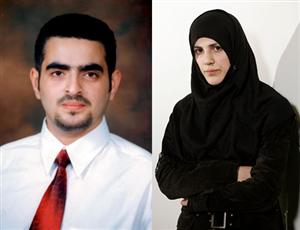
Soft-spoken and composed, but unmistakably angry, the wife of the suicide bomber who killed himself and seven employees of the CIA in Afghanistan on Dec. 30 says flatly, “My husband was anti-American; so am I.” About that, there are no regrets. In an exclusive interview Thursday, Defne Bayrak, 31, spent more than an hour at the offices of Newsweek Türkiye in Istanbul talking about her husband, Dr. Humam Khalil Abu-Mulal al-Balawi; his beliefs; what he may have been offered by the CIA to work as a double agent on the trail of Al Qaeda’s top leadership; and what she heard from those apostles of jihad who ultimately inspired him to kill and die.
Al-Balawi’s case is a study in the radicalization of someone who is well-educated, economically well-off, devout, and disciplined. Such people may not fit into the public’s stereotypical idea of a terrorist, but the profile is increasingly familiar to police and intelligence officers involved with counterterrorism. Many of Al Qaeda’s most successful attacks, from 9/11 to the London transit-system bombings in 2005, were directed and executed by such intelligent, articulate, religious, and suicidally violent men. [continued…]

Editor’s Comment — Reuel Marc Gerecht, a former CIA officer and prominent neoconservative, writes in the Wall Street Journal:

Professionally, one has to admire the skill of suicide bomber Humam Khalil Abu-Mulal al-Balawi’s handlers. This operation could well have been months — if not longer — in the making, and neither the Jordanian intelligence service (GID), which supplied the double agent to the CIA, nor Langley apparently had any serious suspicion that al-Balawi still had the soul and will of a jihadist.

That is an impressive feat. The Hashemite monarchy imprisons lots of Islamic militants, and the GID has the responsibility to interrogate them. The dead Jordanian official, Sharif Ali bin Zeid, reportedly a member of the royal family, may not have been a down-and-dirty case officer with considerable hands-on contact with militants, but al-Balawi surely passed through some kind of intensive screening process with the GID. Yet the GID and the CIA got played, and al Qaeda has revealed that it is capable of running sophisticated clandestine operations with sustained deception.

When asked if she could confirm what other sources had told Newsweek — that Balawi was offered as much as $500,000 by the CIA and $100,000 by the Jordanians to track down al Qaeda’s leadership — Balawi’s wife said only, “It might be true.”

In both these instances — Gerecht’s admiration of al Qaeda’s tradecraft and the likelihood that the CIA believed Balawi could be turned for the right price — the crucial asymmetry between the CIA and its adversary is left unstated: the disparity in the strength of each side’s convictions. On one side are individuals who have transcended their own fear of death, and on the other side individuals whose concerns are unfocused and defuse – a swirl of patriotism, egotism, and ambition.

A former senior CIA officer while explaining what might have drawn so many operatives into Balawi’s trap, told the New York Times: “Everyone would have wanted to be on the team that caught Zawahri. That’s the kind of thing that makes careers.”

Setting aside questions about whose outlook might be more delusional and whether either has a moral footing, the jihadist’s fearlessness and conviction is a force that neither soldier nor spy can truly match.

US drone attacks ‘undermine support for war’: Zardari

Pakistan warned US senators Thursday that American drone attacks against militants on its territory undermined “the national consensus” that supported the war against militancy.

President Asif Ali Zardari made the warning to a US delegation led by former US presidential candidate and Republican Senator John McCain one day after US missile attacks killed at least 13 militants on the Afghan border.

McCain said Thursday in Kabul, the capital of neighbouring Afghanistan, that the use of such drone strikes against suspected Islamist militants in Pakistan was an effective part of US strategy and should continue. [continued…]

Facebooktwittermail

National security adviser: Airline bomber report to ‘shock’

National security adviser: Airline bomber report to ‘shock’

White House national security adviser James Jones says Americans will feel “a certain shock” when they read an account being released Thursday of the missed clues that could have prevented the alleged Christmas Day bomber from ever boarding the plane.

President Obama “is legitimately and correctly alarmed that things that were available, bits of information that were available, patterns of behavior that were available, were not acted on,” Jones said in an interview Wednesday with USA Today. [continued…]

Editor’s Comment — When historians have the leisure to assess the first year of Barack Obama’s presidency, it will be interesting to see to what extent they see it having been shaped more by his Chief of Staff, Rahm Emanuel, than by the president himself.

Emanuel is a little man driven to take on big fights — though he backs away from if it becomes apparent that he overestimated his strength. I have a feeling that we’re in for another round, but this time the administration’s target is one that may turn out to have the most vicious bite: the US intelligence community.

Intelligence is a field that seems to have a particular appeal to people possessed by a unique form of idealistic criminality: a conviction that the state’s most indispensable guardians are an elite of patriots who patrol the boundaries of law by exercising the freedom to step outside the law.

In the aftermath of the Christmas bomber, Emanuel (and of course I’m simply guessing in attributing this to him), recognizes that the president is acutely vulnerable to the right’s favorite charge — weak on terrorism — and so has pressed his boss to show no mercy in pointing out the extent of the intelligence failure. Objectively, this should be a perfectly reasonable response, but right now the community (and especially the CIA) must be in crisis.

With an airline almost brought down and a team of operatives getting blown up by an al Qaeda infiltrator, once again, the phrase “American intelligence” sounds like an oxymoron. I would expect that the CIA is currently a cauldron of anger, humiliation and confusion where self-protection is the dominant force.

When the community that feels threatened is also home to the masters of dirty tricks, the people who are nominally in charge of running this country may need to brace themselves for a few lessons on the limits of their own power.

Thomas H. Kean and John Farmer Jr., respectively, the co-chairman and senior counsel of the 9/11 commission, write in a New York Times op-ed:

Despite the best efforts of the 9/11 commission and other intelligence reformers, budgetary authority over intelligence remains unaligned with substantive responsibility. Turf battles persist among intelligence agencies. Power is sought while responsibility is deflected. The drift toward inertia continues.

Government agencies are most likely to succeed when structure matches mission. With its many jurisdictional boundaries and its persistent bureaucratic fault lines, our current system, although greatly improved since 9/11, affords too many opportunities to let information slip, too many occasions for human frailty to assert itself.

The attempted Christmas bombing carries an eerie echo of the failures that led to 9/11 because those fundamental flaws persist. The challenge for President Obama and Congress is to resist superficial sound-bite solutions and undertake the harder task of reinventing our national security system. As the president stated, “The margin for error is slim, and the consequences of failure can be catastrophic.”

If Obama was ready to take on the challenge of reinventing the US national security system — I doubt very much that he is — then he would need to go much further than the Bush administration did.

A good place to start would be with an acknowledgment that secrecy is the enemy of accountability and efficiency.

That the United States has 16 intelligence agencies is not a testament to the sophistication of its security structure but to the institutional greed out of which so many fiefdoms have been created.

Facebooktwittermail

Blackwater and the Khost bombing: Is the CIA deceiving Congress (yet again)?

Blackwater and the Khost bombing: Is the CIA deceiving Congress (yet again)?

A leading member of the House Permanent Select Committee on Intelligence has told The Nation that she will launch an investigation into why two Blackwater contractors were among the dead in the December 30 suicide bombing at the CIA station at Forward Operating Base Chapman in Khost, Afghanistan. “The Intelligence Committees and the public were led to believe that the CIA was phasing out its contracts with Blackwater and now we find out that there is this ongoing presence,” said Illinois Democrat Jan Schakowsky, chair of the Subcommittee on Oversight and Investigations, in an interview. “Is the CIA once again deceiving us about the relationship with Blackwater?”

In December, the CIA announced that the agency had canceled its contract with Blackwater to work on the agency’s drone bombing campaign in Afghanistan and Pakistan and said Director Leon Panetta ordered a review of all existing CIA contracts with Blackwater. “At this time, Blackwater is not involved in any CIA operations other than in a security or support role,” CIA spokesman George Little said December 11.

But Schakowsky said the fact that two Blackwater personnel were in such close proximity to the December 30 suicide bomber–an alleged double agent, who was reportedly meeting with CIA agents including the agency’s second-ranking officer in Afghanistan when he blew himself up–shows how “deeply enmeshed” Blackwater remains in sensitive CIA operations, including those CIA officials claim it no longer participates in, such as intelligence gathering and briefings with valuable agency assets. [continued…]

Sources: Suspected drone strikes kill militants in Pakistan

At least 13 suspected militants were killed in a tribal region of Pakistan near the Afghan border Wednesday, apparently by missiles fired from unmanned U.S. aircraft, two Pakistani intelligence sources told CNN.

The strikes are the fourth and fifth suspected drone strikes in less than a week, and come after a suicide bomber killed seven Central Intelligence Agency officers and contractors on December 30. [continued…]

Editor’s Comment — Soon after the Khost bombing, unnamed CIA officials promised there would be revenge attacks, yet one has to wonder whether the CIA is now conducting attacks so indiscriminate that they have unequivocally become acts of terrorism. The New York Times reported:

Officials in Afghanistan and Washington said the C.I.A. group in Khost had been particularly aggressive in recent months against the Haqqani network, a militant group that has claimed responsibility for dozens of American deaths in Afghanistan. One NATO official in Afghanistan spoke in stark terms about the attack, saying it had “effectively shut down a key station.”

“These were not people who wrote things down in the computer or in notebooks. It was all in their heads,” he said. The C.I.A. is “pulling in new people from all over the world, but how long will it take to rebuild the networks, to get up to speed? Lots of it is irrecoverable. Lots of it.”

So the CIA is now struggling to get up to speed, the intelligence knowledge possessed by a key group involved in targeting Predator attacks has irrecoverably been lost and Hellfire missiles are raining down.

Facebooktwittermail

US intelligence is ignorant

US intelligence is ignorant

So, apparently the CIA suffered a fatal strike by an al Qaeda blogger last week. And if you’re wondering how bad it’s got for American soldiers in Afghanistan: they say they can get more useful information from USA Today than they get from reading intelligence reports.

Is this David Letterman’s assessment? No. It comes from Major General Michael Flynn, deputy chief of staff for intelligence in Afghanistan for the US military and its NATO allies.

OK, he didn’t refer specifically to USA Today, but in a newly-published report he did say: “Some battalion S-2 officers say they acquire more information that is helpful by reading US newspapers than through reviewing regional command intelligence summaries.”

This is not a testimony to the quality of American journalism.

“I don’t want to say we’re clueless, but we are. We’re no more than fingernail deep in our understanding of the environment,” the operations officer of one US task force told Flynn.

The United States has now been conducting military operations in Afghanistan for over eight years.

Facebooktwittermail

Behind Afghan bombing, an agent with many loyalties

Behind Afghan bombing, an agent with many loyalties

The former official said that the fact that militants could carry out a successful attack using a double agent showed their strength even after a steady barrage of missile strikes fired by C.I.A. drone aircraft.

“Double agent operations are really complex,” he said. “The fact that they can pull this off shows that they are not really on the run. They have the ability to kick back and think about these things.”

The death of the Jordanian intelligence officer, Capt. Sharif Ali bin Zeid, was reported in recent days by Jordanian officials, but they did not confirm exactly where he was killed or what he was doing in Afghanistan.

Jordanian intelligence officials were deeply embarrassed by the attacks because they had taken the informant to the Americans, said one American government official briefed on the events.

The official said that the Jordanians had such a good reputation with American intelligence officials that the informant was not screened before entering the compound.

Jarret Brachman, author of “Global Jihadism: Theory and Practice” and a consultant to the United States government about terrorism, said in a telephone interview that Mr. Mohammed had used the online persona Abu Dujana al-Khorasani and was an influential jihadi voice on the Web.

“He’s one of the most revered authors on the jihadists’ forums,” Mr. Brachman said.

“He’s in the top five jihadists. He’s one of the biggest guns out there.” [continued…]

Bomber who hit CIA base was triple agent: militants

He ran a blog, http://abudujanakharasani.maktoobblog.com/, on which he posted calls for jihad — holy war — and martyrdom, that the Jordanian authorities presumably regarded as cover for the role of double agent.

The blog was still available on Monday but was inaccessible on Tuesday.

“He spent months travelling between Afghanistan and Pakistan and fed the Americans the information that the Mujahedeen (jihadists) wanted them to receive,” the Ana Muslim (“I am a Muslim” in Arabic) website boasted.

“Every time that the reports which he gave proved accurate, their confidence in Abu Dujana rose.”

Balawi was taken to the CIA base in Khost because he claimed to have urgent information about Zawahiri, the website said.

He was not searched as he went in because a CIA agent boasted: “He is our man, so there is no need,” the website claimed.

The bomber then pretended to detail plans for a mooted operation on a piece of paper and asked the intelligence agents to gather round to look before blowing himself up, the website said. [continued…]

Facebooktwittermail