Category Archives: US government

Goldstone vs US House of Representatives
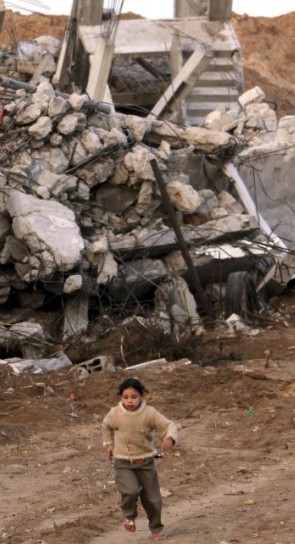
Goldstone vs US House of Representatives

“We were disturbed by the lethality and toxicity of weapons used in Gaza, some of which have been in Western arsenals since the Cold War, such as white phosphorous, which incinerated 14 people, including several children in one attack; flechettes, small darts that are designed to tumble upon entering human flesh in order to cause maximum damage, strictly in breach of the Geneva Convention; and highly carcinogenic tungsten shrapnel and dime munitions, which contain tungsten in powder form. There is also a whole cocktail of other problematic munitions suspected to have been used.

“There are a number of other post-conflict issues in Gaza that need to be addressed. The land is dying. There are toxic deposits from all the munitions that have been dropped. There are serious issues with water—its depletion and its contamination. There is a high instance of nitrates in the soil that is especially dangerous to children. If these issues are not addressed, Gaza may not even be habitable by World Health Organization norms.” — Colonel Desmond Travers, one of the four members of the United Nations Fact Finding Mission on the Gaza Conflict, interviewed by Ken Silverstein.

______

When the House of Representatives is about to pass a non-binding resolution condemning the Goldstone report [PDF] on Israel’s war crimes in Gaza and Josh Block (spokesman for the American Israel Public Affairs Committee) says: “AIPAC, in concert with every mainstream pro-Israel organization in the United States, supports this important resolution,” it’s fair to conclude that AIPAC doesn’t simply support the resolution; it almost certainly had a major role in drafting the resolution.

Rabid opposition to the Goldstone report reached a hyperbolic peak this week when the Simon Wiesenthal Center referred to this serious legal finding as “the ‘Magna Carta’ of international terrorists”.

Why the hysteria?

The UN General Assembly is set to debate the report on Wednesday and in so doing will further enhance the legitimacy of what has already become a highly influential document.

As Israel has framed the issue, the legitimization of Goldstone is part of a campaign to delegitimize the Jewish state. But on the contrary, in recognition of the effectiveness of Israel’s own legal system, the Goldstone report has called on Israel “to launch appropriate investigations that are independent and in conformity with international standards, into the serious violations of International humanitarian and International Human Rights Law reported by the Mission and any other serious allegations that might come to its attention.”

The Washington Post, reporting on the move in the House, said:

The resolution, co-sponsored by the two senior members of the House Foreign Affairs Committee, Rep. Howard L. Berman (D-Calif.) and Ileana Ros-Lehtinen (R-Fla.), charges that the report by South African jurist Richard Goldstone for the U.N. Human Rights Council is “irredeemably biased and unworthy of further consideration or legitimacy,” in part because it was based on “a flawed and biased mandate,” and that the militant group Hamas was able to “significantly shape the findings of the investigation.”

Goldstone categorically rejects that assertion: “The allegation that Hamas was able to shape the findings of my report or that it pre-screened the witnesses is devoid of truth. I challenge anyone to produce evidence in support of it.”

The Post also said:

Goldstone, in a letter to Berman and Ros-Lehtinen, has complained of numerous inaccuracies in the resolution about his report. But Lynne Weil, a spokeswoman for Berman, said that the chairman believes Goldstone’s letter contains “a number of points that are inaccurate” and that he will “issue a complete response” to Goldstone before the House vote.

What follows is Justice Goldstone’s letter where clause by clause he exposes the flaws in the House resolution:

The Honorable Howard Berman
Chairman, House Committee on Foreign Affairs

The Honorable Ileana Ros-Lehtinen
Ranking Member, House Committee on Foreign Affairs

October 29, 2009

Dear Chairman Berman and Ranking Member Ros-Lehtinen,

It has come to my attention that a resolution has been introduced in the Unites States House of
Representatives regarding the United Nations Fact Finding Mission on the Gaza Conflict, which I
led earlier this year.

I fully respect the right of the US Congress to examine and judge my mission and the resulting
report, as well as to make its recommendations to the US Executive branch of government.
However, I have strong reservations about the text of the resolution in question – text that
includes serious factual inaccuracies and instances where information and statements are taken
grossly out of context.

I undertook this fact-finding mission in good faith, just as I undertook my responsibilities vis à
vis the South African Standing Commission of Inquiry Regarding Public Violence and
Intimidation, the International War Crimes Tribunal on the former Yugoslavia, the International
Criminal Tribunal for Rwanda, the International Panel of the Commission of Enquiry into the
Activities of Nazism in Argentina, the Independent International Commission on Kosovo, and the
Volker Committee investigation into the UN’s Iraq oil-for-food program in 2004/5.

I hope that you, in similar good faith, will take the time to consider my comments about the
resolution and, as a result of that consideration, make the necessary corrections.

Whereas clause #1: “Whereas, on January 12, 2009, the United Nations Human Rights Council passed Resolution A/HRC/S-9/L.1, which authorized a `fact-finding mission’ regarding Israel’s conduct of Operation Cast Lead against violent militants in the Gaza Strip between December 27, 2008, and January 18, 2009;”

This whereas clause ignores the fact that I and others refused this original mandate, precisely
because it only called for an investigation into violations committed by Israel. The mandate given
to and accepted by me and under which we worked and reported reads as follows:

“. . .to investigate all violations of international human rights law and international humanitarian
law that might have been committed at any time in the context of the military operations that
were conducted in Gaza during the period from 27 December 2008 and 18 January 2009, whether
before, during or after”.

Whereas clause #2: “Whereas the resolution pre-judged the outcome of its investigation, by one-sidedly mandating the `fact-finding mission’ to `investigate all violations of international human rights law and International Humanitarian Law by . . . Israel, against the Palestinian people . . . particularly in the occupied Gaza Strip, due to the current aggression’”

This whereas clause ignores the fact that the expanded mandate that I demanded and received
clearly included rocket and mortar attacks on Israel and as the report makes clear was so
interpreted and implemented. It was the report carried out under this broadened mandate – not the
original, rejected mandate – that was adopted by the Human Rights Council and that included the
serious findings made against Hamas and other militant Palestinian groups.

Whereas clause #3: “Whereas the mandate of the `fact-finding mission’ makes no mention of the relentless rocket and mortar attacks, which numbered in the thousands and spanned a period of eight years, by Hamas and other violent militant groups in Gaza against civilian targets in Israel, that necessitated Israel’s defensive measures;”

This whereas clause is factually incorrect. As noted above, the expanded mandate clearly
included the rocket and mortar attacks. Moreover, Chapter XXIV of the Report considers in
detail the relentless rocket attacks from Gaza on Israel and the terror they caused to the people
living within their range. The resulting finding made in the report is that these attacks constituted
serious war crimes and possibly crimes against humanity.

Whereas clause #4: “Whereas the `fact-finding mission’ included a member who, before joining the mission, had already declared Israel guilty of committing atrocities in Operation Cast Lead by signing a public letter on January 11, 2009, published in the Sunday Times, that called Israel’s actions `war crimes’;”

This whereas clause is misleading. It overlooks, or neglects to mention, that the member concerned, Professor Christine Chinkin of the London School of Economics, in the same letter, together with other leading international lawyers, also condemned as war crimes the Hamas rockets fired into Israel.

Whereas clause #5: “Whereas the mission’s flawed and biased mandate gave serious concern to many United Nations Human Rights Council Member States which refused to support it,
including Bosnia and Herzegovina, Cameroon, Canada, France, Germany, Italy, Japan, the Netherlands, the Republic of Korea, Slovakia, Slovenia, Switzerland, Ukraine, and the United Kingdom of Great Britain and Northern Ireland;”

This whereas clause is factually incorrect. The mandate that was given to the Mission was certainly not opposed by all or even a majority of the States to which reference is made. I am happy to provide further details if necessary.

Whereas clause #6: “Whereas the mission’s flawed and biased mandate troubled many distinguished individuals who refused invitations to head the mission;”

This whereas clause is factually incorrect. The initial mandate that was rejected by others who
were invited to head the mission was the same one that I rejected. The mandate I accepted was
expanded by the President of the Human Rights Council as a result of conditions I made.

Whereas clause #8: “Whereas the report repeatedly made sweeping and unsubstantiated determinations that the Israeli military had deliberately attacked civilians during Operation Cast Lead;”

This whereas clause is factually incorrect. The findings included in the report are neither “sweeping” nor “unsubstantiated” and in effect reflect 188 individual interviews, review of more than 300 reports, 30 videos and 1200 photographs. Additionally, the body of the report contains a plethora of references to the information upon which the Commission relied for our findings.

Whereas clause #9: “Whereas the authors of the report, in the body of the report itself, admit that `we did not deal with the issues . . . regarding the problems of conducting military operations in civilian areas and second-guessing decisions made by soldiers and their commanding officers `in the fog of war.’;”

This whereas clause is misleading. The words quoted relate to the decision we made that it would have been unfair to investigate and make finding on situations where decisions had been made by Israeli soldiers “in the fog of battle”. This was a decision made in favor of, and not against, the interests of Israel.

Whereas clause #10: “Whereas in the October 16th edition of the Jewish Daily Forward, Richard Goldstone, the head of the `United Nations Fact Finding Mission on the Gaza Conflict’, is quoted as saying, with respect to the mission’s evidence-collection methods, `If this was a court of law, there would have been nothing proven.’”

The remark as quoted is both inaccurate and taken completely out of context. What I had explained to The Forward was that the Report itself would not constitute evidence admissible in court of law. It is my view, as jurist, that investigators would have to investigate which allegations they considered relevant. That, too, was why we recommended domestic investigations into the allegations.

Whereas clause #11: “Whereas the report, in effect, denied the State of Israel the right to self- defense, and never noted the fact that Israel had the right to defend its citizens from the repeated violent attacks committed against civilian targets in southern Israel by Hamas and other Foreign Terrorist Organizations operating from Gaza;”

It is factually incorrect to state that the Report denied Israel the right of self-defense. The report examined how that right was implemented by the standards of international law. What is commonly called ius ad bellum, the right to use military force was not considered to fall within our mandate. Israel’s right to use military force was not questioned.

Whereas clause #12: “Whereas the report largely ignored the culpability of the Government of Iran and the Government of Syria, both of whom sponsor Hamas and other Foreign Terrorist Organizations;”

This whereas clause is misleading. Nowhere that I know of has it ever been suggested that the Mission should have investigated the provenance of the rockets. Such an investigation was never on the agenda, and in any event, we would not have had the facilities or capability of investigating these allegations. If the Government of Israel has requested us to investigate that issue I have no doubt that we have done our best to do so.

Whereas clause #14: “Whereas, notwithstanding a great body of evidence that Hamas and other violent Islamist groups committed war crimes by using civilians and civilian institutions, such as mosques, schools, and hospitals, as shields, the report repeatedly downplayed or cast doubt upon that claim;”

This is a sweeping and unfair characterization of the Report. I hope that the Report will be read by those tasked with considering the resolution. I note that the House resolution fails to mention that notwithstanding my repeated personal pleas to the Government of Israel, Israel refused all cooperation with the Mission. Among other things, I requested the views of Israel with regard to the implementation of the mandate and details of any issues that the Government of Israel might wish us to investigate.

This refusal meant that Israel did not offer any information or evidence it may have collected regarding actions by Hamas or other Palestinian groups in Gaza. Any omission of such information and evidence in the report is regrettable, but is the result of Israel’s decision not to cooperate with the Fact-Finding mission, not a decision by the mission to downplay or cast doubt on such information and evidence.

Whereas clause #15: “Whereas in one notable instance, the report stated that it did not consider the admission of a Hamas official that Hamas often `created a human shield of women, children, the elderly and the mujahideen, against [the Israeli military]’ specifically to `constitute evidence that Hamas forced Palestinian civilians to shield military objectives against attack.’;”

This whereas clause is misleading, since the quotation is taken out of context. The quotation is
part of a section of the report dealing with the very narrow allegation that Hamas compelled
civilians, against their will, to act as human shields. The statement by the Hamas official is
repugnant and demonstrates an apparent disregard for the safety of civilians, but it is not evidence
that Hamas forced civilians to remain in their homes in order to act as human shields. Indeed,
while the Government of Israel has alleged publicly that Hamas used Palestinian civilians as
human shields, it has not identified any cases where it claims that civilians were doing so under
threat of force by Hamas or any other party.

Whereas clause #16: “Whereas Hamas was able to significantly shape the findings of the investigation mission’s report by selecting and prescreening some of the witnesses and intimidating others, as the report acknowledges when it notes that `those interviewed in Gaza appeared reluctant to speak about the presence of or conduct of hostilities by the Palestinian armed groups . . . from a fear of reprisals’;”

The allegation that Hamas was able to shape the findings of my report or that it pre-screened the
witnesses is devoid of truth. I challenge anyone to produce evidence in support of it.

Sincerely,

Justice Richard J. Goldstone

Facebooktwittermail

Why Iran will push back on the West’s nuclear offer

Why Iran will push back on the West’s nuclear offer

As the world has waited for Iran’s response to the latest nuclear deal offered by the West, conventional wisdom has held that Tehran has been playing for time, testing the limits of international political resolve, and hamstrung by internal political divisions. There’s a measure of truth to all three claims, as official sources in Tehran have begun to indicate that Iran will accept the framework of the deal, but demand important changes. But the root of the problem may be that while the agreement is envisaged as a first step, the two sides don’t share a common destination.

The draft agreement discussed at talks in Vienna last week would have Iran ship 2,645 pounds of its low-enriched uranium (some three quarters of the stockpile enriched at its Natanz facility) to Russia by the end of this year. There it would be enriched to a higher grade and converted into fuel plates in France, after which it would be shipped back to Iran to power the Tehran medical research reactor. Western governments, which fear that Iran has already stockpiled enough enriched uranium to be reprocessed it into a single bomb, like that the deal would remove most of Tehran’s stockpile, and return it in a state difficult for Iran to weaponize. Though there are no signs that Iran is currently working on a turning its uranium into an actual bomb, the West wants the material moved out of Iran in a single shipment, and by the end of this year. That way, they say, it will take Tehran another year to replenish its stockpile to current levels, setting back the supposed “ticking clock” of a potential Iranian bomb, and allowing more time to negotiate an end to Iran’s enrichment program.

Iran, needless to say, sees things very differently. It has no intention of relinquishing its uranium-enrichment program, which it insists is for the peaceful purposes of a civilian energy program and is its right as a signatory to the Non-Proliferation Treaty (NPT). And what it likes most about the Vienna deal is that it can be read as tacit acceptance of Iranian enrichment; the stockpile at the heart of the deal, after all, was enriched in violation of U.N. Security Council resolutions. But Iran doesn’t trust the intentions of some of its interlocutors, particularly France, which has adopted the most hawkish position among the Western powers against any Iranian enrichment. In other words, the very thing that Western powers like about the proposal — that it separates Iran from its uranium stockpile — is precisely what the Iranians fear as a prelude to moves to end all of its enrichment. [continued…]

Iran hints at uranium plan changes

A high-ranking Iranian official said Tuesday that even if the country agreed to a United Nations-sponsored plan to ship its enriched uranium abroad for further processing, it would not ship it all at once, Iranian news media reported.

That position, if maintained, could undermine the entire plan. The French government, a party to the deal, has made it clear that the uranium must be shipped all at once before the end of the year.

Iran has said it will formally respond on Friday to the proposal, which is intended to delay the country’s ability to produce a nuclear weapon for about a year and buy time for a broader diplomatic solution to the nuclear standoff. [continued…]

Weapons of mass distraction

If Iranian negotiators haven’t read Avner Cohen’s book Israel and the Bomb, they should. They’d find out that Oct. 30 is the 41st anniversary of the beginning of the series of negotiations that culminated in American recognition of Israel’s “nuclear ambiguity.” They might learn some useful lessons.

As the worldwide media weighs and critiques Iran’s dilatory response (or lack of satisfactory response) to western pressures over its nuclear program, Israeli diplomats and pundits are reiterating that, no matter what Iran says, it is nonetheless trying to exploit the pretext of a peaceful nuclear program to develop a nuclear weapons program.

After all, Israelis know how the game is played. They wrote the rules.

On Oct. 30, 1968, US Assistant Defense Secretary Paul Warnke began a series of negotiations with then-Israeli Ambassador Yitzchak Rabin, who would become Israel’s fifth Prime Minister in 1974. [Awarded the 1994 Nobel Peace Prize for shaking hands with Yassir Arafat, Rabin was assassinated by a right wing Jewish fanatic at a Jerusalem peace rally a year later.] Although Warnke had not been provided with the CIA’s assessment of Israel’s nuclear weapons program, he nevertheless suspected that Israel had the capability of producing a nuclear bomb and quite possibly had already done so. He proposed a Memorandum of Understanding (MOU) that linked Israel’s signature on the NPT not only to the sale of the Phantom jets Israel wanted from the U.S. but to the transformation of the U.S. into Israel’s main arms supplier, a role that had, until the 1967 “Six Day” war, been filled by France.

As reconstructed and recounted by Avner Cohen in his 1998 book (pp. 307-318), based on once-classified documents, Warnke met with Rabin on Nov. 12, and attempted to clarify the assertion, “Israel will not be the first to introduce nuclear weapons into the area.” Rabin replied that it meant, “We would not be the first to introduce nuclear weapons.” [continued…]

Iranian-American dual loyalty?

The campaign against J Street has contained a fairly amount of anti-Arab and anti-Muslim bigotry, epitomized by former AIPAC staffer Lenny Ben-David’s attack on any J Street donors unfortunate enough to have Arab names. Now comes a new and equally unseemly line of attack, centering on an Iran panel at the recent J Street conference that featured National Iranian American Council (NIAC) president Trita Parsi. Parsi, Michael Goldfarb of the Weekly Standard claims, is “the Iranian regime’s man in Washington.” Jeffrey Goldberg of the Atlantic similarly accuses Parsi of “doing a lot of leg-work for the Iranian regime.”

To begin with, it’s worth noting the inaccuracy of the charge. NIAC was harshly critical of the Iranian government’s crackdown on protesters following the disputed elections in June, issuing a June 20 statement “strongly condemn[ing] the government of Iran’s escalating violence against demonstrators” and calling for new elections. A later statement urged the Obama administration not to neglect human rights issues in the course of its diplomacy with Iran. Anyone who followed the post-election crisis closely — no matter where they came from on the ideological spectrum — soon came to rely on NIAC’s blog as an indispensabe source of news and analysis about the protests. And Parsi (who has in the past written for IPS) became the most prominent proponent of engagement to change his stance in the wake of the elections, calling for a “tactical pause” in U.S. diplomacy while the political situation within Iran developed. [continued…]

Pragmatists in Tehran

Direct U.S.-Iranian negotiations in Geneva and Vienna this month over Iran’s nuclear program demonstrate something very positive about the prospects for U.S. diplomacy with Iran: When given the chance to engage directly with the United States, Iran will take that chance and pursue negotiations in an active and constructive way.

This does not mean that Iran will automatically give the United States what it wants. But it does mean that Iran will approach negotiations with the United States in a rational manner grounded in Iranian national security interests. This should not come as a surprise: It is how Iran has approached previous episodes of engagement with the United States — including two years of extremely constructive official talks between the U.S. and Iran over Afghanistan and al Qaeda, following the 9/11 attacks (talks in which I directly participated).

Now that Tehran has asked for an extension of the deadline for its response to a proposal to ship most of Iran’s low enriched uranium out of the country for fabrication into fuel rods, it is important to remember Tehran’s history of pragmatic cooperation and avoid distorting events or overreacting. [continued…]

House panel approves bill to punish Iran

A House committee, seeking to pressure Iran to abandon its nuclear ambitions, approved a bill Wednesday aimed at punishing Tehran by cutting off its access to gasoline and other refined petroleum products.

The measure, which would give the president powers to take action against foreign companies that sell refined petroleum to Iran, is popular on Capitol Hill, and three-quarters of House members have cosponsored the legislation.

But the measure could undermine Obama administration efforts to negotiate with Iran over its nuclear development program. If talks fail and further sanctions become necessary, administration officials prefer to enact measures supported by many countries, rather than just one. [continued…]

Facebooktwittermail

Brother of Afghan leader is said to be on CIA payroll

Brother of Afghan leader is said to be on CIA payroll

Ahmed Wali Karzai, the brother of the Afghan president and a suspected player in the country’s booming illegal opium trade, gets regular payments from the Central Intelligence Agency, and has for much of the past eight years, according to current and former American officials.

The agency pays Mr. Karzai for a variety of services, including helping to recruit an Afghan paramilitary force that operates at the C.I.A.’s direction in and around the southern city of Kandahar, Mr. Karzai’s home.

The financial ties and close working relationship between the intelligence agency and Mr. Karzai raise significant questions about America’s war strategy, which is currently under review at the White House.

The ties to Mr. Karzai have created deep divisions within the Obama administration. The critics say the ties complicate America’s increasingly tense relationship with President Hamid Karzai, who has struggled to build sustained popularity among Afghans and has long been portrayed by the Taliban as an American puppet. The C.I.A.’s practices also suggest that the United States is not doing everything in its power to stamp out the lucrative Afghan drug trade, a major source of revenue for the Taliban.

More broadly, some American officials argue that the reliance on Ahmed Wali Karzai, the most powerful figure in a large area of southern Afghanistan where the Taliban insurgency is strongest, undermines the American push to develop an effective central government that can maintain law and order and eventually allow the United States to withdraw.

“If we are going to conduct a population-centric strategy in Afghanistan, and we are perceived as backing thugs, then we are just undermining ourselves,” said Maj. Gen. Michael T. Flynn, the senior American military intelligence official in Afghanistan. [continued…]

Editor’s CommentAndrew Exum says this is the most important article on Afghanistan you’ll read this week:

Why, you ask? Because if this is true, and if the CIA is empowering Ahmed Wali Karzai at the same time in which NATO/ISAF is saying abusive local power-brokers are a threat to mission success, then this is yet another example of NATO/ISAF carrying out one campaign in Afghanistan while the CIA carries out another — with both campaigns operating at cross purposes to one another. I should say here that I am in no position to confirm or deny this report. I can, however, say that numerous military officials in southern Afghanistan with whom I have spoken identify AWK and his activities as the biggest problem they face — bigger than the lack of government services or even the Taliban. And so if AWK is “the agency’s guy”, that leads to a huge point of friction between NATO/ISAF and the CIA.

At some point, the CIA’s Congressional overseers — who’ve already complained that they have been misled by the agency on multiple occasions — should start asking some fundamental questions about the institution.

In this decade the CIA has had a central role in the biggest intelligence failure the US has ever had; it has implemented a torture program; operated ghost prisons; conducted kidnapping operations; and provided support for drug warlords. The list could I’m sure be made much longer. At what point will the conclusion be drawn that this Cold War anachronism does more to threaten than protect America’s national security?

Gunmen attack UN workers in Kabul

Taliban gunmen stormed a guest house in central Kabul on Wednesday morning, killing six United Nations employees and two Afghan security officials, according to U.N. officials, the police and the Afghan Interior Ministry.

One of those killed was an American security guard who battled the attackers as they came through the front gate in the predawn hours, according to an American who was staying in the guest house and who joined in the gun battle before shepherding 25 other residents to safety.

The police said one of the victims, a woman, had been shot in the head, and another burned to death. A cellphone video taken by a security official and seen by a reporter showed just the head and torso of a third victim, apparently cut in half when one of the attackers detonated his suicide vest. [continued…]

Editor’s Comment — While the Taliban say this attack is intended to deter people from assisting in the November 7 runoff election it clearly also challenges the concept of a strategy based on protecting the most populated parts of Afghanistan. Reinforce the perception that the center of Kabul is unsafe and it gets hard to promote the idea that anywhere can be made safe.

Add to that the fact that the Taliban has the upper hand even when outnumbered by 12 to 1 and the argument that tens of thousands more American troops will enhance security becomes increasingly implausible.

A crash course in democracy

The decision by both Afghan President Hamid Karzai and his main rival, former Foreign Minister Abdullah Abdullah, to accept a runoff election is a welcome development that provides the Afghan government with an opportunity to restore its damaged credibility. The runoff election now faces two main challenges: making the process more credible and ensuring the election actually contributes to security. Setting Nov. 7 as the date for the election makes both impossible.

Nationwide elections in any country are logistically difficult. In Afghanistan, they’re a nightmare. Funds need to be mobilized (the last elections cost more than $500 million), new poll workers need to be hired (or fired), observers have to be recruited, voters reassured, and security forces redeployed. Because ballots are often transported by donkey, it could take weeks to distribute them to Afghanistan’s remotest areas. A mad rush will be the only way to get all of this done, and such haste will not contribute to a credible process.

The first step in ensuring a credible election, therefore, is to postpone the date for the runoff. [continued…]

Facebooktwittermail

A letter from Afghanistan that every American must read

A letter from Afghanistan that every American must read

“… I have lost understanding of and confidence in the strategic purposes of the United States’ presence in Afghanistan. I have doubts and reservations about our current strategy and planned future strategy, but my resignation is based not upon how we are pursuing this war, but why and to what end. To put simply: I fail to see the value or the worth in continued U.S. casualties or expenditures or resources in support of the Afghan government in what is, truly, a 35-year old civil war.” From Matthew P Hoh, Senior Civilian Representative, Zabul Province, Afghanistan, in his letter of resignation to the State Department.

For weeks, President Obama and his advisers in the White House and from the Pentagon have been wrestling over the formulation of a revised strategy for Afghanistan. Central to that debate has been the question of how to respond to Gen Stanley McChrystal’s request for tens of thousands more American troops.

But perhaps the most important question — one which the president and his advisers have no doubt studiously avoided asking — is whether this war is worth fighting.

Matthew Hoh, a former US Marine captain who fought in Iraq, and who later served as a civilian State Department representative in the Zabul province of Afghanistan, in a letter of resignation submitted in early September, provided a definitive statement on the war’s failure — in its conception, its execution, and its aims. Rarely, if ever, has such an damning indictment of this war been so clearly and powerfully expressed.

The Washington Post reported:

The reaction to Hoh’s letter was immediate. Senior U.S. officials, concerned that they would lose an outstanding officer and perhaps gain a prominent critic, appealed to him to stay.

U.S. Ambassador Karl W. Eikenberry brought him to Kabul and offered him a job on his senior embassy staff. Hoh declined. From there, he was flown home for a face-to-face meeting with Richard C. Holbrooke, the administration’s special representative for Afghanistan and Pakistan.

“We took his letter very seriously, because he was a good officer,” Holbrooke said in an interview. “We all thought that given how serious his letter was, how much commitment there was, and his prior track record, we should pay close attention to him.”

The Post has published Hoh’s letter in a printable format [PDF] which is likely to result in the whole letter not being widely read. In order to encourage readers to absorb the full force of this testimony, I’ve reproduced the letter in full below — the only place (as far as I’m aware) that it can currently be found on the web in a user-friendly format.

“We are spending ourselves into oblivion”

Dear Ambassador Powell,

It is with great regret and disappointment I submit my resignation from my appointment as a Political Officer in the Foreign Service and my post as the Senior Civilian Representative for the U.S. Government in Zabul Province. I have served six of the previous ten years in service to our country overseas, to include deployment as a U.S. Marine officer and Department of Defense civilian in the Euphrates and Tigris River Valleys of Iraq in 2004-2005 and 2006-2007. I did not enter into this position lightly or with any undue expectations nor did I believe my assignment would be without sacrifice hardship or difficulty. However, in the course of my five months of service in Afghanistan, in both Regional Commands East and South, I have lost understanding of and confidence in the strategic purposes of the United States’ presence in Afghanistan. I have doubts and reservations about our current strategy and planned future strategy, but my resignation is based not upon how we are pursuing this war, but why and to what end. To put simply: I fail to see the value or the worth in continued U.S. casualties or expenditures or resources in support of the Afghan government in what is, truly, a 35-year old civil war.

This fall will mark the eighth year of U.S. combat, governance and development operations within Afghanistan. Next fall, the United States’ occupation will equal in length the Soviet Union’s own physical involvement in Afghanistan. Like the Soviets, we continue to secure and bolster a failing state, while encouraging an ideology and system of government unknown and unwanted by its people.

If the history or Afghanistan is one great stage play, the United States is no more than a supporting actor, among several previously, in a tragedy that not only pits tribes, valleys, clans, villages and families against one another, but, from at least the end of King Zahir Shah’s reign, has violently and savagely pitted the urban, secular, educated and modem of Afghanistan against the rural, religious, illiterate and traditional. It is this latter group that composes and supports the Pashtun insurgency. The Pashtun insurgency, which is composed of multiple, seemingly infinite, local groups, is fed by what is perceived by the Pashtun people as a continued and sustained assault, going back centuries, on Pashtun land, culture, traditions and religion by internal and external enemies. The U.S. and NATO presence and operations in Pashtun valleys and villages, as well as Afghan army and police units that are led and composed of non-Pashtun soldiers and police, provide an occupation force against which the insurgency is justified. In both RC East and South, I have observed that the bulk of the insurgency fights not for the white banner of the Taliban, but rather against the presence of foreign soldiers and taxes imposed by an unrepresentative government in Kabul.

The United States military presence in Afghanistan greatly contributes to the legitimacy and strategic message of the Pashtun insurgency. In a like manner our backing of the Afghan government in its current form continues to distance the government from the people. The Afghan government’s failings, particularly when weighed against the sacrifice of American lives and dollars, appear legion and metastatic:

• Glaring corruption and unabashed graft;
• A President whose confidants and chief advisers comprise drug lords and war crimes villains, who mock our own rule of law and counternarcotics efforts;
• A system of provincial and district leaders constituted of local power brokers, opportunists and strongmen allied to the United States solely for, and limited by, the value of our USAID and CERP contracts and whose own political and economic interests stand nothing to gain from any positive or genuine attempts at reconciliation; and
• The recent election process dominated by fraud and discredited by low voter turnout, which has created an enormous victory for our enemy who now claims a popular boycott and will call into question worldwide our government’s military, economic and diplomatic support for an invalid and illegitimate Afghan government.

Our support for this kind of government, coupled with a misunderstanding of the insurgency’s true nature, reminds me horribly of our involvement with South Vietnam; an unpopular and corrupt government we backed at the expense of our Nation’s own internal peace, against an insurgency whose nationalism we arrogantly and ignorantly mistook as a rival to our own Cold War ideology.

I find specious the reasons we ask for bloodshed and sacrifice from our young men and women in Afghanistan. If honest, our stated strategy of securing Afghanistan to prevent al-Qaeda resurgence or regrouping would require us to additionally invade and occupy western Pakistan, Somalia, Sudan, Yemen, etc. Our presence in Afghanistan has only increased destabilization and insurgency in Pakistan where we rightly fear a toppled or weakened Pakistani government may lose control of nuclear weapons. However, again, to follow the logic of our stated goals we should garrison Pakistan, not Afghanistan. More so, the September 11th attacks, as well as the Madrid and London bombings, were primarily planned and organized in Western Europe; a point that highlights the threat is not one tied to traditional geographic or political boundaries. Finally, if our concern is for a failed state crippled by corruption and poverty and under assault from criminal and drug lords, then if we bear our military and financial contributions to Afghanistan, we must reevaluate our commitment to and involvement in Mexico.

Eight years into war, no nation has ever known a more dedicated, well trained, experienced and disciplined military as the U.S. Armed Forces. I do not believe any military force has ever been tasked with such a complex, opaque and Sisyphean mission as the U.S. military has received in Afghanistan. The tactical proficiency and performance of our Soldiers, Sailors, Airmen and Marines is unmatched and unquestioned. However, this is not the European or Pacific theaters of World War II, but rather is a war for which our leaders, uniformed, civilian and elected, have inadequately prepared and resourced our men and women. Our forces, devoted and faithful, have committed to conflict in an indefinite and unplanned manner that has become a cavalier, politically expedient and Pollyannaish misadventure. Similarly, the United States has a dedicated and talented cadre of civilians, both U.S. government employees and contractors, who believe in and sacrifice for their mission, but have been ineffectually trained and led with guidance and intent shaped more by the political climate in Washington, D.C. than in Afghan cities, villages, mountains and valleys.

“We are spending ourselves into oblivion” a very talented and intelligent commander, one of America’s best, briefs every visitor, staff delegation and senior officer. We are mortgaging our Nation’s economy on a war, which, even with increased commitment, will remain a draw for years to come. Success and victory, whatever they may be, will be realized not in years, after billions more spent, but in decades and generations. The United States does not enjoy a national treasury for such success and victory.

I realize the emotion and tone of my letter and ask you excuse any ill temper. I trust you understand the nature of this war and the sacrifices made by so many thousands of families who have been separated from loved ones deployed in defense of our Nation and whose homes bear the fractures, upheavals and scars of multiple and compounded deployments. Thousands of our men and women have returned home with physical and mental wounds, some that will never heal or will only worsen with time. The dead return only in bodily form to be received by families who must be reassured their dead have sacrificed for a purpose worthy of futures lost, love vanished, and promised dreams unkept. I have lost confidence such assurances can anymore be made. As such, l submit my resignation.

Sincerely,

Matthew P. Hoh
Senior Civilian Representative
Zabul Province, Afghanistan

cc:
Mr. Frank Ruggiero
Ms. Dawn Liberi
Ambassador Anthony Wayne
Ambassador Karl Eikenberry

This letter was addressed to:
Ambassador Nancy J. Powell
Director General of the Foreign Service and Director of Human Resources
U.S. Department of State
2201 C Street NW

Facebooktwittermail

British High Court rejects U.S./British cover-up of torture evidence

British High Court rejects U.S./British cover-up of torture evidence

There is a vital development — a new ruling from the British High Court — in a story about which I’ve written many times before: the extraordinary joint British/U.S. effort to cover up the brutal torture which Binyam Mohamed suffered at the hands of the CIA while in Pakistan and while he was “rendered” by the U.S. to various countries. While Mohamed, a British resident, was in American custody, the CIA told British intelligence agents exactly what was done to him, and those British agents recorded what they were told in various memos. Last year, the British High Court ruled that Mohamed — who was then at Guantanamo — had the right to obtain those documents from the British intelligence service in order to prove that statements he made to the CIA were the by-product of coercion.

The High Court’s original ruling in Mohamed’s favor contained seven paragraphs which described the torture to which Mohamed was subjected. It has been previously reported that those paragraphs contain descriptions of abuse so brutal that not even our own American media could dispute that it constitutes “torture”: [continued…]

Facebooktwittermail

Stanley McChrystal’s long war

Stanley McChrystal’s long war

In his initial assessment of the country, sent to President Obama early last month, McChrystal described an Afghanistan on the brink of collapse and an America at the edge of defeat. To reverse the course of the war, McChrystal presented President Obama with what could be the most momentous foreign-policy decision of his presidency: escalate or fail. McChrystal has reportedly asked for 40,000 additional American troops — there are 65,000 already here — and an accelerated effort to train Afghan troops and police and build an Afghan state. If President Obama can’t bring himself to step up the fight, McChrystal suggested, then he might as well give up.

“Inadequate resources,” McChrystal wrote, “will likely result in failure.”

The magnitude of the choice presented by McChrystal, and now facing President Obama, is difficult to overstate. For what McChrystal is proposing is not a temporary, Iraq-style surge — a rapid influx of American troops followed by a withdrawal. McChrystal’s plan is a blueprint for an extensive American commitment to build a modern state in Afghanistan, where one has never existed, and to bring order to a place famous for the empires it has exhausted. Even under the best of circumstances, this effort would most likely last many more years, cost hundreds of billions of dollars and entail the deaths of many more American women and men.

And that’s if it succeeds. [continued…]

An inconvenient truth teller

Joe Biden had a question. During a long Sunday meeting with President Obama and top national-security advisers on Sept. 13, the VP interjected, “Can I just clarify a factual point? How much will we spend this year on Afghanistan?” Someone provided the figure: $65 billion. “And how much will we spend on Pakistan?” Another figure was supplied: $2.25 billion. “Well, by my calculations that’s a 30-to-1 ratio in favor of Afghanistan. So I have a question. Al Qaeda is almost all in Pakistan, and Pakistan has nuclear weapons. And yet for every dollar we’re spending in Pakistan, we’re spending $30 in Afghanistan. Does that make strategic sense?” The White House Situation Room fell silent. But the questions had their desired effect: those gathered began putting more thought into Pakistan as the key theater in the region. [continued…]

Why Joe Biden should resign

It’s been known for a while that Biden has been on the other side of McChrystal’s desire for a big escalation of our forces there — the New York Times reported last month that he has “deep reservations” about it. So if the president does decide to escalate, Biden, for the good of the country, should escalate his willingness to act on those reservations.

What he must not do is follow the same weak and worn-out pattern of “opposition” we’ve become all-too-accustomed to, first with Vietnam and then with Iraq. You know the drill: after the dust settles, and the country begins to look back and not-so-charitably wonder, “what were they thinking?” the mea-culpa-laden books start to come out. On page after regret-filled page, we suddenly hear how forceful this or that official was behind closed doors, arguing against the war, taking a principled stand, expressing “strong concern” and, yes, “deep reservations” to the president, and then going home each night distraught at the unnecessary loss of life.

Well, how about making the mea culpa unnecessary? Instead of saving it for the book, how about future author Biden unfetter his conscience in real time — when it can actually do some good? If Biden truly believes that what we’re doing in Afghanistan is not in the best interests of our national security — and what issue is more important than that? — it’s simply not enough to claim retroactive righteousness in his memoirs. [continued…]

Facebooktwittermail

More US troops deployed overseas under Obama than Bush

More US troops deployed overseas under Obama than Bush

President Obama announced in March that he would be sending 21,000 additional troops to Afghanistan. But in an unannounced move, the White House has also authorized — and the Pentagon is deploying — at least 13,000 troops beyond that number, according to defense officials.

The additional troops are primarily support forces, including engineers, medical personnel, intelligence experts and military police. Their deployment has received little mention by officials at the Pentagon and the White House, who have spoken more publicly about the combat troops who have been sent to Afghanistan.

The deployment of the support troops to Afghanistan brings the total increase approved by Obama to 34,000. The buildup has raised the number of U.S. troops deployed to the war zones of Iraq and Afghanistan above the peak during the Iraq “surge” that President George W. Bush ordered, officials said. [continued…]

Rushed training ‘risks turning Afghan troops into cannon fodder’

Recruits to the Afghan Army are being rushed into combat with a barely acceptable level of training, according to senior British officers closely involved in the programme.

With US and Nato leaders pressing for a rapid expansion of the army to relieve pressure on their own forces and facilitate their eventual departure, the recruits are becoming “cannon fodder”, another coalition official said.

Courses are being shortened, class sizes are swelling and there is a serious shortage of Afghan instructors and Western mentors. [continued…]

Resignation of Afghan election official raises anxiety level

The disarray surrounding Afghanistan’s presidential election deepened Monday when an Afghan member of the vote-reviewing commission quit, citing “foreign interference.”

The resignation of Mustafa Barakzai from the Electoral Complaints Commission was not expected to affect the panel’s work of sifting through allegations of massive vote-rigging in the Aug. 20 balloting, officials said. But it added an acrimonious new element to a vote that has already become an exercise in recrimination — and has left Afghanistan in political limbo at a time when crucial decisions about the course of the conflict are being made in Washington. [continued…]

Facebooktwittermail

Obama’s Middle East mess

Obama’s Middle East mess

As Abbas falls, have no doubt that he got pushed by an inept administration that similarly gets weak-kneed whenever it feels pressure from either the Israel lobby or the Israeli government.

Yesterday, State Department spokesman, Ian Kelly, was asked: “What role specifically did the United States play in pressuring the Palestinian Authority to make that decision [to shelve the Goldstone report]?

Kelly, squirming like an eel, responded:

Well, I don’t know if I would accept your characterization of pressuring. I think that we recognized that we had serious concerns with the recommendations and some of the allegations. We felt very strongly that while these investigations should be investigated and addressed, that we thought on the one hand that Israel had the kind of institutions that could address these allegations. And of course, we urged Israel to address these very serious allegations.

But I think we had a broader concern that we didn’t want the report to distract us from our ultimate goal, which was to address the root causes of the tragic events of last January, and that’s the lack of a regional and lasting peace between the two parties – between the Israelis and the Palestinians. So we were concerned that we stay focused on that ultimate goal.

And we are not saying that the allegations in the report – we’re not saying that they should be ignored. We simply do not want the report itself to become any kind of impediment to this ultimate goal. We appreciate the seriousness with which the Palestinians approach this very, very difficult issue, and we respect this decision to defer discussion of the report to a later date for the reasons that I just stated – that we want to make sure that we stay focused on the ultimate goal here.

(Goldstone discussion begins at 6 minutes 55 seconds.)

What kind of tortured logic is this? On the one hand war crimes committed in Gaza are somehow extraneous to an understanding of the root causes of the conflict, yet the root cause of the conflict is conflict itself?

The administration needs to make up its mind: Either this conflict is all about violence, in which case Israeli violence can’t be ruled out of the equation. Or, the violence is merely symptomatic of underlying political injustices and a natural outcome of addressing those injustices will be a long sought peace. Take your pick.

Of course, the true sentiment that few American officials are crass enough to utter, yet apparently everyone believes, is that when Israelis kill hundreds of Palestinians they really don’t intend to kill any (“we shoot and we cry”), yet when Palestinians kill a dozen Israelis they merely fall short of accomplishing their genocidal intentions.

* * *

After taking stabs at solving the Middle East conflict, engaging Iran, bringing about global nuclear disarmament, healing the rift between Muslims and the West, shoring up the global financial system, tackling climate change and reforming America’s health care system, there are strong indications that Obama came into office intoxicated by his image as a world savior.

Even so, his cool created the impression that he might actually be impervious to the influence of adulation, but even though some of us thought he had risen above the massive projections that were being imposed on him, the evidence is that to some extent he got sucked into the myth that had been created around him.

To see Obama now as either a tragic figure or as the victim of circumstances essentially absolves him of responsibility for his own actions.

I don’t think it’s premature to be conducting an autopsy on Obama’s Middle East initiative and the first question to ask is this: Did he manage to cross the most minimal threshold for a defensible approach? That is, can he claim at least to have done no harm?

Unfortunately, the harm appears grossly evident and it hinges on his choice to raise expectations across the region and then allow those expectations to founder. Expectations dashed are much more destructive than expectations never formed. (George Bush never disappointed anyone because no one took his promises seriously. In office and life he mastered the art of setting a low bar.)

So, could Obama have entered the situation differently and put himself in a better position to at least live up to the Hippocratic oath (which, incidentally, all politicians should be forced to take)?

He could have acknowledged that he had on his plate more than any human president could address (“sorry folks, I’m not the Messiah”) and he could in his first days in office have said something like this:

“The Middle East conflict is a wound to which no easy remedy can be applied. I do not come into office claiming to have any greater powers than all of my predecessors who struggled with limited success to deal with this issue.

“I do know this, however: setting aside the many intractable political issues, there is right now a humanitarian crisis in Gaza. We haven’t had time to assess the scope of this crisis but having appointed George Mitchell as my Middle East peace envoy, I’ve asked him to put the crisis in Gaza at the top of his agenda. In the next few days he will be visiting the area to assess which needs must most urgently addressed.”

At that point, the Israel Lobby’s wheels would have started spinning frantically. But how do you conduct a campaign focused on preventing Mitchell going to Gaza and addressing a humanitarian crisis?

No doubt, phones in the White House and the State Department would have been ringing off the hook as Abe Foxman and other Jewish community leaders and Israeli officials objected, saying that such a move would not be “helpful”. But seriously, how do you conduct a public campaign whose direct aim is to prevent help reaching tens of thousands of people whose homes had been flattened?

What happened in reality? Obama and Mitchell made the choice of staying out of Gaza. Neither of them had a gun pointed at his head.

Obama had the opportunity to craft a policy that grew modestly and organically from the facts on the ground. A combination of fear, arrogance and perhaps lack of political imagination, led him to pass up that opportunity.

Facebooktwittermail

Iran ‘has secret nuclear arms plan’

Iran ‘has secret nuclear arms plan’

Britain’s intelligence services say that Iran has been secretly designing a nuclear warhead “since late 2004 or early 2005”, an assessment that suggests Tehran has embarked on the final steps towards acquiring nuclear weapons capability.

As world powers prepare to confront Iran on Thursday on its nuclear ambitions, the Financial Times has learnt that the UK now judges that Ayatollah Ali Khamenei, Iran’s supreme leader, ordered the resumption of the country’s weapons programme four years ago. [continued…]

Editor’s Comment — The American line is still, we’re all looking at the same intelligence but their are a variety of ways it can be interpreted. British intelligence is making an assertion which, if true, should be backed up by hard evidence. The US position implies that it regards this evidence as weak.

In dispute with Iran, path to Iraq is in spotlight

Gary Sick, an expert on Iran at Columbia University, said that ever since 1992, American officials had claimed that Iran was just a few years away from a nuclear bomb. Like Saddam Hussein, the clerical government in Iran is “despised,” he said, leading to worst-case assumptions.

“In 2002, it seemed utterly naïve to believe Saddam didn’t have a program,” Mr. Sick said. Now, the notion that Iran is not racing to build a bomb is similarly excluded from serious discussion, he said.

Mr. Sick, like some in the intelligence community, said he believed that Iran might intend to stop short of building a weapon while creating “breakout capability” — the ability to make a bomb in a matter of months in the future. That chain of events might allow room for later intervention.

Without actually constructing a bomb, Iran could gain the influence of being an almost nuclear power, without facing the repercussions that would ensue if it finished the job.

Greg Thielmann, an intelligence analyst in the State Department before the Iraq war, said he believed that the Iran intelligence assessments were far more balanced, in part because there was not the urgent pressure from the White House to reach a particular conclusion, as there was in 2002. But he said he was bothered by what he said was an exaggerated sense of crisis over the Iranian nuclear issue.

“Some people are saying time’s running out and we have to act by the end of the year,” said Mr. Thielmann, now a senior fellow at the Arms Control Association. “I’ve been arguing that we have years, not months. The facts argue for a calmer approach.” [continued…]

Iran offers conflicting messages

Tehran offers remarks by turns defiant and cooperative, leaving diplomats unsure if it will take seriously this week’s nuclear talks in Geneva. [continued…]

Iran is seeking a ‘two-way street’ at talks

The Iranian foreign minister, Manouchehr Mottaki, said Tuesday that talks between Iran and six major powers, which are to take place on Thursday, must be a “two-way street” and not just a long list of demands focused on his country’s nuclear program. [continued…]

Israel mutes its rhetoric against Iran as talks loom

Israeli leaders say they are willing to wait as President Obama plays out his strategy of negotiating with Iran while threatening stronger world sanctions if the talks fail. [continued…]

Iran plant could defer Israel strike

It may seem counterintuitive, but the news that Iran has a second, clandestine uranium enrichment plant, and has just test-fired long-range missiles, could actually put off any plans for a quick Israeli strike. [continued…]

China’s ties with Iran complicate diplomacy

Leaders of the House Foreign Affairs Committee swept into Beijing last month to meet with Chinese officials, carrying a plea from Washington: if Iran were to be kept from developing nuclear weapons, China would have to throw more diplomatic weight behind the cause.

In fact, the appeal had been largely answered even before the legislators arrived.

In June, China National Petroleum signed a $5 billion deal to develop the South Pars natural gas field in Iran. In July, Iran invited Chinese companies to join a $42.8 billion project to build seven oil refineries and a 1,019-mile trans-Iran pipeline. And in August, almost as the Americans arrived in China, Tehran and Beijing struck another deal, this time for $3 billion, that will pave the way for China to help Iran expand two more oil refineries. [continued…]

Iran Guards group buys 50 pct stake in telecoms firm

A consortium affiliated to the elite Revolutionary Guards bought 50 percent plus one share in Iran’s state telecommunications company for the equivalent of around $7.8 billion, Iranian media reported on Sunday. [continued…]

Facebooktwittermail

Guantánamo deadline may be missed

Guantánamo deadline may be missed

The White House suggested Monday that it might not be able to close the detention center at Guantánamo Bay, Cuba, by next January as President Obama promised, an acknowledgment underscoring the difficulties in figuring out what to do with the men being held there.

Robert Gibbs, the White House press secretary, said the administration had made “significant progress” in fulfilling the president’s campaign pledge to shut the prison, which has been widely condemned around the world. But he played down the importance of meeting Mr. Obama’s self-imposed deadline of Jan. 22.

“We’re not focused on whether or not the deadline will or won’t be met on a particular day,” Mr. Gibbs said at his daily briefing for reporters. “We’re focused on ensuring that the facility is closed and doing all that has to be done between now and the 22nd of January to make the most progress that we can that’s possible.” [continued…]

Obama’s Dick Cheney moment

President Obama’s decision not to go to Congress for help in establishing reasonable standards for the continued detention of Guantanamo detainees is a failure of leadership in the project of putting American law on a sound basis for a long-term confrontation with terrorism. It is bad for the country, for national security and for civil liberties. It represents a virtually wholesale adoption of the failed policies of his predecessor — who, with equal obtuseness, refused to root American detention practices in clear law approved by the legislature and similarly failed to learn from repeated Supreme Court rebukes to this unilateral approach. It violates Obama’s much-noted statement this spring that he would “work with Congress to develop an appropriate legal regime so that our efforts are consistent with our values and our Constitution.” And it delegates a profound and difficult policymaking exercise to the judiciary and, ultimately, to a single man on the Supreme Court.

The only point in Obama’s defense is that few political actors have given him reason to think he would have responsible partners if he did the right thing. Human rights and civil liberties activists are so keen to avoid legitimizing detention in legislation that they have treated as a victory the president’s decision to adopt the very policy they have spent the past eight years denouncing.

Congress is not looking statesmanlike either. Republicans have been too busy making political hay out of Obama’s sputtering closure of Guantanamo to act as constructive participants in this important legislative project. Democrats, always afraid of their shadows on national security issues, have hidden behind civil liberties platitudes that most do not really believe. Members across the spectrum have acted boldly only when it comes to making sure that no Guantanamo detainees end up in their districts. [continued…]

Facebooktwittermail

The nightmare scenario in Afghanistan

The nightmare scenario in Afghanistan

This week, the most senior U.S. official working with the United Nations in Afghanistan went on “leave” out of frustration over the lack of response to fraud in the country’s presidential election. The head of the European Union’s election-monitoring commission said that as many as one-third of the votes President Hamid Karzai received were “suspect” and should be investigated. And Afghans themselves continue to criticize not just the controversial election, but also the government’s response to it. If this continues, it will fatally undermine the next Afghan government and the efforts of its international supporters. Steps should be taken immediately to avert a potentially violent legitimacy crisis.

We observed Afghanistan’s Aug. 20 presidential and provincial council elections in Kabul. Among us we have almost seven decades of experience in following Afghan politics, and we feel thoroughly alarmed by the lack of consensus on how to resolve the brewing crisis over the disputed elections. It is by now clear that there took place an industrial-scale effort to distort the election results and defraud the Afghan people. Should this effort succeed, the chance of the Barack Obama administration’s stabilizing Afghanistan and the broader region will be grim indeed. No one should be in any doubt as to the gravity and explosiveness of the situation. [continued…]

CIA expanding presence in Afghanistan

The CIA is deploying teams of spies, analysts and paramilitary operatives to Afghanistan, part of a broad intelligence “surge” that will make its station there among the largest in the agency’s history, U.S. officials say.

When complete, the CIA’s presence in the country is expected to rival the size of its massive stations in Iraq and Vietnam at the height of those wars. Precise numbers are classified, but one U.S. official said the agency already has nearly 700 employees in Afghanistan.

The influx parallels the U.S. military expansion and comes as the nation’s spy services are under pressure from Army Gen. Stanley A. McChrystal to improve intelligence on the Taliban and find ways to reverse a series of unsettling trends. [continued…]

Facebooktwittermail

The American leviathan

The American leviathan

News travels fast across the red desert bush of remote Djibouti. Even as US military reservists erect a field hospital around a cluster of tents and blockhouses near a desolate watering hole, dozens of tribespeople are waiting for treatment in orderly rows. They arrive with maladies of every sort: bad teeth, diarrhea, fevers, colds, arthritis. At the triage center, an elderly tribesman has had a thorn removed from his foot, a wound that had been infected for months. At the dental surgery station, Navy Lt. Bill Anderson, an orthodontist from Northfield, New Jersey, will over the next few hours extract a dozen rotting or impacted teeth using instruments that sparkle in the late-morning sun.

The reservists are attached to a Djibouti-based task force of some 1,800 soldiers, marines, sailors and Air Force personnel. Embedded with them is an aid specialist from the Agency for International Development, which provides guidance for the operation. She is reticent and refers questions to the agency’s country leader, Stephanie Funk. The next day, Funk acknowledges that USAID’s solitary representation on the triage mission is symptomatic of a new age in US foreign policy–one in which America, in peacetime as much as in war, is personified abroad more by soldiers than by civilians. “If we had the numbers and the money to do fieldwork, we would, but our budgets have been declining for years,” Funk said in her office on the US Embassy compound in Djibouti City. “The Pentagon has got both numbers and money. For every fifty of them, there’s only one of me.”

Quietly, gradually–and inevitably, given the weight of its colossal budget and imperial writ–the Pentagon has all but eclipsed the State Department at the center of US foreign policy-making. The process began with the dawn of America’s post-World War II global empire and deepened in the mid-1980s, with the expansion of worldwide combatant commands. It matured during the Clinton years, with the military’s migration into humanitarian aid and disaster relief work, and accelerated rapidly with George W. Bush’s declaration of endless conflict in the “global war on terror” and a near-doubling of military spending. [continued…]

Facebooktwittermail

Airline bomb plotters case threatened by US fears

Airline bomb plotters case threatened by US fears

Several months of high-level surveillance on the key suspects in the airline bomb plot was almost foiled by the nervousness of US authorities who “lost their nerve”, according to Scotland Yard’s then head of counter-terrorism operations.

Andy Hayman, who was assistant commissioner specialist operations in the Metropolitan police in 2006, today outlined how the suspects were being filmed, their purchases and rubbish monitored and cars bugged in the lead-up to their arrests in August 2006, but said the police operation in the UK came close to being undermined by anxiousness from the US that the plotters be arrested as soon as possible.

“At the very highest level, the Americans wanted to be reassured that this was not going to slip through our hands. I was briefing the home secretary, who was briefing Tony Blair, who was briefing George Bush…” he wrote in the Times today. [continued…]

Why I suspect jittery Americans nearly ruined efforts to foil plot

For several months in 2006 the key suspects in the airline plot — some of whom were convicted yesterday — were under intensive surveillance.

We logged every item they bought, we sifted every piece of rubbish they threw away (at their homes or in litterbins). We filmed and listened to them; we broke into their homes and cars to plant bugs and searched their luggage when they passed through airports.

We had been concerned about this group since early 2006. They were linked to a suspicious bookshop in Forest Gate, East London, and knew one of the July 21 bombers. The inquiry was labelled Operation Overt.

When a key figure, Abdulla Ahmed Ali, returned from Pakistan in June 2006, we searched his luggage and resealed it without him noticing. Inside was a soft drink powder, Tang, and a large number of batteries; they were bombmaking components and their discovery led to a step change in the operation. Another man, Assad Sarwar, seemed to be taking on the role of quartermaster — buying clamps, drills, syringes, glue and latex gloves. We watched him dispose of empty hydrogen peroxide containers; the substance could be used to dye hair or, as in July 2005, as an essential explosives component.

We were on their tail when Ali bought a flat in Walthamstow for £138,000 cash and we “burgled” the property to wire it up for covert sound and cameras. We watched as they experimented with turning soft-drinks containers into bottle bombs, listened as they recorded martyrdom videos and heard them discuss “18 or 19”. Were they talking about numbers of targets, bombs or bombers? [continued…]

Facebooktwittermail

Despite slump, U.S. role as top arms supplier grows

Despite slump, U.S. role as top arms supplier grows

Despite a recession that knocked down global arms sales last year, the United States expanded its role as the world’s leading weapons supplier, increasing its share to more than two-thirds of all foreign armaments deals, according to a new Congressional study.

The United States signed weapons agreements valued at $37.8 billion in 2008, or 68.4 percent of all business in the global arms bazaar, up significantly from American sales of $25.4 billion the year before.

Italy was a distant second, with $3.7 billion in worldwide weapons sales in 2008, while Russia was third with $3.5 billion in arms sales last year — down considerably from the $10.8 billion in weapons deals signed by Moscow in 2007. [continued…]

Facebooktwittermail

The best Congress AIPAC can buy

The best Congress AIPAC can buy

Many Americans who thought that the health care debate was important must have wondered where their congressmen were in early August during the first two weeks of the House of Representatives recess. It turns out they were not hosting town hall meetings or listening to constituents because many of them were in Israel together with their spouses on a trip paid for by the American Israel Public Affairs Committee (AIPAC). Fully 13% of the entire US House of Representatives, 56 members, traveled to Israel in the largest AIPAC-sponsored fact-finding visit by American politicians ever conducted. And the leaders of the two congressional groups, 25 Republicans for a week starting on August 2nd followed by 31 Democrats beginning on August 13th, were drawn from the top ranks of their respective parties. House Minority whip Eric Cantor headed the Republican group and House Majority leader Steny Hoyer led the Democrats.

Cantor and Hoyer are longtime enthusiasts for Israel and all its works. In January, when Israel was pounding Gaza to rubble and killing over a thousand civilians, Hoyer and Cantor wrote an op-ed entitled “A Defensive War,” which began with “During this difficult war in the Gaza Strip, we stand with Israel.” Why? Because “Instead of building roads, bridges, schools and industry, Hamas and other terrorists wasted millions turning Gaza into an armory.” Hoyer and Cantor, clearly noticing a militarization of the Gaza Strip that no else quite picked up on, also affirmed that Israel occupied the moral high ground in the conflict, “While Israel targets military combatants, Hamas aims to kill as many civilians as possible.” That Hoyer and Cantor were completely wrong on this vital point as well as others, in fact reversing the truth, has never resulted in an apology or a correction of the record from either lawmaker. [continued…]

Facebooktwittermail

Advisers to Obama divided on size of Afghan force

Advisers to Obama divided on size of Afghan force

The military’s anticipated request for more troops to combat the insurgency in Afghanistan has divided senior advisers to President Obama as they try to determine the proper size and mission of the American effort there, officials said Thursday.

Even before the top commander in Afghanistan submits his proposal for additional forces, administration officials have begun what one called a “healthy debate” about what the priorities should be and whether more American soldiers and Marines would help achieve them.

Leading those with doubts is Vice President Joseph R. Biden Jr., who has expressed deep reservations about an expanded presence in Afghanistan on the grounds that it may distract from what he considers the more urgent goal of stabilizing Pakistan, officials said. Among those on the other side are Richard C. Holbrooke, the special representative to the region, who shares the concern about Pakistan but sees more troops as vital to protecting Afghan civilians and undermining the Taliban and Al Qaeda. [continued…]

Nato air strike in Afghanistan kills scores

At least 90 people including 40 civilians have been killed in northern Afghanistan after Nato launched an air strike on two fuel tankers hijacked by the Taliban, Afghan officials said.

Militants seized the two trucks, which were delivering jet fuel to Nato forces, around midnight Afghan time. Nato launched the strike in Kunduz province as the Taliban fighters tried to drive the vehicles across a river, according to the local police chief, Gulam Mohyuddin.

The Nato secretary general, Anders Fogh Rasmussen, announced an investigation, saying: “A number of Taliban were killed and there is also a possibility of civilian casualties.” [continued…]

Afghanistan isn’t worth one more American life

The debate over our creeping military mission in distant Afghanistan grows ever hotter, and before we march even deeper into trouble, perhaps it’s time to dig out the old Powell Doctrine and answer the eight questions it poses.

Gen. Colin Powell, then Chairman of the Joint Chiefs of Staff, said these questions all must be answered with a loud YES before the United States takes military action. He listed his questions in the 1990 run-up to the Persian Gulf War, drawing heavily on the Weinberger Doctrine that was laid down by former Secretary of Defense Caspar Weinberger during the debate over America’s ends and means in Lebanon. [continued…]

Britain’s defense minister aide quits over Afghan strategy

A former army major has resigned as a parliamentary aide to Defence Secretary Bob Ainsworth, criticising the government’s strategy in Afghanistan.

Falkirk MP Eric Joyce said the UK could no longer justify the growing casualties in Afghanistan by saying the war would prevent terrorism back home.

The government should set a time limit on the deployment of troops, he added. [continued…]

Facebooktwittermail

CIA doctors face human experimentation claims

CIA doctors face human experimentation claims

Doctors and psychologists the CIA employed to monitor its “enhanced interrogation” of terror suspects came close to, and may even have committed, unlawful human experimentation, a medical ethics watchdog has alleged.

Physicians for Human Rights (PHR), a not-for-profit group that has investigated the role of medical personnel in alleged incidents of torture at Guantánamo, Abu Ghraib, Bagram and other US detention sites, accuses doctors of being far more involved than hitherto understood.

PHR says health professionals participated at every stage in the development, implementation and legal justification of what it calls the CIA’s secret “torture programme”. [continued…]

Calling Hannah Arendt

The mind-numbing bureaucratic details displayed in the documents released last week on the Bush Administration’s abusive detention program sent wise commentators, such as The Atlantic’s Hanna Rosin, to Hannah Arendt, the mother of all war-crime writers. Her observations, first published in this magazine, on what she eventually dubbed the “banality of evil,” exhibited by the Nazis’ tidy, carefully monitored control of the Final Solution, are, sadly, timeless.

This is not to suggest that there is any moral equivalence between the Nazis and the Bush Administration. That would be absurd. Nevertheless, as C.I.A. bureaucrats debated the appropriate temperature of the water with which they planned to fill the lungs of captives or the number of times prisoners could be propelled head-first into a plywood wall (“twenty to thirty times consecutively”), it’s hard not to have renewed appreciation for Arendt.

There is also a less famous observation by Arendt, made in The New York Review of Books in the wake of the protests of 1968 and shared with me by Georgetown Law professor David Luban, that captures the problem faced by the Obama Administration in its attempt to hold the right officials accountable. She calls it the “rule by Nobody.” Attorney General Eric Holder is stuck trying to investigate an entire bureaucracy. Those on the top can claim to have clean hands, while those on the bottom can claim they were following ostensibly legal orders. What’s left, Arendt suggests, is an all-powerful government that is beyond accountability. [continued…]

Facebooktwittermail

How the US Congress plans on supporting the Iranian Revolutionary Guard

Buying American in Tehran

American sanctions against this country are not only obviously ineffective, … they often have unintended consequences that hurt American interests.

President George W. Bush’s 2005 sanctions on financial assets, meant to crack down on rogue banks facilitating Iran’s nuclear program, had two unforeseen side effects. Freezing the financial assets of these banks increased the price of credit, making it more costly for honest financial firms like ours to operate. It also increased the value of Western goods like TV satellite dishes, cigarettes and alcohol, which the Revolutionary Guards sell on the black market, netting an estimated $12 billion a year.

Today, five members of the United Nations Security Council and Germany are to meet to consider cutting off Iran’s supply of imported gasoline and diesel — which accounts for 40 percent of the country’s total consumption — if the regime does not agree to restart negotiations over its nuclear weapons program by the end of this month. Sadly, though, the only people such sanctions would hurt would be the poor, who would face higher prices for food and bus fare.

Sanctions against foreign investment firms hurt ordinary Iranians, too, because those businesses pour money into companies that make medicine and build roads and housing, providing jobs for the millions of young Iranians who graduate each year with limited job prospects.

Further isolating Iran economically may in fact play right into the hands of Revolutionary Guard hard-liners. Tougher sanctions would rally this fratricidal conservative bloc against an old common enemy and help the Guards’ many businesses, which include smuggling goods through secret landing spots on the coast. [continued…]

Iran says it’s ready to reopen nuclear talks

Iran’s top nuclear negotiator said Tuesday that the country was prepared to resume talks with world powers over its contentious nuclear technology program and that it had prepared a package of proposals for discussions.

Saeed Jalili, secretary of Iran’s Supreme National Security Council and its point person on the nuclear issue, did not disclose details of the package but said that it would be an updated version of one submitted last year. That package was criticized by Western countries for failing to address key points of disagreement.

Still, Jalili’s comments were the most substantive official remarks on the nuclear issue since the contentious June 12 election and could give the Obama administration, which has offered to have direct talks with Iran on its nuclear program, an opportunity to try to engage Tehran before resorting to a fresh round of sanctions. [continued…]

Purge of Iranian universities is feared

As Iran’s universities prepare to start classes this month, there is growing concern within the academic community that the government will purge political and social science departments of professors and curriculums deemed “un-Islamic,” according to academics and political analysts inside and outside Iran.

The fears have been stoked by speeches by the supreme leader, Ayatollah Ali Khamenei, and by President Mahmoud Ahmadinejad, as well as by confessions of political prisoners, that suggest that the study of secular topics and ideas has made universities incubators for the political unrest unleashed after the disputed presidential election in June.

Ayatollah Khamenei said this week that the study of social sciences “promotes doubts and uncertainty.” He urged “ardent defenders of Islam” to review the human sciences that are taught in Iran’s universities and that he said “promote secularism,” according to Iranian news services. [continued…]

Facebooktwittermail